Get Premium
Dark mode theme is available exclusively for premium users. Learn more about the benefits of subscribing.
No fees, cancel anytime.

 Dark Mode Ad-Free Browsing Unlimited Content
 Ad-Free Browsing Unlimited Content Dark Mode
Join 1.2 million Panda readers who get the best art, memes, and fun stories every week!
The 1800s were a century of incredible transformation for America but not all of it was pretty. These 34 photographs capture a nation growing up fast, from the early days of our democracy to the dawn of the industrial age. You'll see images that might make you uncomfortable alongside others that fill you with pride, because that's exactly what this era was: complicated, messy, and real. From Native American communities fighting for survival to waves of immigrants seeking new lives at Ellis Island, from the harsh realities of plantation life to the bustling energy of Wall Street, these pictures don't sugarcoat history. They show us America as it actually was: a young country figuring itself out, making terrible mistakes and remarkable progress, often at the same time.
This post may include affiliate links.
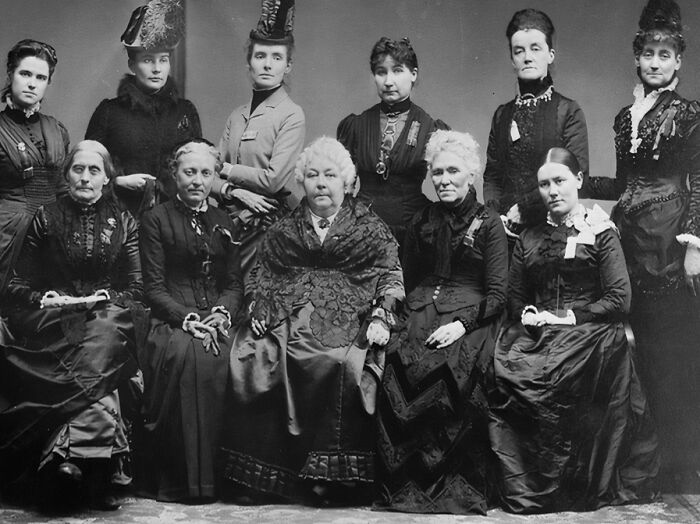
The international council of women became the first organization of women to promote the advancement of women’s rights and equality. Emerged from the growing discourse around gender- based injustice that was prevalent in the later part of the 19th century.
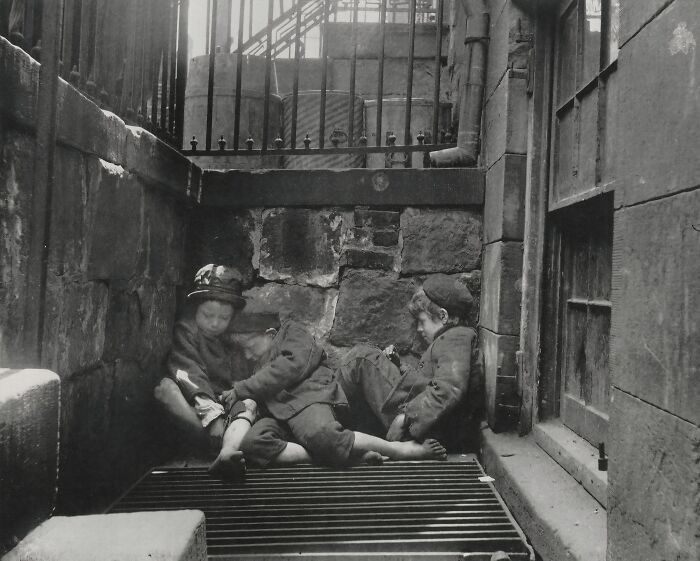
In the late 19th century, there were a large number of homeless children on the streets of New York. Some of the children who lived in the streets had homes, but preferred to sleep on the street, as their tenements were often too small, unsanitary, or overcrowded.

Do not worry little ones! Trump will soon mobilise an army and force you into camps away from the city!


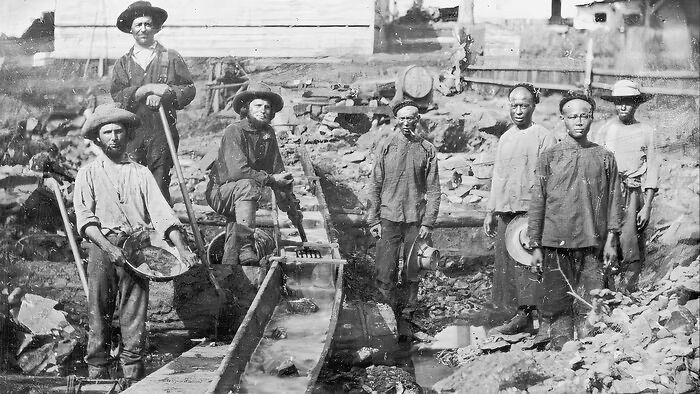
Quick search shows this picture captioned as 'Aubine Ravine' in many places on the internet. However, I believe it actually refers to 'Auburn Ravine.' The town of Auburn is on I-80 about 33 miles east of Sacramento. What's most interesting is that the image contains some Chinese men working the sluice.
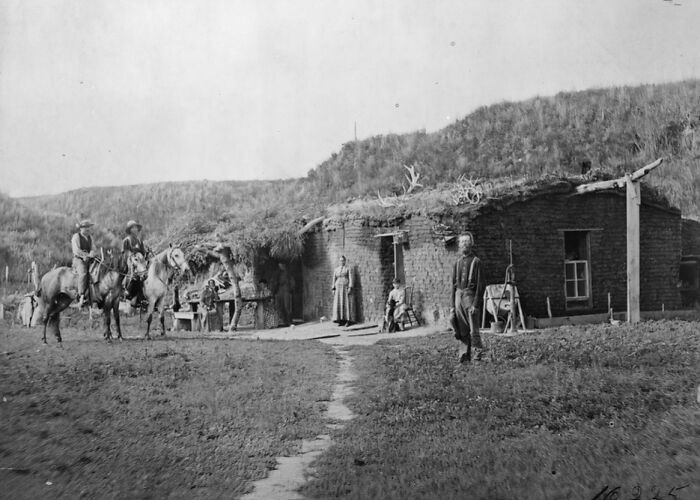
While the east coast was building wooden structures like our little cottage, that were more reminiscent of homes in Britain; the west was building homes from sod, mud and grass. Wood and other materials were not as plentiful on the great plains.
Lots of people bought land claims sight unseen. There were many in the mid-west that had no trees, and people had neither the money nor ability to transport building materials. So on the way out to their homestead they'd buy a few windows if possible and build the house out of sod. It was not the best insulator though, and prone to break down with weather, so they upgraded asap
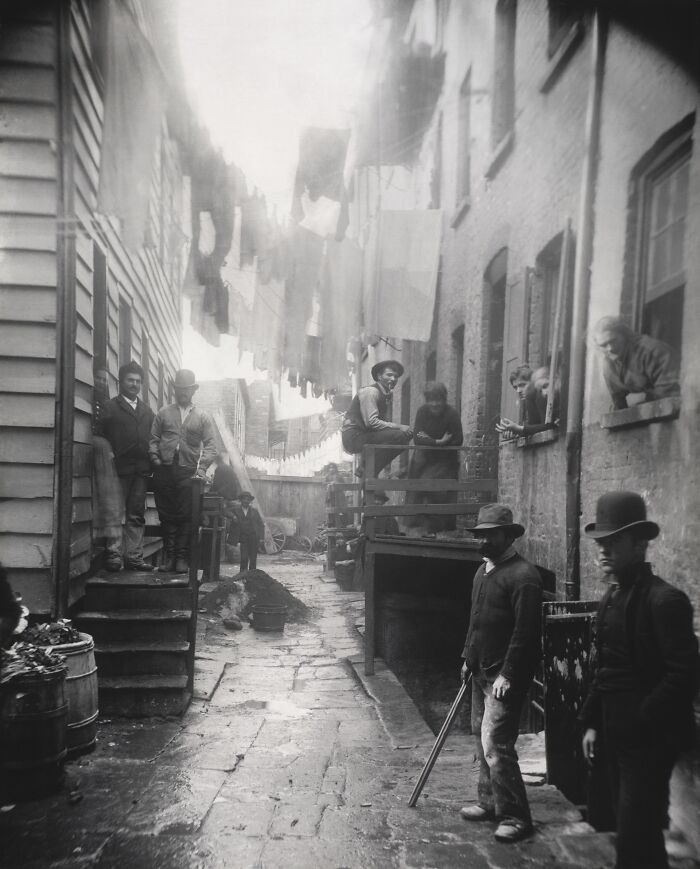
Part of How the Other Half Lives, an early photojournalist publication pursuing better conditions for the lower class of New York City. The photo and publication's impact was such that they contributed to the crime-ridden Bend's replacement with Columbus Park.

So they demolished the only housing the desperate had, because changing a neighborhood is preferred over changing society.

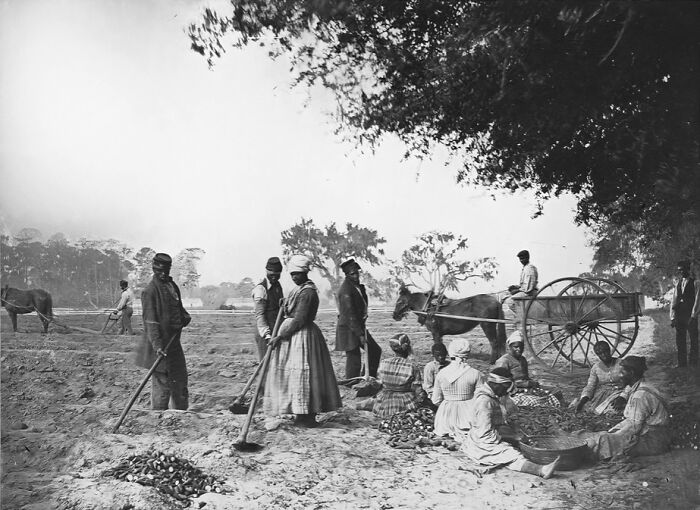
1) the Plantation was called Cassina Point, James Hopkinson was the owner. 2) This was actually post Union occupation in 1862 of this part of the South Carolina costal region. These were former slaves, freed by the Union working the farm for pay to feed the union troops. You can even see 2 of the men wearing worn down Union army uniforms with the cap, and at least a one more wearing a Union army cap. It was abandoned in Nov1861 after the Battle of Port Royal, as Confederates fled the region. The Union army gave the plantations in the region over to the former slaves, but when the Confederates in January 1862 launched raids to k**l the former slaves (successfully fought off by the former slaves), the Union moved in troops to fully occupy the region and stationing troops at each plantation. They also housed on all the Plantations of Edisto Island (where this one was) runways who came to Union lines, as it was easier to protect them, and hired many to work for the Union army like this
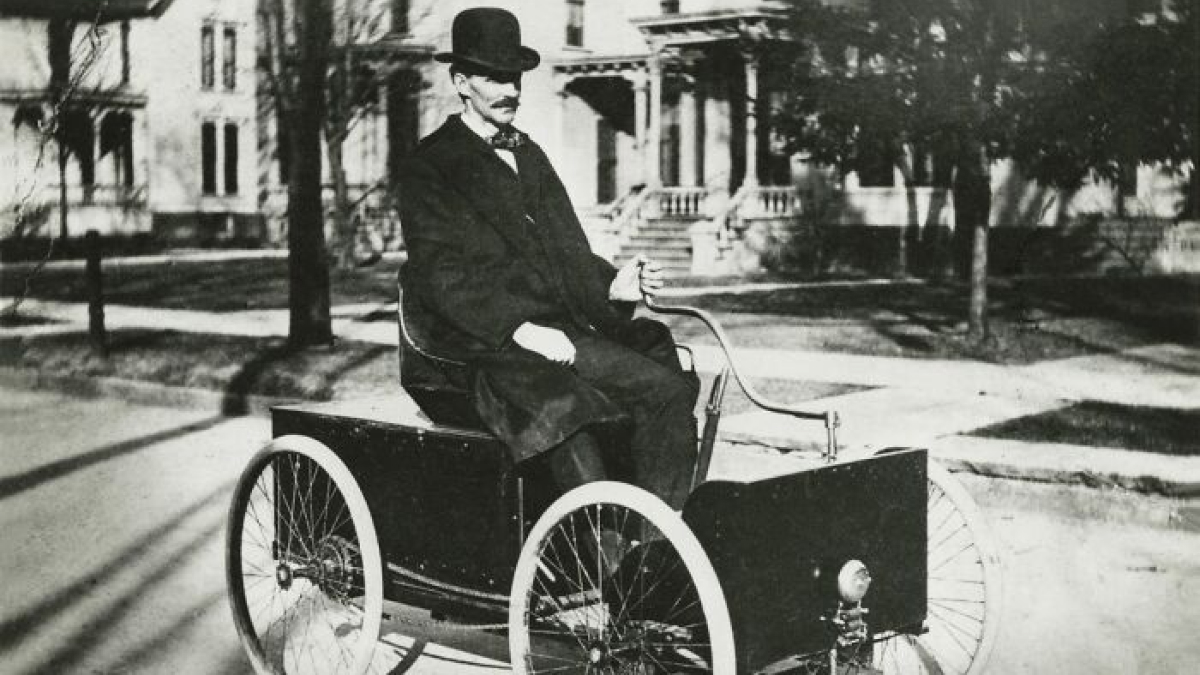
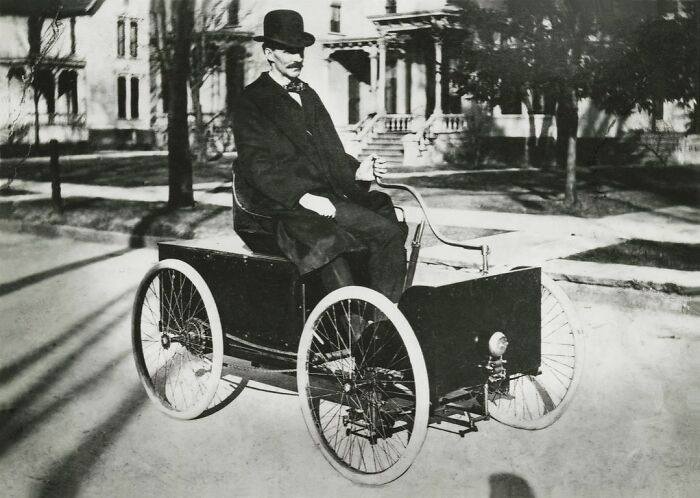
Henry Ford drives his first automobile. By the late 1800’s, people had traveled by wagon, stagecoach, train, bicycle, horseback and trolley. Automobiles had not yet been invented until Henry Ford created the quadricycle, his first attempt at a vehicle that was gas powered. It was constructed of cast iron for ther outer body and a leather belt and chairn for a transmission.
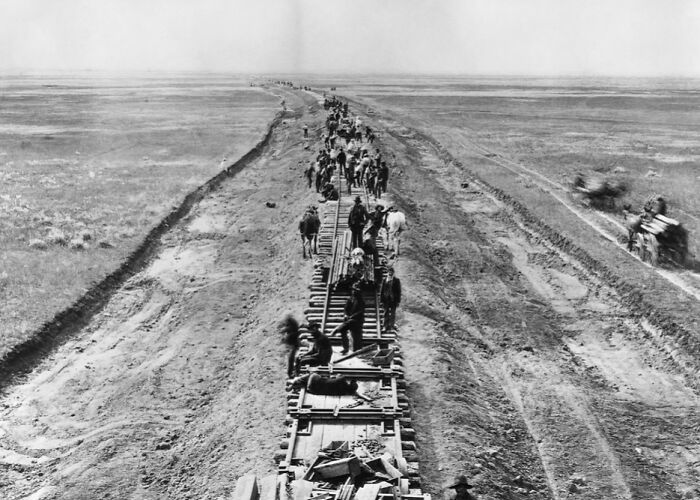
From 1879 to 1893, it was Americas largest railway system, which became the Great Northern Railway.
Also the only major rail company at the time to build all private funded, that rejected all govt subsidies (the others all took it), they also refused to use govt eminent domain to seize native lands to build tracks (all the others did), Hill's policy was his company would purchase or lease lands from the Natives, and even hire them as security and labor for the parts of the routes that went through their lands. At the time people told him you could build a rail without govt subsidies, he did and was more profitable, they said you couldnt build without the govt taking land from the natives, he worked with them. He also hired Black and Asian labor at the same pay rate as white laborers. Ironically, he was the one bashed in the press as a Robber Baron, and condemned by members of Congress to the press, despite being the only one who wasnt taking from the tax payers and treated his workers equal.

Imagine these older generations experiencing some of the new gen humour. I can barely make sense of why some of it is funny myself XD 2f01-689d4...38-png.jpg 
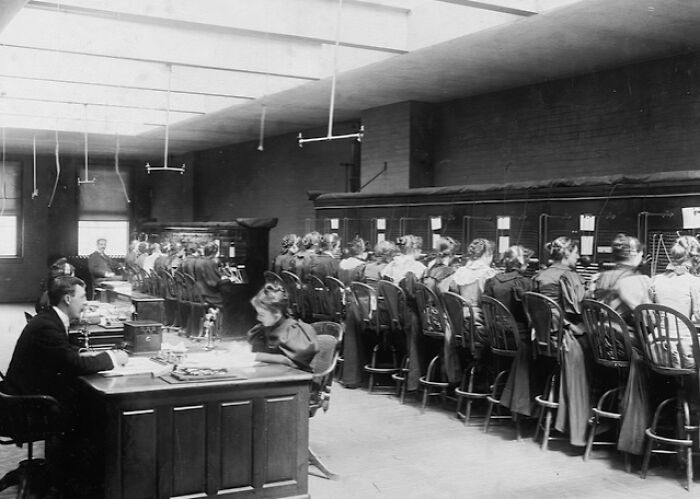
My grandma worked as a phone exchange lady when she was young. This was in the countryside on Funen in Denmark. She was so proud of this, and I completely understand that. I think it must've been an awesome job -especially in relatively small communities. Oh, and she told me that sometimes people just called the phone ladies to talk. Lol. My grandma loved to talk on the phone so she was certainly just happy for those calls to her. Lol.
By now you've seen some of the harder truths about 19th century America, but there's so much more to this complex story. The images you're about to see continue to paint a picture of a nation caught between its ideals and its reality. A place where incredible innovation happened alongside unthinkable injustice. These next photos will take you from bustling city streets to quiet frontier towns, from grand government buildings to humble immigrant families starting over. Each image reminds us that the America we know today was built by real people making real choices, for better and worse.
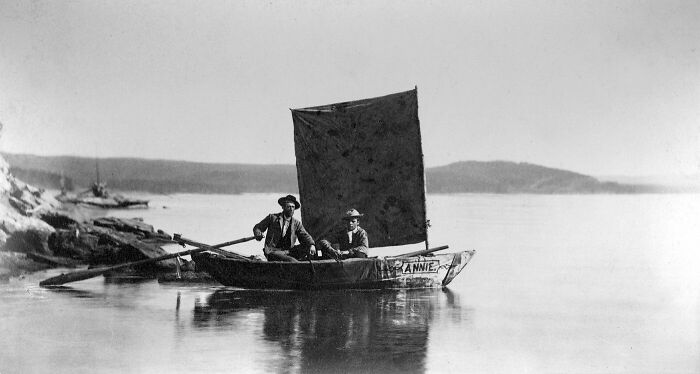
Wouldn't it have been likely natives used boats on the lake first. Maybe this is the first with a sail which I don't think were used on native boats.
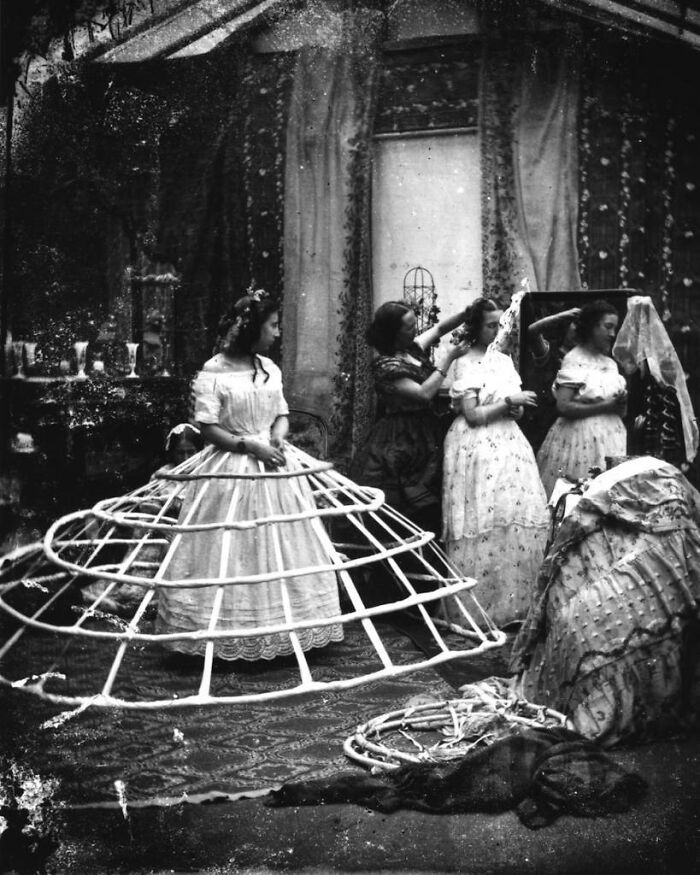
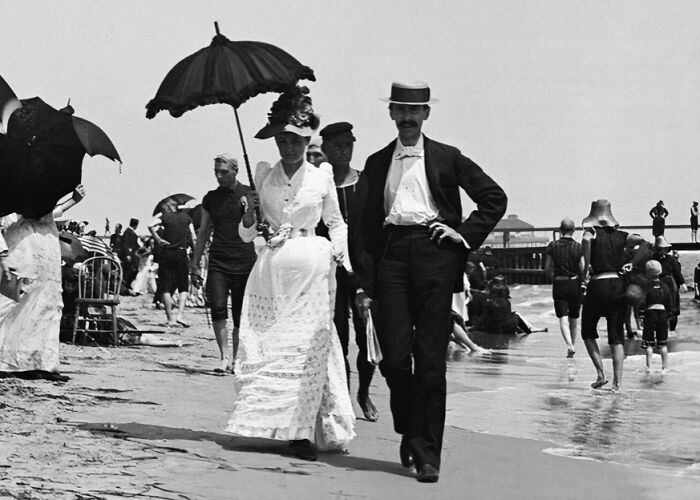
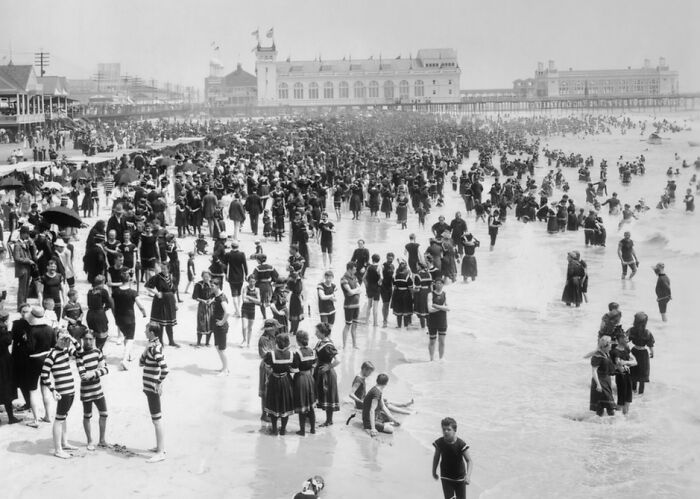
This looks later than 1870, judging by the fashion. Looks more Edwardian

And to think; there are people who believe this is an acceptable state to return to if Trump had lost the election because, trans people and stuff. 77 million deplorables; Hillary was off by several orders of magnitude.
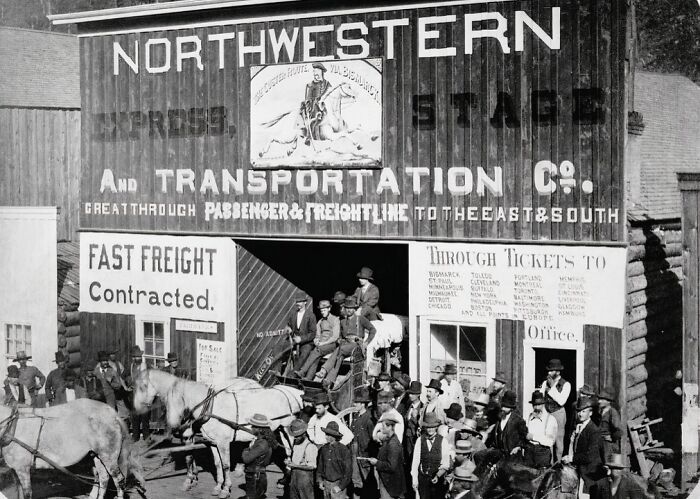
In the 1880’s, the popular mode of transporting goods and people across the western United States was by stage coach. It was a long route with many stage coach stops every few hours along the way. Drivers could swap out their tired team of horses for fresh ones and passengers could stretch their legs and get a bite to eat. Hence the name “transportation occurring in stages”. Even though by now, the railroad was now moving freight and passengers, in rural areas, the stage coach was still the popular mode of transportation.
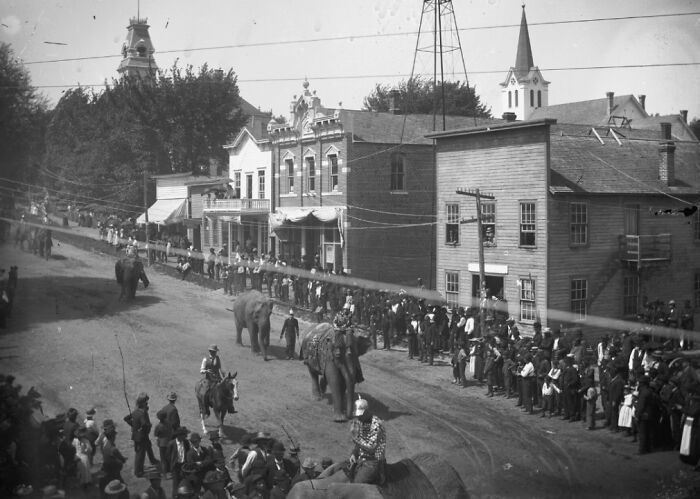
In the late 1880’s families would await the arrival of ‘Circus Day’ when performers, animals, and acrobats from Ringling Bros. Circus would parade through town announcing the arrival of the circus.

I don't know when the first "waterfront amusement park" opened, by I do know Blackpool in Lancashire got there three years before in 1896: https://en.wikipedia.org/wiki/Blackpool_Pleasure_Beach#Early_years_(1896%E2%80%931930)

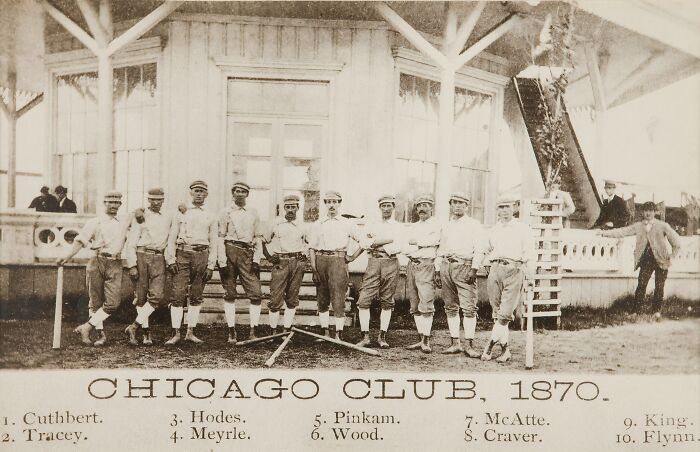
'Chicago White Stockings'. Now the troublemaker in me wants to see a modern team called the 'Passaic Pantyhose'.


Yes I always refuse to answer them. Lame engagement farming
Load More Replies... Yes I always refuse to answer them. Lame engagement farming
Load More Replies...














 No fees, cancel anytime