Get Premium
Dark mode theme is available exclusively for premium users. Learn more about the benefits of subscribing.
No fees, cancel anytime.

 Dark Mode Ad-Free Browsing Unlimited Content
 Ad-Free Browsing Unlimited Content Dark Mode
Join 1.2 million Panda readers who get the best art, memes, and fun stories every week!
The beauty of art, besides the pieces themselves, also lies in the fact that it has so many types and niches that basically everyone can find what they like. Some folks prefer literature, others choose music or visual arts, while some are the architecture geeks.
Today's article is meant for the latter, or those who want to become them. In here, you will find plenty of houses that are well known for their outstanding architecture. Maybe you already know about them, or perhaps you will leave with some new knowledge. Either way, your eyes are about to be blessed with intriguing buildings for sure.
This post may include affiliate links.
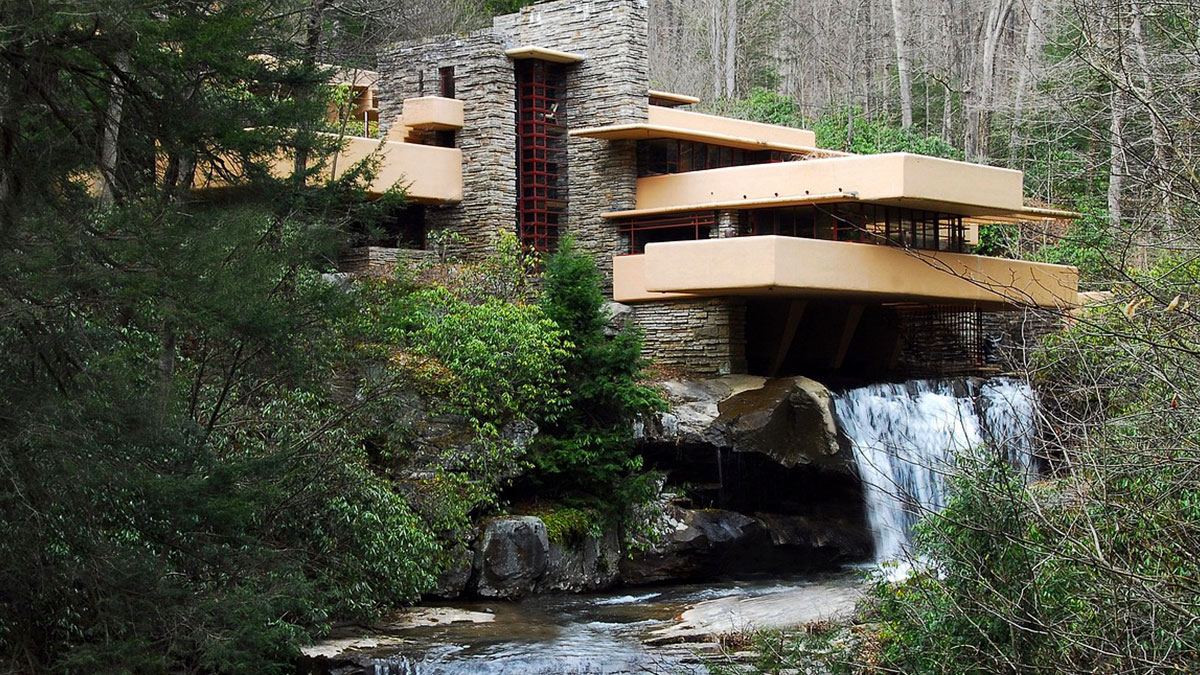
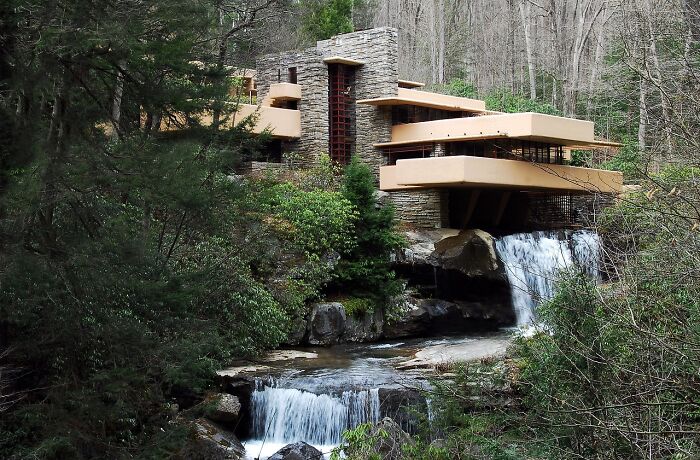
Fallingwater is a house museum designed by Frank Lloyd Wright and located in Stewart Township in the Laurel Highlands of southwestern Pennsylvania, United States. It’s built partly over a waterfall on the Bear Run stream. It was developed as a weekend retreat for Liliane and Edgar J. Kaufmann Sr., the owner of Kaufmann's Department Store in Pittsburgh.

While visually stunning, Fallingwater has a lot of construction issues, mostly from structural concepts that were still not perfectly understood by Wright at the time. The off-white balconies in the photo (that were supposed to be covered in gold foil) were built with cantilevered concrete-filled formworks, a very new and daring technique (at least in the US). Unfortunately they started sagging and cracking immediately despite the builder adding extra rebars in secret and without Wright approval. The house requires intensive routine maintenance to repair the sags and cracks; the windows had to be replaced multiple times to account for the deformation of the structure; poor or degrading concrete insulation causes leaks and needs frequent overhauls, the first less than two year after the delivery. Only very recently new techniques such as the use of carbon composite reinforcing have allowed to make the structure kind of stable.
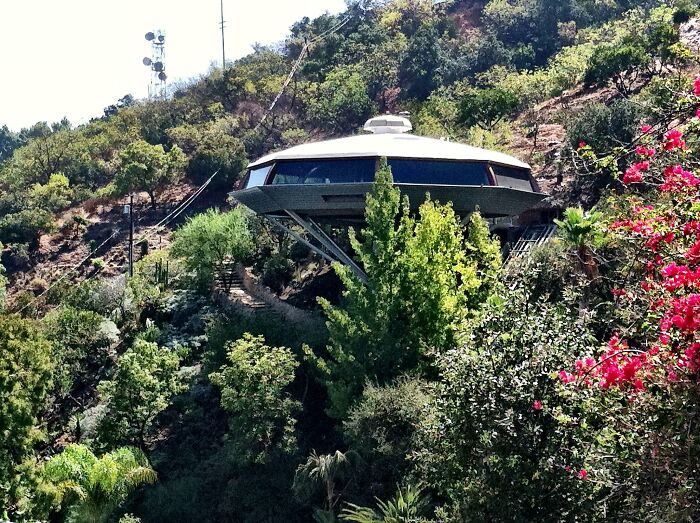
This house, located in the Hollywood Hills, is an octagon perched on a twenty-nine-foot-high, five-foot-wide concrete column like a flying saucer on a stick. It was designed by John Lautner for Leonard Malin, a young aerospace engineer.
The building is reached by a funicular, and a concrete patio connects one side of it to the steep hillside. The bulk of the building hovers above the hill, with windows on all sides to provide a view of the San Fernando Valley.
It had been used as a rental location and was very rundown in the 1990s, until it was bought by Benedikt Taschen (the guy who owns the publishing house that makes books about architecture and design). Taschen commissioned the restoration to the architect who wrote the first book about Lautner's works, going as far as including details that were designed by the architect but not feasible at the time of initial construction. The renovation won multiple prizes and allowed the building to enter the State's list of historically significant buildings.
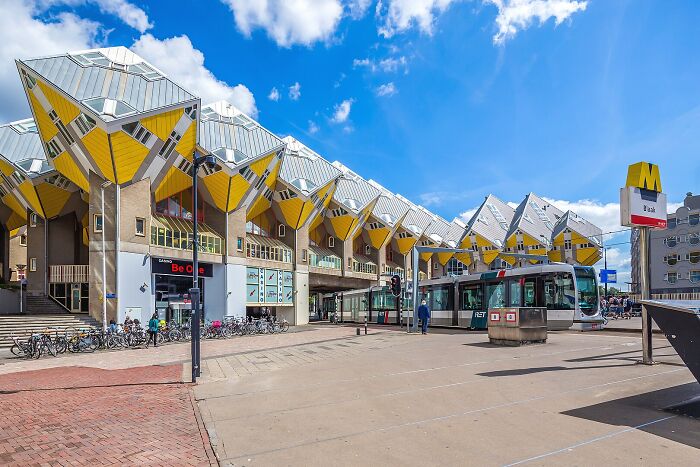
A popular tourist attraction located in the Oude Haven, Rotterdam. After the destruction of the Oude Haven during World War II, architect Piet Blom was asked to redevelop the area with character, which presented him the opportunity to apply cube housing to an urban context.
Even if we don’t realize it, a lot of things have an influence over our lives in ways we sometimes can’t even imagine. In fact, most of the things that we as humans invented have some kind of function in society.
For instance, it can cover our base, social needs, our environment, be our entertainment, a part of our culture, and all the other things. You get the gist – anything can be assigned “a job.” Granted, it doesn’t mean that every single thing we invent drives us forward; some can be detrimental instead, but that’s a topic for another day.
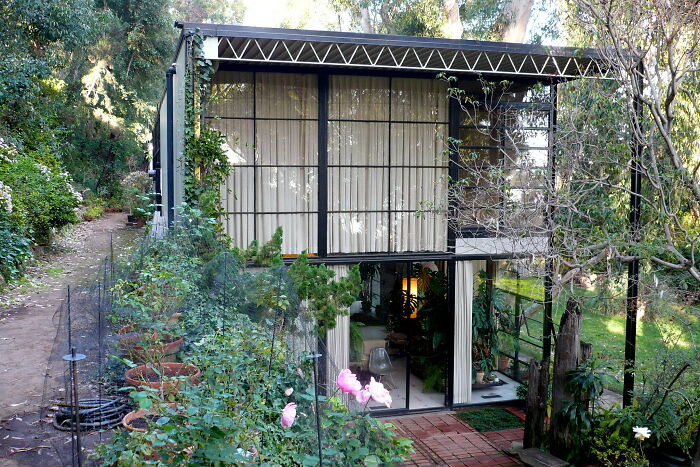
The Eames House, which was originally known as Case Study House No. 8, was designed by Charles and Ray Eames, who started their work in 1945. The original name came from the idea that drove the design of this house – a case study house program.
It was a program published by Los Angeles' Arts and Architecture Magazine that focused on the use of new materials and technologies developed during World War II. The aim was for the house to be built of prefabricated materials that would not interrupt the site, be easily buildable, and showcase a modern style.
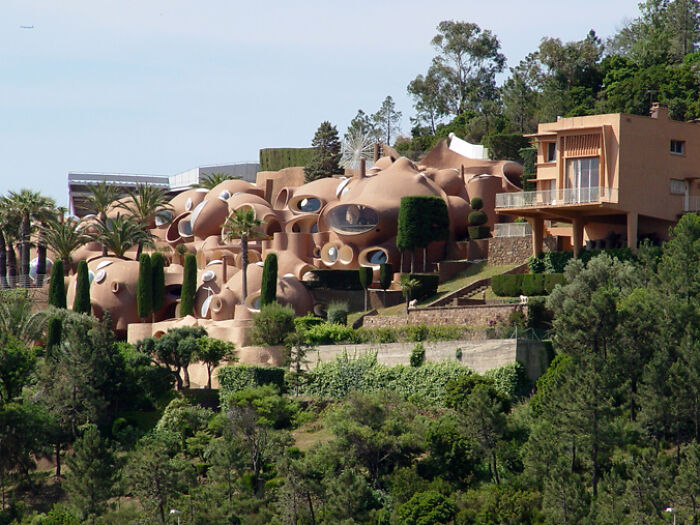
Palais Bulles, also known as “Palace of Bubbles,” justifies its own name by its looks. The house was designed by Hungarian architect Antti Lovag and was constructed between 1979 and 1989. It is located on a rocky cliff near the Mediterranean Sea. In 1992, it was purchased by the French-Italian fashion designer Pierre Cardin, and ever since, it not only serves as a residential space, but sometimes is transformed into a stage for high-fashion shows, Cannes Film Festival parties, and editorial photography.
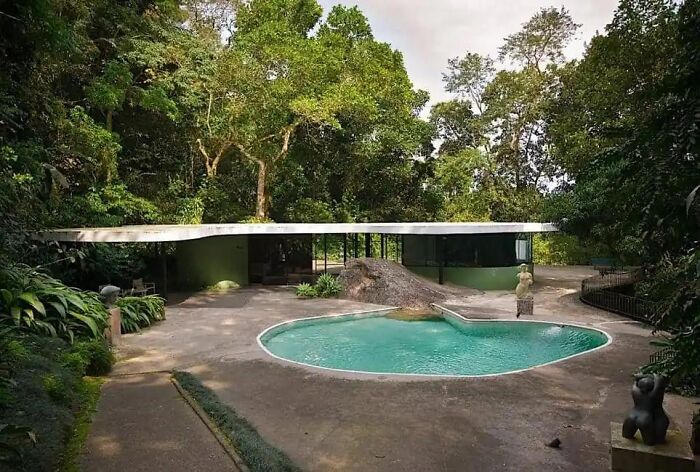
The House of Canoes, or Casa das Canoas, was created in 1951 by Oscar Niemeyer, a Brazilian architect, as a private residence for himself until he fled Brazil in 1965 due to the military dictatorship. Later on, the building became the headquarters of the Oscar Niemeyer Foundation.
The house is designed with something called tropical eroticism in mind – the curved flat roof supported by light steel columns and the transparent glass walls make it seem like the house disappears into the tropical jungle.
So, since we acknowledged that everything has some kind of function, we’re not going to shock anyone by saying that architecture is not an exception to this rule. Essentially, architecture is based on taking care of one of our basic needs – a need for shelter.
On Maslow’s hierarchy of human needs, shelter is at level 1, along with food, water, clothing, and sleep, or as you can call them, physiological needs. Without satisfying these needs, a person cannot really move to the upper levels of fulfillment, which are safety, love, esteem, and self-actualization.
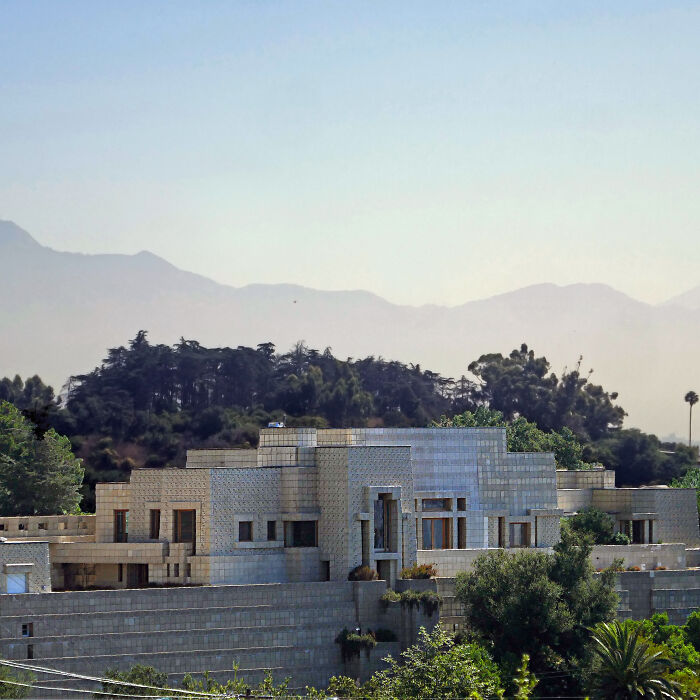
The Ennis House is one of the best residential examples of Mayan Revival architecture in the United States. The building’s designer, Frank Lloyd Wright, believed it had promising potential for affordable housing, so he created a block construction system with patterned surfaces, which lends a unique textural appearance to both the exteriors and interiors of his residences.
It features a custom-designed pattern – within the interlocking form, the Greek key design resembles a stylized “g”, possibly an allusion to the Masonic order that Charles Ennis belonged to, which had a symbol of a compass with the letter “g” for God at its center.
Frank Lloyd Wright considered The Ennis house his favorite creation. Besides, the house has served as the backdrop in numerous films, commercials, and TV shows like Mulholland Drive, Predator 2, Rush Hour, Buffy the Vampire Slayer and Blade Runner.
Another Wright's design that had a great lots of problems for being too innovative. It was one of the first instance of pre-cast construction, with purposely designed interlocking blocks. He chose a very weird concrete mixture, rich in granite aggregates, that de facto prevented the perfect sealing of the rebar and allowed its fast and destructive corrosion. The concrete mix was so bad that rainwater would pass through during storms. Once again, cracks started showing before the construction was even completed, and Wright -as he did with Fallingwater- minimized the issue.
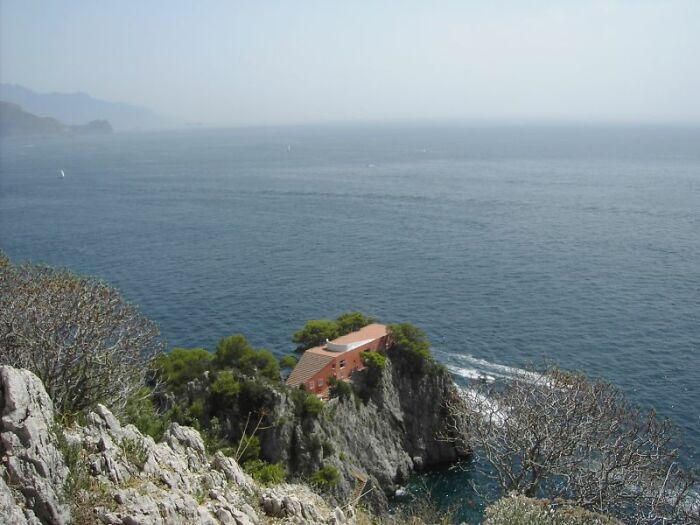
Casa Malaparte, also known as Villa Malaparte, is considered to be one of the best examples of Italian modern and contemporary architecture. It was designed by Curzio Malaparte around 1937.
The house, which is basically a red masonry box with reverse pyramidal stairs leading to the roof patio, sits 32 meters above the sea, overlooking the Gulf of Salerno. Its interior and exterior are featured in Jean-Luc Godard's 1963 film, Contempt (Le Mépris).
What's interesting is that Malaparte was not an architect. He was a writer and journalist. He designed and had the house built by local masons because -after a first love and participating in the March on Rome- he turned to Communism and had a fall out with Mussolini, being put under threat of banishment or arrest. He sketched the building himself, but at some point had to entrust the construction to a proper architect, simply because he had already been thrown in jail. As soon as the isolated villa in a hardly reachable location was ready, he was able to be moved to house arrest. At his death, he tried to gift the house to the Chinese Writer Association, but the act was illegal the family had legal recourse to revert the decision.
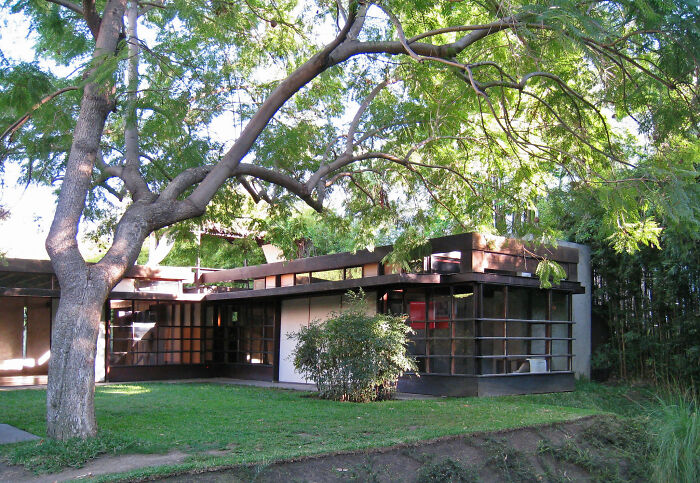
This house with three names – Kings Road House, The Schindler House, or Schindler Chace House – is located in West Hollywood, California. As its name suggests, it was designed by architect Rudolph M. Schindler.
This building has no conventional living room, dining room or bedrooms. When it was created, it was done so with an aim for it to be a cooperative live/work space for two young families.
Yet, if you really think about it, architecture is not shelter construction per se. Instead, it’s the art and technique of designing and building, something that makes these shelters more appealing and functional.
Interestingly enough, it’s being said that architecture spans all five of Maslow’s levels – it’s related to shelter, but it can also be related to safety, social belonging, and self-realization. It all depends on how you look at it.
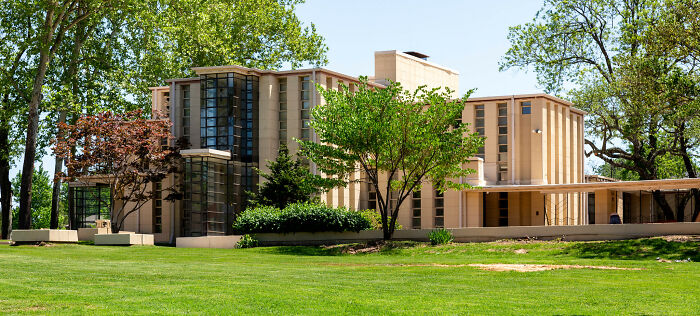
Some say that Frank Lloyd Wright’s Westhope, located in Tulsa, Oklahoma, is a masterpiece. It was constructed in 1929 and was added to the National Register of Historic Places in 1972.
It is one of the largest residences Wright ever built. It contains more than 10,000 square feet, 5 bedrooms, 4.1 baths, and a large reception area joined with the dining room.
Third example of Wright's houses with massive construction problems. The same construction system used for the Ennis House led to the same problems, compounded by the fact that the large, flat roofs he used to design in California were simply not suitable for the Oklahoma climate, that had more rainfalls and sudden downpours. Oh, and friggin' tornadoes. So, when at the first rain the roof started leaking a small waterfall above the owner's desk, Wright... told him "why don't you move your desk?". Yeah, most Wright clients learned early on to hate him, and very few were able to consistently live in their houses. Once again the subpar concrete led to internal corrosion, the rusted rebar could not hold anymore and massive cracks started popping out everywhere.
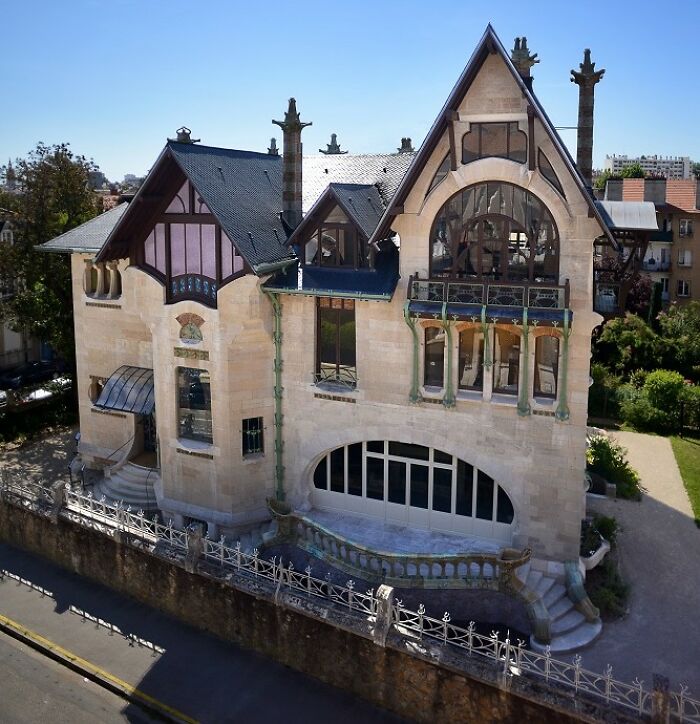
The Villa Majorelle is located at 1 rue Louis-Majorielle in the city of Nancy, France. It used to be the home and studio of the furniture designer Louis Majorelle, thus its name. It was designed and built by the architect Henri Sauvage between 1901 and 1902.
The villa is one of the first and most influential examples of the Art Nouveau architectural style in France. Now, it’s owned by the city of Nancy, and is open to the public on certain dates for tours by reservation.

This one is my favourite. I imagine it being the back drop for an Agatha Christie novel.
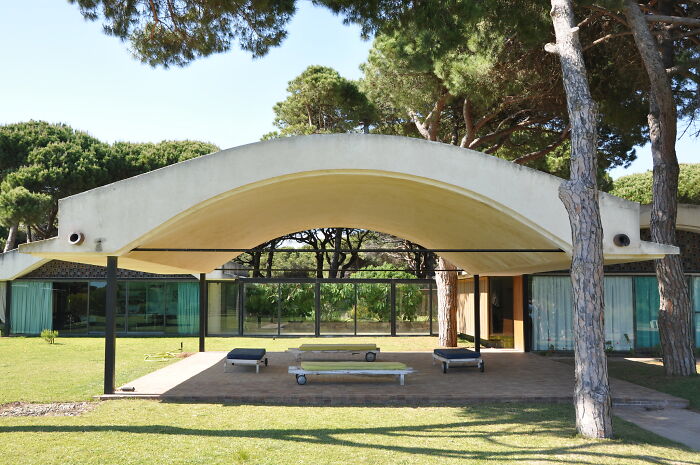
La Ricarda, also known as the Gomis House, is a perfect example of rationalist architecture in Catalonia. That means that its design had to keep in mind that the building had to fit the necessities of a large family, combining private and common areas, and a large living room that could be used as a concert hall.
It was designed by the architect Antonio Bonet Castellana, in close collaboration with the owners, Mr. Ricardo Gomis and his wife, Mrs. Inés Bertrand. It’s located in the middle of a pine grove by the sea and near the city of Barcelona. The same designer also designed furniture and fittings as part of an entire creative process.
That suggests that architecture is way more crucial than we realize. As this article on Vera Iconica Architecture points out, there are seven reasons why it’s important.
It creates beauty, places we love, places we connect with, and places we let affect us. While beauty might seem like something superficial and non-essential, in reality, it’s far from it. It fosters connection, sparks innovation, stimulates care, and enlivens everything it touches, to name a few things.
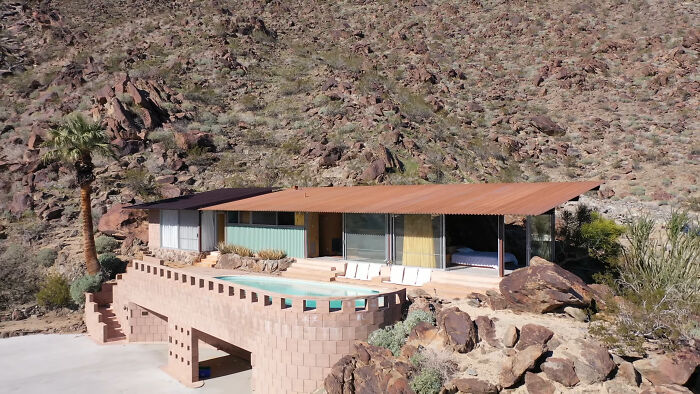
Frey House II, which is located on the hillside at the west end of Tahquitz Canyon Way, Palm Springs, the United States, was a longtime residence of its architect, Albert Frey. It was completed in 1964, and at the time, it was the highest elevation of any residence in the city.
It was designed to have as little impact on the surrounding environment as possible, as it’s only 800 square feet, so it’s pretty compact but very functional. Being conscious of nature, the architect chose the color of his curtains to match the yellow Encilla flowers that bloom each spring in the desert and painted the ceiling blue. The bolder, which is incorporated into its design, serves as Albert Frey’s acknowledgement of our role with nature.

Looks like an unfinished tin roofed shack with an extension that doesn't match.
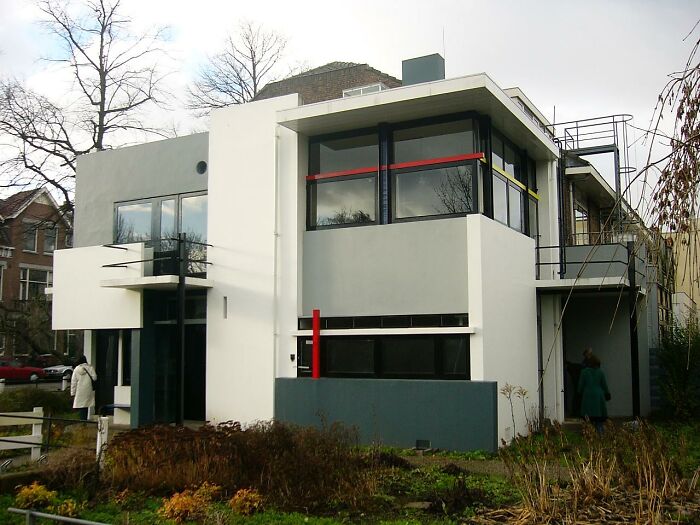
The Rietveld Schröder House was commissioned by Ms Truus Schröder-Schräder, designed by the architect Gerrit Thomas Rietveld, and built in 1924. It’s located in Utrecht. Its interior, the spatial arrangement, and the visual and formal qualities were created as a manifesto to the ideals of the De Stijl group of artists and architects in the Netherlands in the 1920s.
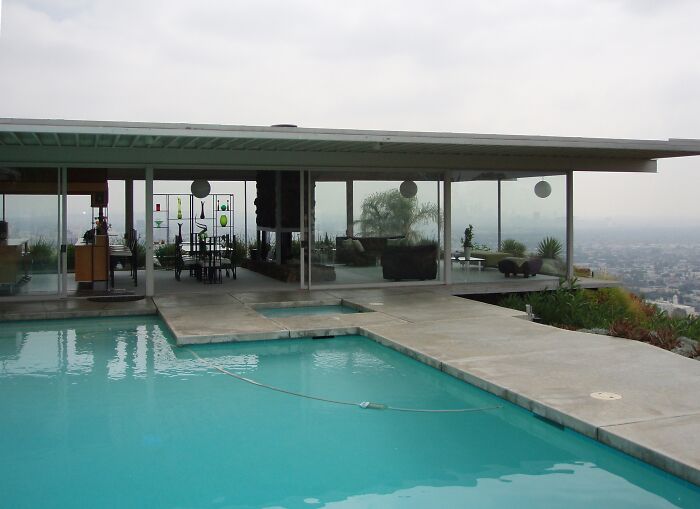
The Stahl House’s origins start in May of 1954, when the Stahls purchased a small lot above Sunset Blvd. The next two years, the couple spent working weekends constructing the broken concrete wall that surrounded the portion of the lot. In the summer of 1956, a three-dimensional model of the house was created. The construction began in May 1959 and was completed a year later, in May 1960.
The Stahl House was declared a Historic-Cultural landmark of the City of Los Angeles in 1999. In 2007, the American Institute of Architects named the building as one of the top 150 structures on their “America’s Favorite Architecture” list. It was also included in a list of all-time top 10 houses in Los Angeles in a Los Angeles Times survey of experts in December 2008, and in 2013, it was listed on the National Register of Historic Places.

It has appeared in many movies and TV shows, most recently as Jason Nesmith (Tim Allen)'s house in _Galaxy Quest_.
Besides that, architecture can also help build communities, attract tourists, which drives economic growth, and so on. As we acknowledged before, it’s way more influential in our day-to-day lives than we realize.
Today, we decided to embrace the entertainment side of architecture and came up with this list of various interesting houses. In fact, we can even call them iconic buildings, as many of them are somehow written down in history, usually due to the way their interesting buildings came to be. So, we hope you’re going to enjoy it and maybe even be motivated to visit them on your next trip.
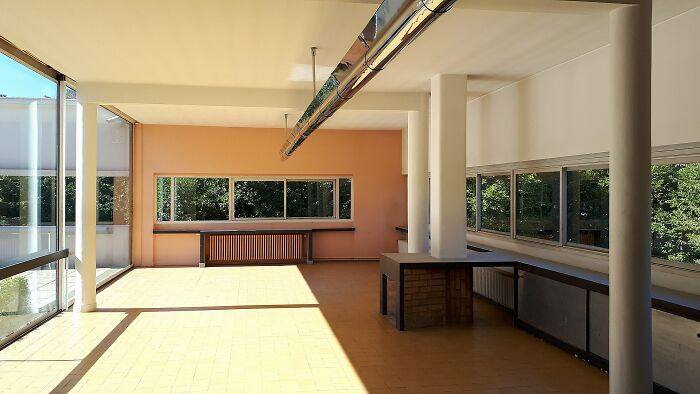
The Villa Savoye is built on unfarmed land of over 17 acres. It’s a modernist villa and gate lodge located in Poissy, Paris, France. Its designers are Swiss-French architect Le Corbusier and his cousin Pierre Jeanneret, who built it between 1928 and 1931. The villa is representative of the origins of modern architecture, and that’s why it’s one of the most easily recognizable examples of the International style.
Originally, the house was built as a country retreat for the Savoye family, but then, after being purchased by the neighboring school, it became the property of the French state in 1958. It’s rarely inhabited due to many different problems.
In fact, there have been several proposals to demolish it, but it was decided to designate it as an official French historical monument in 1965. In July 2016, the house was inscribed as The Architectural Work of Le Corbusier World Heritage Site by UNESCO.
The "different problems" were mostly coming from unskilled construction by the contractor (the client was stringy and cheap and went for an unqualified company), and two design problems. First, Le Corbusier did not want piping for the evacuation of roof water, instead relying on natural inclination of planes; it resulted in being prone to obstructions and water pooling on improperly graded surfaces. Second, he designed large glazed surfaces, that at the time could not be insulated properly and in the cold Paris climate they made room heating impossible to achieve. Both have been solved in the 1950s renovations.
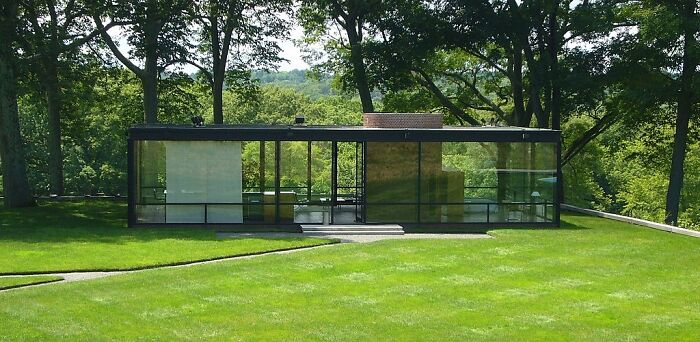
The Glass House, which can also be known as the Johnson house, is a historic house museum on Ponus Ridge Road in New Canaan, Connecticut. It was built between 1948 and 49 and designed by architect Philip Johnson as his own residence, which became his signature work.
The house is a perfect example of early use of industrial materials in home design, like glass and steel. The architect lived at the weekend retreat for 58 years – 45 years of them with his longtime companion, art critic and curator David Whitney, who helped to design the landscaping and collected the art displayed there.
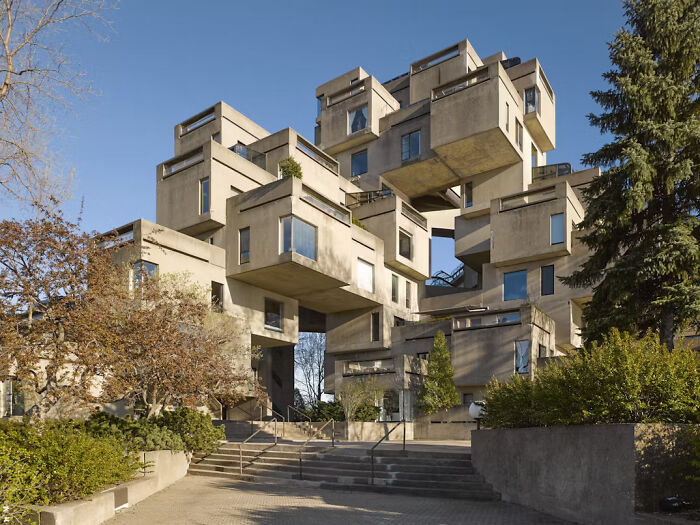
Habitat 67, or simply Habitat, is a housing complex at Cité du Havre, Montreal, Quebec, Canada. It was designed by architect Moshe Safdie, who originated it in his master's thesis at the School of Architecture at McGill University. Originally, it was intended as an experimental solution for high-quality housing in dense urban environments.
An improved version of the thesis was built for Expo 67, the International and Universal Exposition held in Montreal, Canada, to celebrate Canada's centennial in 1967. Nowadays, it’s considered an architectural landmark.
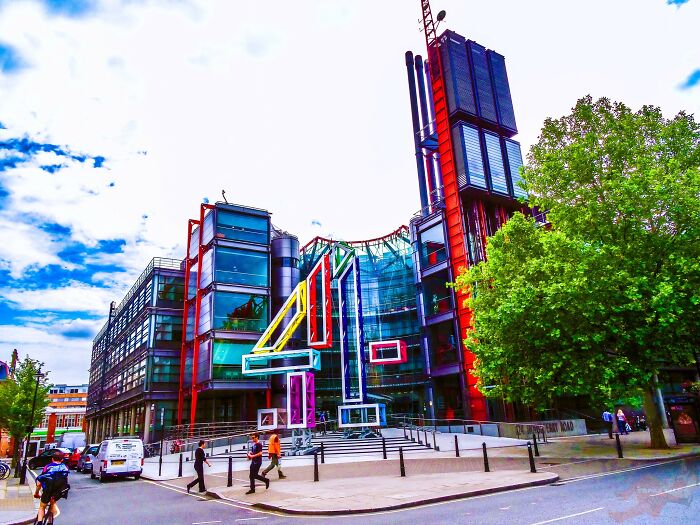
The Channel 4 headquarters building in London is located on a corner near Victoria Station. It contains broadcasting suites and a studio, an underground car park and a landscaped garden square. It accommodates up to 600 staff members.
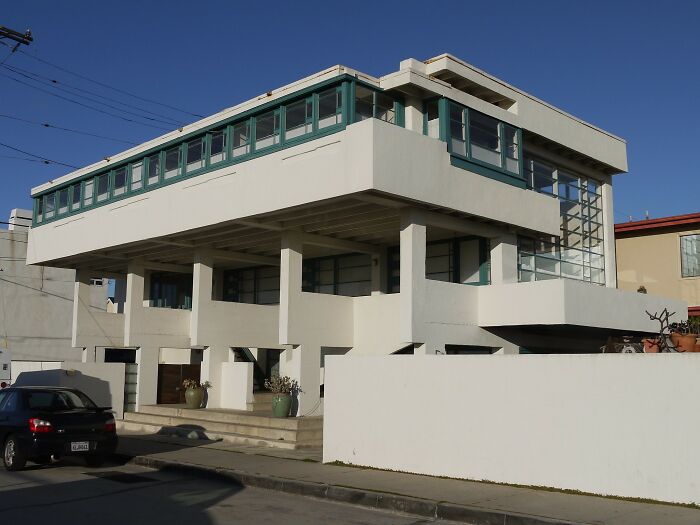
The Lovell Beach House, which is located on the coastal edges of Newport Beach, California, was designed by Rudolf Schindler in 1926. The designer’s aim was to create an innovative approach to residential design by blending aesthetics with functional modern living.
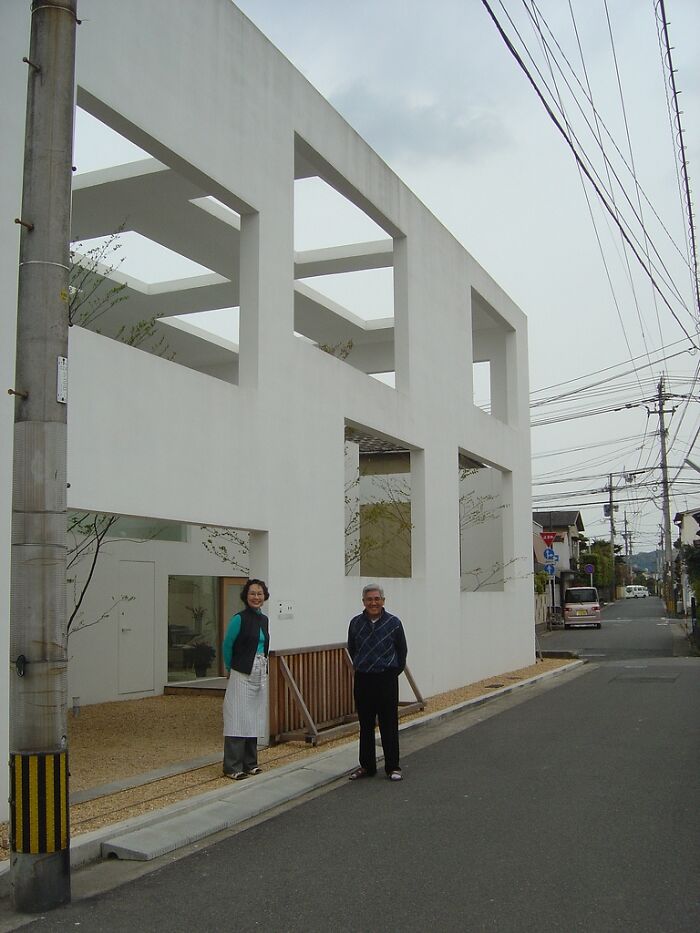
You can find the N House in the streets of the Japanese city of Oita. Its single volume symbolizes a contemporary variation of Japanese minimalism. It was designed by Sou Fujimoto architects for a couple and their dog.
The house itself consists of three shells of progressive size nested inside one another. The outer shell covers the entire premises, creating a covered, semi-indoor garden. The second shell encloses a limited space inside the covered outdoor space, and the third one creates a smaller interior space.
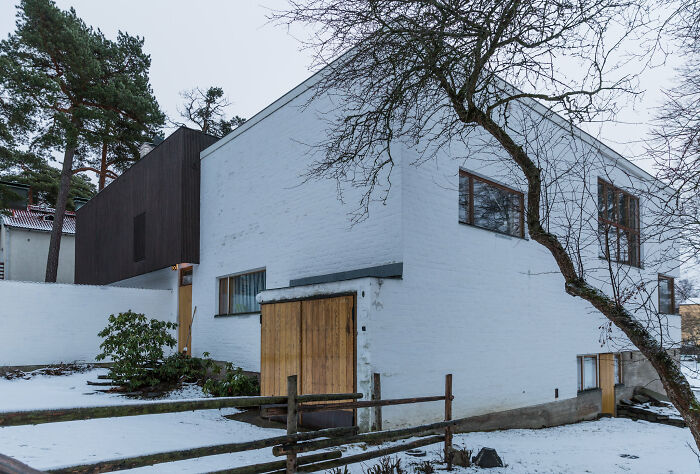
The Aalto House is the home of the architect Alvar Aalto, located in Munkkiniemi, Helsinki, Finland. The house is a part of the Alvar Aalto Museum, which spans two cities. The house was designed to be both a studio for an architect and a home for his family.
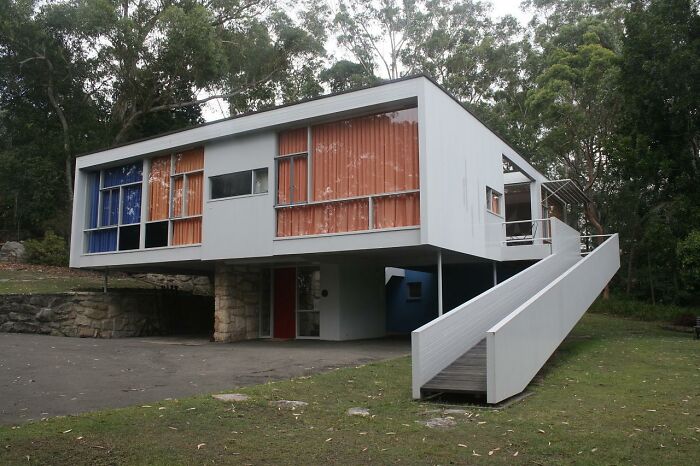
When Rose Seidler House was completed back in 1950, it was “the most talked about house in Sydney,” and it remains an architectural icon to this day. It is one of the finest examples of mid 20th-century modern domestic architecture in Australia, and its furniture and fittings make up one of the most complete post-World War II design collections in public ownership. This icon was designed by Harry Seidler for his parents, Rose and Max.

Yay! So glad this one made the list! My late grandmother was an expert in Sydney architectural history and used to run tours of this house. It is such a cool place!
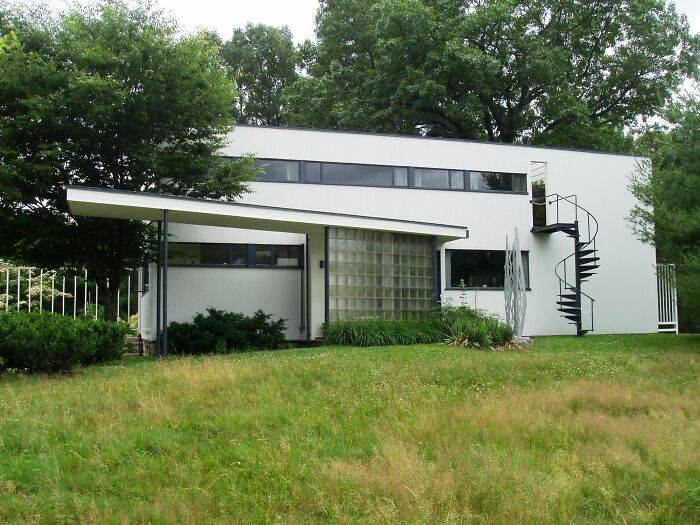
The Gropius House was a home to one of the most influential architects of the 20th Century – Walter Gropius. He and his family were living there during his tenure at Harvard University in the mid-1900s.
It was completed in 1938 and became the first commissioned project in the United States for the famed architect. It’s located in Lincoln, Massachusetts.
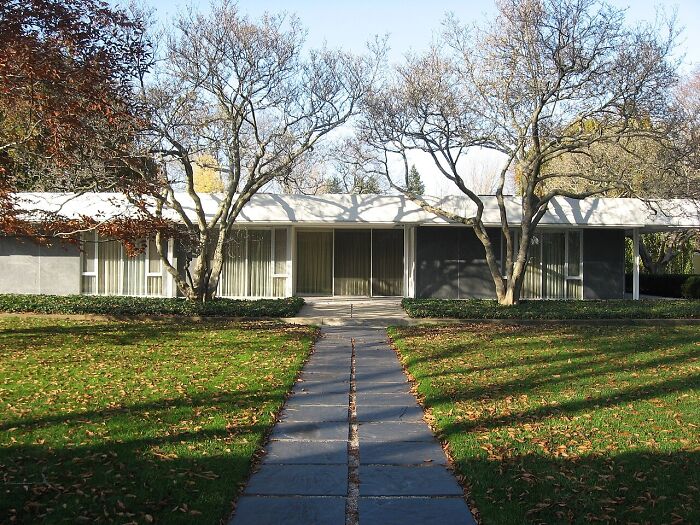
The Miller House and its garden are basically a masterpiece of mid-century modern architecture in the heart of Columbus, Indiana, that were designed by the architect Eero Saarinen. He created it for the industrialist and philanthropist J. Irwin Miller and his wife, Xenia Simons Miller, in 1953. Now it’s owned by Newfields, and it was declared a National Historic Landmark in 2000.
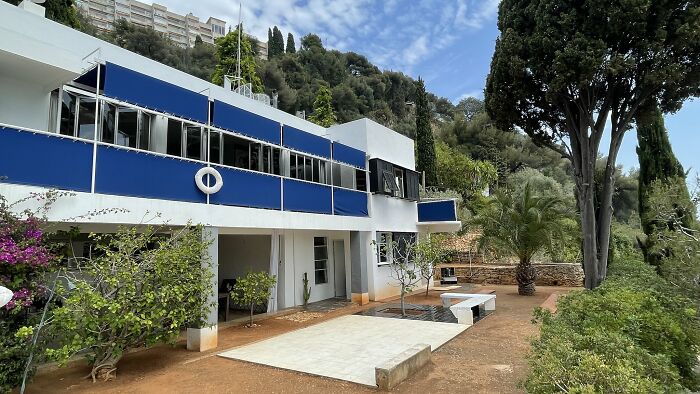
A villa with an interesting name of E-1027 sits in Roquebrune-Cap-Martin, in the Alpes-Maritimes department of France. It was designed and built from 1926 to 1929 by the Irish architect and furniture designer Eileen Gray and the French/Romanian Architect Jean Badovici.
The name is actually a code of Eileen Gray and Jean Badovici ('E' standing for Eileen, '10' Jean, '2' Badovici, '7' Gray), symbolizing their relationship as lovers during its construction. Sadly, they separated shortly after the completion, and in 1932, Badovici inherited it.
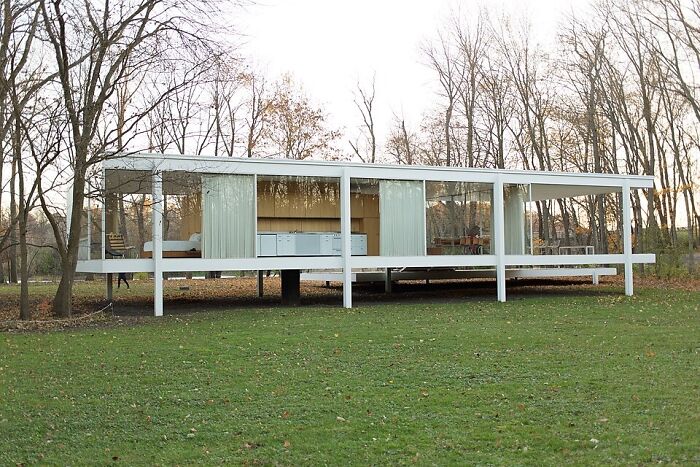
In 1951, Ludwig Mies van der Rohe built The Farnsworth House, which is located near Plano, Illinois. It’s one of the most famous examples of modernist domestic architecture, which was considered unprecedented in its day. The historian Franz Schulze has said about it: “Certainly the house is more nearly a temple than a dwelling, and it rewards aesthetic contemplation before it fulfills domestic necessity.”

Winter had to be rough with all of those windows and the cold air beneath the house too
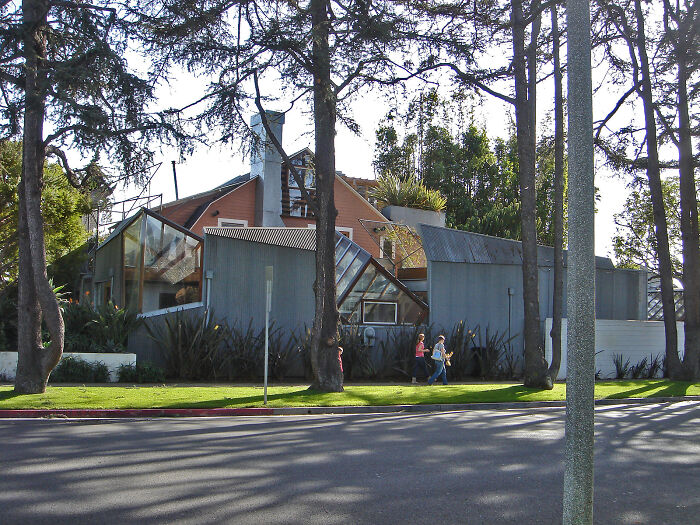
The Gehry Residence is the home of architect Frank Gehry. Originally, it was an extension of an existing Dutch colonial-style house. It’s made of unconventional materials like chain-link fences and corrugated steel. It’s located in Santa Monica, California.
In 1977, Frank and Berta Gehry bought a pink bungalow originally built in 1920. The architect wanted to experiment with the materials he was accustomed to using – metal, plywood, chain-link fencing, wood framing – so a year after the purchase, he chose to wrap the house with a new exterior.
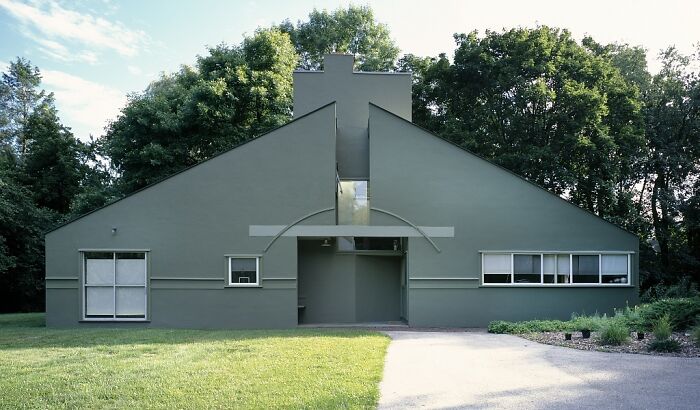
The Vanna Venturi was designed by Robert Venturi for his mother to live in, in Chestnut Hill, Pennsylvania. The completion took place between 1962 and 1964. Its split symmetrical gable, exaggerated chimney, and asymmetrical windows represent both function and Venturi’s experimental approach. With minimal circulation and layered walls functioning as enclosures and screens, the house is basically a manifesto for postmodern design.
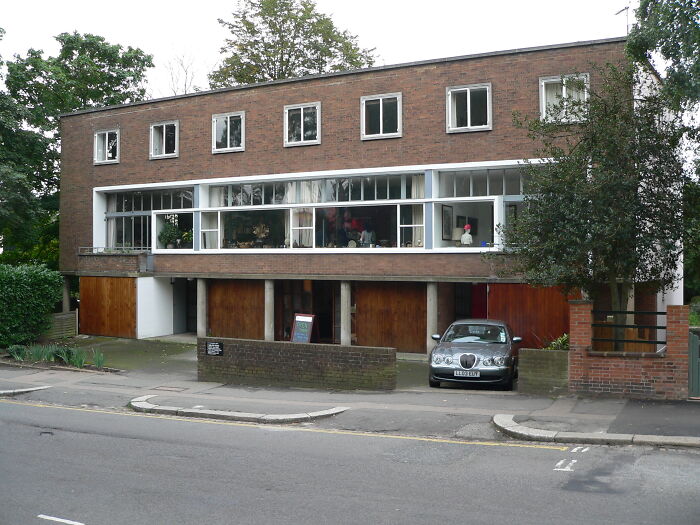
Created by Hungarian-born architect Ernö Goldfinger as a home for himself and his family in 1939, 2 Willow Road is located in London. He lived there with his wife, Ursula, and their kids until his passing in 1987. Then, from 1995, its management was taken over by the National Trust, which opened the house to the public.
Let me barge in before the usual laymen come around blabbering. YES, MOST OF THOSE BUILDINGS LOOK ORDINARY. They look ordinary NOWADAYS because IN THEIR TIMES they were so outstanding, iconic and groundbreaking that they literally started a trend. This is a very good list on how current architecture was developed. Several of those buildings that look like 70s, 80s or 90s buildings were built in the 20s or 30s. Let that sink in. Welcome to my TED Talk.
I came here to add this comment, this seems like the right place. THANK YOU JROG for all that extra information and insight. You made the article complete. I really appreciate it.
Load More Replies...
Why do most of these look so industrial? They are cool to look at and I appreciate the art but they really don't look like homes to me. The Westhope house looks like a medical building converted into a hotel. That's just my taste...I still enjoyed the post :)
Mostly because of the simplicity. You don't normally see a lot of blank space and simple forms in domestic architecture.
Load More Replies... Great post. Modern architecture should be studied and reinterpretated. The vision remains the same. As opposite as modern architecure, which intended a better world, the tyrants like Hitler, Mussolini, Stalin, Franco, opted for and promoted neo clacissist style. Rings a bell?
Let me barge in before the usual laymen come around blabbering. YES, MOST OF THOSE BUILDINGS LOOK ORDINARY. They look ordinary NOWADAYS because IN THEIR TIMES they were so outstanding, iconic and groundbreaking that they literally started a trend. This is a very good list on how current architecture was developed. Several of those buildings that look like 70s, 80s or 90s buildings were built in the 20s or 30s. Let that sink in. Welcome to my TED Talk.
I came here to add this comment, this seems like the right place. THANK YOU JROG for all that extra information and insight. You made the article complete. I really appreciate it.
Load More Replies... Why do most of these look so industrial? They are cool to look at and I appreciate the art but they really don't look like homes to me. The Westhope house looks like a medical building converted into a hotel. That's just my taste...I still enjoyed the post :)
Mostly because of the simplicity. You don't normally see a lot of blank space and simple forms in domestic architecture.
Load More Replies... Great post. Modern architecture should be studied and reinterpretated. The vision remains the same. As opposite as modern architecure, which intended a better world, the tyrants like Hitler, Mussolini, Stalin, Franco, opted for and promoted neo clacissist style. Rings a bell?




































 No fees, cancel anytime