Get Premium
Dark mode theme is available exclusively for premium users. Learn more about the benefits of subscribing.
No fees, cancel anytime.

 Dark Mode Ad-Free Browsing Unlimited Content
 Ad-Free Browsing Unlimited Content Dark Mode
Join 1.2 million Panda readers who get the best art, memes, and fun stories every week!
Thanks to spy films and TV shows, the CIA has been famous for using nifty gadgets that may have inspired Angus MacGyver. Typical Hollywood exaggerations aside, the agency does have dedicated technology for covert operations, and many of them are disguised as everyday things.
Here are some examples from the CIA’s artifacts section. Concealment devices made to look like coins? Check. Fountain pens that could hold a cyanide capsule? Roger that. Radio receivers built as a smokable pipe? You bet.
Scroll through this list to see the lengths the CIA went to gather precious intel or hide weapons.
This post may include affiliate links.
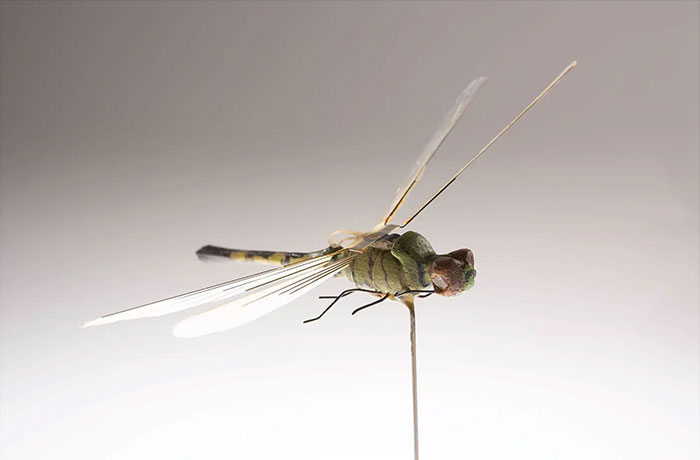
Developed by CIA’s Office of Research and Development in the 1970s, this micro unmanned aerial vehicle (UAV) was the first flight of an insect-sized vehicle (insectothopter). It was intended to prove the concept of such miniaturized platforms for intelligence collection.
Insectothopter had a miniature engine to move the wings up and down. A small amount of gas was used to drive the engine, and the excess was vented out the rear for extra thrust. The flight tests were impressive. However, control in any kind of crosswind proved too difficult.

Am now going to be on the lookout for farting dragonflies 🧐
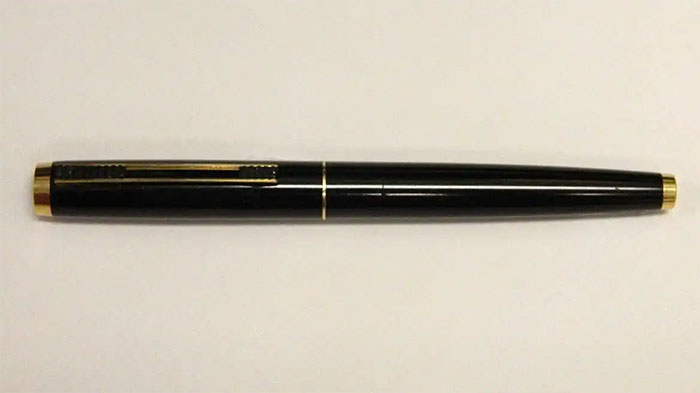
In the early 1970s, Aleksandr Ogorodnik was a Soviet bureaucrat serving his country in Bogota, Colombia. CIA recruited Ogorodnik in January 1974 and gave him the cryptonym TRIGON. As a CIA asset, Ogorodnik smuggled documents from the Soviet Embassy and brought them to a safehouse where CIA photographed them. The material he provided gave CIA valuable insights into Soviet policies in Latin America. To prepare Ogorodnik for his return to the Soviet Union in October 1974, at Ogorodnik’s insistence, OTS provided him a concealment (within the pen) modified to hold a cyanide capsule as a way to unalive himself in case he was caught. Although its features are not visible in this photo, the pen given to TRIGON used similar technology and tradecraft. TRIGON’s concerns were valid. In early 1977, TRIGON’s CIA case officers noticed the quality of his photos declined significantly, which led them to believe the Soviets were onto him. CIA later learned TRIGON had died on 22 June 1977. After the Soviet KGB had arrested him, he agreed to sign a confession—as long as he could use his own pen. When the KGB allowed him to do so, Ogorodnik bit down on the pen, releasing the cyanide, and died instantly.
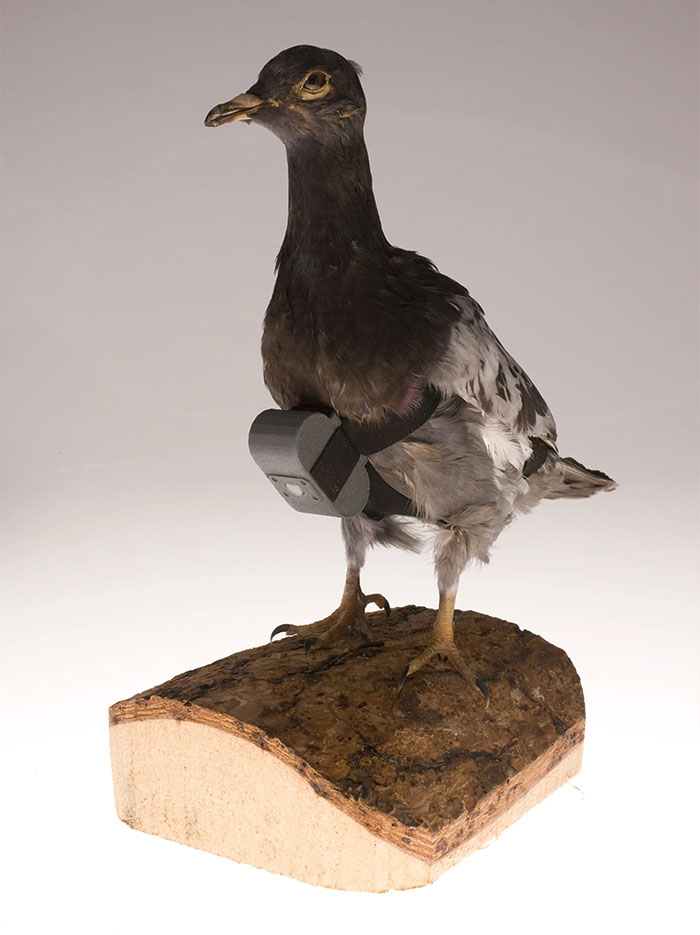
CIA’s Office of Research and Development developed a camera small and light enough to be carried by a pigeon. With the camera strapped to its breast, the bird would be released. With the camera running, the bird would fly over a target on its return home. Being a common species, the pigeon concealed its role as an intelligence collection platform among the activities of thousands of other birds. Pigeon imagery was taken within hundreds of feet of the target so it was much more detailed than imagery from other collection platforms. (Aircraft took photos from tens of thousands of feet and satellites from hundreds of miles above the target.)
The camera could be set to begin taking photographs after release or after a pre-set delay. The camera took a series of still images at a set interval. A tiny, battery-powered motor advanced the film and cocked the shutter. Details of pigeon missions are still classified.

I hope DJT declassifies pigeon intel. It would be the only thing I would approve of in his presidency.
Covert intelligence existed long before the CIA, and we are all familiar with it today. General George Washington was a master of this important skill and used it during the height of the Revolutionary War.
As the Commander of the Continental Army, General Washington used invisible ink as one of his main intelligence tools. As the name suggests, the ink would disappear and require another mixture to make it readable.
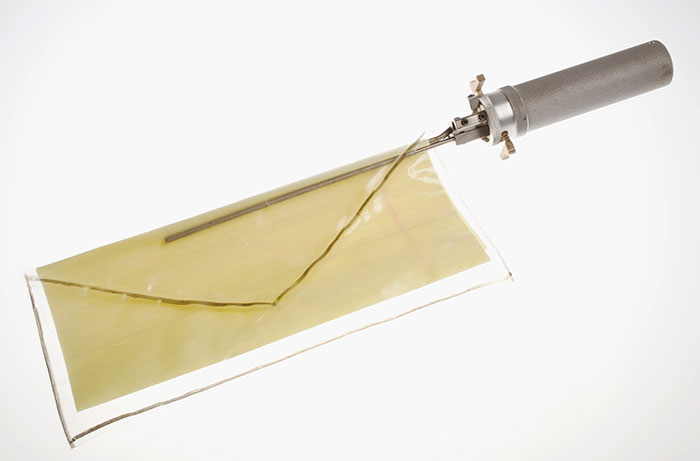
During World War II, one used this special pincer device to take letters from their envelopes without opening the seals. By inserting it into the unsealed gap at the top of an envelope flap, one could then wind the letter around the pincers and extract the letter from within.
Concealment devices allowed CIA officers to transport messages without suspicion.
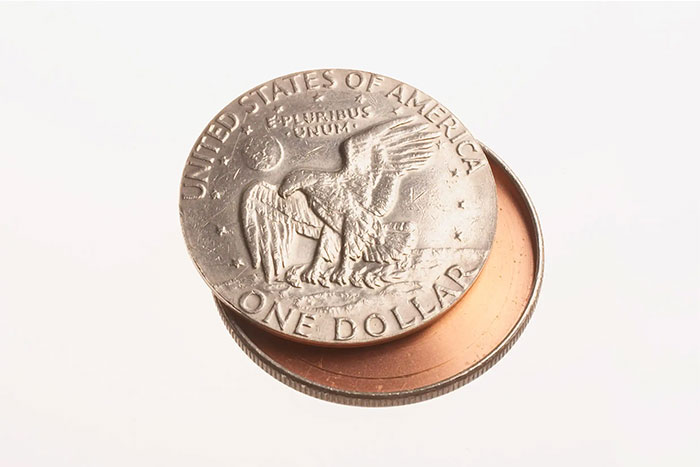
This coin may appear to be an Eisenhower silver dollar, but it is really a concealment device. It was used to hide messages or film so they could be sent secretly. Because it looks like ordinary pocket change, it is almost undetectable.
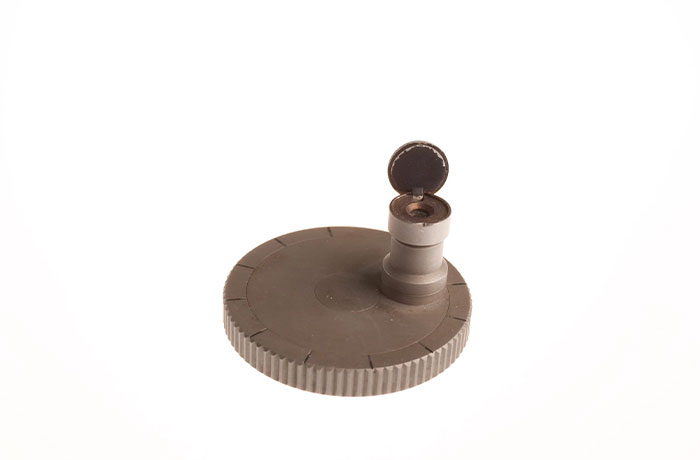
The secret transfer of documents became very difficult during the Cold War. Agents relied on the microdot camera to photograph and reduce whole pages of information onto a single tiny piece of film. This piece of film could be embedded into the text of a letter as small as the period at the end of this sentence.
Microdots were also hidden in other things such as rings, hollow coins, or other mailed items. The recipient would read the microdot with the aid of a special viewer, often cleverly concealed as well.
Now, some of you may be wondering what makes the invisible ink work. Fortunately, this information is no longer classified, and the CIA even published the ingredients on its official website. You can make this right in the comfort of your kitchen.
To make the ink itself, you will need a “weak solution of starch” and a “tincture of iodine.” Once that bluish ink fades, you will need five grams of potassium iodate, 100 grams of water, and two grams of tartaric acid to make it reappear.
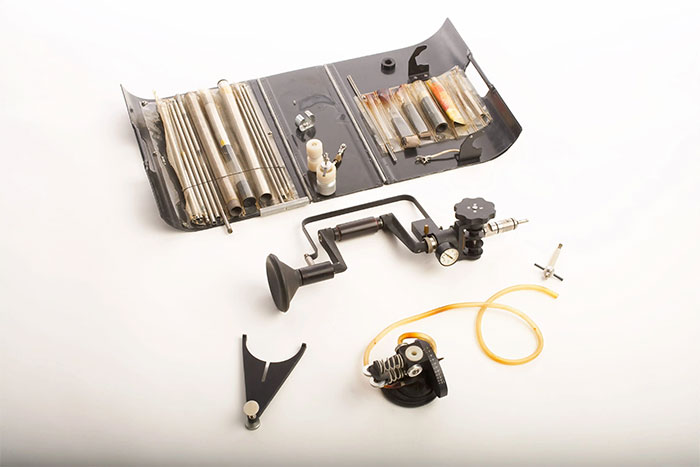
The flat, compact kit was easy for operators to conceal in transit. During use, the operator had to hold it against their stomach, earning the hand-crank drill its nickname “Belly Buster.”
CIA used the “Belly Buster” drill during the late 1950s and early 1960s to drill holes into masonry for implanting audio devices. After assembly, the base of the drill was held firmly against the stomach while the handle was cranked manually. This kit came with several drill bits and accessories.
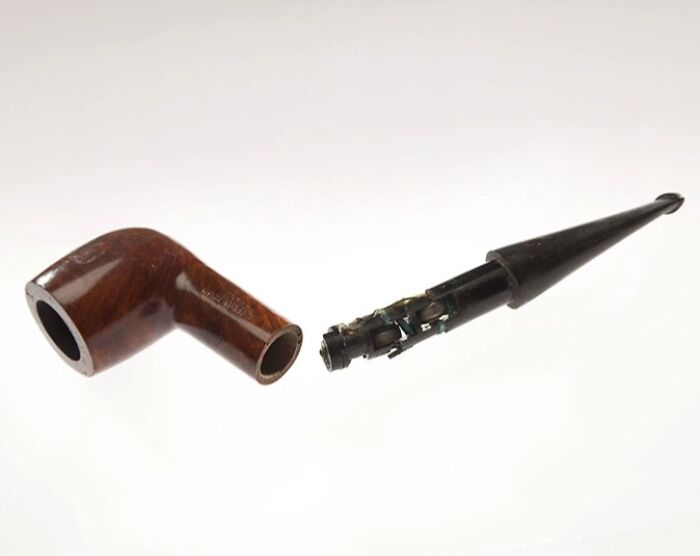
A subminiature radio receiver is concealed in this modified pipe. The user hears the sound via “bone conduction” from the jaw to the ear canal.
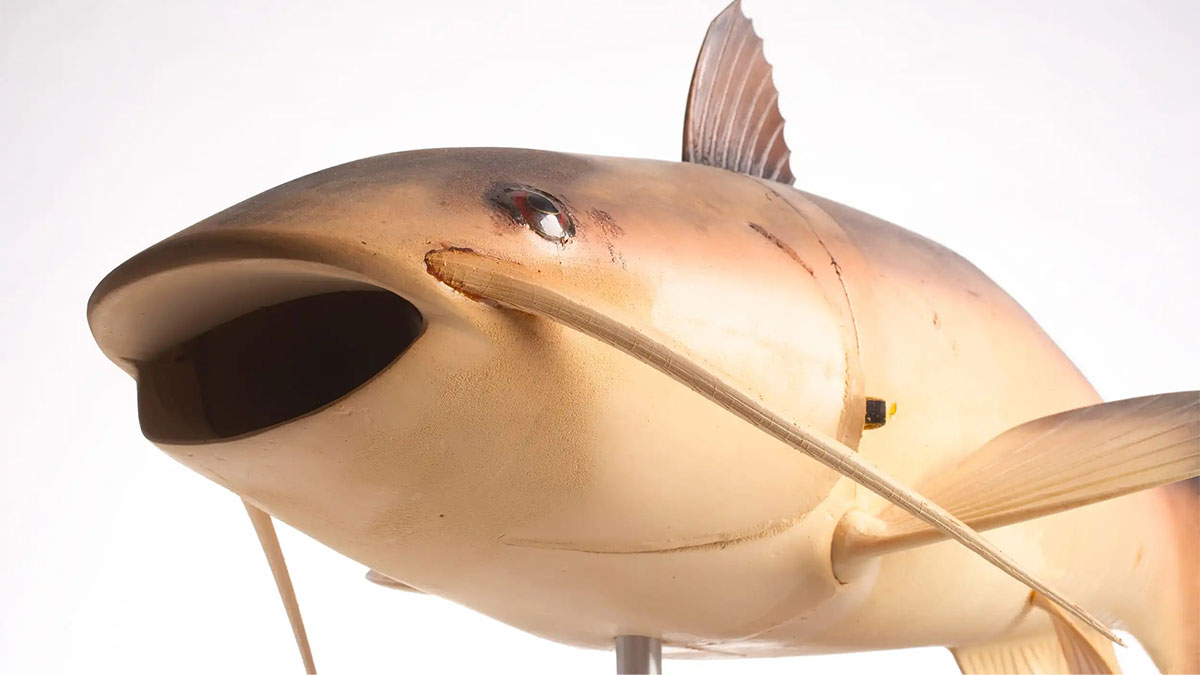
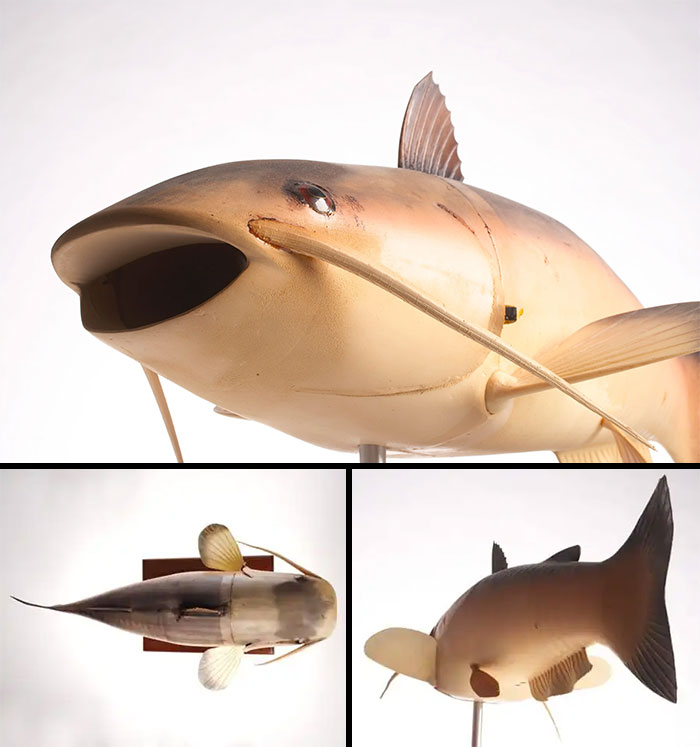
CIA’s Office of Advanced Technologies and Programs developed the unmanned underwater vehicle (UUV) fish to study aquatic robot technology. Some of the specifications used to develop “Charlie” were:
speed
endurance
maneuverability
depth control
navigational accuracy
autonomy
communications status.
The UUV fish contains a pressure hull, ballast system, and communications system in the body and a propulsion system in the tail. It is controlled by a wireless line-of-sight radio handset.
Apart from spy gadgets, the CIA also used propaganda campaigns to influence a population’s behavior. They primarily used three types: white, which used gentle persuasion; grey, which was mysterious in nature because the source was never identified; and black, which was misinformation that identified with one faction but was actually from the opposition.
An example of white propaganda was the leaflets that the CIA airdropped during the Persian Gulf War. It happened right before a bombing by the Allied forces to alert civilians and give them time to evacuate. At the same time, it urged opposing military units to surrender.
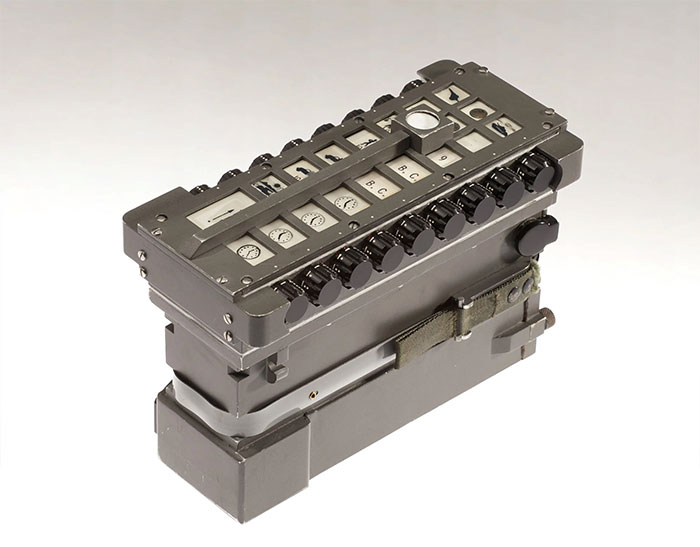
CIA technicians invented and used this unusual device in the 1960s to keep track of the enemy in Southeast Asia. The mission was to count people and supplies moving down the Ho Chi Minh Trail from North Vietnam to South Vietnam along the borders of Laos and Cambodia. Many of the Laotian trail watchers whom CIA recruited could not read or write, let alone understand English. And so the device featured “pictograms,” such as symbols representing troops, trucks, motorcycles, carts, bicycles, tanks, cannons, small artillery, missiles, donkeys, and yes, occasionally elephants, a common beast of burden in Laos. Alongside each pictogram was a knob that could be set to a number, and then the data could be transmitted to an airplane by activating a toggle switch. Though such devices were ingenious in concept and design, the realities of life on the ground in SE Asia meant that it was always difficult for CIA to arrive at an accurate measure of traffic on the trail.

For another interesting story about elephants about that time, look up Operation Dumbo Drop.
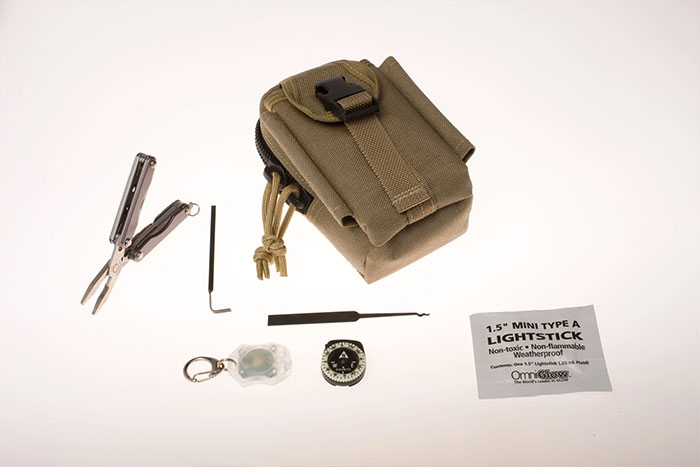
Designed for use by special operations personnel, this kit contains a number of survival tools, including a diamond wire to cut metal, fishing equipment, a ceramic blade, a can opener, lock picks, and a mini-Leatherman tool.
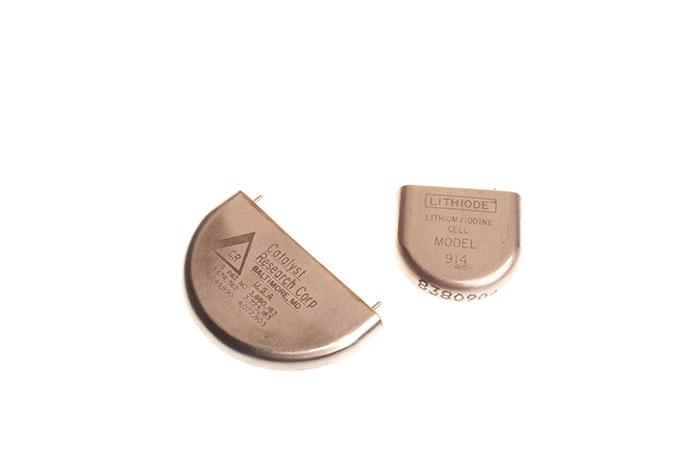
The Central Intelligence Agency often develops technology and conducts research that not only advances its mission but, when declassified, can have significant impact on the world. In the 1970s, the CIA shared research it had done on lithium-iodine batteries with the medical community. This same technology is used in heart pacemakers today.
But since we are on the topic of gadgets, the CIA also used certain items to open, read, and reseal letters and packages without the recipient’s knowledge. These “flaps and seals” kits were prevalent in the 1960s and were available for “beginner” and “advanced” users.
These days, you can buy these devices marketed as a “CIA letter opener” for $9.99. How times have changed.
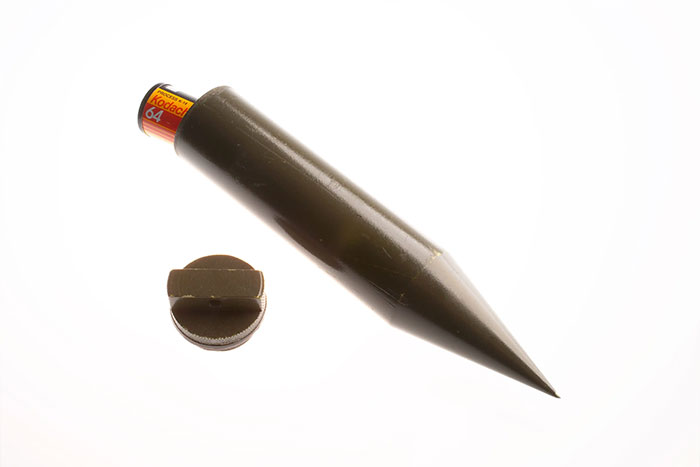
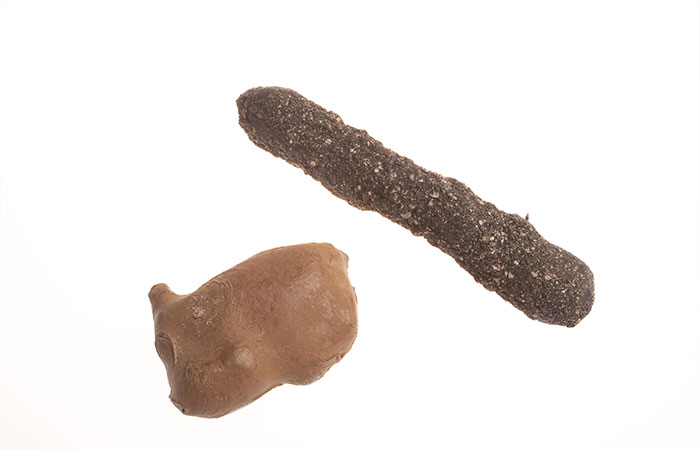
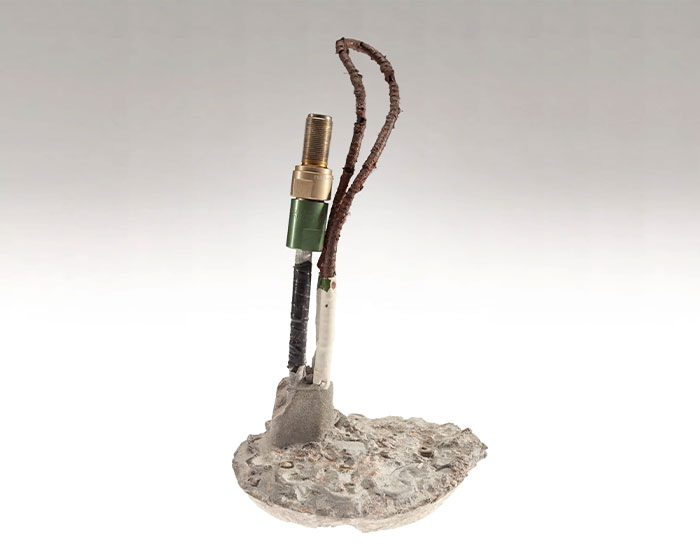
This dead drop was intended to look like a cemetery spike, which kept the drop from drawing any unwanted attention.
Communication between agents and their handlers always poses a risk. A “dead” drop allows secure communication by one person leaving and the other person picking up material later at a prearranged location. This eliminates the need for direct contact. This device is a spike that one could push into the ground. It is hollow and could contain messages, documents, or film.
These Cold War Era intrusion detectors were designed to blend in with the terrain. They can detect movement of people, animals, or objects up to 300 meters away. The devices are powered by tiny power cells and have built-in antennae. Transmitters relay data from the device via coded impulses.
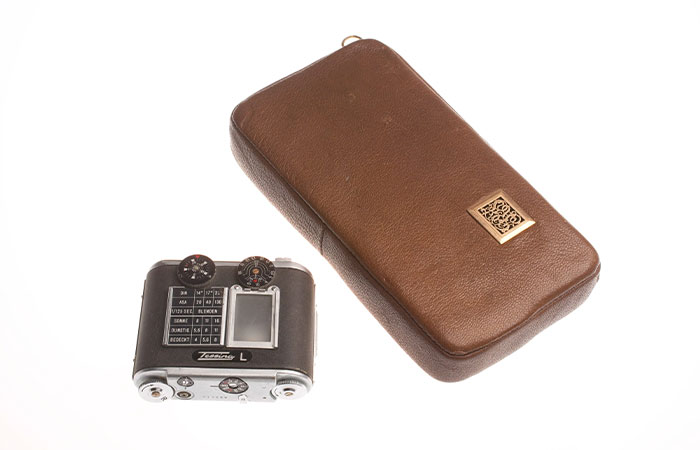
Tobacco pouches and other everyday items were used to disguise cameras for covert gathering of intelligence.
A miniature 35-mm film camera manufactured in Switzerland is concealed in this modified tobacco pouch. A spring-wound mechanism advances the film between exposures.
Let’s flip the discussion over to you, readers. Which of these CIA spy gadgets caught your eye the most? What do you think drew your attention? Share your insights in the comments below!

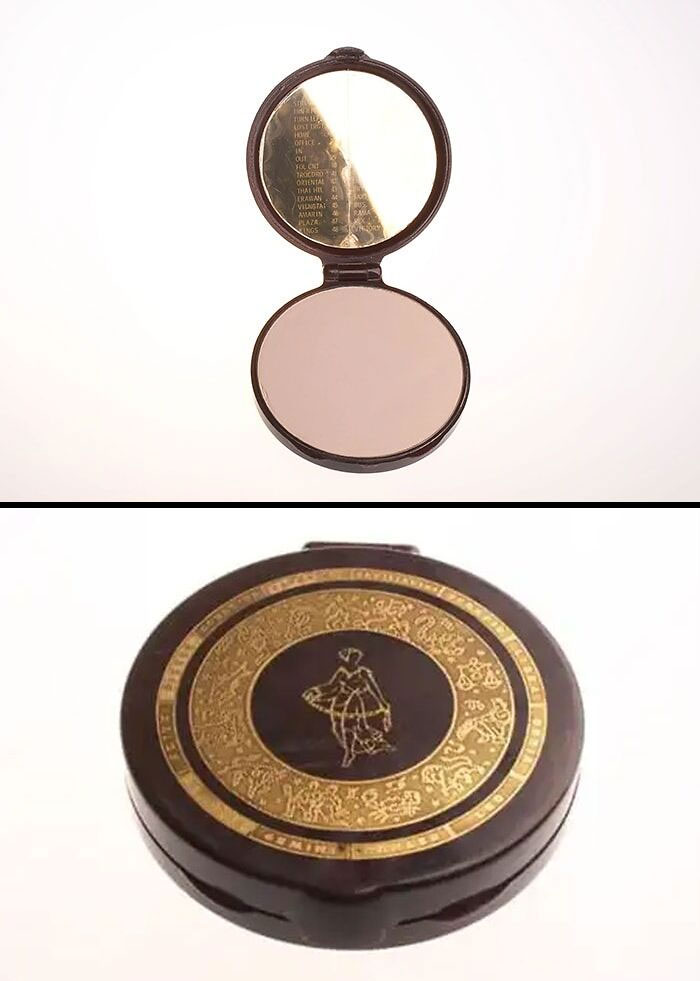
A code is a system of communication in which groups of symbols represent words. Codes may be used for brevity or security. Here, a code is concealed inside the mirror of a makeup compact. By tilting the mirror at the correct angle, the code is revealed.
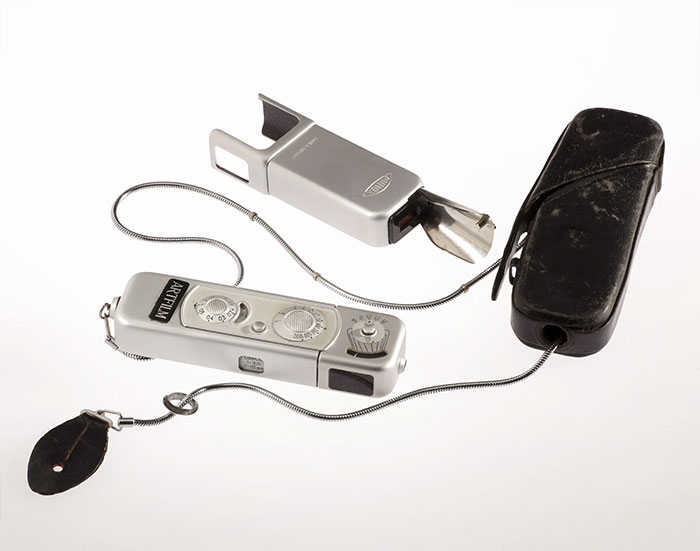
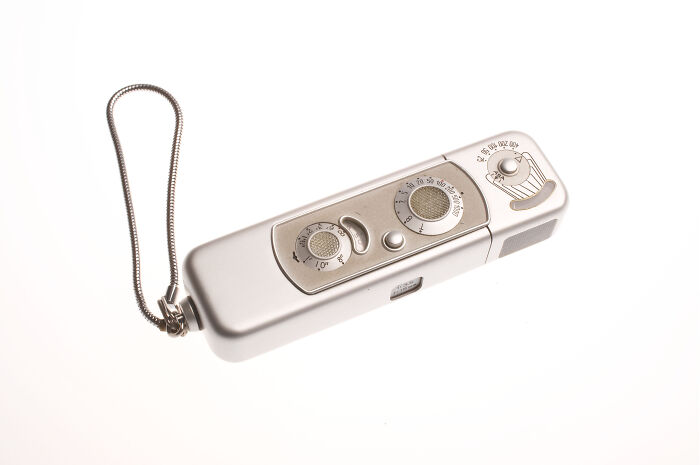
In 1936, Walter Zapp, a Latvian engineer, developed a portable camera that would fit easily into the palm of the hand and yet take high-quality, spontaneous pictures. The Minox subminiature camera, in its various models, was the world’s most widely used spy camera. When it first became available, the camera was considered a marvel of technology; it was originally made from steel in Riga, Latvia, from 1937 to 1944.
Minox used film one-quarter the size of standard 35-mm film, with 50 frames loaded in a cassette. The ultra-light aluminum-shell Minox B was produced from 1958 to 1972. Because of its small size, it was easy to conceal. It could take excellent photographs of documents at close range and was a natural for secret photography.
In 1969, the Minox C was introduced with an electronic shutter. It is no longer in production. Convicted KGB spy John A. Walker, Jr., used a Minox C to photograph sensitive National Security Agency codes.
The Directorate of Science and Technology developed cutting-edge tools for CIA officers to use to gather and analyze intelligence.
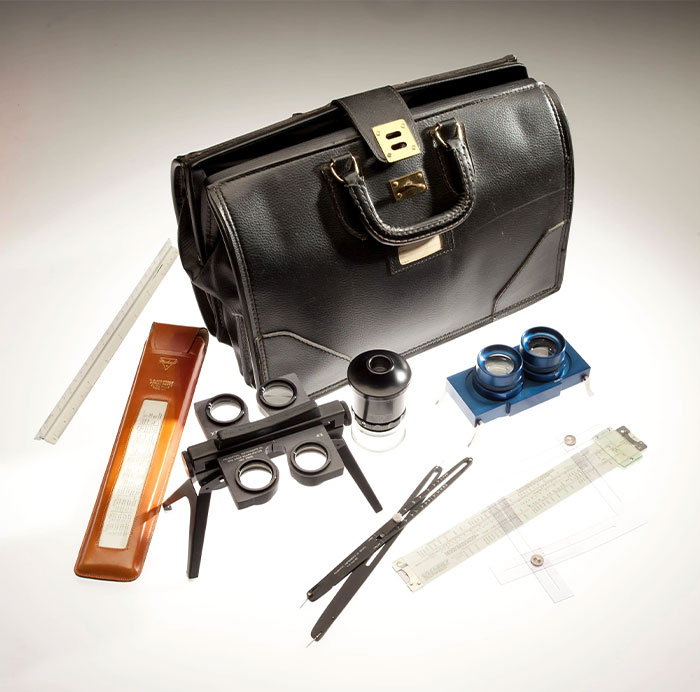
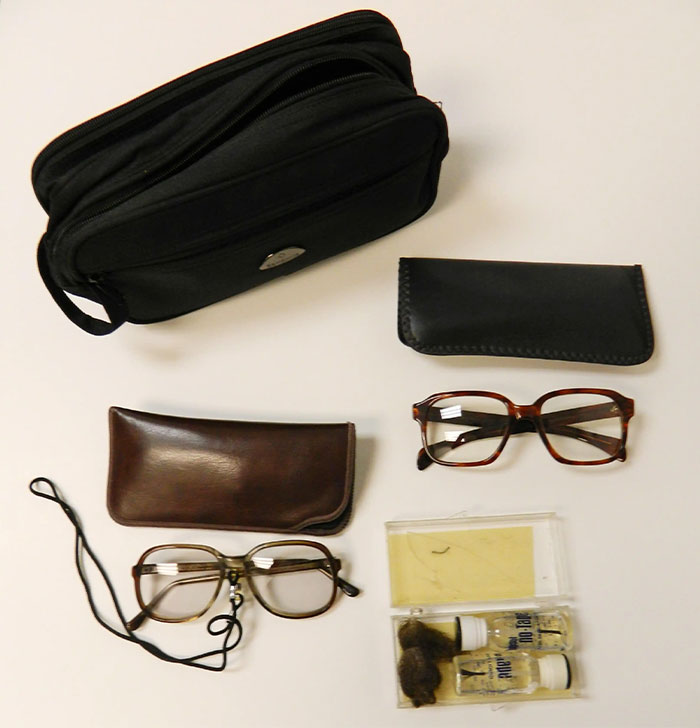
This briefcase contained the basic tools that a CIA photointerpreter might need to conduct imagery analysis in the field to support an ongoing operation.
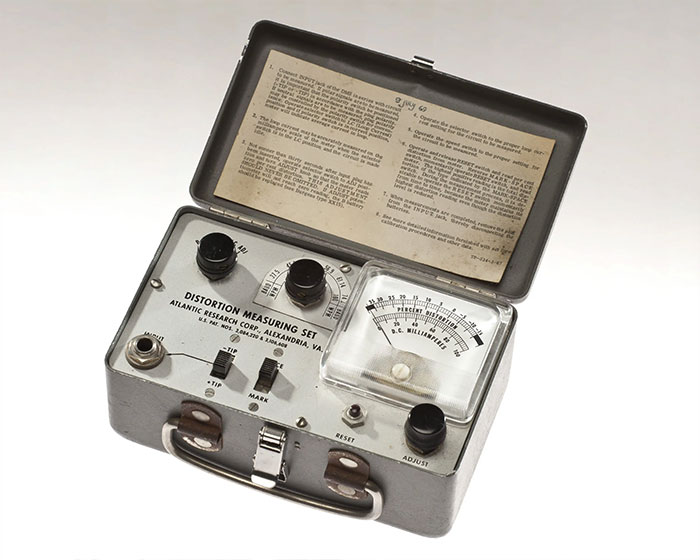
Atlantic Research Corporation’s distortion measuring set was used to analyze the percentage of distortion on a communications circuit in Bangkok. This unit is dated “9 July 1969.” At that time, Bangkok Bureau was located in its first office on Soi 39.
Identity specialists in Technical Services Staff, Technical Services Division, and Office of Technical Service have harnessed the creativity and hard work of artists, scientists, and field operators to achieve the goal of invisibility. America’s shadow warriors continue to depend on them to successfully infiltrate hostile territory undetected. As a career specialty, the practitioners of this art know that what they do preserves the freedom of some users and protects the lives of others.
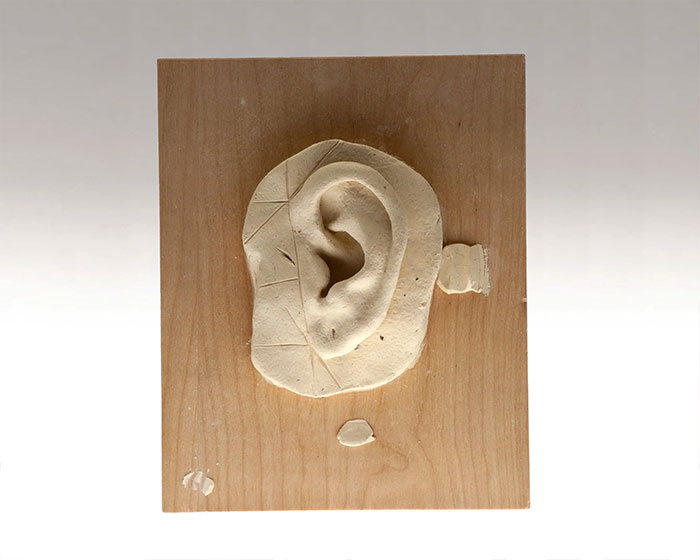
Artistic skill and an eye for detail are needed when reproducing three-dimensional subjects like this, a “test” ear sculpted as part of the screening process for disguise-specialist applicants.

"the practitioners of this art know that what they do preserves the freedom of some users and protects the lives of others." Are we discussing the same CIA that run the School of T0rture at the Academy of the Americas, and routinely employed T0rture in post 9/11 interrogations? Or the CIA that had multiple world leader assassinated? Or the CIA that run test on unwilling participants on American soil? Or the CIA thar tun operation CHAOS to quash political opposition to Nixon violating civil rights? Or the CIA that attempted to run a false flag operation to start a war with Cuba?
Intelligence devices often had to be concealed to keep the officer from arousing suspicion.
What looked like a concrete ball was actually a “gap-jumping antenna” removed from one of the preformed concrete columns in the embassy office building. US investigators called it “gap-jumping” because it coupled magnetically with a matching antenna in the adjacent column. This allowed data to be transmitted without a physical electrical connection.
In December 2001 a team of CIA/DS&T officers used this tool to uncover a 2,400-pound Improvised Explosive Device (IED) buried in the dirt-covered roof of the governor’s palace at Kandahar – rendering it safe just minutes before it was set to detonate.
The fast moving actions of these technical experts saved the lives of many officials of the new Afghan government as well as US and Coalition forces. Within hours of this team’s arrival in Afghanistan, each of its members had earned the Intelligence Star – one of the CIA’s highest honors awarded for an act of courage performed under hazardous conditions subject to grave personal risk.
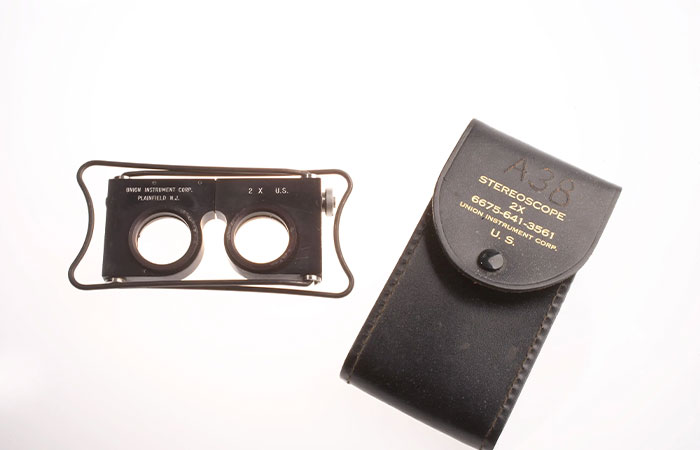
Stereo viewing combined two images to create the appearance of one 3-D image. During World War II, Allied photographic interpreters used the stereoscope to analyze photos of enemy territory taken by airplane-mounted cameras. Three-dimensional views were possible using stereo image pairs.
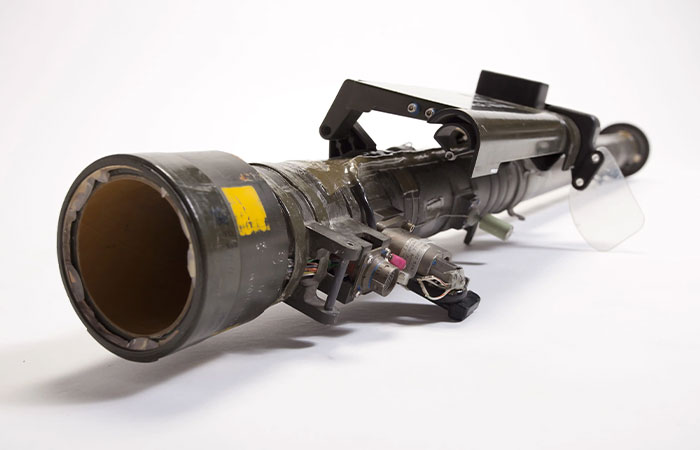
The United States supplied Afghan guerillas with Stinger missiles, which allowed them to take down Soviet gunships and drive the Soviets out of Afghanistan. The Stinger missiles supplied by the United States gave Afghan guerrillas, generally known as the Mujahideen, the ability to destroy the dreaded Mi-24D helicopter gunships deployed by the Soviets to enforce their control over Afghanistan. Three of the first four Stingers fired each took down a gunship. The guerrillas were now able to challenge Soviet control of the airspace above the battlefield. Mujahideen morale soared as Soviet losses mounted. By 1989, the Soviet Union had concluded that the fight was not worth the cost and withdrew from the country.
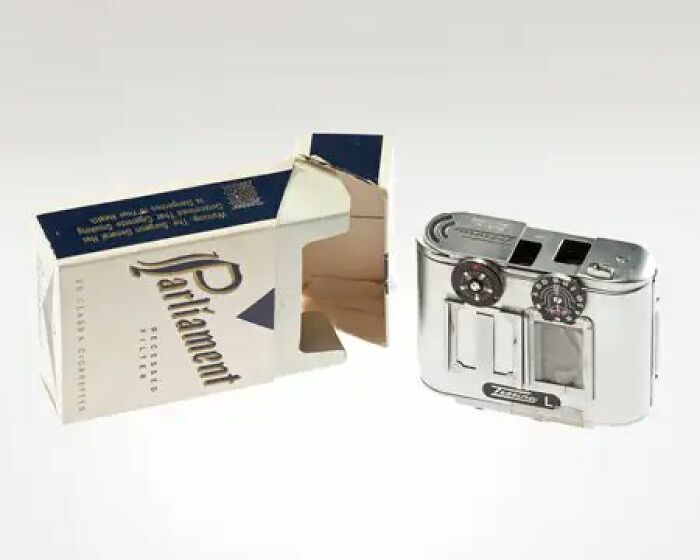
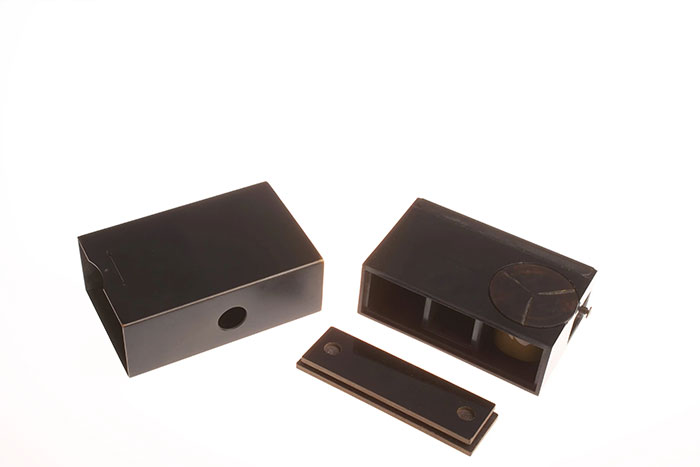
The “matchbox” camera was deployed “behind the lines” by resistance personnel in World War II for target recording and propaganda photography.
The Eastman Kodak Company developed and manufactured this camera for use by the Office of Strategic Services (OSS). It was made in the shape of a matchbox of that era. It could be disguised by adding a matchbox label appropriate for the country in which it was to be used.
The camera used 16-mm film. It was deployed “behind the lines” by resistance personnel in World War II for target recording and propaganda photography. Designed to be operated with a minimum of user-adjustable settings, the camera featured rugged construction and controls that could be operated by “feel.”
Walter Zapp, a Latvian engineer, developed a portable camera that would fit easily into the palm of the hand and yet take high quality, spontaneous pictures. The Minox subminiature camera, in its various models, was the world’s most widely used spy camera. When it first became available, the camera was considered a marvel of technology; it was originally made from steel in Riga from 1937-1944.
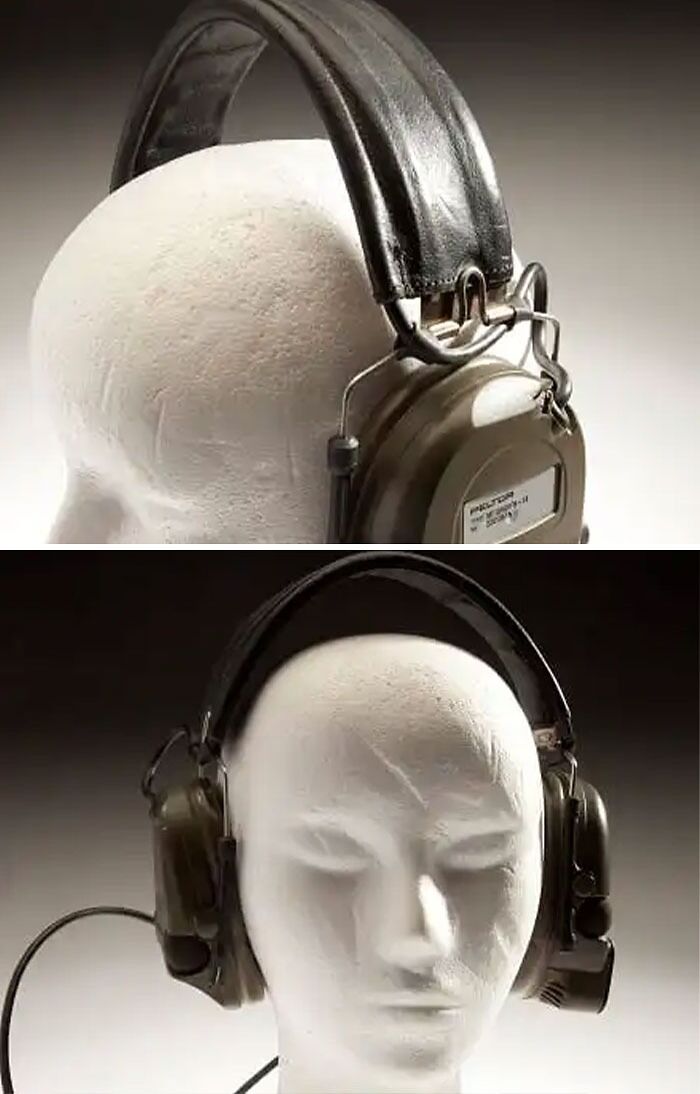
A CIA officer wore this communication headset as he led his indigenous team in pursuit of a high-ranking enemy in Afghanistan in 2009. Eventually cornered in a valley, the enemy took rifle shots at his pursuers. Two bullets grazed the headset, one on each side, just inches from the officer’s face. The officer then called in an air strike that put the enemy out of commission.
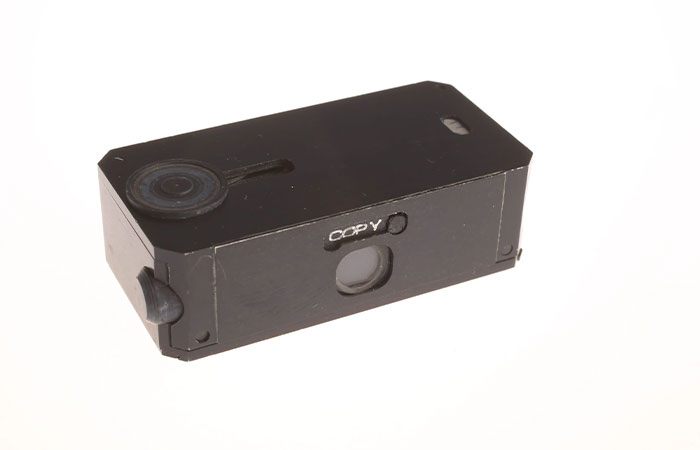
CIA’s Directorate of Science and Technology developed several types of cameras for covertly gathering intelligence.
This subminiature camera isn’t much larger than its film cassette. It could be used to photograph both documents at close range and building sites at a distance.


If the US could come up with these devices, I wonder what secret devices other enemy nations came up with to spy on the US.
If the US could come up with these devices, I wonder what secret devices other enemy nations came up with to spy on the US.

























 No fees, cancel anytime