Get Premium
Dark mode theme is available exclusively for premium users. Learn more about the benefits of subscribing.
No fees, cancel anytime.

 Dark Mode Ad-Free Browsing Unlimited Content
 Ad-Free Browsing Unlimited Content Dark Mode
Join 1.2 million Panda readers who get the best art, memes, and fun stories every week!


We often hear fascinating stories about how things originated: the universe, the wheel, even pizza. But when it comes to the words we toss around every single day without a second thought, it’s wild how little we actually know about where they came from.
So today, we’re diving deep into the secret lives of everyday words you probably never thought twice about. From ancient insults to fearless Viking warriors and quirky medieval rules, we’ve gathered some of the most surprising and delightful word origin stories out there. Keep scrolling, you’ll never look at your daily vocabulary the same way again!
This post may include affiliate links.
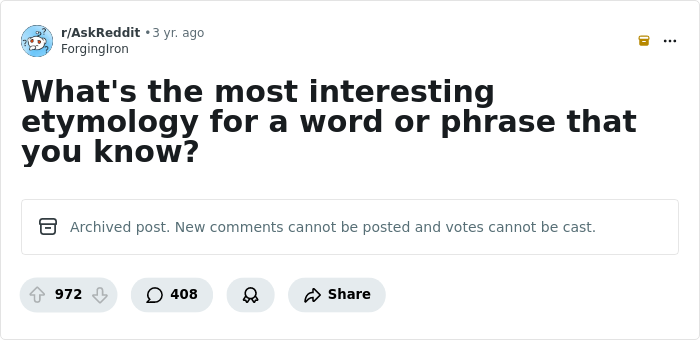
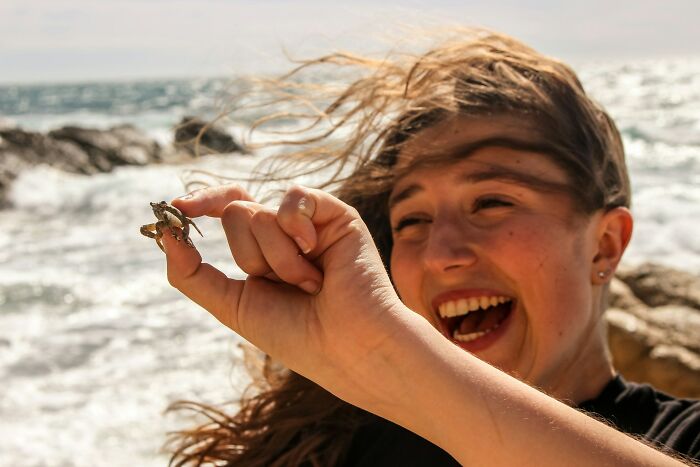 The term "serendipity" refers to the occurrence of fortunate and unexpected discoveries while searching for something unrelated.
The word was coined by Horace Walpole, an English writer, in a letter he wrote in 1754. Walpole derived the term from the Persian fairy tale "The Three Princes of Serendip," which tells the story of three princes from the island of Serendip (the old name for Sri Lanka). In the tale, the princes possess a keen ability to make accidental discoveries and solve problems through their wit and astute observations.
Walpole was inspired by the story's theme of unexpected discoveries and applied it to describe similar occurrences in real life. He created the word "serendipity" to capture the concept of finding valuable things by chance while seeking something else entirely. It's a wonderful example of how a literary reference can shape the formation of a word and contribute to the richness of the English language.

every time i see the word serendipity, i think of the pokémon fezandipiti
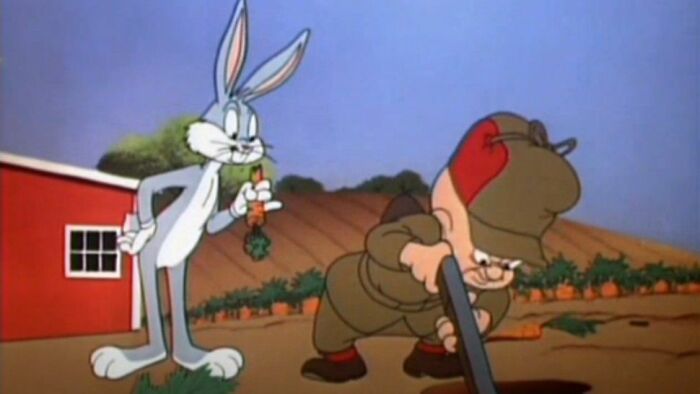 The word "nimrod" always amuses the hell out of me. It originally was the name of a great hunter from the bible. Today, it means a foolish or inept person. That meaning comes from Bugs Bunny.
In one of the older Merry Melodies cartoons Elmer Fudd is trying to hunt Bugs. As an insult, Bugs calls him "a regular Nimrod". Bugs was trying to insult his hunting prowess by comparing him to a great hunter, but many of the children watching didn't know that, and they assumed he was calling him an idiot. And so the new meaning was born.
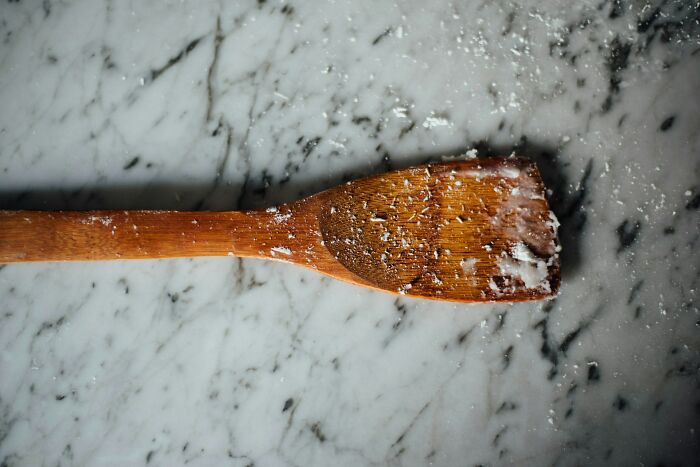 Simplified cute version - "spatula" means little sword, and we get the french word épée from the same root!
Complicated version - "spatha" is the latin word for a broad blade of wood or metal, and was also used to refer to a specific kind of longsword. Spatula is the diminutive form, meaning "little longsword" or "little broad-bladed tool." This root also evolved into the word "spade" (more on the tool side) and "épée" (more on the sword side.)
So every time i pick up a spatula i always think "my little sword :) 🗡🗡".
The English language, as we know it today, has been around for roughly 1,400 years. Its roots trace back to a West Germanic dialect brought to Britain by the Anglo-Saxons during their migration in the mid-5th century. What started as a regional tongue evolved into one of the most widely spoken languages in the world. From Shakespeare to social media, English has traveled far. But behind every word lies a piece of history.
The Anglo-Saxons played a major role in shaping English vocabulary. Surprisingly, many of the words they used centuries ago are still in use today! Words like “man,” “house,” “chicken,” and “laugh” can be traced directly back to Old English roots. That’s right, around 4,500 Anglo-Saxon words have stood the test of time. Despite how much English has changed, some core words haven’t gone anywhere. It’s wild to think that the same terms we casually drop in conversations today were once used around medieval campfires and battlefields. Talk about longevity.
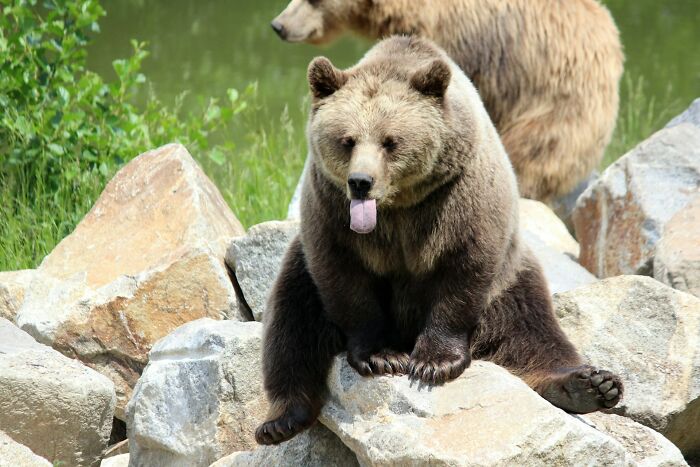 Bear comes from the old English Bera which means brown one, they had a word for bear but it was considered bad luck to say it and it was completely forgotten, being replaced with the euphemism.
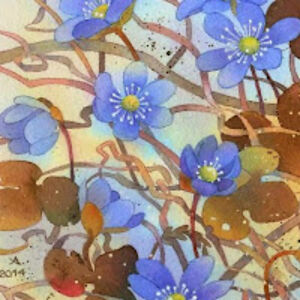
"Karu" (Estonian word for bear) is related to the word "karune" (covered with coarse fur). Fun fact - due to this the name of the flower "karukell" ( Pulsatilla Mill.) can mean either a hairy bell or one of a bears pair of "jingle bells".
 "Helicopter" is not "heli" + "copter", it's "helico" (helix) + "pter" (wing). So something like a "helipad" or "quadcopter" is an example of rebracketing. In theory, the word "helicopter" would be pronounced as "heh-li-coh-tare" (or something approximating that) if the division of the word was kept consistent from its origin. It's an interesting example of language evolving presently, because we've created a new prefix and a new suffix out of a modern word.
 Sabotage comes from when people would throw their wooden shoes "sabots" into machines to break them. It's also where the term "to clog" coms from.
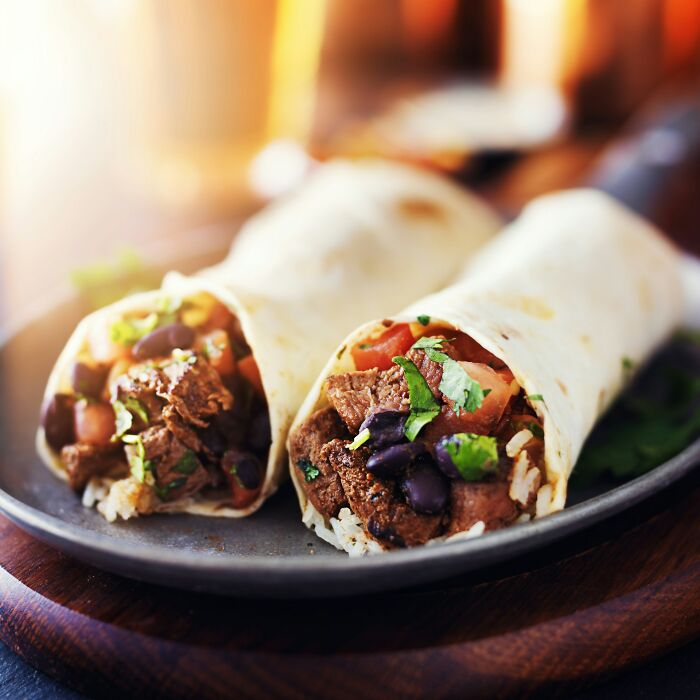
Burrito is Spanish for "little donkey." They're called that because they can hold a lot of stuff, like a donkey.

Burro, donkey, and a*s are different names for the same animal. A j*****s is a male a*s. A female a*s is jenny or jennet. A male mule is also a jack, but a female mule is a molly.
Over the centuries, English has gone through massive transformations. From Old English, to the Middle English of Chaucer, and finally to Modern English, the language has evolved beyond recognition. If a speaker from the 10th century tried to talk to us today, we’d barely understand a word! Pronunciation, grammar, and vocabulary have all shifted dramatically. Yet, the threads of history still run through our language.
 The word “awful” has a negative connotation now, but once was a positive and superlative form of awe. The old connotation still exists when we tell people “that was awfully nice of you to have done that.”
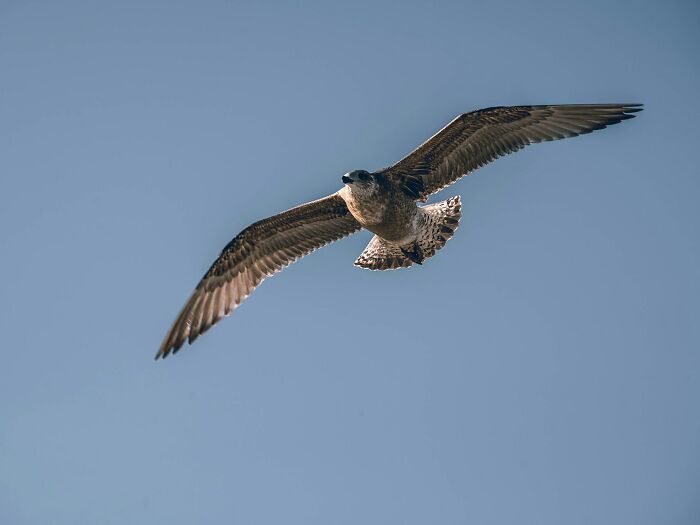 In falconry, the birds are held with traces: leather strips tied to their legs. To secure the birds in the hand, you wrap those traces around your little finger and tuck it under your thumb. So the phrases referring to control of another, "Wrapped around my little finger" and "Under my thumb", come from the technique of hunting with birds of prey.
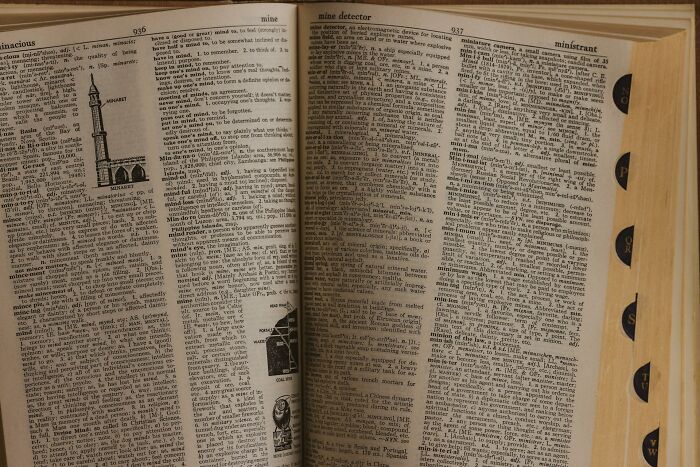 *Bunk, debunk, bunkum* and *buncombe* (less used than the others) all have the same root — a county in the North Carolina mountains.
A US Representative whose district included Buncombe County, North Carolina, where Asheville is located, gave an intentionally long-winded, pointless speech in Congress. His goal was to simply to make news back in Buncombe.
So *buncombe* came to mean a meaningless speech, which got shortened to *bunkum* and *bunk*, and eventually gained the broader definition of a false explanation, and hence *debunk*.

Bunk comes from 17th century Scottish - bunker - name for a recess for sleeping.
In fact, nearly 1,000 new words are added to the English dictionary every year. From internet slang to scientific innovations, every new term carries its own story. These fresh additions reflect how we live, work, and think. Words like “selfie,” “ghosting,” and “metaverse” didn’t exist just a few decades ago. But now, they’re everyday lingo.
 Bank comes the Italian word for bench. Bankers in Italy would sit on benches in marketplaces and manage people's money as well as give loans.
 "Escalate" coming from the brand-name of a moving staircase company, "Escalator", was very surprising to find.
The root word comes from the same source as 'scale' as in scaling a ladder or mountain.
 The word "true" and the word "tree" have the same root (pun absolutely intended). They both come from an Indo-European word "deru" meaning strong or steadfast, which then evolved into the protogermanic "treowe" meaning firm, real, rooted in the ground. The word "true" was an evolution of the figurative meaning while "tree" was an evolution of the literal meaning.
We spoke to Rosemary Joseph, an experienced English teacher from India, to get her perspective on the language’s hidden depths. With over two decades of teaching behind her, Rosemary has seen just how little attention most students give to word origins. “There’s so much to learn about the English language that we often neglect the roots,” she says. According to her, understanding where a word comes from can help students appreciate its meaning more fully. And it’s not just academic, it can be fun too! Etymology adds a layer of curiosity to everyday words.
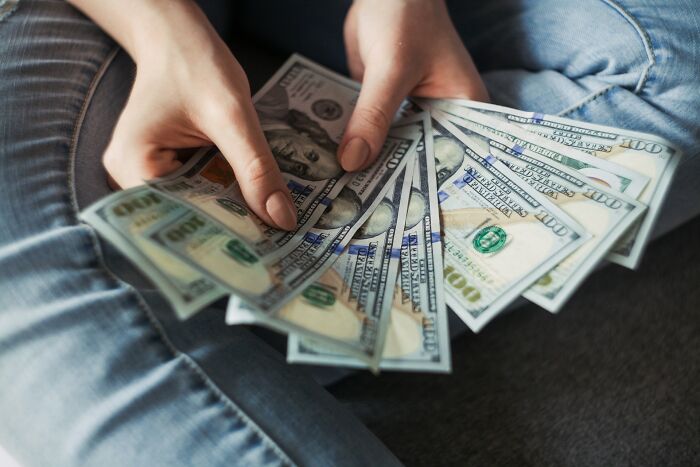 The word Salary has its root in the word Salarium, which was the payment for Roman soldiers, a portion of which, was Salt, hence, Salarium.
It's also where the root of the phrase "Worth Their Salt" comes from, it means they're worth the Salarium (now Salary) you pay them!
 "Lieutenant": from French. "Lieu" is French for "place", as in "in lieu of". "Tenant" is French for "holder", same as the English word for someone holding a lease.
"Lieutenant": "placeholder". Bookmark. Someone standing in for someone else.
 Nostalgia = Nostos (return home) + Algos (pain). Coined in 1688 by Swiss physician Johannes Hofer to describe a medical condition, combining these Greek words.
“Some of the stories behind common words are absolutely fascinating,” Rosemary shares. “I always try to include word origins in my classes and most students are shocked!” Imagine finding out the word “salary” comes from the Latin word for salt, or that “quarantine” has roots in the number forty. It adds a new layer of meaning, and often a touch of humor, to what we thought were just normal words.
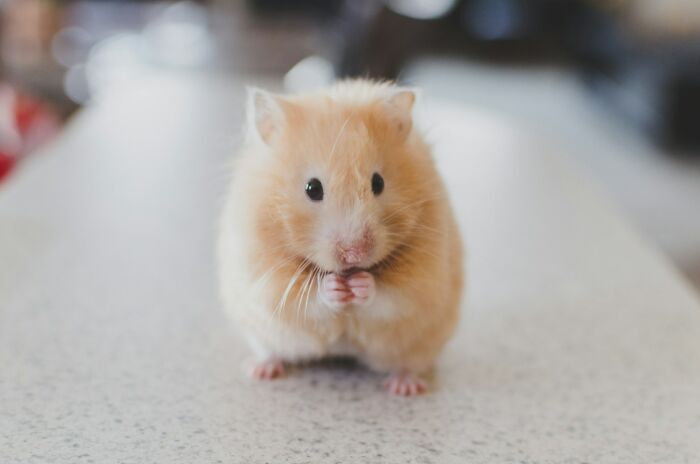 Muscle and mouse come from the same origin. Apparently someone thought it looks like a mouse is running under your skin.
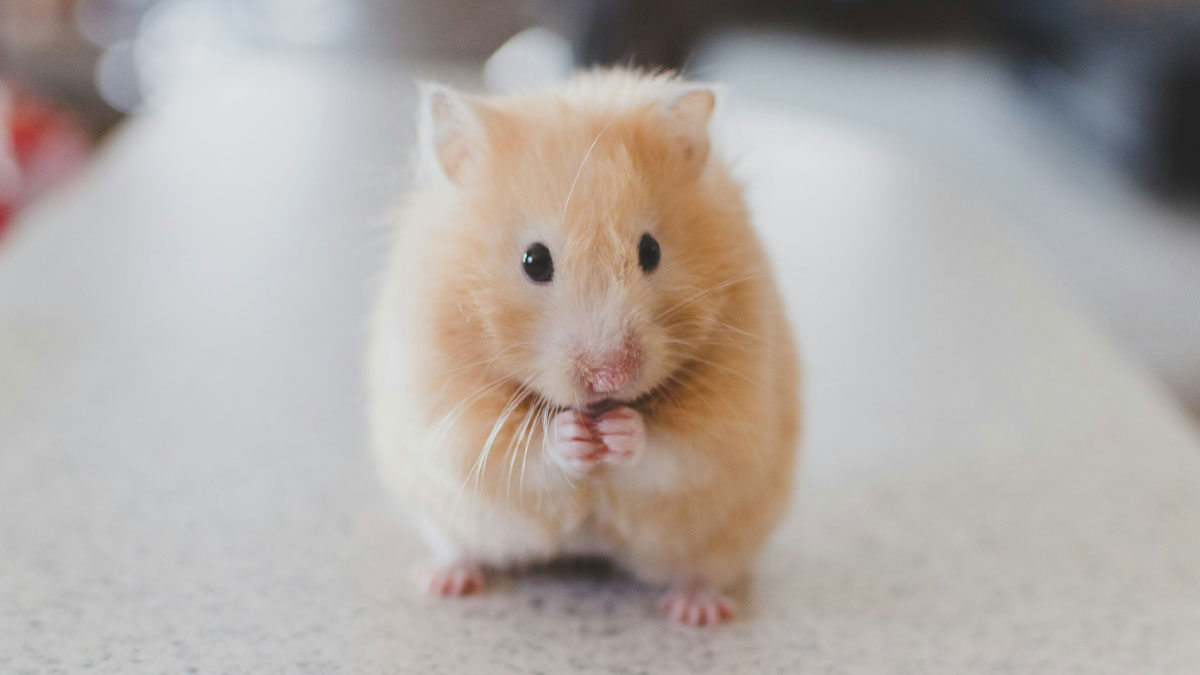
Guess nobody at BP realized that that's not a mouse in the image, but a hamster...
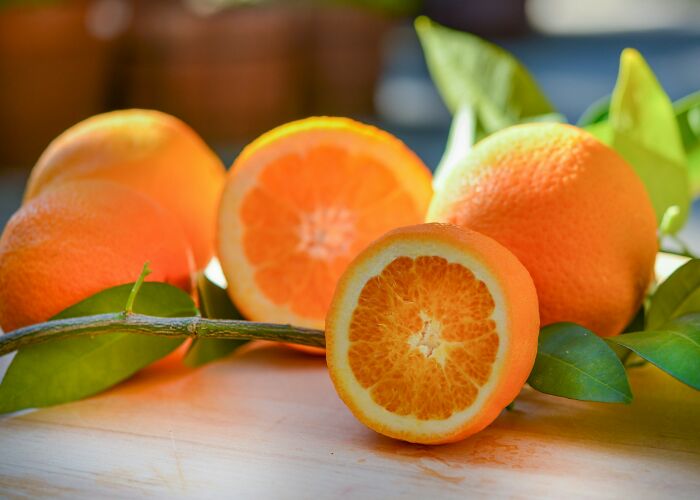 The word orange was the word for the fruit before it was the word for the colour.
 There's two words in English that refer to borrowing words from other languages. The first is "calque", or loan translation, which is when a word or phrase in a foreign language is translated, then imported. For example, the phrase "by heart" calques the French phrase "par coeur". Going the other way, many non-English languages calque the word "skyscraper" (e.g. "gratte-ciel" in French).
The other is "loanword", which is a word in a foreign language that is used as it is. Some examples are "chutney" and "haiku", both of which are proper words in the source language.
The interesting thing is that "calque" is a loanword (of French origin), while "loanword" is a calque (from the German "lehnwort").
Over time, the English language has borrowed words from Greek, Latin, Sanskrit, French, Arabic, and more. For example, “guru” comes from Sanskrit, “algebra” from Arabic, and “chaos” from Greek. This fusion makes English uniquely diverse. Rosemary emphasizes that understanding these borrowings can open students' eyes to global connections. “It helps them see that language is never created in isolation,” she notes.
 Plurals used to be described with "en" at the end before an 's' was used. Shoes were "sheen" etc. Some words have stayed that way such as oxen and children but most changed to the s ending. Shoes for example.
 Goodbye is a contraction of God be with/by ye.
Taser was originally an acronym for Tom A. Swift's Electric Rifle. Tom Swift is a character from a series of sci-fi novels. He didn't have a middle name, so the A was arbitrarily added to make the acronym look more like a word.
& used to be the last letter of the alphabet, so the alphabet ended with "X, Y, Z, and, per se, and". "And, per se, and" became ampersand.
Sideburns are named for Ambrose Burnside.
 Sinister means left handed.
If you ever stumble upon a new word, Rosemary suggests digging into its background. “Even a quick online search can reveal fascinating things,” she says. Knowing where a word comes from can help you use it better and remember it more easily. It also builds vocabulary in a way that sticks. For students, writers, and curious minds alike, exploring etymology is a rewarding habit. It turns memorization into a journey.
 The word "sniper" and "to snipe" come from the act of hunting the water snipe, which is a very erratically flying and easily startled bird, so as such you would need to be stealthy and quite a good shot.
 Donnybrook (n.)
*”scene of riotous disorder, heated argument," 1852, from Donnybrook Fair, which dated to c. 1200 but which by late 18c, had become proverbial for carousing and brawling, held in County Dublin until 1855.*
The idea of a whole Irish town that had such a rowdy annual fair that it’s place-name became synonymous with “brawl” just cracks me up.
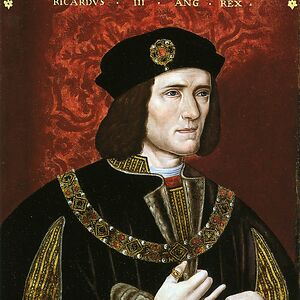
Look up the Wikipedia article about Irish inventions. After whisky there's nothing for a couple of hundred years.
The words "isle" and "island" does not have the same root. "Isle" is from old french and eventually latin. "Island" is from old germanic languages. The reason "island" has a silent "s" is that it was assumed that they shared the same root, and the "s" in "isle" was also silent. Thus the "s" in "island" has always been silent since its introduction.
Me coming from a language that is read exactly as it is written: Wait! the "s" in island is supposed to be silent!?
At the end of the day, words are more than tools for communication. They reflect values, cultures, and time periods. “Sometimes a word has deeper meaning than we realize,” Rosemary says. From ancient rituals to forgotten customs, the stories behind words can offer surprising insights. They can reveal what people once feared, celebrated, or prioritized. So next time you use a word, pause for a second. You might just uncover a hidden world buried in a single syllable.
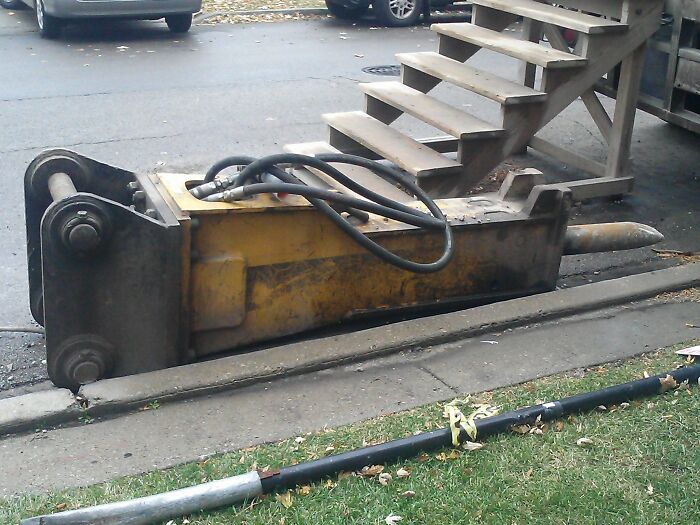 "Jack" used to mean a labourer. Hence "jack of all trades", "jack" as a device for lifting something, a "jack-hammer", etc.
 A threshold was a plank laid across the opening of a door to hold back the thresh (hay or straw used as insulation on the earth floor of huts) from spilling out and so preventing the door from closing.
 This was most surprising to me, but I always figured that "Honcho" was slang from a romance language, like Italian or Spanish. But nope! It's a direct translation of the Japanese word "班長" (hanchō, or "group leader").
From quirky roots to everyday classics, these posts show just how wonderful language can be. Which word origin surprised you the most? Are there any phrases you use all the time but never stopped to question? Share this article with an English lover or a curious friend, you might just spark a fun debate.
 Emoji is from Japan
The word in Japanese breaks down into “picture character”.

As is sudoku, which is a contraction of the words that translate as "the digits must remain single" or thereabouts.
"Pidgin English" is a mis-hearing of "business English" 300 years ago when English and Chinese traders had a short list of words they used to conduct commerce.
 *Lunatic* is derived from the word *Lunar*, because Lunar refers to Earth's moon, and when there is a full moon, it often turns people into "lunatics".

According to the old European belief (shared by medical doctors and scientists) the celestial bodies have a strong influence on our organs: the Moon influences the brain (it was said that during full moon the brain swells) and the bone marrow, the Sun controls the heart, and so on.
 Two-piece swimsuits have existed for a while but the modern-day version that is known as the "bikini" was actually designed by a French engineer named Louis Réard. He actually named it after the Bikini Atoll coral reef which is located in the Marshall Islands in the Pacific Ocean. The same Bikini Atoll where the US conducted a series of nuclear weapons tests in the 40s and 50s. So yes, the scanty swimsuit was actually named after a geographic feature that has an interesting history of its own.
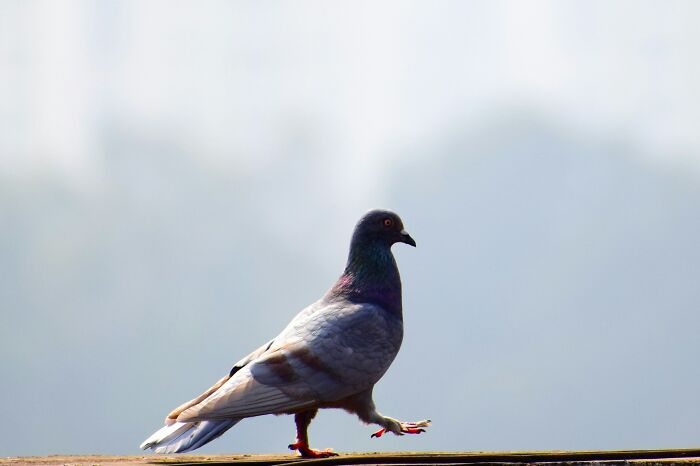 Porumb (Romanian word for corn) comes from the Latin word "palumbus" (it translates to pigeon). Porumbel (pigeon) comes from the same Latin word.
 The word "logbook" has its roots in nautical terminology. It is derived from the combination of two words: "log" and "book."
The term "log" refers to a device used to measure the speed of a ship in knots. In earlier times, a log was a wooden float attached to a line with knots tied at regular intervals. The line with the log would be thrown overboard, and the number of knots that passed through the sailor's hands in a specific time period would determine the ship's speed.
The word "book" simply refers to a written record or a bound collection of pages.
The combination of "log" and "book" resulted in "logbook," which originally referred to a book where sailors would record the speed measurements obtained using the ship's log. Over time, the term expanded to encompass other types of records kept on ships, such as navigational information, weather conditions, and notable events during a voyage.
The word "cliche" comes from sounds made by a printing press. Specifically, it described the printing plates pressing against the paper. Common expressions or idioms often had the entire phrase on one plate, too.
At the Typography museum, they said it was to do with sections of commonly used phrases that didn't need to be typeset individually each time
I remember seeing a sign at a folk music concert when I was but a child that read:
“E n j o y a n i c e c o l d w a t e r” Because of the poor kerning, it could be read as “a nice cold water” or “an ice cold water,” and I thought that was pretty intriguing.
So much to my surprise, when I learned that the words “adder,” “orange,” and “apron” were originally nadder, norange and napron, but because of the word break issues of reading and writing, the initial “n” got stolen by the article.
 Oh, my favourite at the moment is the word for unicorn in modern French.
We have the word unicorn in English from Latin via Old French: uni- meaning one and corn- meaning horn. A one-horn, cool.
But somewhere between Old French and today, native speakers misdivided "unicorne" as "une icorne", equivalent to "an icorn", and for a while they called unicorns "icorne".
But in French if you want to use a definite article (equivalent to "the") before a word starting with a phonological vowel then it elides to just the sound /l/. So the animal was commonly called "l'icorne".
Over time people misdivided this new misdivision, and now a unicorn in French is "une licorne".
Bellum (meaning “war” in Latin, which gives us words like “antebellum”) and duel come from the same Latin word, duellum “battle.” But part of the sense of “duel” is also influenced by the unrelated Latin word “duo,” meaning “two” (in the sense of “a battle between two people”)… so we get an English word that comes from and is then re-influenced by Latin!
Periwinkle the snail and periwinkle the flower developed independently of each other. And the history of each word is unknown.
We have this cute little street here, next to a brook, it follows it. The street is called "Overloopstraat" which translates to "overflowstreet". You'd think it's related to the brook flooding the lands, but NOPE CHUCK TESTA, Overloop was actually the name of an important lady in these parts in the 19th century.
Like the Outerbridge Crossing in New York is named for Eugenius Outerbridge.
"the bee's knees" - a compression of the phrase "the be all and end all" that was compressed to "the b and e's" that was further compressed into "the bee's knees".

Douglas Adams in So Long, and Thanks for All the Fish... "This man is the bee's knees, Arthur, he is the wasp's nipples. He is, I would go so far as to say, the entire set of erogenous zones of every major flying insect of the Western world"
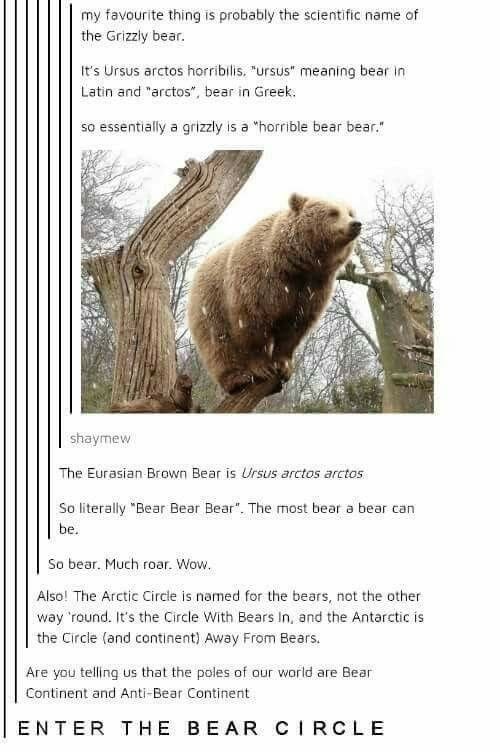
Arctic come from the word arctos, which is “bear”. And the best part- Antarctic doesn’t have bears. So it’s in the names!!!
Shakespeare actually made up a bunch of words for his plays. Including: Bandit, Critic, Dauntless, Dwindle, Lackluster, Lonely, Swagger, Unaware, Uncomfortable, Undress, Unearthly & Unreal.
He also changed a bunch of nouns into verbs and verbs into nouns.
The word Alligator is often attributed to him, but that was actually a error in the 3rd & 4rth edition of his plays. In the 1st & 2nd edition the word was Lagarto, the Spanish word for Lizard.
So his works were the source of the word, but he didn’t come up with the word himself.
We have no way of knowing if he actually made them up, just that he was the first to use them in written form. His plays would never have been popular if it was filled with unknown words that couldn't be understood by the crowds. So he probably didnt invent them, but was the first to put them to paper for historical reference
Bear traps are named after Frank Conibear, who invented them.
Not because they trap bears.

Salmonella is the same. Hence my term "Salmonella situation". Dr. David Salmon. Looked it up after finding you won't get salmonella from salmon
When you think of the perfect retort or comeback *shortly after* your interaction with someone, it was originally referred to as the 'Spirit of the staircase' or l'esprit de l'escalier in French. As you have probably guessed, he phrase originated in France. In this case, "the bottom of the stairs" refers to the architecture of the kind of hôtel particulier or mansion to which the person had been invited. In such houses, the reception rooms were on the étage noble, one floor above the ground floor. To have reached the bottom of the stairs means to have *definitively left the gathering*.
A good example is George Costanza and the 'jerk store' retort.
Jamaica, Queens got its name from the local Lenape tribe's word for "beaver". It has nothing to do with the island of Jamaica. That name means "Land of Wood and Water" and comes from the native Taino people.
"Flack," like in the phrase "giving [someone] flack," comes from WW2 German anti-air shells, which were filled with little bits of metallic shrapnel called Fliegerabwehrkanonen, (you can see why the Germans wanted a shorter name.) This shrapnel was designed to pierce the comparably thin skin of aircraft and potentially harm the pilots.
The word barbarian. Apparently it was made up by the Greeks as a blanket term for anyone that didn’t speak Greek because all they hear when fighting in a battle was “bar-bar” which was their version of “blah-blah” but angry and uncivilized.
The English word 'much', and its Spanish equivalent 'mucho', are etymologically unrelated.
The English 'much' comes from the Old English 'mycel' (meaning "big, much"), which in turn comes from the Proto-Indo-European '*meǵh₂-' ("big, great").
On the other hand, the Spanish 'mucho' derives from the Latin 'multus' (meaning "much, many"), and ultimately from the Proto-Indo-European '*ml̥tos' ("crumbled, crumpled").
Black and blank have the same origin. The equivalent Indo-European term referred to the burning of fire. The old Germanic tribes stuck with the aftermath of the burnt surface, and the French, where English borrows the word blank from, stuck with the light of the process of burning.
Fee, for money you have to pay eg for a public service, derives from the old english fe, fee, feh or feoh meaning cattle. Hundreds of years ago not everyone had access to "real" money made from copper, silver or gold. But they still had to pay taxes etc to their nobles. So they paid with what they harvested and bigger amounts with cattle. So cattle became equivalent to money.
Because old english is very much based on the languages of the Angles and Saxons ( their territories were in the region of todays northern Germany, Netherlands and south Denmark), you can see it even today in the German word "Vieh" or the Dutch "Vee" for cattle. Both are pronounced the same way as the English "fee".
The dutch word for garden (tuin) and the english word "town" have the same origin. They come from the proto-germanic word "tūną" which means fence or enclosure.
I also like the fact that the scandinavian word for woman (swedish: kvinna, Norwegian: kvinne, danish: kvinde) has the same origin as the english word "queen".
Both the coffee drink "cappucino" and the capuchin breed monkey are named after an order of italian monks from the 13th century.
"Capuchins wore a brown habit but of most simple form, i.e. only a tunic, with the distinctive large, pointed hood reaching to the waist attached to it, girdled by the traditional woolen cord with three knots. By visual analogy, the Capuchin monkey and the cappuccino style of coffee are both named after the shade of brown used for their habit."
Not sure it fits but in Japan a 5 yen piece is considered lucky. This is because the way you say it in Japanese is “go en” which is the same word for “chance” or “fate” or something like that. So it’s just a kind of weird little linguistic quirk and I think that’s neat.

It means to have "en" or "connection" often used as a good luck charm in a wallet to lure money to the person.
Nobody really knows where the word dog came from. Dogs were known as hounds but then around the 16th century,, dog started to be used instead, from the Old English docga. There's no real clear reason why dog replaced hound.
A couple etymologies I'm a fan of:
* _supercilious_ combines the prefix **super-**, meaning *above*, and **cili**, which relates to the nose. The word paints a vivid picture of someone turning their nose upwards in disdain of others, and is used to describe someone who thinks themselves superior to their peers.
* To be _ambidextrous_ is to have two (**ambi-**) right (**dexter**) hands.
In Panama the word "Camarón" used as "gig" comes from US American solders telling people to "come around" when they needed to hire local for small jobs. We have a bunch of words like that, it's quite funny and interesting.
There is an obscure word in the English language - mostly only found in dictionaries these days - which describes a process for surfacing roads. The process was invented by a Scottish engineer by name of John Lougan MacAdam, and so the process of making a "macadam road" through his technology was called: macadamization.
That's "Mac" from Gaelic, "Adam" from Hebrew, "ize" from Greek, and "ation" from Latin. All in one English word.
Quarantine (Learned about recently)
to find the origin of the word, we have to look back to mid-14th century Europe.
At the time, the bubonic plague, infamously known as the Black Death, was ripping through the continent. Starting in 1343, the disease wiped out an estimated one-third of Europe’s population during a particularly nasty period of three years between 1347-50. This sweep of the plague resulted in one of the biggest die-offs in human history—and it was an impetus to take action.
Officials in the Venetian-controlled port city of Ragusa (now Dubrovnik, Croatia) passed a law establishing trentino, or a 30-day period of isolation for ships arriving from plague-affected areas. No one from Ragusa was allowed to visit those ships under trentino, and if someone broke the law, they too would be isolated for the mandatory 30 days. The law caught on. Over the next 80 years, Marseilles, Pisa, and various other cities adopted similar measures.
Within a century, cities extended the isolation period from 30 to 40 days, and the term changed from trentino to quarantino—the root of the English word quarantine that we use today.
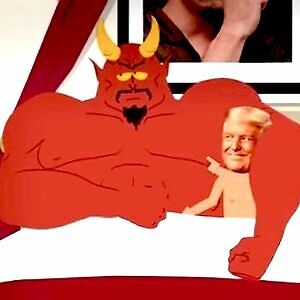
It's also where Quentin Tarantino got his name, but that's a story for another day. ;-)
"Throwing the book at them" is supposedly from back in the time of stocks and pillories where they'd literally beat people with Bibles.
Sounds unlikely. Bibles were cherished. More likely to indicate that the person was going to be charged with every offence on the books
Defenestrate: the act of throwing someone or something out of a window.
Fenestre: French for window.
De-fenestrate: de-window.
In my own lifetime two new words appeared that have become part of standard American English — “newbie” and “hassle.”
“Newbie first appeared in an article in Newsweek, I believe, about an all-boys high school that was about to admit girls for the first time. The reporter noted that the boys were referring to the girls as “newbies.” That reporter surmised that it was just a shorthand way of speaking of new students. My own suspicion is that among the high school boys at least one of them began to referring to the girls as “nubile young maidens.” Hence “newbies.”
“Hassle” was the product of the hippies. Again I cannot remember where the story appeared, but it described a minor police action trying to get a crowd of hippy protesters under control. One of the protesters complained to an officer “don’t hassle me, man.” The author of the article, bemused by what to him or her was a brand new word, surmised that the hippy was mashing together “hustle” and “harrass”. Hence to this day: “man,that is a real hassle.”

Not quite etymology but the Outerbridge crossing is a bridge that spans between Staten Island, New York and Perth Amboy, New Jersey. It’s the southernmost crossing of New York State and City.
Anyway it was named after Eugenius Harvey Outerbridge.

Ask me about the "Aboriginal" Australian words: platypus, echidna, emu, kangaroo, kookaburra, corobboree, gin (woman), lubra, piccinini. Only two of them are actually Aboriginal in origin, but which two? Platypus is Latin, echidna is Greek, emu was invented in London, kookaburra was dreamt up by an advertising agency, corobboree is from English via India. Gin is short for the English "Jenny", and piccinini is Portuguese.
This is why it's unfair to get annoyed at young people for making up words. Language evolves. People have been making up words and changing the meaning of them since humans existed.

I love the words Combobulate and Gruntled. Indeed Combobulator should exist, therefore combobulatrix should be the female version. And a group would be combulatrices....

Calcium and chalk both come from the Latin word for stone - calculus. This is why plaque on your teeth is called that. Also, in ancient times mathematics was often done with small pebbles, which is why it's called a calculator.
Ask me about the "Aboriginal" Australian words: platypus, echidna, emu, kangaroo, kookaburra, corobboree, gin (woman), lubra, piccinini. Only two of them are actually Aboriginal in origin, but which two? Platypus is Latin, echidna is Greek, emu was invented in London, kookaburra was dreamt up by an advertising agency, corobboree is from English via India. Gin is short for the English "Jenny", and piccinini is Portuguese.
This is why it's unfair to get annoyed at young people for making up words. Language evolves. People have been making up words and changing the meaning of them since humans existed.
I love the words Combobulate and Gruntled. Indeed Combobulator should exist, therefore combobulatrix should be the female version. And a group would be combulatrices....
Calcium and chalk both come from the Latin word for stone - calculus. This is why plaque on your teeth is called that. Also, in ancient times mathematics was often done with small pebbles, which is why it's called a calculator.




















 No fees, cancel anytime
 then open in external browser


 and click "Open in External Browser"