Get Premium
Dark mode theme is available exclusively for premium users. Learn more about the benefits of subscribing.
No fees, cancel anytime.

 Dark Mode Ad-Free Browsing Unlimited Content
 Ad-Free Browsing Unlimited Content Dark Mode
Join 1.2 million Panda readers who get the best art, memes, and fun stories every week!


Veinity Fair is a webcomic about the bizarre and gruesome parts of Victorian life with a dash of dark humor. Inspired by the warm welcome of previous comics and the amazing community of trivia-loving Pandas, I decided to share another 20 comics. This time we'll explore such topics as hysteria, working in a hospital, Halloween, and Victorians' interest in the supernatural.
If you enjoy the comics, follow me on Veinity Fair's social media for updates and check out previous articles on Bored Panda here and here!
More info: Instagram | Facebook | twitter.com | veinityfair.com | patreon.com
This post may include affiliate links.
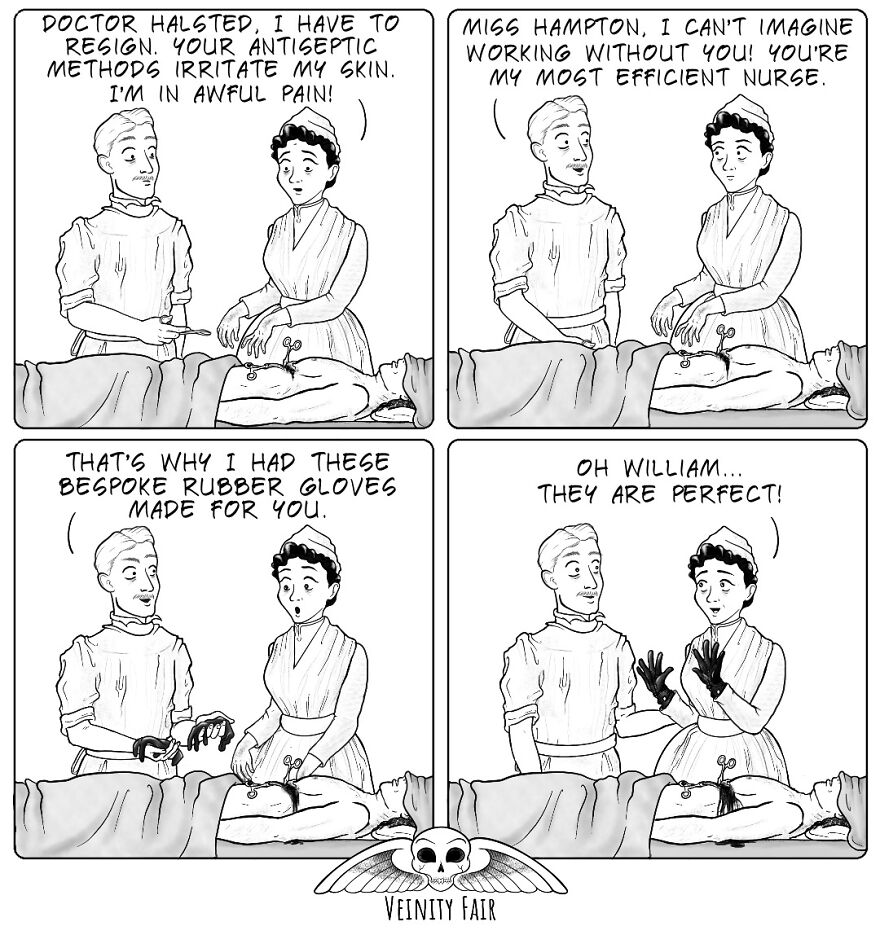
In 1889, Caroline Hampton was a talented young nurse working at Johns Hopkins Hospital in Baltimore. She was the chief nurse in the medical team working with William Halsted, one of the founders of the hospital and a well-known surgeon. After a few months of assisting in the operating room, Caroline was on the verge of resigning from her position due to painful eczema and dermatitis she had developed as a result of following Halsted’s strict hygienic procedure that included disinfecting hands and instruments with multiple chemical solutions. The surgeon didn’t want to part with his favorite assistant, so he came up with a brilliant idea:
“In the winter of 1889 and 1890, I cannot recall the month, the nurse in charge of my operating-room complained that the solutions of mercuric chloride produced a dermatitis of her arms and hands. As she was an unusually efficient woman, I gave the matter my consideration and one day in New York requested the Goodyear Rubber Company to make as an experiment two pair of thin rubber gloves with gauntlets. On trial, these proved to be so satisfactory that additional gloves were ordered. (…) After a time the assistants became so accustomed to working in gloves that they also wore them as operators and would remark that they seemed to be less expert with the bare hands than with the gloved hands.”
The use of rubber gloves saved not only the nurse’s hands, but also patients’ health – the hospital reduced the post-op infection rates from 17% to 2%. A few years after Halsted introduced his invention, the gloves were improved and sterilized by our champion of the germ theory of disease – Joseph Lister.
The only thing the gloves didn’t save was the nurse’s position at the hospital. Caroline and William fell in love and got married in June of 1890. At that point, she had to resign from her job, as it was seen unfit for a married woman to continue to work. It is said that their marriage was quite successful, and they were seen as a pair of eccentrics, enjoying the company of their pets and unusual hobbies.
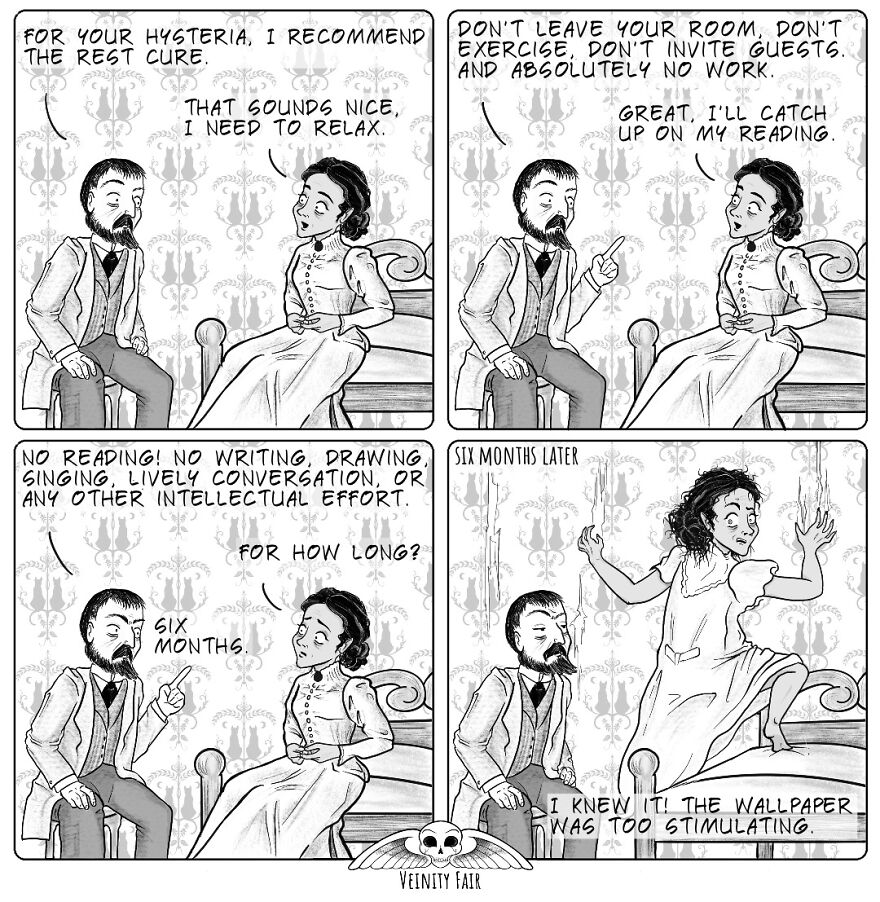
How’s your hysteria today? I have good news for you, it turns out all you need to do is relax. Drink a lot of milk, stay in your room, don’t do anything, just rest. Throw out that painting brush, don’t listen to any music, don’t have any conversations with anyone, you need to RELAX. What are you doing with that book? Put it down, no intellectual activities for you, just RELAX. For how long? Half a year should do the trick. The rest cure, proposed by Silas Weir Mitchell around the 1850s, was a popular treatment for hysteria and other mental disorders diagnosed in the Victorian era. The “treatment” revolved around avoiding any physical and intellectual activity to extreme levels, where even having a normal conversation or reading a book was seen as too strenuous for “hysterical” women.
Among Mitchell’s patients, were several famous women, like Virginia Woolf and Charlotte Perkins Gilman. The latter, who suffered what we would call today postpartum depression, was prescribed to “Live as domestic a life as possible. Have your child with you all the time. Lie down an hour after each meal. Have but two hours’ intellectual life a day. And never touch pen, brush, or pencil as long as you live.” Gilman famously used her awful treatment experience as an inspiration for writing “The Yellow Wallpaper.”
As you can imagine, the bed rest cure not only didn’t help, but even contributed to the worsening of female patients’ condition. Many women ended up being forcefully administered into asylums afterwards. At the same time, Mitchell advised his male patients lots of outdoor exercise.

umm... so having this done to me after being WRONGLY diagnosed with hysteria, i would have probably snuck some long books into the room so i didn't go insane
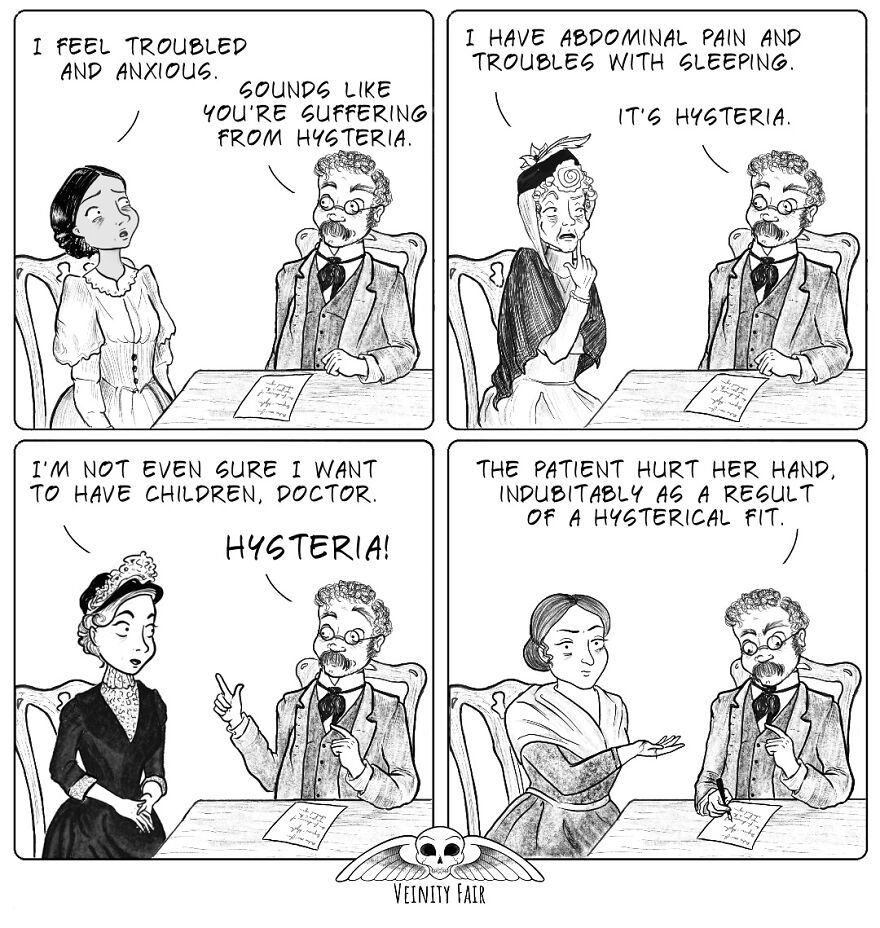
Do you suffer from headaches, sadness, low energy, high energy, hearing loss, anxiety, pain, hallucinations, or any other problem AND you have a uterus? This can only lead to one diagnosis: hysteria! Hysteria (from the Greek hystera = uterus) began as the idea of the uterus moving around the body, causing all sorts of physical and mental troubles on the way. The first mentions of the wandering womb date back to 1900 BC. Throughout the ages, hysteria remained an umbrella diagnosis for a variety of issues women faced, from more ‘reasonable’ ones (different ailments) to everything seen as ‘unwomanly’ behaviors, like being short-tempered, not wanting to marry, or not being interested in having children.
As the history of hysteria spans thousands of years, the exact nature of the illness varies depending on the time period we’re looking into. Apart from the wandering womb, other reasons for hysteria included the imbalance of humors in the uterus, too much sex, not enough sex, childlessness, and even … demonic possession. Many beliefs, folk medicine, and superstitions surrounding these ideas survived in the minds of common folk for centuries, even when more scientific methods were taking hold.
The shift from the physical to the more psychological background of hysteria in the 18th and 19th century was a small step forward, however, as it was still a catch-all diagnosis for diseases that should have been studied separately and, unfortunately, often a tool for controlling women who did not want to conform to the societal expectations. In extreme cases, ‘hysterical’ women were forced to spend the rest of their lives in asylums or undergo completely unnecessary surgical hysterectomies. The unwillingness of physicians to study female medical problems and sexuality combined with the blind belief in the well-established practices of the past led to the creation of dozens of bizarre therapies and cures, which we’ll be exploring in the following weeks.

I think one of the only positiv thing that comes from that is the the invention of the vibrator.
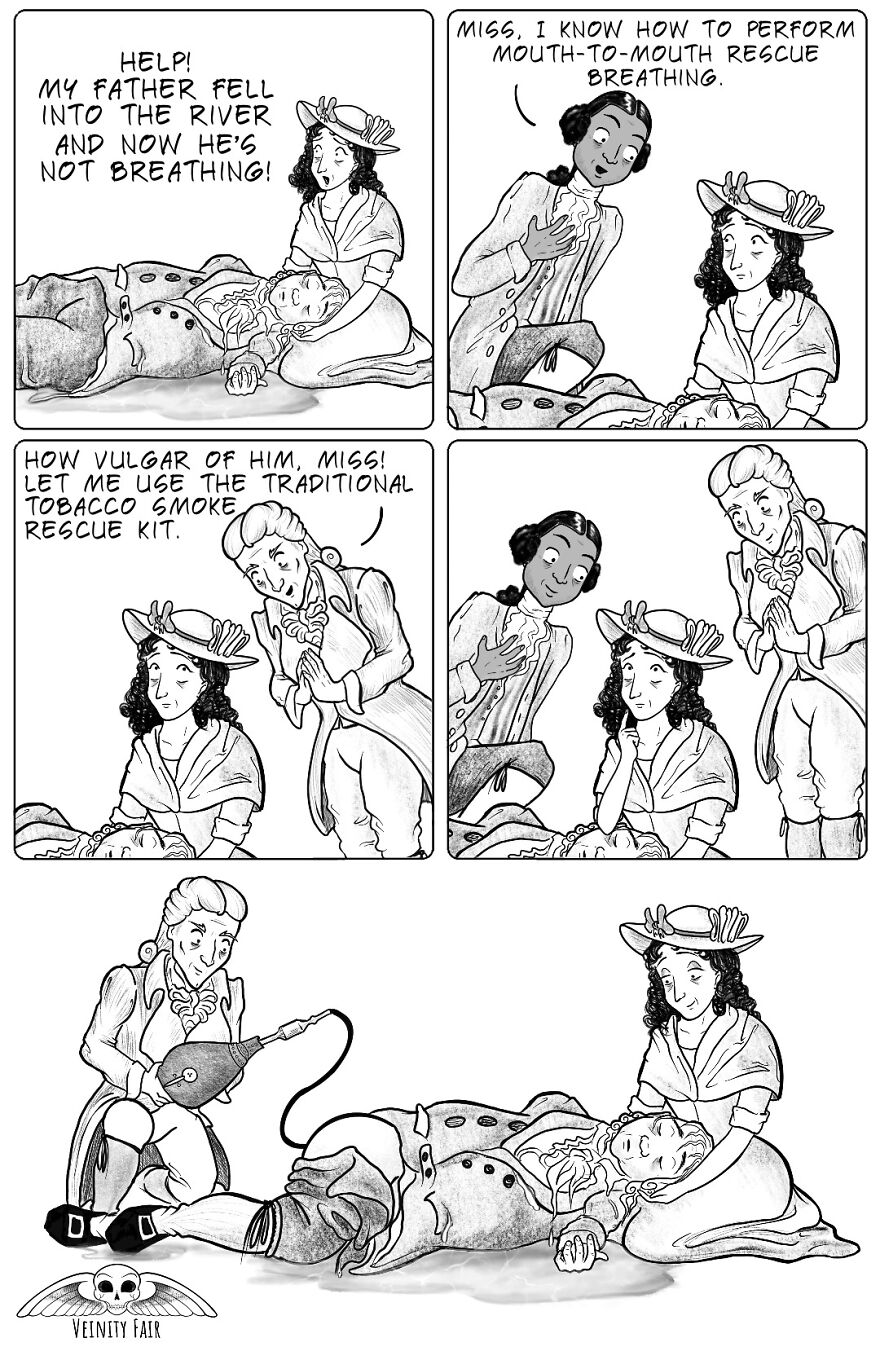
Have you ever wondered where does the phrase “blowing smoke up your a**” comes from? Unlike other sayings, this one is quite… literal. We have to go back a little bit further in time than usual, though.
In the eighteen century, it was quite common to attempt resuscitation of the “apparently drowned” by blowing tobacco smoke into the rectum, which was supposed to warm up the unlucky victim and stimulate their body. At the birth of the method, the smoke had to be blown through a tube by mouth, but, thankfully, later special bellows were introduced to help out with the task.
The Royal Humane Society of London (previously called The Institution for Affording Immediate Relief to Persons Apparently Dead from Drowning) provided tobacco smoke rescue kits which were distributed along the river Thames. At this point, you may ask yourselves “Why didn’t they think about performing mouth-to-mouth”? As it turns out, the mouth-to-mouth method was known by many people, especially midwives, but was considered “vulgar” at the time.

How about sticking that *sstube down someone's throat instead? (NEVER having stuck it up someone's bottom, of course!) No one thought of that?
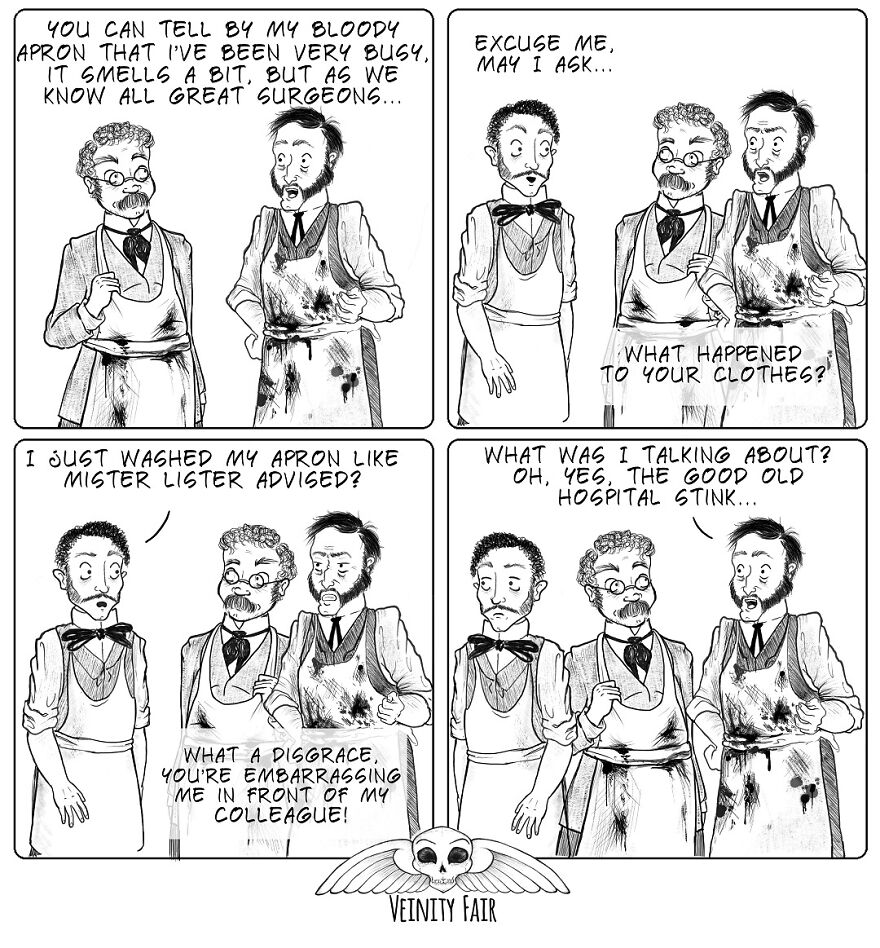
In the pre-germ-theory world, dirty clothes, unwashed linens, festering wounds, and limited access to clean water were pretty standard for a hospital experience, followed by outbursts of such diseases as rubella or cholera. Unfortunately, many surgeons contributed to this situation by not washing their hands, not disinfecting surgical instruments, and… glorifying their blood-soaked frock coats and surgical aprons.
You see, it was believed that the dirtier the surgical attire, the more busy and successful its owner was. Some surgeons even wore clothes that had previously belonged to retired staff members as a sign of respect and keeping traditions alive. Those who wore “butcher’s aprons” mostly did so to protect their private, nice clothing and didn’t wash them anyway. As you can imagine, these pus- and blood-soaked, never-washed items were basically rotting and gave out a putrid smell which was lovingly referred to as “the good old hospital stink.”
The situation slowly began to change in the mid-19th century, when several doctors (e.g. Joseph Lister, Ignaz Semmelweis, Thomas Dent Mütter) tried to popularize washing the surgical attire and promoted the idea of cleanliness in general, for which they were often ridiculed.
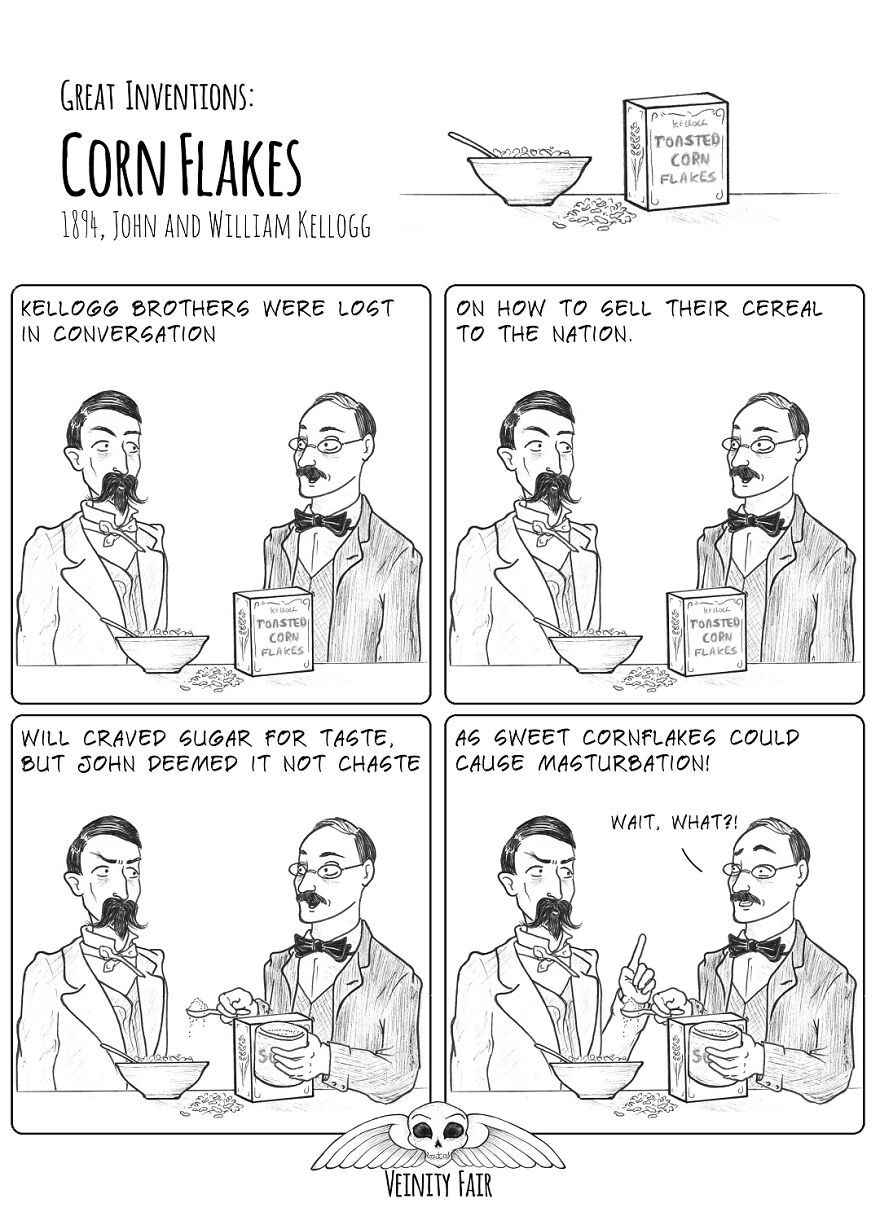
On August 8, 1894, John and William Kellog were busy preparing granola for the patients of the Battle Creek Sanitarium, where the older brother (John) was the superintendent. No sooner had they cooked a batch of wheat than they were called to attend some other pressing matters. After some time they discovered that the wheat had gone stale, but they decided to process it further anyway. The wheat broke into flakes, which was quite surprising, but the brothers didn’t want to waste any food so they roasted the pieces and served them to the sanitarium patients. The new flaked cereal quickly became a success, so much so that the patients would even buy it from the sanitarium to bring back home!
This marvelous turn of events encouraged the brothers to start mass production of the cereal. To increase the popularity of the product even further, William proposed adding sugar for taste. And that’s when the infamous family feud began. You see, the Battle Creek Sanitarium was owned by the Seventh-day Adventist Church of which doctor John Kellogg was a devout follower. He was especially focused on the church’s views on diet and health, which included promoting sexual abstinence. But what does it have to do with cereal? Well, John’s aim was to serve food that was as bland as possible so that it could serve as an anaphrodisiac and discourage any sexual activity, in particular masturbation which he saw as a deadly habit. He once even said that “neither the plague, nor war, nor smallpox, nor similar diseases, have produced results so disastrous to humanity as the pernicious habit of onanism.” Now imagine how John could have responded to his brother’s idea of adding sweet sweet sugar to corn flakes! This event started a legal battle that ended in Will starting his own company which we know today as Kellogg’s.
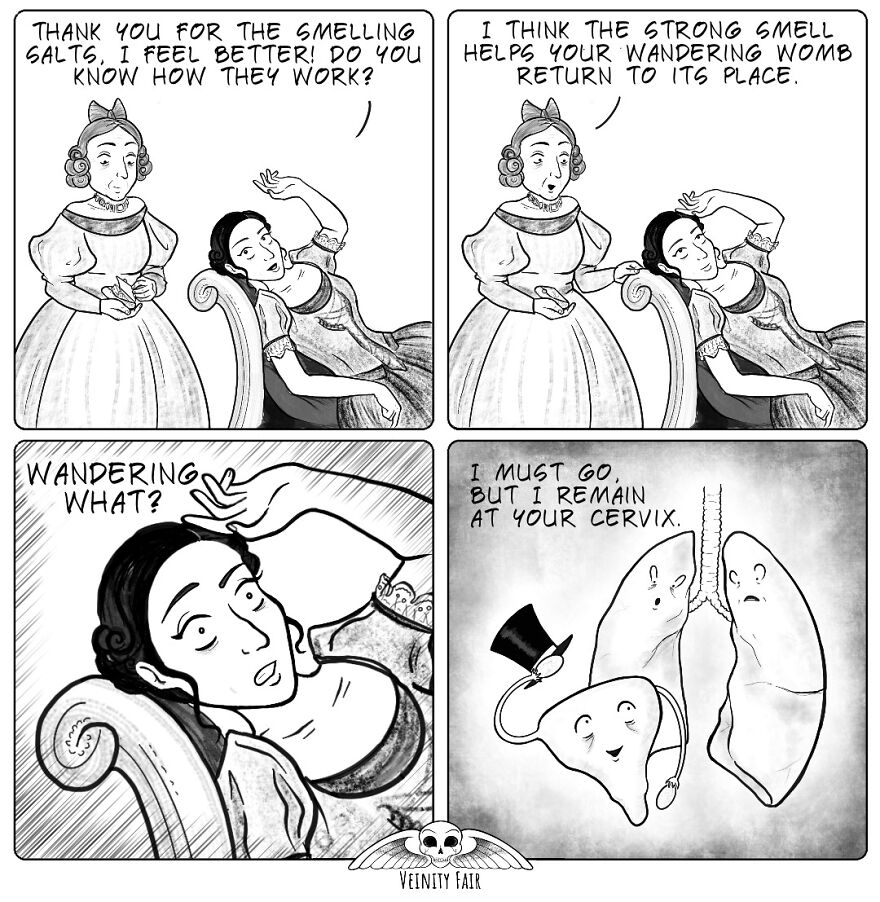
Is there any image more Victorian than a lady collapsing on a fainting couch after learning troubling news? The expectation that women would swoon whenever their emotions were heightened was so common that a bottle of reviving smelling salts could be found not only in a lady’s purse, but also a British constable’s pocket. More affluent women carried smelling salts in the form of soaked sponges closed in decorative, often silver containers called vinaigrettes. At the time smelling salts had already been known for centuries, but the knowledge of how they restored consciousness was not as widespread. While Victorian doctors and scientists knew about the effect ammonia gas had on the respiratory system, many people still believed the strong odor of salts helped by encouraging the wandering womb to come back to its place, echoing Hippocrates’ theories on female hysteria.
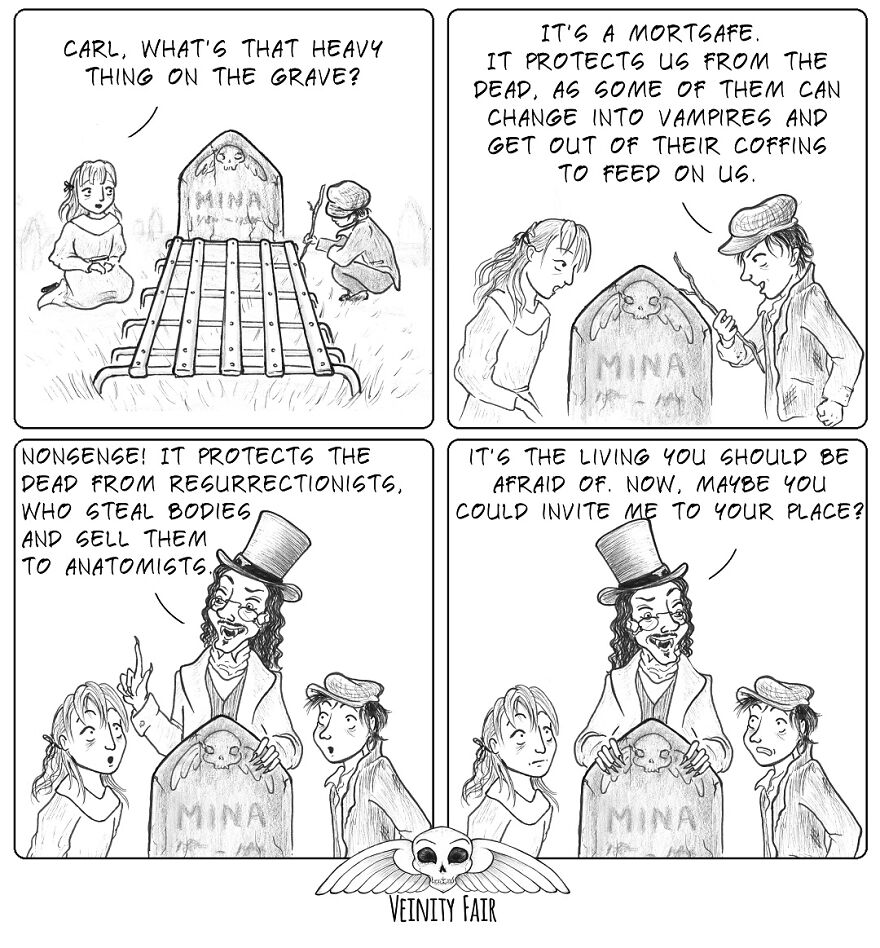
If you’ve ever visited an old Scottish kirkyard, you might have stumbled upon an iron or stone contraption protecting a grave. They are called mortsafes and many people think they were used by their superstitious ancestors to keep the dead inside their coffins. While it is true some Victorians believed in vampires and other supernatural beings, the truth behind the mortsafes is even more interesting than the myth. These heavy objects were placed on the grave or encapsulated in a coffin (in a form of a cage) to protect the dead from resurrectionists, in other words, body snatchers, who would dig up fresh bodies and sell them to surgeons.
The most famous resurrectionists of the time were Burke and Hare who supplied a surgeon named Robert Knox in the early 19th century. These grave robbers (and later murderers) conducted their activities in Edinburgh, the leading center of anatomical study at the time, which is probably the reason why most of the surviving mortsafes can be found in Scotland. The iron cages and other contraptions were expensive, so it was popular to “rent” a mortsafe and reuse it for a different grave in several months, once a body was decomposed and therefore useless for anatomists. The popularity of mortsafes started to diminish after the passing of the Anatomy Act in 1832.
In the early 19th century, a visit to a hospital was a horrific experience. The sanitary regime was non-existent and the putrid smells of disease, dirty linens, and unwashed clothes penetrated the hospital building and its walls. While wealthier people were cared for in their own homes, the poor were forced to withstand awful hospital conditions, where the probability of dying was three to five times higher than in a household. (That’s why hospitals used to be called “houses of death”).
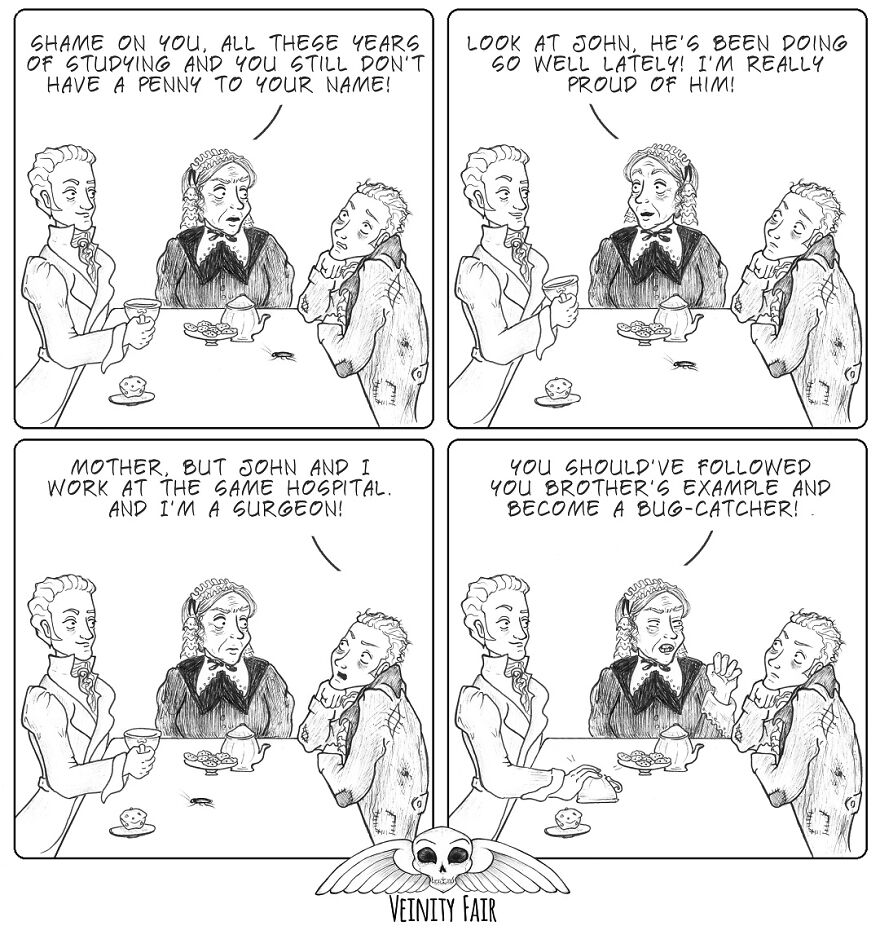
No wonder that a hospital environment was a perfect ground for spreading both diseases and… insects. While the former were still believed to be caused by miasma, the latter seemed to be easier to deal with. A hospital infested by cockroaches or lice could hire a specialist called a bug-catcher. In fact, a Chief Bug-Catcher would earn more than a surgeon, whose job at this time was still closer to a barber-surgeon than to a fully-respected medical profession.
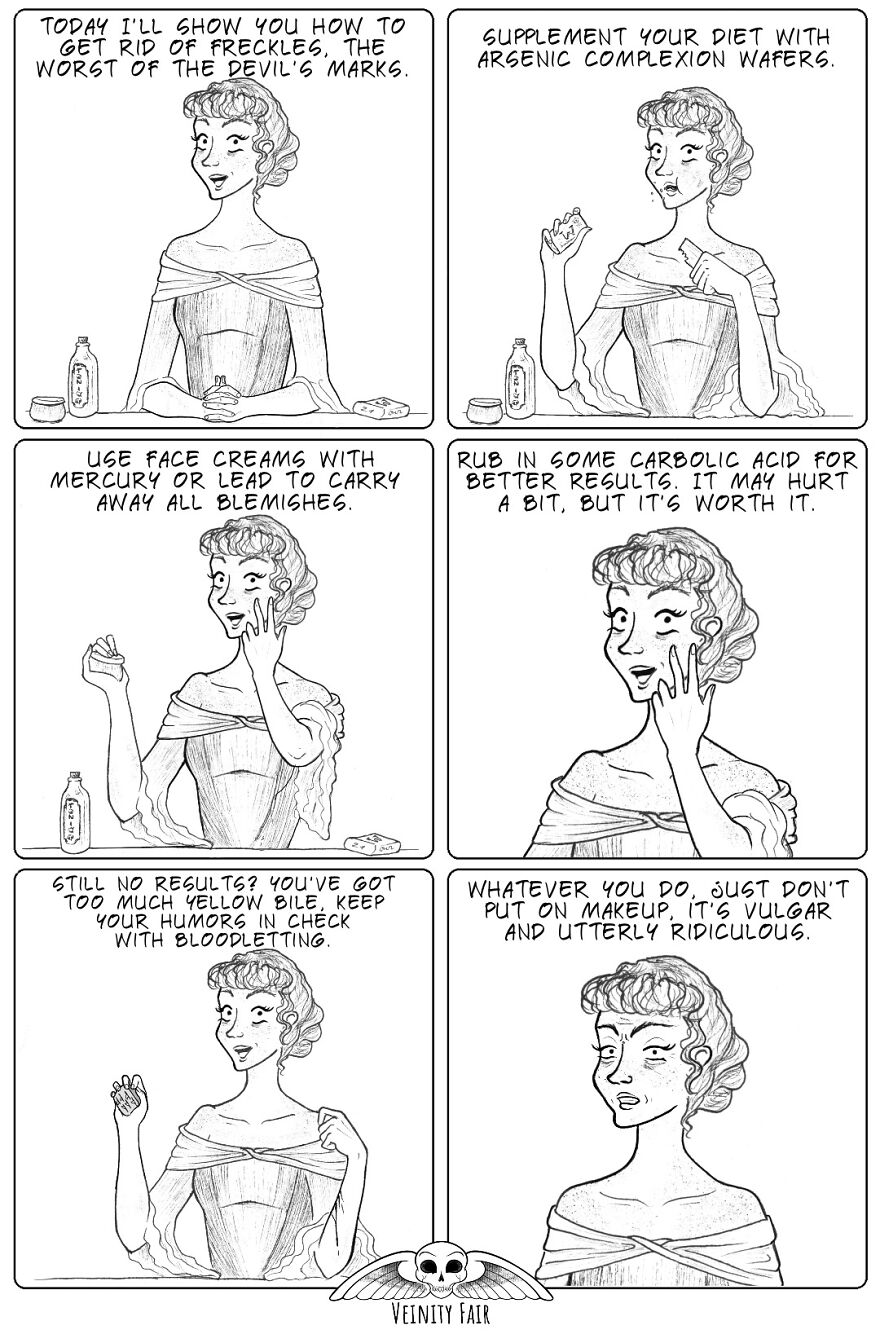
As we already know, the Victorians were obsessed with a ghastly pale complexion which was supposed to give them a more aristocratic look. This also included stigmatization of freckles as they were associated with the working class and outdoor labor in general. In part, freckles were also seen as a health problem resulting from the overproduction of yellow bile by the liver. One of the ways to treat this "problem" was to bring balance to the four humors, either by purging or bloodletting.
Those unwilling to lose their blood over freckles could purchase products that were supposed to “gently” get rid of freckles. However, even pharmacists at the time spoke against these products, as they often contained highly invasive and poisonous ingredients like arsenic or lead. And while the first results could have been promising (rashing and peeling skin would reveal some lighter skin beneath), long-term effects included permanent skin damage and heavy metal poisoning.
You may ask, “if they reeeally wanted to hide freckles, wouldn’t it be easier and safer to just put on some makeup?” Unfortunately, color cosmetics fell out of favor at the time, when Queen Victoria deemed it vulgar and unfit for respectable ladies.
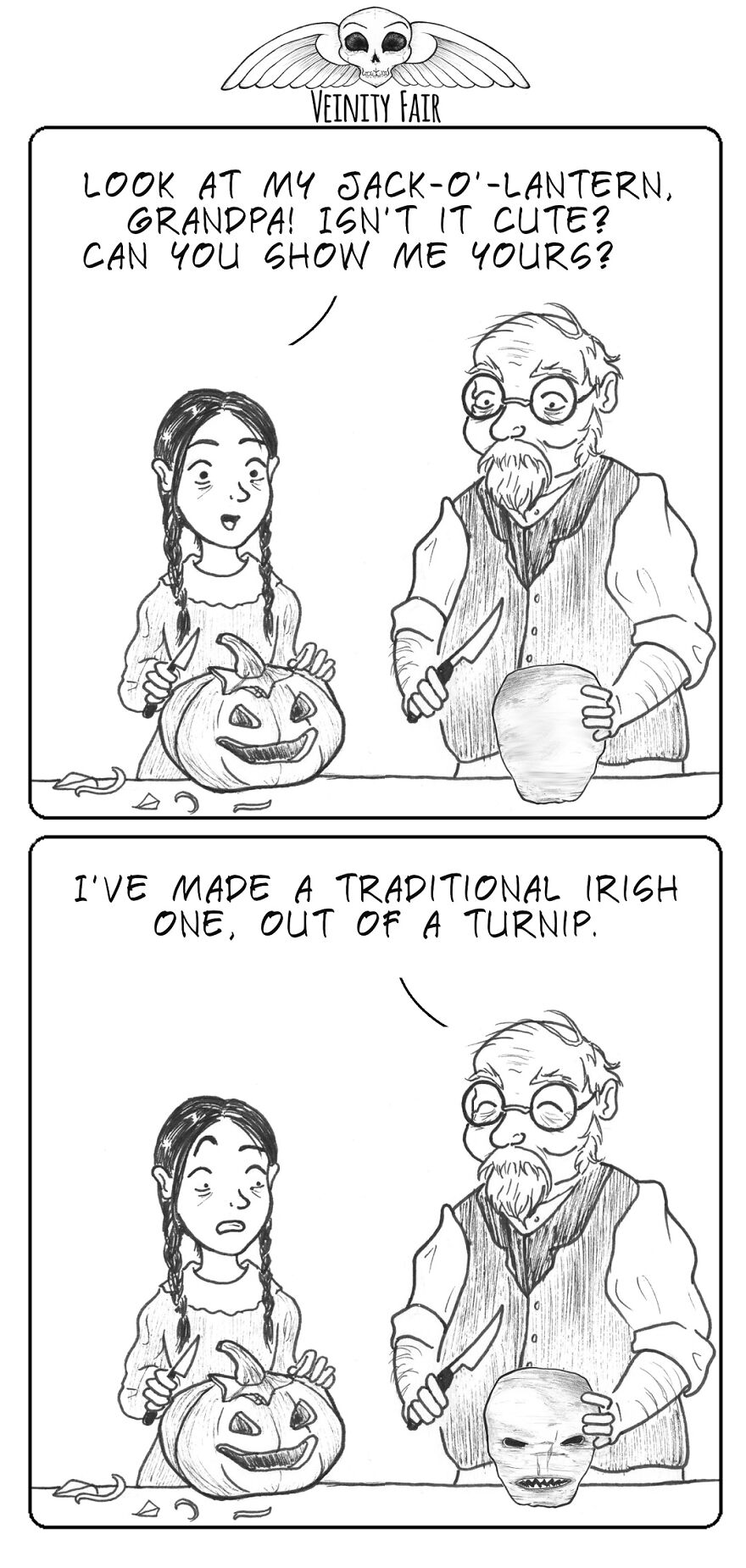
It’s believed that making jack-o’-lanterns originated in Ireland and the tradition was brought to the United States by Irish immigrants in the 19th century. That’s when jack-o’-lanterns started to be associated with pumpkins rather than the traditionally used potatoes, turnips, and beets.

The Jack'O Lantern story is based off an old Irish legend where a drunkard and gambler named Jack tricked the Devil. Unfortunately, this also prevented him from going to Hell (as he surely wasn't going to Heaven) so he was forced to wander off for eternity with a coal in a turnip.
It is said that the air transport of patients began during the siege of Paris in 1870, where wounded soldiers were supposed to be evacuated to safety by hot air balloons. However, some scholars aren’t convinced that that’s what really happened and link this historical rumor to the popularity of Jules Verne’s stories about balloons. Regardless of the truth, by the end of the nineteenth century, there were at least a couple of people who proposed air transportation of patients.
One of them was a Dutchman called M. de Mooy, who designed a system in which a stretcher could be suspended from a balloon, which in turn could be gently steered by horses in the right direction. So, was this idea ever really applied outside of experiments? I’d love to see some primary sources on the subject, let me know if you know more about balloon ambulances.
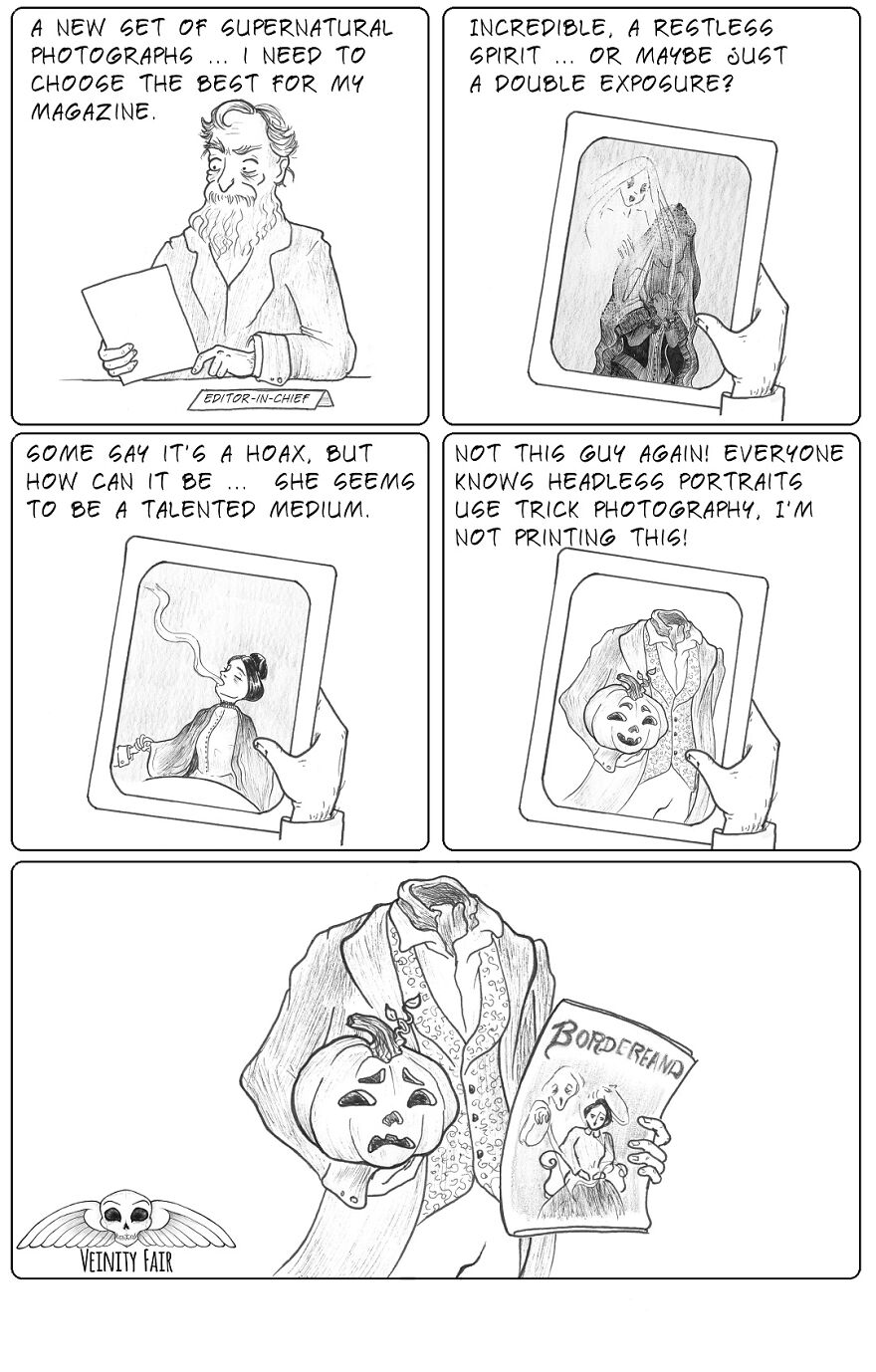
Photo manipulation is as old as photographs themselves!
The Victorians came up with several clever tricks to make photographs more entertaining, e.g., they used photomontage and combination printing to produce headless portraits, inspired by popular stage magicians. Double exposure was also used to add objects not present in the original exposure, such as ghostly figures or floating items. Unfortunately, some people used these techniques in a more questionable way.
A few photographers started working as mediums and marketed their spirit photographs as evidence of the afterlife. The spiritualist movement quickly adopted the use of spirit photography and published numerous books on the subject.
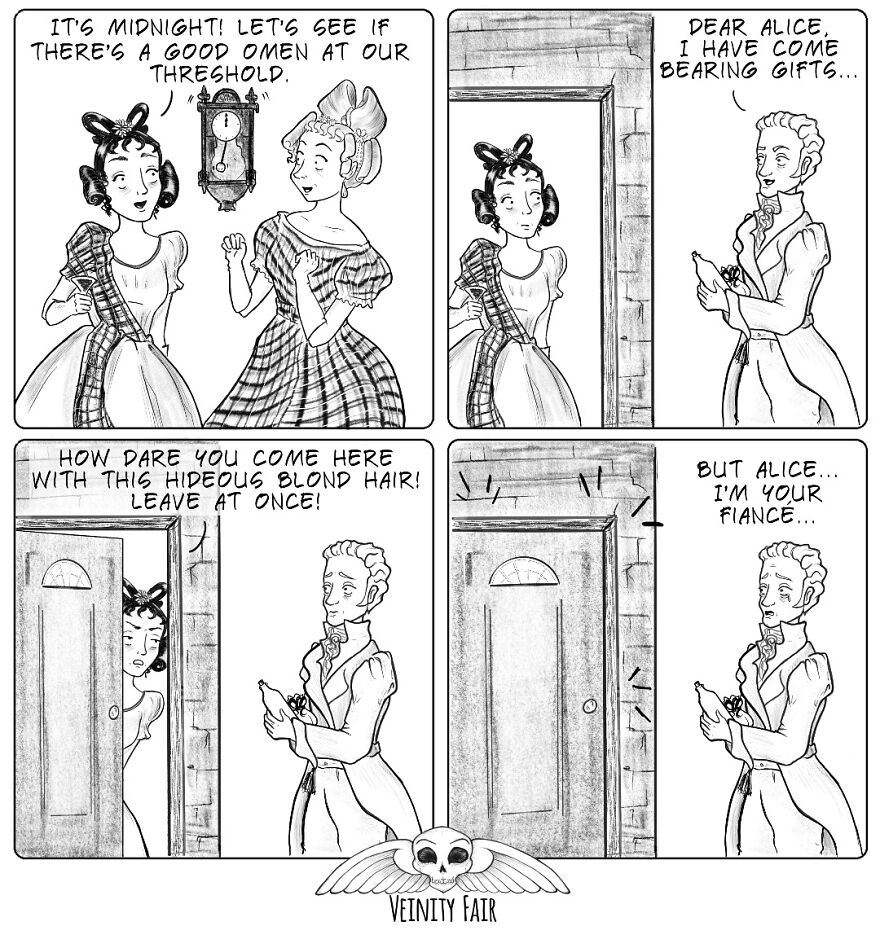
According to an old Scottish tradition called ‘First Foot,’ the first person who enters your home on New Year's Day, foretells the fortune for the new year. The best candidates are dark-haired men bearing small gifts, as they are a sign of prosperity and good luck. Fair-haired men are not as good, apparently, and seen as a bad omen.
While the tradition can still be observed today, it was especially popular in the Victorian era, as the Queen was in love with everything Scottish and popularized Hogmanay (New Year’s Eve) traditions among her subjects. During the time, the midnight guests were expected to bring such symbolic gifts as whiskey, coal, shortbread, spices, and black bun.

It's still popular here. Ideally a tall, dark and handsome male. You have to bring a gift, preferably whisky! But even coal for the fire would do (or peat) The 'First Foot' is responsible for the luck of the household during the coming year ie it's their fault if it all goes badly. Many still go 'First Footing' after 'the bells' and on New Year's Day. New Year is a bigger event than in other countries and, in my grandparents time, gifts were given for Ne'erday instead of Christmas which was not even a holiday with time off for workers. Unlike many places we still have time off for workers on both the 1st and 2nd of January..
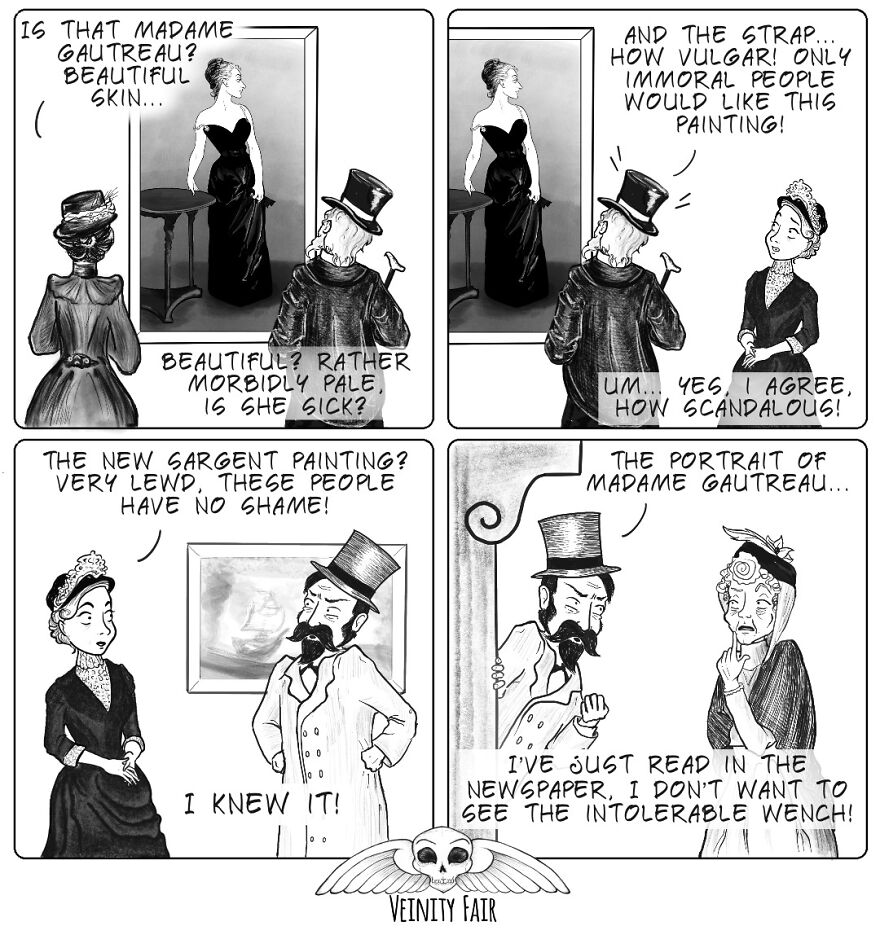
“Madame X” was an infamous portrait of Virginie Amélie Avegno Gautreau, painted by John Singer Sargent. In the painting, Virginie, a Parisian socialite known for her beauty, is wearing a sleek black dress. She has perfectly styled hair, and the paleness of her skin beautifully contrasts with the dark background. It seemed that the piece would become a great success for both the artist and the model.
And yet, the portrait was met with a very controversial reception at the 1884 Paris Salon. The viewers commented on the revealing dress cut, the shoulder strap inappropriately falling down on the shoulder, the weird position of the model, and her morbid paleness. How could it be? After all, it was still the society that applauded the sickly look caused by romanticized tuberculosis. What is more, the dress design wasn’t more revealing than other popular evening gowns at the time. It seems that a large part of the scandal was… gossip.
The 1884 Salon was a particularly mundane exhibition with almost no notable paintings. Moreover, visitors had to go through many rooms to see “Madame X”, which could have altered their moods. Besides, the majority of the patrons belonged to the bourgeoisie and could have been more critical of the aristocratic Madame Gautreau flaunting her jeweled straps and high fashion. It was also enough for a few respected people to openly describe the piece of art as ‘immoral’ to create an atmosphere in which anyone who disagrees could be seen as ‘immoral’ as well. The newspapers quickly jumped on the bandwagon, criticizing the painting, Madame Gautreau, and Sargent. They even printed caricatures! As you can imagine, at that point, new Salon visitors were already expecting to see something scandalous, even before seeing the painting themselves!
The scandal was so blown up out of proportion that Virginie’s mother threatened Sargent with a duel, and Sargent himself moved to Britain (after repainting the unfortunate strap, as can be seen in the portrait today.). After the initial backlash, the lives of Gautreau and Sargent went back to normal. The first remained a fashionable Paris figure, and the latter became a highly sought-after artist.
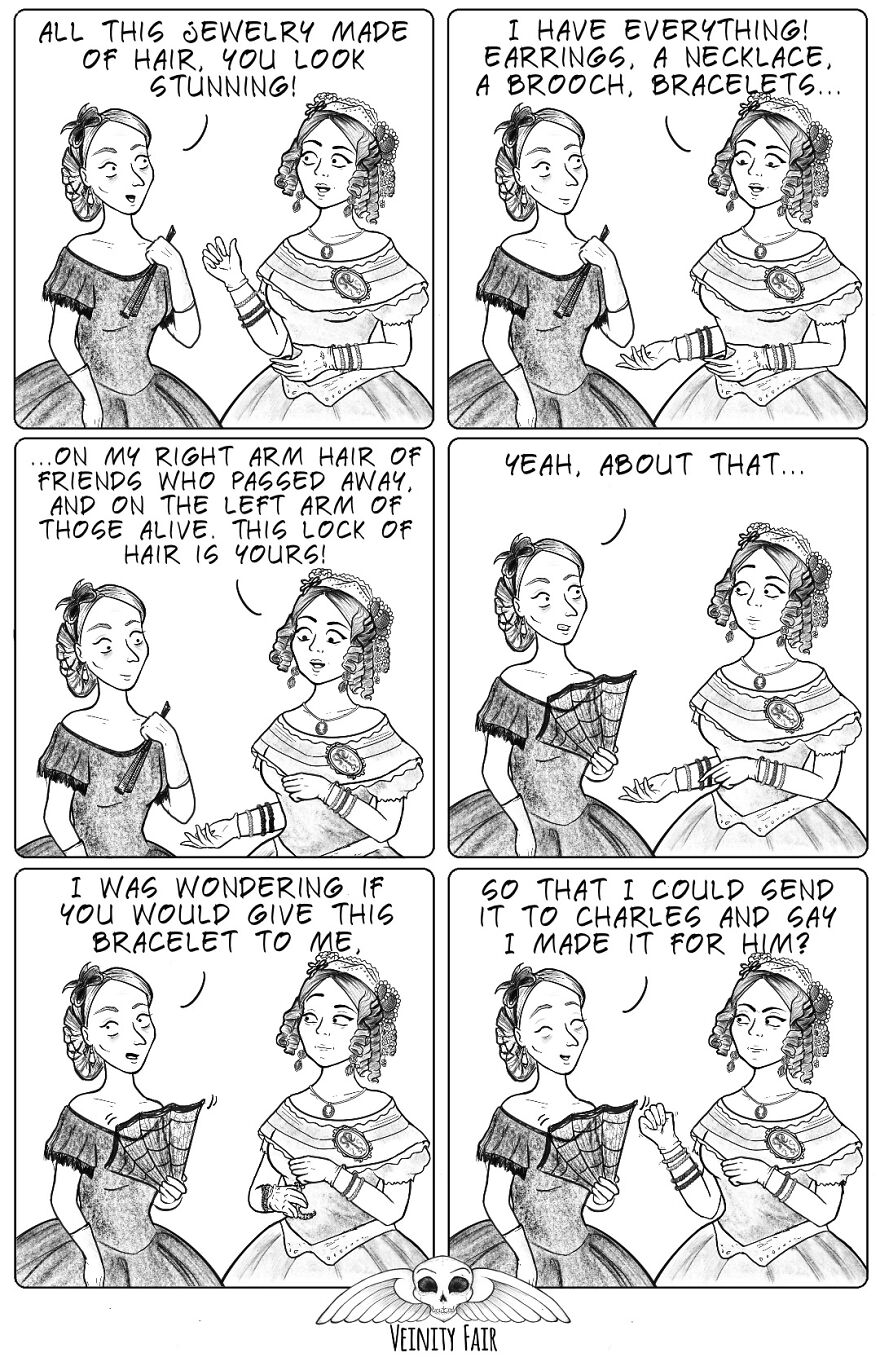
Bored with your old trinkets? Want to surprise your coworkers during the next Zoom meeting? Well, look no further, because Victorians have what you need – hair jewelry! And we don’t mean hair accessories, we’re talking about jewelry pieces made of actual human hair. Earrings, rings, necklaces, brooches, you name it – everything can be woven out of hair or at least contain locks of hair.
The practice was prevalent throughout the Victorian era, with higher classes adopting the trend first thanks to goldsmiths and other artisans offering high-quality jewelry that could be personalized by adding a beloved person’s hair and precious materials. Such mementos could not only be a way to keep your family and friends close, but also objects of mourning. The mourning hair jewelry became especially common after the death of Prince Albert, when Queen Victoria decided to wear a locket of Albert’s hair around her neck, thus popularizing this way of showing love for the deceased. Around the same time, hair work became a common pastime for women of lower classes. Ladies would learn how to create these intricate items from each other or could use patterns printed in women’s magazines.

It was actually a good idea. Much less creepy than keeping ashes at home... urns are too fragile... So much trauma... Ashes... Ashes everywhere... Guilt and disgust...
This is not the greatest rat-catching in the world, no, this is just a tribute!
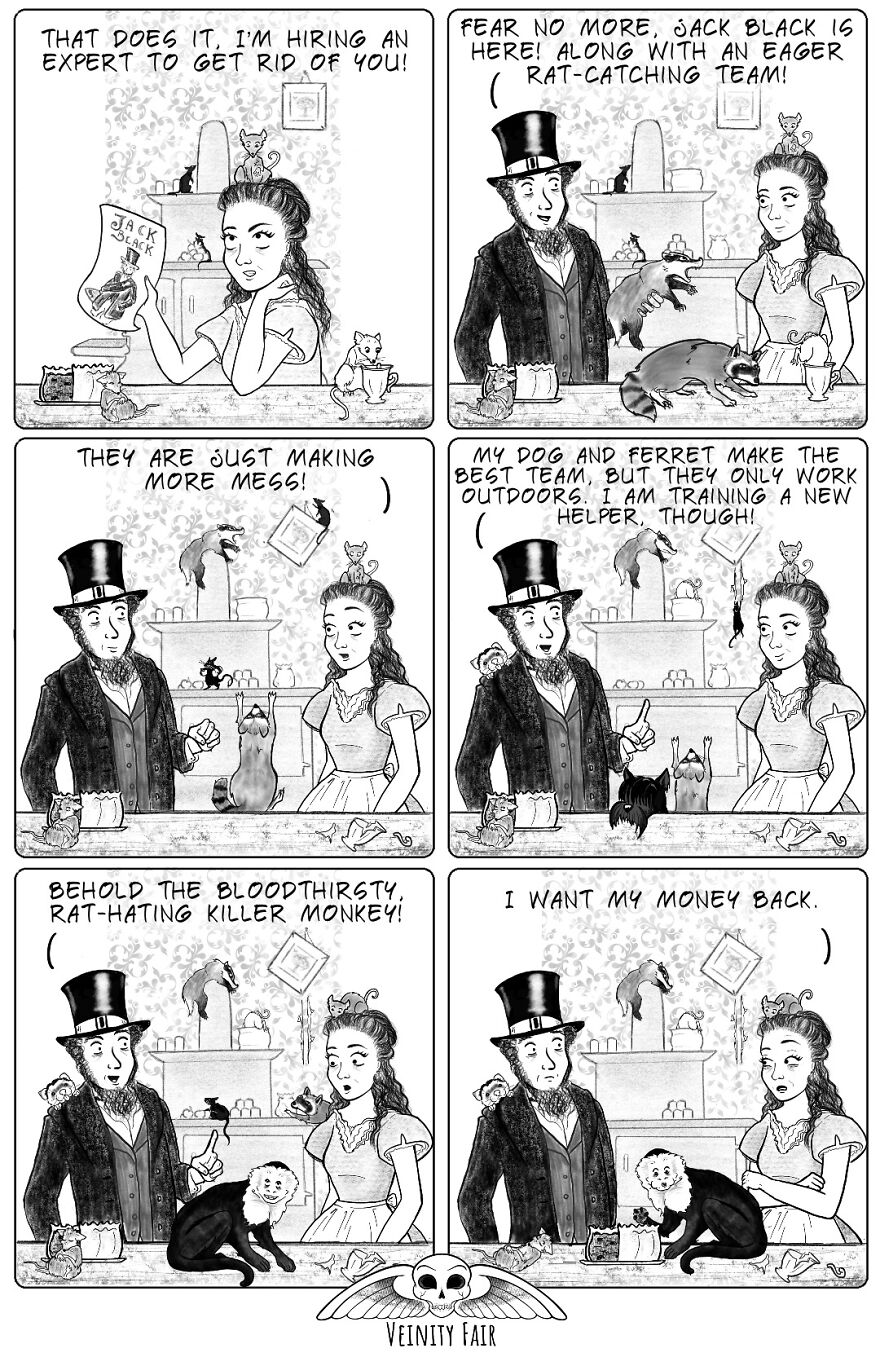
During the 19th century, London's population almost tripled, making it the largest city in the world. The metropolis also became a true paradise for rats. These clever rodents quickly took over not only the complex sewer system, but also the buildings above it. You could find them anywhere, from pipes and basements to attics and anywhere in between. Getting rid of that many rats was not an easy task and people would hire professional rat-catchers to help them solve the problem.
The most famous rat-catcher of the time was Jack Black, a man who boasted to work for the Queen herself and strolled the London streets in his flamboyant, colorful uniform. Black used a number of methods to catch and dispose of the rats, but he mostly relied on his trained ferrets and black tan terriers. The ferrets would pursue and “flush out” rats from the underground, and the dogs could track ferrets by smell and also kill rats on command. Rat-infested households were a bit problematic, as ferrets could get stuck in the nooks and crannies of the buildings. Because of that, Black had to catch the rats by hand or use more traditional rat traps. Being a prolific entrepreneur, he also experimented with training other animals to help him in vermin disposal, such as raccoons, badgers, and even a monkey!
Well, in comparison to our modern methods, these were way more eco friendly and equally effective...
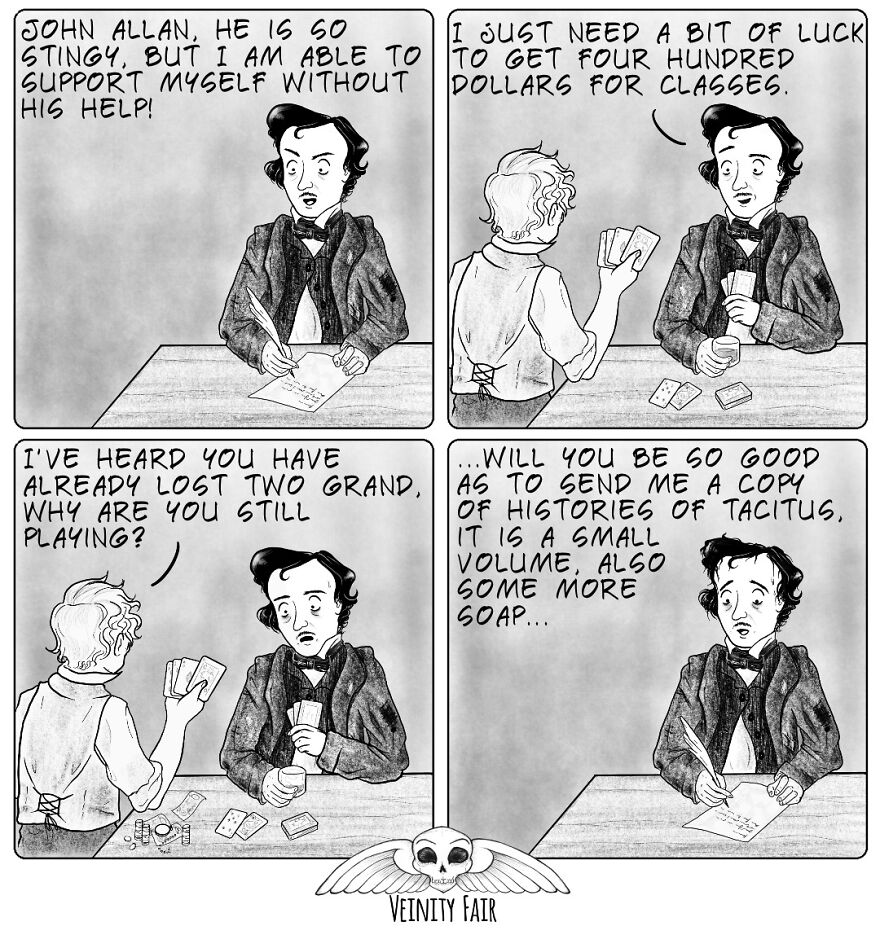
Edgar Allan Poe is best known for his gothic poems and short stories full of mystery, lost love, and macabre. He is also considered to be the father of detective fiction and contributed to the popularization of science fiction.
While his convoluted and tragic love life is often discussed, Poe’s early life was plagued by other misfortunes as well. Orphaned by the age of two, he was taken in by John and Frances Allan. Edgar and Allan didn’t see eye to eye and often quarreled, especially over money. Feeling unsupported by the foster father, Edgar turned to gambling to pay for his education at the University of Virginia. This plan however backfired, leaving Poe with serious debts. After begging John for money, clothes, and basic necessities numerous times, he finally had to resign from the university and joined the army under an assumed name. He was only 18 at the time.
Excerpt from The San Francisco Call, December 27, 1898
“A Christmas Tree with Lamps of Skulls”
"The Vision That Appeared to a Demonstrator of Anatomy at Midnight. It was 12 o’clock last Saturday night when Dr. W. O. Wilcox climbed the stairs of 21 Powell street to go to his room. It was just the time when graveyards yawn and give forth their dead; but the doctor had no reason to suppose the spirits of the air would haunt him in the privacy of his own chamber, so he opened the door without hesitation and stepped inside.
There was no need of striking alight. The room was illuminated by a score of prim and ghastly lamps, that clung to the green bangles of a Christmas tree standing upon a table. They were skulls, and the eyeless sockets flashed fire from within as they nodded their grisly heads to the swaying of the branches.
On the table under the bone-fruited tree were some of the doctor’s dissecting knives, gleaming balefully in the eye light from the skulls. There were crossed shinbones lying on the black tablecloth, white as the symbol of death on a pirate’s ensign, and more skulls— evidently windfalls from the boughs above. Between the jaws of one of these was a half-smoked cigarette, which the grinning head seemed to be thoroughly enjoying.
There were skeletons of hands, feet and other parts of the human bony building, mingled with the steel implements of surgical craft, and to many of these objects of cub-medico humor were attached cards bearing inscriptions as appropriate as witty.
By means of one of these inscriptions one skull complained bitterly of the unusually long time between drinks. Another, whose way in this world had probably strayed from the straight and narrow path, demanded ice and steam beer, while the head of a child declared it had been the victim of a mother’s neglect.
Dr. Wilcox is a demonstrator of anatomy in one of the colleges, and although the students of his class declare they never would do such a thing as desecrate a Christmas tree with the products of the grave, still the doctor is looking among them for the one who planned his pleasant Christmas surprise."
Very clever, two holidays sorted at once and noone will complain about starting the festive season early November.

Makes you wonder if in 100 years people will be ridiculing the barbaric practices of today's medical doctors.

I have one problem with this channel.... There arent enough comics.
Makes you wonder if in 100 years people will be ridiculing the barbaric practices of today's medical doctors.
I have one problem with this channel.... There arent enough comics.








































 No fees, cancel anytime