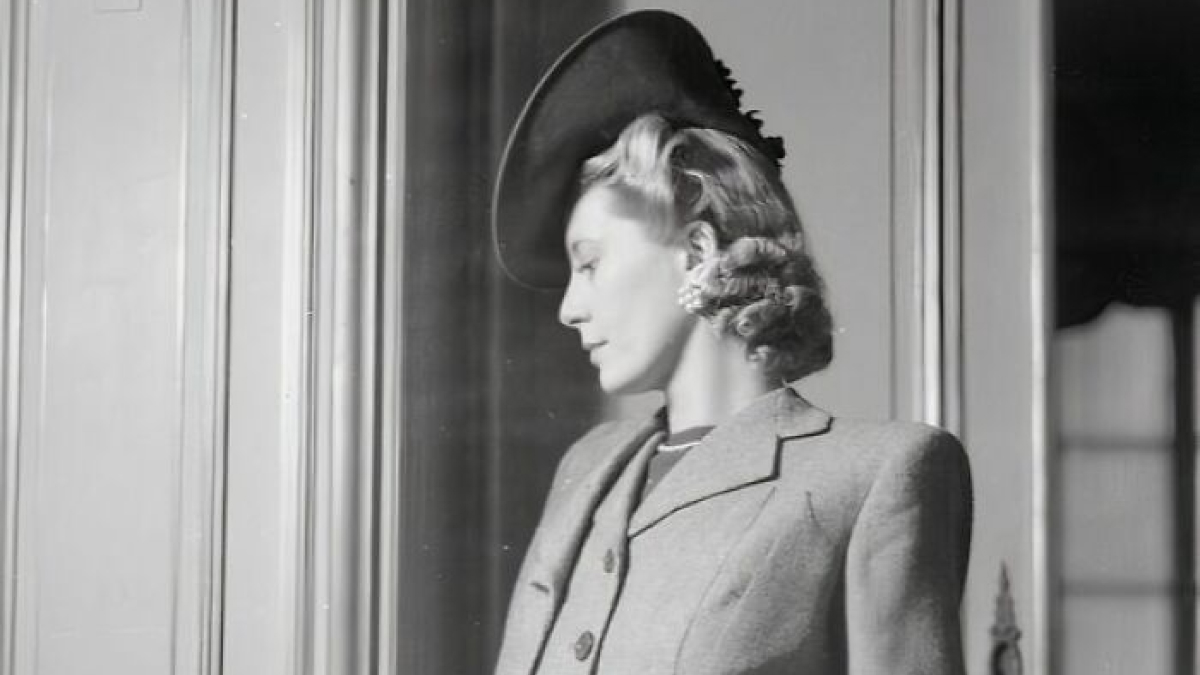
In World War II Britain, the fight wasn't just on the battlefield; it was in every home and on every street. With fabric and materials desperately needed for the war effort, fashion went on a strict diet. The government introduced the Utility Clothing Scheme, stamping approved garments with a "CC41" label to show they were simple, practical, and didn't waste resources. For everyone else, the motto became "Make Do and Mend." This wasn't about giving up on style, though! It was about redefining it through sheer ingenuity. These 35 images show how ordinary people used creativity as a quiet act of defiance and a way to keep morale high when everything else was falling apart.
This post may include affiliate links.
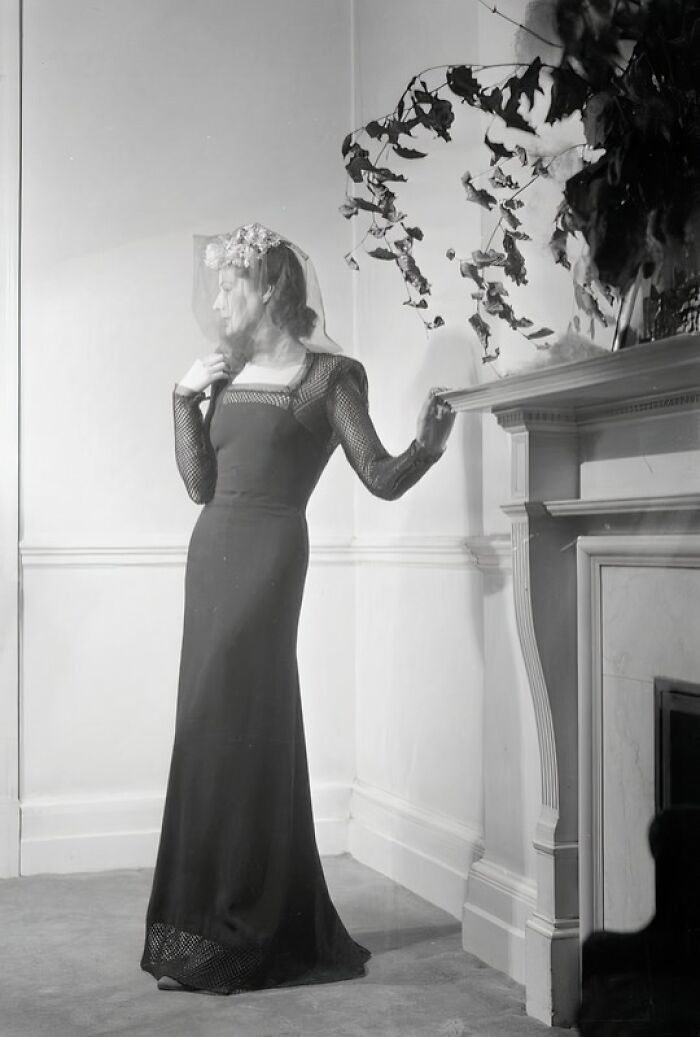
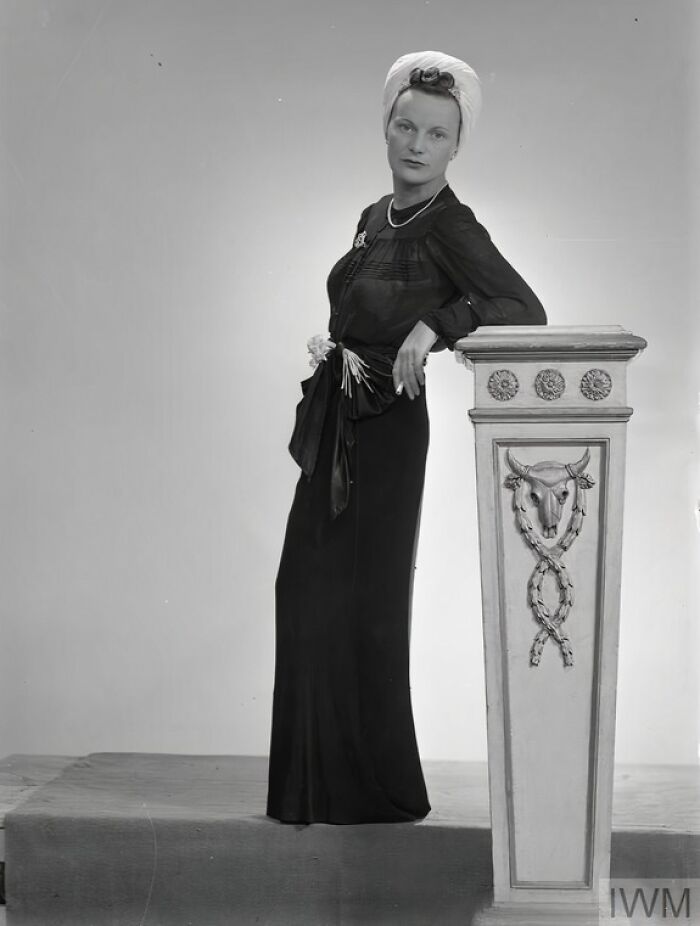
Peter Russell Dinner Gown, Produced During Wartime For Incsoc To Promote The Idea That Utility Could Be Incorporated Into Couture Source
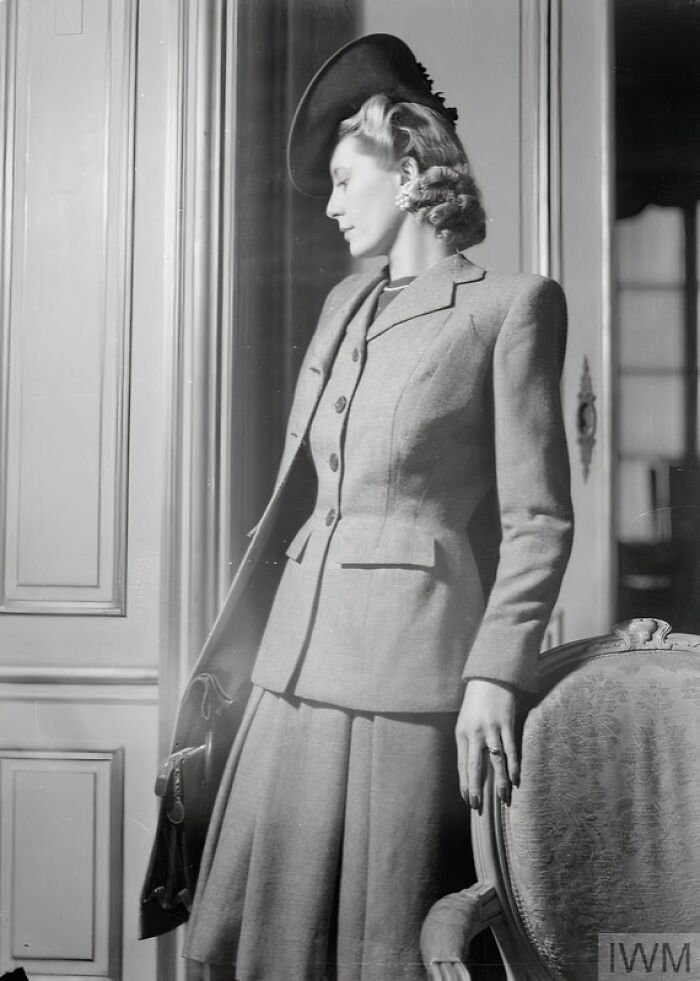
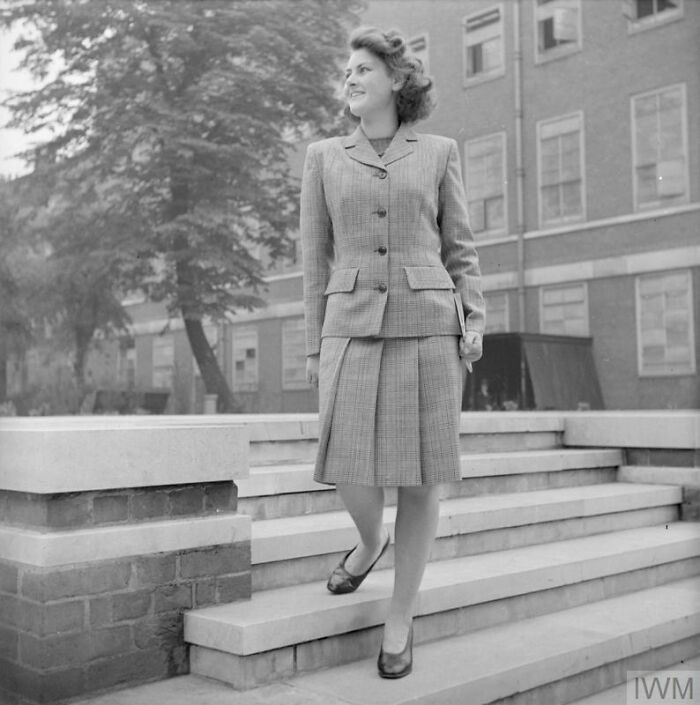
A Model Wears A Brown And Beige All-Wool Checked Suit By Fashion Designer Hardy Amies
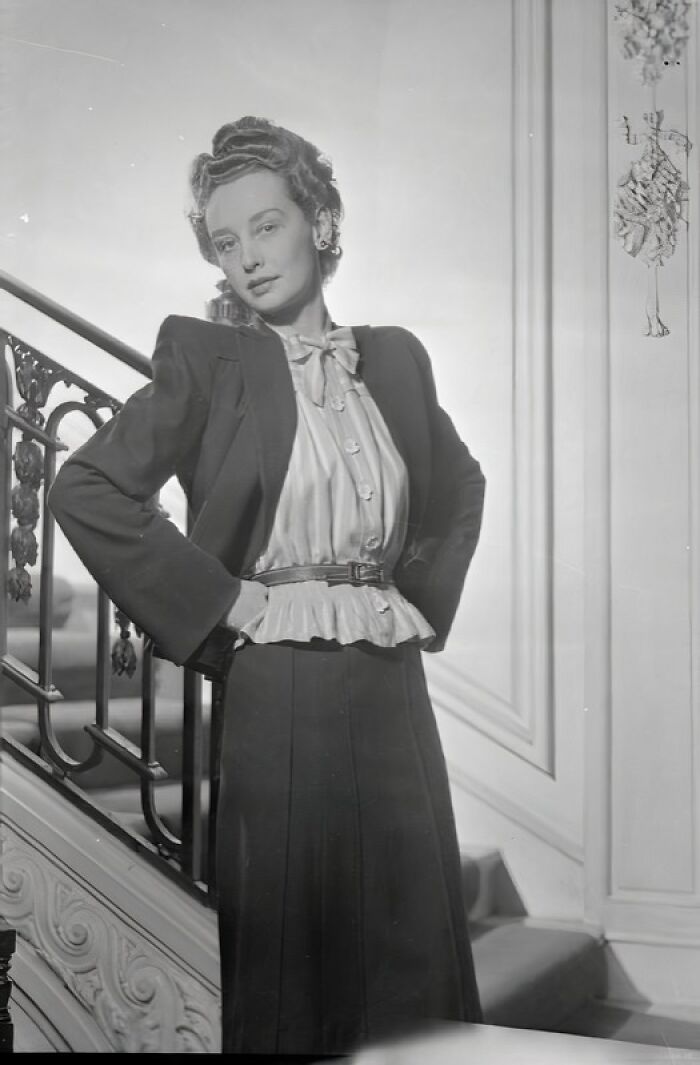
Elspeth Champcommunal Design For Worth London, Produced Under Wartime Restrictions Source
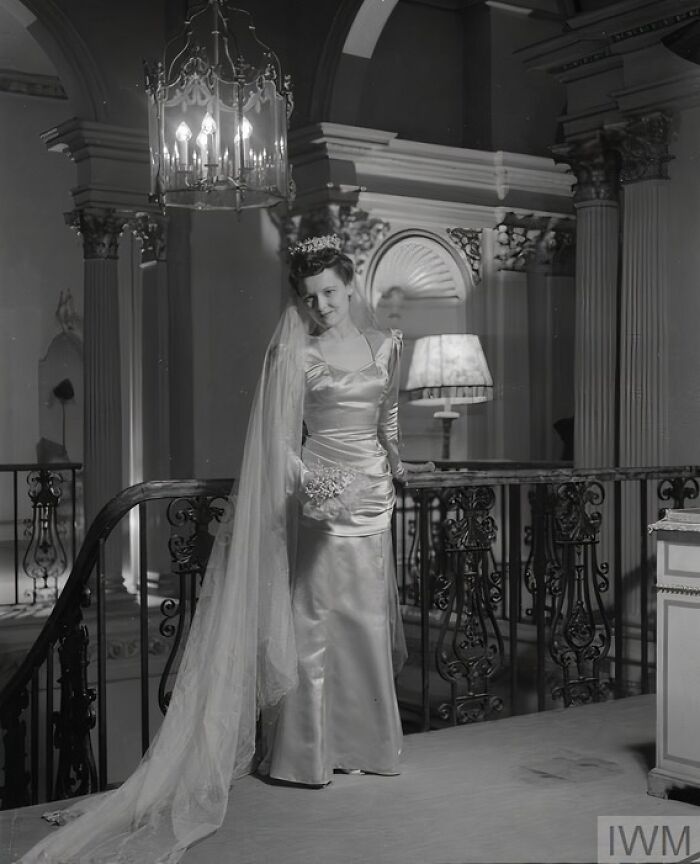
Actress Peggy Bryan Models The Wedding Dress Designed For Her By Fashion Designer Bianca Mosca
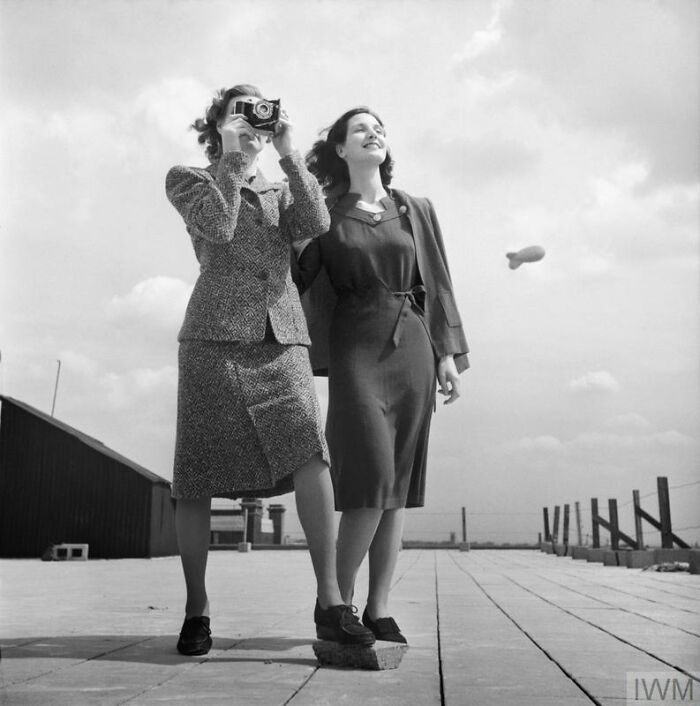
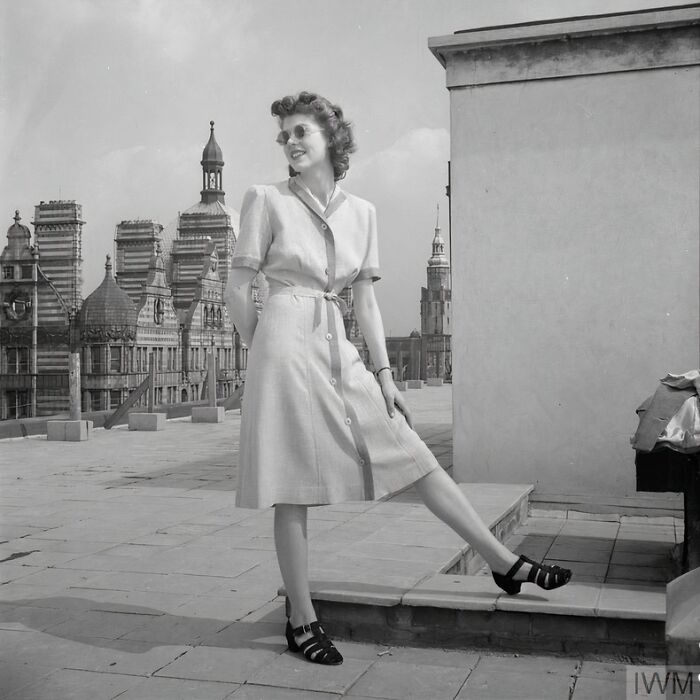
Two Models On A Rooftop In Bloomsbury, London, Wearing Wartime Fashions In 1943
A Model Shows Off Her Pale Blue And Black Wool Atrima Dress, Costing 11 Coupons
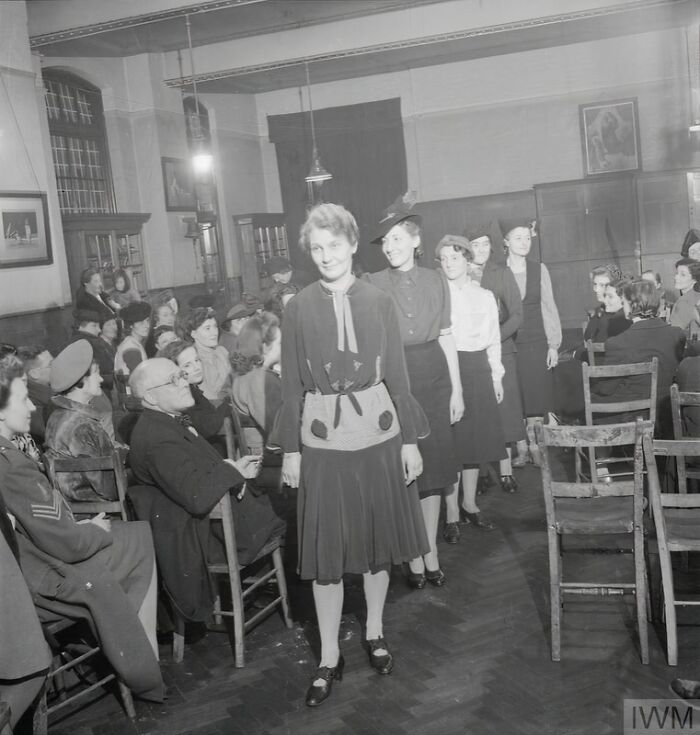
Pupils Of A London County Council Dressmaking Class Hold A Fashion Parade To Show Their Friends And Family What They Have Learnt
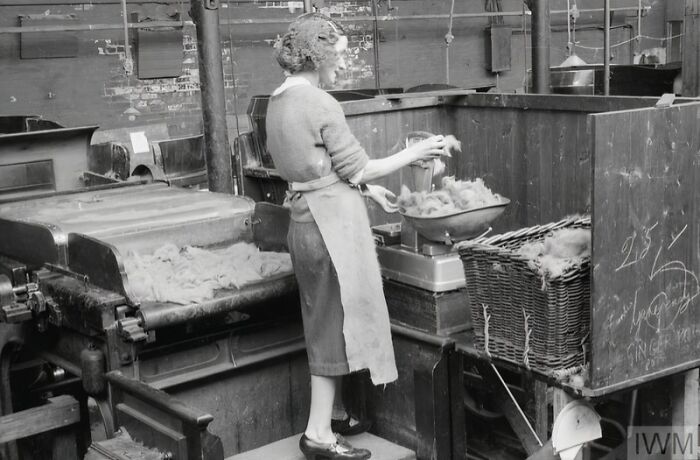
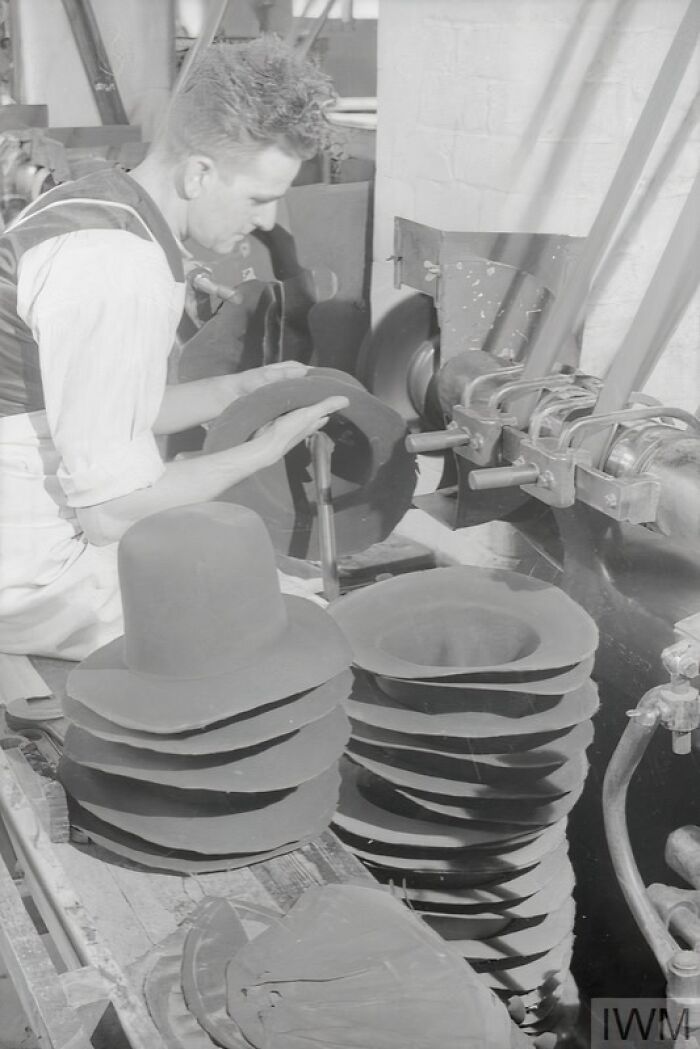
Rabbit Fur Is Processed At A Hat Manufacturer, Somewhere In Britain, Probably Christy's In Stockport
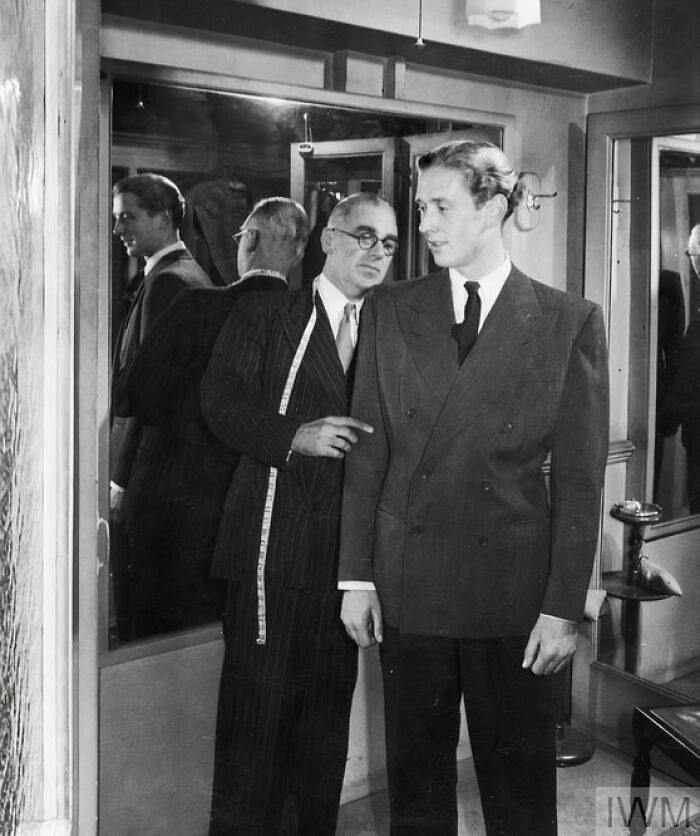
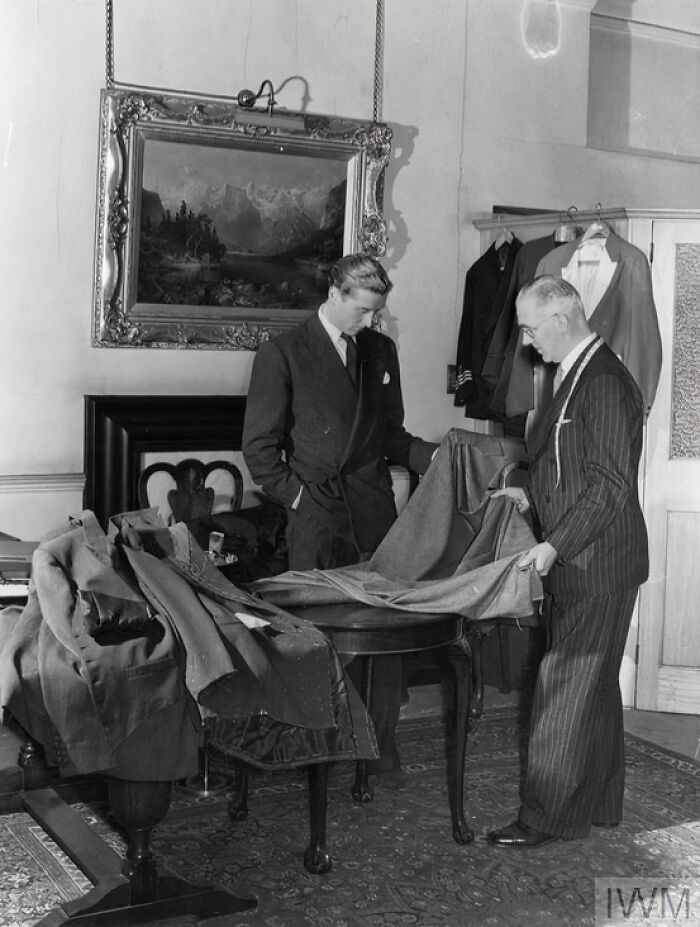
The Master Tailor Of A London Tailoring Firm (Probably Anderson's On Savile Row) Makes A Final Inspection Of The Recently-Completed Suit Of A Customer
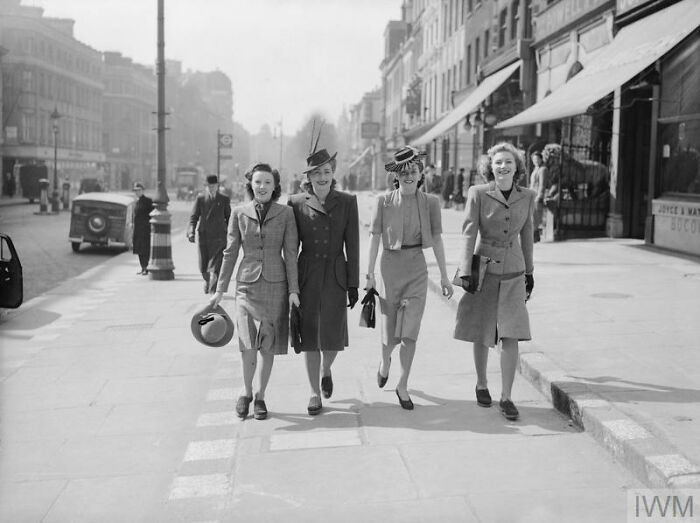
Four Young Ladies Enjoy A Stroll In The Spring Sunshine Along A Shopping Street In The West End Of London
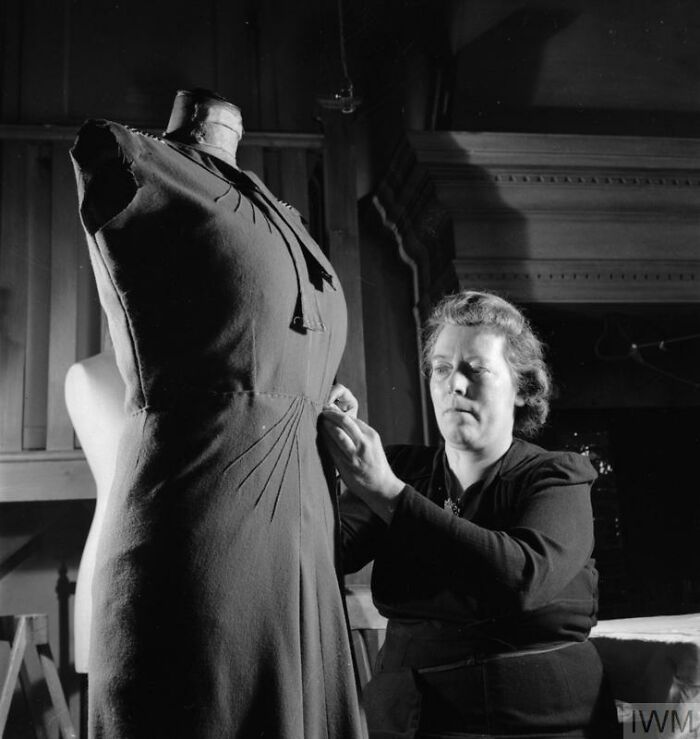
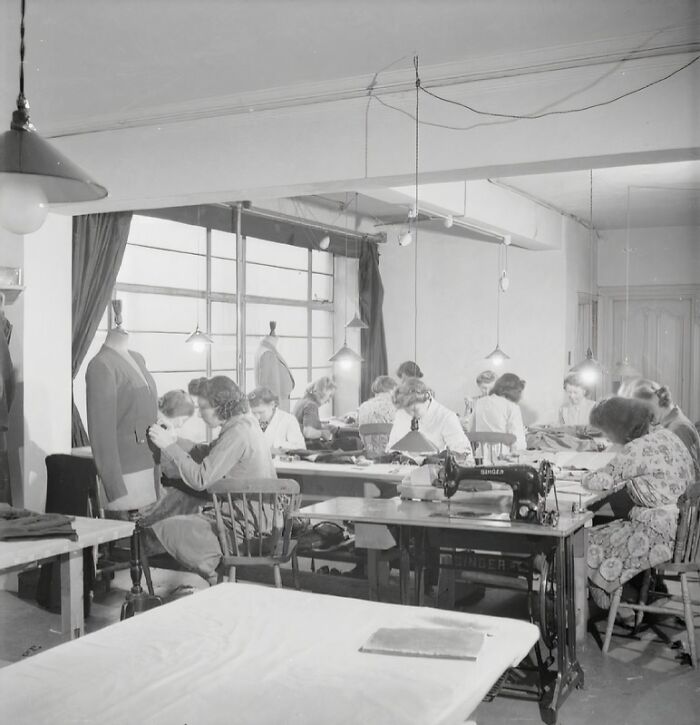
The Stands Used In The Workrooms Are Each Adjusted To The Client's Measurements
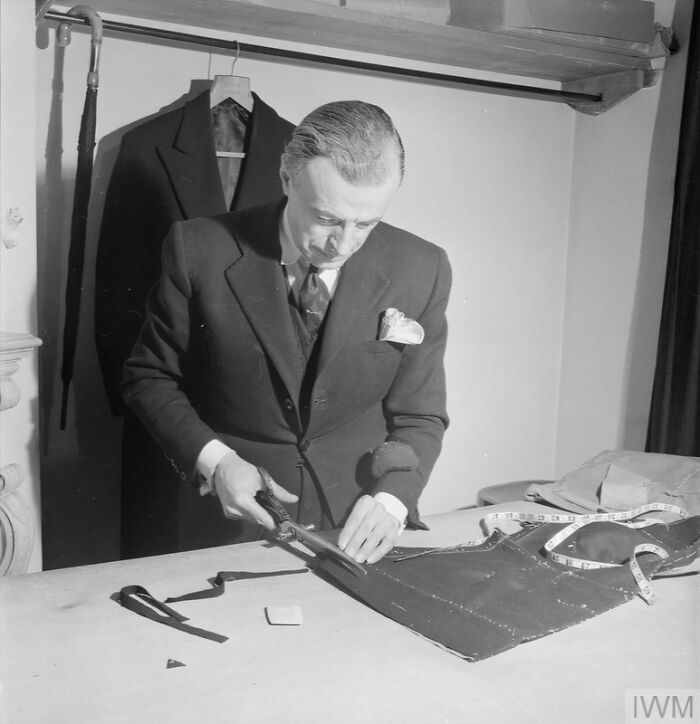
In The Tailoring Room At The Fashion House Of Designer Norman Hartnell In London, Master Tailor Monsieur Jean Cuts A Model Suit
The government's Utility Scheme provided the basics, but the real story of wartime fashion was happening in people's homes. With clothing coupons stretched thin, women became masters of transformation. They unraveled old sweaters to knit new ones, turned blackout curtains into dresses, and painted seams on their legs to mimic precious stockings. "Make Do and Mend" became a symbol of British grit and resourcefulness in the face of adversity.
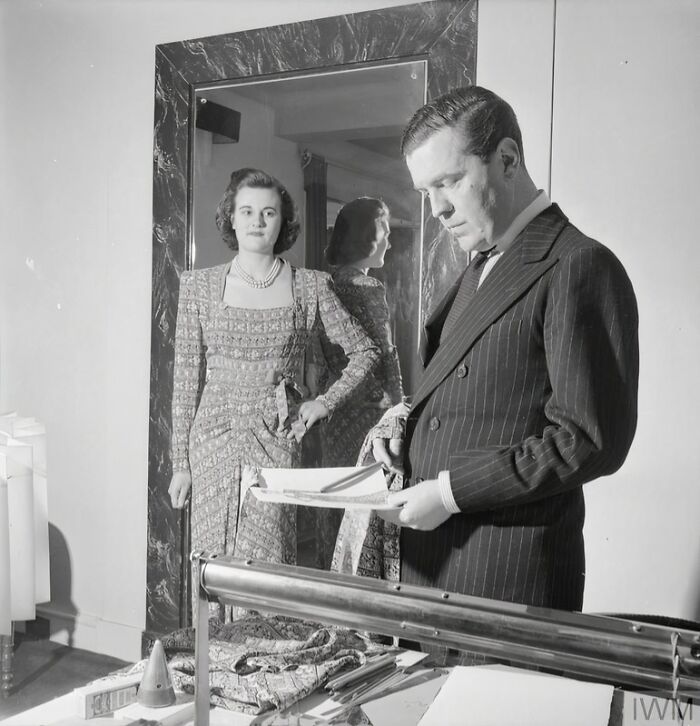
In His London Office, Fashion Designer Norman Hartnell Compares His Original Sketch And Fabric Sample To The Finished Garment, Worn By A Model, Which Has Just Been Completed In His Workrooms
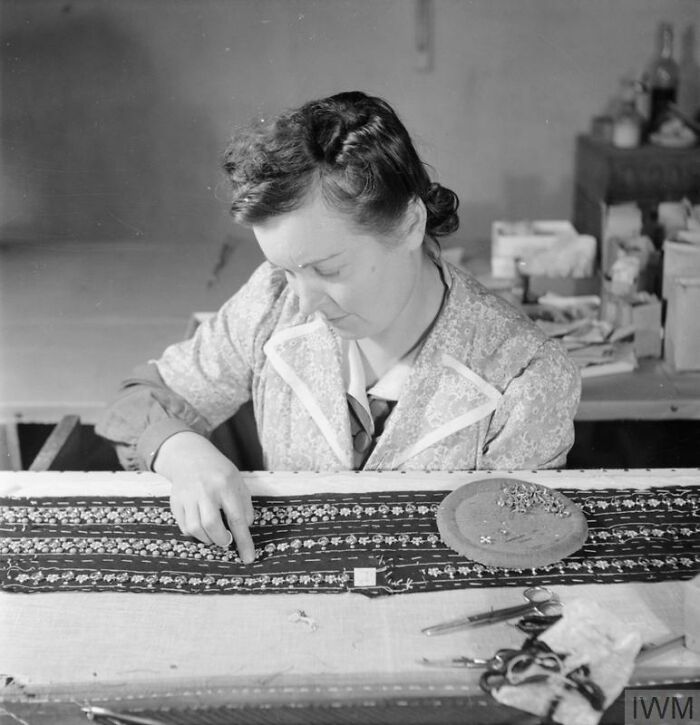
A Skilled Worker Applies By Hand Blue And Gold Studs In Strips To Fabric Which Is To Be Used For A Black Velvet Evening Gown
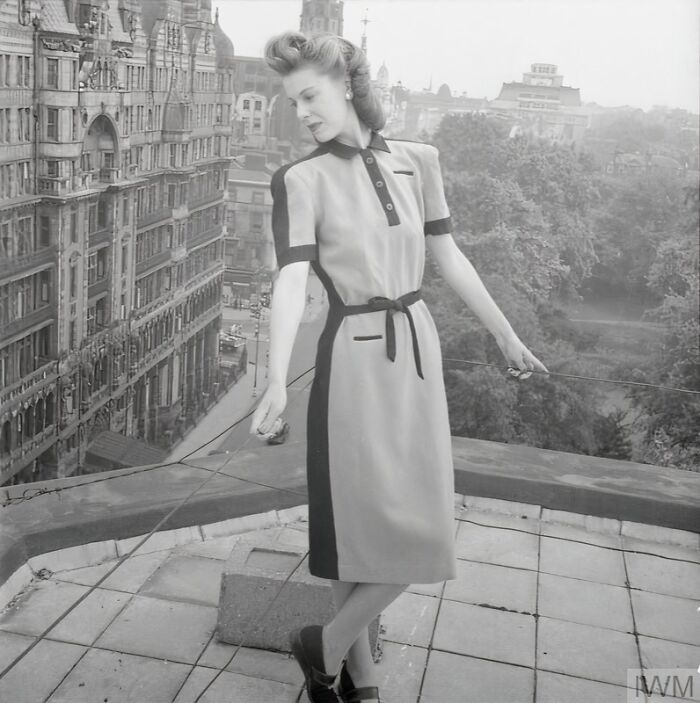
A Model Poses On A Bloomsbury Rooftop To Show Off Her Two-Tone Atrima Dress, Costing 7 Coupons
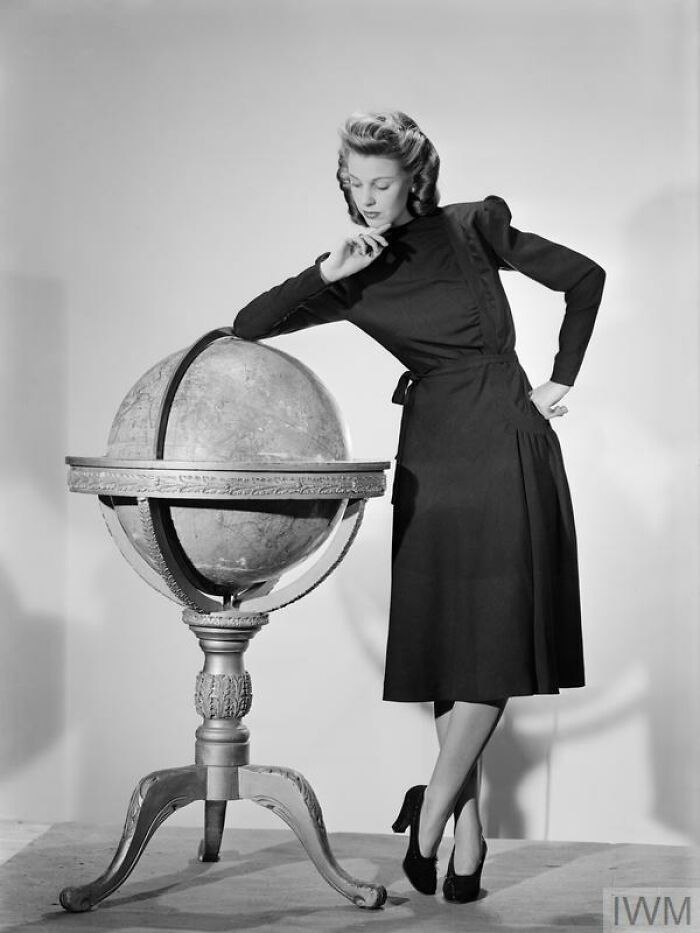
A Model Wearing A Black Woolen Utility Atrima Dress In 1943
Checked Suit, Costing 18 Coupons. The Original Caption Describes This Suit As 'Juvenile', Rather Than Adult
The Master Tailor At This Tailoring Firm (Probably Anderson's On Savile Row) Helps A Customer To Select Cloth For His Suit
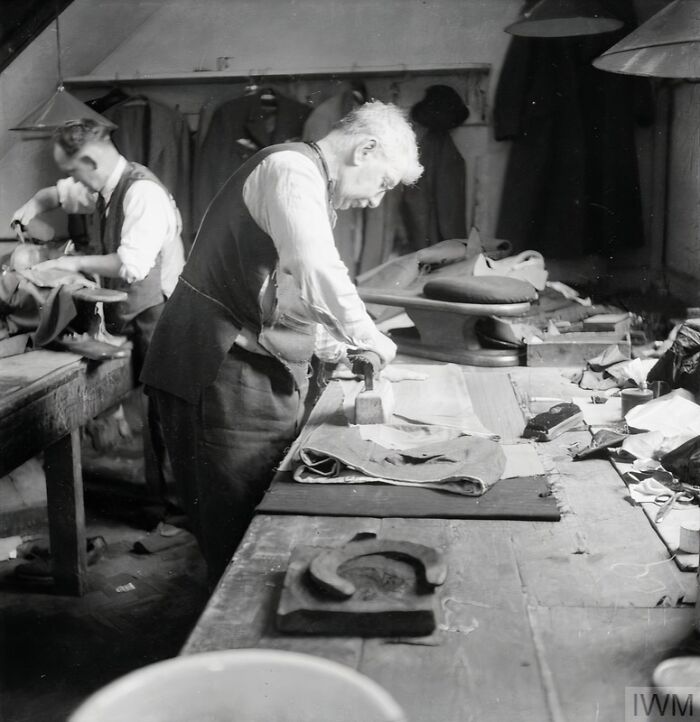
A Tailor Uses His 'Goose' (A Heavy Iron) To Press The Seams Of A Pair Of Trousers In The Workroom Of Henry Poole And Co. On Savile Row In London
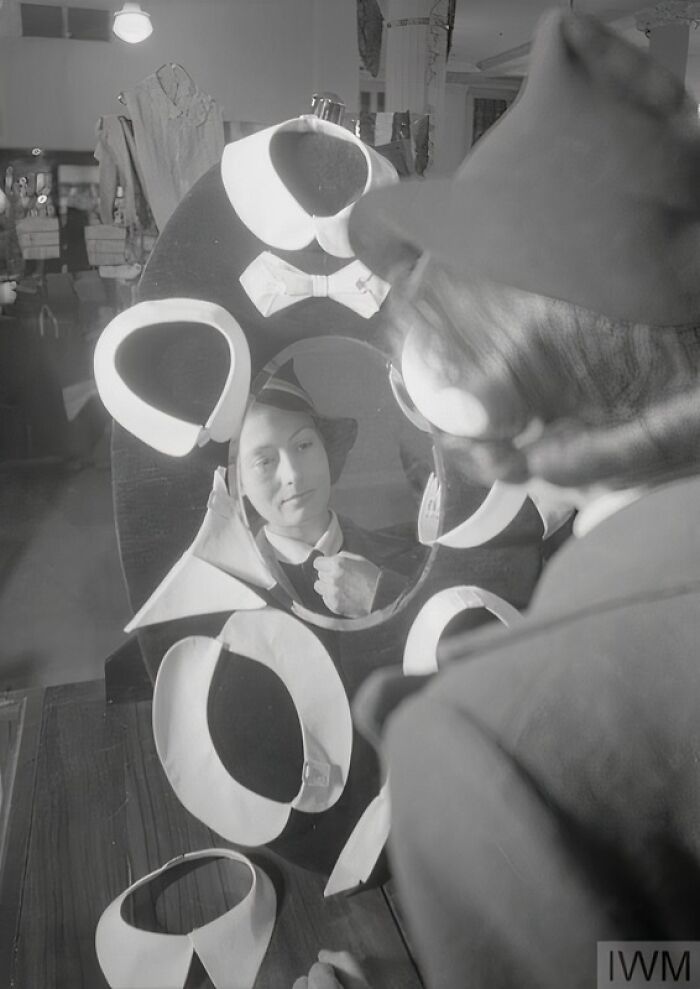
A Selection Of Blackout Collars At Selfridge's Department Store In London
This Photograph Shows A Model Wearing An Outfit Which Illustrates The Way In Which Old Clothes Can Be Re-Worked And Worn As New
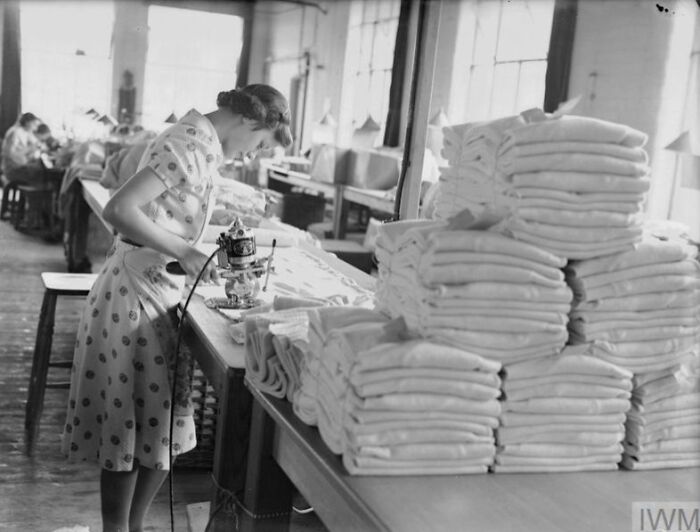
A Female Cutter At Work In A Stocking Factory In Nottinghamshire
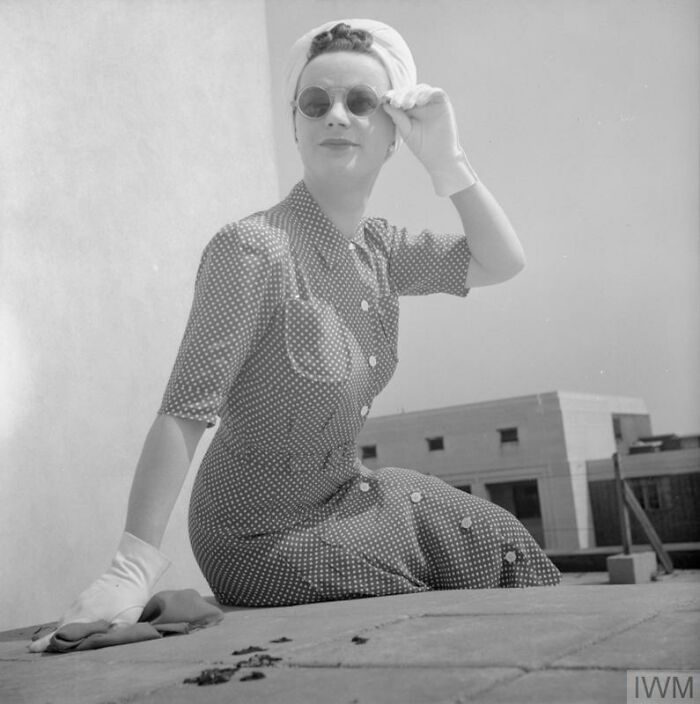
A Model Shows Off Her Scarlet And White Spot-Printed Utility Rayon Shirt Dress With Front-Buttoning. This Dress Costs 7 Coupons
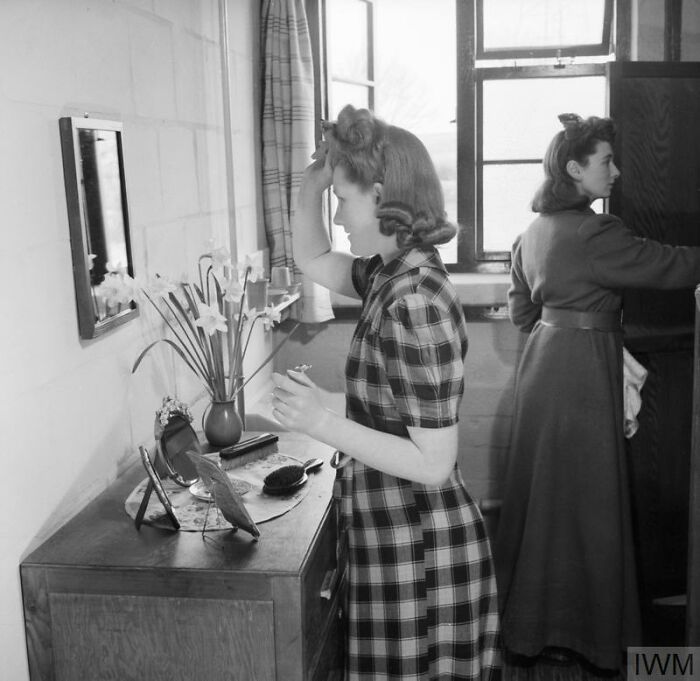
A Female War Worker Fixes Her Hair And Checks Her Appearance In The Mirror In The Bedroom She Shares With Another War Worker At The Hostel Attached To Rof Bridgend
Resourcefulness wasn't just for day-to-day outfits; it defined even the most important moments. Weddings still happened, but a bride might wear a dress made from parachute silk. Women entering the workforce or military service wore practical uniforms that became a new kind of fashion statement. These last photos capture more special occasions and how new societal roles were reflected in the inventive clothing of the era.
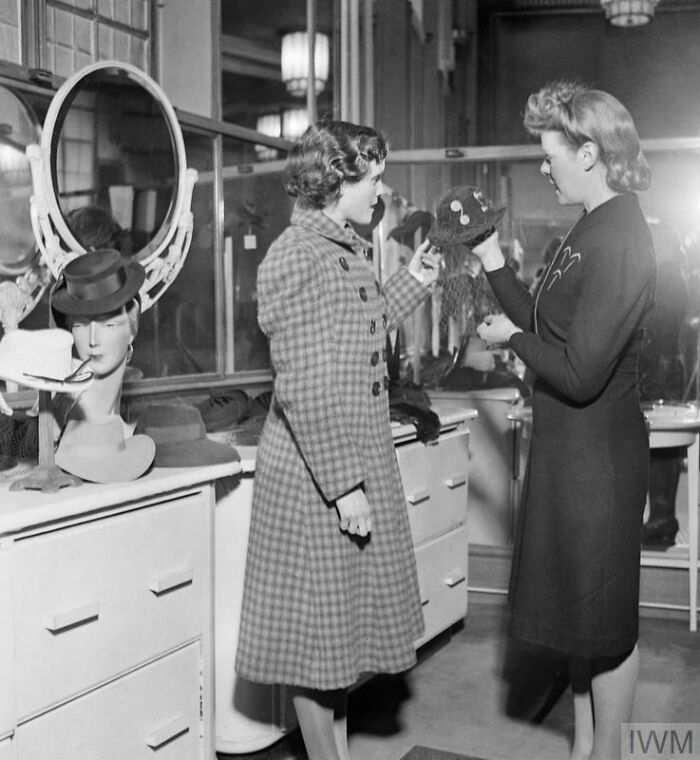
Hilda Chillingworth (Left) Looks At Hats In A Shop During Her Lunch Brea In London During 1942
The Design Studio Of Norman Hartnell
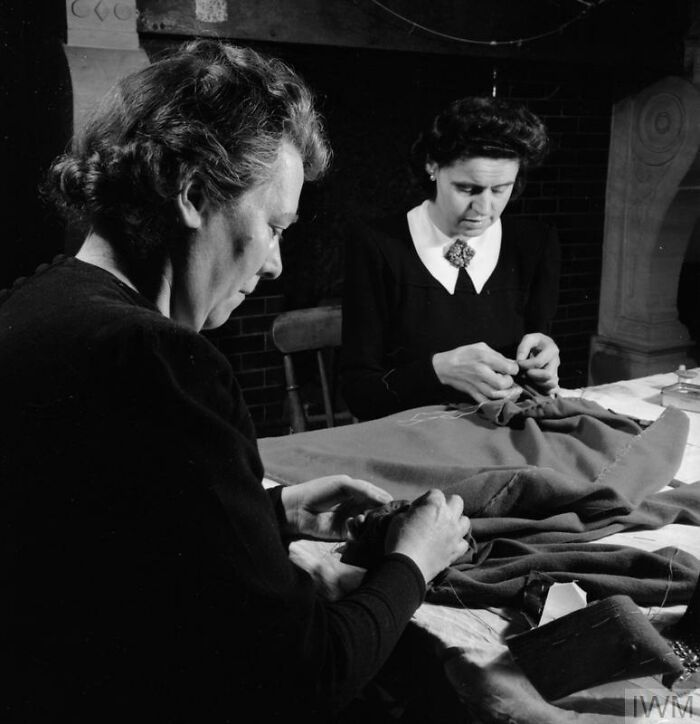
Two Women Sit At A Table And Tack Together An Afternoon Frock
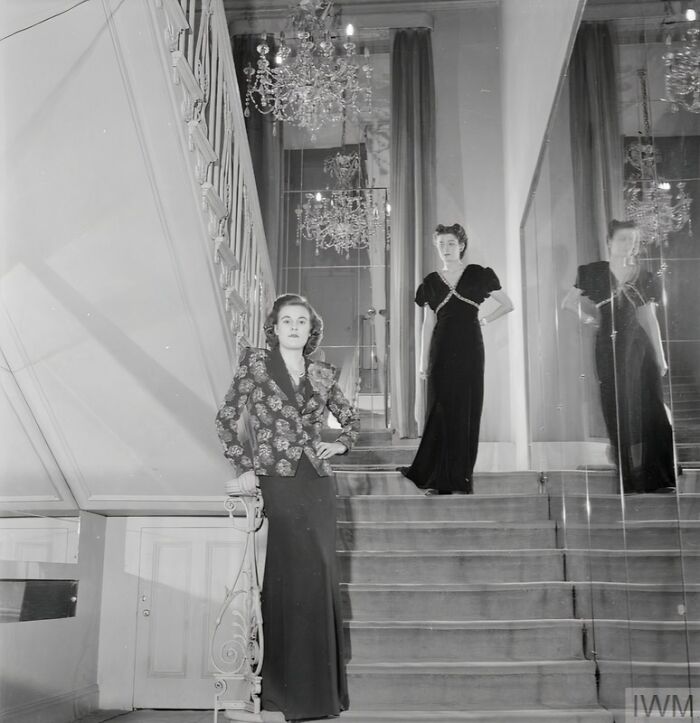
Two Models Pose For The Camera On A Staircase At The Fashion House Of Designer Norman Hartnell
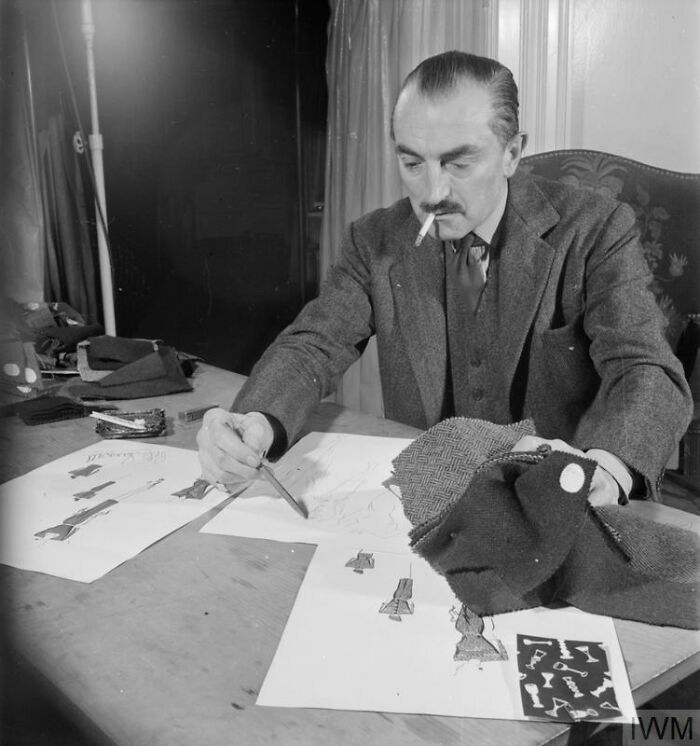
Fashion Designer Peter Russell Smokes As He Sketches A New Design In His London Office
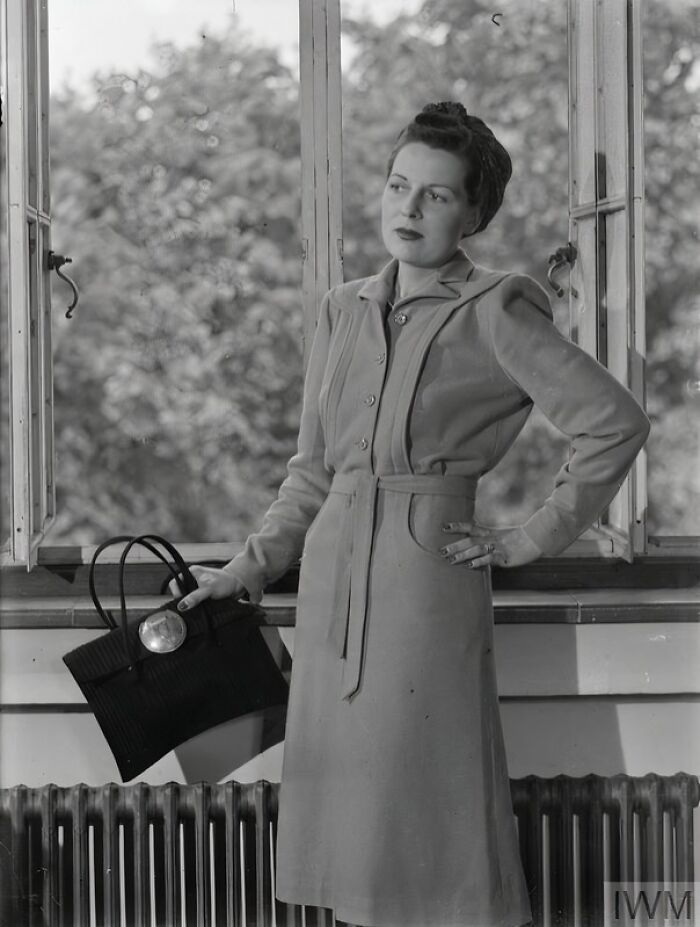
A Model Leans Against A Window Sill As She Shows Off Her Mustard-Coloured Wool Spectator Dress, Costing 11 Coupons
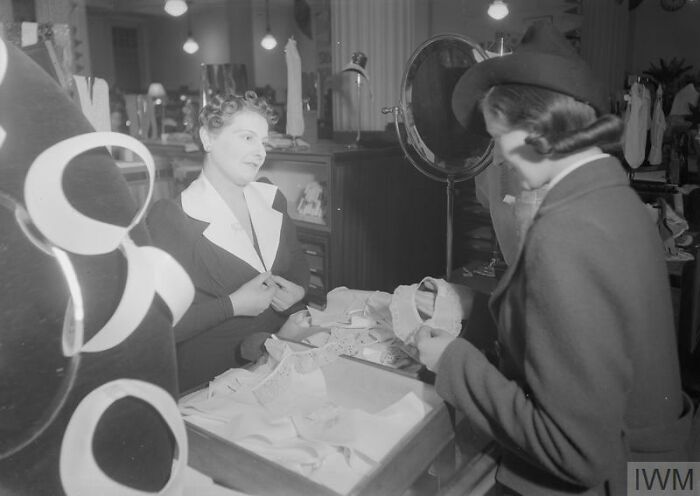
A Female Sales Assistant Helps A Customer To Choose A Blackout Collar At Selfridge's Department Store In London
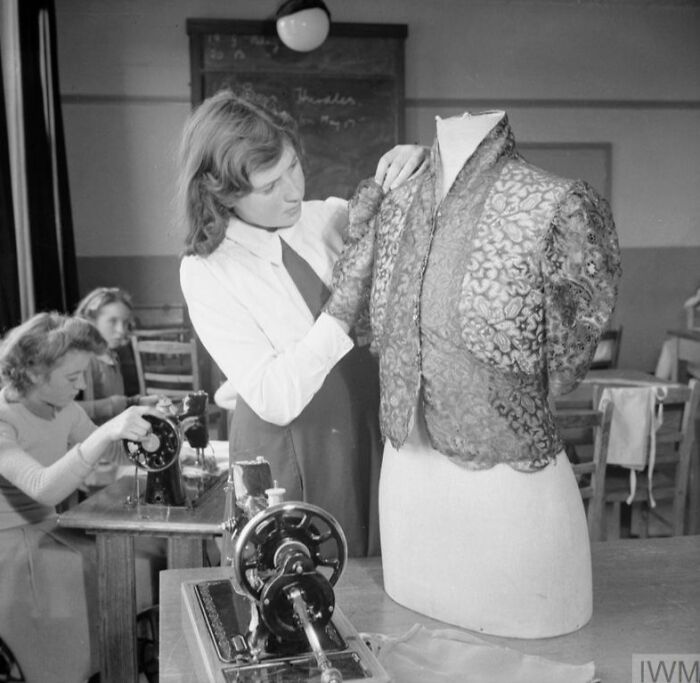
At Baldock County Council School, A Pupil Puts The Finishing Touches To A Lace Blouse She Has Made In Her Sewing And Dressmaking Class
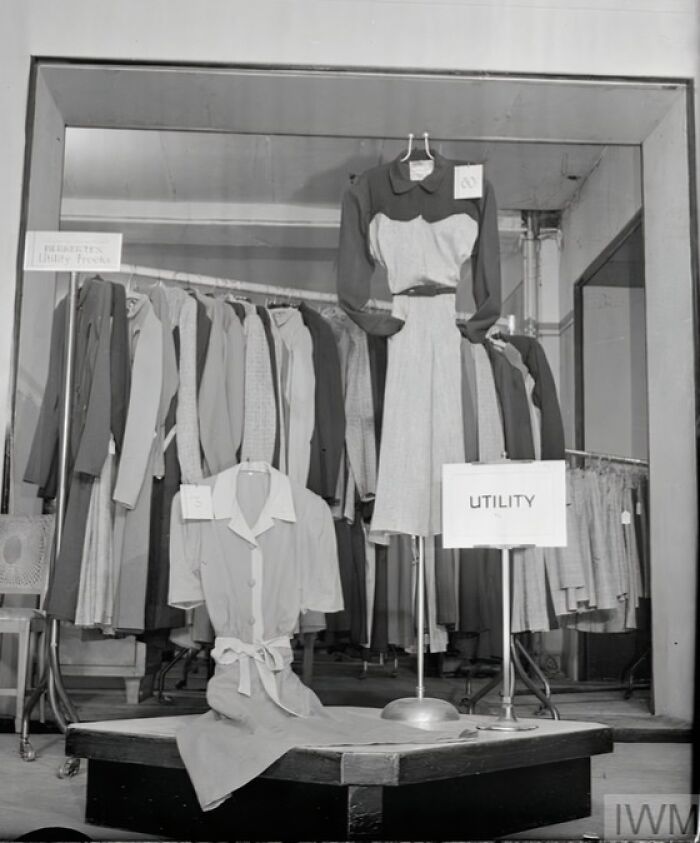
A Display Of Utility Clothes In A Shop, Somewhere In Britain
My nan still had a piece of fabric with the utility mark on it, I made it into a nightdress in the early 80s