Get Premium
Dark mode theme is available exclusively for premium users. Learn more about the benefits of subscribing.
No fees, cancel anytime.

 Dark Mode Ad-Free Browsing Unlimited Content
 Ad-Free Browsing Unlimited Content Dark Mode
Join 1.2 million Panda readers who get the best art, memes, and fun stories every week!


Teaching is one of the most important (and often thankless!) jobs in our society. Each day, educators set out to mold young minds and guide them into becoming knowledgeable and rounded citizens. From droves of screaming first-graders to packs of hormone-addled teens, they go above and beyond to help these little daredevils discover their identities, passions, and talents. So it’s unsurprising that by doing so, they amass troves of observations about the changes that occur in these chaotic classrooms.
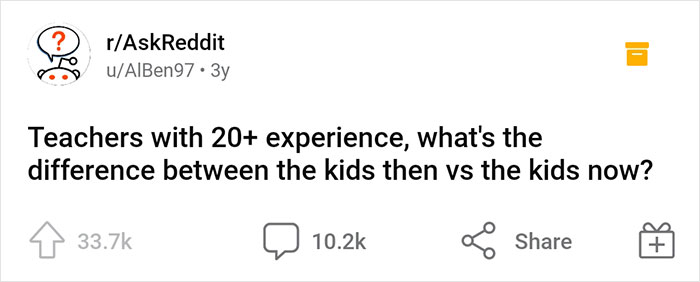
"What's the difference between the kids then vs. the kids now?" wondered user AlBen97 when they reached out to teachers of 'Ask Reddit' who boast over 20 years of experience. The thread immediately became a hit, inviting professionals to share their illuminating insights.
Whether it's new challenges educators face today or changes (both lovely and not) in kids’ behavior, we have gathered some of the most notable shifts in students across the years. So continue scrolling to enjoy these examples, and be sure to let us know what you think of them in the comments! Then if you’re interested in even more illuminating teacher tales, check out our earlier piece on the same topic right over here.
This post may include affiliate links.
 I’ve only been a teacher for a few years, but one very positive difference that I’ve noticed from when I was in school, is that the kids are a lot more understanding towards neuropsychiatric disorders than we were. When I was in school, kids with dyslexia were sometimes called “retards”, and kids with adhd were social outcasts.
My students on the other hand are super supportive and cool with their peers’ different disorders. No one ever questions when we accommodate the classroom for certain students, and everyone patiently helps out when they have to work with students with special needs. Very cool!
I’ve only been a teacher for a few years, but one very positive difference that I’ve noticed from when I was in school, is that the kids are a lot more understanding towards neuropsychiatric disorders than we were. When I was in school, kids with dyslexia were sometimes called “retards”, and kids with adhd were social outcasts.
My students on the other hand are super supportive and cool with their peers’ different disorders. No one ever questions when we accommodate the classroom for certain students, and everyone patiently helps out when they have to work with students with special needs. Very cool!

Totally agree. They are also much more cool with any kind of diversity (skin color, sexual orientation, etc.). During my time "you're gay" was a very common invective. I don't know if i've even heard my students say it once. Edit: scrolling down I realized it's in the next post. And I'm really glad it seems to be a universal thing now, not just in my country.
 Kids today are more accepting. A decade ago, students who are gay or bi would hide it. Now, even in middle school, students feel safe enough to be open about who they like. Additionally, our school has had several students transition. NBD to other students.
To learn more about the teacher’s role and how it evolved over time, we reached out to Bea Leiderman, an instructional technology coach and teacher in Virginia, US. Together with her husband Dr. William Rankin, she runs a website called Unfold Learning that provides learning design and educational expertise to schools, businesses, museums, and governments. Aside from running workshops and seminars around the world, Leiderman also finds pleasure in pursuing her hobby of nature photography in her spare time.
From her personal experience, students haven't changed as much since she started teaching. "Kids are kids and even in Ancient Rome, adults talked about 'kids these days'," she told Bored Panda. "What I do notice are the changes in kids’ attitudes regarding technology, mostly because access to digital technologies is now widespread."
Leiderman became a teacher in 2001, a time when far from everyone had a computer or a cellphone. "If you did have a cellphone, it had limited functionality: make phone calls, send texts typed out using the number pad. You know, 1 for ABC, 2 for DEF, etc. Using a phone was not fun and computers were few and far between. Now, even very young kids have smartphones and they can be a distraction, but they don’t have to be."
I'll be the one to point out the positive changes. I have been teaching for 18 years, and I've noticed a huge increase in empathy, tolerance and acceptance of differences. I have also noticed an increase in general awareness of the world and the people in it, and overall kids seem to get along better with each other. I feel really good about "kids these days". Honestly.
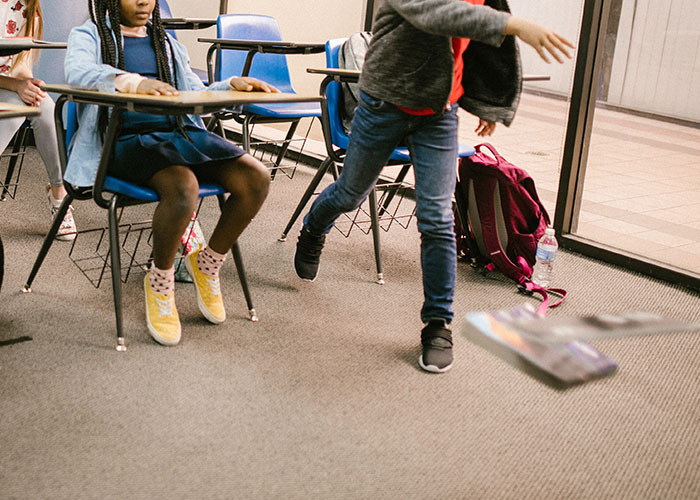 Mental health.
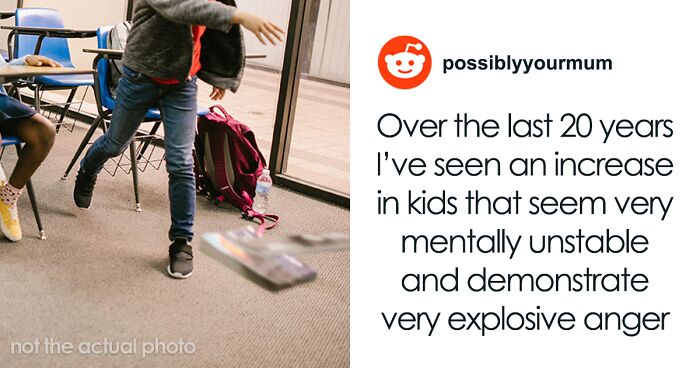
Over the last 20 years I've seen a really significant increase in kids that seem very mentally unstable in regular classrooms - with very little support. What is really hard to handle is the number of kids who demonstrate very explosive anger at school. Trashing classrooms, screaming foul language, throwing objects, breaking things and harming themselves, classmates and teachers. This is a very common occurrence (weekly) in my experience and in the experience of ALL my teacher friends. I really fear for the mental health of all the kids who have to deal with this. I feel like they are being put into an abusive situation - always on edge that something might set these kids off.
I'm sorry if this came across as uncaring towards the students exhibiting violent, explosive behaviour. I have great deal of compassion for them and want them to get the appropriate care and attention they need. They need that support from someone other than a classroom teacher. I work hard to teach self regulation in my class and set kids up for success by having a calm down corner, alternative seating, body breaks, snack breaks. I try to teach each child 'where they are at' and work hard to get to know each and every child as an individual and make them feel cared for and that I believe in them. But I can't be a psychiatrist and social worker and teach 20- 30 kids.
Mental health.
Over the last 20 years I've seen a really significant increase in kids that seem very mentally unstable in regular classrooms - with very little support. What is really hard to handle is the number of kids who demonstrate very explosive anger at school. Trashing classrooms, screaming foul language, throwing objects, breaking things and harming themselves, classmates and teachers. This is a very common occurrence (weekly) in my experience and in the experience of ALL my teacher friends. I really fear for the mental health of all the kids who have to deal with this. I feel like they are being put into an abusive situation - always on edge that something might set these kids off.
I'm sorry if this came across as uncaring towards the students exhibiting violent, explosive behaviour. I have great deal of compassion for them and want them to get the appropriate care and attention they need. They need that support from someone other than a classroom teacher. I work hard to teach self regulation in my class and set kids up for success by having a calm down corner, alternative seating, body breaks, snack breaks. I try to teach each child 'where they are at' and work hard to get to know each and every child as an individual and make them feel cared for and that I believe in them. But I can't be a psychiatrist and social worker and teach 20- 30 kids.

this is really sad and shows how much stress newer generations (students) face (edit: all of the generations have experienced troubles of different types, so this is less about generations and more about the stress of students in general. sorry if it came across as insensitive or ignorant!)
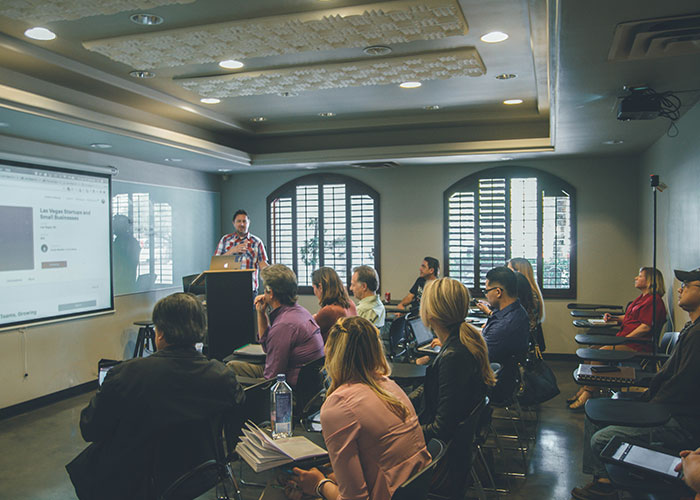 I have been teaching at universities 4 decades. Lack of intellectual curiosity . Students have what is the minimum I need to do to get my ticket punched mentality. The number one question I get asked is what is on the exam. They are so grade focused that it is ruining education. I had a number of students complain that my class was too hard and a vice provost told me to dumb my class down (I refused, long story).
I see a number of folks commented on parents. We have parents calling up the president of the university to complain when a kid fails a class. I've dealt with parents and lawyers after giving a bad grade. I now must be so careful and not hurt anyone's feelings (Thank God my university has banned the fake service dogs).
I have been teaching at universities 4 decades. Lack of intellectual curiosity . Students have what is the minimum I need to do to get my ticket punched mentality. The number one question I get asked is what is on the exam. They are so grade focused that it is ruining education. I had a number of students complain that my class was too hard and a vice provost told me to dumb my class down (I refused, long story).
I see a number of folks commented on parents. We have parents calling up the president of the university to complain when a kid fails a class. I've dealt with parents and lawyers after giving a bad grade. I now must be so careful and not hurt anyone's feelings (Thank God my university has banned the fake service dogs).

I think this is a big reason so many students are disappointed with university education. I've had people complain to me that their degree is "useless" and I always wonder what job they have where they never have to think or analyze or make decisions. While I agree that college is WAY too expensive, the purpose is to learn higher-level critical thinking skills and broaden your knowledge base. Doing that will make you incredibly versatile. College isn't designed to put you into a specific job; if you want that, go to technical school. (There's absolutely nothing wrong with that choice! We messed up back in the 1980s with this "everyone go to college" c**p.)
An annual report from nonprofit organization Common Sense Media found that screen use for tweens and teens grew by 17 percent from 2019 to 2021, a sharp increase from the years before the pandemic. "Between 2019 and 2021, the total amount of screen media used each day went from 4:44 to 5:33 among tweens, and from 7:22 to 8:39 among teens. This is a much faster increase in just two years than was seen in the previous four years," the researchers wrote.
While some teachers say the increased screen time has negatively affected student behavior, Leiderman said it’s easy to blame technology for changes in classrooms that make adults feel uncomfortable.
"When I was a kid, if I was bored in class, I doodled in my notebook, or in the margins of whatever book I was supposed to be reading. Or I just stared into space. Now when students are bored, they can use technology as a distraction," she said. "Teachers have to make classes more interesting, more relevant because they are competing with distractions. This is not a bad thing, though. More interesting, relevant, engaging classrooms lead to deeper, lasting learning that can make a difference in the lives of students. It’s how it should have been all along."
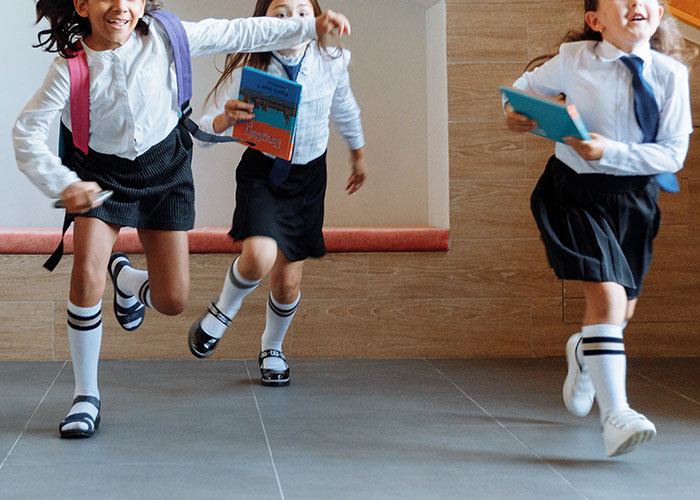 Teacher of 24 years - not much difference. Kids are kids. Bundles of joy, anxiety, achievement, fears, hopefulness, self loathing, energy, laziness, humour, sarcasm and, most importantly, their individual spark that makes each of them precious.
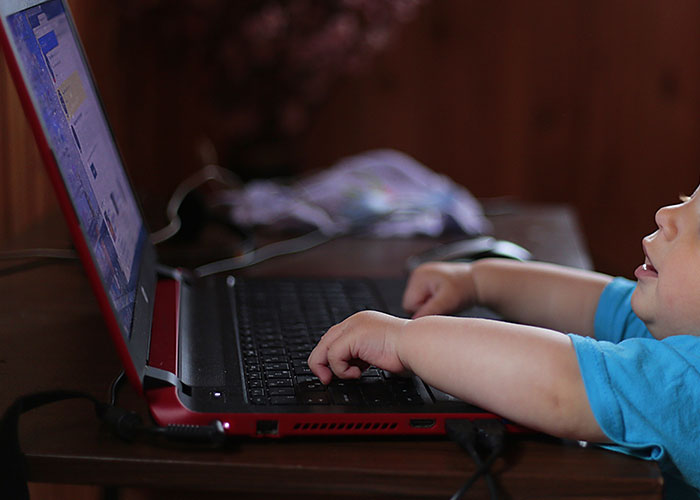 My mum was a nursery (so kids 3-4 years old) teacher for 30+ years and her classroom had a computer in it. Most kids would be familiar with the screen/mouse/keyboard when they arrived even at their young age when she taught in the 2000s and it became normal for families to have a home computer. In the last few years before she retired she noticed a trend of kids coming in and not knowing ow to use the mouse or keyboard because they were so used to iPads and touch screens.
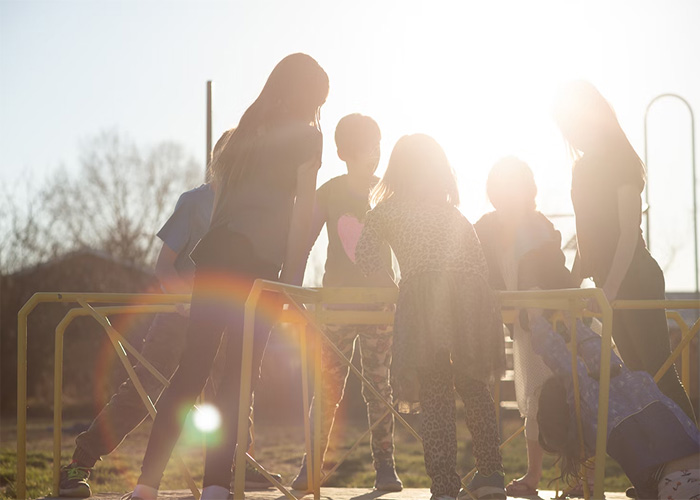 20 years experience. I find the biggest difference is the inability to self regulate. Some kids struggle with the word “wait.” Some kids struggle when their emotions get too big- they don’t have coping mechanisms. Some kids aren’t able to interpret the emotions of others. However many kids are just fine.
I think it is related to changes in parenting and technology. The instant gratification of technology combined with parents who don’t create boundaries create kids who can’t self regulate.
However I also think that kids spend less time outside unsupervised. The natural processes of learning and social interactions is not happening for most kids.
Most kids are really pretty good. Every year I have kids that prove my faith in humanity. But that 10% who trash classroom, scream, and freak out are getting worse. The difference between the top and the bottom is only getting larger.
20 years experience. I find the biggest difference is the inability to self regulate. Some kids struggle with the word “wait.” Some kids struggle when their emotions get too big- they don’t have coping mechanisms. Some kids aren’t able to interpret the emotions of others. However many kids are just fine.
I think it is related to changes in parenting and technology. The instant gratification of technology combined with parents who don’t create boundaries create kids who can’t self regulate.
However I also think that kids spend less time outside unsupervised. The natural processes of learning and social interactions is not happening for most kids.
Most kids are really pretty good. Every year I have kids that prove my faith in humanity. But that 10% who trash classroom, scream, and freak out are getting worse. The difference between the top and the bottom is only getting larger.

Yes, this is exactly what I teach schools about (I do professional development about mental health in kids).
The use of technology also led to surprising benefits, such as kids already entering school with skills and experiences previous generations lacked, the educator argued. "For example, the first time I taught a class that involved 3D modeling on a screen was in 2007, and students had a very tough time imagining a 3D object on a flat screen."
"By 2015, most students I worked with had some experience with a 3D environment, Minecraft or something else like it, and it was much easier to jump into creating whatever we were working on without struggling," Leiderman added.
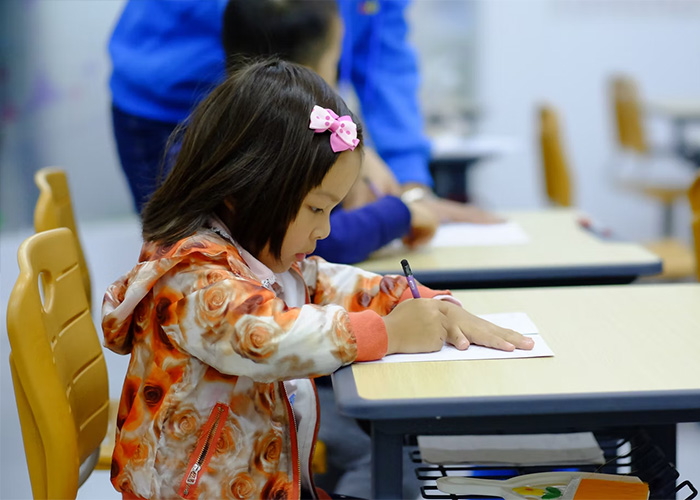 My mom retired last year after teaching 30+ years. She had recently become a vice principal and had planned on working for another 5 years to really top up her pension... but she couldn't handle the parents. Helicopter parents as they're called. She said the parents just won't let their kids take responsibility for their actions (come in screaming because their kid got detention for suckerpunching some kid on the yard - and admitting to it), or accept their grades (kid got a bad mark on a test, TEXTED his mom immediately, she drove in and lost her s**t. It doesn't matter that she showed her the test where he got most of the answers wrong.)
 Reading. I teach in post-graduate professional school. They are kids at 22-26 years old. As a general statement, they do not know how to extract information from reading. They skim rather than read. Also, they claim to be visual or auditory learners rather than readers (thank you b******t education specialists).
I taught freshman/sophomore college English for 8 years. When I first started in 2010, most students could read and write on a high school level. By the time I left in 2018, my average entering student read on a 4th or 5th grade level and wrote at or below that level. Worst of all, many were rude or hostile if they didn't make the grades they wanted, and they were unwilling to do rewrites or ask for help. They'd simply say they made A's in high school so if they didn't make A's in my class I just didn't like them. No, sweetie, you don't know basic subject-verb agreement or how to pull out basic info from a newspaper article.
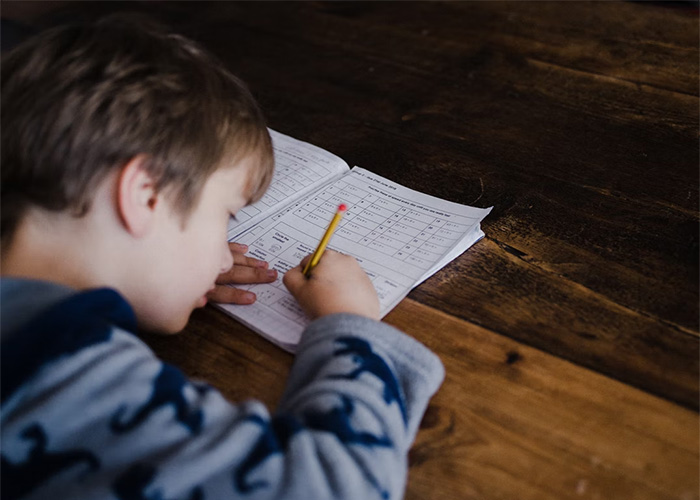 Anxiety is worse. I have multiple kids each year with diagnosed anxiety disorder IN KINDERGARTEN. now my school is trying to say we need to stress kids out MORE because they are not comfortable failing. We need to " inoculate them against" stress with more stress. Maybe that's the case with older kids, but if I put any more pressure on these kindergarten children they are going to break in a way that lasts a lifetime. Also what we do in kindergarten is very very different. There is no learning colors or playing. They are now writing books and reading books at 5. Like, books with 6 full pages of writing true stories from their lives. We don't even let them write fiction. These poor kids. Ten years ago kids were singing songs about the color yellow. Now if they don't know every letter sound and every letter by the end of October, they are sent to a special help group.

I learned the best when I was put in the "people who fail at English" English class. We read books, learned history, talked, had debates. It was great! So so so much better that the sitting at a desk for 90 minutes listening to a teacher talk. Granted the normal class was extremely over crowded and the good class had like 15 people AT MOST.
One change in kids she noticed is that they have become much more adventurous with computers and tech in general. She stated that students are now less worried about clicking away and figuring things out along the road. However, these behaviors can sometimes scare teachers. "Many older adults have not changed their attitudes towards technology. To them, technology is scary and a bother, and it makes them uncomfortable. They don’t want students to know more than they do."
But while teachers (and parents!) fear kids taking over control by showing off their skills, they should also remember the little ones still need their guidance and support. Leiderman told us that while many students are bringing their attitudes about technology into the classroom, far from everyone is fluent in tech.
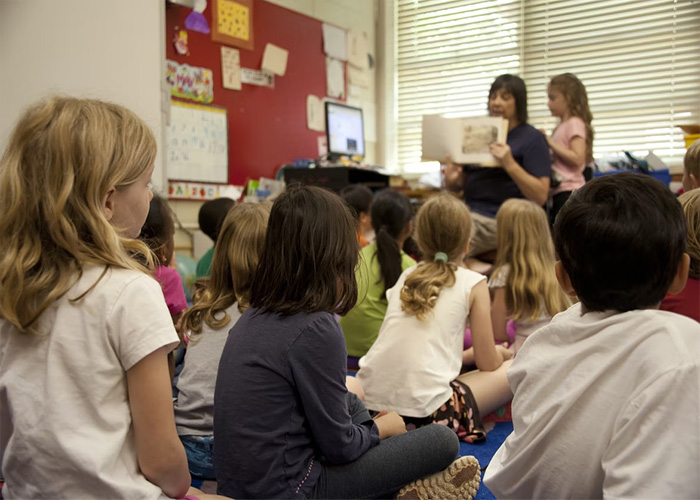 Teacher for 17 years. School administrator for 5 or 12, depending on you want to define that role.
There is no difference between the kids of yesterday and today. None. Zero. If there are changes in how they interact with us and with each other, they are entirely the result of their coping with a world that we have created for them. This is not hard to figure out or understand.
Teacher for 17 years. School administrator for 5 or 12, depending on you want to define that role.
There is no difference between the kids of yesterday and today. None. Zero. If there are changes in how they interact with us and with each other, they are entirely the result of their coping with a world that we have created for them. This is not hard to figure out or understand.
Kids now are the way they are because of thef***ing world we live in. I don't agree with kids being assholes but a lot of us grew up with authority/school figures maybe not being the best people to stand with
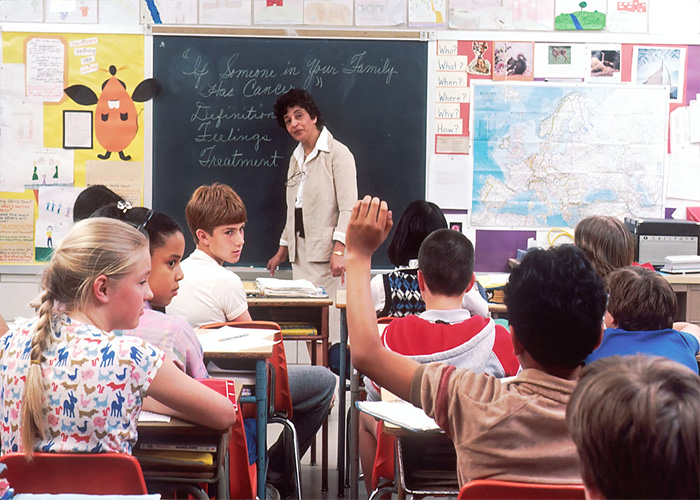 I have two.
The first is one I can not explain. I don't know why it is happening, but it is definitely happening. Kids are less curious. School is not really about learning, it is about getting a grade. When I first started teaching a lecture would take 2-3 classes because of answering questions that the lecture brought up. Not clarification questions, curiosity questions. Now, even when I try to force it, the kids don't ask questions. I could be lecturing about the most interesting topic in the world, and making overly--provocative statements and they still just sit there and numbly stare at me. When I ask why they don't ask questions they tell me "because we understood it all."
The second is one I think a lot of teachers don't realize. They are in constant communication with one another. 24-7 they have a phone in hand and they are talking to each other. Something can happen in my 1st hour and 2nd hour walks in talking about it and have obviously been talking about it for a while. A horrible example of this is a death of a student. We had to beat it into our admins head that you can't wait even a second to announce. The second it happened it started spreading through the town and school. There are whispers and tears spreading through my room before I even know about it. We have no time to prepare or handle things appropriately. A couple of times I have found out about things happening in neighboring towns within an hour of it happening from my students. And the implications of this constant communication is yet to be really understood by anyone. I don't think any adult today can comprehend growing up in this hive-mind way.
I have two.
The first is one I can not explain. I don't know why it is happening, but it is definitely happening. Kids are less curious. School is not really about learning, it is about getting a grade. When I first started teaching a lecture would take 2-3 classes because of answering questions that the lecture brought up. Not clarification questions, curiosity questions. Now, even when I try to force it, the kids don't ask questions. I could be lecturing about the most interesting topic in the world, and making overly--provocative statements and they still just sit there and numbly stare at me. When I ask why they don't ask questions they tell me "because we understood it all."
The second is one I think a lot of teachers don't realize. They are in constant communication with one another. 24-7 they have a phone in hand and they are talking to each other. Something can happen in my 1st hour and 2nd hour walks in talking about it and have obviously been talking about it for a while. A horrible example of this is a death of a student. We had to beat it into our admins head that you can't wait even a second to announce. The second it happened it started spreading through the town and school. There are whispers and tears spreading through my room before I even know about it. We have no time to prepare or handle things appropriately. A couple of times I have found out about things happening in neighboring towns within an hour of it happening from my students. And the implications of this constant communication is yet to be really understood by anyone. I don't think any adult today can comprehend growing up in this hive-mind way.

I think that the kids are being so inundated with information that they are in overload. There is also what the post further up talked about - kids are expected to "know" stuff". But really what they are expected to do is to perform. So their "learning" is really just memorization. Because parents are so convinced that their toddler is a genius who should be learning algebra, these kids are rewarded for pretending that they understand stuff which they are just parroting. In those condition, curiosity is a hinderance. After all, if kids should memorize the entire 1 to 10 multiplication table in kindergarten, where can the teacher fit in anything fun? N Nothing kill curiosity like making learning a chore.
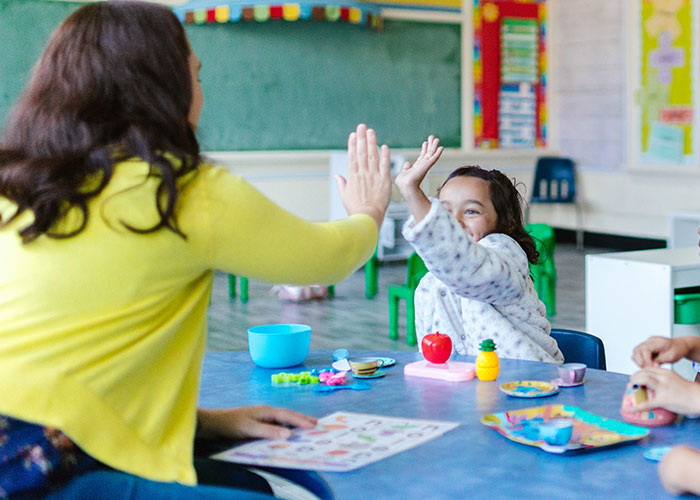 I've been teaching high school since 1993. Kids are less much less homophobic, much heavier, more aware of things in the world (thanks, internet!), and as mentioned by another teacher here, more willing to say they are mentally ill, particularly depressed. Whether or not they actually *are* more mentally ill is another question, and I don't have the answer. Also pessimism about the future is much more pronounced than 20 years ago.
Drug use is just as much of a problem as 20+ years ago but the types of drugs used these days are more dangerous.
There are have always been lovely, fun, and enjoyable students and that has not changed.
I've been teaching high school since 1993. Kids are less much less homophobic, much heavier, more aware of things in the world (thanks, internet!), and as mentioned by another teacher here, more willing to say they are mentally ill, particularly depressed. Whether or not they actually *are* more mentally ill is another question, and I don't have the answer. Also pessimism about the future is much more pronounced than 20 years ago.
Drug use is just as much of a problem as 20+ years ago but the types of drugs used these days are more dangerous.
There are have always been lovely, fun, and enjoyable students and that has not changed.
I guess it just feels like the world is going to s**t lately. Pandemics, fires, politics, human rights. How can you be optimistic about the future when you don't know what human right will be taken away next? Or how many people you know will die of diseases? Working in healthcare it gets exhausting dealing with COVID every day but what's even more exhausting is all the people who have given up. It's almost like we realized our collective power and it's not much. Why wear a mask and goggles when your favorite resident just died in the hospital when she was laughing and playing bingo two weeks ago? Right?
"The myth of the 'digital native' is dangerously widespread. Many adults assume that kids can use technology with little or no guidance because they’ve had cellphones and computers around since they were born. This is absolutely ridiculous," she explained. "We as adults have to help kids learn to use technology productively AND safely. None of that can be taught with lecturing and worksheets. It has to happen through actual use of technology for productivity and creativity, with respect for the rights and intellectual property of others."
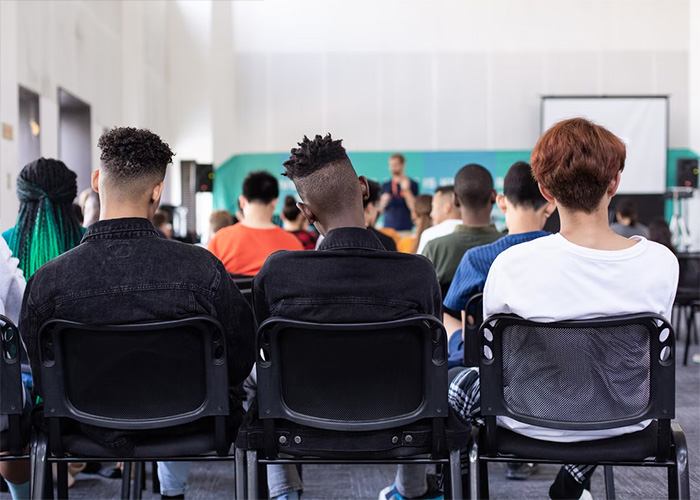 The level of bully violence seems to have gone way down since the 90s. You don't see nearly as much clique activity, and it is no longer a thing where athletes pick on the nerds for example. Being mean to people seems to actually have a harmful effect on their popularity. Whereas the most popular kids seem to be those who are friends with everybody. You won't lose points because one of your friends is in band, first example.

oh lord. well.. i’m in highschool in texas, USA. football boys get away with a lot of s**t; n word (they’re white ofc), r slur, f slur, ‘go make me a sandwich’, sexual comments about girls minding their damn business, etc. god i have to restrain myself from punching the s**t out of em
SRO in a medium sized high school. Compared to kids in 2008, they are much nicer. 2008 - 2010 was the apex of bullying. MySpace and Facebook were fields of prey. Kids spent hours terrorizing others. They were nice individuals, and shitty, shitty as a group. Students don’t put up with that s**t anymore. But, more importantly, they don’t do it as much. I’m not saying that there aren’t issues, but I would say it’s gone down over 60%. Now the adults are doing it.
 Serving 15 years in a HS and counting...
They text with their thumbs more quickly than we type on keys.
They are more individualistic, but also more accepting of differences like race or orientation.
They were born after 9/11.
Basketball and soccer are the new baseball and football.
Everyone games.
Internet killed the TV star.
Serving 15 years in a HS and counting...
They text with their thumbs more quickly than we type on keys.
They are more individualistic, but also more accepting of differences like race or orientation.
They were born after 9/11.
Basketball and soccer are the new baseball and football.
Everyone games.
Internet killed the TV star.
Since education was based on books and papers twenty years ago, it can take time for some teachers to adapt to this change of pace. With the internet at our fingertips, something that took hours to look up in the library in the past now takes mere seconds. "If you spend time with teachers at any large gathering, the 'kids are googling all the answers' conversation always happens," the educator revealed.
"When I was in school, I had access to my older sister’s lab reports, research papers, completed worksheets," she said, adding that using Google these days is no different. "It shows students have not changed. Students knew how to game the system when I was a kid, and they still do it today."
Schools are measured differently as well. Many teachers have to defend failing a student not only to parents, but also to higher ups because it affects the graduation rate. A colleague was harassed and finally started bringing a union rep to repeated questionings about failing a senior who was absent for two-thirds of the year.

No Child Left Behind was clearly a HUGE mistake. Teaching to the test not only does not teach, it also send the wrong message about education, and gives too much fodder for helicopter and bulldozer parents to b***h about their “perfect little angels” getting a well deserved bad grade.
 A little different here because I'm a dance teacher, but I've noticed big changes throughout the years (been teaching just about 20 years).
Anxiety. Kids are scared to try anything new. The pressure they feel from possibly failing is intense and really hard to break through. They are way more scared now to look foolish in front of everyone than ever before.
Parents. They are the worst. To clarify, I deal mostly with competitive dancers. As someone mentioned above, the children are never at fault, the parents will pretty much always back their child, and to top it off, they constantly try to tell me how I should be doing my job.
Drive. This is specific to competitive kids but I think it likely goes across to other fields. Competitions award everyone for being so awesome that kids now think they have reached the peak of their ability at age 13 or so. It's incredible how quickly they start believing they are the greatest thing out there and disappointing when someone with a lot of talent is done pushing themselves.
A little different here because I'm a dance teacher, but I've noticed big changes throughout the years (been teaching just about 20 years).
Anxiety. Kids are scared to try anything new. The pressure they feel from possibly failing is intense and really hard to break through. They are way more scared now to look foolish in front of everyone than ever before.
Parents. They are the worst. To clarify, I deal mostly with competitive dancers. As someone mentioned above, the children are never at fault, the parents will pretty much always back their child, and to top it off, they constantly try to tell me how I should be doing my job.
Drive. This is specific to competitive kids but I think it likely goes across to other fields. Competitions award everyone for being so awesome that kids now think they have reached the peak of their ability at age 13 or so. It's incredible how quickly they start believing they are the greatest thing out there and disappointing when someone with a lot of talent is done pushing themselves.
This shows up when they get their first job. Unless it’s at their family’s business, where the praise and fake rewards continue, most are in for a rude awakening when confronted by people who actually ARE great at what they do, and deserving of true praise.
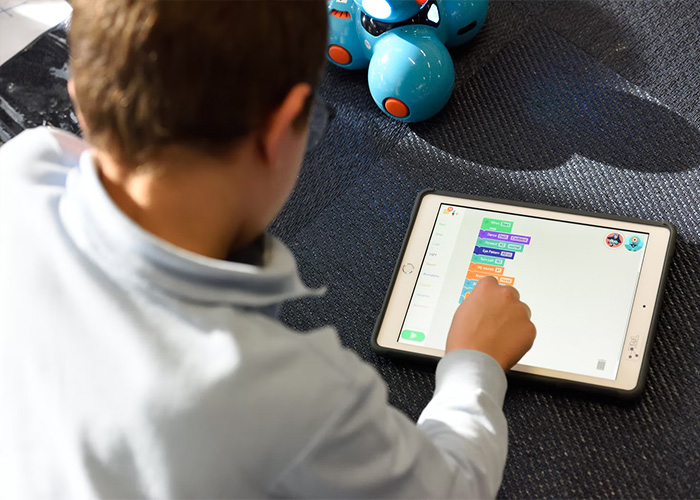 To me, technology has become the babysitter to many kids. Social media and unfiltered content is exposing kids to many things most current adults were never exposed to at their age. Parents either dont care and want the quiet an iPad or cell phone brings to their kids, or they're working their asses off just to put food on the table, and dont have many options for babysitters.
Educator Leiderman pointed out that technology has opened the door to millions of student creative endeavors — from making sophisticated video and audio to accessing the bottomless pit of knowledge the internet presents them with. "On top of that is the accessibility aspect: text to speech helps students with disabilities. So does dictation. And instant translation can help new arrivals who don’t speak the local language yet."
"Think about that! Amazing! So why complain about cellphones and laptops instead of making the most of them? Let students explore and create. Give them direction, and give them guidance, but look for ways to use technology in meaningful projects," she said.
 Parents who can't stand to see their child get their feeeeeeeelings hurt for any reason. Parents who label their kids with mental health issues but never get them diagnosed. "Oh, she has anxiiiiiiieeety." It is actually an insult to the families who actually do have children with mental health issues to use it as an excuse to let your kid do NOTHING!
On the opposite end of that, there are parents who way over schedule activities and never let their kids be idle and do nothing for even a second. Even an adult needs down time to do nothing but lay around and daydream, or just sleep, to recharge before burning out. Having to be on and busy 24/7/365 to the point of collapse from exhaustion could be classified as a method of torture.
 The complete lack of interest in memorizing anything.
While the pedagogical value in, say, memorizing (for instance) times tables can be debated (and has been, over and over), kids these days not only won't, but seemingly can't. They're so used to just looking up info (read: Googling / Asking Siri) when they need it, they don't have anything "ready to go" in their heads so to speak.
Also, there's been a loss of imagination and the ability to relate to events in, for instance a story. I blame helicopter parenting and the inability for students to form their own experiences for that.
The complete lack of interest in memorizing anything.
While the pedagogical value in, say, memorizing (for instance) times tables can be debated (and has been, over and over), kids these days not only won't, but seemingly can't. They're so used to just looking up info (read: Googling / Asking Siri) when they need it, they don't have anything "ready to go" in their heads so to speak.
Also, there's been a loss of imagination and the ability to relate to events in, for instance a story. I blame helicopter parenting and the inability for students to form their own experiences for that.
Yes, there's been a big backlash against memorisation and 'rote learning' because, as the argument goes, being able to repeat facts doesn't mean that the student actually understands anything. While this is true, it ignores the fact that sometimes you do actually just need to memorise things (such as when learning a language), and you can massively improve your memorisation skills through practice.
 My mum’s been a kindergarten teacher for more than 20 years and she’s noticed a shift in the parents attitude.
She says there’s less investment from the parents and they completely disregard her rules and requests.
Kids are kids, but parents should know better.
My mum’s been a kindergarten teacher for more than 20 years and she’s noticed a shift in the parents attitude.
She says there’s less investment from the parents and they completely disregard her rules and requests.
Kids are kids, but parents should know better.
So if you believe that increased technology use equals challenging student behaviors, take a step back and assess the situation. "Accept [that] kids have access to the entire world on their screens. Take advantage of that, both as a teacher and as a parent," Leiderman advised. At her house, everyone’s eager to discuss the captivating content they stumble upon online. "Is it reliable? Is it fair? Is it ethical? Moral? It doesn’t have to be anything serious. We go down silly rabbit holes and laugh a lot."
"It’s been like this for the past decade, at least, and I am so incredibly proud of who my children have become. They are well informed, they are involved, they are savvy consumers of information. They are unlikely to fall for scams or join a dangerous cult, and they can have conversations with anyone about almost anything. They are lifelong learners, open-minded, and accepting of others. I think this is the big change we all should wish for in kids," Leiderman concluded.
 As a student in high school that has a teacher that’s been teaching for 30+ years, he says the biggest change has been spelling and reading. Most students are unable to understand big words he uses and can’t spell for s**t. Even the simplest words are spelt incorrectly. He thinks this is because of autocorrect and students seeing words spelt incorrectly on social media.
I teach in the United States at the high school level. The big thing I see is kids who have been helicoptered and catered to, who have all gotten trophies and goody bags, who have been given much with nothing expected in return, which is not how humans are wired. This has made students anxious and afraid of everything. They’ve never been allowed to fail, so they’ve never had the best opportunities to learn or figured out all they can do. They can not operate independently. In addition to native speakers, I teach immigrant and refugee ELLs, and the vast majority of those kids are 100% happier, more secure, and far higher functioning in the world. They know how to navigate. They understand hard work. And they aren’t scared of every damn new thing they might face. Ubiquitous electronic escapes don’t help.
Three of my four parents are teachers with 20+ years experience. Their most commonly cited differences include: 1) Way more kids who used to be in special classes or schools now integrated into regular classes, basically to give them more dignity, cause constant disruptions and require so much attention it drags high-performing students down. 2) Way less patience among students in general. 3) Parents take kids' side way, way more often and look at the teacher as their personal employee, rather than as someone deserving of respect. 4) Kids obsession with screens--specifically how it mirrors their PARENTS' obsession with screens. My stepmom was literally telling a story about how she was in a parent-teacher conference talking about how this kid needed a lot more time away from screens and was totally unable to focus, and then the kid's mom looked up from her phone and goes "Sorry, what? I wasn't paying attention." IN THE CONFERENCE. 5) Kids just flat-out understanding that they have all the real power--they're not going to get corporal punishment, they're not going to get flunked and held back, and any bad behavior or academic failure on their part is going to be met with excuses, diagnosis, and special treatment. Yeah, all three of my parents are glad they're retiring soon, and all say they'd never get into teaching if they were graduating today.
I guess that somebody believes that whipping a 10 year old was an effective discipline tool, rather than a way to create an abusive a*****e. Yep, the kid will maybe not talk back to the teacher, but you cane bet your a*s that the kid will take this out on some poor kid half his size.
 My wife's a teacher, only for the past 6 years as well, but she says even in thay time she's noticed massive differences in the kids and how they seem to be losing respect.
Seems to be their parents had low respect for authorities and they've taught their kids to be even worse.
The problem is, kids know how to exploit their rights these days, their parents teach them that noone can touch or hurt them no matter what they do, so they use that to their advantage to get away with anything... They basically walk all over the teachers unless the teacher is really stern, but even then some kids are really disrespectful.
It's no wonder people don't want to teach anymore tbh. Low salary, the work is piling up higher than ever because of the immense amounts of paperwork and the kids are disrespectful.
My wife's a teacher, only for the past 6 years as well, but she says even in thay time she's noticed massive differences in the kids and how they seem to be losing respect.
Seems to be their parents had low respect for authorities and they've taught their kids to be even worse.
The problem is, kids know how to exploit their rights these days, their parents teach them that noone can touch or hurt them no matter what they do, so they use that to their advantage to get away with anything... They basically walk all over the teachers unless the teacher is really stern, but even then some kids are really disrespectful.
It's no wonder people don't want to teach anymore tbh. Low salary, the work is piling up higher than ever because of the immense amounts of paperwork and the kids are disrespectful.
I had to speak with a parent after their child repeatedly pushed me. "Well, why aren't you getting out out of his way so he won't do it?" If I am kneeling helping another child, and their son didn't want to go around the table, he would full on knock me over. But it was my fault for not standing up, stepping to the side to let him pass instead of him going the other way.
Changes in technology have made parents think the teacher is accessible at all times. these parents are, after all, digital natives. My wife gets texts from parents during class, during dinner, at 11pm, etc and the parents are furious if she doesn’t respond within the hour. Parents also expect to be able to see their child’s grade at all times - basically an assignment is turned in at the start of the day and they want to see the updated grades by end of day. Kids are the same, it’s the parents who are so dramatically different.

I only respond to parents OR my school colleagues during working hours. I turn my phone off and leave it in my office at my house. People know I won't respond if it's after 4 p.m. (Some colleagues have gotten round that by messaging me on FB but then it's colleagues I trust enough to be FB friends with and they would only message me in an emergency.)
My wife's been a middle school teacher for 21 years. She says: 1. Parents are much more entitled and prone to complaining about their kids' 'rights' in school, instead of their responsibilities. 2. Kids are way more privileged than in the 90s. They demand things that were unheard of 20+ years ago. 3. Cell phones are a critical issue. See #1 above--parents are often more of a problem on this one than kids. Some parents will yell, scream, threaten, and otherwise *demand* their child's constant access to smartphones. It's often frightening. 4. Sexuality: Thanks to hip hop and general culture, creepily overt sexuality is far more common. Not the frequency of sex necessarily, but the constant content of everything. Breaking up 13-year-old girls grinding their a*s on young boys at dances, etc. is now a common thing. 5. Social media: Social media is a constant, oppressive and emotional thing in kids' lives. Overall, kids seem noticeably less happy and 'kid like' than 20+ years ago. 6. "Baby adult" syndrome: Kids are treated as baby adults (instead of kids), and their development shows it. The progression of development almost seems broken today. Conversely, the 'never need to become an adult' infantilization of grownups has a powerful effect on kids--adults forever role-playing life as 'children' in costume and behavior, rather than accepting and growing into adulthood and accepting responsibility for the world and those younger. My wife gave a presentation a few years ago, and this is cribbed from it.
I have been a teacher for 22 years and the changes I see are : - parental complaints from parents who want to be a friend to their child and unquestionably believe what their child says. Children have always gone home and slagged off their teachers but when I started I never had to deal with an enraged parent who had bought a child’s view of what happened. I am always happy to talk with a parent and I want any child I teach to be happy and comfortable in my classroom but this isn’t about helping a child. These parental rages are about protecting a child from learning and from consequences. I pity their children even when it is the child’s lies that led to the complaint. - sexualisation of children - often a result of unfettered internet access. The amount of sexual abuse that children suffer and the perversion of how they see themselves and their sexuality is depressing. They imagine that they should approach the most extreme sexual practices without hesitation because they see so much porn. (I am pro porn and happy for any consenting adult to do any sex act they want - I just don’t want an 11 year old to think that’s what they have to do.) - loneliness - I watch groups of kids sitting in silence on their phones everyday. Not a word exchanged. Lots of humour and group observations get missed that way - they can’t navigate their own world so effectively as they are trying to manage their online world. - fear of the written word - large page of texts are never used. Everything is a paragraph and a picture - so we structure their thinking for them. - sexual abuse - is more discussed. It still happens a lot but we have more systems to help the children now. When I first started I was given a child yo help who had been raped by her father and was pregnant as a result. Her mother was going to chuck her out if she had an abortion and had supported the father as he had raped both his daughters for years. I was 22 and clueless- no one else helped. If that happened today I would have at least three people in school who are trained and would help the girl (and her mother.) I am so glad I am not a teenager today. I was a b***h about my teachers and I would have had no sense at all when given the world of the internet. I love the kids I work with. I am so proud of them and think they will find a way through the quagmire. Things will get better.

Okay not saying I disagree, but again, a lot of this comes from s**t parenting. Which a lot of us parents now, also had
 They used to actually read books.
The only ones who do still read mostly stick to the YA series of the moment, most of which are written at about a 5th grade level. My students are primarily 8th and 9th graders.
We have a well-stocked bookshelf at our after-school (and we used to keep stacks of current magazines as well). Students would regularly browse for something to read during break times and before and after class. Now, invariably, every single one of them is staring at a phone.
They used to actually read books.
The only ones who do still read mostly stick to the YA series of the moment, most of which are written at about a 5th grade level. My students are primarily 8th and 9th graders.
We have a well-stocked bookshelf at our after-school (and we used to keep stacks of current magazines as well). Students would regularly browse for something to read during break times and before and after class. Now, invariably, every single one of them is staring at a phone.
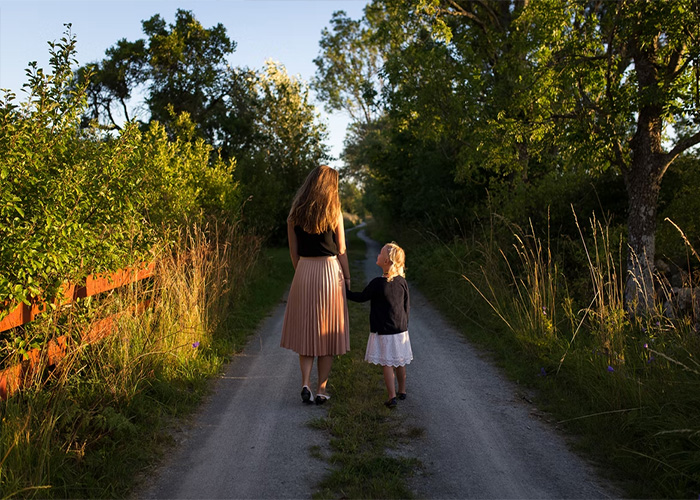 モンスターペアレント (monster parents)
at least that is what my Japanese uncle, who is a teacher, told me. Basically parents, who do not see the fault in their children but the teacher if the grades of the child are bad or something in the likes.
I wanted to hear some stories from him, but my uncle's been very discreet about it, he just mentioned that there have been an increasing number over the years (although by far not the majority) and that is all I need to know.
Edit: Changed "discrete" to "discreet".
モンスターペアレント (monster parents)
at least that is what my Japanese uncle, who is a teacher, told me. Basically parents, who do not see the fault in their children but the teacher if the grades of the child are bad or something in the likes.
I wanted to hear some stories from him, but my uncle's been very discreet about it, he just mentioned that there have been an increasing number over the years (although by far not the majority) and that is all I need to know.
Edit: Changed "discrete" to "discreet".
One parent would let her child bunk school almost constantly. He missed an exam and our policy is to give zero without a doctor's note. The mom swore up and down that the child had brought one. I looked in my records and only found one for a different date. The mother wrote a note to me that her child has said he "handed you the note and you threw it in the waste bin". Yes, you crazy beeyatch, because that's where I keep the doctor's notes!! I caved and gave him the class average just to avoid a nasty scene with my boss, because she would have believed the lying parent and child over me.
Accountability. Nothing is EVER their fault. There is always a reason or excuse. Why are you late? Because my locker is far from the class. Why were you using your phone? Well the bell hadn't rang. Why haven't you started to work? I don't have a pen...
Once again, someone blaming kids for being kids. If you want them to be adults, change the legal age and don't make them go to school 🤔🙃
 An increase in helicopter parents

Mine sets her own study plan and we never fight about grades, just how she can improve. She's doing well, despite the high school move to private on a scholarship and the harder work. I'm blessed
Not a teacher but everyone in my family is. I had a teacher tells us kids learn differently now then before because of video games. (This was before Smartphones.) I called BS and said kids learn the same way they had years ago, it was teaching that was different. The teacher agreed and said they use to teacher in a spiral. Going over things over and over while teaching different subjects. Now, she said, they have to teach a subject and more on. If the kid didn't get it, oh well. I called it the "Hit and Run" teaching style. Others call it "Teaching for the test." I know my kids not perfect. I had a principal call me into school because Jr. was failing math. Everyone was walking on egg shells because my darling was failing and they didn'tknow how to get him to pass. I said, "Let him fail, maybe then he will learn to turn in his homework!" I thought the teachers and principal were going to faint. "I wish more parents were like you." he said. Sadly, most parents aren't and it shows. Advice from an older parent, parent like your grandparent or great grandparents.

Yeah why would you just have a talk w the teacher and kid, he's not doing well with math, oh, what can I do about it? You can take these home to teach him and use that website. Thankyou. Give him some extra lessons and he gets it and is doing great. Teach him that the teachers don't mind if he asks em stuff. Problem solved. No lets just go do your own thing and good luck kid.
I have 13 years of teaching experience. What I have noticed most is that the current society is really starting to infect our students. The general angst and anxiety that is being experienced by the parents is trickling down to the students. There are more anxious kids that are having a lot of trouble controlling their bodies and emotions. Many more in number than there used to be. Even the general population overall is more on edge. They are a lot angrier and a lot sadder than they used to be. And I work with all ages from 4-18. The world is full of fear and anger, and it's becoming a definite factor in the raising of these young people. It's almost unbearably sad. But you do what you can to bring some light into their lives, and help them experience empathy for others because we all learn differently.
My mom has been a teacher for 18 years. Biggest difference I’ve noticed in her stories is that kids have gotten physically more violent. She thinks it is because parents let their kids do what ever they want to with little to no discipline.
Kindergarten teacher. I have been hit, punched, kicked, slapped, hair pulled, pushed and bit by kids. I have had several try to stab me with pencils/scissors. They have a lot of big emotions, and are not being taught ways to process them. If they are told "wait/no", they become angry and react with what has worked at home to get what they want. Parents seem to not want to be parents anymore, but their child's friend instead. But then are confused when the kids are out of control.
 20 years ago when I was in high school, my freshmen English teacher who had been teaching for 30 years said, "The only difference I notice between kids today and kids from when I started teaching is that the kids today are a lot less optimistic about the world they are inheriting."
I've been a teacher for 15 years, and the difference I notice is in what the kids like. You don't realize how quickly pop-culture turns over until you find out a 4 year old reference is dated for kids.
Edit: Spelling
20 years ago when I was in high school, my freshmen English teacher who had been teaching for 30 years said, "The only difference I notice between kids today and kids from when I started teaching is that the kids today are a lot less optimistic about the world they are inheriting."
I've been a teacher for 15 years, and the difference I notice is in what the kids like. You don't realize how quickly pop-culture turns over until you find out a 4 year old reference is dated for kids.
Edit: Spelling
Meaning that older teacher started their career in the sixties—-the middle of the Cold War, when the very real threat of nuclear annihilation hung over everyone’s heads everyday, and a “live for today because there’s no tomorrow” attitude prevailed—-yet young people today are LESS optimistic. Even though the Cold War ended, for the most part, with Glasnost and the Berlin Wall coming down, we have made other grave mistakes since that have not improved the world and our children’s futures at all. We failed, and must do better. NOW!
My mum has been a teacher for over 30 years. The children's span of attention has dropped significantly over the years. They don't focus on one thing for too long, lose interest quickly and often seem like they don't even hear what they are told. Their writing style has also changed. Writing in short-hand has become common and they're not as creative anymore. Of course, that is a generalisation and some kids are still great.
Respect and having support at home. So many kids these days have no support at home and it really shows.
Bro if you think the previous generation was more wholesome.... let me tell you about some real trauma, vs kind but present parenting. My daughter is supported by both sides of her family, always gets remarks on how polite and kind she is, and I've never laid a hand on her. Looking at my generation.... it was normal to get smacked or seriously emotionally or mentally abused and people thought they brought us up so well..... but really, we just learned what's not acceptable once we became adults
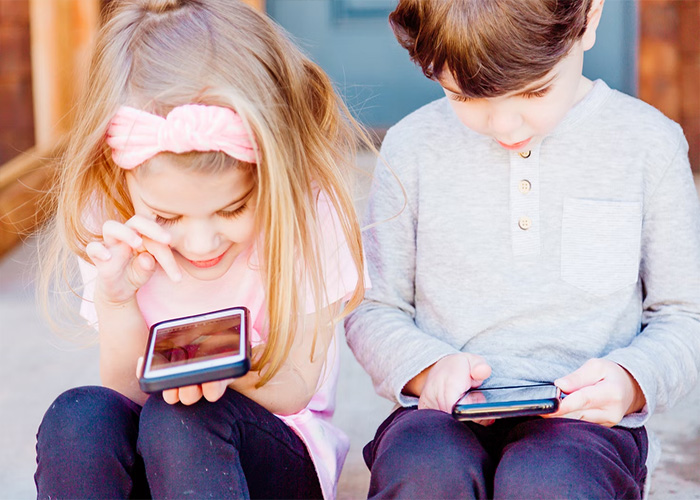 Only been a teacher for 10 years, but I can tell a huge difference in just the last 5! Cell phones are the biggest problem. We can not get them out of their hands. As a school we tried to ban the phones all together, but it was the parents that fought it! I can only take the student’s phone for the lesson, not the full school day as we once did. On the playground, the kids check their phones, text, snap chat, play games - hardly talking to each other. I get bumped in to daily and sometimes knocked over because students do not look while waking- faces in their screens. Nothing phases them, I can call them up to my desk for a chat (if they misbehaved) and they casually glide up, smirking. 5 years ago, they would be rattled to be spoken to by the teacher. Parent support and involvement in school has gone down.
10 years here, but I'd say the change is from the teachers. I was an energetic world changing super hero at the start. Now I'm just tired. Also screens.
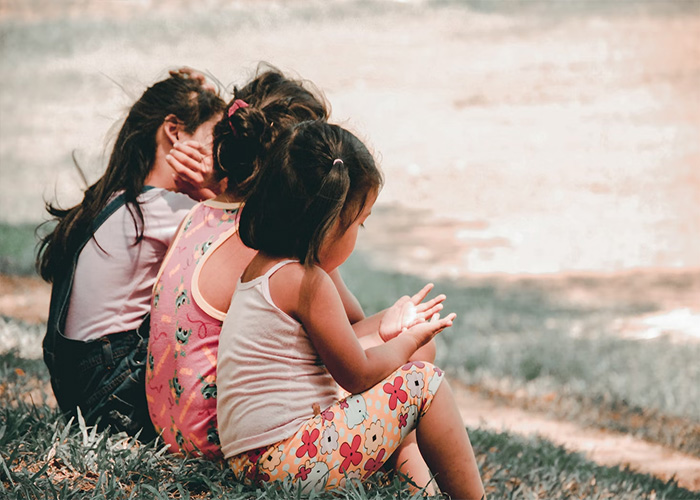 Kids are a lot better looking now, somehow?
I miss my snaggle-tooth awkward dorkmeisters from the early 2000s. These days, everyone's got sleek hair and impeccable brows.
Kids are a lot better looking now, somehow?
I miss my snaggle-tooth awkward dorkmeisters from the early 2000s. These days, everyone's got sleek hair and impeccable brows.
Smart phones have decreased a lot of desire. The phone is an amazing tool, I have my students use them in class for various things, but, I would say 20% of my students have a true blue-screen addiction. You can see the anxiety in their eyes when asked to put their phone away.

Been in education for 20 years. Most of the biggest changes in children I have seen are those problems caused by adults. Lack of good and common sense parenting combined with parents spending too much time on social media creating drama for attention that their children then mimic in school. We forget that most young children are like parrots. They will mimic what ever we tell them or show them. So while we always had a few children with behaviour and mental problems we made it worse by telling children "they might have" these problems. Some parents even using these to try and excuse their bad parenting or children using them as an excuse for their behaviour or to gain attention. We are doing it again by telling children about gender choices. Young children don't really understand it and just think it is something trendy to say or try. Trust me, we know which children really have gender identity problems, even as young as 4!
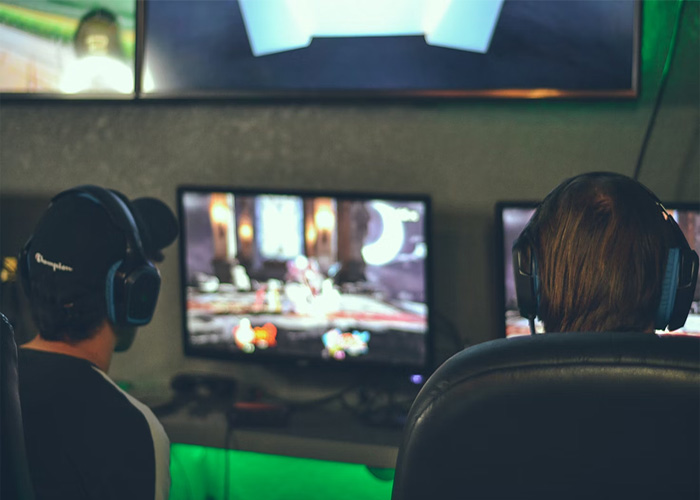 I'm a music teacher. They say "Can I restart?" instead of "Can I start again?" I blame/credit video games.

Restart is a legitimate word in the English dictionary that was in use way back in the 1800s, it literally means "start again", I don't think you can really fault a kid for using a real english language word.
Persistence- kids hit an obstacle and give up. There is a strong reliance on parents to fix things. Bullying has become the new bullying. Everything is not bullying and kids aren’t required to be friends with everyone. It is ok to not be friends with all your classmates as long as you respect them. And finally- no one takes the bus anymore. The line of parents picking up starts forming one hour before school gets out. I think that has contributed to a lack of independence. Full disclosure- I pick up my kids everyday too.
 I was listening to the radio yesterday and they had a teacher on with 30 years experience.
He observed that many parents don't have a love for parenting anymore and that lack of passion passes onto the child to the point where the child doesn't have a positive role model in the home.
The results of this is that some children have a lack of morals and standards compared to children from past generations.
I was listening to the radio yesterday and they had a teacher on with 30 years experience.
He observed that many parents don't have a love for parenting anymore and that lack of passion passes onto the child to the point where the child doesn't have a positive role model in the home.
The results of this is that some children have a lack of morals and standards compared to children from past generations.

Wow! This says a LOT. My kids are older and, while I certainly wasn't always the perfect mom, I enjoyed every moment. My kids are both hard-working, kind hearted, polite, and respectful 95% of the time. The other 5% I will forgive because people are aholes and my kids aren't perfect either. I am still parenting them even as they are close to 30. No phones once food is served and we try to not have them out while we wait. Just gained my first grandchild and already I can see my kid's parenting styled after ours. Kids teach what they learned. Don't be afraid to let them fail. And please... be the mean parent. Not physically unless it swat works but say NO firmly and stand by it. Consequences are earned; let them experience the pain.
I've been doing it 10 years and I have seen a change already. My students have gone from quiet respectful, attentive students to non stop phone attachment. Forget it if you try to instruct them and ask them to put the phone away. They will curse you out in front of the class without regret or remorse. Then calling the parents is a joke. They either dont pick up or if they do they just dont care. I have 216 students this year (high school) and I could easily say only 10 actually care to learn and listen. The rest are happy with a D because 4 Ds in a year is PASSING.
I mean… do you blame them? They’ve seen what is happening to the Gen above them. Millenials worked REALLY HARD, did it all right, went to college and got degrees…. And now we can’t afford to buy a home, have kids, or even feed ourselves sometimes. So why bother if that’s what you get for working hard?
Grades. Students and parents expect only A's and B's on report cards. The amount of paperwork and meetings needed to give a child a D or an F is insane. If a student does receive an F, they just have to sit in front of a computer on Saturdays and their grade changes.

I first became a teacher nearly 30 years ago (though I did do some other jobs in that time). I've been in Japan over 25 years now, and have been at the same school for 18 of those years. I've noticed that there are far more students with anxiety and depression than there used to be.

It is easy to make this about kids, recreational electronics and technology, and education. But in the US we have 30% ro 40% of the ADULT, voting population that remains willfully stupid and willingly submits to insane conspiracy ideas, blatant lies, and racial and cultural hatred THAT is the major change that should be of concern.

I've taught ESL to adults in Taiwan for over forty years. Ever since the authorities reformed education in the 1990s and emphasized English, students' English ability has plummeted. My understanding is that they are under so much pressure to learn English, the students take the initiative the only way they can: they refuse to learn. There are still some with excellent English, but in general, ability has plunged and dragged enthusiasm with it. The 1990s reforms also conversely gave students more pressure and turned trade schools, where students learned useful skills, into universities, where they get pretty diplomas.

I became a teacher almost 30 years ago, 4 - 8 year olds. First school I worked at was for the "problem" children who were slow to learn. As the weeks went by I got to know them and realised that at just 5 some of them had major problems with sitting still the whole time time and that after maybe 30-45 minutes they were up and down and being disruptive and I realised that they had a lot of energy that they couldn't get rid of. Today they would be labelled as having adhd. Instead i took an approach that hadn't been done before. I talked to the headmistress and asked if I could try an experiment and she was interested and said go for it. Every 45 minutes my whole class got to run laps for 15 minutes which dropped their energy levels enough so they could sit down and concentrate without any problems for the 45 minutes. Yes, a few started getting twitchy about 30 minutes into the 45 minutes and they were allowed to run on the spot until they could run laps again. The teacher in the

I went to school my classes started at 8am, and lasted 45minutes. Next class at 9am, and again 15min break before next class. After moving to Ireland where classes ran minute to minute and you get a small break after third class and then three more classes and a lunch break. Otherwise it's just constant. I was better with breaks, and chance to rest head before jumping into new topic was beneficial. College had Same hour to hour lectures, and under stress to be best at exam. Doing masters now and we are back to extensive breaks, or discussion time and it's more interactive instead of learning of material. I feel like these days too much effort is put into controlling every student and their time, than trying to put interest and motivation back into learning. I personally feel too much pressure is put on achieving obedience rather than acquire knowledge and explore new
Load More Replies... Pt 2: If your friend protests about having to work their regular 8 hr/day job in addition to the classroom preparation to be a guest teacher, just tell them they can spread their effort out and write the lesson after work at their convenience, or, on the weekends -- just like regular teachers, but without the pressure of a deadline. Tell them to take as long as they like, but ask them to keep track of their hours. Once they write a lesson and the 'pre' and 'post' tests, congratulate them; ask IF they want to do a second ‘prep’/preparation (another lesson to teach that day) which is what all secondary teachers do. (Ex: A Humanities/Social Studies teacher might teach the Constitution (Freedom of Speech unit) in the morning and 20th Century World History in the afternoon.) Given the hours they’ve already spent, they will probably decline. That’s okay, the point will have been made. Just have them double the hours they’ve spent to approximate what a regular teacher does to get ready so the satisfying part of teaching - - really educating students - - can be accomplished. . . ps: Before your friend presents the lesson, remind them to set aside time to grade the tests so students can receive feedback and the regular classroom teacher can record the results.
Pretty much all of these observations are anecdotal. As such they cannot be taken to be indicators of widespread changes in a generation of young people. But one thing is pretty certain...a reported observation DOES let you know about the observer and the observer's perspective...and some of these are strange and sad perspectives.

I would say most of these are a result of the parents and certain teaching styles

it's very interesting to read these as one of the "kids these days"

I have taken two things from this thread. 1. Education has been forced to dumb down because “no child left behind”. Don’t mistake my hostility towards this stance as hostility towards those who have to work harder. When I came from, the enlightened supported their colleagues. We’ve been marching for decades, just sayin 2. Kids today think we had it easy. Not true, reach out and ask.
Pt 1: TL/DR Get people who are critical of education into the classroom as guest teachers. ... ... ... ... ... ... ... If parents and non-teachers could read information and really understand what the teachers were trying to convey, the problems in education would be half-way solved. . . Unfortunately, learning through reading is hard and it isn’t very effective at getting people to change their minds. . . . . Experience really is the only teacher. . . . If you have a friend who doubts what experienced teachers say, invite them to be a guest teacher. ... Get them in the classroom! ... Since every school in the US has guest teachers who give presentations to students, it's easy to be a teacher for a day (or longer). Offer to help your teacher critical friend write a lesson in the 'Core Curriculum'* involving either History, English, Math or Science. To become a guest teacher only requires a telephone call. Offer to make the phone call for your friend and offer to help them write their 50 min. lesson. If you can get them to say, "Yes", and then actually do it, then offer to help them write the 'pre' and 'post' tests to Check For Understanding (CFU).

What I got from this: Kids are more accepting of differences- that's good! But mental health is in the toilet- that's bad. Parents are more involved- good! They shield the kid from any negative feedback- bad. Kids are completely different. Kids are exactly the same. They're cool with sexual identities. They're over-sexualized. Bullying is now taboo... but more kids are self-deleting due to bullying. Apparently nobody knows what the heck they're talking about. 🤣

I can manage to somehow blame video games for everything wrong any kid born after 1999!!
Sunday evening, bed time: oh I need to have a presentation ready for tomorrow. 12 year olds. Most kids had nothing, some just wrote down a few sentences. Teacher shows son's presentation. Aah this is what makes me happy. Lot of pics and texts. I do that for work. Just did it at night. The other teacher said there was a mom who had made her kid's homework. Lol the mom from his friend did it too and she's even a teacher herself.
I recently retired after teaching at a university for 18 years. I think students now are very caring and accepting of other students. They are very worried about the planet and equality for people. For me, the pandemic online teaching and learning really hurt the students' ability to manage time and assignments. Also their reading and writing abilities definitely declined. I had to review the basics of writing sentences and paragraphs with college juniors the same way I had to with first year students. Instead of assigning outside reading, I started doing it as a group in class because most of them wouldn't do the reading or the assignments. It's too much to teach basics and the course curriculum in one semester.
The parents for a chat and if they were good parents then they would back you and make sure that they don't do it again. However if the parents just don't care then step 3 is to expel the bullies. Principal replied that it didn't work like that in Sweden. I had to move her to a new school. Lack of respect is another problem. Students call their teachers by their first name and each class gets a list of phone numbers for all parents plus the teachers phone numbers, reducing the teacher from an authority person to their friends and that means they don't respect them as a teacher. Causes major issues.
Minutes and then he can sit quietly for a while. He is now reading at a 5th grade level.. I suggested to my daughter that she should ask the principal to implement the running at the school but according to him it was a stupid idea. There is also no discipline in schools here in Sweden. My daughter was being bullied at school when she was 13 and I got called to the school to discuss it. I asked how they were going to handle the bullying and they said they had talked to the boys involved and explained that they weren't allowed to bully anyone. OK I said, did that stop the bullying? Nope. OK what's your next step? They would talk to them again. I asked why they think telling them to stop for the 2nd time would work when it didn't work the first time. The principal got mad and said well how would YOU deal with it teacher? First step talk to the bullies and tell them to stop else they would be calling their parents in for a meeting. If they carried on bullying then step 2 is to invite
From running laps and I felt like I was failing my students. I ended up quitting because it got too hard to teach them. The parents of the students I'd had the previous year even went to the school board and asked them to implement the running laps again because their kids had fallen way behind at school but it didn't make a difference. Next job was with older kids, 8 years old. I implemented the running again but only for the students that needed it. Again very high test scores. Luckily enough the headmistress knew the headmistress at my old school and had been impressed with my idea which is why she allowed me to continue. Kids have energy, some more than others and are unable to sit still for a whole lesson but few people understand that even now. Instead they get diagnosed with adhd and given meds to calm them down but that isn't the way to help them. My grandson aged 7 is being investigated for adhd because he can't sit still in class but at my place he gets to run around for 15
Next classroom got mad about the noise but the headmistress dismissed her and said that she believed it was helping my students. The kids were amazing. They learnt how to read in just a couple of weeks and even their parents were shocked and wanted to know my secret. Told them to get them running and burning energy. No child is able to learn efficiently with such high energy levels. So the parents started doing it at home as well. At the end of the school year my students were reading at a higher level than the kids in the "normal" class and I was told that my class was the most improved in the whole school district. Sadly a lot of the kids started failing when they advanced a grade because they weren't allowed to run laps to burn off energy. They just couldn't concentrate. The headmistress had planned on implementing it for all classes that needed it but sadly she took ill over the summer and retired through ill health before school started again. The new headmaster banned students

One thing I noticed about many of these... " I have taught for over 20 yrs and the parents are horrible now"... you do realize that many of those are probably the kids you taught when you started ... right?

The teachers didn't raise them. They had them for part of a day during part of a year of their lives. But expecting teachers to raise the kids is part of the problem.
Load More Replies... 
I first became a teacher nearly 30 years ago (though I did do some other jobs in that time). I've been in Japan over 25 years now, and have been at the same school for 18 of those years. I've noticed that there are far more students with anxiety and depression than there used to be.
It is easy to make this about kids, recreational electronics and technology, and education. But in the US we have 30% ro 40% of the ADULT, voting population that remains willfully stupid and willingly submits to insane conspiracy ideas, blatant lies, and racial and cultural hatred THAT is the major change that should be of concern.
I've taught ESL to adults in Taiwan for over forty years. Ever since the authorities reformed education in the 1990s and emphasized English, students' English ability has plummeted. My understanding is that they are under so much pressure to learn English, the students take the initiative the only way they can: they refuse to learn. There are still some with excellent English, but in general, ability has plunged and dragged enthusiasm with it. The 1990s reforms also conversely gave students more pressure and turned trade schools, where students learned useful skills, into universities, where they get pretty diplomas.
I became a teacher almost 30 years ago, 4 - 8 year olds. First school I worked at was for the "problem" children who were slow to learn. As the weeks went by I got to know them and realised that at just 5 some of them had major problems with sitting still the whole time time and that after maybe 30-45 minutes they were up and down and being disruptive and I realised that they had a lot of energy that they couldn't get rid of. Today they would be labelled as having adhd. Instead i took an approach that hadn't been done before. I talked to the headmistress and asked if I could try an experiment and she was interested and said go for it. Every 45 minutes my whole class got to run laps for 15 minutes which dropped their energy levels enough so they could sit down and concentrate without any problems for the 45 minutes. Yes, a few started getting twitchy about 30 minutes into the 45 minutes and they were allowed to run on the spot until they could run laps again. The teacher in the
I went to school my classes started at 8am, and lasted 45minutes. Next class at 9am, and again 15min break before next class. After moving to Ireland where classes ran minute to minute and you get a small break after third class and then three more classes and a lunch break. Otherwise it's just constant. I was better with breaks, and chance to rest head before jumping into new topic was beneficial. College had Same hour to hour lectures, and under stress to be best at exam. Doing masters now and we are back to extensive breaks, or discussion time and it's more interactive instead of learning of material. I feel like these days too much effort is put into controlling every student and their time, than trying to put interest and motivation back into learning. I personally feel too much pressure is put on achieving obedience rather than acquire knowledge and explore new
Load More Replies... Pt 2: If your friend protests about having to work their regular 8 hr/day job in addition to the classroom preparation to be a guest teacher, just tell them they can spread their effort out and write the lesson after work at their convenience, or, on the weekends -- just like regular teachers, but without the pressure of a deadline. Tell them to take as long as they like, but ask them to keep track of their hours. Once they write a lesson and the 'pre' and 'post' tests, congratulate them; ask IF they want to do a second ‘prep’/preparation (another lesson to teach that day) which is what all secondary teachers do. (Ex: A Humanities/Social Studies teacher might teach the Constitution (Freedom of Speech unit) in the morning and 20th Century World History in the afternoon.) Given the hours they’ve already spent, they will probably decline. That’s okay, the point will have been made. Just have them double the hours they’ve spent to approximate what a regular teacher does to get ready so the satisfying part of teaching - - really educating students - - can be accomplished. . . ps: Before your friend presents the lesson, remind them to set aside time to grade the tests so students can receive feedback and the regular classroom teacher can record the results.
Pretty much all of these observations are anecdotal. As such they cannot be taken to be indicators of widespread changes in a generation of young people. But one thing is pretty certain...a reported observation DOES let you know about the observer and the observer's perspective...and some of these are strange and sad perspectives.
I would say most of these are a result of the parents and certain teaching styles
it's very interesting to read these as one of the "kids these days"
I have taken two things from this thread. 1. Education has been forced to dumb down because “no child left behind”. Don’t mistake my hostility towards this stance as hostility towards those who have to work harder. When I came from, the enlightened supported their colleagues. We’ve been marching for decades, just sayin 2. Kids today think we had it easy. Not true, reach out and ask.
Pt 1: TL/DR Get people who are critical of education into the classroom as guest teachers. ... ... ... ... ... ... ... If parents and non-teachers could read information and really understand what the teachers were trying to convey, the problems in education would be half-way solved. . . Unfortunately, learning through reading is hard and it isn’t very effective at getting people to change their minds. . . . . Experience really is the only teacher. . . . If you have a friend who doubts what experienced teachers say, invite them to be a guest teacher. ... Get them in the classroom! ... Since every school in the US has guest teachers who give presentations to students, it's easy to be a teacher for a day (or longer). Offer to help your teacher critical friend write a lesson in the 'Core Curriculum'* involving either History, English, Math or Science. To become a guest teacher only requires a telephone call. Offer to make the phone call for your friend and offer to help them write their 50 min. lesson. If you can get them to say, "Yes", and then actually do it, then offer to help them write the 'pre' and 'post' tests to Check For Understanding (CFU).
What I got from this: Kids are more accepting of differences- that's good! But mental health is in the toilet- that's bad. Parents are more involved- good! They shield the kid from any negative feedback- bad. Kids are completely different. Kids are exactly the same. They're cool with sexual identities. They're over-sexualized. Bullying is now taboo... but more kids are self-deleting due to bullying. Apparently nobody knows what the heck they're talking about. 🤣
I can manage to somehow blame video games for everything wrong any kid born after 1999!!
Sunday evening, bed time: oh I need to have a presentation ready for tomorrow. 12 year olds. Most kids had nothing, some just wrote down a few sentences. Teacher shows son's presentation. Aah this is what makes me happy. Lot of pics and texts. I do that for work. Just did it at night. The other teacher said there was a mom who had made her kid's homework. Lol the mom from his friend did it too and she's even a teacher herself.
I recently retired after teaching at a university for 18 years. I think students now are very caring and accepting of other students. They are very worried about the planet and equality for people. For me, the pandemic online teaching and learning really hurt the students' ability to manage time and assignments. Also their reading and writing abilities definitely declined. I had to review the basics of writing sentences and paragraphs with college juniors the same way I had to with first year students. Instead of assigning outside reading, I started doing it as a group in class because most of them wouldn't do the reading or the assignments. It's too much to teach basics and the course curriculum in one semester.
The parents for a chat and if they were good parents then they would back you and make sure that they don't do it again. However if the parents just don't care then step 3 is to expel the bullies. Principal replied that it didn't work like that in Sweden. I had to move her to a new school. Lack of respect is another problem. Students call their teachers by their first name and each class gets a list of phone numbers for all parents plus the teachers phone numbers, reducing the teacher from an authority person to their friends and that means they don't respect them as a teacher. Causes major issues.
Minutes and then he can sit quietly for a while. He is now reading at a 5th grade level.. I suggested to my daughter that she should ask the principal to implement the running at the school but according to him it was a stupid idea. There is also no discipline in schools here in Sweden. My daughter was being bullied at school when she was 13 and I got called to the school to discuss it. I asked how they were going to handle the bullying and they said they had talked to the boys involved and explained that they weren't allowed to bully anyone. OK I said, did that stop the bullying? Nope. OK what's your next step? They would talk to them again. I asked why they think telling them to stop for the 2nd time would work when it didn't work the first time. The principal got mad and said well how would YOU deal with it teacher? First step talk to the bullies and tell them to stop else they would be calling their parents in for a meeting. If they carried on bullying then step 2 is to invite
From running laps and I felt like I was failing my students. I ended up quitting because it got too hard to teach them. The parents of the students I'd had the previous year even went to the school board and asked them to implement the running laps again because their kids had fallen way behind at school but it didn't make a difference. Next job was with older kids, 8 years old. I implemented the running again but only for the students that needed it. Again very high test scores. Luckily enough the headmistress knew the headmistress at my old school and had been impressed with my idea which is why she allowed me to continue. Kids have energy, some more than others and are unable to sit still for a whole lesson but few people understand that even now. Instead they get diagnosed with adhd and given meds to calm them down but that isn't the way to help them. My grandson aged 7 is being investigated for adhd because he can't sit still in class but at my place he gets to run around for 15
Next classroom got mad about the noise but the headmistress dismissed her and said that she believed it was helping my students. The kids were amazing. They learnt how to read in just a couple of weeks and even their parents were shocked and wanted to know my secret. Told them to get them running and burning energy. No child is able to learn efficiently with such high energy levels. So the parents started doing it at home as well. At the end of the school year my students were reading at a higher level than the kids in the "normal" class and I was told that my class was the most improved in the whole school district. Sadly a lot of the kids started failing when they advanced a grade because they weren't allowed to run laps to burn off energy. They just couldn't concentrate. The headmistress had planned on implementing it for all classes that needed it but sadly she took ill over the summer and retired through ill health before school started again. The new headmaster banned students
One thing I noticed about many of these... " I have taught for over 20 yrs and the parents are horrible now"... you do realize that many of those are probably the kids you taught when you started ... right?
The teachers didn't raise them. They had them for part of a day during part of a year of their lives. But expecting teachers to raise the kids is part of the problem.
Load More Replies... 






















 No fees, cancel anytime
 then open in external browser


 and click "Open in External Browser"