Get Premium
Dark mode theme is available exclusively for premium users. Learn more about the benefits of subscribing.
No fees, cancel anytime.

 Dark Mode Ad-Free Browsing Unlimited Content
 Ad-Free Browsing Unlimited Content Dark Mode
Join 1.2 million Panda readers who get the best art, memes, and fun stories every week!
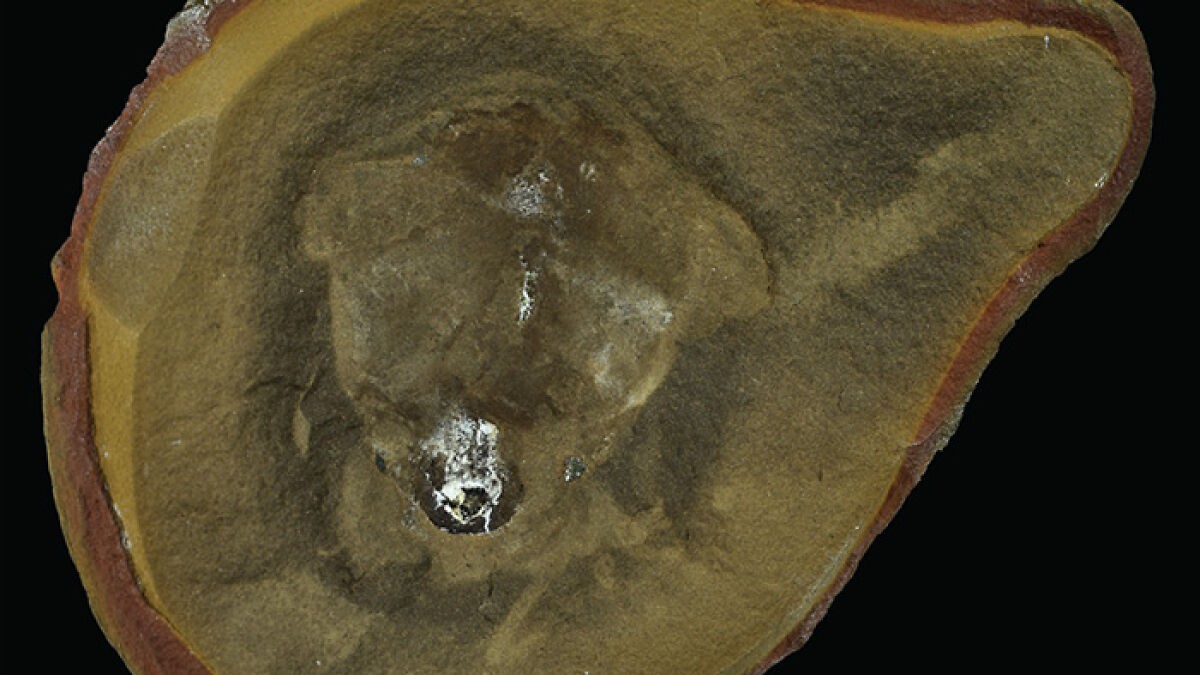
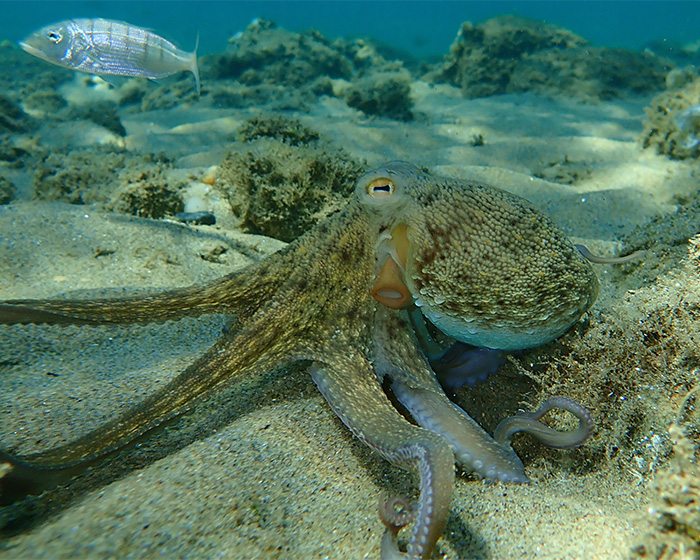
A 300-million-year-old fossil that earned a Guiness World Record in 2015 as the world’s oldest octopus, has now been reclassified after new research published in Proceedings of the Royal Society B.
The April 8 report revealed the specimen, known as Pohlsepia mazonensis, to belong to a different group. The fossil was once believed to extend the octopus timeline by 150 million years.
For decades, it was used in studies on cephalopod evolution. However, with the help of modern imaging technology, scientists have now identified features that contradict its original classification.
The discovery has cast doubt on the viability of the fossil’s record.
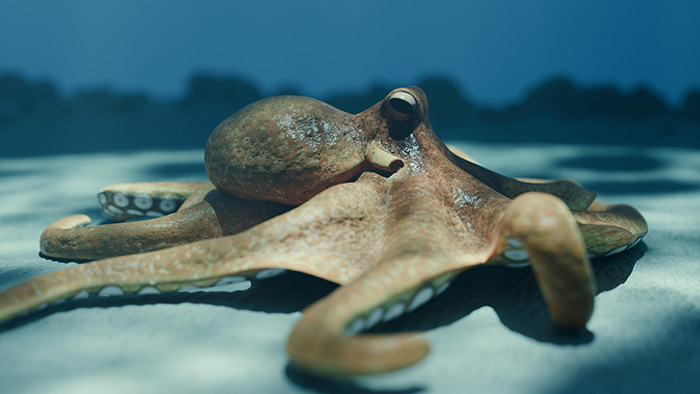
Image credits: Alexey/Adobe Stock (Not the actual photo)
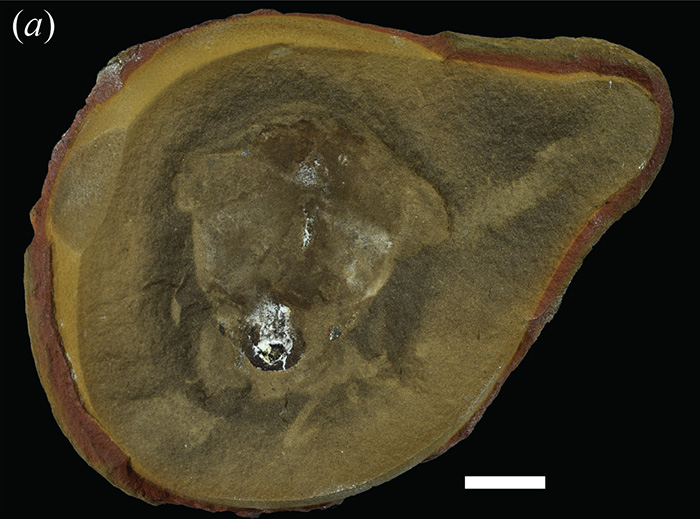
When Pohlsepia mazonensis was first described, researchers pointed to several visible features that suggested it was an early octopus.
The fossil showed a soft, sac-like body, paired fins, and multiple arms, interpreted as eight or even ten, depending on how they were counted. It also seemed to lack any sign of a hard external shell, which further supported the classification, per The Carboniferous Of Illinois, USA.
At the time, the identification had major implications.
Image credits: A Chosen Soul/Unsplash (Not the actual photo)
Octopuses were previously believed to have appeared around the Jurassic period, roughly 150 million years ago. This fossil pushed that timeline back by another 150 million years.
However, the evidence was not entirely consistent. The fossil did not clearly show suckers, cirri, or a defined ink sac, features typically associated with octopuses.
Moreover, some structures, such as supposed eyespots, lacked supporting biological detail upon closer examination.
Image credits: Royal Society Publishing
Even after Pohlsepia mazonensis was classified as an octopus, several scientists questioned whether the evidence was strong enough to support that claim.
Cephalopods are notoriously difficult to study in the fossil record because their soft bodies decay quickly, leaving behind incomplete or altered features. That made interpretation challenging from the start.
Similar debates have played out in other discoveries.
Image credits: Guinness World Records
For example, the 330-million-year-old fossil Syllipsimopodi bideni was described by researchers from the American Museum of Natural History as an early vampyropod, potentially reshaping octopus evolution.
“This is overturning about 100 years of science in cephalopod evolution,” said paleontologist Christopher Whalen.
Experts have long disputed the classification of the fossil as a species of octopus
Image credits: Royal Society Publishing
“That’s not the gladius, I’m sorry,” said Christian Klug from the University of Zurich, disputing a key structural interpretation and arguing the fossil may have been misidentified.
These disagreements highlighted a broader issue in paleontology.
“They’re all looking at the same fossils and the same features,” said Roy Plotnick from the University of Illinois Chicago, explaining how different interpretations can emerge from the same evidence.
In one case, he noted a fossil thought to be a jellyfish for decades turned out to be a sea anemone after being reexamined from a different angle.
Image credits: Royal Society Publishing
Even well-preserved fossils can lead to conflicting conclusions. “Even with well-preserved species, you can get terrific differences in interpretation,” said Kevin Padian of the University of California, Berkeley.
Without stronger evidence or advanced imaging, these debates remained unresolved.
As Padian put it, “there often isn’t a definitive answer, because there’s just not enough evidence to decide for sure.”
Image credits: University of Reading
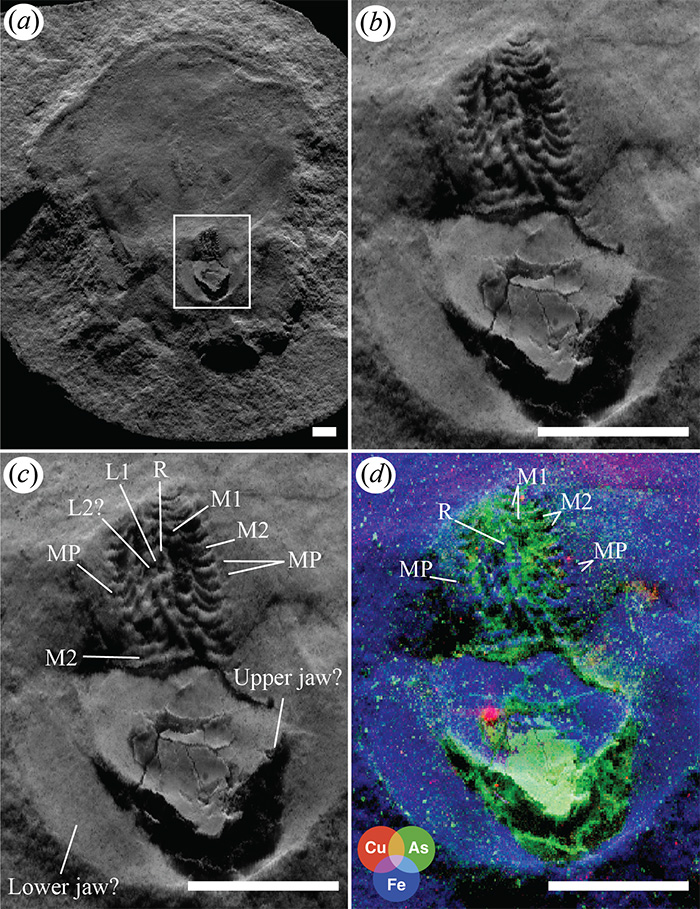
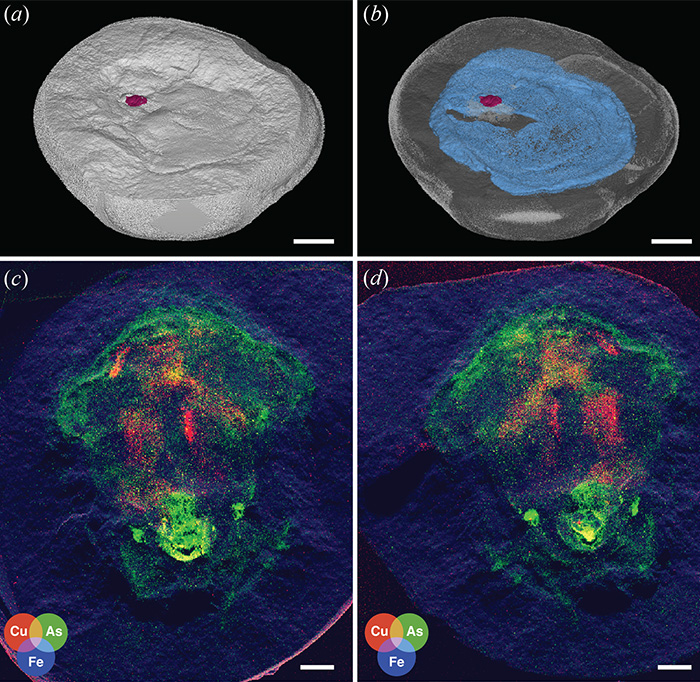
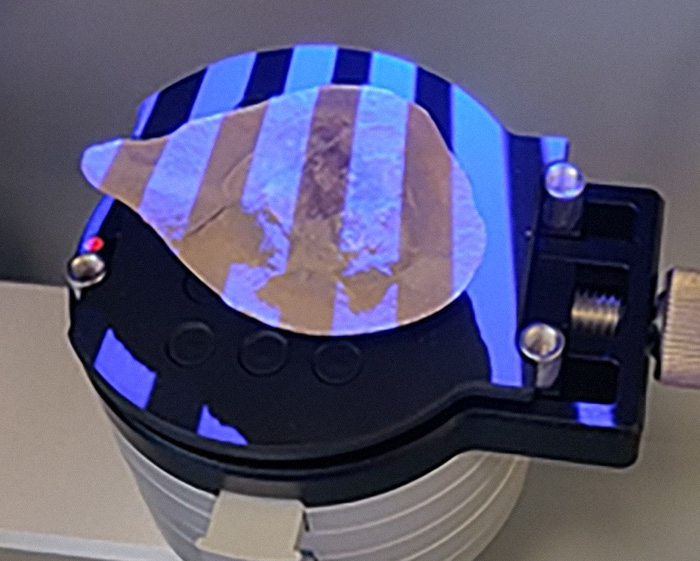
Researchers from the University of Reading examined the fossil using synchrotron imaging, a method that uses extremely bright light to detect details hidden beneath rock.
The scans revealed a radula, a ribbon-like feeding organ lined with rows of tiny teeth. This structure is found in molluscs but varies between species.
In this case, the fossil showed at least 11 tooth-like elements per row. Octopuses, on the other hand, typically have seven or nine, meaning the specimen could not be an octopus.
Image credits: Manuae/Wikimedia
Dr. Thomas Clements, lead author of the study, stated, “Scientists identified Pohlsepia as an octopus 25 years ago, but using modern techniques showed us what was beneath the surface.”
The discovery also provided the first clear internal evidence to challenge the original classification.
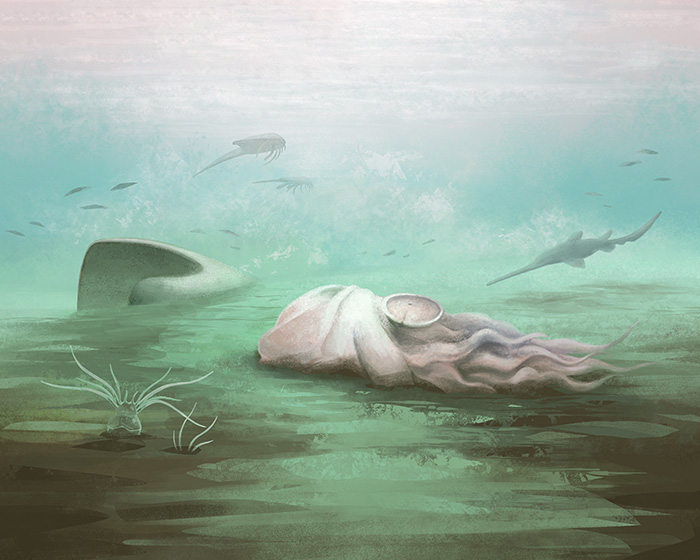
Based on the new findings, researchers concluded that the fossil matched a known nautiloid species, called Paleocadmus pohli.
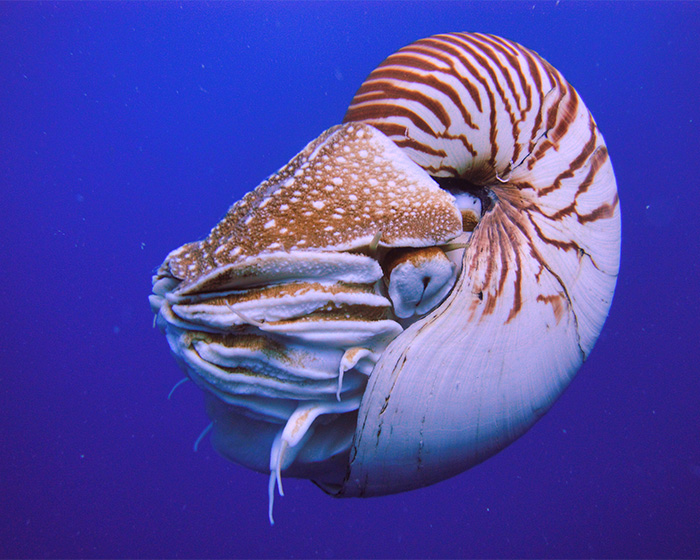
Nautiloids are related to modern Nautilus and differ from octopuses in both structure and evolutionary history. A nautilus is a deep-sea creature that has stayed almost the same for 500 million years.
The team also explained why the fossil had been misidentified for so long.
“It was a nautilus relative that had been decomposing for weeks… and that decomposition is what made it look so convincingly octopus-like,” Dr. Clements said.
Image credits: Royal Society Publishing
Moreover, the radula had shifted position during decay, making it difficult to detect until advanced imaging was used.
Though the fossil lost its status as the “oldest octopus,” it is now considered the oldest known example of preserved soft tissue from a nautiloid.
“We now have the oldest soft tissue evidence of a nautiloid ever found, and a much clearer picture of when octopuses actually first appeared on Earth,” said Dr. Clements.

By entering your email and clicking Subscribe, you're agreeing to let us send you customized marketing messages about us and our advertising partners. You are also agreeing to our Privacy Policy.
Thank you! You've successfully subscribed to newsletters!


Some years ago I was assisting in a high school biology lesson, teacher put some info up, I was shaking my head at her as I thought it was wrong. She was around my age, so probably did biology degree around same time - she indicated I should stay quiet. Later she told me what she put on the board was on the exam. She said it changed a few years back, no idea why. I looked through my old books - then the recent ones. A fair bit had changed. I felt very old that science had changed.
Some years ago I was assisting in a high school biology lesson, teacher put some info up, I was shaking my head at her as I thought it was wrong. She was around my age, so probably did biology degree around same time - she indicated I should stay quiet. Later she told me what she put on the board was on the exam. She said it changed a few years back, no idea why. I looked through my old books - then the recent ones. A fair bit had changed. I felt very old that science had changed.


































 No fees, cancel anytime










30
1