Get Premium
Dark mode theme is available exclusively for premium users. Learn more about the benefits of subscribing.
No fees, cancel anytime.

 Dark Mode Ad-Free Browsing Unlimited Content
 Ad-Free Browsing Unlimited Content Dark Mode
Join 1.2 million Panda readers who get the best art, memes, and fun stories every week!
This year, a number of plus-size influencers made headlines for using their platforms to challenge situations they deemed discriminatory.
Others shared videos offering practical tips or simply giving their perspective on how to navigate certain situations, such as traveling by plane or enjoying theme parks as overweight individuals.
Some also opened up about undergoing weight-loss surgery and their negative side effects they experienced.
In the best cases, their content was met with commenters who disagreed with their views respectfully. However, many of these influencers were subjected to body-shaming comments that prompted them to clap back.
Without further ado, here are ten plus-size content creators who fueled conversation around the body-positive movement this year.
This post may include affiliate links.
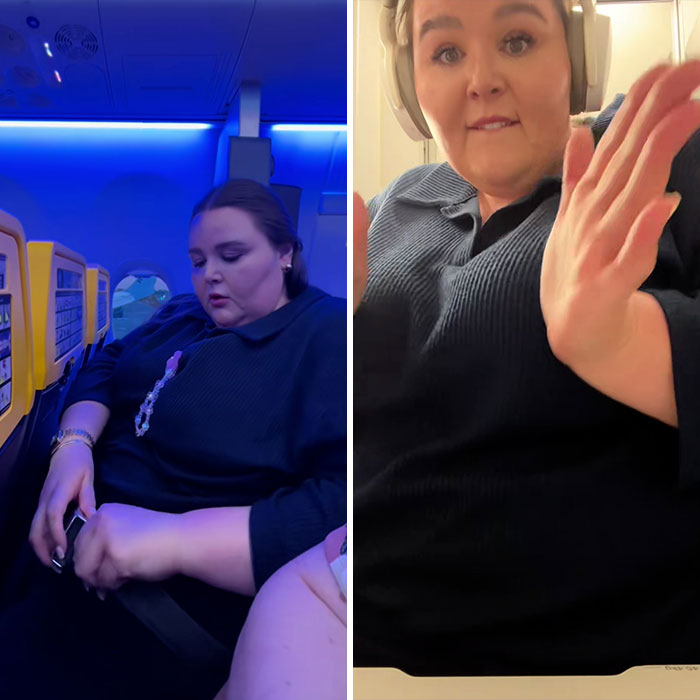
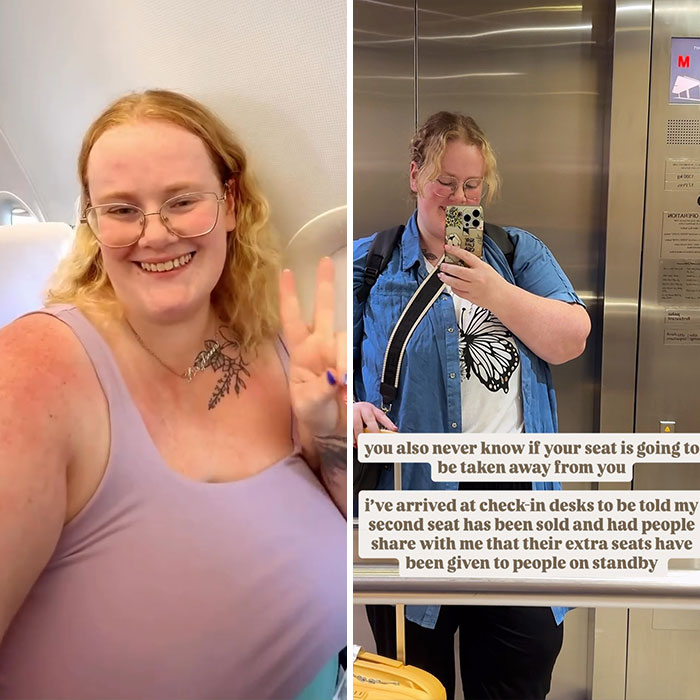
Phoebe, a lifestyle content creator from Australia, drew attention after sharing her experience taking a Ryanair flight as a plus-size woman.
Her clip began with Phoebe reaching her assigned seat on the low-cost airline, explaining that she wanted “to show big girls what it's like to get on the plane at the last minute.”
The traveler, who said she booked two seats, advised other plus-size flyers not to rush, noting that it “takes a while to get into your seat.”
Phoebe said the cramped airplane bathroom was the most uncomfortable part of her flying experience.
“I get so many messages about using an airplane bathroom and I'm not going to lie, this is the tightest I've experienced,” she admitted.
“I always recommend going to the bathroom as soon as people start boarding. That way you're less likely to need to use the bathroom on the plane.”
She concluded the video by reminding plus-size people not to feel insecure about their bodies. “You deserve to take up space in this world. Even on an airplane.”
After sharing the video, she was met with accusations that she was trying to normalize, or even encourage, an unhealthy lifestyle.
One critical comment, which Phoebe reposted, read, “Why would you be spending time making an Instagram page about how fat you are and not use this time to lose weight?”
Phoebe fired back at the user, writing, “I love wasting people's time by just existing.”
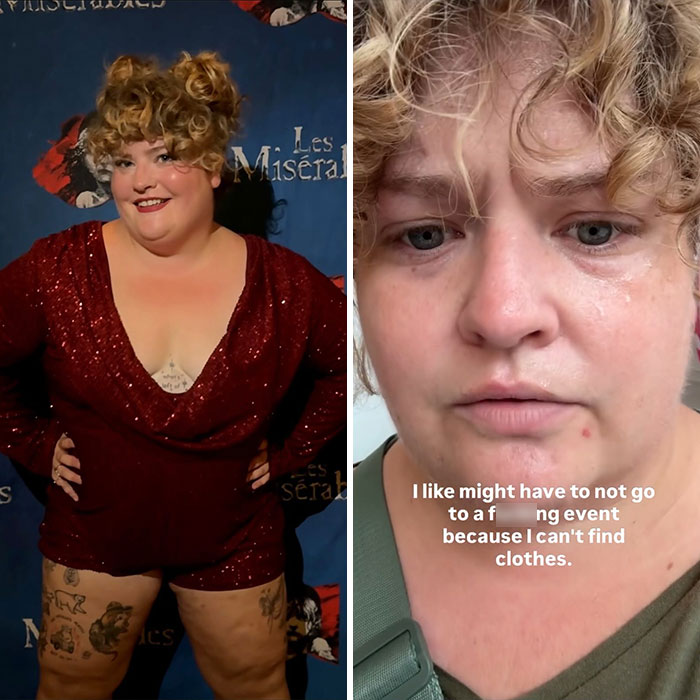
The singer and actress, who has performed in Les Misérables, posted a video complaining about how difficult it is for plus-size people to find clothing in their size.
Filming herself from a Marshalls before an event, Hassert said she was able to find only four dresses in her size in the entire store.
“I wish straight-size people could experience what it’s like looking for clothes as a fat person,” the New Jersey native said in her Instagram video last October.
“Can’t find sh*t anywhere. It’s crazy. What am I supposed to do? I might have to not go to a f***ing event because I can’t find clothes.”
Many people were unsympathetic, with some comments reading, “It’s a personal accountability thing,” and “Stop expecting the world to cater to you.”
“😂😂 Straight-size people? What’s that mean?” another netizen asked.
“What the f**k is going on in these comments? What do y’all expect plus-size people to wear if they’re in the process of losing weight?” a separate user interjected.
Hassert hit back at critics in another video, asking them to be “funny” and “creative” with their insults rather than simply stating the fact that she’s overweight.

Ok finding clothing that you don't have to get online past xxl is truly difficult. And everything you cand find involves spandex and lycra. Who the hell decided that fat rolls need shoved into spandex and lycra with the loudest floral prints anyone has ever seen and they should all be tent shaped. I find it ironic since the average size of women has gone up, but their ordering habits for stores never adjusted.
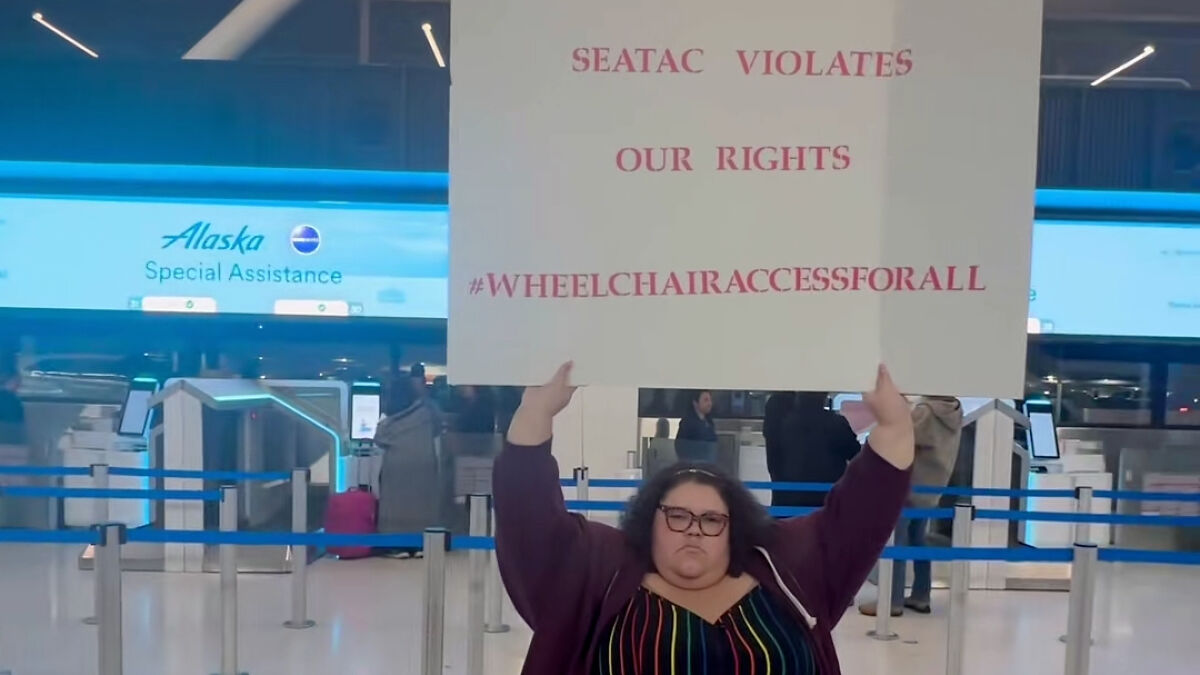
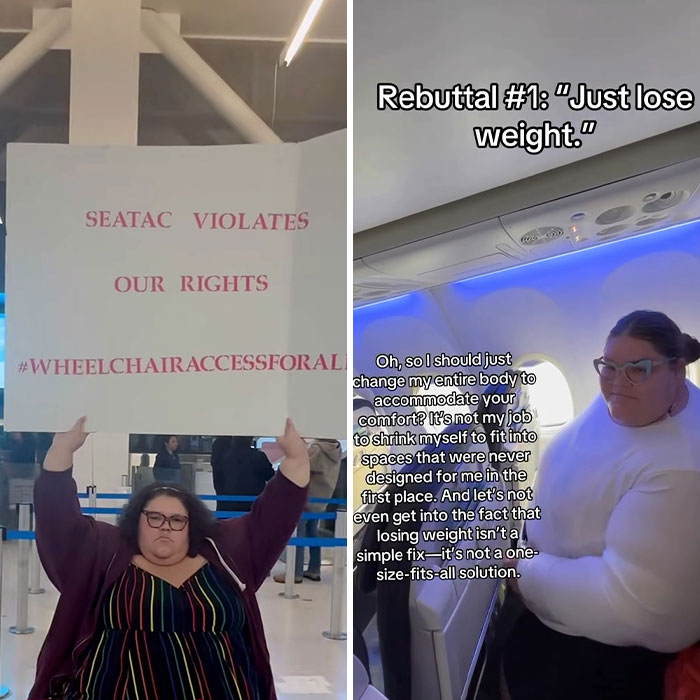
Back in April, the influencer accused Seattle-Tacoma International Airport of “violating” her rights after she was denied wheelchair assistance.
Standing in the middle of the airport, Chaney held up a sign that read, “SeaTac violates our rights. #WheelchairAccessForAll.”
“I’m not alone—this has happened to other fat travelers, too. When I spoke up, people told me it was because I could ‘injure the staff’ just by existing,” the content creator captioned her TikTok video. “That’s blatant discrimination.”
Chaney accused the airport of leaving “disabled fat travelers stranded.”
She further claimed the airport’s policy on wheelchair assistance was unclear and did not explicitly state its “discrimination.”
“Use your voice. If you’re scared, tell me and I’ll speak up for you,” she continued, addressing fellow plus-size travelers. “I’ll use this platform. I'm grateful to have to uplift you and amplify your voice.”
Many people were critical of her request, with one person writing, “I don’t understand?!?! I looked at her profile, she can walk!!!” Another commented, “Being fat isn’t an identity or a disability.”
Meanwhile, others jumped to her defense, with one user stating, “Overweight people are still people and they need help too.”
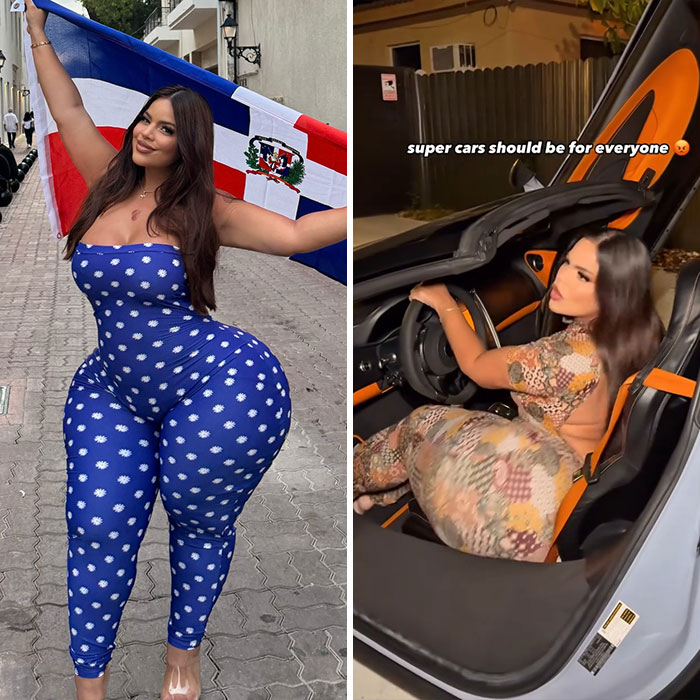
The Panamanian influencer, known for her voluptuous figure, posted a video in March demanding that McLaren increase the size of its seats to accommodate her backside.
“Supercars should be for everyone,” Bon exclaimed in a video that showed her struggling to fit inside the luxury sports vehicle.
The social media star, who often refers to herself as a plus-size woman, faced fierce criticism after posting the video, with users arguing that she does not represent the body-positivity movement.
“She isn’t plus-sized; she is surgically altered,” one viewer wrote.
“Ok you're trolling now,” commented another user.
Bon has denied ever undergoing plastic surgery. However, according to Beverly Hills surgeon Dr. Tarick Smiley, the 28-year-old has had multiple cosmetic procedures, including breast implants and a BBL.
On Instagram, where she has amassed more than 11 million followers, Bon describes herself as “just an XL girl existing with lipedema” who is “embracing her curves.”
Lipedema is an abnormal fat buildup on both sides of the lower body, usually in the legs, but sometimes in the arms too, the Cleveland Clinic explains.
The condition can cause pain and does not respond to diet and exercise like ordinary fat, the clinic notes. It affects 1 in 72,000 people, most of them women. The cause is unknown, though it’s believed to be hereditary.
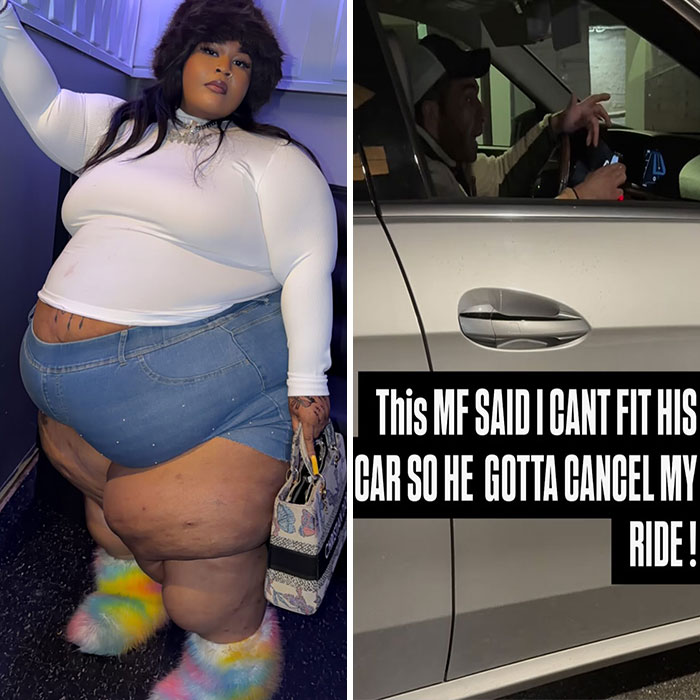
Blanding, also known by her stage name Dank Demoss, called out a driver who told her she was too big to fit in his Mercedes-Benz and claimed his “tires were not capable.”
The Detroit rapper said she was “hurt” after calling a ride and watching the driver immediately lock the doors upon seeing her.
“I can fit in this car,” Blanding was heard saying in a video she posted in January.
“Believe me, you can’t,” insisted the driver. “I’m sorry. I’m going to cancel. You’re not going to be charged.”
“So every big person, you turn down because they can’t fit in your car?” the rapper asked.
The driver explained that his car's tires could not handle Blanding’s weight. He apologized and suggested she order a larger vehicle, such as an Uber XL.
Blanding said she was certain she could fit inside the vehicle and had traveled in cars of similar size in the past with no problems.
The star accused the driver of discrimination in the caption of the video and later took legal action against Lyft, the rideshare company.
In a statement, Lyft said it “condemns all forms of discrimination” and that its “community guidelines and terms of service explicitly prohibit harassment or discrimination.”
Blanding's attorney, Jonathan Marko, said denying someone a ride based on their weight is legally the same as denying someone because of their religion or race.
Blanding reached a settlement in the case over the summer.
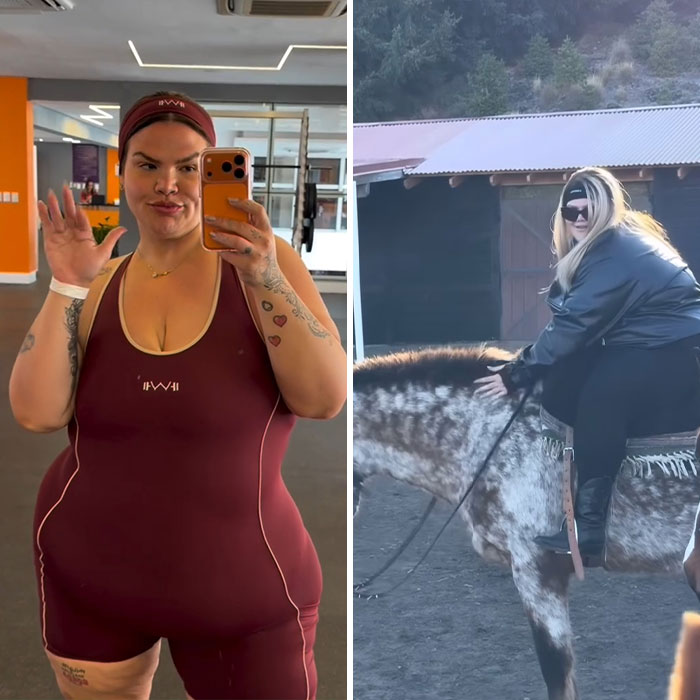
"Realizing a dream. First time in years that I rode a horse. Incredible experience," the Brazilian dancer and influencer wrote alongside a photo of herself riding a horse.
The moment marked a special occasion for Carla, as it was her first time riding a horse since undergoing gastric bypass surgery and losing 52 kg (114 lbs).
However, several people slammed 34-year-old, arguing that the animal cannot support her weight of 148 kg (325 lbs).
According to local outlet Extra, the horse in Carla’s vacation photo is an Appaloosa, a breed that typically weighs between 450 kg and 600 kg. They can carry, on average, 15% to 20% of their body weight, which translates to 75 to 100 kg.
The mother of two appeared unbothered by the criticism, posting photos with her family to her nearly 4 million Instagram followers.
She previously shared that she underwent weight-loss surgery earlier this year not for aesthetic reasons, but for her young daughters, Maria and Eva.
Carla has explained that fatphobia affects many aspects of her life and everyday decisions.
"People think fatphobia is just someone not liking fat people, but it's structural. In restaurants, I think about the chair. On the bus, I hope they'll let me in through the back door," she said.
Carla has been a body-positivity advocate for years. In 2022, she launched a collection of bikinis for plus-size individuals.
She has also sued a number of public figures for making body-shaming comments about her, including comedian Leo Lins, who was ordered to pay R$5,000 (about $900) in moral damages in 2021.
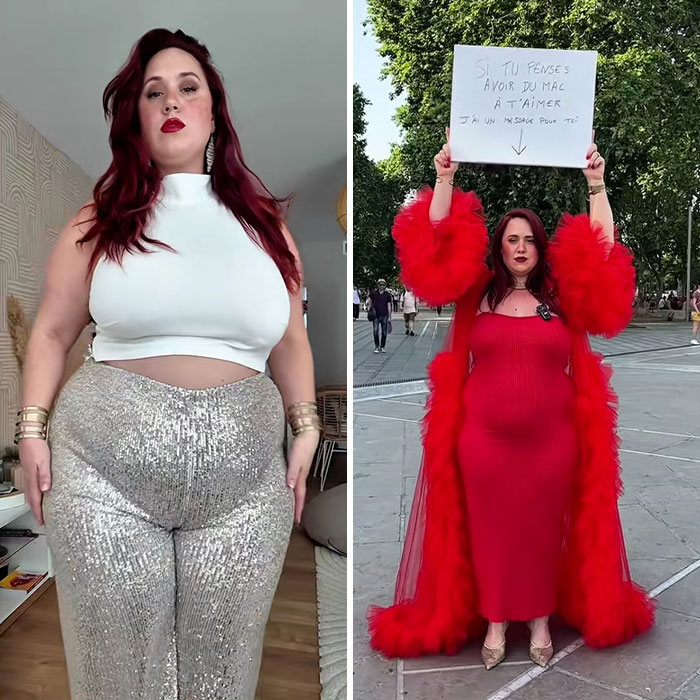
The plus-size model from France launched a petition to make fatphobia a crime this year. Albertini wants negative remarks based on body size to be included in the French Penal Code as a form of discrimination, alongside sexism, racism, and homophobia.
In September, she submitted the petition to the National Assembly after picking up a birthday cake that her partner had ordered online from a bakery in Montpellier.
The influencer was later sent a video of the cake-making process in which the bakers had seemingly forgotten to mute the audio.
The couple who owned the bakery reportedly called Albertini a “fat potato” and said she would “explode the next day.”
“Aren’t you ashamed you still eat cakes when you weigh 23 stone?” the unnamed man could be heard saying.
The social media star publicly called out the bakers, slamming their “shocking, fatphobic, misogynistic, and completely cruel remarks.”
Albertini attempted to file a complaint but was told there was little she could do, as the video was not directly addressed to her.
“Article 225-1 of the [French] Penal Code prohibits discrimination based on physical appearance,” her petition states. “In theory, this covers discrimination against overweight people. But in practice, the word ‘fatphobia’ doesn’t exist in the law.”
“As a result, victims don’t recognize themselves, institutions minimize it, and society continues to trivialize everyday violence.”
The petition has received 44,000/100,000 signatures so far.
Leanne divided opinions in July when she explained why she doesn’t book two seats when flying.
“One of the most common comments I receive on my videos is, ‘I hope you booked two seats,’ and while I understand that seems like the right solution when it comes to small seats on planes, it’s not a ‘one size fits all’ issue,” she said.
The influencer, who shares tips for plus-size travelers online, said booking two seats “can be incredibly expensive” and is out of many people’s budgets.
Beyond the financial aspect, she noted that some travelers don’t book two seats due to uncertainty over whether the extra seat will actually “work,” adding that booking can be “super tricky.”
While some commenters understood her point, many others slammed the travel enthusiast. One person wrote, “The reason you book two seats is not for you. It’s for people with whom you may be sharing their seat.”
A plus-size traveler also disagreed with Leanne, sharing, “As someone who is obese, I am hyper aware of not taking up any of my neighbor’s space.”
Bader was called a “fraud” and accused of lying to her fans about her weight-loss surgery.
The body positivity advocate underwent gastric bypass surgery in 2024 but did not reveal the procedure until a year later, following months of speculation.
Gastric bypass surgery, a procedure recommended for people with clinically severe obesity, reduces the size of the stomach, restricting the amount of food it can hold.
In March, the internet star sat down with Khloé Kardashian for her Khloé in Wonder Land podcast, where she discussed the negative side effects of the operation.
Bader explained that her decision to undergo the surgery stemmed from binge eating, negative experiences with weight-loss jabs, and gastrointestinal issues.
She said she felt sick for six weeks following the procedure, experiencing constant vomiting and a lack of appetite.
“I [was] like, ‘Something’s wrong. I should’ve never done this. I literally ruined my body.’ I had a lot of regret,” Bader said, adding that her symptoms decreased over time.
Bader was strongly criticized for not disclosing the procedure sooner.
“There’s nothing wrong with pursuing weight loss surgery. What’s immoral is blatantly lying about it, to hundreds of thousands of women who first followed Remi because of her body positivity content,” one person fumed.
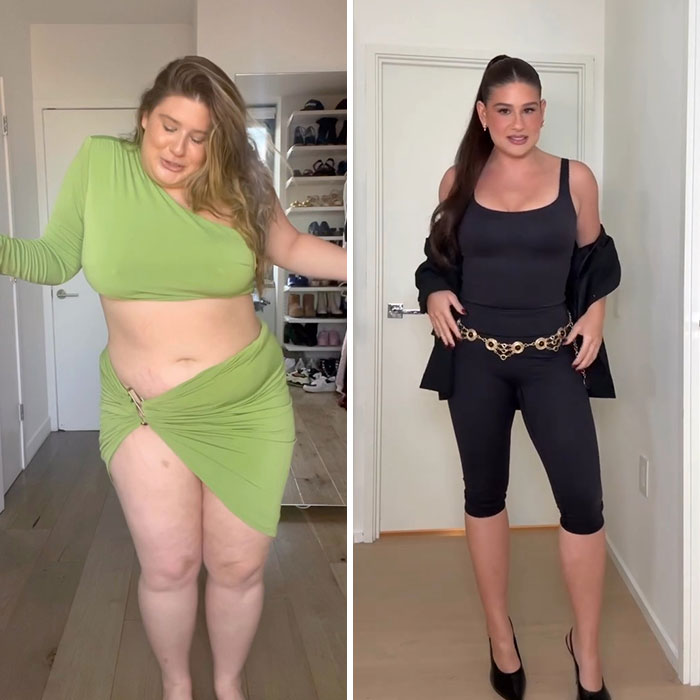
Bader, who built a platform on her try-on haul videos and advocacy for size inclusivity, admitted that deciding to go under the knife was not easy.
"I loved being curvy my whole life; I just did. It was who I was. I will always believe that you could be a bigger size and be healthy and happy," she told Self.
"I was for a while, that wasn’t a lie. But there was a point when it shifted, and I became really unhappy."
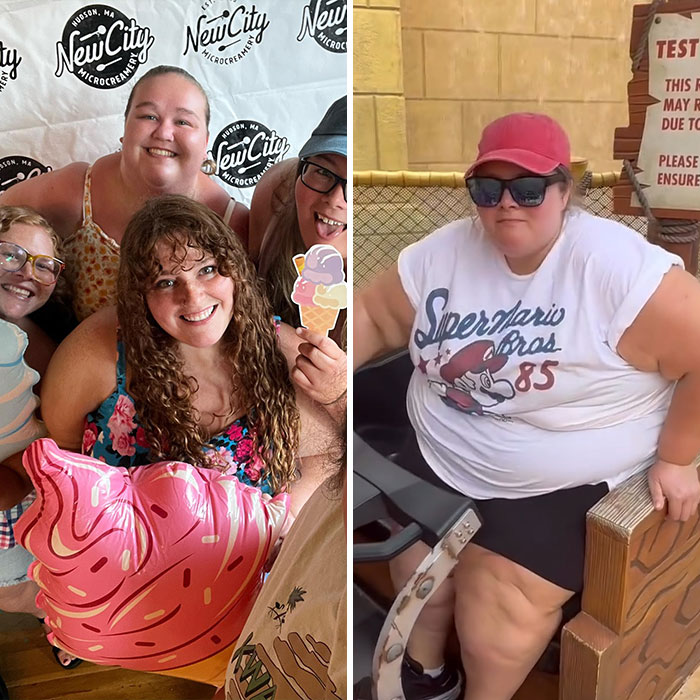
A group of five best friends—Stephanie, Ashley, Sarah, Deanna, and Katie—went viral with videos encouraging people to enjoy Disney World without feeling shame about their weight.
On their platform, which boasts over 130,000 followers, the Disney fans offer size-inclusive tips for visiting the theme park and document their adventures.
“We’ve always been plus-size, and we’ve always loved how size-inclusive Disney World is,” Stephanie explained.
“But we also had anxieties about whether we’d fit on rides or if we would feel out of place. We wanted to create content to help others like us see that they can enjoy these parks too.”
Despite the positivity of their content, the women often face body-shaming comments, with trolls mocking their appearance or telling them to exercise.
“We realized that the comments say more about the people leaving them than it does about us,” the group stated. “Happy, well-adjusted people don’t berate others online.”
The five friends prefer to focus on the impact of their videos, explaining that parkgoers have approached them and thanked them for showing that the rides are size-inclusive.
Speaking with Bored Panda, the group stressed the importance for plus-size individuals to raise their voice and demand equal access to facilities, both in parks and other public spaces.
“If you’re seated in a restaurant and you’re not comfortable with the seat or booth, don’t be afraid to ask for another accommodation,” Stephanie said. “You deserve to be comfortable in these spaces!”
“We realized that the comments say more about the people leaving them than it does about us,” the group stated. “Happy, well-adjusted people don’t berate others online.” Excellent point!
One is a medical term mostly used by unqualified people to excuse their cruelty to others. The other term is used by garment manufacturers foo refer to a segment of their market.
Load More Replies...
Some of these comments are disgusting. No matter how much or how little someone weighs, these are living people. Yes, some people are lazy and don't make effort to lose weight- but many others are heavy due to any combination of genetics, past trauma, mental health conditions, etc and are doing what they can to lose weight or simply be healthy. But for some reason, when someone is heavy, they aren't allowed to exist in public or enjoy life without being subject to horrible comments. Yes, many of the entries on this list were ridiculous. But many of these hateful comments aren't about their entitlement or attitude, it is purely about their weight.
While I agree with you, it's also important to recognize that it's not our job to accommodate for these people. I garuntee that every person on this list (judging by their social media presence and outfits) can clearly afford to change their body. We are NOT going to change the majority for a minority that can control it. It is THEIR job to get to a healthy weight.
Load More Replies... I am distressed by so many of the comments. Many people seem to relish the opportunity to be cruel to other human beings.
As am I. I realized that what is going on is not healthy, but it seems like people feel that saying horrid things becomes acceptable when people are overweight.
Load More Replies... One is a medical term mostly used by unqualified people to excuse their cruelty to others. The other term is used by garment manufacturers foo refer to a segment of their market.
Load More Replies... Some of these comments are disgusting. No matter how much or how little someone weighs, these are living people. Yes, some people are lazy and don't make effort to lose weight- but many others are heavy due to any combination of genetics, past trauma, mental health conditions, etc and are doing what they can to lose weight or simply be healthy. But for some reason, when someone is heavy, they aren't allowed to exist in public or enjoy life without being subject to horrible comments. Yes, many of the entries on this list were ridiculous. But many of these hateful comments aren't about their entitlement or attitude, it is purely about their weight.
While I agree with you, it's also important to recognize that it's not our job to accommodate for these people. I garuntee that every person on this list (judging by their social media presence and outfits) can clearly afford to change their body. We are NOT going to change the majority for a minority that can control it. It is THEIR job to get to a healthy weight.
Load More Replies... I am distressed by so many of the comments. Many people seem to relish the opportunity to be cruel to other human beings.
As am I. I realized that what is going on is not healthy, but it seems like people feel that saying horrid things becomes acceptable when people are overweight.
Load More Replies...

 No fees, cancel anytime