Get Premium
Dark mode theme is available exclusively for premium users. Learn more about the benefits of subscribing.
No fees, cancel anytime.

 Dark Mode Ad-Free Browsing Unlimited Content
 Ad-Free Browsing Unlimited Content Dark Mode
Join 1.2 million Panda readers who get the best art, memes, and fun stories every week!
In my job as a photographer, and in daily life, on and offline, I hear so many self-hating, negative comments about people’s appearances, coming from millennial and Gen Z women. I’m 33 years old myself, and find it really concerning on a societal level. Since the popularity of Zoom especially since the pandemic, people have been staring at their own (mirrored) faces for potentially hours each day, picking their flaws apart. And then there are all the selfie filter apps that are so easy to use… after a while, it feels like everyone looks so amazing, but what many forget is that everyone is using the filters!
I wanted to create a project that explores these experiences, and also normalizes filter-free looks.
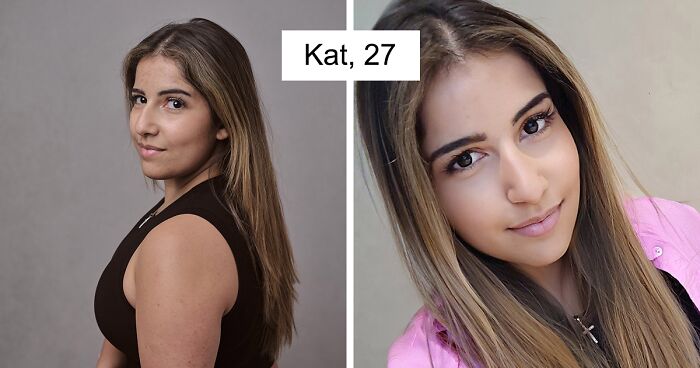
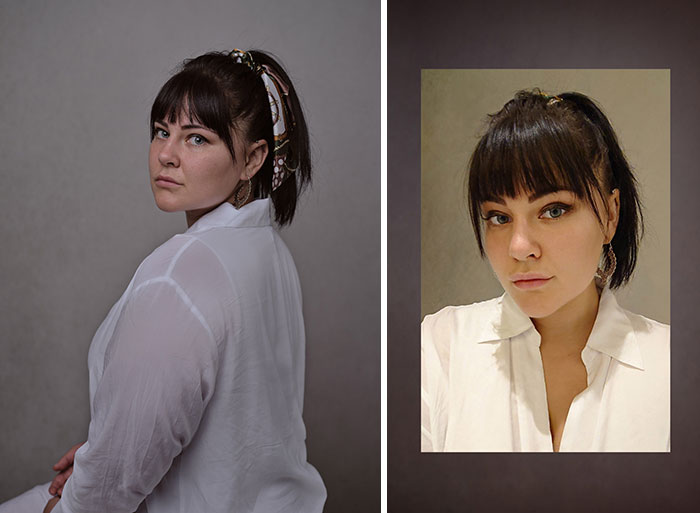
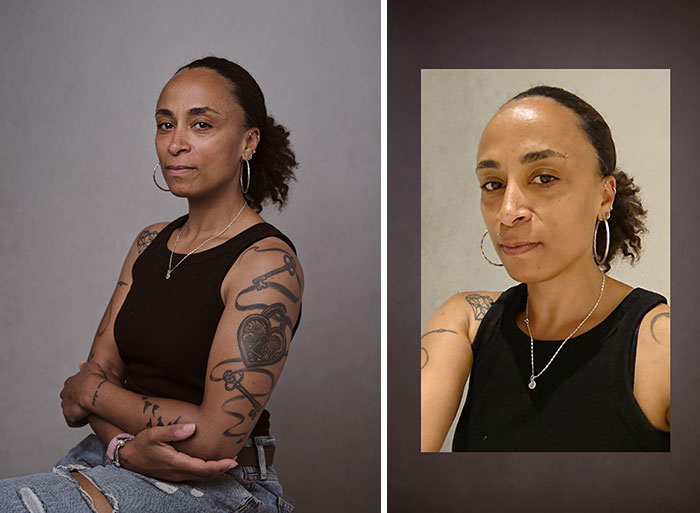
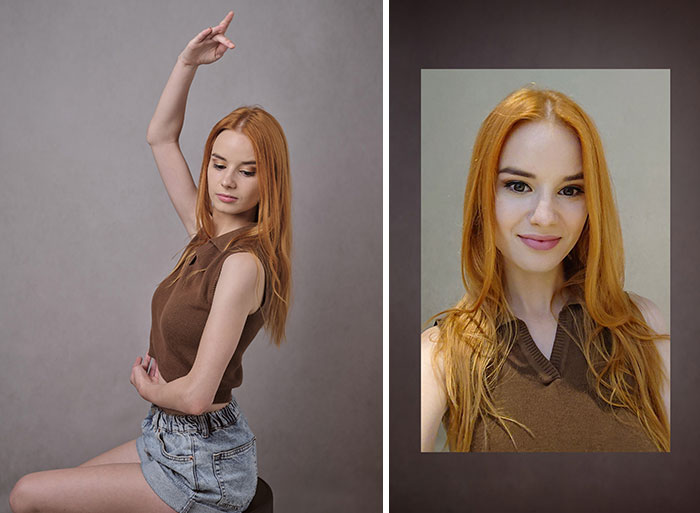
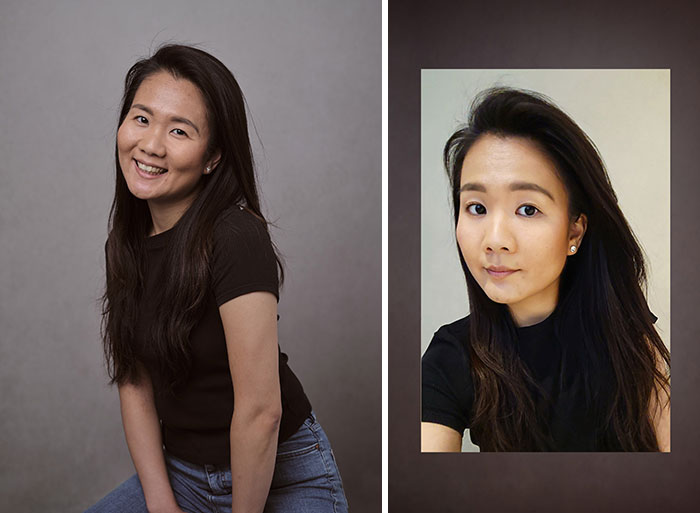
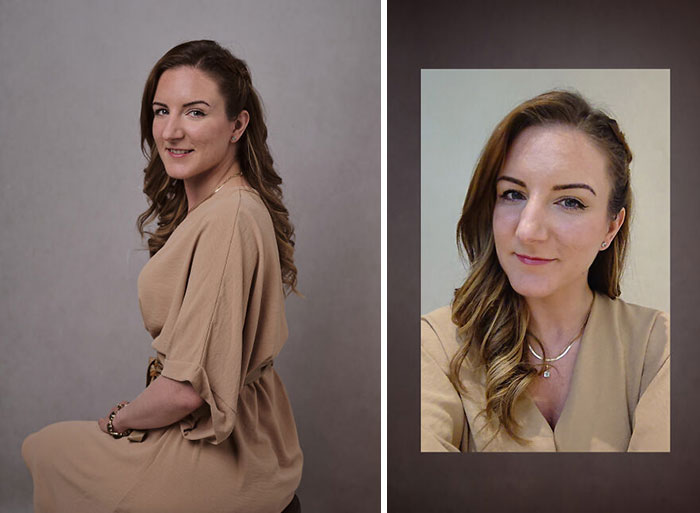
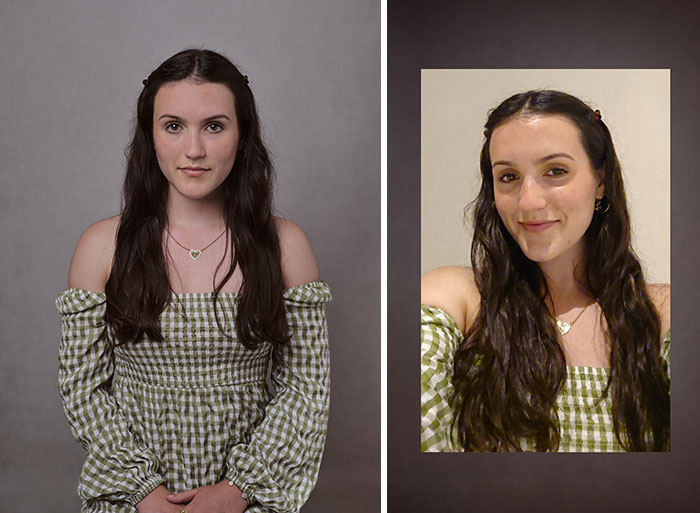
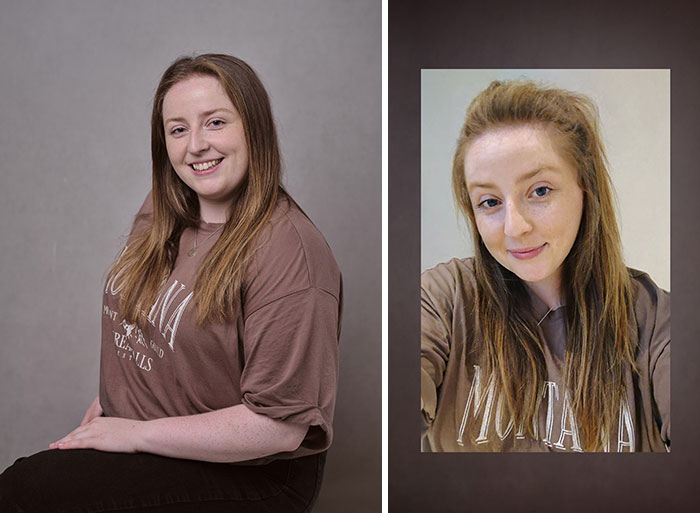
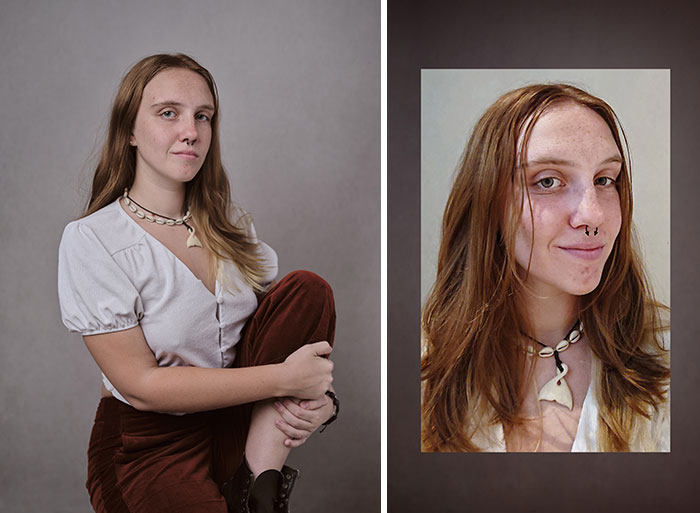
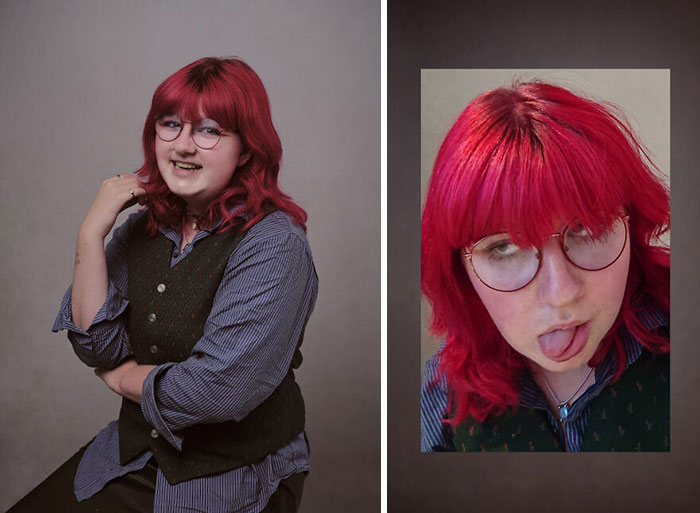
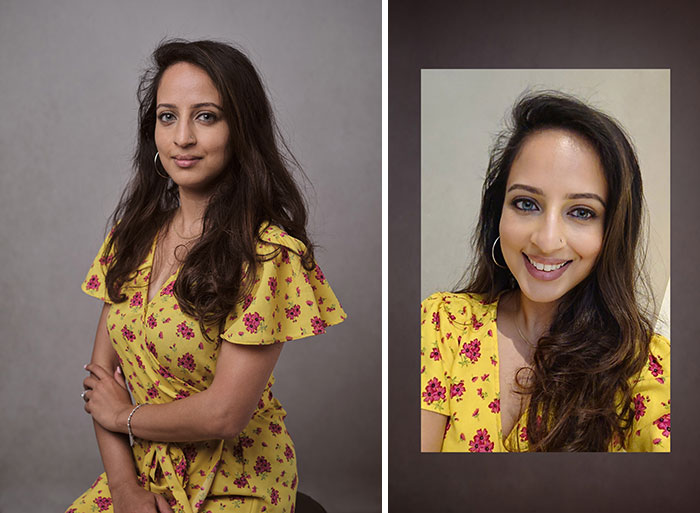
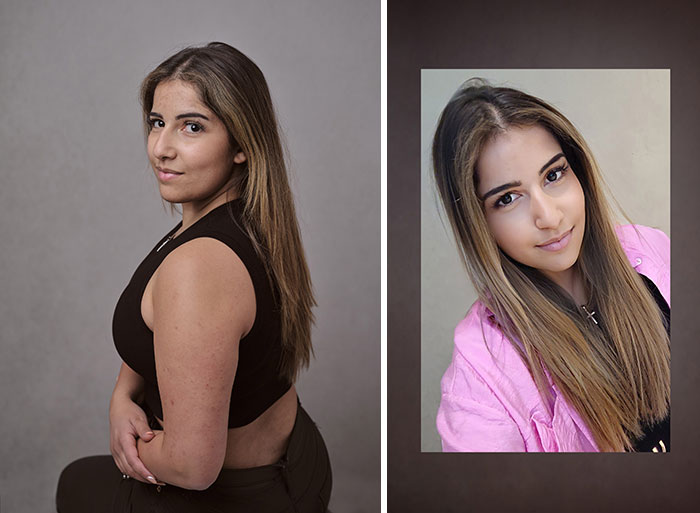
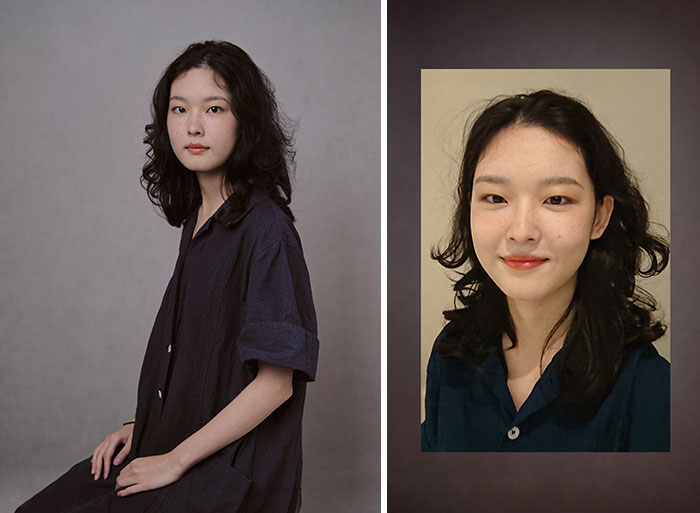
So I found some brave women to take a phone selfie and edit it as they wished. Then I photographed them too, so that we could compare their chosen and controlled angles with an unretouched portrait, taken by me, using a lens that closely mimics the angles and detail seen by the human eye.
More info: barbasboth.com
Image credits: james-greenhalgh
Viewers are invited to consider the similarities and differences between how each woman prefers to portray herself (whether that’s using filters or not) and how an impartial stranger/photographer (aka me) sees them.
Image credits: james-greenhalgh
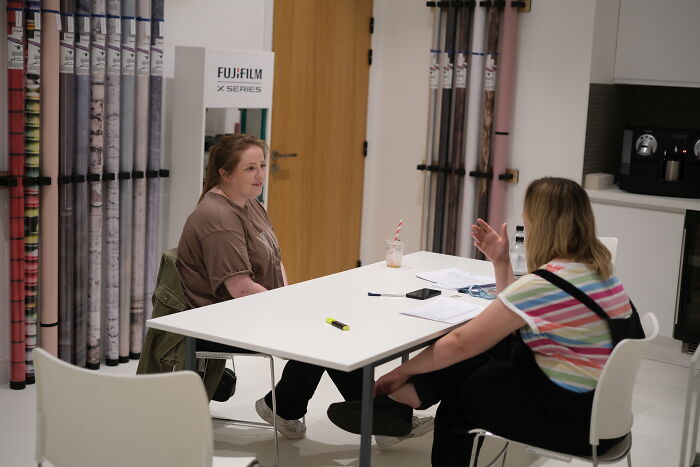
These interviews give a diverse and honest insight into the women’s individual experiences, which I thought was very eye opening.
Image credits: james-greenhalgh
The ladies I chose in advance seemed either passionate about self-love and acceptance, were heavy selfie takers/filter users, or admitted to struggling with their self-image and wanted to step outside their comfort zone. I wanted to represent a good range of all these facets of selfie culture through the photos.
Here are some of the interview quotes and fully unretouched portraits. The only thing I adjusted on the photos was the contrast and some tones to be true to life.
Image credits: Barbara Asboth
“The only way I can represent myself in a comfortable way is when I’m in control. On social media, there is no personality and looks are the only way you can represent yourself.” – Laila.
I’ve met many women who tell me they hate having their photo taken, because they are ugly. When I ask them why, they start listing everything they think is wrong with them, some break down crying from this, or are visibly upset. I sometimes ask, are there ANY photos you like of yourself? And the only photos they show me, are selfies, but even then they often add that they use a filter and took lots before being happy with just one.
I also found an article online at Forbes.com talking about how so many more women are asking for plastic surgery to make them look more like their filtered selfie face!
What people forget is that phone cameras have lenses that distort your features because they’re wide angle. It means they aren’t showing your proportional face the same as a human eye would actually see them. That’s why I chose a lens specifically with a similar view to the human eye.
Image credits: Barbara Asboth
“Most often other people’s selfies look good, but I wonder what’s been done to them. You see people in reality and they don’t look like that.” -Cheri.
The reason I wanted to compare a selfie and my own photos was because I think a selfie is often the kind of photo the person thinks society wants them to be like. What others want to see. It includes things like being smiley, trying to look cute or sexy, and accentuating positive features and hiding or filtering those they dont like as much. In my own photos, I wanted to have a contrast with that, trying to pose the women in more powerful and serious ways. I wanted to show how different they could look, and make people question what is their true appearance? How do you know which is closer to real life? Do we see what we want to see? I didn’t want to take just another “pretty, cute” photo of the women – the selfies do that already.
Image credits:Barbara Asboth
“I grew up in the ballet world, so from a very young age, my friends and I had a very hyper-focused vision of body image. We’d look through magazines and talk about the dancers with their beautiful cheekbones and say, ‘if only we could change that about ourselves.’” – Isabella.
The interviews with the women (the full text is available on my blog for all of them) were just as important to the project as the photos! I wanted to give each woman’s photo a context and share her experiences and thoughts. There seemed to be two main groups – the women who used to be unhappy with their appearance but are now more confident, and those who are still not quite as confident as they’d like, which was a shame. It was also difficult to find women who weren’t confident and relied a lot on filters, because naturally they didn’t want to be seen in an unretouched photo! This was hardest when I asked women on the street, the only ones who said yes at that time were the confident ones, I think.
Image credits: Barbara Asboth
“I do feel there’s an expectation to present yourself a certain way. The picture has to be good and it has to look like you’re having fun. It has definitely become a lot of work.” – Ayumi
Image credits: Barbara Asboth
“You can see all my imperfections here, which you can’t in the selfie, but this is my face. This is how I look. This is what I see in the mirror.” – Alexandra.
Image credits: Barbara Asboth
“Mostly, I just want to be okay with how I am, rather than how I am with a filter.” – Esther.
Image credits: Barbara Asboth
“When you’re looking at people’s images, even though you know they’re their most perfect images, it’s still hard not to get influenced by what you see. I try to remind myself that you’re not seeing all the ones that were deleted. But it’s also hard when you think someone’s best is still 10x better than your best.” – Megan.
Image credits: Barbara Asboth
“Selfies are a very raw picture. I see many very beautiful girls who edit theirs. It seems kind of backwards. But I think they’re reaching for perfection while I’m just trying to be me.” – Rachel.
Image credits: Barbara Asboth
“There are unattainable standards that people are putting out and that’s kind of terrifying. I have body dysmorphia, so I can’t really register what I look like within my brain.” – Ginger.
Image credits: Barbara Asboth
“I don’t think I’m perfect, but I’ve accepted everything I’ve got.” – Swathi.
Image credits: Barbara Asboth
“I’ve used some filters every now and then. It’s usually smoothing filters. Being in the photo industry, we tend to know what’s real and what’s not, so I have the knowledge that other people are doing it, and I know what I’m seeing isn’t always real.” – Kat.
Image credits: Barbara Asboth
“People have the right to change their own photos to feel how they want it to feel, even if it’s very different to the original.” – Xin Yi.
Image credits: james-greenhalgh
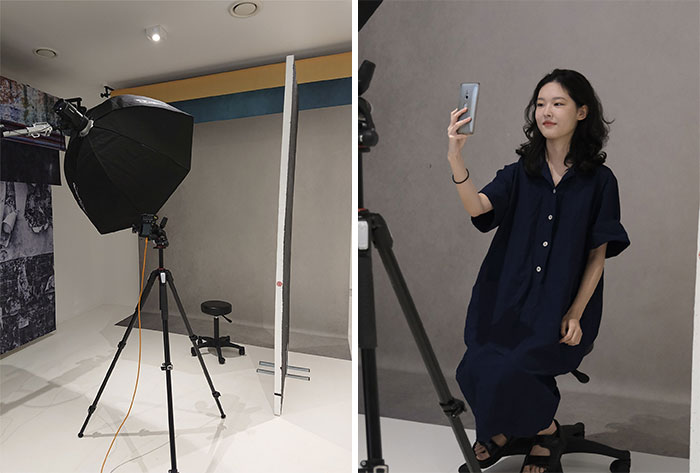
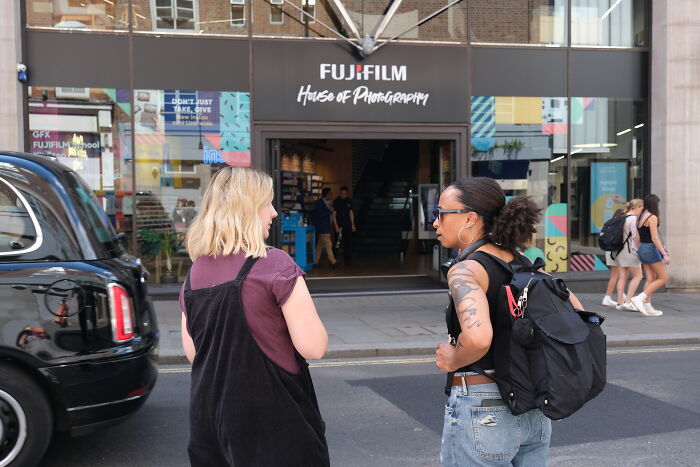
They allowed me to use of their studio in London at the House of Photography, provided an amazing medium format camera to use, and an assistant to capture BTS photos of the shoots. Thank you to the team for this.
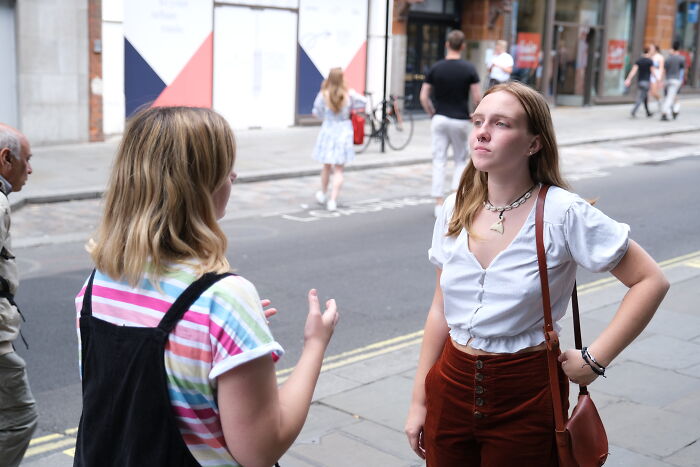
I definitely want to do another round of this project. I’ve got lots of experience photographing strangers on the streets of big cities, so I want the next set of photos to be taken outdoors in a street environment, with only women who I approach on the spot. But it takes a lot of organising and planning to do it right and ask the questions in a tactful way that’s not leading them to think they should answer a certain way. Once the weather is warmer here in the UK this year, I would like to give it another go and see what happens. It’s trickier to find street locations and put people on the spot like that, so I might struggle to find willing participants, but we’ll see! There’s of course always things that could be improved in any project, and the whole idea and approach are a bit fluid in my head. This project is a labour of love, there’s no client or brief to satisfy so I am free to explore wherever inspiration takes me!
212Kviews
Share on Facebook
The photographer's photos seem to bring out the character of each woman - I think these are all exceptional and I applaud the project. As women, we're so often taught we're not okay unless we look like (highly stylized) models.
Thank you, I am glad you enjoyed it!
Load More Replies...
The difference between the selfies and the professional photos is subtle, which I expected - I'm really utterly confused by commenters who are upset by the pro-photos being "worse" than the selfies... are y'all not aware of the purpose of the project? Didn't you read the abstract? The non-selfies are intended to be simple reflections of reality - if the photographer made effort to make them flattering pictures, it would defeat the purpose completely. It's also cringeworthy to suggest that all photographers do is "turn on the camera, operate the flash, and think they're masters." Even in simple, non-enhanced photos like these, much more goes into the process. TBH I expected there to be even more of a drastic difference between the reality photos and the selfies and it's super bizarre that so many people seem to have expected it to be switched. r/whoosh for a bunch of pandas here.

Lovely photos, good contrast, I get the point of the project... but wow, the professional photos are just badly lit. They're good pictures, just very dark and flat.
Please check out the uncompressed ones on the link at the top. Bored Panda compressed them very heavily :(
Load More Replies... The photographer's photos seem to bring out the character of each woman - I think these are all exceptional and I applaud the project. As women, we're so often taught we're not okay unless we look like (highly stylized) models.
Thank you, I am glad you enjoyed it!
Load More Replies... The difference between the selfies and the professional photos is subtle, which I expected - I'm really utterly confused by commenters who are upset by the pro-photos being "worse" than the selfies... are y'all not aware of the purpose of the project? Didn't you read the abstract? The non-selfies are intended to be simple reflections of reality - if the photographer made effort to make them flattering pictures, it would defeat the purpose completely. It's also cringeworthy to suggest that all photographers do is "turn on the camera, operate the flash, and think they're masters." Even in simple, non-enhanced photos like these, much more goes into the process. TBH I expected there to be even more of a drastic difference between the reality photos and the selfies and it's super bizarre that so many people seem to have expected it to be switched. r/whoosh for a bunch of pandas here.
Lovely photos, good contrast, I get the point of the project... but wow, the professional photos are just badly lit. They're good pictures, just very dark and flat.
Please check out the uncompressed ones on the link at the top. Bored Panda compressed them very heavily :(
Load More Replies...
 No fees, cancel anytime



117
143