Get Premium
Dark mode theme is available exclusively for premium users. Learn more about the benefits of subscribing.
No fees, cancel anytime.

 Dark Mode Ad-Free Browsing Unlimited Content
 Ad-Free Browsing Unlimited Content Dark Mode
Join 1.2 million Panda readers who get the best art, memes, and fun stories every week!
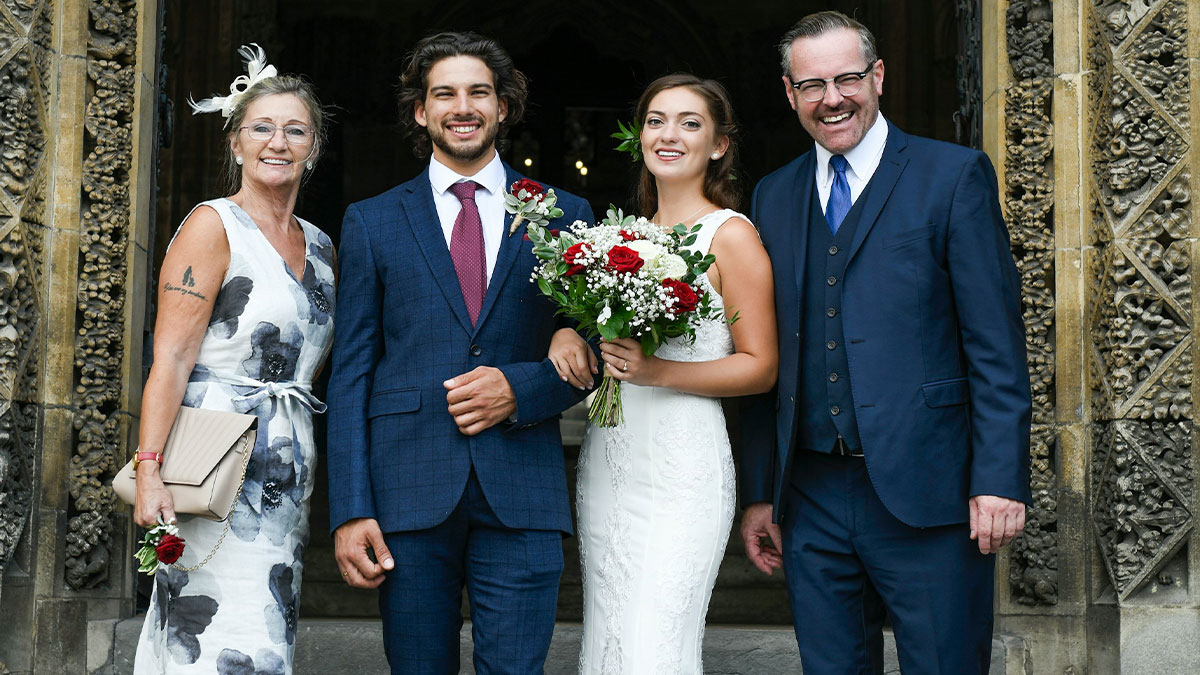
With the holidays coming up, many of us try to dream up thoughtful gifts that will truly surprise our loved ones. We want something personal, meaningful, and enjoyable—which is often harder to nail than it sounds.
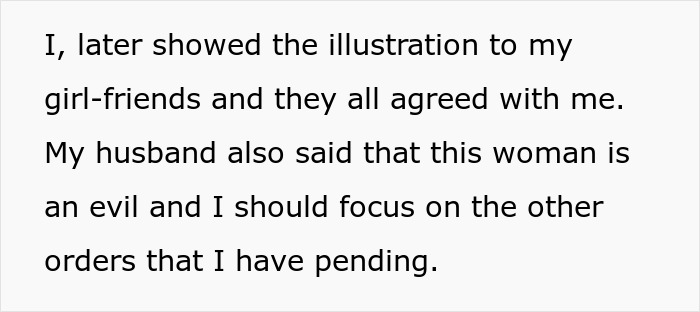
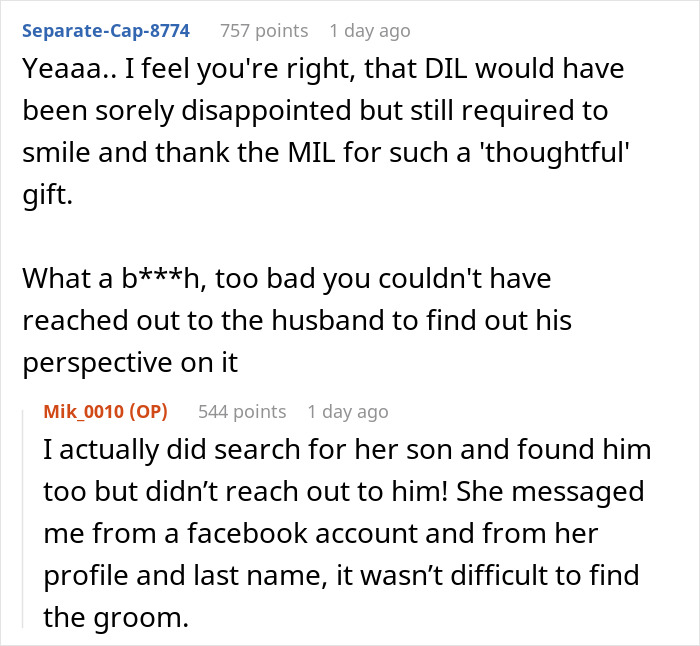
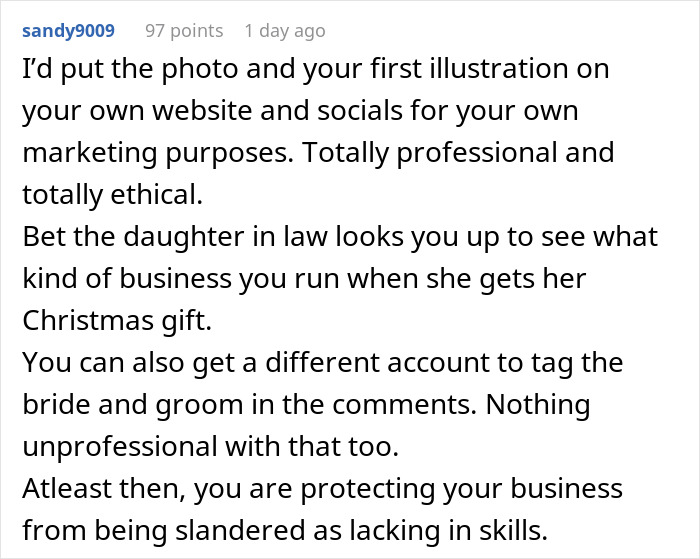
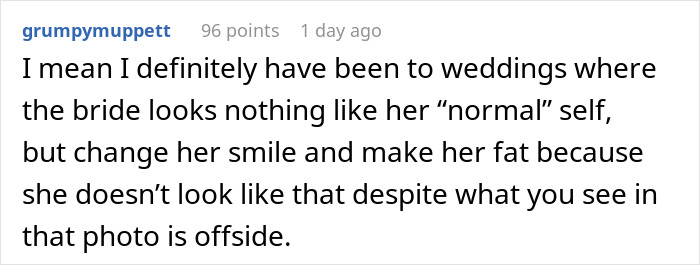
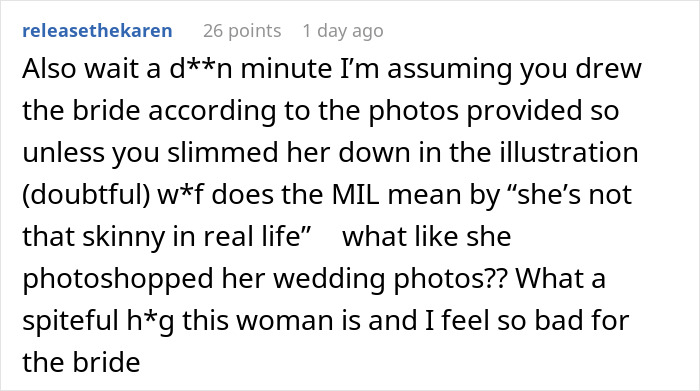
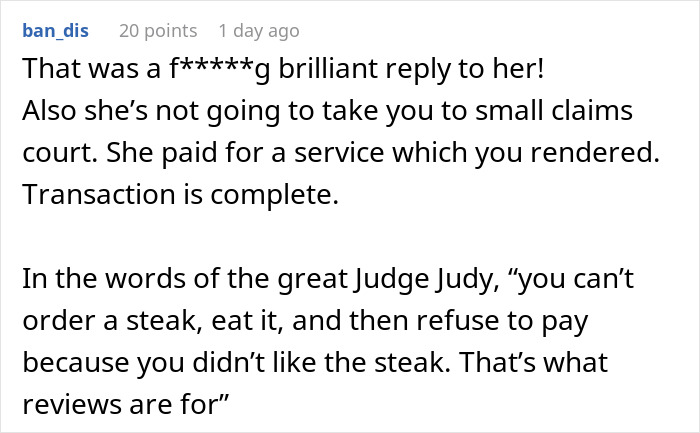
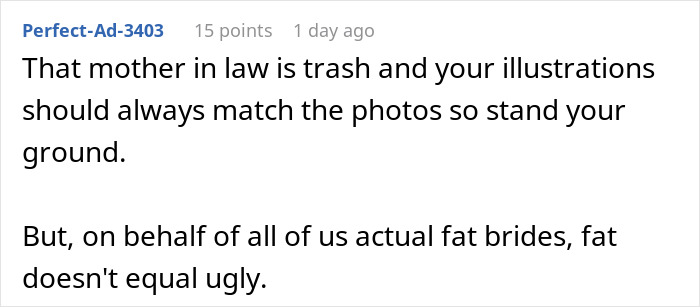
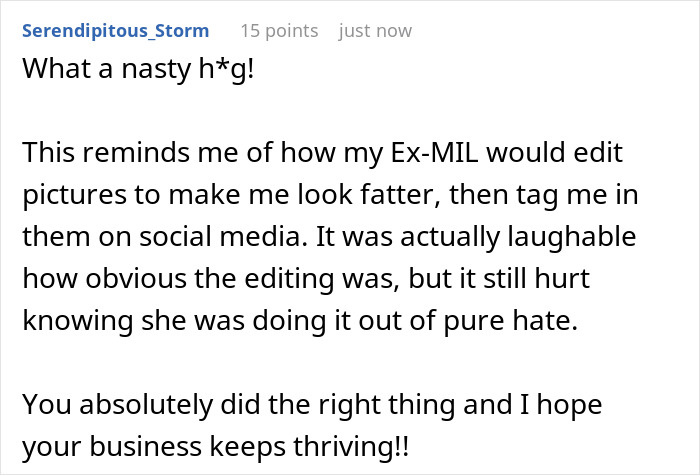
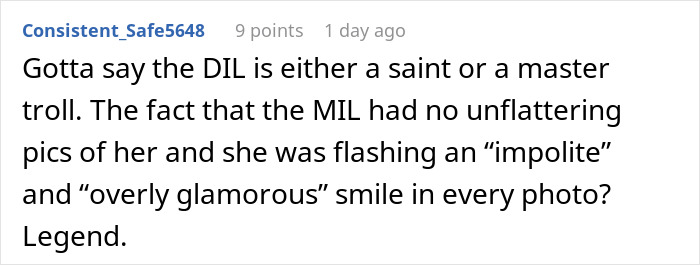
One mother-in-law thought she had the perfect idea: a custom wedding illustration of the newlyweds alongside herself and her husband. On paper, it sounded sweet and creative. But once the artist began working, the requests started rolling in, and they quickly became strange. The MIL kept asking for adjustments that made the bride look less and less like herself, and noticeably less attractive.
Eventually, the artist had enough. She called the woman out and later shared the entire story on Reddit. Read what happened below.
Image credits: Desizned / envato (not the actual photo)
Image credits: Curated Lifestyle / unsplash (not the actual photo)
Image credits: Mik_0010
There’s no denying that plenty of people are lucky enough to have wonderful, supportive mothers-in-law. Still, stories like the one this artist shared show that the infamous “monster-in-law” stereotype hasn’t completely disappeared—outdated or not. While it’s uncomfortable to admit, conflict between in-laws remains surprisingly common.
In fact, research backs that up. A study published in the journal Evolutionary Psychological Science found that both men and women reported more conflict with their mothers-in-law (44%) than with their own mothers (39%). In other words, tension with in-laws is something many people experience firsthand, not just something we hear in passing through anecdotes.
What’s interesting, though, is the explanation researchers offer for why this happens. They suggest the reason may be evolutionary and influenced by what’s called “genetic conflict.” Essentially, people tend to act in the interests of those they’re genetically related to, often without even realizing it, rather than in everyone’s best interest. When a new person enters the family, friction can arise around things like attention or resources, even if no one intends for it to occur.
That said, biology isn’t the only factor at play. Social expectations matter too, especially when it comes to relationships between mothers-in-law and daughters-in-law. Just because we’ve moved away from many patriarchal structures doesn’t mean they’ve completely disappeared. In many families, women and mothers are still expected to manage the household, handle day-to-day life, and make many of the major decisions.
Once a daughter-in-law joins the family, she can be seen, consciously or not, as stepping into space that once felt familiar to someone else. That change can leave a mother-in-law feeling threatened, which is often when the kind of behavior seen in stories like this starts to show up. It doesn’t excuse it, but it does help explain where it comes from.
Psychologist Dr. Terri Apter put it this way: “Mother-in-law and daughter-in-law conflict often emerges from an expectation that each is criticizing or undermining the other, but this mutual unease may have less to do with actual attitudes and far more to do with persistent female norms that few of us manage to shake off completely.”
“There then arises that tricky question about who is ‘mother’ in the family, with final say over all those things women still assume charge over: housework and child care, meal times and children’s manners,” Apter said.
Image credits: Getty Images / unsplash (not the actual photo)
In an ideal world, everyone would recognize these stereotypes for what they are and treat each other with kindness from the start. In reality, though, family dynamics can be unpredictable, and it’s often a matter of luck whether you end up with an in-law who treats you with genuine respect. That’s why being ready to set boundaries is so important.
In the story above, the artist quickly realized what was going on and chose to stand up for the bride, refusing to go along with the changes. Of course, doing that is much easier when you’re not part of the family yourself. When you are, navigating a difficult mother-in-law can be far more complicated. According to Choosing Therapy, there are a few approaches that can help.
One of the most important is clear communication with your partner. Being on the same page about what behavior is and isn’t acceptable makes it much easier to set boundaries together. If your partner doesn’t see the problem or struggles to stand up to their parent, it can create an uncomfortable imbalance. Talking things through and agreeing on how to handle situations as a team makes a big difference.
At the same time, it’s necessary to take care of yourself. Dealing with tense family situations can be emotionally draining, so focusing on self-care can help take the edge off. Journaling, meditation, or mindfulness practices can all be useful ways to decompress and reset.
Experts also caution against falling for guilt-driven “victim” behavior when boundaries are put in place. Some people may take those boundaries personally or try to shift the blame, but that doesn’t mean you’re doing something wrong. Boundaries can be firm while still being respectful and thoughtful.
As frustrating as stories like these can be, they also serve as reminders of how significant it is to recognize unhealthy behavior and to stand up for yourself or others when needed. That’s how long-standing stereotypes lose their grip and healthier, more respectful family relationships have a chance to take their place.

By entering your email and clicking Subscribe, you're agreeing to let us send you customized marketing messages about us and our advertising partners. You are also agreeing to our Privacy Policy.
Thank you! You've successfully subscribed to newsletters!

What the heck is wrong with all these mothers of men??? It's creepy how incestuous so many of them seem to be - like no other woman is good enough for their precious boy except them. 🤮 Just weird. My mother has never said a bad word about my SIL in all the time we've known her. Probably because my SIL is willing to put up with my brother. 😂

"And could you add horns and fangs? She has horns and fangs in real life."


MIL was an obvious crazed narcissist. Hopefully they've cut all contact with her by now.
What the heck is wrong with all these mothers of men??? It's creepy how incestuous so many of them seem to be - like no other woman is good enough for their precious boy except them. 🤮 Just weird. My mother has never said a bad word about my SIL in all the time we've known her. Probably because my SIL is willing to put up with my brother. 😂
"And could you add horns and fangs? She has horns and fangs in real life."
MIL was an obvious crazed narcissist. Hopefully they've cut all contact with her by now.

























 No fees, cancel anytime
































36
15