Get Premium
Dark mode theme is available exclusively for premium users. Learn more about the benefits of subscribing.
No fees, cancel anytime.

 Dark Mode Ad-Free Browsing Unlimited Content
 Ad-Free Browsing Unlimited Content Dark Mode
Join 1.2 million Panda readers who get the best art, memes, and fun stories every week!
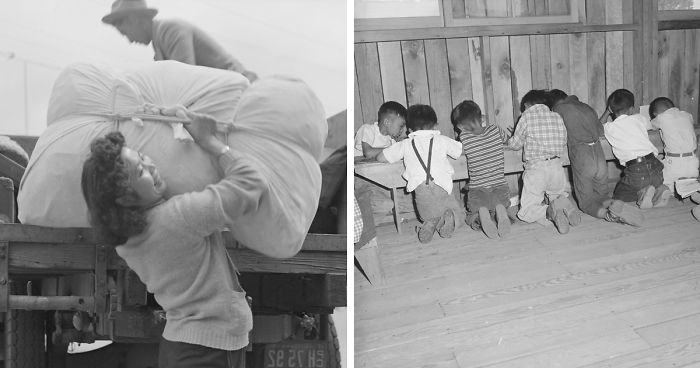
In 1941 Pearl Harbour became the scene of a devasting surprise attack by Japanese forces. After decades of being on the edge of war with Japan, the attack pushed the US to join World War II. Not only did this attack took thousands of lives but also triggered racial prejudices towards Japanese-Americans which led to mass 'evacuation' of around 1200,000 people.
On February 19, 1942, just a couple months after the attack, President Franklin D. Roosevelt signed Executive Order to deport and incarcerate all Japanese-Americans. Thousands of people, many of whom were born in the US, were forced to abandon their houses, businesses, farms, and possessions. They were loaded into busses with only as many things as they can carry with no knowledge of where they're going and how long they're staying there.
A photographer Dorothea Lange who is probably best known for her photo titled Migrant Mother was hired by the US government to document the evacuation. The photographer perfectly captured the devastating moments of Japanese-Americans leaving their old lives behind and entering into the unknown. However, the military wasn't happy with Lange's opposing opinion of the internment camps. The photographs were seized from her and only made public in 2006. Today we finally have the opportunity to look back at this particular moment in history and see for our selves how the lives of Japanese-Americans were changed forever.
This post may include affiliate links.
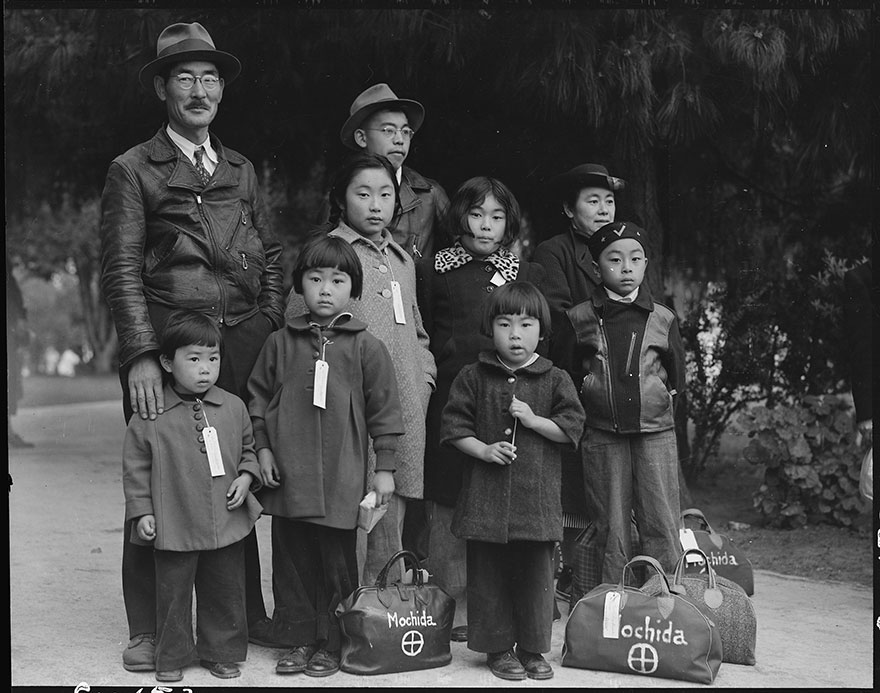
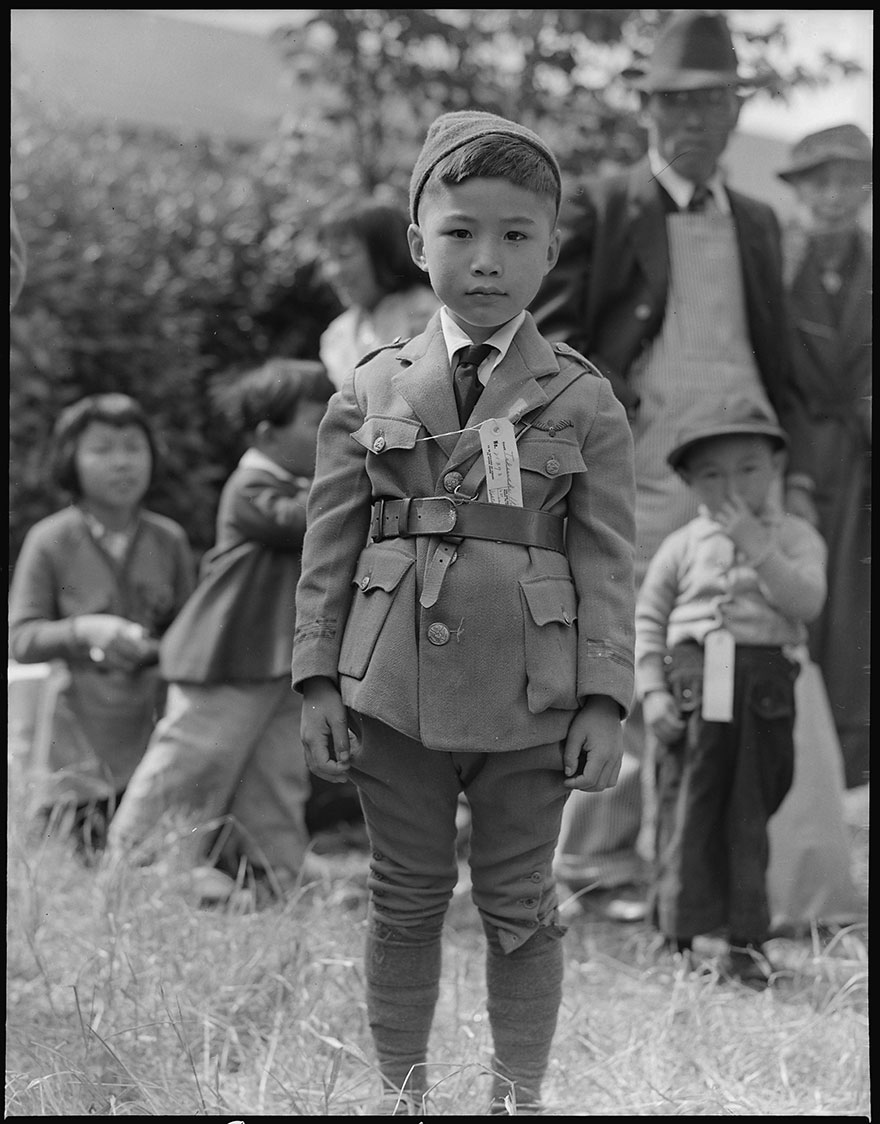
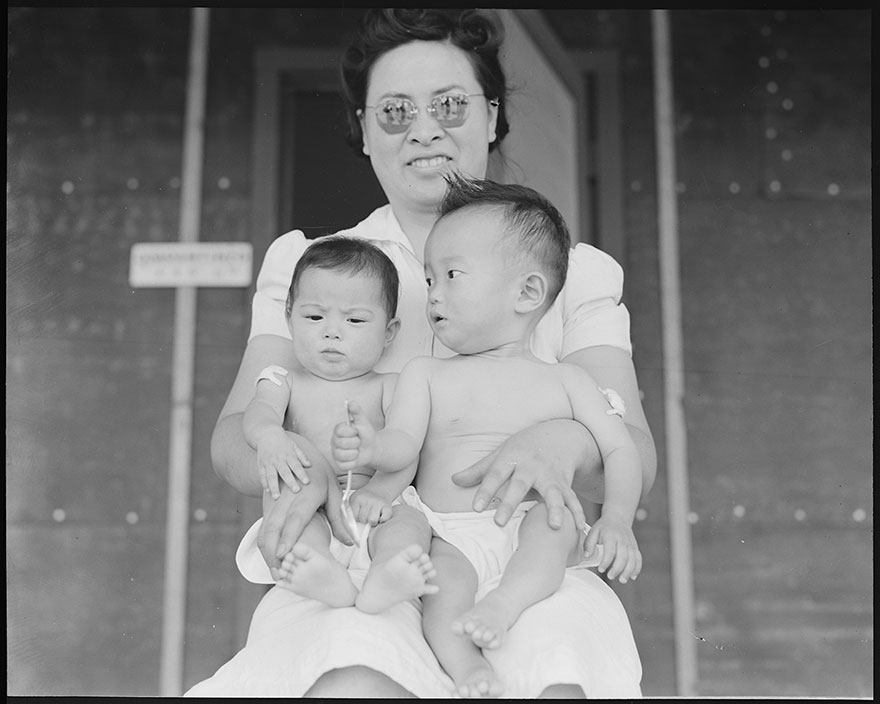
Original caption: Hayward, California. Members of the Mochida family awaiting evacuation bus. Identification tags are used to aid in keeping the family unit intact during all phases of evacuation. Mochida operated a nursery and five greenhouses on a two-acre site in Eden Township. He raised snapdragons and sweet peas. Evacuees of Japanese ancestry will be housed in War Relocation Authority centers for the duration.

As someone who grew up all my life in the US this stuff was never mentioned in school about how poorly Japanese were treated and how much these "camps" were similar to the Jewish concentration camps minus some of the atrocities. It still breaks my heart. These families were robbed of their dignity and some of them still remember. Read up on your Asian American literature if you want to know more about these times.
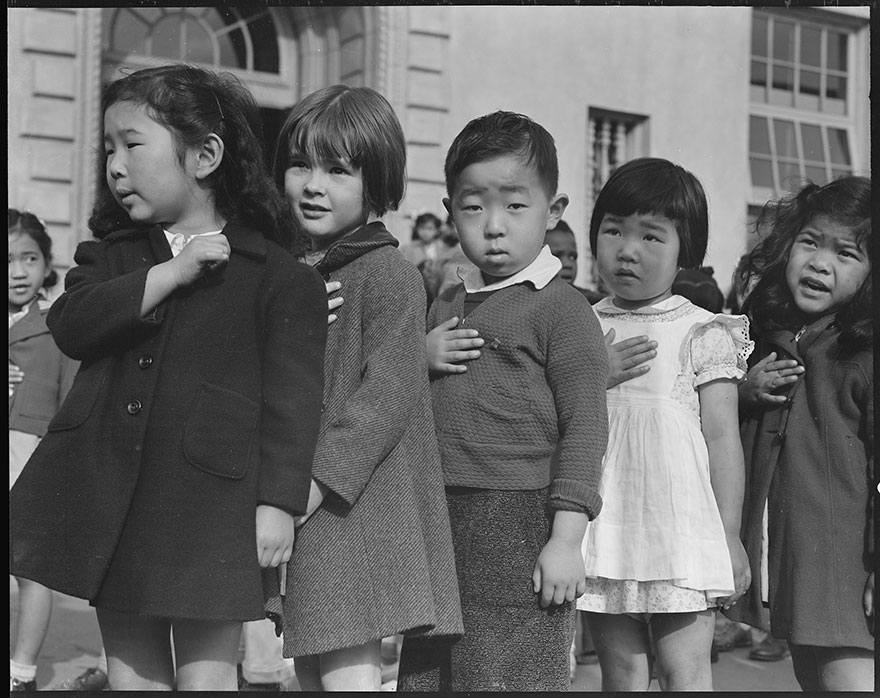
The full caption for this photograph reads: San Francisco, California. Many children of Japanese ancestry attended Raphael Weill public School, Geary and Buchanan Streets, prior to evacuation. This scene shows first- graders during flag pledge ceremony. Evacuees of Japanese ancestry will be housed in War Relocation Authority centers for the duration. Provision will be effected for the continuance of education.

Oh the irony here (especially the "with liberty and justice for all" part.
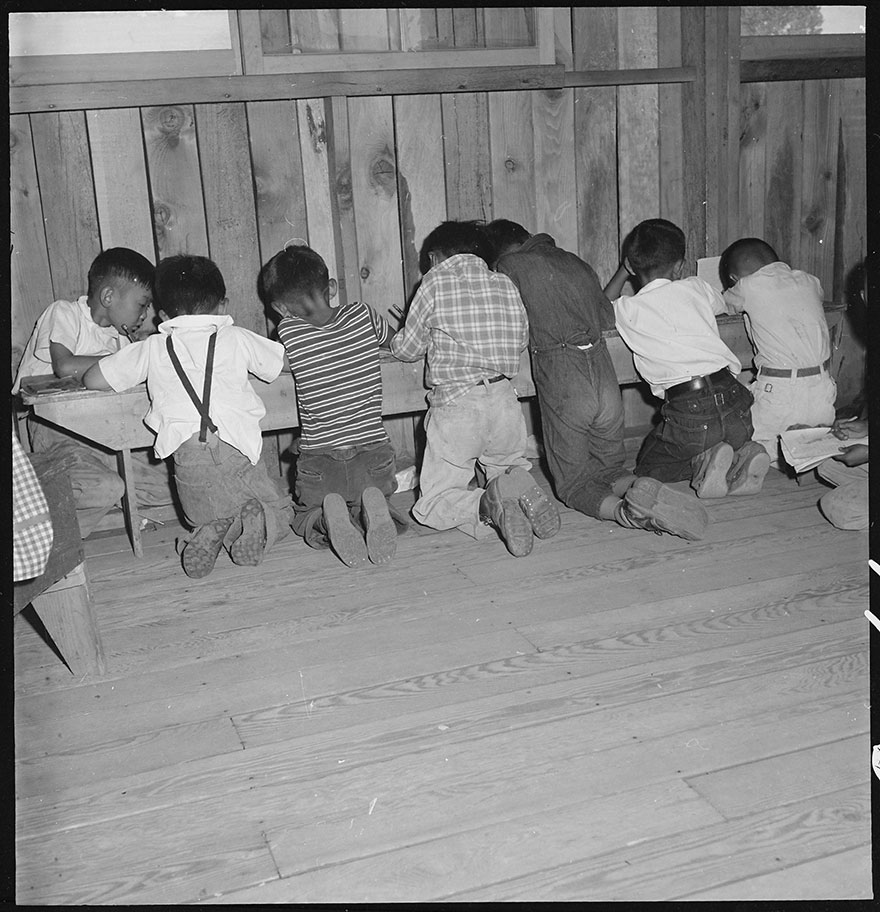
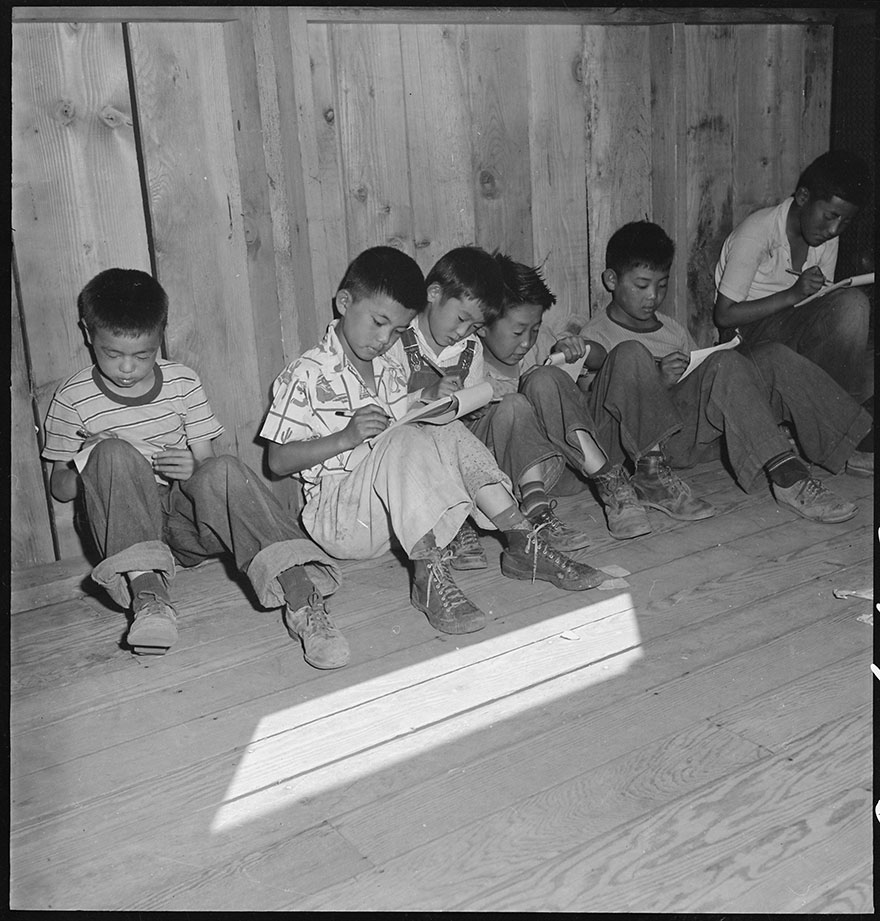
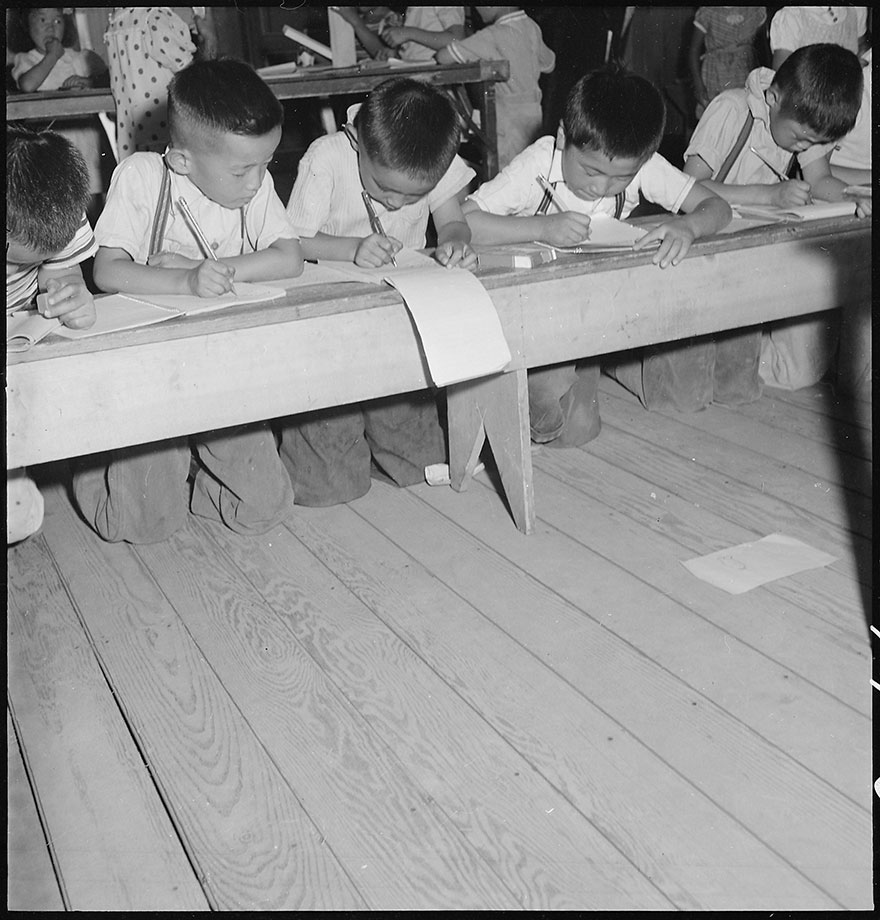
The full caption for this photograph reads: Manzanar Relocation Center, Manzanar, California. Third grade students working on their arithmetic lesson at this first volunteer elementary school. School equipment was not yet available at the time this photograph was taken.
Wow, we were very cruel not that long ago and are still doing the same c r @ p.
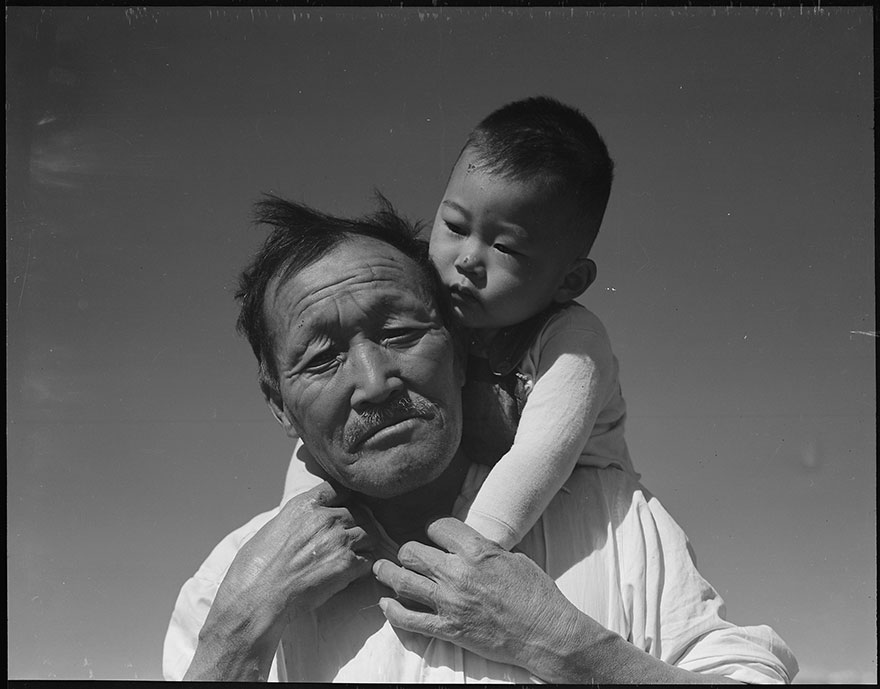
The full caption for this photograph reads: Manzanar Relocation Center, Manzanar, California. Grandfather and grandson of Japanese ancestry at this War Relocation Authority center.
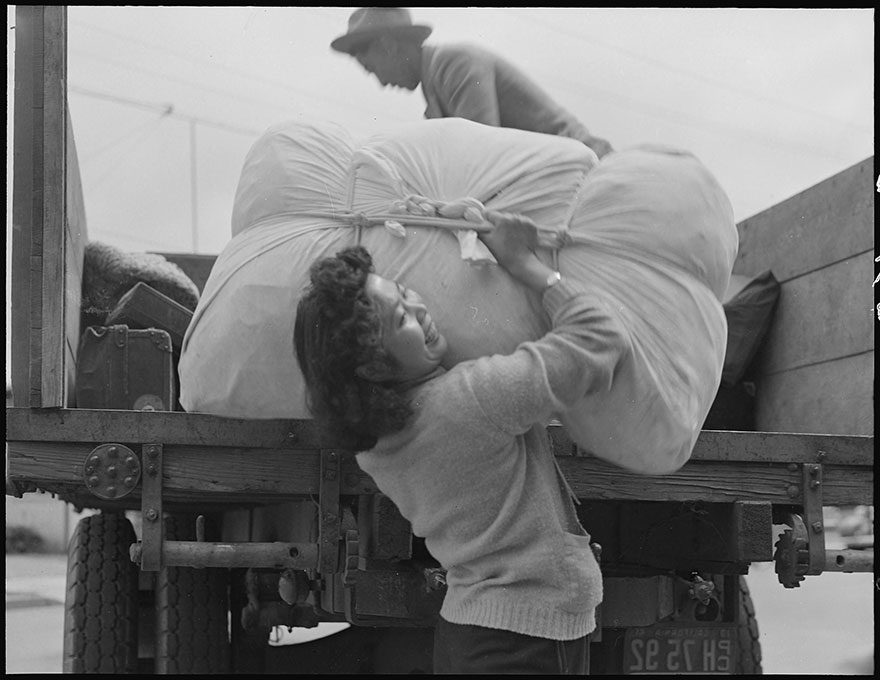
The full caption for this photograph reads: Hayward, California. A farm girl helps unload family baggage in a final step before evacuation. Evacuees of Japanese ancestry will be housed in War Relocation Authority centers for the duration.
The full caption for this photograph reads: Centerville, California. This youngster is awaiting evacuation bus. Evacuees of Japanese ancestry will be housed in War Relocation Authority centers for the duration.
They lost everything they worked so hard for. Japanese people are proud of working hard and had to swallow false accusations of being traitors and spies. Some of these families were business owners and had long been since they where in their own homeland. They didn't have anyone left in Japan. Confused and scared.
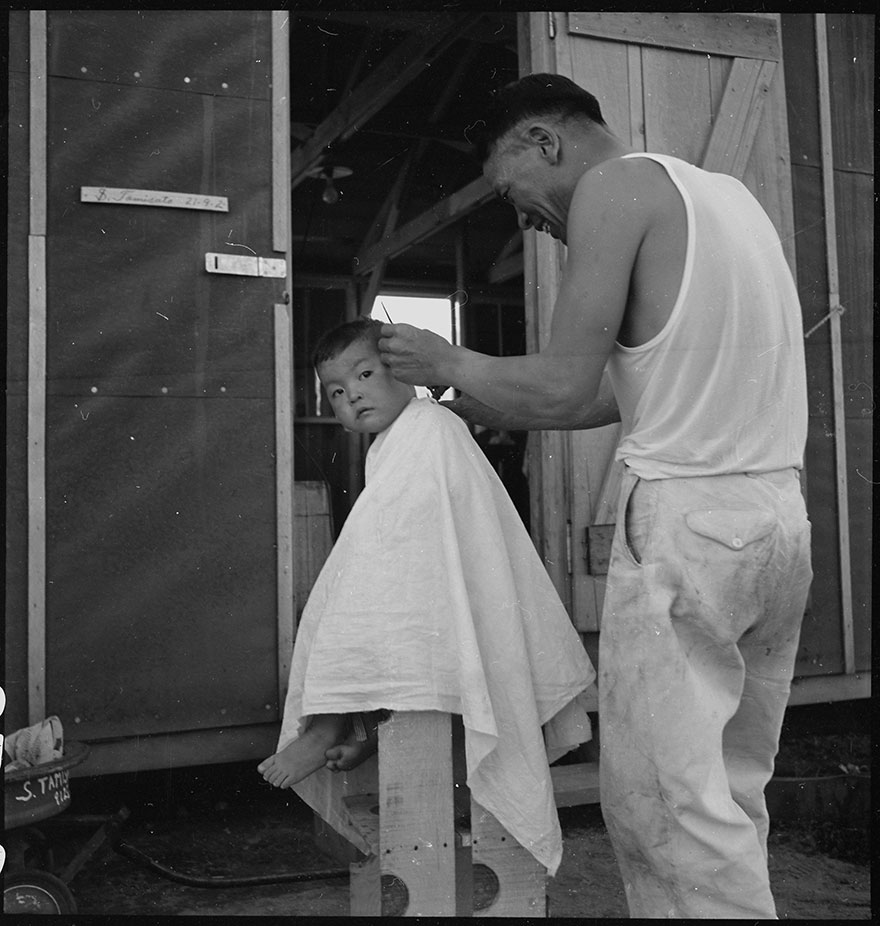
Manzanar Relocation Center, Manzanar, California. Little evacuee of Japanese ancestry gets a haircut.
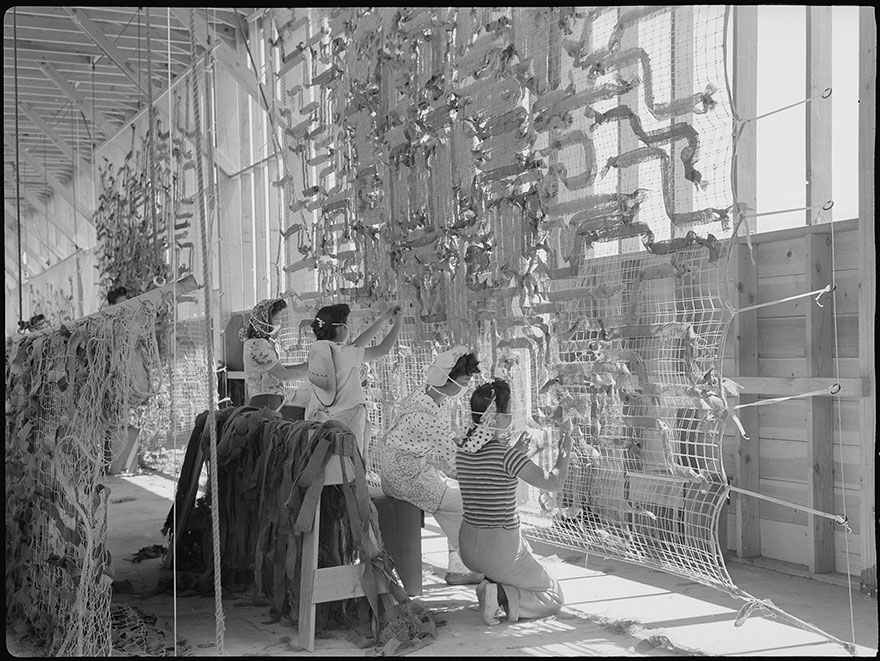
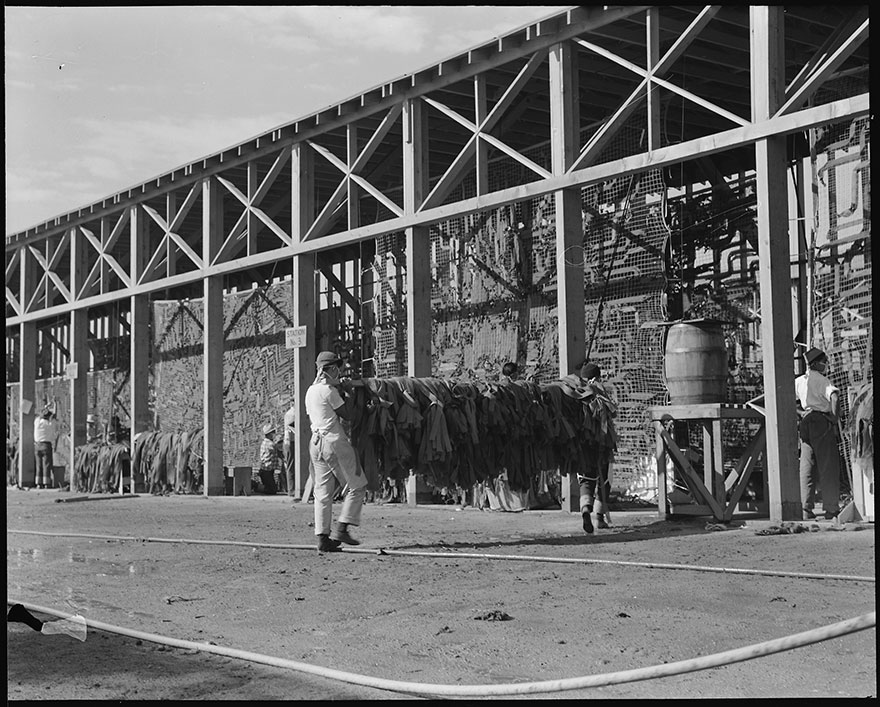
The full caption for this photograph reads: Manzanar Relocation Center, Manzanar, California. Making camouflage nets for the War Department. This is one of several War and Navy Department projects carried on by persons of Japanese ancestry in relocation centers.
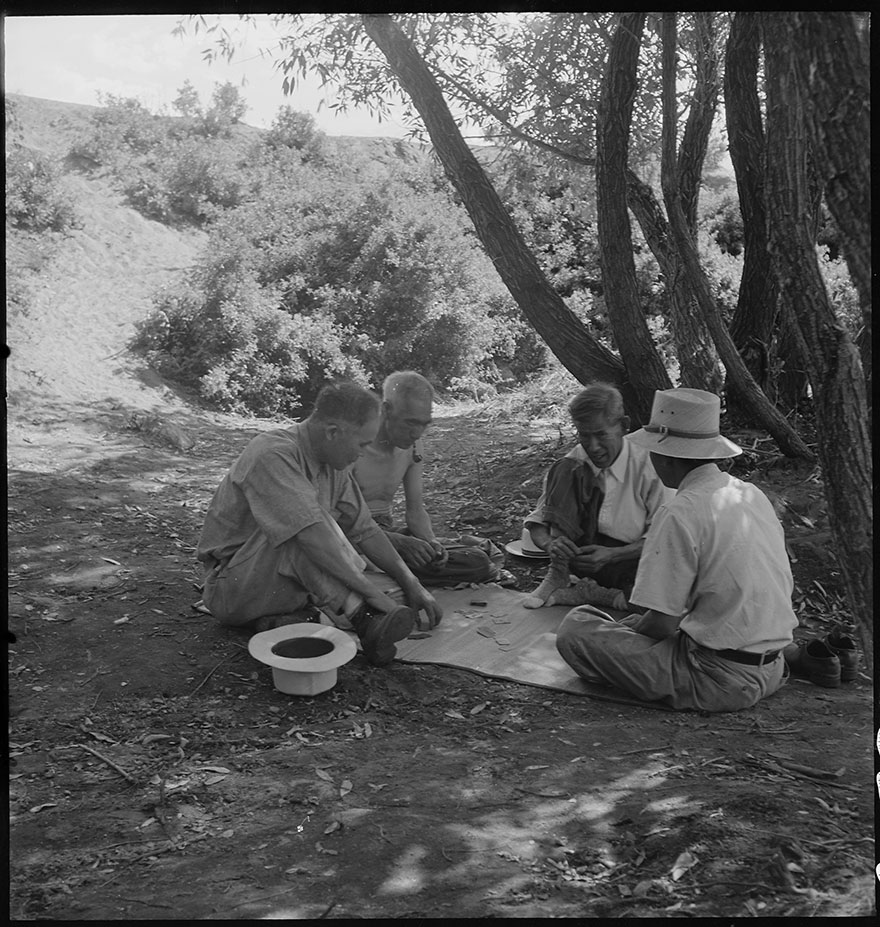
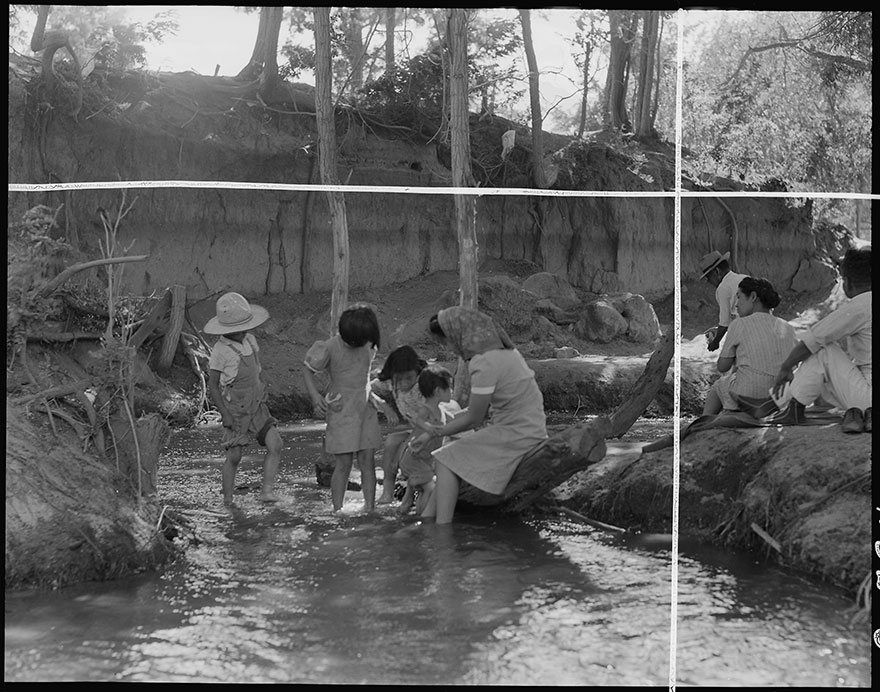
The full caption for this photograph reads: Manzanar Relocation Center, Manzanar, California. Evacuees enjoying the creek which flows along the outer border of this War Relocation Authority center.
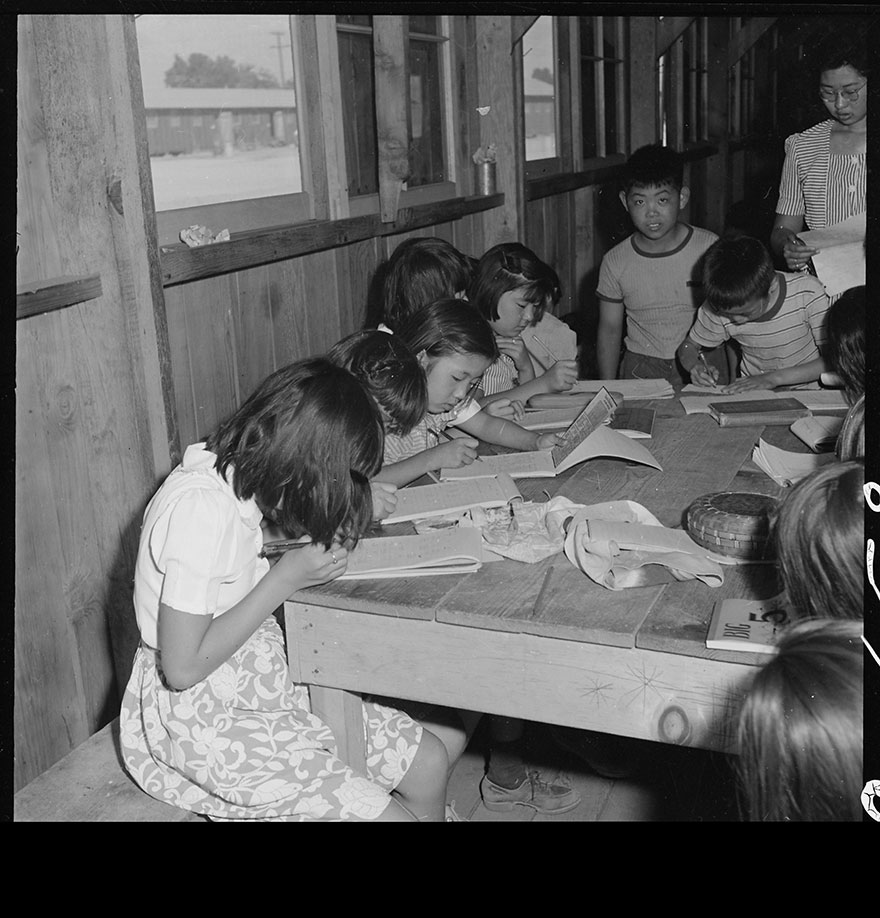
The full caption for this photograph reads: Manzanar Relocation Center, Manzanar, California. An elementary school with voluntary attendance has been established with volunteer teachers, most of whom are college graduates. These young evacuees are eager to learn and do not mind the lack of equipment.

Do you suppose there's a reason they're all boys in these schoolroom photos?
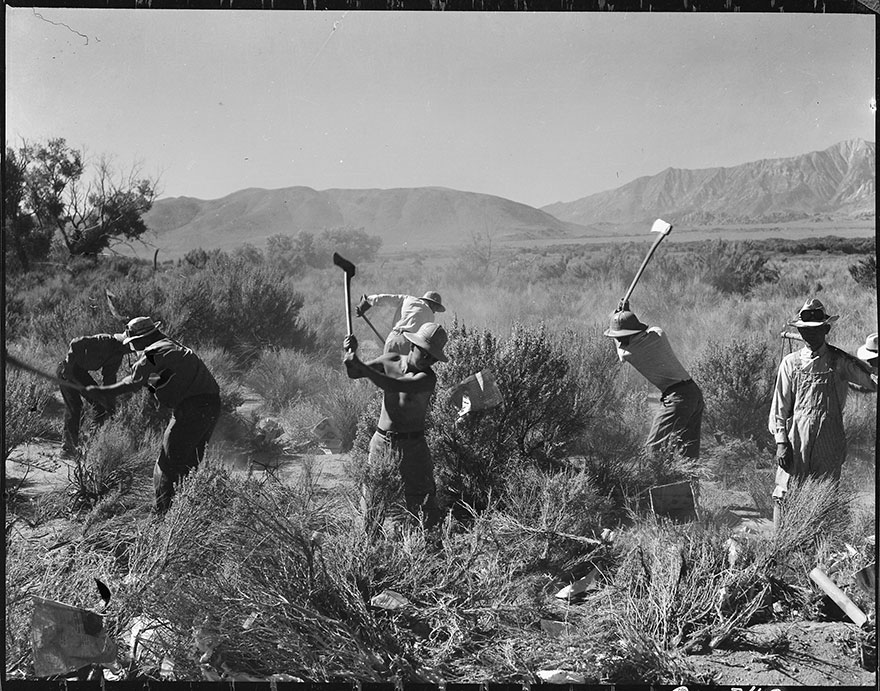
The full caption for this photograph reads: Manzanar Relocation Center, Manzanar, California. More land is being cleared of sage-brush at the southern end of the project at this War Relocation Authority center for evacuees of Japanese ancestry.
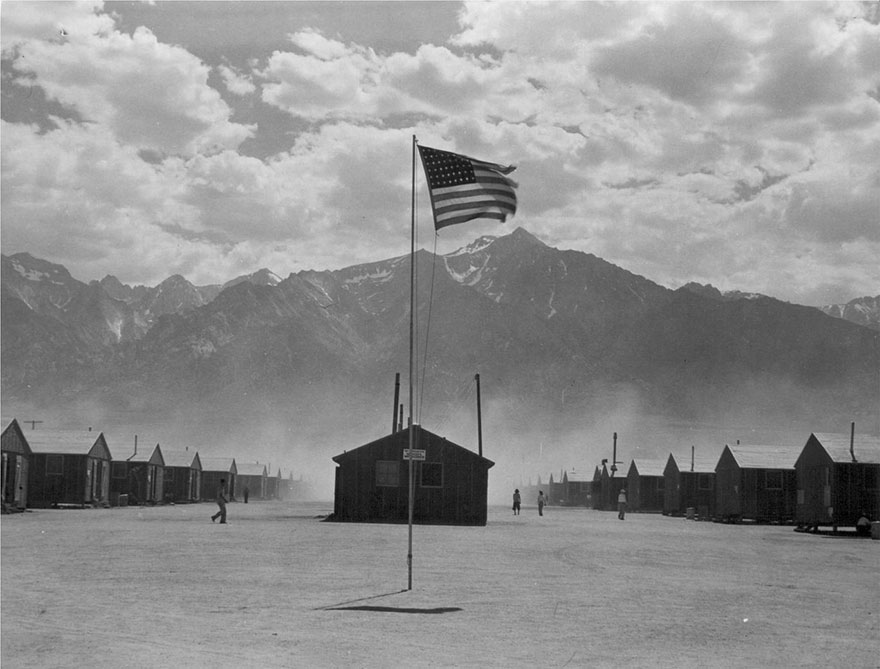
Scene of barrack homes at this War Relocation Authority Center for evacuees of Japanese ancestry. A hot windstorm brings dust from the surrounding desert.
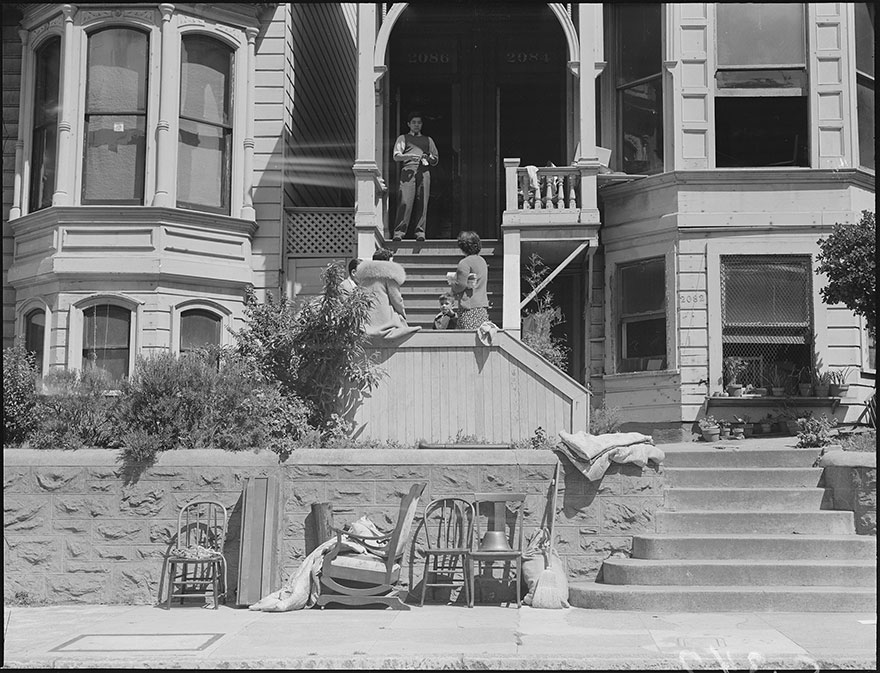
The full caption for this photograph reads: San Fransico, California. Street scene in Japanese quarter on day preceding evacuation to assembly center. Their household effects will be stored.

The Japanese-Americans who were able to get their possessions back often had to face horribly unfair obstacles. From website of Fugetsu-Do mochi (sweet rice cake) shop in Little Tokyo, Los Angeles, the oldest food establishment in L.A.: "Upon their return [from the internment camp], Roy and Kazuko [Kito] struggled to reestablish the family business. First, they had to retrieve their equipment, but the property owner demanded four years of back rent for storing it. When the Kitos couldn't pay, he kept their machinery. So, they slept at Koyasan Temple while Roy worked as a waiter making 20 cents an hour, but on Boy's Day, May 5, 1946, he re-opened Fugetsu-Do on East First Street..." http://www.fugetsu-do.com/history.htm
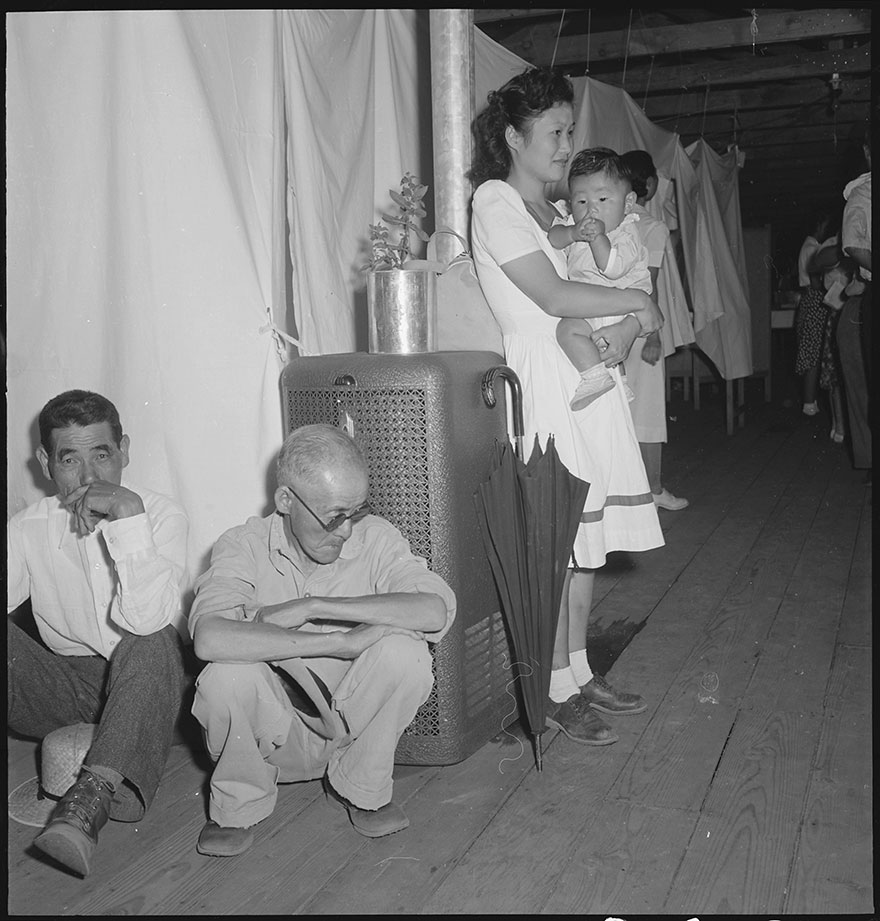
The full caption for this photograph reads: Manzanar Relocation Center, Manzanar, California. A typical interior scene in one of the barrack apartments at this center. Note the cloth partition which lends a small amount of privacy.

I'm shocked at the treatment of these people, and at how dignified and organised they were. War really does bring out the worst, and the best, in people!
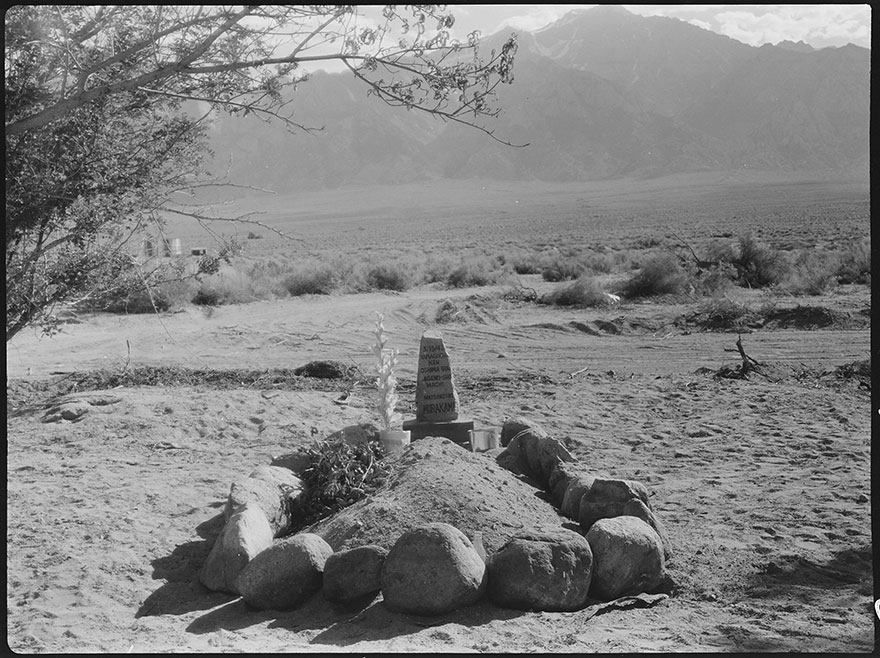
The full caption for this photograph reads: Manzanar Relocation Center, Manzanar, California. The first grave at the Manzanar Center's cemetery. It is that of Matsunosuke Murakami, 62, who died of heart disease on May 16. He had been ill ever since he arrived here with the first contingent and had been confined to the hospital since March 23.
RIP Matsunosuke Murakami may he lay forever in peace in the arms of the Almighty Father.
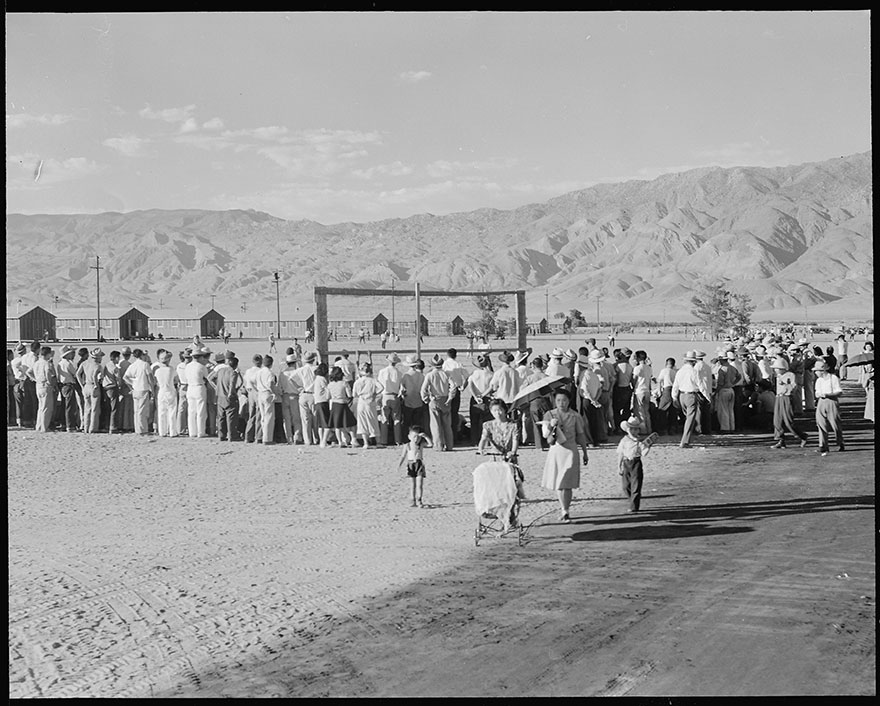
The full caption for this photograph reads: Manzanar Relocation Center, Manzanar, California. Evacuees watching a baseball game at this War Relocation Authority center. This is a very popular recreation with 80 teams having been formed throughout the Center. Most of the playing is done between the blocks of barracks in the firebreak space.
The full caption for this photograph reads: Manzanar Relocation Center, Manzanar, California. View of the Manzanar Relocation Center showing the buildings (right) where camouflage nets are made.
I know this is bad, but this is also strangely impressive. The organized manner is astounding. It is so efficient, and so effective. For a bad purpose, however. Brilliantly designed, tho.
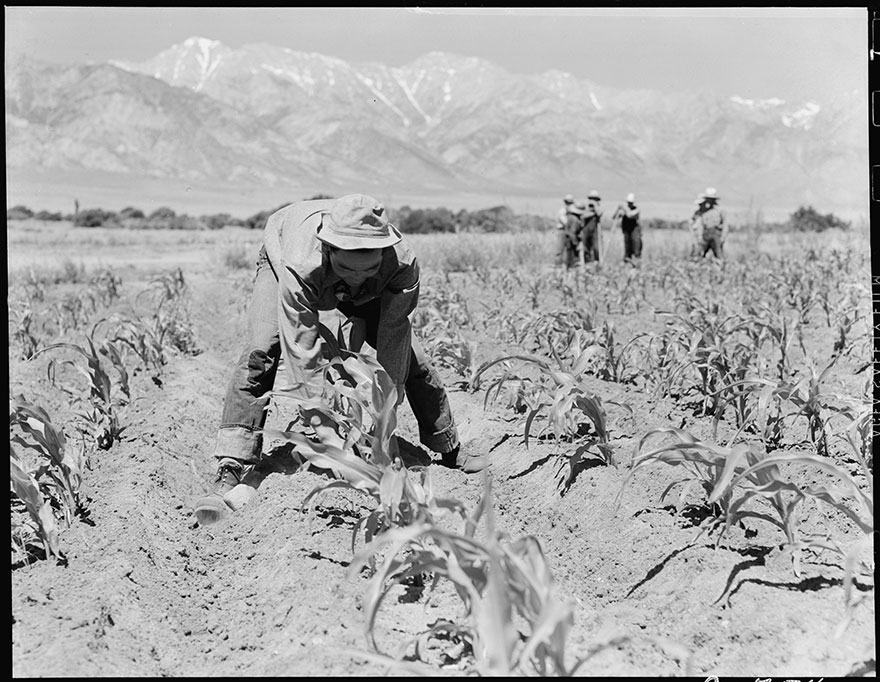
The full caption for this photograph reads: Manzanar Relocation Center, Manzanar, California. Johnny Fukazawa, evcauee of Japanese ancestry at this War Relocation Authority center, weeding corn in the farm project.
This is so horrifying. These people were paid, but not that much for the tedious work they do.
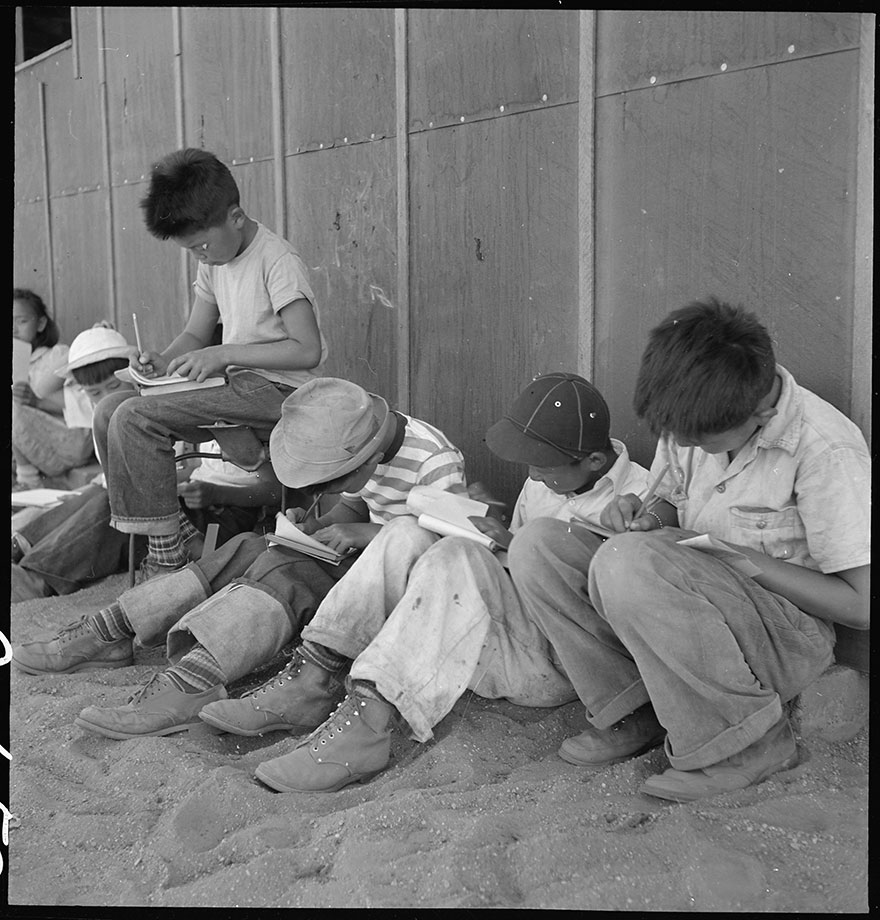
The full caption for this photograph reads: Manzanar Relocation Center, Manzanar, California. Young sixth-grade students studying their lessons in the shade of the barracks at this first voluntary elementary school.
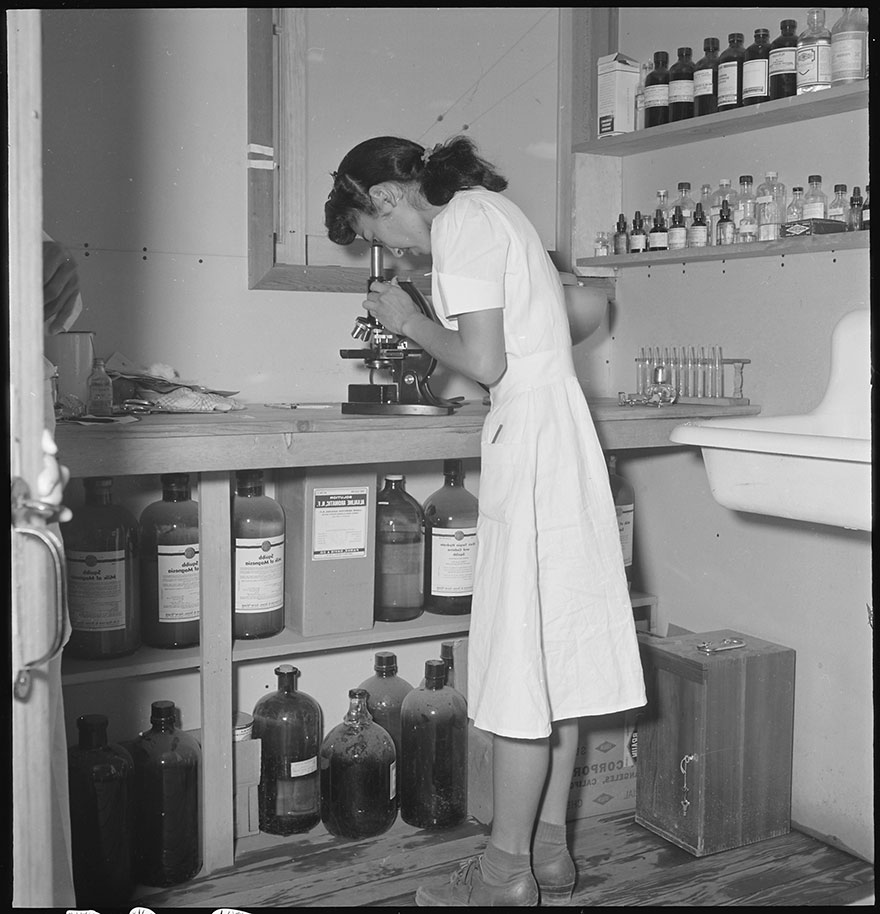
The full caption for this photograph reads: Manzanar Relocation Center, Manzanar, California. Mary Uyesato, trained laboratory assistant at work in the medical center at this War Relocation Authority Center for evacuees of Japanese ancestry.

oh my goodness, look how skinny she is, they probably didn't have decent food and were overworked
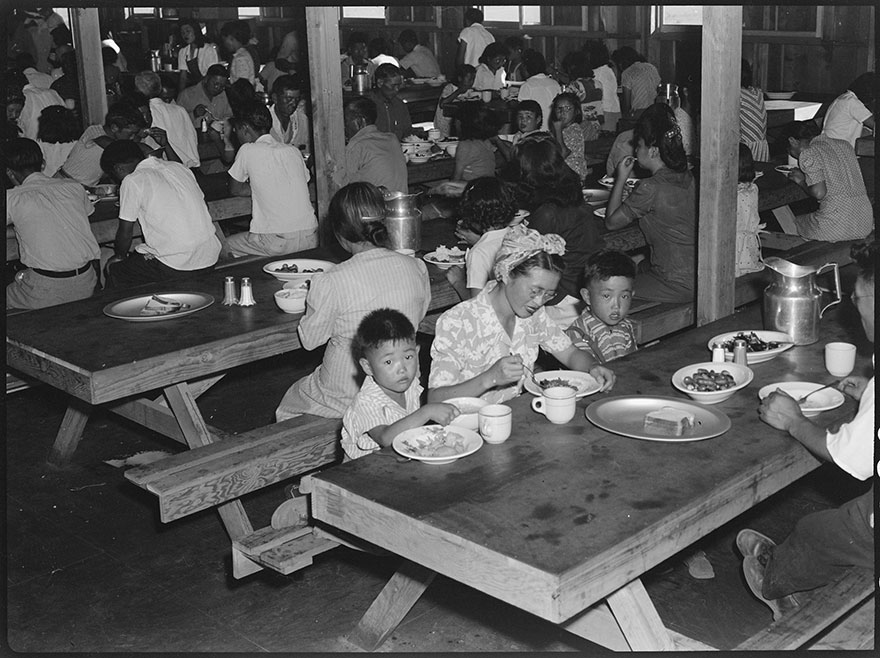
The full caption for this photograph reads: Manzanar Relocation Center, Manzanar, California. Mealtime in one of the messhalls at this War Relocation Authority center for evacuees of Japanese ancestry.
The full caption for this photograph reads: Manzanar Relocation Center, Manzanar, California. Evacuees enjoying games under the shade of trees near the creek which flows through the desert on the border of this War Relocation Authrority center.
The full caption for this photograph reads: Manzanar Relocation Center, Manzanar, California. The two youngest of the 65 evacuee orphans in the Childrens' Village at this War Relocation Authrority center for evacuees of Japanese ancestry.
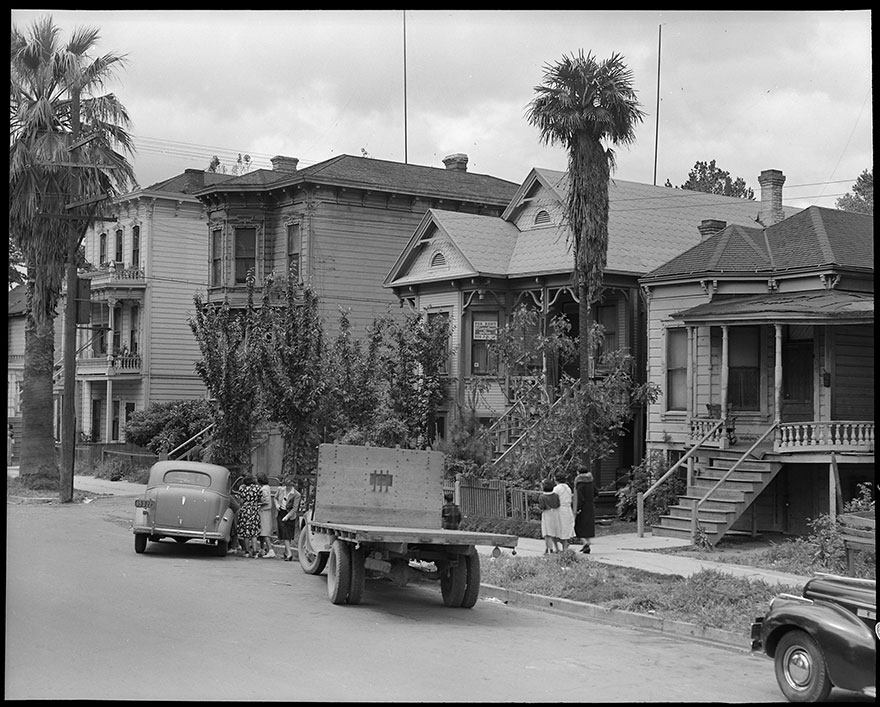
The full caption for this photograph reads: Sacramento, California. Typical homes of residents of Japanese ancestry. Evacuation to assembly centers is due in a few days and preparations are now under way.
The full caption for this photograph reads: Manzanar Relocation Center, Manzanar, California. Evacuees enjoying the creek which flows along the outer border of this War Relocation Authority center.
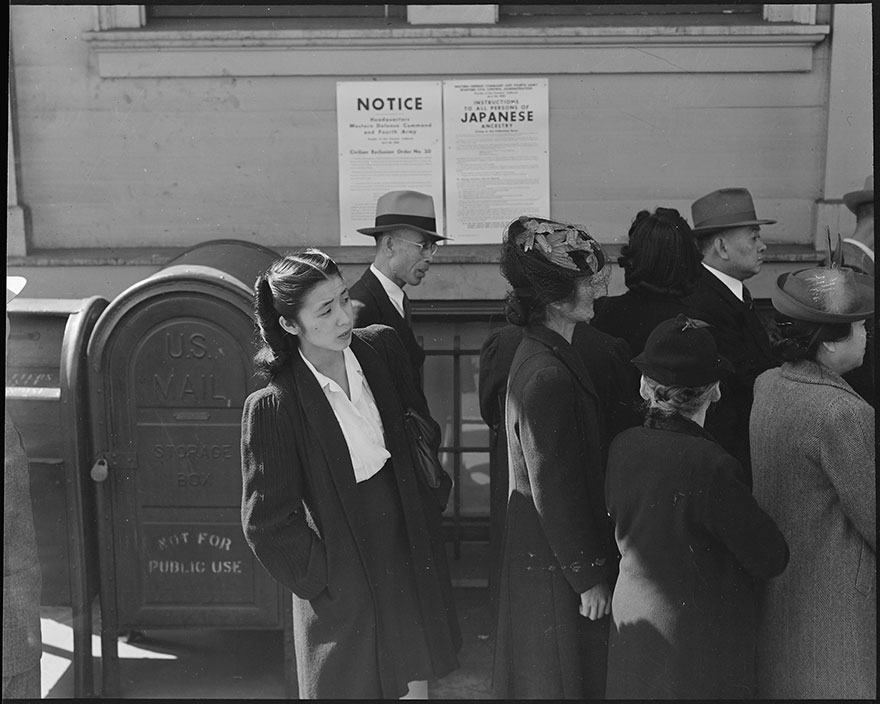
The full caption for this photograph reads: San Francisco, California. Residents of Japanese ancestry appear for registration prior to evacuation. Evacuees will be housed in War Relocation Authority centers for the duration.
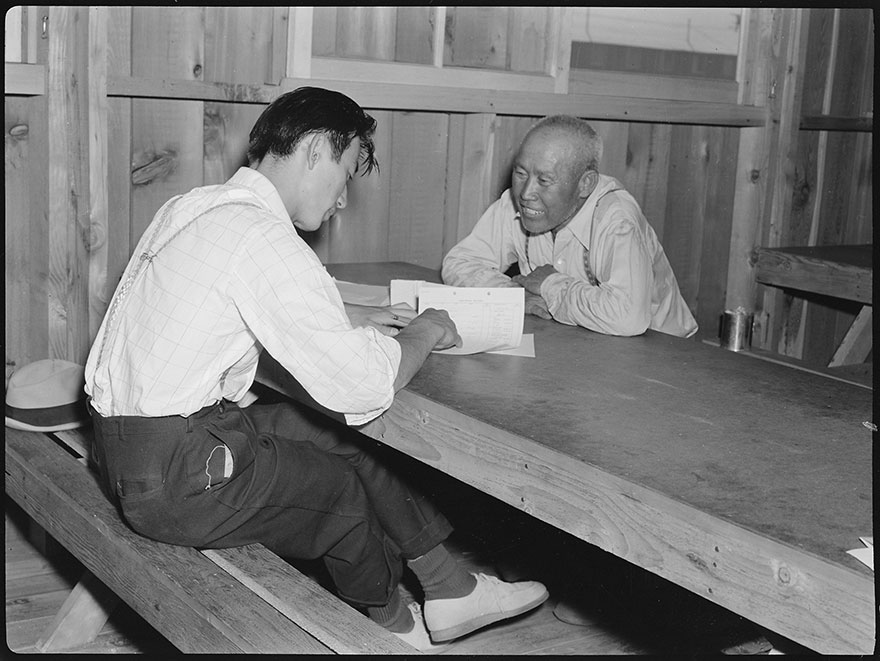
The full caption for this photograph reads: Manzanar Relocation Center, Manzanar, California. A complete record, by personal interview, is being made of every evacuee of Japanese ancestry at this War Relocation Authority center.
The full caption for this photograph reads: Manzanar Relocation Center, Manzanar, California. These young evacuees are attending the first elementary school at this War Relocation Authority center. There are six grades with volunteer teachers and voluntary attendance.

Here are girls, too. Which proves icorrect the theory of girls not being educated.
The full caption for this photograph reads: Manzanar Relocation Center, Manzanar, California. Making camouflage nets for the War Department. This is one of several War and Navy Department projects carried on by persons of Japanese ancestry in relocation centers.

The full caption for this photograph reads: Manzanar Relocation Center, Manzanar, California. An elementary school with voluntary attendance has been established with volunteer evacuee teachers, most of whom are college graduates. No school equipment is as yet obtainable and available tables and benches are used.
My father and his family were sent to Minidoka in Idaho from Seattle, WA. Ironically his older brother (14 years apart) actually was serving in the US Army at the time as an infantry man. My grandmother had photos that I believe are now in the Wing Luke Museum in Seattle, showing the before, during, and after. My father says he remembers that one morning, he woke up to the gates being wide open and the US soldiers that were guarding the camp, were gone. All those interred had to find their own way back to Washington and Oregon. It wasn't until 1988 that the US signed the Civil Liberties Act to compensate more than 100,000 people of Japanese descent who were incarcerated in internment camps during World War II. The legislation offered a formal apology and paid out $20,000 in compensation to each surviving victim. Sadly, my grandfather never got to see this.
Cannot stand how they use the term "evacuee" - but alas it's typical war propaganda.
Load More Replies...
The items that were “stored” were picked over and stolen or sold. The houses that these families had worked for years (or a couple of generations) to own were sold to Anglo families and the money taken by the state. ...///... There’s an excellent book written years ago by a Canadian author about his and his family’s experience in relocation camps. His name is David Suzuki.
I am not of this era, but I wish I could have done something for them. I would have a Japanese-American neighbor sign their property to me. I'd take care of it until they got back. That would be my solemn promise.
Load More Replies...
Ah yes. Let's call them "evacuation" and "relocation" to pretend this wasn't what it was, which was "deportation", followed by "internment"... The utter irony is this was done out of sheer racism and xenophobia, disguised as a factual military necessity, because the vast majority of these people considered themselves US citizens and would have volunteered to fight in the US army. Even if, let's say, you didn't trust them to fight against the Japanese, they could have just sent them to Europe instead...
Many WERE/ARE US citizens, and many of the Japanese-American Males even volunteered to serve in the US militaries during WWII. My uncle served the US Army while his parents and little brother were interred for 4 years of their lives, and he was sent to Panama.
Load More Replies... My father and his family were sent to Minidoka in Idaho from Seattle, WA. Ironically his older brother (14 years apart) actually was serving in the US Army at the time as an infantry man. My grandmother had photos that I believe are now in the Wing Luke Museum in Seattle, showing the before, during, and after. My father says he remembers that one morning, he woke up to the gates being wide open and the US soldiers that were guarding the camp, were gone. All those interred had to find their own way back to Washington and Oregon. It wasn't until 1988 that the US signed the Civil Liberties Act to compensate more than 100,000 people of Japanese descent who were incarcerated in internment camps during World War II. The legislation offered a formal apology and paid out $20,000 in compensation to each surviving victim. Sadly, my grandfather never got to see this.
Cannot stand how they use the term "evacuee" - but alas it's typical war propaganda.
Load More Replies... The items that were “stored” were picked over and stolen or sold. The houses that these families had worked for years (or a couple of generations) to own were sold to Anglo families and the money taken by the state. ...///... There’s an excellent book written years ago by a Canadian author about his and his family’s experience in relocation camps. His name is David Suzuki.
I am not of this era, but I wish I could have done something for them. I would have a Japanese-American neighbor sign their property to me. I'd take care of it until they got back. That would be my solemn promise.
Load More Replies... Ah yes. Let's call them "evacuation" and "relocation" to pretend this wasn't what it was, which was "deportation", followed by "internment"... The utter irony is this was done out of sheer racism and xenophobia, disguised as a factual military necessity, because the vast majority of these people considered themselves US citizens and would have volunteered to fight in the US army. Even if, let's say, you didn't trust them to fight against the Japanese, they could have just sent them to Europe instead...
Many WERE/ARE US citizens, and many of the Japanese-American Males even volunteered to serve in the US militaries during WWII. My uncle served the US Army while his parents and little brother were interred for 4 years of their lives, and he was sent to Panama.
Load More Replies...











 No fees, cancel anytime