Get Premium
Dark mode theme is available exclusively for premium users. Learn more about the benefits of subscribing.
No fees, cancel anytime.

 Dark Mode Ad-Free Browsing Unlimited Content
 Ad-Free Browsing Unlimited Content Dark Mode
Join 1.2 million Panda readers who get the best art, memes, and fun stories every week!



While we basically inhabit our bodies every second of our lives, like a house with a hidden room or a safe behind the drywall, it still manages to surprise us from time to time. For example, bones can bleed! This is definitely one of those cases where it might be best to learn from others and not from personal experience.
Someone asked medical professionals to detail their favorite and most interesting quirks about the human body and they delivered. Some might get a bit graphic, be warned. So get comfortable as you scroll through, upvote your favorites and be sure to share your own thoughts and examples in the comments section down below.
This post may include affiliate links.

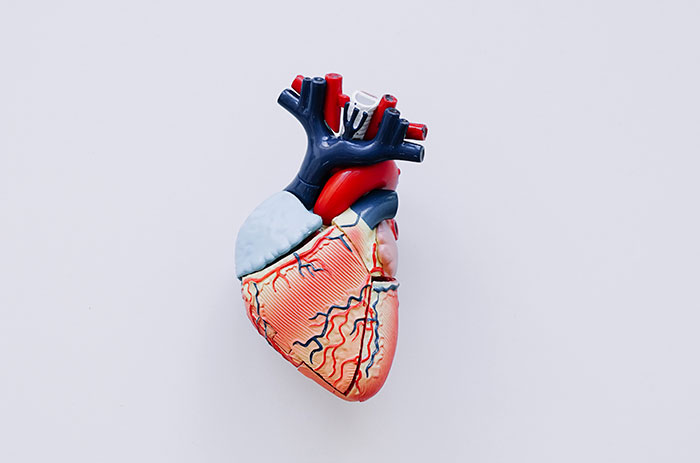 I'm not a medical person but my mum was a midwife before she retired. She told me about the septum primum and has always referred to it as the most amazing thing about human development that continues to blow her mind.
In short, it's a valve in the heart that develops when in the womb. It allows blood to bypass the lungs, which are too immature and the mother's blood supplies oxygen needs.
What's remarkable is that when the baby is delivered and draws its first breath, the change in pressure in the circulatory system causes the valve to shut, cutting off the blood flow from the mother and allowing oxygenated blood from the lungs to pass through the heart.
I'm not in medicine so may have explained that a little wrong - perhaps someone can correct me.
 It takes about 20% more anesthetics to knock out a Redhead then the normal human.
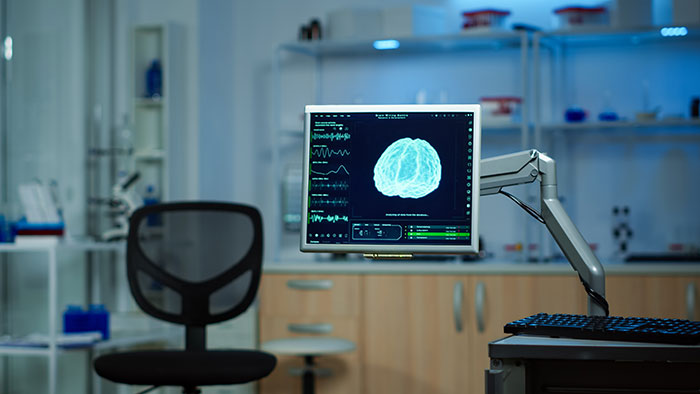 Doctors can scoop out part (even half!) of your brain, and it will simply fill with fluid and the rest of the brain will do its best to compensate.
Source: Have epilepsy, went to seminar on treatment using brain surgery.
Some people look and act like a proof you can yeet 90% of brain and still remain coherent enough to aim for influential positions

Can confirm, had doctor's scoop out roughly golf ball sized portion of brain because of cancerous tumor, I'm mostly ok but it did take months for the fluid to fill up enough that my skull stopped making creaking sounds when the weather pressure changed.


 You constantly have cancerous cells in your body all the time. The only time it's an issue is when your body can't get rid of the cells.

Then they build up in your b**b and the doctor says we have to take this b**b then you’re sad because you wanted to keep it.
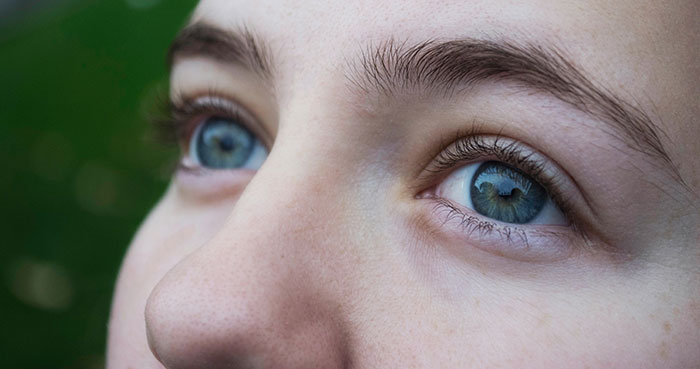 You can't move your eyes smoothly UNLESS you are tracking an object. If you scan a room your eyes actually move in a jerking motion. But scan the room focusing on a moving finger and your eyes move perfectly smoothly.

Better yet, your brain disconnects your eyes during the jerking so you don't see blurry, and fills in the gaps with imaginary sight. You *think* your eyes are moving smoothly, much of what you see is actually created by your brain and your eyes are darting around to look at specific things to fill in the details. https://www.youtube.com/watch?v=wo_e0EvEZn8
 The female brain releases chemicals after childbirth that have been shown to dull the memory of the pain.
It's believed that this is an evolutionary response to increased vaginal sensitivity, and without it women would be unwilling to have more than one child as the pain is so great, resulting in the eventual extinction of the human race.

Still doesn't make it okay for your partner to turn to you afterwards and say, 'Well that wasn't so bad, was it?' And this was after stitches as well.
 Bones can bleed quite a lot. Femur fractures can cause up to a liter of blood loss by themselves!
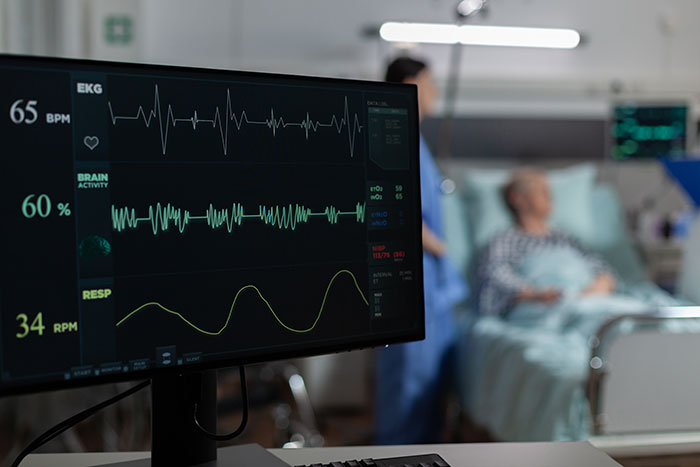 Your heart has several back up systems to keep beating on its own. You have a node that operates in a normal heart that keeps its beat. If that fails to fire, another part takes over. If that fails, then another, and another and another. Until the actual heart cells of the ventricles are beating to keep you alive. The hearts pacemaker cells are amazing.
That's pretty good because the heart is one part that *cannot* fail. Ruptured tendon? Broken bones? Scars? Stroke? All of these are recoverable (to various degrees). Your heart? It's like lifting a dumbbell, forever and always, and it cannot cramp or rest or cease...or else.
 I know a couple of fun ones. When we undergo cellular respiration the waste product is CO2. When we lose weight the extra weight is being breathed out. Plants take that CO2 and can turn it into wood.
Sometimes when people suffer facial injuries the nerves can get crossed when they try to repair themselves. This can result in crying whenever somebody smells something delicious instead of salivating.
The human heart pumps the equivalent volume of the entire blood supply in 60-90 seconds.
Many people with severe coronary disease develop a transverse crease (Frank's sign). This can appear before they even have notable symptoms.

Frank’s sign is a crease in the earlobe. I wish the information was a little better in these.
 After you eat a large meal, the acid produced in your stomach in effect makes your blood slightly basic. This makes your oxygen bond harder to your red blood cells so less oxygen gets released into your tissues. The effect- tiredness after you eat.
Edit: I should add, now that I'm going back to this, that your blood is always slightly basic at a pH of 7.4. What I meant was that after you eat, your blood becomes more basic than 7.4 after the alkaline tide that eating causes.
 The Elderly can experience memory loss from having constipation. They can't remember because they can't poop!
 The pterion, commonly called "God's little joke": about halfway between your eye and the top of your year is the thinnest and weakest part of the skull. It's the place where several skull bones meet. Right behind it (interior), there's a super important artery. If it fractures and the artery is perforated, the person can die pretty fast. That's why whenever someone receives a blow to this section, they need immediate attention.
 Your body uses weight, nerves, and eyes to determine your spatial orientation. If you suddenly cannot see, typically you're fine because your brain can sense that you've got two feet on the ground, thus it can use the weight on two feet to determine the best way to keep you upright. (and why you become disoriented in a tunnel with spinning lights)
If; however, you lift one leg with your eyes closed, then your body needs to find out a way to know where you're at. So...you'll start feeling the nerves in the ankle that is touching the ground begin to fire in a sort of pattern around your ankle. your body is using a patterned out of balance means to determine where balance is.
also, nothing is real time. there are fractions of a second between when you touch something and when your brain says you've touched it. therefore, even as you type, your fingers are actually touching the keys before your brain is registering it. you're brain is typing in the past but anticipating for the future. Also, doing things that require minutely fine timing (like releasing a baseball) become even more complex because your hand must release the ball at a very precise time to get it to its target. Your brain has to anticipate this tiny amount of lag because you're fingers don't react the instant the brain says let go.

Mine doesn't work. If I close my eyes, I lose my balance. I have to keep one elbow touching the wall when washing my face and hair in the shower.
 Our system of producing energy involves using oxygen in our cells to essentially break down the glucose we eat into water, carbon dioxide, and ATP (this is why we inhale oxygen in and exhale carbon dioxide out). The ATP is essentially the final result, which is the body's energy currency.
Babies, however, have a certain type of fat called brown fat. In this fat, this process is purposefully not efficient, and a lot of energy produced is given off as heat instead of making ATP.
This is super important, because babies have a large surface area : body ratio, so they give off a lot of heat to the environment. Brown fat helps balance this problem and keeps them warm.
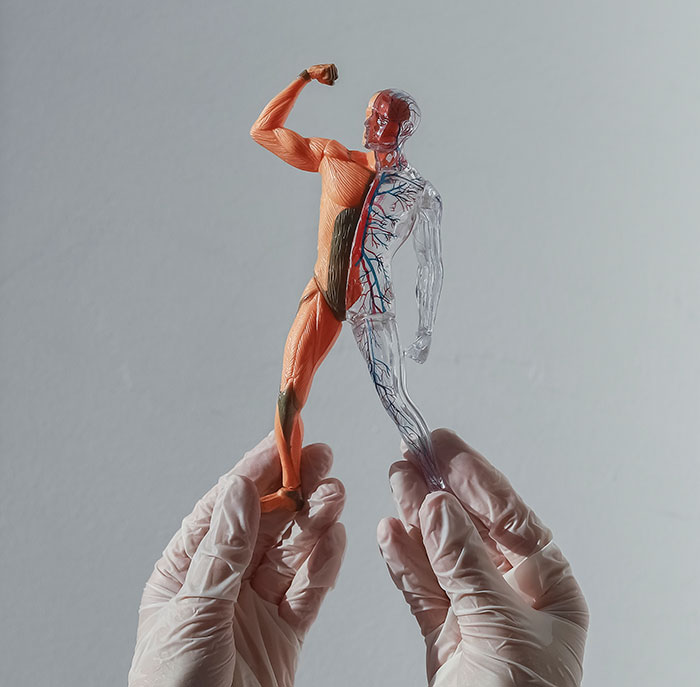 I think something a lot of people don't realise is simply the amount of variation in anatomy between us all. There are lots of examples; for instance, how many of you have the palmaris longus muscle?
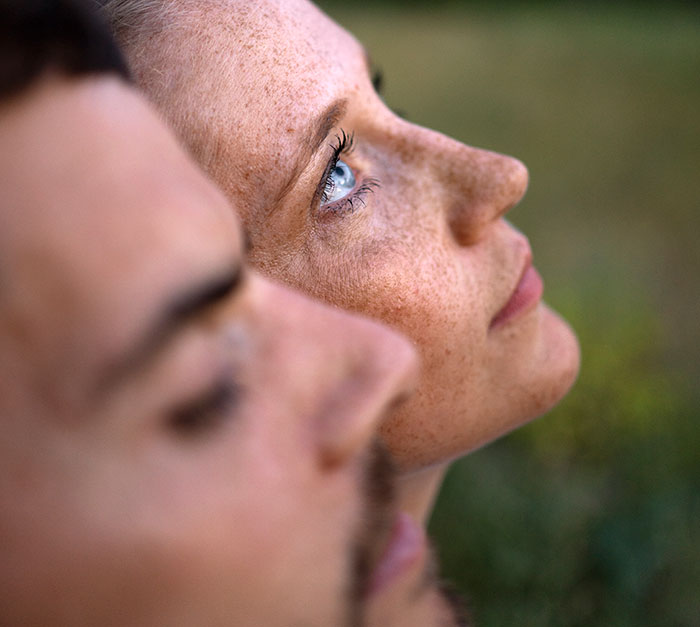 The development of your visual pathway in your brain requires stimulation from your vision.
Thus, if one of your eyes doesn't get stimulated, the brain will eventually ignore the signal from that eye you will be blind, even though the eye can appear perfectly normal. This is reversible up until the age of around 5, and eventually becomes permanent if not treated.
This is called ambylopia and can occur from being cross eyed at birth, being born with a cataract, not being able to see up close with one eye, and many other reasons.
 Oh god there's so many.
Proprioception: your brain knows where all your various body parts are without you being able to see them. Close your eyes and pinch your eyelash, and you'll see just how precise it is - your brain knows exactly where your hand is, and while you might have to try to find your eyelash, you will almost never actually touch your eyelid, despite not being able to see where your hand is.
Hearing and timing: Your brain picks up on exact locations of sounds based on the time it takes to reach one ear before the other, and the volume difference between the two. Throw something behind you, close your eyes, listen for the sound, and turn towards it without opening your eyes. Then check how close your were to looking directly at the location of the object. Usually, you will be extremely accurate, although practice can improve the accuracy.
Your eyes: You were born with blue eyes, and exposure to ultraviolet radiation from the sun turned them to whatever colour they are now (or didn't, depending on your genetics: blue-eyed people are technically part-albino mutants, with a certain protein "turned off" in their eyes, which stops melanin production, and forces your eyes to stay albino-blue). They use up about 90% of the average person's daily sensory input, and the muscles in them flex and relax so constantly that it would be the leg muscle equivalent of walking about 50 miles a day.
The most interesting, I think, however, is your skin. The interesting part doesn't come from the skin itself, though, it's how dangerous life would be without it. You see, your skin is made of several layers, the top few layers (epidermis) giving it the colour that it needs for optimal survival. The basal layer of the epidermis is technically the only "living" layer (receiving oxygen), producing cells that are basically just nuclei and sacs of melanin, the size and distribution of which give your skin colour. These cells rapidly decompose until the only thing left is a sac of melanin. Here's the cool part, though: your skin is always, always, ALWAYS adjusting the amount and distribution of melanin. Were it not doing that, you would begin to suffer from UV radiation poisoning almost immediately (resulting in widespread burns across the body and general nausea, dizziness, and the other symptoms associated with sun poisoning). Yet, if we had too MUCH melanin, we would not get enough sunlight (Vitamin D) and would become very sick as well. Therefore, the closer you are to the equator, or the more you are out in sunlight, the more melanin you have. But as you travel away from the equator or stay inside, your body needs to gather as much sunlight as possible to keep up vitamin D levels, so it reduces the melanin in your skin.
Sorry for the wall of text.
 Pain gating is a super neat concept. Its amazing how your body prioritizes what pain is more urgent to notice.

I have a weird ability to modify pain if I concentrate on it, especially in my head. If I have a headache, I can "think" it away, but only if I keep thinking about banishing it. Once I'm distracted, the pain returns. Very odd.
 The coolest thing in medschool I learnt was about Eagle Syndrome.
So you have these two pointy, bony spikes behind your jaw called your styloid processes.They are there as an anchor point for many ligaments including some from your tongue.
In some people the styloid processes are too long and it begins to compress on your carotid arteries leading up from your neck to your head. In most people this just results in neck pain and headaches, but in a minority these little stiletto knives can end up stabbing you in your carotids when turning your head, leading to you bleeding out and eventually dying.
I always seem to recall this fact when I have to answer a phone and pin it against my shoulder when I'm working. Spooky.
 When your joint, for instance your knee joint, becomes sprained, it fills with fluid, called a joint effusion. That's your body's natural response, and it's like a natural splint, because you lose range of motion.
 The cremasteric reflex.
(wiki link)
The first time I heard about this reflex in med school I immediately thought: I must test this out on a male friend. So I did and much to my delight the reflex does work (tested it many times). The next day in class the professor said: "be honest how many of you went and tested the cremasteric reflex after class yesterday". Turns out pretty much every one had.
I will not be testing this out on any of my male friends. (I am a woman.)
 If you split the corpus callosum, the white matter tracts connecting the brain's left and right hemispheres, the left hand (controlled by the right brain) will develop Alien Hand Syndrome where it works with a mind of its own and does things your conscious mind doesn't want. Also Split-Brain patients will be able to name words they see with their right eye, but only draw words that they see with their left eye! All because the linguistically focused left hemisphere can co longer communicate with the nonverbal right hemisphere. The brain is the s**t yo.

This is oversimplified. Both eyes see "both" visual fields. And Alien Hand Syndrome *may* develop.
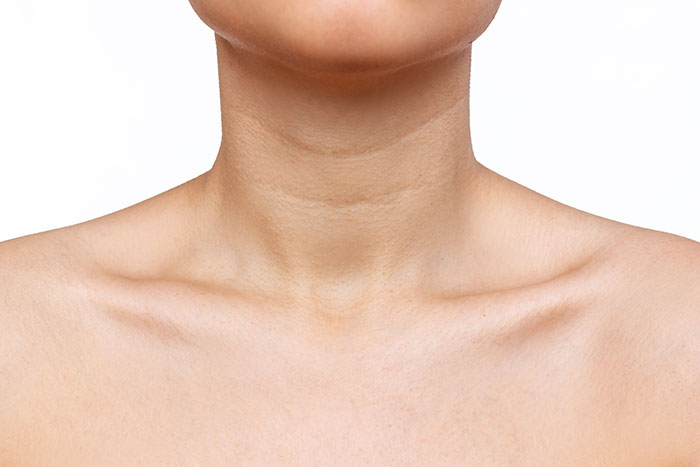 Fun Fact: the Hyoid bone is the ONLY bone that isn't connected to ANY other bone.
Recent Wordle word! I knew it! Thanks Ms. Rose, my awesome advanced biology teacher in high school!
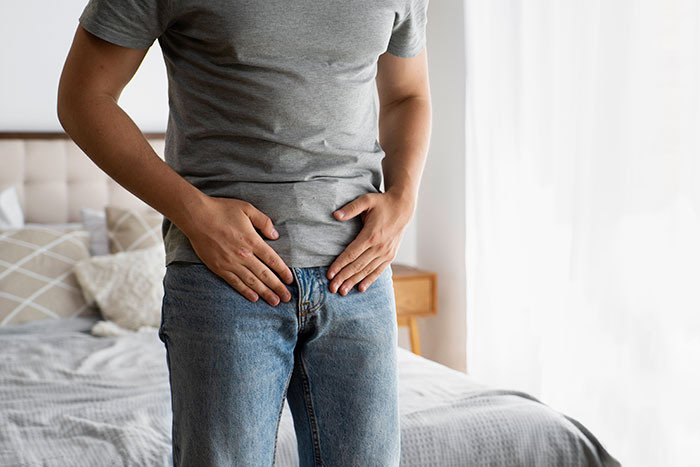 The testicles have THREE SEPARATE MUSCLES JUST to keep them at the right temperature.
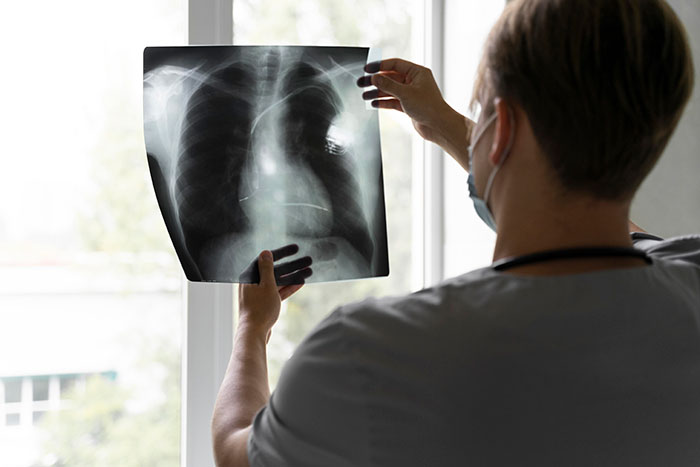 The alveoli inside our lungs (little tiny balls inside our lungs,needed for oxygen to enter the blood stream) in total has the total surface area of a tennis court!
 This one surprised me but may be obvious to some:
There are thin tubes that connect the corner of your eye to your nose. This drains tears into your nose. If you cry, the amount of fluid going into your nose increases, which is why your nose runs when you cry.
And if you get dry eye you can get what are called punctal plugs to keep your natural tears from draining thus reducing the severity. There are ones that dissolve quickly and others that take months.
 Similar to the tissue found in the p***s, there is erectile tissue in your nose whose vascularity changes every 30 minutes or so to prevent insensible water loss. That's why you may often feel that one side of your nose always seems to be stuffed.
 Walking is a reflex (if I remember correctly its actually two paired reflexes). So essentially, babies are born with the ability to walk, they just need to build up strength to do so. If you support a baby and put their feet on a treadmill, they'll walk the same way an adult would.
Also if you lift a small dog up and blow on its face it will "swim," paddling its feet. I know this through research.
If your blood pressure gets too high, a lot of people will develop severe epistaxis - nose bleed.
There are blood vessels in your sinuses that are more delicate than the blood vessels in your brain and can act as an emergency release valve.
I have had in my entire life high blood pressure, like 150-160/90-100 high. Never had spontan nose-bleedings, just from being your average kid, hurting myself by accident
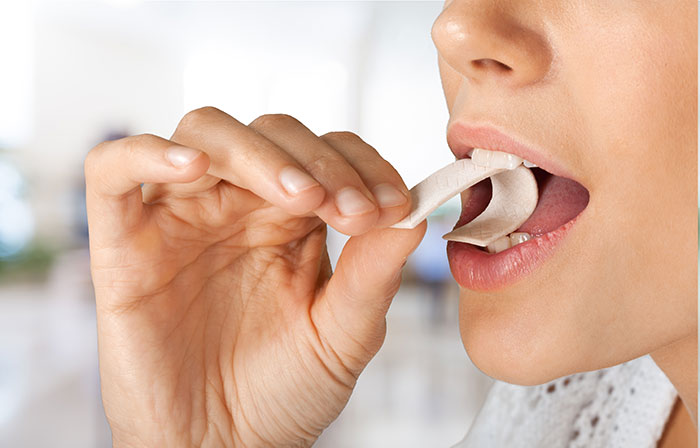 The muscle in your temple actually assists in chewing! Feel your temple next time you chew something. You'll never unfeel it again.
The navicular fossa of the male urethra is a small cavity with an oval cross-section. Slightly wider in diameter than the urethra itself, it sits just short of the tip of the p***s.
It is **oriented horizontally.**
The external urethral meatus, i.e. the hole where everything comes out is **oriented vertically**.
The perpendicular alignment of these two structures imparts spin upon fluid exiting the p***s, similar to the way rifling works in gun barrels. Thus, urine (and I suppose ejaculate as well) exits the p***s with greater accuracy and achieves greater distance.
Forget the human eye. If there was ever anything that might make me suspect an intelligent if slightly cheeky designer this is it.
 In the most extreme cases of constipation, a person's colon can become obstructed by a hard, compact mass of stool (s**t), and the large and small intestines can become so backed up with s**t that they it will start coming back up and they can vomit s**t.
If the hard, compacted mass of fecal matter gets large enough and goes untreated for long enough, it can rupture the wall of the colon, allowing s**t and bacteria into the bloodstream (sepsis.).
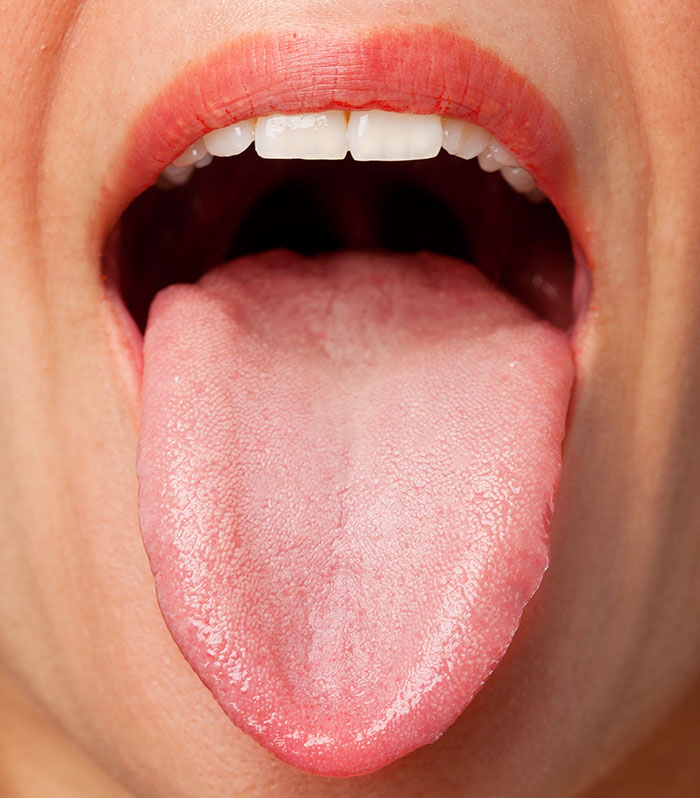 Tongue is a three dimensional muscle. It has muscle fibers in a dimensional plane. No other muscle is like this.
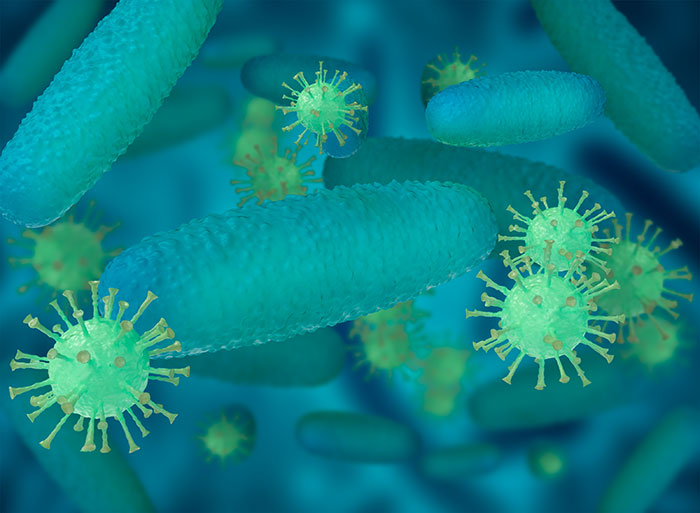 For every cell in your body, you harbor 10 times the number of bacterial cells.
In many ways, our bacteria dictates our life. It has significant influence on our thinking and mental health. It is a MAJOR component of our immune system. Even much of the obesity epidemic is probably tied to poor bacterial colonization. More than half of what you excrete is bacteria.
One of the really transformative therapies of the next 10 years will be fecal transplant.
We, as humans, are symbiotic in many ways. I welcome our bacterial overlords!
 The human body has phagocytes that can engulf certain invaders via phagocytosis.
It's like we have millions of mini Pac-Men. :D.
 It's difficult to explain but the co-evolution of the immune system and various infections I think is fascinating bordering on funny.
Ahh invaders! Okay have some cells to eat them. There's too many! Well have multiple smaller eaty cells. Now they're inside healthy cells! Okay well lets have some cells that tell those cells to turn off and add in a few to make the eaty ones work better. Now they're spreading everywhere! Right, fine, more cells but these ones spit out proteins to block the spread, alright?!
Gets even more fun in the molecular basis of it. Stuff with MHC is awesome.
Virus: "haha I infected you!" Host cell: "yeah well I'm telling" virus: "not if I stop you telling" host cell: "yeah well if I don't say anything my friends will know something's wrong" virus: "not if I trick them into thinking it's all fine."
It's a wonderful one-up-manship.
Add into that the number of dormant viruses in your body that come into play if any part of your digestive system gets out of whack in order to try to calm things down. Your body selectively weaponises bacteriophages against itself to keep your gut healthy. 🤯
If you change the origin or insertion of a muscle in order to change its action, you have to think the former action in order to create the new action.
Scrubbed in on an orthopedic surgery where the patient had lost the ability to dorsiflex her foot (lift toe end of foot up). so what we did was take the muscle that was in charge of eversion ( tilting foot outwards) and routed it differently on the front of the leg, and screwed it into the medial cuneiform (bone on top of foot). For the first few months the patient had to think eversion in order for her foot to dorsiflex. I thought it was pretty neat.
That's really cool, yeah the brain doesn't know you moved that muscle so the orders to activate it would be the same.
As a gynecologist, of course I'll contribute something about women's health:
There is no bony support of the pelvic floor. The entirety of the pelvic organ structure is held up by muscular and ligamentous attachments. This is by design to permit childbirth. Most women return to a normal pelvic floor architecture without any special exercising or effort. Some, however, do not and the persistent weakness of these attachments causes some women to develop prolapse of the pelvic viscera.
Google "Complete Procidentia." (NSFW/L!!!)
TL;DR: Kegel exercises.
Smells have a very strong association with memories.
The olfactory bulb is in close relation to the amygdala and hippocampus which function in emotion and memory. This is why a certain smell may bring back vivid memories of things long since forgotten.
When I eat graham crackers I see a particular building. I once described it to my mom and she said it was the nursery school I was at for a while.
Putting the excretions/secretions of maggots onto a wound will help disinfect and heal it. Putting the same stuff on a cancerous tumour, however, will help it grow.
Bruises and poop are brown for the same reason. (bilirubin).
My bruises are purple and yellow and sometimes green, but I've never bruised brown.
 One thing I found interesting is that we are essentially donuts. From the mouth all the way to the a**s is considered "outside" the body. That's how our gut can be host to tons of bacteria without them k**ling us.
By inventing automobiles capible of traveling faster and faster, we've basically created a new injury called Traumatic Aortic Rupture. Because of the shape the artery forms, it accounts for 18% of deaths in vehicle accidents.
 Hey there! Our bodies are amazing and depending on your personal beliefs, one can either say that we are fearfully and wonderfully made or Mother nature has really outdone herself and will continue to do so through natural selection. Some of my favorites:
1. Images we see are formed upside down on our retina. Our brains convert the images received to the normal upright positions which we see.
2. Acid base physiology. Our blood maintains a strict pH of 7.35-7.45 and has some precise mechanisms to maintain it. The Henderson- Hasselbach equation is the equation of life.
3. Neuronal plasticity. The brain is able to train different parts to adapt to new functions if needed. This poorly understood mechanism if well researched and understood will only push the borders of what we are able to do for patients.
4. The right side of your brain controls the left side of your body and vice versa.

#1 - the brain is so well adapted that if you wear glasses the turn your sight upside down, your brain will adjust and flip it back #3 neuronal plasticity is so effective that someone who has one hemisphere removed, the brain will adapt and restructure so the left/right dichotomy is restored
There's a lot of quirky facts about the human body that are weird and cool. Like one enzyme that's responsible for the production of heme being off can cause psychosis, seizures, IBS symptoms, necrosis of the gums, blisters when exposed to sunlight, and purple feces/urine.
The inner ear is the weirdest little thing. Inside your ear, there's these two sacs above the cochlea (which is the weird snail shell inside your head allowing you to hear) called otolithic organs because they literally contain rocks. You have rocks inside of your head that tell you how your head is positioned.
The sacs are lined with gel. In that gel, there are tiny hairs that are connected to nerves. On top of the gel, there's a crystal called an otolith. Now, when you tilt your head backwards, the crystal moves because gravity's pulled it backwards. The crystal moves the gel underneath it, and the gel in turn moves the hair cells. The hair cells tattle to the nerves, and the nerves send a message to your brain about it.
And here is an illustration of how that works.
When you are thirsty and have some water, your body actually wont be hydrated by that water for about 1-2 hours. Water absorption is performed in the large intestine and it takes about that long for the water to travel down there.
We have enough power in our jaws to bite off fingers but our brain wont let us bite off our own fingers.
 That within a span of a decade you replace all the cells in your entire body, meaning that approximately every decade you are not even the person you were before! It's absolutely amazing to think that every single cell in your "previous" body died and you are still the same person made up of completely different cells!
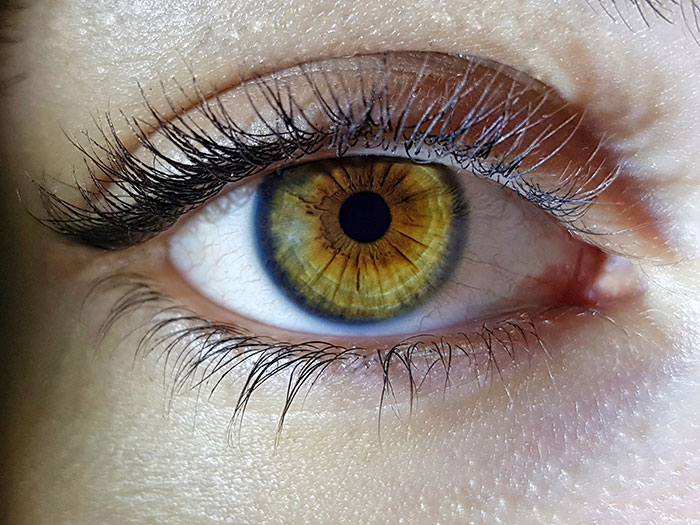 You have 2 types of light receptors in your eyes - cones, which let you see detail and color, and rods, which let you see at nighttime. Cones are mainly in the very center of your vision. To illustrate this, only one line of this paragraph is readable to you at a time. The outer lines are blurry because they are being picked up by rods.
Bonus fact - low light situations are picked up by your rods as well, which is why dark light situations are black and white (you need cones to see color, and they can't pick up low light).
Three. You have ganglion cells that are light sensitive. These are too few and too slow to be useful for vision, instead they regulate melatonin and your circadian rhythm. They respond mostly to blue light, which is why it's good to use the option to omit blues if you're staring at BP before going to bed. 😉
You can slow somebody's heart rate by pressing on their eyeballs. The individual response is fairly variable, but in some people it's pronounced enough that pressing on their eyeballs will actually stop their heart entirely!

Sure, if you push their eyeballs into their brainstem it will stop the heart pretty effective 🙄
There are no muscles in your fingers outside of erector muscles! Yaaaay weird boney tendony things! Yaaaay fingers!
This is baloney. "The muscles of the hand can be subdivided into two groups: the extrinsic and intrinsic muscle groups. The extrinsic muscle groups are the long flexors and extensors."
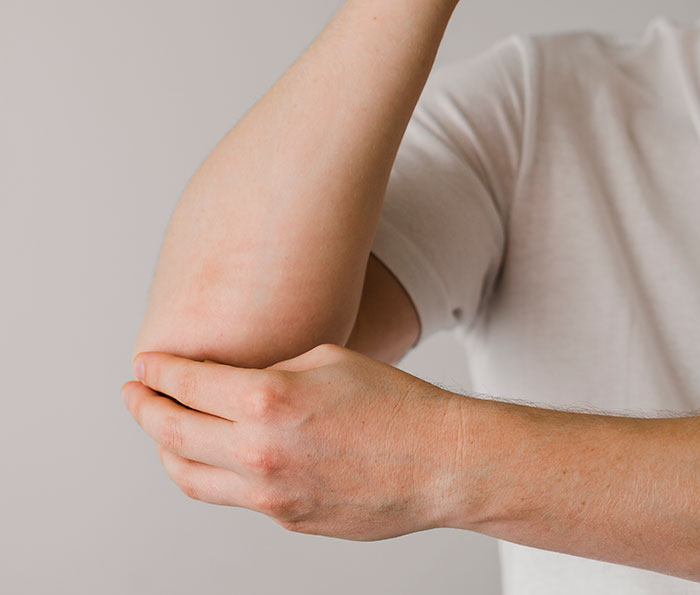 Pinch the skin of your elbows as hard as you can. You won't feel any pain.

Speaking of elbows, the reason you feel funky when you hit it is because the nerve that gets hit has basically no protection so it gets compressed against the humerus which causes tingling
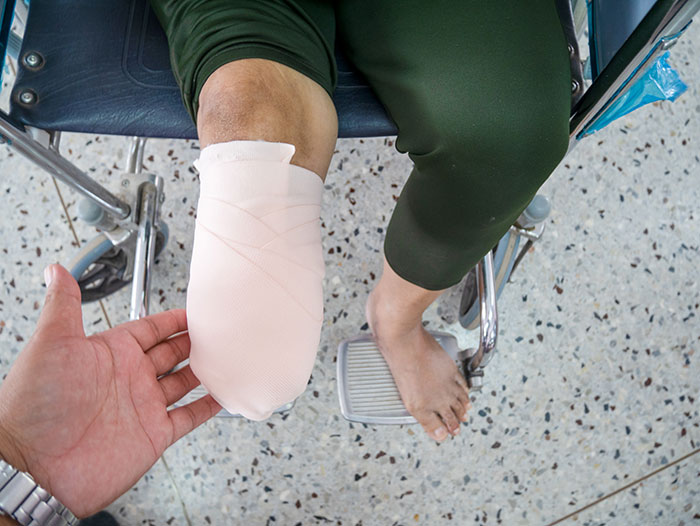 I'm not a medical person, but the concept of 'Phantom Limbs' is really interesting. Basically if you've had an amputation of some sort, the body experiences this phantom pain which feels as though the amputated part is still there and that you are still able to move it. I'm not entirely sure on this, but I heard before that this plays a huge role in artificial limbs too.
The recurrent laryngeal nerve, which controls the vocal cords, runs down the neck into the chest, loops under the aorta, and goes back up the neck to the larynx.
A fever is your body's response to try and k**l off invaders, albeit a later one. A serious fever means your body is literally hurting itself trying to fix itself.
 If you can smell something, there are particles of that particular thing in your airways.
So when you can smell poop, you've got poop in your nose.
Our aorta (the main vessel coming off the heart) is just smaller in width than the cardboard of a toilet paper roll.
For comparison, we can swim, arms extended, through the aorta of a blue whale.
I must have really wide toilet paper rolls. I thought the aorta was about 2cm.
Babies are BORN to interact with their parents. From the get go. They will search for faces and zero inn. Not a face on TV, not a portrait. A real live human face, and if a mom or dad is there with other adults, a brand new newborn will zero in on the parent.
Magical.
Survival.
And magical
none the less.
Stick up your right hand like you're giving a high 5. Take your right thumb, and pull it back (away from your palm), towards your body. Just pull, with its own power using the right hand, you don't need to grab it with your left or anything. Push your index finger away from you a little bit as well.
See that little divot created between the base of your thumb and your wrist? Anatomists can that 'the anatomic snuffbox'. Because that's what cowboys used to use to hold their tobacco snuff when out on the trail.
I have no experience but a long running interest in biology and anatomy. There's a strange connection between the v****a and mouth. If you put something rather pungent in your v****a (garlic as a natural yeast infection cure) you can lightly taste it in your mouth.
Probably more to do with the interconnection between taste and smell and something pungent affecting smell, leading to a sensation of taste. I've heard this one before, it's usually rubbing garlic on the feet.
One protein is generally responsible for all human cancers, whether it is mutated or deleted (p53).
"p53, also known as tumor protein p53, TP53, cellular tumor antigen p53 (UniProt name), or transformation-related protein 53 (TRP53) is a regulatory transcription factor protein that is often mutated in human cancers."
Saliva is mostly made of mucus. So you are really like swapping lougies when you make out with someone. Not sure if I spelled lougies right.

I think its interesting how some people's spit tastes good and others quite bad. I'm sure there's a scientific reason for that. I have had my experiments in this field of French kissing
You generate many more brain cells than you need during development, then prune (get rid of) the ones that are not needed.
I really like thinking about how the brain and spinal cord utilize electricity to send impulses throughout the body.
If you breathe very quick and deeply you will get rid of carbon dioxide and make your blood alkaline this will decrease the blood flow to your brain and you will faint. And if you're susceptible you will even have a seizure.
I'm glad this is a topic, the human body is so interesting!
Most people don't realize just how resilient the human body is. I will contribute something most people didn't know or think about.
If a blood vessel is blocked, say like in a stroke, your body tries it's hardest to compensate for it. It will even branch vessels around the part that is circulating poorly. As in, it will force and grow around it to establish flow through the area.
May not sound like much, but this always amazed me.
As long as there is not significant blood loss taking place (no arteries are damaged), and the circulatory system is working, the human body can survive a s**t tone of punishment for a very long time.
Not really related but maybe? My garden plants have been assaulted by so many things - bugs, fungus, too much/not enough water - and they still produce. Life finds a way.
Close one eye and stare at a point in space. Gently press a finger to the side of your eye. Within 20 seconds, you should go (temporarily) blind.
Humans are "weaker" than chimps because we are more evolved than they are.
Both human and primate muscles are controlled by motor neurons, with each neuron activating a certain number of muscle fibers in a certain manner depending on the command sent via the nerve.
Primates are "stronger" than humans because, on average, their motor neurons activate more muscle fibers to a more intense degree than humans for each movement. A human may have more muscle than a chimp, but the chimp will activate a higher percent of muscle for the same kind of motion. As a result of heightened muscle control, humans are "better" at finer motor skills, which sacrifices the muscle power seen in primates. (Think of humans as a fine handling sports car, whereas primates are a super-charged diesel.)
**TL;DR** apes are stronger than humans because their muscles activate in a way that sacrifices the fine motor skills that allowed humans to evolve.
I like the fact that the Humerus is known as "the funny bone" and some people think it's because of the funny sensation you get if you hit your elbow.
You can test someone to see if they have a gag reflex by their eyelashes. We do this in the field (I'm a EMT) but you can't let them know what you are doing (Whenever we do it they are unconscious so we don't have to worry about it) but have them close their eyes and you gently brush your finger across their eyelash....If the eye twitches they have a gag reflex.
The priapism! Get a spinal injury and receive one free b***r! That way when the medical people show up and cut off your clothes you won't have to worry if it's cold outside. You may never walk again, but that's no reason to not show off everything you got.
Rectal prolapses look like aliens.
Got to be one of the worst things that can happen to your body, your guts falling out your starfish
People can't see far away (myopic) because their eyes a too long and thus the cornea/lens system is focusing their light in the middle of the eye. The purpose of glasses in these situations is to push the focal point of light further back (onto the retina).
The process of muscle movement is super complex, and happens in millions of microscopic instances in a split second. It's **incredibly** cool. Check out how muscles move on YouTube.
If you were to somehow relax all the blood vessels in your body, you'd die rather quickly; you don't have enough blood to fill all of your plumbing at once.
Want a more medical explanation? Your plumbing is dynamic. Even at rest, your arteries have what's called, "vascular tone," which keeps them in a somewhat tense and constricted state (all arteries have at least some circumferential muscle in their walls, the contraction of which allows for squeezing the arterial walls inward and reducing the lumen of the vessel). If I snapped my fingers and removed this influence on all the blood vessels, well, default is relaxation. Your blood pressure would drop expeditiously and you wouldn't last too much longer after that (without medical care, that is).

Amazing as the human body is, some people still believe that we came from a organism that was floating around in the water.
There's a reason our blood is so similar to sea water. We brought our home with us as we evolved. And the human body has a lot more in common with the rest of the animal kingdom than not.
Load More Replies... Amazing as the human body is, some people still believe that we came from a organism that was floating around in the water.
There's a reason our blood is so similar to sea water. We brought our home with us as we evolved. And the human body has a lot more in common with the rest of the animal kingdom than not.
Load More Replies...


































 No fees, cancel anytime