Get Premium
Dark mode theme is available exclusively for premium users. Learn more about the benefits of subscribing.
No fees, cancel anytime.

 Dark Mode Ad-Free Browsing Unlimited Content
 Ad-Free Browsing Unlimited Content Dark Mode
Join 1.2 million Panda readers who get the best art, memes, and fun stories every week!
Where tourists map end and the the fences begin, lie places that aren't marketed, photographed, or casually stumbled into, locations sealed off by governments, geography, or time itself. Their stories unsettle people for a reason, but that unease is exactly what keeps them fascinating.
Some are military sites restricted to authorized access; others are islands and landscapes so extreme or fragile that human presence does more harm than good.
Over time, these places have picked up myths, rumors, and numerous conspiracy theories, while quietly serving as research sites or protected zones.
This post may include affiliate links.
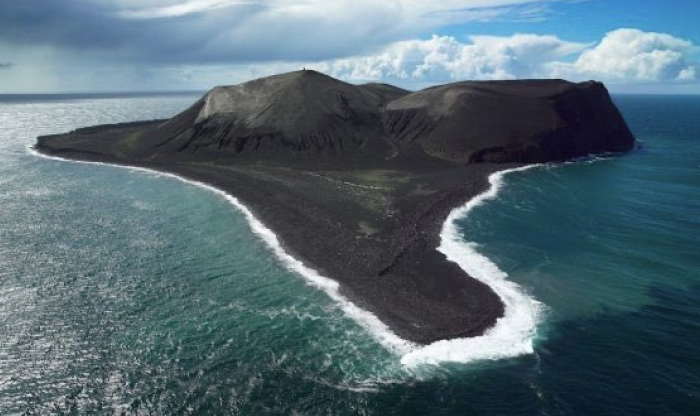
Surtsey did not exist until the 1960s, when a volcanic eruption off Iceland’s southern coast pushed a brand new island above sea level. Almost immediately, scientists recognized its value. The Icelandic Environment Agency designated the island and surrounding waters as a protected nature reserve, with strict rules designed to keep human interference as close to zero as possible.
Now listed as a UNESCO World Heritage site, Surtsey functions as a long-term experiment in natural colonization. Researchers study how plants, insects, and birds establish themselves on untouched land, without roads, buildings, or tourism muddying the results.
Access is limited to approved scientists only, including a tightly controlled research visit in 2019 that relied on drones and helicopters, as reported by Iceland Monitor.
That level of protection is enforced aggressively. Iceland Review previously detailed an incident in which a tomato plant was discovered growing on the island after human waste had been left behind. The plant was promptly destroyed to prevent contamination of the ecosystem.

I'm old enough to remember this island starting to emerge and how excited the scientific community was.

So am I! Also concerned that if it belongs to someone else, Trump might have his eyes on it...
Load More Replies...
We went to Surtsey as an Air Force expedition in 1974. There is nothing g to see. A bunch of small plants and a lot of cold hard lava.

74 was a short time after it became. And a lifetime has elapsed since then.
Load More Replies...
You can prevent pooping scientists, but birds fly over the oceans with seeds in their guts.

But pooping birds flying overhead are natural to an ecosystem in which they're trying to figure out how evolution works without human interference, tomato- eating and seed-pooping scientists not so much...
Load More Replies...
So, one of those carefully vetted, approved scientists left garbage on the island causing a tomato plant to start to grow? Tsk tsk!


I started elementary school in 1966 and remember the teacher talking about this new island.
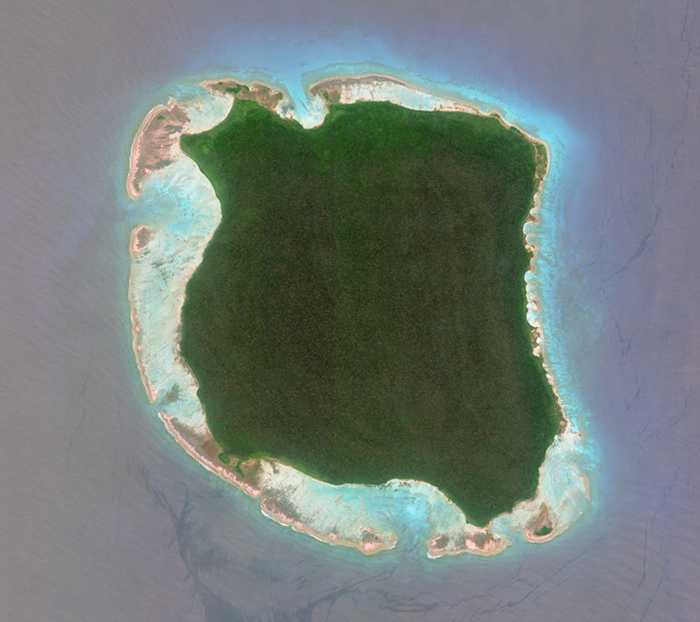
North Sentinel Island lies off the coast of India, in the Andaman archipelago, and is widely regarded as the most isolated inhabited place on Earth.
Its residents, known as the Sentinelese, have lived without sustained outside contact for tens of thousands of years, a period outlined by Survival International, which works closely with Indigenous groups worldwide.
To preserve that isolation, the Indian government has enforced a strict no-contact policy since the mid-20th century, banning travel to the island and its surrounding waters.
The restriction exists primarily to protect the Sentinelese from diseases to which they have no immunity, a concern repeatedly raised by officials and researchers.
The danger of ignoring that barrier became tragically clear in 2018, when American missionary John Allen Chau attempted to land on the island and was killed shortly after arrival.
The incident, which also led to the arrest of local fishermen who helped transport him, was detailed extensively by BBC News.

He should have had some respect for the fact that they had their own beliefs and didn't need his interference.
Load More Replies...
Historically, religious conversions have been more attributable to superior weaponry than to better theology.
Wow, I've never heard this stated but you're absolutely right!
Load More Replies...
Hubris is thinking you are above the law. Chau might have said he was doing it for God, but he was actually doing it to prove his own importance.
And his importance is to serve as a cautionary tale...
Load More Replies...
The desire to convert other people (as seen in many religions) is not so much a desire to "save" their souls, but is a desire to increase the numbers of people in a chosen faith-group to 'prove' that they (the existing members) are in a majority and therefore *must* be in the right religion

As an aside, we did once have some friendly contact with the Sentinelese, researchers traded coconuts with them, we have it on video, between 1991 and 1997 I think. A Nicobar man also made peaceful contact for a while in the 80s. The visitation access to North Sentinel has been relaxed since 2018 to allow researchers and anthropologists access.

Love to hear Chau explain this to God. "What part of the arrow in the bible sign did you not get?"



He actually went twice. They chased him away with bows and arrows the 1st time. But he went back again - and then they ended him. Darwin Award for sure. 🙄 Talk about taking a hint!
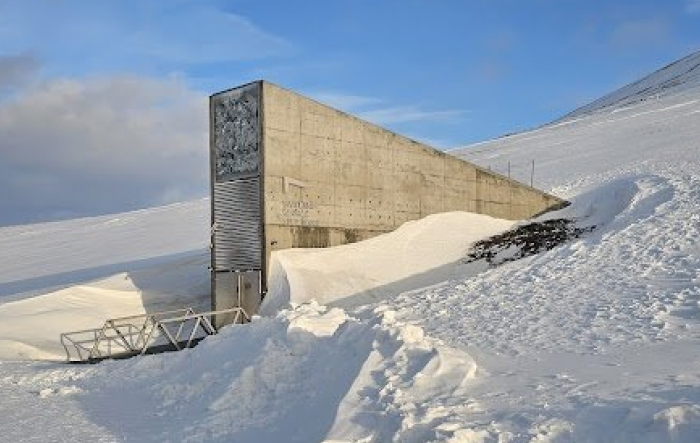
Carved deep into a mountainside on the Norwegian island of Spitsbergen, the Svalbard Global Seed Vault was built as a safeguard against global food loss.
The facility sits roughly 100 meters underground and stores millions of seed samples representing crop varieties from around the world.
The seeds are preserved in sealed chambers kept at extremely low temperatures to slow genetic ageing, a system designed to protect biodiversity over the long term.
The Norwegian Ministry of Agriculture and Food has detailed how the vault functions as a secure backup rather than an active distribution center, operating independently of political or economic crises.
Physical access to the vault is tightly restricted. NordGen oversees day-to-day operations, and staff enter only when new deposits are scheduled.
Under the vault’s black-box system, seed ownership never transfers, meaning only the original depositors are permitted to retrieve their samples, as explained by NordGen.
Since the contents are all fruits and vegetables, rather than hamburgers, they don't need to worry about Trump trying to claim it for our national security.
But how will McDonald's put ketchup, mustard and pickles between the buns without the strategic important ressources located there? Wouldn't be surprised if Norway is next on his list
Load More Replies... There's an even bigger one in England. The Millennium Seed Bank contains over 2.6 billion seeds from 40,000 plant species.

We've got a vault like that here in Australia. It contains a hefty supply of Vegemite and Aeroguard.
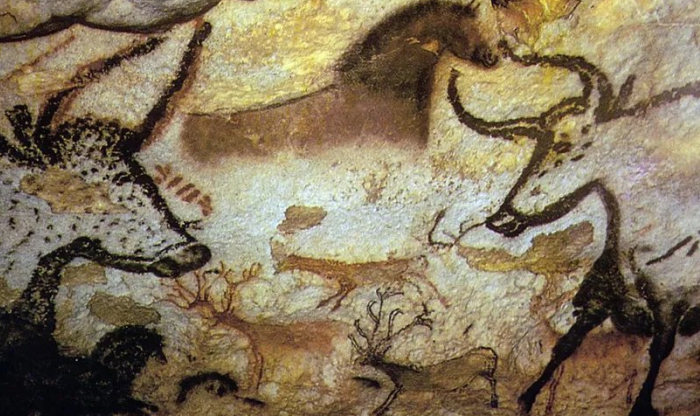
In 1940, four teenagers stumbled across a cave in southwestern France that would later be recognized as one of the most important prehistoric art sites ever found. Its walls are covered in paintings dating back roughly 17,000 years, offering a rare window into Stone Age life.
After World War II, the cave was opened to the public and quickly became a major attraction, drawing close to 1,200 visitors a day, as the Washington Post reported.
That popularity came at a cost. By the early 1960s, carbon dioxide from visitors’ breath, along with algae growth and dark fungal spots, began damaging the artwork.
French authorities permanently closed the cave in 1963 to prevent further deterioration.
Often referred to as the Sistine Chapel of cave art, Lascaux is now accessible only to conservators and scientists, who are limited to no more than 200 hours inside each year.
Le Temps de Vivre notes that the black spots have begun to recede in recent years. To balance preservation with public interest, a full-scale replica was built nearby at the Lascaux International Centre of Parietal Art.

That's a couple of hours from me. The hubs and I are planning to go there in the next year or two with a friend of ours. I have loved this place for years.

Lascaux 2 is very convincingly atmospheric, well worth the visit
Load More Replies... 
I wish Australia could treat its ancient and sacred indigenous art sites with similar respect. We still allow mining companies to "accidentally" blow them up ("Oopsie!") without consequence. Yes Rio Tinto, I'm looking at you
This cave art, and many other forms of art in confined spaces, could be protected by recording it with a drone and placing it online to reduce visitors
The replicas must be much more of an experience, if you can go. I'd love an online tour.
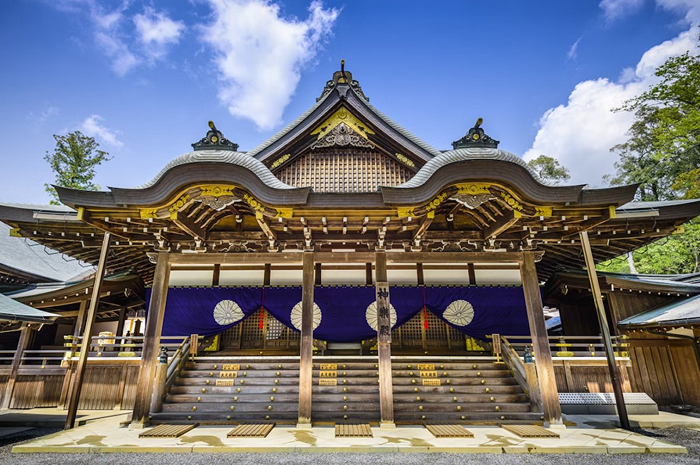
Load More Replies...Deep within the forests of Japan’s Mie Prefecture sits the country’s most sacred Shinto site, shielded from view by tall wooden fences. Access to the inner sanctuaries is restricted to members of the Imperial family and a small circle of priests.
At the heart of the complex is the Inner Shrine (Naiku), dedicated to the sun goddess Amaterasu and traditionally associated with the Sacred Mirror, one of Japan’s three Imperial Regalia.
Visitors are still allowed to enter the surrounding forest and walk the gravel paths through the shrine grounds. GaijinPot notes that this access deliberately stops short of the inner buildings, which remain hidden behind fences, leaving only their rooftops visible, and photography is prohibited.
Impermanence is central to Ise’s identity. Every twenty years, the entire shrine complex is dismantled and rebuilt from scratch in a ceremony known as Shikinen Sengu, a practice The Japan Times has examined as an expression of tokowaka, or renewal through continuity, allowing the shrine to remain spiritually constant while physically renewed.

I don't think the imperial family or the priests clean up the shrine, so more people must be given access 🤔
Cleaning would indeed be done by priests part of their rites. The first part of a traditional tea ceremony is the host meticulously cleaning and arranging the place of the ceremony. It's not impossible that members of the Imperial Family take part in this to some degree .
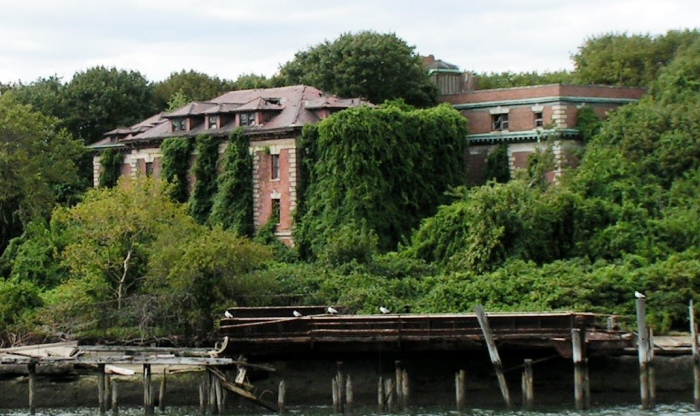
Load More Replies...Long before 9/11 reshaped New York City’s sense of disaster, a quieter tragedy unfolded just off the Bronx shoreline. In 1904, the General Slocum excursion steamboat caught fire and ran aground at North Brother Island, killing an estimated 863 people.
At the time, the island already functioned as a hospital for infectious diseases. Survivors pulled from the East River were brought ashore and treated there, a detail preserved in records held by the New-York Historical Society.
After the disaster, North Brother Island remained in institutional use for decades. Riverside Hospital, housing for war veterans, and later a rehabilitation center, all operated on the island, with site histories outlined by New York Parks.
Most of those buildings have since fallen into severe disrepair. Public access is now restricted, and the island has gradually transitioned into a protected refuge for bird species covered by conservation laws.
She had a neat little cottage next to the chapel...unfortunately, whoever was in charge of the island at the time was quick to demolish buildings that weren't in use
Load More Replies...
Here is a Youtuber that goes to the island, in top comment on yt there are also a link to where he sleeps there,
I'm obsessed with North Brother Island. I used to drive to the end of 149th St in the Bronx to look at it, and I once got a spectacular view of it while taking off from LGA. The General Slocum is a disaster that hardly anyone knows about anymore, even though over a thousand people died on what was supposed to be a short cruise to a picnic. I believe it was the biggest loss of life in US waters
My heart sings when I hear of natural places out aside - not for tourists and photo opportunities but just for the birds 😍
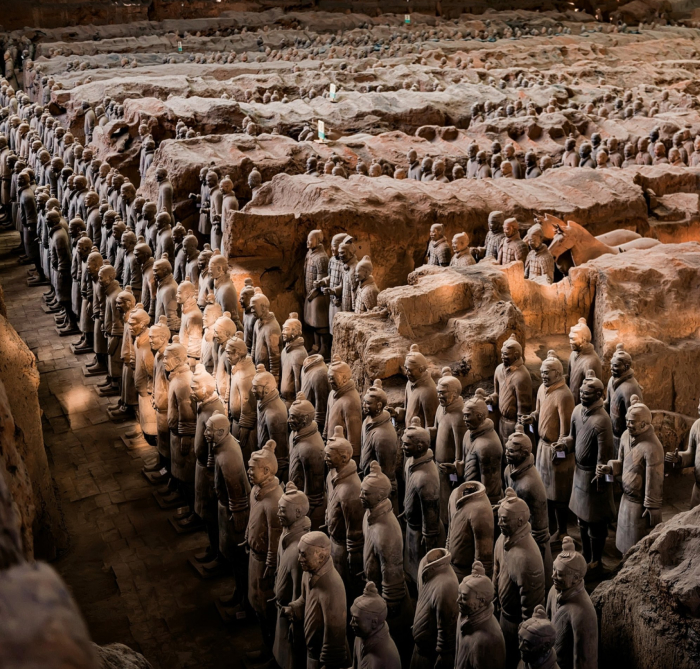
Beneath a 249-foot earthen mound in China’s Shaanxi Province lies the untouched burial chamber of Qin Shi Huang, the first emperor of the Qin dynasty. The tomb sits at the heart of a vast mausoleum complex constructed over nearly four decades by an estimated 700,000 workers and remained undiscovered until 1974, as detailed by Archeology News.
The sealed chamber lies near the famous Terracotta Army, whose surrounding pits form part of what is recognized as the largest tomb of a known individual. That distinction has been formally acknowledged by Guinness World Records.
Despite decades of archaeological interest, direct access to the tomb remains prohibited. Visitors are limited to the surrounding gardens and mountain areas, while excavation is confined to outer sections of the complex.
A 2020 study published in Scientific Reports found unusually high levels of mercury within the mausoleum, including airborne contamination, adding another layer of risk to disturbing the site.
Mercury was connected to immortality back then, some people took small doses over time to expand their life span....
One hypothesis of his death is that he was poisoned by an elixir that contained cinnabar. Though unproven, he was looking for an elixir of life, first mentioned in Chinese alchemy records from the 3rd century BC. There is nothing prior to the Han Dynasty documented that cinnabar was ever in these legendary potions, so in Qin Shi Huang's time there was no documented connection between mercury and immortality elixirs.
Load More Replies...
Maybe the long rumored secret ocean of mercury really does lie below the main dig site?
Given the very high mercury levels in the soil of the area, it's possible that it did. But also royal tomb excavations have been blocked in China since the terribly botched excavation of the tomb of Emperor Wanli, and the subsequent destruction of many artifacts and the bodies of the Emperor and his Empresses on the night of the Cultural Revolution.
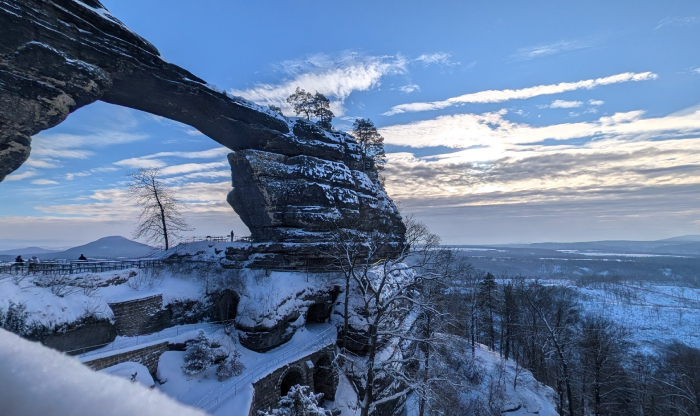
Load More Replies...The largest natural stone arch in Europe has reached a point where preservation matters more than access. Pravcicka Brana stands inside Bohemian Switzerland National Park in the Czech Republic, a towering sandstone formation measuring roughly 16 meters high and 26 meters across.
Decades of natural erosion have weakened the rock supporting the arch, prompting authorities to ban climbing and foot traffic entirely. The restriction exists to slow further damage and prevent the structure from collapsing under human pressure, a concern outlined on the official Pravcicka Brana site.
Visitors can still view the landmark from below or from Falcon’s Nest, a summerhouse built for Prince Edmund in 1881. Its fragility became even more evident in 2022 when wildfires burned through parts of the surrounding park and threatened the area, as Bohemia Adventures documented.

It will be a shame when it eventually collapses, but nature gonna nature.
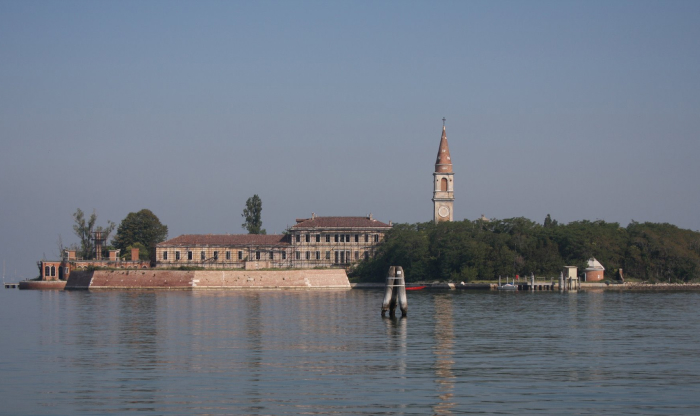
Poveglia Island earned its reputation long before rumors of hauntings took hold. In the 18th and 19th centuries, the small island in Italy’s Venetian Lagoon was used as a quarantine station during repeated plague outbreaks.
As deaths mounted and burial space disappeared, bodies were burned in mass pits in an effort to slow the spread of infection.
The island later served as a psychiatric hospital, a chapter that fed darker stories before the facility shut down in 1968. Accounts of its medical history and abandonment have been documented by The Mirror.
For decades afterward, safety concerns kept Poveglia closed to the public, with access limited to approved research teams and film crews. That status may now be changing.
CNN recently reported that a local group, Poveglia per Tutti, secured a six-year lease with plans to reopen the island as a public park for Venice residents.
Poveglia, not Povegelia. In any case, the island is easily accessible, and YouTube is full of videos of amateur explorers risking injury and claiming to have heard ghostly voices in an attempt to increase clicks.
I wish people would respect protected areas; let the dead rest and leave history to our successors
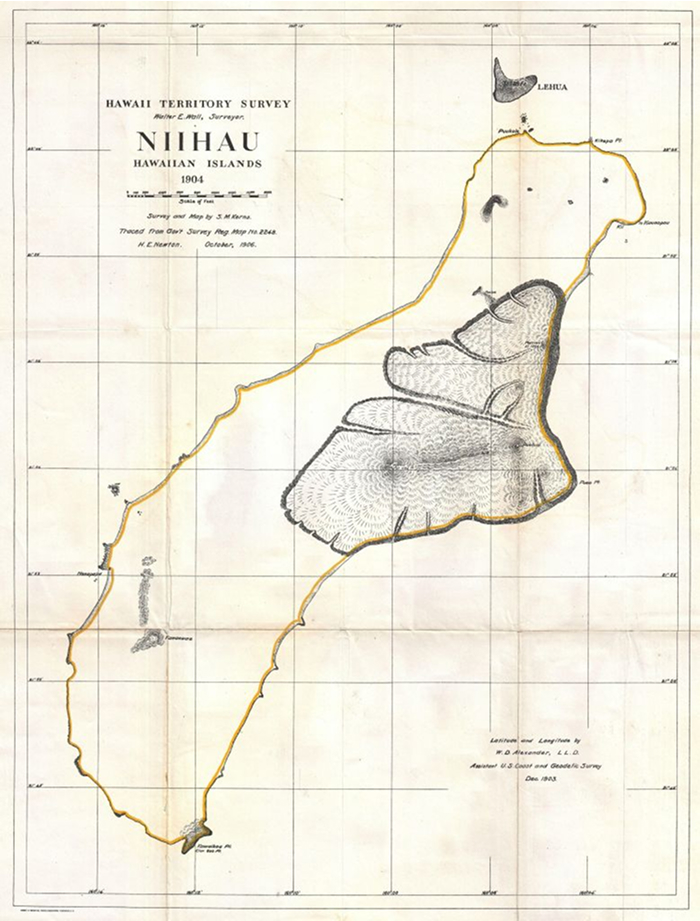
Load More Replies...Ni'ihau lies about 18 miles west of Kaua'i and remains the smallest inhabited Hawaiian island. Privately owned by the Robinson family, it has been largely closed to outsiders for generations in an effort to shield its community from outside influence.
The island’s residents are Native Hawaiians who live under strict cultural guidelines. Hawaiian remains the primary language, and modern infrastructure is intentionally limited.
As MessyNessy has documented, there are no paved roads, no public utilities such as running water or phones, and no conventional medical facilities.
Ni'ihau briefly entered global history during World War II. In 1941, a Japanese pilot crash-landed on the island after the attack on Pearl Harbor and, with the help of a local resident, attempted to take hostages.
The situation ended when Ben Kanahele intervened, killing the pilot despite sustaining multiple gunshot wounds. The National Archives later recorded that Kanahele survived and was awarded both the Medal of Merit and the Purple Heart.
Ben didn't k**l the pilot; he just knocked him out. His wife, Ella, delivered the coup de grace with a stone to the dome.

Mixed feelings on this one. They're not isolated from the world like Sentinel Island. To deny access to safe drinking water or modern medicine because a family seems to want to keep the family like some zoological experiment seems horrendous. Can any Panda's tell me more about this situation and if I've totally misunderstood?

I read up on it on Wikipedia. There are only 50-75 permanent residents. More commute back and forth to Kaua'i. They collect rainwater and get electricity from solar. They have a helicopter for medical emergencies. There is an AF base on the island. The owners' rules are weird, but no one is forced to live there. And one fun fact: They are the only Hawaiian island that consistently votes Republican!
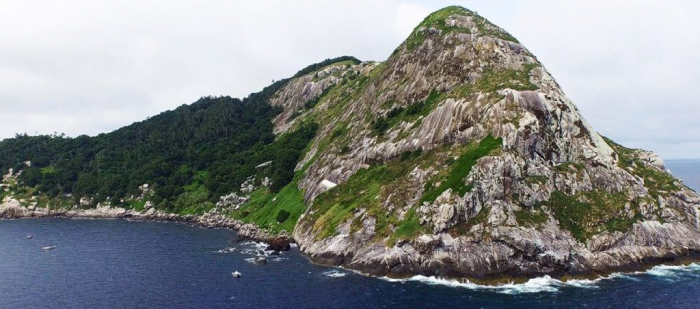
Load More Replies...Off the coast of São Paulo sits Ilha da Queimada Grande, better known as Snake Island, a place where human access is limited almost entirely by necessity.
The small island is infamous for its dense population of venomous snakes, including the Golden Lancehead viper, a species found nowhere else on Earth.
The danger is not exaggerated. DiscoverWildlife estimates that between 2,000 and 4,000 snakes inhabit the island, creating an environment where encounters are unavoidable and potentially lethal.
Because of that risk, visits are tightly controlled. Entry is restricted to approved scientists and members of the Brazilian Navy, who travel to the island primarily to service its automated lighthouse, a policy explained by HowStuffWorks.
The snakes there developed very potent, fast acting venoms since their only source of food are sea birds landing on the island which they have to bring down fast
I was wondering what sustained the snake population since rodents would likely get wiped out rather quickly. Thanks for the info!
Load More Replies... I can't fathom why Lotekguy's comment has been hidden. There is nothing in the comment to warrant this. What is going on BP?
It's been like this for a week now. There's something wrong with the site.
Load More Replies...
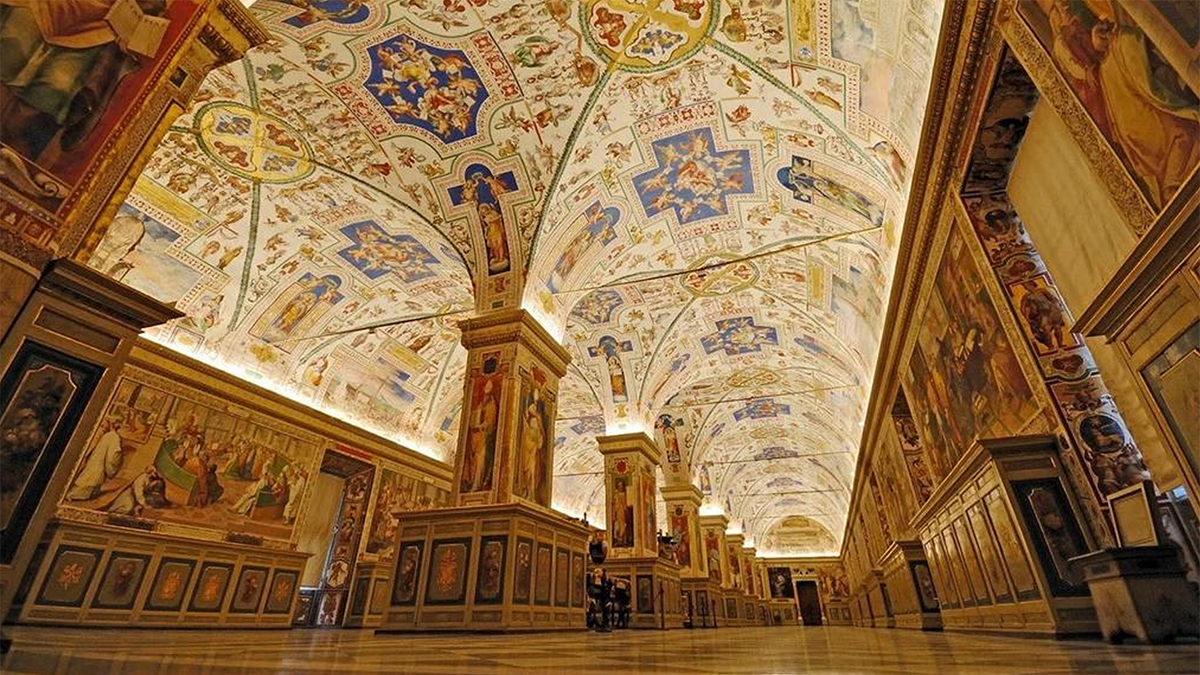
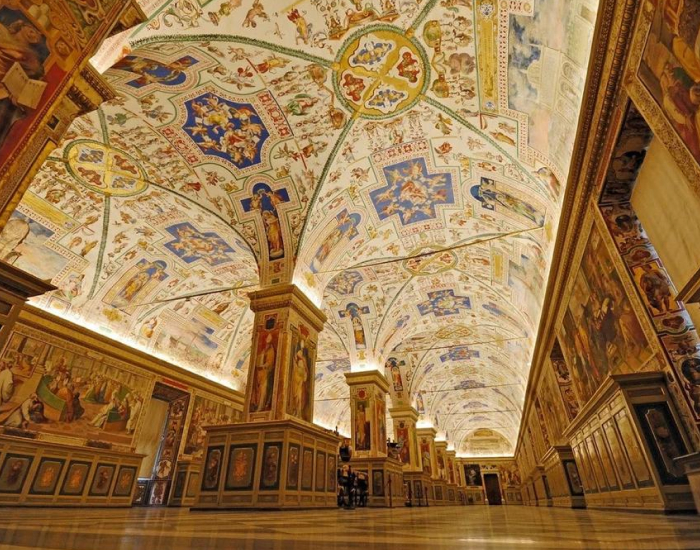
For centuries, the Vatican Apostolic Archives have served as the official record keeper of the Holy See.
Formerly known as the Vatican Secret Archives until a name change in 2019, the collection holds documents dating back to the 8th century and is housed within Vatican City itself, under the protection of the Swiss Guard.
Access to the archives is deliberately narrow. Only accredited scholars are permitted inside, and even then, entry is limited by strict daily caps.
The reading rooms inside the Vatican Apostolic Archives contain roughly 53 miles of shelving, but no more than 60 researchers are admitted each day.
Gaining access involves more than academic interest alone. Public Medievalist outlines an application process that requires formal recommendations, an interview, and an official letter of invitation before researchers are cleared to consult the materials.

Absolutely understandable that this is off-limits to tourists. Who wants thousands of tourists every day trampling around a place of invaluable art-historical value, as it is the case in the Sistine Chapel.

Yeah, the name "secret archives" was a bit ridiculous.
Load More Replies... According to urban legend it hold the world’s largest stockpile of pron
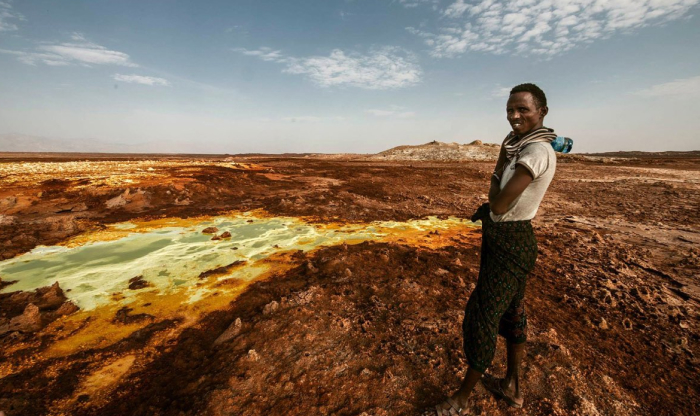
In Ethiopia’s Afar Triangle, the Danakil Desert lies roughly 125 meters below sea level, placing it among the lowest exposed landscapes on Earth. Heat here is constant, the ground is unstable, and volcanic activity shapes the terrain in visible ways.
Mud pools bubble without warning. Sulfur hardens across the surface. Lava burns blue in open air. Sections of land continue to sink as tectonic forces pull the region apart.
These conditions have been observed for decades through satellite imagery and field research collected by NASA Science, which treats the Danakil as a real-world case study.
Geography alone does not explain the lack of access. Cross-border tensions and militant activity have made the area volatile enough that governments continue to advise against non-essential travel.
And yet, the desert is not empty. The Afar people have lived in the Danakil for generations, sustaining themselves through salt mining and seasonal movement across the flats.
When outsiders enter the region, they are subject to rigid logistical rules: fixed routes, mandatory guides, group travel, and armed escorts.
Those requirements are part of standard operating procedures used by tour operators working in the area, as reflected in travel guidance published by EthioTours.
As long as nobody discovers oil there, at least they're free from worry about foreign intervention.
Load More Replies...
Just looking at it from Google Maps, some areas look like the surface of the Sun. It looks like a crater and the terrain looks straight out of Land Before Time. It's a frightening looking desert.
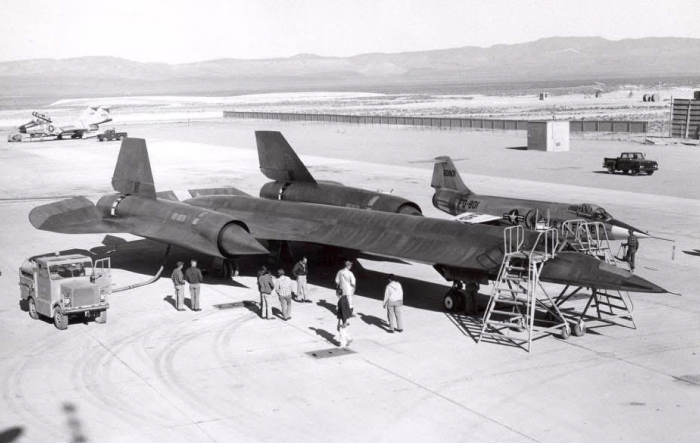
Hidden within the Nevada desert, Area 51 has long occupied a strange space between military reality and public imagination.
The remote United States Air Force installation was originally built to test and develop experimental aircraft and train pilots, work that remained classified for decades.
Declassified records later released by the National Security Archive show that the base played a central role in Cold War aviation programs, including the testing of reconnaissance aircraft designed to evade Soviet radar.
Over time, the site’s secrecy, combined with its complete absence from public maps, helped fuel speculation far beyond its original mission.
Officially known as Groom Lake, the base remains closed to the public. Access is limited to authorised military personnel and scientists holding top-secret clearances, many of whom are flown in by unmarked Janet Airlines.
Although the facility began operating in 1955, the US government did not formally acknowledge its existence until 2013.

it was the place they tested every crazy design, and you can see around the time of testings, UFO sighting increase. You look at the list of test flights of the F117, and the spike in UFO sightings for example.
It's also interesting how shapes changed in reports - After WW2 they were round discs (Sack AS-6 / Chance Vought XF5U) while they changed to triangles and other chapes in the 70's (F-117 / B-2)
Load More Replies... "The base remains closed to the public ..." is this different from all other military bases in some way?!
Silly fact: Groom Lake was never designated Area 51 in anything anyone knows about. It appears in a single Vietnam War-era document and no-one is sure why it was called that in that one document (although it could mistakenly refer to nearby Area 15) but it's so much more fun peddling conspiracy theories with a name like "Area 51" than with a boring ol', terribly public, easy-to-find-on-a-map name like Groom Lake.
Mezhgorye is one of Russia’s officially closed cities, a place defined as much by what is known as by what is not. Tucked into the Ural Mountains near Mount Yamanatou, the town is classified as a Closed Administrative-Territorial Formation, placing it off-limits to the general public for reasons tied to national security.
That secrecy has fueled decades of speculation about what happens behind its checkpoints. While Russian authorities have never confirmed the site's purpose, long-standing reports indicate continued government investment there.
In the mid-1990s, the New York Times reported that construction and funding persisted despite broader economic strain.
Today, access to Mezhgorye remains tightly controlled. Only officials with the proper security clearance are permitted entry, reinforcing the city’s status as one of the most restricted locations in the country.
There are lots of underground facilities in the region around of Tscheljabinsk, lots of sovjet nuclear facilities there too due to uranium deposits being close. The fuel rods for Chernobyl were produced there for example. The nearby Lake Karachay is the most radioactive contaminated place on this planet and the Kyshtym disaster in the "Majak" facility in 1957 also irradiated a large area in the region. (I read an article about that years ago)
The lake isn't there anymore. Completely dried up.
Load More Replies...North Sentinel Island takes the prize as the most restricted place on Earth, with both the Indian government enforcing no entry and the Sentinelese refusing visitors with force.
Area 51 is a highly classified location for the US Air Force, with only personnel with security clearance allowed in.
Places like Dallol and the Danakil Depression in Ethiopia have very dangerous environmental conditions.

This was a good article. I would love to know more about the artwork used to decorate the Vatican Apostolic Archives

I think that would have been my choice on the poll. Torn between that and North Brother Island
Load More Replies... BP. You need to look at why random comments are hidden, when they appear not to violate any of your terms an conditions. Referring specifically to one Lotekguy's comments on this post. These hidden comments are going to eventually harm your website. Who is going to be interested in posting, or even viewing, a website that arbitrarily 'hides' comments?


As an American with ties to the East Coast, Little Brother Island is almost too easy.
Load More Replies... 
Just about about every place on earth is a place most people would never set foot in.

This was a good article. I would love to know more about the artwork used to decorate the Vatican Apostolic Archives
I think that would have been my choice on the poll. Torn between that and North Brother Island
Load More Replies... BP. You need to look at why random comments are hidden, when they appear not to violate any of your terms an conditions. Referring specifically to one Lotekguy's comments on this post. These hidden comments are going to eventually harm your website. Who is going to be interested in posting, or even viewing, a website that arbitrarily 'hides' comments?
As an American with ties to the East Coast, Little Brother Island is almost too easy.
Load More Replies... Just about about every place on earth is a place most people would never set foot in.

































 No fees, cancel anytime
 then open in external browser


 and click "Open in External Browser"