Get Premium
Dark mode theme is available exclusively for premium users. Learn more about the benefits of subscribing.
No fees, cancel anytime.

 Dark Mode Ad-Free Browsing Unlimited Content
 Ad-Free Browsing Unlimited Content Dark Mode
Join 1.2 million Panda readers who get the best art, memes, and fun stories every week!
The so-called Hippocratic Oath has been known since ancient times — a solemn vow taken by all doctors upon assuming their professional duties. In one form or another, all doctors in many countries around the world take the Hippocratic Oath, and one of its most important elements is the strict observance of medical confidentiality.
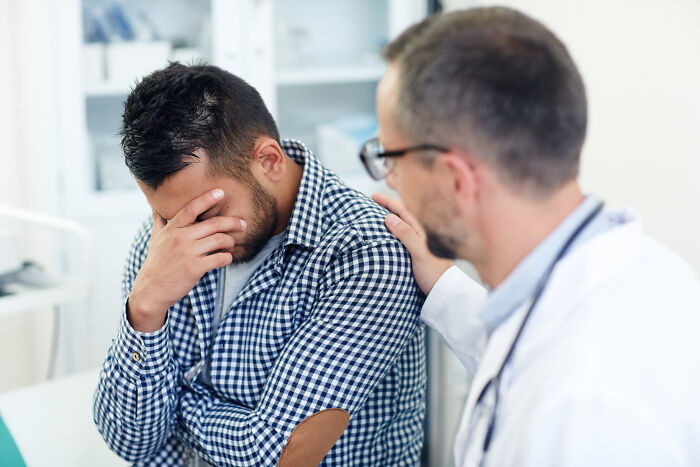
Yes, doctors are forbidden from revealing secrets concerning their patients’ health to third parties. But what about the simple secrets of the medical profession that are typically not shared with us, the patients? Well, our collection of facts and stories today is dedicated to precisely such secrets.
More info: Reddit
This post may include affiliate links.
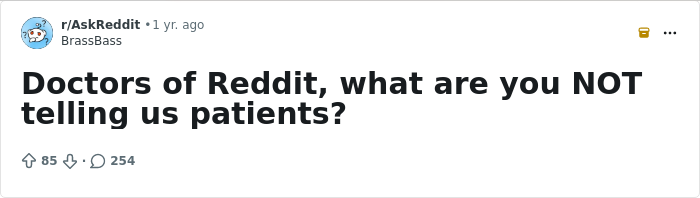
 I am convinced that when doctors tell someone that their loved one wasn't in pain when they left the world, a lot of the time it's a lie to make the people feel better.

What convinced you? Although, if your supposition was true, it would be a good lie, imho
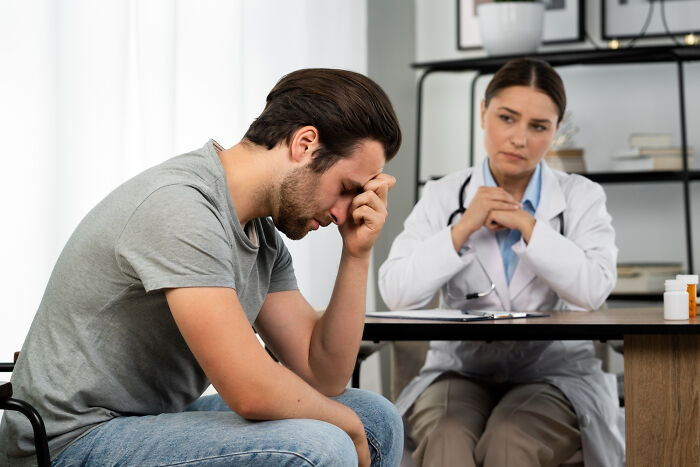 Medical professionals will almost never use the word "never". Statistics training means that the closest possible alternatives are either to say "very low risk, pursuing further investigation likely to lead to more complications as opposed to meaningful answers" or to provide a catastrophic, overly pessimistic interpretation of the information provided.
Given that medical knowledge is, and will always remain, incomplete, avoiding absolutes seems fully justified. You don't make promises you can't be sure to keep.
There are several online threads with medical professionals opening up about the untold secrets of their jobs, and even unveiling some dark mysteries, so we selected several dozen truly interesting facts and stories.
From the little secrets of the medical profession and honest admissions that doctors don’t know everything about their job to dark medical mysteries and hilariously funny memoirs and tales — please feel free to read this selection of stories, made for you by Bored Panda!
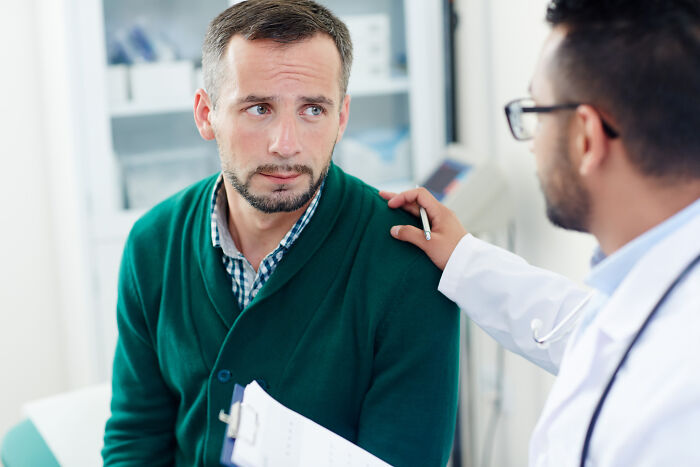 Ianad, but I have cancer, I feel every doctor I talked to downplayed how rough treatment was going to be. My guess is that they didn’t want me to get scared and seek “alternative” treatment. So instead, I became sad, terrified and angry. If they had set up from the start that this was gonna be tough, I would have at least been more mentally prepared.
The doctors' behaviour here is possibly aimed at helping you get through this. They know the human body pretty well, but not necessarily your personal mind. They're probably taking the 'most likely' road through all this, which may not have suited you. I'm sorry to hear this.
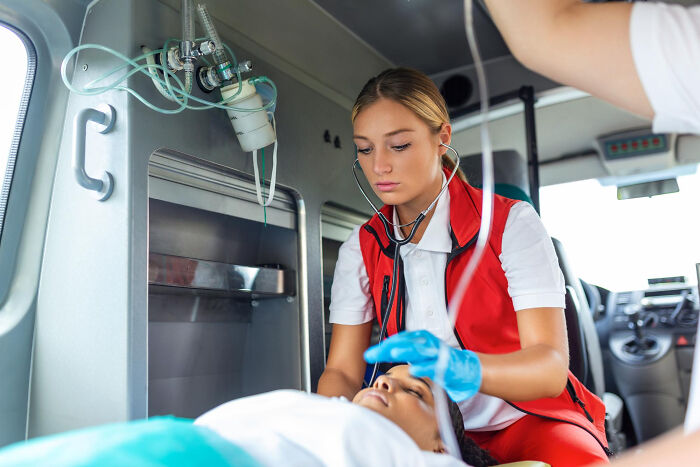 Not a doctor, but as a Paramedic I had a lot of face-time with patients. I'm a good listener and I don't tell you when I know you're lying to me, because you are your own placebo effect. I don't call you out for illegal substance-seeking behaviour, because I'm not a cop and I don't care.
As a Physician Assistant, negative, I don't hold back. You wanna know something about your condition, I will give you the straight talk, even if you can't handle it. But I'm under the Doctor, and I follow their instructions like it's the army.
 We know you didn't fall on it. The only reason we ask you how it happened is to see if you make up an amusing story.
= "After a long shift involving blood and other bodily fluids, we need a laugh."
What does the average person, who doesn’t often end up in the hospital, really know about the work of doctors and nurses? Where do we get this knowledge and these facts? Most likely, it’s a variety of medical movies and TV series, from “ER” and “The Pitt” to “Scrubs” (yes, medical sitcoms can sometimes be incredibly meticulous with the facts!).
But no matter how accurate or realistic a series about everyday hospital life may be, it’s first and foremost entertainment. So, it’s quite possible that our selection of facts and stories today will dispel some misconceptions about doctors’ work or provide you with some useful knowledge.
 Hospital staff tend to have superstitions and customs. Never say it’s quiet. Beware a full moon. Don’t open the obgyn drawer until you need it. Open a window of a deceased patent to let their soul of the room. Tie a knot in a bed sheet to make sure the patent doesn’t die on your shift.
It’s how we create the illusion of control in an environment where we can lose control at any moment.
Hospital staff tend to have superstitions and customs. Never say it’s quiet. Beware a full moon. Don’t open the obgyn drawer until you need it. Open a window of a deceased patent to let their soul of the room. Tie a knot in a bed sheet to make sure the patent doesn’t die on your shift.
It’s how we create the illusion of control in an environment where we can lose control at any moment.
Hospital staff are human. Superstition brings the illusion of control in a chaotic world. Don't mock, don't judge.
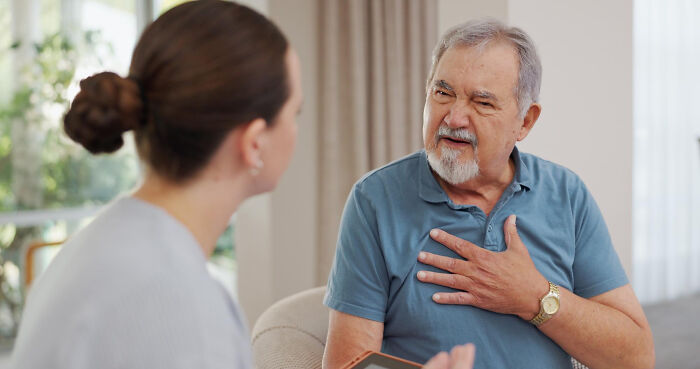 I’m a cardiac NP and I’ve had to explain multiple times that just because you feel palpitations or have discomfort in your general chest area, it doesn’t necessarily mean there’s something critically wrong with your heart. I’m usually honest about it but some people want to be told they’re sick. I run all the tests anyways, of course, but I have many patients that thrive off of collecting diagnoses.
 "doing your own research" is the worst thing you could possibly do. Stop. If google were a reliable diagnostician I wouldn't have spent ten years (and counting) studying this thing
Edit: I get it, half of you are incredibly unlucky patients who've only met bad/overworked mds and the other half are doctors who inexplicably are not familiar with the dangers of persisting hypocondria and consequently, defensive medicine. Cool.

Google any malady and you are guaranteed to find the worse case scenario.
A significant portion of the stories told here concern various euphemisms and indirect formulations designed to achieve two main goals. The first is to reduce the trauma of communicating health conditions to patients and their families. The second, closely related, is a special “code language” used by medical professionals to convey information to colleagues in the presence of patients.
Basically, this is like the myth of the tooth fairy or Santa Claus (I do hope we’re not giving anyone any spoilers here) when communicating with kids. Because most patients are, in a way, also sort of kids when they arrive at the hospital. Adult kids, for whom medical professionals are responsible.
However, MDs are advised to avoid precisely such euphemisms when communicating with kids. “Children are more likely to be concrete thinkers and less likely to pick up on the nuances of a euphemism,” this dedicated study, published at Prime Scholars, says. And yet, a peculiar code language exists among medical professionals — and stories about it are also included in our collection.
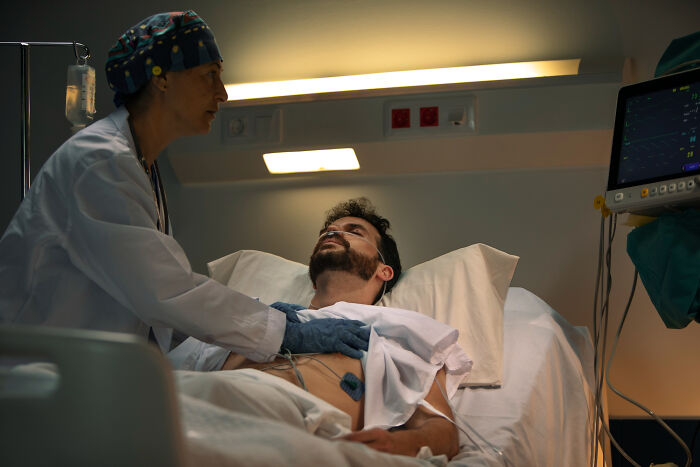 Just because we can keep someone alive longer with intense medical treatment doesn't always mean we should (this is mostly directed at the family members of my patients). One of the hardest parts of being a pediatric physician is sometimes feeling like I am prolonging the suffering of children who have experienced a major injury or illness and aren't expected to live long, especially for medically complex children who are frequently in and out of the hospital. In some situations, I think the kindest and most loving thing a family can do for a child is to redirect care and allow the child to pass away, thereby allowing the child's suffering to end.
However, I try to suspend my judgment because I recognize that I'm often only seeing these children when they are at their worst. I also recognize that ultimately, the families and I both want what's best for their child, even if we may disagree about what that is. The families are doing the best they can in a heartbreaking and stressful situation, and I will be there to care for the child and the family the best I can, no matter the outcome.
"Just because we can keep someone alive longer, doesn't always mean we should." I agree wholeheartedly.
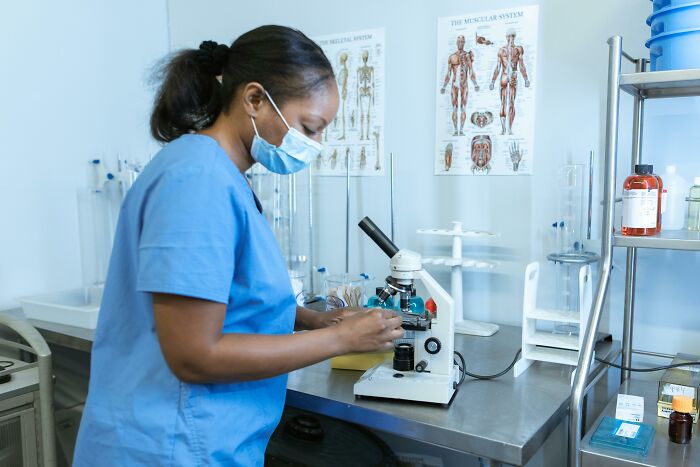 Scientist here.
If they tell you the lab messed up, 99% of the time they (or the nurses) messed up.
"The lab lost your sample" is code for, I didn't label it fully or correctly, I requested the wrong tests, I used the wrong tube, I left it on the side and the nurses forgot about it for 5 hours, draw order was wrong, I didn't invert the sample and it clotted, I under filled the sample, I took the sample from a drip arm, I took the sample in the wrong tube and tried to switch it to another thinking the lab wouldn't notice, etc.
They know you don't want another draw, they also know you can't come into the lab and throw scream at us.
Engineer here. I'm suspicious of any claim that " 99% " of anything can be labelled as "something else". Who did the measuring? And what was the sample size ?
 As a doctor for 23 years, I have finally given up on giving solid advice such as “Don’t let your baby sleep in your bed.” No one ever listens (they have “done their research” and know better) and I just waste 5 precious minutes of time that can be used for someone that will take my professional advice.
People hear (and remember) the words "you are right" so much better than "you need to change".
Many doctors, in one way or another, must also be good psychologists when communicating with patients or their loved ones. It’s generally accepted that clinicians should employ so-called “compassionate communication” as part of the treatment process.
For example, many researchers compile lists of “never words,” the use of which can worsen patients’ psychoemotional states. In a recent study published on the Mayo Clinic website, the authors note that despite progress in treating many diseases, including cancer, patient fear remains a significant factor.
“Because seriously ill patients and their families are understandably frightened, they ‘hang’ on every word their doctor says,” Medical Xpress says, quoting one of the study authors. “Serious illness is not only a matter of physical suffering, but also emotional suffering. Doctors’ behavior, including their verbal and nonverbal communication, can exacerbate or reduce emotional suffering.”
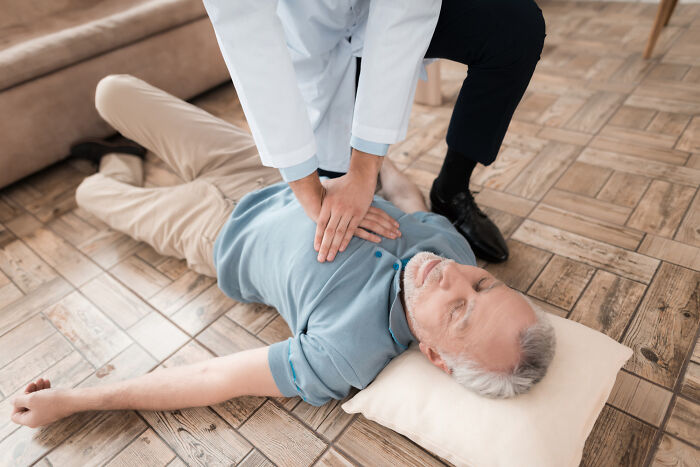 How traumatic CPR is on the body of frail and elderly patients and how hard it can be to witness for their family. Feeling their ribs snap with the first chestcompressions feels so brutal, especially when you know the chances of bringing them back with a decent quality of life are bad. I know you want us to “do everything we can” for your loved one, but this feels so violent. Please just hold their hands and let them leave in peace….
Working in elderly/palliative care I talk a lot about DNR/advance directives and I try to be very honest about outcomes, but I skip the gory details mentioned above….
Even so, if my heart stops beating I want to hear someone push through the crown shouting "Let me through, I'm a nurse". Doctors don't necessarily get regular training on CPR. But, yes, when I'm old and frail, let me go please.
 Doctors with the best bedside manner are not necessarily the best doctors.
Being a smoothie is not necessarily linked to having the best diagnostic skills.
 Not a doctor but Ive done my shadowing. Most people don’t understand that in general they are healthy but that their labs can change in an hour or overnight and they can develop an issue quicker than they realize. In America it is an unfair business but I have also seen a lot of ppl’s lives and quality of life change because they ignore things trying to be the doctor themselves. I’ve seen at least two or three ppl with more life to live die over the summer just because they didn’t FEEL like doing what we suggested.
In any case, we sincerely hope that the stories and facts presented in this collection will not only be interesting but also useful for you. Anyway, now, when watching a medical series, you’ll probably better understand the characters’ motivations and words. And, well, just reading two and a half dozen interesting stories will also be quite captivating, right?
 We hate American health care as well. We hate that good people will be forced into debt. We hate our hospital overcharging everyone. We hate being part of the problem when we are trying to save lives. We also know that given the right circumstances, we could be the next victim of it.
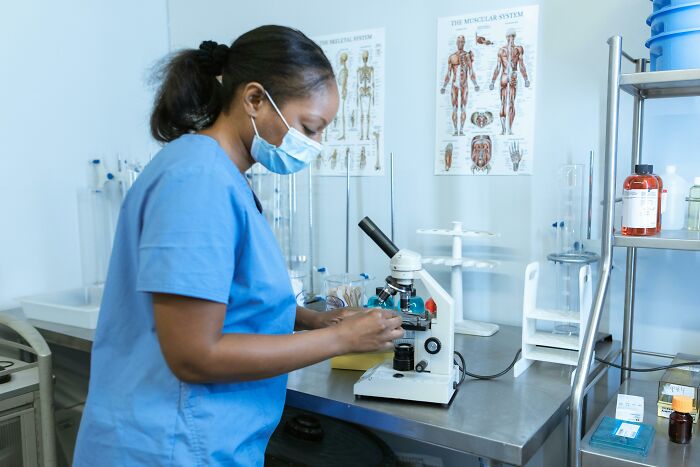 How much obesity is destroying people.
- Sometimes surgeries or procedures are not offered to obese patients due to anesthesia risk and increased surgical complications itself. Or the procedure is delayed for alternative medical treatments first because the risk of procedure/surgery is so high so would rather try other methods first. In anatomy class back in med school, I remember that dissections were immensely harder even with slightly more adipose tissue. I am not a surgeon now but I can imagine why the surgical risk itself is higher (not even including healing, infection risk after, etc)
I can say that a loved one was gone of an infection and we could not undergo surgery to fix this infection because the surgeon deemed it was too high risk. What went unsaid was that, the main reason for the risk was obesity, and it would have been a different outcome otherwise. But there is no point in saying that last fact to a grieving family when it couldn't have been changed at that point anyway.
- Your blood pressure, diabetes, chronic joint pain including back pain which is so common, PCOS (hormonal imbalance), infections in skin folds, etc... all can be so much better with weight loss. The most effective treatment for diabetes is weight loss when compared to medications. But because weight loss is not easy and rather than wait years for that to work while living with diabetes, we need to start medications. There are so many conditions tied to obesity, and then there are sequelae of those conditions (diabetes causing kidney failure over years, nerve pain in the feet, frequent infections, etc) and it becomes crazy how obesity can spiral into all of this.
I am by no means perfect. A healthy lifestyle is hard. Weight loss is hard. But the immensity of how important it is is hard to get into in a short appointment time slot. Often times, people don't really want to hear it, it just sounds like nagging and everyone knows blah blah I should eat vegetables, I don't need my doctor to reiterate things I already know. I will be frank with the fact that I am still finishing up training (residency) so I am still trying to find the balance of not nagging but also being that reminder that it is important to check in on how you are fitting healthy habits into your life. Another thing I really struggle with is telling certain people (e.g. young women) that they need to lose weight because I don't want to offend. Being a young woman myself, I know that it is so heavily tied to self-esteem and if they don't bring it up, then I have a hard time just outright bringing it up.
Curious to hear opinions from the patient perspective.

My aunt, who is morbidly obese, once had surgery to repair a hernia. She was so obese that the incision did not heal... for YEARS. I am not exaggerating or being facetious. They could not close the thick layer of adipose tissue with sutures, so she had basically a large open wound with dressings covering it on her abdomen for literally about four years. She eventually had a synthetic mesh placed inside the wound and that helped it finally slowly close. She used to be an ER nurse, so she was very good at taking care of the incision site and changing the dressings, but she still got many infections in the open wound over the years. I've also lost many family members to obesity-caused issues - kidney failure, organ failure, ignored type 2 diabetes. Aforementioned aunt's mom had to have an arm amputated from diabetes-related gangrene. Another cousin died aged 24 because he would not take care of his obesity-caused diabetes. Obesity is brutal. You are NOT healthy if you are obese.
 Most doctors don't take the Hippocratic oath any more, in most countries they never did.
No one can administer chemo and "first, do no harm" as chemo always causes harm, to cancer cell as well as healthy ones.
 One I didn't see mentioned: we apparently don't know precisely how our bodies can distinguish gas from poop. We have some ideas, we know there are a ton of nerve endings in the area, but the precise mechanism of our bodies telling our brains "this is a fart, let loose" isn't really understood. What blows my mind is, it's distinct enough that we even pass gas while asleep. That difference must be wired DEEP!
 Unless they're as old as a fossil, most medical staff are winging it waaaaay more often than you think; there's just so many things that can happen that you simply can't learn at school and have to experience firsthand, so whenever you see someone act so calmly during a crisis, there's a good chance they're just as stressed out as you are, if not more, and they're putting out a calm facade because if they show too many cracks, things can go even more downhill very quickly.
First law of command - look (and sound) as if you have it all sorted, at least in your mind. {1st Corinthians 14:8 }
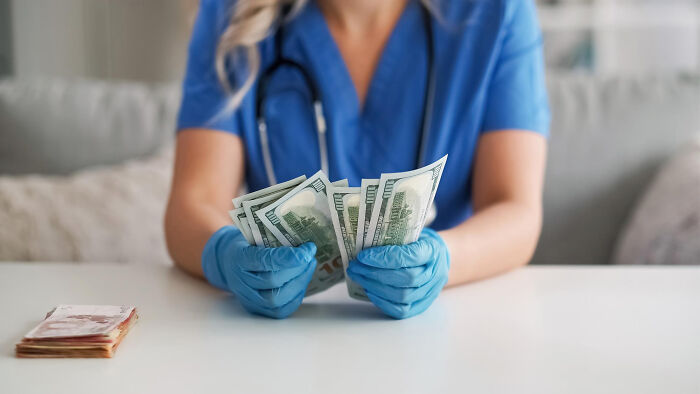 How much it is going to cost.

In the UK, you pay for your 'healthcare' from the day you start your first job, so it's not 'free' but we don't have to pay for an ambulance, or having your appendix out, or heart valve repair, or a broken collar bone etc etc. The NHS is far from perfect, but it beats the US healthcare hands down.
 I’m a derm. We don’t know what exactly causes itching, like the molecular pathways for it. That’s why it can be so hard to find a good treatment when a patient comes in for itchy skin.
 I had a lecturer at medical school say "half of medicine is made up, we just don't know which half"
Love that ! Tbf, any science has rules that are changing, and boy is medicine a science !
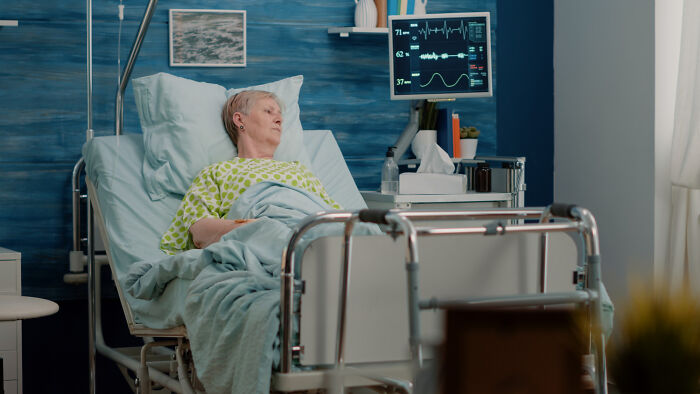 The exact time of their departure.
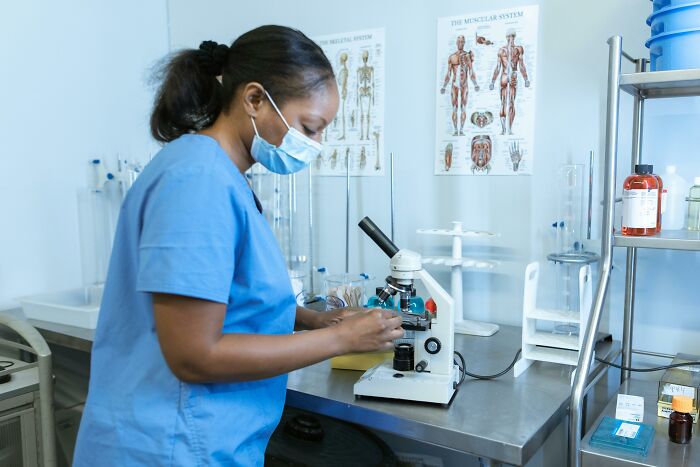 I'm not a doctor but I do know this that pharma companies pay doctors to sell their medicines. I'm not saying all the doctors do this but I know many who does.

Largely a thing of the past, like 30+ years ago, when it was still legal to invite doctors on extravagant golfing trips, sorry, err, seminars. My wife and I both worked in pharma, and she was engaged for some years, probably from around 2012, in implementing systems and processes to ensure that every single interaction with medical professionals was rigorously documented so we could prove that kickbacks were really not happening.

A biggie; if you're pregnant and will be induced, it will not be an exact thing. The chemicals used react differently in different bodies. If they induce on Monday morning, you may not have the child for a few days. The to-be grandparents sometimes expect you to take the d***s and give birth in a few hours and get very angry when they have to wait days.
A biggie; if you're pregnant and will be induced, it will not be an exact thing. The chemicals used react differently in different bodies. If they induce on Monday morning, you may not have the child for a few days. The to-be grandparents sometimes expect you to take the d***s and give birth in a few hours and get very angry when they have to wait days.







 No fees, cancel anytime