Get Premium
Dark mode theme is available exclusively for premium users. Learn more about the benefits of subscribing.
No fees, cancel anytime.

 Dark Mode Ad-Free Browsing Unlimited Content
 Ad-Free Browsing Unlimited Content Dark Mode
Join 1.2 million Panda readers who get the best art, memes, and fun stories every week!
Just when we think we've got history all figured out, archaeologists dig up something that turns our understanding upside down. From the puzzling Baghdad Battery—possibly the world's first electrical device created 2,000 years ago—to the mysterious Nimrud Lens that suggests ancient Assyrians might have had far more advanced optical technology than we ever imagined, these artifacts challenge everything we thought we knew about our ancestors' capabilities.
The perfectly formed Klerksdorp Spheres from South Africa appear so precisely crafted they seem impossible without modern machinery, while structures like the enigmatic "Great Wall of Texas" leave experts scratching their heads about their purpose and builders. These 31 ancient mysteries aren't just curiosities—they're humbling reminders that perhaps our ancestors were far more sophisticated than we give them credit for. With each peculiar artifact, the line between what we consider "primitive past" and "advanced present" grows increasingly blurred.
This post may include affiliate links.
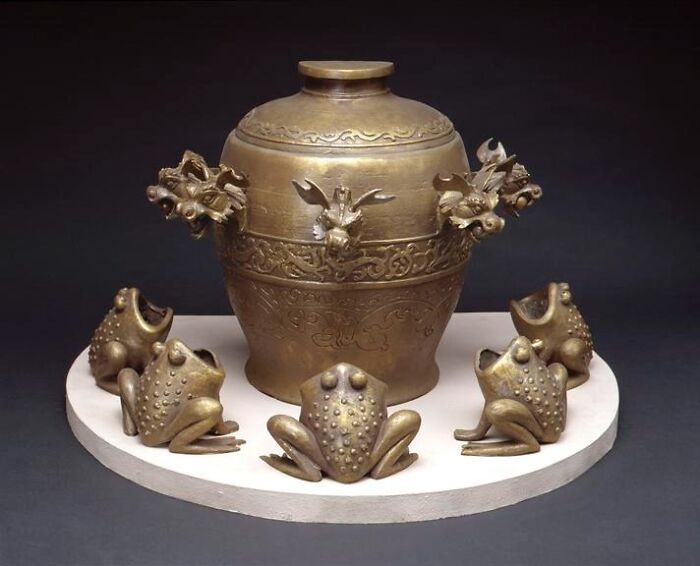
He invented his seismoscope in 132 CE. A seismoscope records disturbances along the earth's surface. The device Heng created was even able to roughly indicate the direction of an earthquake well over 100 miles away.

I suspect that the closer the earthquake was, the less reliable the detector was. Great idea though.
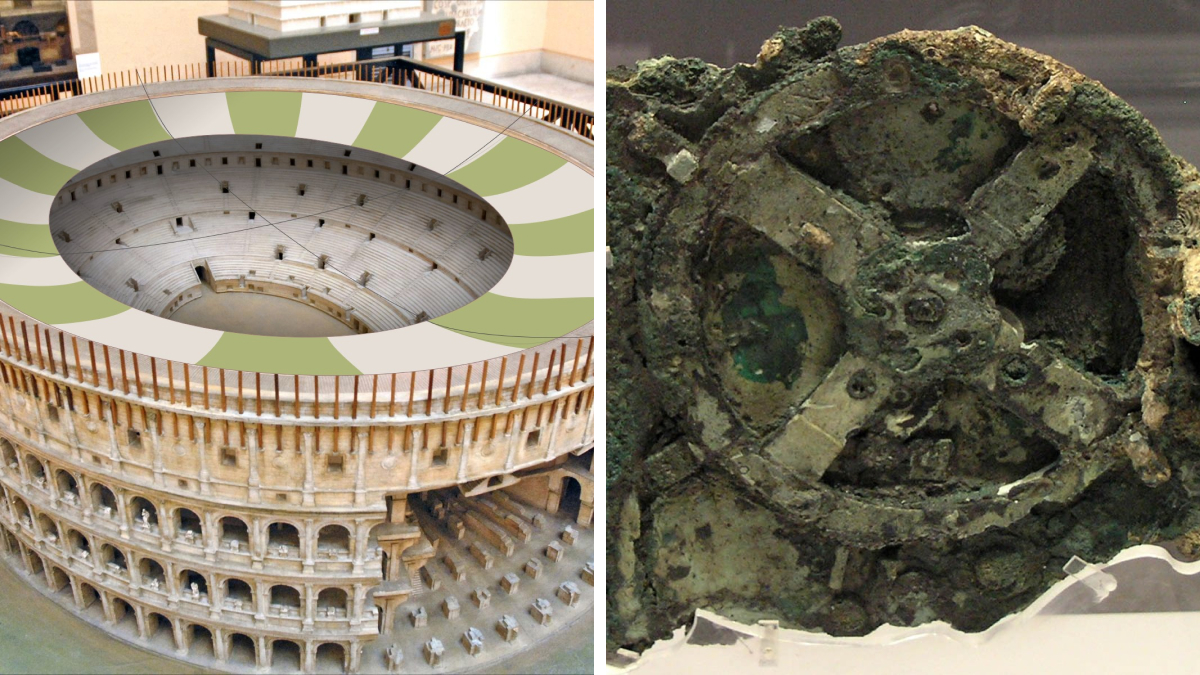
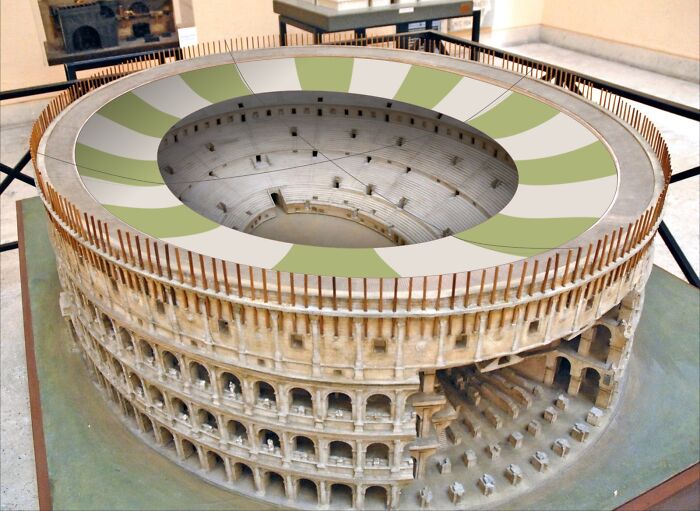
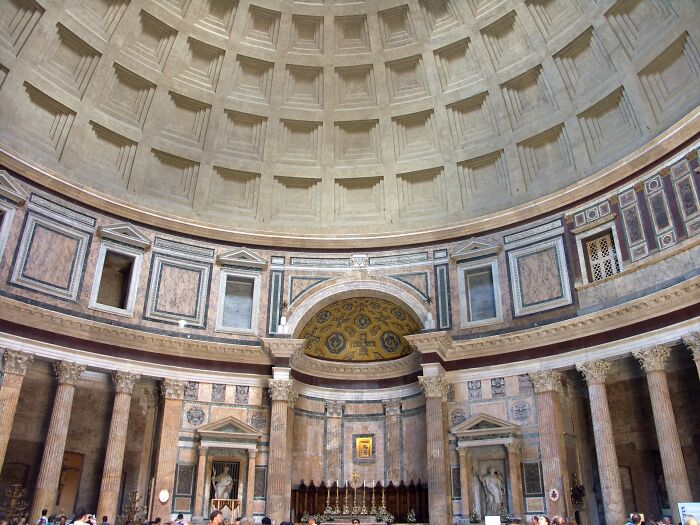
A velarium was a type of awning used in Roman times. It stretched over the whole of the cavea, the seating area in amphitheaters, to protect spectators from the sun. Retractable awnings were relatively common throughout the Roman Empire. Though the precise details are unclear, the awning was evidently usually supported by wooden masts, the sockets and brackets for which remain on the Colosseum and Arena of Nimes, for example.
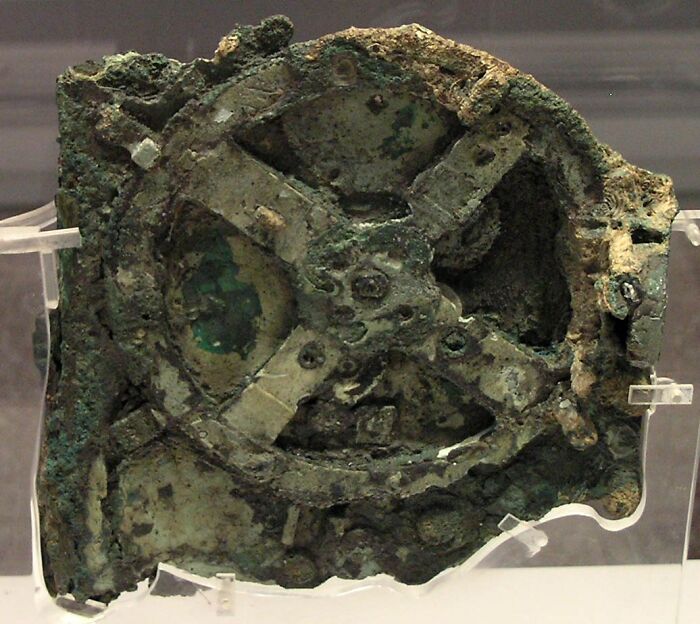
It is the oldest known example of an analogue computer. It could be used to predict astronomical positions and eclipses decades in advance. It could also be used to track the four-year cycle of athletic games similar to an Olympiad, the cycle of the ancient Olympic Games.

Thought to be more than 2,000 years old, the Antikythera mechanism is widely considered the first computer in history, an analog calculator that was way ahead of its time… or was it? A new study suggests the device may simply have been an elaborate toy. Researchers from the National University of Mar del Plata in Argentina discovered that the configuration of the gears and teeth indicates the mechanism isn't functional. https://www.sciencealert.com/mysterious-antikythera-mechanism-may-actually-be-a-toy-study-says 22 April 2025
Scientific studies of Roman concrete since 2010 have attracted both media and industry attention. Because of its unusual durability, longevity, and lessened environmental footprint, corporations and municipalities are starting to explore the use of Roman-style concrete in North America. This involves replacing the volcanic ash with coal fly ash that has similar properties. Proponents say that concrete made with fly ash can cost up to 60% less, because it requires less cement. It also has a reduced environmental footprint, due to its lower cooking temperature and much longer lifespan. Usable examples of Roman concrete exposed to harsh marine environments have been found to be 2000 years old with little or no wear.
Research in 2023 found that lime clasts, previously considered a sign of poor aggregation technique, react with water seeping into any cracks. This produces reactive calcium, which allows new calcium carbonate crystals to form and reseal the cracks. These lime clasts have a brittle structure that was most likely created in a "hot-mixing" technique with quicklime rather than traditional slaked lime, causing cracks to preferentially move through the lime clasts, thus potentially playing a critical role in the self-healing mechanism.
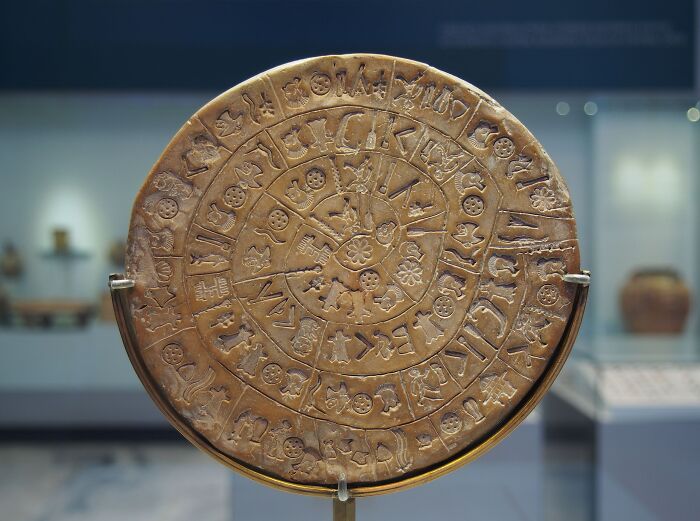
Its purpose and its original place of manufacture remain disputed. While its unique features initially led some scholars to suspect a forgery or hoax, the disc is now generally accepted by archaeologists as authentic. This mysterious object captured the imagination of amateur and professional palaeographers, and many attempts have been made to decipher the code behind the disc's signs. While it is not clear that it is a script, most attempted decipherments assume that it is.

Not sure if a forgery yet everything else is carbon dated just not this one thing.
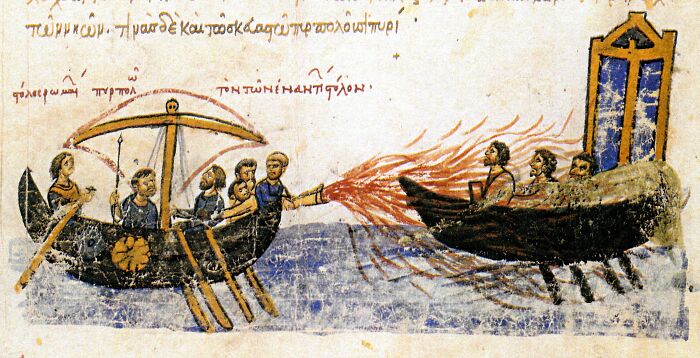
Greek fire was an incendiary weapon system used by the Byzantine Empire from the seventh to the fourteenth centuries. Its exact composition is still a mystery.
Interesting article - https://www.medievalware.com/blog/greek-fire-byzantine-medieval-flamethrower/ I love the shout-out to "practical archaeologists (ie. pyromaniacs with an excuse)"!
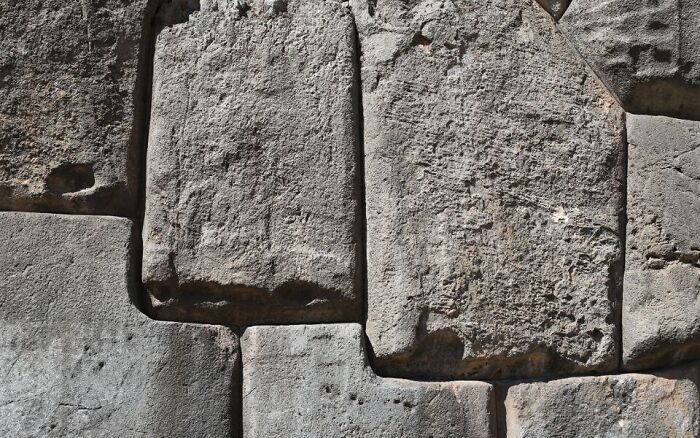
The stones used in Sacsayhuaman fit like a puzzle without the help of any kind of glue. The lace is so exact that in many cases you can not even insert a sheet of paper. There are stones up to 8.5 meters high and almost 200 tons of weight. Even today it is not known how they did to move such a large rock.
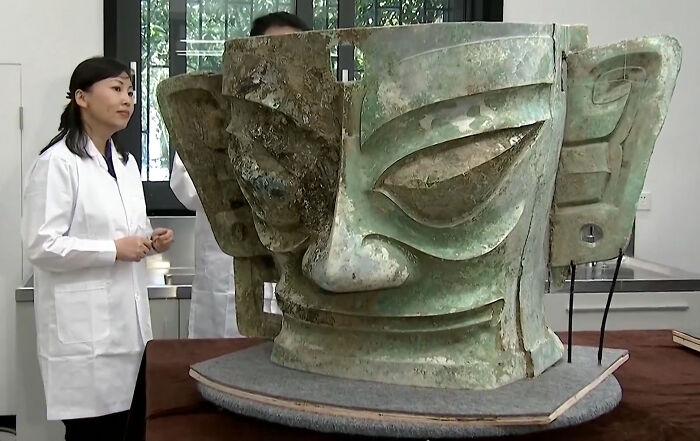
A large bronze head with protruding eyes that some believe to be a depiction of Cancong, the semi-legendary first king of Shu. Usually most of the bronzes are vessels, instruments or weapons, but Sanxingdui is apparently an exception. These masks of similar style discovered in Sanxingdui distinguish themselves from others. They all have exaggerated facial features and dignified facial expressions. It might be a way for Ancient Shu people to memorialize their ancestors or gods. Its eyes are considered as the symbol of 'Can Cong', the first group of leaders in Ancient Shu.
"dignified facial expressions"? What does that mean? They look cartoonish to me.
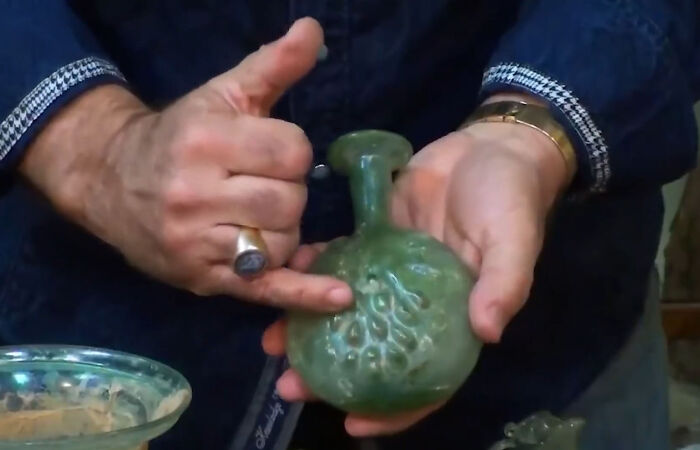
Flexible glass is an alleged lost invention from the time of the reign of Tiberius Caesar. According to Petronius in his work Satyricon, the inventor of flexible glass (vitrum flexile) brought a drinking bowl made of the material before Tiberius Caesar. The bowl was put through a test to break it, but it merely dented, rather than shattering. The inventor repaired the bowl very easily with a small hammer, which he pulled from a pocket in his toga. After the inventor swore that he was the only man alive who knew the manufacturing technique, Tiberius had the man beheaded. It has been suggested this was either to protect the existing glassmaking industry, to ensure that glass remained breakable as an effective planned obsolescence or because he feared that the glass would devalue gold and silver, since the material might be more valuable.
Does an example (artifact) of this glass still exist? If not, it shouldn't be on this list.
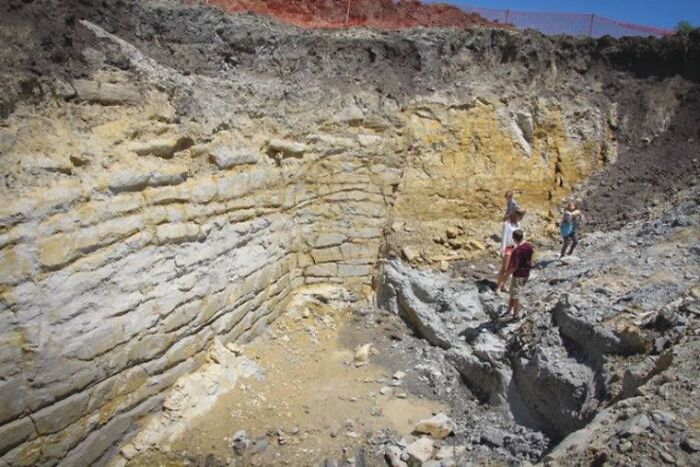
Underground Wall in Texas Mysterious Structure or Deposit that gives name to country near the town of Rockwall is one of the most curious formations in Texas. This town and county were named after, and many contend that in spite of the opinion of scientists to the contrary, the formation is the product of the toll of a prehistoric race. The rock wall, as it is know extends along three sides of the town, but generally though to the south as is to be found within 200 or 300 yards of the corporation line. No one seems to know just how long it is, but traces of it have been discovered across the river in Dallas county.
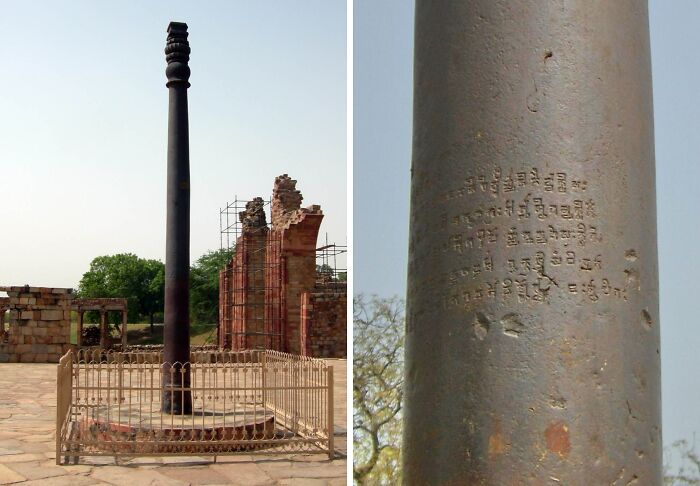
The pillar measures a total of 23.5 feet (7.2 meters) tall, counting the portion that is belowground. Sanskrit inscriptions appear in several places on the pillar. The oldest is a six-line engraving 7 feet (2 meters) above the platform. It states that the pillar was created for a temple to Vishnu, at the order of a king with the name Chandra. Although many believe that the lack of rust on the pillar is a mystery, scientists have several theories that try to explain this phenomenon.
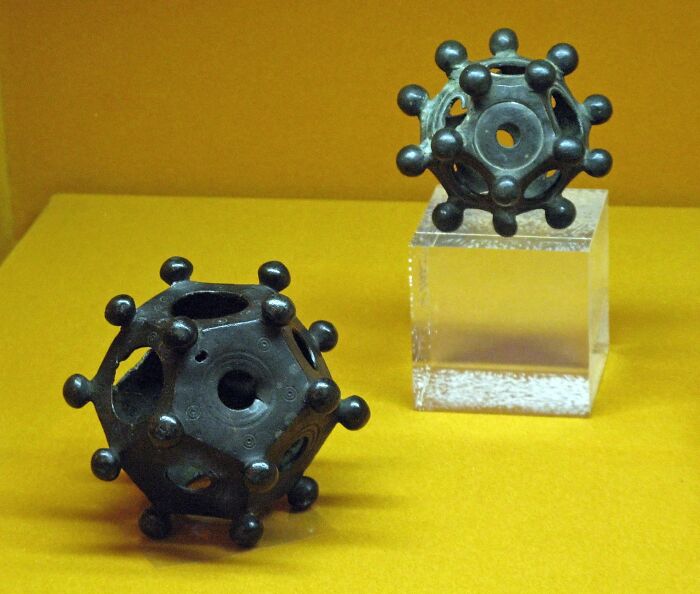
Roman dodecahedra date from the 2nd to 4th centuries AD. They rarely show signs of wear, and do not have any inscribed numbers or letters. The purpose of Roman dodecahedra has been much debated. Speculative uses include as a survey instrument for estimating distances to (or sizes of) distant objects, though this is questioned as there are no markings to indicate that they would be a mathematical instrument; as spool knitting devices for making gloves; or as part of a child's toy. Several dodecahedra were found in coin hoards, suggesting either that their owners considered them valuable objects, or that their use was connected with coins. It has been suggested that they might have been religious artifacts, or even fortune-telling devices. It has also been suggested that they might have been an object to test the skill of a metalsmith, perhaps as part of a portfolio to demonstrate their capabilities to customers or as a way to qualify for a certain status. Some 19th-century antiquarians speculated that they might be weapons, such as the head of a mace or a metal bullet.
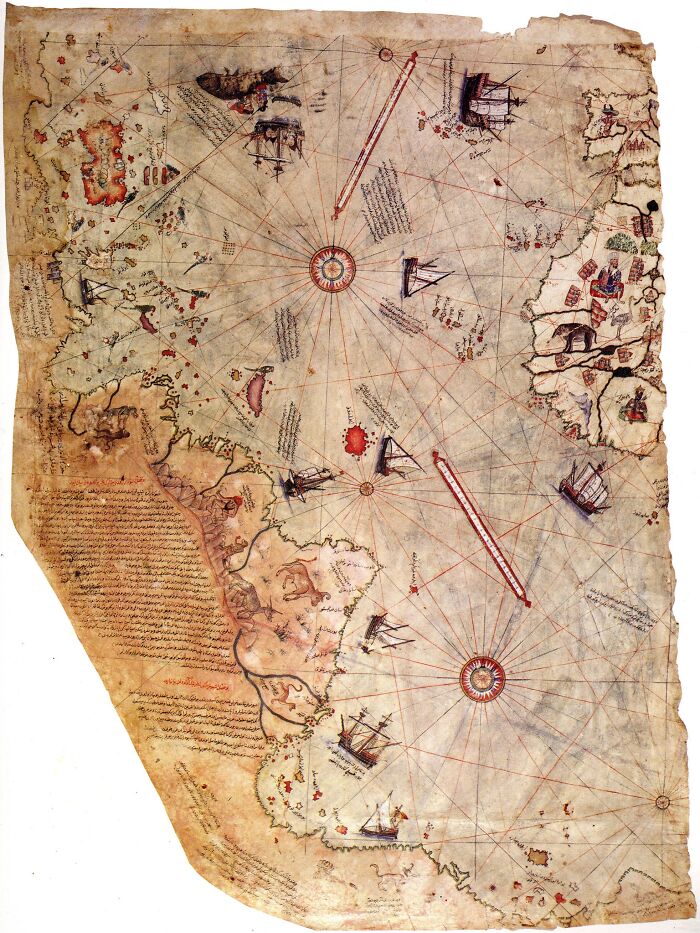
The Piri Reis map is a world map compiled in 1513 by the Ottoman admiral and cartographer Piri Reis. When rediscovered in 1929, the remaining fragment garnered international attention as it includes a partial copy of an otherwise lost map by Christopher Columbus. The depiction of South America is detailed and accurate for its time. The northwestern coast combines features of Central America and Cuba into a single body of land. Scholars attribute the peculiar arrangement of the Caribbean to a now-lost map from Columbus that merged Cuba into the Asian mainland and Hispaniola with Marco Polo's description of Japan. This reflects Columbus's erroneous claim that he had found a route to Asia. The southern coast of the Atlantic Ocean is most likely a version of Terra Australis.
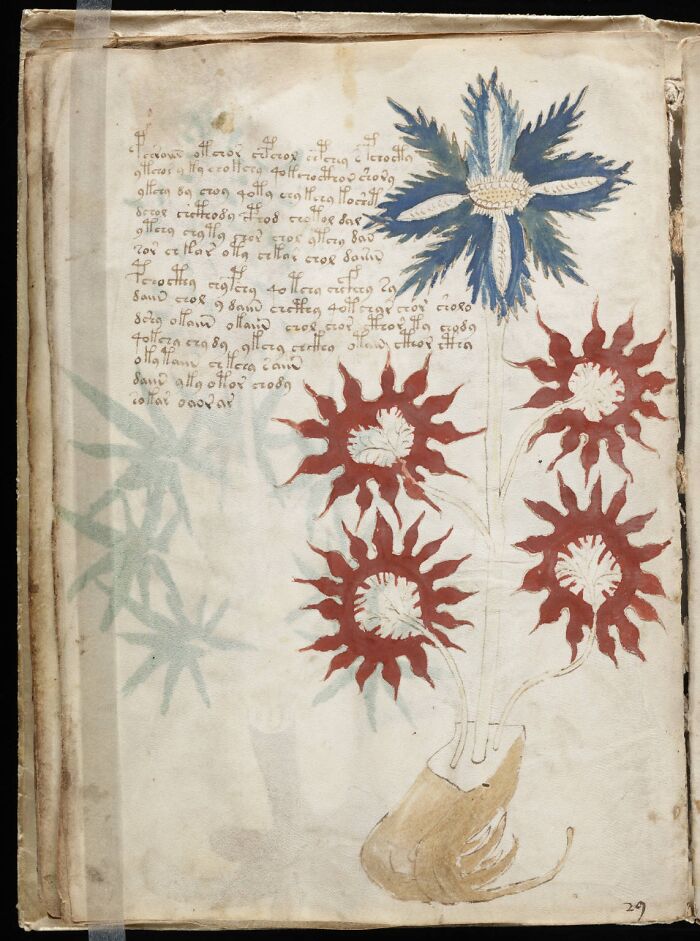
It is an illustrated codex, hand-written in an unknown script referred to as Voynichese. Scholars lack the translation and context needed to both properly entertain or eliminate any of the possibilities. Hypotheses range from a script for a natural language or constructed language, an unread code, cypher, or other form of cryptography, or perhaps a hoax, reference work, glossolalia or work of fiction.
I reckon it was written for shīts an giggles. If that's the case, it's fulfilled its purpose.
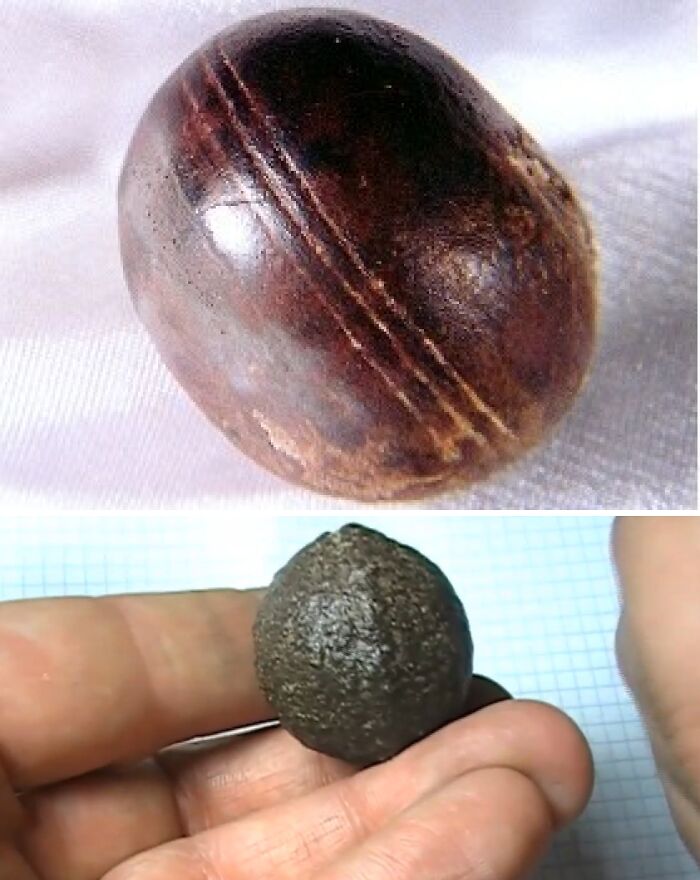
Klerksdorp spheres are small objects, often spherical to disc-shaped, that have been collected by miners and rockhounds from 3-billion-year-old pyrophyllite deposits mined by Wonderstone Ltd., near Ottosdal, South Africa. They have been cited as inexplicable out-of-place artifacts that could only have been manufactured by intelligent beings. Geologists who have studied these objects have concluded that the objects are not manufactured, but are rather the result of natural processes.
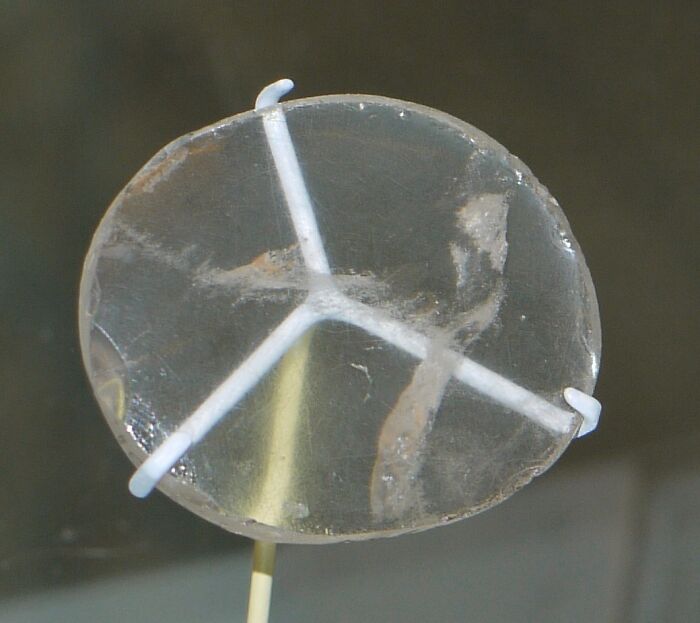
The Nimrud lens, also called Layard lens, is an 8th-century BC piece of rock crystal. It may have been used as a magnifying glass or as a burning-glass to start fires by concentrating sunlight, or it may have been a piece of decorative inlay.
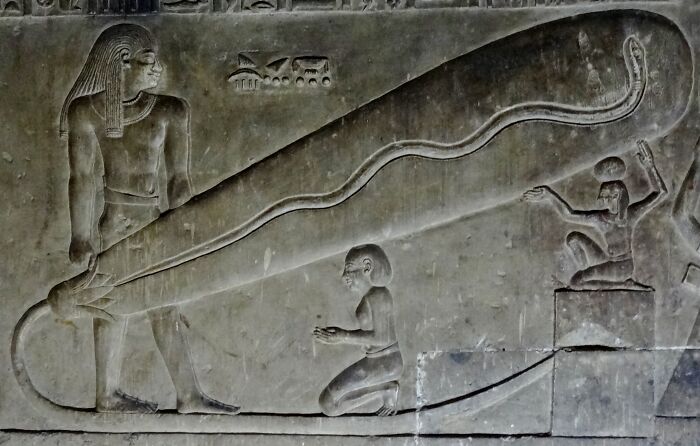
There are inscriptions depicting a bulb-like object which some have suggested is reminiscent of a an early lightbulb. According to the hieroglyphic text surrounding the pieces, it depicts statues referencing part of the Egyptian creation myth.
Adam's Bridge, is a chain of natural limestone shoals between Pamban Island, also known as Rameswaram Island, off the southeastern coast of Tamil Nadu, India, and Mannar Island, off the northwestern coast of Sri Lanka. Geological evidence suggests that the bridge was formerly a land connection between India and Sri Lanka. According to Muslim legend, Adam used this bridge to cross to Adam's Peak, in Sri Lanka, atop which he stood repentant on one foot for 1,000 years.
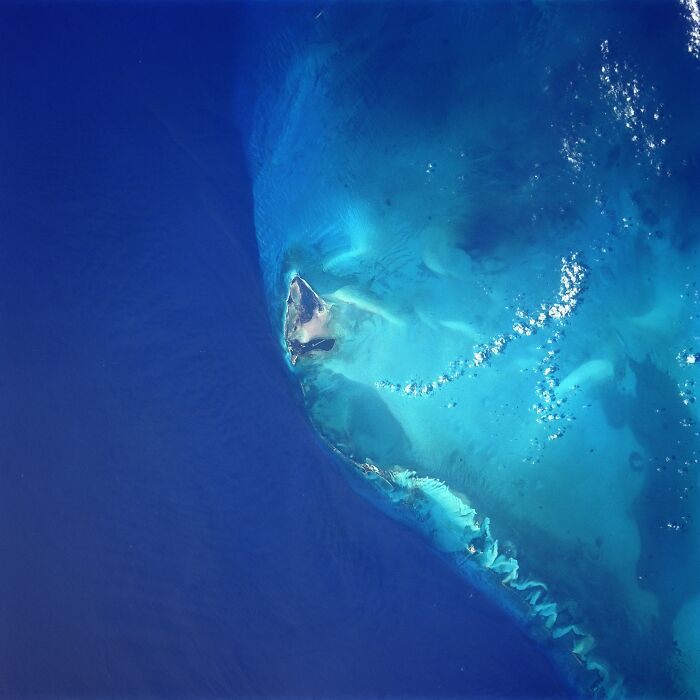
Bimini Road, located in the Bahamas, is an underwater rock formation that stretches for about half a mile along the shallow waters of Bimini's western shore. Ever since its discovery in 1968, it has been speculated that this particular underwater road could be the road to the Lost City of Atlantis
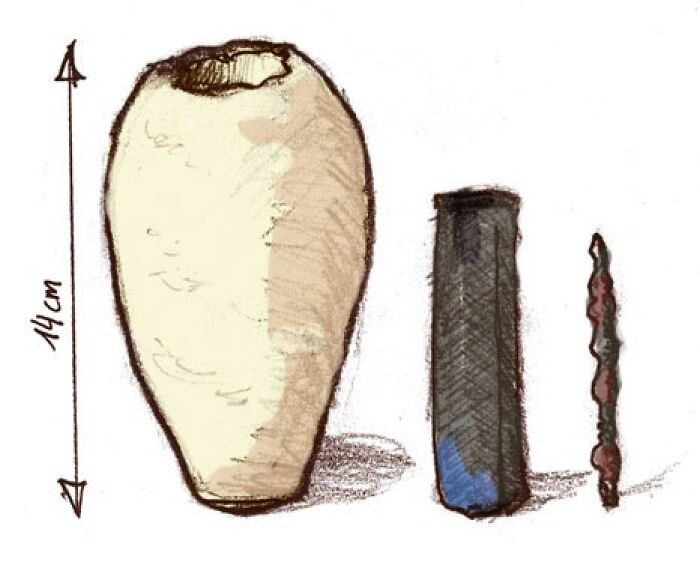
The Baghdad Battery is the name given to a set of three artifacts which were found together: a ceramic pot, a tube of copper, and a rod of iron. Its origin and purpose remain unclear. Wilhelm Konig suggested that the object functioned as a galvanic cell, possibly used for electroplating, or some kind of electrotherapy. There is no electroplated object known from this period, and the claims are universally rejected by archaeologists. An alternative explanation is that it functioned as a storage vessel for sacred scrolls.

No this again. Watch electroboom's video if you are not sure why these wouldn't work.





































 No fees, cancel anytime