Get Premium
Dark mode theme is available exclusively for premium users. Learn more about the benefits of subscribing.
No fees, cancel anytime.

 Dark Mode Ad-Free Browsing Unlimited Content
 Ad-Free Browsing Unlimited Content Dark Mode
 Log In
or
Sign Up
or
Reset your password
Enter your email address or username and we’ll send you a link to reset your password
Check your inbox
An email with a link to reset your password was sent to the email address associated with your account
Activate to continue
Your account isn't active yet. We've emailed you an activation link. Please check your inbox and click the link to activate your account

 © 2026 Bored Panda
 The Bored Panda iOS app is live! Fight boredom with iPhones and iPads here.

Join 1.2 million Panda readers who get the best art, memes, and fun stories every week!
You're on the list! Expect to receive your first email very soon!
Community Member
This lazy panda forgot to write something about itself.
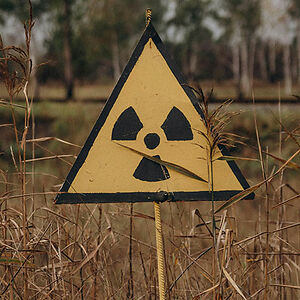
Kinda the opposite of what you're asking, but a major problem in nuclear disposal is how to convince people 10,000 years from now that this super fancy, highly fortified structure isn't the tomb of some great emperor or a temple to the god of the underworld, it's sealing away incredibly dangerous & extremely potent dark magic that *will* k**l any who enter & contaminate the air, water, & land for millenia if it escapes, and have those warnings be not only understood but also taken seriously, & not brushed off as superstition or a bluff.

My ex wife diagnosed herself (correctly) not off WebMD but at the local medical school library.
She was tired of scores of doctors doing nothing but prescribing yet another medicine to treat symptoms. She eventually began to wonder what the odds were that she'd have 10 different diseases with 20 different symptoms as opposed to having one disease that could account for all of them.
So she set out to find out if such a disease existed.
It did.
She then studied the clinical diagnostic criteria for that disease and began looking at her dozens upon dozens of test results and started putting two-and-two together.
She brought it up with our family practitioner who thought she just might be on to something. All of the specialists she saw thought she was an idiot, though.
"It's a one in a million chance you have that!" they all said.
"But the odds of me having these ten separate diseases to account for all my symptoms are one in 25 million," she'd point out. They still dismissed her as crazy.
She finally fought with the insurance company—with the family practitioner standing by her side the whole way—enough to get permission to visit probably the best specialist in the world for what she thought she had. He was in Seattle.
He confirmed she did. She had a relatively simple operation and was cured of all of those 20 symptoms overnight.
The whole experience of not being listened to by her doctors who were just interested only in prescribing medicine to treat symptoms instead of diagnosing root problems led her to go to medical school and become an endocrinologist.
Today she's an endocrinologist at one of the best hospitals in the world, and a medical school professor.
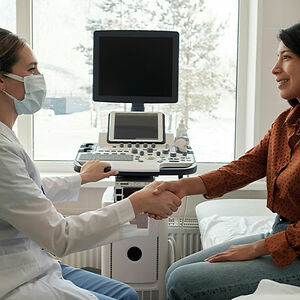
Serious answer: I try to ask my patients if they have googled their symptoms. It gives me a lot of information about what they are worried about. I then try to stay humble about their findings, and try to not be a jerk about that. Trust is not built by telling people they are stupid. However, it is hard to keep a straight face when a 50-year old male walks in and says “I think I have caught the Down’s syndrome”, or when a young woman thought she had testicular cancer.

Tl;Dr After 7 years of brain cancer remission, my husband's cancer came back with a vengeance. He had 5 more surgeries and after each one the side effects worsened, one of which is brain injury. He is now an entirely different man, but we are working on getting to know each other again. /end of tl;dr
We had been together for 7 years and living together ever since his first round of surgeries before his cancer came back. After the first resection surgery he recovered remarkably fast and had zero side effects. After recovering he even got a BS degree in Civil Engineering and was working towards his professional engineering license. I was in school on track for a PhD in a STEM field. Fast forward 6 years, and an annual MRI showed that the cancer was back and my husband needed it to be removed ASAP. We scheduled the surgery to happen 2 months after we found out it had come back.
The next 19 months were pure chaos. The only recourse for this kind of cancer was through surgical resection due to its location on the brain stem. In a short 19 month time frame (in no particular order), my husband had 4 resection surgeries, 1 emergency surgery that arose from a complication from one of the resections, and 30 treatments of IMRT radiation. The radiation happened between resections 2 and 3. It was h**l for him. It didn't help stop the cancer from growing, and my husband had two more resections and an emergency surgery after the radiation was complete.
During this time I got pregnant and had a baby boy. Trying for a baby was a contingency plan if the cancer ever came back. We wanted kids but we wanted to wait until we were graduated and settled into our careers, but if my husband needed more surgery we agreed to try for a baby before surgery. We had one month to try and were totally surprised when we conceived. Our son gave my husband the strength to fight this cancer and the motivation to focus on his recovery.
After each surgery the side effects got worse. Remember I said he had zero side effects when the cancer was first diagnosed and resected. Now that he was in his 30s rather than his 20s, his recovery time was a lot slower. Between those 5 surgeries and 30 treatments of radiation, I had to help my husband relearn how to walk and talk again (with inpatient and outpatient help, of course). As a matter of fact, our son and him learned to walk at the same time. It was a emotionally happy and proud time for us all!
The last two resection surgeries left him with a side effect called an acquired brain injury. He also has severe visual disabilities due to the surgeon disrupting the 3rd and 4th cranial nerves in an aggressive attempt to get all of the cancer out. My husband can no long look up or down nor open his eyes. He must use his forehead muscles to be able to open his eyelids slightly. His pupils are different size dilations, and this damage is permanent.
The visual disabilities were a cakewalk as compared to the brain injury. The brain injury transformed my type A, empathetic, highly trained engineer of a husband into an angry child with absolutely no empathy and A LOT of anger. It's been almost 2 years since he was formally diagnosed with a moderate brain injury. He is an entirely different person now. He has different interests, different tastes in clothes, food, etc, and requires so much sleep because of the damage to his brain. He didn't ask for this to happen; he just wanted to survive the cancer so he could be there for his son.
As of today he's made a lot of progress. He can function independently at home and is the caretaker of our 2.5 year old son while I work to support us. Our roles have changed 180 degrees, and he still struggles with empathy. He is now permanently disabled due to his visual and cognitive disabilities from his brain injury.
Most days are difficult because I'm still grieving the husband I once had. However just because it is difficult doesn't mean I'm giving up on him. We go to counseling (individual and marriage) and brain injury support groups. We attend a local church, which saved my sanity. I have single handedly built a support network that is made of my husband's medical doctors, our friends, our church family, and the few DNA family members and friends who have stuck around through this life change.
The sad part is that my husband's entire family (brothers, mother, father, aunts, uncles, cousins, etc) have ostracized us from the family. They have chosen to avoid and deny the situation because it's too difficult for them. That hurt a lot because my husband and I were very close to his DNA family for many years before the brain cancer came back. I am estranged from my family and have been for years and his family knew that. So I was left alone to handle my husband's rehabilitation and long term recovery. It was the hardest and darkest time of my life. I'm happy to say that our family of choice is better than what we had in our DNA family.
I love my husband and I will always be there for him. I take my wedding vows seriously. He needs love and support, not avoidance and denial. He's made a lot of progress in the past couple of years. I'm proud of him! Most days are hard but some days are good. I'm still getting to know this new husband of mine. We take life one day at a time and things are finally looking up for us.
There's a lot more to this situation, but I've already written a book! Hope someone will read this and be encouraged.
ETA: During the time my husband was having all of these surgeries, radiation, and subsequent recovery, I never gave up working on my PhD. I graduated and got an excellent job right away in my field. It has great pay, excellent benefits, and the perfect schedule for my little family. I get a 3 day weekend every other weekend! Despite all the chaos and struggling, I knew I couldn't give up on my degree. I knew that my husband and son depended on me to support them, so I had no choice. It was so hard. I can't express in words how hard it was. I wouldn't wish my life on my worst enemy. Brain injury changed our lives indefinitely.
Kinda the opposite of what you're asking, but a major problem in nuclear disposal is how to convince people 10,000 years from now that this super fancy, highly fortified structure isn't the tomb of some great emperor or a temple to the god of the underworld, it's sealing away incredibly dangerous & extremely potent dark magic that *will* k**l any who enter & contaminate the air, water, & land for millenia if it escapes, and have those warnings be not only understood but also taken seriously, & not brushed off as superstition or a bluff.
 No fees, cancel anytime