Get Premium
Dark mode theme is available exclusively for premium users. Learn more about the benefits of subscribing.
No fees, cancel anytime.

 Dark Mode Ad-Free Browsing Unlimited Content
 Ad-Free Browsing Unlimited Content Dark Mode
Join 1.2 million Panda readers who get the best art, memes, and fun stories every week!
Stereotypes are an unfortunate reality, but people are more vocal than ever about calling them out. Even in an era where diversity and inclusion are actively promoted, many harmful Asian stereotypes persist.
While some stereotypes, such as the belief that all Asians are naturally gifted academically and excel at math, are seen as outdated, others continue to exist. From the model minority myth to racial and ethnic stereotypes that belittle and discriminate against Asians, all of these ideas influence how people are perceived and treated.
Whether in movies, classrooms, at work, or during everyday interactions with strangers, Asians often report facing one or more stereotypes. We need to challenge these unconscious biases and harmful assumptions, and consider how they affect confidence, belonging, and opportunities.
This article examines 17 Asian stereotypes that have no place in today's world, including how they are perpetuated and why everyone needs to be aware of them.
This post may include affiliate links.
There are over 20 million Asian Americans living in the United States, yet this stereotype claims that Asians can never truly belong in Western countries. Korean Americans, Japanese Americans, Filipino Americans, and Chinese Americans, to name a few, often face this stereotype.
Asian immigrants who identify with other cultures have half of their identities erased by the belief that they are Asian first, American or European second, regardless of how they see themselves. People frequently ask where they are “really from,” even if they were born outside of Asia.
The perpetual foreigner myth is used to exclude Asians from Western culture and reached a peak during the COVID-19 pandemic when Asians were repeatedly targeted as “outsiders.” More education on Asian American history is essential to continue fighting this narrative.

The idea that all Asians look the same is patently false and an example of how members of a minority group are often treated as a monolith. It erases individuality by implying that Asians are indistinguishable and often causes them to be grouped into a single “Chinese” label.
A TikToker broke it down by examining the physical differences between East Asians, Central Asians, South Asians, and West Asians that Westerners often overlook.
That ignorance crops up in Hollywood casting and in headlines that mix up Asian celebrities, with little effort to respect cultural specificity.
Community activists emphasize the diversity of Asia, which is home to thousands of ethnic groups, and stress the importance of accurate representation in media and public life to eradicate this stereotype fully.

All Asians look the same. All white people look the same. Everyone looks the same, I have face blindness.
Tiger parenting is often joked about by Asian people on TikTok, but this stereotype has deeper origins that shape how Westerners view Asian families. It suggests that all Asian parents are cold, strict, and obsessed with success, rarely showing love or warmth.
This idea was popularized by law professor Amy Chua in her book “Battle Hymn of the Tiger Mother,” but it has since been blown out of proportion within Asian communities and spread to global sitcoms and parenting debates.
It portrays Asian students’ achievements as results of abuse rather than skill or intelligence, undermining their independence and family bonds. Many people see this stereotype as culturally simplistic and overly broad in today's parenting.

Again, as an immigrant living in the US, I see this to some extent as being true in ALL immigrant communities. In general, we came here to give a better live to our children (I came here as a child, so I didn't have any such plans). So if that was the goal, then it is with that in mind that we push our children to succeed to make that sacrifice of leaving our homelands worth it. I think the only difference might be the idea of what it means to be successful. My mother has three sons, one is an architect, one an engineer, and the other is a scientist. She only really considers the scientist one to have lived up to her expectations because he has a PhD. I, the engineer, am the only real disappointment though, because I don't even have a masters. But for other immigrant families, success means working for yourself. For others, it's becoming a lawyer or doctor. I see this in my friends who came here from India, Russia, China, Peru, etc.
This stereotype frames Asian people as uncivilized or cruel by exaggerating or fabricating the idea that eating dog meat is a cultural norm. It’s misleading, harmful, and dehumanizing.
This trope has been repeated for decades in jokes, cartoons, and online comments. It’s often used to insult Asians by mocking their food traditions and to perpetuate other racist myths.
In reality, most Asian cultures do not consume dog meat. While it is still consumed to a limited extent in certain countries, most have imposed nationwide bans on it.
One woman took to TikTok to confirm that 99.7% of the Chinese population does not eat dog, and it’s similarly scarce in many other countries.

Starving people eat their pets before turning to leaves and tree bark. This has been true in China and any other place where people have starved en masse. When I was there, they were very embarrassed about this part of their past but there were a few special restaurants still serving dog as an ethnic dish. No, I didn't.
The stereotype that Asian men are undesirable comes from how the media and social media depict them. It creates the idea that they are weak, effeminate, or unattractive, denying them full personhood and reinforcing racial hierarchies of masculinity.
Take movies, for example. Asian actors are often cast as sidekicks rather than the leading men and are frequently used for comic relief, with limited chances for romantic roles. As a result, Asian men face prejudice on dating apps and in real life.
Popular Asian actors, such as Benedict Wong, have spoken out against the Asian sidekick stereotype and called for more diverse roles. By reclaiming representation and advocating for more nuanced portrayals of Asian men, this stereotype is being challenged and dismantled.
This stereotype comes from the “model minority” myth and is a clear example of why grouping millions of people under one ethnic label can be harmful. It overlooks socioeconomic differences within Asian communities by implying that they are all generally wealthy.
The “wealthy Asian immigrant” stereotype is supported by media stories that focus on the privileged minority and overlook the larger reality. Asian Pacific American populations are among those at higher risk of poverty, yet that rarely makes headlines.
Advocacy groups have called for breaking down data into smaller groups to fight this invisibility and make sure that marginalized Asian communities are recognized in policies or assistance.
Tokenism reduces Asians to a single representative, where one individual is considered “enough” to showcase diversity.
This is often seen in movies, TV shows, and advertising campaigns. In real life, people apply the same underlying prejudice to Asian students, colleagues, neighbors, and friends, treating them as checkboxes rather than individuals with their own cultural heritage, aspirations, and lived experiences. They’re expected to represent all Asian communities.
Black Americans have also spoken out against tokenism, so it’s a stereotype affecting multiple ethnicities. Authentic inclusion is improving, but to achieve genuine, non-performative representation, we need to highlight a diversity of nuanced voices.

After watching "To sir with love" I read the biography it was based on (by E. R. Braithwaite, well worth the read). The author was given a caseload including an individual from the far east, on the grounds that it was "his people"... His response was that anyone from a different island in the Caribbean wouldn't consider themselves his people, but he'd do his best...
The fetishization of Asian women has been a long-standing problem, fueled by stereotypes that depict them as exotic and submissive. Media portrayals, including the “mail-order bride” trope, continue to perpetuate these harmful views through decades of racial sexism that influence real-life interactions.
According to Ms. Magazine, Asian American women are the primary victims of anti-Asian hate crimes, with high rates of sexual harassment and violence. Many also report receiving unwanted sexual messages on dating apps and social media.
This stereotype has no place in modern society because it consistently endangers Asian women. Feminist movements within Asian communities are actively challenging these tropes and insisting that Asian women be seen as individuals, not fetishes.
Speaking as a Brazilian living in the US, I see this stereotype about South American women, and Brazilian women in particular, as well. It's really stupid. When it comes to Asian, and particularly Japanese, women, I do think that media plays into the tropes though in ways which are problematic. Japanese anime often depicts women in general as sexual objects, and fetishizes them in ways which have serious consequences. Hollywood movies depicts asian women as either demure porcelain statues to be ogled, or as s**y vixens with martial arts skills.
The model minority stereotype implies that all Asians are intelligent, hardworking, and academically talented. While often seen as a compliment, Asian adults find it tiring because it’s a broad generalization that hides the variety of struggles within the Asian community.
A study by the Pew Research Center shows that two-thirds of Asian adults with a postgraduate degree encounter strangers assuming they excel in math and science. The issue is that adults of other ethnicities aren’t perceived the same way, which singles out Asians.
People often overlook the significant socioeconomic differences among Asian sub-groups and use the model minority myth against Asians, implying that intelligence and effort can beat racism and discouraging them from seeking help.
Asian food is incredibly diverse, but this stereotype dismisses it as “weird”, “disgusting”, or inferior to “normal” Western cuisine. From the false assumption that Chinese food includes dogs to people calling Indian food “smelly”, this myth appears everywhere.
Popular celebrity chefs, including Gordon Ramsay and Andrew Zimmern, have faced criticism for mocking or misrepresenting Asian cuisine, overshadowing Asian chefs and centuries-old recipes.
Food-based racism is often dismissed, but it affects cultural pride and gives Westerners another “difference” to emphasize when perpetuating stereotypes about Asian people. More respect for diverse, complex culinary traditions is long overdue in the US and Europe.
Good! More yummy food for me! I’ll take all the Chinese, Thai, Japanese, and Indian food! :D
There is a double stereotype about Asian myths: some people believe they are successful academically and wealthy, while others see them as small-business owners, cab drivers, and corner-store clerks.
The latter view persists in sitcoms, comedy sketches, and everyday conversations. People in the Asian American community are often asked if their families own stores or laundromats, implying they can't move beyond convenience roles professionally.
Along with the contradictory idea that Asians are obsessed with success, this stereotype reveals systemic barriers that push many Asian families into these industries, overlooking their professional achievements and undervaluing their resilience and hard work.
This is one of the oldest and most racist Asian stereotypes, and it has no place in a diverse modern world. It reduces a natural physical feature to a demeaning joke, enabling people to mock and discriminate against Asian individuals silently.
The history of making fun of “slanted eyes” in old cartoons and media has carried over into today’s schoolyards and social media. Many celebrities and brands, including Dior, have been criticized for mocking Asian eyes, and TikTokers have spoken out against the recent “Fox Eyes” trend.
The stereotype that Asian people “can’t see” because of their eye shape is outdated, cruel, and always offensive. It normalizes dividing society based on ethnic features and reinforces bullying.
Asians have long histories in Western countries, yet this stereotype depicts them as newcomers who are not fully integrated into foreign cultures. It dismisses their multi-generational international histories and fosters microaggressions by viewing them as outsiders.
Many U.S.-born Asian adults are asked where they’ve “come from,” with people surprised at their fluent English and unable to believe they aren’t immigrants.
Some may not even identify as Asian because they weren’t born in Asia, yet they aren’t fully accepted in their home countries. Historical records of Asians immigrating to Western countries and establishing roots should disprove this stereotype, but it persists due to ignorance and underlying prejudices.
Many ethnic minorities are unfairly labeled as miserly or obsessed with hoarding wealth, but this is just another common Asian stereotype. It stigmatizes immigrant survival strategies and helps explain why poverty is often overlooked in Asian communities.
Some Asian cultures tend to be more frugal than Western cultures, often due to lower living costs or a desire to minimize waste. However, this has been mistaken for stinginess and fueled by the false belief that all Asians are wealthy.
It is unfair and discriminatory to view financial caution as a racial fault or reason to discriminate against Asian people. It also overlooks the systemic challenges that affect many immigrants' spending habits.
Just because someone is good with managing their finances, doesn’t make them cheap!
It’s often dismissed as a joke, but the stereotype that Asians speak terrible English is incredibly harmful and offensive. Not only does it belittle those who speak native English, but it also excludes those who are learning it.
This stereotype often reduces Asian people to caricatures, with media characters being given broken English lines or parody voices. One man on TikTok exposed how ignorant it is to assume that Asian people speak bad English because it reinforces insecurities and makes them feel like outsiders. It has become normal to mock voices that are "different," and Asians are routinely the target of jokes.
People assume exaggerated impressions on social media, and some are even surprised that Asian Americans have American accents.

Most Asian immigrants have difficulty with the English language, it's definitely true. The sounds are very different. As someone who has learned a few languages as an adult, I have some broad accents in those languages too. It's natural. Amusingly, after only speaking French for several months, when I next spoke English, I had a strong French accent!
Each Asian country and culture is unique, but people often lump them together into a single identity, ignoring their cultural, national, and ethnic diversity. Many Asian stereotypes come from this oversimplification, and the media mainly promotes these views.
For example, East Asians are commonly portrayed as interchangeable with South or Southeast Asians, while other regions like Central Asia are completely overlooked. Hollywood movies tend to focus heavily on East Asia, which reinforces this single-story image.
Asians have long emphasized their rich diversity, and we need to push for more accurate representations that highlight the distinct histories, languages, and cultural identities of Asian communities.
The phrase “Yellow Peril” was coined by Jacques Novicow in 1895 to describe the fear that Asians would disrupt Western values. It appeared in newspapers, political speeches, and propaganda that dehumanized Asians as an “invading horde.”
Echoes of this fear persist today. Many Asian Americans are scapegoated and discriminated against when problems occur, such as during the COVID-19 pandemic. People look for someone to blame, so they unfairly place the blame on minority populations.
Xenophobic panic fuels policy and propaganda, but people of Asian descent continue to stand up against this stereotype. They must receive greater support and solidarity in modern society.
This is true of all immigrant groups. When the Irish came, Americans were terrified of their Catholicism. When Italians came, Americans were terrified of their Southern European cultures. etc etc etc. That being said, it was the Chinese who were the first actual target of racist immigration laws in the United States. And Asians continued to be the ONLY target of these laws until the 1920s. Then they started limiting the number of "non-white" Europeans and other groups.

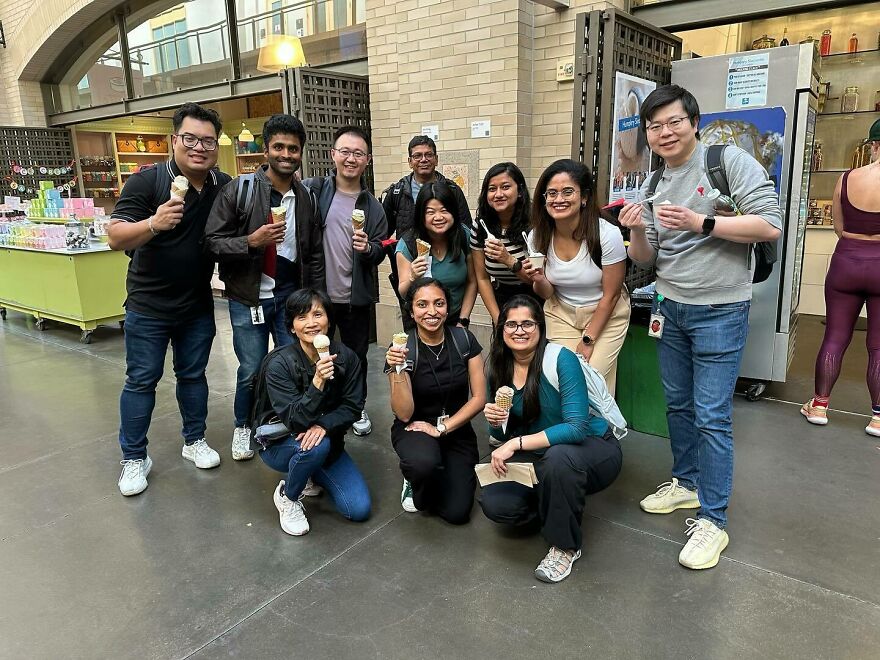
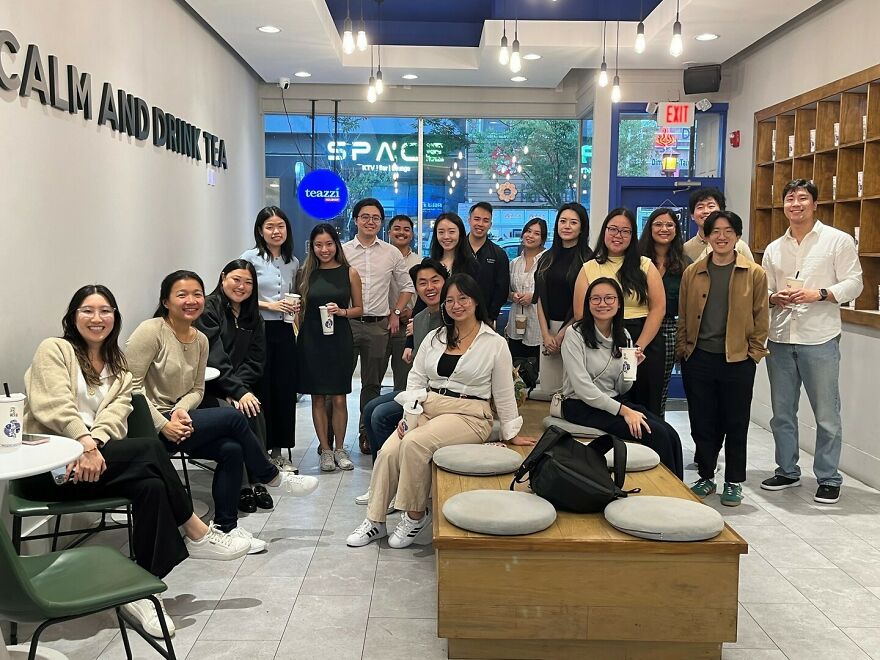
Weirdly, in an article decrying Asian stereotyping, almost every picture is of far-eastern Asians, as though Asia is just China, Japan and the peripheral countries of far-eastern Asia. In fact, only one picture shows people who are definitely from the Indian sub-continental region, and even they are in a predominantly East Asian group. Come on, BP, you don't fight stereotypes by reinforcing them.

a stupid and rude stereotype (more specific to south asians) is that we stink. WE DO NOT ALL HAVE BAD HYGIENE. a lot of south asians just smell like spices since they cook with spices in their house.

Curry is a very strong spice, and it can "seep" through your pores. Garlic has the same effect and was used to discriminate Italians for the longest time.
Load More Replies... It's actually completely different in Australia, because we live in the middle of Asian countries. We don't have most of these problems. I'm not saying we don't have other problems, but most of these are mainly American.
I’m sorry to all our Asian pandas who’ve experienced these blatantly ignorant stereotypes. :(…ps not all of us think this way and we appreciate your beautiful cultures!

One key point is that even positive stereotypes can be harmful. "You're Asian? Aren't you good at math?" It's interesting to me when stereotypes are over-generalizations, versus when they're flat-out wrong. One is that Japanese- and Chinese-Americans people tend to be super-smart scientists, programmers, etc., but Filipino-Americans tend to be in home-healthcare aides and other low-pay healthcare related jobs. But at the median, Filipino-Americans actually earn more in America than white-, Japanese- or Chinese-Americans. A LOT more. Of course, this shouldn't create its own stereotypes. It's also worth noting that properly understood, "Asian" includes "Middle Eastern," even though this conflicts with its common, American usage as a correction of "Oriental," which meant "Eastern" but became thought of as racist. Israelis, Arabs, Iranians, Afghanis and even many Russians are also Asians, even though they often aren't thought of as such among older, white Americans because they aren't from the *far* East. One stereotype from my youth that seems odd nowadays is that many Americans used to expect that Asians were short. In most cases, this merely reflected typical dietary issues but mostly from home countries... and it affected other groups, such as Italians (as typified by Sophia Petrillo from the Golden Girls.)!
I’ll give you the “oriental” comment. The amount of times I’ve heard this used is ridiculous. I hate to say it but it seems generational. I hear way more boomers use it than any other generation. Let’s hope it dies with them.
Load More Replies... Weirdly, in an article decrying Asian stereotyping, almost every picture is of far-eastern Asians, as though Asia is just China, Japan and the peripheral countries of far-eastern Asia. In fact, only one picture shows people who are definitely from the Indian sub-continental region, and even they are in a predominantly East Asian group. Come on, BP, you don't fight stereotypes by reinforcing them.
a stupid and rude stereotype (more specific to south asians) is that we stink. WE DO NOT ALL HAVE BAD HYGIENE. a lot of south asians just smell like spices since they cook with spices in their house.
Curry is a very strong spice, and it can "seep" through your pores. Garlic has the same effect and was used to discriminate Italians for the longest time.
Load More Replies... It's actually completely different in Australia, because we live in the middle of Asian countries. We don't have most of these problems. I'm not saying we don't have other problems, but most of these are mainly American.
I’m sorry to all our Asian pandas who’ve experienced these blatantly ignorant stereotypes. :(…ps not all of us think this way and we appreciate your beautiful cultures!
One key point is that even positive stereotypes can be harmful. "You're Asian? Aren't you good at math?" It's interesting to me when stereotypes are over-generalizations, versus when they're flat-out wrong. One is that Japanese- and Chinese-Americans people tend to be super-smart scientists, programmers, etc., but Filipino-Americans tend to be in home-healthcare aides and other low-pay healthcare related jobs. But at the median, Filipino-Americans actually earn more in America than white-, Japanese- or Chinese-Americans. A LOT more. Of course, this shouldn't create its own stereotypes. It's also worth noting that properly understood, "Asian" includes "Middle Eastern," even though this conflicts with its common, American usage as a correction of "Oriental," which meant "Eastern" but became thought of as racist. Israelis, Arabs, Iranians, Afghanis and even many Russians are also Asians, even though they often aren't thought of as such among older, white Americans because they aren't from the *far* East. One stereotype from my youth that seems odd nowadays is that many Americans used to expect that Asians were short. In most cases, this merely reflected typical dietary issues but mostly from home countries... and it affected other groups, such as Italians (as typified by Sophia Petrillo from the Golden Girls.)!
I’ll give you the “oriental” comment. The amount of times I’ve heard this used is ridiculous. I hate to say it but it seems generational. I hear way more boomers use it than any other generation. Let’s hope it dies with them.
Load More Replies...





















 No fees, cancel anytime
 then open in external browser


 and click "Open in External Browser"