Get Premium
Dark mode theme is available exclusively for premium users. Learn more about the benefits of subscribing.
No fees, cancel anytime.

 Dark Mode Ad-Free Browsing Unlimited Content
 Ad-Free Browsing Unlimited Content Dark Mode
Join 1.2 million Panda readers who get the best art, memes, and fun stories every week!
The United States is a vast country, and with its size comes an incredible number of churches. In fact, estimates suggest there are between 380,000 and 420,000 across the nation—ranging from soaring cathedrals to humble house gatherings.
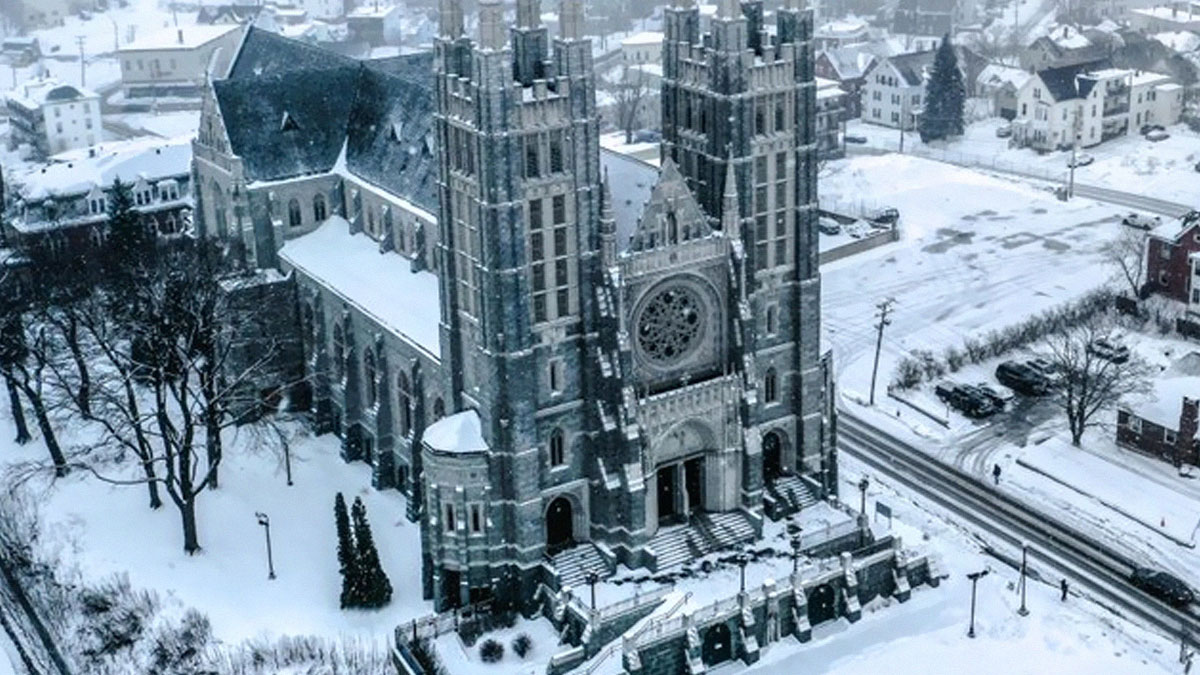
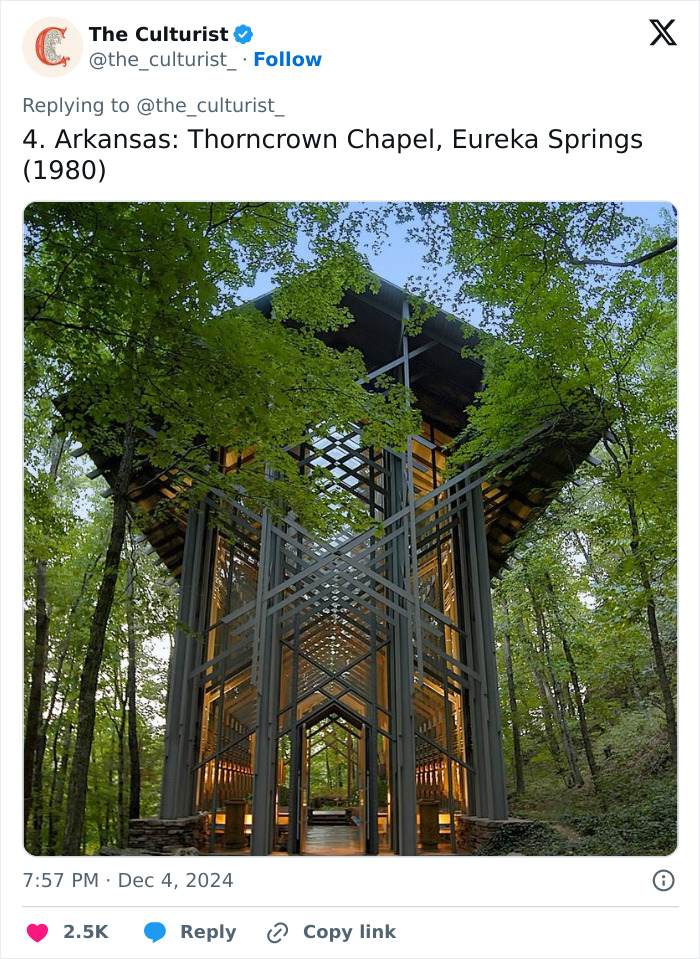
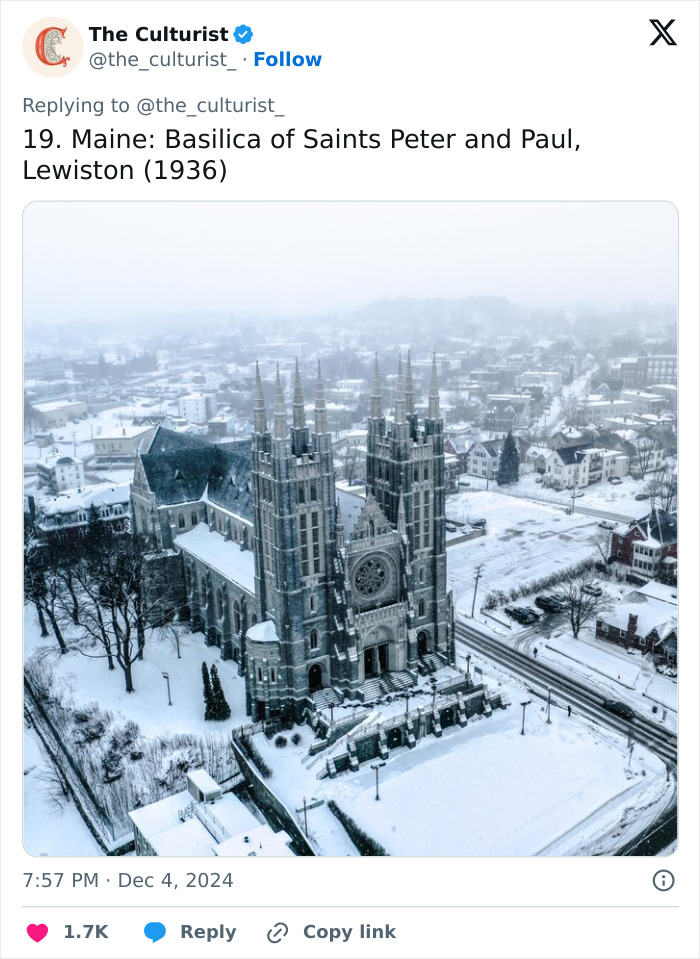
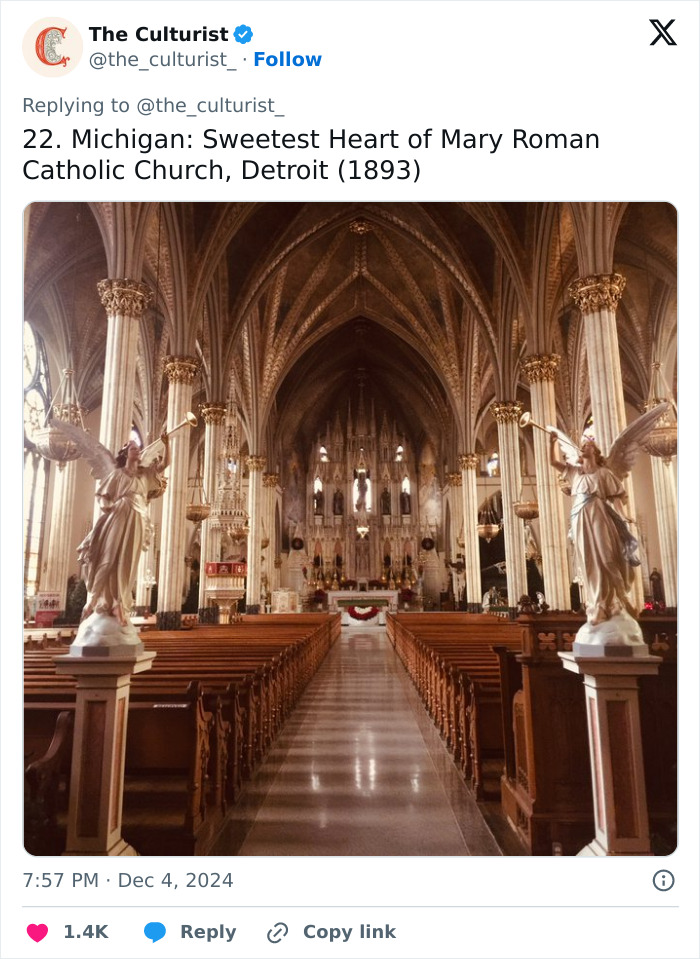
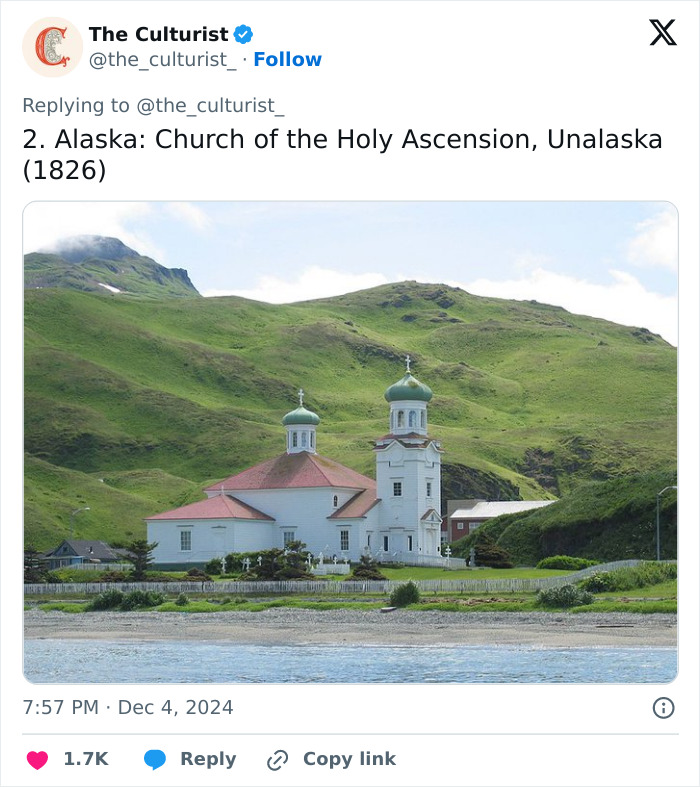
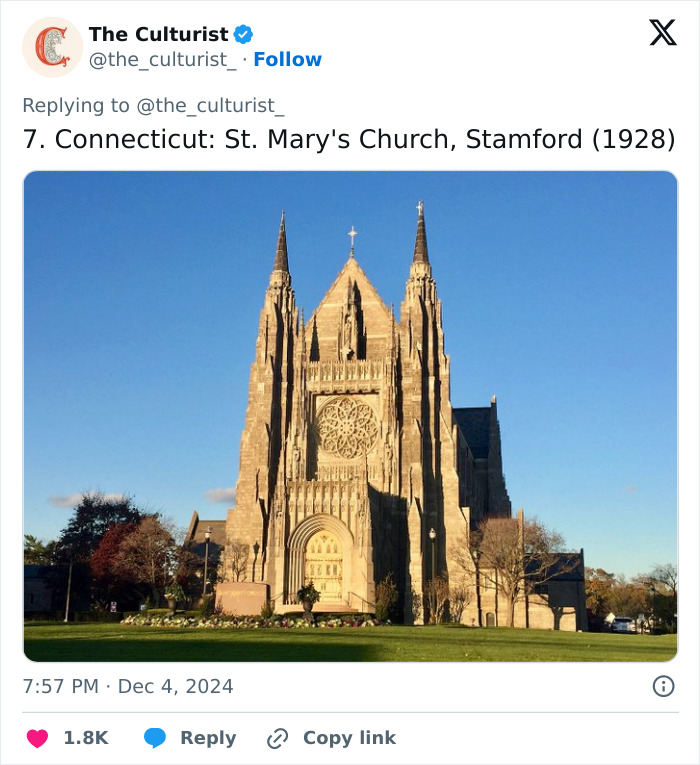
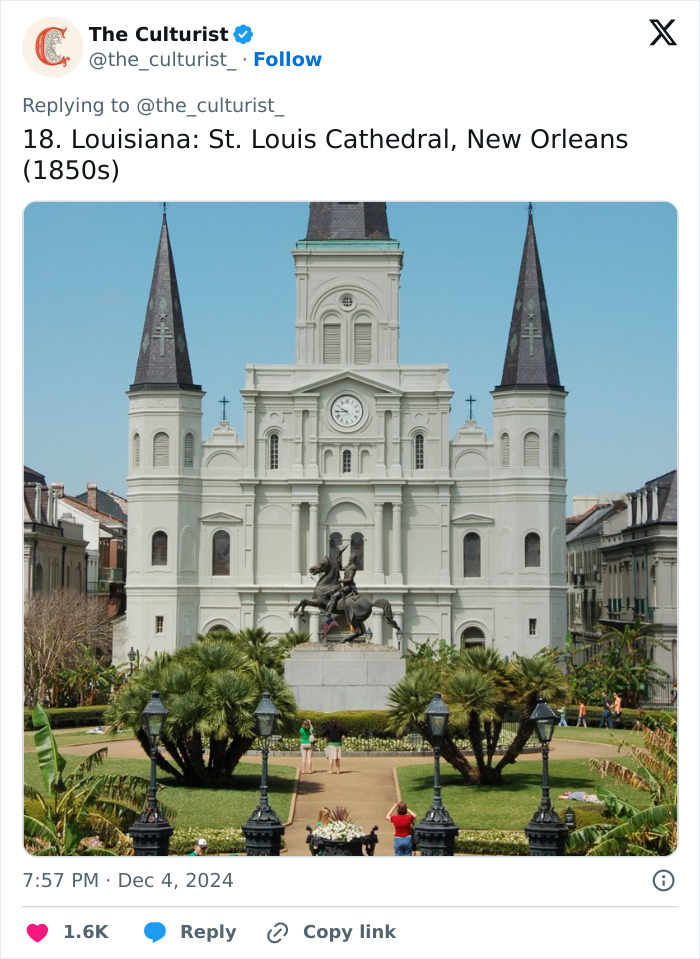
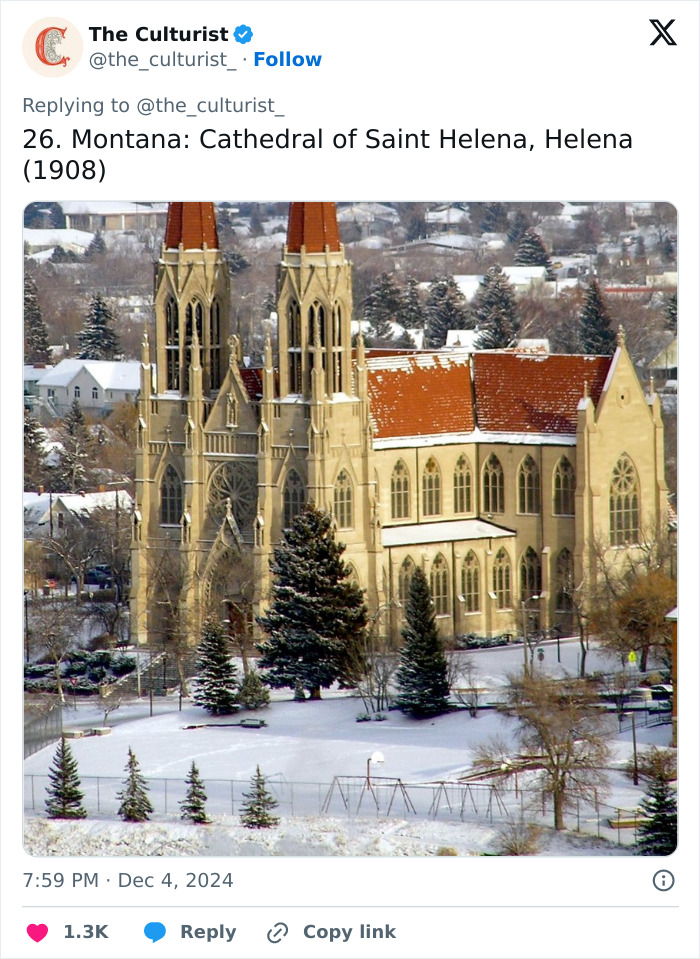
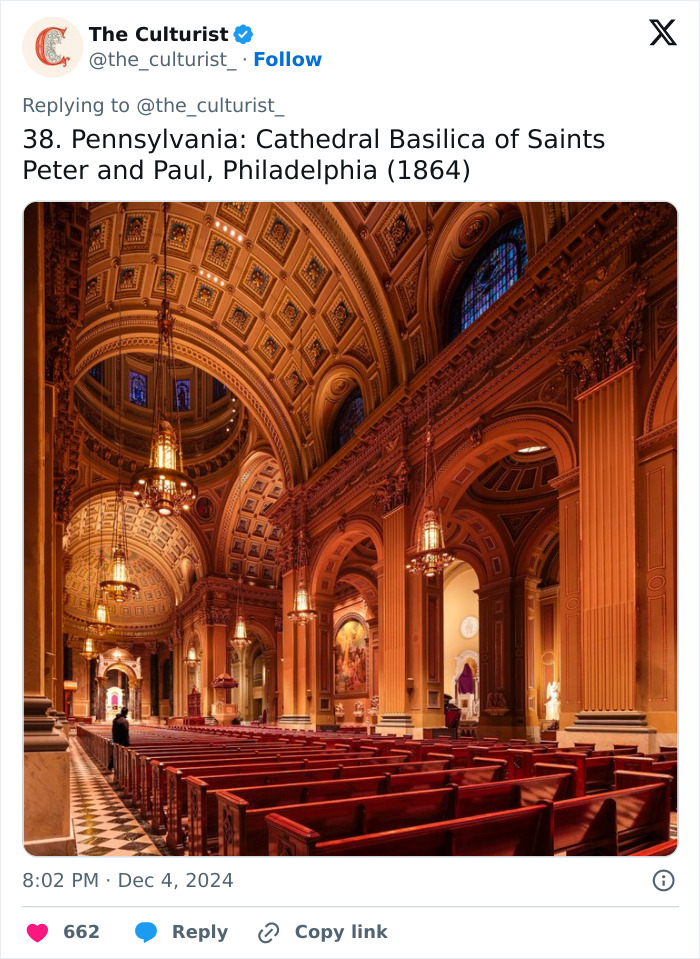
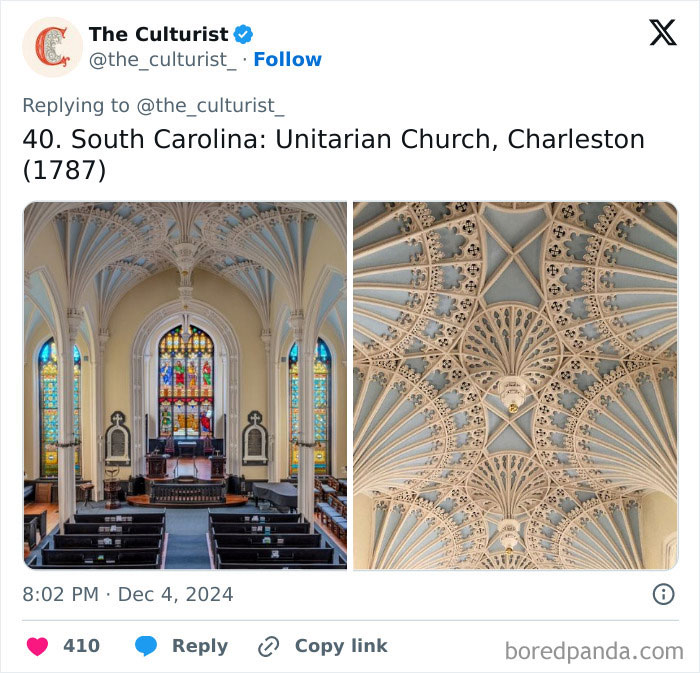
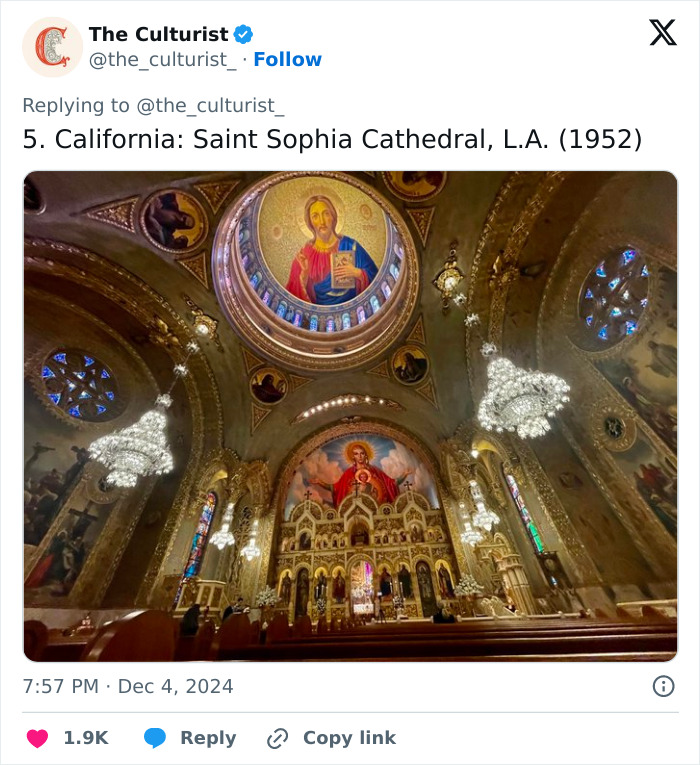
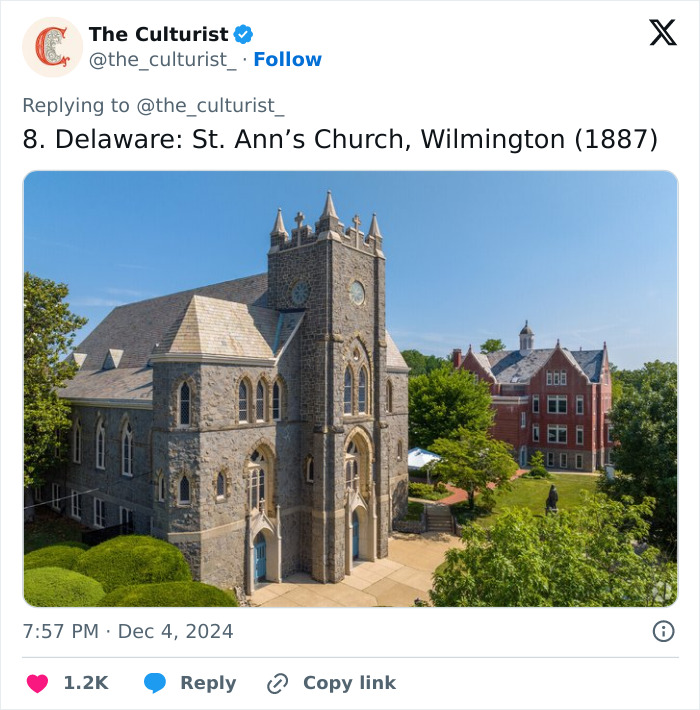
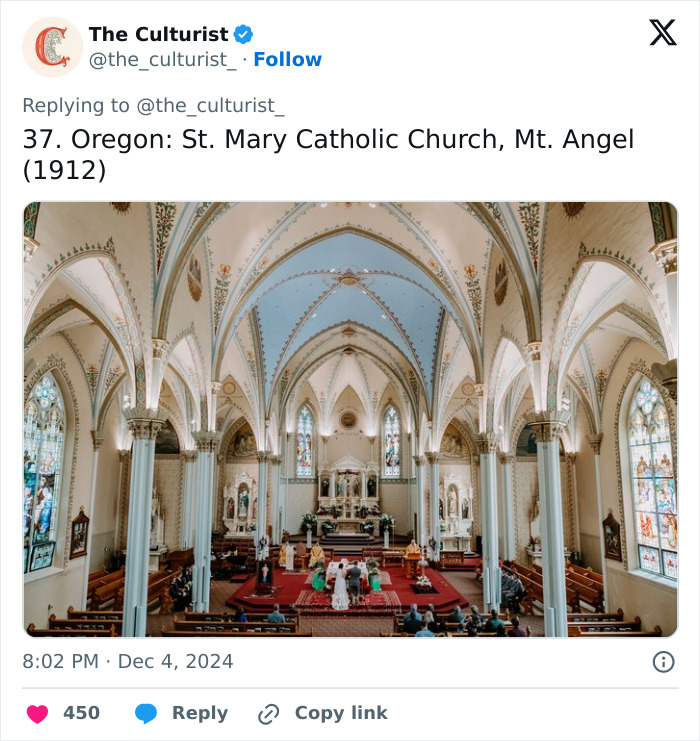
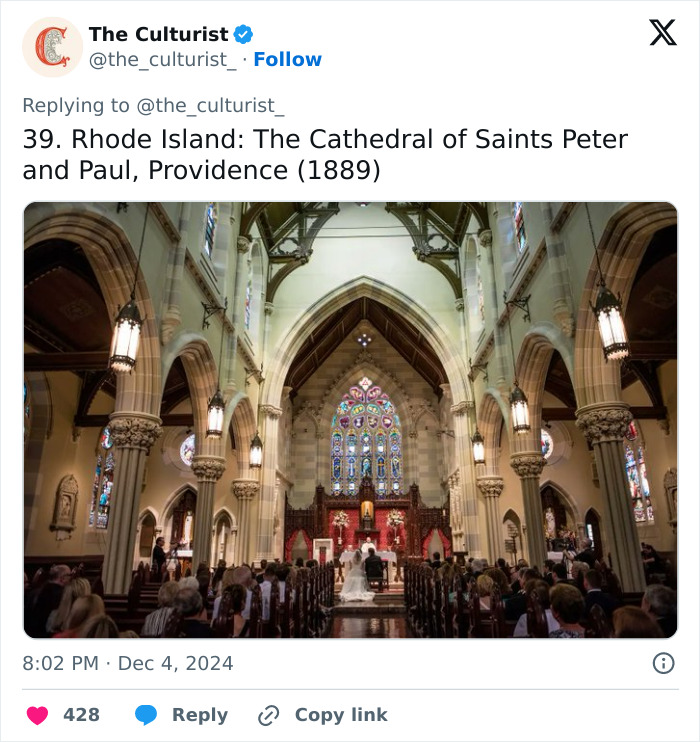
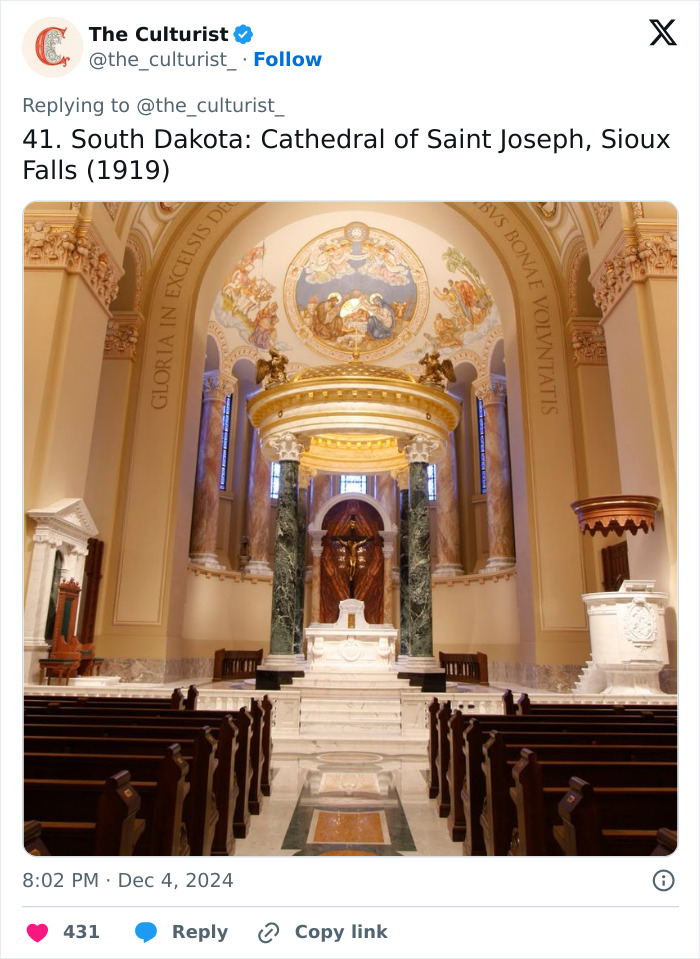
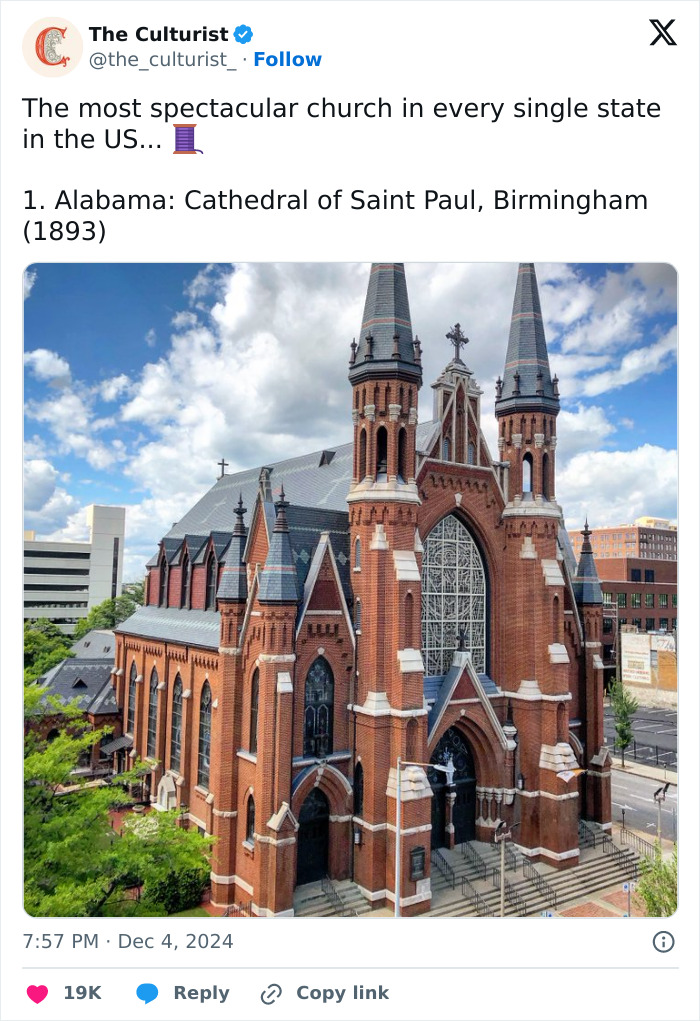
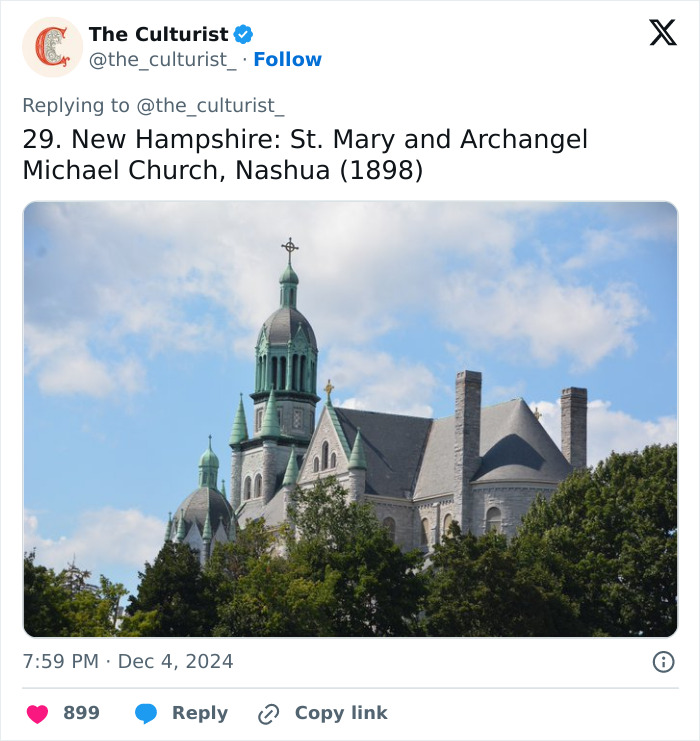
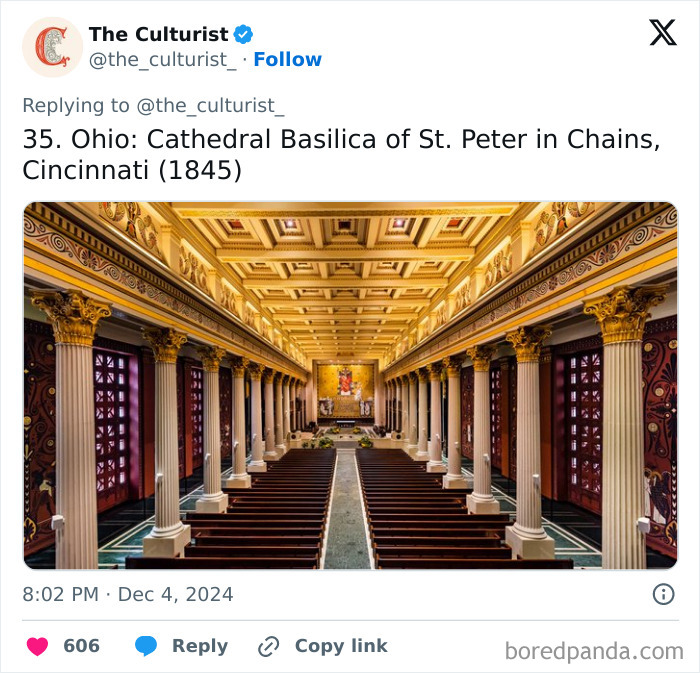
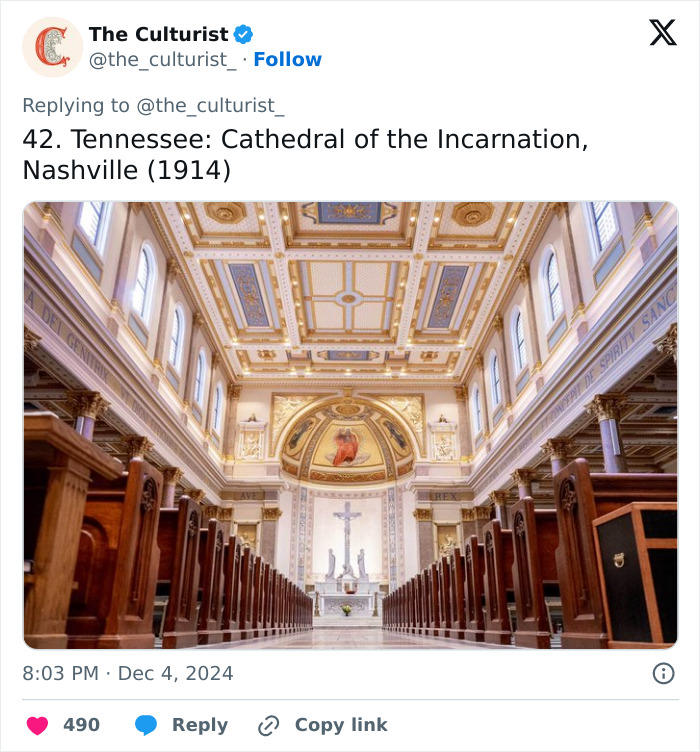
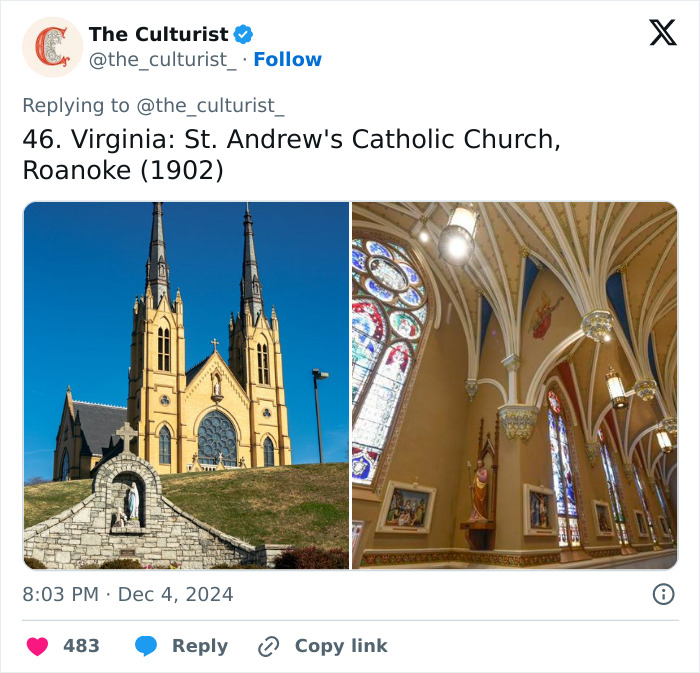
Seeing them all in person would be nearly impossible, but we can still appreciate some of the most stunning ones the country has to offer. Luckily, The Culturist has compiled a list showcasing the most spectacular church in every US state.
Scroll down to admire their breath-taking architecture and diversity, and don’t forget to upvote the ones that speak to you most.
This post may include affiliate links.
Whether you’re religious or not, there’s a lot to be said about the architectural beauty of church buildings.
They’re often some of the oldest and most distinctive structures in any town, and each one tells a story about the community that built it. From small wooden chapels to grand sanctuaries, they reflect how history and culture have evolved over time.
In his 2004 essay A Short History of Church Building, architect Bruce R. Wardell wrote that churches have always been shaped by the people who built them—not just their faith, but their needs, surroundings, and social life.
In early Christianity, there weren’t even buildings at all. People met in homes, creating simple “House-Churches” that were more about gathering safely than architectural style.

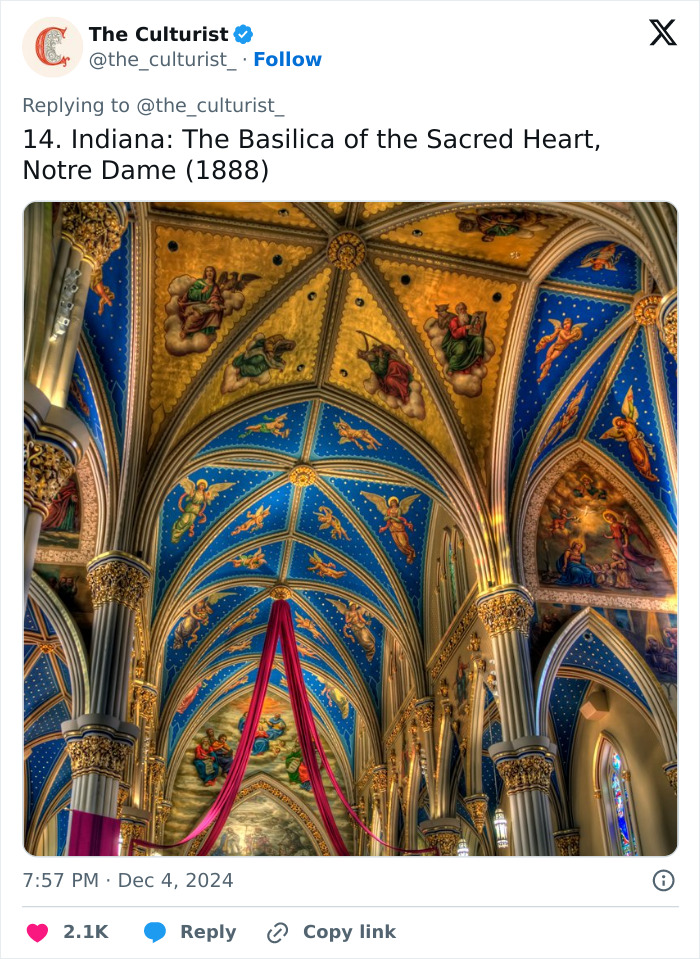
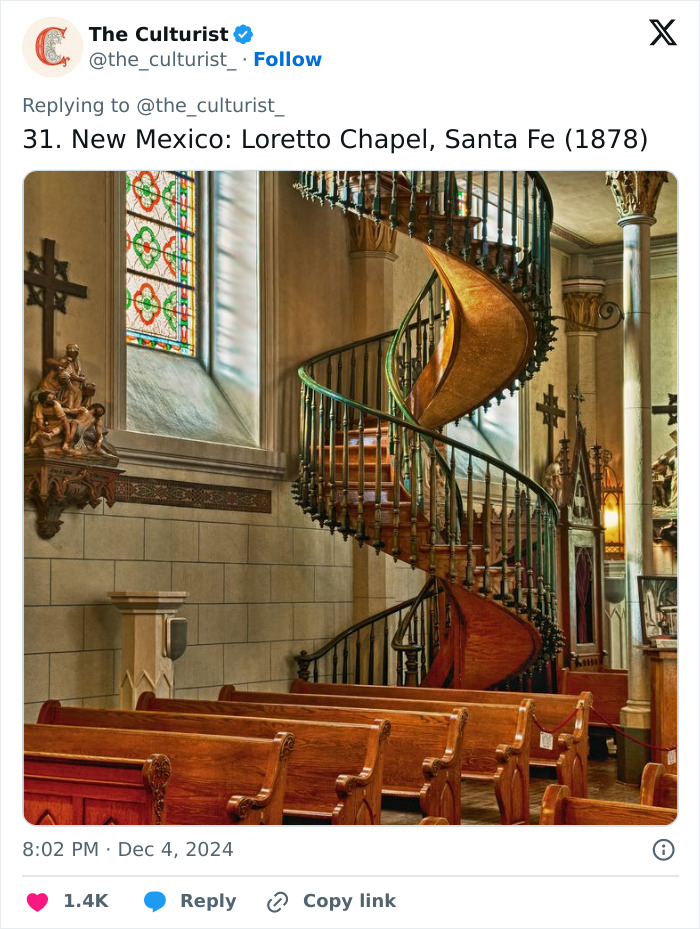
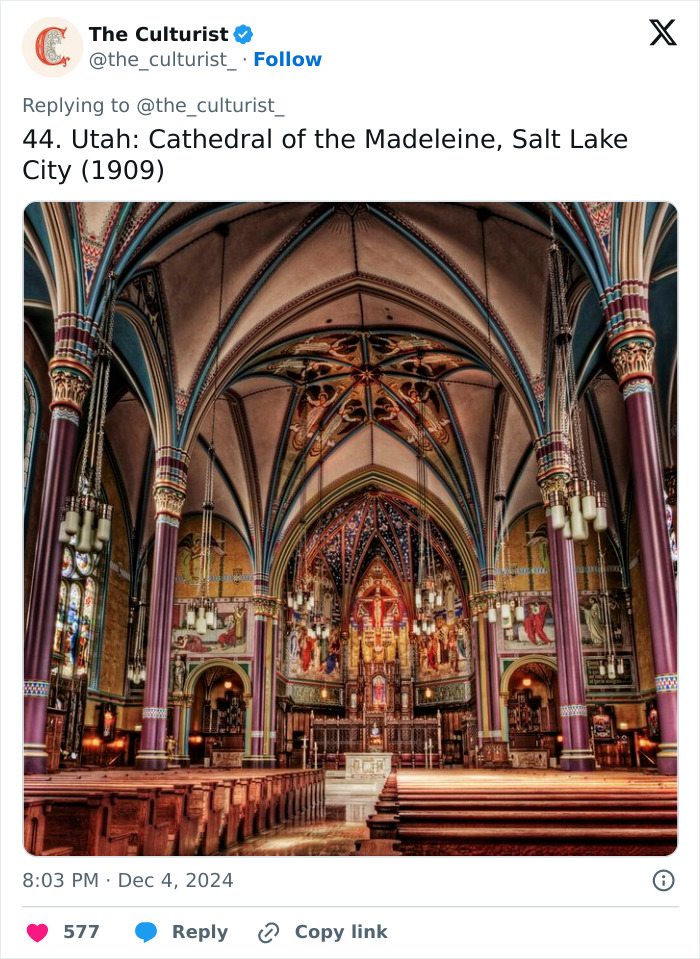
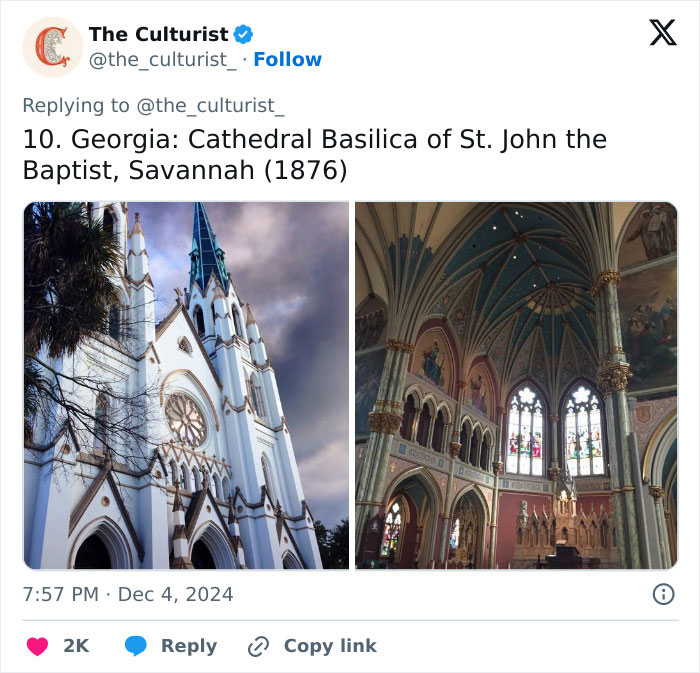
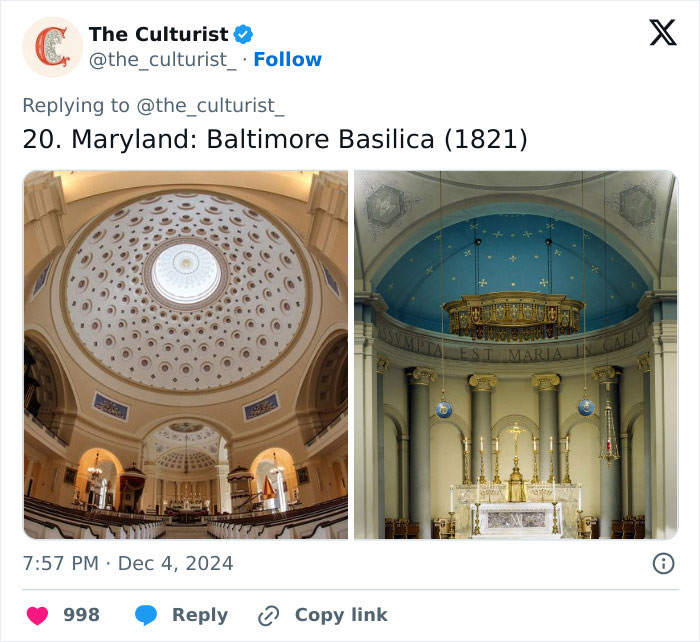
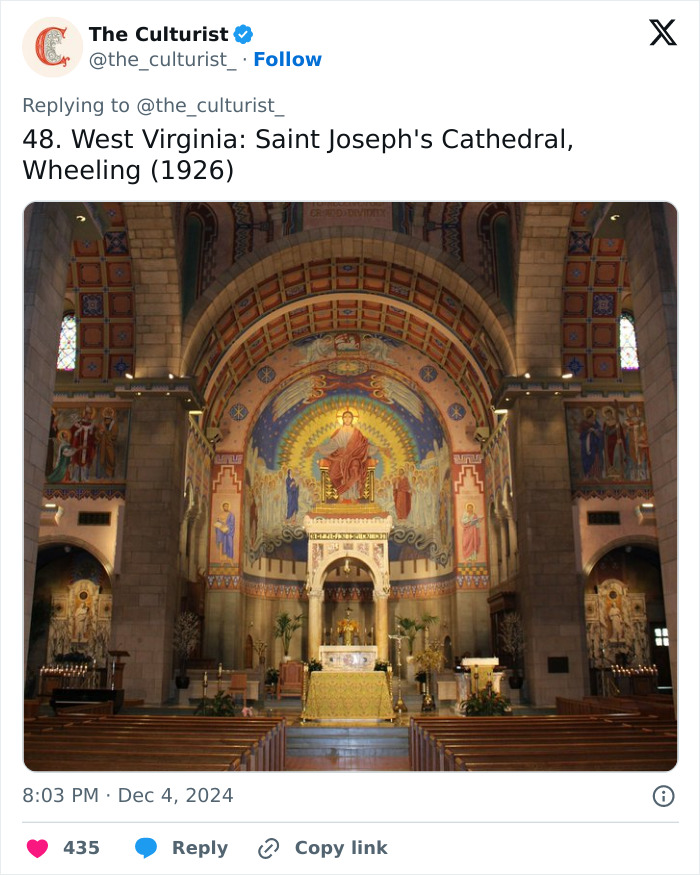
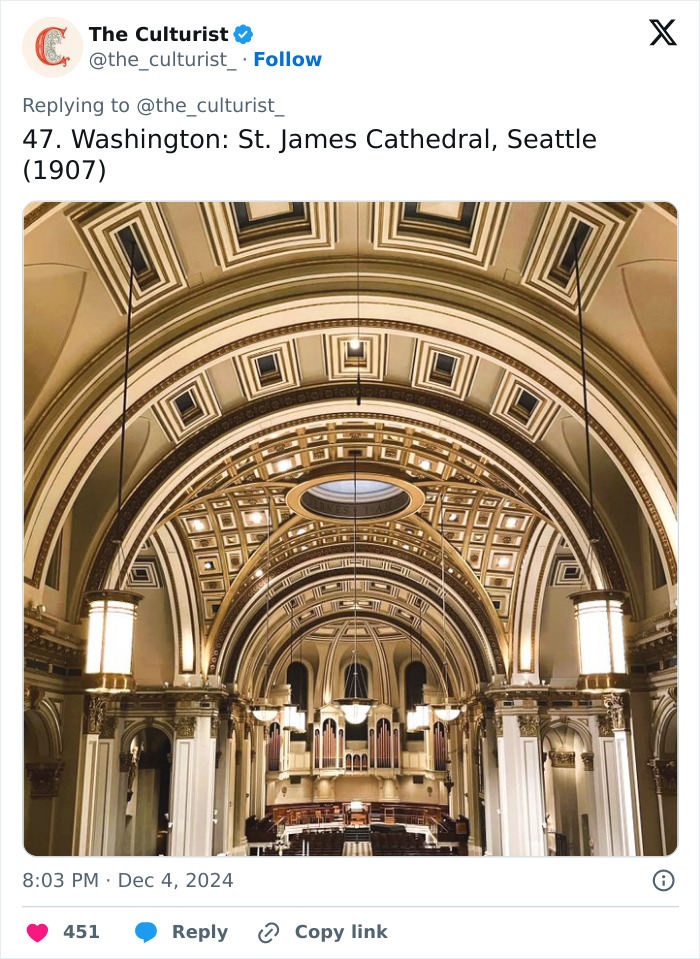
This is gorgeous. I especially love the pulpit which has a winding staircase and blue mosaic starry ceiling.
As Christianity spread and eventually became recognized by the Roman Empire, these gatherings evolved into purpose-built spaces. That’s when the basilica design appeared, with long, open halls, high ceilings, and natural light.
Originally used for Roman public buildings, the basilica was adapted for worship to accommodate larger congregations and to emphasize a clear central axis leading toward the altar, symbolizing the spiritual path toward God.
Over time, new styles began to develop across Europe. After the fall of Rome, Wardell explains, Christianity started moving away from politics and material power toward ideas of eternity and spiritual meaning.
The monastery became central, not just as a religious place, but as a model for how an entire community could be built around faith. This period gave rise to what became known as the Romanesque era, known for the reappearance of a strong and permanent civic order.
Over the following centuries, this approach developed further into the Gothic style. The idea of God as a constant presence became more apparent, and that belief was expressed through taller, more open spaces.
Vertical lines, clerestory windows, and vaulted ceilings created a sense of height and lightness, helping people feel closer to something beyond themselves. In Gothic cathedrals, Wardell writes, God felt immediate, and the building itself became a way to communicate that directly.

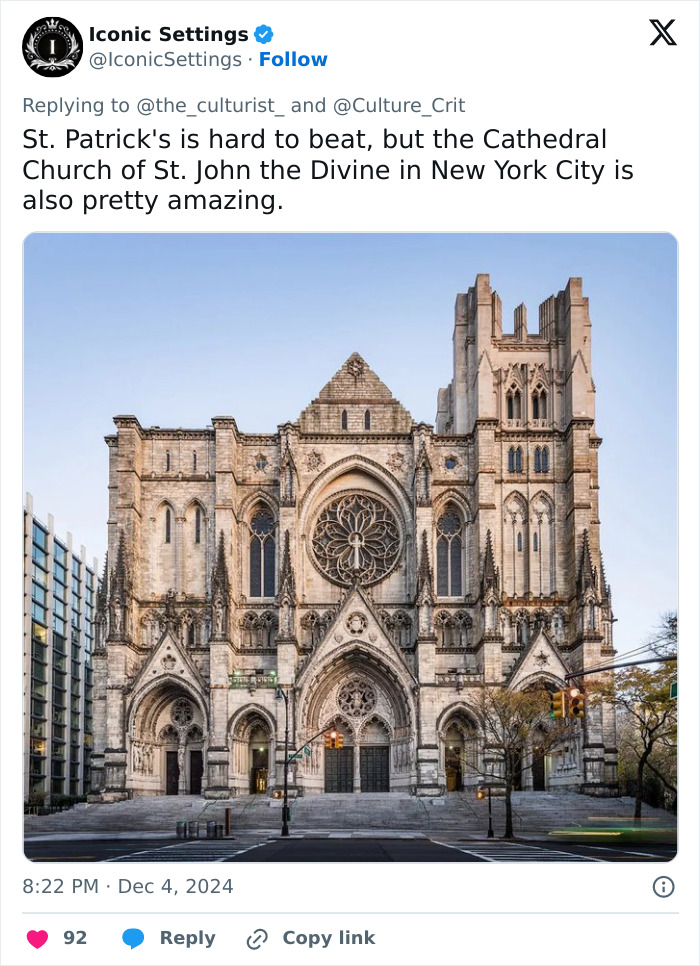
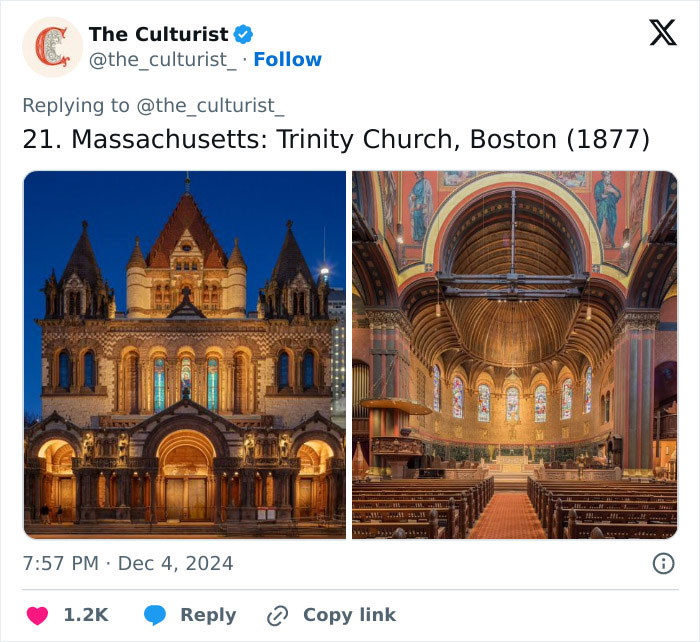
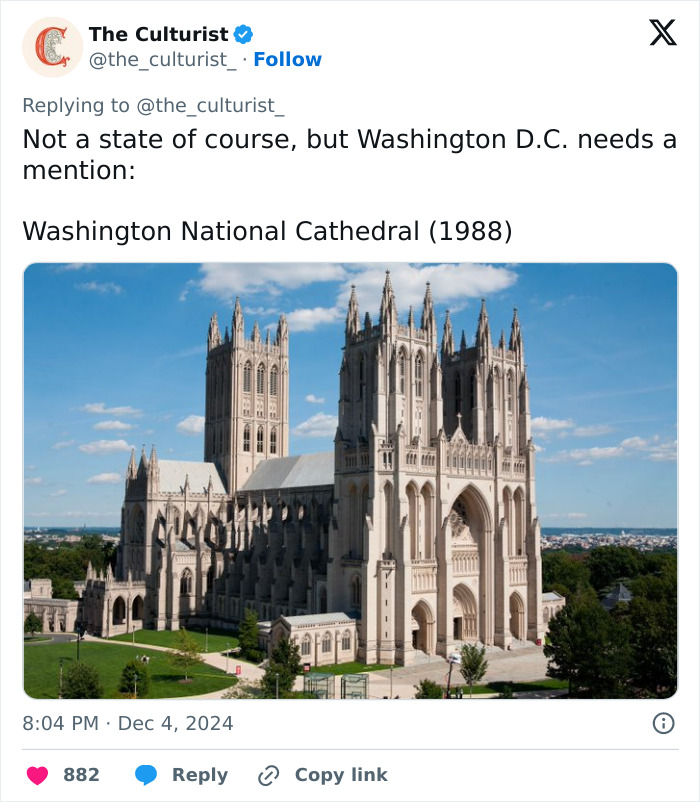
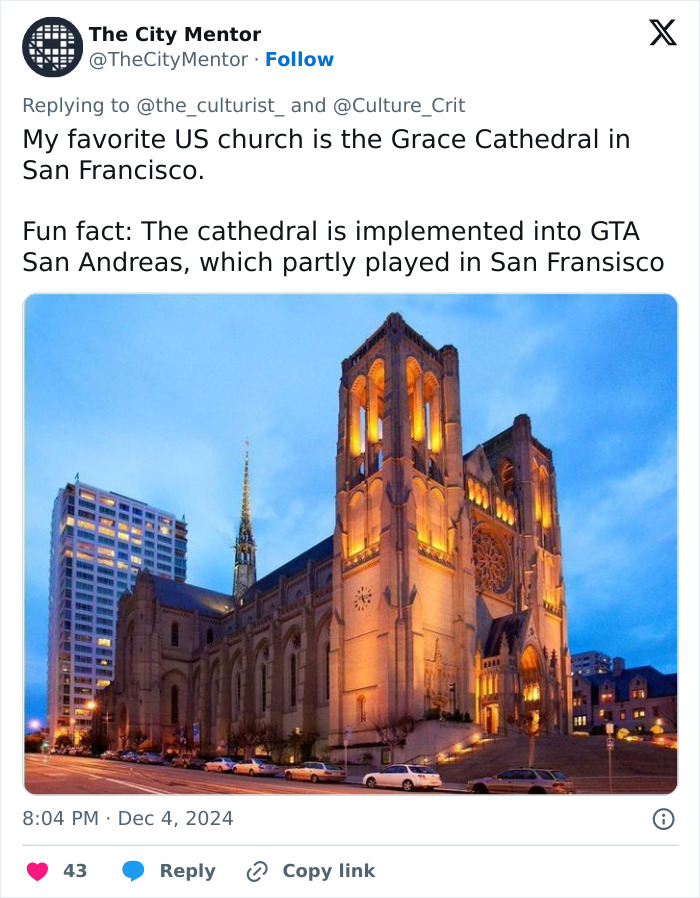
There's also a piece of moon rock from the Apollo 11 mission in the famous "Moon Window" and one of the gargoyles on the exterior is Darth Vader.
During the Renaissance, reason and faith began to share space in architecture. Citing Christian Norberg-Schulz, Wardell explains that people no longer saw divine perfection as something separate from the world, but as something present in nature and human order.
Church design incorporated symmetry, proportion, and geometry, and churches often stood alongside civic buildings, representing both spiritual and communal life.
Fast-forward a few centuries, and the influence of European church architecture started to take root in America. When settlers began arriving from England and other parts of Europe, they brought their architectural traditions with them.
But America’s early churches looked very different from the grand cathedrals of Europe. According to Wardell, the first meeting houses in New England were plain and practical, due to modest budgets and the Puritan preference for simplicity.
These early churches doubled as community centers, where townspeople gathered not only for worship but also for discussions, education, and local government meetings. Wardell noted that this flexibility helped define the uniquely American approach to church architecture.
As settlements grew into towns and cities, church buildings began to take on a more symbolic role. Their design started to reflect the values of the growing nation: democracy, unity, and civic pride. Neo-classical styles became popular, borrowing from Greek and Roman architecture to convey a sense of order and stability.
In the 18th and 19th centuries, more denominations emerged, and so did new architectural styles. From Gothic Revival spires to Romanesque stone arches, churches became markers of identity for different communities. Immigrant groups brought their own traditions—Scandinavian Lutherans, Italian Catholics, Eastern Orthodox congregations—each leaving an imprint on the American landscape.

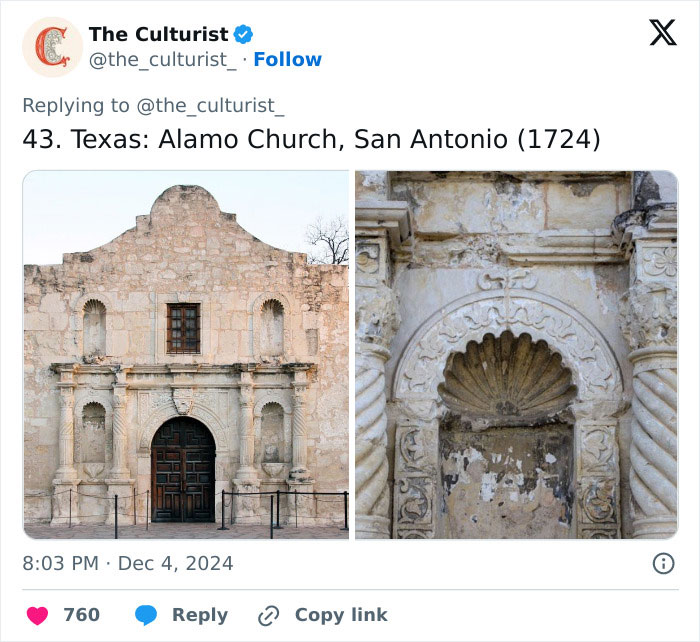
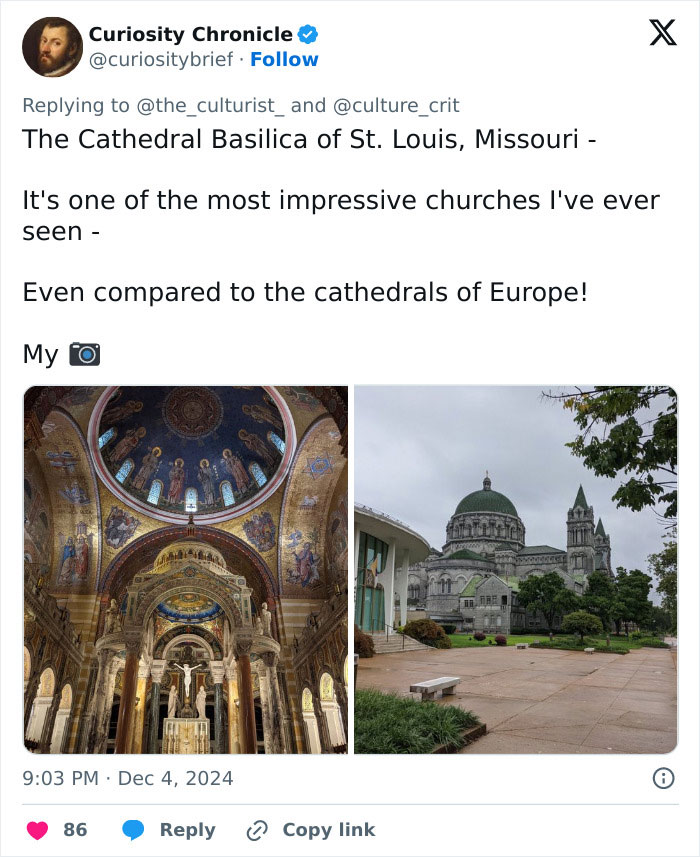
I went there on a field trip when I was middle school. I remember it was a rainy day, and I was in awe of the stained glass windows and murals

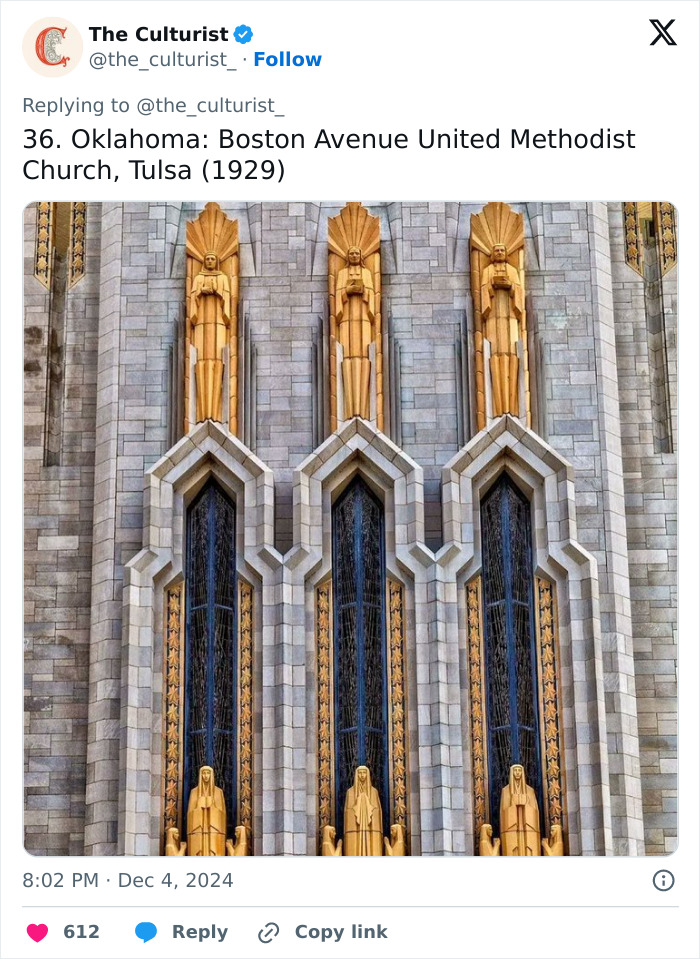
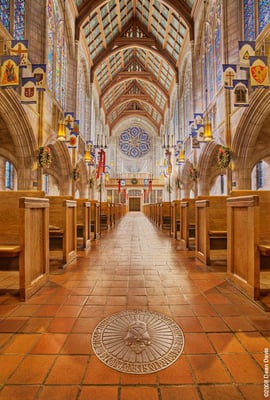
Tulsa is another of the many cities I lived in while I was in the US. I have to admit that for a Protestant church this is VERY lovely. I always enjoyed seeing it when I was downtown. "The Boston Avenue United Methodist Church, located in downtown Tulsa, Oklahoma, and completed in 1929, is considered to be one of the finest examples of ecclesiastical Art Deco architecture in the United States, and has been placed on the National Register of Historic Places."
By the time suburbs began expanding in the 20th century, church design started adapting again. Wardell pointed out that new congregations faced a different kind of challenge: how to build churches that felt meaningful in modern settings, surrounded by parking lots and highways instead of village squares. Some turned to contemporary designs with minimalist lines and open layouts, focusing on flexibility and accessibility rather than grandeur.
Even today, that tradition continues. American churches come in every shape and size, from historic stone buildings and repurposed movie theaters to modern glass structures. But as Wardell observed, one thing hasn’t changed: they still serve as focal points for communities, offering connection and belonging in an ever-changing world.

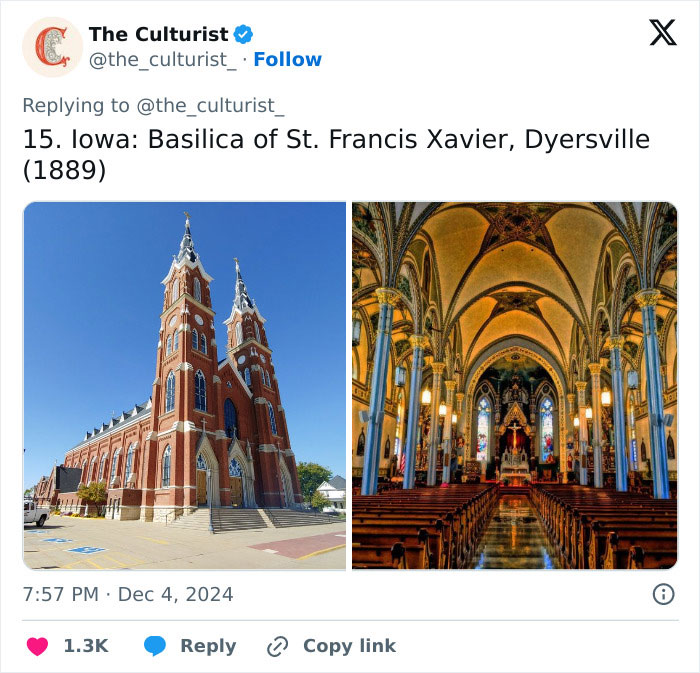
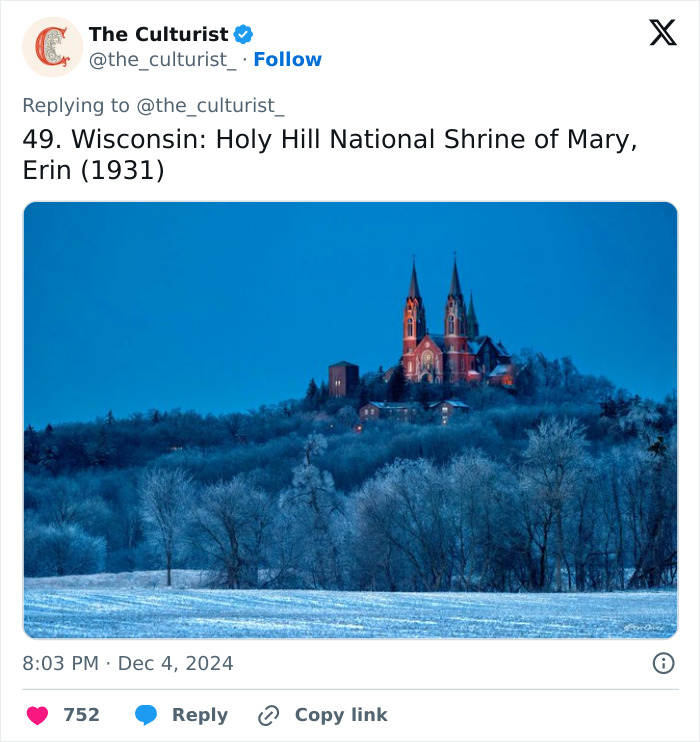
The stairs to get up to this church are intense! Great exercise. Another honorable mention, although not as grandiose as others on this list, is Stavkirke in Door County. Nestled in the woods on Washington Island, it's surrounded by beautiful gardens and is one of the most peaceful places I've ever been.

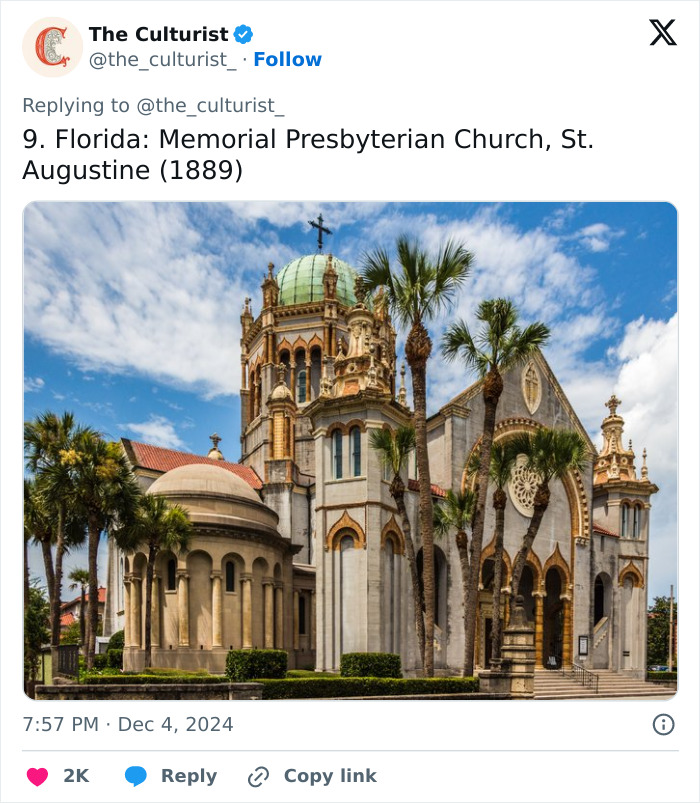
St. Augustine is my favorite city in Florida. Very picturesque and chill.
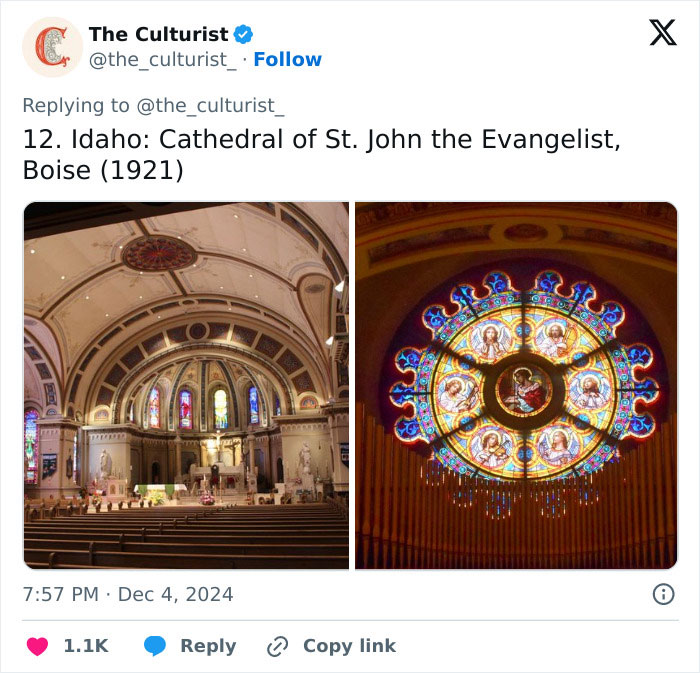
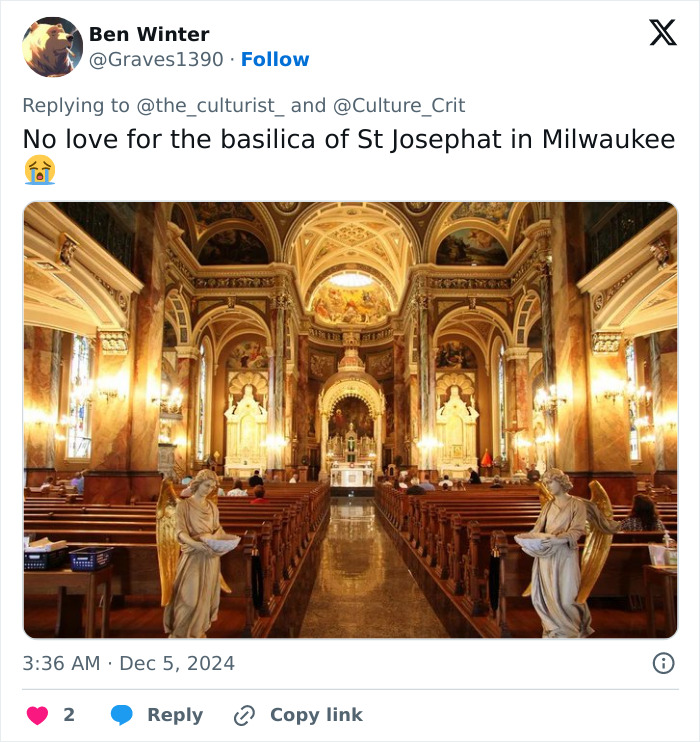
This is lovely church, given that only 6 to 10% of people in Idaho are Catholic (lots of Mormons).

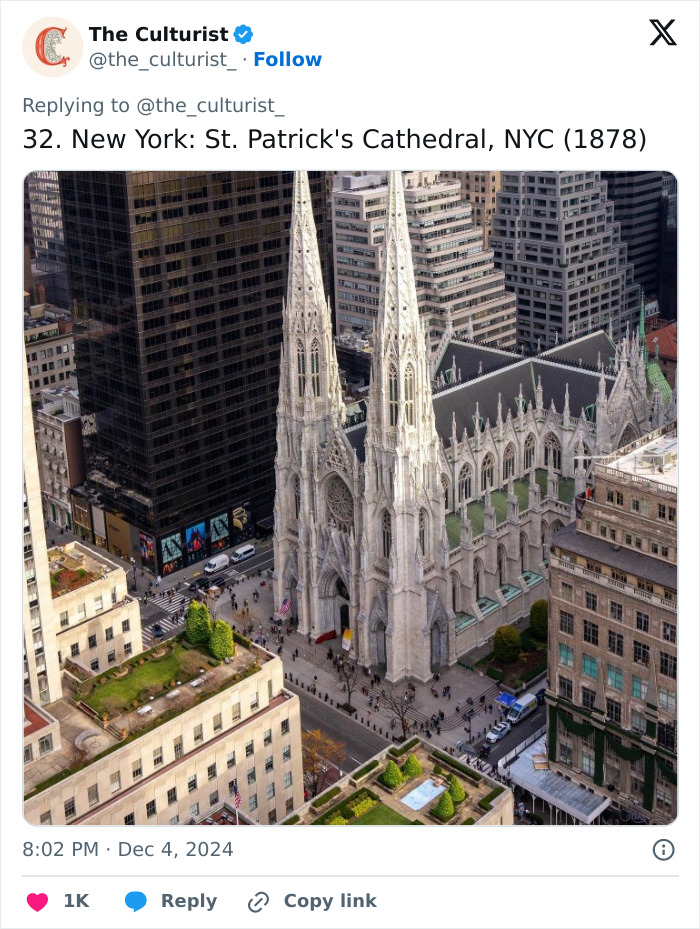
This reminds me of the church my mum had her graduation for her pastoral care degree at in Melbourne, St Patricks. It was also the church connected to my uni, but I never went inside during my time there.
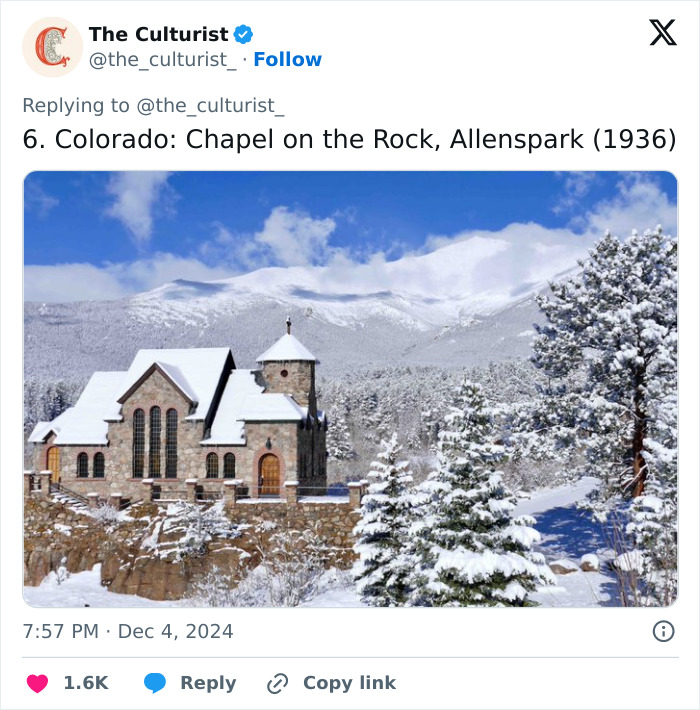
"The Chapel on the Rock is a functioning Catholic chapel and tourist landmark in Allenspark, Colorado, US. The chapel is located on the grounds of the Saint Malo Retreat, Conference, and Spiritual Center of the Catholic Archdiocese of Denver. The chapel is open to the public."


Am I the only one who who sees these buildings and things with all the suffering in the world, our religious institutions couldn’t think of anything better to do with their money then to build these structures

Agreed. I think it's hypocritical to pretend to want to support the poorest among us while sitting on so many billions of dollars. Just sell all the stuff you have lying around in the archives that no one ever gets to see and do something useful with it. There are so many homeless people, people who can't afford health care, people who can't afford to go to college...the list is endless.
Load More Replies... 
Ayyy so how much money could have gone towards helping the poor, the destitute, the disabled, our veterans, the hungry, people with medical debt/in need of lifesaving/lifechanging surgeries, etc... INSTEAD of financing the building of "spectacular" churches? Gee, religion, you seem a little hypocritical there. It doesn't matter if these are Catholic or Christian churches, or mosques, or Jewsih temples. The concept still stands - these all cost A LOT of money to build, money that could have gone towards helping ACTUAL PEOPLE instead of plumping the egos of those who believe in the invisible world. And yes, I'm aware the craftspeople who worked on these churches were paid (presumably) for their work, so SOMEONE was "helped" financially by these churches, but that is NOT the point. EDIT to add: And yes, the faithful deserve to have a place to congregate and do whatever religious people do in places of worship. But NO true believer *needs* a palace of gold and precious stones that cost billions to build in order to feel close to their deity. Churches are a good thing. But these are egregious and completely farcical towards the virtues that most religions teach (humility and so on.)

I'm kind of surprised to not find the US Air Force Academy Cadet Chapel on this list. It's a truly stunning work of mid 20th century Modernism that doesn't rely on medieval European precedents like Gothic and Renaissance styles.
Am I the only one who who sees these buildings and things with all the suffering in the world, our religious institutions couldn’t think of anything better to do with their money then to build these structures
Agreed. I think it's hypocritical to pretend to want to support the poorest among us while sitting on so many billions of dollars. Just sell all the stuff you have lying around in the archives that no one ever gets to see and do something useful with it. There are so many homeless people, people who can't afford health care, people who can't afford to go to college...the list is endless.
Load More Replies... Ayyy so how much money could have gone towards helping the poor, the destitute, the disabled, our veterans, the hungry, people with medical debt/in need of lifesaving/lifechanging surgeries, etc... INSTEAD of financing the building of "spectacular" churches? Gee, religion, you seem a little hypocritical there. It doesn't matter if these are Catholic or Christian churches, or mosques, or Jewsih temples. The concept still stands - these all cost A LOT of money to build, money that could have gone towards helping ACTUAL PEOPLE instead of plumping the egos of those who believe in the invisible world. And yes, I'm aware the craftspeople who worked on these churches were paid (presumably) for their work, so SOMEONE was "helped" financially by these churches, but that is NOT the point. EDIT to add: And yes, the faithful deserve to have a place to congregate and do whatever religious people do in places of worship. But NO true believer *needs* a palace of gold and precious stones that cost billions to build in order to feel close to their deity. Churches are a good thing. But these are egregious and completely farcical towards the virtues that most religions teach (humility and so on.)
I'm kind of surprised to not find the US Air Force Academy Cadet Chapel on this list. It's a truly stunning work of mid 20th century Modernism that doesn't rely on medieval European precedents like Gothic and Renaissance styles.







































 No fees, cancel anytime
 then open in external browser


 and click "Open in External Browser"