Get Premium
Dark mode theme is available exclusively for premium users. Learn more about the benefits of subscribing.
No fees, cancel anytime.

 Dark Mode Ad-Free Browsing Unlimited Content
 Ad-Free Browsing Unlimited Content Dark Mode
Join 1.2 million Panda readers who get the best art, memes, and fun stories every week!
I fancy myself a bug and botanical portrait photographer. Sounds strange, but I love showing people the beauty and diversity of insects and spiders up close.
I spent all summer photographing the diversity of insects and spiders in my backyard and local arboretum in NE Ohio. Here are my favorite 40 images.
More info: Facebook
This post may include affiliate links.
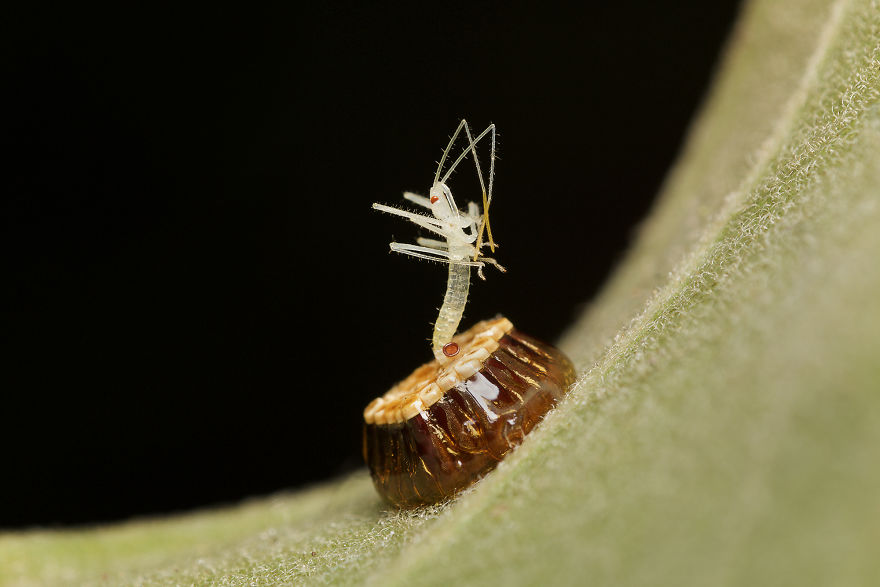
I photographed this assassin bug nymph emerging from his egg case at the zoo, of all places. While my family was viewing the snow leopards, I was obsessing over this once-in-a-lifetime shot. When I returned a few hours later, nearly two dozen nymphs had emerged!
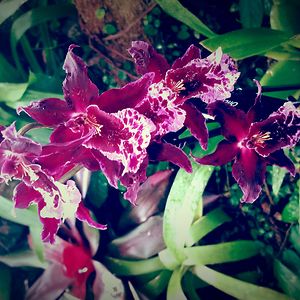
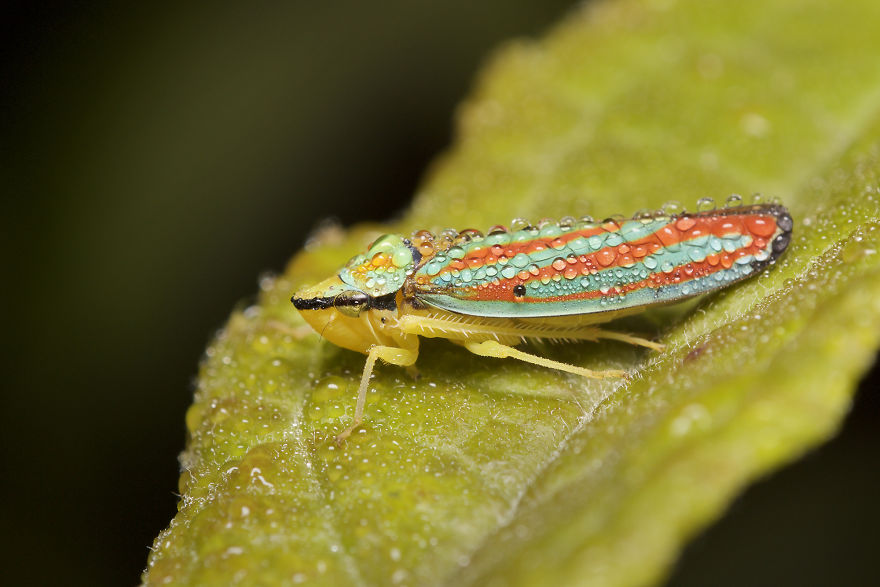
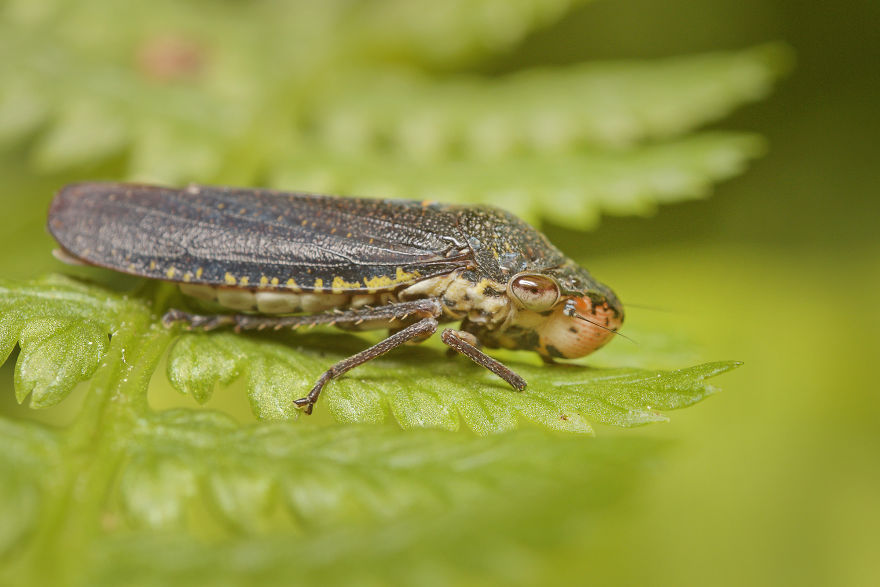
Many people are shocked to learn these beautiful leafhoppers are a common backyard bug. Keep a close eye on your garden and you'll likely find one of these beauties jumping from one plant to another!
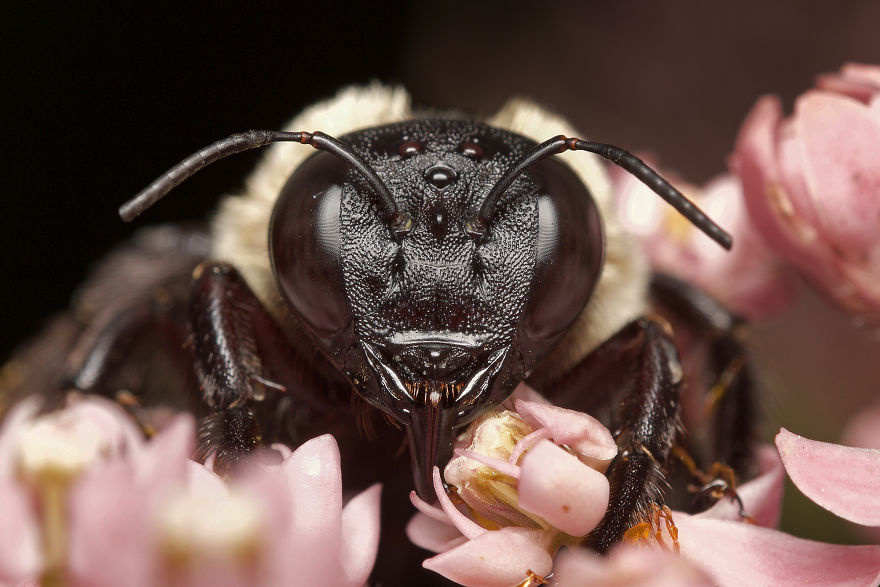
Notice the carpenter bee's tongue as it feeds on nectar from milkweed.
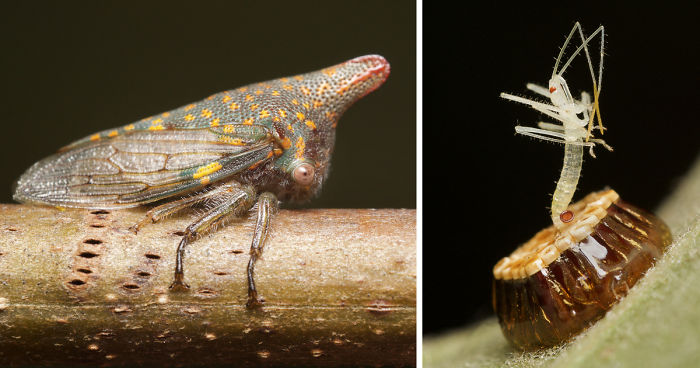
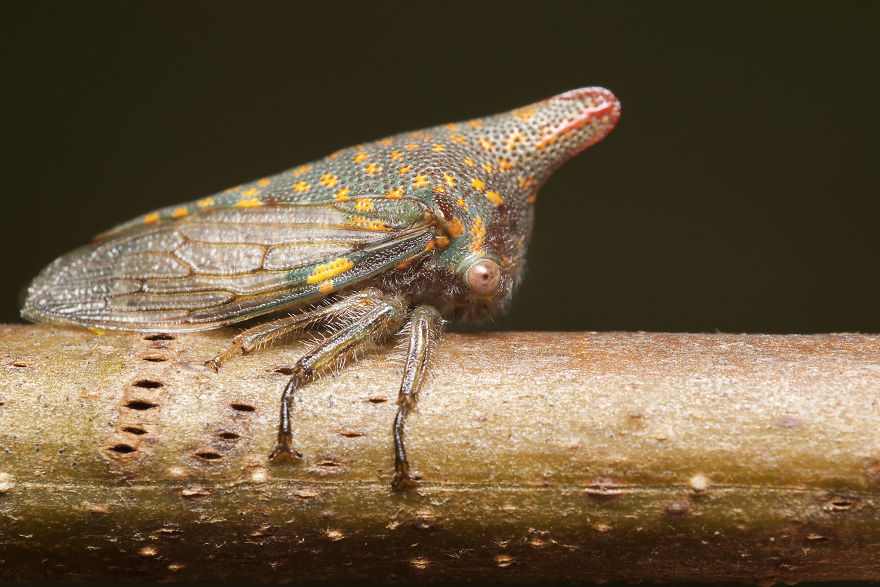
I always imagined that I would need to travel to exotic places to photograph insects as beautiful as this oak treehopper. I've been lucky enough to find and photography two colonies of oak treehoppers in my local arboretum. Near each colony of treehopper nymphs, I found a single adult. This is mama treehopper - she keeps watch over her nymphs as they develop and grow. Insects with maternal instincts = awesome!

We don't have a lot of citrus growing in Ohio, but don't be fooled by the name - you can find this planthopper on a wide range of woody plant hosts, not just citrus!
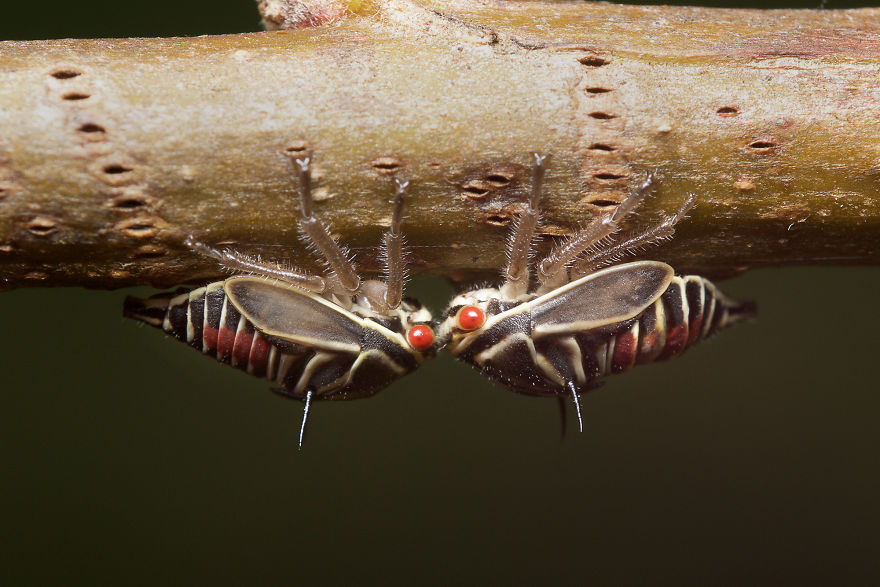
These are two of a much larger oak treehopper colony. The nymphs congregate on a single small branch as they develop and grow through five nymphal instars.
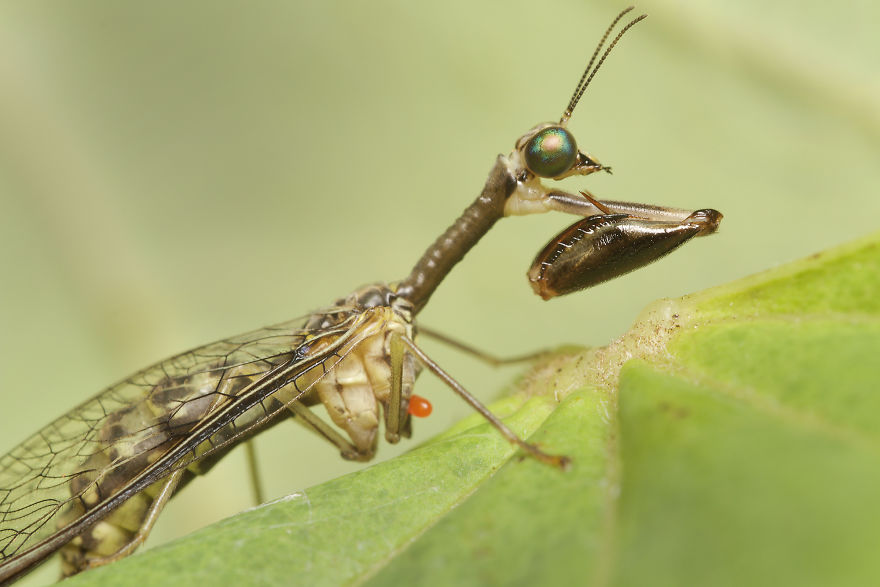
Probably the most badass of all the bugs I've photographed, mantidflies are basically a mix of praying mantis, dragonfly, and wasp. This one has eyes like the galaxy!
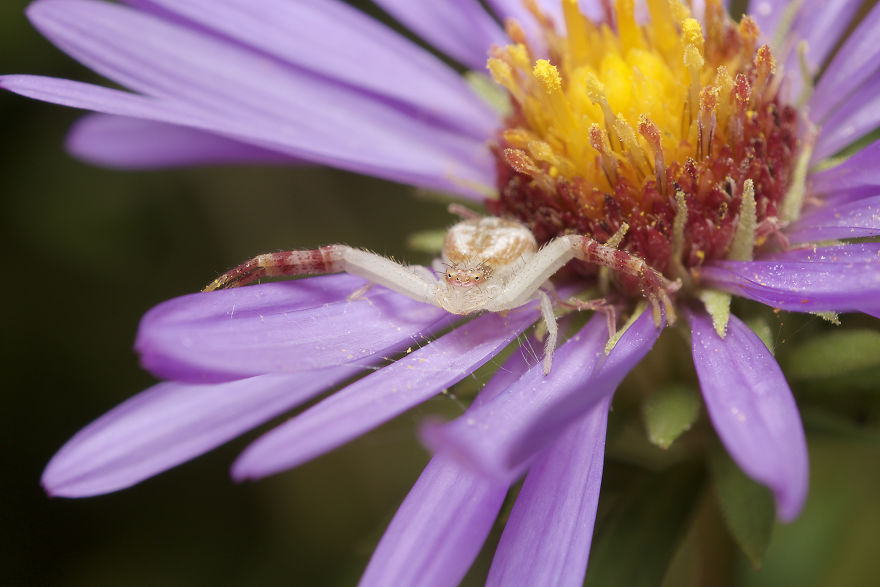
Crab spiders are appropriately named since they hold their eight legs in a way that resembles a crab!
I'm not sure of the exact species of this plant hopper nymph, but I like to think the species name may be something like "firecracker butt."
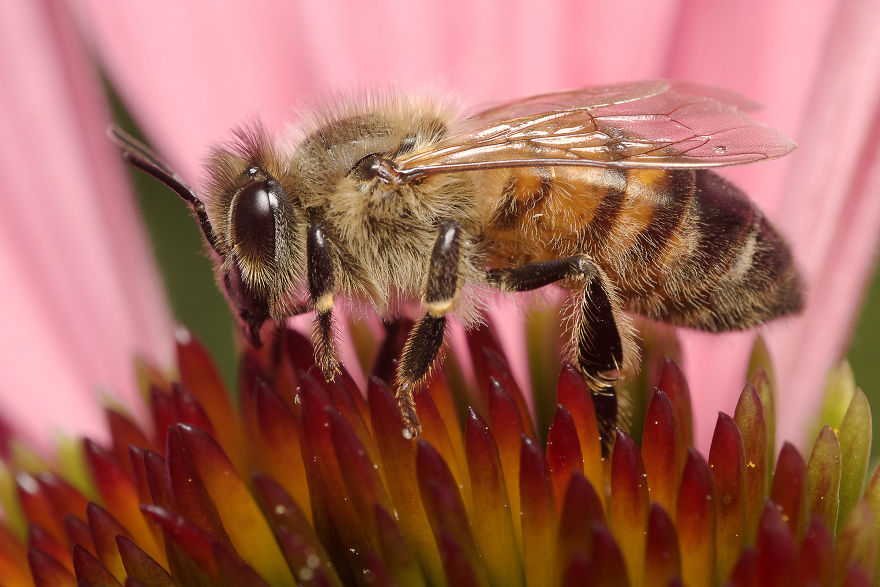
While they may be everyone's favorite, honey bees represent only a tiny sliver of bee diversity. Did you know there are roughly 20,000 species of bees?!
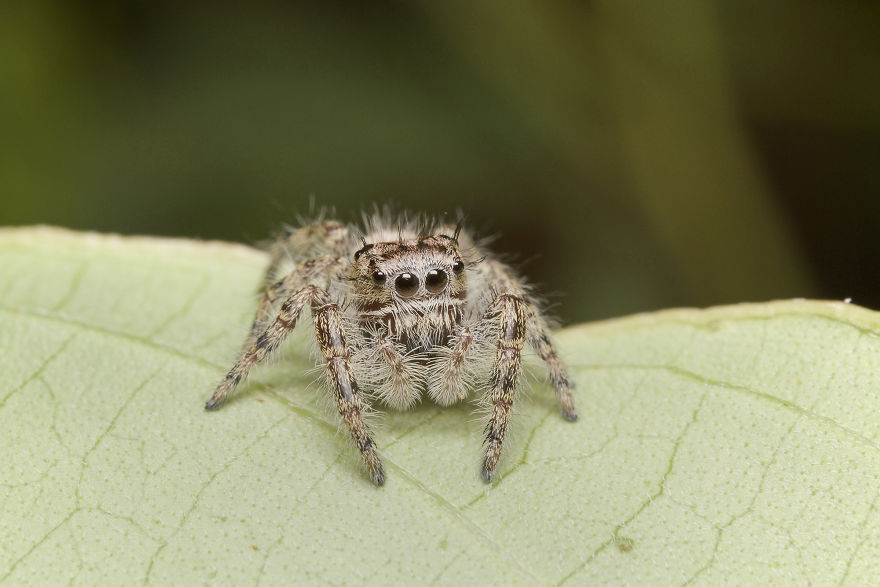
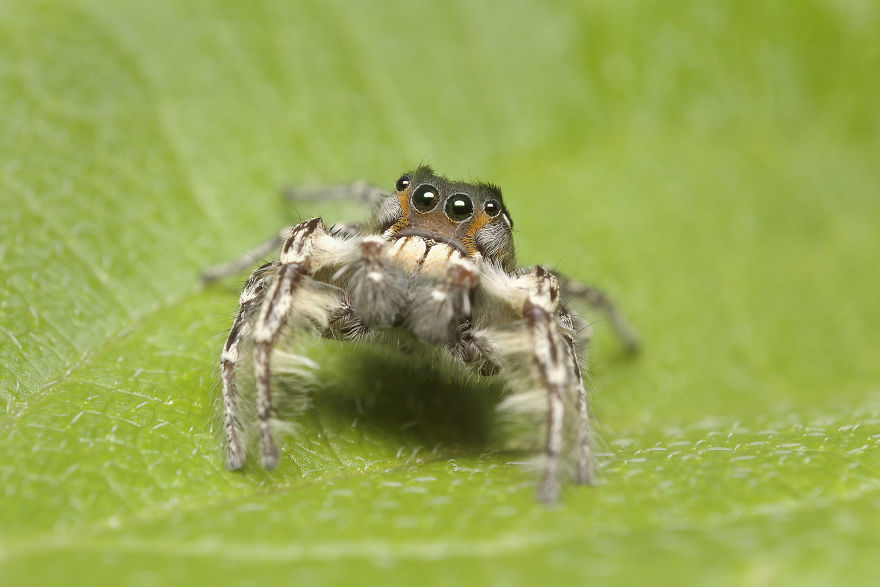
Jumping spiders are well-known for their ability to jump. They can jump at least several times the length of their body while attempting to capture prey (or escape from my camera). Before jumping, they'll tether themselves to the plant on which they were standing to ensure they can always always make it back should their jump fail.
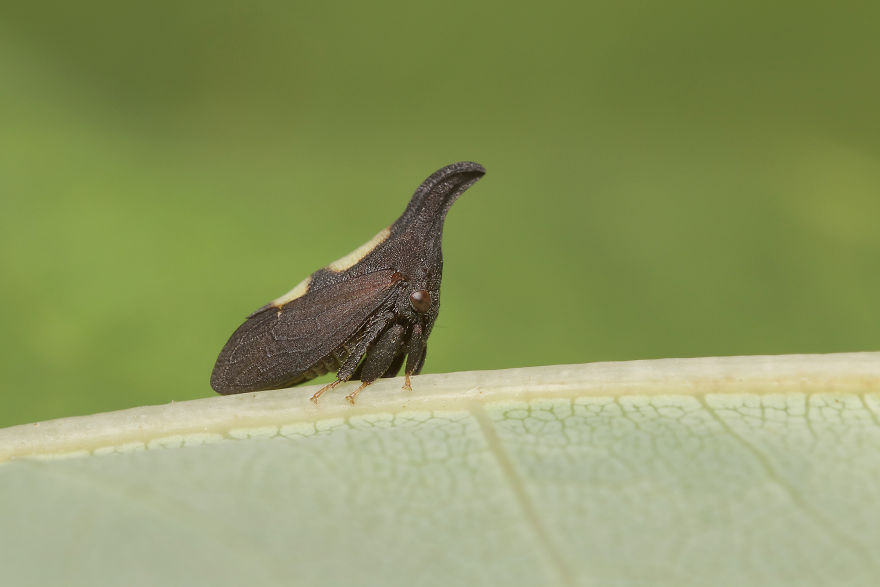
I was THRILLED to have found dozens of two-marked treehoppers in my local arboretum early in the summer. I observed and photographed their colony as the nymphs developed through five instar stages into these handsome adults.
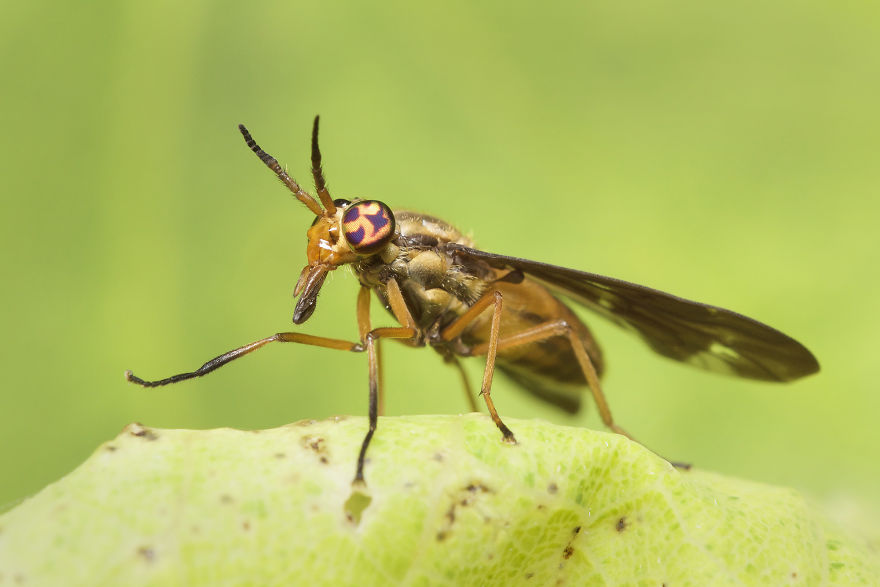
People often consider deer flies pests. But look at those EYES!
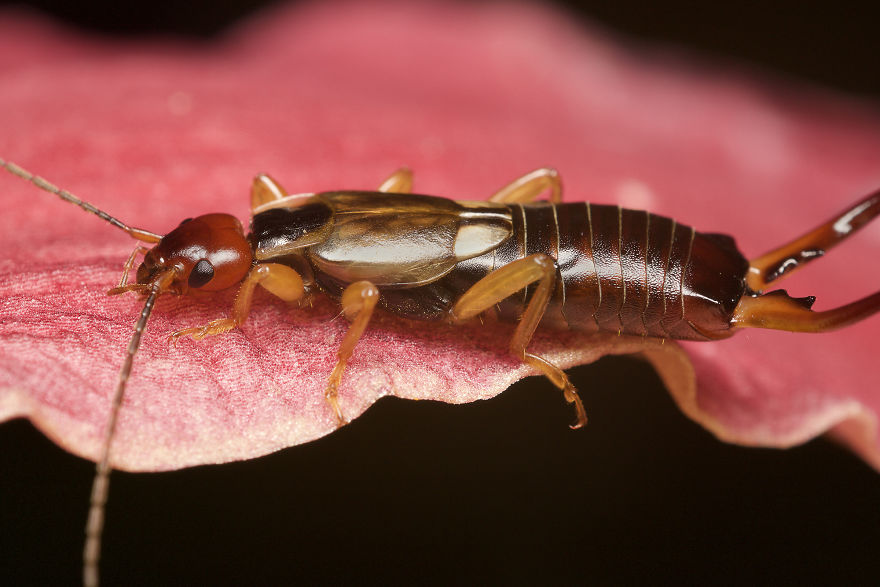
Many people find earwigs disgusting (maybe because we've been told they crawl in people's ears?!), but I think they are quite handsome. Earwigs are one of few insects that exhibit maternal care. Mama earwig will watch over her eggs and nymphs! Awww!
"....maybe because we've been told they crawl in people's ears?!..." My grandmother would say it all the time.I'm not saying it's true, but....... :-D
Notice the distinct difference in coloration between this male Phidippus putnami and the previous photo of a female Phidippus putnami. Some species of jumping spiders display beautifully elaborate courtship rituals. Check out peacock jumping spiders for proof!
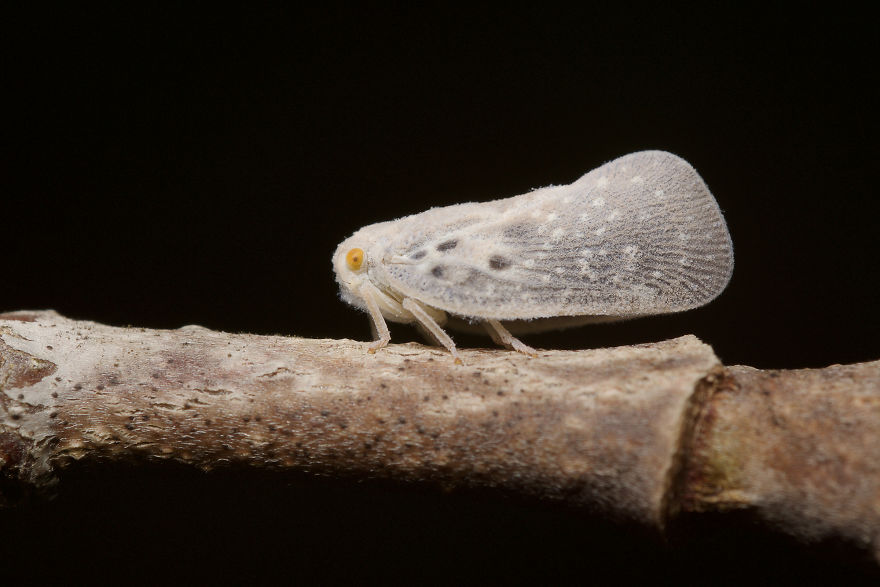
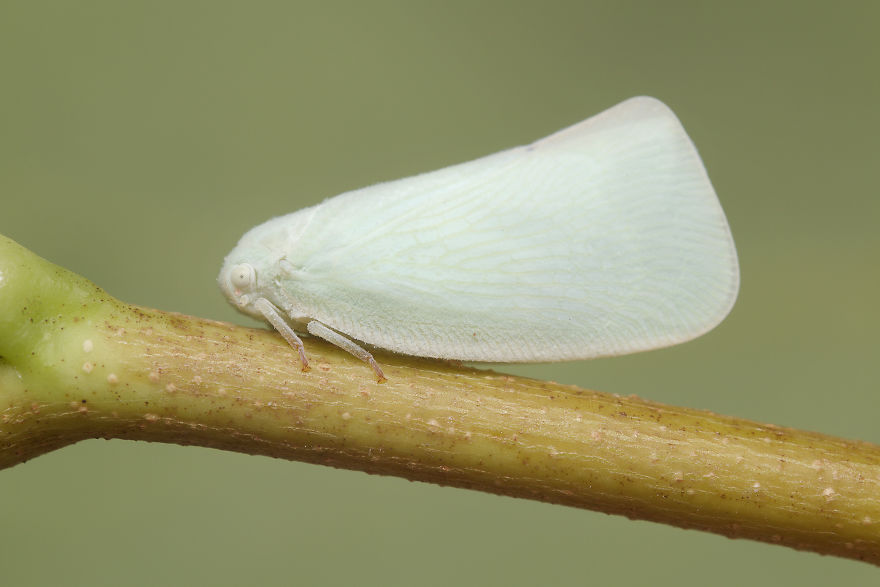
One of a great variety of planthoppers, the northern flatid planthopper is white to light greenish with intricately patterned wings.
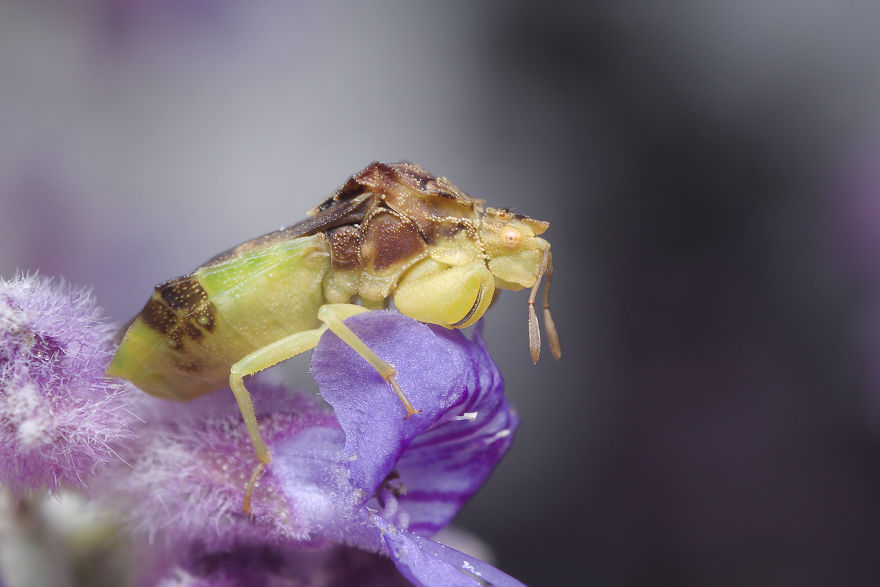
Ambush bugs are beneficial predatory insects with straw-like mouthparts which allow them to suck juices from prey. Their raptorial forelegs help them catch and grasp their next meal.
When I was young, I HATED spiders. But the more I photograph them, the more I realize just how beautiful and intricate they are!
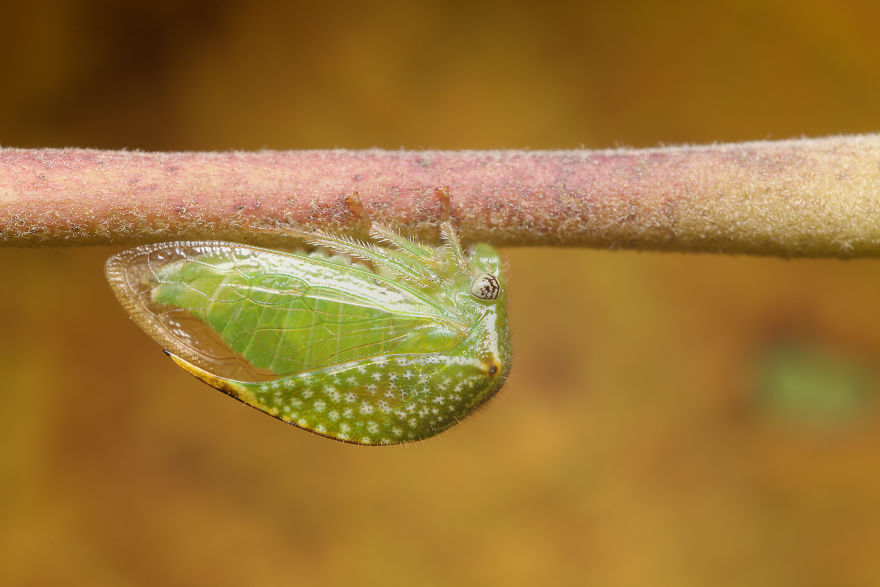
Treehoppers are one of my favorite types of insects. This buffalo treehopper is aptly named because its profile resembles that of a buffalo.
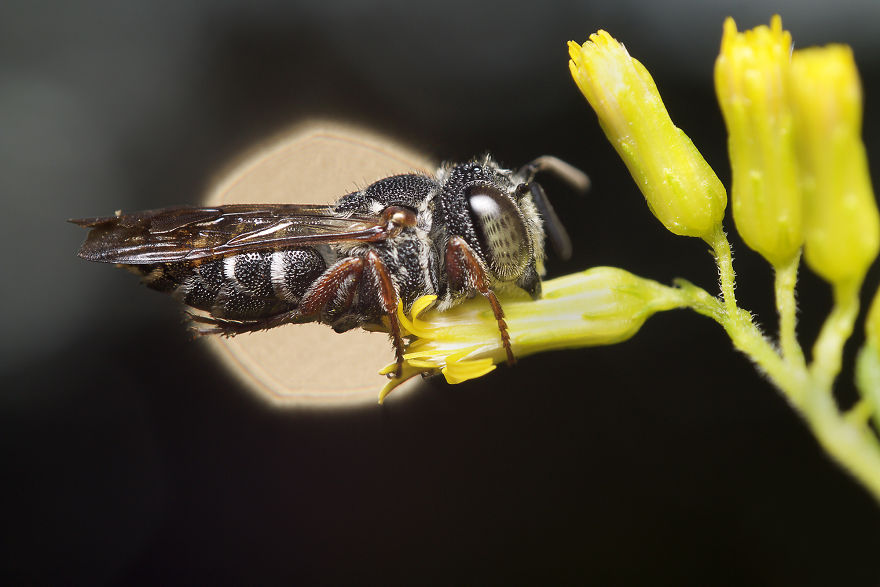
This is a sleeping male leaf-cutter cuckoo bee amidst the setting sun in the background. The females of these kleptoparasitic bees break into the nests and lay their eggs among the stored provisions of Megachile (leaf-cutter) bees. This little bee is firmly grasping a goldenrod flower with his strong mandibles as he finds respite for the chilly Ohio evening.
Wow I love that you share the stories here, too. Where in Ohio are these taken?
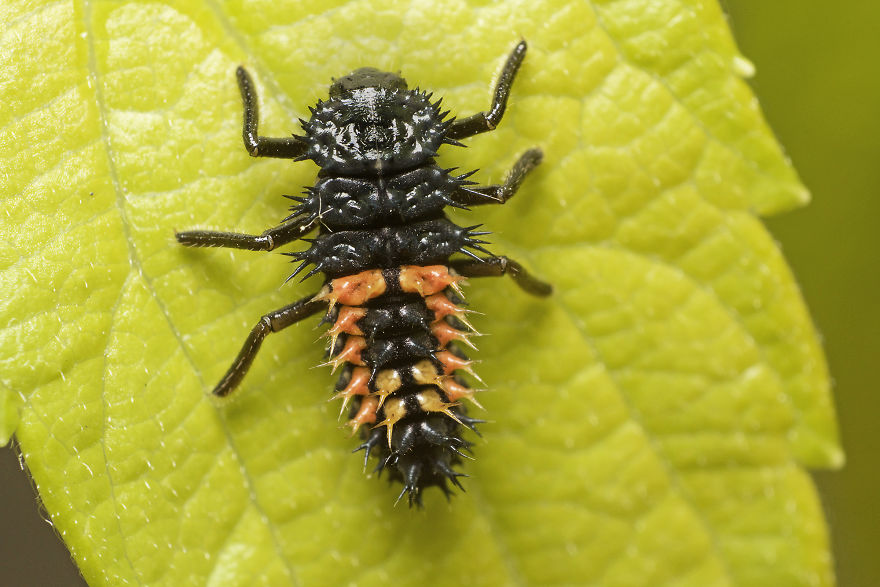
I've always thought lady beetle larvae look like tiny alligators!
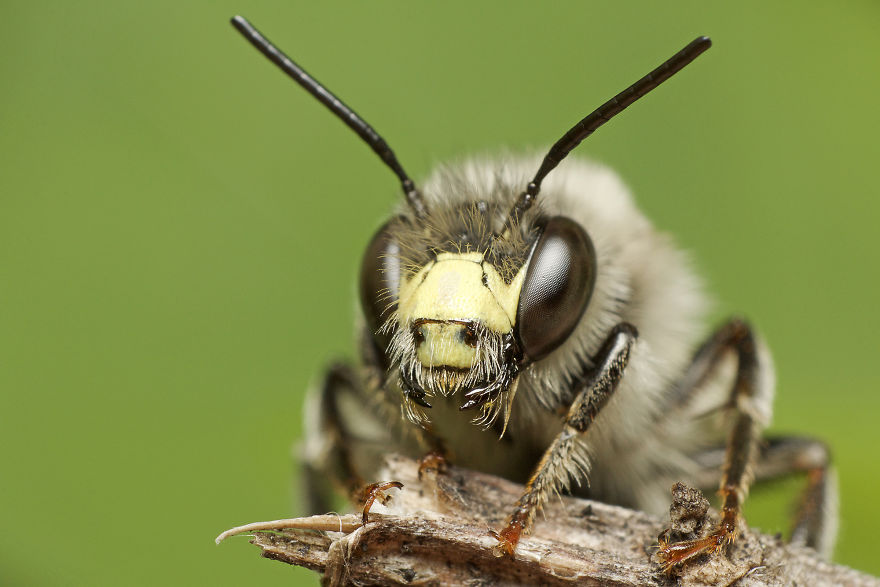
Just look at those chin whiskers! Digger bees are solitary and nest in the ground, hence their name.
I find that people tend to have a negative attitude towards wasps, hornets, and yellow jackets. Having photographed many wasps, I find them fascinating and beautiful. It's best to photograph them on a cool fall day though, when they are most docile!
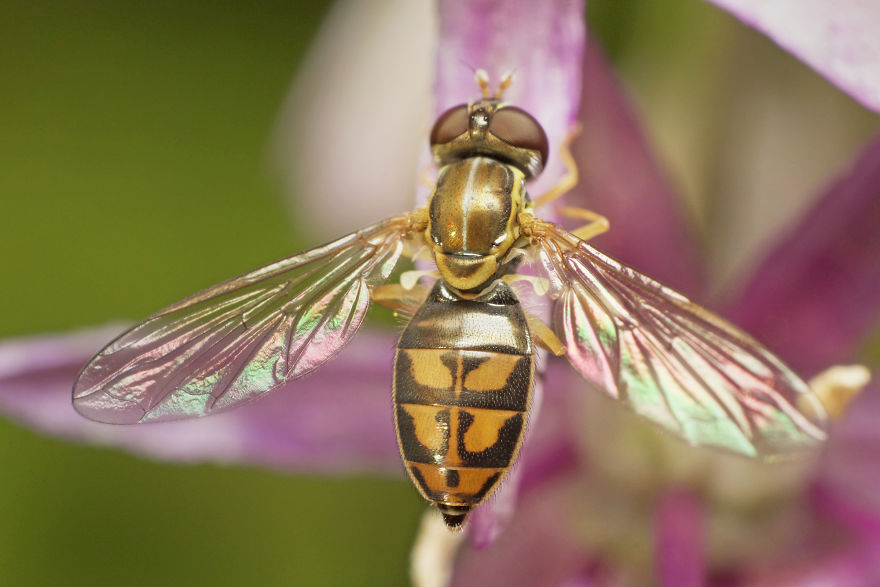
Nope! It's not a sweat bee! These beautiful insects are flies. An easy way to tell the difference is by looking at their wings. Flies have one pair of wings (hence their order – Diptera – meaning "two wings.") Bees and wasps have two pairs of wings.

THESE THINGS DRIVE ME CRAZY. Don't get me wrong--pretty, but IRRITATING lol
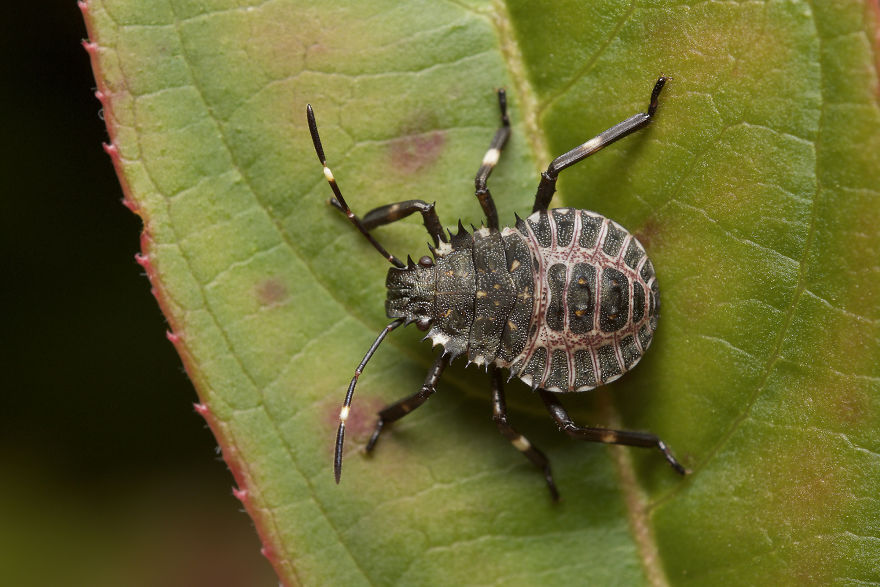
Stinkbugs stink! Brown marmorated stinkbugs smell a lot like cilantro when squished, which may explain why some people HATE cilantro!
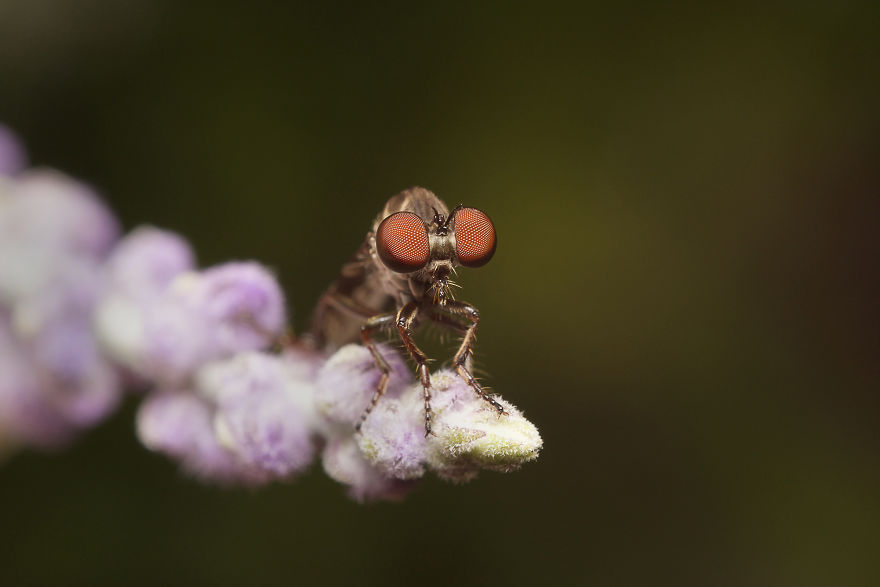
Perhaps one of the most alien-looking insects, robberflies are fierce arial predators. I love their bright bulgy eyes!
Happy wasp is happy to see you! I caught this wasp mid-feed. Notice how its tongue is halfway out.
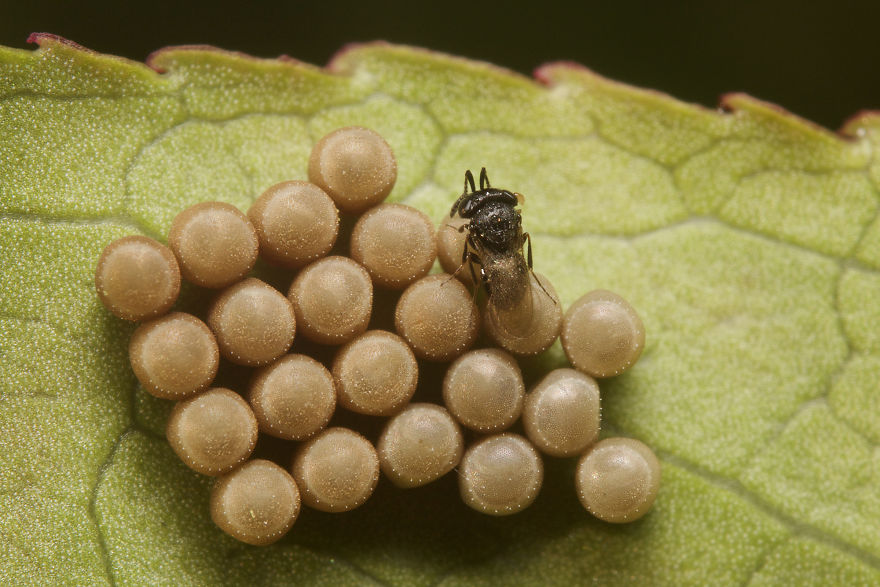
This tiny parasitoid wasp is looking for a place to lay her eggs. Her larvae, after hatching inside the stinkbug egg, will feed on the stinkbug larva before emerging. Natural stinkbug control!
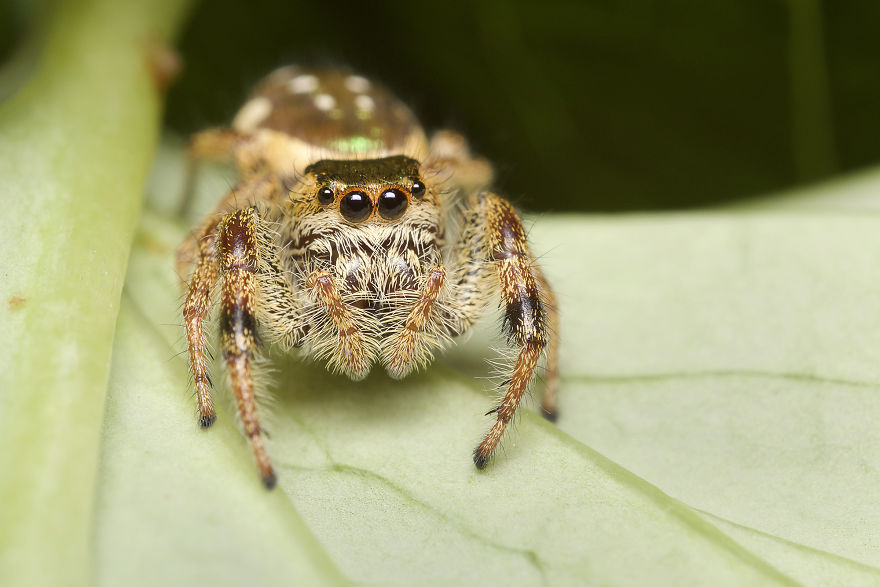
Sometimes called the emerald jumper (because of the emerald green coloration on its back), this female jumping spider is a fierce predator. I watched as she attempted to capture the largest firefly I'd ever seen (the firefly escaped before I captured this shot).
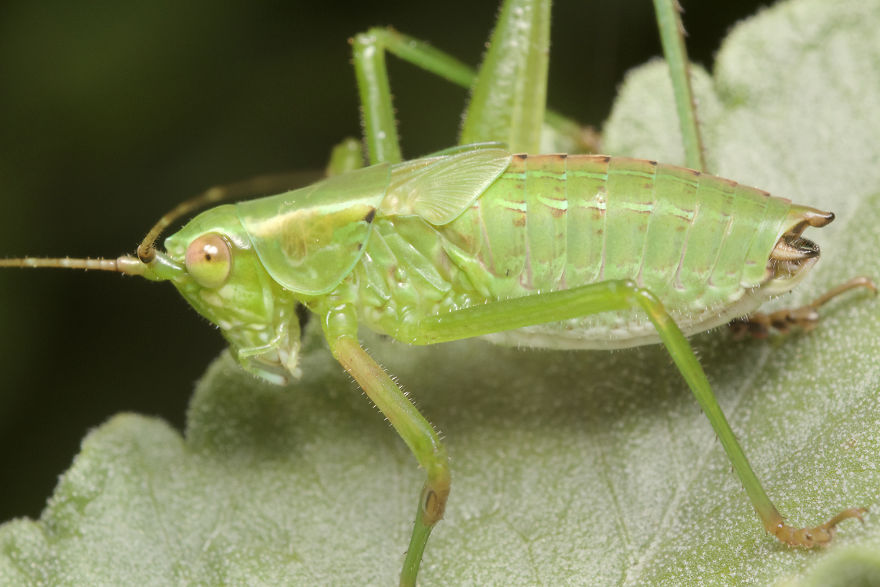
Like many insects, katydids display courtship rituals. In the case of katydids, males stridulate, or produce sounds with their wings. According to Wikipedia: "Many katydids stridulate at a tempo which is governed by ambient temperature, so that the number of chirps in a defined period of time can produce a fairly accurate temperature reading. For American katydids, the formula is generally given as the number of chirps in 15 seconds plus 37 to give the temperature in degrees Fahrenheit." Soooo... next time you forget a thermometer, bring along your katydid!
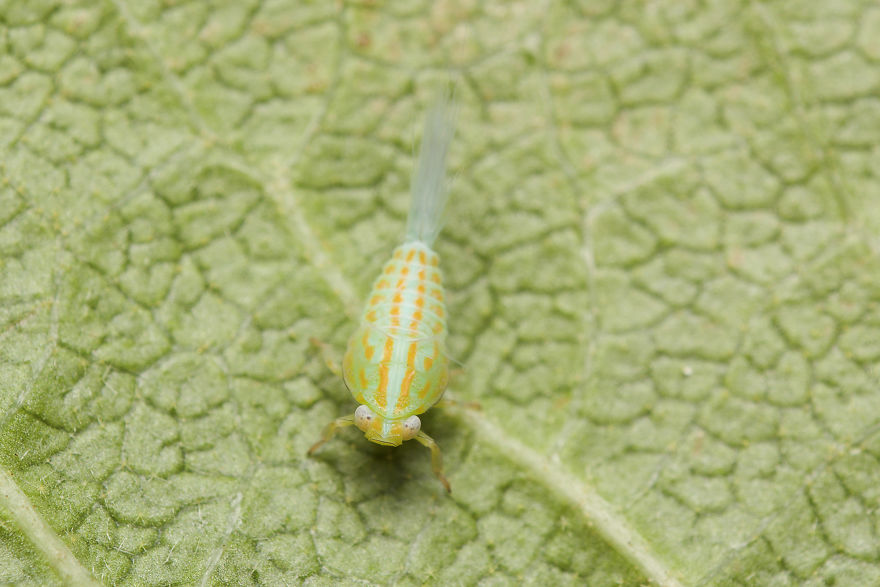
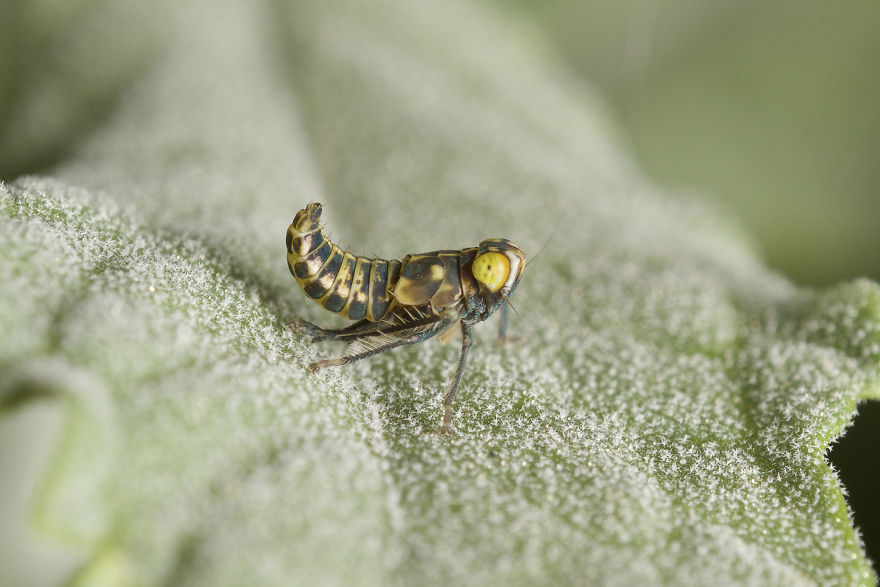
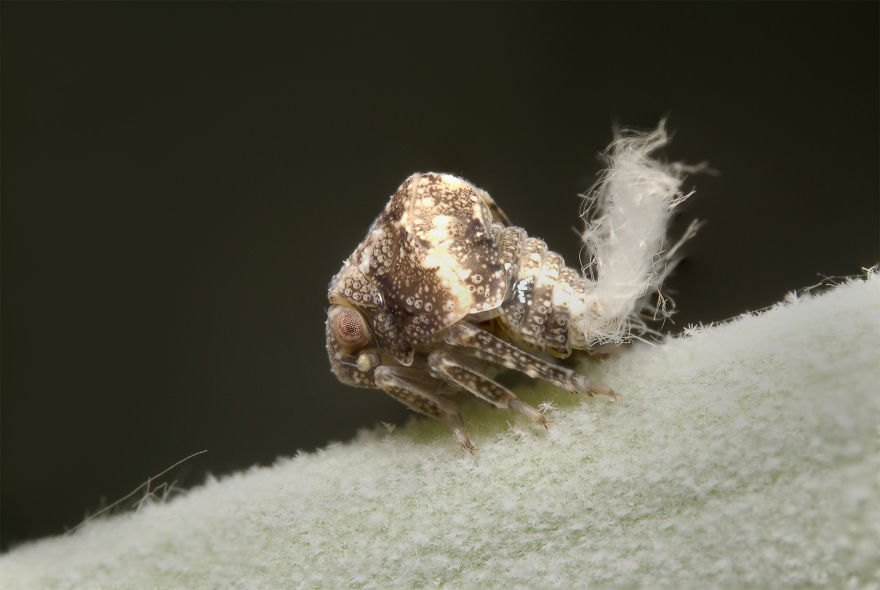
Leafhopper, planthopper, and treehopper nymphs are basically the most adorable of all insect babies.
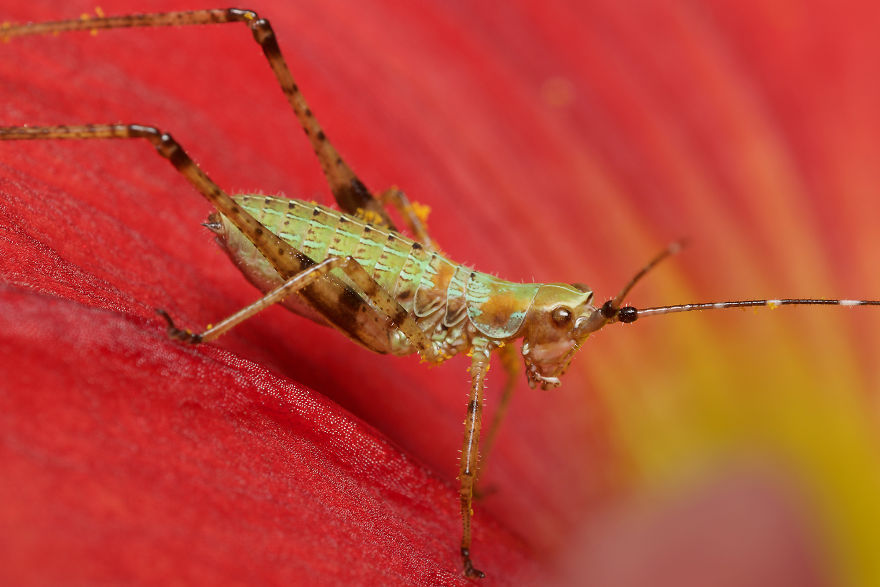
A young and colorful katydid nymph on a daylily. I think they look prehistoric!
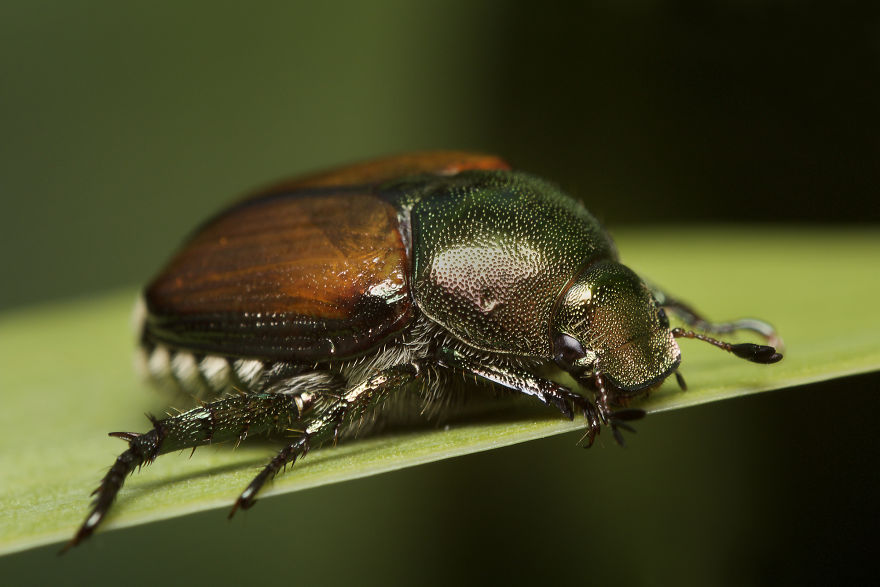
Yeah, yeah... Japanese beetles are a super pest. But they're kinda cute up close.
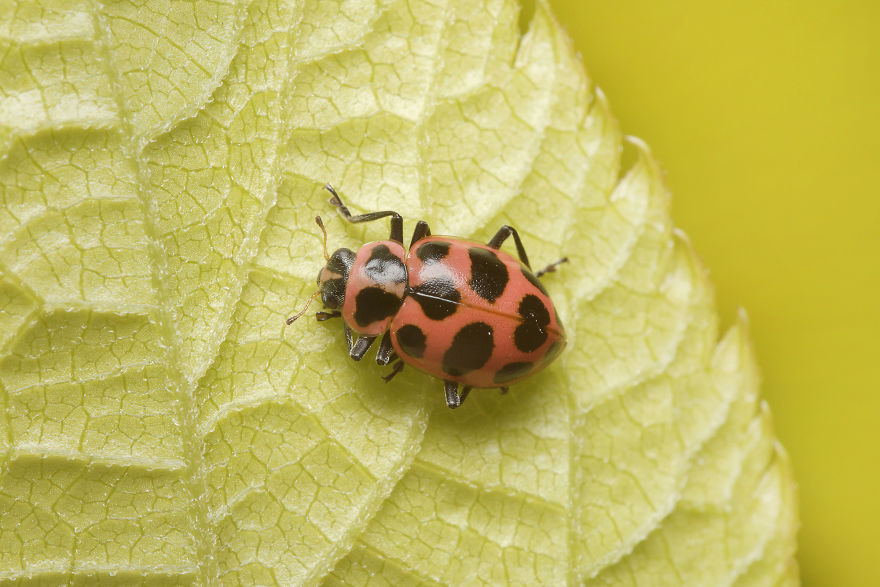
Often called "pink lady beetle," these beetles have a more oblong-shaped body compared to other lady beetle species.
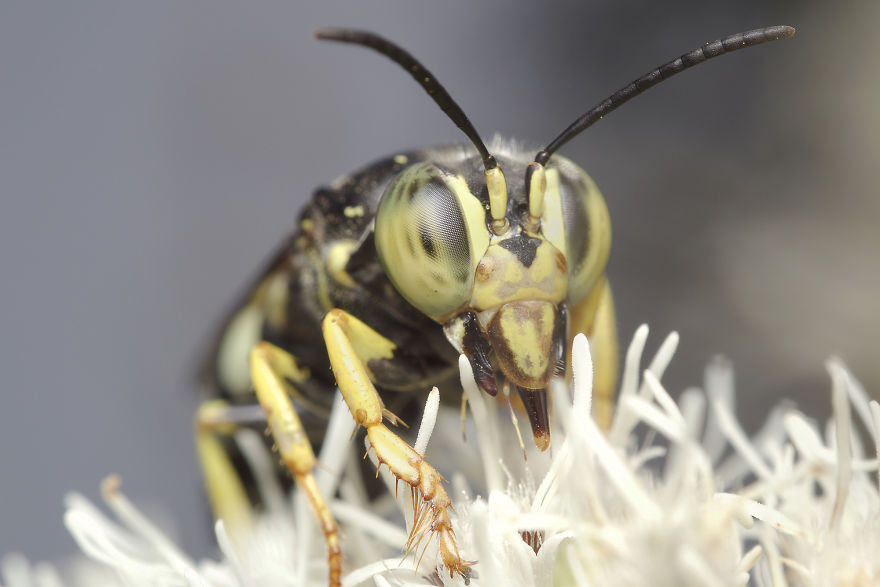
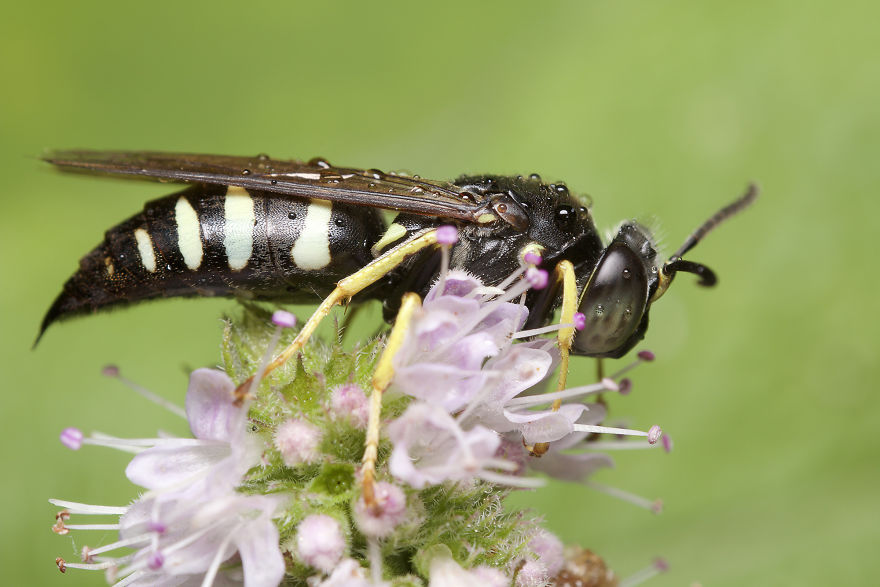
A gorgeous sand wasp I photographed in my local garden.
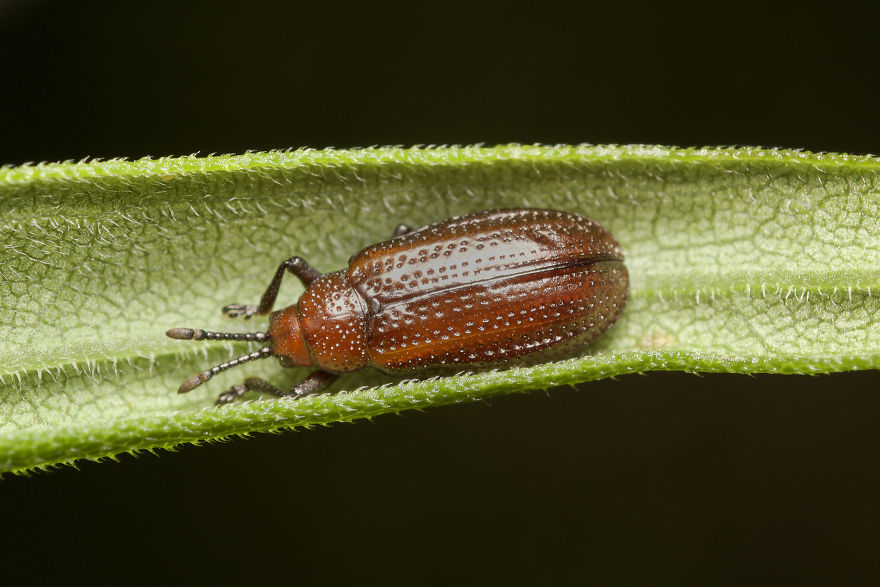
This beautiful leaf beetle looks like jewelry!
Like all leafhoppers, sharpshooters have piercing-sucking mouthparts which they use to pierce and feed on plants. Because of this, leafhoppers are often considered a pest.
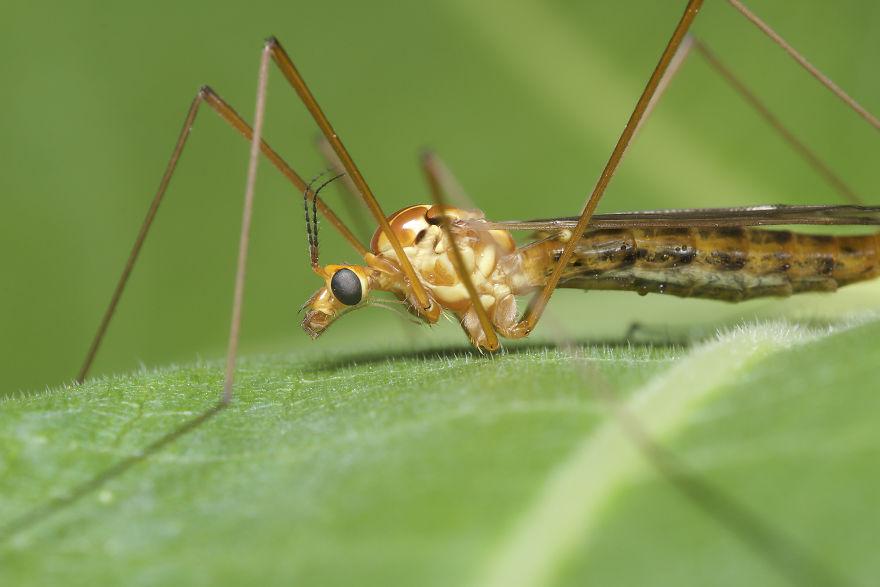
Did you know? Craneflies are colloquially referred to as daddy longlegs. Here in Ohio, however, I've only ever heard people use daddy longlegs in reference to harvestmen (Opiliones) spiders.
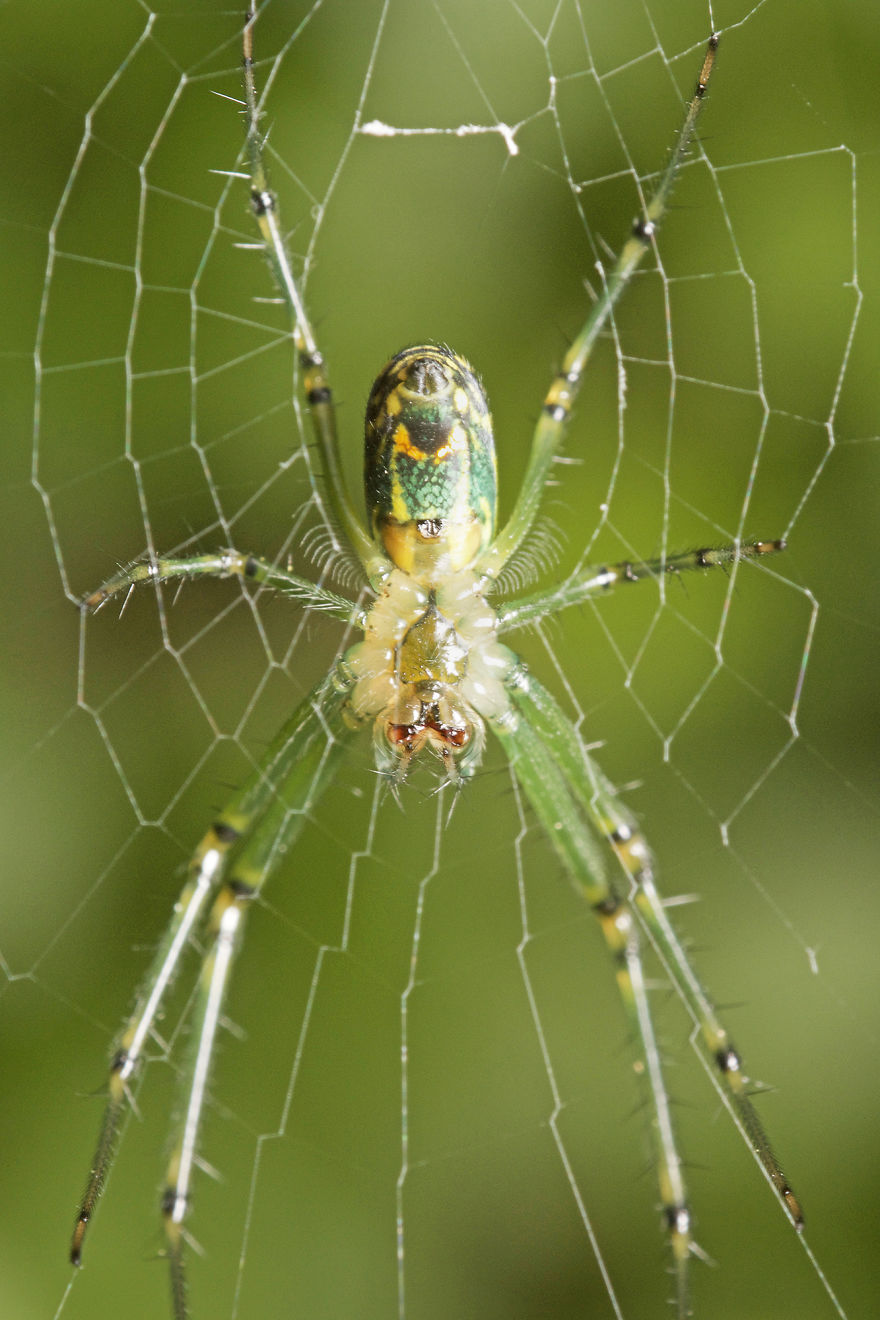
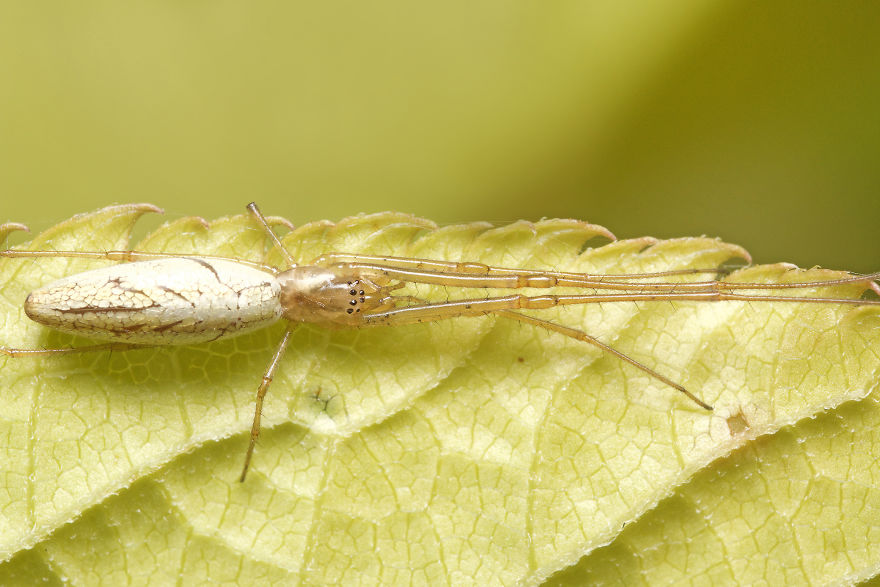
Long-jawed orb weavers are so named for their extra large fangs (or chelicerae, in spider-speak).
Fuzzy butt planthopper baby!


Beautiful photography! I am an entomologist and especially impressed.
That means a lot coming from an entomologist. Thank you!
Load More Replies...
Danae, I couldn't stop looking at these photos . I get a lot of bugs in my flower gardens, some good , some bad . I think your photos gave me a respect for even the not so good ones. Thanks !

Great photographs-they really are weird and wonderful mini beasts aren't they? I can see the fascination.
They are amazing and the more I learn, the more obsessed I become!
Load More Replies... Beautiful photography! I am an entomologist and especially impressed.
That means a lot coming from an entomologist. Thank you!
Load More Replies... Danae, I couldn't stop looking at these photos . I get a lot of bugs in my flower gardens, some good , some bad . I think your photos gave me a respect for even the not so good ones. Thanks !
Great photographs-they really are weird and wonderful mini beasts aren't they? I can see the fascination.
They are amazing and the more I learn, the more obsessed I become!
Load More Replies...
































 No fees, cancel anytime