Get Premium
Dark mode theme is available exclusively for premium users. Learn more about the benefits of subscribing.
No fees, cancel anytime.

 Dark Mode Ad-Free Browsing Unlimited Content
 Ad-Free Browsing Unlimited Content Dark Mode
Join 1.2 million Panda readers who get the best art, memes, and fun stories every week!

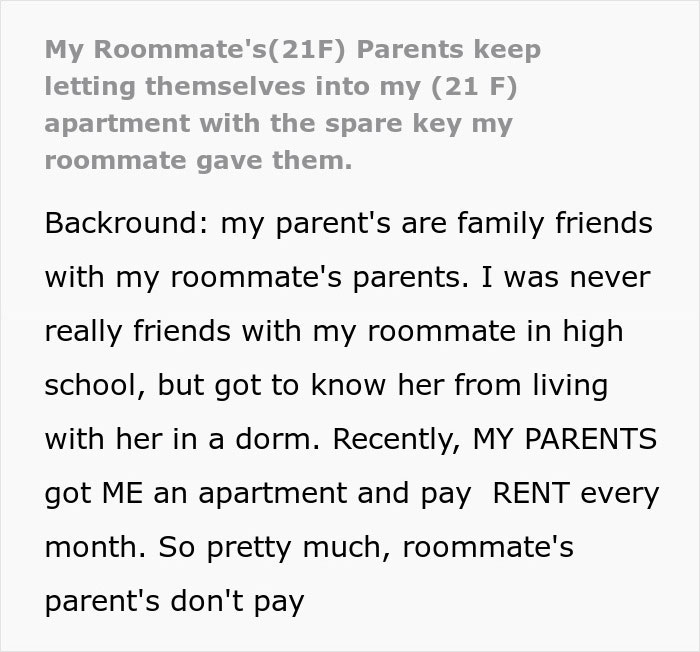
Going to college and moving into your first apartment are major milestones of adult life. But what this young woman experienced living with her roommate was far from the independence she expected.
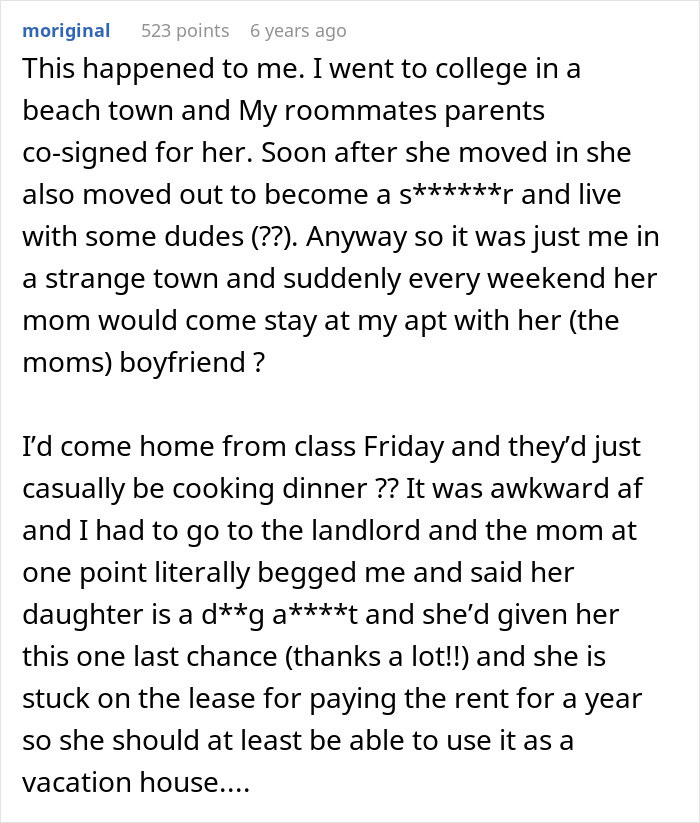
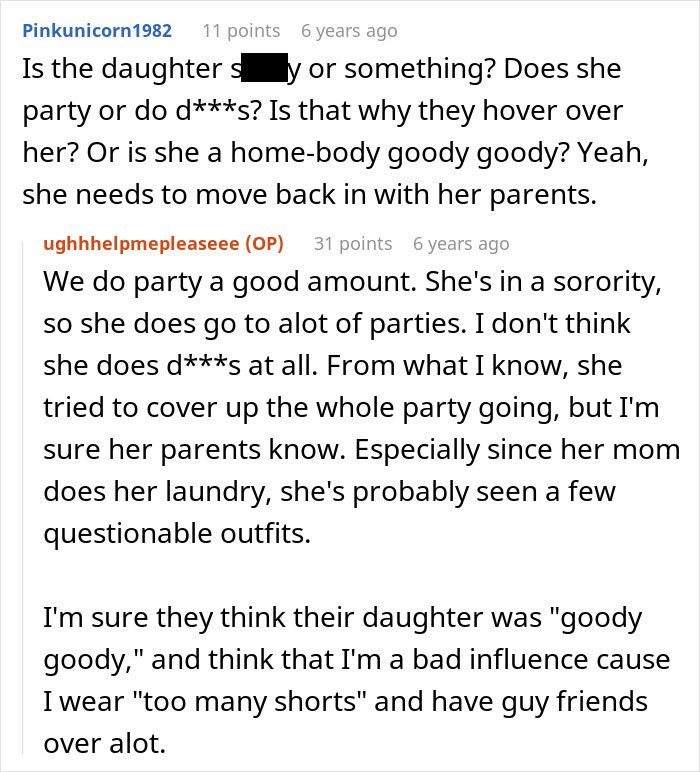
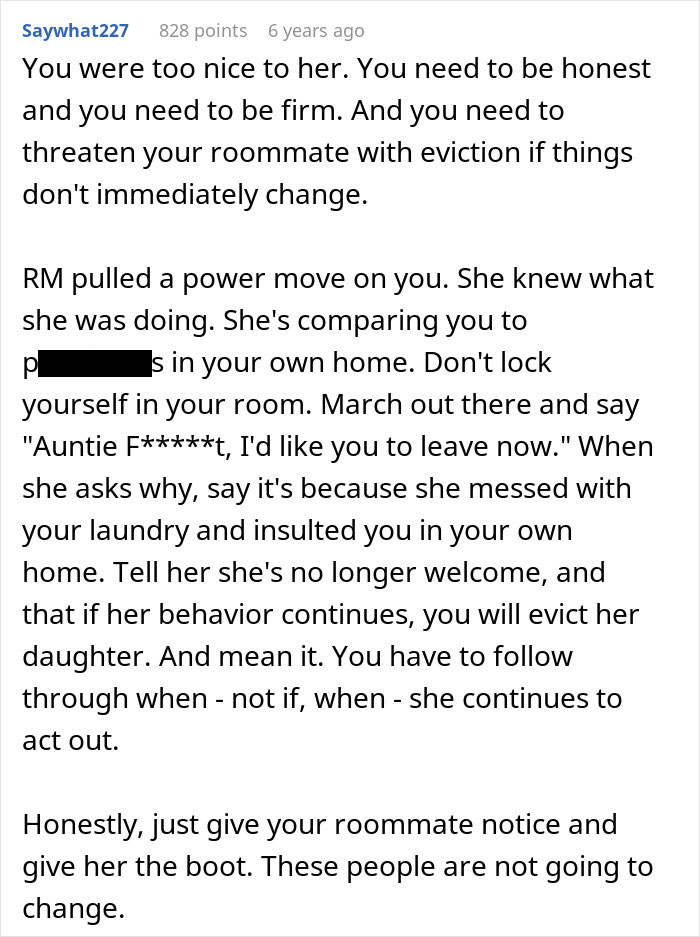
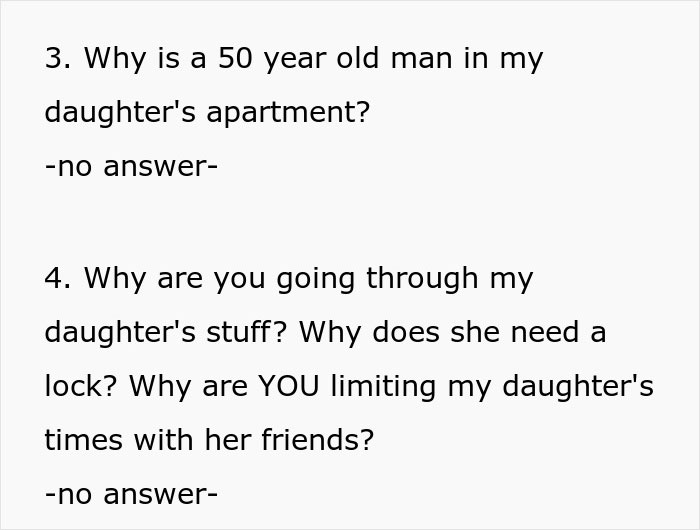
Instead, she was shocked to discover that her roommate’s parents treated the apartment like their second home. They would camp out on Friday nights to make sure the girls weren’t partying. The mom would show up uninvited to do laundry, cook, and clean. At one point, she even went through her closet and criticized her clothing choices.
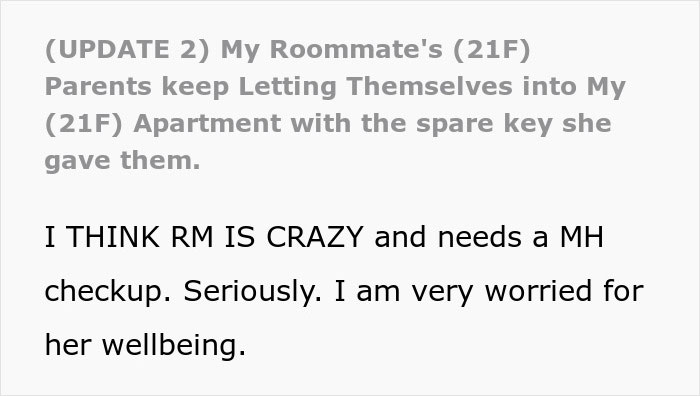
Even though the woman tried to reason with them, her attempts were futile. And soon enough, the situation escalated into full-blown drama. Read the full story below.
Image credits: natalystep / freepik (not the actual photo)
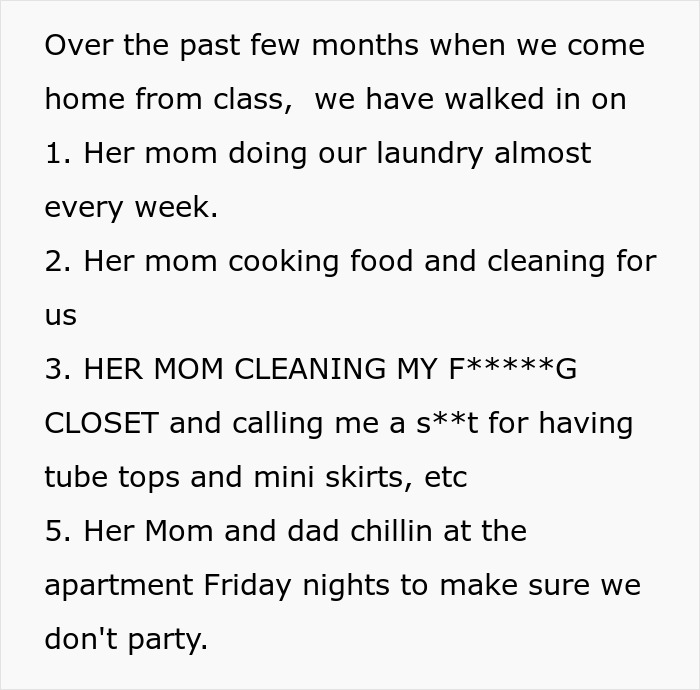
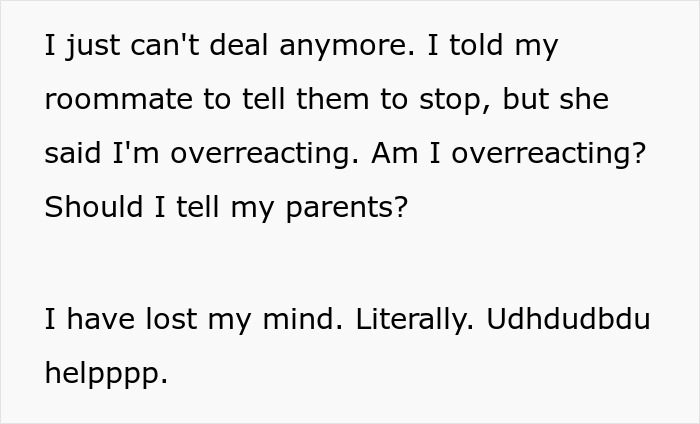
Image credits: freepik (not the actual photo)
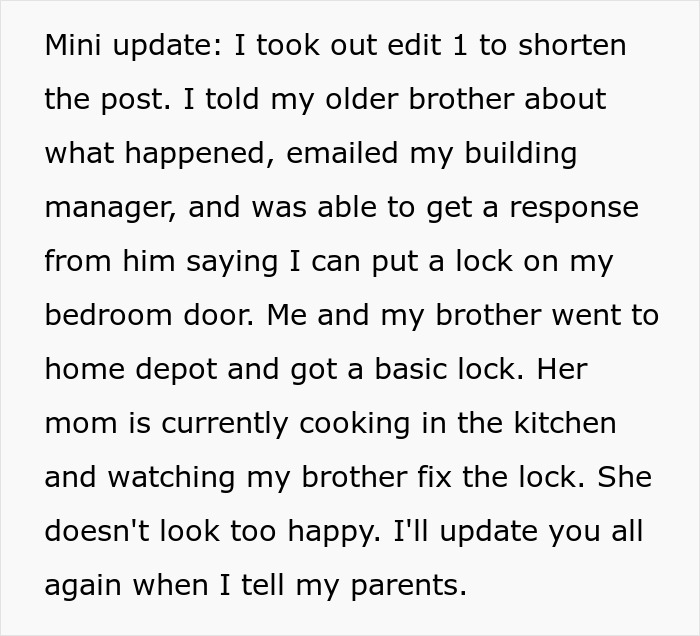
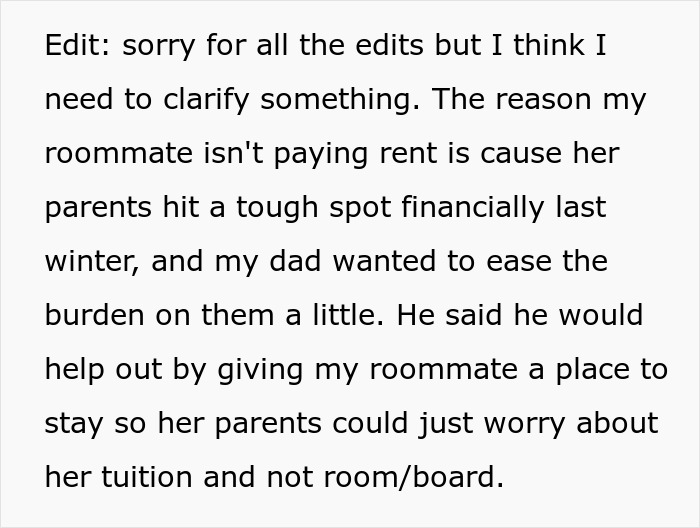

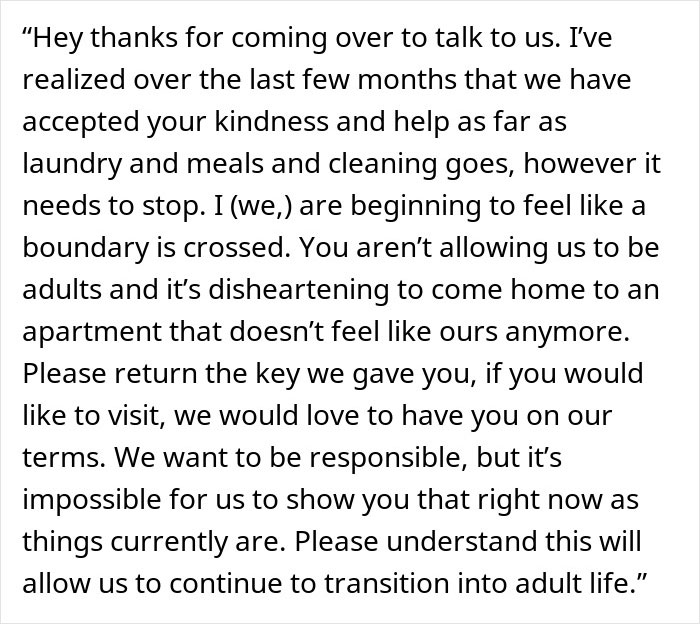
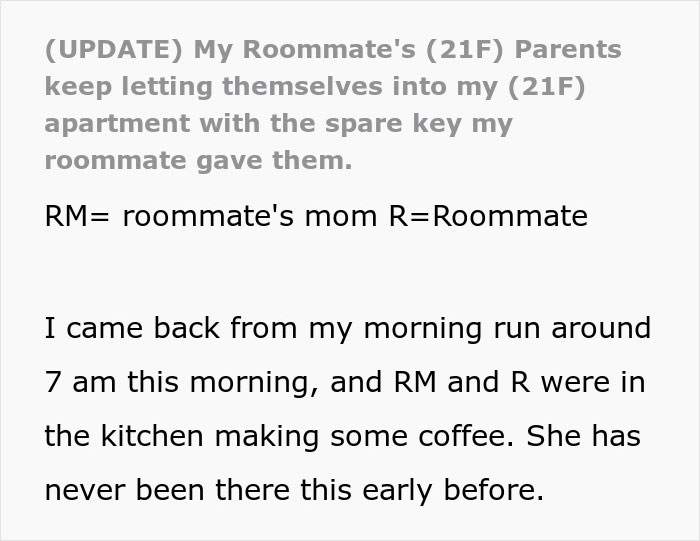
Image credits: ughhhelpmepleaseee
It’s natural for parents to worry about their children and want to make sure they’re safe and doing well. But inserting yourself into your adult child’s daily life, cooking their meals and doing their laundry well into their twenties? That goes far beyond normal parental concern.
This level of involvement is what psychologists call helicopter parenting. The term perfectly captures how these parents operate, hovering overhead like helicopters and constantly monitoring every aspect of their child’s life. While their intentions are usually good, the impact on children’s wellbeing and ability to handle real-world challenges is anything but.
A study led by researcher Nicole B. Perry from the University of Minnesota followed 422 children of controlling parents over 8 years to track their social and emotional development. The researchers observed various forms of helicopter parenting in action: parents constantly directing their young children on what to play with, exactly how to use each toy, how to clean up afterward, and maintaining overly strict or demanding standards throughout.
The results were telling. Children raised under this controlling approach struggled more with the demands of growing up. They had harder times navigating school environments, were more likely to act out in class, struggled to make friends, and faced academic difficulties. When you’re never allowed to figure things out on your own, you never learn how.
Plenty of other research backs this up and reveals additional harmful effects. Helicopter parenting increases children’s fear of criticism and evaluation because of the constant controlling behavior. It’s also linked to social withdrawal, where children become unwilling to participate in social situations because they haven’t developed the confidence to handle them independently.
The woman in this story was 21 years old, clearly an adult. But helicopter parenting doesn’t magically stop when children reach adulthood. This parenting style often extends well into the college years and beyond, making it harder for young adults to properly manage their lives.
Studies on college students show the mental health toll of having helicopter parents. Those who experienced this overbearing parenting style had higher anxiety levels compared to students whose parents gave them appropriate independence.
When you grow up with parents controlling everything, you start believing that external forces dictate your outcomes rather than your own choices and actions. This creates a sense of helplessness that shows up as anxiety, procrastination, or impulsiveness whenever you’re expected to make decisions or handle stress alone.
Image credits: The Yuri Arcurs Collection / freepik (not the actual photo)
If someone struggles as a student because of helicopter parenting, they’ll likely struggle as a roommate too. After all, if you’ve never experienced proper boundaries or real independence, being thrown into a new living situation where you need to manage peer relationships becomes incredibly challenging. Making good decisions, compromising, and resolving conflicts are skills you develop through practice. Without that practice, even basic roommate situations can feel overwhelming.
The situation gets even messier when helicopter parents extend their control into their child’s shared living space. The woman in this story didn’t just have to deal with a roommate who lacked independence skills. She also had to contend with parents who believed they had every right to access the apartment whenever they pleased.
Roommate conflicts are already widespread among college students. A nationwide study of 31,500 students found that nearly half experienced frequent or occasional conflict with their roommates.
These conflicts have real consequences. Research shows that 5.6% of undergraduates reported roommate difficulties negatively affecting their academic performance. That percentage might sound small, but it’s actually higher than the impact of alcohol use on academics.
Creating harmony in a shared living space requires setting clear boundaries from the start. Experts recommend having these conversations early rather than letting issues build up until they explode. Talk to your roommate about your habits, expectations, and preferences before problems arise. If you have early morning classes and need a quiet environment, say so upfront. If you’re a night owl who studies late, your roommate deserves to know that too.
A roommate agreement can help make these boundaries concrete. This informal document can outline who handles which chores, establish quiet hours, and set guidelines for having visitors over. The key is revisiting this agreement regularly as your schedules and needs change. When conflicts do pop up, addressing them calmly and directly keeps small issues from becoming major problems.
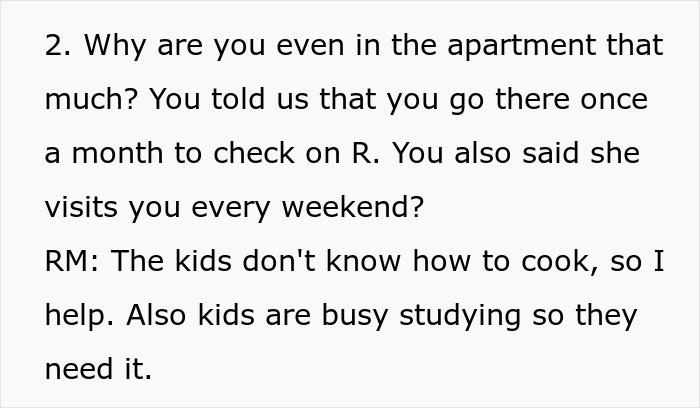
But here’s the thing: even the best boundary-setting strategies fall apart when one roommate’s parents refuse to play by the rules. When parents have a spare key and use it to walk in whenever they want, they’re invading privacy and violating the autonomy of everyone who lives in that space.
No amount of roommate agreements or direct communication can fix a problem created by people who aren’t even supposed to be there in the first place.
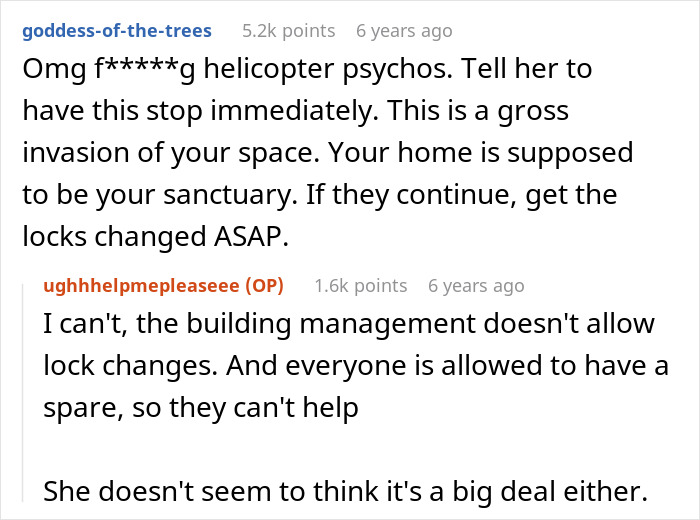

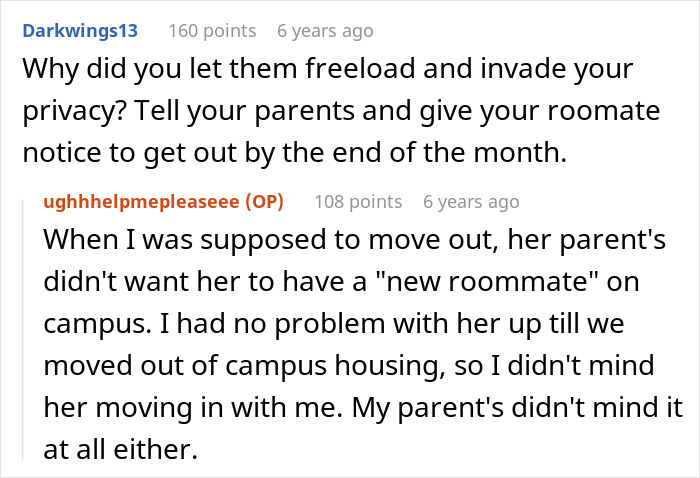
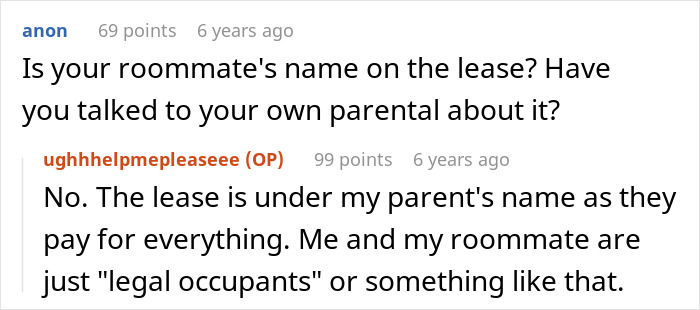


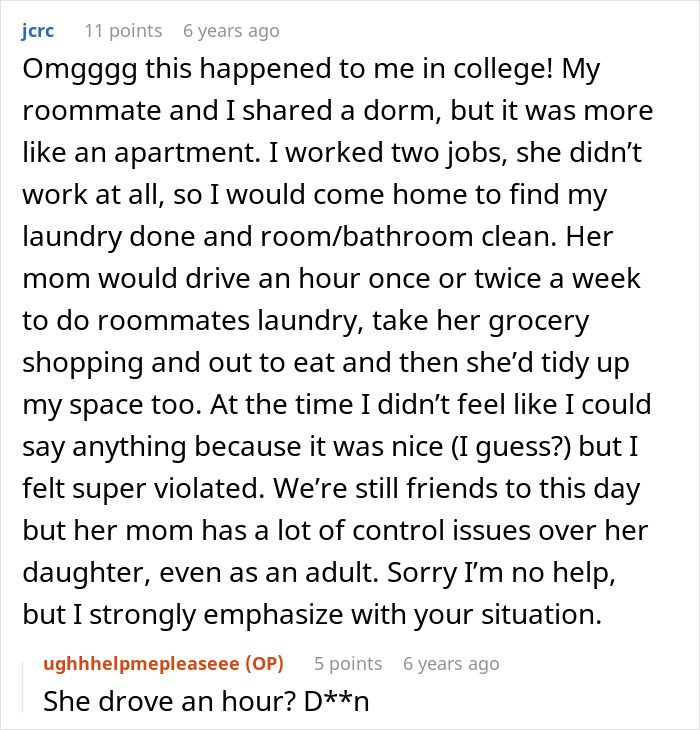
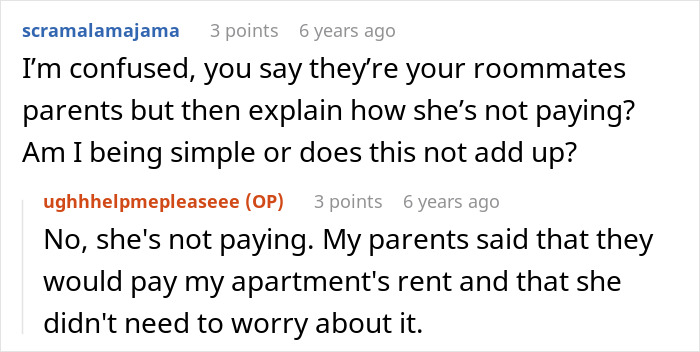

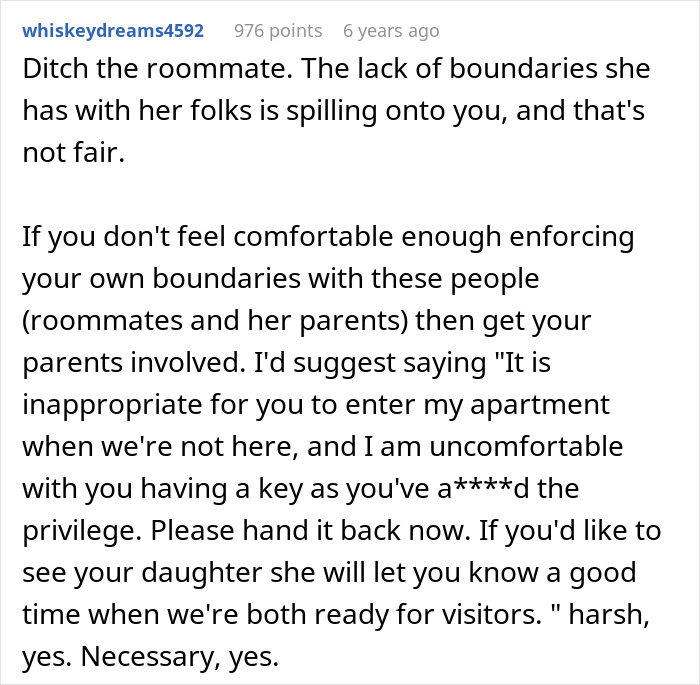


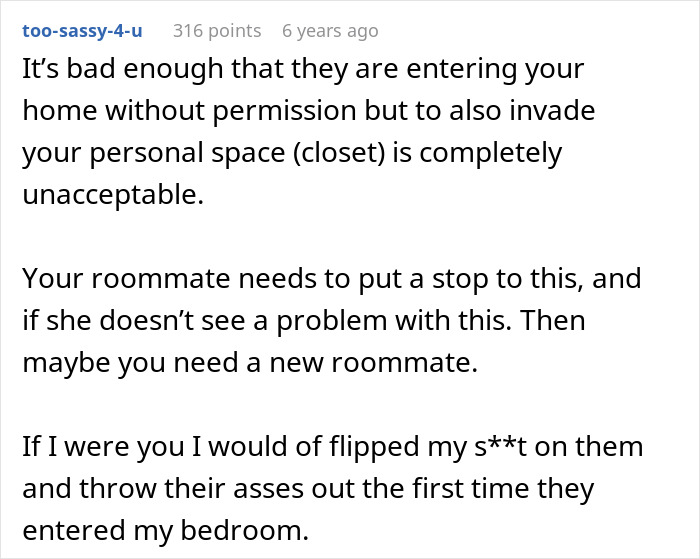
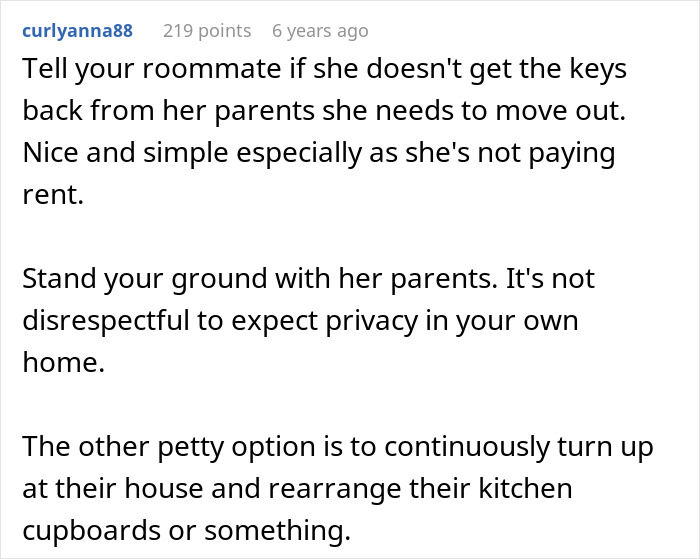


Image credits: Clay Banks / Unsplash (not the actual photo)
Image credits: rawpixel.com / freepik (not the actual photo)
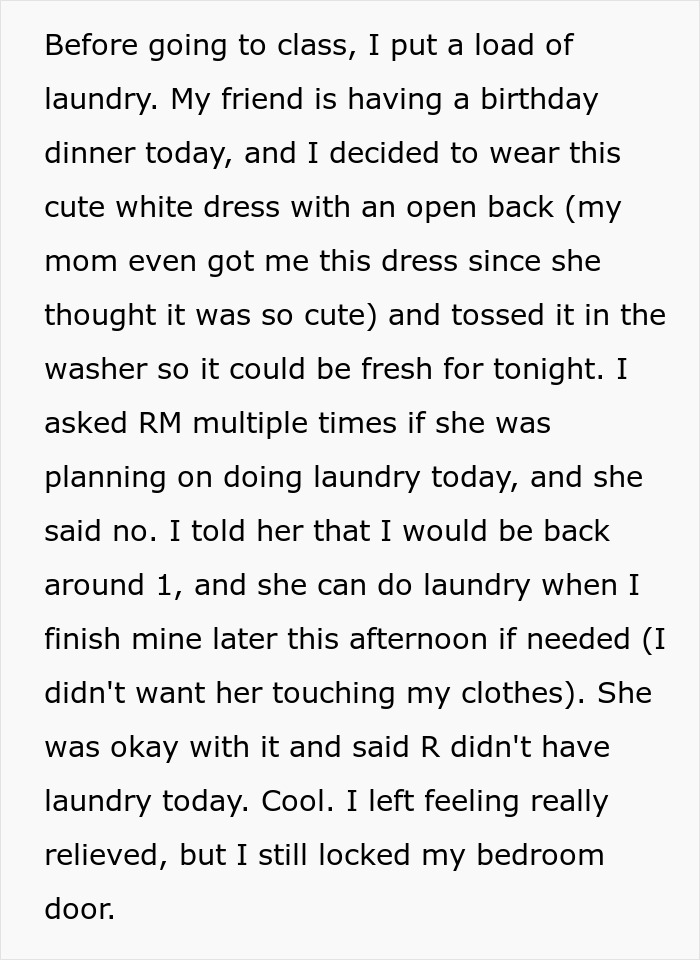
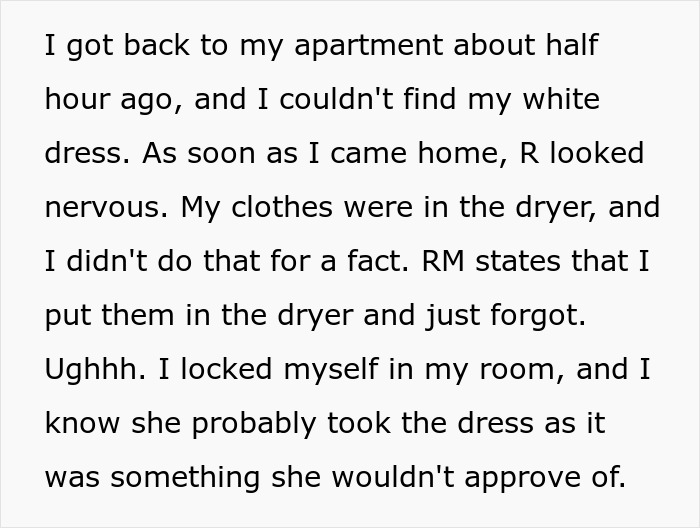
Image credits: katemangostar / freepik (not the actual photo)
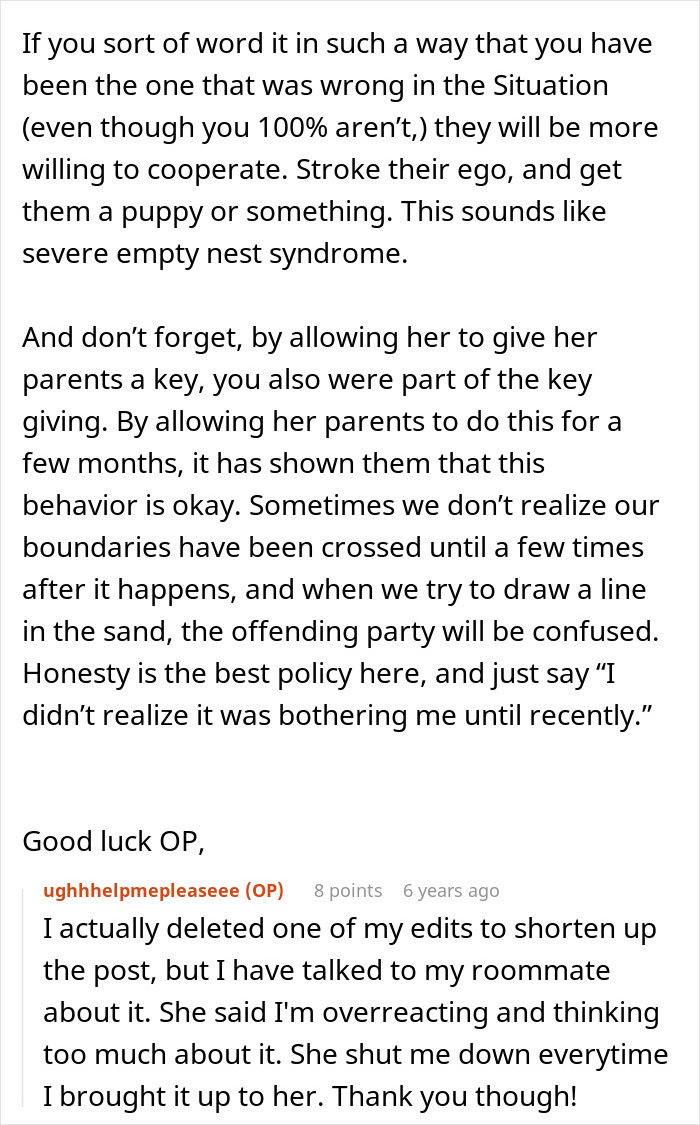
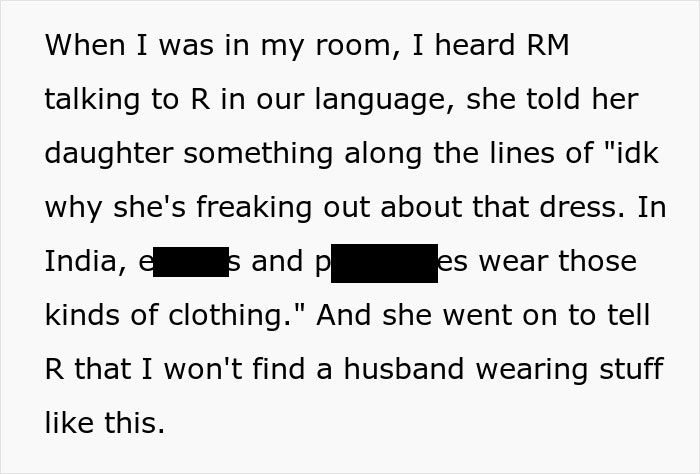
Image credits: ughhhelpmepleaseee


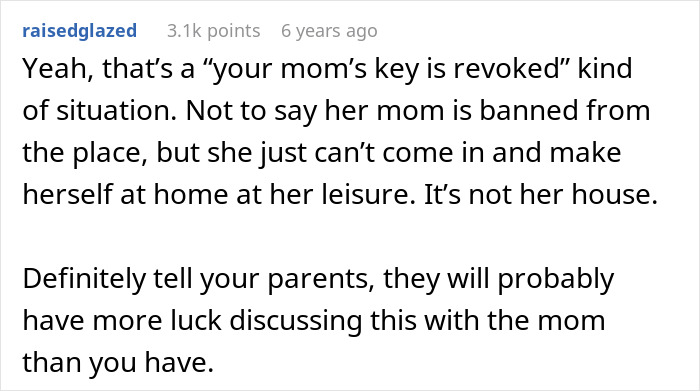
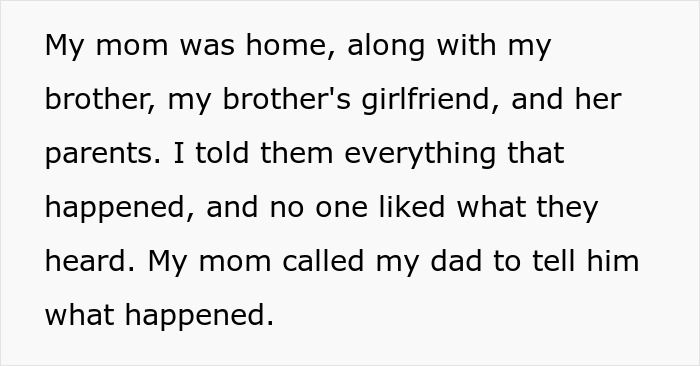
Image credits: The Yuri Arcurs Collection / freepik (not the actual photo)
Image credits: Claudio Schwarz / Unsplash (not the actual photo)

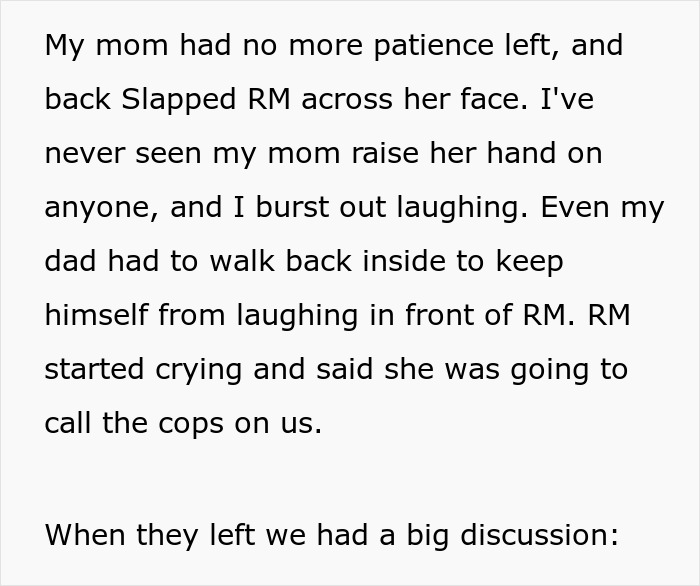
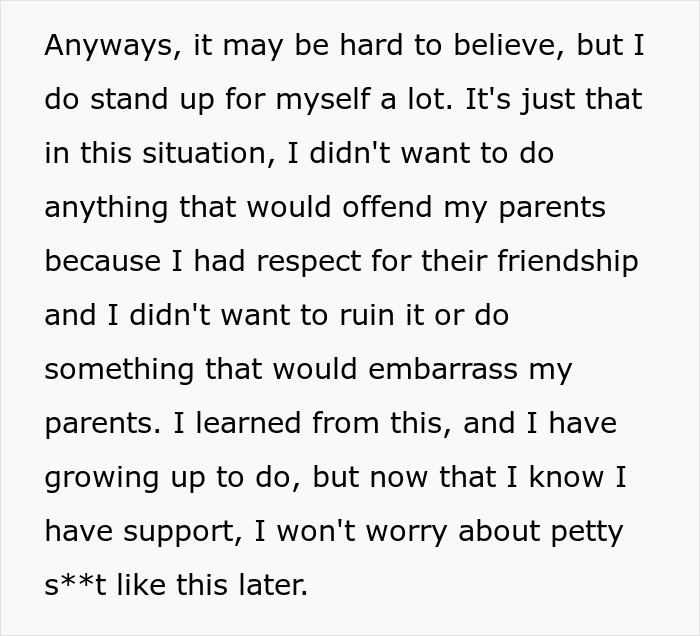
Image credits: Filip Szalbot / Unsplash (not the actual photo)
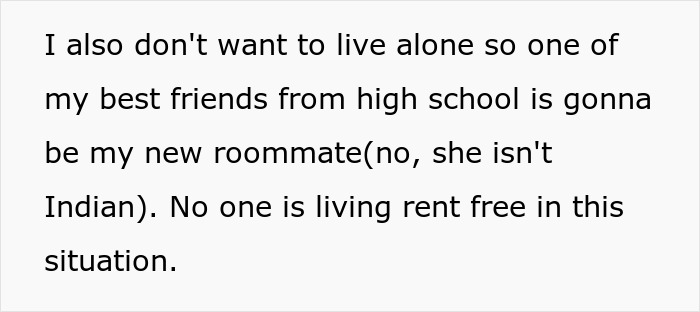
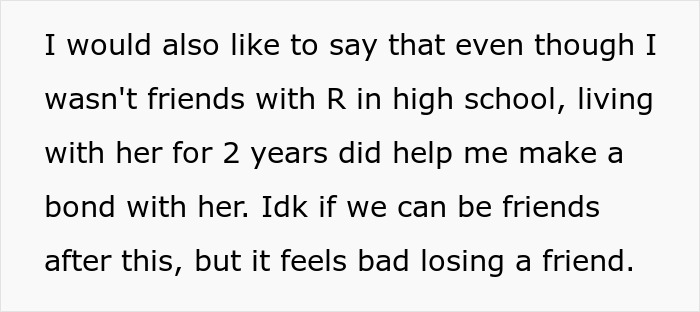

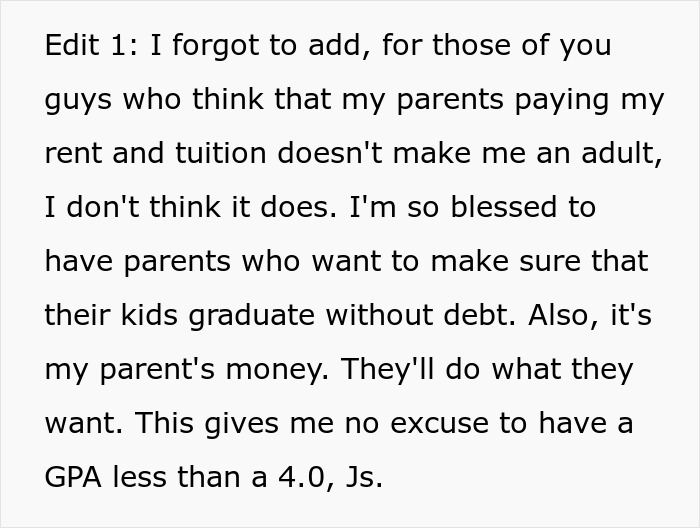
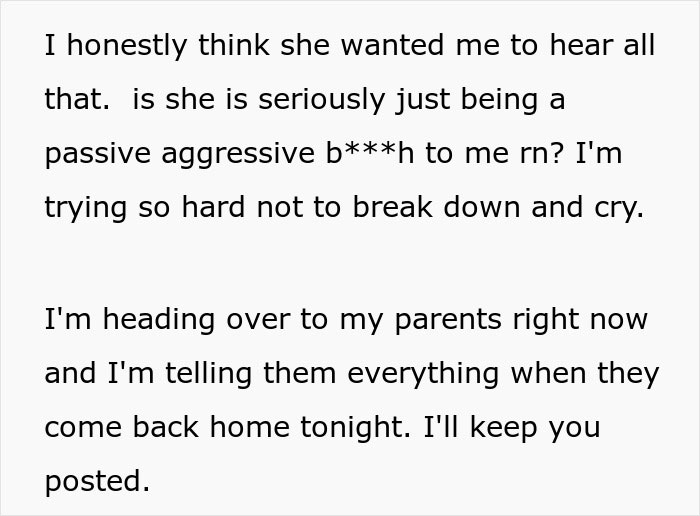
Image credits: ughhhelpmepleaseee



By entering your email and clicking Subscribe, you're agreeing to let us send you customized marketing messages about us and our advertising partners. You are also agreeing to our Privacy Policy.
Thank you! You've successfully subscribed to newsletters!

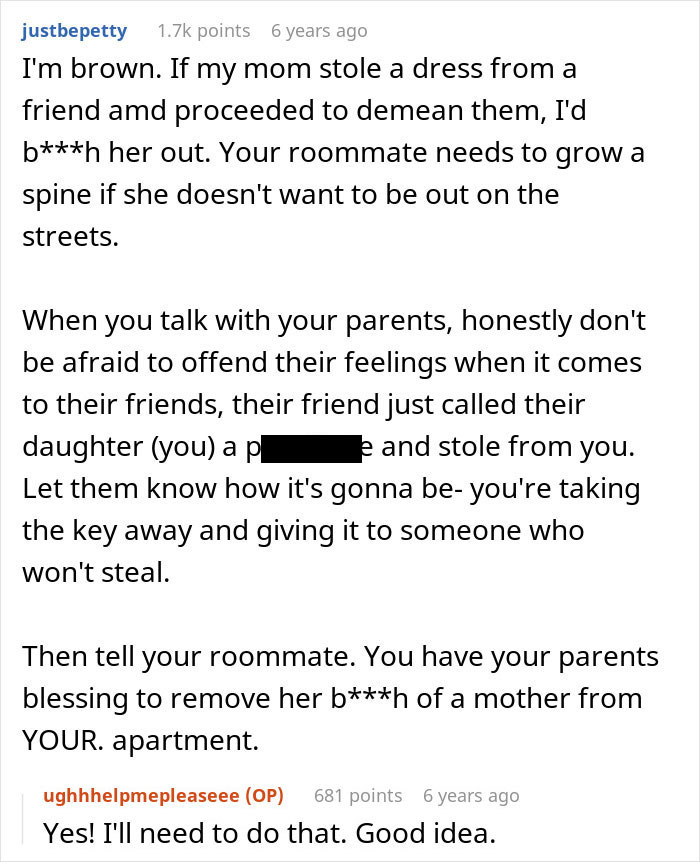
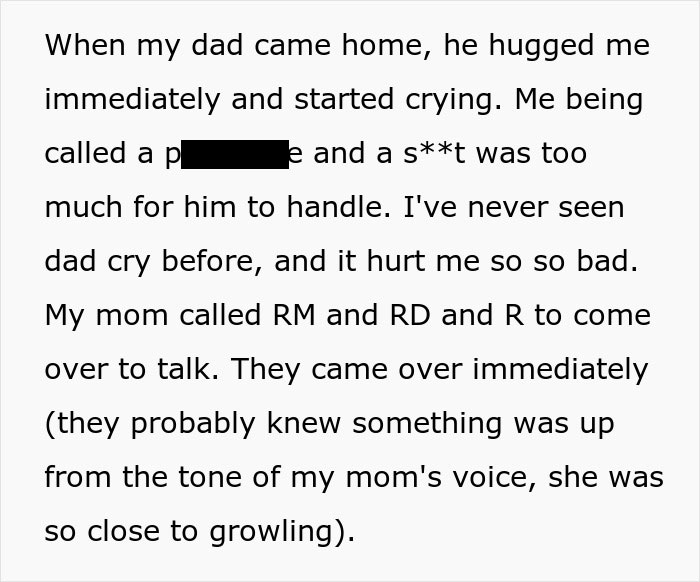
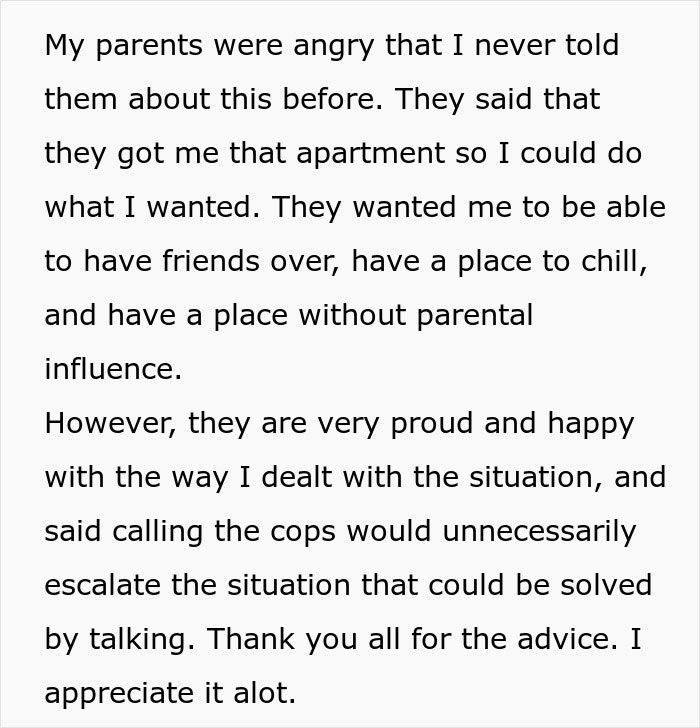
Best case scenario was OP telling her parents. Had she tried to tell her roommate’s parents off all by herself, since her roommate was apparently OK with all the intrusions, they wouldn’t have listened to her, because they see her as just a child who doesn’t know any better and isn’t worthy of their respect or even attention (except for trying to police everything she does, says, or wears). Telling her parents everything and letting THEM do the talking, as equals (even superiors) in the other parents’ eyes, was the more effective, and lasting, way for OP to resolve this issue. AND IT WORKED.

This is when you start mentioning all of your underwear that has suddenly gone missing. Then ramp it up to jewelry and other valuables.
Best case scenario was OP telling her parents. Had she tried to tell her roommate’s parents off all by herself, since her roommate was apparently OK with all the intrusions, they wouldn’t have listened to her, because they see her as just a child who doesn’t know any better and isn’t worthy of their respect or even attention (except for trying to police everything she does, says, or wears). Telling her parents everything and letting THEM do the talking, as equals (even superiors) in the other parents’ eyes, was the more effective, and lasting, way for OP to resolve this issue. AND IT WORKED.
This is when you start mentioning all of your underwear that has suddenly gone missing. Then ramp it up to jewelry and other valuables.































 No fees, cancel anytime



















34
2