Get Premium
Dark mode theme is available exclusively for premium users. Learn more about the benefits of subscribing.
No fees, cancel anytime.

 Dark Mode Ad-Free Browsing Unlimited Content
 Ad-Free Browsing Unlimited Content Dark Mode
Join 1.2 million Panda readers who get the best art, memes, and fun stories every week!
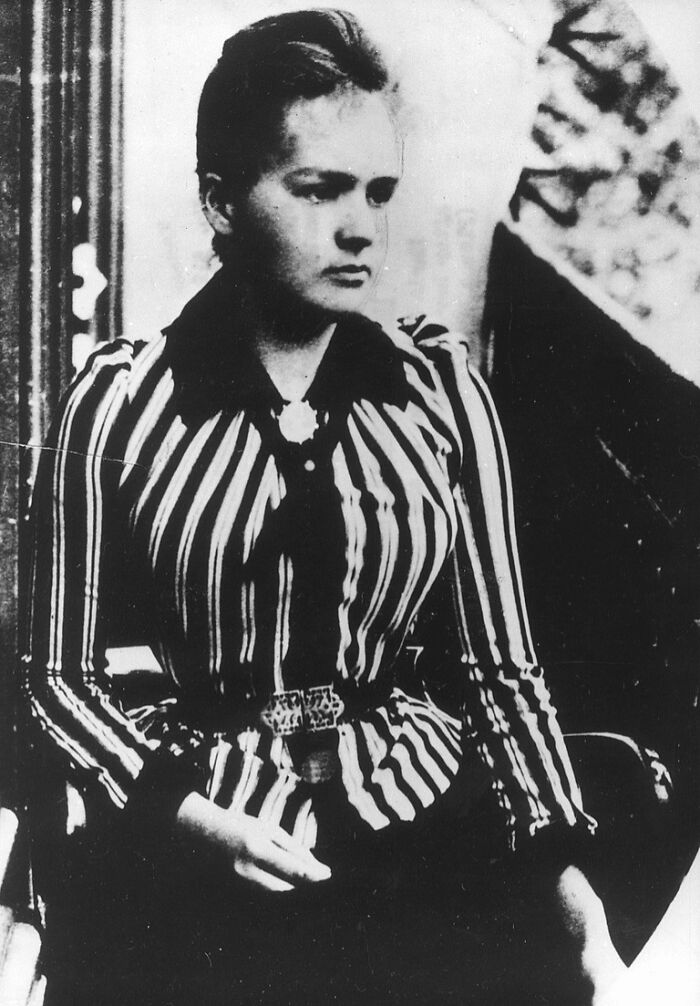
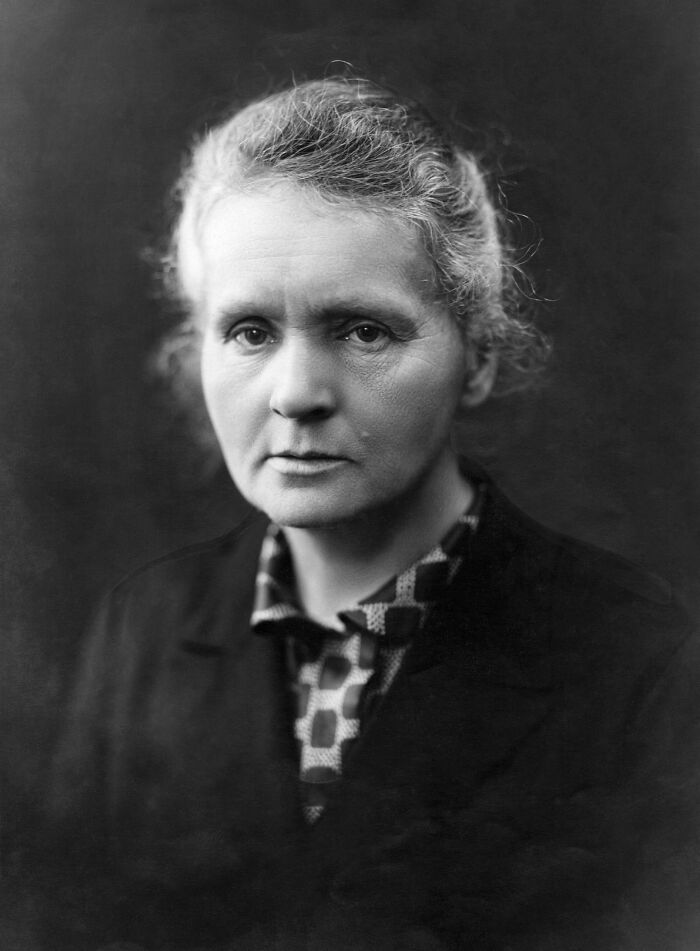
Marie Curie is a groundbreaking scientist whose work in radioactivity shaped nuclear science as we know it today. She was a pioneer in the field, and her research is noted in history as world-changing. Curie's dedication to her work despite facing personal danger is a testament to her courage and relentless spirit. Beyond the notes and lab coats, she broke many barriers for women in society and defied some harsh odds while doing it. From studying at a secret university to keeping a radioactive sample on her nightstand, Marie Curie's life behind the scenes was truly fascinating. Here are 18 shocking facts and surprising details about her you probably didn't know until now.
This post may include affiliate links.
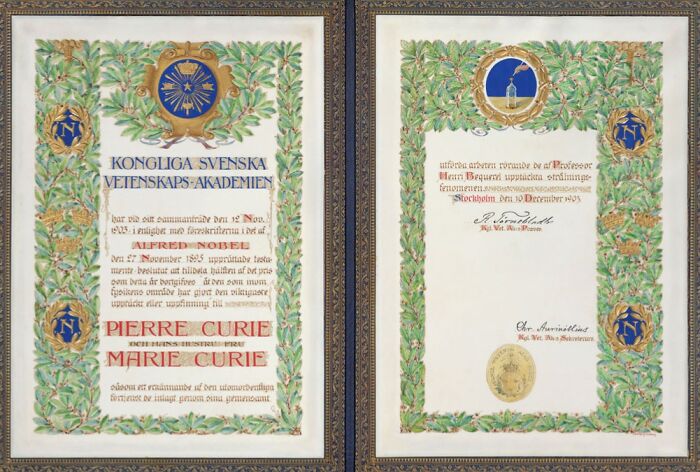
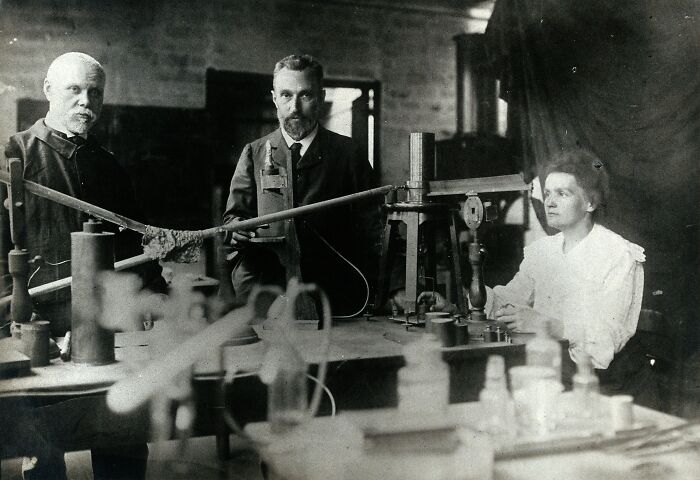
Dubbed “The Mother of Radiation”, Marie Curie was a woman of many firsts. She was the first woman to win a Nobel Prize for her work in radioactivity in 1903. In addition, she won another for discovering radioactive elements eight years later in 1911. The first prize was shared with her husband and their colleague, and the second prize was awarded to her in her own right.
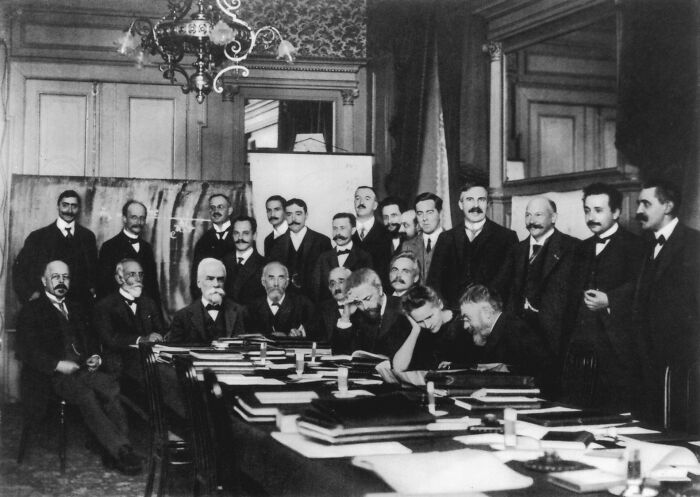
Marie Curie wanted to be the first woman to be accepted into the esteemed French Academy of Sciences, but fell short due to arguments from critics opposing her admission. In the wake of public scrutiny, Albert Einstein wrote her a letter of support to praise her intellect and encourage her to ignore her critics. Curie went on to play a crucial role in several other international organizations, including the IUPAC Commission on Atomic Weights, the International Commission for Intellectual Cooperation. She was also a member of the French Academy of Medicine for her work on mobile X-ray machines for World War I.

She was rejected after she had already been awarded a Noble Prize! "When she applied for membership, she was rejected by a margin of two votes — because she was Polish, maybe-Jewish (not that it matters, but she wasn’t), and a woman. Yup. Marie Curie — rejected by the French Academy of Sciences for having a v****a." https://www.themarysue.com/marie-curie-rejected-french-academy-of-sciences/
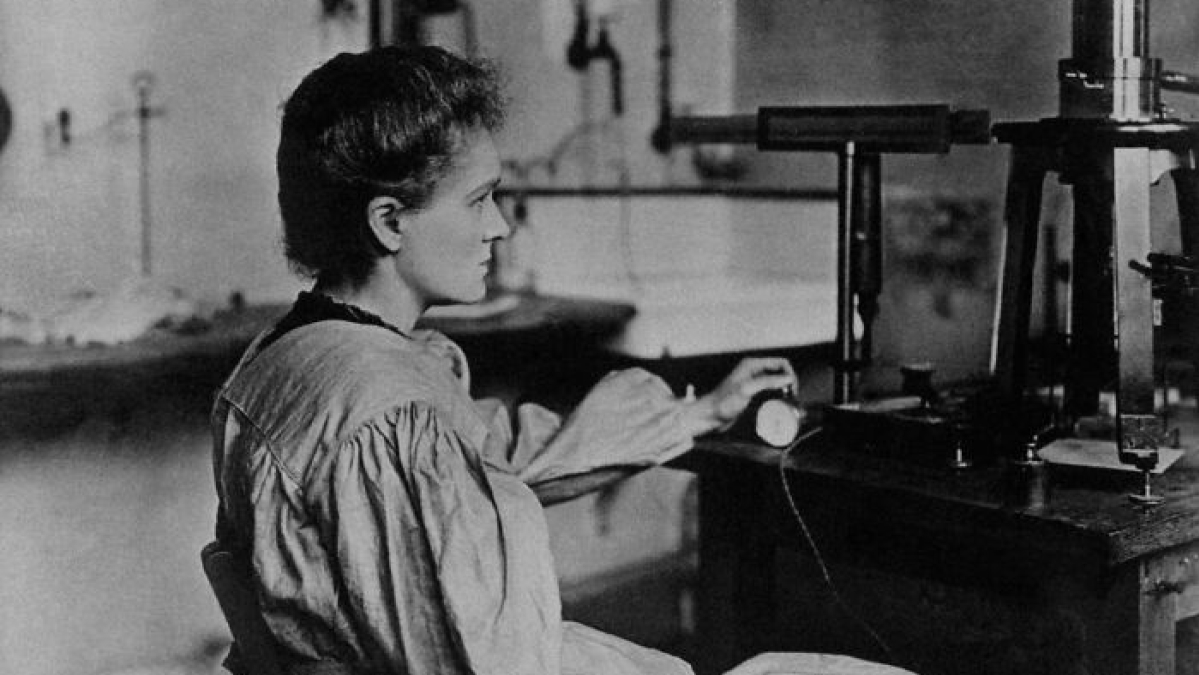
Sleeping next to something radioactive probably isn’t on anyone’s bucket list, but it was one of Marie Curie’s favorite things to do. Probably not fully aware of the risks at the time, she kept a sample of radium at her bedside because it gave off the most “beautiful little light.” Both she and her husband Pierre frequently carried around radioactive samples to show off to anyone who was interested, even suffering radiation burns in the process.
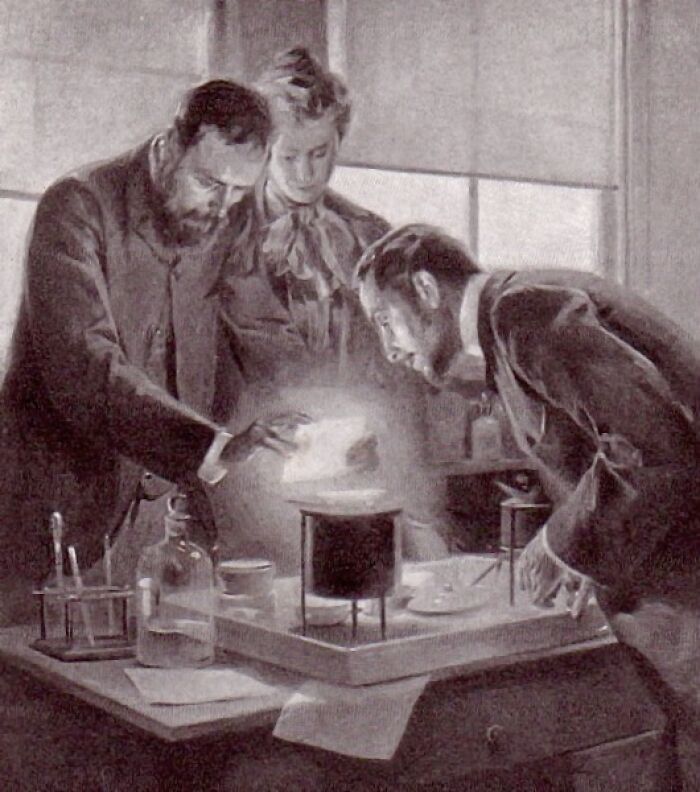
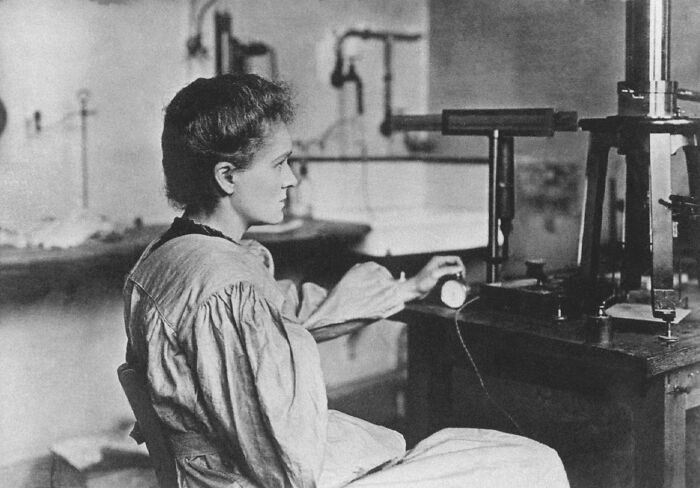
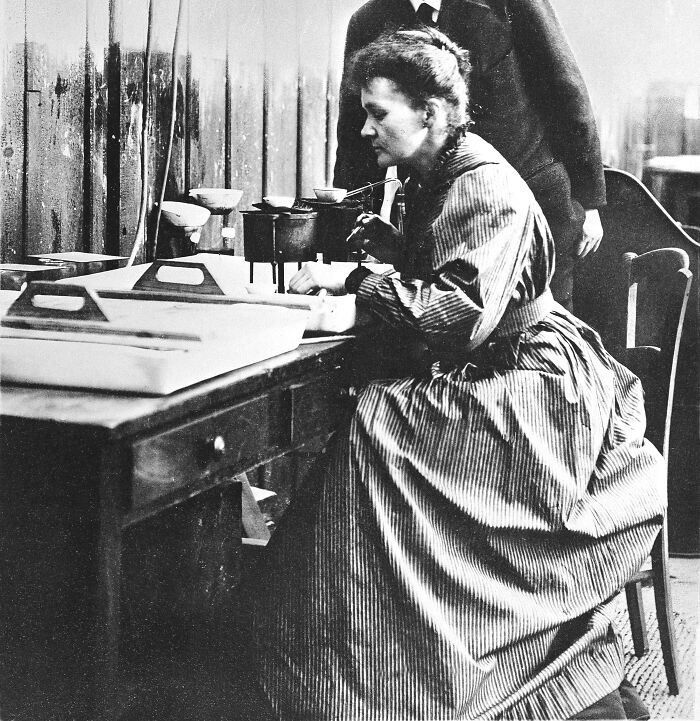
Marie and Pierre conducted their research on elements from a shed behind Pierre’s place of work because their labs weren’t spacious enough for all the resources they needed. German Chemist Wilhelm Ostwald described the shed where radium was discovered as “a cross between a stable and a potato shed” when he visited it. Curie herself described the shed as sweltering in the summer and drafty in the winter, with a glass roof that didn’t fully protect them from the rain. However, they were determined to continue their work despite facing grueling weather conditions.
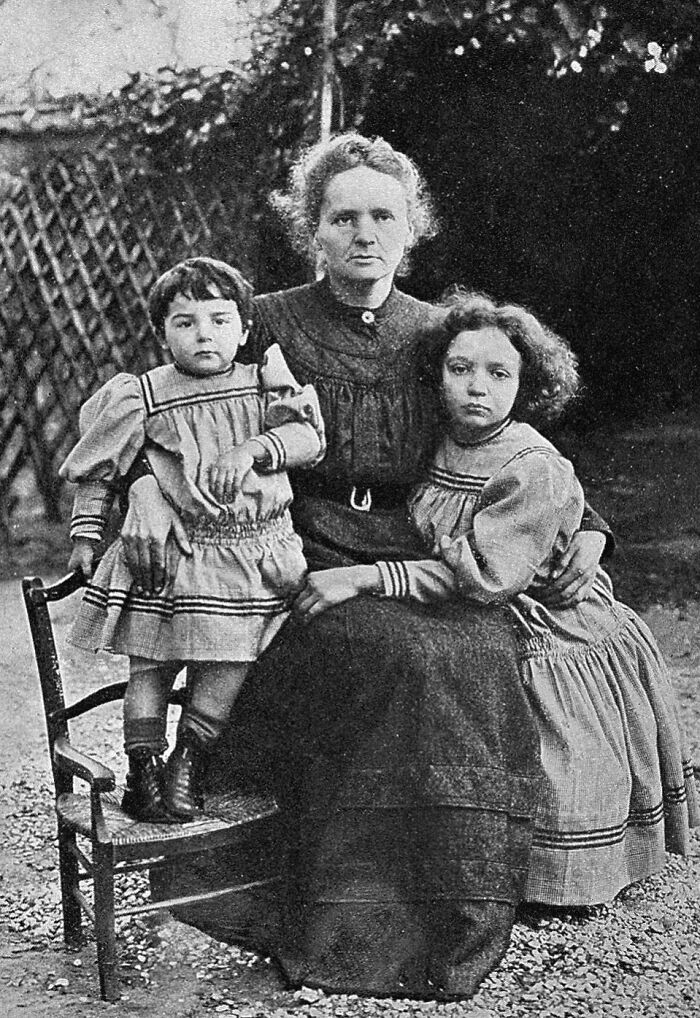
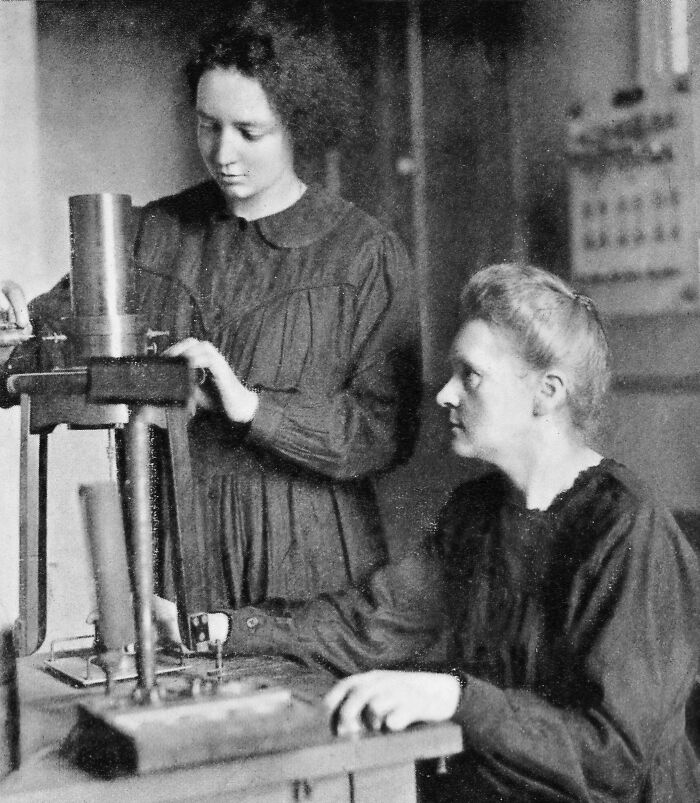
Marie’s two daughters, Irène and Ève, also went on to achieve great things. Irène was awarded her own Nobel Prize in 1935 for her work in chemistry. Ève was a respected pianist and writer who married Henry Labouisse, a diplomat and executive director of UNICEF. He accepted a Nobel Prize on behalf of the organization in 1965.
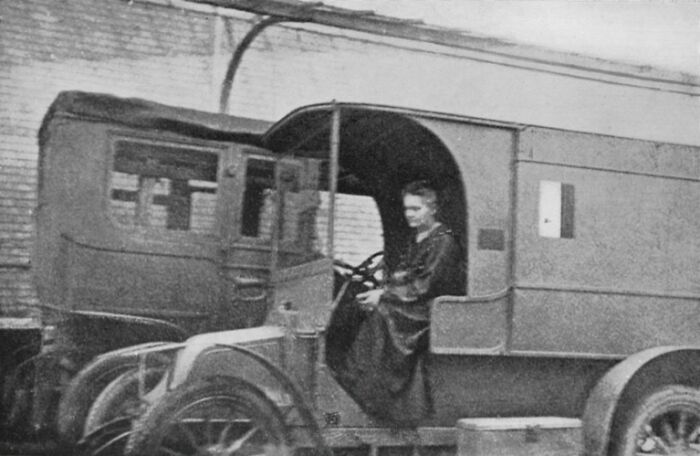
Marie Curie created mobile X-ray machines called "Little Curies” that were used on WWI battlefields. She used her knowledge of radioactivity along with the findings of other scientists to develop the technology. The machines were small enough to be transported around in military vehicles.
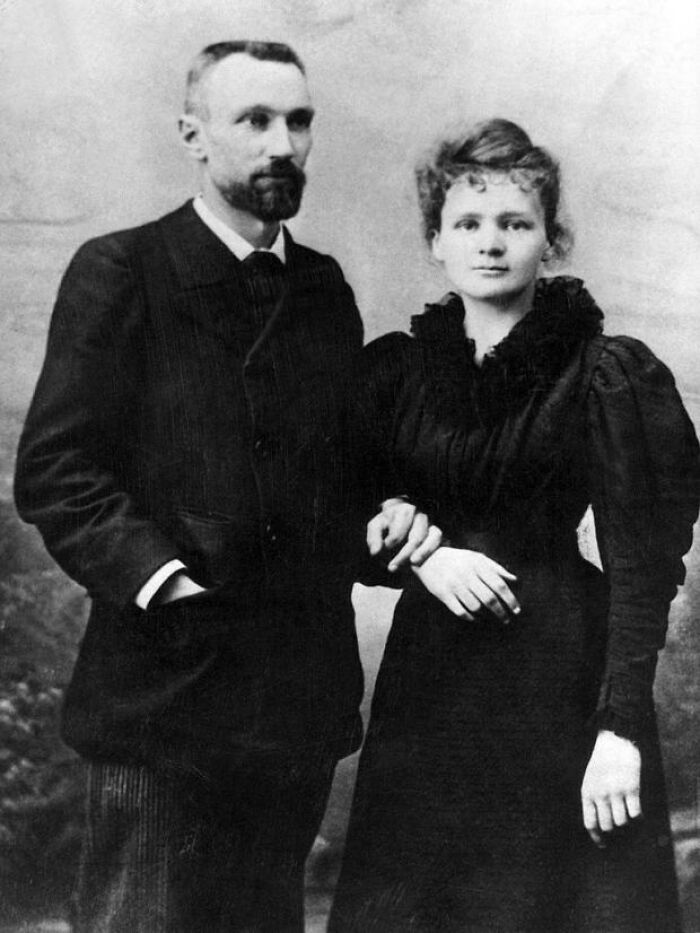
Marie married her husband Pierre in 1895 when she was 28 and he was 36. In addition to their work together, the pair reportedly had many other shared hobbies and interests that kept them close and happy. They had two daughters and remained married until Pierre’s tragic passing in 1906. To honor him, Marie wrote a biography of his life entitled Pierre Curie.
That title made it sound like it was going to be scandalous - they were half siblings or something! They were just really compatible.
In 1909, Marie headed the Radium Institute, now known as the Curie Institute, which opened due to a collaboration between the University of Paris and the Pasteur Institute. It was set up as a nonprofit to facilitate the study of how radioactive materials could have health-related uses, such as treating cancer.
Marie Curie lost her husband, Pierre, in a tragic road accident involving a horse carriage in 1906. Although heartbroken, Marie threw herself into her work. Brought together by their shared grief, Marie and Paul Langevin, one of Pierre’s former students, engaged in a year-long affair. Their affair resulted in a press scandal, leading to Marie seeking refuge from the public eye at a friend’s house along with her daughters.
Before her 1921 visit to the U.S, Marie was offered the French Legion of Honor (d’Honneur) medal. Her husband, Pierre, had declined the award nearly two decades earlier due to Marie not being credited for her part in their achievements—solely because she was a woman. She also refused the award.
In 1921 and 1929, during U.S. tours to raise funds for her research, Marie met with two U.S. presidents. In her first tour in 1921, she met with President Harding and was awarded a gram of radium. In her second tour in 1929, Curie met with President Hoover, who awarded her $50,000. She used the money to acquire more radium.
Marie Curie wasn’t allowed to enrol in a regular college in Poland in the 1800s due to strict restrictions placed by the Russian government on women’s education at the time. She eventually enrolled in the Flying University, a secret school in Warsaw that accepted women into higher learning. The courses at the university were spread throughout the city and regularly changed locations to prevent the Russian authorities from arresting the students and teachers.

flying university, not floating. not just for women either. I really recommend looking it up, the story about it and the story of its founders is amazing
Marie Curie is credited with the discovery of polonium and radium in 1898. She named the first element polonium in honor of her home country, Poland, and the second element radium from the Latin word for ‘ray’. Before the risks of radium were known, it was used on watch dials due to its luminescent properties.
Marie Curie came up with the term radioactivity when she expanded on Henri Becquerel’s work on uranium. He noticed that uranium gave off rays similar to X-rays. Marie discovered that the rays from the element came from its atomic structure and remained constant.

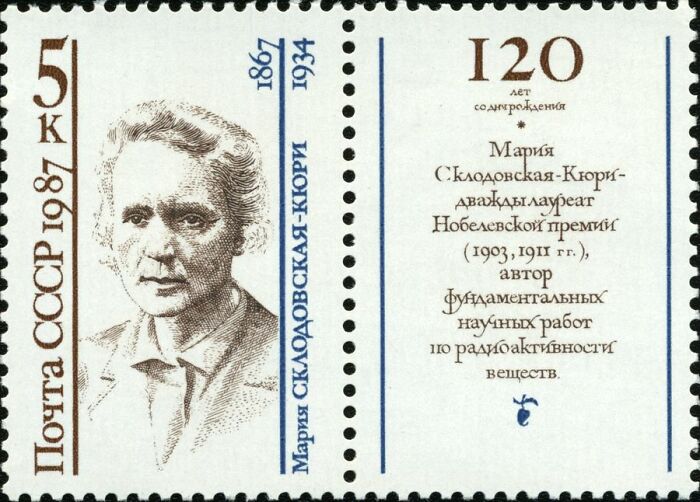
finally! first one here with her name (and not only her husband's)
In 1934, after her passing, Marie was laid to rest alongside her husband, Pierre, in Sceaux. However, in 1995, their ashes were moved to the Pantheon, a vault above ground reserved for revered French scientists and intellectuals. Because of their radioactivity, their remains were sealed in a lead lining.
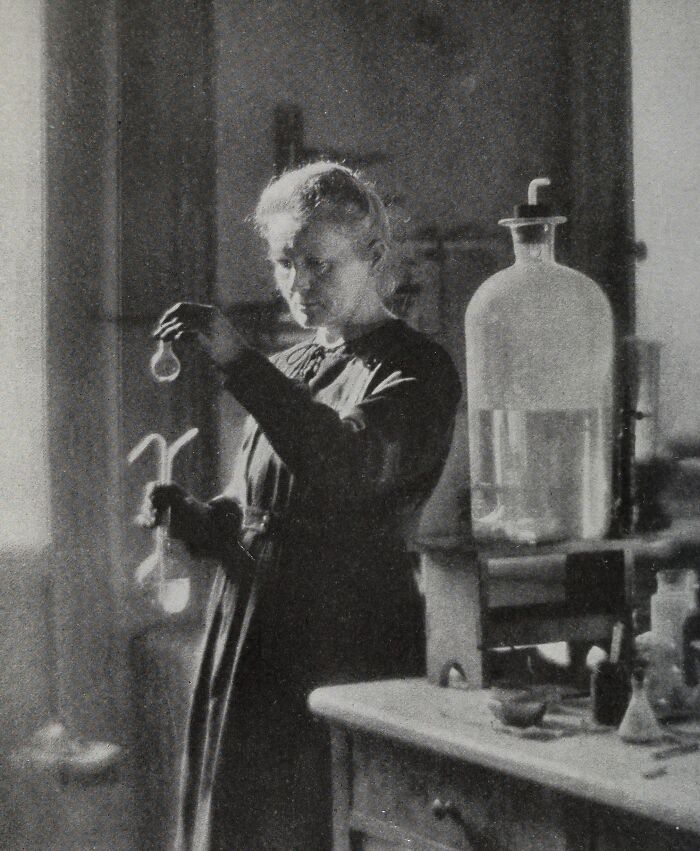
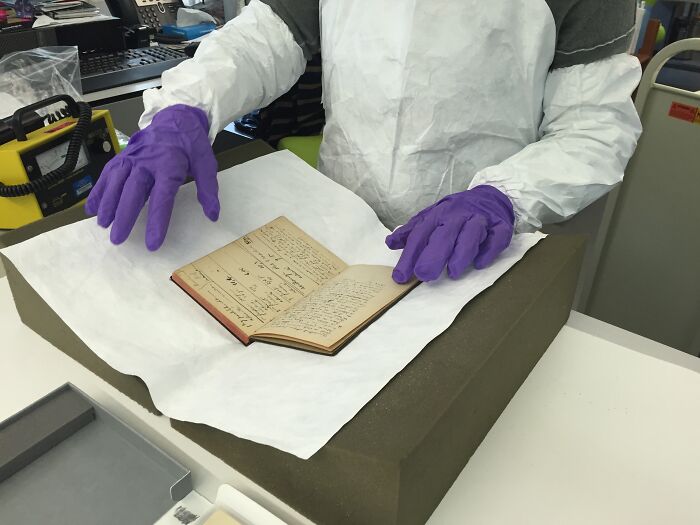
Marie often walked around her lab carrying bottles of polonium and radium in her pockets. The radioactive material was even stored out in the open, with Curie describing the bottles as “glowing tubes” that looked like “faint, fairy lights” in her autobiography. Since her passing in 1934, her notebooks, furniture, and even her cookbooks have been kept in lead-lined storage as they are still radioactive almost a hundred years later. They’ll probably be radioactive for thousands more.
After her husband Pierre’s passing in 1906, Marie took over his position as Head of the Physics Laboratory. In doing so, she became the first woman to hold a position as Professor of General Physics in the Faculty of Sciences at the Sorbonne. This was considered a great achievement as being a female professor was unheard of in Europe at the time. Most women were farm or factory laborers, nurses, or taught elementary school, if they even worked at all.
Marie tragically passed away in 1934, after she developed Aplastic anemia, a health condition which many believe may have been a result of over-exposure to radiation for many years. Her husband, Pierre, also experienced symptoms of radiation poisoning before his untimely passing in 1906. The negative health effects of radiation were not fully known in their time so unfortunately, the pair took no precautions during their work with substances like radium.






























 No fees, cancel anytime