Get Premium
Dark mode theme is available exclusively for premium users. Learn more about the benefits of subscribing.
No fees, cancel anytime.

 Dark Mode Ad-Free Browsing Unlimited Content
 Ad-Free Browsing Unlimited Content Dark Mode
Join 1.2 million Panda readers who get the best art, memes, and fun stories every week!

Children should be able to trust their parents more than anyone else in the world. Your mom and dad are always supposed to be there for you, whether you’re having the best or worst day of your life.
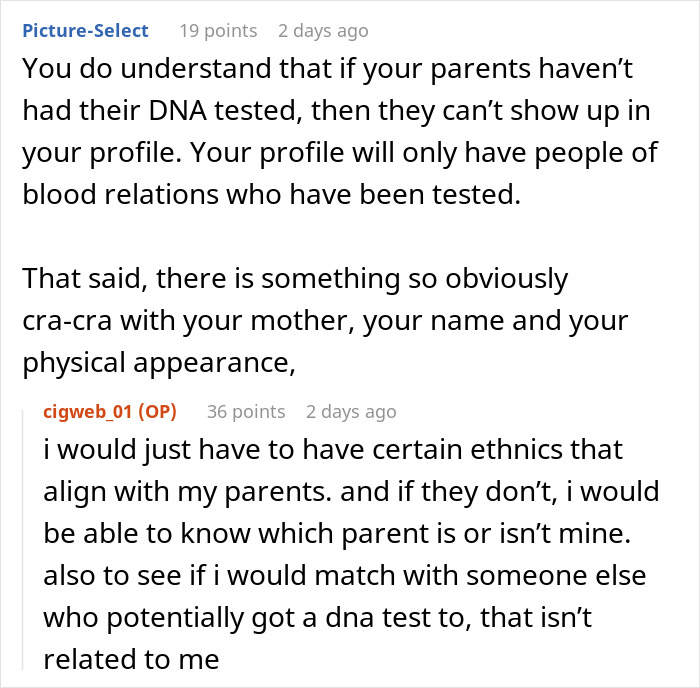
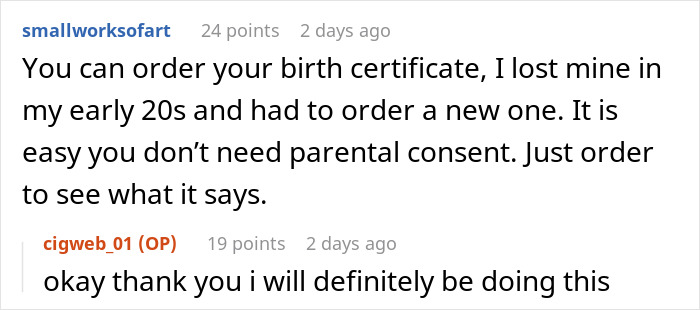
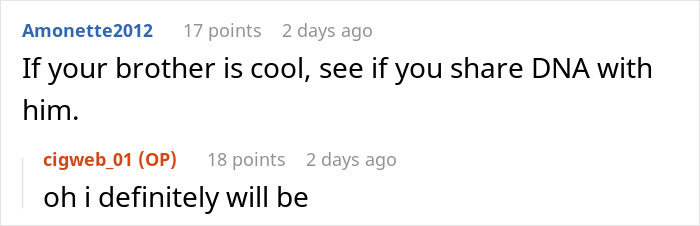
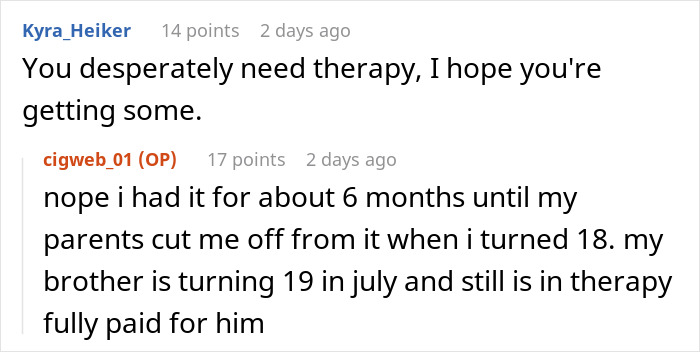
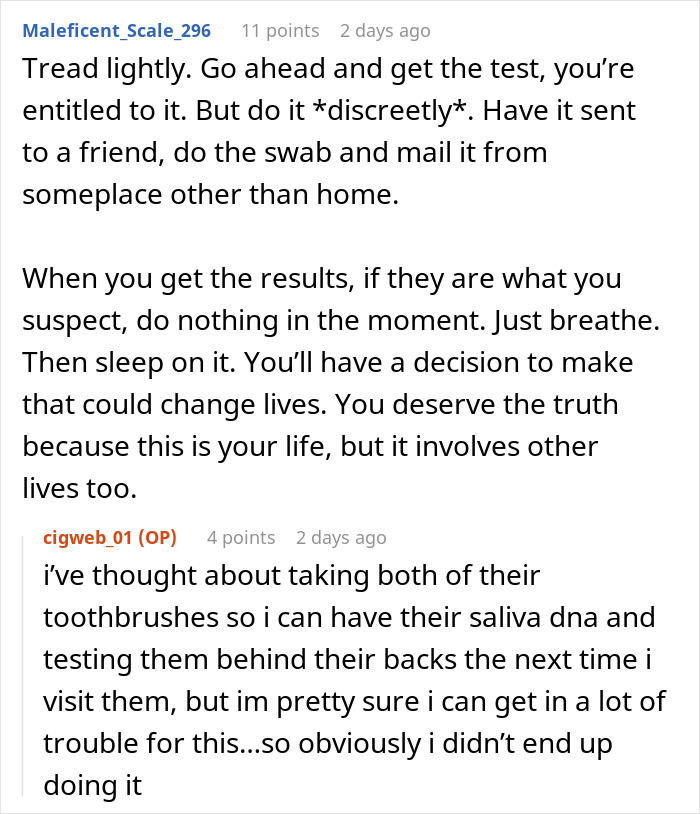
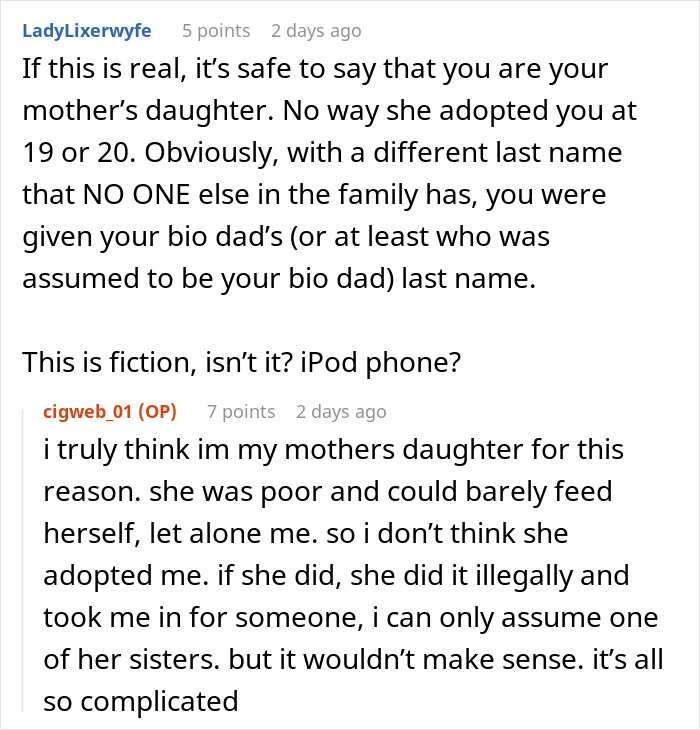
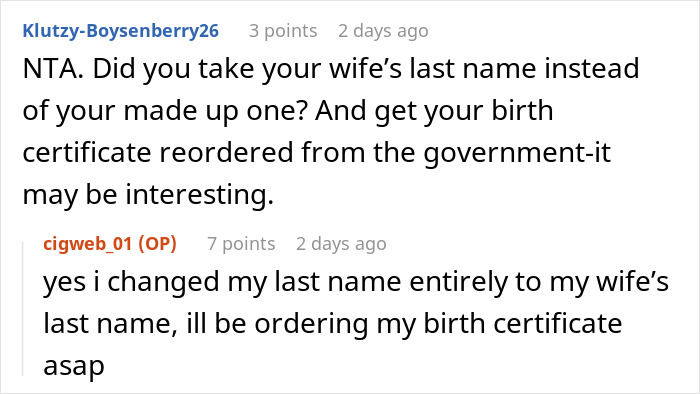
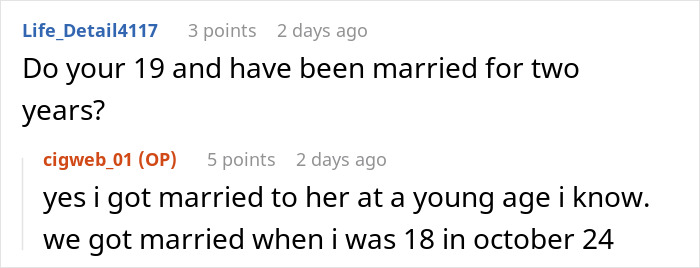
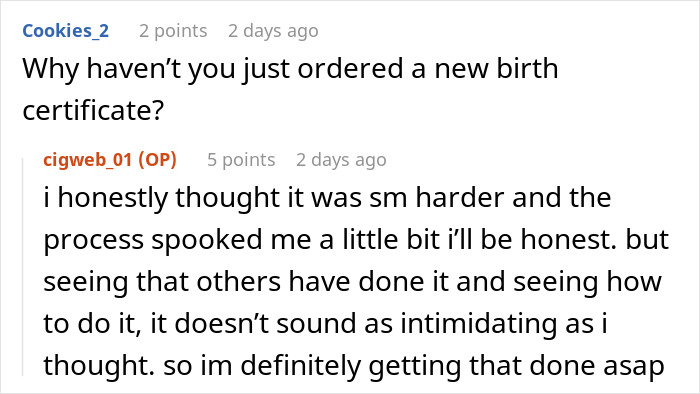
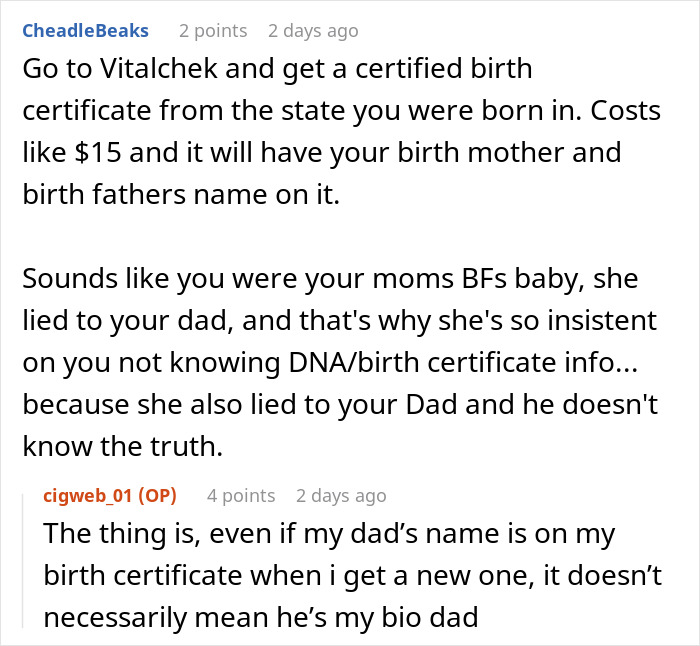
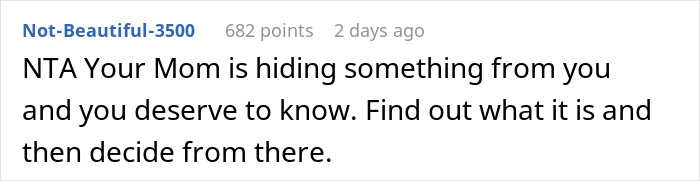
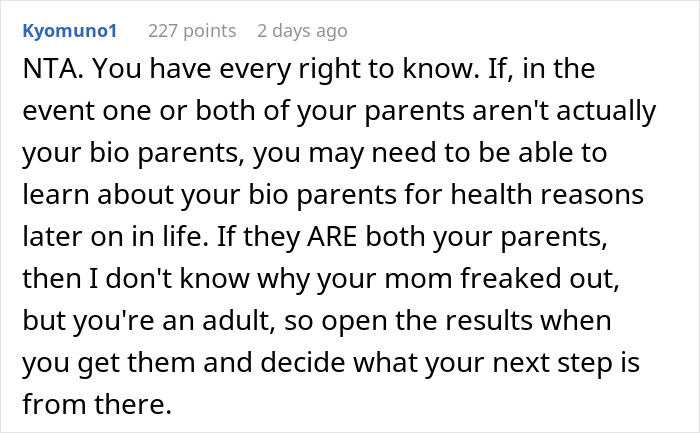
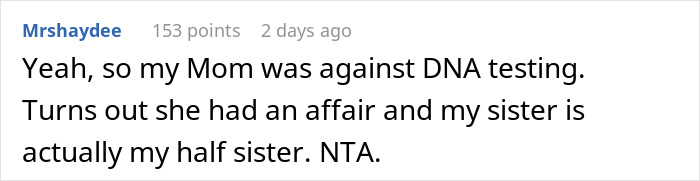
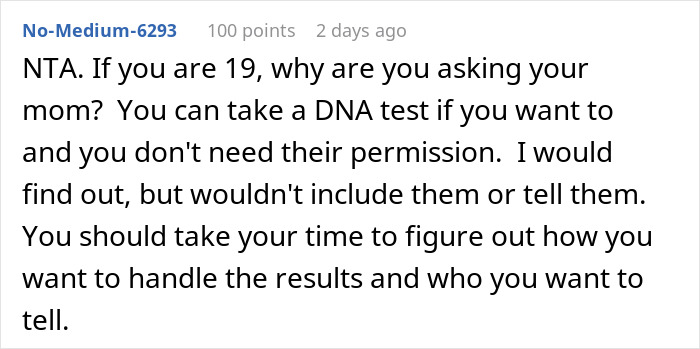
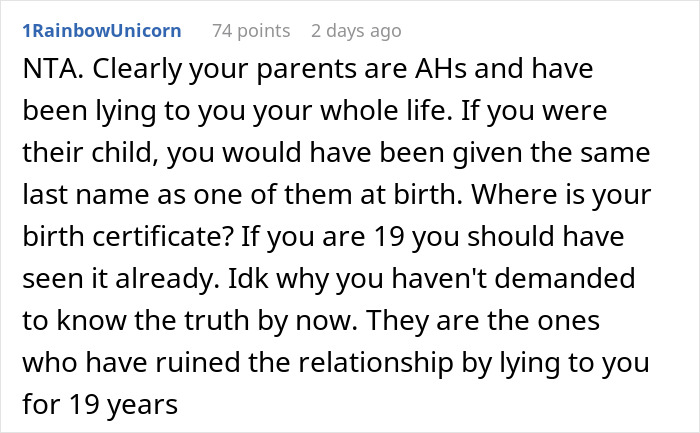
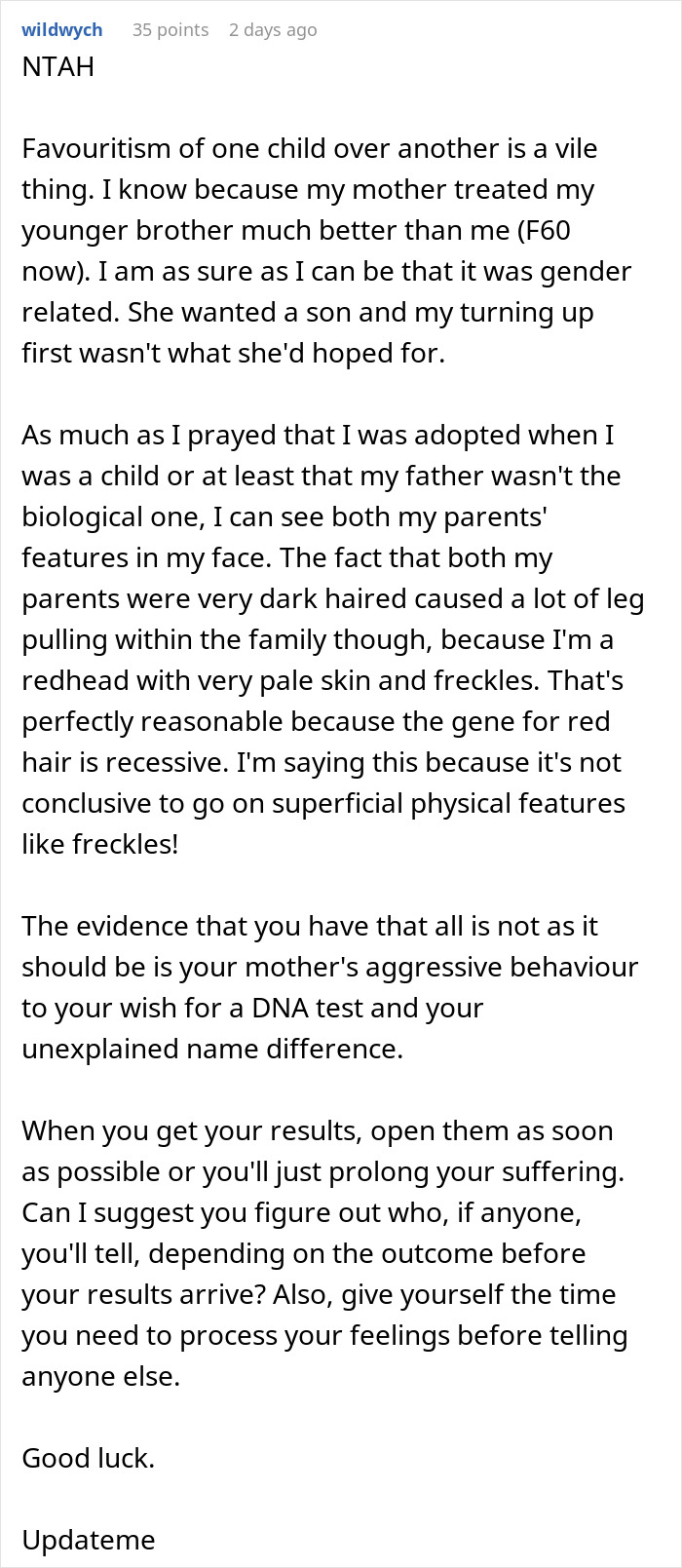
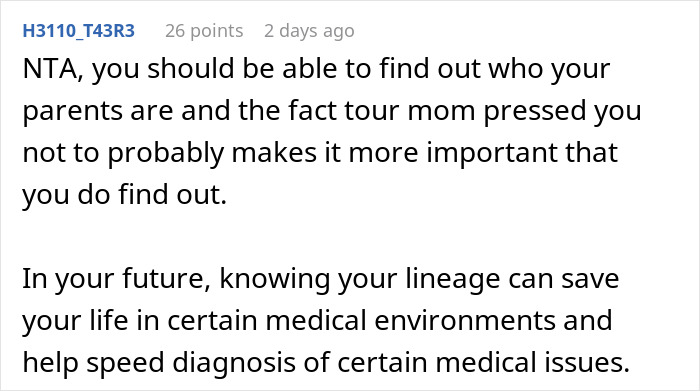
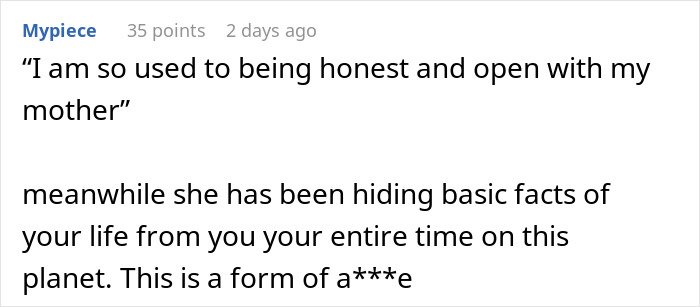
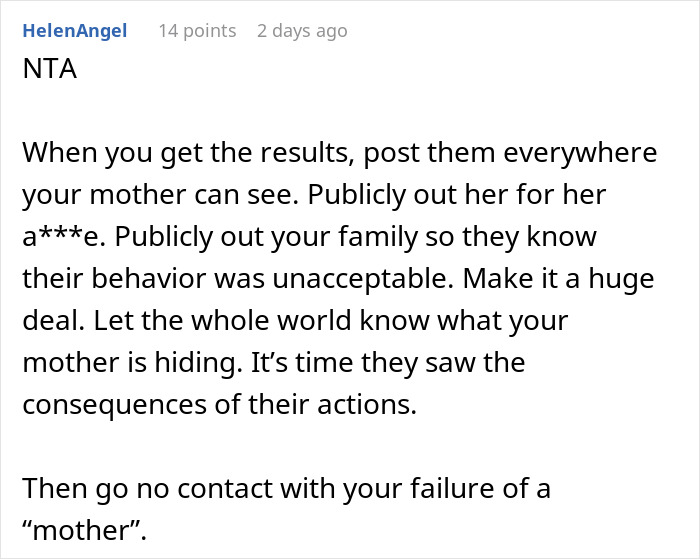
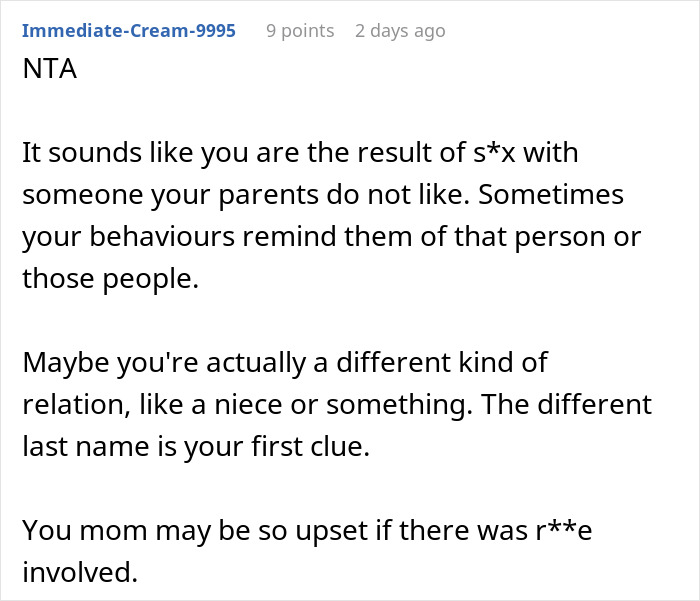
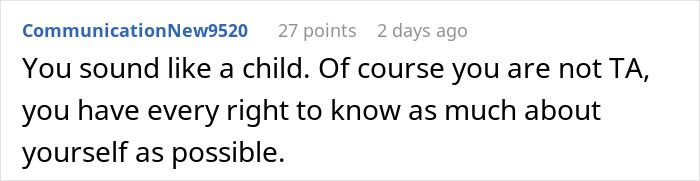
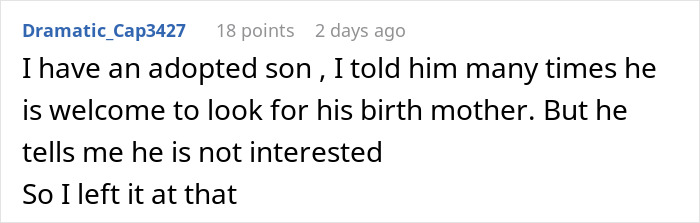
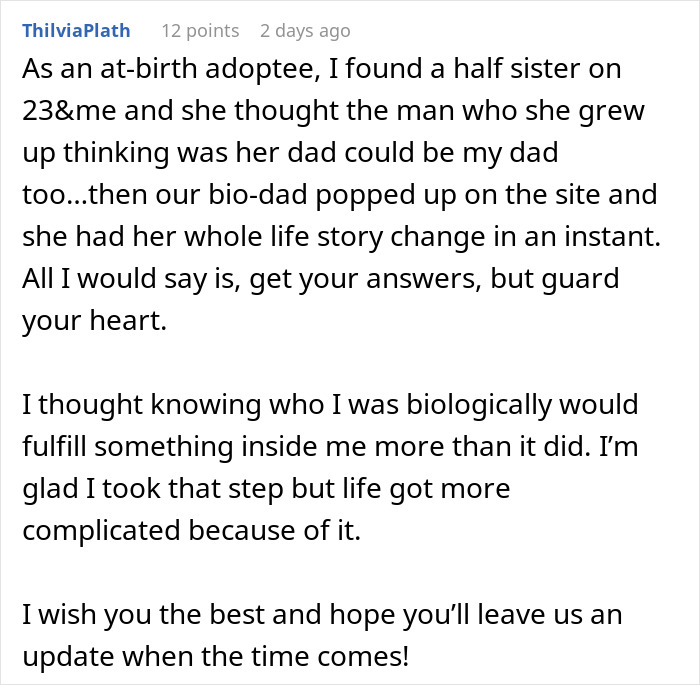
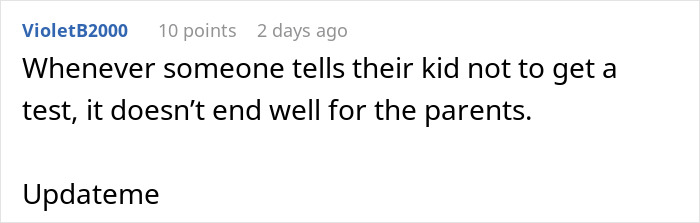
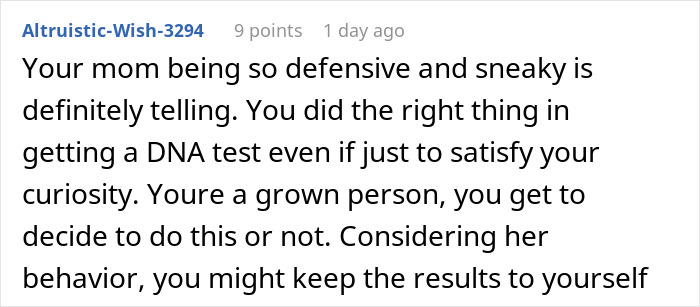
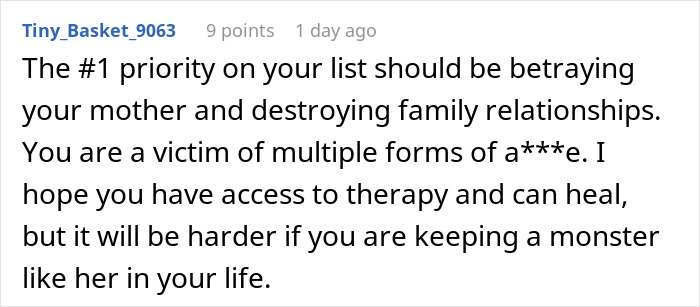
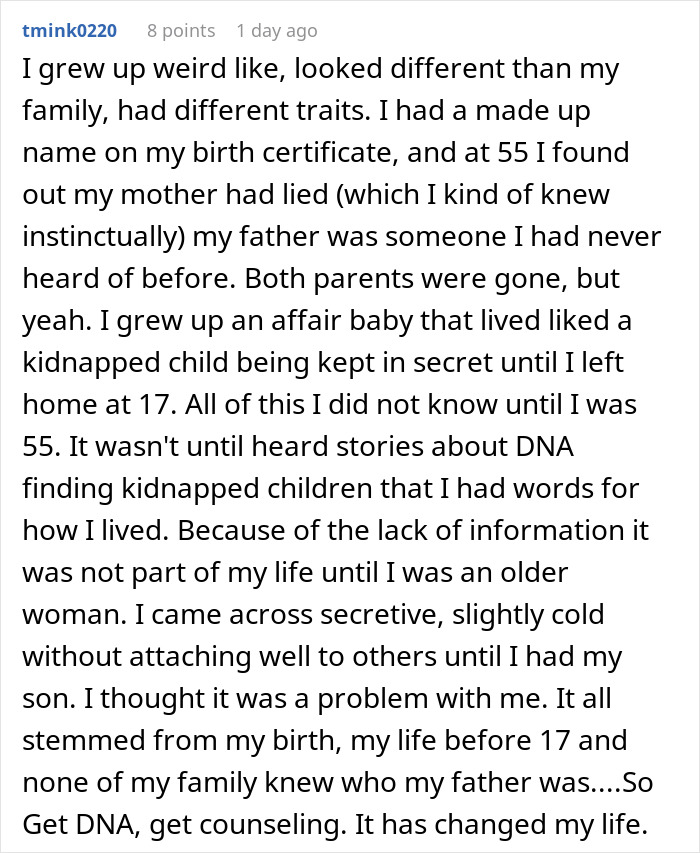
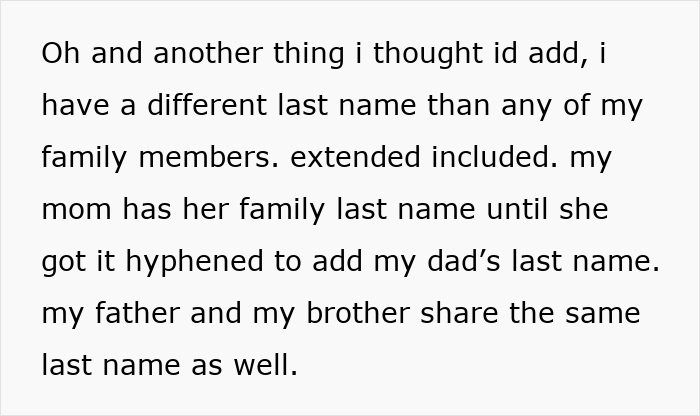
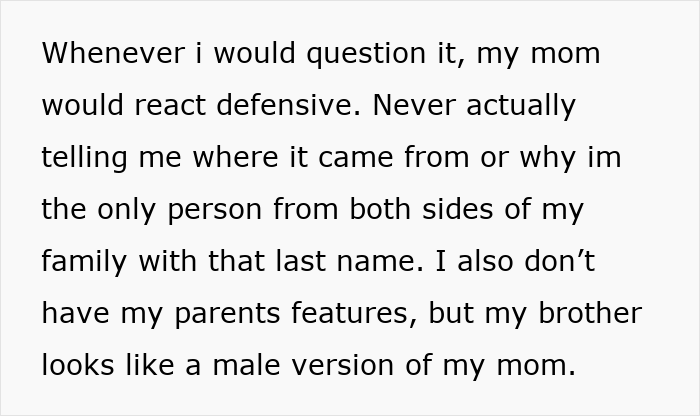
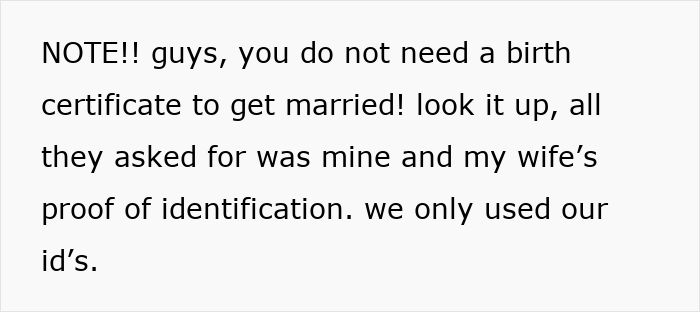
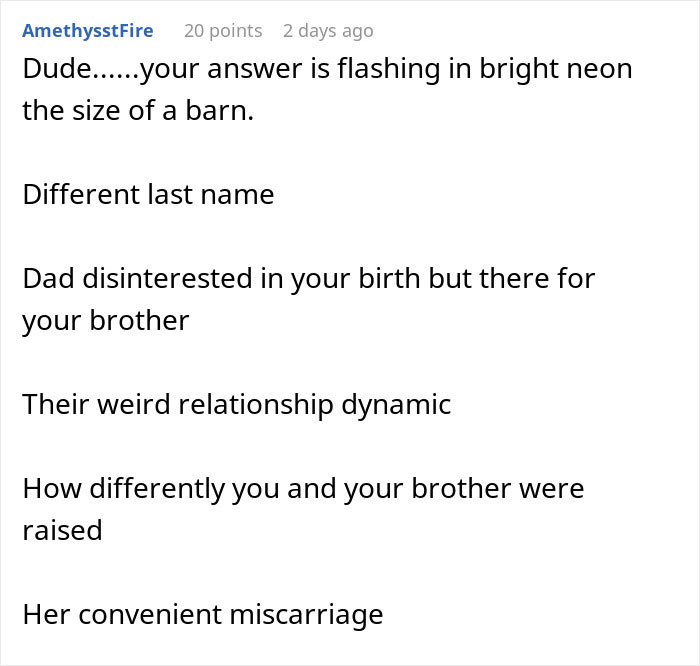
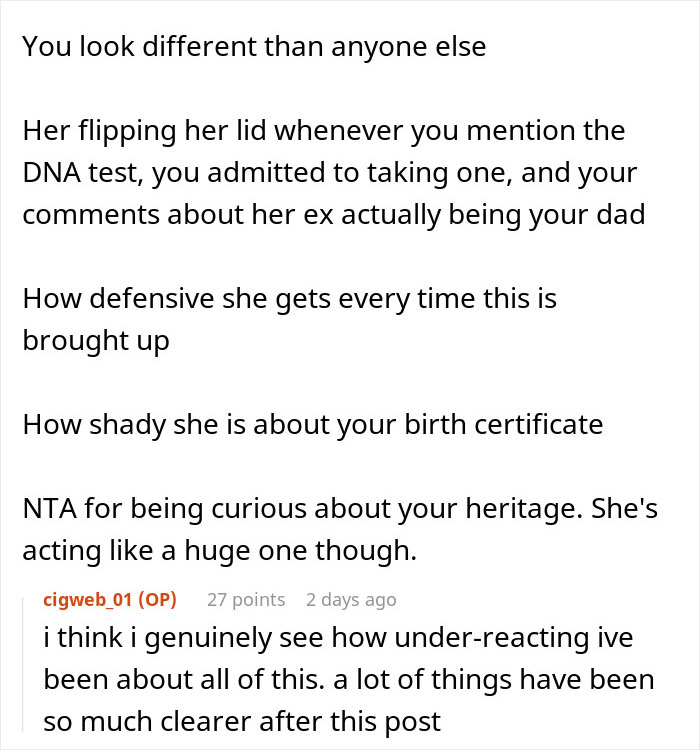
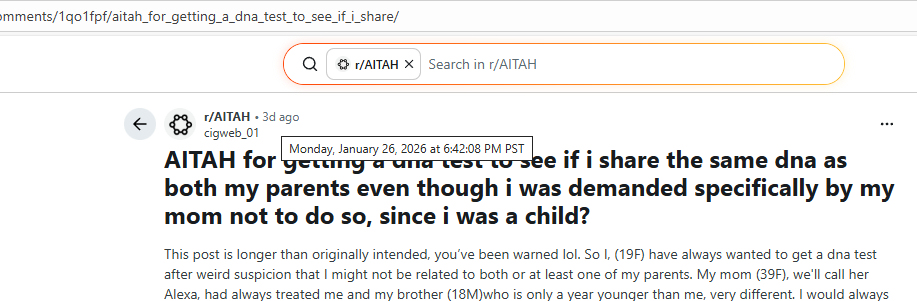
But the older one woman gets, the more she becomes suspicious of the stories she’s been told by her mother. That’s why she’s finally decided that it’s time to get a DNA test done, against her mom’s wishes. Below, you’ll find the full story that the woman shared on Reddit while seeking advice, as well as some of the responses concerned readers left her.
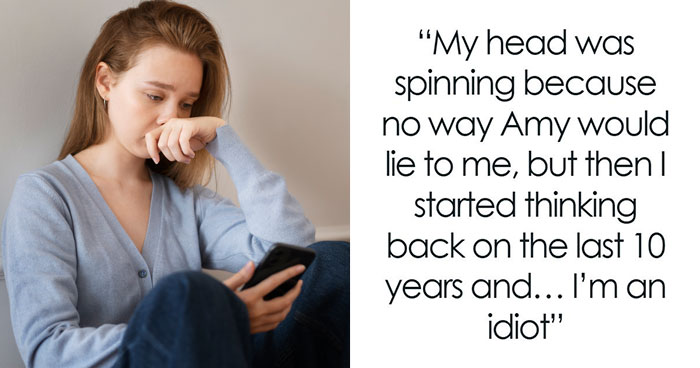
Image credits: Garakta-Studio/Envato (not the actual photo)
Image credits: msvyatkovska/Envato (not the actual photo)
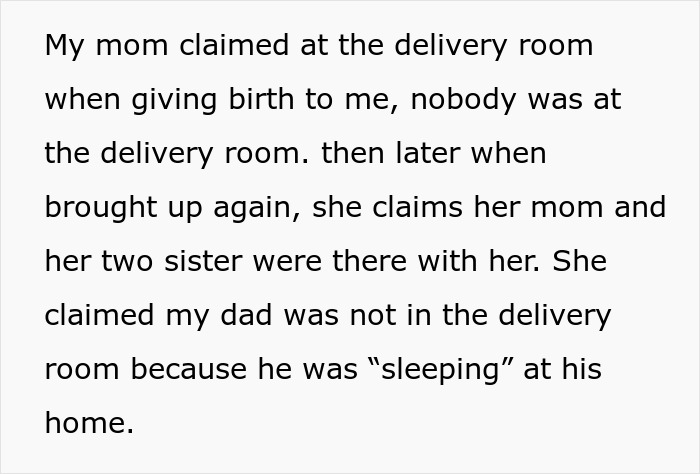
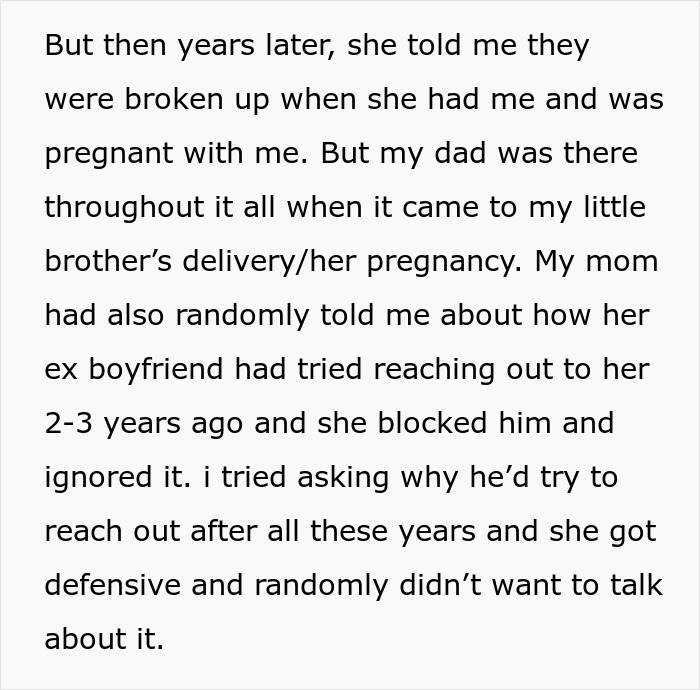
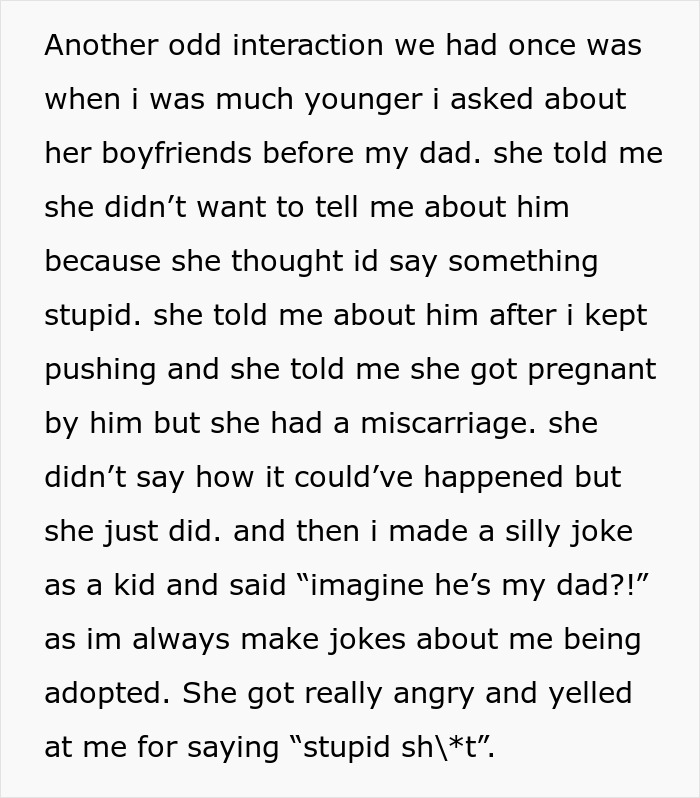
Image credits: Image-Source/Envato (not the actual photo)
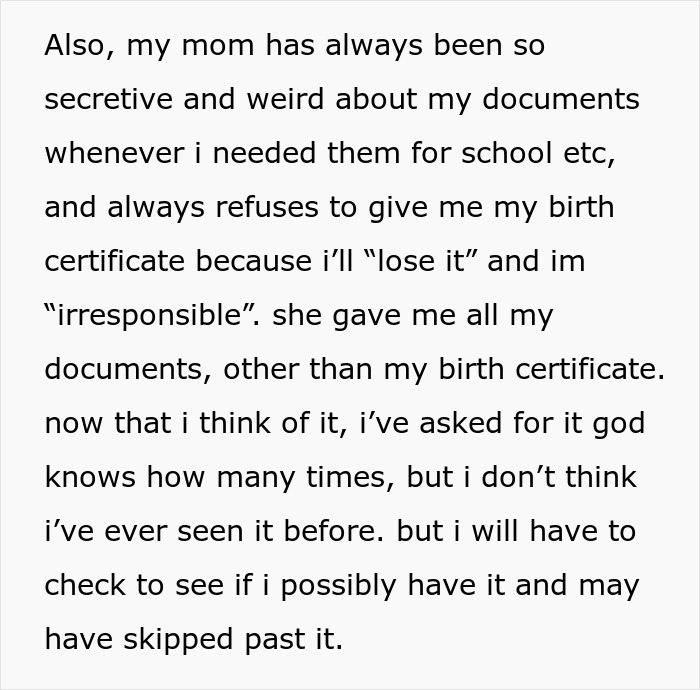
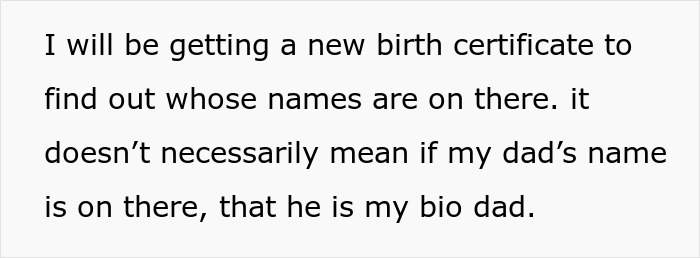
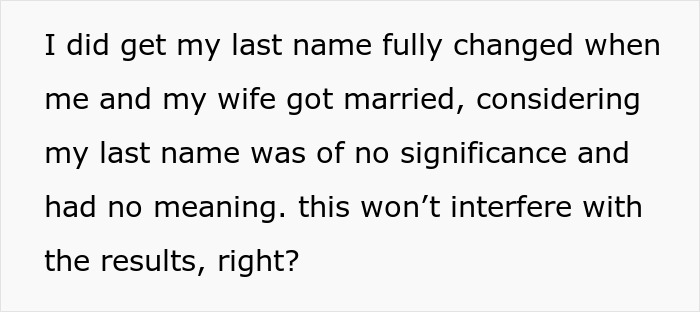
Image credits: cigweb_01
It’s easy to forget this as an adult, but children know almost nothing about the world until they’ve been taught. We aren’t born knowing how to walk, talk, or read, and whatever we are told is taken to be true. For example, if you’re told that the man and woman taking care of you are your parents, you’re not going to question that as an innocent, trusting child.
But if you begin to notice that things aren’t adding up as you get older, you might want to get a DNA test done. According to The Guardian, over 40 million people around the globe have done DNA tests through companies like 23andMe, Ancestry, MyHeritage, and more. Often, people seek out these tests to find their biological parents, siblings that they weren’t aware of, or new relatives.
Image credits: Freepik (not the actual photo)
It’s perfectly natural for humans to be curious about where they came from, especially if their family doesn’t keep detailed records. Researchers in the UK found that 66% of adopted women made efforts to find their birth parents, while 34% of adopted men have done the same.
UConn Health explains that people often search for their birth relatives to learn more about their medical history, to understand why they were adopted, to find out about family traits and/or personalities, and to learn about their family history in general. So if you’re suspicious that your “parents” might not actually be related to you, it’s understandable to seek out a DNA test.
While it’s certainly not common, paternal discrepancy does occur from time to time. This is when a father raises a kid that he is led to believe is his biological child, but in reality, the two share no blood relation. This is estimated to occur in about 1% of families, but it tends to happen with younger parents, unmarried couples, parents of a lower socioeconomic status, or in certain isolated cultural groups.
In this particular situation, however, many readers pointed out that the mother is clearly keeping some secrets from her daughter. And regardless of the lies she’s been telling, she’s treated her daughter poorly for years, which is incredibly unfair.
Image credits: Freepik (not the actual photo)
When it comes to dealing with a toxic parent, Headspace recommends first deciding on the role you want to have in the relationship. Then, it’s important to set and enforce boundaries that you feel comfortable with. You might even have to take some time away from the parent altogether to process how they’ve treated you and decide how to move forward.
Headspace notes that family drama is inevitable, but it’s not your responsibility to fix your parents’ issues. If spending time with them only damages your mental health, it might not be worth it to maintain that relationship.
If you can’t trust or rely on your relatives, make sure that you have a support system outside of your family that you can lean on. And don’t be afraid to be honest about how you feel, even if it’s difficult or painful. You deserve to live your truth, with or without your toxic parents around.
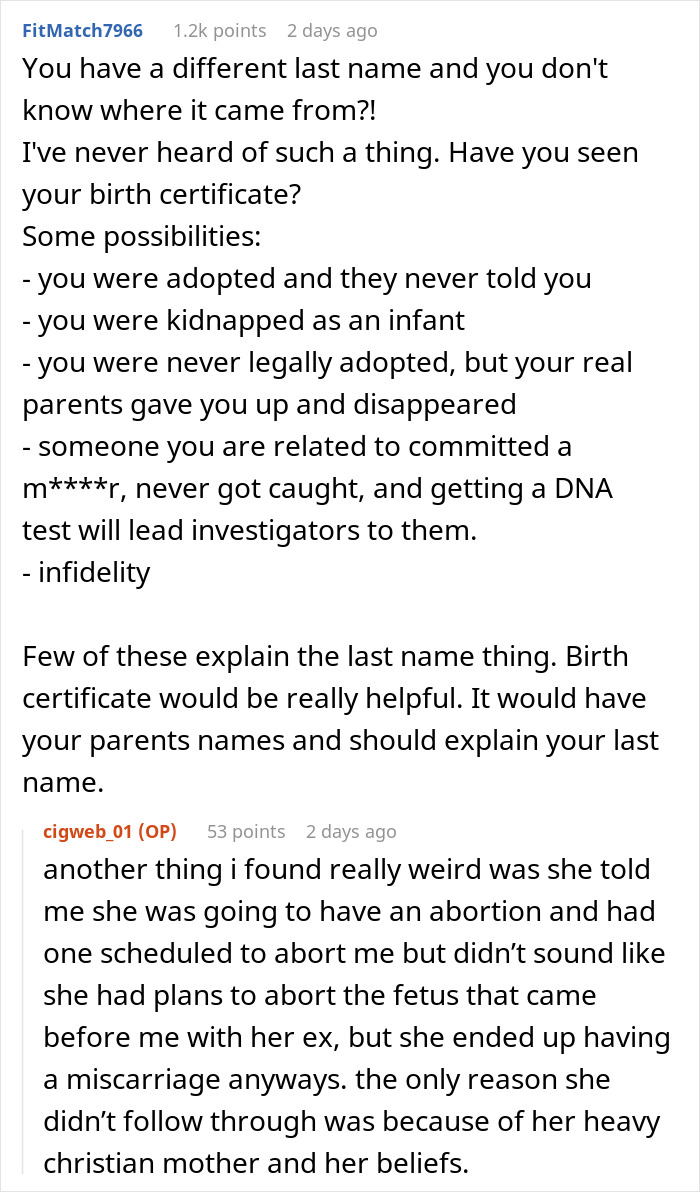
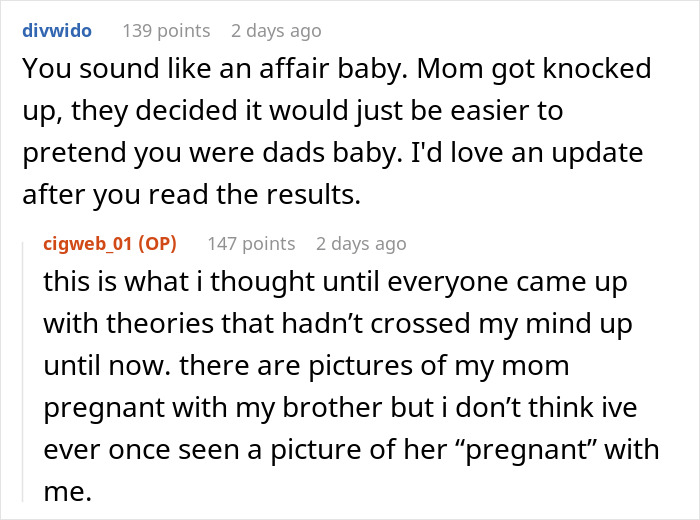

By entering your email and clicking Subscribe, you're agreeing to let us send you customized marketing messages about us and our advertising partners. You are also agreeing to our Privacy Policy.
Thank you! You've successfully subscribed to newsletters!



But very current. Test results expected for February. I hope BP does an update.
Load More Replies...
It's her life. She deserves to know, esp. what secrets her mom is keeping. I agree; could be an affair child. :(
Why is she still in contact with someone who @bused the heck out of her???

As someone who still lives with their ábusive parent.. I can answer. It's complex. It depends. For me, my dad had an accident when I was 18, and I was forced to stay living at home to help be his caregiver. He died in 2021, so basically I was in my late 30s with no family of my own, no friends, no finished education, no career. I have worked for the family business all my life. There was a lot of pressure and control even once my mom stopped being physically ábusive. Right now I am not financially able to live on my own. For others, there may be a sense of obligation - they may have been ábusive parents, but they are the only ones you had, and sometimes that is difficult to let go of, because humans often prefer what is familiar over what is actually good for them (in this case going NC.) I understand how confusing it can be; who would want to be around or talk to someone who ábused them for years/decades? But sometimes it's not easy to step away.
Load More Replies... But very current. Test results expected for February. I hope BP does an update.
Load More Replies... It's her life. She deserves to know, esp. what secrets her mom is keeping. I agree; could be an affair child. :(
Why is she still in contact with someone who @bused the heck out of her???
As someone who still lives with their ábusive parent.. I can answer. It's complex. It depends. For me, my dad had an accident when I was 18, and I was forced to stay living at home to help be his caregiver. He died in 2021, so basically I was in my late 30s with no family of my own, no friends, no finished education, no career. I have worked for the family business all my life. There was a lot of pressure and control even once my mom stopped being physically ábusive. Right now I am not financially able to live on my own. For others, there may be a sense of obligation - they may have been ábusive parents, but they are the only ones you had, and sometimes that is difficult to let go of, because humans often prefer what is familiar over what is actually good for them (in this case going NC.) I understand how confusing it can be; who would want to be around or talk to someone who ábused them for years/decades? But sometimes it's not easy to step away.
Load More Replies...







 No fees, cancel anytime









39
32