Get Premium
Dark mode theme is available exclusively for premium users. Learn more about the benefits of subscribing.
No fees, cancel anytime.

 Dark Mode Ad-Free Browsing Unlimited Content
 Ad-Free Browsing Unlimited Content Dark Mode
Join 1.2 million Panda readers who get the best art, memes, and fun stories every week!
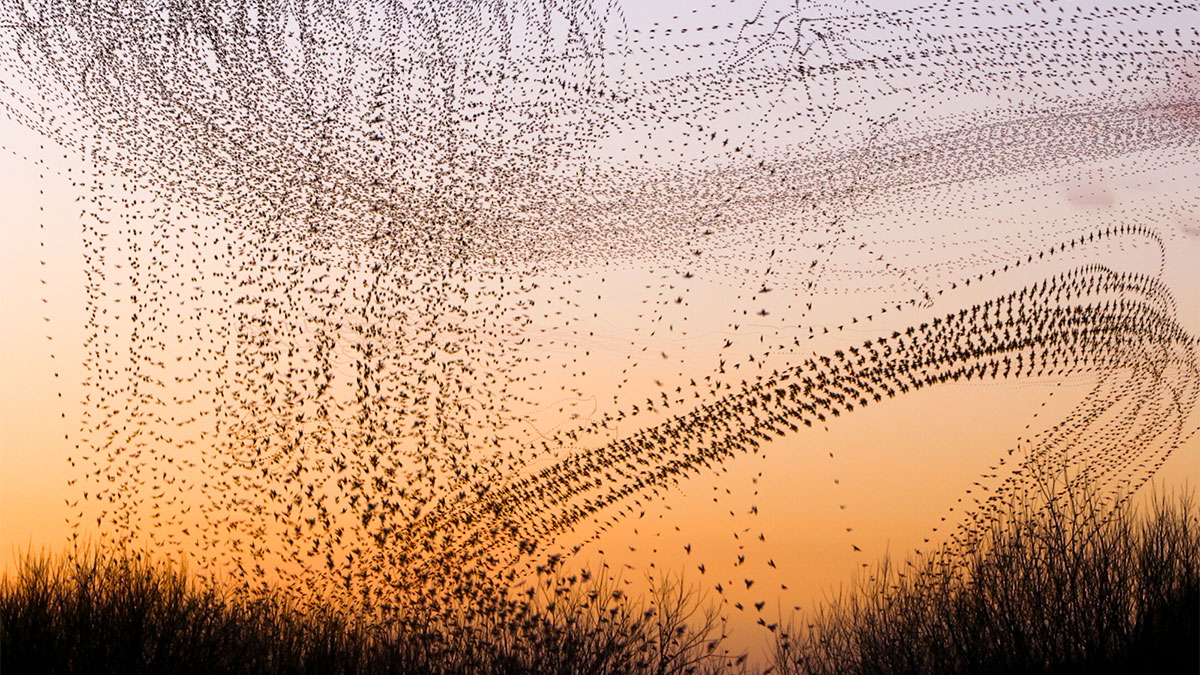

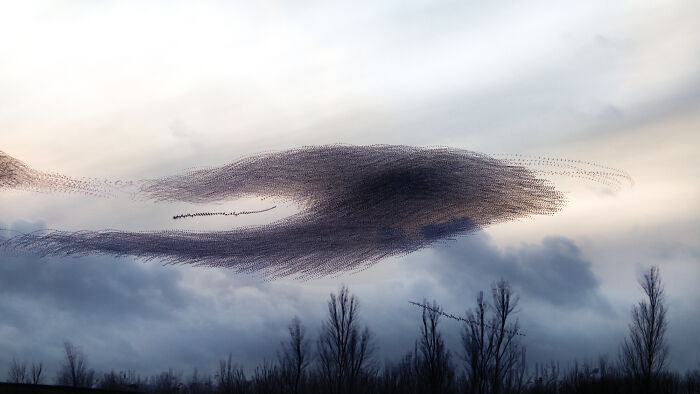
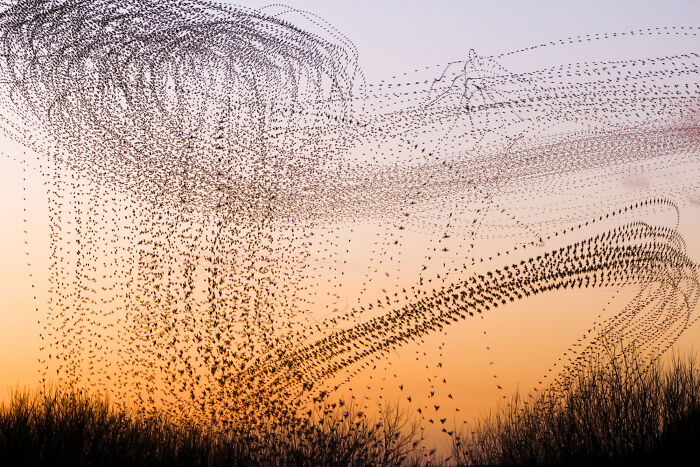
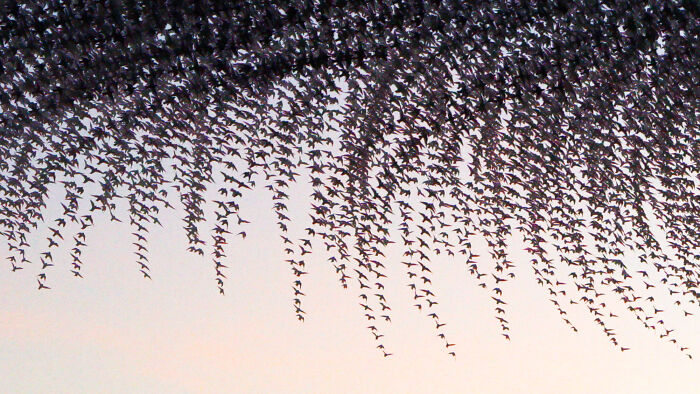
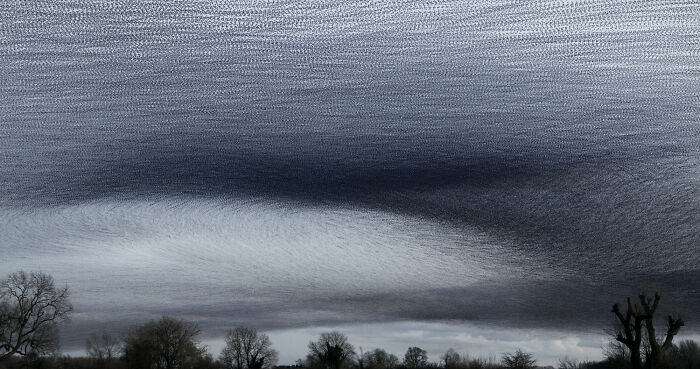
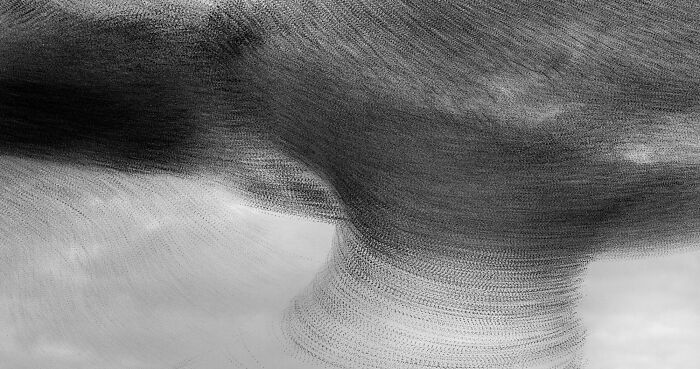
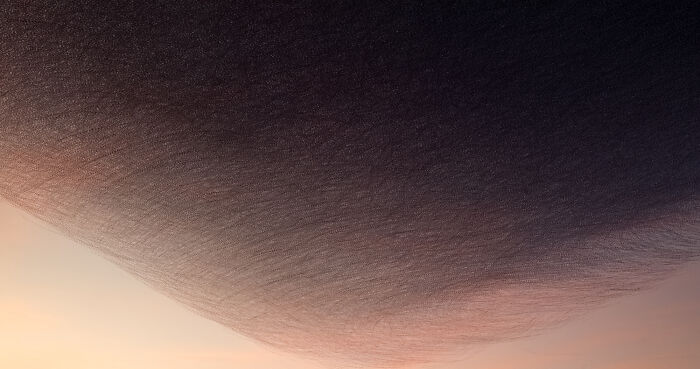
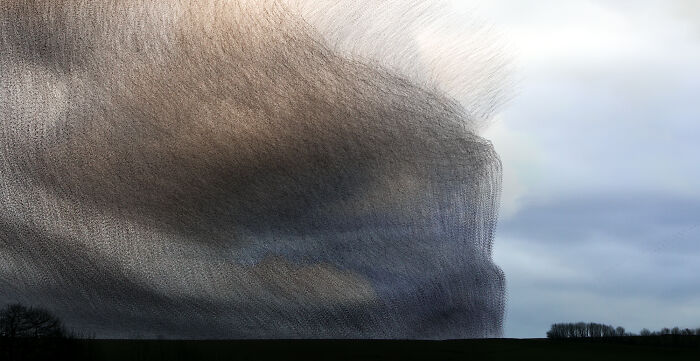
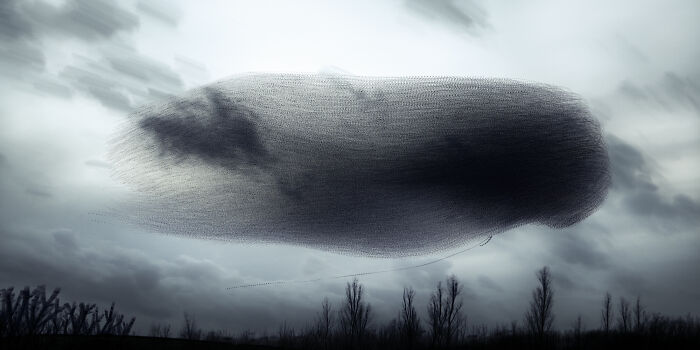
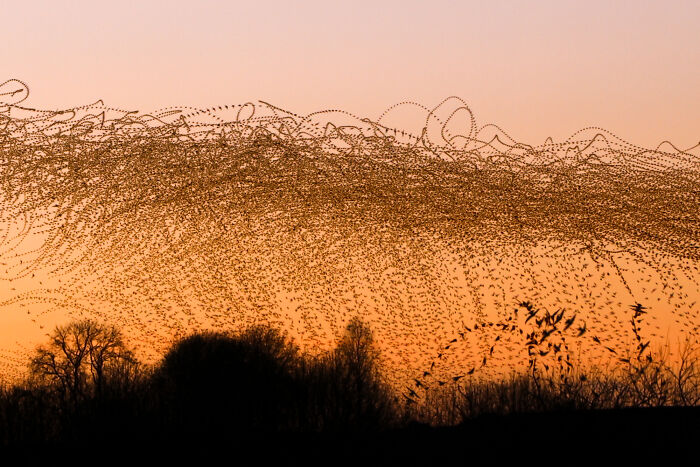
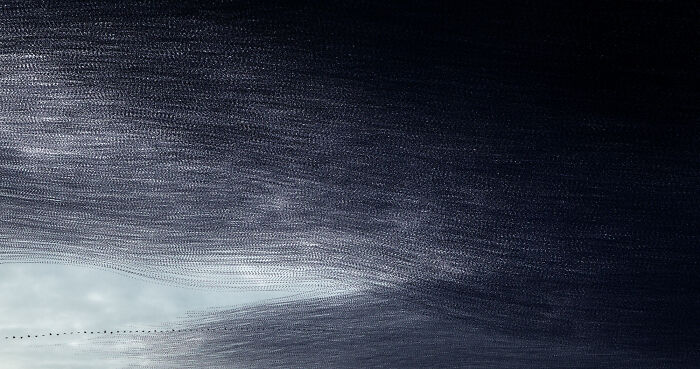
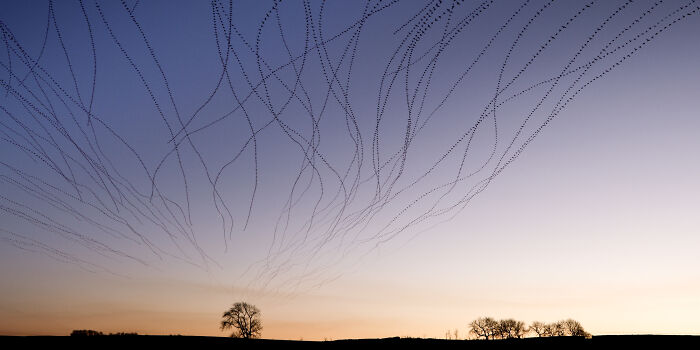
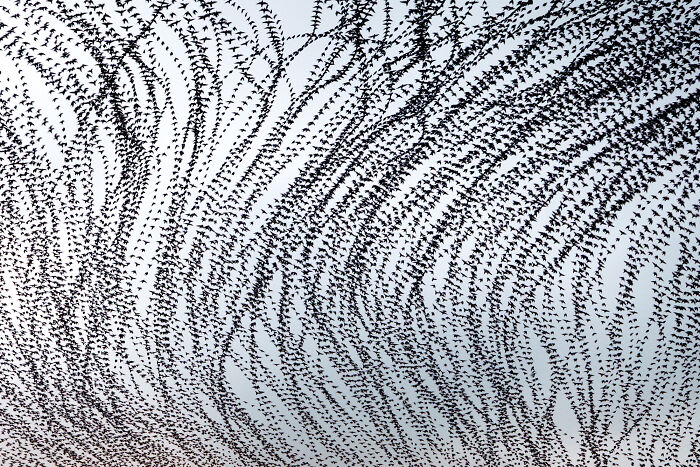
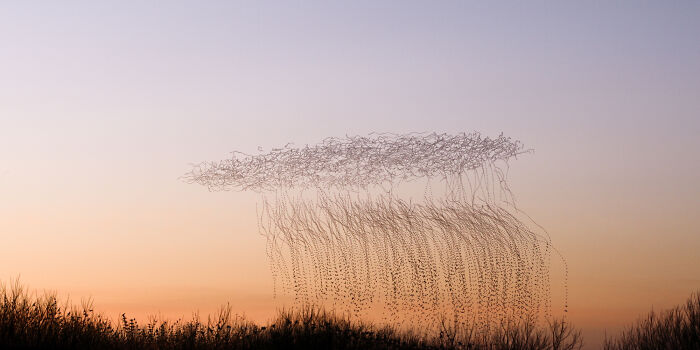
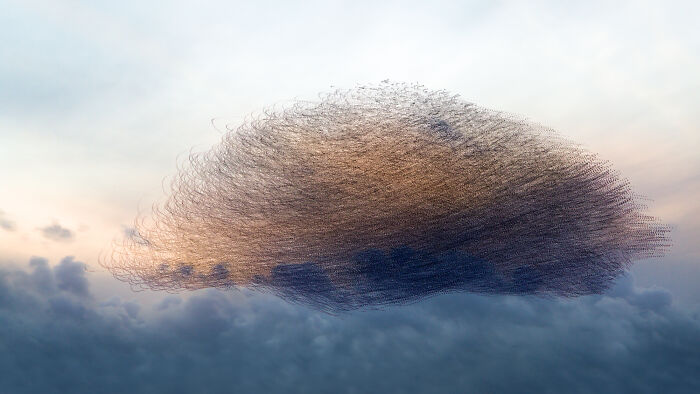
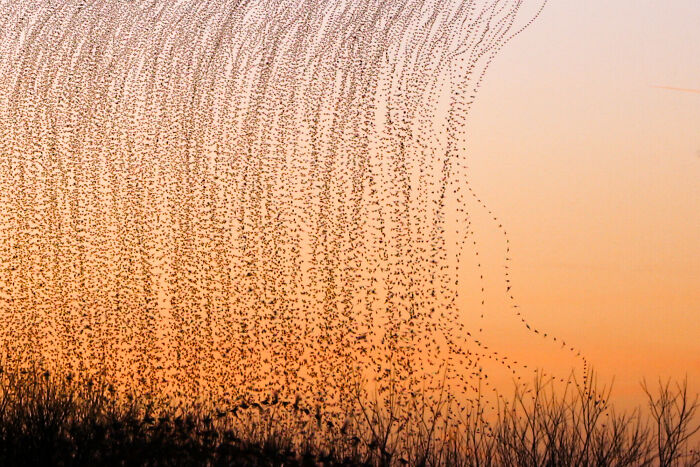
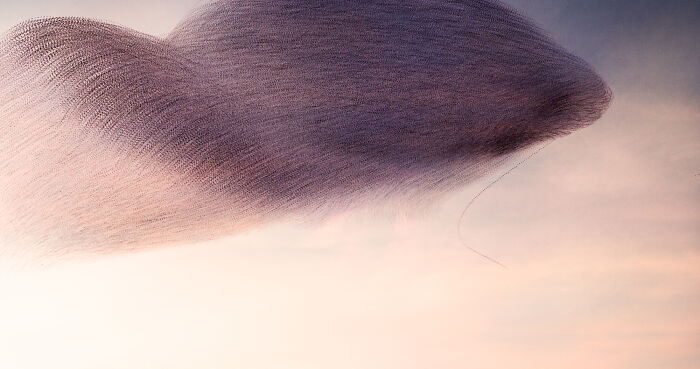
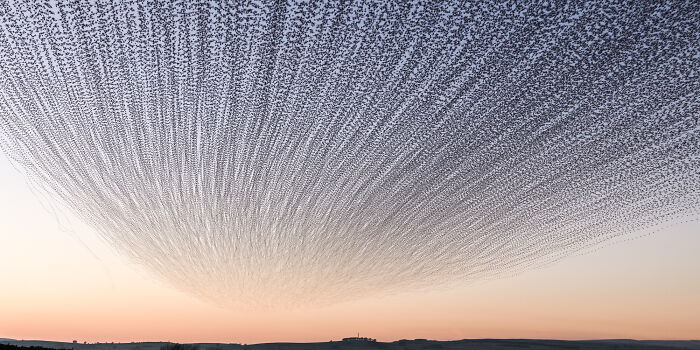
The European starling migrates to the UK over the winter from colder northern European countries, and flocks gather in huge numbers at historic roost sites across the country. From November to March, they draw crowds of captivated visitors. The artist and scientist Kathryn Cooper has spent the past eight years capturing them in her stop-motion pictures.
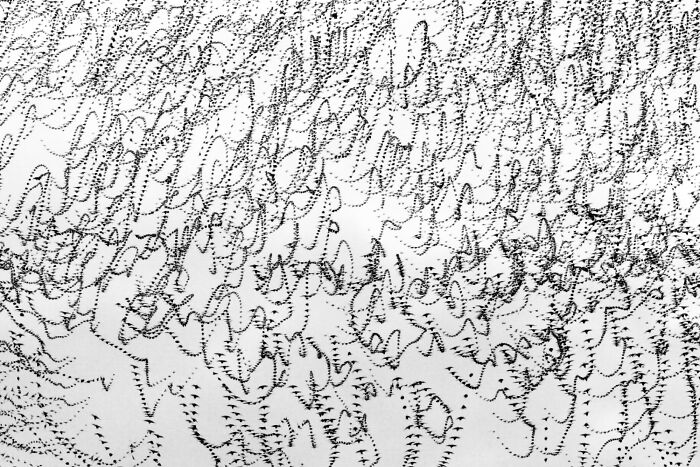
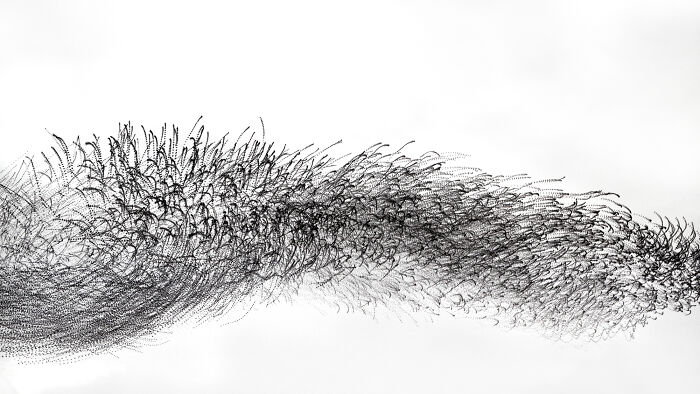
Using a unique technique called chronophotography, Kathryn creates stunning images of migrating birds. She takes multiple photos over time and then blends them into a single composite image. This method captures the movement patterns of the birds, showing their flight paths in a way the human eye can't normally see.
More info: kathryncooperwildlife.com | Instagram | Facebook
This post may include affiliate links.
Here’s what Kathryn Cooper herself had to say about the project: “Just before nightfall the birds arrive from their daytime feeding grounds. During the day they disperse into the fields to feed and return as small flocks, which then funnel together into progressively larger groups along flight lines towards the roost.
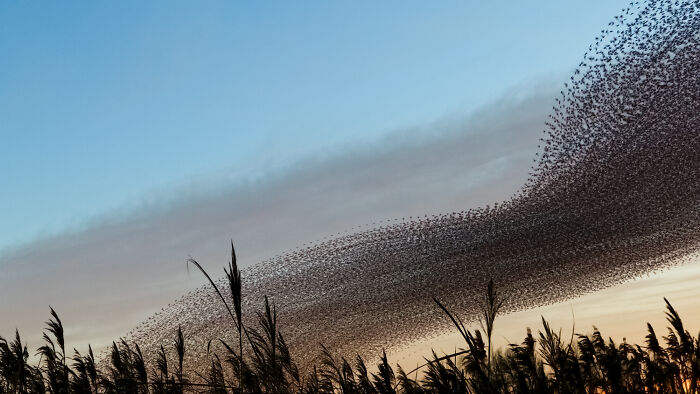
If you are blessed with good luck, at dusk, starlings murmurate over their chosen roost site. Their fantastic aerial displays appear almost choreographed, with patterns emerging and dissolving in the sky. I cannot help feeling filled with wonder when witnessing hundreds of thousands of individuals moving with such cohesion. The birds neither collide nor disperse, effortlessly avoiding obstacles and evading predators. As they pass overhead, they fill the air with an astonishing barrage of noise and vibration of the air. Not only are they visually breathtaking, but they engulf the other senses.”
“I photograph roost sites close to my home in the north of England. Here, the birds sleep in tall reeds surrounded by water. Sometimes, the birds arrive in small groups and dive straight into the reeds, their noisy chattering drawing later groups to the roost. Other times the starlings gather in the sky and the flock stretches to the horizon. They create a strange, undulating and veiled landscape, until, when the light has dropped, the flock cascades en masse into the reeds.
In a flock of starlings, nature has evolved a system that is robust to predation, where many eyes look out for attack, and where risk is shared amongst the group. Remarkably, the group achieves this without any leadership structure, the simple interactions between individuals creating outcomes greater than the sum of their parts.”
“I am by no means the first person to become fascinated by these birds. For hundreds of years, many have pondered their remarkable synchrony. Often coinciding with majestic sunsets, they are much photographed. However, I felt that there was creative space still open to convey the substance, the essence of a murmuration. At its core, what about a flock of starlings evokes such strong emotions? I reflected on this, and concluded that it is not the individual birds, nor a snapshot in time, but the fluid-like movement of the flock as a whole, the product of their interactions.
I create my images by combining multiple successive exposures. They are overlaid onto the same print to reveal motion and behaviour otherwise hidden. Some are composed from hundreds of consecutive exposures and others, just a handful.”
“The technique itself is anchored in the history of photography. First conceived in the late 1800s, it was then coined chrono-photography (‘chrono’ denoting time). The first to pioneer the concept of deconstructing movement in this way were British-American photographer Eadweard Muybridge and French scientist Étienne-Jules Marey. They both became fascinated with the mechanics of both human and animal movement, particularly the flight of birds. In an era where science and art were embracing locomotion and dynamism, the impact of their advances in photography reverberated through innovation and culture for decades to come.”
By revisiting their techniques and empowered by advances in technology, I can go beyond capturing the mechanics of flight to explore the complex emergent behaviour of flocks. By its very nature, it is a process that I have found must be driven by curiosity rather than the outcome. Although empowered by digital technology, the time between capturing material and seeing the outcome is prolonged. Often, I do not see the results of my season’s work until well after the starlings have returned to their northern breeding grounds. This requires patience and a certain amount of ease with uncertainty that is lacking in today’s world of instant gratification.”
“What intrigues me now is a journey to understanding the mechanism by which we find these transient, ethereal shapes compelling. I have no control over the shapes the starlings present to me, and although I select those with aesthetic beauty, the birds continue to provide time and again.
In the paths drawn by the starlings’ twists, spirals and bursts there is a rhythm, an imperfect repetition in the complexity, arising from the simplicity of their interactions. Nature has great ability as a problem solver, while at the same time, with no plan to do so, never fails to bring about something quite exquisite.”





















 No fees, cancel anytime