Get Premium
Dark mode theme is available exclusively for premium users. Learn more about the benefits of subscribing.
No fees, cancel anytime.

 Dark Mode Ad-Free Browsing Unlimited Content
 Ad-Free Browsing Unlimited Content Dark Mode
Join 1.2 million Panda readers who get the best art, memes, and fun stories every week!
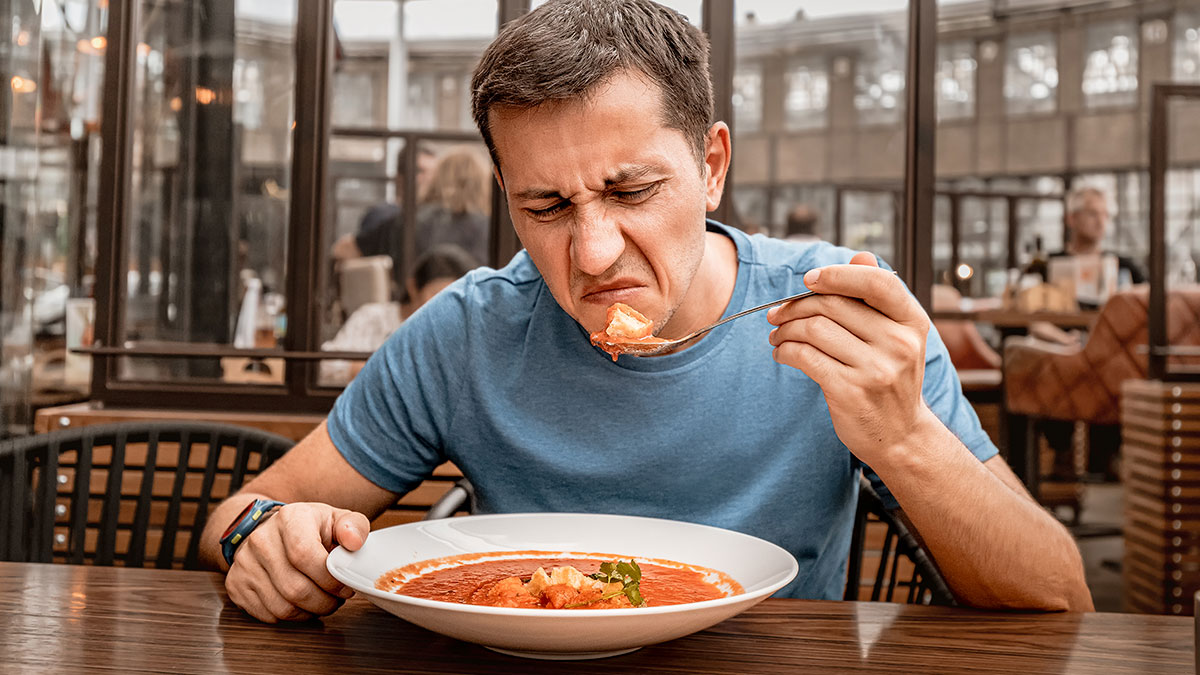
Food is one of the great comforts of our lives. People have different palates, likes and dislikes, usually informed by their upbringing. It’s not surprising that people like their national cuisine the most. Americans, for example, like American cuisine the most, with 91% saying that’s their favorite.
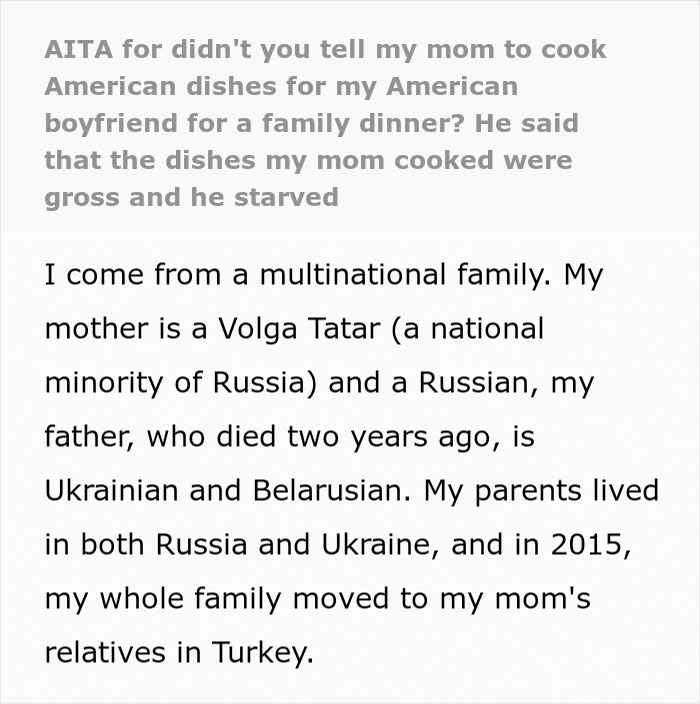
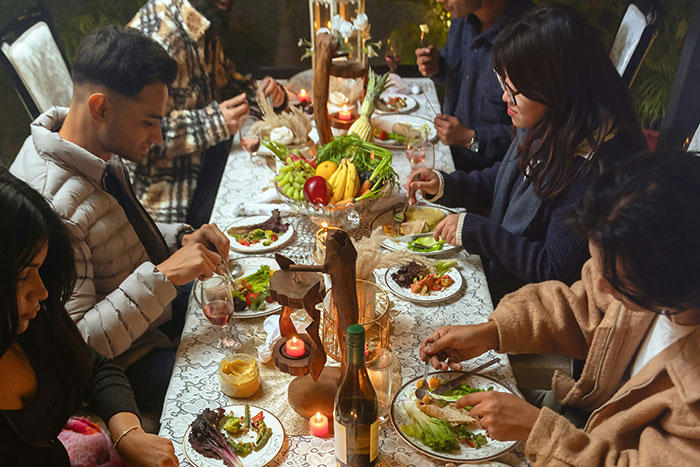
But people like trying other cuisines, too, and they can get the chance to do so when they are in relationships with people of other cultures. However, this boyfriend expected his partner’s mother to make American food when he went for a visit to Turkey. His entitled and rude behavior forced the partner to do some serious thinking and consider other red flags from the past.
Image credits: frantic (not the actual image)
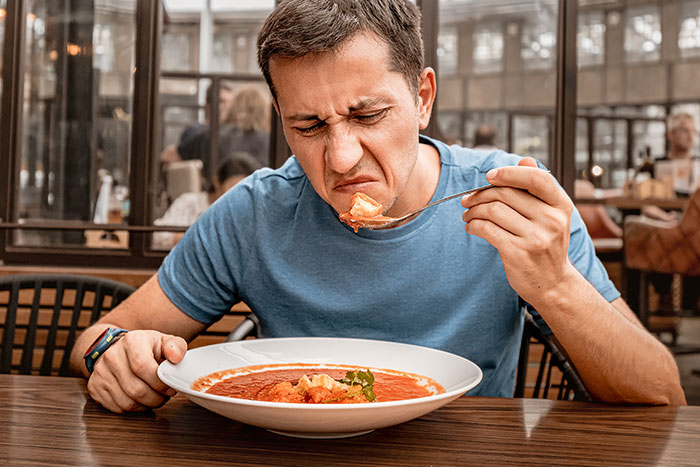
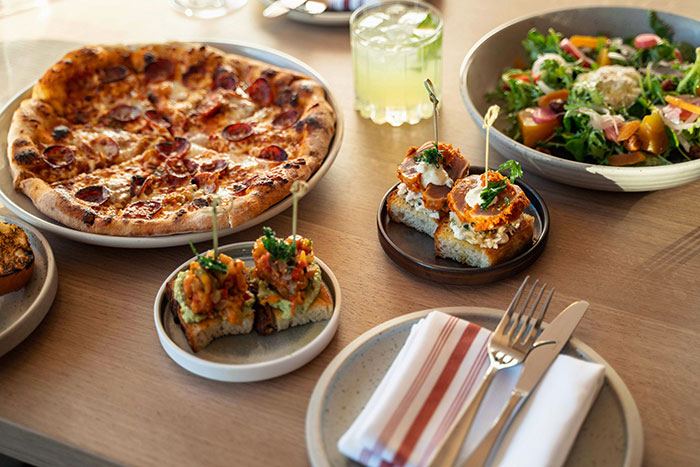
Image credits: timolina (not the actual image)
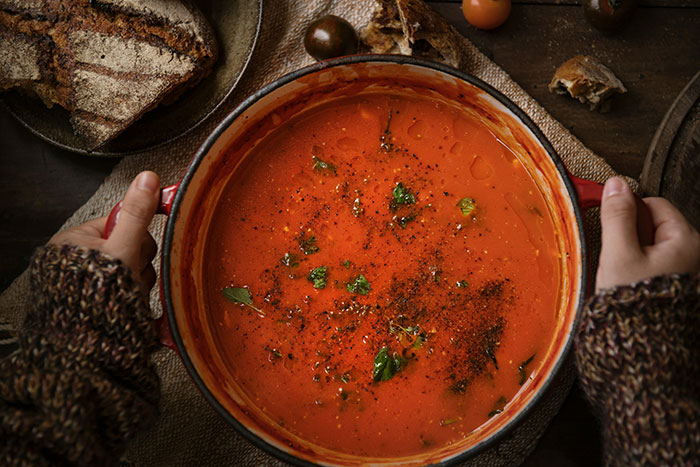
Image credits: Wavebreak Media (not the actual image)
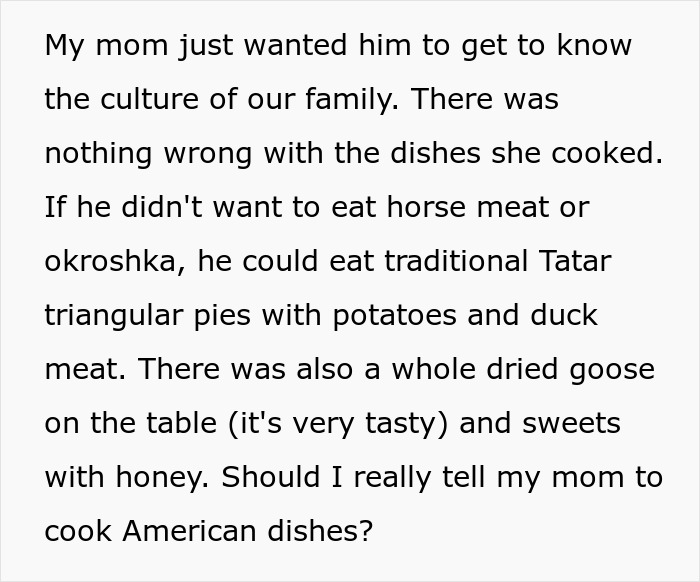
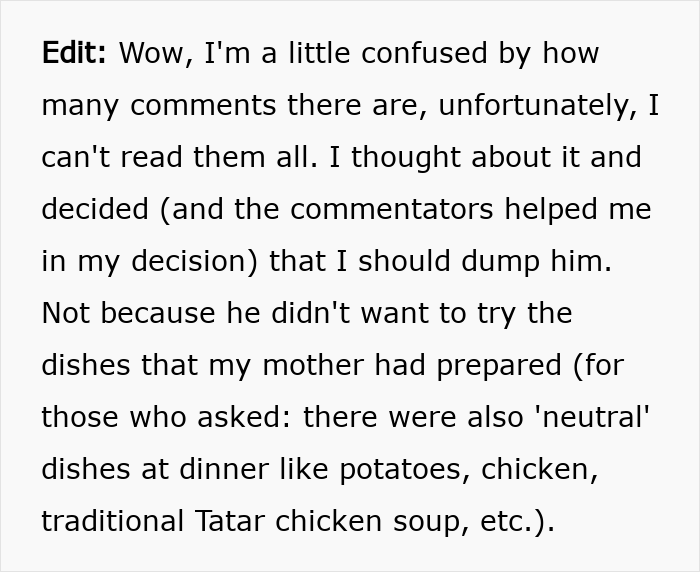
Image credits: Direct-Caterpillar77
This story may paint Americans as people who don’t like experimenting with food or who shy away from cuisines of different cultures. But that’s not entirely true. When it comes to food, Americans actually like the cuisines of other countries and can be quite experimental.
According to the 2019 YouGov poll we already cited above, the popularity of American cuisine is followed closely by Italian (88%) and Mexican food (86%). Americans also like Chinese (84%), Spanish (79%), and Japanese (74%) a lot, and their least favorites are Emirati (23%), Saudi Arabian (24%), and Finnish (27%) cuisines.
The reason Americans are less likely to try Saudi Arabian or Finnish cuisine is that they’re not as prevalent as the others. Also, it’s worth mentioning that American cuisine is quite popular around the globe. Out of 34 cuisines, it ranks seventh.
It would be unfair to say that Americans don’t like trying out new foods. A 2023 poll by Talker News found that, on average, Americans try around six new recipes in a month. What’s more, 27% of Americans say that their partners inspired them to try new foods.
Still, when we look at the most popular dishes in the U.S., there’s not a lot of cultural diversity. In the third quarter of 2025, the top five foods in America were French fries, cheeseburgers, mashed potatoes, grilled cheese, and fried chicken. So, when 53% of Americans say that they consider themselves to be adventurous eaters, they might be overestimating just how open-minded and fearless they are.
Image credits: Davey Gravy (not the actual image)
From the statistics above, we can notice a certain trend: Americans like those traditional foods that come from the biggest ethnic populations in the U.S. For example, as Hispanic and Asian populations are increasing, so is the demand for certain traditional foods.
So, it’s somewhat understandable that the boyfriend in this story was not familiar with Tatar, Russian, Belarusian, and Ukrainian cuisines. While that’s no excuse for his rude and entitled behavior, it at least explains why he was so averse to even trying them.
All four of these traditional cuisines have little to no representation in America. In most surveys and polls, they’re not listed among the most common ethnic cuisines that Americans consume.
On the other hand, some Americans shy away from foods that seem too unfamiliar. The owner of a Ukrainian restaurant in Los Angeles, Mom, Please, Oleksii Kochetkov, says that diners are more likely to order traditional dishes when they connect them to something recognizable.
“Many people recognize dumplings, but they may not know about varenyky,” he explains. “We describe borscht as a rich beet soup with layers of depth, and syrnyky as fluffy cheese pancakes perfect for breakfast or dessert. By connecting our dishes to something recognizable, we make Ukrainian food feel both exciting and comforting to new diners.”
Image credits: Curated Lifestyle (not the actual image)
People’s eating habits reveal something about their personality. For example, research has found that people who are willing to try and enjoy new foods can become more progressive.
In a recent study, researchers in the UK found that the consumption and enjoyment of Indian, Turkish, Chinese, Thai, Caribbean, and Spanish foods directly correlated with “pro-African-Caribbean immigrant, pro-European immigrant, and pro-Asian immigrant attitudes.” Those who enjoyed culturally diverse foods were even less likely to vote for “anti-immigrant politicians.”
Essentially, eating culturally different cuisines resulted in more frequent contact with people from different countries. Paired with the pleasurable sense of eating delicious food, it brought positive associations.
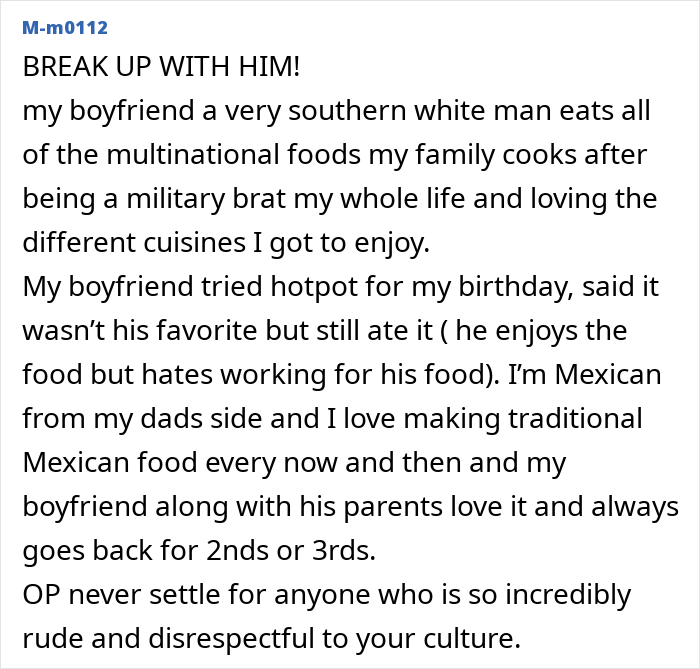
Food also brings people together on a smaller scale. As is more relevant to this particular story, in terms of families. When someone invites you into their home and cooks for you their traditional food, they’re offering a piece of their cultural identity and welcoming you into their family. So, refusing to at least taste it can easily be seen as a form of insult and rejection of their culture.
Image credits: Aditya Saxena (not the actual image)

By entering your email and clicking Subscribe, you're agreeing to let us send you customized marketing messages about us and our advertising partners. You are also agreeing to our Privacy Policy.
Thank you! You've successfully subscribed to newsletters!


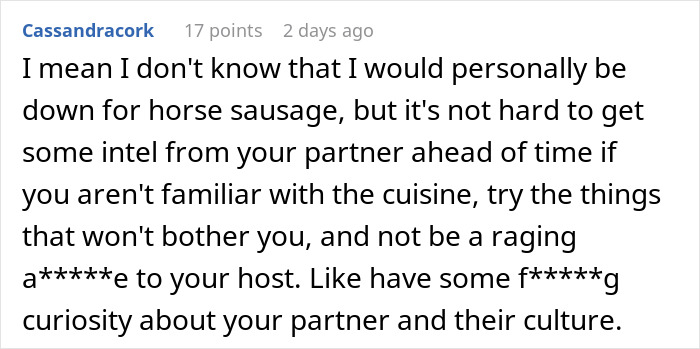
I'm disappointed at how many of the responses automatically have a downer on horse meat, without, almost certainly, a single one of them ever trying it. I've eaten it, and its not the worst thing, although not something I buy to cook at home. But horse or donkey sausages? Sure, why not? They're quite common in the Alpes where I live, although I tend to go for the wild boar ones out of preference. . . But how do you 'dislike' something you've never tried and about which you know nothing?

I think it's fair for someone to respectfully decline eating horse while still being respectful of someone's culture.
Load More Replies...
Eh, horse meat is perfectly fine to eat in Switzerland and Iceland as well and you can find it in almost every supermarket. It makes no sense to eat beef and lamb, but horse is a big no-no.

I live in Switzerland but I'm Italian. Horse meat is common in Italy too. And I get that to some people can seem weird, but I find it really good.
Load More Replies...
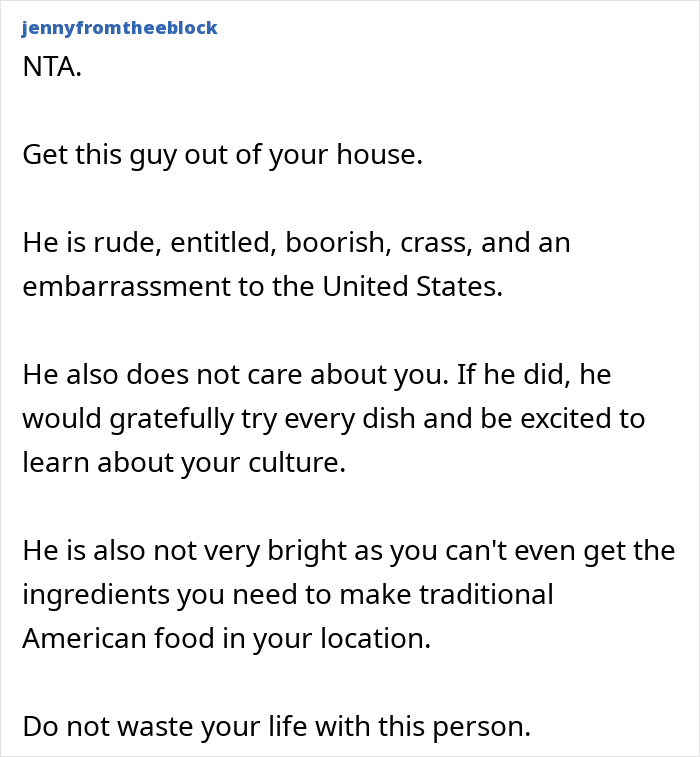
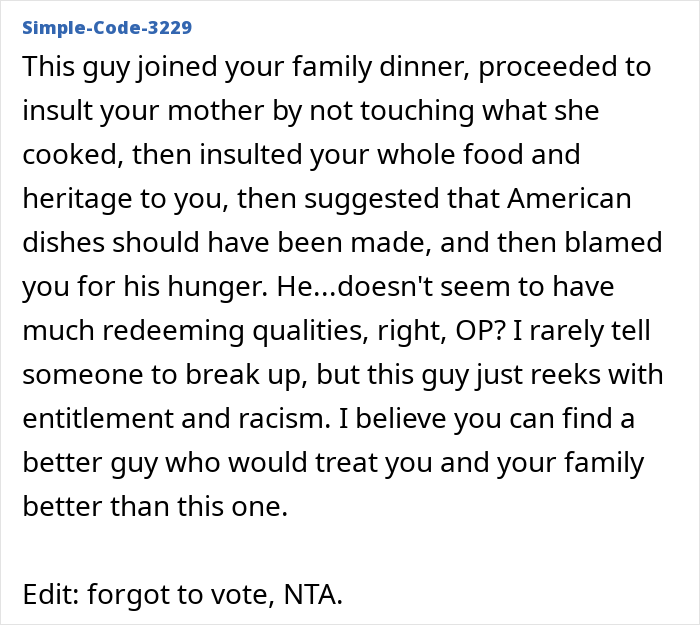
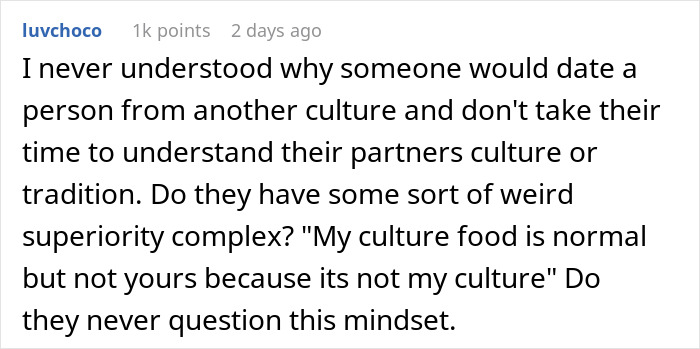
Childish and entitled behavior. The only culture that matters to him is his own. Shameful and ungrateful.
I'm disappointed at how many of the responses automatically have a downer on horse meat, without, almost certainly, a single one of them ever trying it. I've eaten it, and its not the worst thing, although not something I buy to cook at home. But horse or donkey sausages? Sure, why not? They're quite common in the Alpes where I live, although I tend to go for the wild boar ones out of preference. . . But how do you 'dislike' something you've never tried and about which you know nothing?
I think it's fair for someone to respectfully decline eating horse while still being respectful of someone's culture.
Load More Replies... Eh, horse meat is perfectly fine to eat in Switzerland and Iceland as well and you can find it in almost every supermarket. It makes no sense to eat beef and lamb, but horse is a big no-no.
I live in Switzerland but I'm Italian. Horse meat is common in Italy too. And I get that to some people can seem weird, but I find it really good.
Load More Replies... Childish and entitled behavior. The only culture that matters to him is his own. Shameful and ungrateful.







































 No fees, cancel anytime





























































17
86