Get Premium
Dark mode theme is available exclusively for premium users. Learn more about the benefits of subscribing.
No fees, cancel anytime.

 Dark Mode Ad-Free Browsing Unlimited Content
 Ad-Free Browsing Unlimited Content Dark Mode
Join 1.2 million Panda readers who get the best art, memes, and fun stories every week!
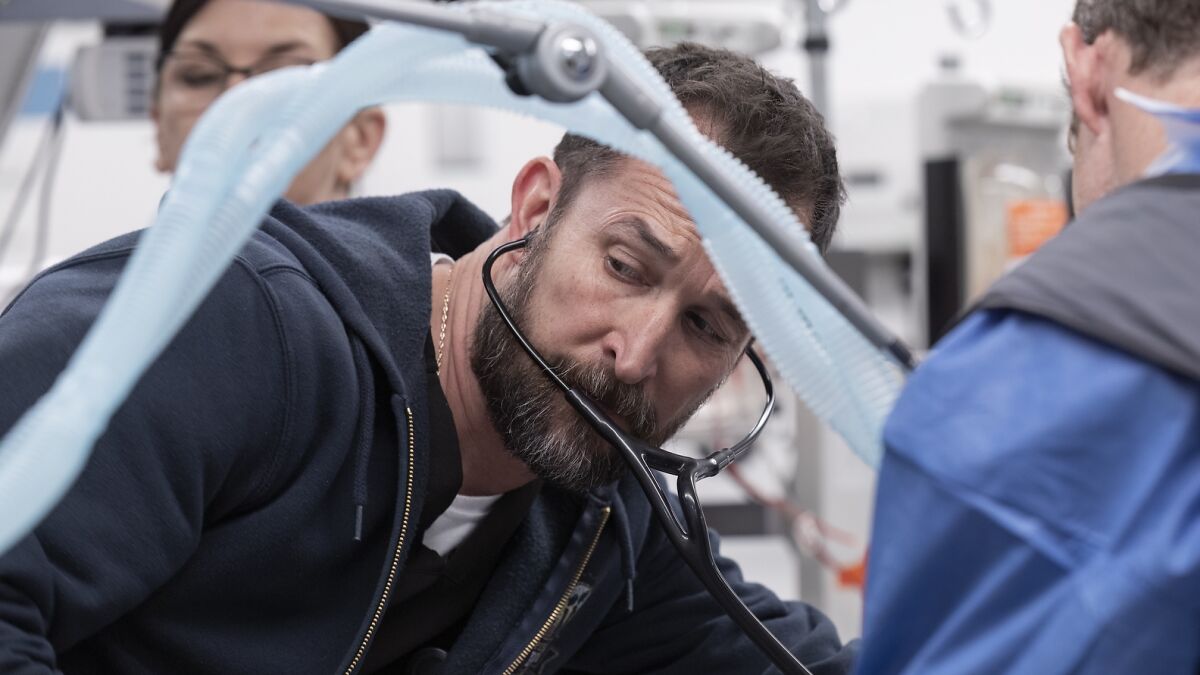
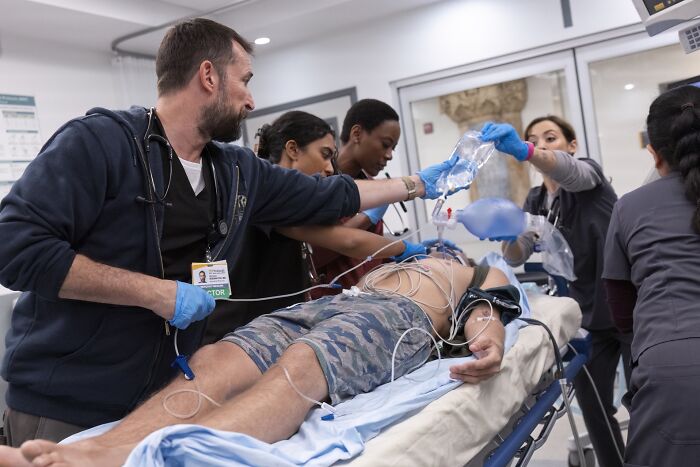
The Pitt follows the lives of doctors and other staff at the Pittsburgh Trauma Medical Hospital’s emergency room (ER).
Led by Dr. Michael “Robby” Robinavitch, the team navigates several complex medical cases in each episode.
While the series has received critical acclaim for its realistic depiction of the healthcare system and the challenges faced by medical professionals, fans often debate whether the symptoms and treatments are factually correct or if the makers took cinematic liberties to create more drama.
Here’s what real doctors had to say about the five most authentic cases in The Pitt.
Image credits: HBO Max
The seventh episode of season 1 introduces Nandi (played by Sasha Bhasin), an influencer who was brought to the ER with symptoms such as insomnia, tremors, imbalance, and psychosis. Soon, Dr. Mohan deduces that Nandi has been exposed to mercury.
What’s more surprising is that she was exposed to the metal through a face cream produced overseas, which she was promoting online. On Reddit, one doctor explained that mercury exposure through skincare products can be potentially hazardous, but only in some cases.
“Only imported stuff of questionable provenance, especially if you (like this character) do skin ‘brightening’ that’s not azelaic acid or niacinamide,” they said.
Writing for Clinical Advisor, Dr. Brady Pregerson, MD, also highlighted it as one of the more realistic medical cases depicted in the Noah Wyle-led show.
A 2021 study revealed that several cosmetic products in the USA contain hormone disruptors, which can cause various health concerns, suggesting that Nandi’s condition is fairly accurately depicted.
Image credits: HBO Max
The season 1 finale features Hector Cruz (Emanuel Loarca), a hospital employee who suffers a pelvic fracture. Dr. Ed Hope, a UK-based ER resident, revealed that the show’s depiction of the injury was accurate, as bleeding in such instances is often internal.
He also noted that the patient is “already showing signs of hemorrhagic shock” as he has a weak pulse and a high heart rate, adding complications to Hector’s case. Hope pointed out that Dr. Robby‘s use of a pelvic binder to close up the injury is the right initial treatment.
He also reacted to an X-ray depicting the patient’s fracture, stating that the diagnosis of crush injuries is slightly more complicated in real life. However, Hope found Hector’s operation, including Dr. Abbott receiving advice from a surgeon over the phone and administering tranexamic acid to prevent blood clotting, to be fairly similar to real-world treatment of such an injury.
Image credits: HBO Max
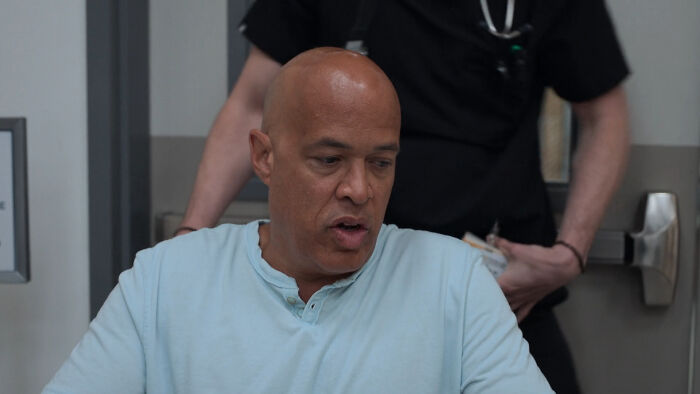
The second episode of season 2 sees Dr. Langdon and Dr. Santos deal with Ian Randall (Christopher T. Wood), a patient who has had an erection for eight straight hours. Randall admits to taking an injection for ED to celebrate his 20th wedding anniversary.
According to Dr. Robert Glatter, an experienced ER doctor, Randall’s situation was a genuine medical emergency. He told Men’s Health that it can lead to “permanent damage to tissues in the pen*s, the surrounding blood vessels.” In some instances, it can also cause permanent ED.
Glatter felt that Langdon’s initial assessment of Randall’s condition was inauthentic. While the treatment, which involved removing blood from his pen*s was accurate, it typically takes longer to complete compared to the show’s depiction.
Glatter added that Dr. Al-Hashimi’s attempt to massage Randall’s manhood to reduce the erection and the banter between the doctors during the treatment was unrealistic.
Image credits: HBO Max
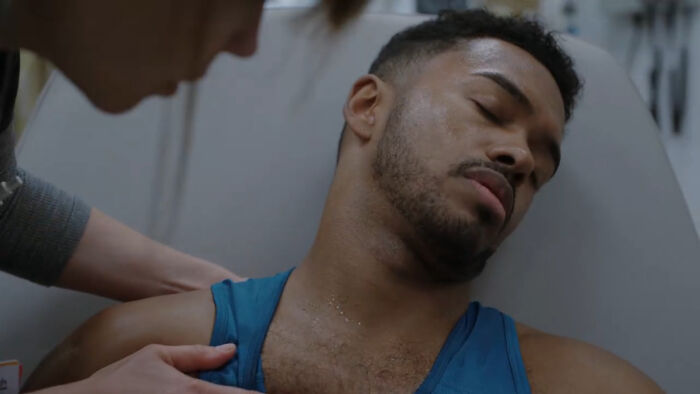
In the very first episode, viewers are introduced to Otis Williams (Alfonso Caballero), an athlete experiencing muscle fatigue. During the checkup, he passes out and suffers from ventricular tachycardia arrest, a type of abnormal heart rhythm.
Dr. Brandon Hunter, MD, reacted to the scene where Otis is unconscious and his pulse cannot be detected. He revealed that in such scenarios, chest compression is the first step of treatment, which Fiona Dourif’s Dr. McKay skips.
“That is the thing to do. But everything else about this is accurate.”
Hunter added that McKay’s decision to conduct an immediate defibrillation was the right choice. He noted that ventricular tachycardia arrest is common in older patients with coronary artery disease, and Robby is right to find an athlete with the condition unusual.
It is later revealed that Otis has rhabdomyolysis, a rare muscle injury that affects the kidneys. His ECG report suggests he has high levels of potassium. Hence, Hunter felt Robby was right to give him a calcium injection despite protests from Dr. Collins.
“I don’t know if it would do that much damage, but it certainly could be lifesaving if he’s right,” he said.
Image credits: HBO Max
In episode 2, a patient, Victor Hunt, is flown to the hospital after a live wire strikes his left forearm, leaving him with massive swelling. Therefore, Santos performs a forearm fasciotomy on the patient under Dr. Garcia’s guidance.
According to Dr. Reed Caldwell, an emergency medicine specialist, Garcia’s use of a marker to identify the incision site is an accurate depiction of the treatment. He explained that a fasciotomy is performed when a patient has compartment syndrome, a condition resulting from increased pressure within a confined body space.
Since the swelling cut off blood flow to Victor’s forearm, a fasciotomy was the right treatment in Caldwell’s opinion. He also felt that the use of a scalpel to make the incision and the pressure applied were also accurate and rated the scene “10/10” for realism.
The Pitt is currently streaming on HBO Max.

By entering your email and clicking Subscribe, you're agreeing to let us send you customized marketing messages about us and our advertising partners. You are also agreeing to our Privacy Policy.
Thank you! You've successfully subscribed to newsletters!





















 No fees, cancel anytime





9
0