Get Premium
Dark mode theme is available exclusively for premium users. Learn more about the benefits of subscribing.
No fees, cancel anytime.

 Dark Mode Ad-Free Browsing Unlimited Content
 Ad-Free Browsing Unlimited Content Dark Mode
Join 1.2 million Panda readers who get the best art, memes, and fun stories every week!



Even if you have the most basic historical knowledge, you are probably aware of the period called the Middle Ages. Sadly, many think that it was a very dull time, which is very far from the truth. How could such a long period be tedious? So many things happened during it!
Generally, the whole era is quite misrepresented. Well, let's take this list and Medieval expert's observations as a chance to educate ourselves a little bit today, shall we?
This post may include affiliate links.
 A proper education was difficult to come by during medieval times, so if women wanted to receive a higher education, they had to join a convent. This led to the fact that many of the earliest female intellectuals were nuns. For example, Sister Juliana Morell is believed to be the first woman in the Western world ever to earn a university degree.
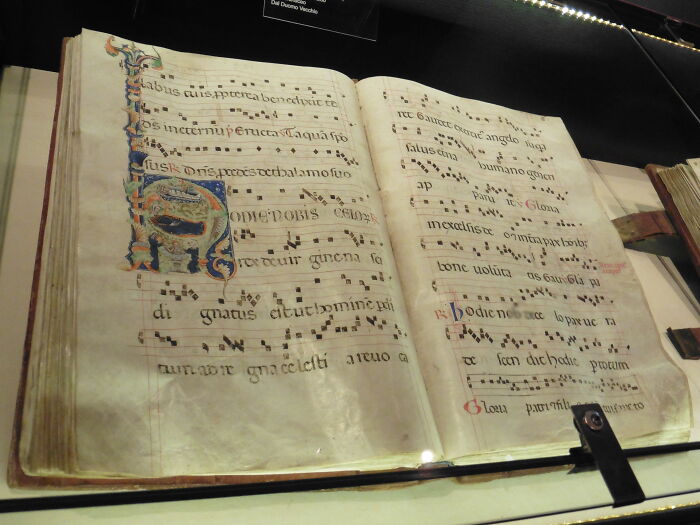 Medieval books were made of parchment -- a writing material made from specially prepared untanned skins of animals. Preparation of a single skin was done by a professional parchmenter, and it took weeks, which was one of the reasons why books were so expensive at that time.
Nothing like settling down with a mug of tea and a good fleshy novel at the end of the day
 Salt was very valuable in the Middle Ages, and, sometimes, it was referred to as "white gold." And since it was so valuable, roads were built specifically for transporting it. One of the most famous of these roads was the Old Salt Route in Northern Germany.
The Middle Ages, or medieval times, was a period in history that lasted approximately from 500 to 1500 AD. This interesting historical period brought the world major developments whose influence is felt even today.
And so, to talk about it, Bored Panda got in touch with Tim Eveland, who has been studying the medieval ages on his own and in university for over 10 years. He also has a blog, “The Medieverse,” related to the subject.
Speaking of studying the Middle Ages in university, our interviewee said that many people aren’t aware that it’s a whole separate field from history. Many universities around the world have a medieval studies department. Typically, students in these programs study medieval historical events more closely than general history students.
Sadly, in many universities, these departments are underfunded. For instance, at the University of Victoria, where Tim studied, this department might be shut down soon as it's deemed not important enough.
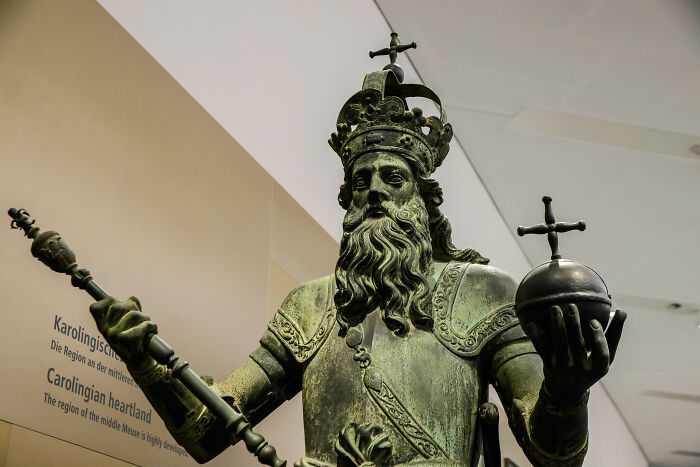 Charlemagne, a medieval emperor who ruled much of Western Europe from 768 to 814, is now sometimes referred to as the father of Europe. But he is not only the father of Europe -- he was a father to as many as 18 children of his own. Reportedly, he was a devoted father who encouraged his children’s education and loved his daughters so much that he didn’t let them marry while he was alive.

His name translates to Charles the Great, or Charles the Large, depending on the source. My Latin teacher called him 'Big Chuck'.
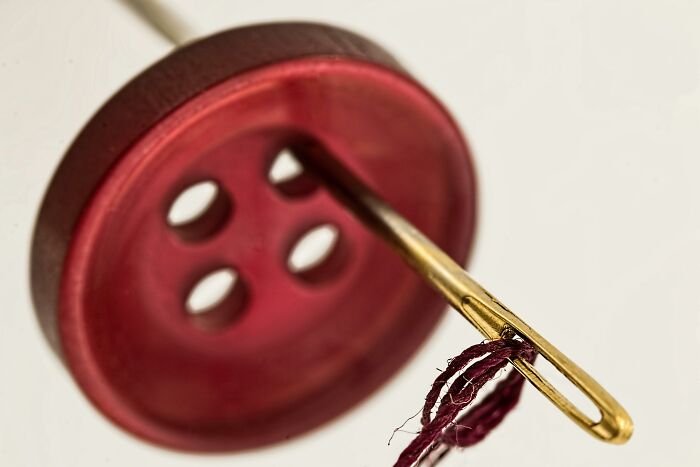 In the Middle Ages, metal sewing needles were owned only by the richest of women. Those who couldn’t afford them used needles made from natural materials: bone, boar bristles, wood, and so on.
I have a modern book of leather stitching instructions that shows how to sew with boar bristles. A boar bristle is quite a substantial, stiff thing.
 Since the 13th century, animals, including insects, could be tried and convicted for crimes. If found guilty, they were sentenced to death. In such trials, there used to be human witnesses and even lawyers (in ecclesiastical courts).
This lack of education about the Middle Ages leads to scary consequences. For example, people associate medieval pagan symbols with modern racist groups. As Tim said, “Today, we see alt-right political groups commandeering medieval symbols, such as pagan devices and the Templar cross, to strengthen their arguments, and they obviously don't know what these symbols actually mean.”
Generally, people tend to imagine the Middle Ages quite inaccurately. Typically, the images of knights, swords, horses, and other similar things come to mind.
Our interviewee Tim pointed out that the media people consume shapes how they understand the medieval period: “Unless someone is taking the time to study the real Middle Ages on their own, it's really easy to assume the stuff you're reading in fiction, the stuff you're seeing on TV, and the stuff you're doing in video games might have some historical sense to it.”
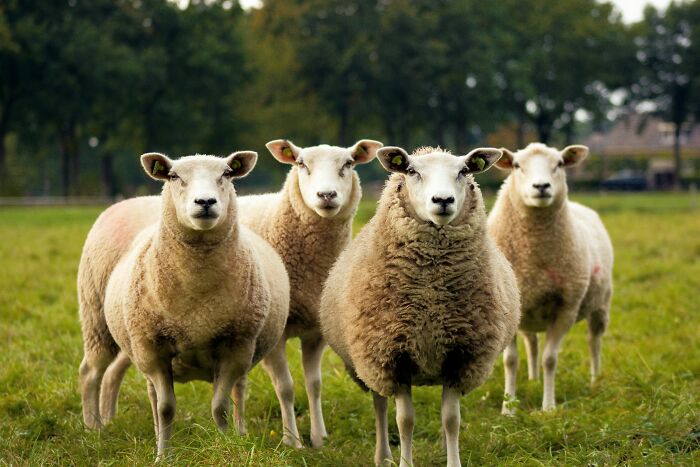 During the Black Death, so many sheep died that Europe experienced a wool shortage.

Did the plague affect sheep as well? I looked it up and the answer is yes; it affected all kinds of livestock. Heck, it also killed the rats everyone blames for spreading the disease. Then the plague fleas would hop off their corpses and find new hosts to infect.
 Between the years 1315 and 1322, western Europe suffered from incredibly heavy rainfall – up to 150 days of rain at a time. This made farmers struggle to plant, grow, and harvest crops, which meant that the staple food, bread, was in peril. Combined with brutally cold winter weather, around 10-15% of people in England died during this period.
 Up to the Tudor/Elizabethan ages (1485 – 1603), swans used to be eaten by the aristocracy. Their popularity as a dish ended when all swans in England were declared the property of the monarch.

The monarch has the right to claim ownership to any mute swan – the all-white, orange-beaked version – in the open waters of Britain, but in practice they exercise this right only in the Thames around Windsor. There are three organisations who can also own swans, thanks to historic grants.
Once a person takes time to study the period, they can clearly see how misrepresentative certain media can be. Tim gave an example – the myth that the Vikings wore horned helmets. This idea dates back to 19th-century opera, when opera singers wore them likely because they saw some kind of artistic illustration. Then, films in the early 20th century carried this misconception on.
Nowadays, due to textual and archaeological evidence, we know that Vikings never wore horns on their helmets. So, we have Vikings in TV shows wearing mascara and raw leather armbands instead. Yet, the situation isn’t inherently better. “While we no longer see horned helmets, the problem doesn't seem to be getting any better, and every time someone working in media invents a new misconception, it has the chance to lead their viewers astray.”
The Vikings’ helmets aren’t the only misconception about the Middle Ages. Here, Tim also gave some examples. This time, it’s fire arrows and sword-fighting techniques used in movies: "Fire arrows did exist in the medieval period; however, they acted and looked much differently than fire arrows in movies."
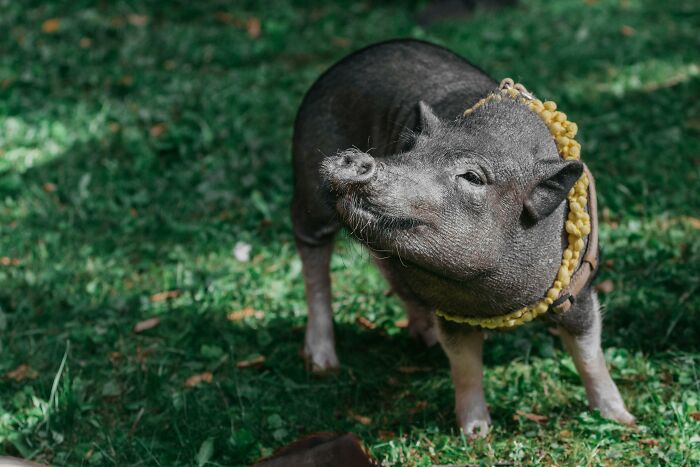 In Medieval Europe, inflated pig bladders were used as early footballs. Eventually, the bladder started getting covered in leather so it would stay round for longer.
My brother blew up a pig bladder one time for us. We wanted to see if it worked because we read about it in the Little House books.
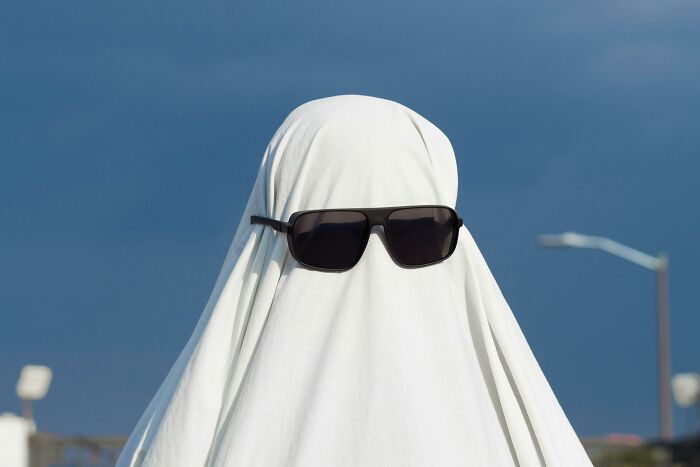 There were various punishments for criminals in the Middle Ages. Some of them might sound very weird and kind of terrifying today: apologizing while wearing a white sheet, wearing animal masks and humiliating badges, being suffocated in mud, and some others.

Sort of sounds like they made stuff up as they went. "Your punishment is uh...you have to listen to Baby Shark on repeat for 5 hours straight!"
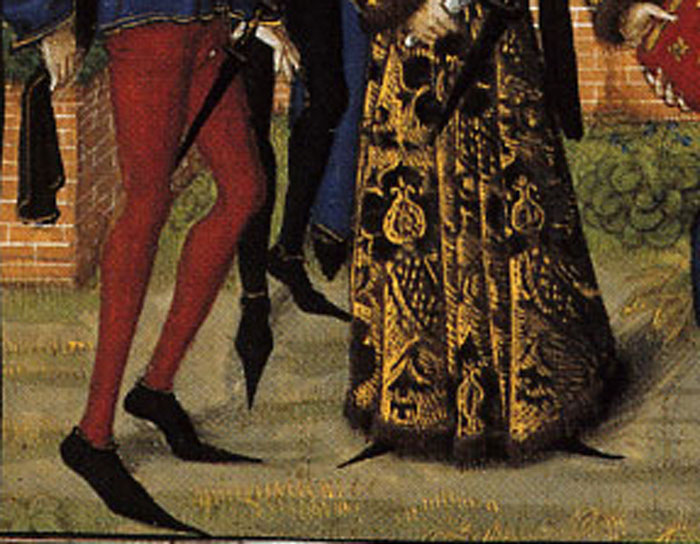 In the mid-14th century, both men and women wore shoes called crakow. They were named after the city Kraków in Poland. They also had other names, such as poulaine or pikes. The shoes were long, pointed, and spiked. Occasionally, these shoes were condemned by Christian writers of the time as demonic. Kings liked to tax them as luxuries, restricting their use to the nobility.
Used to kill rats and cockroaches in the corners of the rooms.
"In movies, fire arrows are massively deployed and used against personnel. In medieval times, fire arrows were used sparingly and were expensive to produce, and they weren't used against personnel per se but rather against buildings during riots or sieges."
Then, with the swords and their techniques, the situation is even worse. Tim revealed that he hasn't seen a movie where sword fighting has been presented accurately! “Actors use choreography, which is based on Olympic fencing and looks more akin to ballerina dancing than real medieval sword fighting.”
If a person wants to see a realistic sword fight, they can go see events of a sport called historical European martial arts (HEMA). If you watch any of their events, for instance, the Swordfish Tournament, and compare it to sword fights in Hollywood movies, the difference is clear as day.
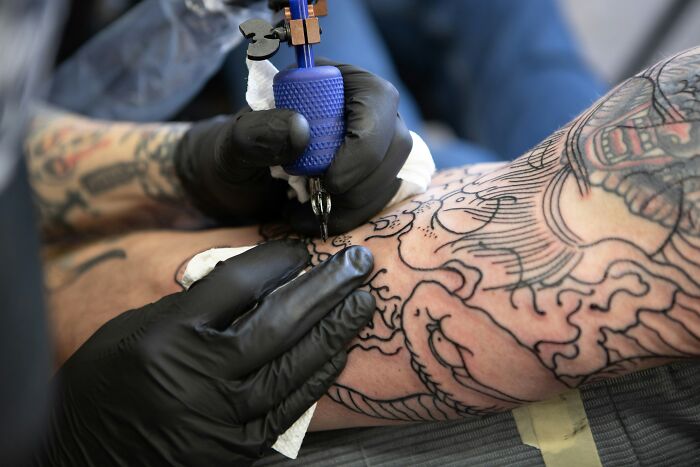 During the Middle Ages, tattoos had several functions. Some of them were used as a form of punishment for criminals. Others were gotten by Christian pilgrims to show off their devotion and to commemorate their journey to holy sites. Some professions or people from certain social statuses also got tattoos. For example, knights would get tattooed to show their allegiance to a particular lord or kingdom, while sailors would commemorate their experiences at sea.
 The privileged class of the Middle Ages always wanted to flaunt their status through their belongings. Besides their money, they liked rare possessions that had to be sourced and transported from far away. These possessions included things such as brightly colored silk, spices, and exotic animals like monkeys, tropical birds, and tigers.
 The term Dark Ages originated from Renaissance scholars who viewed ancient Greece and Rome as the most successful time period for humanity and looked down on the Middle Ages. They dismissed the latter period as a chaotic time of no great leaders, no scientific accomplishments, and no great art.

watch Waldemar Januszczak’s stunning art documentary on the so-called dark ages
That’s what annoys Tim – why is Olympic fencing-based choreography used for medieval sword fights in movies if those that HEMA does not only look better but are also way more accurate? “In HEMA sporting events, they use synthetic armor, and not every little aspect about it can be 100% historically accurate, but it's a way better system for filmmakers to use to portray sword fights if they were willing to switch away from the ridiculous ballerina moves that we're used to seeing today.”
Thankfully, due to online discussions nowadays, many medieval misconceptions get debunked pretty quickly. Yet, Tim identified a bad side of this, too – the debunked theories are being replaced by even weirder ones. Well, the internet being a weird place isn’t a new thing, is it?
Well, if it weren't for the internet, our ability to find fascinating facts about the Middle Ages, like the ones in this list, would be limited. So, let’s enjoy this privilege, and let’s upvote the most interesting ones!
 Medieval writers didn’t write down their texts themselves, as, at the time, writing or the work of a scribe was seen as a labor for not-so-clever people. So, writers used to dictate their thoughts to scribes.
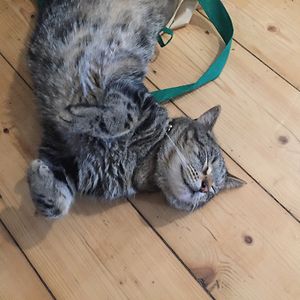
Writing, particularly in pen and ink, is a completely different skillset. The scribe would prepare the writing material for use, prepare the ink, and also make the pens, which were made from the hard shafts of wing feathers that were specially heat treated in hot sand, and there's real skill in cutting them to form the nib of the pen. It was a skilled profession, but still a form of manual - as opposed to intellectual - labour.
 In medieval England, eels were a currency. The transactions varied from single digits to tens of thousands of eels. Peasants would use this fish to pay for a variety of things, including their rent. Eels were described to be “somewhere in between a delicacy and an everyday item.” The reasons why the transactions of eels died down are unknown.

Well not that particular Eel which is a Tiger Snake Eel native to the Pacific.
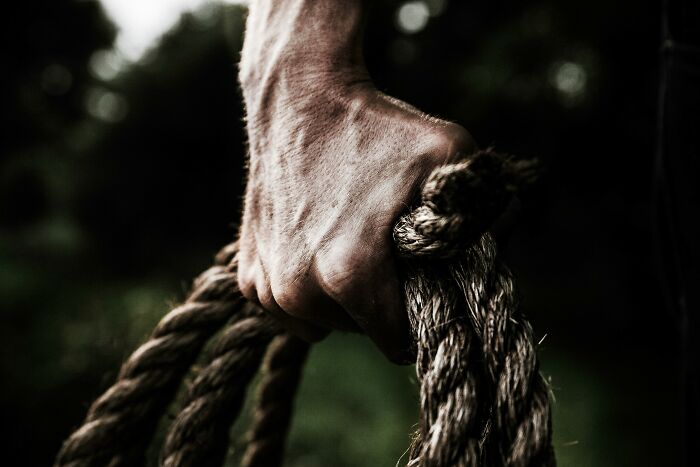 In the Medieval era, spectators of public executions hunted down artifacts associated with the condemned, for example, the hangman’s noose, which was believed to hold special powers. Sick people would wrap the ropes around their heads as a cure for headaches and fevers. Gamblers and cardsharps believed that owning a piece of a noose would keep them in good standing with Lady Luck.

They were also sold off after executions - hence the phrase "money for old rope".
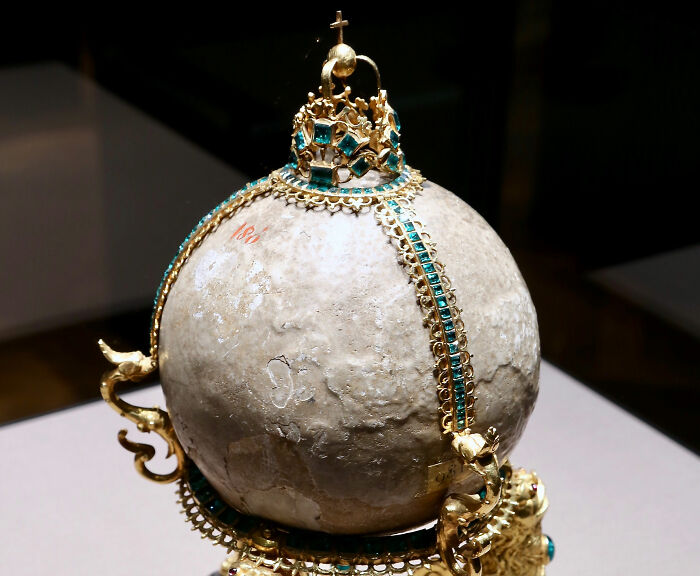 Around 1000 A.D., bezoars (hardened, pearl-like clumps of indigestible matter that form in the stomach lining of animals) became known as mystical good luck charms in Europe and Asia. They were worn as protective amulets, mounted in gold settings, and believed to have curing powers, or to be more precise, to contain a small remnant of toxin that could serve as an antidote to poisons. They were also believed to help with dysentery and epilepsy. During the Black Death, they were even laid on the bodies of plague victims in the hope of curing their sores.
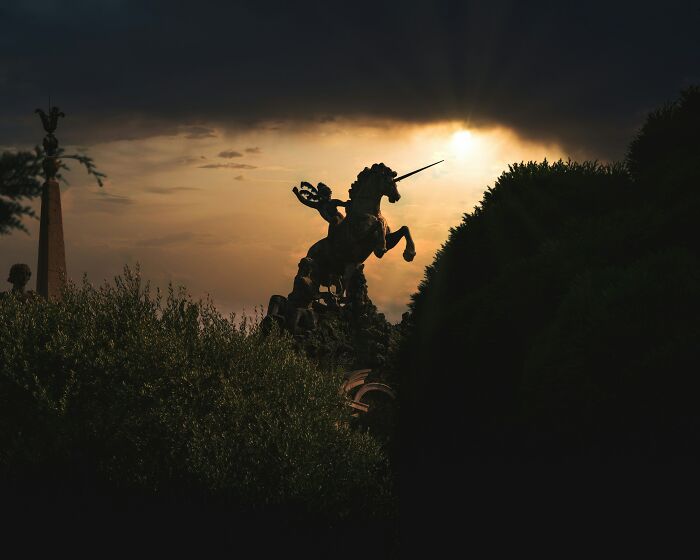 Due to a mistranslation, medieval people commonly believed that the Bible likened Jesus to a unicorn, so a unicorn repeatedly popped up in religious medieval art.
I wonder if that's why it's the official animal coat of arms for Scotland?
 In the Middle Ages, people used to host theater performances, trials, local elections, and many other social activities in cemeteries.

I bet people were just dying to get into those theater performances, trials, local elections, and many other social activities. (I'll see myself out...)
 In the Middle Ages, a disease called leprosy, now known as Hansen's disease, became visible in communities across England. It affects the skin, mucosal surfaces of the upper respiratory tract, the peripheral nerves, and the eyes. Sometimes, during medieval times, it was referred to as the “living death,” as its victims were often treated as if they were already dead. Funerals were organized to declare those with the disease “dead” to society, and after this, relatives were allowed to claim their inheritance.

Leprosy is still present, it's not not like a nightmare-tale from 400-500 years ago. Even like 40 years ago there was an insel in the Danube Delta, what was only used as a care-facility for leprosy patients. In the 1st world countries is gone by now, but it is still present.
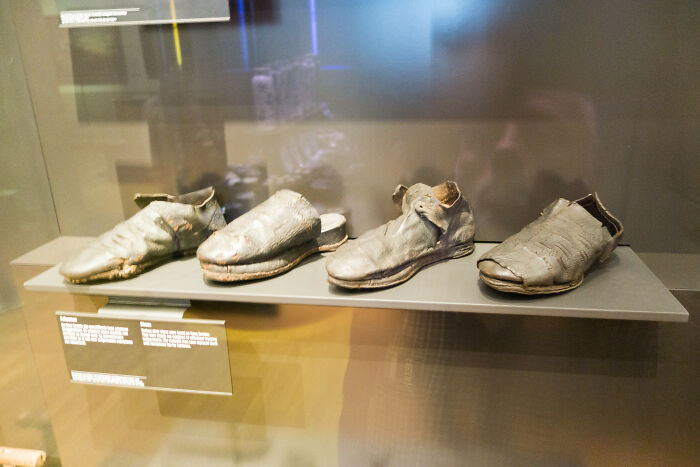 During the medieval period, the length of a man's shoes reflected his social status. So, to extend their shoes, some men used materials like whalebone.
 Some scholars prefer the term medieval instead of the Middle Ages because the latter makes the period sound like it was unimportant.
it's the same word ... derived from Latin "medium aevum" (middle ages) and suffix -al. as we say in France, c'est tortiller du cul pour chier droit. untranslatable :p
 In 1314, football was officially banned in England by more than 30 royal and local laws. This was due to complaints by London merchants to King Edward II of England about “great noise in the city caused by hustling over large balls from which many evils may arise which God forbid[s].”

Could have done with some fact-checking! There was a ban in London in 1314. The "more than 30 laws" refers to attempts at bans at different times over the next few hundred years (it wasn't that 1314 was some crazy anti-football year). As to what the game was like, for the 14th century we really don't know, but the Royal Shrovetide Football Match, played every year in Derbyshire, England, gives an idea of what the game was probably like in the late medieval/ early modern era.
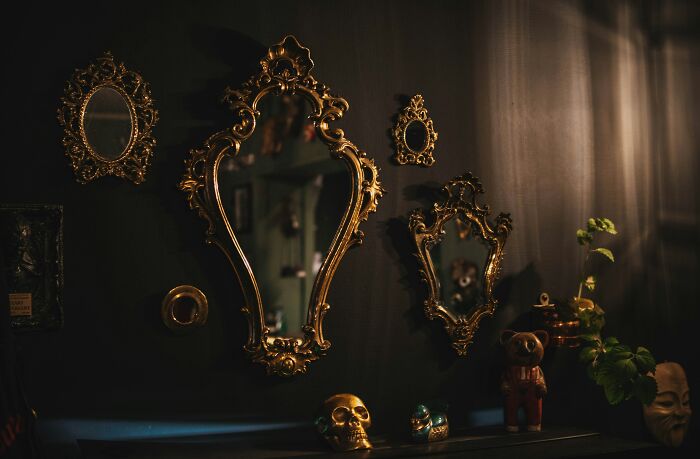 In medieval times, mirrors weren’t as reflective as they are now, so people went their lives only having a hazy idea of what they looked like. Also, mirrors were considered luxury items and were owned mainly by upper-class women.
 It is believed that the invention of mechanical clocks originated from the tower clocks built in the region between Germany and Italy between 1270 and 1300.

Was going to make a snarky comment on the wording of this one, but now I'm going to spend 4 hours reading about the history of various clocks and clockmaking on wikipedia.
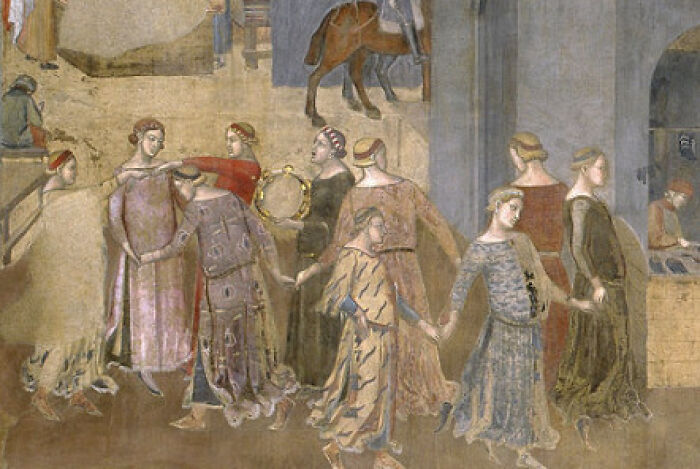 There were two main types of dances in medieval times. One was the farandole -- a line dance. It was danced with people holding hands, but the leader left their left arm free. The dancers moved in a winding labyrinth pattern, mainly clockwise, and the leader sometimes did other movements.
The other type, branle, was a side-to-side movement, and it was performed by partners, either in lines or circles, who alternated large sideways steps to the left with an equal number of smaller steps to the right.
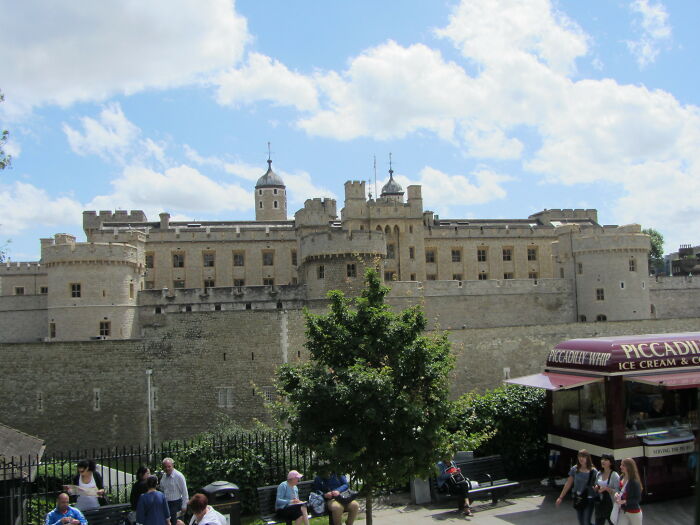 The Tower of London was initially designed to be a battlement, but it became a prison after King Henry I assumed the throne in 1100. One of his first acts was to order the arrest of Ranulf Flambard, the Bishop of Durham.

The Tower was, in medieval times, not just a prison; it was partly a prison. It was also a place were people lived and where the monarch spend the night before his/her coronation in sumptuous surroundings. High-born prisoners often had free roam of the Tower precincts and had servants and decent living quarters.
 People in the Middle Ages believed that bad weather could be caused by bad people who unalived others, got into incestuous relationships, started family quarrels, or simply performed other sins. Some also believed that bad weather could be caused by witches and sorcerers who aim to destroy crops.

In the US, we still have people who loudly blame every hurricane, wildfire, or eclipse on God being upset about gay people.
 During times of heightened anxiety about the plague, rogue practitioners sometimes sold counterfeit medical remedies. Some of these counterfeit remedies prevented sick people from seeking more beneficial help, and some of them were even poisonous.
"Counterfeit" implies that they were fake, imitations of 'real' remedies. In fact there were no effective treatments for the plague. Rogues they may have been, but it wasn't unique to the plague or the middle ages' "Snake oil" salesmen and 'patent' medicines were still very common until round a hundred years ago.

I tend to disbelieve any "in the middle gaes people did this"-posts on principle. First and foremost: the MA span a period of almost 1000 years (ca 500-1500). And things were vastly different from country to mcountry, century to century, ... So unless you say when, and where exactly something is supposed to have been "usual" it becomes practically impossible to fact-check it.
I tend to disbelieve any "in the middle gaes people did this"-posts on principle. First and foremost: the MA span a period of almost 1000 years (ca 500-1500). And things were vastly different from country to mcountry, century to century, ... So unless you say when, and where exactly something is supposed to have been "usual" it becomes practically impossible to fact-check it.































 No fees, cancel anytime