Get Premium
Dark mode theme is available exclusively for premium users. Learn more about the benefits of subscribing.
No fees, cancel anytime.

 Dark Mode Ad-Free Browsing Unlimited Content
 Ad-Free Browsing Unlimited Content Dark Mode
Join 1.2 million Panda readers who get the best art, memes, and fun stories every week!
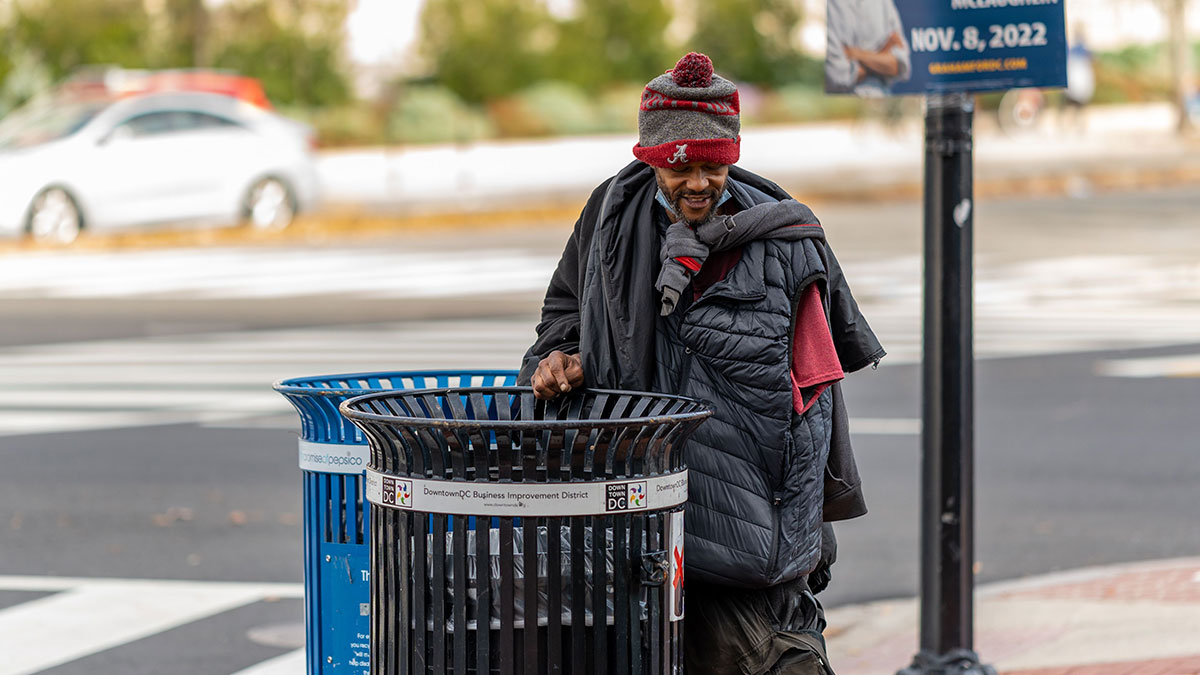
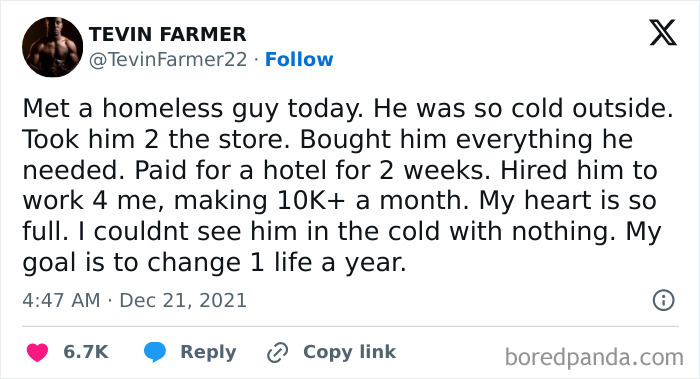
Homelessness is one of the most visible and least truly seen experiences in modern life. Millions of people walk past it every single day, eyes forward, pace unchanged, the mental distance between themselves and another human being compressed into a few feet of pavement. And yet, again and again, something interrupts that distance.
These stories are not about fixing a broken system or solving an impossible problem. They are about what happens when one person decides to see another person, fully and completely, without looking away. They will remind you that humanity, at its best, is still capable of something genuinely extraordinary. Get the tissues ready. You are going to need them.
This post may include affiliate links.


A young girl was walking along a beach upon which thousands of starfish had been washed up during a terrible storm. When she came to each starfish, she would pick it up, and throw it back into the ocean. People watched her with amusement. She had been doing this for some time when a man approached her and said, “Little girl, why are you doing this? Look at this beach! You can’t save all these starfish. You can’t begin to make a difference!” The girl seemed crushed, suddenly deflated. But after a few moments, she bent down, picked up another starfish, and hurled it as far as she could into the ocean. Then she looked up at the man and replied, “Well, I made a difference for that one!”
The numbers behind homelessness in America tell a story that is difficult to sit with. According to the HUD, in the USA, 326,000 people were experiencing homelessness on a single night in 2021. By 2024, that number had risen to 771,480, the highest ever recorded.
That is not a statistic that you can ignore. Behind every single one of those numbers is a person with a name, a history, and a set of circumstances that brought them to a place nobody chooses to be. The scale is staggering. The humanity inside it is even more so.

I had a homeless friend I would see all the time across from my job at a university. After a while he learned I was a professor. That man could not get over the fact that I was a “doctor.” Nobody I know outside my family has ever been that proud of me and my degree. He died of a heart attack just after he got into housing again. I miss him, too.
When researchers and housing experts are asked what the primary driver of homelessness is, the answer is consistent and structural. USICH points to a systemic shortage of affordable housing as the foundation of the crisis.
Without that foundation, every other life difficulty, like a job loss, a health crisis, a relationship breakdown, or an unexpected bill, carries a risk that it simply would not carry for someone with stable housing beneath them. Homelessness is rarely one catastrophic decision. It is more often a series of ordinary setbacks in a system that leaves no margin for error.

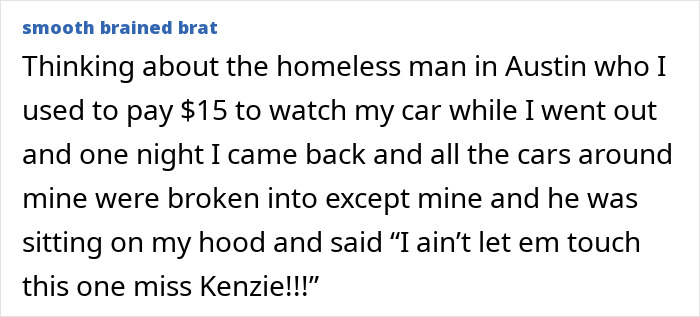
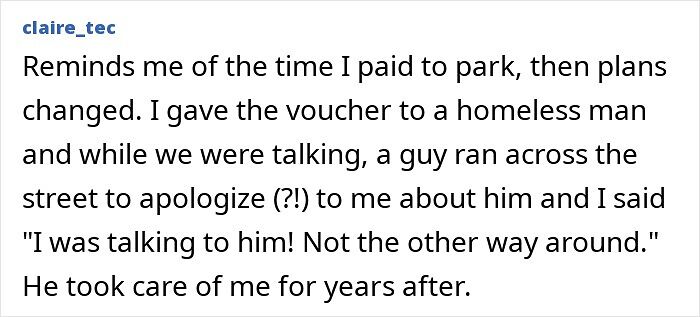
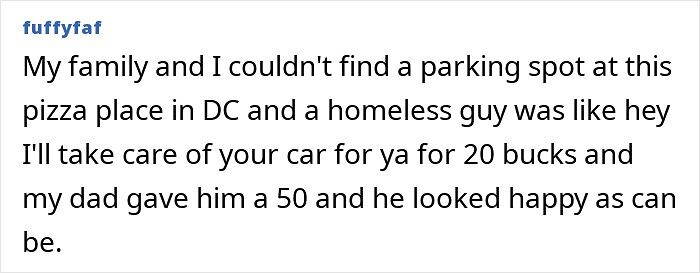
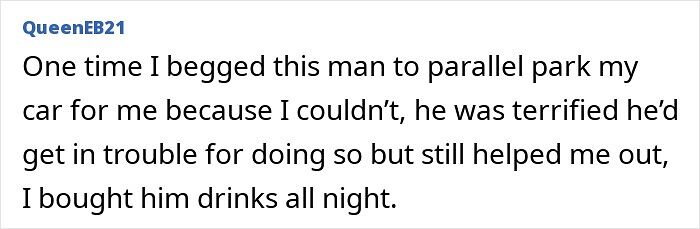
Being in the UK, I have no idea of what benefit a parking voucher would be to a homeless man? Would someone kindly explain?
One of the most powerful things any individual can do in the face of a crisis this large is also one of the most simple: start by looking honestly at the assumptions you carry. Organizations working at the frontline of homelessness ask people to educate themselves on how the issue connects to healthcare, the foster care system, criminal justice, and employment.
They ask people to challenge the stigmas they hear in their own networks. And perhaps most importantly, they ask people not to invalidate or judge the experiences of others based on appearance. The problem is systemic. The solution starts with how we see each other.

There's a homeless guy who hangs around the Metra station in Chicago and offers to hail cabs for people. I always tip him outrageously because my quiet introvert self can never catch one!
One of the most compelling arguments for investing in permanent housing solutions is a purely financial one. Getting a homeless person off the streets through Permanent Supportive Housing costs between $8,500 and $35,000 annually, depending on their needs and location.
Left without intervention, the public spends between $31,000 and $100,000 per person each year on emergency room visits, law enforcement interactions, and shelter services. Housing people is not just the compassionate option. It is, by a significant margin, the cost-effective one. The math makes the case clearly. The barrier has never really been the numbers.
Before the Oscar, before the magazine covers, before becoming one of the most recognized names in Hollywood, Halle Berry was a young woman in her early twenties who had run out of money trying to launch an acting career in Chicago.
She stayed in a homeless shelter during that period, a detail she has spoken about openly and without embarrassment. Her story is not here as inspiration fodder or a suggestion that homelessness is simply a stepping stone for those with enough talent. It is here as a reminder that the person in the shelter is not defined by being in the shelter.

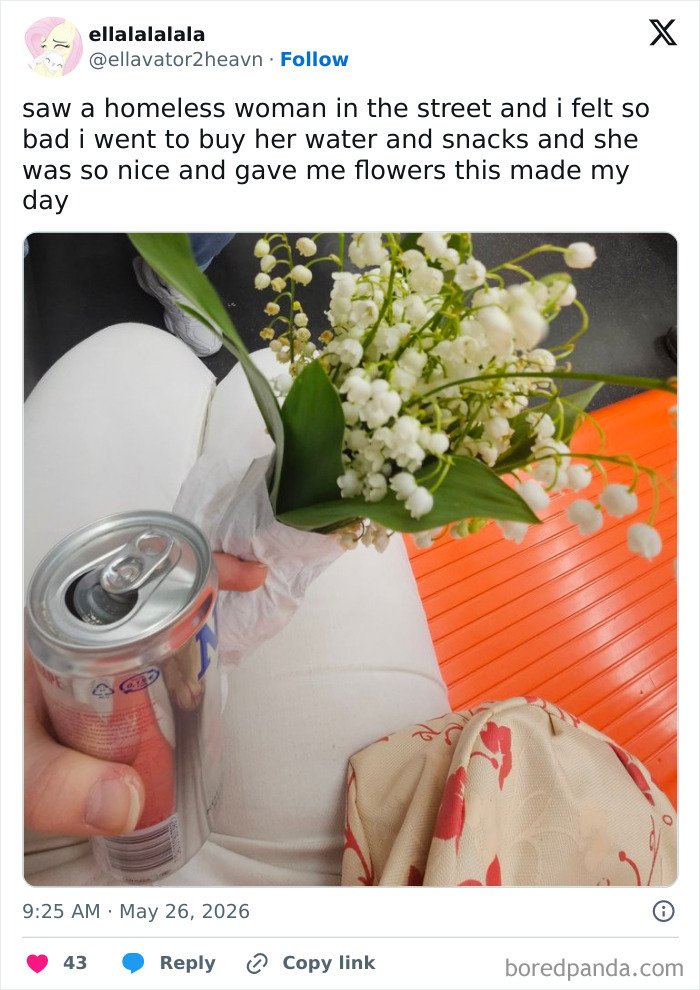
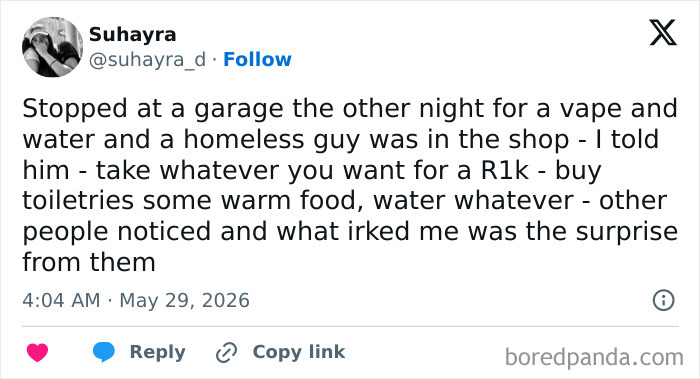
There was a homeless guy near my office building who hung around the Starbucks. He wore every piece of clothing he owned, no matter how warm it was. 😥 I used to buy him a sandwich if he was at Starbucks at the same time I was. And the staff gave him free coffee/water. I'd see him sleeping on his bench on my way to work every day. He had several umbrellas that he put over himself at night.
Steve Harvey also spent three years living out of a 1976 Ford Tempo before his career in comedy found its footing. Three years. He has spoken candidly about the experience, about the survival instincts it required, and about the version of himself it produced.
Today, he is a television host, producer, and businessman with a profile that makes the Ford Tempo feel like another lifetime. What his story shares with Halle Berry's, and with the stories of countless people experiencing homelessness who will never become celebrities, is the fundamental truth that circumstance is not character. Where someone is does not tell you who they are.
Japan has the lowest rate of homelessness among developed OECD nations, with just two people experiencing homelessness per 100,000. In April 2024, the total number of homeless people recorded across a country of 124 million was 2,820, a figure that dropped eight percent from the previous year.
Authorities credit efficient social assistance policies, access to permanent shelter, and strong community support systems. It is worth noting that Japan's official definition of homelessness is narrowly drawn, but even accounting for that, the gap between these numbers and those recorded in countries with comparable economies is a policy conversation worth having loudly and urgently.
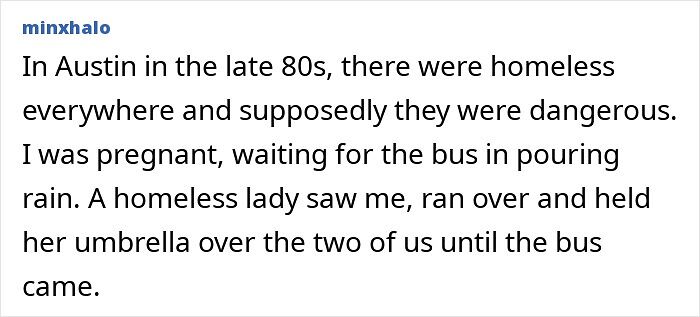
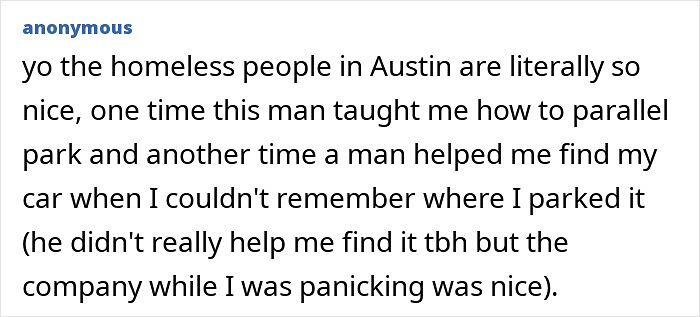
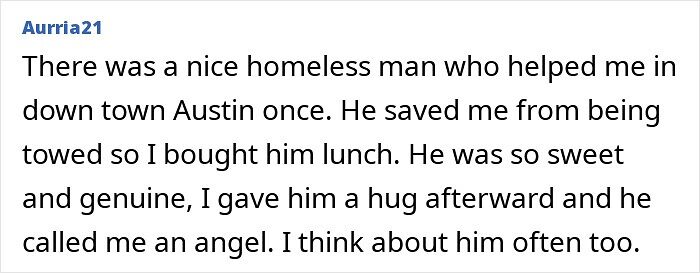
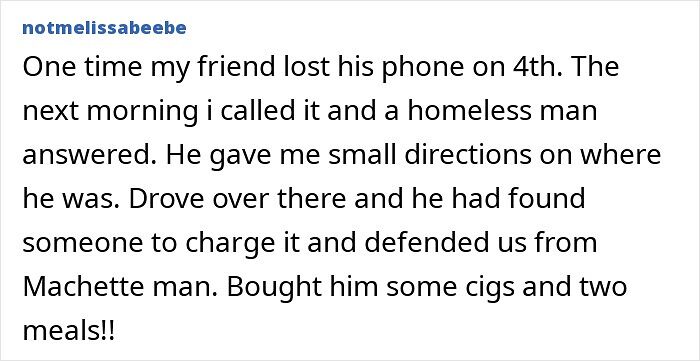
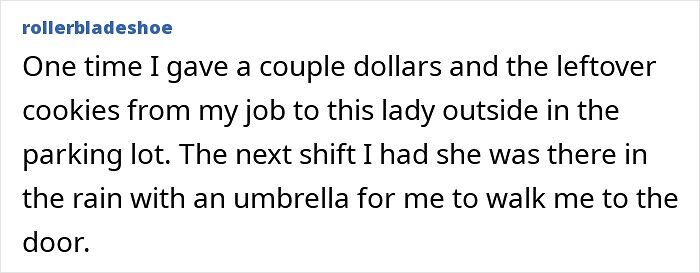
Every wholesome story in this list exists inside a much larger story that is still being written. The stranger who stopped, the meal that appeared from nowhere, the conversation that made someone feel seen for the first time in months—these moments matter enormously and they are real.
They are also not a substitute for the systemic change that the scale of this crisis demands. The most important thing these stories can do is not just warm your heart, although they will. It is to make homelessness feel like what it actually is, something happening to real people, nearby, right now, in a world that has the resources to do significantly better. Hold onto the warmth. And then do something with it.
Have you had an equally heartwarming experience you want to share? Tell us in the comments!
How do you train cats to a.ttack unknown people? Asking for a friend. 😁

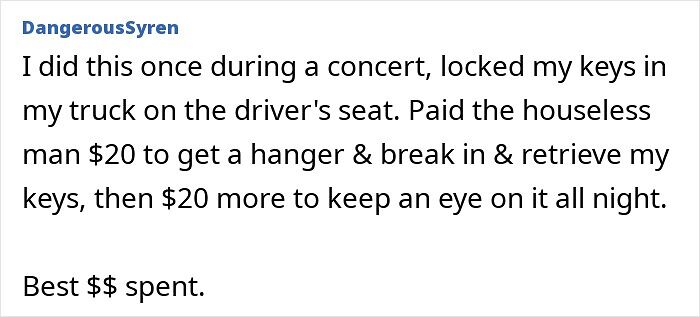
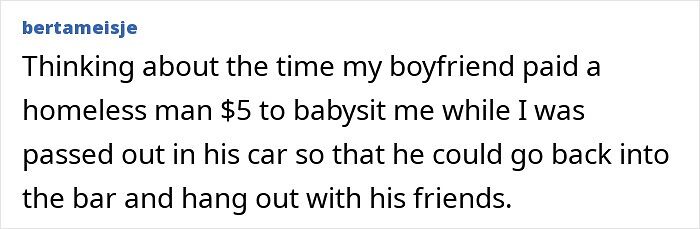
My friend owned a large Doberman and left his dog in his car one night when he stopped at a bar. He came out and someone had broken into all the other cars. His wasn't broken into, but his tires were gone.

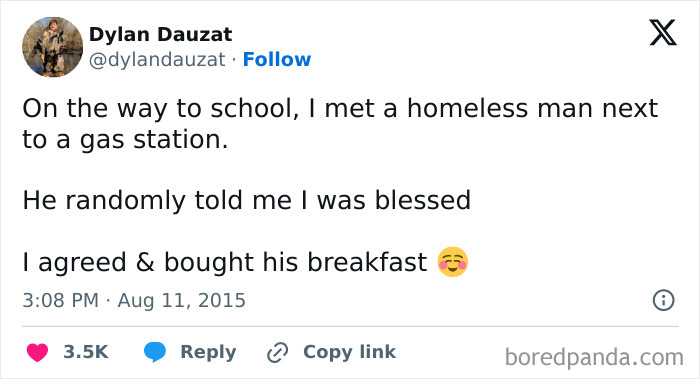
There is a homeless man that I always buy coffee and breakfast when I go to get my coffee in the morning. One day he asked if he could get ice cream instead of coffee because that gas station had the best ice cream. Anytime Jordan, anytime.





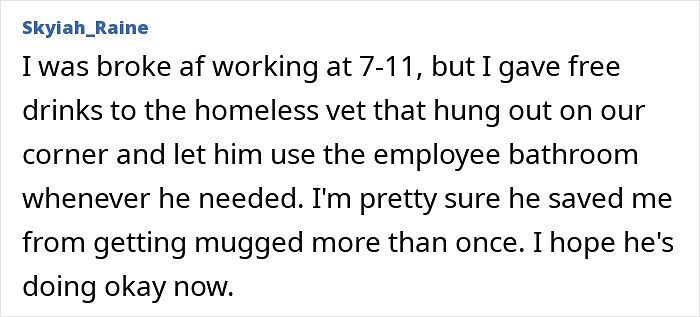
Working at a public library means I see a lot of folks who don’t have housing. I feel safer with them than I do with some of our other patrons. The less people have, the kinder and more generous they seem to be.
Working at a public library means I see a lot of folks who don’t have housing. I feel safer with them than I do with some of our other patrons. The less people have, the kinder and more generous they seem to be.





























 No fees, cancel anytime