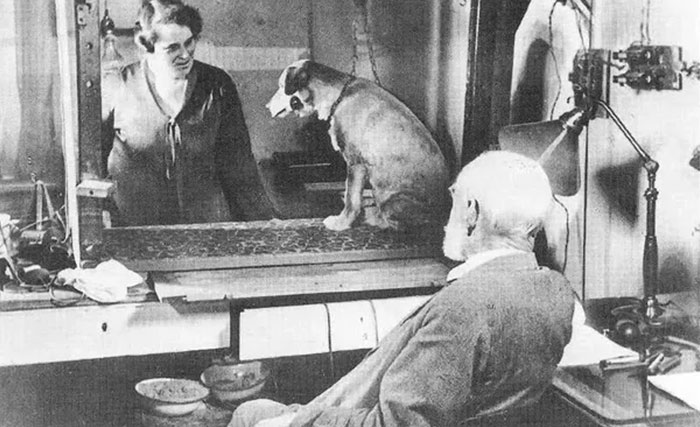
ADVERTISEMENT

Although we have always been fascinated with the workings of the mind and the reasons behind human behavior, it wasn’t until the beginning of the 20th century that experiments in psychology took off.

Encompassing a range of areas, from anthropological studies to social behavior and the complex biological processes occurring in the brain, the carefully controlled studies carried out in the name of experimental psychology have taught us so much about the human condition and given us a deeper understanding of why we act the way that we do.

Bored Panda has compiled a list of some of the most famous and thought-provoking psychology experiments that have been carried out in the last century. From simple social experiments to complex behavioral patterns that expose the workings of the subconscious and push the boundaries of ethics, these weird and wonderful psychological experiments are sure to make you think twice about what you know about yourself as a human being. Maybe we are all just a little less in control of ourselves than we really think… Check out the list below, and don’t forget to vote for your favorite psychology study!

#1

A Class Divided Experiment

A Class Divided Experiment


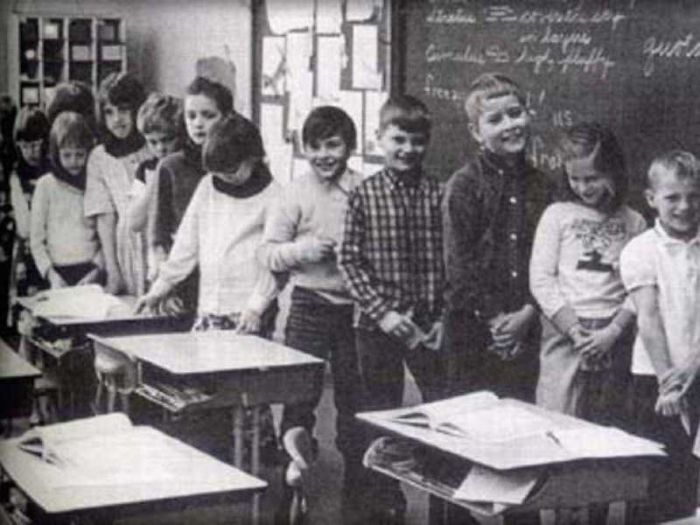
In 1968, following the murder of civil rights leader Martin Luther King, teacher Jane Elliott tried discussing issues of discrimination, racism, and prejudice with her third grade class in Riceville, Iowa.

Not feeling that the discussion was getting through to her class, who did not normally interact with minorities in their rural town, Ms. Elliott began a two-day "blue eyes/brown eyes" exercise to reinforce the unfairness of discrimination and racism: Students with blue eyes were given preferential treatment, given positive reinforcement, and made to feel superior over those with brown eyes for one day; the procedure was reversed the next day, with Ms. Elliott giving favourable preference to brown-eyed students.

As a result, whichever group was favoured by Elliott performed enthusiastically in class, answered questions quickly and accurately, and performed better in tests; those who were discriminated against felt more downcast, were hesitant and uncertain in their answers, and performed poorly in tests. (Source: Wikipedia)

Jane Elliott Report

Caroline Espenschied
Community Member
8 years ago Created by potrace 1.15, written by Peter Selinger 2001-2017

There is a documentary that was made about this experiment, I think it is called "blue-eyed" I have seen it one night while darting through my channels and found it absolutely fascinating.

lindsaymad2000
Community Member
8 years ago Created by potrace 1.15, written by Peter Selinger 2001-2017

as a green eyed person I wonder what they did with the green eyed students XD

CluelessLlama13
Community Member
8 years ago Created by potrace 1.15, written by Peter Selinger 2001-2017

Right there with you, Lindsay. I'd say "let's make our own group," but that would completely ruin the point of the lesson here...

Load More Replies...
Aunt Messy
Community Member
Premium
8 years ago Created by potrace 1.15, written by Peter Selinger 2001-2017

This "test" has been banned in most school districts because even one day of differential treatment was so traumatizing to the kids that they were affected by it for months, and in some cases YEARS afterwards. It fails to take into account that even after the "test" is over, the kids use it as an excuse for bullying and both physical and verbal abuse of the "out" group. ... There are FAR easier and more effective ways to teach about "in" and "out" groups than to deliberately choose to torment kids in your own class. ... Teachers have been fired for attempting this "experiment".

Stille20
Community Member
8 years ago Created by potrace 1.15, written by Peter Selinger 2001-2017

When I first read about this years ago I was intrigued. However, you are right, this is extremely unethical. Researchers are not allowed to experiment on children, teachers certainly shouldn't/

Load More Replies...
Sophie Champagne
Community Member
8 years ago Created by potrace 1.15, written by Peter Selinger 2001-2017

Here is one of the most popular documentary on the subject. It's in french (made in Quebec,Canada) but you can easely find a translation. You also have the follow up, ten years later, interviews with the kids now young adults, it's fascinating! http://ici.radio-canada.ca/nouvelle/803449/lecon-discrimination-reportage-2006-enjeux

Tasha Harris
Community Member
8 years ago Created by potrace 1.15, written by Peter Selinger 2001-2017

Thank you , I was wondering where to find that info :)

Load More Replies...
M. M
Community Member
8 years ago Created by potrace 1.15, written by Peter Selinger 2001-2017

I remember watching a movie on this -- anyone know it?

Andrew Batmann
Community Member
8 years ago Created by potrace 1.15, written by Peter Selinger 2001-2017

It went way further than that and actually had long lasting psychological impressions in the students... forget why but there's a documentary about it

Tina Morrow
Community Member
8 years ago Created by potrace 1.15, written by Peter Selinger 2001-2017

I remember seeing the show where they interviewed the students 30 years later and no student had any I'll effects on them. They even said this experience made them more sensitive to other people's differences.

Load More Replies...
Brad Valentino
Community Member
8 years ago Created by potrace 1.15, written by Peter Selinger 2001-2017

oh yeah. a two day experiment showed all this? i dont think so.

Jamie Featherer
Community Member
8 years ago Created by potrace 1.15, written by Peter Selinger 2001-2017

One of my elementary school teachers did this, as well - it stuck with me, always. I think it's one of the things I remember most about elementary school.

Tasha Harris
Community Member
8 years ago Created by potrace 1.15, written by Peter Selinger 2001-2017

How did it affect you? If you don't mind me asking

Load More Replies...
Pi...
Community Member
8 years ago Created by potrace 1.15, written by Peter Selinger 2001-2017

Thought provoking. I love social experiments!

DryRot DryRot
Community Member
1 year ago Created by potrace 1.15, written by Peter Selinger 2001-2017

Teachers are still doing social experiments on our children. Some of them aren't even aware of it.

View more comments
ADVERTISEMENT
RELATED:
    #2

    The Piano Stairs Experiment

    The Piano Stairs Experiment

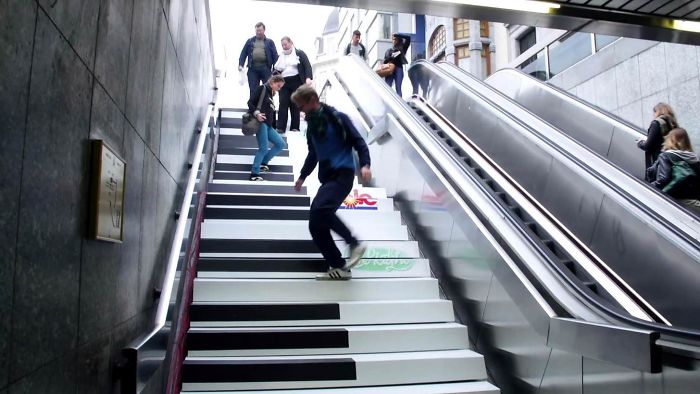
    Volkswagen's initiative called 'The Fun Theory' wanted to prove that people's behaviour can be changed for the better by making boring, everyday tasks more fun. In this experiment in Stockholm, Sweden they installed musical piano steps on the staircase of a subway station to see if more people would choose the healthier option and use the stairs instead of the escalator.

    The results showed that 66% more people took the stairs than usual that day, because we all like a little fun don't we? At heart we are like kids in a playground, so making our cities more fun can make us all happier, fitter and healthier.

    (Source: Thefuntheory.com)

    thefuntheory Report

    Ellis
    Community Member
    8 years ago Created by potrace 1.15, written by Peter Selinger 2001-2017

    Yet if there would be piano stairs everywhere, every day, no one would use it anymore

    pikachu
    Community Member
    8 years ago Created by potrace 1.15, written by Peter Selinger 2001-2017

    But there could be alternatives! Every so often you'll see a piano one, when you go somewhere else it's different! Then another place, different again!

    Load More Replies...
    Nancy E
    Community Member
    8 years ago Created by potrace 1.15, written by Peter Selinger 2001-2017

    I would love these steps , &, our children would get much more exercise !

    Daria B
    Community Member
    8 years ago Created by potrace 1.15, written by Peter Selinger 2001-2017

    Seoul has musical and lightning stairs in some places. But not whole sets, just the top and bottom few. Still cute.

    Cerys Dunbar
    Community Member
    8 years ago Created by potrace 1.15, written by Peter Selinger 2001-2017

    of course we liked the stairs because we never really grow up just masquerade as adults because thats what were expected to do

    Kaili Kliimask
    Community Member
    8 years ago Created by potrace 1.15, written by Peter Selinger 2001-2017

    I would have hated it. There's too much noise already and then add the piano

    moli.2
    Community Member
    8 years ago Created by potrace 1.15, written by Peter Selinger 2001-2017

    I thouht the same. Wouldn't work great with busy places.

    Load More Replies...
    Hans
    Community Member
    8 years ago Created by potrace 1.15, written by Peter Selinger 2001-2017

    Unfortunately, this effect to my knowledge quickly fades. I.e., leave the piano there for weeks or months, and the effect with diminish. Alas.

    Sarah Bevan
    Community Member
    8 years ago Created by potrace 1.15, written by Peter Selinger 2001-2017

    Must be the logic behind those little gym areas that look like playgrounds on the waterfront in some parts of Dublin.

    TheKnightOwl
    Community Member
    8 years ago Created by potrace 1.15, written by Peter Selinger 2001-2017

    We have similar things in Australia near kids playgrounds.

    Load More Replies...
    Kiahna
    Community Member
    8 years ago Created by potrace 1.15, written by Peter Selinger 2001-2017

    That sounds fun! They should have that everywhere.

    View more comments
    #3

    The "Violinist In The Metro" Experiment

    The "Violinist In The Metro" Experiment

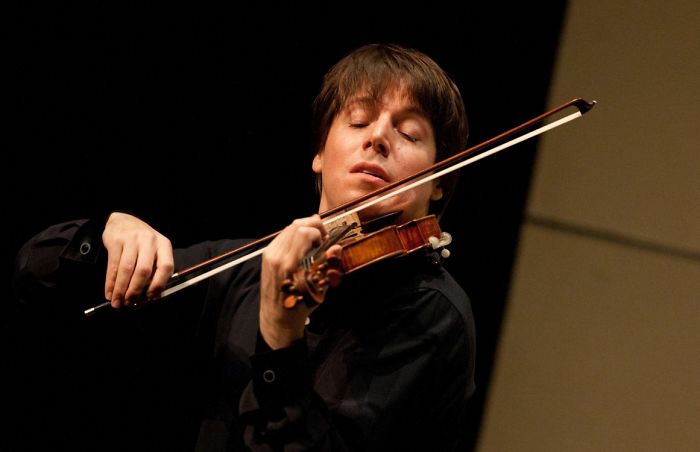
    On 12th January 2007, about a thousand morning commuters passing through a subway station in Washington, D.C. were, without publicity, treated to a free mini-concert performed by violin virtuoso Joshua Bell, who played for approximately 45 minutes, performing six classical pieces (two of which were by Bach), on his handcrafted 1713 Stradivarius violin (for which Bell reportedly paid $3.5 million).

    Only 6 people stopped and stayed to listen for a while. About 20 gave him money but continued to walk their normal pace. He collected $32. When he finished playing and silence took over, no one noticed it. No one applauded, nor was there any recognition. No one noticed that one of the best musicians in the world had played one of the most intricate pieces ever written with a violin worth 3.5 million dollars.

    Washington Post writer Gene Weingarten set up the event “as an experiment in context, perception and priorities — as well as an unblinking assessment of public taste: In a banal setting at an inconvenient time, would beauty transcend?”

    When children would occasionally stop to listen, their parents would grab them and quickly usher them on their way. The experiment raised some interesting questions about how we not only value beauty, but extent that which the setting and presentation make a difference. Three days earlier, Bell had played to a full house at Boston’s Symphony Hall, where seats went for over $100.(Source: Snopes)


    Joshua Bell Report

    Tiari
    Community Member
    8 years ago Created by potrace 1.15, written by Peter Selinger 2001-2017

    I wonder how you can expect from those 1000 morning commuters to miss their trains and come too late to work and probably risk some serious words from their boss, just to listen to some music on the subway. This would have been more meaningful if done on a weekend afternoon.

    KK
    Community Member
    8 years ago Created by potrace 1.15, written by Peter Selinger 2001-2017

    The other way around happens too. Mediocre art gets praised because artists have made themselves a name, worked on a known project/in a famous place and people payed money to see it.

    Isabella
    Community Member
    8 years ago Created by potrace 1.15, written by Peter Selinger 2001-2017

    Maybe the subway was not the best place to make such an experiment (and the hour too). I would not judge the people passing by without stopping. I am sure that most of them were in hurry to work, so they had no time to stop and enjoy the music.

    Adogcalledkitty
    Community Member
    8 years ago Created by potrace 1.15, written by Peter Selinger 2001-2017

    So, someone is an a*****e for not knowing or liking classical music? And if they wanted unbiased results, they shouldn't have done it in the morning, when most people go to work/school. I wouldn't stop for my favourite band if I was on my way to work not for someone I might recognise as talented but still don't care for his taste of music.

    KK
    Community Member
    8 years ago Created by potrace 1.15, written by Peter Selinger 2001-2017

    People do not know this!? If you go see someone who has a good reputation (=expectation), in a place where you have time to enjoy (=attention) and pay a lot of money (=investment), it is more likley that you will love it. It might be a musician, a comedian, a restaurant or a movie. Enjoyment is subjective.
    Jhoa
    Community Member
    8 years ago Created by potrace 1.15, written by Peter Selinger 2001-2017

    Unsurprising really. These people are commuting. They have places to go and people to be with. Maybe have trains, metros and buses to catch. They don-t have the time to daudle and listen to some music. Some cleary appreacited the music, and gave money to show their support, but most just don-t have the time, or are in the mood (tired, groggy, morning).

    Soco Cybelle
    Community Member
    8 years ago Created by potrace 1.15, written by Peter Selinger 2001-2017

    It could be also because people are in such a hurry in the metro. Going to work, going home, having appointments... I bike to work everyday, and sometimes I see people singing or playing music on the street. It is very nice, but I have to get to work, or home, so I never stop.

    Master Markus
    Community Member
    8 years ago Created by potrace 1.15, written by Peter Selinger 2001-2017

    This is quite stupid, and perhaps pretentious in my opinion. Of course a lot of people aren't going to STOP GOING TO WORK OR SCHOOL because they enjoy a guy playing the violin! It would be less judgemental and perhaps more "true" to a person's taste or priorities if he did this one the street somewhere or in a park, where he would be likely to get some audience of people who weren't going to do life-critical things.

    Fero Othello
    Community Member
    8 years ago Created by potrace 1.15, written by Peter Selinger 2001-2017

    Do people who pay $100 tickets take the metro?

    M O'Connell
    Community Member
    8 years ago Created by potrace 1.15, written by Peter Selinger 2001-2017

    Here's the problem... If you are in the subway, you have somewhere to be and are probably on a schedule. Also, hanging out in the subway is an excellent way to get robbed. A violin worth 3.5 million dollars probably sounds like a $5 children's toy in an echoing noisy concrete and tile performance space too.

    View more comments
    ADVERTISEMENT
    #4

    Smoke Filled Room Experiment

    Smoke Filled Room Experiment

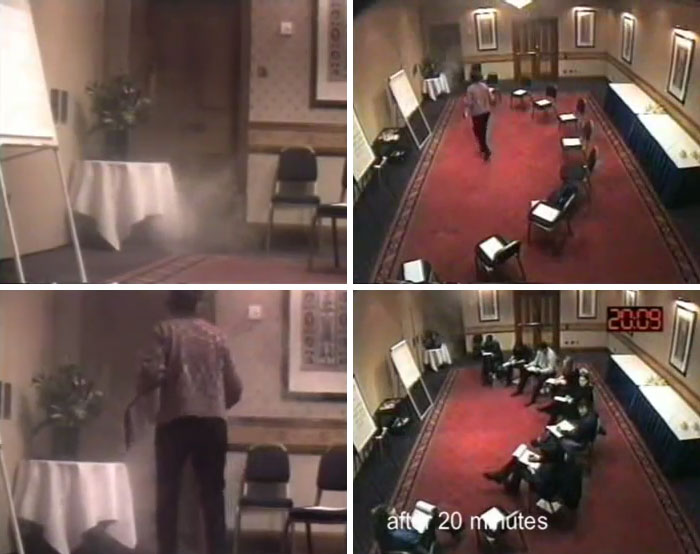
    This experiment had people alone in a room filling out a questionnaire, when smoke starts coming from under the door. What do you do? You would get up and leave, tell someone in charge and do so without hesitation, right? Now imagine the same situation, except that you are not alone, you are with several other people who don't seem to care about the smoke. What do you do now?

    When alone, 75% of people reported the smoke almost immediately.  The average time to report was 2 minutes of first noticing the smoke.

    However when two actors were present, who were working with the experimenters and told to act as if nothing was wrong, only 10% of the subjects left the room or reported the smoke. 9 out of 10 subjects actually kept working on the questionnaire, while rubbing their eyes and waving smoke out of their faces.

    The experiment was a great example of people responding slower (or not at all) to emergency situations in the presence of passive others. We seem to rely heavily on the responses of others even against our own instincts. If the group acts as if everything is OK then it must be, right? Wrong. Don't let the passivity of others result in your inaction. Don't always assume that someone else will help, that someone is specified to take action on behalf of others. Be the one to take action! (Source: Socially Psyched)

    Bibb Latane and John M. Darley Report

    Hans
    Community Member
    8 years ago Created by potrace 1.15, written by Peter Selinger 2001-2017

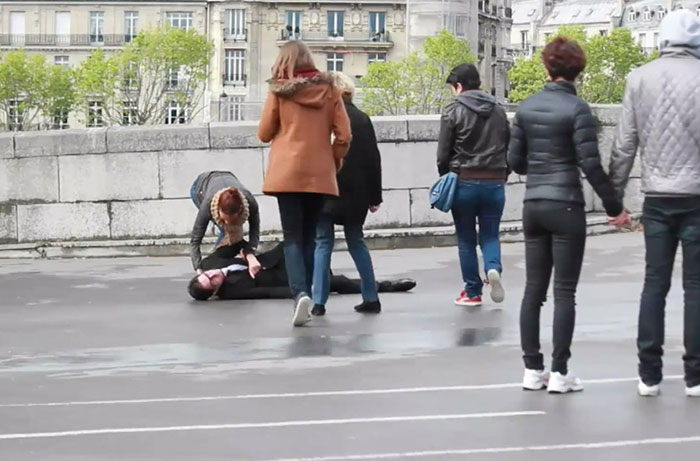
    Even worse when people see someone in immediate need of help, such as someone insured and an elderly who tripped. They will typically look if someone else is there, and if so, simply pass along.

    SJ_Panda_love
    Community Member
    8 years ago Created by potrace 1.15, written by Peter Selinger 2001-2017

    This happens all the time in "un-announced" fire drills in my office. If I see nobody I getting up from their seats, I also keep sitting until there is some commotion starts to build. But a lesson learnt, will never be doing this and will probably contact our Emergency response team to share this information across all teams. This passive behavior can easily become matter life or death.

    Caroline Huot
    Community Member
    8 years ago Created by potrace 1.15, written by Peter Selinger 2001-2017

    I would be outta there, regardless if there were other people or not!!

    Scott KROKEN
    Community Member
    8 years ago Created by potrace 1.15, written by Peter Selinger 2001-2017

    This study shows the Kitty Genovese effect: a woman who screamed for help and was murdered in 1964 New York while at least 37 neighbors heard and did not intervene or call the police.

    Barb Logan
    Community Member
    8 years ago Created by potrace 1.15, written by Peter Selinger 2001-2017

    I think it also has to do with conformity. The people who ignored Kitty Genovese's screams couldn't actually see what was going on in other people's apartments, if they were going to helpor not, but mostdid say they "didn't want to get involved" and so did nothing. I believe only one person called 911. I remember when that happened. Very sad.

    Load More Replies...
    Nancy E
    Community Member
    8 years ago Created by potrace 1.15, written by Peter Selinger 2001-2017

    Once you were in a fire ,as I was, this wouldn't apply~~~~~~

    Jeffrey Thimister
    Community Member
    8 years ago Created by potrace 1.15, written by Peter Selinger 2001-2017

    And that's the Bystander Effect for you.

    makki
    Community Member
    8 years ago Created by potrace 1.15, written by Peter Selinger 2001-2017

    monkey see monkey do! they probably just thought it wasnt something to be concerned of and a repair man or someone is just tinkering around somewhere

    Polleekin
    Community Member
    8 years ago Created by potrace 1.15, written by Peter Selinger 2001-2017

    This is why I never assume someone else will take care of it or it's someone else's responsibility to help. I just consider it my responsibility to be the person to take care of a crisis.

    View more comments
    ADVERTISEMENT
    #5

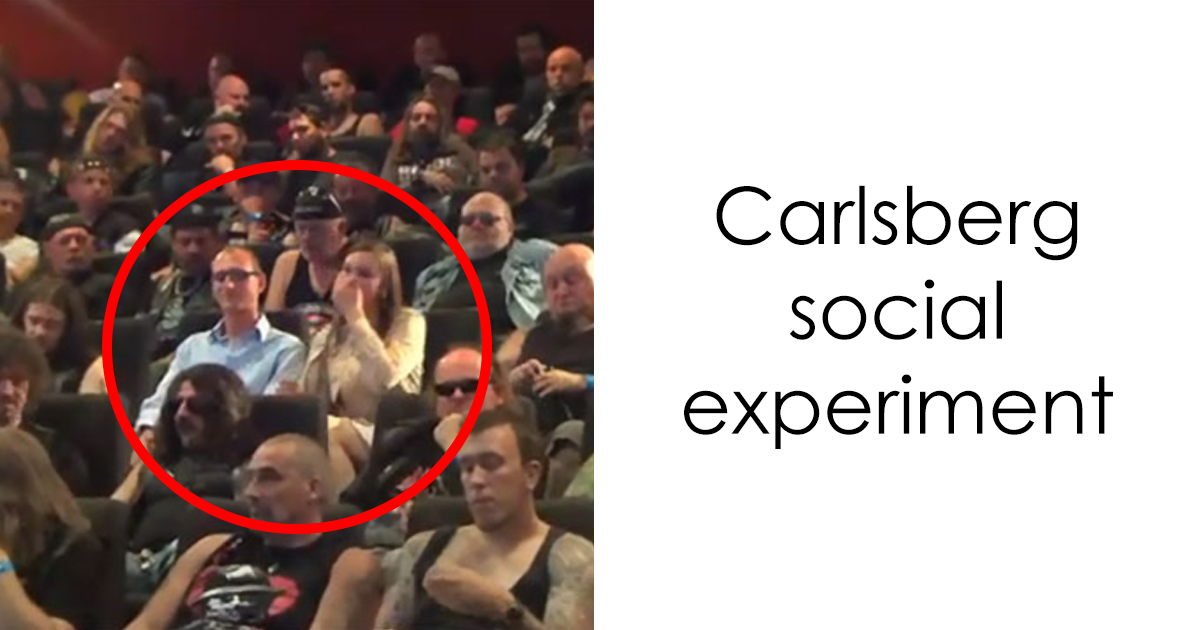
    Carlsberg Social Experiment

    Carlsberg Social Experiment

    In this social experiment by the Danish brewery Carlsberg, the subjects, unsuspecting couples out to watch a movie, walk into a crowded cinema. There are only 2 seats remaining, right in the middle, with each of the rest taken by a rather tough-looking and tattooed male biker.

    As the informal experiment (which was actually intended to be just an advertisement) unfolds, not all of the couples end up taking a seat, and upon seeing the bikers decide to leave immediately. Some couples do choose to take their seats however, and are rewarded with cheers from the crowd and a round of free Carlsberg beers. The experiment was a good example of why people shouldn't always judge a book by its cover.

    (Source: Youtube)

    Carlsberg Report

    Caroline Huot
    Community Member
    8 years ago Created by potrace 1.15, written by Peter Selinger 2001-2017

    Yknow... if *I* walked into a cinema and only 2 seats were empty, I would be outta there... regardless of how the rest of the audience looks! Just makes me feel claustrophobic to be completely surrounded by people like that!

    Polleekin
    Community Member
    8 years ago Created by potrace 1.15, written by Peter Selinger 2001-2017

    Me too! This is why I avoid going to movies on opening weekend at all costs

    Load More Replies...
    Stille20
    Community Member
    8 years ago Created by potrace 1.15, written by Peter Selinger 2001-2017

    Why? Do bikers talk during movies? No. We're good.

    HellCat
    Community Member
    8 years ago Created by potrace 1.15, written by Peter Selinger 2001-2017

    I'm probably in minority here, but I would have no issue with this. Apart from the room feeling too crowded, of course. But I like tattooed bikers, it's around these people that I'd feel more safe and more at home, than if the room was filled with blinged chavs. Biased, I know, I am not saying anything is black and white, there's good and bad on both sides. Up the horns!

    SJ_Panda_love
    Community Member
    8 years ago Created by potrace 1.15, written by Peter Selinger 2001-2017

    I wonder which movie in reality can attract such large group of bikers to theatres! Any suggestions Pandas?

    KT Trondsen
    Community Member
    8 years ago Created by potrace 1.15, written by Peter Selinger 2001-2017

    lol people are so judgemental

    Barb Logan
    Community Member
    8 years ago Created by potrace 1.15, written by Peter Selinger 2001-2017

    It irks me when people correct those whose English is their second language. What's worse is seeing English butchered by so many Americans! Makes me wonder if they are still teaching it in school.

    Load More Replies...
    Nicky OldfieldDesciple
    Community Member
    8 years ago Created by potrace 1.15, written by Peter Selinger 2001-2017

    I was brought up in a middle class home and went to a middle class school and intermingled with other children who were just the same. All my parent's friends were all the same as us and people like these bikers were to be avoided as they were dangerous and likely to be a bad influence. That all changed for me when I went on a music course in 2001 and found myself surrounded by bikers hippies new age hippies just people from every walk of life but they all had one thing in common. They were all the kindest most caring friendly down to earth people you could ever meet. They would do anything for you and I learnt that no matter who someone is or what they wore or what kind of lifestyle they were into it's what's inside that counts. Clothes don't always maketh the man. I have always made sure to get to know someone before judging them. Everyone deserves a chance to show how great they are and your reward for giving them that chance is making a new friend. Win Win.

    Amy Force
    Community Member
    8 years ago Created by potrace 1.15, written by Peter Selinger 2001-2017

    lmao I would NEVER take a middle seat regardless, for the sheer fact that *I* am that person that has to get up at *LEAST TWICE* to PEE during the movie!! XD

    luis anaya
    Community Member
    8 years ago Created by potrace 1.15, written by Peter Selinger 2001-2017

    Thanks to both, I learn something everyday... For example: you cannot edit the comments

    Barb Logan
    Community Member
    8 years ago Created by potrace 1.15, written by Peter Selinger 2001-2017

    True!! Most Americans are not bilingual but are quick to criticize those are. English is tough. A large portion of Americans massacre it on a daily basis. I'm amazed at how many do not know the difference between loose and lose; their, there and there're; definitely and defiantly! Also with Twitter and texting, punctuation and spelling is non-existent. I can't take seriously any person who use single letters and numbers instead of spelling the word, with the exception of texting. Spell the word when writing an email or any type of correspondence! Saying " u r " just looks ignorant.

    Load More Replies...
    Joannie Goulet
    Community Member
    8 years ago Created by potrace 1.15, written by Peter Selinger 2001-2017

    I may have leaved but just because I don't want to make 20 people stand up so I can reach my seat.

    The Cappy
    Community Member
    8 years ago Created by potrace 1.15, written by Peter Selinger 2001-2017

    This experiment is only interesting if they also did the exact same thing with rooms full of people with different appearances. I suspect the same thing would have happened if the room was full of elderly males in white lab coats or beautiful women in bikinis. I suspect the same thing might even have happened if the room was simply full with only 2 seats left. I personally don't enjoy packed theaters.

    View more comments
    ADVERTISEMENT
    #6

    Robbers Cave Experiment

    Robbers Cave Experiment

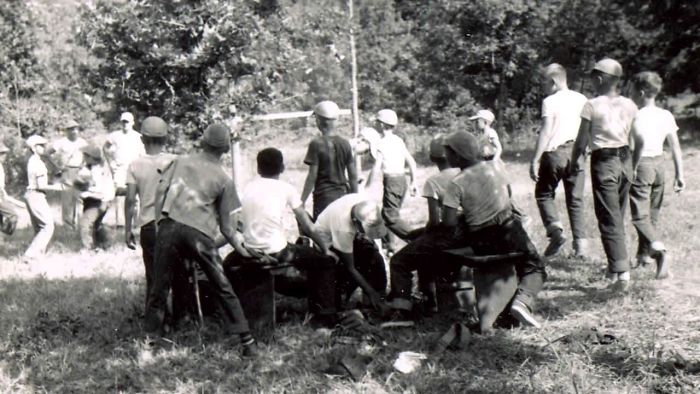
    This experiment tested the Realistic Conflict Theory, and is an example of how negative attitudes and behaviours arise between groups due to competition over limited resources.

    The experimenters took two groups of 11- and 12-year-old boys to what they thought was a summer camp. For the first week, the two groups of boys were separated and did not know about each other. During this time, the boys bonded with the other boys in their group.

    Then, the two groups were introduced to each other and immediately signs of conflict began. The experimenters created competition between the groups and, as predicted, the levels of hostility and aggressive behaviour between the groups increased.

    In the third week, the experimenters created conditions that required both groups to work together solving a common problem. One example was the drinking water problem. The kids were under the impression that their drinking water was cut off possibly due to vandals.  Both groups worked together to solve the problem.

    By the end of the experiment, after the groups had worked together on tasks, the making of friends between groups had increased significantly, demonstrating that working inter-group socialisation is one of the most effective ways to reduce prejudice and discrimination. (Source: Socially Psyched)
    Sherif Report

    CatShatBrix
    Community Member
    8 years ago Created by potrace 1.15, written by Peter Selinger 2001-2017

    So nice to see that they set aside their differences and worked together!

    Alex Newell
    Community Member
    8 years ago Created by potrace 1.15, written by Peter Selinger 2001-2017

    Even if the only difference was "who they knew"

    Load More Replies...
    Steve Bowman
    Community Member
    8 years ago Created by potrace 1.15, written by Peter Selinger 2001-2017

    Why doesn't it work on Big Brother then?

    Pam Kennedy
    Community Member
    8 years ago Created by potrace 1.15, written by Peter Selinger 2001-2017

    Big Brother doesn't work because only one person gets the money in the end. Whereas the "water problem" offered a perceived collective reward. In many reality shows rewards are based on elimination.

    Load More Replies...
    Full Name
    Community Member
    8 years ago Created by potrace 1.15, written by Peter Selinger 2001-2017

    So not surprised. My sports team vs your team, left vs right, religion A vs B. Soon as you work together on something, you see them as being on your team so you like them. It's so frustrating. Humans are illogical, tribal idiots for the most part.

    DryRot DryRot
    Community Member
    1 year ago Created by potrace 1.15, written by Peter Selinger 2001-2017

    Experimenting with children should be punishable by 50 years in prison

    peri
    Community Member
    7 years ago Created by potrace 1.15, written by Peter Selinger 2001-2017

    I'm guessing the beginning of the experiment closely resembled Lord Of The Flies... ;)

    jay pea
    Community Member
    7 years ago Created by potrace 1.15, written by Peter Selinger 2001-2017

    pretty much just proved the idea of uniting against a common enemy.

    Kelly Hartle
    Community Member
    8 years ago Created by potrace 1.15, written by Peter Selinger 2001-2017

    This is why tragedies bring us together as a nation, like Pearl Harbor or 9/11. For a brief time we forgot our petty squabbles and remembered that we were all in this together.

    Mari Louw
    Community Member
    8 years ago Created by potrace 1.15, written by Peter Selinger 2001-2017

    The one good thing about having JZ as our president

    Johanna Zamora
    Community Member
    8 years ago Created by potrace 1.15, written by Peter Selinger 2001-2017

    See, we all hate trump. It’s a fawking lovefest. Gaaah!

    View more comments
    #7

    The Marshmallow Test Experiment

    The Marshmallow Test Experiment

    The Stanford marshmallow experiment was a series of studies on delayed gratification in the late 1960's and early 1970's led by psychologist Walter Mischel.

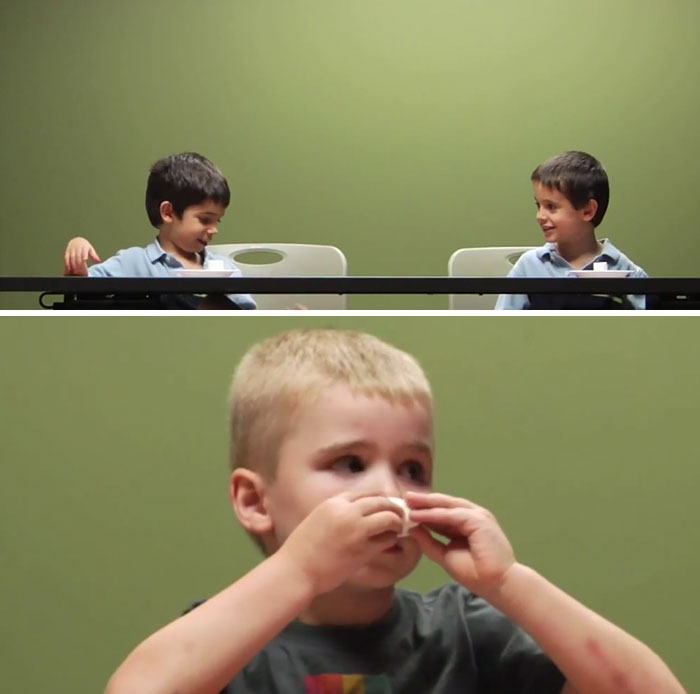
    Using children of ages four to six as subjects, they were led into a room where a treat (usually a marshmallow, but sometimes a cookie or pretzel stick), was placed on a table, by a chair. The children could eat the treat, the researchers said, but if they waited for fifteen minutes without giving in to the temptation, they would be rewarded with a second treat.

    Mischel observed that some would "cover their eyes with their hands or turn around so that they can't see the tray, others start kicking the desk, or tug on their pigtails, or stroke the marshmallow as if it were a tiny stuffed animal," while others would simply eat the marshmallow as soon as the researchers left.

    In over 600 children who took part in the experiment, a minority ate the marshmallow immediately. Of those who attempted to delay, one third deferred gratification long enough to get the second marshmallow. Age was a major determinant of deferred gratification.

    In follow-up studies, the researchers found that children who were able to wait longer for the larger reward of two marshmallows tended to have better life outcomes, as measured by SAT scores, educational attainment, body mass index, and other life measures. (Source: Wikipedia)

    IgniterMedia Report

    Pi...
    Community Member
    8 years ago Created by potrace 1.15, written by Peter Selinger 2001-2017

    Wow! This experiment is commendable because they did follow up studies on these kids as they grew! Quite thorough!

    Disa Baylis
    Community Member
    8 years ago Created by potrace 1.15, written by Peter Selinger 2001-2017

    This study was done again, and new observations were made. In particular, poor children often take the first marshmallow, because their experience tells them the promise of additional treats may not happen. Rather than being a lack of willpower, it’s a calculated choice to take what’s in front of them, especially when promises in their lives are not always kept. http://healthland.time.com/2012/10/12/marshmallow-ology-why-wait-when-the-better-treat-might-never-arrive/

    Вера Деме
    Community Member
    8 years ago Created by potrace 1.15, written by Peter Selinger 2001-2017

    In an unstable society you need to grab the first opportunity given as there may be no second one. I live in a such environment and the lack of possibilities changes your strategy for life on to live now because you never know if there will be tomorrow. I learned to live for the moment. No plans could turn to reality when there are wars, financial crisis, poor economy of the country and few well-paid job opportunities. Even keeping the things you earned with hard work is impossible as crime is so enormous that everything valuable gets stolen.

    Load More Replies...
    Black Dahlia
    Community Member
    8 years ago Created by potrace 1.15, written by Peter Selinger 2001-2017

    The marshmallow would just sit there while I waited for a cookie.

    Barb Logan
    Community Member
    8 years ago Created by potrace 1.15, written by Peter Selinger 2001-2017

    I would not be tempted by a marshmallow, either! I didn't start liking them until I was a teenager and put then in cocoa!

    Load More Replies...
    H4unt3dF0r3sts
    Community Member
    8 years ago Created by potrace 1.15, written by Peter Selinger 2001-2017

    My Mother did this to me when I was 7-8 and I just ate the marshmallow immediately XD

    Hans
    Community Member
    8 years ago Created by potrace 1.15, written by Peter Selinger 2001-2017

    The same has been done with adults with cash. In experiment like "you go 100$ now or 105$ in one year" most people choose the $100, even if told that the interest rate currently is less than 5%. This behaviour is completely unrational. It gets even worth if calculations are included. "100$ now or 2 X 60$ in one year?": people still typically go for the 100$!

    Joshua Smith
    Community Member
    8 years ago Created by potrace 1.15, written by Peter Selinger 2001-2017

    If you win the lottery jackpot you have the choice of the whole thing in payments over 30 years. If you take the lump sum it’s only like 62% of the total. If I win the jackpot in my 50s or 60s I’m more likely to take the lump sum since I may not live to be 80 or 90. However, had I won the jackpot in my 20s, I definitely would have taken the payments. So, depending on someone’s status, it could make more sense to take the $100 now.

    Load More Replies...
    SJ_Panda_love
    Community Member
    8 years ago Created by potrace 1.15, written by Peter Selinger 2001-2017

    As a kid, you can tell me whatever, but there is a cookie or treat put down in front of me, I will eat it immediately. After all even as a kid subconsciously I know, this is not the last one.

    CatShatBrix
    Community Member
    8 years ago Created by potrace 1.15, written by Peter Selinger 2001-2017

    They showed this on Brain Games! (Sorry) most kids gave in and settled for their one treat, while the patient ones were rewarded.

    Heather Whited
    Community Member
    8 years ago Created by potrace 1.15, written by Peter Selinger 2001-2017

    My child would have eaten the marshmallow before they could even finish the sentence :p

    Chelle Jones
    Community Member
    7 years ago Created by potrace 1.15, written by Peter Selinger 2001-2017

    Did anyone else notice the huge bruise down that little boys arm. It's rather disturbing but I am not sure why. Just a feeling I guess.

    View more comments
    #8

    The Milgram Experiment

    The Milgram Experiment

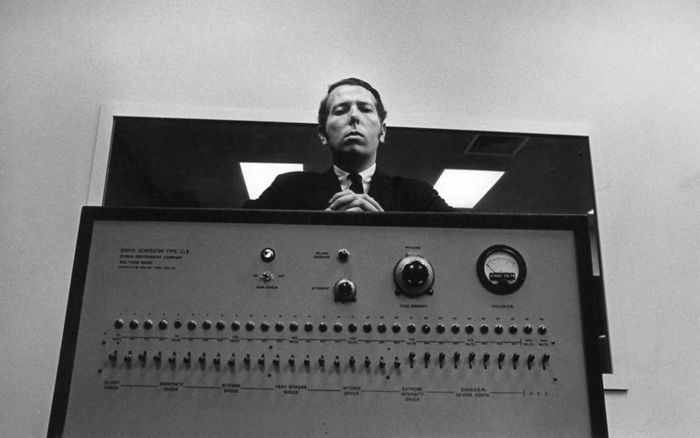
    This experiment was conducted in 1961 by psychologist Stanley Milgram, and was designed to measure the lengths that people would go to in obedience to authority figures, even if the acts they were instructed to carry out were clearly harmful to others.

    Subjects were told to play the role of teacher and administer electric shocks to the learner, an actor who was out of sight and ostensibly in another room, every time they answered a question incorrectly. In reality, no one was actually being shocked. The learner, purposely answering questions wrongly, was made to sound like they were in a great deal of pain as the intensity of the shocks increased with each incorrect answer. Despite these protests many subjects continued to administer shocks when an authority figure, the 'experimenter,' urged them to. Eventually, 65% of subjects administered what would be lethal electric shocks, the highest level of 450 volts.

    The results showed that ordinary people are likely to follow orders given by an authority figure, even to the extent of killing an innocent human being. Obedience to authority is simply ingrained in us all, from the way we are brought up as children.

    (Source: Simply Psychology)

    Stanley Milgram Report

    Hans
    Community Member
    8 years ago Created by potrace 1.15, written by Peter Selinger 2001-2017

    Also totally unethical, this experiment still has to be considered a shock. It also gives some hints why for example in the Nazi dictatorship so many ordinary people became delinquents, doing unimaginable gruesome things.

    Acacia Kelly
    Community Member
    8 years ago Created by potrace 1.15, written by Peter Selinger 2001-2017

    It wasn't unethical, no one was actually shocked. That was the point. An actor screamed in agony, but wasn't actually being hurt. The point was to see if the subjects would continue to "shock" the other, because they were being ordered too.

    Load More Replies...
    Lydia Curio
    Community Member
    8 years ago Created by potrace 1.15, written by Peter Selinger 2001-2017

    This is the perfect example of why authoritarian parenting is so harmful to children. and why it creates rebellious teenagers who endanger themselves, just to get away from controlling parents, or parents who use physical abuse in order to maintain control. Authoritarian parenting needs to be left where it belongs, the 1800's. it's archaic and simply does not make healthy adults, period.

    Petra Christovová
    Community Member
    8 years ago Created by potrace 1.15, written by Peter Selinger 2001-2017

    This is the best one from all of them. Shows how is it possible that there were so many digraceful times in human history like nacism, witch hunts, etc. Sad truth is that most people have that "sheep" mentality, just do what they are told and opinion of the others is the most important for them, no matter how bad the ideology or deeds are. Just a minority decides with their brain and conscience ... I can confirm this from my own various life experiences.

    Simon Clark
    Community Member
    8 years ago Created by potrace 1.15, written by Peter Selinger 2001-2017

    After an investigation of the test, Australian psychologist Gina Perry re-evaluated Milgram's data and stated that Milgram had manipulated his results. "Overall, over half disobeyed," Perry stated. She found, contrary to the popular version, that there is a "troubling mismatch between (published) descriptions of the experiment and evidence of what actually transpired".

    Black Dahlia
    Community Member
    8 years ago Created by potrace 1.15, written by Peter Selinger 2001-2017

    "Obedience to authority is simply ingrained in us all..." Not in me, not in others I've met, so not all of us.

    MD Martinez
    Community Member
    8 years ago Created by potrace 1.15, written by Peter Selinger 2001-2017

    The reason it is unethical is because of the long term psychological impact it had on participants. People have a hard time realizing how easily where influenced to continue even though they thought they were causing harm. It can cause deep psychic pain to realize they were no better than people influenced by the Nazi's.

    Joshua Smith
    Community Member
    8 years ago Created by potrace 1.15, written by Peter Selinger 2001-2017

    It’s alarming that 65% of subjects administered a lethal shock. Yikes!

    makki
    Community Member
    8 years ago Created by potrace 1.15, written by Peter Selinger 2001-2017

    it makes sense because if there was an authority figure pushing them to do this these people dont want to get into trouble and possibly switch places with the person being shocked.

    Bored Fox
    Community Member
    8 years ago Created by potrace 1.15, written by Peter Selinger 2001-2017

    If people are interested to learn how this experiment worked later I recommend watching a French documentary Le Jeu de la Mort where the Milgram experiment was disguised as a game show: https://en.wikipedia.org/wiki/Le_Jeu_de_la_Mort

    DryRot DryRot
    Community Member
    1 year ago Created by potrace 1.15, written by Peter Selinger 2001-2017

    Hmmmm..... What worldwide social experiment can I think of in the past 5 years that proved mindless people will do anything some "authority" tells them to do? It's right on the tip of my tongue... Also, volts don't kill people, amps do.

    View more comments
    ADVERTISEMENT
    #9

    Car Crash Experiment

    Car Crash Experiment

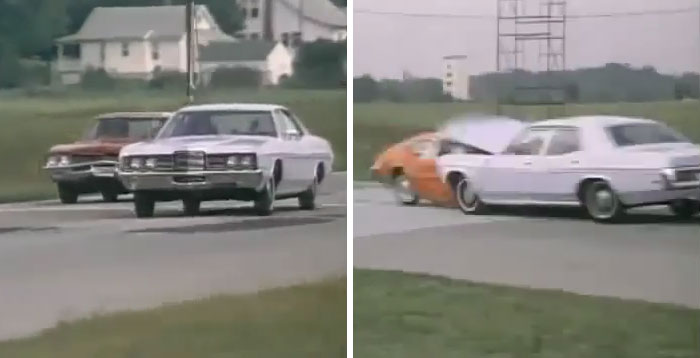
    The 1974 Car Crash Experiment by Loftus and Palmer aimed to prove that wording questions a certain way could influence a participant’s recall, by twisting their memories of a specific event.

    They asked people to estimate the speed of motor vehicles using different forms of questions. Estimating vehicle speed is something people are generally poor at and so they may be more open to suggestion.

    The participants watched slides of a car accident and were asked to describe what had happened as if they were eyewitnesses to the scene. The participants were put into two groups and each group was asked a question about speed using different verbs to describe the impact, for example, “how fast was the car going when it smashed/collided/bumped/hit/contacted the other car?”

    The results show that the verb conveyed an impression of the speed the car was travelling and this altered the participants' perceptions. Participants who were asked the “smashed” question thought the cars were going faster than those who were asked the “hit” question. The participants in the “smashed” condition reported the highest speed estimate (40.8 mph), followed by “collided” (39.3 mph), “bumped” (38.1 mph), “hit” (34 mph), and “contacted” (31.8 mph) in descending order. In other words, eyewitness testimony might be biased by the way questions are asked after a crime is committed.

    (Source: SimplyPsychology)

    Loftus and Palmer , Natalie Cooper Report

    EvieNiffler
    Community Member
    8 years ago Created by potrace 1.15, written by Peter Selinger 2001-2017

    This is why eyewitness testimonies, despite having a large effect on court proceedings, are actually a very unreliable source of evidence. The suggestibility of the human mind is incredible :O

    Echo
    Community Member
    8 years ago Created by potrace 1.15, written by Peter Selinger 2001-2017

    Obviously the answer is 42. Duh. That's the answer. It's always answer. Because the answer to the universe is 42. Use any verb you like.

    leunaichs 123
    Community Member
    2 years ago Created by potrace 1.15, written by Peter Selinger 2001-2017

    the answer to the question of life the universe, and everything

    Load More Replies...
    ιρένε γλοβερ
    Community Member
    8 years ago Created by potrace 1.15, written by Peter Selinger 2001-2017

    if you let witnesses talk to each other this also messes up what they saw.

    DryRot DryRot
    Community Member
    1 year ago Created by potrace 1.15, written by Peter Selinger 2001-2017

    Pollsters and pundits use this mind control all the time to get people to say what they want.

    Hassan Said
    Community Member
    7 years ago Created by potrace 1.15, written by Peter Selinger 2001-2017

    In an episode of the well-known British sitcom 'Yes, Prime minister", Sir Humphrey explains to Private Secretary Bernard that referendum results could be manipulated by the way the questions are put.

    Karen Stauffer
    Community Member
    8 years ago Created by potrace 1.15, written by Peter Selinger 2001-2017

    This strategy is used in political articles to influence people to agree strongly with what may be an event they were ambivalent about. Use charged words and suddenly they're outraged about "abuse", but mention" impropriety" in a different article with the same facts, and they aren't so upset.

    John Montgomery
    Community Member
    8 years ago Created by potrace 1.15, written by Peter Selinger 2001-2017

    I think this is the same reason some people fall for the Mandela effect.

    Hans
    Community Member
    8 years ago Created by potrace 1.15, written by Peter Selinger 2001-2017

    In the literature on questionnaires, you find tons of these effects. One simple yet impactfull would also be the anchoring effect. Ask two goups e.g. how much the drink. Possible answers for first group: 0.1l of beer a day, 0.2l of beer a day, 0.5l of beer a day, 1.0l of beer a day, 1.5l and more of beer a day. Second group: 0.1l of beer a day, 0.5l of beer a day, 1.0l of beer a day, 1.2l of beer a day, 1.5l and more of beer a day. The second group will report to drink more, although choosing the next fitting answer should yield similar numbers.

    #10

    False Consensus Experiment

    False Consensus Experiment

    In this experiment, researchers asked college students whether they would be willing to walk around campus for 30 minutes wearing a large sandwich board bearing the message: "Eat at Joe's."

    The researchers then asked the students to estimate how many other people would agree to wear the advertisement. They found that those who agreed to carry the sign believed that the majority of people would also agree to carry the sign. Those who refused felt that the majority of people would refuse as well. So whether they agreed to promote "Joe's" or not, participants were strong in their belief that most others would have made the same choice.

    The results demonstrate what is known in psychology as the false consensus effect. No matter what our beliefs, options, or behaviours, we tend to believe that the majority of other people agree with us and act the same way we do.

    (Source: Persuasive Litigator)

    Lee Ross Report

    Hans
    Community Member
    8 years ago Created by potrace 1.15, written by Peter Selinger 2001-2017

    Now tell this to all these people who claim that their radical political views, in particular their racism is shared by a "silent majority". There is no such!

    Lyone Fein
    Community Member
    7 years ago Created by potrace 1.15, written by Peter Selinger 2001-2017

    Well, Hans, this may also apply to nonracist folks who claim that the majority is non racist.

    Load More Replies...
    Nathan Richards
    Community Member
    8 years ago Created by potrace 1.15, written by Peter Selinger 2001-2017

    There has got to be more to this though. I try to hold realistic estimates of my personal views. Like I wouldn't mind wearing the advert but I suspect that depending on what it says, looks like, the area it is being worn and the type of people that live there and are typical to be asked could all change to the outcome making it difficult to say how this would go. I can imagine some places that people would do it just for fun because they like standing out and some places where people are too shy and the overwhelming answer would be no within 10 miles of where I live. Knowing that I can't make the assumption people are behaving the same as me but always assume to ask and confirm and behave as an individual.

    Chelle Jones
    Community Member
    7 years ago Created by potrace 1.15, written by Peter Selinger 2001-2017

    This is exactly the mentality being used by our media. They can not accept or believe that so many Americans would want Donald Trump for our POTUS. They think we all must agree with them and their bias talking points. Facts are he was elected because so many don't agree with those "talking points". They are called the silent majority because those with loud voices have a different view & bias their news daily. We need voices for those who disagree with all the bias talking points that are the only thing the whole country gets to hear. It's disgraceful please refer to Hilter's controlled media & you will see our IC community has them well trained.

    Kerri Russ
    Community Member
    8 years ago Created by potrace 1.15, written by Peter Selinger 2001-2017

    I'm just the opposite, given contemporary political and religious culture in the USA. I know the majority right now do not feel as I do or things would change. I know by reading all kinds of viewpoints online that there is a huge number of feel like I do, but not a majority.

    #11

    The Invisible Gorilla Experiment

    The Invisible Gorilla Experiment

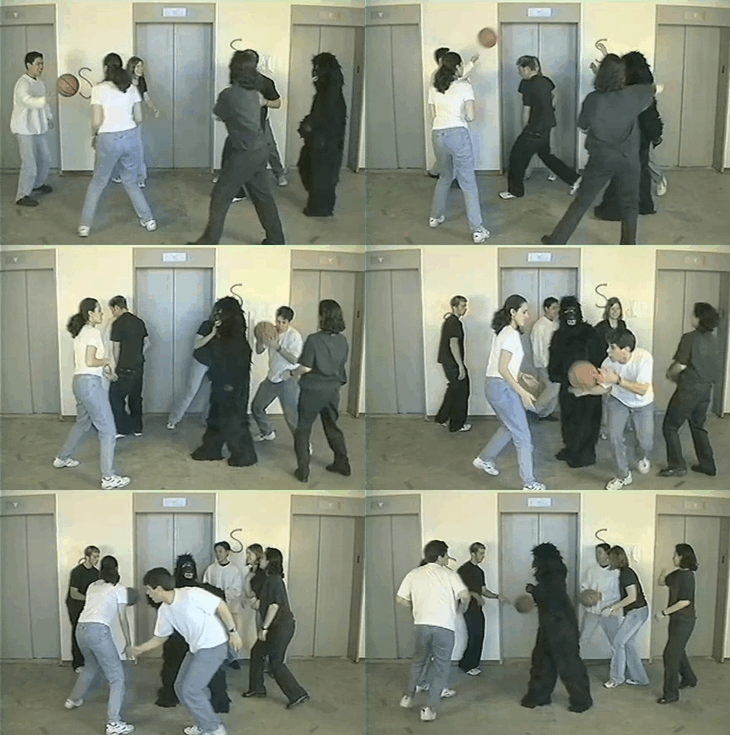
    Imagine you are asked to watch a short video in which six people-three in white shirts and three in black shirts-pass basketballs around. While you watch, you must keep a silent count of the number of passes made by the people in white shirts. At some point, a gorilla strolls into the middle of the action, faces the camera and thumps its chest, and then leaves, spending nine seconds on screen. Would you see the gorilla?

    Almost everyone has the intuition that the answer is "yes, of course I would." How could something so obvious go completely unnoticed? But during this experiment at Harvard University several years ago, it was found that half of the people who watched the video and counted the passes missed the gorilla. It was as though the gorilla was invisible.

    This experiment reveals two things: that we are missing a lot of what goes on around us, and that we have no idea that we are missing so much.

    (Source: The Invisible Gorilla - You can watch the video here)

    Daniel Simons and Christopher Chabris , Daniel J. Simons Report

    Daria B
    Community Member
    8 years ago Created by potrace 1.15, written by Peter Selinger 2001-2017

    I'd say this experiment shows we are missing things around us when we are focused on something particular...

    J Browne
    Community Member
    8 years ago Created by potrace 1.15, written by Peter Selinger 2001-2017

    I agree. I think it is about focus. I know I am very aware of what is happening around me at all times, however when focused on something like a screen and doing a task I probably wouldn't focus on what was happening around them.

    Load More Replies...
    Adogcalledkitty
    Community Member
    8 years ago Created by potrace 1.15, written by Peter Selinger 2001-2017

    Except that a gorilla didn't walk in there. It was a human, just as tall as the others and the costume couldn't cover the human shape. An actual gorilla would have been more noticeable.

    Claire Kidd
    Community Member
    8 years ago Created by potrace 1.15, written by Peter Selinger 2001-2017

    I've seen this video during Psychology and I didn't spot the Gorilla the first time either. How stupid that people are bitching that it's not a real Gorilla... can I just say, uh duh? Seriously, how did you think they were going to throw a real, dangerous Gorilla in there? If you're focusing on one thing you're not going to notice others, that's a fact!

    Barb Logan
    Community Member
    8 years ago Created by potrace 1.15, written by Peter Selinger 2001-2017

    I haven't seen those comments yet... I can use a good laugh!

    Load More Replies...
    EvieNiffler
    Community Member
    8 years ago Created by potrace 1.15, written by Peter Selinger 2001-2017

    The TV show Perception did an incredible episode on perceptual blindness :)

    Community Member
    8 years ago Created by potrace 1.15, written by Peter Selinger 2001-2017

    A couple years ago I watched the video without knowing it was an experiment. I completely missed the gorilla. When I rewatched the video, I couldn't believe I didn't notice something so obvious and out of place

    lala la
    Community Member
    8 years ago Created by potrace 1.15, written by Peter Selinger 2001-2017

    I was so mindfucked when I first saw this, haha

    Melissa Champine
    Community Member
    8 years ago Created by potrace 1.15, written by Peter Selinger 2001-2017

    Actually it was hard to try to focus on when white shirts got the ball that that u notice something isn't right but have to keep eye on the ball. I got the answer right but I also knew the gorilla was gonna be there so I don't count

    Polfsky Pol
    Community Member
    8 years ago Created by potrace 1.15, written by Peter Selinger 2001-2017

    The experiment proves that our brain is actually capable of focusing on one task at a time.

    Ingrid Tsai
    Community Member
    8 years ago Created by potrace 1.15, written by Peter Selinger 2001-2017

    I always saw the gorilla when I tried this (a few years ago I think) but I counted wrong!

    Nadine Ducca
    Community Member
    8 years ago Created by potrace 1.15, written by Peter Selinger 2001-2017

    I actually got to watch this video without knowing what would happen and yes, I totally missed the gorilla.

    View more comments
    #12

    The "Monster" Study

    The "Monster" Study

    This experiment was conducted by Dr. Wendell Johnson, a speech pathologist who wanted to show that the prevailing theories about the causes of stuttering were wrong. During the 1930s it was thought that stuttering had an organic or genetic cause. This meant you were born a stutterer (or not) and little could be done.

    Dr. Johnson believed that the labelling of children as stutterers could actually make them worse, and in some cases cause ‘normal’ children to start stuttering. To prove his point, he suggested an experiment which has since become known as the ‘Monster Study’.

    Twenty-two young orphans were recruited to participate in the experiment. They were then divided into two groups. The first were labelled ‘normal speakers’ and the second ‘stutterers’. Crucially only half of the group labelled stutterers did actually show signs of stuttering.

    During the course of the experiment, the normal speakers were given positive encouragement but it was the treatment of the other group that has made the experiment notorious. The group labelled stutterers were made more self-conscious about stuttering. They were lectured about stuttering and told to take extra care not to repeat words. Other teachers and staff at the orphanage were even unknowingly recruited to reinforce the label as the researchers told them the whole group were stutterers.

    Of the six ‘normal’ children in the stuttering group, five began stuttering after the negative therapy. Of the five children who had stuttered before their ‘therapy’, three became worse. In comparison, only one of the children in the group labelled ‘normal’ had greater speech problems after the study.

    Realising the power of their experiment, the researchers tried to undo the damage they had done, but to no avail. It seemed the effects of labelling the children stutterers was permanent. This is something the orphans labelled stutterers have had to cope with for the rest of their lives.

    Clearly this research raises a number of major ethical concerns, despite the good intentions of the researcher. In 2001 the University of Iowa, where the study was conducted, issued a formal apology and called the experiment both regrettable and indefensible. (Source: PsyBlog)

    Wendell Johnson , Counselling Report

    Kiahna
    Community Member
    8 years ago Created by potrace 1.15, written by Peter Selinger 2001-2017

    They permanently disabled some poor children. If only they had known the effects, then this could've been avoided. So sad, the lengths people will go to do an experiment.

    KK
    Community Member
    8 years ago Created by potrace 1.15, written by Peter Selinger 2001-2017

    The 1920s & and 1930s had a lot of unethical experiments.

    Load More Replies...
    Pi...
    Community Member
    8 years ago Created by potrace 1.15, written by Peter Selinger 2001-2017

    Not that I condone this experiment, but great learning often comes from great injustice. History is the biggest example.

    Royal_Emperor
    Community Member
    8 years ago Created by potrace 1.15, written by Peter Selinger 2001-2017

    All of us taking the moral high ground and saying it was unethical, but is there any other way to actually solve/understand the problem ?

    Kip
    Community Member
    8 years ago Created by potrace 1.15, written by Peter Selinger 2001-2017

    Back in those days, no. But now we have molecular techniques which are able to find "stutter" genes if they exist. Who knows what kind of cruel experiments nowadays can be avoided if we wait a 100 years?

    Load More Replies...
    Sierra Hall
    Community Member
    8 years ago Created by potrace 1.15, written by Peter Selinger 2001-2017

    How sad.... experimenting on orphans. I think their lives would have been hard enough without negatively impacting them.

    DryRot DryRot
    Community Member
    1 year ago Created by potrace 1.15, written by Peter Selinger 2001-2017

    They were property of the state. The all-knowing, benevolent state. The same one that runs the government schools. :-)

    Load More Replies...
    Caroline Espenschied
    Community Member
    8 years ago Created by potrace 1.15, written by Peter Selinger 2001-2017

    So you become what people say you are ? Hmmm. We can still learn from that nowadays...

    DryRot DryRot
    Community Member
    1 year ago (edited) Created by potrace 1.15, written by Peter Selinger 2001-2017

    And how much prison time did Dr. Wendell Johnson and his accomplices get? Oh. None. So, what kind of monetary punitive damages did he / they have to pay. Also none!?

    Jon Chevalier
    Community Member
    7 years ago Created by potrace 1.15, written by Peter Selinger 2001-2017

    without the experiment they would never have know the results. if it was a small group that was affected, now it is known that OUR behaviour to others should change..

    Chelle Jones
    Community Member
    7 years ago Created by potrace 1.15, written by Peter Selinger 2001-2017

    Just because you were an orphan doesn't give anyone the right to experiment on you. It's shameful what people feel they are entitled to do. These children already had some very dreary days ahead as they tried to survive in a system that didn't care about them & deal with the loss of parents. This was shameful in many ways.

    Celestia
    Community Member
    7 years ago Created by potrace 1.15, written by Peter Selinger 2001-2017

    Does anyone know that some of these experiments were banned from Psychology and are not real??

    Beverly Palmacci
    Community Member
    8 years ago Created by potrace 1.15, written by Peter Selinger 2001-2017

    Why couldn't the experiment been designed around trying to create a positive effect instead of a negative one? Notice they used orphans as they would, no doubt, had been sued by parents of the now stuttering children. This is a really sad story.

    View more comments
    #13

    Hawthorne Effect Experiment

    Hawthorne Effect Experiment

    The Hawthorne Effect came from a 1955 study conducted by Henry Landsberger.

    The original purpose of the experiments was to study the effects of physical conditions on productivity. Two groups of workers in the Hawthorne factory were used as guinea pigs. One day the lighting in the work area for one group was improved dramatically while the other group's lighting remained unchanged. The researchers were surprised to find that the productivity of the more highly illuminated workers increased much more than that of the control group.

    The employees' working conditions were changed in other ways too (their working hours, rest breaks and so on), and in all cases their productivity improved when a change was made. Indeed, their productivity even improved when the lights were dimmed again. By the time everything had been returned to the way it was before the changes had begun, productivity at the factory was at its highest level. Absenteeism had plummeted.

    The experimenters concluded that it was not the changes in physical conditions that were affecting the workers' productivity. Rather, it was the fact that someone was actually concerned about their workplace and was observing them. The workers felt important because they were pleased to be singled out, and increased productivity as a result. This effect is a simple premise that human subjects in an experiment change their behavior simply because they are being studied.

    (Source: The Economist)

    Henry A. Landsberger Report

    Hans
    Community Member
    8 years ago Created by potrace 1.15, written by Peter Selinger 2001-2017

    Still today so many bosses do not believe in this, seeing humans as "human ressources" and not as, well, humans, who do best when motivated and convinced of what they do. Alas.

    eyo too
    Community Member
    8 years ago Created by potrace 1.15, written by Peter Selinger 2001-2017

    Hans: While I agree with what you said as a general issue society and employers have, that's not what this experiment is concluding. What the result is showing, is that when someone thinks they are being studied, they react differently. This impacts how one should view the results of a study if you know the subjects were aware of the actions. For example, a class of students that knows they are being evaluated may be on better behavior than one that doesn't.

    Load More Replies...
    DryRot DryRot
    Community Member
    1 year ago Created by potrace 1.15, written by Peter Selinger 2001-2017

    Changing from "personnel" to "Human Resources" was awful. Now the transition is being made from Human Resources to Human Capital. You know - the stuff you spend.

    Audrey Stapleford
    Community Member
    7 years ago Created by potrace 1.15, written by Peter Selinger 2001-2017

    I was much more dedicated to and workded harder for a boss that treated me as a human being and not just an employee.

    Glynis Lailann
    Community Member
    7 years ago Created by potrace 1.15, written by Peter Selinger 2001-2017

    At our company, every now and then we get told that Ghost Shoppers will be testing us and suddenly attitudes towards customers improve.

    Cyndi Moring
    Community Member
    7 years ago Created by potrace 1.15, written by Peter Selinger 2001-2017

    we are all emotional beings. Intellect is fine but emotions drive us

    Karen Stauffer
    Community Member
    8 years ago Created by potrace 1.15, written by Peter Selinger 2001-2017

    They also had HOPE of better treatment, and something DIFFERENT to vary normally dull factory work.

    Full Name
    Community Member
    8 years ago Created by potrace 1.15, written by Peter Selinger 2001-2017

    I'm obsessed with the Hawthorne effect. One of my all time faves.

    #14

    Halo Effect Experiment

    Halo Effect Experiment

    In this experiment conducted in 1920, educational psychologist Edward Thorndike asked two commanding officers to evaluate their soldiers in terms of physical qualities (neatness, voice, physique, bearing, and energy), intellect, leadership skills, and personal qualities (including dependability, loyalty, responsibility, selflessness, and cooperation). His goal was to see how a persons judgement of one characteristic affected their subsequent judgement of other characteristics.

    Thorndike discovered that when commanding officers gained a good impression of one characteristic from a soldier, those good feelings tended to affect perceptions of other qualities. Conversely, if a soldier had a particular "negative" attribute picked up by the commanding officer, it would correlate in the rest of that soldier's results.

    The 'halo effect' refers to the positive impressions that people get about one particular characteristic affecting perceptions of other qualities. For example if you find somebody to be physically attractive, it can lead to skewed favourable perceptions of their other qualities such as generosity, friendliness, intelligence etc. However the reverse is also true. If you get negative impression of one characteristic it can lead you to view other personal qualities in a less favourable light. First impressions count! (Source: Wikipedia)

    wiki , 699pic Report

    eyo too
    Community Member
    8 years ago Created by potrace 1.15, written by Peter Selinger 2001-2017

    Sometimes I'm amazed how simplistic humans are when we think we are complex. So many of your issues are caused by our need to simplify our world by grouping things -- whether stereotypes, or in this case, by personality traits. In many ways, these cognitive strategies help us get through life, but sometimes it can create some serious injustice for individuals.

    Full Name
    Community Member
    8 years ago Created by potrace 1.15, written by Peter Selinger 2001-2017

    Agreed. I think humans are shockingly intellectually lazy. They form a gut reaction, then spend the rest of their time justifying that original feeling.

    Load More Replies...
    Lynne Darroch
    Community Member
    8 years ago Created by potrace 1.15, written by Peter Selinger 2001-2017

    This is very evident with certain teachers towards students. They decide if they are angels or devils, and treat them as such on all matters.

    Claire Kidd
    Community Member
    8 years ago Created by potrace 1.15, written by Peter Selinger 2001-2017

    I guess we can see which one happened to you.

    Load More Replies...
    Caroline Espenschied
    Community Member
    8 years ago Created by potrace 1.15, written by Peter Selinger 2001-2017

    And this is why ugly persons get paid less than beautiful persons : if you're attractive, you're perceived as more competent, you get promoted, and in the end, you get more money.

    Pi...
    Community Member
    8 years ago Created by potrace 1.15, written by Peter Selinger 2001-2017

    Agreed... but easier said than done. We're conditioned and partly genetically designed to be attracted to something we perceive as 'beautiful' or 'handsome'.... to a large extent, the battle is also nurture Vs. nature... This is an interesting debate at most parties (said no one ever, but I hope they would. I'd love to go to a thought party!)

    Carol Storm
    Community Member
    8 years ago Created by potrace 1.15, written by Peter Selinger 2001-2017

    If only more of us understood this. I think good looking people are judged as being better than others while those not so good looking are judged unfairly as being inferior in all aspects of life.

    #15

    Kitty Genovese Case

    Kitty Genovese Case


    The murder case of Kitty Genovese was never intended to be a psychological experiment, however it ended up becoming the catalyst for discoveries about what is now known as the Bystander Effect.

    The bystander effect occurs when the presence of others discourages an individual from intervening in an emergency situation. Social psychologists Bibb Latané and John Darley popularized the concept following the infamous 1964 murder in New York City. Genovese was stabbed to death outside her apartment while bystanders who observed the crime did not step in to assist or call the police. Latané and Darley attributed the bystander effect to the perceived diffusion of responsibility (onlookers are more likely to intervene if there are few or no other witnesses) and social influence (individuals in a group monitor the behavior of those around them to determine how to act). In Genovese's case, each onlooker concluded from their neighbors' inaction that their own personal help was not needed.

    (Source: Psychology Today)

    wiki Report

    KK
    Community Member
    8 years ago Created by potrace 1.15, written by Peter Selinger 2001-2017

    This is a famous case. The bystander effect exists, but the Kitty Genovese case is a bit more complex. Neighbours were watching from the appartment on the other side, but it was early in the morning and it might've been just two lovers fighting. 2 people in the appartment called the police, and one neighbour woman held Kitty in her arms as she was dying. At that time, not everyone had a phone in their house and this was also before the 911 was installed.

    Caroline Espenschied
    Community Member
    8 years ago Created by potrace 1.15, written by Peter Selinger 2001-2017

    Isn't it BECAUSE of this particular case that the 911 was installed ? i think I heard something like that ? Also, the bystander-effect must go something like "Oh f**k, there really is nobody else who can deal with this s**t, so I guess I'll have to do it myself !"...

    Load More Replies...
    SJ_Panda_love
    Community Member
    8 years ago Created by potrace 1.15, written by Peter Selinger 2001-2017

    Now days we see this all the time, people start taking pics or making videos instead of helping OP. But on the other side I have seen hundreds of such videos where people are putting there own life in danger to help others. I am strong believer of that humanity always out scores bad people, that's why world is still alive and breathing, else it would be a toxic nuclear waste already.

    Kip
    Community Member
    8 years ago Created by potrace 1.15, written by Peter Selinger 2001-2017

    Let's hope it is not the false consensus effect

    Load More Replies...
    BobbyMcD
    Community Member
    8 years ago Created by potrace 1.15, written by Peter Selinger 2001-2017

    This is the one example so far that isn't entirely true. As another person explained below, some people did respond.

    linda billet
    Community Member
    7 years ago Created by potrace 1.15, written by Peter Selinger 2001-2017

    I saw her brother in a documentary about this 50 years after the incident. Her neighbors DID come to her aid as soon as the event was known. A Time article misrepresented facts to create the apathetic bystander story because it was more interesting than the truth. http://www.pbs.org/independentlens/films/witness/

    Beverly Palmacci
    Community Member
    8 years ago Created by potrace 1.15, written by Peter Selinger 2001-2017

    As this has been debunked I'm surprised it was included.

    lala la
    Community Member
    8 years ago Created by potrace 1.15, written by Peter Selinger 2001-2017

    Doesn't really fit in this list. Also it is controversial, which makes sense considering it's not really an experiment so no way to control for extraneous variables.

    Alex Newell
    Community Member
    8 years ago Created by potrace 1.15, written by Peter Selinger 2001-2017

    Diffusion of responsibility! That's the term I had on the tip of my tongue! It relates to the "Smoke-Filled Room" case as well.

    View more comments
    See Also on Bored Panda
    #16

    Bobo Doll Experiment

    Bobo Doll Experiment

    The Bobo Doll Experiment was performed in 1961 by Albert Bandura, to test his belief that all human behaviour was learned, through social imitation and copying, rather than inherited through genetic factors.

    To try and prove that children would copy an adult role model's behaviour, he separated participants into groups. One was exposed to an adult showing aggressive behaviour towards a Bobo doll; another was exposed to a passive adult playing with the Bobo doll; and the third formed a control group with no exposure to an adult at all.

    Children were sent to a room individually with various toys including the Bobo doll. They were told not to play with the toys as they were reserved for other children. This was designed to increase the levels of frustration. What the researcher found was that children exposed to the aggressive model were more likely to exhibit aggressive behaviour towards the Bobo doll themselves, while the other groups showed little aggressive behaviour. For those children exposed to the aggressive model, it was boys that showed a far higher tendency to mimic the physically aggressive behaviour of the adult.

    (Source: Explorable)

    Albert Bandura Report

    Pi...
    Community Member
    8 years ago Created by potrace 1.15, written by Peter Selinger 2001-2017

    Indoctrination always starts young.

    Chelle Jones
    Community Member
    7 years ago Created by potrace 1.15, written by Peter Selinger 2001-2017

    I would like to think this shows us the empathy & compassion displayed at home will go along way in their future development.

    Load More Replies...
    Full Name
    Community Member
    8 years ago Created by potrace 1.15, written by Peter Selinger 2001-2017

    I wrote a scathing condemnation of this experiment, but then retracted it after finding out the thing that irritated me was actually just awful BP writing. "to test his belief that ALL human behaviour was learned". I figured this experiment couldn't be that stupid so I did a bit of searching and that's not it at all. I wasn't trying to prove that behaviour is 100% learned, so that's a relief. Too bad BP has such brutally misleading writing, quite frequently.

    Вера Деме
    Community Member
    8 years ago Created by potrace 1.15, written by Peter Selinger 2001-2017

    By seeing aggressive or any other negative behaviour the child takes it as socially acceptable. It is like when everyone around it smokes, takes drugs, swears, it becomes a norm and it becomes ok for them too. The young human being gets influenced easily by what he sees - at home or in the society. I think it is a way to survive by repeating others' behaviour without thinking or analyzing it as an adult and intelligent person would do. An experienced person would question such a behaviour especially if he or she has seen both positive and negative example.

    DryRot DryRot
    Community Member
    1 year ago Created by potrace 1.15, written by Peter Selinger 2001-2017

    I'll take "Things anyone could have told you" for $200, Alex

    Fred Burrows
    Community Member
    7 years ago Created by potrace 1.15, written by Peter Selinger 2001-2017

    Witness my nephews after they've been watching wrestling .

    Beverly Palmacci
    Community Member
    8 years ago Created by potrace 1.15, written by Peter Selinger 2001-2017

    This is more believable than the explanation of others that were not accurate. Little sheep grow up to be big sheep and men harbor much more aggression than do women.

    Claire Kidd
    Community Member
    8 years ago Created by potrace 1.15, written by Peter Selinger 2001-2017

    This works with children who are physically disciplined. You learn a LOT from your parents... like how it's OK to hit someone when you deem it necessary.

    Johanna Zamora
    Community Member
    8 years ago Created by potrace 1.15, written by Peter Selinger 2001-2017

    And now we have ageneration of ppl playing violent games. Ironic

    Lyone Fein
    Community Member
    7 years ago Created by potrace 1.15, written by Peter Selinger 2001-2017

    Playing fast and loose here by randomly saying "children" sometimes and "boys" at other times.

    View more comments
    #17

    The Asch Conformity Experiment

    The Asch Conformity Experiment

    The Asch Experiment is another famous example of social conformity in group situations. One subject was placed in a room with other people, actors who had been previously instructed how to respond. The person conducting the experiment held up an image with three numbered lines and asked each person in the room to identify the longest line.

    The actors responded first, purposely choosing the incorrect line, making a blatant and obvious error.  The results showed that, on average, 32% of subjects who were placed in this situation went along and conformed to the clearly incorrect majority, again showing how readily people tend to conform in group situations despite the evidence in front of their very eyes.

    When they were interviewed after the experiment, most of the subjects said that they did not really believe their conforming answers, but had gone along with the group for fear of being ridiculed or thought "peculiar".  A few of them said that they really did believe the group's answers were correct.

    Apparently, people conform for two main reasons: because they want to fit in with the group, and because they believe the group is better informed than they are.

    (Source: Simply Psychology)

    Solomon Asch Report

    Google User
    Community Member
    8 years ago Created by potrace 1.15, written by Peter Selinger 2001-2017

    "to identify the LONGEST line"??? I'm pretty sure the experiment was to identify which line of the 3 lines on the right was the same length as the line on the left. See the image posted.

    Chris Craig
    Community Member
    7 years ago Created by potrace 1.15, written by Peter Selinger 2001-2017

    You can follow the Source link to a proper description of the experiment, which shows you are correct

    Load More Replies...
    oscar goytia
    Community Member
    8 years ago Created by potrace 1.15, written by Peter Selinger 2001-2017

    so...most of the people 68% did not conform... that's more interesting, isn't it?

    7j6eqi
    Community Member
    8 years ago Created by potrace 1.15, written by Peter Selinger 2001-2017

    If you conduct the experiment with the previous assumption that everyone has to see the right answer 100% then I think it is correct to stress how many people went against their better judgement and answered incorrectly.

    Load More Replies...
    DryRot DryRot
    Community Member
    1 year ago Created by potrace 1.15, written by Peter Selinger 2001-2017

    So, why do news outlets love to post opinion polls? Hmmmm....

    Lina
    Community Member
    7 years ago Created by potrace 1.15, written by Peter Selinger 2001-2017

    This is something they could not get me with...Maybe that's because I have always been considered "peculiar" by the people surrounding me, so I just say what I think and don't care if that's not what the mass says. Note: I m not peculiar, I just don't have interests like the mass of the people in my country and I do not find "fun" the stupid things they do or say. I believe many here can relate to what I mean.

    Phil Emore
    Community Member
    8 years ago Created by potrace 1.15, written by Peter Selinger 2001-2017

    In a class of 30 where we were shown the reactions of a guilty murderer and an innocent person both being accused. I was the ONLY one that believed the innocent one loudly denying his involvement. Although booed and hissed at, I turned out to be the only correct one. So, not ALWAYS the way it goes.

    Вера Деме
    Community Member
    8 years ago Created by potrace 1.15, written by Peter Selinger 2001-2017

    I call such people sheep. Since a child I always stood out and fought for what I thought to be right. As a student I was hated because I never went along with the rest and did not want to say that I am not ready for the practicals as all the others.

    Muhammad Cisco Zulfikar
    Community Member
    8 years ago Created by potrace 1.15, written by Peter Selinger 2001-2017

    I guess humans are interesting. Either follow someone or be yourself

    View more comments
    #18

    The Good Samaritan Experiment

    The Good Samaritan Experiment

    In 1973 at Princeton Theological Seminary, students took part in an experiment which was ostensibly a study on religious education and vocations.  In one building, they completed a questionnaire, then they were instructed to go to another building to give either a talk on jobs, or a talk on the story of the Good Samaritan. The participants were told to hurry, but to different degrees. On the way to the second building, a confederate (actor who is part of the study) was hunched over in the alley, in plain sight, in clear need of help. This experiment was a test of people's willingness to help and how it is affected by situational factors.

    First the researchers found that it mattered less whether the participants were going to talk about jobs or about the story of the Good Samaritan, although those going to talk on the subject of help did show a slightly greater willingness to stop and help. The "hurry variable" was however significantly correlated to the helping behaviour, that is, the more the participants were in a hurry, the less helping behaviour they demonstrated.  In fact, only 10% of those who were in the "high hurry" category offered aid to the suffering actor. Those in less of a hurry offered more help, as many as 63% of the subjects in the low hurry condition stopped to offer assistance.

    Hurrying then significantly effected helpfulness, much more than personality factors. It appears that acts of kindness are more strongly influenced by situational factors than many of us think.

    (Source: Socially Psyched)

    John Darley and Daniel Batson , NorniTUBE Report

    Janice Foster
    Community Member
    8 years ago Created by potrace 1.15, written by Peter Selinger 2001-2017

    Really relevant in today's fast paced environment

    Heather Whited
    Community Member
    8 years ago Created by potrace 1.15, written by Peter Selinger 2001-2017

    I have to add, though, that if I am in an extreme state of "hurry up" I tend to be oblivious to what's around me. I can look directly at something and not see what is going on. I hope they got the percentages by asking afterwards what they saw and why they didn't help.

    Claire Kidd
    Community Member
    8 years ago Created by potrace 1.15, written by Peter Selinger 2001-2017

    Also... the bystander effect has a role to play in this, I'm sure.

    Вера Деме
    Community Member
    8 years ago Created by potrace 1.15, written by Peter Selinger 2001-2017

    No one stops to help you when you are in a big city - everyone is in a hurry, to the extend that they might even step on you instead of helping you get up if you fall.

    #19

    Fantz’s Looking Chamber

    Fantz’s Looking Chamber

    In 1961, when Fantz carried out his simple yet genius experiment, there wasn’t much you could do to find out what was going on in a baby’s head – other than watch. And watching the baby is what he did.

    An enduring feature of human nature is if there’s something of interest near us, we generally look at it. So Fantz set up a display board above the baby to which were attached two pictures. On one was a bulls-eye and on the other was the sketch of a human face. Then, from behind the board, invisible to the baby, he peeked through a hole to watch what the baby looked at.

    What he found was that a two-month old baby looked twice as much at the human face as it did at the bulls-eye. This suggested that human babies have some powers of pattern and form selection. Before this it was thought that babies looked out onto a chaotic world of which they could make little sense.

    As a result of this and subsequent similar studies, psychologists have suggested that we are born with a definite preference for viewing human faces. This would certainly make evolutionary sense as other human faces hold all sorts of useful information which is vital for our survival. (Source: Psyblog)

    Robert L. Fantz Report

    Hans
    Community Member
    8 years ago Created by potrace 1.15, written by Peter Selinger 2001-2017

    Most people underestimate the skills of infants. They may hear and distinguish sounds the moment they are born. They will remember from the moment they were born, although possibly not in the way we as adults will remember. They will feel physical pain. They will have a basic understanding of language at six months of ago, long before producing a single word. They within the first month of life develop the ability to think abstractly. What they, however, not develop so soon is empathy, and even strategic thinking (in terms of running danger of being "spoiled") takes a while to develop. Adults considering infants stupid little thing are, well, stupid, and those who say that they do not feel pain, do not "remember" distress, or let them cry because otherwise they "would learn to always get their will" are simple cruel.

    Caroline Espenschied
    Community Member
    8 years ago Created by potrace 1.15, written by Peter Selinger 2001-2017

    They hear in the womb, and they have empathy much sooner than you think : if one baby cries in the nursery full of babies, soon they will all be crying, they feel nearly every of your moodswings (calm mother, calm baby, and the other way around) and studies have been conducted showing that even very very young children (several months) will try to help you even if you don't ask for help.

    Load More Replies...
    DryRot DryRot
    Community Member
    1 year ago Created by potrace 1.15, written by Peter Selinger 2001-2017

    I'll take "Things anyone could have predicted" for $300, Alex

    Cyndi Moring
    Community Member
    7 years ago Created by potrace 1.15, written by Peter Selinger 2001-2017

    and if they look away from a human face,they are doing it on purpose.

    Ann Roberta White
    Community Member
    7 years ago Created by potrace 1.15, written by Peter Selinger 2001-2017

    They pick up our thoughts. My baby daughter a few weeks old was crying but I had to get my husband's lunch before I could attend to her (he was a teacher and had to "gobble and go" within the slot allotted by the school timetable) and this stressed me. As soon as lunch was under control and before I could physically turn to her she stopped crying. I am convinced that she was responding to my stress levels .

    #20

    The Third Wave Experiment

    The Third Wave Experiment

    The Third Wave was an experimental social movement created by California high school history teacher Ron Jones to explain how the German population could accept the actions of the Nazi regime during the Second World War.

    While he taught his students about Nazi Germany during his "Contemporary World History" class, Jones found it difficult to explain how the German people could accept the actions of the Nazis, and decided to create a social movement as a demonstration of the appeal of fascism. Over the course of five days, Jones conducted a series of exercises in his classroom emphasizing discipline and community, intended to model certain characteristics of the Nazi movement.

    As the movement grew outside his class and began to number in the hundreds, Jones began to feel that the movement had spiraled out of control. He convinced the students to attend a rally where he claimed the announcement of a Third Wave presidential candidate would be televised. Upon their arrival, the students were presented with a blank channel. Jones told his students of the true nature of the movement as an experiment in fascism, and presented to them a short film discussing the actions of Nazi Germany.

    (Source: Wikipedia)

    Ron Jones , Rat Pack Filmproduktion Report

    Hans
    Community Member
    8 years ago Created by potrace 1.15, written by Peter Selinger 2001-2017

    This has also been filmed. Quite shocking, how simple humans can be influenced.

    Bored Fox
    Community Member
    8 years ago Created by potrace 1.15, written by Peter Selinger 2001-2017

    There are 3 films about this: Lesson Plan, 2010 Die Welle, 2008 The Wave, 1981

    Load More Replies...
    Caroline Espenschied
    Community Member
    8 years ago Created by potrace 1.15, written by Peter Selinger 2001-2017

    I am German. My brother gave me the novel written after this experiment for my 13th birthday. BEST thing he ever did. Thanks Bro, you shaped my thinking forever !

    Full Name
    Community Member
    8 years ago Created by potrace 1.15, written by Peter Selinger 2001-2017

    People are people, no matter when or where. If the situation was reversed and Jews were the majority in charge and wanted Christians dead, you best believe they'd be doing all the same things that were done to them. There is no group that's inherently good nor evil. Frightening.

    Christopher Terry
    Community Member
    5 years ago Created by potrace 1.15, written by Peter Selinger 2001-2017

    I remember this being dramatized as "The Wave," for an "After School Special" in the '80s. I never forgot it.

    Chelle Jones
    Community Member
    7 years ago Created by potrace 1.15, written by Peter Selinger 2001-2017

    Seems this experiment was the making of Antifa.

    Audrey Stapleford
    Community Member
    7 years ago Created by potrace 1.15, written by Peter Selinger 2001-2017

    Again, scary considering the political climate these days.

    Beverly Palmacci
    Community Member
    8 years ago Created by potrace 1.15, written by Peter Selinger 2001-2017

    Now they look at Trump and cheer him on.

    Carol Storm
    Community Member
    8 years ago Created by potrace 1.15, written by Peter Selinger 2001-2017

    History repeats itself as we are learning in the USA. The rise of neo-nazism and white supremacy is happening today.

    Claire Kidd
    Community Member
    8 years ago Created by potrace 1.15, written by Peter Selinger 2001-2017

    It's so fascinating. We're all capable of doing things that we wouldn't suspect of ourselves. I know that Isis are evil people, but I bet a lot of them are people who would never have believed, before now, that they would be capable of such atrocious acts of violence.

    View more comments
    #21

    The Facebook Experiment

    The Facebook Experiment

    In 2012 Facebook conducted a massive experiment on its users, unbeknownst to them. The social media giant manipulated the news feeds of 689,003 people for one week, prioritizing either positive or negative emotional content. They then tracked the updates that the unwitting users posted, to see if they had been influenced by the manipulated feeds.

    What they found was that they could essentially make their users feel happier or sadder, in a process called ‘emotional contagion’. The study concluded by saying: "Emotions expressed by friends, via online social networks, influence our own moods, constituting, to our knowledge, the first experimental evidence for massive-scale emotional contagion via social networks."

    While completely legal, we all sign up for Facebook voluntarily after all, the ethics of such mass manipulation are questionable. "People are supposed to be told they are going to be participants in research and then agree to it and have the option not to agree to it without penalty." One academic said in response to the controversial experiment.

    The power that social media networks are beginning to exert over our lives is of increasing concern. Do you trust Facebook to look after your best interests? Or are you leaving yourself open to emotional manipulation for the benefit of advertisers? The study, while controversial, has opened a deeper discussion about online ethics and privacy, which can only be a good thing. (Source: Forbes)

    forbes Report

    Hans
    Community Member
    8 years ago Created by potrace 1.15, written by Peter Selinger 2001-2017

    Moreover, people tend to do the same yourself. You believe in chemtrails? Chances are that you skip all articles that make them unplausible but you will suck in any faint hint that the conspiracy theory could have some truth behind it...

    fuggnuggins
    Community Member
    8 years ago Created by potrace 1.15, written by Peter Selinger 2001-2017

    There's two ways for you to approach this, and neither of them require ad hominens or off-hand dismissals. First way amounts to "if you can't explain the other side of the argument, you aren't entitled to an opinion of the other side of the argument. That's reasonable, right? Basically, if you can't explain the other point of view, then you are not informed about the other point of view, and therefore what you think is irrelevant. So, explain how these structures are abnormal. Second way is to explain how what these pictures are showing are normal for airliners. Both require actually considering the evidence. Some of that evidence also includes that these programmes and information about them have been declassified. Don't overlook that fact. When you're ready.

    Load More Replies...
    Kevin Camp
    Community Member
    8 years ago Created by potrace 1.15, written by Peter Selinger 2001-2017

    The press has used this technique to manage the "agenda" since the very beginning.

    SJ_Panda_love
    Community Member
    8 years ago Created by potrace 1.15, written by Peter Selinger 2001-2017

    If you are following the news (of'course you are, what else bored pandas do anyway) - Facebook has just announced that they will look into false Russian propaganda fed to US citizens during last presidential elections which led to Trump win. We are all part of big social manipulation via social media, news outlets and political groups.

    DryRot DryRot
    Community Member
    1 year ago Created by potrace 1.15, written by Peter Selinger 2001-2017

    Ummm.... Facebook continues with this manipulation to this very day

    Chelle Jones
    Community Member
    7 years ago Created by potrace 1.15, written by Peter Selinger 2001-2017

    Now FB manipulates your feeds to push negative stories about Trump to try to sway the population into believe Russia collusion. They bury news stories that show his success & even go so far as remove posts they don't agree with. Make no mistake social media is manipulating you on a daily basis. This is disgraceful practice but it's nice to see they admit they do it.

    Lyone Fein
    Community Member
    7 years ago Created by potrace 1.15, written by Peter Selinger 2001-2017

    Facebook itself is an ongoing social experiment.

    Caroline Espenschied
    Community Member
    8 years ago Created by potrace 1.15, written by Peter Selinger 2001-2017

    You mean that... emotions are contagious ?!?! No s**t, Sherlock ??? (sarcasm mode off)

    Pi...
    Community Member
    8 years ago Created by potrace 1.15, written by Peter Selinger 2001-2017

    I think these influences were so subtle yet subliminal... they made me leave Facebook altogether

    View more comments
    #22

    Cognitive Dissonance Experiment

    Cognitive Dissonance Experiment

    The Cognitive Dissonance Experiment is based on the theory that people hold many different cognitions about their world, for example about their environment and their personalities. In an event wherein some of these cognitions clash, an unsettled state of tension occurs and this is called cognitive dissonance.

    In 1959 Leon Festinger conducted an experiment where participants were asked to perform a series of painstakingly boring tasks, such as pointlessly turning pegs in a peg board for an hour. Participants responses toward the task were highly negative. They were then paid either $1 or $20 to tell a participant waiting in the lobby that the tasks were really interesting.

    When the participants were later asked to evaluate the experiment, the participants who were paid only $1 to lie to the waiting participants rated the tedious task as more fun and enjoyable than the participants who were paid $20 to lie.

    It seems that being paid only $1 is not a sufficient incentive for lying, and so those who were paid $1 experienced dissonance. They could only overcome that dissonance by coming to believe that the tasks really were interesting and enjoyable. Being paid $20 provides a reason for turning pegs and there is therefore no dissonance. Therefore people, when persuaded to lie without being given enough justification, will convince themselves of the falsehood, rather than telling a lie. (Source: Explorable)

    Festinger, L., & Carlsmith, J. M. , Dave Pape Report

    eyo too
    Community Member
    8 years ago Created by potrace 1.15, written by Peter Selinger 2001-2017

    And now you know why people have trouble admitting that their votes may not have been well spent. They convince themselves that it is still was a good choice rather than acknowledging results of said person in office are in dissonance with their beliefs of what would occur prior to the election.

    eyo too
    Community Member
    7 years ago Created by potrace 1.15, written by Peter Selinger 2001-2017

    Your assumptions are interesting. I actually was speaking more about Congress. For as long as I remember people have been showing horrible confidence in Congress yet continually re-elect their own congressperson. This comment wasn't party specific, although you seem to want to make it so.

    Load More Replies...
    Audrey Stapleford
    Community Member
    7 years ago Created by potrace 1.15, written by Peter Selinger 2001-2017

    Tell the lie often enough and promise a reward that is appealing and the lie will be retold without question.

    Cyndi Moring
    Community Member
    7 years ago Created by potrace 1.15, written by Peter Selinger 2001-2017

    Is this why my ex still believes all his crazy talk was for a good reason?

    Beverly Palmacci
    Community Member
    8 years ago Created by potrace 1.15, written by Peter Selinger 2001-2017

    Explains why our Congress votes the way they do, particularly the GOP (but not solely!) voting for corporate interests rather than the people's. Incredibly people do not catch on.

    Lane Herman
    Community Member
    8 years ago Created by potrace 1.15, written by Peter Selinger 2001-2017

    Sounds like a lot of inference...

    View more comments
    #23

    Surrogate Mother Experiment

    Surrogate Mother Experiment

    Harry Harlow, during the late 1950s and early 1960s, wanted to study the importance of a mother’s love for healthy childhood development. In order to do so he conducted a series of experiments on rhesus monkeys, observing how isolation and separation can affect the subjects in the latter years of their lives. Harlow’s Monkey experiment ultimately reinforced the importance of mother-and-child bonding.

    Harlow separated infant monkeys from their biological mothers within 6 to 12 hours after being born. He then placed these infants in a nursery with inanimate ‘surrogate’ mothers – one who is made of heavy wire mesh and the other made of wood that was covered in soft cloth. Both surrogates were of the same size; however the wire mesh mother did not have any soft surface, while the cloth mother was soft to the touch and appeared to be cuddly.

    In the first experiment, both the surrogates were placed with the infant monkeys, so the infants would have a ‘choice’ where to go. Both surrogates are able to provide nourishment to the infants. In the second experiment, the infant monkeys were divided into two groups (wire mesh or terry cloth), and the infants had no choice which one they would go to.

    After observing the infant monkeys over time, it was found that even though the infants received nourishment from the wire mesh mother, they still spent more time cuddling and being affectionate with the terry cloth mother. This shows that the bond between mother and infant was not solely based on whether the former is able to give the latter’s physiological needs.

    Furthermore, the results of the second experiment showed that while the infants from both groups consumed the same amount of milk from their mother, the infants who grew up with the terry cloth mother exhibited emotional attachment and what is considered as normal behaviour when presented with stressful variables. Whenever they felt threatened, they would come close to the terry cloth mother and cuddle with it until the monkeys were calm.

    The results for the wire mesh mother were the opposite. They reacted rather differently with the same stimulus – throwing themselves on the floor, rocking back and forth, and evidently did not go to the wire mesh mother for comfort.

    (Source: The Psychology Notes HQ)

    Harry Harlow Report

    Hans
    Community Member
    8 years ago Created by potrace 1.15, written by Peter Selinger 2001-2017

    Another totally unethical experiment.

    DryRot DryRot
    Community Member
    1 year ago Created by potrace 1.15, written by Peter Selinger 2001-2017

    At least no human children were used in this one.

    Load More Replies...
    Full Name
    Community Member
    8 years ago Created by potrace 1.15, written by Peter Selinger 2001-2017

    This absolutely breaks my heart. It's amazing what people will justify for science. If you have a heart at all, don't Google how we know how deadly chemicals are. Mice get the worst of all worlds. They are blinded, given cancer, drugs, all sorts of stuff. It's psychotic. I have much more empathy for the mice than the humans who look at them with absolute callousness.

    Claire Kidd
    Community Member
    8 years ago Created by potrace 1.15, written by Peter Selinger 2001-2017

    Thank you! I completely agree with what you've said. Everyone is outraged because a few kids got a stutter. If they knew what suffering was, what these animals have to endure, then they wouldn't be complaining about a little stutter.

    Load More Replies...
    Pi...
    Community Member
    8 years ago Created by potrace 1.15, written by Peter Selinger 2001-2017

    Animal testing.... gosh.

    Amanda Clark
    Community Member
    8 years ago Created by potrace 1.15, written by Peter Selinger 2001-2017

    I remember reading about this complete bastard. He would also keep infant monkeys in total isolation for 6 months to see how they socialised later. Some were isolated from any form of stimulus for 15 YEARS. Many monkeys starved themselves to death. He loved to give his experiments titles like "Pit of Despair" (baby monkeys left in darkness for a year after birth), forced mating device called a "Rape Rack" and this comfort vs feeding experiment (that he called "Iron Maiden") was a no brainer and an excuse for experimenters to get grants of money to justify their jobs. In reality the psychological experiment was this man himself and his willingness to torment the helpless under the guise of "science".

    Marnee DeRider
    Community Member
    8 years ago Created by potrace 1.15, written by Peter Selinger 2001-2017

    Any reasonable adult could have predicted this behavior. No need to abuse monkeys to figure this out. Sometimes I think scientists need a grandma with lots of common sense to approve their experiments beforehand.

    Claire Kidd
    Community Member
    8 years ago Created by potrace 1.15, written by Peter Selinger 2001-2017

    They abuse animals every day to give people the best hair products. Or to test out what will work on cancer. http://www.dailymail.co.uk/sciencetech/article-2198650/This-naked-mole-rat-hold-secret-humans-living-200-hopefully-wrinkles.html These poor naked mole rats. It says that they are "resistant to cancer." how do you think they found that out? They're experimenting on these creatures in the hopes we may live to 200. WHY? Who wants to live that long?! And then they talk about not getting wrinkles! Who gives a s**t?! Wrinkles are part of growing old, f*****g get used to it. These animals deserve justice!

    Load More Replies...
    Barb Logan
    Community Member
    8 years ago Created by potrace 1.15, written by Peter Selinger 2001-2017

    There is someone I read about who has been experimenting with Golden Retrievers, one of the most loving and happy breeds. I saw the vids and almost made me vomit. I can't remember his name, he's been doing horrific things to these dogs. He breeds them himself because no breeders will sell to him. It's on the PETA site and it is nauseating. I signed their petition and hope that this guy is stopped. The government know about it, and obviously condones it. Hope the bastard is stopped.

    Claire Kidd
    Community Member
    8 years ago Created by potrace 1.15, written by Peter Selinger 2001-2017

    This experiment broke my heart. The poor baby :(. So many terrible things are done to animals in the name of science. If only you were all as outraged by the torture of animals as you seem to be by humans being experimented on.. .

    View more comments
    #24

    “Lost In The Mall” Experiment

    “Lost In The Mall” Experiment

    The "Lost in the Mall" experiment is a memory implantation technique used to demonstrate that confabulations about events that never took place – such as having been lost in a shopping mall as a child – can be created through suggestions made to experimental subjects. It was first developed by Jim Coan, an undergraduate student of psychologist Elizabeth Loftus as support for the claim that it is possible to implant entirely false memories in people. The technique was developed in the context of the debate about the existence of repressed memories and false memories.

    Coan enlisted his mother, sister and brother as subjects. He assembled booklets containing four short narratives describing childhood events, and instructed them to try to remember as much as possible about each of the four events, and to write down those details over the course of six days. Unbeknown to the participants, one of the narratives was false; it described Coan's brother getting lost in a shopping mall at around the age of 5, then being rescued by an elderly person and reunited with his family. During the experiment, Coan's brother unwittingly invented several additional details of the false narrative. At the conclusion of the experiment—during a tape-recorded debriefing—when told that one of the narratives was false, Coan's brother could not identify which one and expressed disbelief when told.

    Loftus calls this study "existence proof" for the phenomenon of false memory creation and suggests that the false memory is formed as a result of the suggested event (being lost in a mall) being incorporated into already existing memories of going to the mall. With the passage of time it becomes harder for people to differentiate between what actually happened and what was imagined and they make memory errors.

    (Source: Wikipedia)

    Elizabeth Loftus, James Coan and Jacqueline Pickrell , Chris Sampson Report

    eyo too
    Community Member
    8 years ago Created by potrace 1.15, written by Peter Selinger 2001-2017

    This study isn't true. You were told this experiment was true over several years and now you believe it to be true from those years of influence and suggestion.

    Ged Maybury
    Community Member
    8 years ago Created by potrace 1.15, written by Peter Selinger 2001-2017

    Lol! Well played, 'eyo too', except you've overlooked one small detail: you yourself are merely a false memory implanted into your entire family during an experiment in 1958.

    Load More Replies...
    DryRot DryRot
    Community Member
    1 year ago Created by potrace 1.15, written by Peter Selinger 2001-2017

    False memories have literally ruined lives as people with an agenda caused young adults to "remember" sexual abuse that never happened.

    Claire Kidd
    Community Member
    8 years ago Created by potrace 1.15, written by Peter Selinger 2001-2017

    Another very interesting experiment.

    Pi...
    Community Member
    8 years ago Created by potrace 1.15, written by Peter Selinger 2001-2017

    Isn't this the Mandela effect?

    SJ_Panda_love
    Community Member
    8 years ago

    This comment is hidden. Click here to view.

    If you are reading this comment and gone so far in this post, then you are definitely a Very-Bored Panda!

    View more comments
    #25

    Stanford Prison Experiment

    Stanford Prison Experiment

    The Stanford prison experiment was an attempt to investigate the psychological effects of perceived power, focusing on the struggle between prisoners and prison officers. It was conducted at Stanford University in 1971, by a research group led by psychology professor Philip Zimbardo and using college students as subjects.

    Zimbardo aimed to test the hypothesis that the inherent personality traits of prisoners and guards are the chief cause of abusive behaviour in prison. Participants were randomly assigned to either the role of prisoner or guard, simulating a prison environment. Prisoners were treated like every other criminal. When they arrived at the prison they were stripped naked, deloused, had all their personal possessions removed and locked away, and were given prison clothes and bedding. They were issued a uniform, and referred to by their number only. The use of ID numbers was a way to make prisoners feel anonymous.

    Within hours of beginning the experiment those who were assigned as guards began to harass the prisoners. The prisoners were taunted with insults, given pointless and boring tasks to accomplish, and they were generally dehumanised. In less than a week some of the guards had become sadistic, escalating their abuse of prisoners as the days passed. The prisoners had broken down emotionally and physically.

    The results of the study concluded that people conform to the social roles they are expected to play, especially if the roles are as strongly stereotyped as those of the prison guards. It seemed that it was the situation, and not their individual personalities, that had caused the guards brutal and sadistic behaviour. None of the participants who had become guards had shown signs of sadistic personality types before the beginning of the study.

    (Source: Wikipedia)
    Zimbardo Report

    SJ_Panda_love
    Community Member
    8 years ago Created by potrace 1.15, written by Peter Selinger 2001-2017

    They made a movie on this experiment and it was terrible to watch. In the end of movie they showed interviews of actual actors who took part in this experiment and even decades after the experiment some guards were living a very guilty driven life for their action, same some prisoner actors were still have anxiety attacks. This experiment was widely condemned and university suffered a huge backlash from various parts of society.

    Kiahna
    Community Member
    8 years ago Created by potrace 1.15, written by Peter Selinger 2001-2017

    Power sure can change people.

    Full Name
    Community Member
    8 years ago Created by potrace 1.15, written by Peter Selinger 2001-2017

    Or does it amplify what's already there?

    Load More Replies...
    Mae Catalini
    Community Member
    8 years ago Created by potrace 1.15, written by Peter Selinger 2001-2017

    I did an essay on this experiment. The documents and reports were difficult to read

    DryRot DryRot
    Community Member
    1 year ago Created by potrace 1.15, written by Peter Selinger 2001-2017

    Another arrogant professor ruining lives with no penalty

    Michael Grant
    Community Member
    7 years ago Created by potrace 1.15, written by Peter Selinger 2001-2017

    Something key to point out: The part of the brain that forms a sense of consequence doesn't fully develop until you're in your early-to-mid twenties. These kids were all presumably 17-21 and therefore more impressionable, and without a cadre of life-experience or self-assurance. I'm not advocating anything like this experiment be reenacted, but it would be interesting to see how it works on, say, 50-year olds...

    Lyone Fein
    Community Member
    7 years ago Created by potrace 1.15, written by Peter Selinger 2001-2017

    I believe these students were all men. This is a crucial fact. Women may have had very different reactions to this situation.

    Pi...
    Community Member
    8 years ago Created by potrace 1.15, written by Peter Selinger 2001-2017

    Oh I'm reading this right now... and I know my own 'role' in society and not being able to fulfil it, is what's making me sad and keeping me depressed.... but I wish my heart could see what my brain perceived as logic. It's so hard to undo what society expects you to do...

    Caroline Espenschied
    Community Member
    8 years ago Created by potrace 1.15, written by Peter Selinger 2001-2017

    You don't have to play the part others wrote for you. Only you can make up the meaning of your life (I mean decide what your purpose is : you don't have to FIND it, you can litterally MAKE IT UP !) I think you are right : you're sad because you don't fit in the role you've been given. You are walking in shoes that aren't made for you, and they hurt. You have to strip them off and find ones that fit you - or go barefoot ! :-) There is joy and beauty awaiting you once your feet stop hurting as hell. Chin up, I know you can do it ! I'll be thinking of you.

    Load More Replies...
    View more comments
    See Also on Bored Panda
    #26

    Learned Helplessness Experiment

    Learned Helplessness Experiment

    The concept of “learned helplessness” was investigated by Martin Seligman in 1965. The discovery of this concept was accidental and it occurred during a series of studies about negative reinforcement.

    The studies were conducted on dogs and was an attempt to expand on the research of Pavlov – he who made dogs salivate when they heard a bell ring. Seligman wanted to head in the other direction, when he rang his bell instead of providing food, he shocked them lightly with electricity. To keep them still, he restrained them in a harness during the experiment.

    After they were conditioned, he put these dogs in a big box with a little fence dividing it into two halves. It was hypothesized that if he rang the bell, the dog would hop over the fence to escape, but it didn’t. It just sat there and braced itself. He decided to try shocking them after ringing the bell, but the dog still just sat there and took it. When they put a dog in the box which had never been shocked before and tried to shock it – it jumped the fence immediately.

    As the dogs had learned from the first part of the experiment that there was nothing they could do to avoid the shocks, they gave up and lay there resigned to their fate in the second part of the experiment. This condition is described as learned helplessness, where a human or animal does not attempt to get out of a negative situation because the past has taught them that they are helpless. (Source: You Are Not So Smart)

    Martin Seligman , jobertjamis23 Report

    SJ_Panda_love
    Community Member
    8 years ago Created by potrace 1.15, written by Peter Selinger 2001-2017

    This is a common behavior of elephants in Circus, when a baby elephant is born in a circus they bind his leg with a chain which this elephant cannot break in its childhood, but as the elephant grows to a full male/female, easily capable of breaking the chain just by a small tug, it never tries to do it, coz subconsciously the elephant believes it cannot break the chain ever as experienced in childhood.

    Hans
    Community Member
    8 years ago Created by potrace 1.15, written by Peter Selinger 2001-2017

    This was such an unethical experiment, although the outcome is very relevant...

    Pi...
    Community Member
    8 years ago Created by potrace 1.15, written by Peter Selinger 2001-2017

    This is me now... a shocked doggie that will just have to accept her shocking anxiety and depression disorders and learn to live helplessly..

    Caroline Espenschied
    Community Member
    8 years ago Created by potrace 1.15, written by Peter Selinger 2001-2017

    Your helplessness is learned, not real ! If there is one thing this cruel experiment is telling us, it's that you don't have to sit there waiting for your punishment : you can jump the fence and escape it ! (I'm not saying your depression and anxiety aren't real, I'm saying that there's hope : hang in there, don't give up, what's true today doesn't have to be true tomorrow, you can get better, you can have good days even if you can't believe this while you're sitting in the pit of a bad day. Be good to yourself, love yourself, others do too, you have every right to be happy. Reach out for help, others know exactly how you feel, you're not alone. Please be nice to yourself, you're a valuable human being who deserves happiness and even if I don't know you, I know depression is a b***h. But I also know that there is hope, I promise. Take care.)

    Load More Replies...
    Carina Borralho
    Community Member
    8 years ago Created by potrace 1.15, written by Peter Selinger 2001-2017

    THIS IS TERRIBLE! - ANIMAL ABUSE. Breaks my heart.

    Claire Kidd
    Community Member
    8 years ago Created by potrace 1.15, written by Peter Selinger 2001-2017

    What about the animal abuse that happens every day in the name of science? All of the poor rats and mice who are maimed? EVERY DAY

    Load More Replies...
    eyo too
    Community Member
    8 years ago Created by potrace 1.15, written by Peter Selinger 2001-2017

    When we asked about doing surgery on our dog, we asked the vet why the dog seemed to just continue to run around when it was supposedly in pain from a knee that would frequently displace. The vet explained that dogs will often better accept their fate of pain as just how life is going to be than humans. I wonder if the basis for that conclusion was this study. (And yes, that was enough guilt for us to quickly pay for the expensive surgery.)

    Lyone Fein
    Community Member
    7 years ago Created by potrace 1.15, written by Peter Selinger 2001-2017

    This makes me want to cry for so many reasons.

    Amanda Clark
    Community Member
    8 years ago Created by potrace 1.15, written by Peter Selinger 2001-2017

    Is this Martin Seligman dead now? I hope he is.

    frank0ys
    Community Member
    8 years ago Created by potrace 1.15, written by Peter Selinger 2001-2017

    ... The dog in the picture looks really sad. :(

    DryRot DryRot
    Community Member
    1 year ago Created by potrace 1.15, written by Peter Selinger 2001-2017

    Very common in children in abusive households. They just learn to hunker down and take whatever comes. They then do this for the rest of their miserable lives.

    Mary Sadler
    Community Member
    8 years ago Created by potrace 1.15, written by Peter Selinger 2001-2017

    It is commonly believed that people can easily subdue the much bigger horse because the horse started out in evolution as a very small prey animal and still hasn't got used to its present state of being able to trample any human in its way. In other words it never unlearned its helplessness.

    View more comments
    #27

    Little Albert Experiment

    Little Albert Experiment

    This controversial experiment was conducted in 1920 by John Watson and Rosalie Rayner at Johns Hopkins University. A one-year-old baby called Albert was put on a mattress on a table in the middle of a room. A white laboratory rat was placed near Albert and he was allowed to play with it. At this point the experimenters made a loud sound behind Albert's back by striking a suspended steel bar with a hammer each time the baby touched the rat. Albert responded to the noise by crying and showing fear. After several such pairings of the two stimuli, Albert was presented with only the rat. Upon seeing the rat, Albert got very distressed, crying and crawling away. Apparently, the infant associated the white rat with the noise. The rat, originally a neutral stimulus, had become a conditioned stimulus, and it was eliciting an emotional response (conditioned response) similar to the distress (unconditioned response) originally given to the noise (unconditioned stimulus).

    In further experiments, Little Albert seemed to generalize his response to the white rat. He became distressed at the sight of several other furry objects, such as a rabbit, a furry dog, and a seal-skin coat, and even a Santa Claus mask with white cotton balls in the beard.

    The experiment had many failings by modern standards. For example, it had only a single subject and no control subjects. Furthermore, such an experiment could be hard to conduct in compliance with current law and regulations, it is now generally considered to be one of the more unethical psychological experiments conducted throughout the years.

    (Source: Wikipedia)

    John B. Watson and Rosalie Rayner Report

    Hans
    Community Member
    8 years ago Created by potrace 1.15, written by Peter Selinger 2001-2017

    Wow...old day psychology. These experiments are so wrong from a morale point of view. And for a empathic being they must have been that all the way back already!

    fuggnuggins
    Community Member
    8 years ago Created by potrace 1.15, written by Peter Selinger 2001-2017

    If you think that modern law doesn't permit this, still, then you are more clueless than I previously gave you credit for. The international laws that allow it are what Japan uses to get away with slaughtering whales. It's also what the US government and other agencies will use to justify their chemtrail/aerosol spraying/stratospheric injection/geoengineering (spellcheck doesn't even flag this term) "experiments". It's happening still, mate. And we're the test subjects, in some cases.

    Load More Replies...
    dermot o connor
    Community Member
    8 years ago Created by potrace 1.15, written by Peter Selinger 2001-2017

    Is there an experiment that can explain why so many scientists are f*****g psychopaths?

    Full Name
    Community Member
    8 years ago Created by potrace 1.15, written by Peter Selinger 2001-2017

    If you lack the capacity for empathy (I mean your right supramarginal gyrus isn't functioning properly) then experimental science would be absolutely up your alley. It makes perfect sense why so many psychopaths are scientists.

    Load More Replies...
    Caroline Espenschied
    Community Member
    8 years ago Created by potrace 1.15, written by Peter Selinger 2001-2017

    Wow... When you know that the only thing that little babies are afraid of are sudden loud noises and great heights, this experiment is nearly a crime against the human soul... Generally speaking, teaching fear is a crime against humanity in my eyes.

    Cyndi Moring
    Community Member
    7 years ago Created by potrace 1.15, written by Peter Selinger 2001-2017

    Let's see if we can traumatize this human child!!

    Lyone Fein
    Community Member
    7 years ago Created by potrace 1.15, written by Peter Selinger 2001-2017

    Wow, so they basically made this person anxiety ridden, and hate all things soft. So sick.

    Amanda Clark
    Community Member
    8 years ago Created by potrace 1.15, written by Peter Selinger 2001-2017

    Well. that child was scarred for life. Reprehensible experimenter AND parents.

    Jérémy Lal
    Community Member
    8 years ago Created by potrace 1.15, written by Peter Selinger 2001-2017

    The same child later participated in the "Monster" study. He became r******d, and managed to continue his studies to Stanford, where he showed signs of sadistic behavior in a famous experiment. Spinning out of control, few years later he killed his beautiful girlfriend while people in the street watched him and hear him say: "Fufufufufuckickicking bibibitch in furrry cocococoat !"

    DryRot DryRot
    Community Member
    1 year ago Created by potrace 1.15, written by Peter Selinger 2001-2017

    We like to pretend this s**t isn't still happening, but readers from 2120 know better.

    Claire Kidd
    Community Member
    8 years ago Created by potrace 1.15, written by Peter Selinger 2001-2017

    Little Albert, whose name was actually Douglas, was never cured of his fear of furry things. He reached the age of 6 and died of Hydrocephalus (water on the brain).

    Вера Деме
    Community Member
    8 years ago Created by potrace 1.15, written by Peter Selinger 2001-2017

    Why this reminds me of all the mothers who shout hysterically to their child not to touch someone's dog suggesting that the animal might have diseases of might bite. Thus making their children hate and fear animals. Have see n that behaviour so many times and makes me sad for all those children who have such parents.

    Linda Gulley
    Community Member
    7 years ago Created by potrace 1.15, written by Peter Selinger 2001-2017

    Some dogs do have diseases and bite. Kids should be taught to never touch any animal without asking.

    Load More Replies...
    View more comments
    #28

    Pavlov’s Dog Experiment

    Pavlov’s Dog Experiment

    While Ivan Pavlov worked to unveil the secrets of the digestive system, he also studied what signals triggered related phenomena, such as the secretion of saliva. When a dog encounters food, saliva starts to pour from the salivary glands located in the back of its oral cavity. This saliva is needed in order to make the food easier to swallow, and also contains enzymes that break down certain compounds in the food.

    Pavlov became interested in studying reflexes when he saw that the dogs drooled without the proper stimulus. Although no food was in sight, their saliva still dribbled. It turned out that the dogs were reacting to lab coats. Every time the dogs were served food, the person who served the food was wearing a lab coat. Therefore, the dogs reacted as if food was on its way whenever they saw a lab coat.

    In a series of experiments, Pavlov then tried to figure out how these phenomena were linked. For example, he struck a bell when the dogs were fed. If the bell was sounded in close association with their meal, the dogs learnt to associate the sound of the bell with food. After a while, at the mere sound of the bell, they responded by drooling. The dogs had learned to associate the bell and the food and this learning created a new behaviour.

    Pavlov's discovery was that environmental events that previously had no relation to a given reflex (such as a bell sound) could, through experience, trigger a reflex (salivation). This kind of learnt response is called conditioned reflex, and the process whereby dogs or humans learn to connect a stimulus to a reflex is called conditioning. (Source: Nobelprize.org)

    Ivan Pavlov Report

    Steve Bowman
    Community Member
    8 years ago Created by potrace 1.15, written by Peter Selinger 2001-2017

    They left out the gruesome operations he performed on the animals.
    Ged Maybury
    Community Member
    8 years ago Created by potrace 1.15, written by Peter Selinger 2001-2017

    Pavlov's Cat experiments were never published, after they urinated in his slippers, stole his bagel and licked their butts whenever he rang his bell, he gave up and switched to dogs.

    Morozova Kseniya
    Community Member
    8 years ago Created by potrace 1.15, written by Peter Selinger 2001-2017

    Did you hear about the same experiments he did on small homeless children? He cut their cheeks to see how body produces secret for digestive system. Awful!


    Claire Kidd
    Community Member
    8 years ago Created by potrace 1.15, written by Peter Selinger 2001-2017

    In order to measure the saliva, a device was stuck through the dogs cheek. Absolutely awful