Bored Panda works better on our iPhone app
Continue in app Continue in browser

The Bored Panda iOS app is live! Fight boredom with iPhones and iPads here.

Scientists Offer Insight On Neurological Effects Of Orgasms In Monogamous Relationships
21

Scientists Offer Insight On Neurological Effects Of Orgasms In Monogamous Relationships

34

ADVERTISEMENT

Scientists have long acknowledged the significance of social bonds in improving quality of life, reducing stress, and prolonging lifespan among diverse species. A new study attempts to explore this subject further, looking into the neural mechanisms behind such bonds in the context of romantic and enduring partnerships.

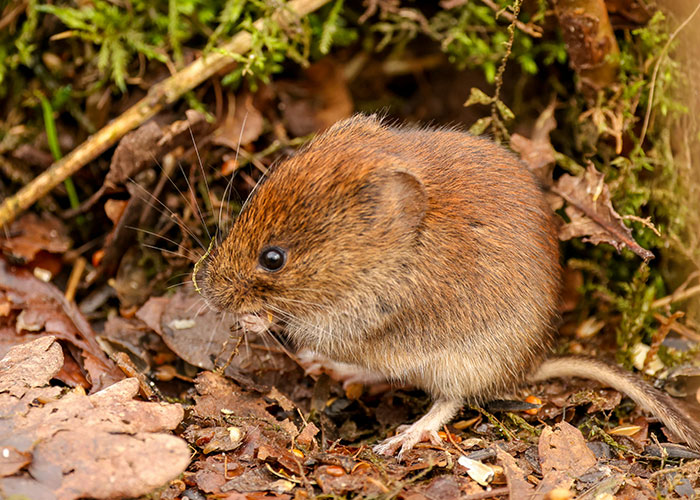
The study, published in the journal eLife, has unveiled the first comprehensive brain map detailing the regions activated in prairie voles during mating and pair bonding.

The small Midwestern rodents are among the 3% to 5% of mammals that form long-term monogamous pair bonds, closely resembling the social and mating behavior of humans.

RELATED:

    Image credits: Dương Hữu/Unsplash

    Therefore, scientists believe that studying the wide-eyed rodents may offer a glimpse into the neural circuits that facilitate these complex social behaviors inside the human brain.

    Compared with humans, however, prairie voles have whirlwind courtships. Within a day, a pair of the rodents can form a bond that lasts a lifetime.

    The study found that both male and female voles experience nearly identical patterns of brain activity across 68 distinct regions during the stages of mating, bonding, and the development of long-term monogamous bonds.

    ADVERTISEMENT

    The findings also reveal a surprising connection between orgasms and neural activity.

    To conduct their investigation, researchers selected sexually naive prairie voles, ensured females were in estrus (a recurring period of sexual receptivity and fertility in female mammals), and paired over 200 rodents together to observe their interactions.

    The study reveals similar brain activity patterns in both male and female voles during mating, bonding, and the development of enduring bonds

    Image credits: Heather Wilde

    Scientists monitored the progression from initial mating interactions to the establishment of a stable pair bond.

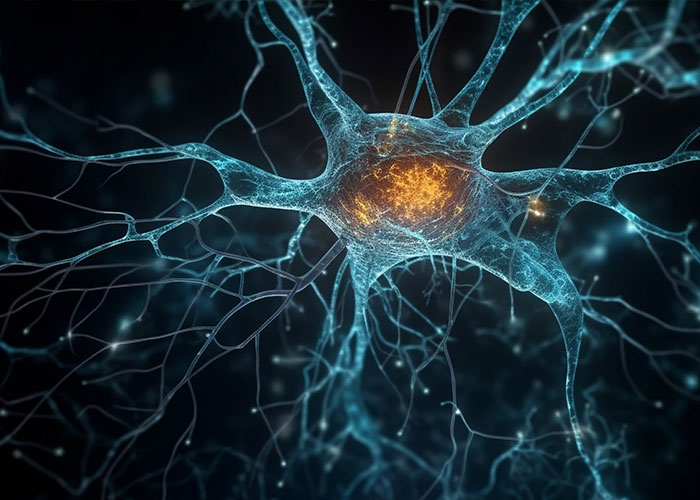
    Then, the voles’ brains were prepared for neuroimaging. To achieve this, scientists employed techniques like perfusion fixation and scanning with light-sheet fluorescence microscopy to generate high-resolution 3D images of brain tissue.

    Their research concludes that the experience of mating and subsequent bond formation activates a wide array of brain regions and is significantly broader than previously identified in any studies of social bonding.

    ADVERTISEMENT

    The authors of the study discovered activity across 68 distinct brain regions and found a high degree of similarity in brain activity patterns between male and female voles during the stages of mating, bonding, and the establishment of a stable, enduring bond.

    Scientists also discovered that male ejaculation serves as a strong predictor of neural activity associated with bonding for both male and female voles

    Image credits: vecstock/freepik

    ADVERTISEMENT

    The findings challenge the previous beliefs that sex differences, influenced by hormones like testosterone, estrogen, and progesterone, would lead to distinct neural pathways for bonding in males and females.

    “That was a surprise,” admitted Steven Phelps, senior author of the study and professor of integrative biology at The University of Texas at Austin.

    “Sex hormones like testosterone, estrogen, and progesterone are important for sexual, aggressive, and parental behaviors, so the prevailing hypothesis was that brain activity during mating and bonding would also be different between the sexes.”

    ADVERTISEMENT

    The findings offer insights into the neurobiological basis of monogamy for humans

    Image credits: Asad Photo/Pexels

    Across the 68 brain regions associated with bonding, male ejaculation served as the strongest predictor of brain activity. This suggests ejaculation during mating plays an essential part in activating the neural circuits involved in bond formation.

    Interestingly, both males and females responded to this effect. Females also exhibited increased bonding-related brain activity when paired with males who reached this milestone.

    “The brain and behavior data suggest that both sexes may be having orgasm-like responses, and these ‘orgasms’ coordinate the formation of a bond,” Phelps said.

    “If true, it would imply that orgasms can serve as a means to promote connection as has long been suggested in humans.”

    “The brain and behavior data suggest that both sexes may be having orgasm-like responses, and these ‘orgasms’ coordinate the formation of a bond,” scientist Steven Phelps said

    ADVERTISEMENT

    Image credits: Alejandra Quiroz/Unsplash

    Scientists believe that this response could be an evolutionary adaptation to enhance reproductive success.

    Phelps mentioned that it’s impossible to know whether a female prairie vole is having an orgasm simply by watching its sexual behavior, though previous research has found that some female animals, such as monkeys, have these physiological responses, as per the Genetic Literacy Project.

    ADVERTISEMENT

    Another limitation of the study acknowledged by its authors is that the experimental design focuses exclusively on sexually receptive animals, possibly overlooking additional factors influencing bond formation.


    Share on Facebook
    Marina Urman

    Marina Urman

    Writer, Entertainment News Writer

    Read more »

    With a degree in social science and a love for culture, I approach entertainment journalism at Bored Panda with a research-driven mindset. I write about celebrity news, Hollywood highlights, and viral stories that spark curiosity worldwide. My work has reached millions of readers and is recognized for balancing accuracy with an engaging voice. I believe that pop culture isn’t just entertainment, it reflects the social conversations shaping our time.

    Read less »
    Marina Urman

    Marina Urman

    Writer, Entertainment News Writer

    With a degree in social science and a love for culture, I approach entertainment journalism at Bored Panda with a research-driven mindset. I write about celebrity news, Hollywood highlights, and viral stories that spark curiosity worldwide. My work has reached millions of readers and is recognized for balancing accuracy with an engaging voice. I believe that pop culture isn’t just entertainment, it reflects the social conversations shaping our time.

    What do you think ?
    Breadcrumb.
    Community Member
    1 year ago Created by potrace 1.15, written by Peter Selinger 2001-2017

    "Sex hormones play a important part in our romantic relationships" no s**t.

    Maggie Fulton
    Community Member
    1 year ago Created by potrace 1.15, written by Peter Selinger 2001-2017

    The article is about prairie voles. It’s a bit much to extrapolate to humans with no actual study showing there is a definite link.

    Duuuuuuude
    Community Member
    1 year ago Created by potrace 1.15, written by Peter Selinger 2001-2017

    So what does this mean of you watch a bunch of porn?

    Historyharlot93
    Community Member
    Premium
    1 year ago Created by potrace 1.15, written by Peter Selinger 2001-2017

    Based on the headline, I thought this article would be a lot juicier than it was. 😞

    Cosmikid
    Community Member
    1 year ago Created by potrace 1.15, written by Peter Selinger 2001-2017

    LOL! Coulda toldja. Writing science "headlines" is an entirely different art from writing scientific paper "titles". Not done by the same people - titles are intentionally dry and obfuscatory - if you don't know this stuff, we don't want you reading- headlines are about - SEX! VIOLENCE! MONEY! CLICKS!! The information involved ? YOU have to dig for it.

    Load More Replies...
    Amy E
    Community Member
    1 year ago Created by potrace 1.15, written by Peter Selinger 2001-2017

    Don't cuddle, avoid the chemical imprint to live low stress and single.

    Corvus
    Community Member
    1 year ago Created by potrace 1.15, written by Peter Selinger 2001-2017

    TL;DR - Naughty voles are happy voles ;)

    Cosmikid
    Community Member
    1 year ago Created by potrace 1.15, written by Peter Selinger 2001-2017

    "Then, the voles’ brains were prepared for neuroimaging. To achieve this, scientists employed techniques like perfusion fixation .." They teach classes in grad school now, "How to Obfuscate Anything." The English translation of that sentence: "Then the voles were KILLED - as soon as our paid vole voyeurs saw them cum - and their brains cut out and dumped into formaldehyde ..." But, you see- delicate little ears don't want to KNOW that their new sex facts required - killing animals... Sigh. One way to look at it- the life expectancy of a Prairie Vole at birth is something like - 2 months. Most are hawk and weasel chow. If they live to 4 months old, they may live another 6 months; and then- they're off to Volehalla. Just the facts, folks.

    Breadcrumb.
    Community Member
    1 year ago Created by potrace 1.15, written by Peter Selinger 2001-2017

    "Sex hormones play a important part in our romantic relationships" no s**t.

    Maggie Fulton
    Community Member
    1 year ago Created by potrace 1.15, written by Peter Selinger 2001-2017

    The article is about prairie voles. It’s a bit much to extrapolate to humans with no actual study showing there is a definite link.


    Duuuuuuude
    Community Member
    1 year ago Created by potrace 1.15, written by Peter Selinger 2001-2017

    So what does this mean of you watch a bunch of porn?

    Historyharlot93
    Community Member
    Premium
    1 year ago Created by potrace 1.15, written by Peter Selinger 2001-2017

    Based on the headline, I thought this article would be a lot juicier than it was. 😞

    Cosmikid
    Community Member
    1 year ago Created by potrace 1.15, written by Peter Selinger 2001-2017

    LOL! Coulda toldja. Writing science "headlines" is an entirely different art from writing scientific paper "titles". Not done by the same people - titles are intentionally dry and obfuscatory - if you don't know this stuff, we don't want you reading- headlines are about - SEX! VIOLENCE! MONEY! CLICKS!! The information involved ? YOU have to dig for it.

    Load More Replies...
    Amy E
    Community Member
    1 year ago Created by potrace 1.15, written by Peter Selinger 2001-2017

    Don't cuddle, avoid the chemical imprint to live low stress and single.

    Corvus
    Community Member
    1 year ago Created by potrace 1.15, written by Peter Selinger 2001-2017

    TL;DR - Naughty voles are happy voles ;)

    Cosmikid
    Community Member
    1 year ago Created by potrace 1.15, written by Peter Selinger 2001-2017

    "Then, the voles’ brains were prepared for neuroimaging. To achieve this, scientists employed techniques like perfusion fixation .." They teach classes in grad school now, "How to Obfuscate Anything." The English translation of that sentence: "Then the voles were KILLED - as soon as our paid vole voyeurs saw them cum - and their brains cut out and dumped into formaldehyde ..." But, you see- delicate little ears don't want to KNOW that their new sex facts required - killing animals... Sigh. One way to look at it- the life expectancy of a Prairie Vole at birth is something like - 2 months. Most are hawk and weasel chow. If they live to 4 months old, they may live another 6 months; and then- they're off to Volehalla. Just the facts, folks.

    You May Like
    Related on Bored Panda
    Popular on Bored Panda
    Trending on Bored Panda
    Also on Bored Panda
    ADVERTISEMENT