Get Premium
Dark mode theme is available exclusively for premium users. Learn more about the benefits of subscribing.
No fees, cancel anytime.

 Dark Mode Ad-Free Browsing Unlimited Content
 Ad-Free Browsing Unlimited Content Dark Mode
Join 1.2 million Panda readers who get the best art, memes, and fun stories every week!
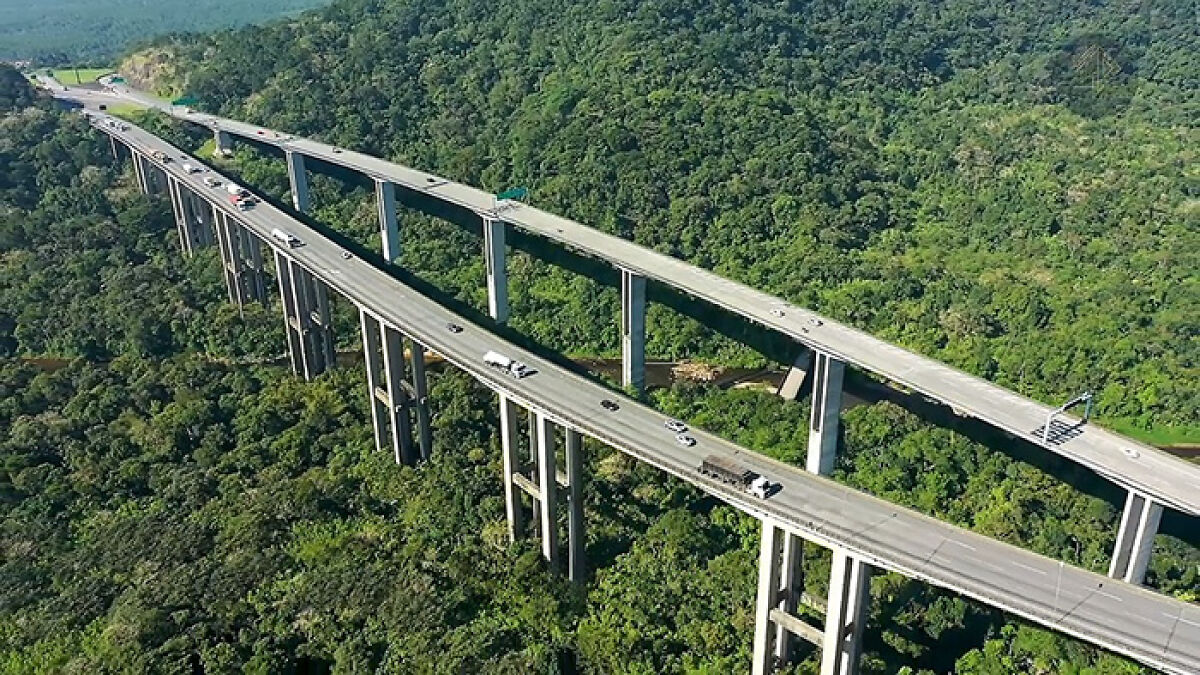
Some of the longest bridges on Earth stretch so far that they disappear into the horizon, whether they cut through familiar hometown landscapes or span waterways on the other side of the world.
These projects can take years, demand massive workforces, and push engineering limits in ways most people never see. From daily commuters to long-haul freight, millions of people rely on these structures without ever thinking about what’s holding them up.
Some cross lakes and bays battered by storms, others thread through dense cities or seismic zones. Each one reflects the technology, priorities, and challenges of its time, showing how bridge design has evolved to meet increasingly complex demands.
Below, we’re breaking them down from the shortest to the longest. Each bridge on this list holds its own length record, and together they offer a striking look at how modern engineering keeps the world moving.
This post may include affiliate links.
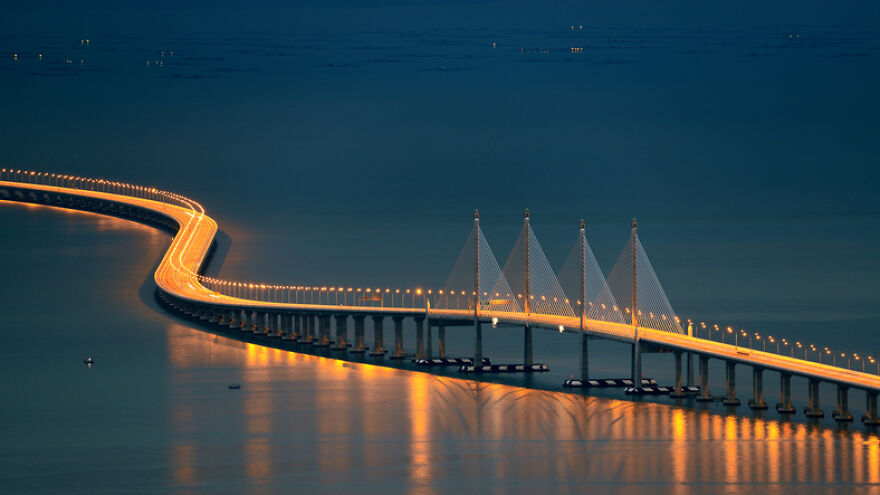
The Sultan Abdul Halim Muadzam Shah Bridge, widely known as the Penang Second Bridge, is Malaysia’s longest bridge, stretching 24 kilometers between Penang Island and the Malay Peninsula.
Built with advanced seismic engineering in mind, the structure uses high-damping rubber bearings and seismic expansion joints to reduce stress during earthquakes, a design choice highlighted by Mageba (per Mageba).
The bridge carries a dual carriageway with two vehicle lanes in each direction, plus dedicated motorcycle lanes on both sides to improve rider safety.
Completed in 2014, the cable-stayed structure cost RM4.585 billion, or roughly US $1.10 billion, and plays a key role in easing congestion while supporting economic movement across the region, as noted by regional infrastructure reports.
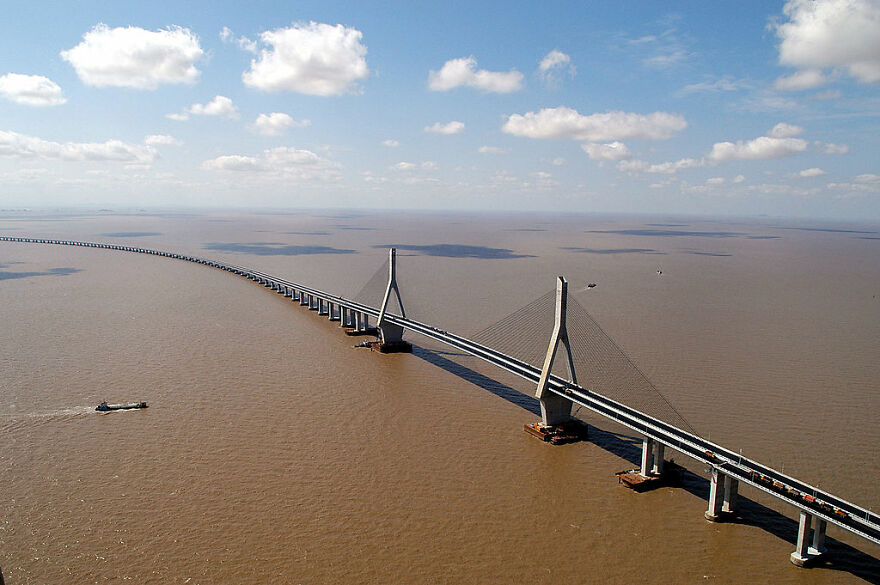
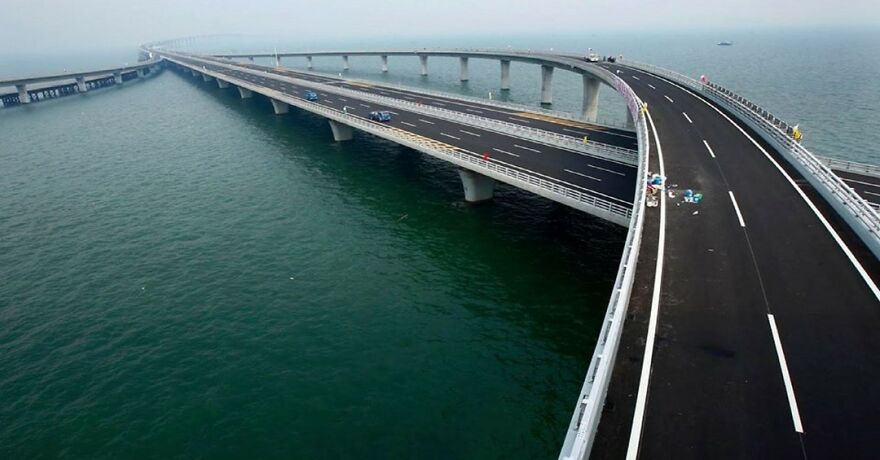
Also called the East Sea Grand Bridge, the Donghai Bridge runs 32.5 kilometers between Shanghai and Yangshan Island, home to one of the world’s largest container ports.
It opened in December 2005 after nearly four years of construction, giving port traffic a direct, high-capacity link instead of relying on slower, indirect routes.
The bridge’s six-lane, S-shaped alignment was chosen better to handle the region’s typhoons and heavy seas. The structure is split into three main stretches: 3.7 kilometers on land, roughly 25.3 kilometers over water, and another 3.5 kilometers out to Xiaoyangshan Island.
It’s about 31.5 meters wide, with an 80 km/h speed limit designed to keep trucks and cargo moving steadily and safely (per Top China Travel).
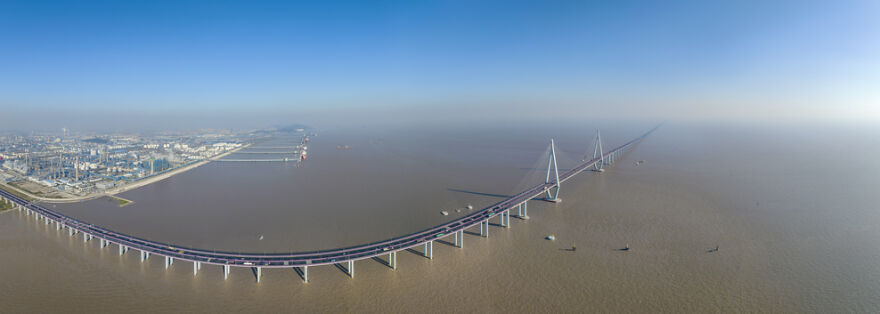
Stretching 36 kilometers across Hangzhou Bay, the Hangzhou Bay Bridge links Jiaxing in Zhejiang Province with Cixi in Ningbo, creating one of the longest sea-crossing highways in the world. Construction finished in 2007, with full operations beginning in 2009, and the project cost an estimated $1.5 billion.
The six-lane bridge was engineered to cope with some of the harshest conditions in the region, including powerful tides, strong winds, and frequent seismic activity.
Built to support more than 50,000 vehicles a day, the structure includes a central service platform with rest areas and observation decks, as well as cable-stayed navigation spans that allow ships to pass beneath it.
The route dramatically shortens travel time between Ningbo and Shanghai, strengthening economic ties across the Yangtze River Delta (per Express).
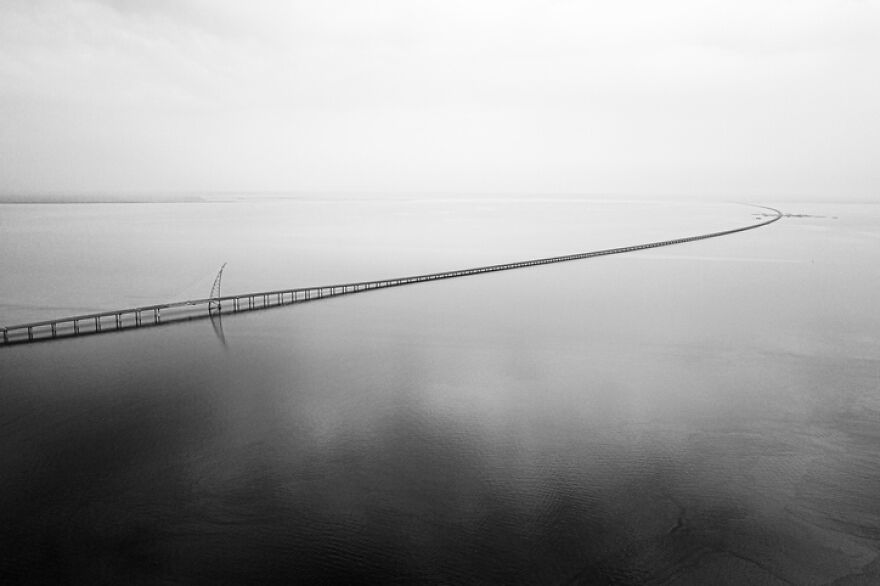
Completed in 2019, the Sheikh Jaber Al‑Ahmad Al‑Sabah Causeway stretches 36.14 kilometers across Kuwait Bay, linking Kuwait City with the northern Subiyah region. The six-lane bridge dramatically shortens travel times between the country’s population centers and previously isolated northern developments.
Built on unstable marine soil, the causeway relies on more than 1,200 offshore piles to anchor the structure securely, a construction challenge outlined by Systra.
Engineers also relied on a dedicated saltwater system to manage materials efficiently during construction, a method that helped control costs on the roughly $3 billion project, as detailed by KB.
Beyond transportation, the bridge reshaped Kuwait’s coastline, offering uninterrupted views of the city skyline while incorporating environmental safeguards to limit disruption to marine ecosystems.
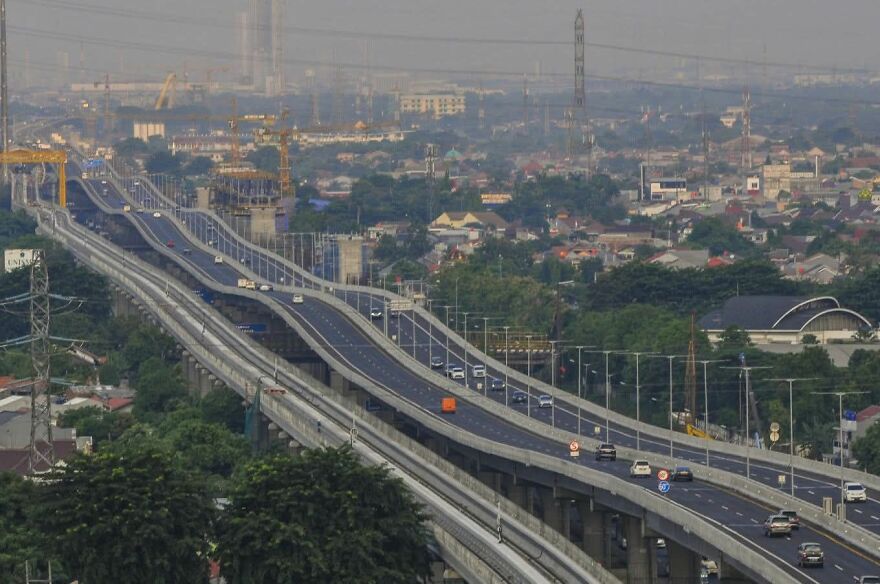
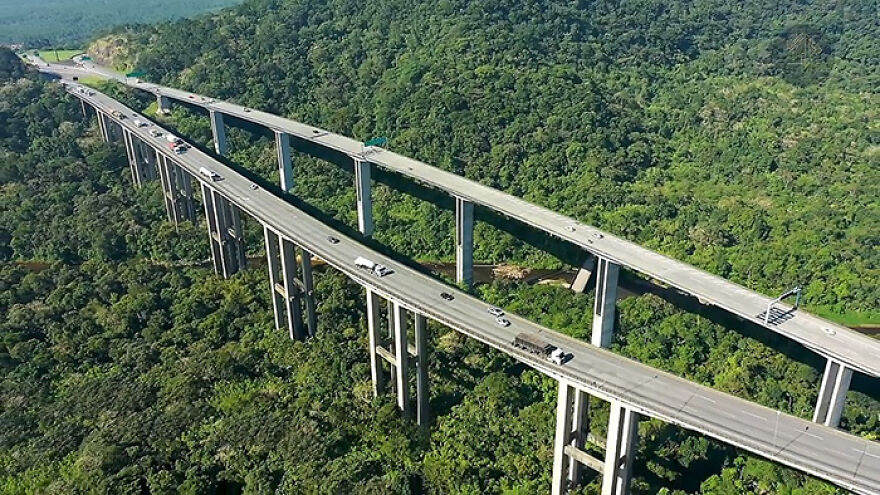
Stretching 36.4 kilometers above one of Indonesia’s busiest transport corridors, the Sheikh Mohammed bin Zayed Skyway runs parallel to the Jakarta–Cikampek toll road in West Java.
The elevated structure was opened in December 2019 by President Joko Widodo and later renamed in 2021 to honor UAE President Mohammed bin Zayed Al Nahyan.
Built as a double-decker expressway, the skyway was explicitly designed to relieve chronic congestion in the Greater Jakarta area by separating long-distance traffic from local roads.
The project includes seven interchanges to keep vehicles moving smoothly, particularly during peak travel periods.
Construction began in early 2019, and phased openings allowed major sections to come online ahead of the 2025 Eid travel season, helping cut travel times between Jakarta and Cikampek (per Independent Observer).
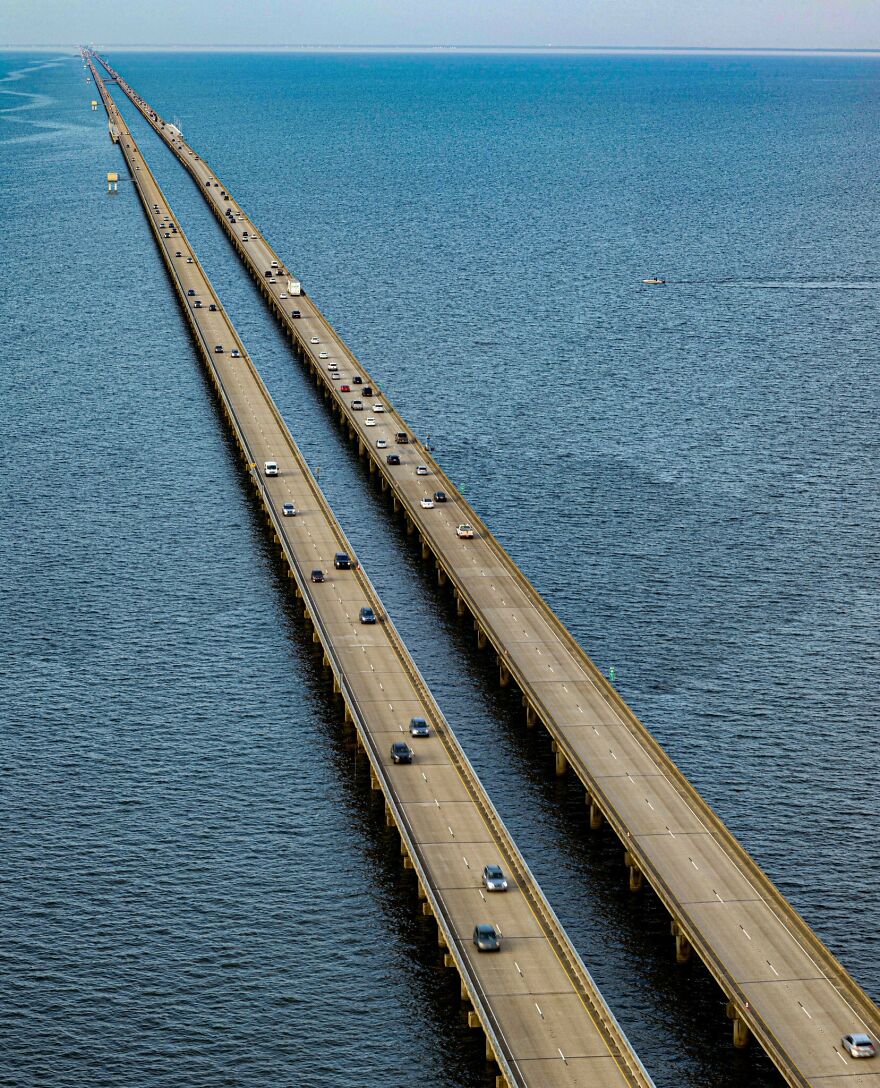
Running nearly 38.4 kilometers across Lake Pontchartrain, this causeway connects the New Orleans area to Louisiana’s north shore and remains the longest continuous bridge over water anywhere in the world. The lake itself spans about 1,631 square kilometers, which once forced drivers to make long, indirect trips around its edges.
The first two-lane span opened in 1956 after just 14 months of construction, with a price tag of $46 million. The bridge is so long that land disappears from view for roughly eight miles, a stretch that has caused some drivers to panic mid-crossing and require police assistance to turn back (per Atlas Obscura).
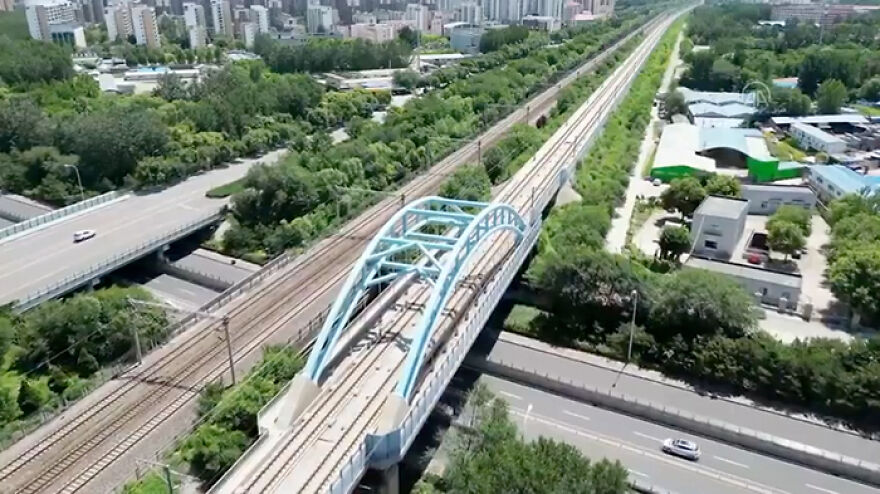
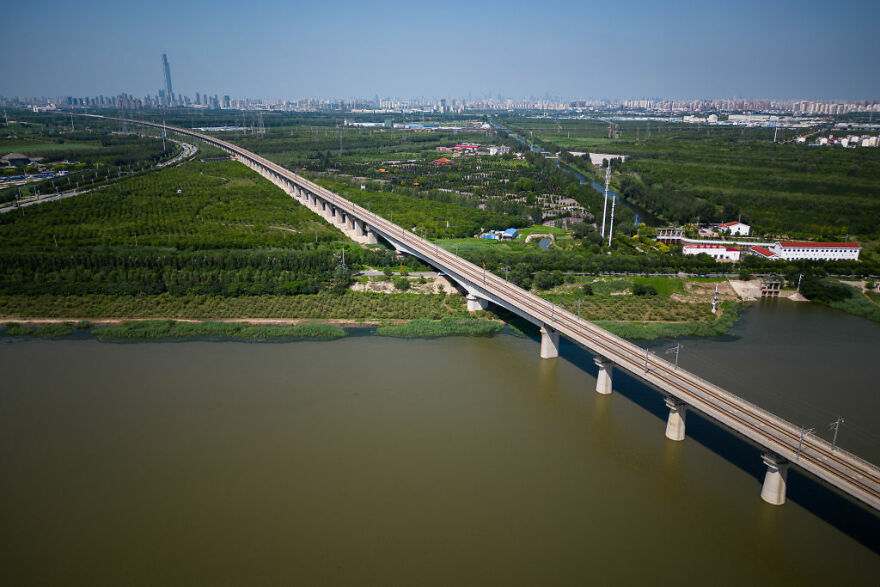
Stretching 48 kilometers just south of Beijing, the Beijing Grand Bridge is a critical segment of the Beijing Shanghai High-Speed Railway. Opened in 2011, the structure helps move trains efficiently through densely developed areas while maintaining the straight, stable alignment required for high-speed travel.
The bridge plays a significant role in linking the Yangtze River Delta with the Bohai Economic Rim. These two regions depend heavily on rail transport to move agricultural products, raw materials, and manufactured goods.
By elevating the rail line, the bridge reduces ground-level disruptions while supporting some of the busiest passenger and freight corridors in the country (per How Stuff Works).
Running for nearly 80 kilometers across central China, the Weinan Weihe Grand Bridge forms a significant stretch of the Zhengzhou Xi'an High-Speed Railway.
The bridge crosses the Wei River twice and spans multiple smaller waterways, including the Ling, Luofu, Xi, and Shi Di rivers, creating a continuous elevated route through a flood-prone region.
WorldAtlas reports the bridge opened in 2008 and briefly held the title of the longest bridge in the world. Its completion dramatically shortened travel times between Zhengzhou and Xi'an by eliminating slow, ground-level rail segments and reducing interference from road crossings and seasonal flooding (per How Stuff Works).

I love the swoop that some on-ramps make, very satisfyingly artistic.
Running for about 113 kilometers between Langfang and Qingxian, the Tianjin Grand Bridge carries high-speed rail traffic through one of China’s most densely populated corridors. It forms a significant segment of the Beijing-Shanghai High-Speed Railway, allowing trains to bypass crowded ground-level routes while maintaining consistent speeds.
The Collector reports the bridge opened in 2011 after roughly four years of construction. To manage the challenges of building at this scale near urban areas, engineers divided the structure into 32 massive sections, each weighing around 860 tons.
WeBuild notes that these segments were built and installed using different methods before being joined together, a process that helped keep construction moving quickly despite logistical constraints. When it was inaugurated in June 2011, the bridge briefly held a Guinness World Records title for length.
Spanning roughly 116 kilometers through Hebei Province, the Cangde Grand Bridge forms a critical section of China’s Beijing-Shanghai High-Speed Railway. The elevated structure creates a direct, high-speed corridor between Beijing and Shanghai, cutting through flat agricultural land where ground-level rail would be slower and more disruptive.
The bridge was completed in 2010 and is supported by more than 3,000 concrete pillars. That dense support system helps distribute weight evenly while improving stability in a region known for seismic activity, allowing high-speed trains to pass safely and consistently over long distances (per The Collector).
Completed in 2007, the Changhua–Kaohsiung Viaduct stretches about 157.3 kilometers along Taiwan’s west coast, linking Baguashan in Changhua County with Zuoying in Kaohsiung.
The elevated rail line passes through a mix of rural farmland, waterways, and dense urban areas, creating a continuous high-speed corridor across the island.
The Collector notes the viaduct was engineered with seismic protections, a necessity in a region known for frequent earthquakes. Structural safeguards are designed to allow trains to slow or stop safely during seismic events, reducing risk to passengers and infrastructure, as the outlet notes.
With an estimated cost of $8.5 billion, the viaduct balances scale and safety while supporting Taiwan’s busiest high-speed rail routes.
Stretching an astonishing 164.8 kilometers across Jiangsu Province, the Danyang–Kunshan Grand Bridge holds the title of the longest bridge in the world.
The elevated rail structure links the cities of Danyang and Kunshan, forming a vital section of the Beijing Shanghai High-Speed Railway and carrying trains across rivers, canals, lakes, and low-lying farmland.
Construction took four years and required a workforce of roughly 10,000 people, with total costs estimated at $8.5 billion. History of Bridges reports that one of the bridge’s most striking sections is its 5.6-mile crossing of Yangcheng Lake in Suzhou.
That span alone rests on about 2,000 pillars and incorporates roughly 450,000 tons of steel, engineered to withstand typhoons, major earthquakes, and even potential impacts from large vessels.

China appears to be the leader with astonishing bridges!! absolutely mind blowing engineering...KUDO'S!

There is so much seismic activity in many of the areas the Chinese mega-bridges go through, I often wonder how long they will continue to withstand the forces. I can imagine even if they survive, the small anomalies which appear over time might make for a very rough high-speed rail ride.

Overpasses don't impress me. I don't even know why we're counting elevated highways as bridges. I don't know if there's any single run of the "El[evated] trains" in Chicago, but essentially they're 250 miles of elevated rail. Confederation Bridge in Canada (13 km) is an architectural feat. So is the Millau viaduct (0.34 km... HIGH!) But an expressway that simply finds it cheaper to pass over local roadways? Don't even call that a bridge. UPDATE: OK, the top few were impressive. The Beijing Grand Bridge (#6) was the one that finally motivated me to comment, but the ones after that got pretty significant.)
China appears to be the leader with astonishing bridges!! absolutely mind blowing engineering...KUDO'S!
There is so much seismic activity in many of the areas the Chinese mega-bridges go through, I often wonder how long they will continue to withstand the forces. I can imagine even if they survive, the small anomalies which appear over time might make for a very rough high-speed rail ride.
Overpasses don't impress me. I don't even know why we're counting elevated highways as bridges. I don't know if there's any single run of the "El[evated] trains" in Chicago, but essentially they're 250 miles of elevated rail. Confederation Bridge in Canada (13 km) is an architectural feat. So is the Millau viaduct (0.34 km... HIGH!) But an expressway that simply finds it cheaper to pass over local roadways? Don't even call that a bridge. UPDATE: OK, the top few were impressive. The Beijing Grand Bridge (#6) was the one that finally motivated me to comment, but the ones after that got pretty significant.)








































 No fees, cancel anytime