Get Premium
Dark mode theme is available exclusively for premium users. Learn more about the benefits of subscribing.
No fees, cancel anytime.

 Dark Mode Ad-Free Browsing Unlimited Content
 Ad-Free Browsing Unlimited Content Dark Mode
Join 1.2 million Panda readers who get the best art, memes, and fun stories every week!
When we look for physical representations of famous people from the pre-photography past, the only remaining options we have are either the grim skeletal remains or barely detailed and imprecise artistic depictions. Some artists try to reimagine what a particular queen or medieval peasant might've looked like, but their vision and imagination are limited to their own times. However, technology has advanced to the levels where we can employ science to depict historical figures as if they were alive today accurately.
To recreate the facial features from a skull, the process must start with an x-ray or a CT scan to capture the skull's proper form. After that, the data is rendered in full 3D, which gives the scientists an excellent platform to work on. What comes next is the modeling of facial muscles to match the exact shape of the skull; depending on the bone structure, a layer of fat is added, and then comes the skin. Finally, the colors of such features as hair and eyes have to be guessed based on the area the skull was found and the time period it came from. Admittedly, we've described the process of facial reconstruction in a very simplified manner, but if this sounds like a lot of work, imagine that a couple of decades earlier, all of this had to be done without the help of computer modeling the faces with clay or plasticine.
Bored Panda has compiled a list of various reconstructions from archaeological finds that give us a fascinating glimpse of the past. Scroll down to check these cool photos out, and don't forget to comment and vote on your favorites!
This post may include affiliate links.
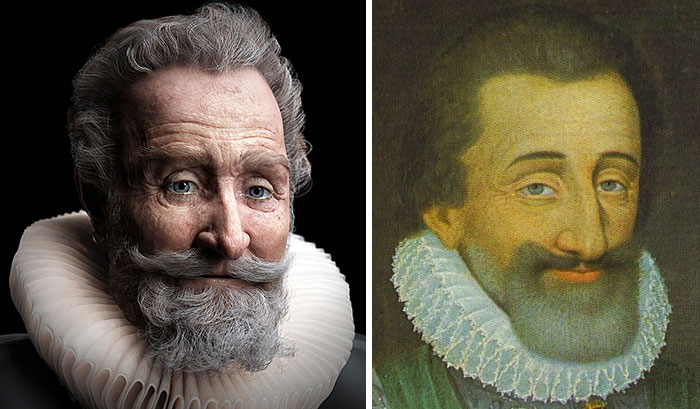
Henry IV of France was King of France from 1589 to 1610, when we was assassinated by a fanatical Catholic. He was also known as Good King Henry for his great concern about the welfare of his subjects.
Philippe Froesch created a CGI 3D forensic facial reconstruction of Henry, using his skull as a base.
Ava was a Bronze-Age woman who died 3,700 years ago. She was found in an unusual grave for her time. Instead of being buried in soil, like others, Ava's final resting place was carved in solid rock, which suggested that she was special.
Scottish archaeologist Maya Hoole and forensic artist Hew Morrison teamed up to recreate Ava's face using sophisticated software and tissue depth charts.

I had to go and browse the possibility of determining one's hair and eye color, based on skeletal remains. Apparently, it works, albeits only if DNA is sufficiently preserved. Above limit of skeleton "age" is about 800 years. So this red hair and mountain spring eyes are a bit of poetic interpretation, but beautiful none the less.
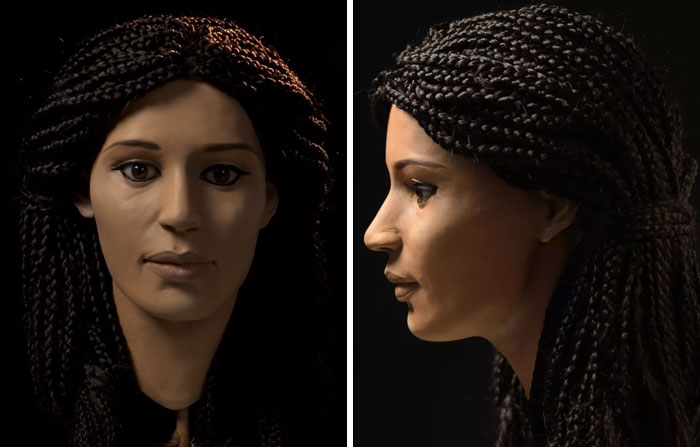
The 2,000 year old mummy known as 'Meritamun' was brought back to life using the latest technology. Scientists from the University of Melbourne used her skull to determine that Meritamun was between the ages of 18 and 25, stood about 5 feet 4 inches tall and was anaemic. Unfortunately, they couldn't find the cause of death since the rest of her body was never recovered.
To reconstruct Meritamun's face, the researchers used medical research, forensic science, computerized tomographic (CT) scanning, 3D printing, Egyptology and art.
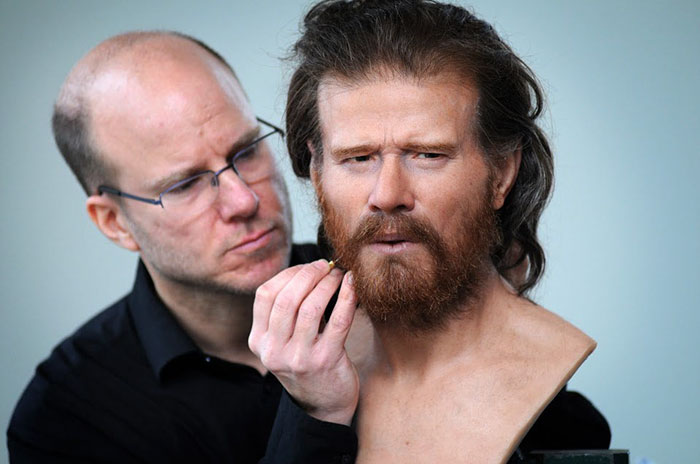
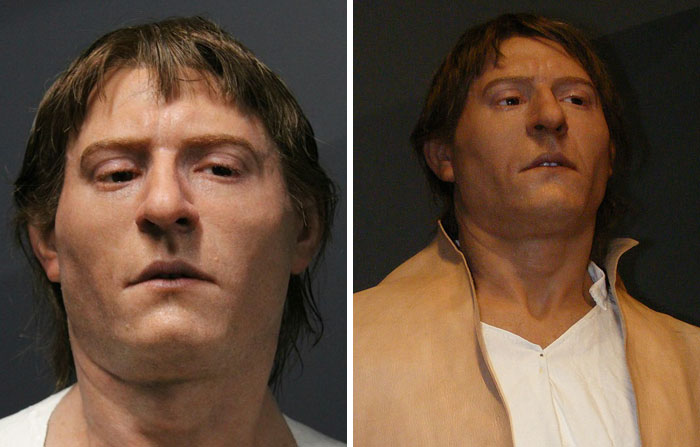
Back in 2014, archaelogists recovered remains of a man who died about 500 years ago. He was one of 4 sets of skeletons found, all of which showed signs of childhood malnutrition and heavy manual labor, which suggests that all of them were poor. As one of the skulls was well preserved, they used it to reconstruct what the man looked like 500 years ago.
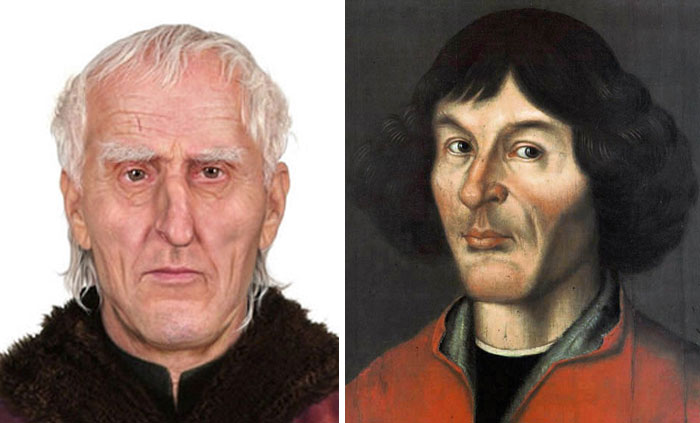
Copernicus was one the brightest Renaissance-era mathematicians and astronomers, who formulated a model of the universe that placed the Sun rather than the Earth at the center of the universe. He died at the age of 70.
A Polish forensic team reconstructed this face from his remains.

Looks a bit like the tv version of Maester Aemon (Targaryen). Also like Maester Luwin.
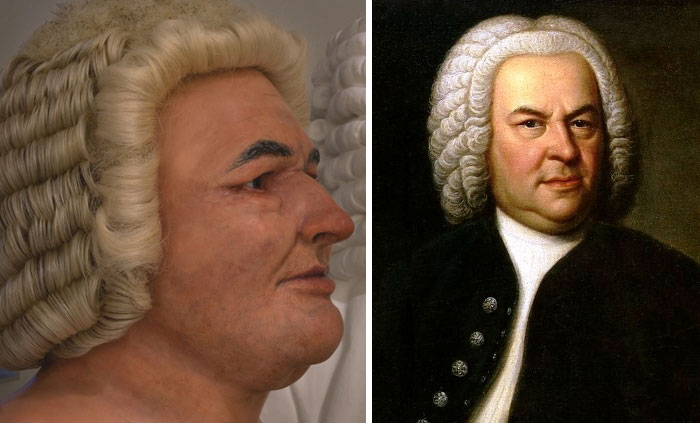
Johann Sebastian Bach (1685 – 1750) was a composer and musician of the Baroque period, who is regarded as one of the greatest composers of all time.
Scottish anthropologist Caroline Wilkinson took measurements of Bach's facial bones to recreate a 3D image of what the composer's face must've looked like.

The reconstruction of an early Neolithic man's head was based on the skeleton of an adult male excavated in 1863, in Winterbourne Stoke, Wiltshire. Experts used skeletal analysis to recreate what a slender man in his 40's looked like about 5,500 ago, 500 years before the first monument at Stonehenge was built.

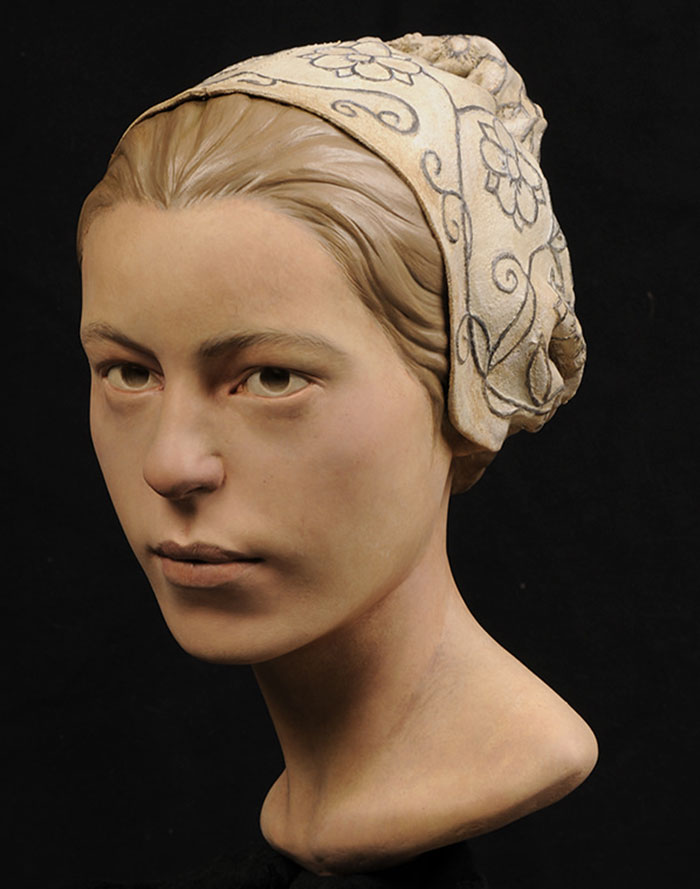
Jane was a young girl (14-years-old) who was eaten by her 17th century Jamestown co-settlers. Her mutilated skull and severed leg bone were found in 2012, among butchered animal bones and other food remains, in a Jamestown cellar. Dr. Douglas Owsley, chief forensic anthropologist at the Smithsonian Institution’s National Museum of Natural History, examined the bones and determined that the cuts and marks on them were from an attempt to seperate tissue and brain from the bones. Owsley concluded that it was a case of cannibalism as marks were consistent with other cases of cannibalism and the fact that the people of Jamestown were starving during the winter of 1609-1610.

Looks a bit mature for a 14 year old. But maybe those were different times.
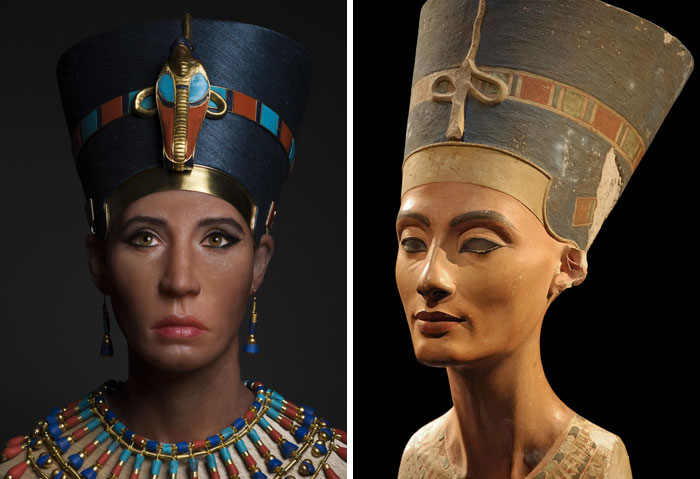
DNA tests revealed that a mummy known as "the Younger Lady" is the sister of Akhenaten (Tut's father) and mother of Tutankhamun. While its identity hasn't been fully determined, many believe that the remains belong to Queen Nefertiti, Akhenaten's Great Royal Wife. Paleoartist Élisabeth Daynès used the scan of "the Younger Lady" to reconstruct a bust of the Egyptian queen.

Nefertiti was not Tutankhamen's biological mother, although she was married to Amenhotep IV, later known as Akhenaten. She is known to have had six daughters with Akhenaten. No Egyptologist believes she was Tut's mother.
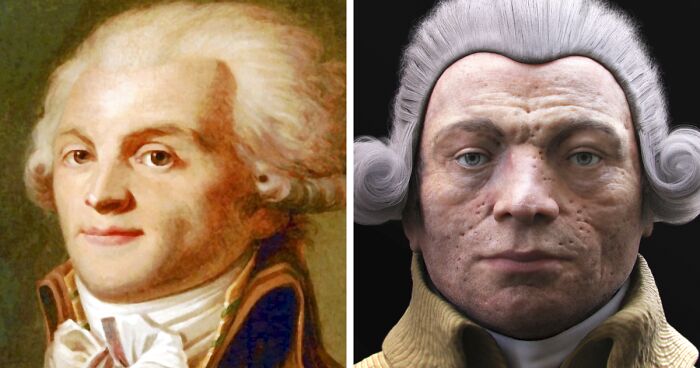
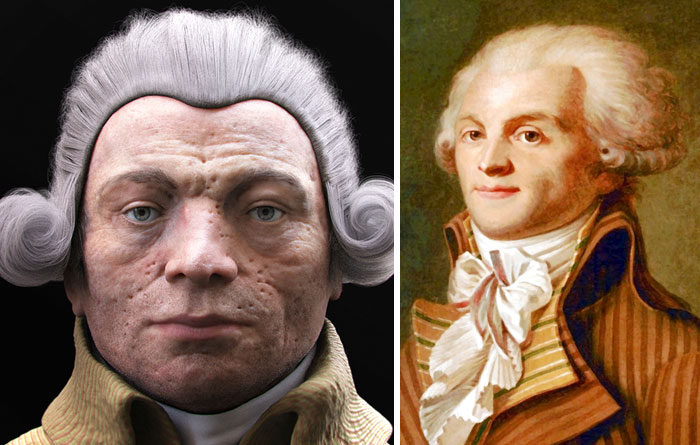
Maximilien de Robespierre was a French politician and lawyer, best known for his role in the French Revolution (1789 - 1799) and the Reign of Terror. He was executed by guillotine on July 28, 1794 at the age of 36.
Scientists used his death mask, as well as historical records detailing Robespierre's medical history to reconstruct his face and determine the illnesses he suffered.
Several clinical signs were described by contemporary witnesses: vision problems, nose bleeds (“he covered his pillow of fresh blood each night”), jaundice (“yellow colored skin and eyes”), asthenia (“continuous tiredness”), recurrent leg ulcers, and frequent facial skin diseases associated with scars of a previous smallpox infection. Historians speculate that he suffered from sarcoidosis. He also had permanent eye and mouth twitching. The symptoms worsened between 1790 and 1794. The day before his beheading, Robespierre suffered a firearm wound to the jaw in dubious circumstances.
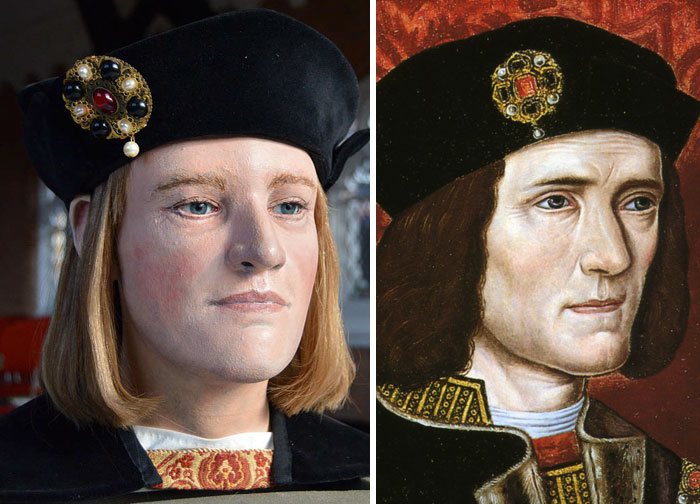
Richard III of England was King of England between 1483 and 1485. He was a prominent figure during the Wars of Roses and the Battle of Bosworth Field where he died. This was the last decisive battle of the conflict between the families of Lancaster and York. He was 32 at the time of his death.
His remains were lost for more than 5 centuries (as they were believed to have been thrown into the River Soar) only to be discovered in 2012, on a city council car park in Leicester.
They used the skull and DNA samples to make a 3D reconstruction of his face. A computer app was used to add muscle tissue to the scan of the skull and the result was then made into a plastic model.
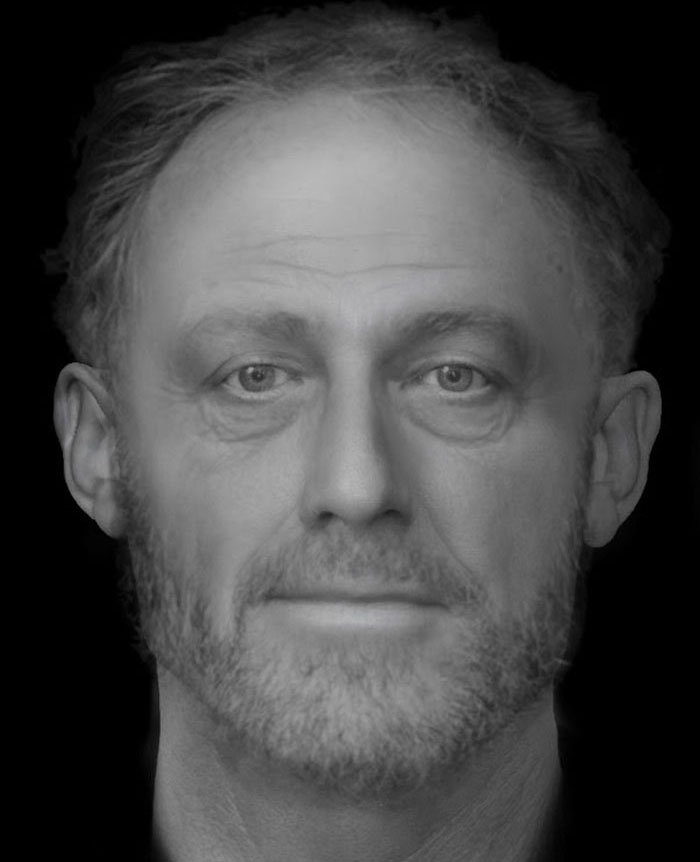
This individual who lived 700 years ago was dubbed Context 958 by the researchers who have pieced this man's life and face together by analyzing his bones and teeth. Context 958 is part of the University of Cambridge's wider research aiming to understand how people lived and died back medieval times. "Context 958 was probably an inmate of the Hospital of St John, a charitable institution which provided food and a place to live for a dozen or so indigent townspeople," said, John Robb, member of the research team. The team has also determined that he was around the age of 40 when he died and lived a hardworking life, based on the wear and tear marks on his skeleton.
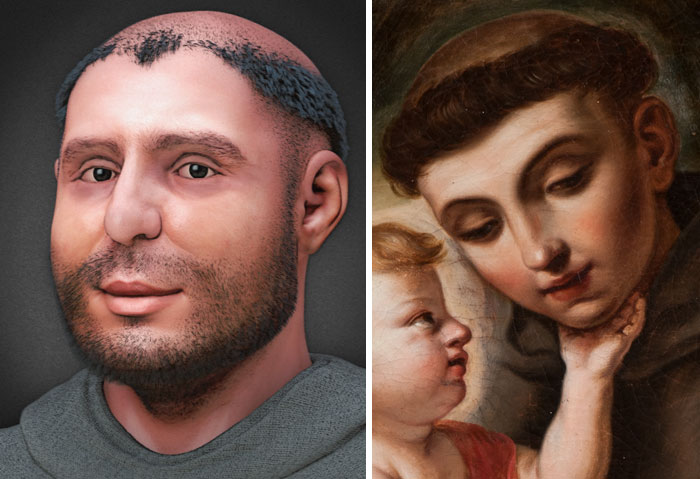
Saint Anthony of Padua was a Catholic priest who was born in 1195, to a wealthy family in Lisbon, Portugal. He died at the age of 35 in Padua, Italy. As his contemporaries recognized his devotion and love to the poor and the sick, as well as his powerful preaching, Anthony was one of the most quickly canonized saints in church history. He is the patron saint of lost things.
In 2014, forensic researchers at the University of St. Anthony of Padua teamed up to recreate his facial image from a digital copy of his skull. They used the latest 3D program to reconstruct Anthony's features in what they believe to be “one of the most faithful reconstructions of the face of St. Anthony.”
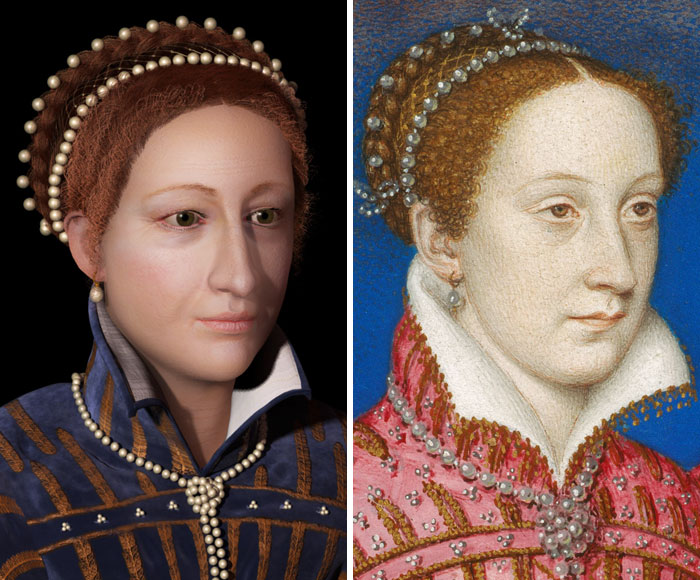
Mary Stuart was Queen of Scotland between 1542 and 1567 and she was only 6 days old when she acceded to the throne. She spent her last 18 years in custody of Queen Elizabeth of England after which Mary was found guilty of plotting to assassinate Elizabeth in 1586 and executed. She was 44 at the time of her execution.
Experts from the University of Dundee compiled all the available portraits of Mary Stuart to recreate a 3D image of what she would've looked like during her reign.
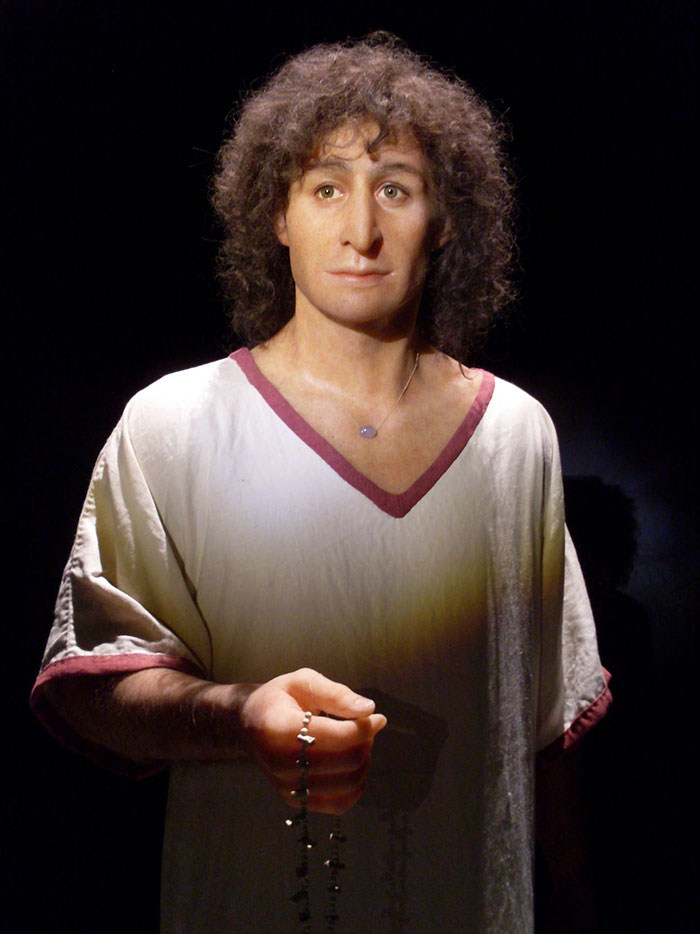
Arish lived in Carthage (modern day Tunisia) 2,500 years ago and he was 19 to 24 years old when he died. Researchers used criminal investigation techniques and dermoplasty to reconstruct what Arish looked like when he was alive.
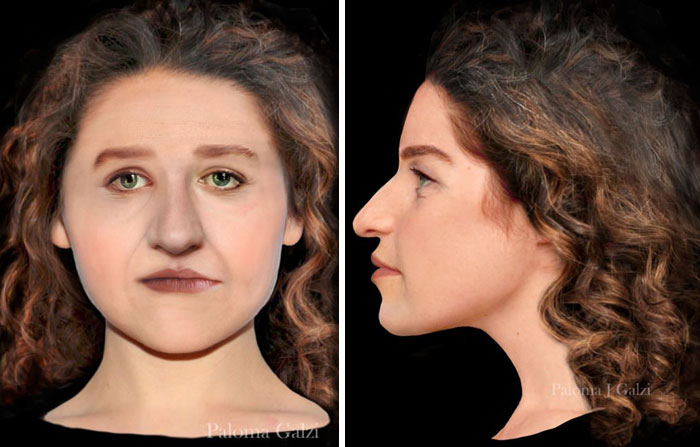
This lady is one of the 400 people found in South Leith Parish Church graveyard, which was excavated during preparation work for Edinburgh Trams in 2009. They date back to 16th century.
Experts have analyzed the remains and determined that her age was between 25-and 35, her height was 4ft 11 which is 4 centimetres shorter than the average height of a medieval woman in the found population.
Mary Rose was a warship of the English Tudor navy of King Henry VIII, that sank in 1545 while leading an attack on the French fleet. 500 years later the ship and most of her crew were recovered and scientists examined the remains. While algae and other growth made it difficult to analyze the skeletons, the research team were able to identify quite a lot of this particular archer. They determined his role in the ship as a man wielding a long-bow, as well as his height - 6 feet.
They also created a 3D print of his skull which was later used to reconstruct his face.

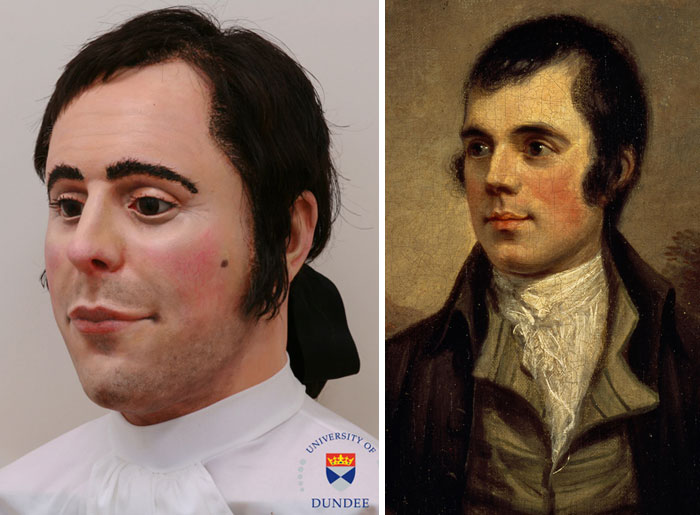
Robert Burns (1759 - 1796) was a Scottish poet and lyricist known for such works as "Auld Lang Syne" and "The Battle of Sherramuir". He died at the age of 37 in Dumfries, Scotland.
Researchers used his skull to recreate a 3D reproduction to bring Burns back to life.
John de Strivelyn (also known as John Stirling) was a medieval Scottish knight who died in 1378.
His remains were found at Stirling Castle, beneath a lost 12th-century royal chapel. The University of Dundee worked on John's remains to recreate a three-dimensional image of what he looked like. They used the latest digital scanning and replication techniques and the final result was painted by a medical artist.

by the late Medieval period, armor was so heavy and ornate, you had to be tough as hell to actually fight in it, as a lot of it was just for show. The mark on his head really brings home how dangerous hand to hand was back then.
Robert I was King of Scots from 1306 until his death in 1329, as well as one of the most famous warriors of his generation. He led forces against England in the First War of Scottish Independence and succeeded in regaining Scotland's place as an independent country. To this day, Robert the Bruce is regarded as a national hero in Scotland.
In 2016, historians at the University of Glasgow teamed up with Liverpool's John Moores University to reconstruct Robert's face as the visual depictions of the King were scarce. They used casts from what is believed to be the skull of Robert to make a 3D represenation. Although there is some uncertainty whether the skull truly belongs to King Robert, historians are reasonably confident it's his skull.

What happened to his nose? (I'm not being sarcastic, it looks like it was wounded in battle at some point)


More, please!!!! Well in good honesty all of the movies playing off back in those days aren't that off. There were really attractive people back then


More, please!!!! Well in good honesty all of the movies playing off back in those days aren't that off. There were really attractive people back then
































 No fees, cancel anytime