Get Premium
Dark mode theme is available exclusively for premium users. Learn more about the benefits of subscribing.
No fees, cancel anytime.

 Dark Mode Ad-Free Browsing Unlimited Content
 Ad-Free Browsing Unlimited Content Dark Mode
Join 1.2 million Panda readers who get the best art, memes, and fun stories every week!
Family gatherings can be loud, chaotic, and a challenge to get through. When there are kids involved, some people feel it can be even harder. In 2024, 38% of Brits said they found it hard to hear conversations around the table because of children being noisy.
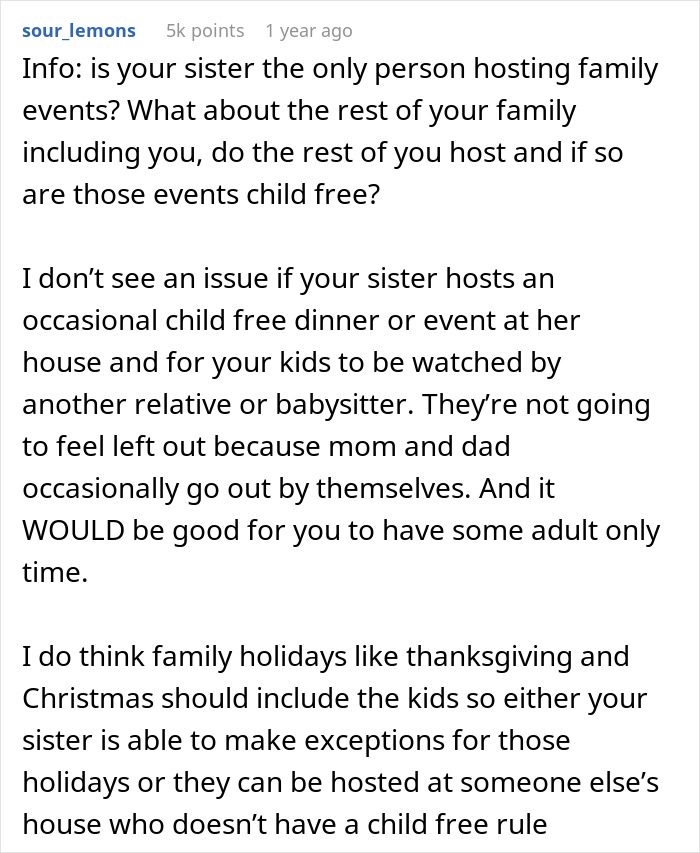
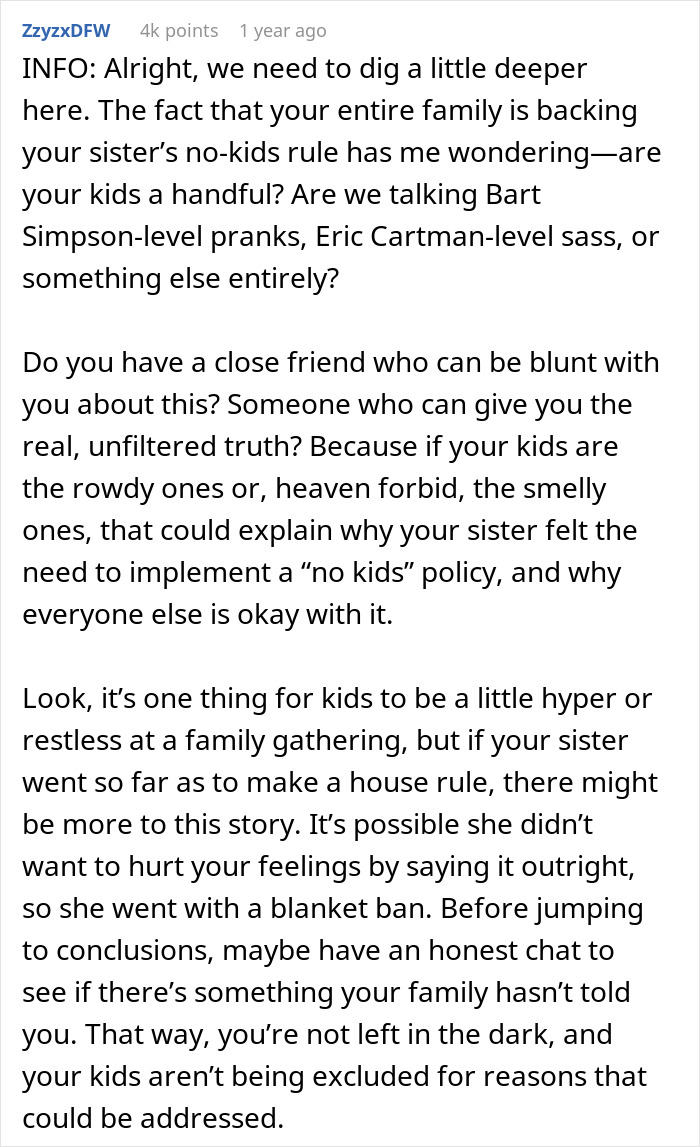
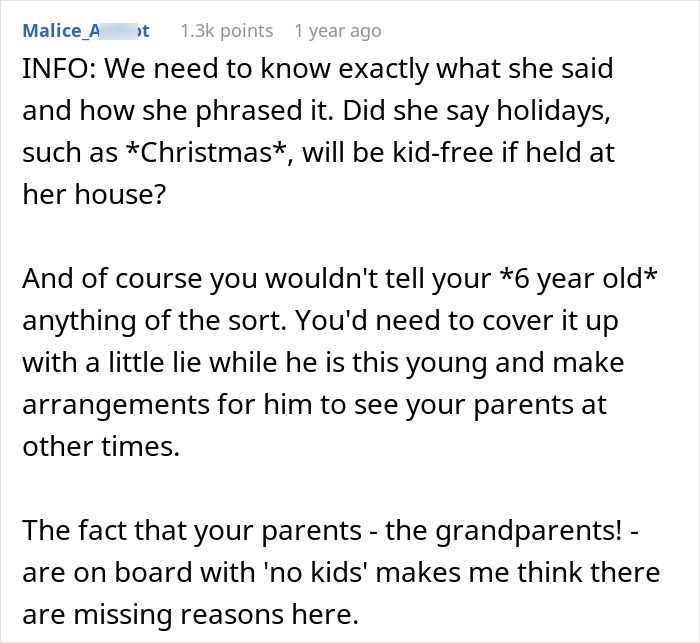
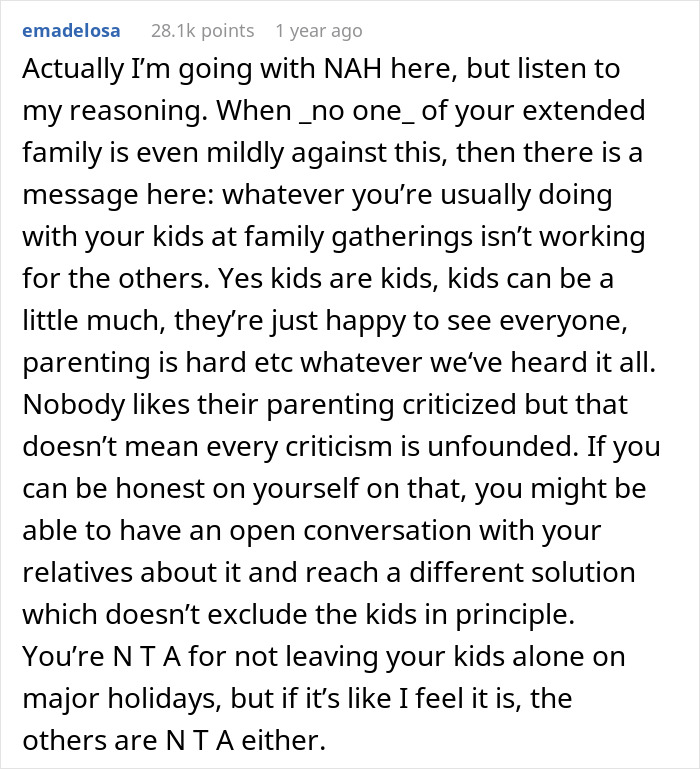
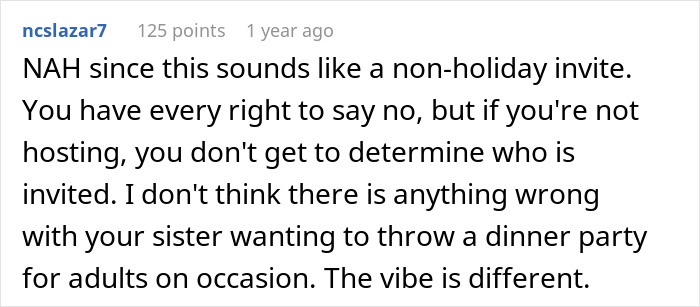
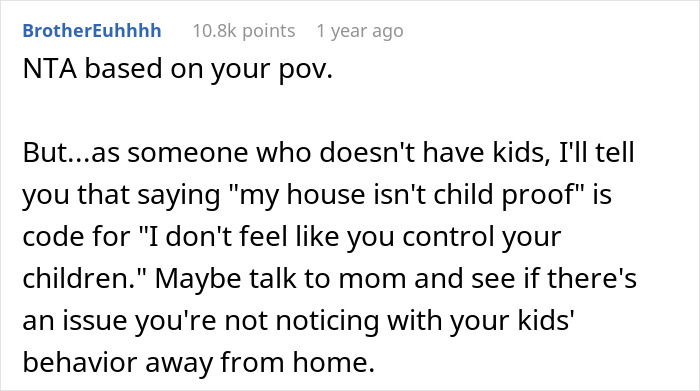
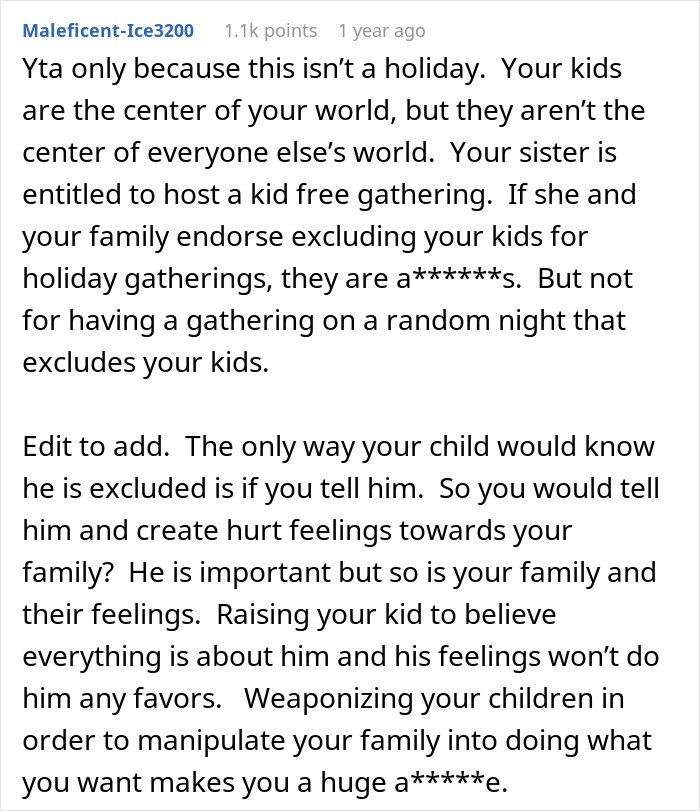
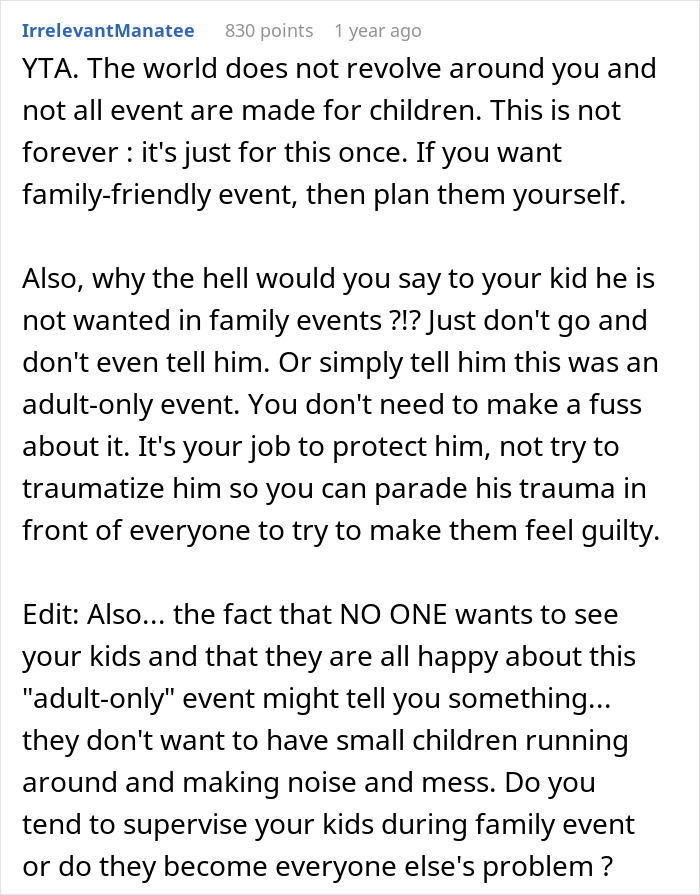
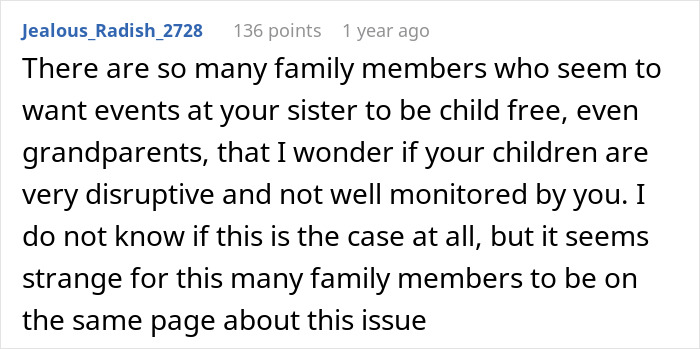
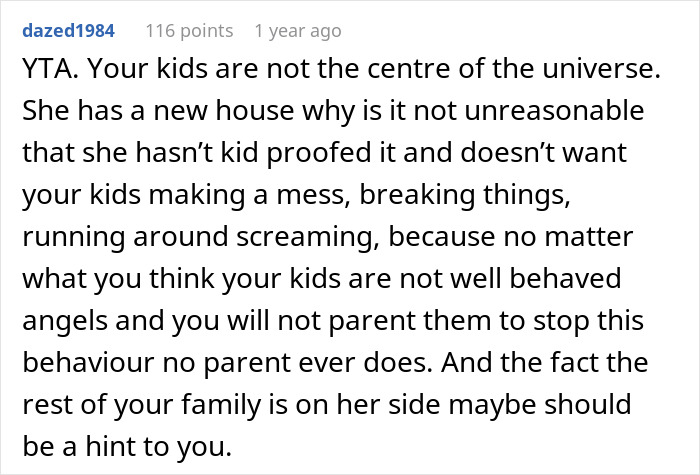
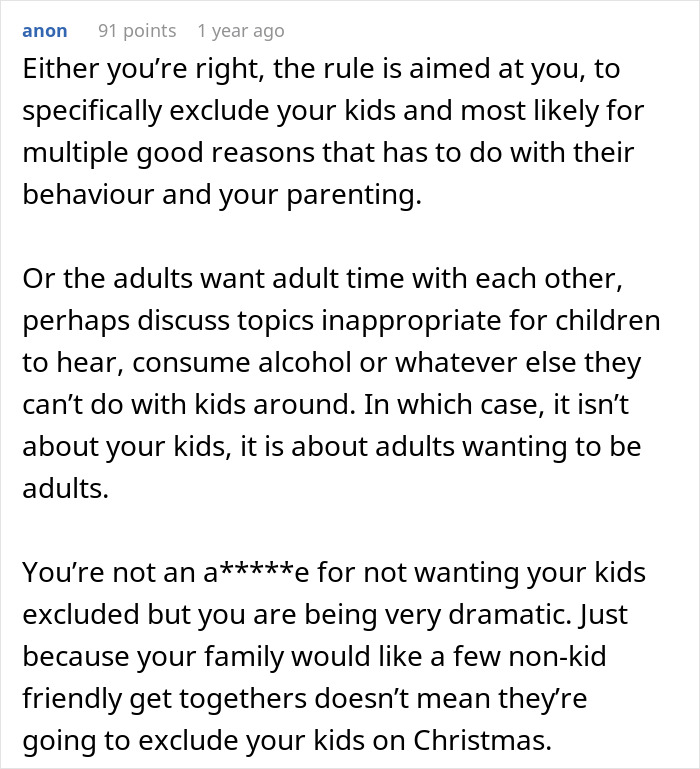
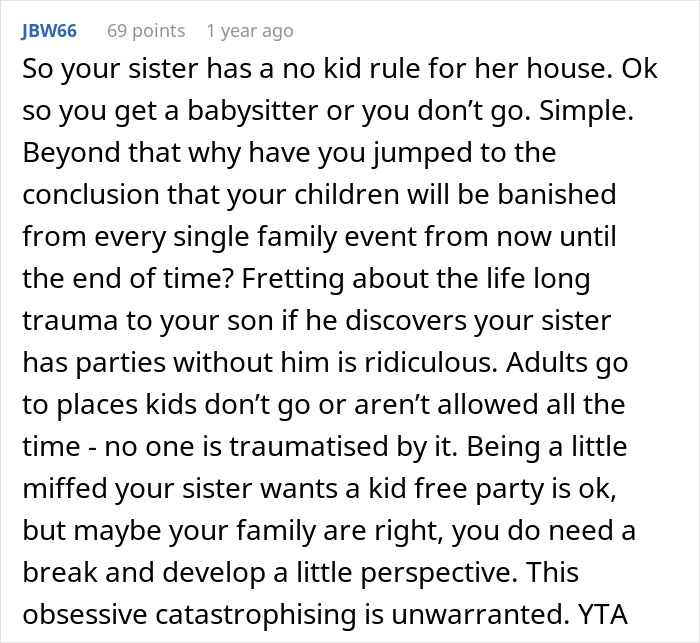
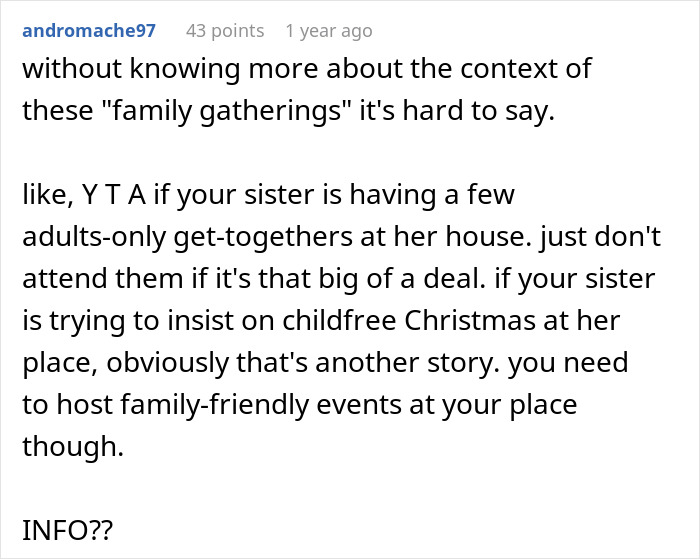
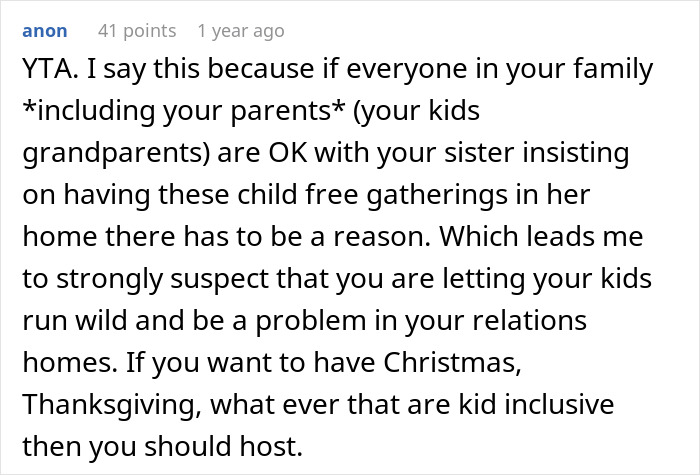
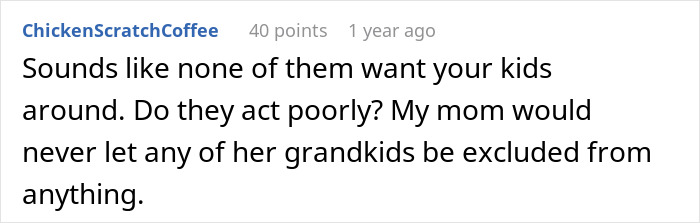
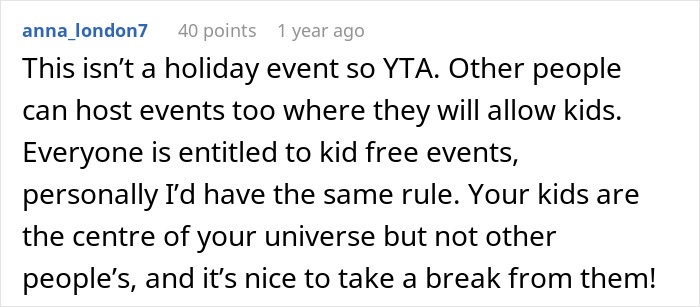
One woman’s solution to that problem was to ask her family members not to bring their kids to events. However, her brother disagreed, taking it as an insult to himself and his children. Interestingly, after he shared his story online, people’s opinions were split. Some noted that maybe his kids really are that disruptive, while others doubted whether he told the whole truth.
Image credits: Vlada Karpovich / Pexels (not the actual photo)
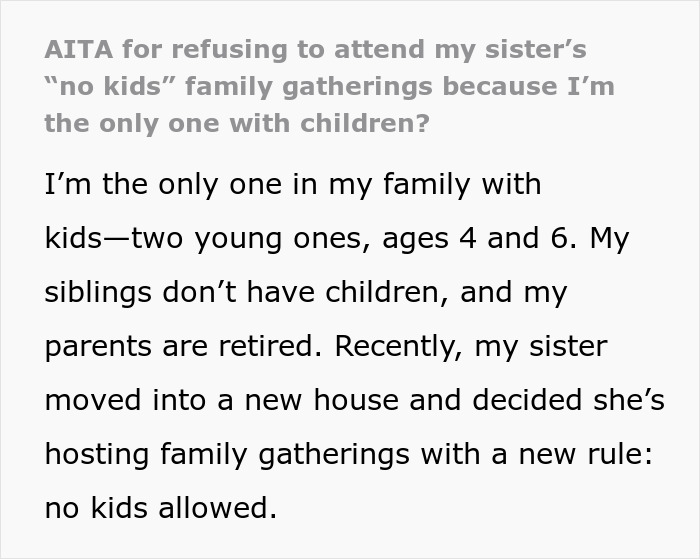
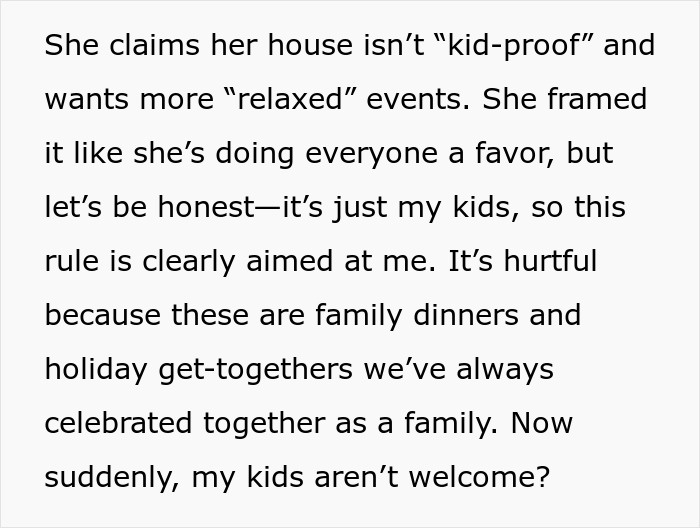
Image credits: Curated Lifestyle / Unsplash (not the actual photo)
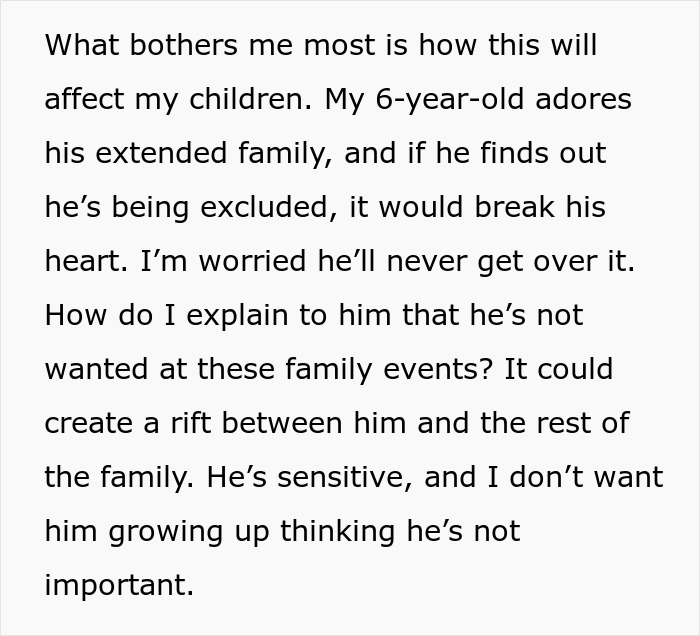
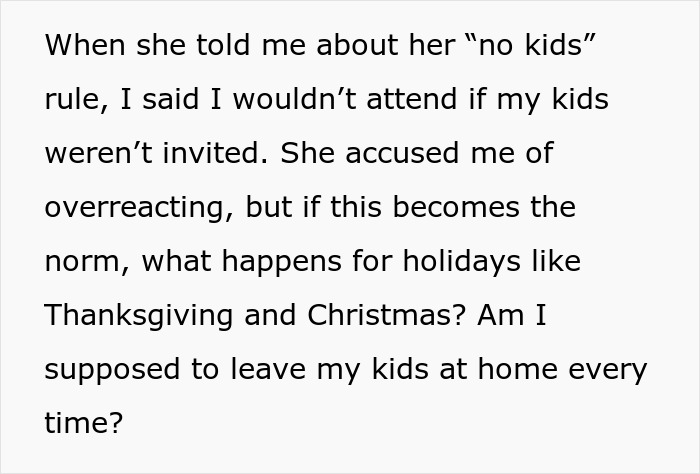
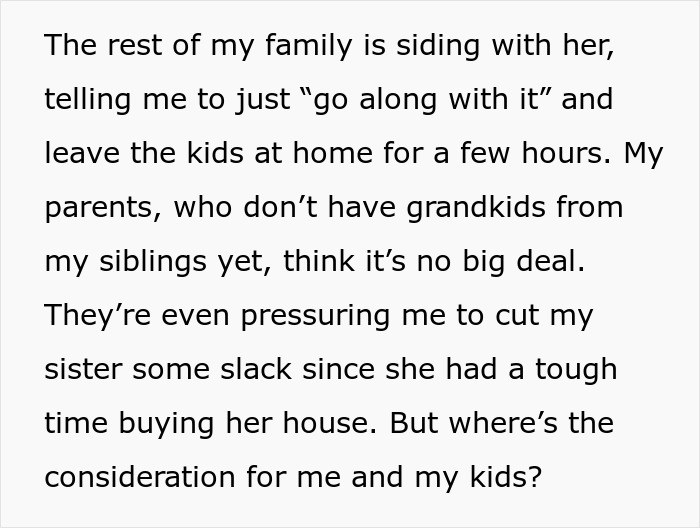
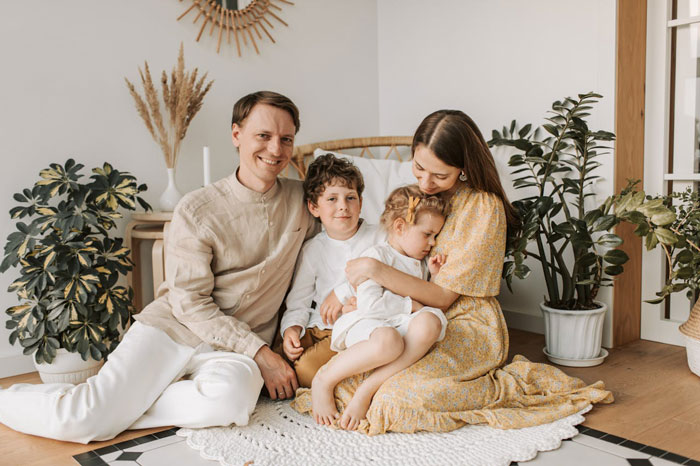
Image credits: Polina Zimmerman / Pexels (not the actual photo)
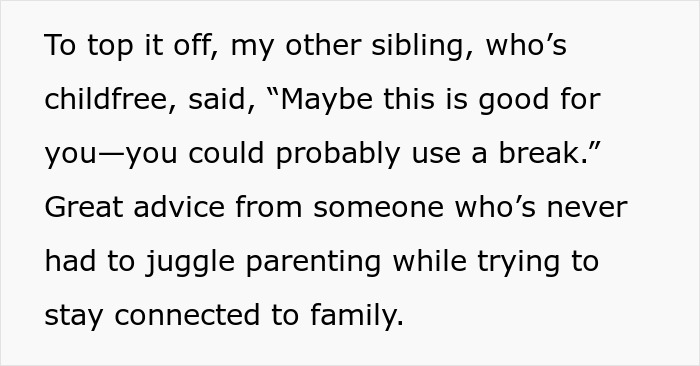
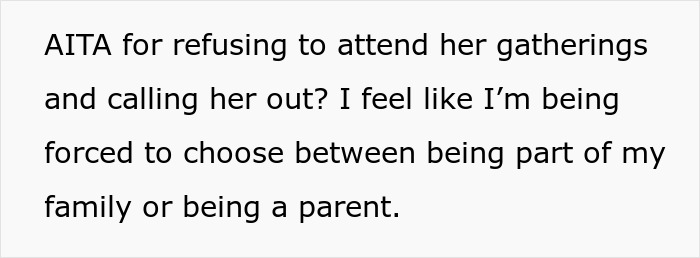
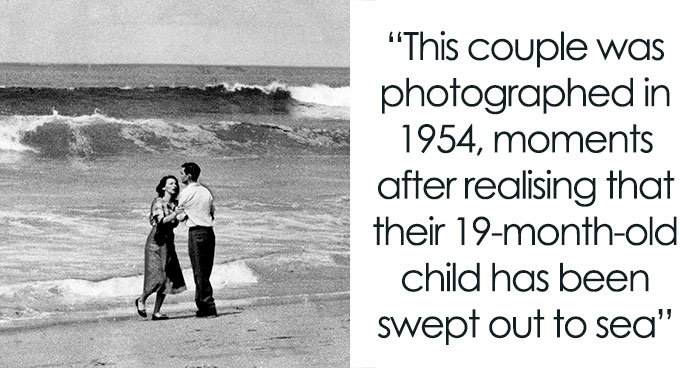
Image credits: partenzedepartures
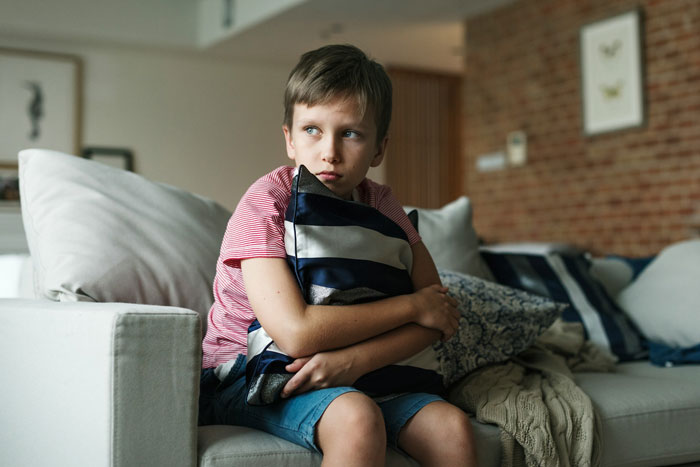
Image credits: Ivan S / Pexels (not the actual photo)
Family events without children might be becoming the norm. That’s especially true for weddings. A whopping 79.5% of weddings in 2024 were planned to be child-free, according to this New York Times article.
Sure, kids at a party or an event can be a handful. They’re not exactly synonymous with order: they shout, break things, and say inappropriate things at the wrong time. However, banning children from attending family gatherings may seem like a good idea to the adults at the moment. In the long run, however, it’s not very beneficial.
Research shows that when children don’t attend family functions, it can lead to them exhibiting more problematic behavior. One study found that children who attended 20 family events a year (including vacations and celebrations) were three times less likely to act in problematic ways and were more prosocial. Those who attended only 10 such events were more likely to have behavioral problems.
Family gatherings are where children learn about social norms, understand how to adapt, and develop prosocial skills. According to another 2019 study, annual events contribute to children’s enhanced social adjustment and even emotional well-being.
“We found that children who came from families with numerous experiences of annual events were more likely to have higher prosocial behavior and were less likely to have externalizing or internalizing problems,” the authors of the study write.
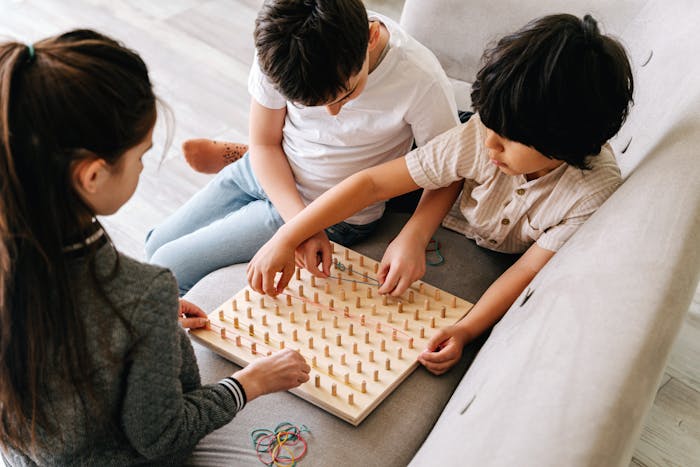
Image credits: Andrea Piacquadio / Pexels (not the actual photo)
Lately, it seems, children are unwelcome in most places. While the commenters under this story were right to say that the world doesn’t revolve around one parent’s child, our society’s increasing general dislike of children is something to be discussed.
In fact, it’s becoming quite common for children to be banned from social spaces. In France, for example, many hotels and resorts have adopted a child-free policy. It’s estimated that child-free establishments make up around 3-5% of the tourism sector. The French government is set to take action, saying that such rules are “organising society around people’s intolerance of others” and “institutionalise and legitimise intolerance.”
In South Korea, some cafes and other urban spaces have adopted “no-kids” zones, effectively banning all children, not just unruly ones. Experts argue that such policies “intensify unwelcoming sentiments toward children and parents.” Mothers are especially affected, as they report feeling unwelcome more often than fathers.
Research shows that children are increasingly disappearing from public spaces. Whether because their parents deem them unsafe or because they just couldn’t be bothered, many children spend most of their time at home and in front of the screen.
“Children are only fully accepted if they remain discreet, docile, and almost invisible,” Sylvain Wagnon, Professor of Education Sciences at the University of Montpellier, writes, “which severely limits their freedom of expression and existence in public spaces.”
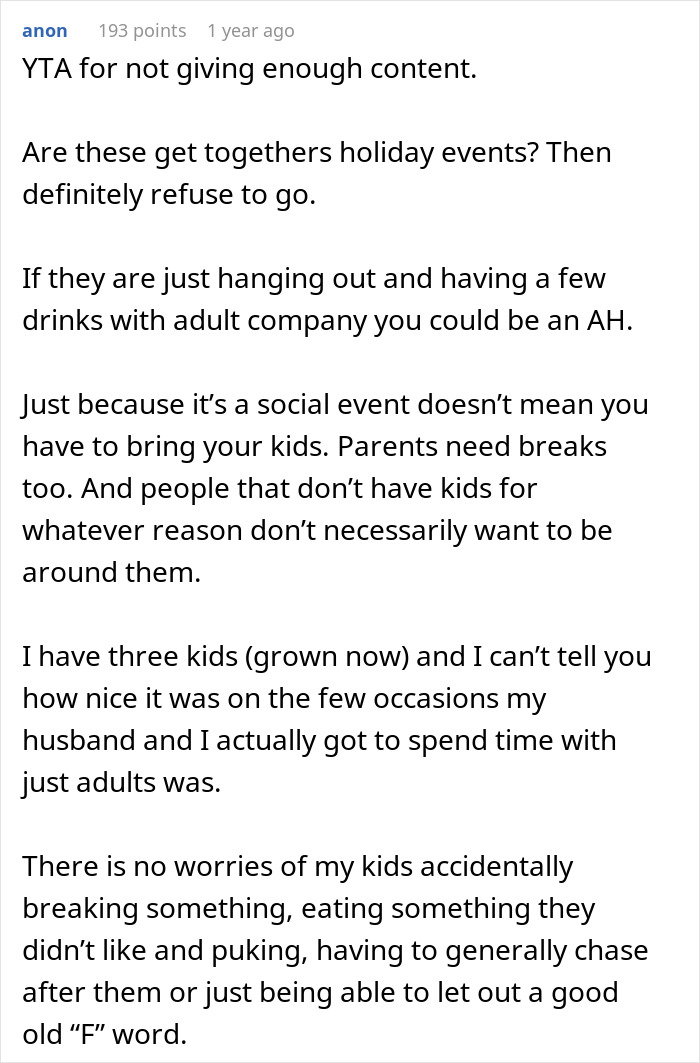
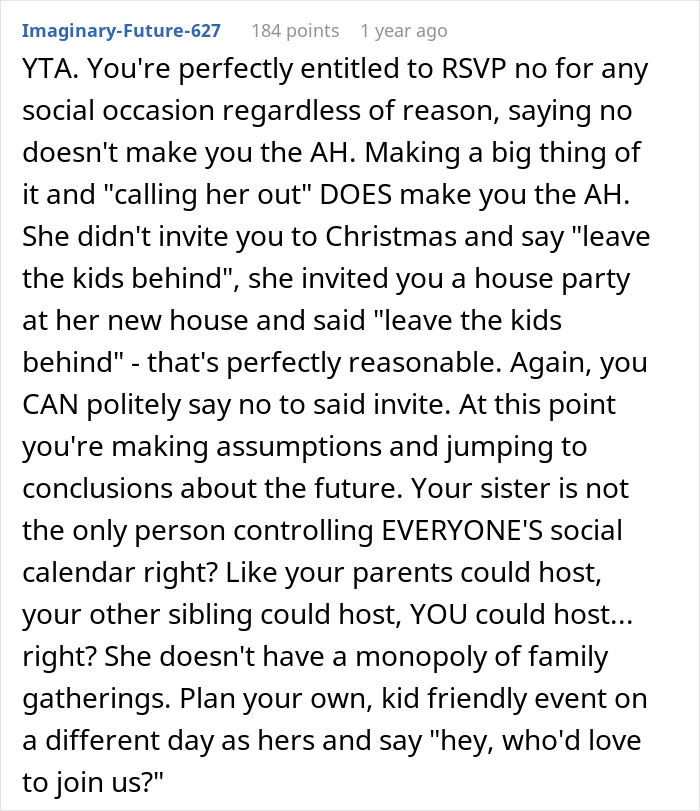
Of course, a person is allowed to decide whether or not their unruly nephew and niece are allowed to visit their home. Yet, there is something to be said about the outdated expectation that children should be seen and not heard.






By entering your email and clicking Subscribe, you're agreeing to let us send you customized marketing messages about us and our advertising partners. You are also agreeing to our Privacy Policy.
Thank you! You've successfully subscribed to newsletters!


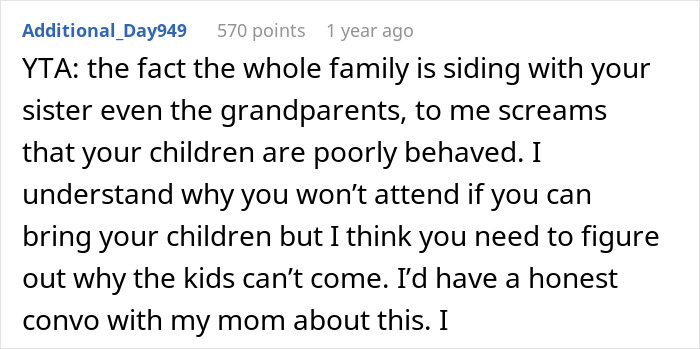
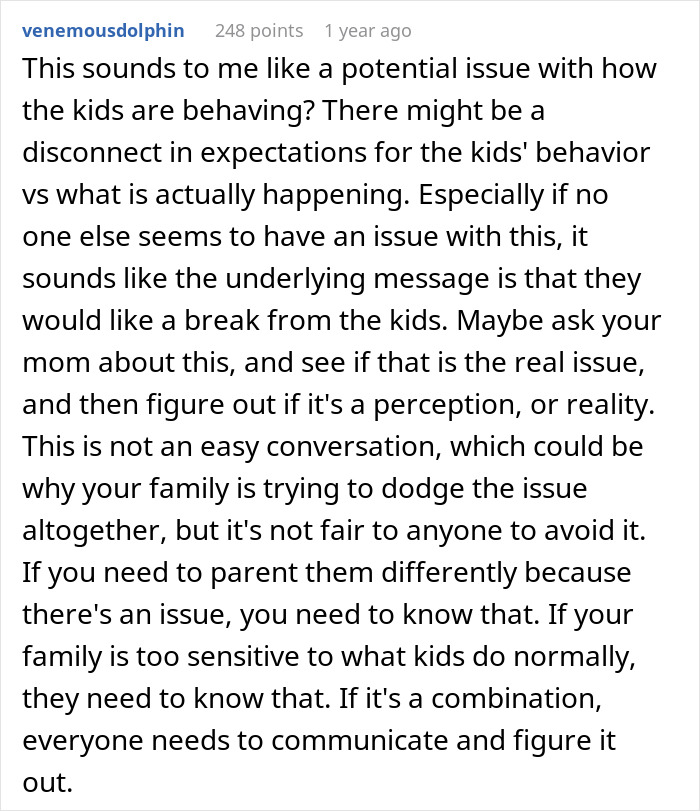
My guess is these kids aren't properly parentented, these "requests" don't come from vacuum.

The fact that everyone backs up the "no kids" rule strongly suggests that the children are not being parented but allowed to run wild. As one of the commenters said "not child proof" is code for "your children are wild". If everyone disagreed, then I would say that the sister is an AH.

Yup I’m getting that vibe to , her kids are basically feral brats n obviously mum can’t see it ,
Load More Replies... My guess is these kids aren't properly parentented, these "requests" don't come from vacuum.
The fact that everyone backs up the "no kids" rule strongly suggests that the children are not being parented but allowed to run wild. As one of the commenters said "not child proof" is code for "your children are wild". If everyone disagreed, then I would say that the sister is an AH.
Yup I’m getting that vibe to , her kids are basically feral brats n obviously mum can’t see it ,
Load More Replies...



















 No fees, cancel anytime









29
7