Get Premium
Dark mode theme is available exclusively for premium users. Learn more about the benefits of subscribing.
No fees, cancel anytime.

 Dark Mode Ad-Free Browsing Unlimited Content
 Ad-Free Browsing Unlimited Content Dark Mode
Join 1.2 million Panda readers who get the best art, memes, and fun stories every week!
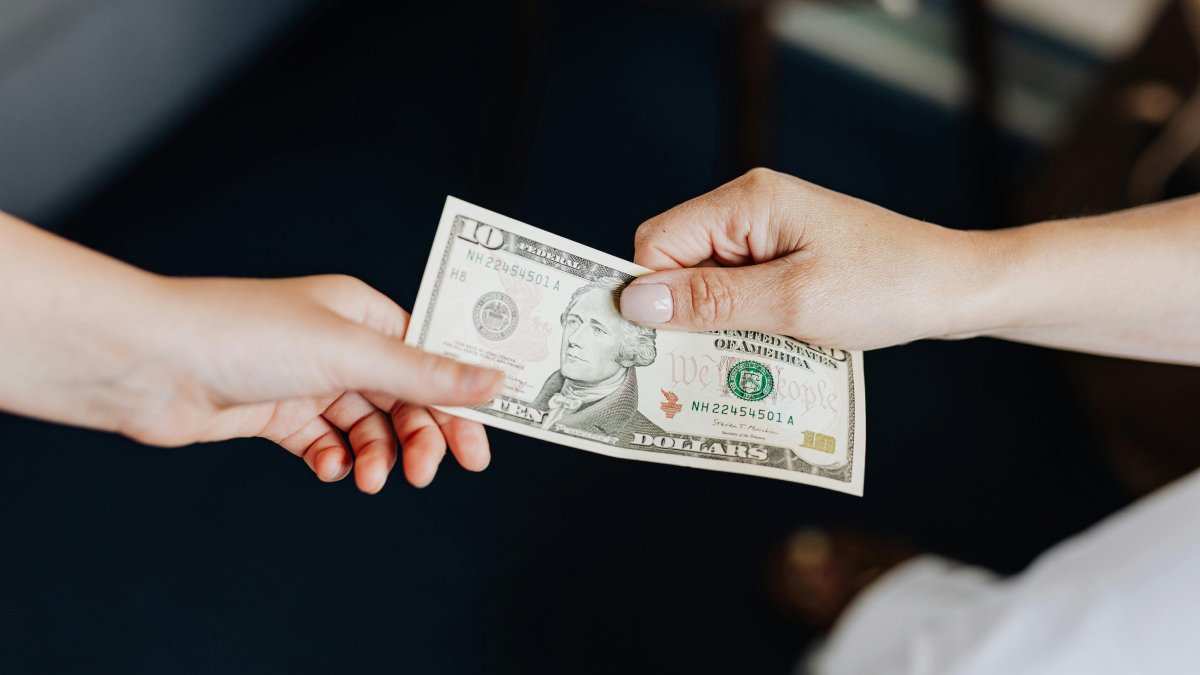



Traveling the world opens your eyes to different cultures and customs. Along the way, you may experience moments of shock, some of which may remain with you for a long time.
Here are some anecdotes from people who were surprised by what they saw during their visits to foreign countries. Some were amazed by the locals' politeness, while others were in awe of the cleanliness of the surroundings.
Scroll through and see if you can relate to any of these stories, and feel free to share yours in the comments!
This post may include affiliate links.
We all know about culture shock, that feeling of confusion when encountering local customs in another country. But as Now Health International explained, there are five stages, beginning with the “Honeymoon period.”
It is described as the “euphoric stage” that may last for weeks or months, during which you can easily identify cultural similarities and find locals to be hospitable and friendly.

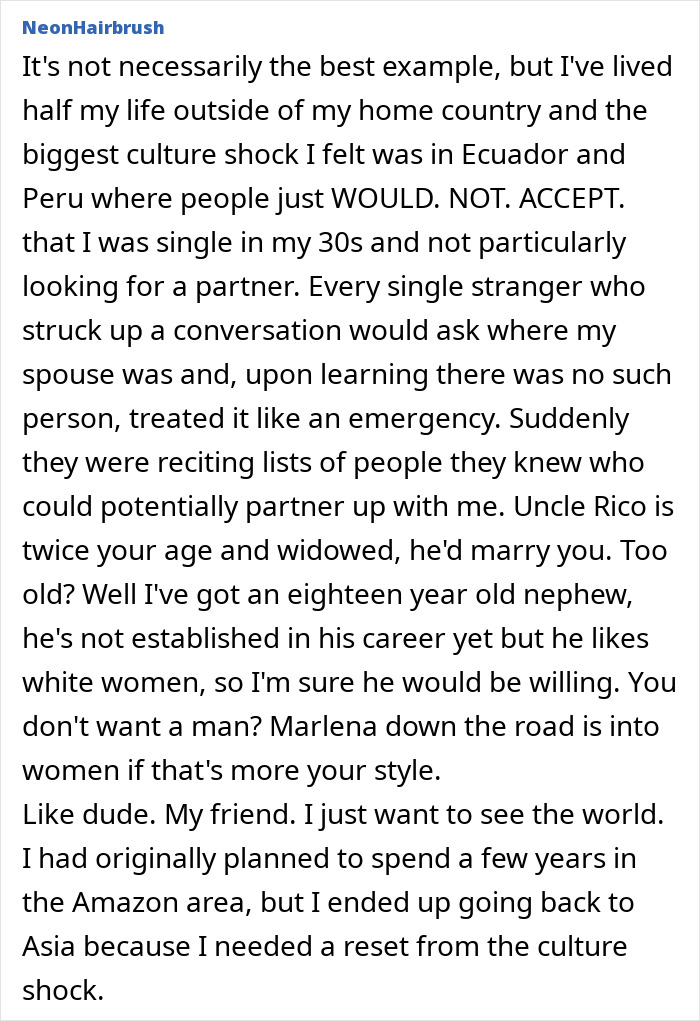
Yes, can confirm. But people in Africa are pretty much the same. It's still a hard to accept concept that you don't want to be involved with someone.

In India people book their seats in public buses by throwing their kerchief or bags through the window
Stage two is the negotiation stage, which is described as a point of “frustration and anxiety.” It is said to happen within month three, where the excitement slowly disappears.
Here, small things can cause annoyance, such as street signs or ordering at restaurants, which may cause confusion. It’s also the time when you may start to miss friends and loved ones back home.
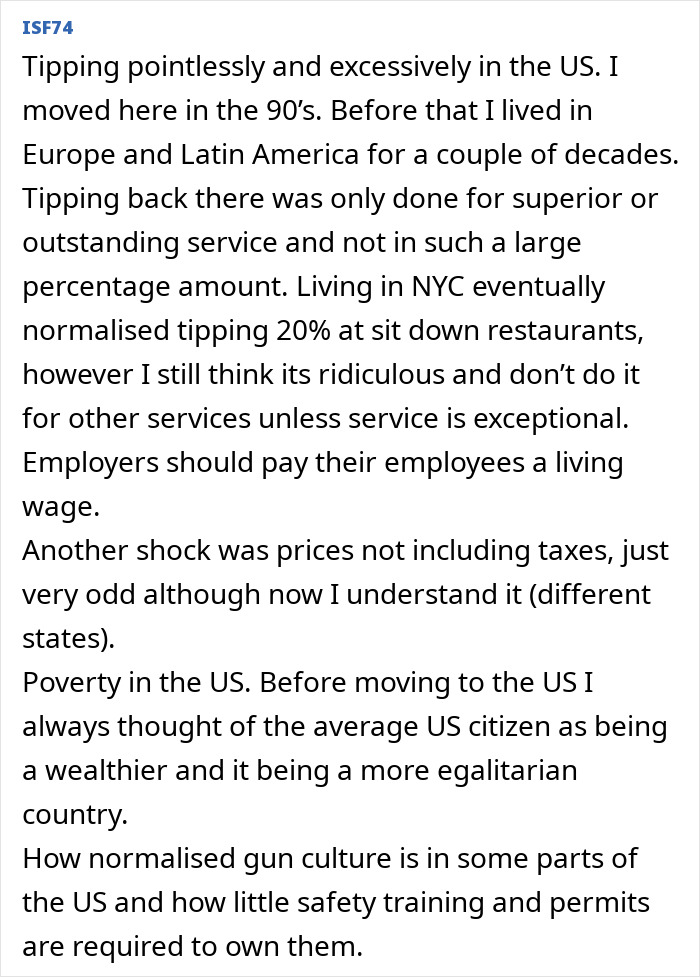
In America that they have been brainwashed to think of “politics “ as an inappropriate topic. This is in part because they seem unable to have civil discussions about important things but also (IMO) because this has been instilled as a means of desensitizing them to what is going on. And look where that has landed us…

Stage three is when the adjustment happens, usually between the sixth and twelfth months. It is the point at which you, as the visitor, may become more comfortable and familiar with the local way of life. You may have also made a few friends or learned some of the local languages.
Difficulties may still happen from time to time, but you are more able to handle them rationally.

Stage four is when you begin to adapt. You no longer feel as isolated as you were in the first few months, and you’re now used to your daily activities with the close circle of new friends you’ve made.
The euphoria of the honeymoon phase is no longer there because it has since been replaced by a sense of belonging.
One of my pet peeves as an expat Brit in the US for 25 years was how almost everyone has to work into the conversation that they go to church. “Oh I know them from church”, “he goes to my church”, we did such and such after church”. I always felt it was disingenuous. Ok so you go to church. That doesn’t mean you are a good person or even (particularly… and noticeably in the US these days) a Christian.
The fifth and final phase actually happens upon returning to your home country. This is when reverse culture shock sets in, and you realize how different everything had been. There’s a sense of feeling like an outsider, even amongst family and friends.
Scandinavian and surrounding countries seem to have the best balance, IMHO.
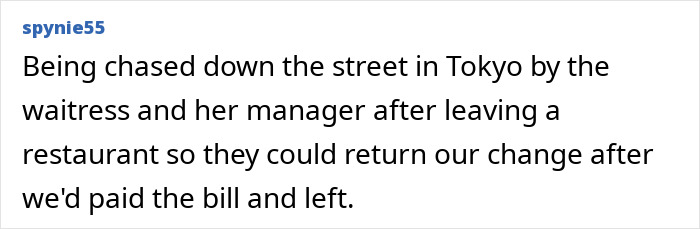
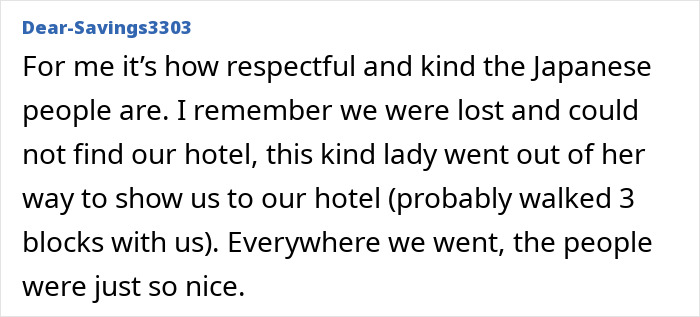
No place is perfect, but I love Japan. The courtesy and respect are amazing.
So, what is the best way to cope with culture shock? According to the University of Kansas, it can be as simple as staying connected with home comforts through food, activities, and rituals.
Staying active also helps, as does visiting public places or sporting events to observe local customs and behaviors.
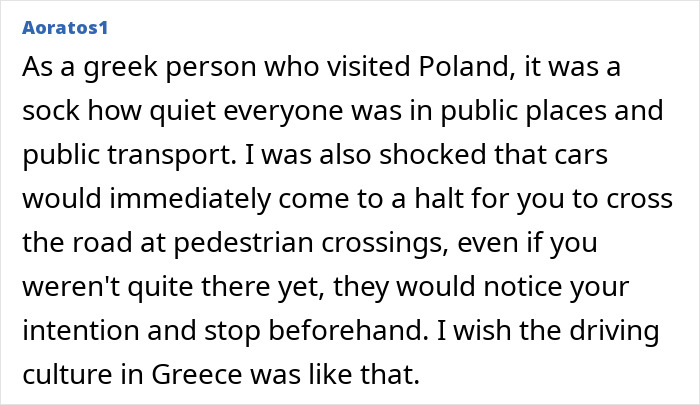
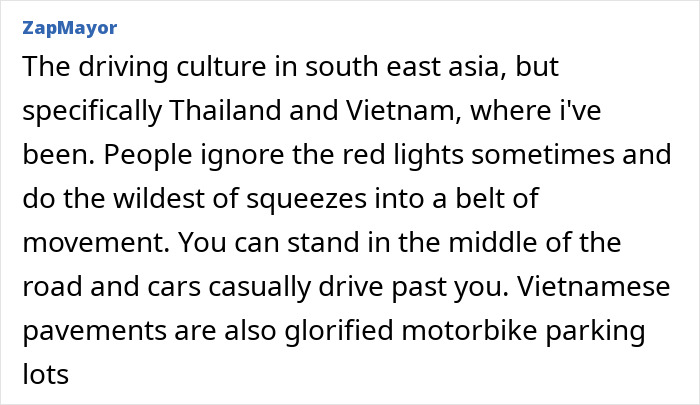
In Estonia you will get fined if you did not stop. Police once tried to fine me for not stopping for a guy who was on sidewalk 1m away from the road just standing, scrolling on his phone. I pointed out that the guy was STILL standing in the exact same place and refused to accept the ticket

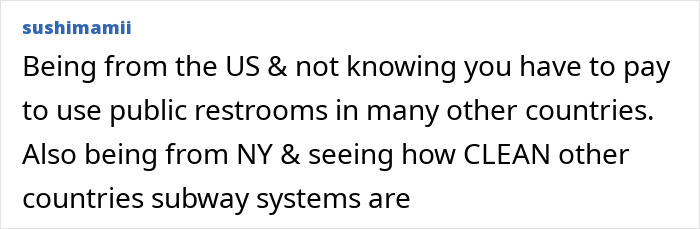
I never realized how easy it is to find a public bathroom in the U.S. then I went to Dublin and almost wet myself because I spent a long time looking for one, and didn't know you had to pay. Someone put the coins in for me and I thanked them as I was running for the toilet. 😁
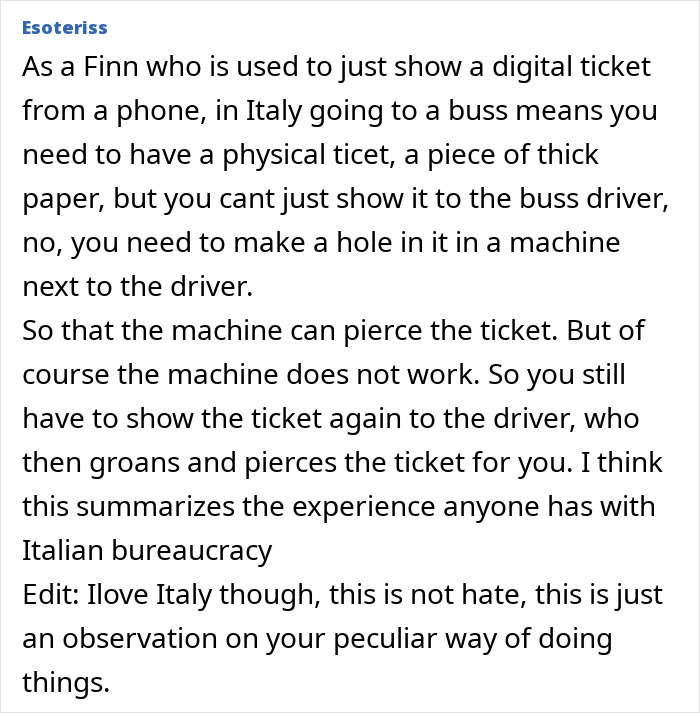
After spending lots of time in Italy (which we adore!) we eventually came up with the 5% rule. No matter how amazing the experience you have to be prepared for the 5% that is f****d up. It might drop to just 1% or go up to 50% plus but if you're prepared for it it's easier to cope with. Our slang for a completely disorganised and chaotic mess became "It was an Italian roundabout of a situation".

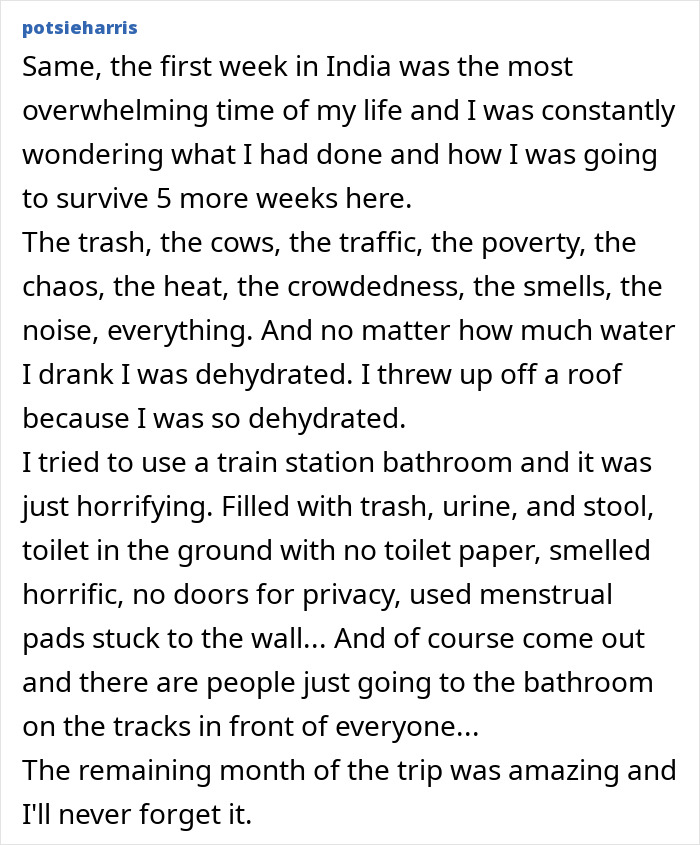
Cultural Shock? Yes. Cultural misunderstanding? Also yes Hindu tradition considers the woman as part of the Husband's family tree. So marrying with sister's children is accepted. But it's not accepted when it's your brother's children. Eventhough this has reduced a lot due to scientific reasons and western influence in our culture, some people still practice this
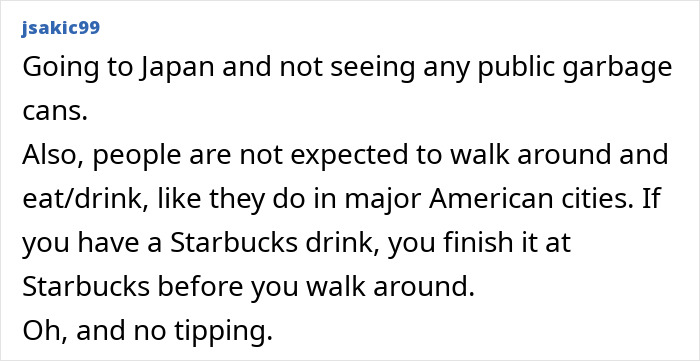
Yep, no trash cans because you shouldn't be making any trash while walking around. The trash cans are at the business you buy something, not on the street. Don't eat/drink and walk and make a mess.

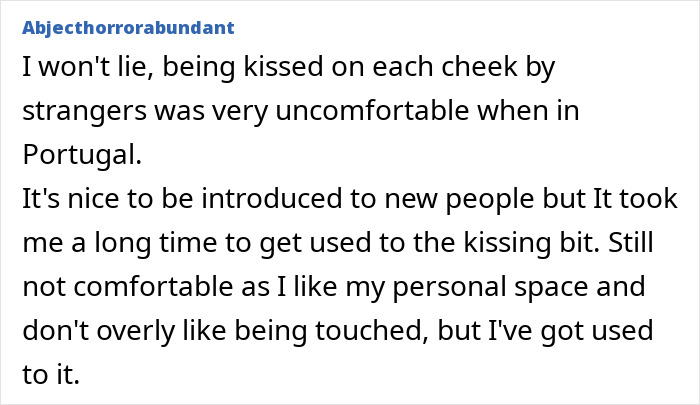
I (US) met someone from Portugal when I was a young teen. She did the double-kiss and I went home and told my parents I'd been "French kissed" because I'd only heard of French folks doing that. I was a stupid teen.
This became a thing in the late 1990s and we couldn't believe it at first either.
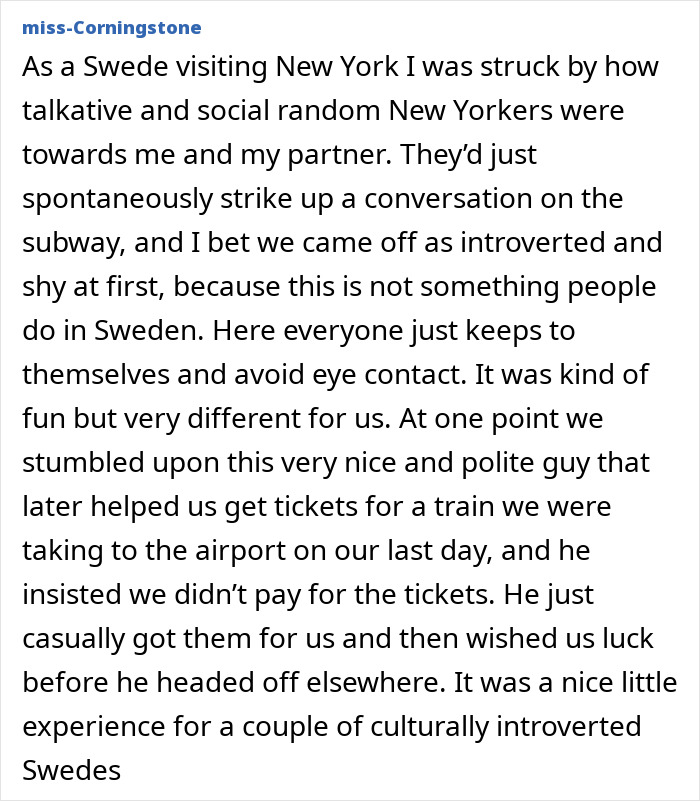
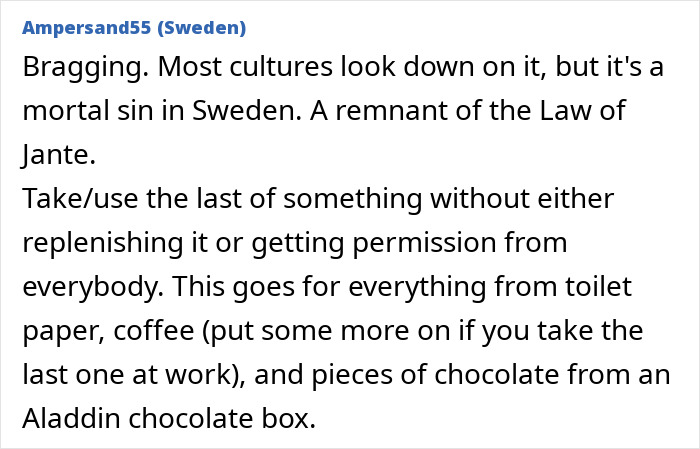
I dated a Swede and he bragged about everything. It was very obnoxious.
This needs more context. Do they mean well-cared-for children happily playing outdoors, or at-risk children who are not being looked after?

...and many other European countries, too. In Germany you can get a minimal supply of highly overprized stuff at gas stations, bakeries are open in the morning (fresh buns are THE breakfast staple), and a handful of pharmacies have are on emergency duty - that's about it for your sunday shopping experience here 90 % of the time. Exceptions being local festivities and the four advent sundays before Christmas.
I thought AC buses are common in airports. Atleast in warm and hot countries. We have that even in domestic terminals
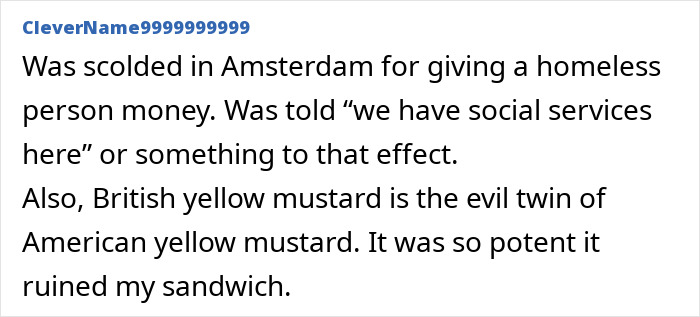
Yeah, I've heard that our mustard catches out quite a few people when they first try it. The best description I've heard is "French mustard is a delicate blend to compliment and enhance your food. English mustard is designed to make your nose bleed."
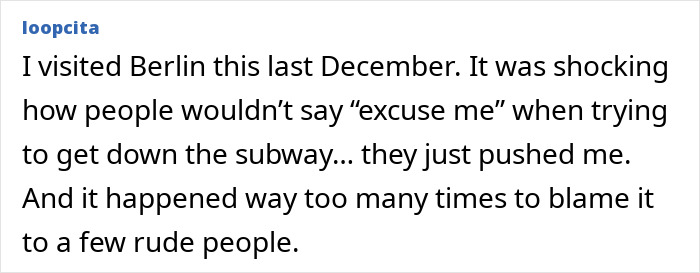
Stay on the right, to let people passing on your left, and this won't happen.

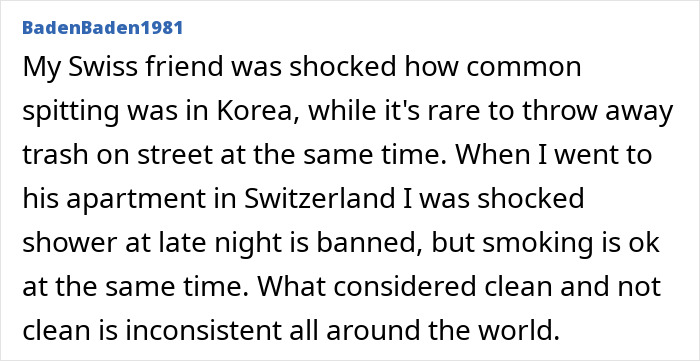
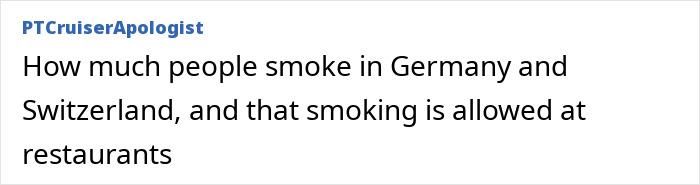
How old is this comment? It is not allowed to smoke in restaurants or bars anymore in Germany. As a non-smoker, I love to eat my food without a smoky smells. There are some expectations of this rule, though. If clearly stated, you can smoke in a bar and If you are sitting outside a Café, it is also allowed sometimes.
I would beg you to open it inside. I love the smell but I don't really enjoy eating them

For me it was going into stores in the States and being treated like a human being. I got greeted warmly, helped, and talked to. We don't have customer service here, if you get grunted at you're lucky in most places. Though they will point at a tip jar and look hopeful. We don't tip in New Zealand. I go out of my way to be as polite as possible because I want to treat others as I would like to be treated.

It's not kindness, it's a business model. They hire more people per square meter of a store and entertaining customers is part of the employees' job description. A customer actually pays for all these interactions in the form of more expensive goods.
Load More Replies...
I was actually shocked at how similar Vancouver was to Melbourne. The only difference was the constant smell of m*******a when walking down the street (found out I have a strong almost allergic reaction to it). Canada wide it also seemed that while they were very familiar with gluten allergies (although only the cities guaranteed I would find something I could eat easily) they didn't really get milk/lactose allergies. In Melbourne all cafes stock at least three alternatives to regular milk, including lactose free, whereas I just kept getting offered 2% in Canada.
For me it was going into stores in the States and being treated like a human being. I got greeted warmly, helped, and talked to. We don't have customer service here, if you get grunted at you're lucky in most places. Though they will point at a tip jar and look hopeful. We don't tip in New Zealand. I go out of my way to be as polite as possible because I want to treat others as I would like to be treated.
It's not kindness, it's a business model. They hire more people per square meter of a store and entertaining customers is part of the employees' job description. A customer actually pays for all these interactions in the form of more expensive goods.
Load More Replies... I was actually shocked at how similar Vancouver was to Melbourne. The only difference was the constant smell of m*******a when walking down the street (found out I have a strong almost allergic reaction to it). Canada wide it also seemed that while they were very familiar with gluten allergies (although only the cities guaranteed I would find something I could eat easily) they didn't really get milk/lactose allergies. In Melbourne all cafes stock at least three alternatives to regular milk, including lactose free, whereas I just kept getting offered 2% in Canada.
























 No fees, cancel anytime