Get Premium
Dark mode theme is available exclusively for premium users. Learn more about the benefits of subscribing.
No fees, cancel anytime.

 Dark Mode Ad-Free Browsing Unlimited Content
 Ad-Free Browsing Unlimited Content Dark Mode
Join 1.2 million Panda readers who get the best art, memes, and fun stories every week!

Most people have a list of things they will not tolerate in a relationship. Research shows that people usually list five or six things that they would consider deal-breakers in a long-term relationship. They include hygiene, distance, lack of intimacy, and some negative personality traits.
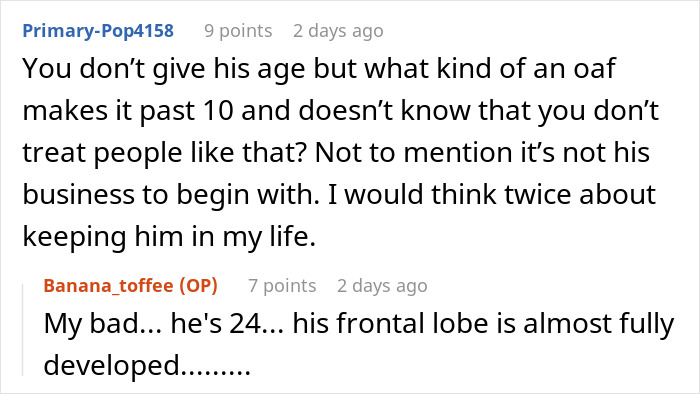
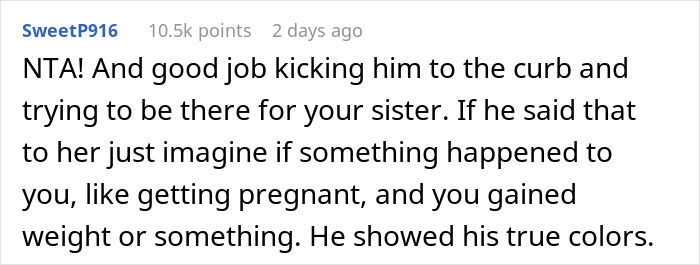
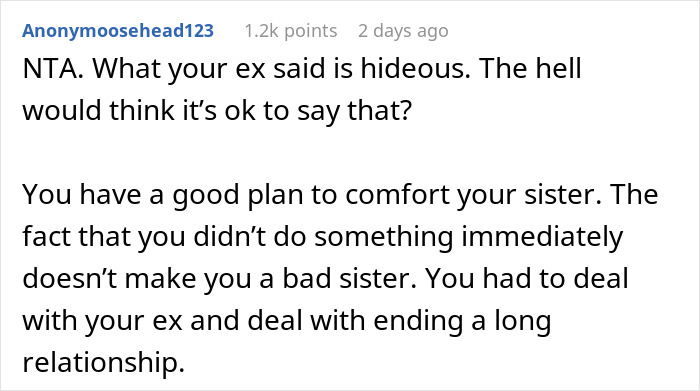
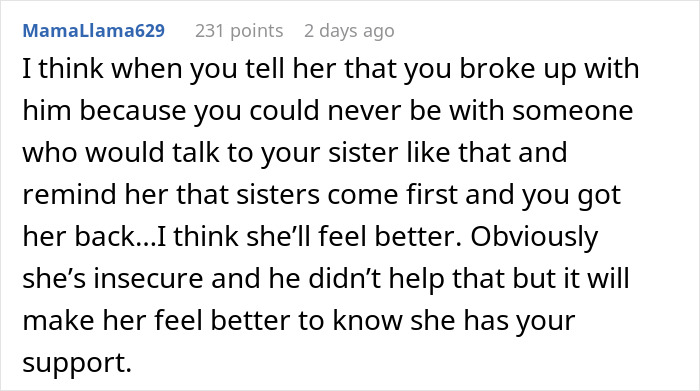
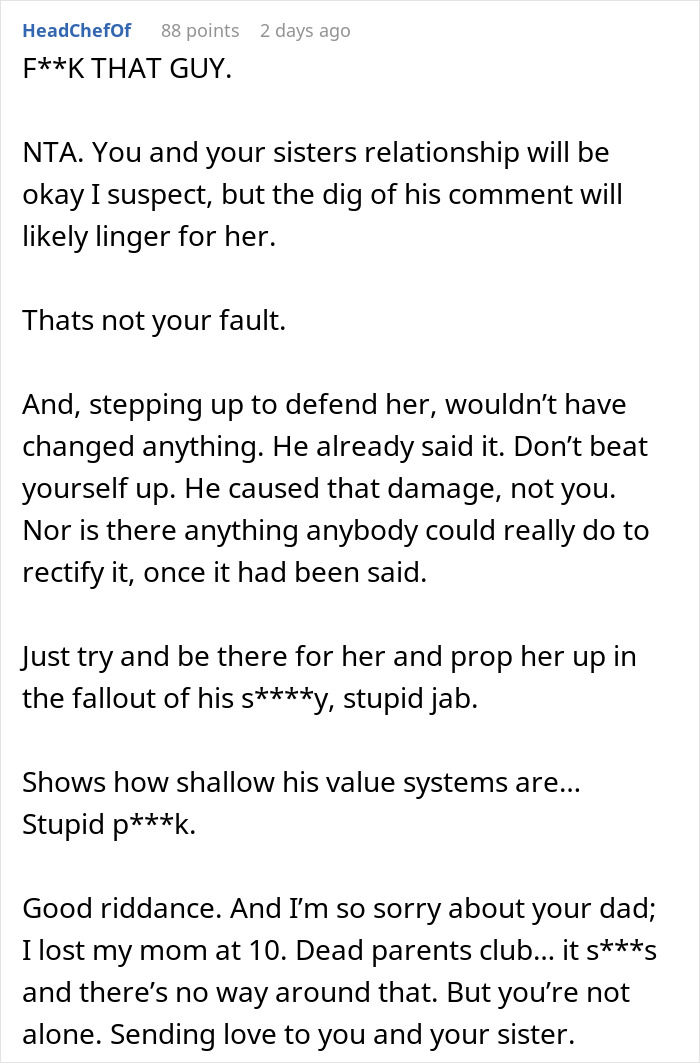
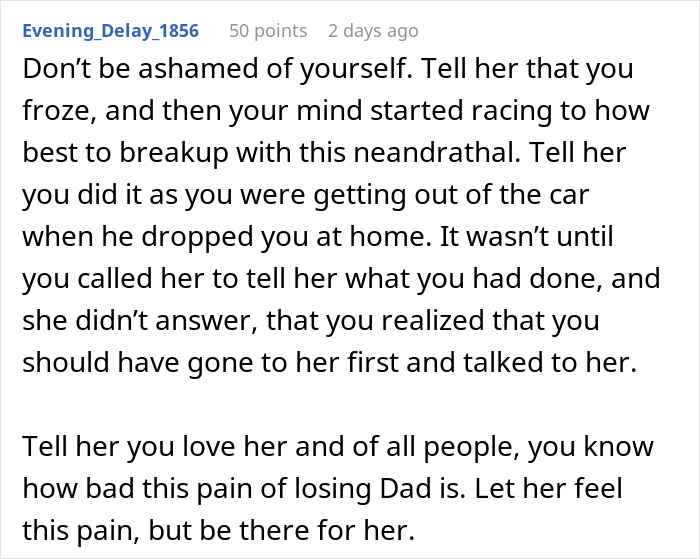
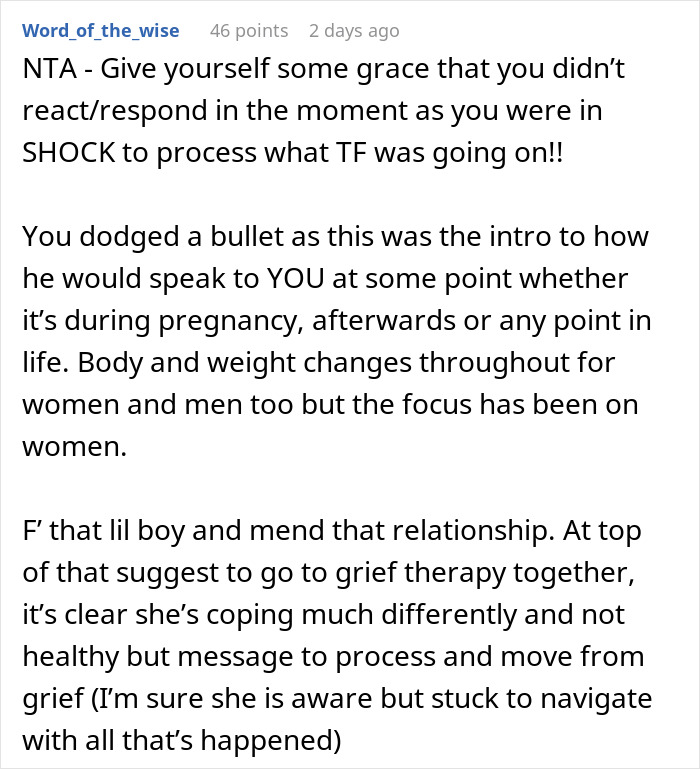
For this woman, fat-shaming her half-sister was a definite deal-breaker. After her boyfriend insulted her sister for how she looked, she immediately ended a relationship that spanned three years. When he called her reaction an exaggeration, she went online to ask for unbiased opinions. Did she really overreact when he made a mean comment about her sister’s weight?
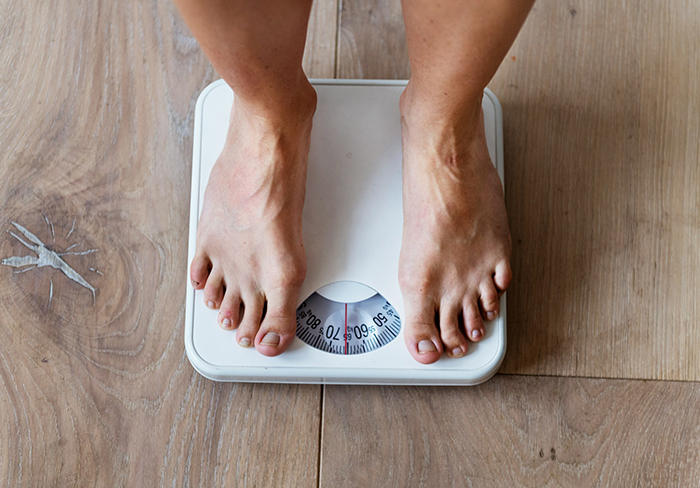
Image credits: pe_jo / freepik (not the actual photo)
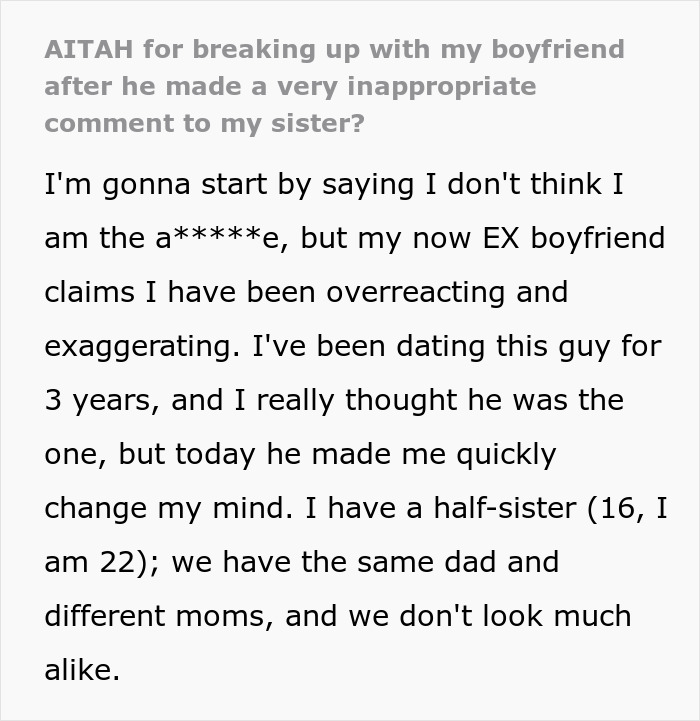
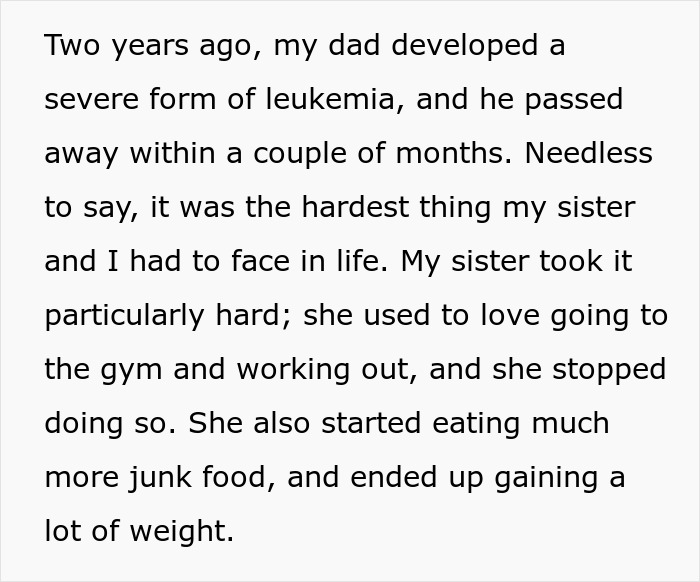
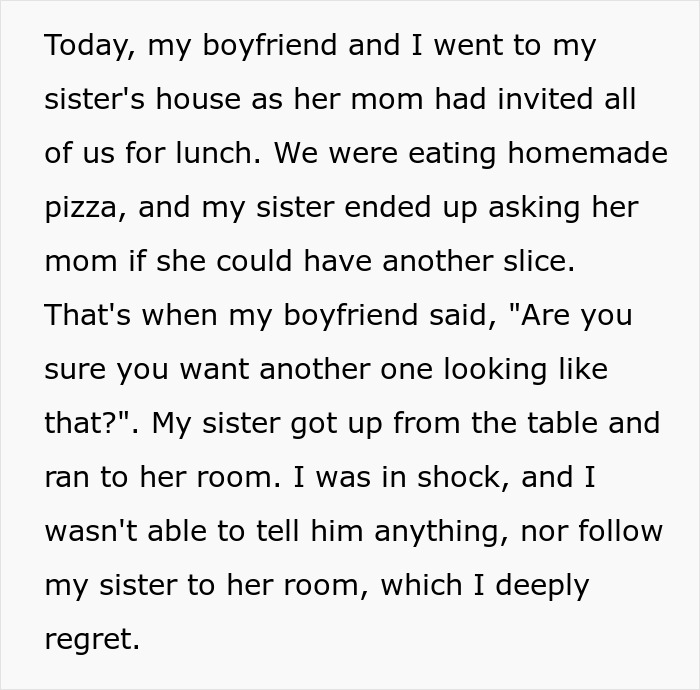
Image credits: wavebreakmedia_micro / freepik (not the actual photo)
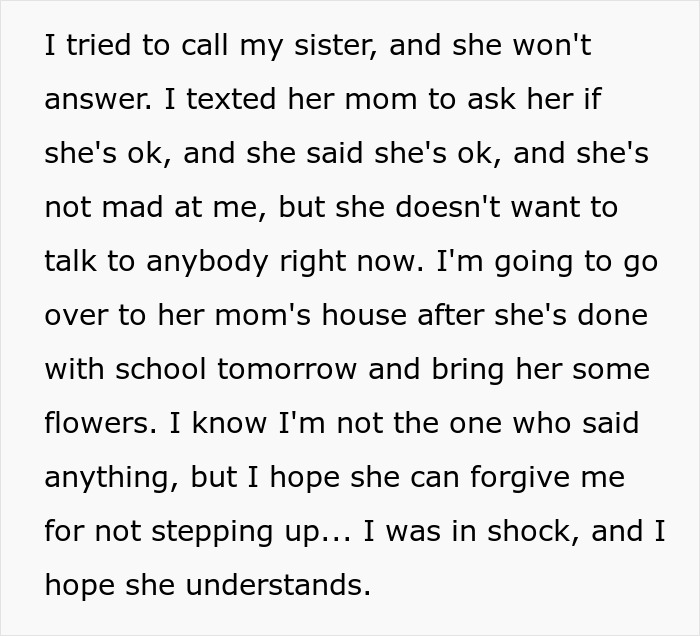
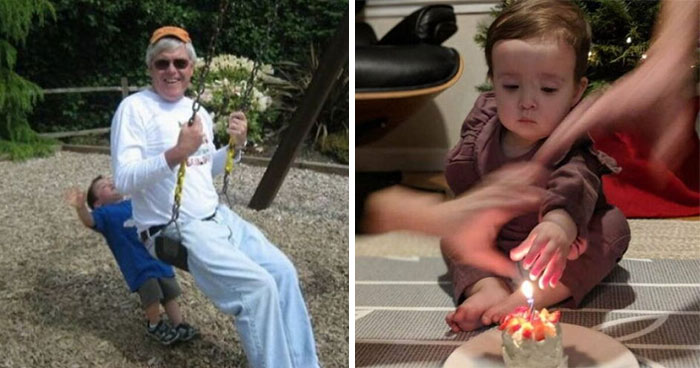
Image credits: Banana_toffee
No matter how many strides we make as a society in learning to accept others as they are, fat-shaming still seems prominent. According to the National Eating Disorders Association, 40% of American adults say they have experienced weight stigma at some point in their lives.
With teens, the statistics are even worse. The National Institutes of Health report that 45% of children and teens have body image issues. Teenage girls have it the worst: 53% of American girls are dissatisfied with how their bodies look. When they reach 17, that percentage rises to a whopping 78%.
Experts say that social media and unattainable, unrealistic beauty standards are to blame. However, many young women experience mean comments about their bodies in their home environments. According to a 2010 study, 35.9% of young female adults received hurtful weight-related comments from family members.
A teen doesn’t need to hear the words “You’re fat” to internalize them and start being dissatisfied with their bodies. One study found that when mothers engaged in “fat talk,” their teens were more likely to have poorer self-esteem and greater body dissatisfaction. Interestingly, the researchers claim that the hurtful words didn’t affect the teens’ eating behaviors.
Not only are such comments hurtful and out of line, they also do not help. As public health expert JoAnn Stevelos, MS, MPH, writes for Psychology Today, it doesn’t encourage people to lose weight. On the contrary, it can cause people to self-soothe and eat even more.
“When we internalize fat-shaming messages, we turn off our rational selves, who know that weight is a complicated issue caused by behavioral, biological, emotional, and environmental factors,” Stevelos explains. “When shame burns inside us, we can forget that weight is not a reflection of our or our child’s character.”
Image credits: Curated Lifestyle / unsplash (not the actual photo)
The two young women in this story experienced one of the most significant losses a person experiences throughout their lifetime: the loss of a parent. Grief can do funny things to our minds and bodies: people can fall into depression, their lifestyles change, and they may put on some extra weight.
According to the National Alliance for Eating Disorders, grief changes a person’s appetite, weight, and sleeping patterns. If they don’t have the tools and capacity to cope with the loss, they might even develop an eating disorder.
Individuals may seek comfort or a sense of control through food and choosing what and how much they eat. Focusing on food and their bodies also provides a distraction from sadness, guilt, and pain associated with grieving.
“Trauma keeps a score in the body in ways that we might not comprehend or fairly guess,” counseling psychologist Nishtha Jain explains. The stress of grieving can have a direct impact on our bodies, too. “Traumatic experiences push the body into survival mode, which slows metabolism further and can become an additional factor contributing to more fat storage,” she adds.
Body’s physiological processes play a role in this, too. Stress during grief may lead to an overload of the stress hormone cortisol, which increases our appetite and drives coping behaviors such as overeating or undereating.
“Weight gain during grief or trauma is not a sign of weakness or lack of willpower,” Nishtha reiterates. “It is the body’s natural response to psychological pain. When people understand this connection, they stop blaming themselves and start focusing on healing both mind and body together.”























By entering your email and clicking Subscribe, you're agreeing to let us send you customized marketing messages about us and our advertising partners. You are also agreeing to our Privacy Policy.
Thank you! You've successfully subscribed to newsletters!


That's why we date, to get to know people. When you figure out that person does not share your values, you don't waste any more time with them.

That's why we date, to get to know people. When you figure out that person does not share your values, you don't waste any more time with them.






























 No fees, cancel anytime






31
3