Get Premium
Dark mode theme is available exclusively for premium users. Learn more about the benefits of subscribing.
No fees, cancel anytime.

 Dark Mode Ad-Free Browsing Unlimited Content
 Ad-Free Browsing Unlimited Content Dark Mode
Join 1.2 million Panda readers who get the best art, memes, and fun stories every week!
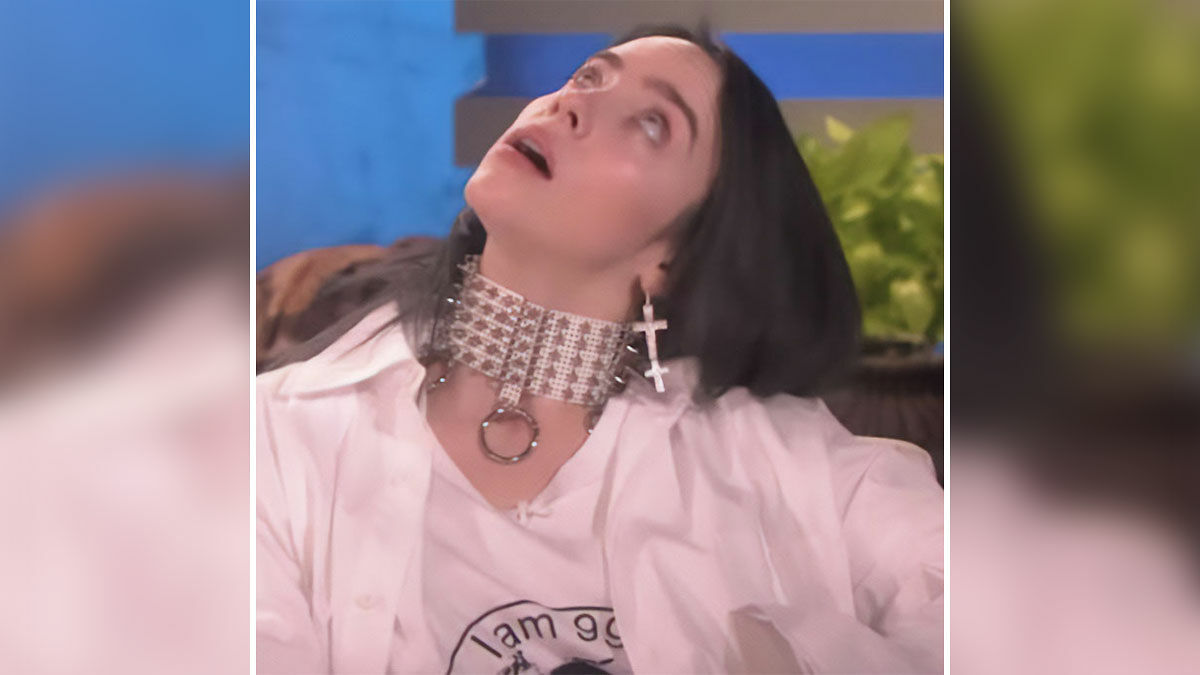
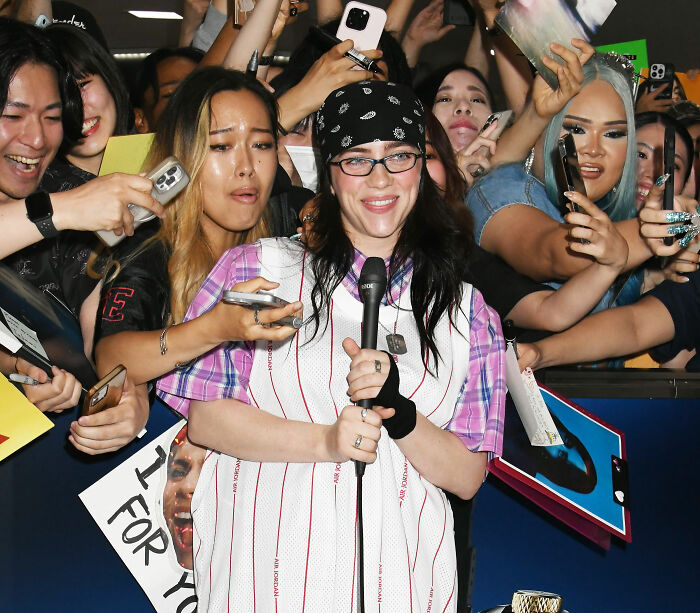
Billie Eilish has never hidden her struggles with Tourette syndrome. But critics online brazenly accused her of making up her diagnosis as a “total PR activity” for attention.
“She’s so fake” and an “attention-seeking narcissist,” the internet snarked.
According to experts, this line of accusation shows how people have too many misconceptions about such disorders.
Image credits: Arturo Holmes/Getty Images
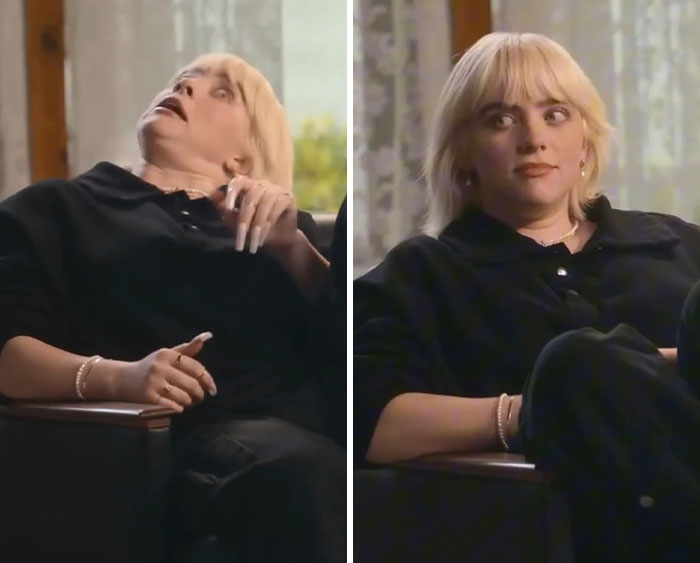
Recently, a Billie Eilish interview with David Letterman resurfaced, showing the singer briefly experiencing tics on camera.
The disorder involves repetitive movements or unwanted sounds (tics) that are difficult to control and can sometimes interfere with communication, everyday activities, and overall quality of life.
“If you film me for long enough, you’re going to see lots of tics,” Eilish told the host on his My Next Guest show on Netflix in 2022.
Image credits: TheEllenShow
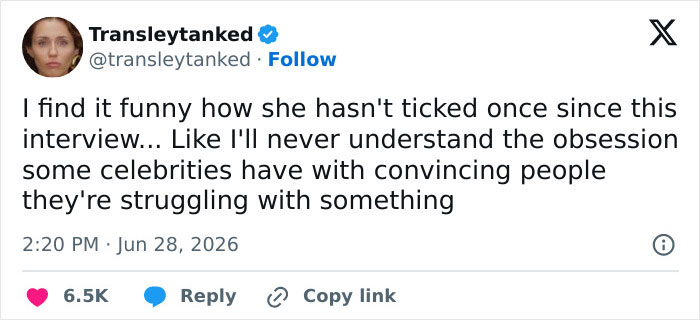
Image credits: transleytanked
After Eilish was seen having tics on camera, netizens failed to show sympathy but accused her of faking it, claiming she “just loves to get sympathy points.”
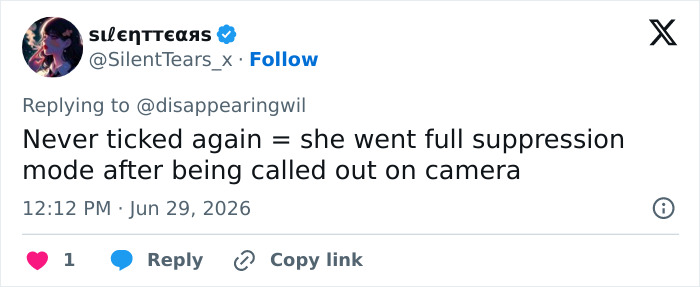
“I find it funny how she hasn’t ticked once since this interview… Like I’ll never understand the obsession some celebrities have with convincing people they’re struggling with something,” one said.
“I’ve told everyone I know that this is performative fake bulllsh**,” another wrote. “She’s so desperate to be different.”
Others pointed out how it was extremely problematic to make assumptions, saying, “Funny how people only believe someone’s condition is real when it’s visible 24/7.”
I find it funny how she hasn’t ticked once since this interview… Like I’ll never understand the obsession some celebrities have with convincing people they’re struggling with something pic.twitter.com/UtoqJBZydH
— Transleytanked (@transleytanked) June 28, 2026
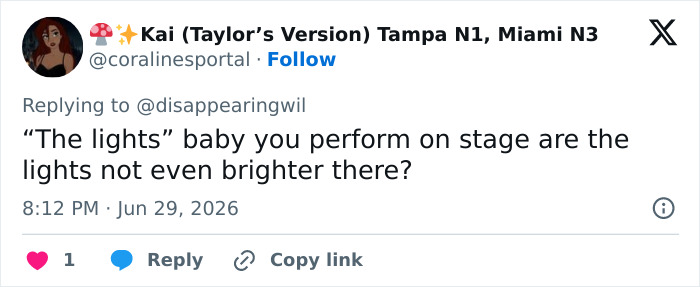
Image credits: coralinesportal
Michael S Okun, MD, Distinguished Professor and Director of the Norman Fixel Institute for Neurological Diseases and author of the book Tourette Syndrome: 10 Secrets to a Happier Life, said a celebrity “appearing well on camera” does not mean they are “free of disability.”
“A brief television interview is never a neurological examination. We should all be careful not to speculate about anyone’s condition without an in-person examination and permission of the person or family to discuss the details. This is the heart of the Goldwater rule,” he told Bored Panda.
The Goldwater Rule is an ethical guideline in psychiatry that says mental health professionals should not diagnose or offer a professional opinion about a public figure’s mental health without personally examining them.
Image credits: Jun Sato/WireImage
Eilish isn’t the first public figure to have her health scrutinized by the internet.
“We have seen this pattern before with Parkinson’s disease, including unfair speculation directed at Michael J. Fox and other public figures, where people assumed that because someone appeared well on camera, they must be exaggerating or fabricating their condition. That conclusion is not supported by medical science,” Dr. Okun said.
Celebrity confessions about mental health and ad**ction are also overly scrutinized by the public.
billie eilish – the greatest (hit me hard and soft the tour) pic.twitter.com/68uPAZVTfk
— kauã (@kauzws) June 27, 2026
Viewers recently claimed there was “something very fishy” about Tom Holland’s storyline about his alcohol problem.
This pattern reflects people’s tendency to treat a celebrity’s personal health journey as their public property.
Additionally, this also reinforces harmful stereotypes about what an illness is supposed to look like. And if someone struggling with physical or mental challenges does not fit this mold, they may be left feeling like their experiences are dismissed or invalid.
Image credits: transleytanked
When it comes to neurological disorders like Tourette syndrome, Dr. Okun said one must avoid drawing medical conclusions based on brief public appearances because symptoms can “fluctuate dramatically over minutes, hours, and days.”
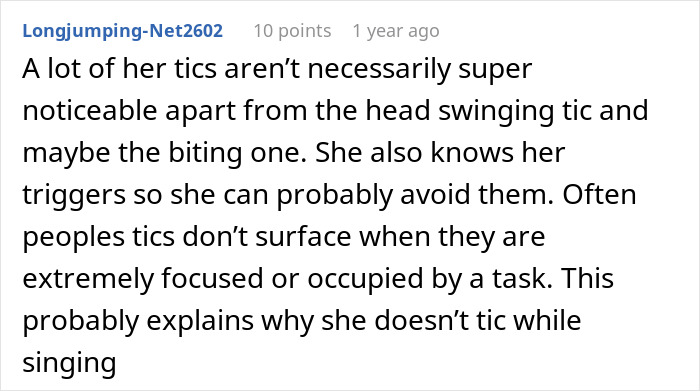
Moreover, tics are not expected to be present continuously in people with Tourette syndrome, he explained.
“Many individuals with Tourette syndrome can voluntarily suppress tics for short periods, particularly in structured environments such as interviews or performances,” he said.
“Suppression often comes at a cost, with tics becoming more pronounced afterward,” he added. “The absence of visible tics during a brief interview tells us very little about the underlying diagnosis.”
Yeah because she suppose to tic 24/7 on camera to prove to people on the internet that she has Tourette’s you’re not the doctor that diagnose her when she was 11 she has tic before and after that if it was bad bunny your ass what’ve been feeling sorry for your papi. pic.twitter.com/bWm92DZuFi
— Selena 🪩 (@lenabillzspv) June 29, 2026
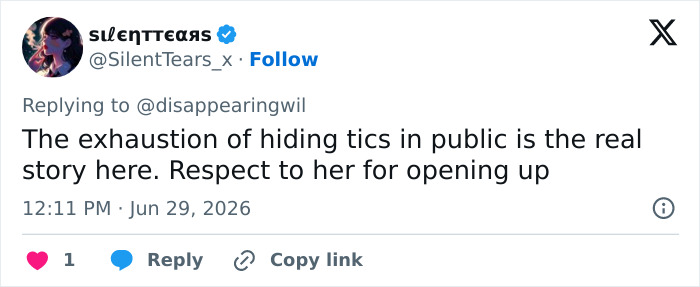
Image credits: SilentTears_x
Eilish, who was diagnosed with Tourette syndrome at age 11, said she experiences vocal tics, but they’re “mostly just noises and [she] can keep them pretty quiet.” She also noted that she has gotten good at “suppressing” them.
“I go through phases of words becoming tics, but there’s a thing called suppressing, if you ever heard of it,” she said last month on Amy Poehler’s Good Hang podcast.
“When I’m in an interview, I’m doing everything in my power to suppress all of my tics constantly,” she said. “And as soon as I leave the room, I have to let them all out.”
Image credits: billieeilish
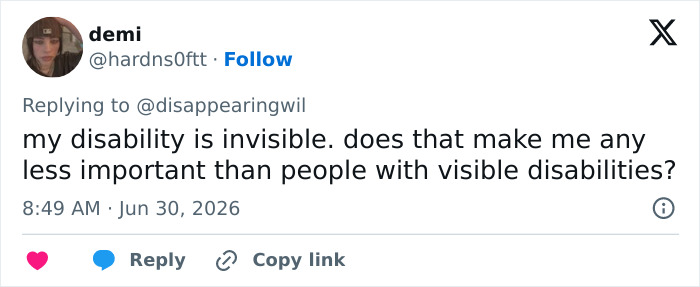
Image credits: hardns0ftt
One of the biggest misconceptions about Tourette syndrome is that the symptoms look the same across all diagnosed individuals.
The reality is that they can vary from “person to person and from moment to moment,” Dr. Okun said.
“Excitement, anxiety, concentration, fatigue, familiarity with the environment, and social context can all influence tic expression,” he continued.
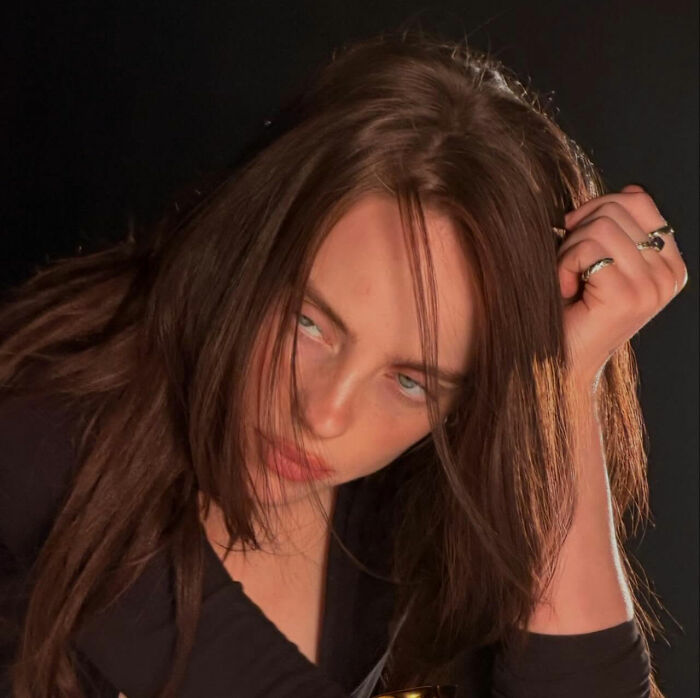
Image credits: billieeilish
“Some individuals experience fewer visible tics while intensely focused, whereas others may have more. The variability is part of the disorder itself,” he continued.
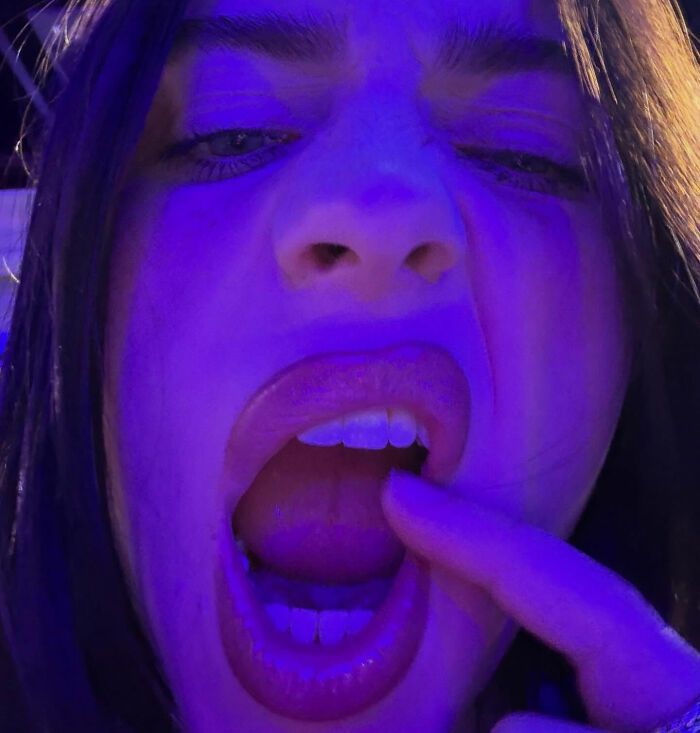
During her appearance on the Good Hang podcast, Eilish spoke about how she may get tics from the “top of her head to [her waist]” but does “everything” she can to “suppress every single tic that’s visible.”
“If I start having a tic attack, like a lot of tics in a row, people are like, ‘Are you OK?’ This is very much normal,” the singer said.
“It’s like, if you didn’t see me tic today, you’re not looking at my knees, which are tic-ing constantly under this table, and my elbows that are like … I’m clenching my arms the entire time,” she continued.
Image credits: agnesmutua2
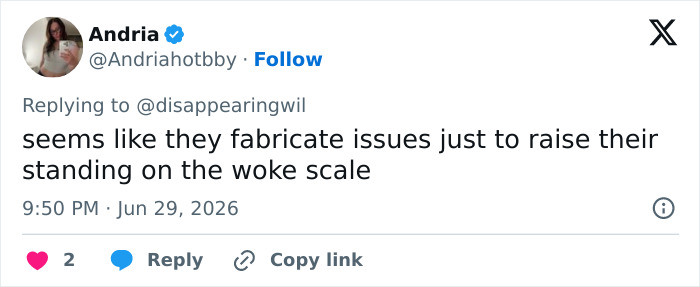
Image credits: Andriahotbby
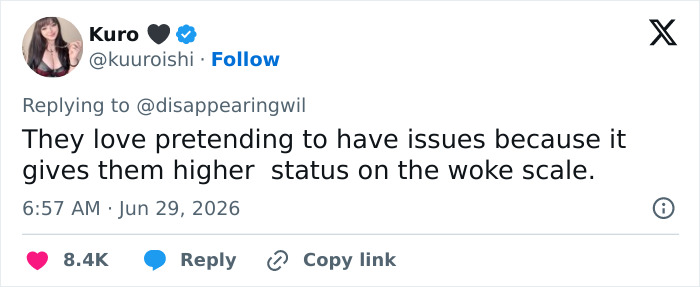
Image credits: kuuroishi
Image credits: ReturnOfTheAce
Image credits: SilentTears_x
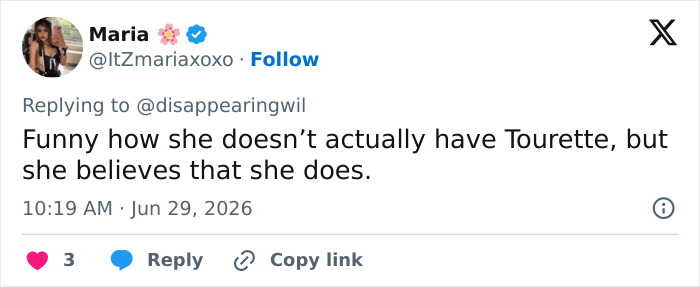
Image credits: ItZmariaxoxo
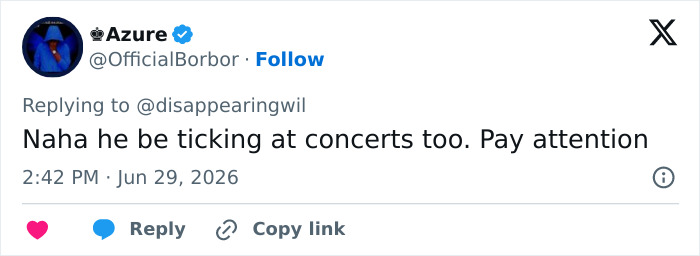
Image credits: OfficialBorbor
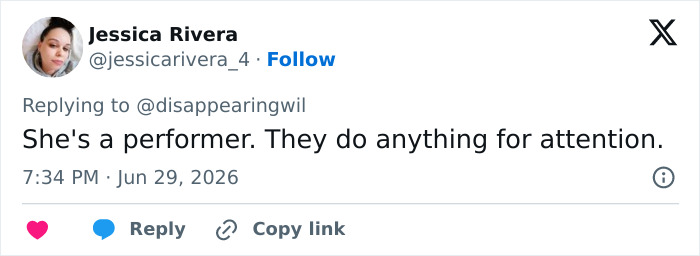
Image credits: jessicarivera_4

By entering your email and clicking Subscribe, you're agreeing to let us send you customized marketing messages about us and our advertising partners. You are also agreeing to our Privacy Policy.
Thank you! You've successfully subscribed to newsletters!


My dad had Tourette Syndrome. You can suppress the tics entirely for a while, but suppression itself causes stress and can trigger worse tics. My dad was very embarrassed about his tics and often avoided being out in public or in front of a group of people. It's worth noting that the vast majority of people who fake Tourette's (and quite a few people have, in the past) usually choose to fake the coprolalia tic, the one where you "curse" uncontrollably, but that particular tic is seen in less than 10% of Tourette's sufferers. Coprolalia is way more "interesting" for an influencer/streamer to fake than physical tics are. I don't know if Eilish has Tourette's or not because I'm not very fond of her in general, so I don't pay much attention to her overall, but if she does, it's not really a big deal. And showing "no tics" for a while doesn't mean she doesn't have it, as tics can come and go and often come on in "bouts" of tics, and then can fade for days or even weeks at a time.

My daughter has TS. She no longer is taking any meds as they do very little to calm the tics. Also the tics change. She has a few that have been common for years, but new ones appear. Thankfully, she works from home so has less tension with coworkers. I cannot imagine being a celebrity/performer and having to suppress her tics all the time. The coprolalia most often occurs during the teen years and then vanishes.
Load More Replies...
The comments feel like a push from a certain side that doesn't believe mental illness or neurodevelopmental disorders are actually real. Many of these people still think "afflicted" individuals can be "cured" by being more devoutly religious. I get it, I don't "look autistic." I'm definitely not "faking symptoms" just to appear more "woke." Who even uses that word anymore, lol.


Both things can be true. She can have Tourette’s Syndrome and also be a narcissist.
My dad had Tourette Syndrome. You can suppress the tics entirely for a while, but suppression itself causes stress and can trigger worse tics. My dad was very embarrassed about his tics and often avoided being out in public or in front of a group of people. It's worth noting that the vast majority of people who fake Tourette's (and quite a few people have, in the past) usually choose to fake the coprolalia tic, the one where you "curse" uncontrollably, but that particular tic is seen in less than 10% of Tourette's sufferers. Coprolalia is way more "interesting" for an influencer/streamer to fake than physical tics are. I don't know if Eilish has Tourette's or not because I'm not very fond of her in general, so I don't pay much attention to her overall, but if she does, it's not really a big deal. And showing "no tics" for a while doesn't mean she doesn't have it, as tics can come and go and often come on in "bouts" of tics, and then can fade for days or even weeks at a time.
My daughter has TS. She no longer is taking any meds as they do very little to calm the tics. Also the tics change. She has a few that have been common for years, but new ones appear. Thankfully, she works from home so has less tension with coworkers. I cannot imagine being a celebrity/performer and having to suppress her tics all the time. The coprolalia most often occurs during the teen years and then vanishes.
Load More Replies... The comments feel like a push from a certain side that doesn't believe mental illness or neurodevelopmental disorders are actually real. Many of these people still think "afflicted" individuals can be "cured" by being more devoutly religious. I get it, I don't "look autistic." I'm definitely not "faking symptoms" just to appear more "woke." Who even uses that word anymore, lol.
Both things can be true. She can have Tourette’s Syndrome and also be a narcissist.











 No fees, cancel anytime








4
12