Get Premium
Dark mode theme is available exclusively for premium users. Learn more about the benefits of subscribing.
No fees, cancel anytime.

 Dark Mode Ad-Free Browsing Unlimited Content
 Ad-Free Browsing Unlimited Content Dark Mode
Join 1.2 million Panda readers who get the best art, memes, and fun stories every week!
Looking up at the night sky can make our everyday problems feel very small. But through the lenses of talented astrophotographers, the universe becomes even more extraordinary, revealing colors, patterns, and details that our eyes alone could never hope to see. That sense of wonder is at the heart of ZWO Astronomy Photographer of the Year, the annual competition run by Royal Observatory Greenwich, supported by ZWO and held in association with BBC Sky at Night Magazine.
Now in its 18th year, the contest welcomes photographers of all skill levels from around the world, with entries spanning everything from aurorae and galaxies to the Sun, Moon, planets, nebulae, and night skies shaped by the human landscape. Bored Panda readers may remember that we also featured the competition's spectacular 2025 shortlist. This year, almost 4,000 images were submitted by 769 entrants, representing 66 countries. From those thousands of submissions, 140 photographs have made the full shortlist. The competition brings together an expert judging panel drawn from different disciplines in art and astronomy, with photographs considered for their technical skill, artistic merit, and originality. Alongside eight adult categories, the competition also includes the ZWO Young Astronomy Photographer of the Year competition and two special prizes: the Sir Patrick Moore Prize for Best Newcomer and the Annie Maunder Open Category.
Scroll down to see a selection from this year’s shortlisted images, and don't forget to upvote those that leave you most ‘starstruck.’
More info: rmg.co.uk | Instagram | Facebook | youtube.com
This post may include affiliate links.
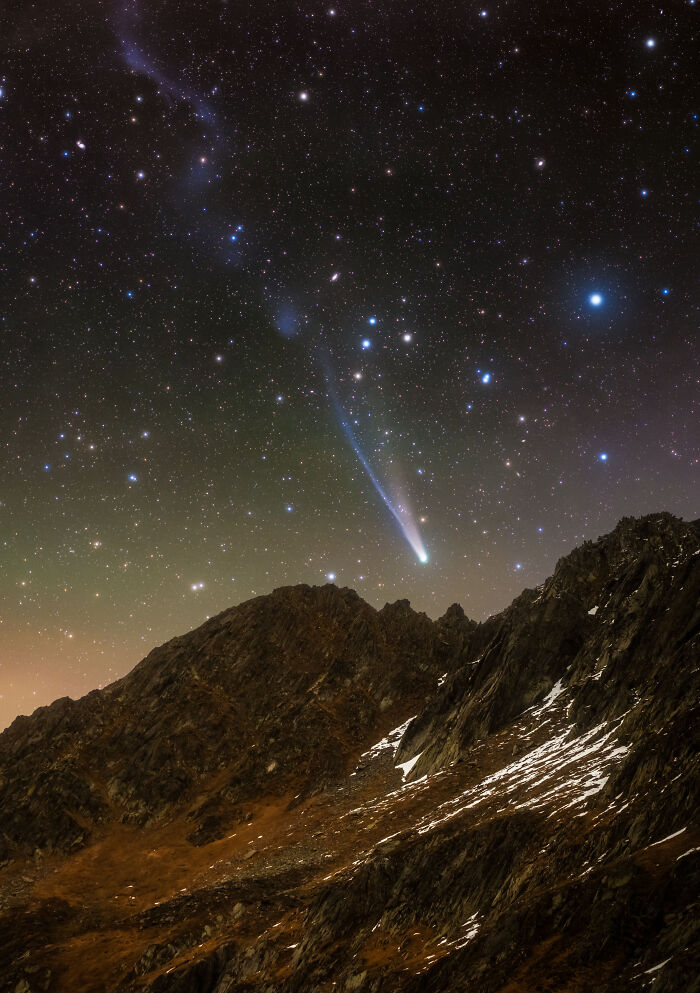
Category: Planets, Comets & Asteroids
Description: “This photograph shows Comet C/2025 A6 (Lemmon) in the early hours of the morning. Jakob Sahner drove deep into the Swiss Alps to make the most of the last clear night before the new Moon cycle. The landscape was breathtaking and made a perfect foreground for the comet.
Taken with a Nikon Z 7 camera, Move Shoot Move Nomad star tracker, TTArtisans AF 85 mm f/1.8 lens, 85 mm f/2.2, ISO 800, Foreground: 120-second exposure; Sky: 38 x 30-second exposures.”
Location: Tujetsch, Graubünden, Switzerland, 18 October 2025
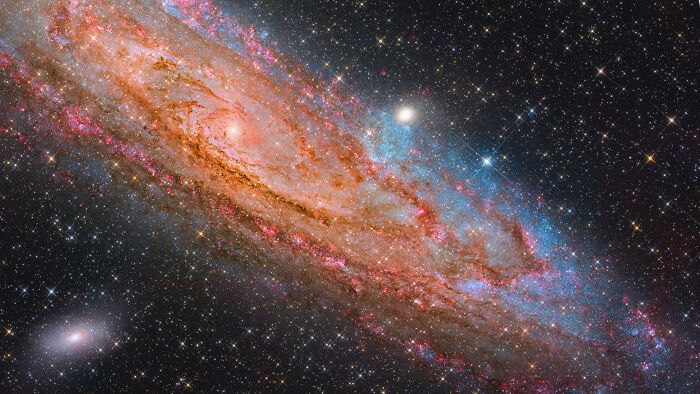
Category: Galaxies
Description: “This deep-field image of the Andromeda Galaxy (M31) captures its dual nature: a crimson vortex of ionised gas and dust spiralling toward the supermassive black hole at its centre and sapphire ‘blossoms’ – luminous blue stellar nurseries –blooming across its spiral arms. Captured in both optical and near-infrared wavelengths, the image reveals the galaxy’s dynamic equilibrium through the striking contrast between red and blue, with matter falling inwards toward the core, while new stars ignite in the arms.
Taken with a Sky Rover 130 mm APO Pro telescope, ScorpioAstro 50-mm LRGB and 7-nm H-alpha and OIII filters, Sky-Watcher AZ-EQ6 PRO mount, QHYCCD QHY600PH-M SBFL (short back focal length) camera, 910 mm f/7, 111 hours and 25 minutes total exposure.”
Location: Zhuanghe City, Liaoning Province, China, 26–27, 29–31 August, 1–2, 13–24, 26–29 September and 16–21 October 2025
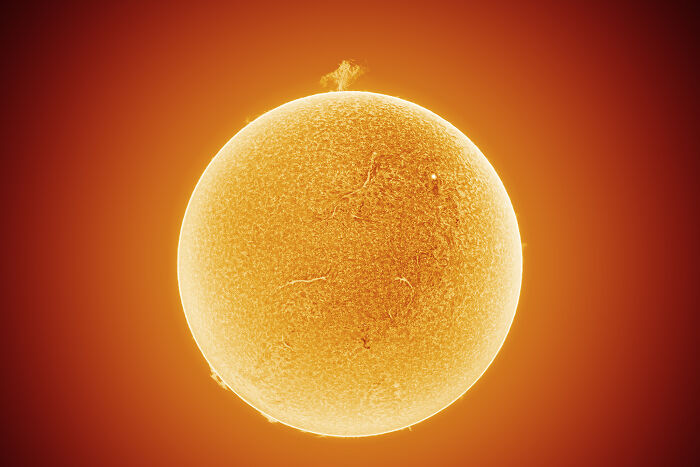
Category: Our Sun
Description: “The sky is rarely clear during the winter, but when the weather is good and the Sun is shining, it is definitely worth observing our star with an H-alpha telescope. This is because there are still prominences erupting from it that can take on many shapes, such as the acacia tree in this image. Prominences like this one are huge – they are so big that Earth would fit under the ‘tree’ many times.
Taken with a Lunt LS100 telescope, Lunt B1800 filter, Fornax 150 mount, ZWO ASI174MM camera, 700 mm f/7, Gain 180, 6-second exposure.”
Location: Somogy County, Southern Transdanubia, Hungary, 18 February 2026
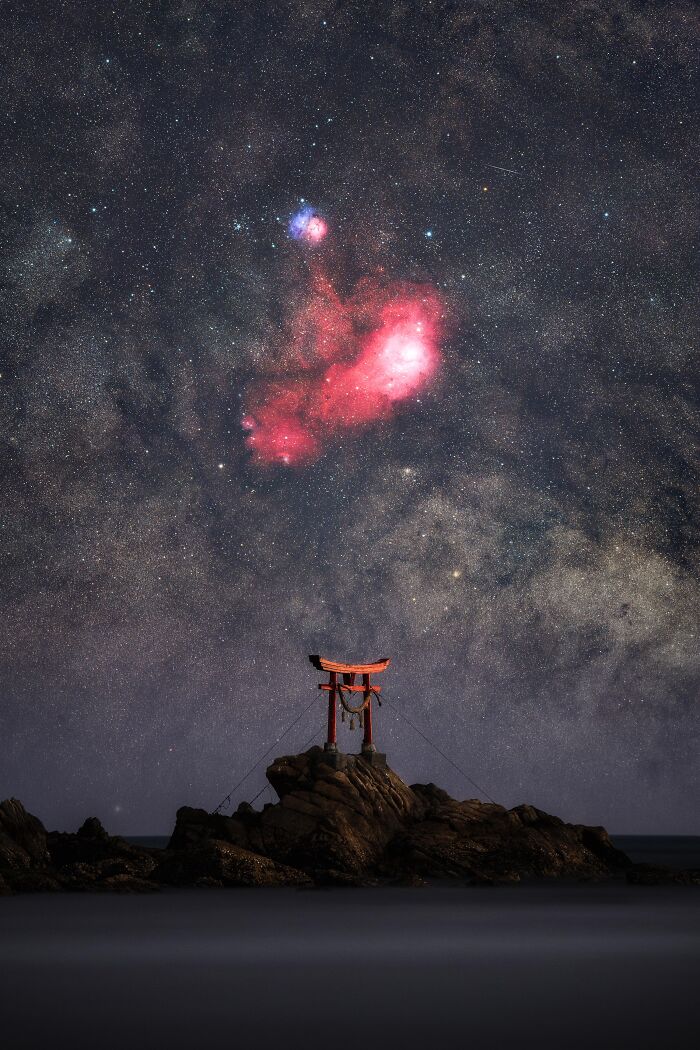
Category: Skyscapes
Description: “At Nata Beach, a solitary torii gate stands amid the waves. It marks a sacred site where one of the Japanese deities is said to have first descended to Earth. With the M8 and M20 nebulae shimmering in the background, the gate appears as a true portal to the heavens.
Taken with a Sony ILCE-7RM5 camera, 200 mm, Foreground: f/5.6, ISO 320, 240-second exposure; Sky: f/4.0, ISO 3200, 34 x 60-second exposures; H-alpha: f/2.8, ISO 6400, 28 x 120-second exposures.”
Location: Kitsuki, Ōita Prefecture, Japan, 22 February 2026
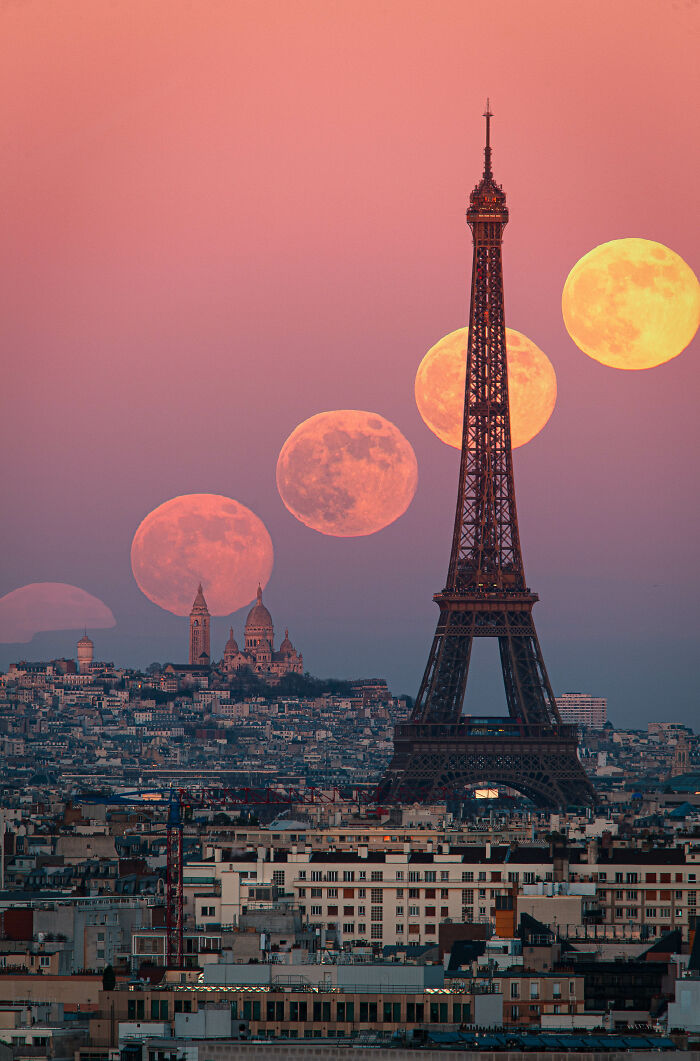
Category: Our Moon
Description: “Martin Giraud chose to photograph the first Full Moon of the year over the Paris skyline. The Eiffel Tower was 6.3 km (3.9 miles) away from their position, and the Sacré-Cœur Basilica was 11.1 km (6.9 miles) away. This explains why the Moon appears so large in the frame. The location offered the perfect alignment between the buildings and the rising Moon.
The Moon rose just before sunset, allowing Giraud to capture the vivid colours and Belt of Venus [a pinkish band of light visible at twilight] in the background.
Taken with a Canon EOS 6D camera, Sigma 150-600 mm lens, 500 mm f/8, ISO 100, 1/60-second exposure.”
Location: Meudon, Île-de-France, France, 3 January 2026
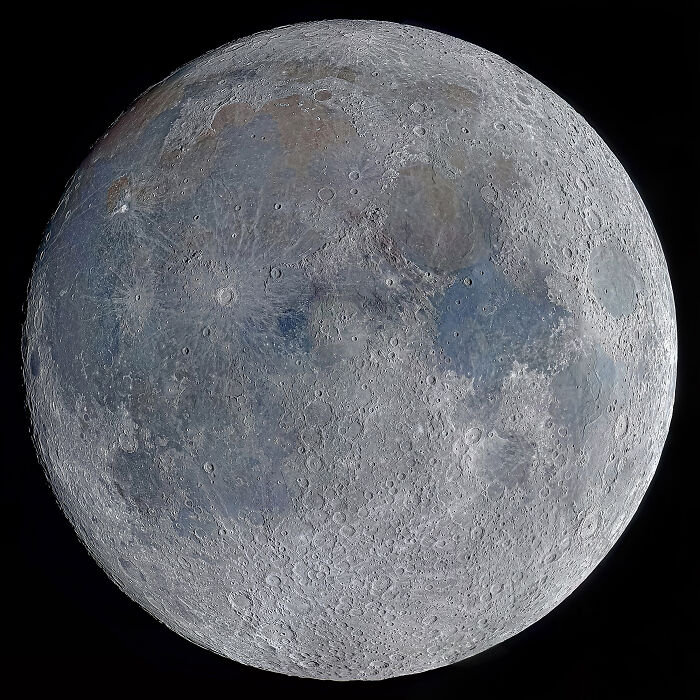
Category: Our Moon
Description: “Richard Addis had always wanted to create a composite image using photographs of every lunar phase from the New Moon to the Full Moon. In April 2025, with two weeks of clear skies (a huge rarity in the UK) Addis was able to collect enough data to assemble this photograph.
The image reveals shadow detail across the entire lunar surface, a sight that cannot be seen during a Full Moon, when the surface is fully illuminated. This approach emphasises the lunar landscape, creating a striking and beautiful study.
Taken with a Celestron NexStar 6SE telescope, Celestron Advanced GT mount, ZWO ASI120MC camera, 1,500 mm f/10, approximately 7,000 x 1–6-millisecond exposures.”
Location: Wallasey, Merseyside, England, 31 March–14 April 2025
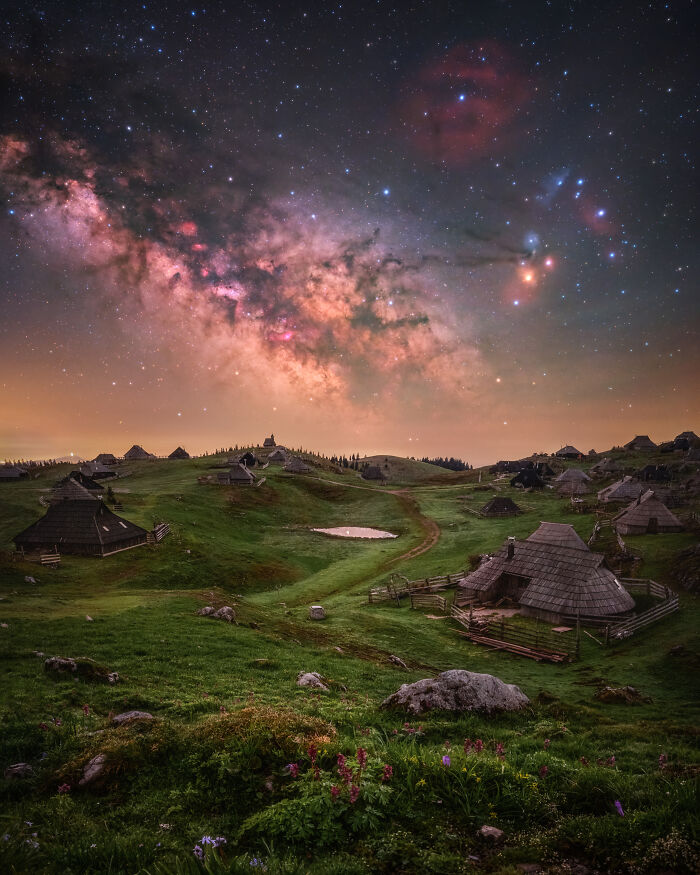
Category: People & Space
Description: “Velika Planina is one of the most beautiful places in Slovenia. In the foreground of this image, a settlement with the wooden huts characteristic of the area can be seen, while in the background the core of the Milky Way rises in all its beauty.
Taken with an astro-modified Nikon Z 6II camera, Move Shoot Move Nomad star tracker, 20 mm, Foreground: f/2.0, ISO 1600, 8 x 60-second focus-stacked exposures; Sky: f/2.0, ISO 800, 5 x 60-second exposures.”
Location: Velika Planina, Kamnik-Savinja Alps, Slovenia, 28 April 2025
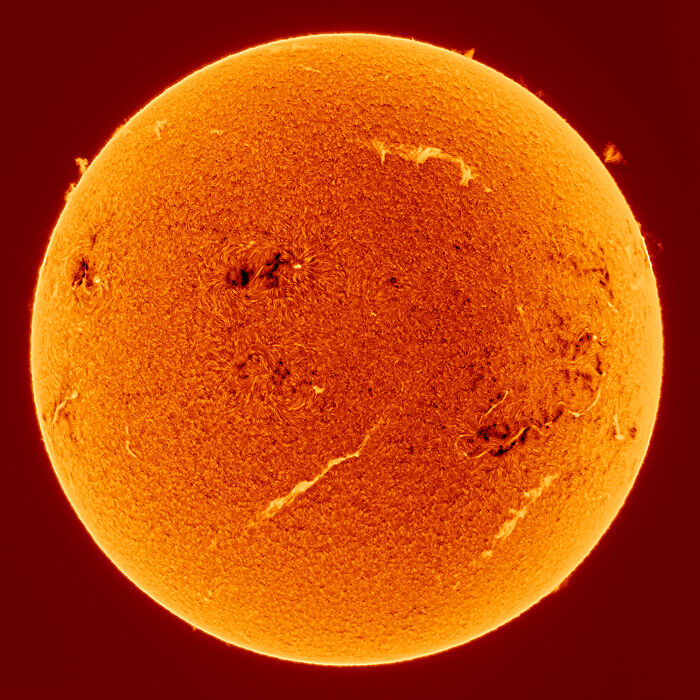
Category: ZWO Young
Description: “This high-resolution H-alpha image of the Sun’s chromosphere was captured from the photographer’s home in decent seeing conditions. It reveals intricate surface details, including sunspots, solar flares, filaments and prominences along the solar limb.
Taken with an Acuter Elite Phoenix 40 H-Alpha solar telescope, ZWO AM5 mount, ToupTek G3M678M camera, 400 mm f/10, 1,000 x 10-millisecond exposures.”
Location: Xiamen, Fujian Province, China, 11 February 2026
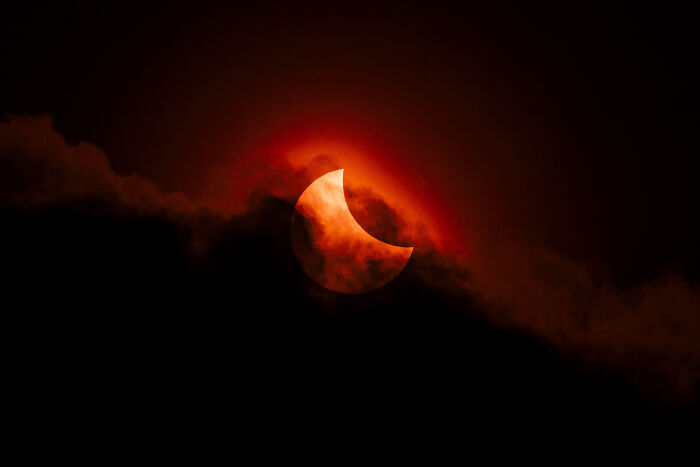
Category: Our Sun
Description: “Here, the partial solar eclipse of 2025 was shot through fast-moving clouds on what was a beautiful spring morning. James McBeath spent several hours in a local park tracking the eclipse with his camera, showing many passers-by what he was doing and giving them a good view of the eclipse. McBeath ended up with hundreds of shots, but this one, with the clouds framing the Sun perfectly, immediately caught his eye.
Taken with a Sony ILCE-7 camera, Canon EF 300 mm USM lens with 2x teleconverter, Sky-Watcher Star Adventurer Mini mount, Pig Iron 720-nm R-72 Infrared filter, 600 mm f/18, ISO 100, 1/3,200-second exposure.”
Location: Leeds, West Yorkshire, England, 29 March 2025
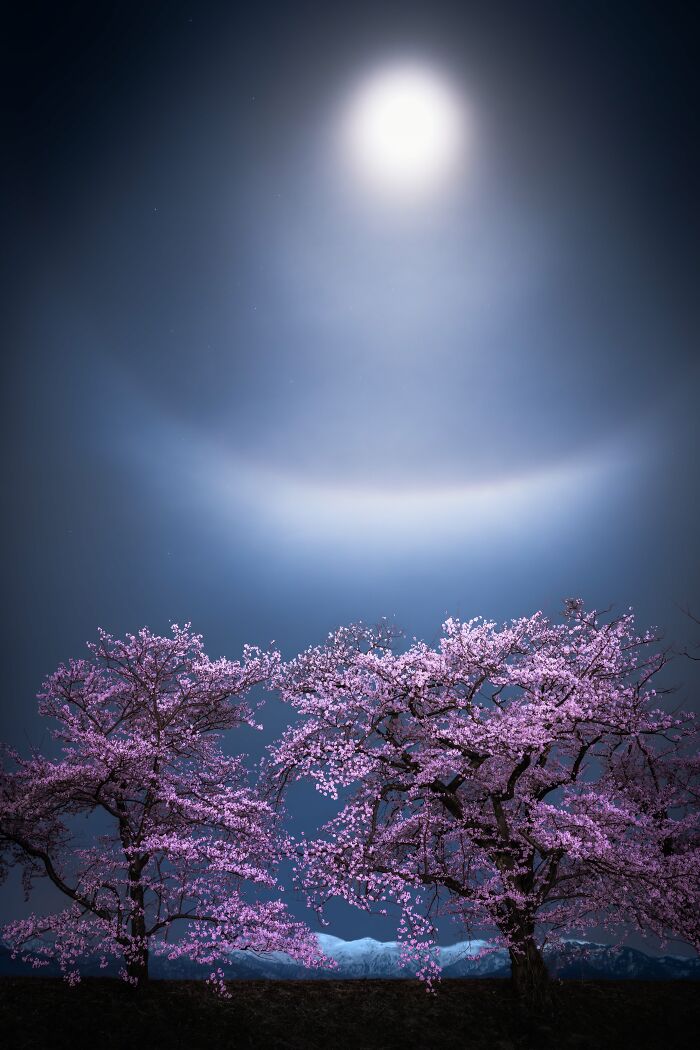
Category: Skyscapes
Description: “‘Setsu-getsu-ka’ is a traditional Japanese expression that means ‘snow, moon and flowers’. This photograph captures that trio at the Funakawa River by framing Mount Asahi – Asahi’s symbolic peak – and cherry blossom trees under a lunar halo and a rare, faint tangent arc [optical phenomena caused by the refraction of moonlight through ice crystals in clouds]. The blossoms last for only about 10 days, making their synchronization with the snow-capped mountain and these atmospheric optics a once-in-a-season miracle. To emphasize the fragility of the scene, Takanobu Kurosaki captured this as a single exposure rather than a composite.
Taken with a Sony ILCE-7RM5 camera, Sony FE 24–105 mm f/4 G OSS lens, 29 mm f/4, ISO 800, 6-second exposure.”
Location: Asahi, Toyama Prefecture, Japan, 9 April 2025
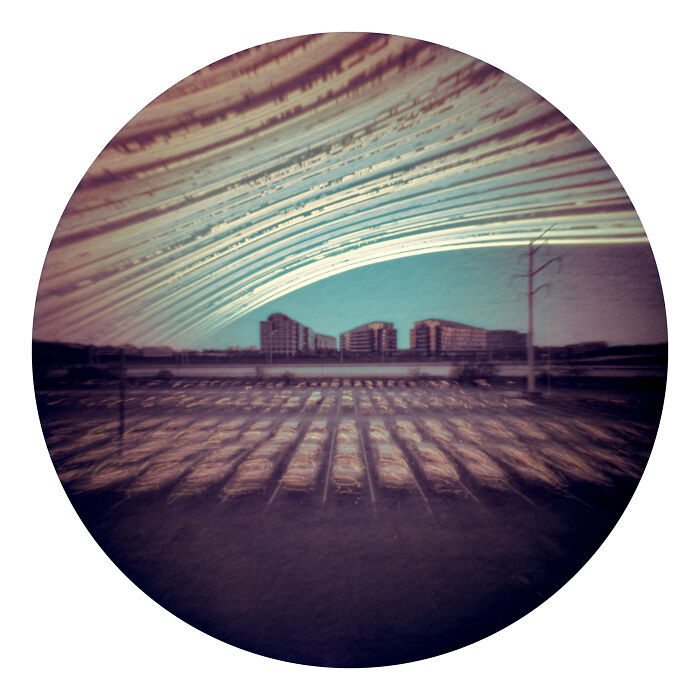
Annie Maunder Open Category
Description: “Solargraphy is a photographic technique that uses a homemade pinhole camera and photosensitive paper to create extremely long exposures. Depending on how long the camera remains in place, the final image records the Sun’s path across the sky from dawn to dusk, as well as its gradual shift from north to south (or vice versa) between the solstices. Each bright streak represents a day of sunlight. If a streak is missing, it means the Sun was hidden by clouds. This method makes it possible to expose the paper for weeks, months, or even years.
Ksawery Wrobel uses small round aluminium jars, as they are easy to install in urban spaces.
Taken with a homemade pinhole camera, Kodak Kodabrome II RC paper, 23.5 mm f/130, 182 days total exposure from 17 July 2022–15 January 2023”
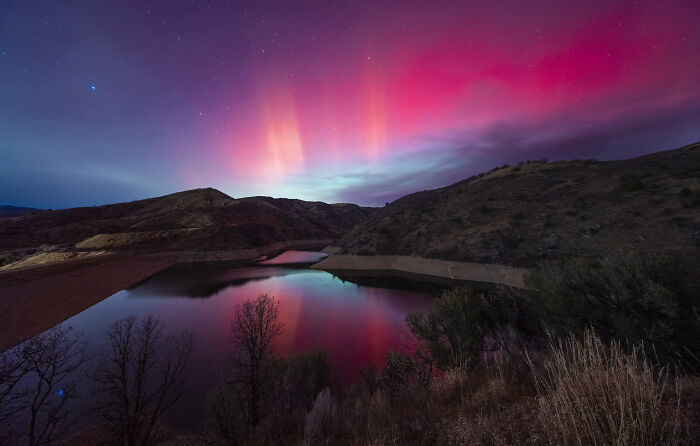
Category: Aurorae
Description: “This stunning aurora shot is a straightforward single-frame image with no compositing or other alterations. The color balance was pushed slightly towards blue to enhance vibrancy and create colors that complemented the red in the sky.
Taken with a Sony ILCE-7M4 camera, tripod, Laowa AF 10 mm f/2.8 Zero-D lens, 10 mm f/2.8, ISO 1600, 30-second exposure.”
Location: Weber County, Utah, USA, 11 November 2025
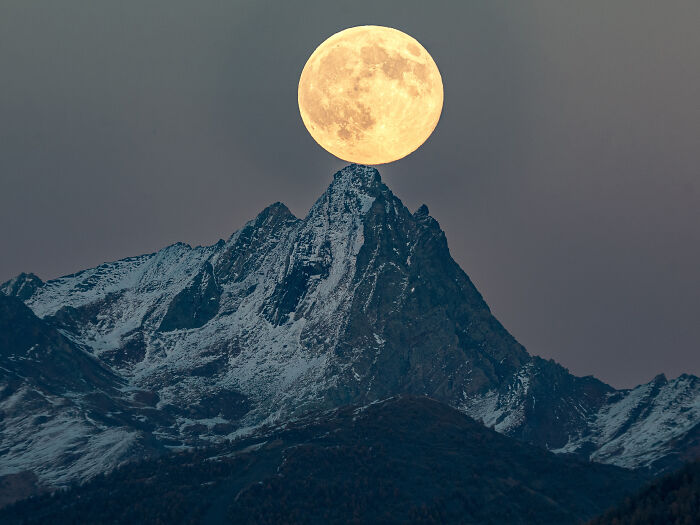
Category: Our Moon
Description: “Once a month, the Moon rises just as the Sun sets, creating fantastic natural scenes. Jean-François Gely found the perfect spot, with the iconic peak of Bric Bouchet, from which to photograph the Moon.
Taken with a Sky-Watcher 80ED telescope, Sony ILCE-7S camera, 600 mm f/7.5, ISO 400, 1/500-second exposure.”
Location: Arvieux, Provence-Alpes-Côte d’Azur, France, 5 November 2025
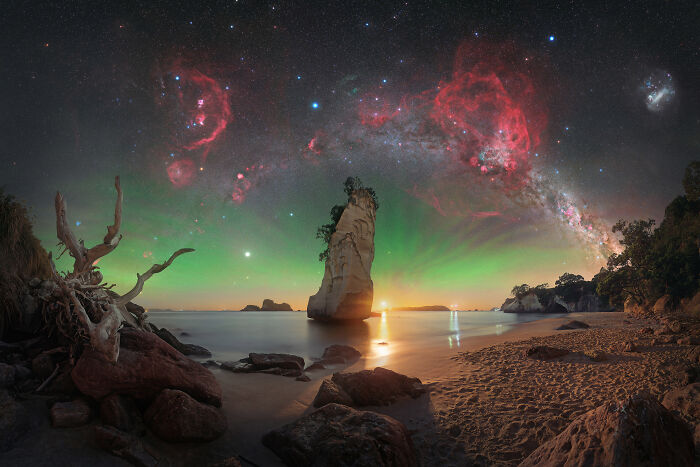
Category: Skyscapes
Description: “On this particular night, Evan McKay had only a small window to capture the sky before the Moon started to rise. McKay polar-aligned his mount during twilight and then began shooting the sky panorama from this location. The moonlight provided the best of both worlds and did a fantastic job of lighting up the foreground. To enhance the sky, McKay captured a separate panorama using a dual narrowband filter and blended it in to bring out the nebulae.
Taken with a Nikon Z 6a camera, Sky-Watcher EQ6-R Pro mount, Move Shoot Move Nomad star tracker, Sigma 40 mm Art lens, Optolong L-Para filter, 40 mm, Foreground: f/2.8, ISO 800, 30-second exposure; Sky: f/2, ISO 1600, multiple 15-second RGB exposures, multiple 2-minute exposures with filter.”
Location: Cathedral Cove, Waikato, North Island, Aotearoa New Zealand, 8 January 2026
Category: Stars & Nebulae
Description: “This Milky Way mosaic was captured using two cameras – one for RGB color and one for H-alpha – to record as much detail and structure as possible.
The project nearly fell apart when unexpected Newton’s rings (an optical phenomenon that can occur when working with filters) appeared in many of the panels after stacking. Jakob Sahner considered abandoning the entire dataset, but eventually found a way to correct most of it and preserve the image. In the end, it became a roughly 750-megapixel mosaic.
Taken with a Sony Alpha 7 III and Nikon Z 6 cameras, Samyang 135 mm f/2 lens, Sky-Watcher Star Adventurer GTi mount, 135 mm f/2, ISO 1600, 1,950 x 90-second H-alpha exposures, 2,182 x 90-second RGB exposures.”
Location: Koireb, Windhoek Rural, Namibia, 19 May–1 June 2025
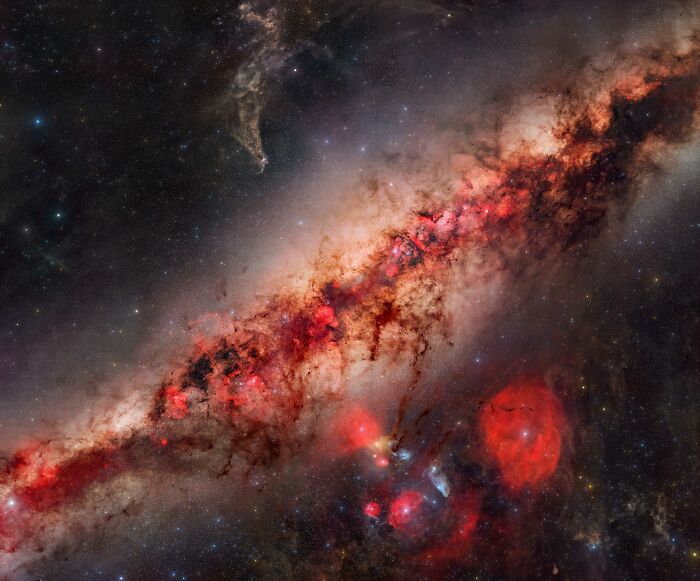
Category: Stars & Nebulae
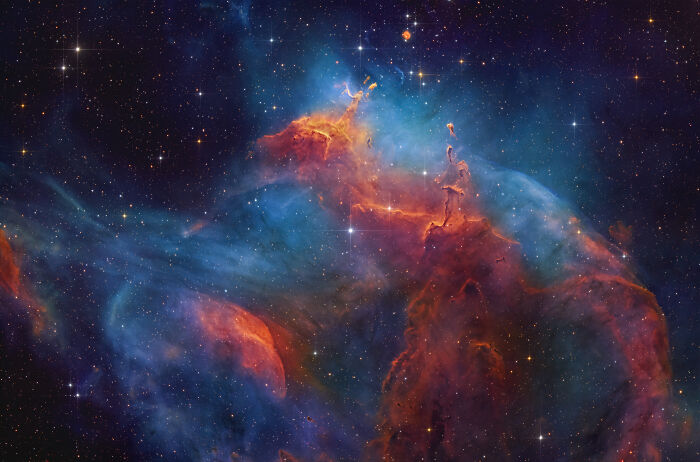
Description: “Gum 37 is an HII complex in the southern sky, where stellar radiation carves pillars, rims and curling shock fronts. It is commonly called the Southern Tadpoles Nebula, but Ani Shastry suggests it resembles a cosmic teapot.
Taken with a PlaneWave Instruments CDK20 telescope, PlaneWave Instruments CDK500 mount, Moravian Instruments C3-61000 Pro camera, 3,454 mm f/6.8, 20 x 1,200-second H-alpha exposures, 20 x 1,200-second OIII exposures, 20 x 1,200-second SII exposures, 30 x 120-second R, G and B exposures, 23 hours total exposure.”
Location: El Sauce Observatory, Río Hurtado, Chile, 10 February 2026
Category: Aurorae
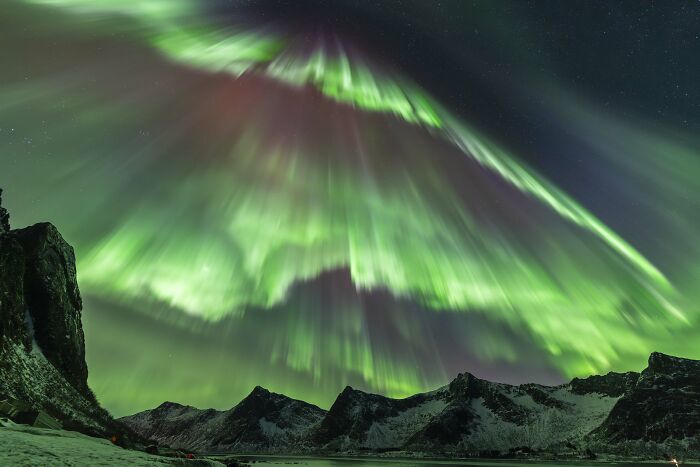
Description: “The camera had been set up facing the iconic ‘Devil’s Teeth’ peaks on the island of Senja in Norway. Julien Cadena had hoped the Northern Lights would rise directly above the jagged summits, but they flared up in the opposite direction instead. Their intensity and speed were breathtaking.
Taken with a Sony Alpha 7 IV camera, 14 mm f/2.8, ISO 3200, 1-second exposure”
Location: Lyngen, Troms, Norway, 20 January 2026
Category: Aurorae
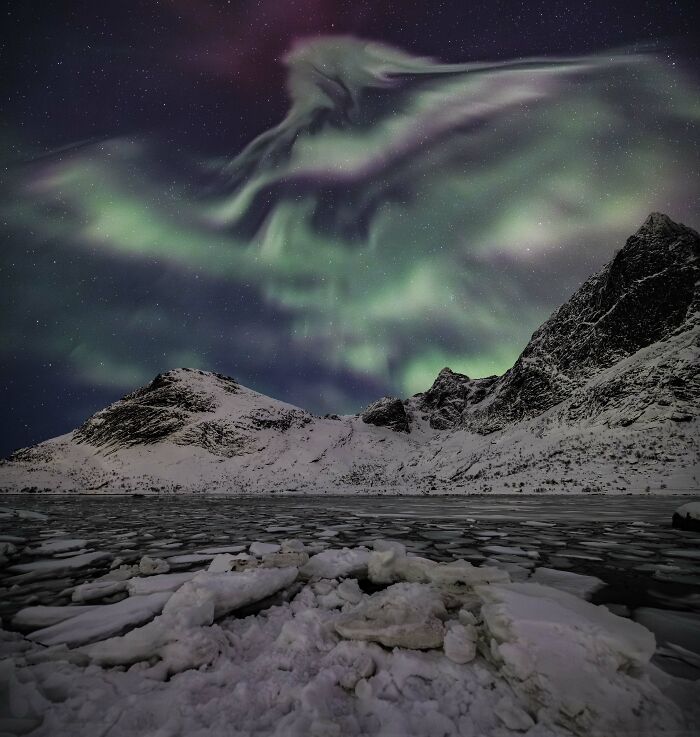
Description: “This image captures an incredible aurora over the mountain peaks at Flakstadpollen in the Lofoten Islands. Jennifer Rogers had seen this bay full of ice earlier in the day and wanted to find it again at night. After setting up the camera, Rogers looked up to see the aurora pulsing across the sky, moving very quickly and creating striking shapes. Within the display, Rogers could see the shape of an eagle spreading its wings over the mountains.
Taken with an astro-modified Canon EOS R6 Mk II camera, 15 mm f/2.8, Foreground: ISO 3200, 2 x 8-second exposures; Sky: ISO 6400, 2-second exposure.”
Location: Flakstad, Lofoten, Norway, 19 February 2026
Category: People & Space
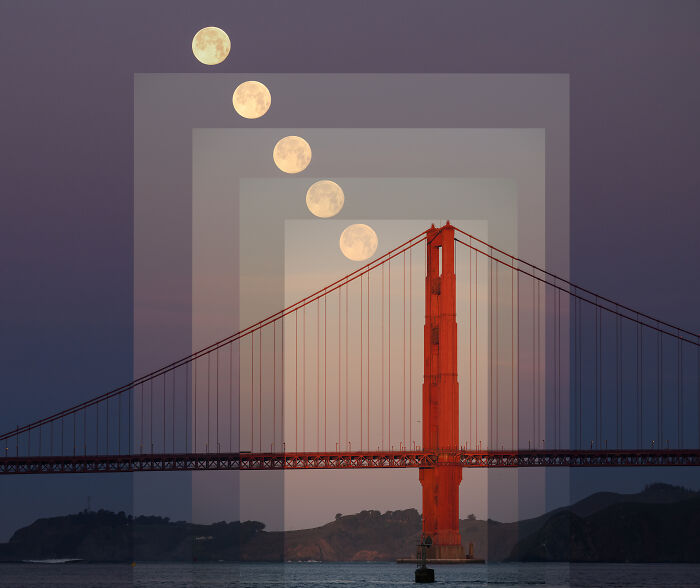
Description: “This composite image shows five separate captures of the setting Full Moon, taken as the sky changed from a deep blue, in which the pinkish glow known as the Belt of Venus was visible, to full golden-hour illumination. Fredric Walder attempted to show the evolution of both the color and luminosity of the sky by keeping the lunar disc approximately the same brightness in each section.
Taken with a Nikon Z 8 camera, 150 to 380 mm, f/9, ISO 1000, multiple 1.25- to 2.5-millisecond exposures.”
Location: San Francisco, California, USA, 2 February 2026
Category: Skyscapes
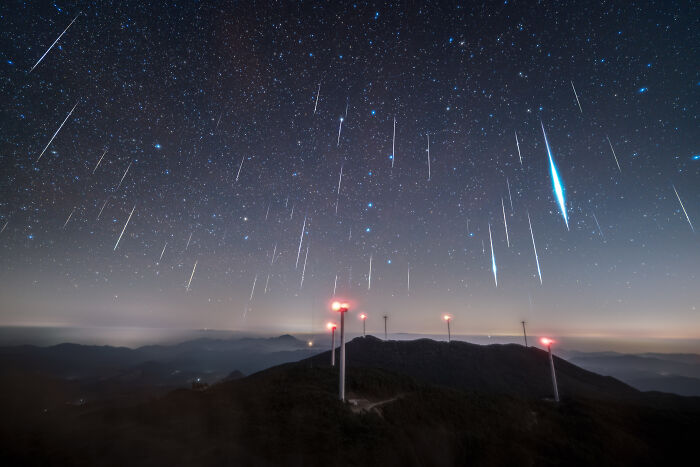
Description: “The Geminid meteor shower was once again reliable in 2025, with numerous bright meteors. After its radiant [the point from which the meteors appear to emanate] rose on the night of 14 December, the sky was filled with falling stars.
ZhiPu Wang had originally planned to photograph only the Big Dipper, using a soft-focus filter to enhance the star points, but during the shoot he noticed a great number of meteors in the field of view, so adjusted his settings to capture them. Within three hours, he had captured dozens of meteors.
Taken with a Nikon Z f camera, Viltrox 16 mm lens, 16 mm f/2, ISO 8000, 4-second exposure.”
Location: Sanming, Fujian Province, China, 15 December 2025
Category: Skyscapes
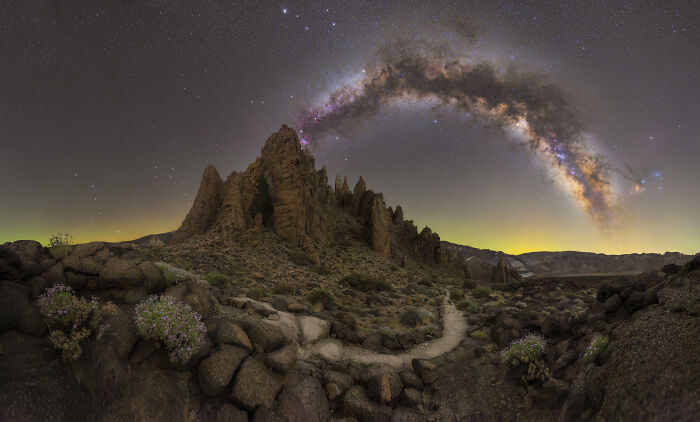
Description: “This panorama was taken in Tenerife, in the rocky and volcanic landscape of the Teide Plateau. Here, bushes and flowers find their way through the hardened lava.
Matteo Strassera composed the image to show the path winding around the peaks and pointing towards the galaxy. Strassera had less than an hour before the arc of the Milky Way rose too high in the sky to capture the panorama, so he rushed to capture all the detail that a 35-mm focal length can offer.
Taken with a Canon EOS R5 camera, Benro Polaris tripod head, Foreground: 14 mm f/4, ISO 4320, 8 x 121-second exposures; Sky: 35 mm f/1.6, ISO 400, 32 x 60-second exposures.”
Location: Santa Cruz de Tenerife, Tenerife, Canary Islands, Spain, 25 June 2025
Category: Stars & Nebulae
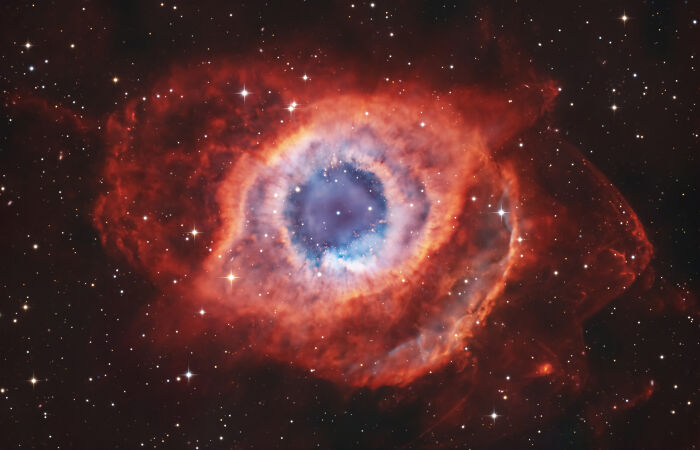
Description: “NGC 7293, better known as the Helix Nebula, is one of the closest and most spectacular planetary nebulae observable from Earth. It is located about 650 light years away in the constellation Aquarius.
The extremely hot core emits intense ultraviolet radiation that ionizes the surrounding gas, causing it to glow with spectacular colors. Billions of years from now, the Sun could meet a similar fate, so nebulae like this offer astronomers a unique opportunity to study the final stages of the evolution of stars similar to the Sun.
Taken with a TS-Optics 14″ ONTC f/5 telescope, 50-nm H-alpha and OIII filters, Optolong L-Pro 2″ and L-Ultimate 2″ filters, Sky-Watcher EQ8 mount, Player One Astronomy Poseidon-MM camera, 1,800 mm f/5, 180 x 300-second H-alpha exposures (15 hours), 120 x 300-second OIII exposures (10 hours), 60 x 300-second Optolong L-Pro 2″ exposures (5 hours), 130 x 300-second Optolong L-Ultimate 2″ exposures (10 hours 50 minutes), 43 hours total exposure.”
Location: Elqui Province, Coquimbo, Chile, 14 September 2025
Category: Best Newcomer
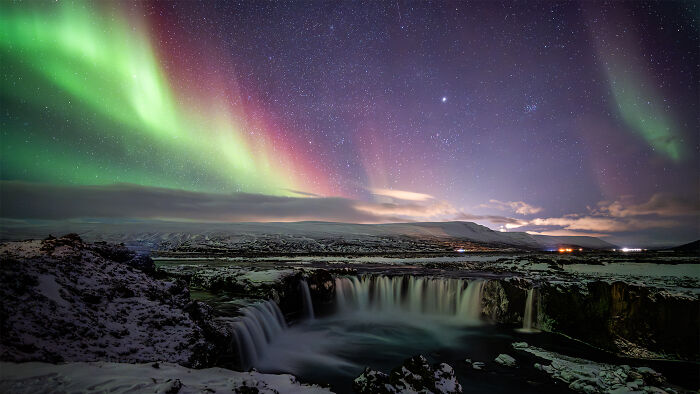
Description: “Yifan Cao witnessed a major aurora outburst in Iceland, during which the whole sky shone green, red and purple. Goðafoss Waterfall is a famous scenic spot that is strongly linked to Norse mythology.
Taken with a Nikon Z 6III camera, 16 mm f/2.2, ISO 4000, 6-second exposure.”
Location: Goðafoss Waterfall, Þingeyjarsveit, Iceland, 27 February 2025
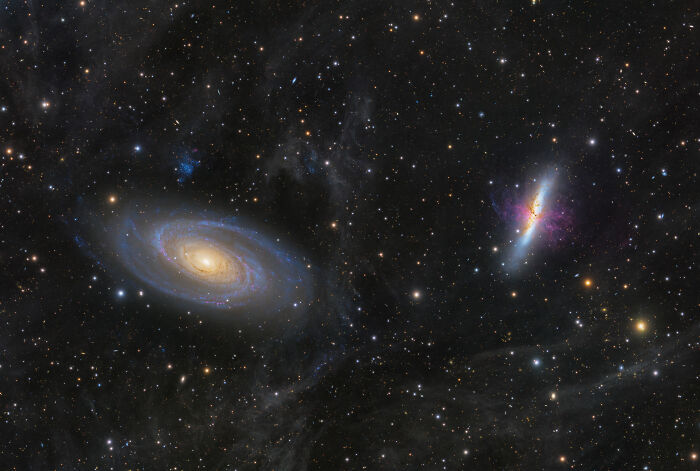
Category: Galaxies
Description: “This image captures a dramatic cosmic pairing: the serene elegance of Bode’s Galaxy (M81, left) alongside the chaotic violence of the Cigar Galaxy (M82, right). Located about 12 million light years from Earth, the gravitational interaction of these two neighbors has shaped their forms. M81 retains its perfect grand design spiral form, a picture of galactic grace. In stark contrast, M82 is a starburst galaxy, reeling from a close encounter with its larger companion. This gravitational disturbance has triggered a furious burst of star formation at its core, blasting out spectacular red filaments of superheated hydrogen gas that are clearly visible in this deep exposure.
Taken with a Sky Rover 155 APO Pro telescope, iOptron CEM70 mount, QHYCCD QHY600M camera, 992 mm f/6.4, 600 seconds per frame, 49 hours total integration.”
Location: Ürümqi, Xinjiang Uyghur Autonomous Region, China, 17, 20, 28, 30 November and 25 December 2025
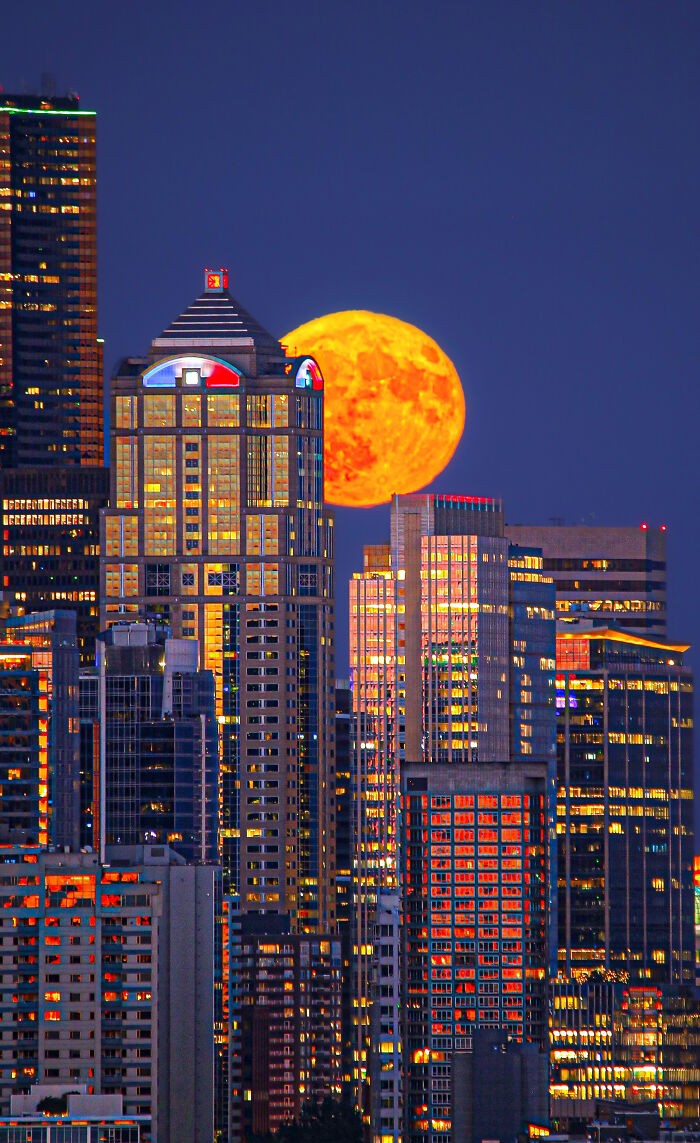
Category: People & Space
Description: “This picture reveals the city of Seattle, illuminated at twilight during a summer sunset. Above it, the orange Buck Moon is rising. The color of the Moon reflected in Seattle’s skyline casts a golden light over the entire city, its deep glow adding presence to the image and providing a contrast to the sleek lines of the intricate architecture with its raw and rugged terrain.
Taken with a Canon EOS 6D camera, 600 mm f/7.1, ISO 800, 1/125-second exposure.”
Location: Seattle, Washington, USA, 11 July 2025
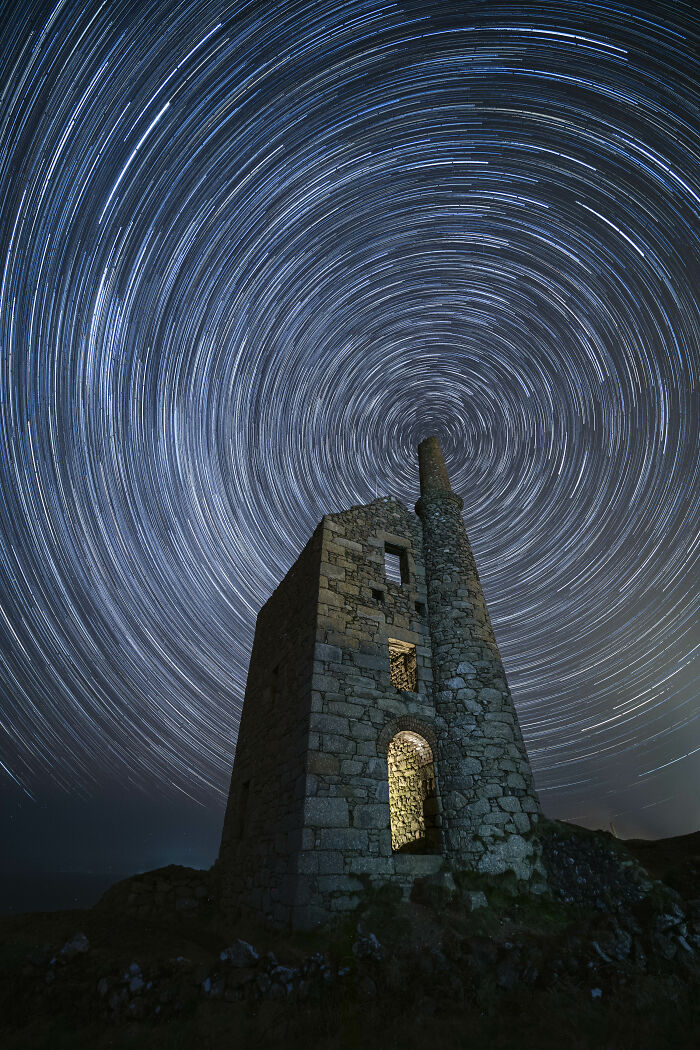
Category: People & Space
Description: “This image of a star trail aligned with the chimney of the former tin mine Wheal Owles in Cornwall was taken on a cold night in February. Jennifer Rogers took time to position Polaris directly above the chimney in the composition.
Taken with a Canon EOS 5D Mark IV camera, 14 mm f/2.8, ISO 1600, Foreground: 1 x 60-second exposure; Star trail: 72 x 60-second exposures.”
Location: West Wheal Owles, Cornwall, England, 22 February 2025
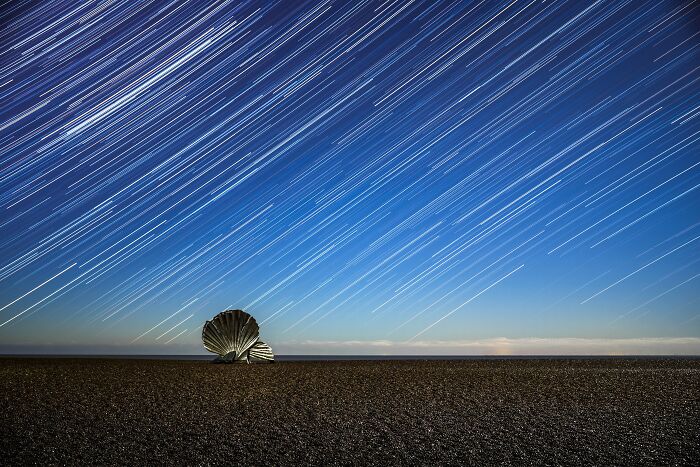
Category: Skyscapes
Description: “This image of star trails above the Scallop sculpture on Aldeburgh Beach, Suffolk, had been a long time in the making, as João Yordanov Serralheiro waited for the right night and conditions. It represents the quiet and peaceful feeling of sitting by the sea, listening to the waves come and go as time passes by –demonstrated here by the movement of the stars.
Taken with a Sony Alpha 7 III camera, 35 mm f/2.8, ISO 400, 120 x 30-second exposures.”
Location: Aldeburgh Beach, Suffolk, England, 30 November 2025
Category: Planets, Comets & Asteroids
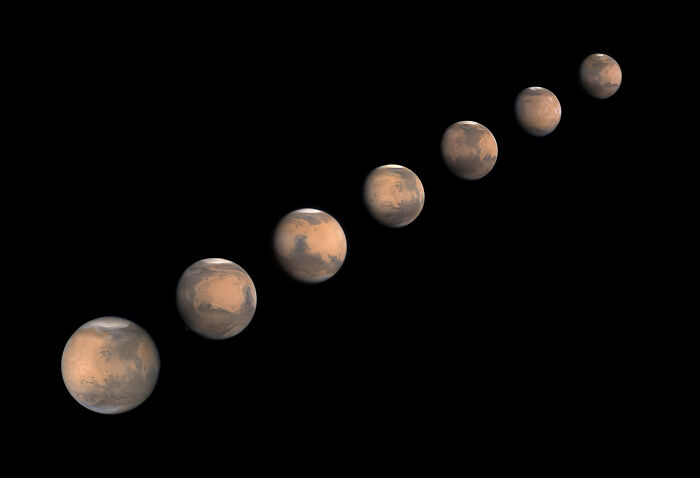
Description: “This composite image shows several views of Mars after it reached opposition, the point at which Earth was directly between Mars and the Sun. All the images were captured at the same scale, highlighting how quickly the planet decreases in apparent size as it recedes from Earth. Seasonal changes are also visible, with the polar ice cap shrinking as the planet’s northern hemisphere enters local spring/summer.
Taken with a custom 600 mm (24″) Dobsonian reflector, UV/IR cut filter, Player-One Astronomy Uranus-C camera, 10,500 mm f/17.5, multiple 10-millisecond exposures.”
Location: Trowbridge, Wiltshire, England, 3 January, 16, 25 February, 15, 22 March, 13 and 27 April 2025
Category: Our Sun
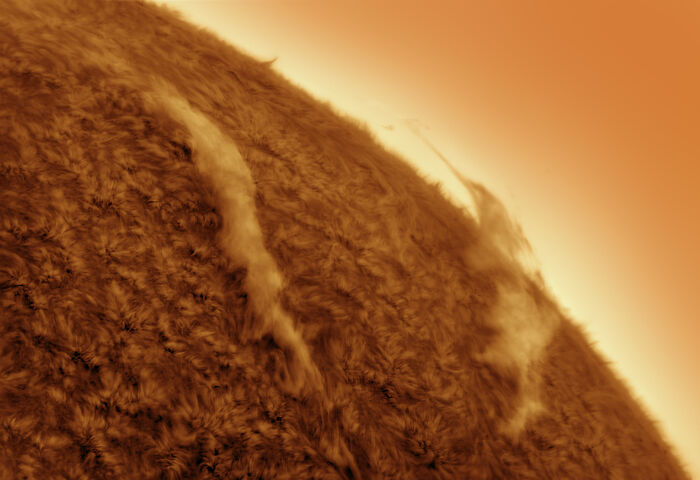
Description: “The solar limb, presented in inverted tones and enhanced color, reveals a filaprom [filament-prominence] that rises like an arc of fire shaped by invisible magnetic forces. Nearby, a filament winds across the luminous surface, cutting through the incandescent plasma. The tonal inversion heightens the contrast and creates a vivid sense of three-dimensionality, revealing the dynamic nature of our star.
Taken with a home-built refractor, iStar Optical H-alpha 150 mm f/10 lens, Solar Spectrum 0.5A° H-alpha filter, Lunt 40 and Baader TZ-4 telecentric system, Astro-Physics 1200GTO mount, Player One Astronomy Apollo M-Max camera, 6,000 mm f/40, 33 x 10.6-millisecond exposures.”
Location: Monticello Conte Otto, Vicenza, Italy, 15 May 2025








































 No fees, cancel anytime