Get Premium
Dark mode theme is available exclusively for premium users. Learn more about the benefits of subscribing.
No fees, cancel anytime.

 Dark Mode Ad-Free Browsing Unlimited Content
 Ad-Free Browsing Unlimited Content Dark Mode
Join 1.2 million Panda readers who get the best art, memes, and fun stories every week!
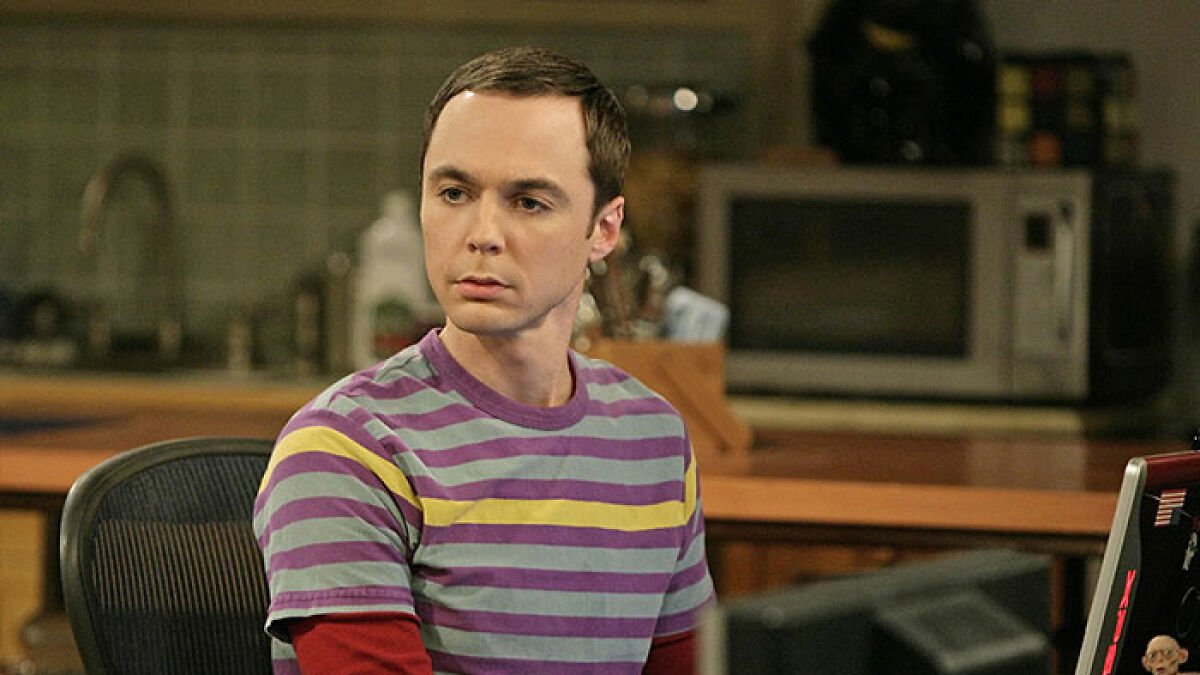
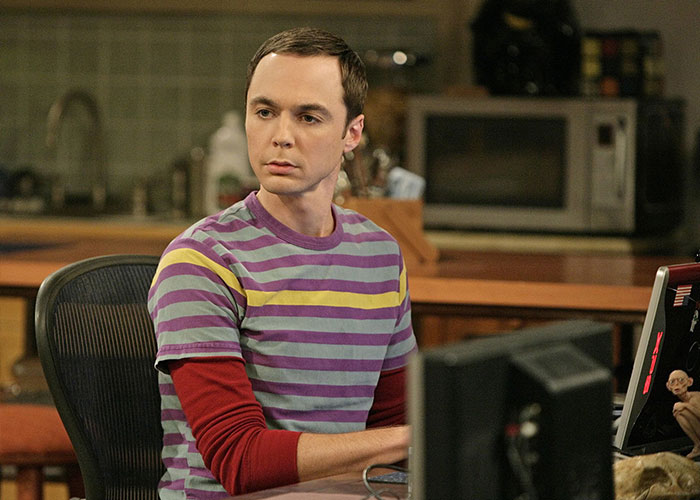
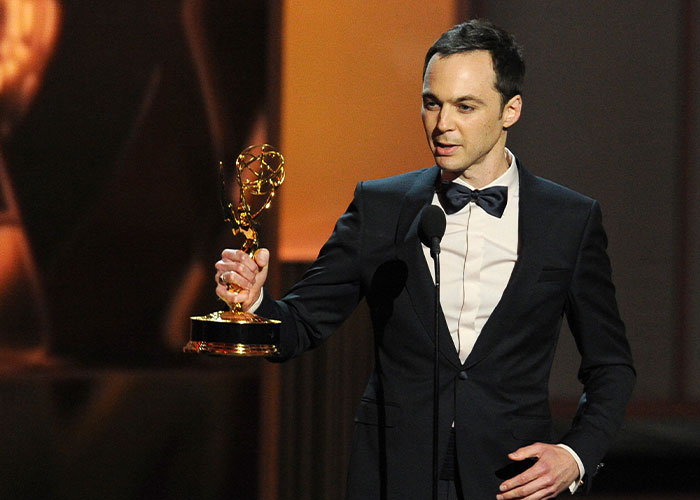
The Big Bang Theory earned series lead Jim Parsons $1 million per episode in the later seasons, four Primetime Emmys, and one Golden Globe.
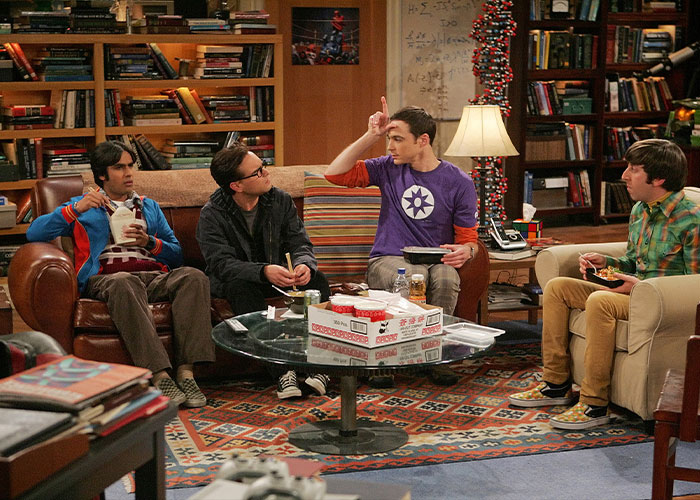
He played the brilliant, socially awkward theoretical physicist Sheldon Cooper on the Chuck Lorre and Bill Prady-created CBS show, which became one of the most successful and longest-running multi-camera sitcoms in TV history.
But the success came at a steep cost for Parsons.
The actor recently revealed on a podcast that his television success was accompanied by too much “obsessive behavior” for him to enjoy it at the time.
“I was not happy. I was stressed,” Parsons confessed.
Image credits: CBS Photo Archive
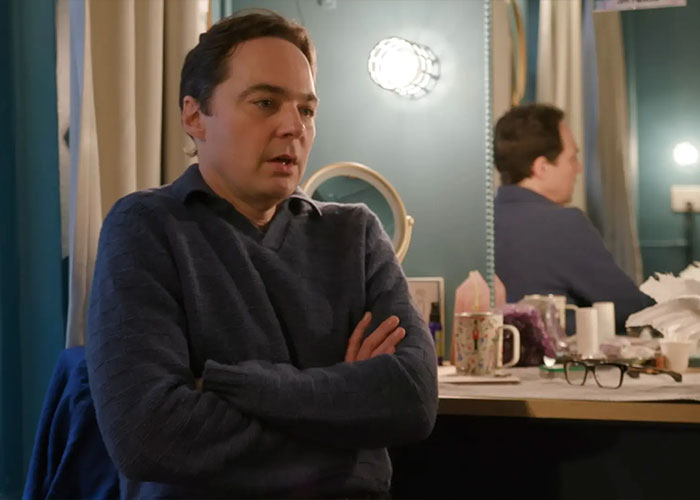
Jim Parsons appeared on the July 13 episode of the All Out with Jon Dean podcast and revisited his days of filming The Big Bang Theory, which lasted for over a decade.
The Hidden Figures actor revealed that he chased perfection to his own detriment, leaving him discontented with his success.
“I look back now and realize that there were many ways, at some of the best moments of my life, I was miserable,” he said.
Image credits: CBS Photo Archive
“I felt that there were so many plates I was supposed to be keeping in the air and that the success and the good things of life that were happening were only due to this overworking… discipline and whatever, and maybe to a degree that was true. I don’t know. I can’t say because that’s who I was.”
“But I wouldn’t do that again and for any amount of money … just because it was stressful and miserable at times,” Parsons added. “I made myself miserable.”
When Jon Dean asked if the misery stemmed from his personal work ethic, the actor answered: “If you want to call it that. It translated in part into a work ethic, but it was really just obsessive behavior, basically.”
Image credits: Kevin Winter
Parsons went on to elaborate how obsessive-compulsive tendencies fueled a majority of his work ethic and discipline at the time.
“A lot of it was because it was kind of OCD in nature,” he confided in Dean. “I had a list of things basically in my head that I had to get done in order to be comfortable and know that I could do my job right, which I don’t think was true.”
When the host asked if this behavioral pattern cost him relationships and quality time with friends and family, Parsons nodded in agreement: “That’s tons of life.”
Image credits: CBS Photo Archive
However, he also acknowledged that he doesn’t know whether he would discourage young, up-and-coming artists from doing the same thing.
“I wouldn’t be where I am right now if I hadn’t had that time of life,” Parsons said, adding that the self-torment nature of his meteoric rise was “part of it.”
“So, I don’t know what to tell people. … Like, I don’t know how much of that is necessary.”
Image credits: All Out with Jon Dean
Incidentally, rigid perfectionism and strict daily schedules are attributes that Jim Parsons shares with his on-screen persona.
Throughout the 12 seasons of TheBigBangTheory, Sheldon Cooper displays several similar traits, including a need for control, an apathy for physical contact, and germophobia.
These are some of the clear signs of Obsessive-Compulsive Disorder (OCD), according to the National Institute of Mental Health (NIMH).
When Parsons read the script for The Big Bang Theory, back in 2007, he thought he was a “really good fit” for the role.
In 2015, Parsons’ mother and sister told KVUE ABC that there were certain similarities between him and the character he played on TV.
“He’s a little OCD. He does not like germs. He likes to wash his hands a lot,” said his mother, Judy Parsons, a first-grade teacher in Klein ISD in Harris County, Texas.
His sister, Julie, chimed in that Parsons’ social life looked a lot like Sheldon’s as well.
“I call him grandpa,” Julie said. “He’s just an old man. He goes to bed early, reads a lot, listens to talk radio, and follows football.”
Image credits: peacocktv
Comedian-actor Howie Mandel has been one of the most outspoken celebrities about living with OCD and severe germophobia.
The America’s Got Talent judge has said he avoids handshakes whenever possible, preferring fist bumps, and has described his fears of contamination as “living in a nightmare.”
Soccer legend David Beckham has also been candid about his OCD tendencies, revealing that he feels compelled to keep everything perfectly organized and symmetrical.
“I’ve got this obsessive-compulsive disorder where I have to have everything in a straight line, or everything has to be in pairs,” the Brit explained on his 2023 Netflix documentary.
@cbssundaymorning Amanda Seyfried tells Ben Mankiewicz she’s dealt with OCD and anxiety since she was a kid and that it once took over a lot of her life. She says therapy, medication and experience have helped her learn how to manage it and even use parts of it to help her acting. To watch the full extended interview, click the link. #amandaseyfried#anxiety#OCD#acting#interview♬ original sound – CBS Sunday Morning
Actress Cameron Diaz has talked about refusing to touch door knobs and handles and getting her guests to change their clothes before they set foot in her apartment.
In a 2025 interview with CBS Sunday Morning, actress Amanda Seyfried said that she has been suffering from “all-encompassing” OCD since she was 4-5 years old.
However, in adulthood, she has been able to “channel it in the right ways and take the right medication” to use it to her advantage, she said.
Image credits: Unsplash
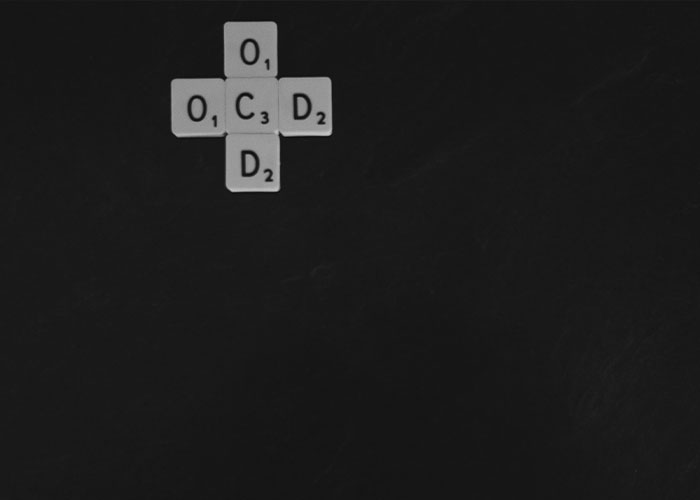
The International OCD Foundation describes the illness as a “serious and debilitating mental health disorder that affects people of all ages and walks of life, and occurs when a person gets caught in a cycle of obsessions and compulsions.”
It can range from anxiety about germ contamination from contact to extreme fears of making mistakes to excessive concern with violent visuals in one’s mind, the institution says.
Image credits: CBS Photo Archive
According to NIMH, OCD affects about 1.2% of adults in the United States. Global lifetime prevalence is estimated at 2.3% to 3.2%, with onset typically occurring by age 17.
Approximately 2 in 3 adults with OCD are likely to have one other mental health disorder.
About 50% of people with OCD suffer from some form of depression, 25% have anxiety disorders, and a little more than 10% struggle with personality disorders.

By entering your email and clicking Subscribe, you're agreeing to let us send you customized marketing messages about us and our advertising partners. You are also agreeing to our Privacy Policy.
Thank you! You've successfully subscribed to newsletters!


I have it. It's t or t ure, a prison in your own mind, by your own actions, that you can't escape completely even if you beat it in the moment. You can obsess over ideas rather than physical rituals. You can control your hands but you can't stop your mind from thinking. At best, it's like turning the kn ob (seriously, BP??) on a faucet without being able to turn the flow of water off. Want to concentrate on something? Good luck with that. I can't even count backwards from 100 to 0 without being distracted and losing my train of thought by the time I reach 85. You develop procedures to maintain continuity of thought and action that become their own prison, all in order to stay functional at all.

The actor Michael O'Hare had a full-on psychotic break while filming the first season of Babylon 5. The only person he told was the showrunner, J. Michael Straczynski, who offered to shut down production so he could get proper treatment. He was worried about everyone's jobs if they did that, so he opted to leave the show. JMS promised not to tell anyone about it, and he came up with a convincing story for why Sinclair left. Michael O'Hare said that JMS could tell people once he was no longer around. Fans and other cast members only found out the truth after O'Hare had "gone beyond the rim". It's sad that he felt he couldn't tell people what was wrong. If such a thing happened to an actor now, the outpouring of support would be enormous.

“The International OCD Foundation describes the illness as a “serious and debilitating mental health disorder”: I have been told by several psychiatrists I have it, but it barely affects anyone else unless someone is talking to me, and they don’t seem to notice it much. Any time I hear a word of three syllables or more, I need to rearrange ‘em in my head to see whether they make any other words, and four or more syllables, I need to count ‘em on my fingers. I don’t think I have OCD, as it mostly only affects me when I’m watching movies or TV shows, and I hafta rewind to catch things I missed because of the counting and rearranging, but it’s merely an annoyance, and I’d never say it’s “serious and debilitating,” so I don’t think I qualify. I’ve known people with “serious and debilitating,” and *those* people suffer something awful, as they can’t leave their homes comfortably as they panic that they didn’t touch all the windows, or doorknobs, or the stove. I feel so bad for them.
Huh. It just dawned on me that maybe the *psychiatrists* suffer from my OCD, as they seem to use a lotta words of three or more syllables. Maybe that’s why the diagnosis? (When I’m counting and rearranging, I’m not listening to what they’re saying.) That still doesn’t seem right, though, as *I’m* not suffering. I don’t wanna be a pretender with my “OCD,” as it seems not to respect people who genuinely suffer.
Load More Replies... I have it. It's t or t ure, a prison in your own mind, by your own actions, that you can't escape completely even if you beat it in the moment. You can obsess over ideas rather than physical rituals. You can control your hands but you can't stop your mind from thinking. At best, it's like turning the kn ob (seriously, BP??) on a faucet without being able to turn the flow of water off. Want to concentrate on something? Good luck with that. I can't even count backwards from 100 to 0 without being distracted and losing my train of thought by the time I reach 85. You develop procedures to maintain continuity of thought and action that become their own prison, all in order to stay functional at all.
The actor Michael O'Hare had a full-on psychotic break while filming the first season of Babylon 5. The only person he told was the showrunner, J. Michael Straczynski, who offered to shut down production so he could get proper treatment. He was worried about everyone's jobs if they did that, so he opted to leave the show. JMS promised not to tell anyone about it, and he came up with a convincing story for why Sinclair left. Michael O'Hare said that JMS could tell people once he was no longer around. Fans and other cast members only found out the truth after O'Hare had "gone beyond the rim". It's sad that he felt he couldn't tell people what was wrong. If such a thing happened to an actor now, the outpouring of support would be enormous.
“The International OCD Foundation describes the illness as a “serious and debilitating mental health disorder”: I have been told by several psychiatrists I have it, but it barely affects anyone else unless someone is talking to me, and they don’t seem to notice it much. Any time I hear a word of three syllables or more, I need to rearrange ‘em in my head to see whether they make any other words, and four or more syllables, I need to count ‘em on my fingers. I don’t think I have OCD, as it mostly only affects me when I’m watching movies or TV shows, and I hafta rewind to catch things I missed because of the counting and rearranging, but it’s merely an annoyance, and I’d never say it’s “serious and debilitating,” so I don’t think I qualify. I’ve known people with “serious and debilitating,” and *those* people suffer something awful, as they can’t leave their homes comfortably as they panic that they didn’t touch all the windows, or doorknobs, or the stove. I feel so bad for them.
Huh. It just dawned on me that maybe the *psychiatrists* suffer from my OCD, as they seem to use a lotta words of three or more syllables. Maybe that’s why the diagnosis? (When I’m counting and rearranging, I’m not listening to what they’re saying.) That still doesn’t seem right, though, as *I’m* not suffering. I don’t wanna be a pretender with my “OCD,” as it seems not to respect people who genuinely suffer.
Load More Replies...
































 No fees, cancel anytime




















19
10