Get Premium
Dark mode theme is available exclusively for premium users. Learn more about the benefits of subscribing.
No fees, cancel anytime.

 Dark Mode Ad-Free Browsing Unlimited Content
 Ad-Free Browsing Unlimited Content Dark Mode
Join 1.2 million Panda readers who get the best art, memes, and fun stories every week!
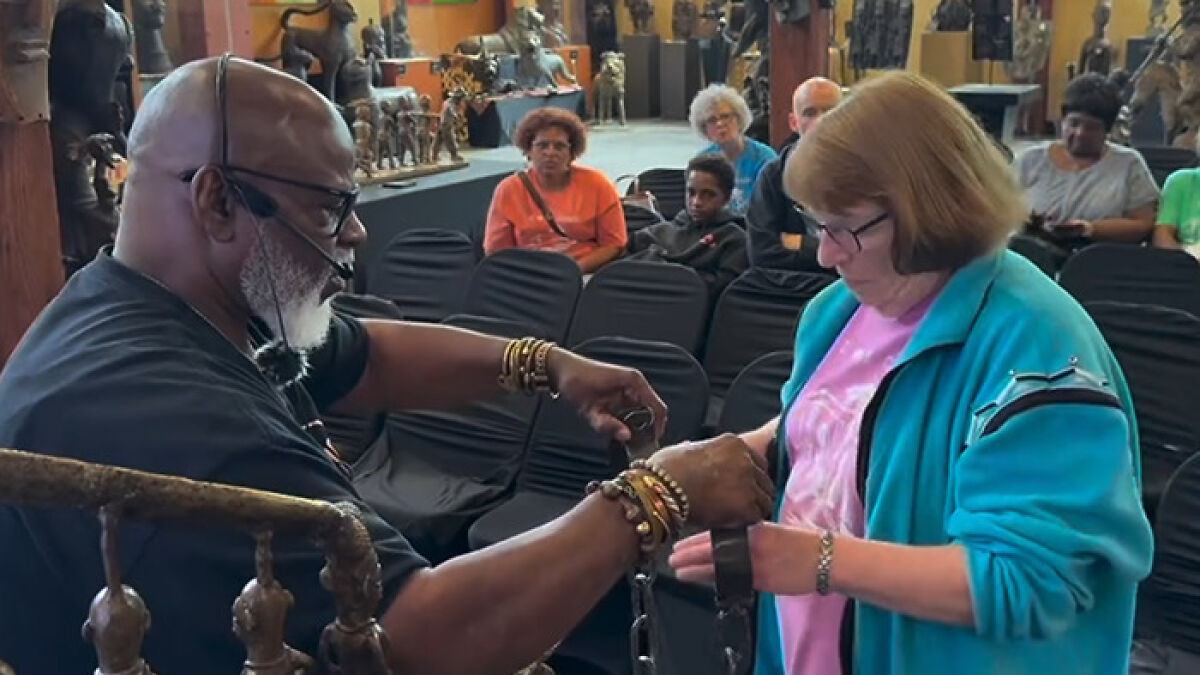
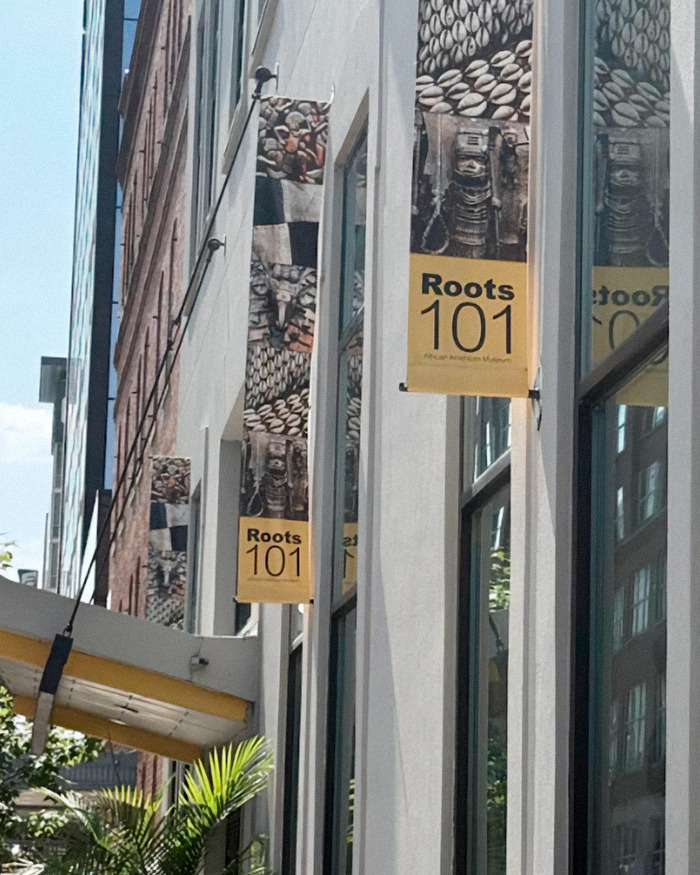
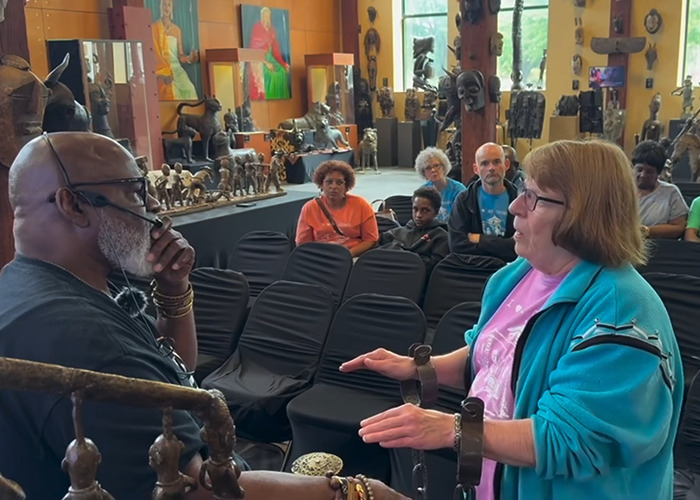
A video from the ROOTS-101 African American Museum in Louisville, Kentucky, has gone viral after it showed a white woman breaking down in tears while experiencing a simulation of enslaved Blacks arriving in America.
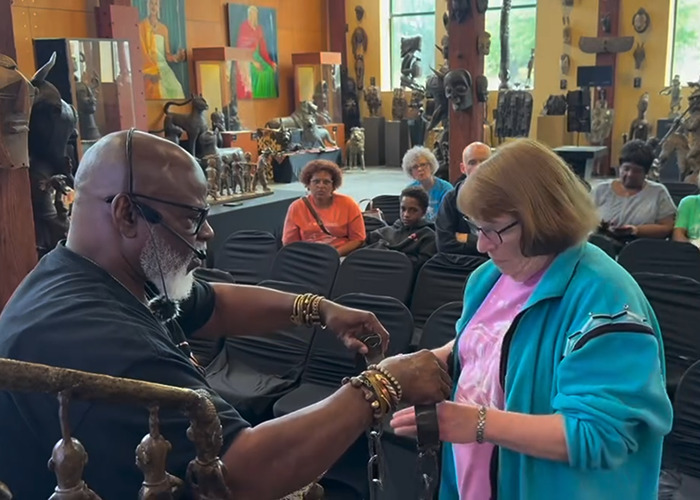
Museum founder Lamont Collins placed a heavy set of shackles on the visitor and said, “Welcome to America,” prompting an emotional reaction.
The moment has sparked both praise and criticism online, igniting conversations about empathy, privilege, and the weight of history.
Image credits: Karen Renata/Google Maps
Collins, the museum’s CEO and founder, can be seen placing shackles on the woman’s wrists on the video. As the weight of the metal shackles dropped down on the woman’s wrists, her entire body leaned forward.
“Welcome to America,” he said.
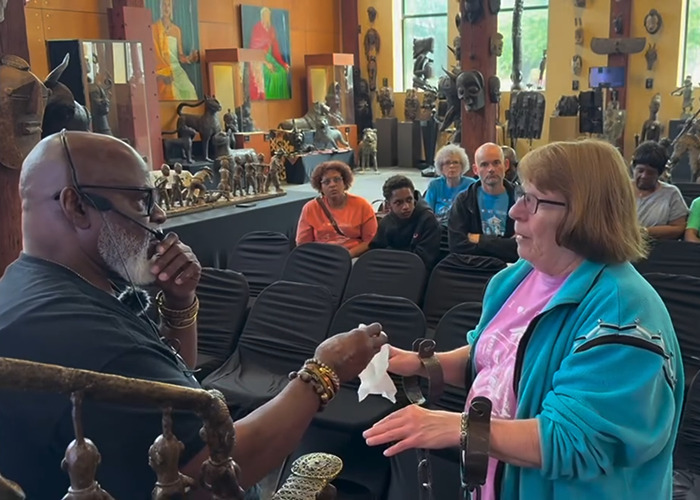
Collins then asked her to share what she was thinking. Through tears, the woman replied, “Just so much.” He quickly called for tissues, saying, “Kleenex, please.”
Image credits: roots101aam
The visitor explained that she had “always been interested in the history of Black people,” adding that her family has been close to theBlack community for years.
“I’ve read so many books, and now I belong to a church that’s primarily African American, and I wouldn’t be anywhere else,” the woman said before walking away.
Collins ended the interaction by responding, “Beautiful, thank you.”
ROOTS-101 African American Museum was founded in 2020 by Collins, who has described its mission as giving visitors a chance to “see themselves in history” and understand the broader story of African American life.
The museum’s exhibits focus on resilience,creativity, and cultural contributions, and it aims to create a space for reflection and connection, according to ROOTS-101’sofficial website.
Collins, now 67, has been deeply involved in preserving Blackhistory since childhood, when his mother gave him Muhammad Ali’s autograph. That gift sparked a lifelong passion for collecting artifacts that tell the story of Black culture.
A former University of Louisville football player, Collins has built the museum into a cultural destination for immersive storytelling.
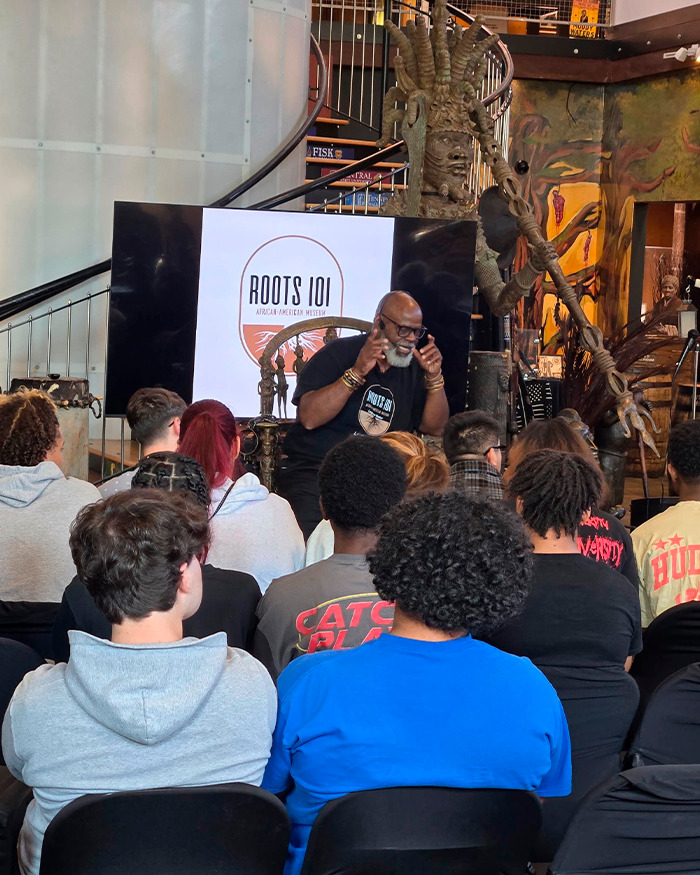
Image credits: roots101aam
This is one of the reasons why ROOTS-101’s mission is to “promote understanding & inspire appreciation of the achievements, contributions, and experiences of African Americans.”
The museum is aiming to achieve this goal using “exhibits, programs, and activities to illustrate African-American history, culture, and art.”
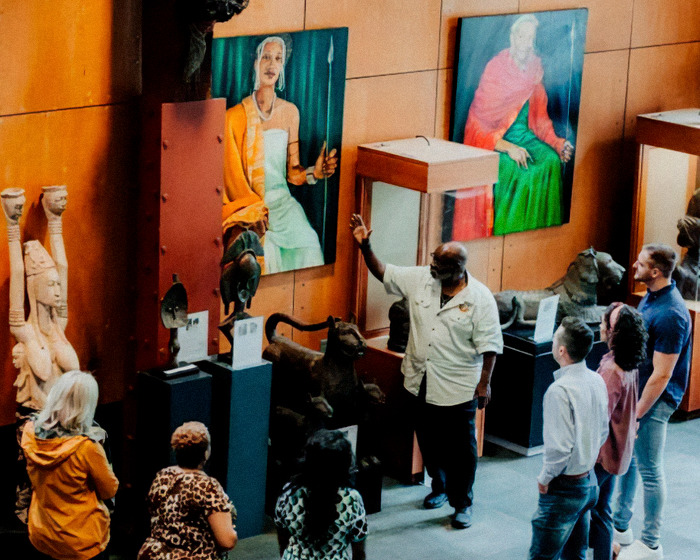
Image credits: roots101aam
“As the architect of Roots 101, Lamont’s magnetic storytelling weaves history into a compelling narrative, making the museum a hidden treasure that attracts visitors worldwide,” the museum’s website reads.
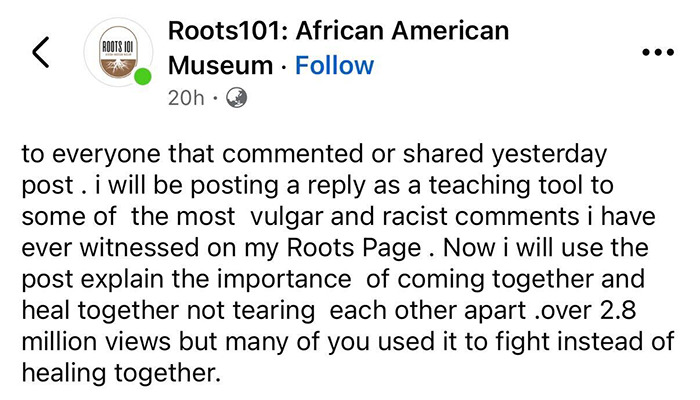
Image credits: Roots101: African American Museum/Facebook
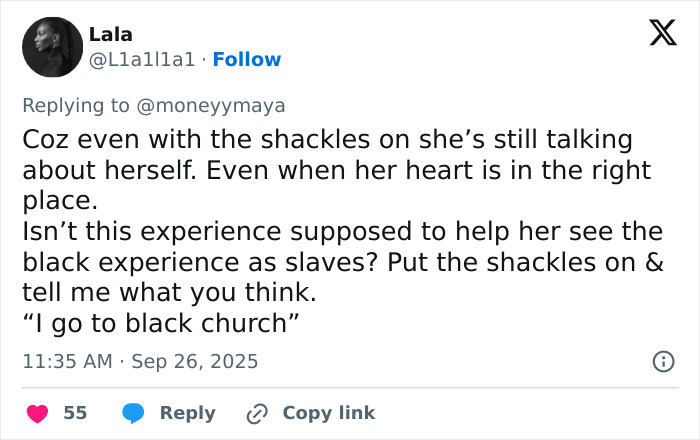
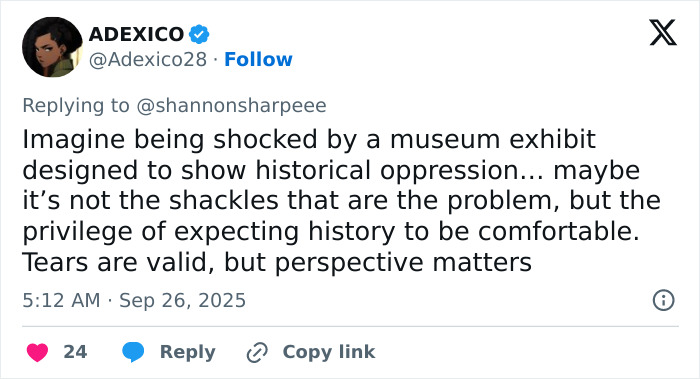
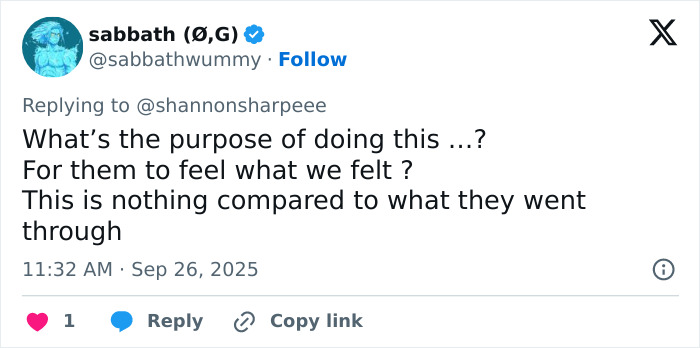
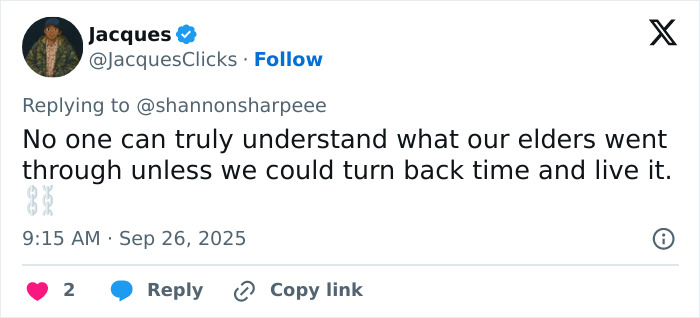
Some netizens praised the museum’s exercise for its rawemotional impact. Others felt it went too far as it became performative, while others argued that it didn’t go far enough.
This was highlighted by comments to the viral video across numerous social media platforms.
Image credits: Roots101: African American Museum/Facebook
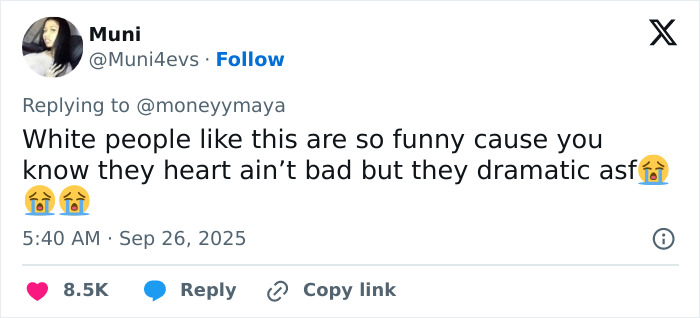
“White people like this are so funny cause you know they heart ain’t bad but they dramatic asf,” one person wrote.
Another saw value in the experience: “People are not truly going to understand the generational trauma until they experience an assimilated version of what our ancestors went through… It was so incredibly powerful that it felt as though it was happening within the moment.”
Image credits: Roots 101 African American Museum
For others, the physicality of the moment revealed something books could not.
“This somehow showed more viscerally how heavy those chains are than anything I’ve ever watched or read about … the moment you let go of those shackles, my heart felt how heavy they were,” the commenter stated.
White woman brought to tears after being shackled during African American museum visit pic.twitter.com/Nw9gRpDWIn
— Shannonnn sharpes Burner (PARODY Account) (@shannonsharpeee) September 25, 2025
Critics, however, pushed back. “I’m sorry, but she can never and will never truly understand the things Black people went through and still go through … Some tears ain’t gonna cut it,” another noted.
Others also argued that the exercise risked distortion: “Slavery was bad we can all agree. And we must do well to try and understand what people went through — but don’t take that upon you like it’s yours — that’s a one-way ticket to living as a victim,” one commenter argued.
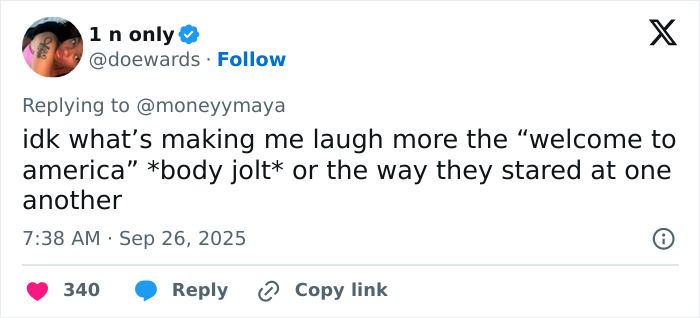
Image credits: doewards
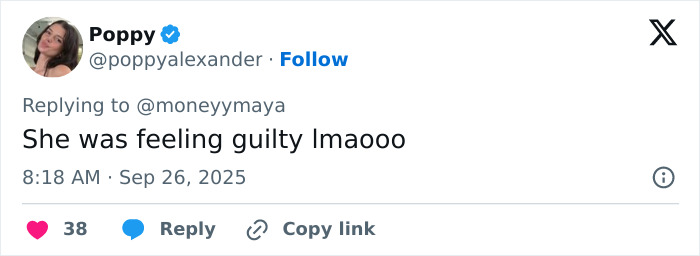
Image credits: poppyalexander
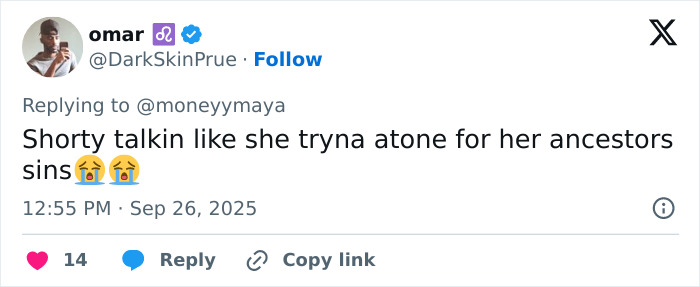
Image credits: DarkSkinPrue
Image credits: Muni4evs
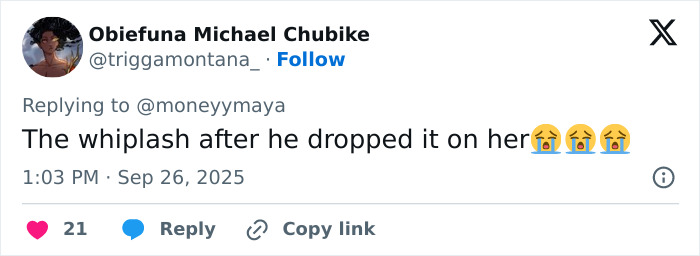
Image credits: triggamontana_
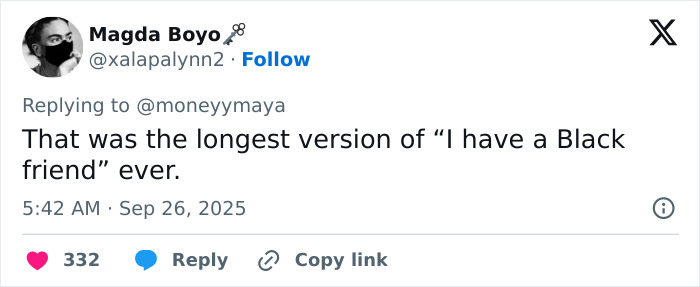
Image credits: xalapalynn2
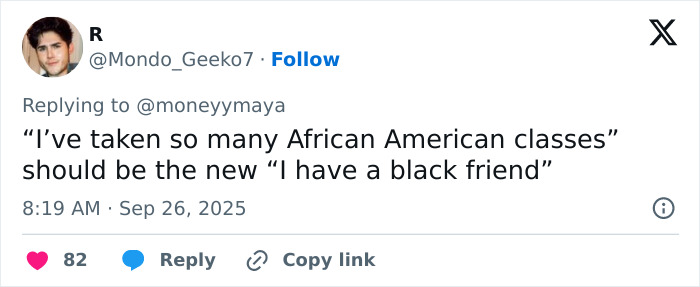
Image credits: Mondo_Geeko7
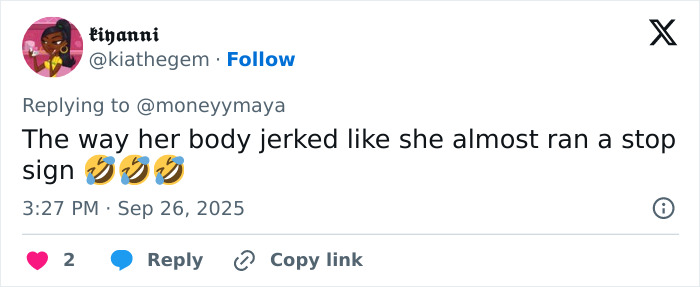
Image credits: kiathegem
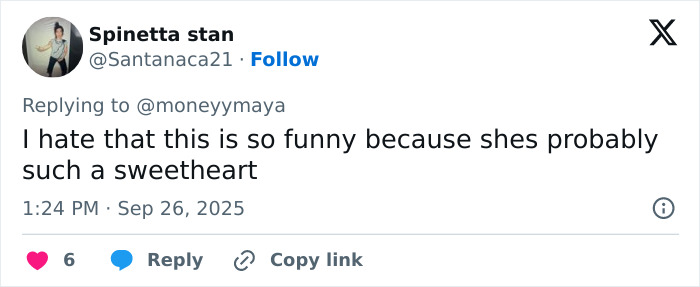
Image credits: Santanaca21
Image credits: L1a1l1a1
Image credits: Adexico28
Image credits: sabbathwummy
Image credits: JacquesClicks
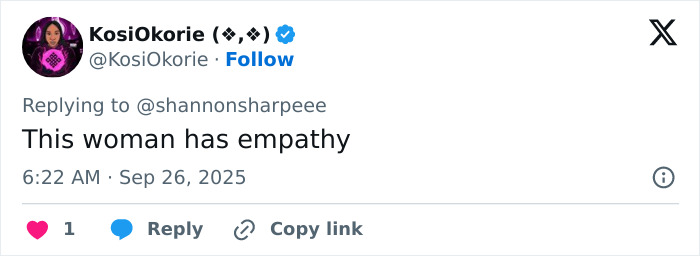
Image credits: KosiOkorie
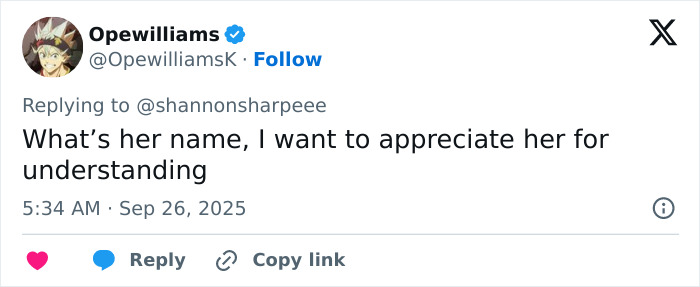
Image credits: OpewilliamsK
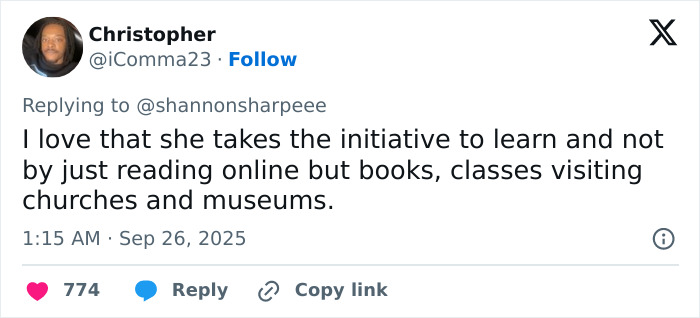
Image credits: iComma23
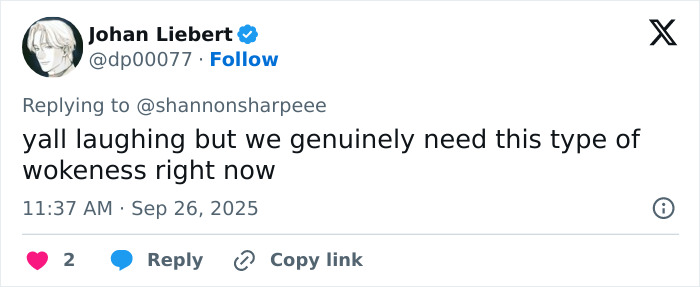
Image credits: dp00077
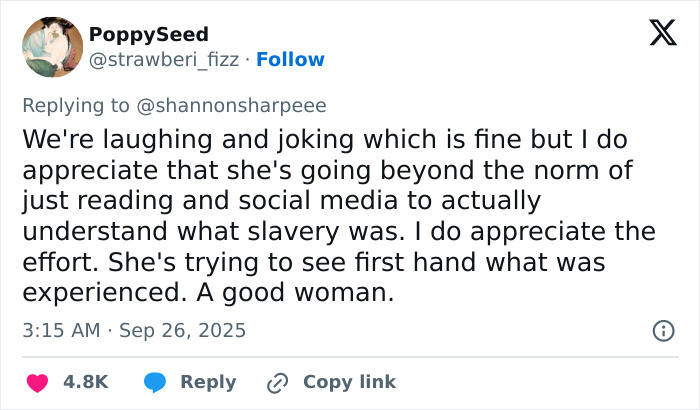
Image credits: strawberi_fizz
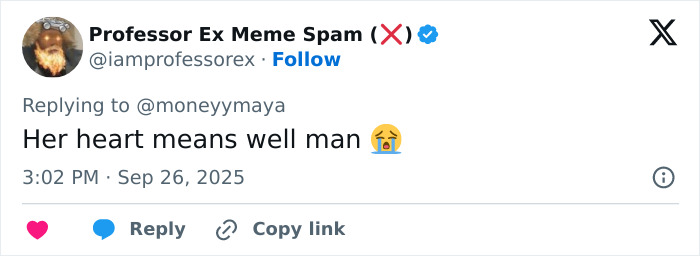
Image credits: iamprofessorex
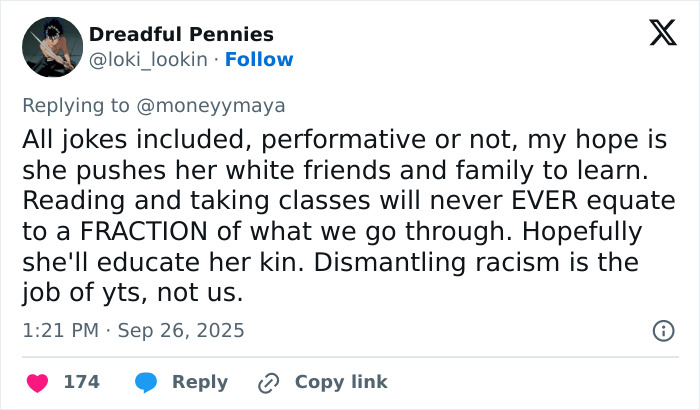
Image credits: loki_lookin

By entering your email and clicking Subscribe, you're agreeing to let us send you customized marketing messages about us and our advertising partners. You are also agreeing to our Privacy Policy.
Thank you! You've successfully subscribed to newsletters!


I checked the comments at https://www.facebook.com/roots101aam. A few people were annoyed at the white woman, but many more appreciated her learning and her empathy. It's pretty much rage bait for BP to emphasize the people who made fun of her and ignore the many who were touched by her empathy.

I'm not sure why, whether it's genetic or how I was raised, but the idea and acknowledgement of injustice to any group of people has always produced a deep, emotional response from me. Shoot, I teared up watching this - no doubt I would have lost it if I had experienced it. Slavery was just. so. wrong. And this is a vivid reminder of that.

I know I've said this before, but - I'm white as hell (genetic/ancestrally Scottish and Irish; my bio dad was one of those "will die in the sun" redheads) but I was adopted at birth into a Mexican-American family. I was raised in the Hispanic/Mexican culture. And I'm ashamed of my older Mexican relatives' behavior and opinions - they're JUST as racist as the "stereotypical" white people are, apparently. In the 70s, before I was born, one of my cousins married a black man, and she was basically excommunicated from the family. No one would talk to her. She was shunned and excluded, because my Mexican relatives hated black people. And even these days - my now-ex (Chinese) once told me that it was a "good thing" that I was white, because if he'd tried to bring a Mexican (or, god forbid) black girlfriend to meet his parents, they would apparently have shunned and hated me. He said his parents (born in China and Taiwan, emigrated to the US in the 70s) would never have "accepted" a black gf. And it's extra-hilarious (except not in a ha-ha way) because the CHINESE were basically enslaved by white people too (mid to late 1800s) and were also repeatedly enslaved/s!aughtered by the Japanese multiple times in their history. So you'd think that Chinese people would be empathetic/sympathetic towards another race/culture who had also been enslaved by white people - NOPE!
Load More Replies... jfc at the people mocking and sh!tting on her - look, she's elderly, this may be the ONLY amount/way that she can learn/change. Of course she isn't going to "understand what black people went through" in regards to slavery - but neither do the young black people alive today who were born in, say, the early 2000s. NONE of us can truly understand what a black slave went through or felt, during the height of slavery in the US. Can we have empathy and sympathy and learn from the horrific past? Yes. And THAT is what is important now, not mocking a white woman because she isn't going to "understand" what it was like being a black slave. No one alive today "understands" it in the way that the black slaves did during the (worst) era of black slavery in the 1800s. I'm NOT saying that racism isn't still alive and strong (it is, and worse now thanks to Chief Cheeto) and yes, black people are still discriminated against horribly and in so many ways. But sh!tting on a white woman who is at least making an effort to understand a small piece of what slavery was like - that's not okay. At least she is trying to LEARN history and not trying to pretend it didn't exist/happen, like certain people are doing in regards to slavery and the Ho!ocaust.

I would add that people seem to forget that women also suffer a lot of misogyny, bias, discrimination, and violence due to being women. It's not as if a white woman has never been on the receiving end of any of these. (Blatant misogyny is much more widely accepted in the US than racism.) But as you point out, none of can know what it was like to have experienced slavery. Even Americans trafficked into s*x slavery wouldn't truly know, since that's yet a different kind of horrible experience.
Load More Replies... I checked the comments at https://www.facebook.com/roots101aam. A few people were annoyed at the white woman, but many more appreciated her learning and her empathy. It's pretty much rage bait for BP to emphasize the people who made fun of her and ignore the many who were touched by her empathy.
I'm not sure why, whether it's genetic or how I was raised, but the idea and acknowledgement of injustice to any group of people has always produced a deep, emotional response from me. Shoot, I teared up watching this - no doubt I would have lost it if I had experienced it. Slavery was just. so. wrong. And this is a vivid reminder of that.
I know I've said this before, but - I'm white as hell (genetic/ancestrally Scottish and Irish; my bio dad was one of those "will die in the sun" redheads) but I was adopted at birth into a Mexican-American family. I was raised in the Hispanic/Mexican culture. And I'm ashamed of my older Mexican relatives' behavior and opinions - they're JUST as racist as the "stereotypical" white people are, apparently. In the 70s, before I was born, one of my cousins married a black man, and she was basically excommunicated from the family. No one would talk to her. She was shunned and excluded, because my Mexican relatives hated black people. And even these days - my now-ex (Chinese) once told me that it was a "good thing" that I was white, because if he'd tried to bring a Mexican (or, god forbid) black girlfriend to meet his parents, they would apparently have shunned and hated me. He said his parents (born in China and Taiwan, emigrated to the US in the 70s) would never have "accepted" a black gf. And it's extra-hilarious (except not in a ha-ha way) because the CHINESE were basically enslaved by white people too (mid to late 1800s) and were also repeatedly enslaved/s!aughtered by the Japanese multiple times in their history. So you'd think that Chinese people would be empathetic/sympathetic towards another race/culture who had also been enslaved by white people - NOPE!
Load More Replies... jfc at the people mocking and sh!tting on her - look, she's elderly, this may be the ONLY amount/way that she can learn/change. Of course she isn't going to "understand what black people went through" in regards to slavery - but neither do the young black people alive today who were born in, say, the early 2000s. NONE of us can truly understand what a black slave went through or felt, during the height of slavery in the US. Can we have empathy and sympathy and learn from the horrific past? Yes. And THAT is what is important now, not mocking a white woman because she isn't going to "understand" what it was like being a black slave. No one alive today "understands" it in the way that the black slaves did during the (worst) era of black slavery in the 1800s. I'm NOT saying that racism isn't still alive and strong (it is, and worse now thanks to Chief Cheeto) and yes, black people are still discriminated against horribly and in so many ways. But sh!tting on a white woman who is at least making an effort to understand a small piece of what slavery was like - that's not okay. At least she is trying to LEARN history and not trying to pretend it didn't exist/happen, like certain people are doing in regards to slavery and the Ho!ocaust.
I would add that people seem to forget that women also suffer a lot of misogyny, bias, discrimination, and violence due to being women. It's not as if a white woman has never been on the receiving end of any of these. (Blatant misogyny is much more widely accepted in the US than racism.) But as you point out, none of can know what it was like to have experienced slavery. Even Americans trafficked into s*x slavery wouldn't truly know, since that's yet a different kind of horrible experience.
Load More Replies...













 No fees, cancel anytime






16
16