Get Premium
Dark mode theme is available exclusively for premium users. Learn more about the benefits of subscribing.
No fees, cancel anytime.

 Dark Mode Ad-Free Browsing Unlimited Content
 Ad-Free Browsing Unlimited Content Dark Mode
Join 1.2 million Panda readers who get the best art, memes, and fun stories every week!
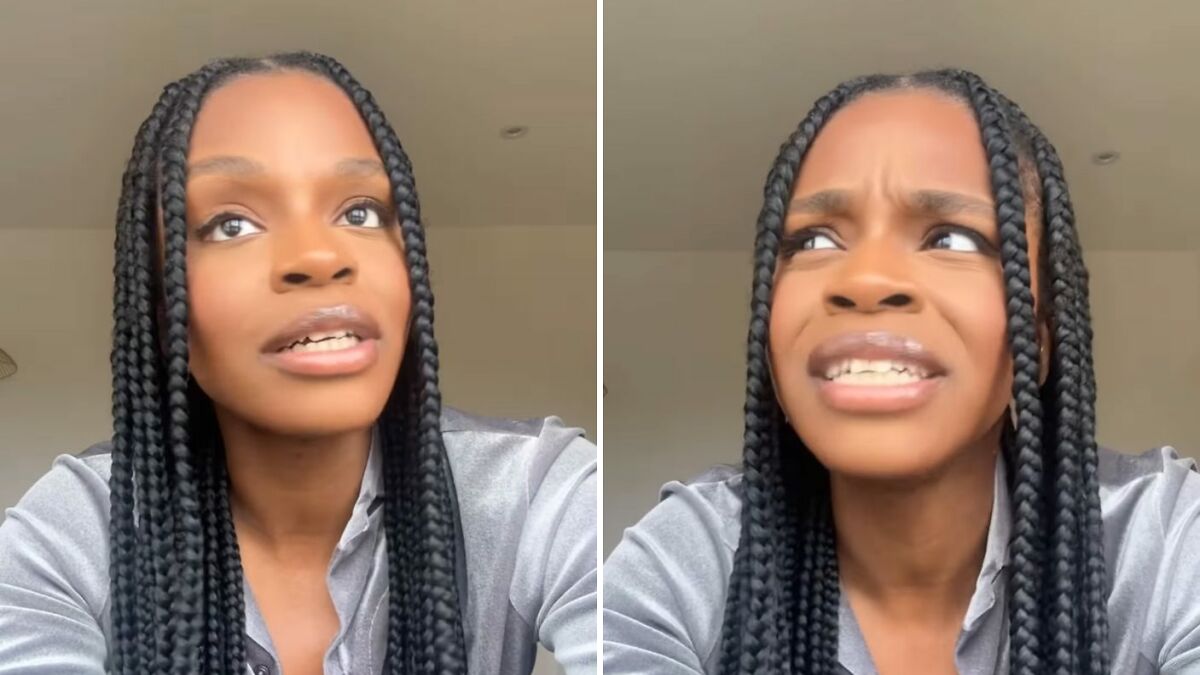
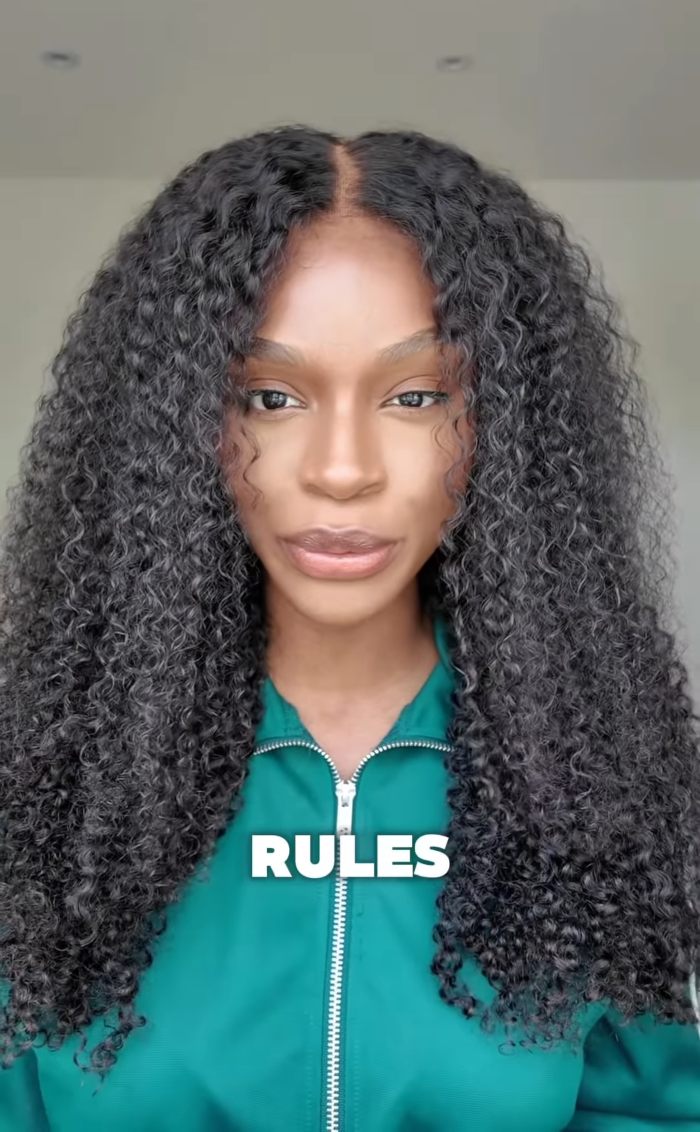
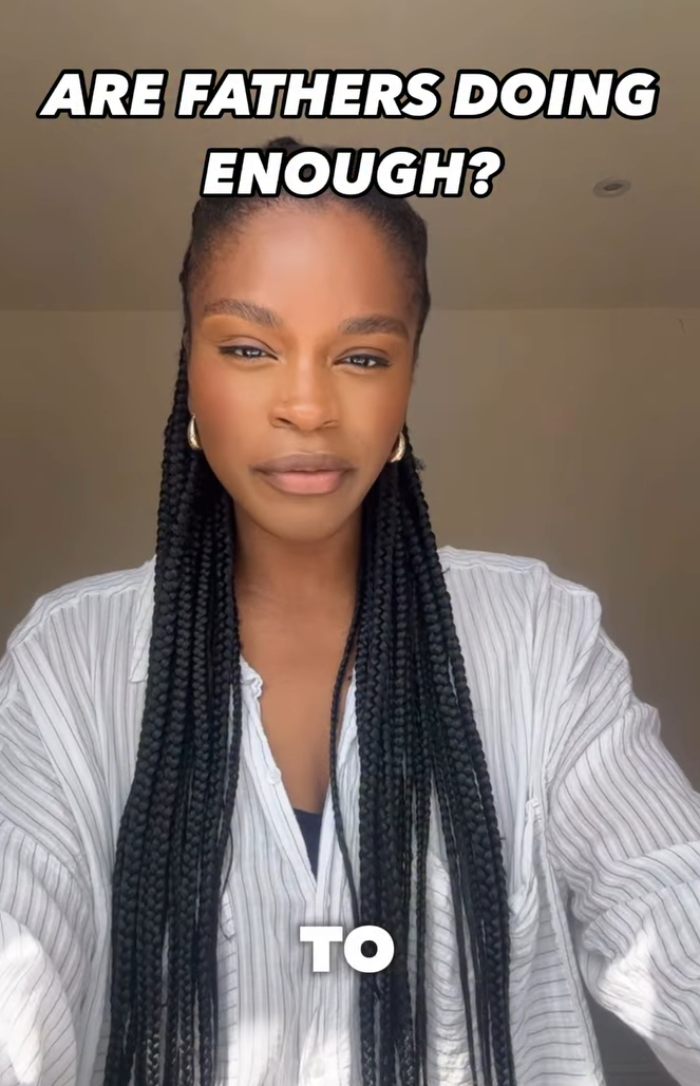
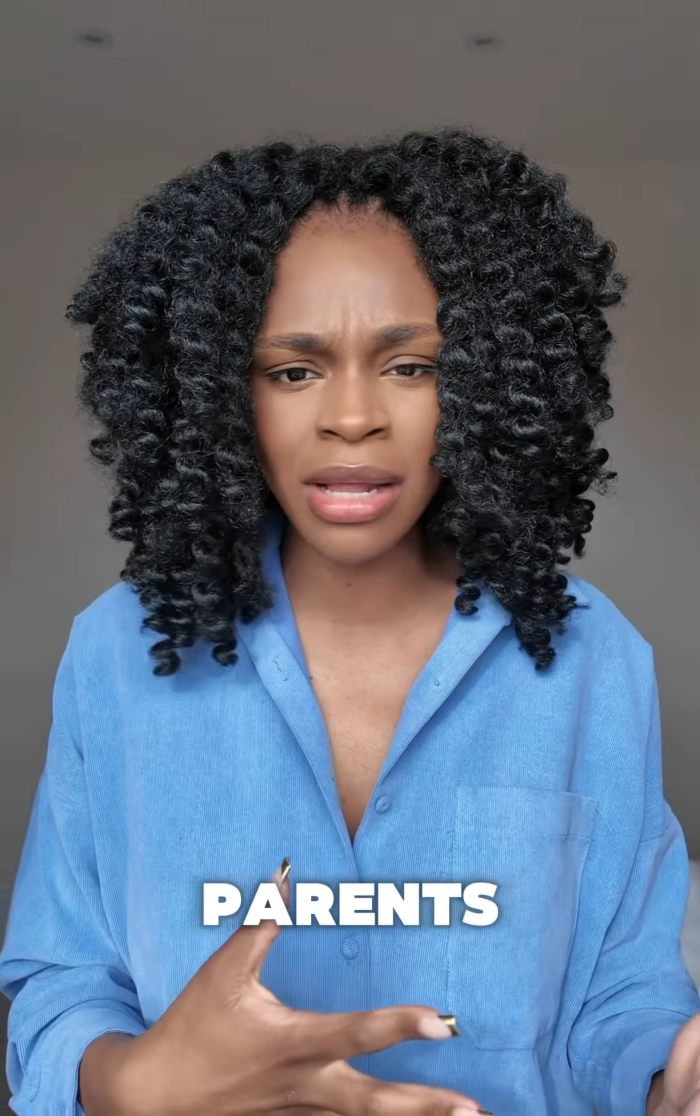
A mother shared her reaction to her 2-year-old daughter coming home from day care and announcing that she’s Black.
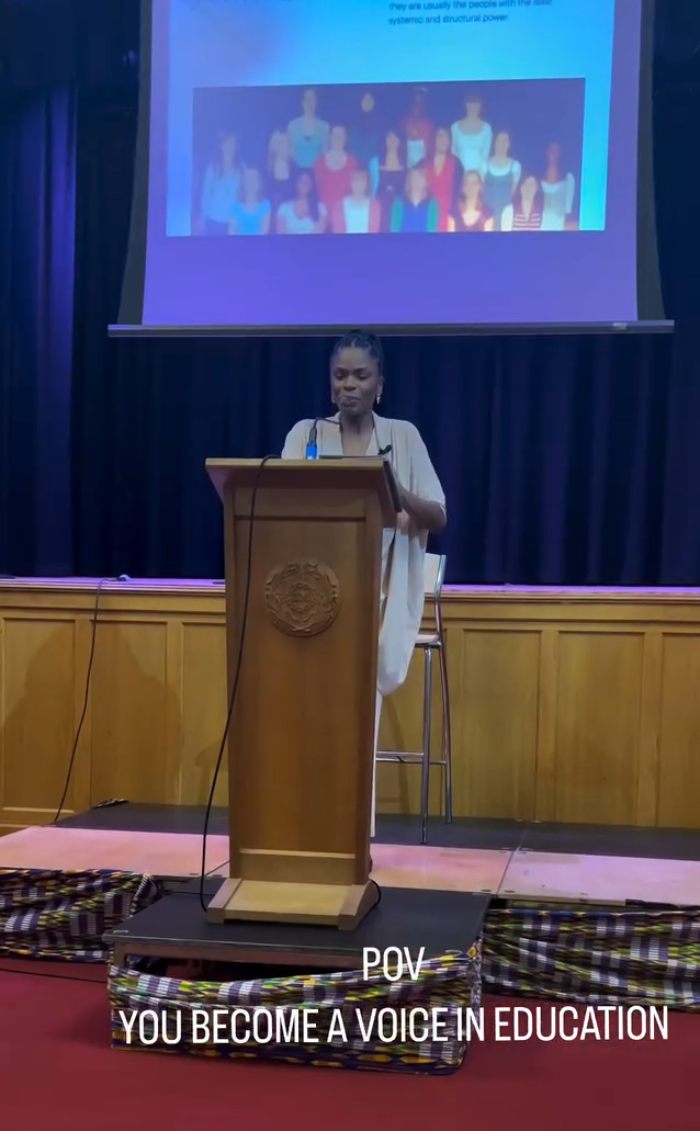
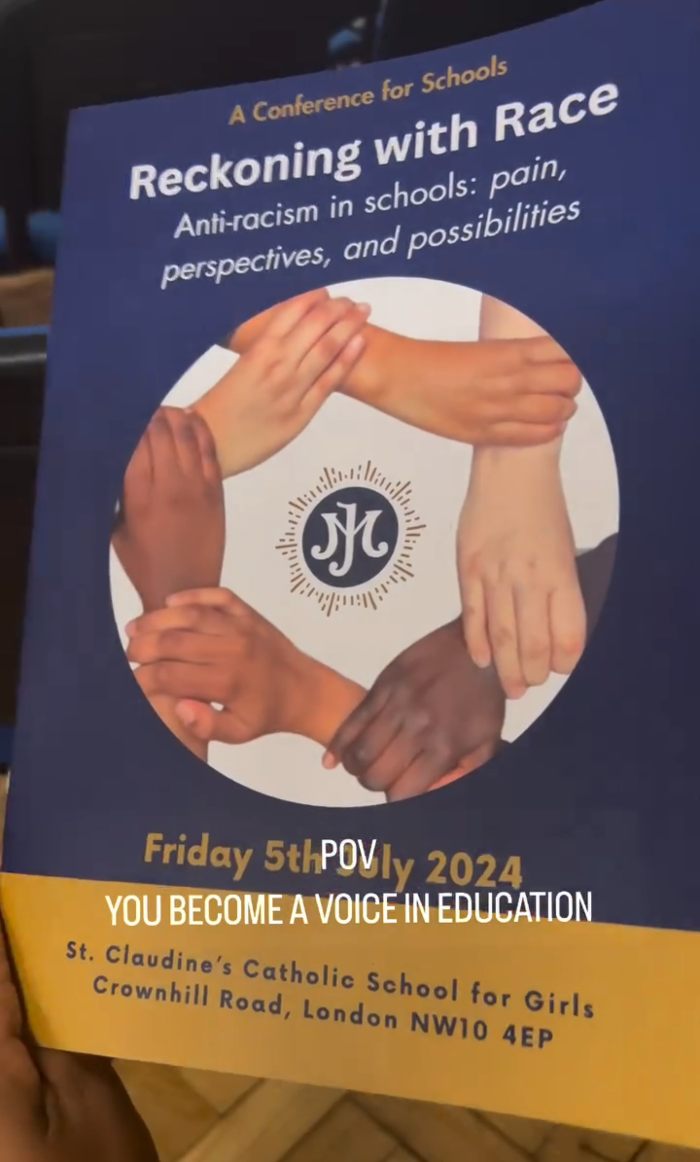
Joy Mbakwe, an English teacher based in London, said she had never discussed race with her toddler and, until that moment, had never felt the need to.
“She said, ‘Mommy’s Black, daddy’s Black, and I am Black,'” Joy recounted.
The mother said she was “surprised” because, although she had exposed her toddler to representative toys and stories, she had never explicitly told her daughter that she was Black.
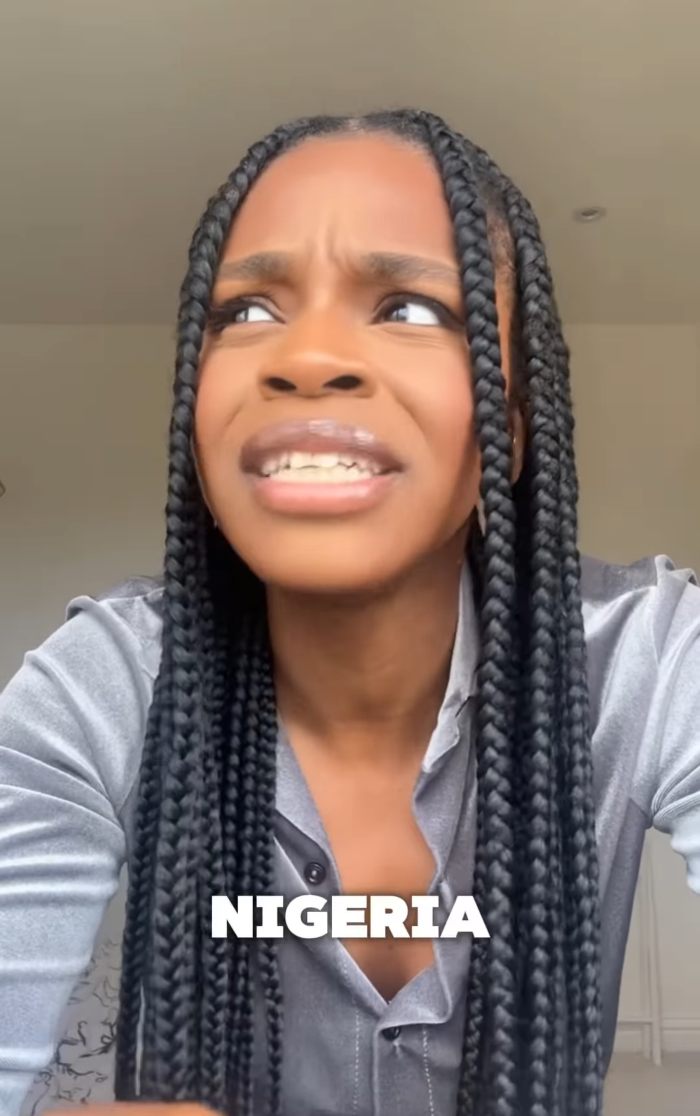
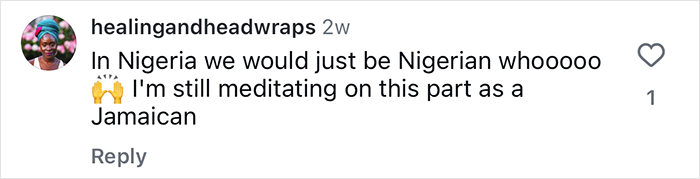
“One of the reasons I’ve never said to her, ‘You are Black,’ is because if I was living in Nigeria and I had her, I would never say to her, ‘You are Black.’ We would just be Nigerian.”
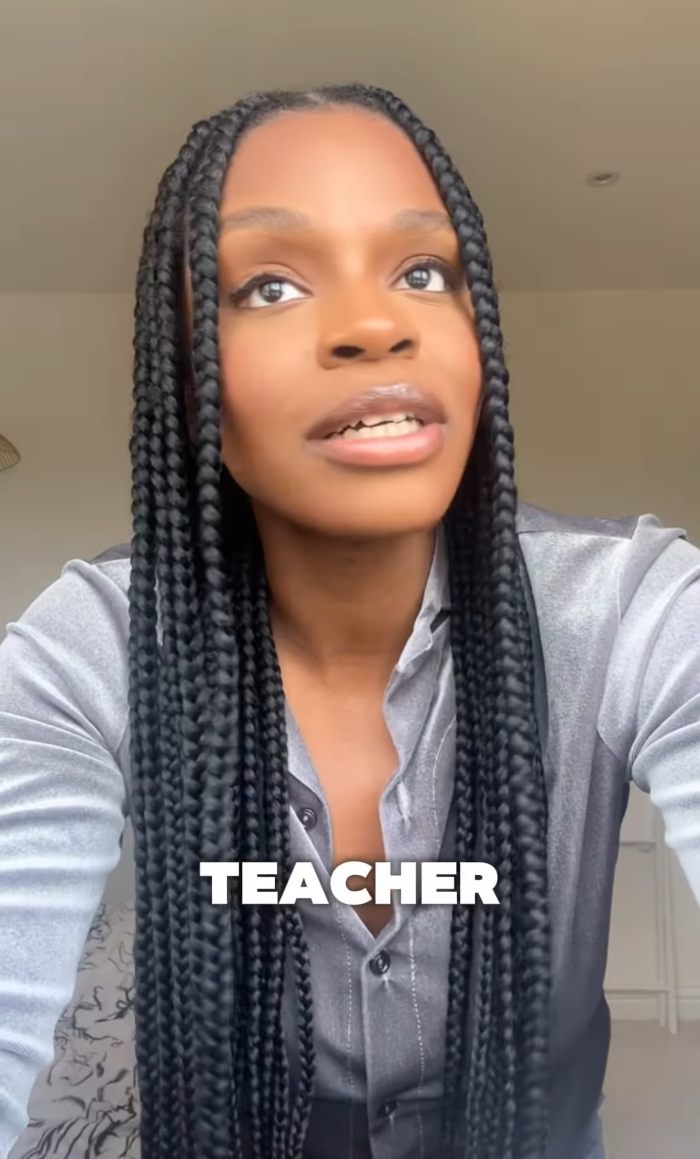
Image credits: Joy Mbakwe
Joy added that “sometimes, being Black feels in response to whiteness,” a reality that she finds “uncomfortable.”
The content creator said that white people don’t explain to their children that they’re white, so Black people shouldn’t feel the need to have that conversation either.
Image credits: Joy Mbakwe
View this post on Instagram
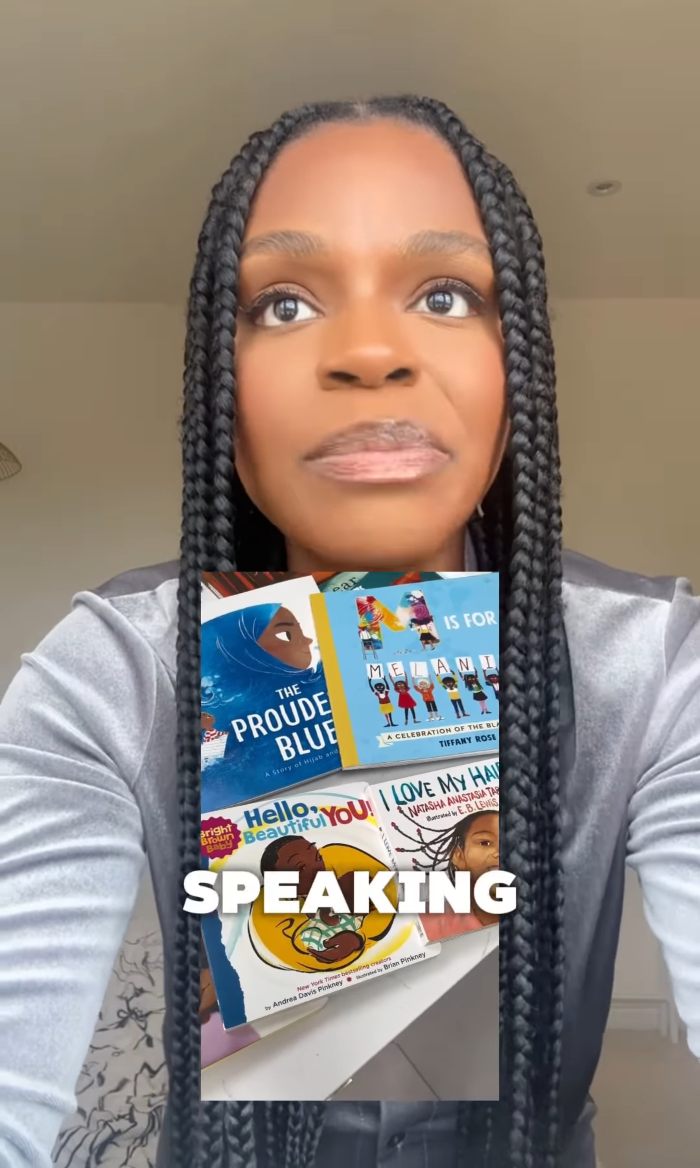
In response to her daughter’s comments about her skin color, Joy decided to educate her on the topic and bought several children’s books—her “explicit race curriculum,” as the mom put it—to help her 2-year-old develop an awareness of the concept of race and feel proud of who she is.
“These books are going to give me the opportunity to teach her, uplift her, affirm her, teach her that it’s not OK to be colorblind, and that being Black is a beautiful thing.”
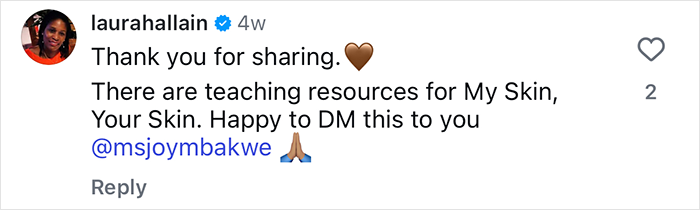
Some of the titles she purchased include My Skin, Your Skin by Laura Henry-Allain and Young, Gifted, and Black by Jamia Wilson.
Image credits: Joy Mbakwe
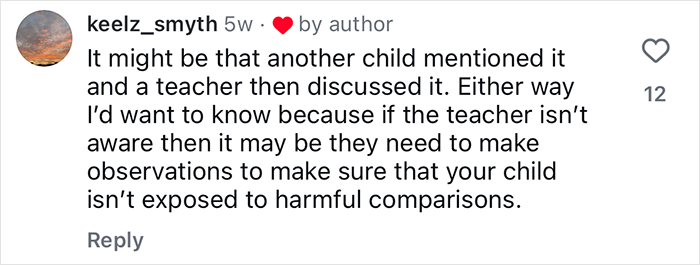
Speaking with Newsweek, Joy shared that she later learned that an older child in her daughter’s class may have introduced the term to her 2-year-old.
“I had not anticipated that we would have to explicitly speak to her about race until she was older,” she explained.
“For her to be just two and describe herself as ‘Black’ was both saddening and shocking. Although we are proud to be Black, it is not without its consequences.”
Image credits: Joy Mbakwe
The mom shared that while some Black people in the diaspora find the term “empowering,” Africans who migrate to the West often associate it with the negative stereotypes it carries.
A landmark study in 2005 showed that babies perceived differences in race and exhibited preferences for their own race as early as 3 months of age.
In a 2014 study, white children aged 10 thought that Black children of the same age would feel less pain than them if they bumped their heads or bit their tongues.
Image credits: Joy Mbakwe
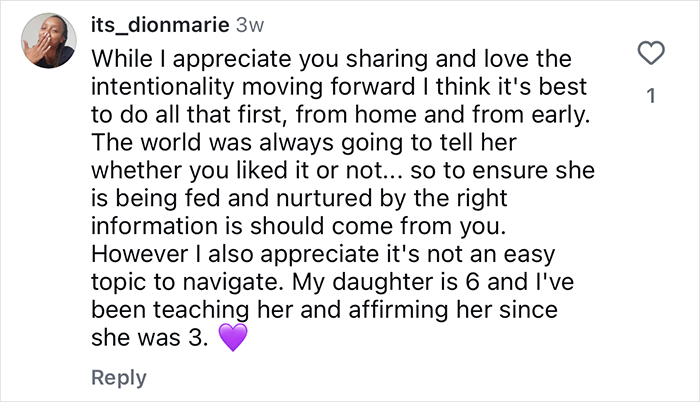
Joy stressed the importance of authority figures —parents, and later, teachers—in teaching children about respect and equality, and in staying alert to address discriminatory behaviors.
“Nurseries absolutely have the responsibility to be culturally and racially sensitive, and radically inclusive in nature. However, I believe parents should lead the conversation first with their children,” said the mom.
“It’s a sensitive topic and I have to be careful that I am empowering my child as well as educating her.”
Image credits: Joy Mbakwe
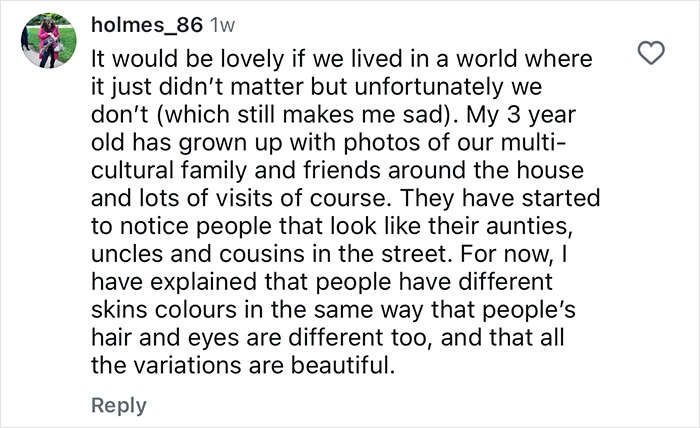
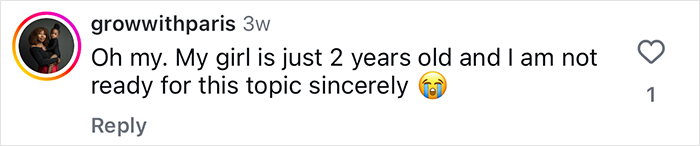
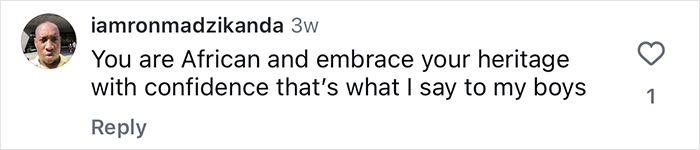
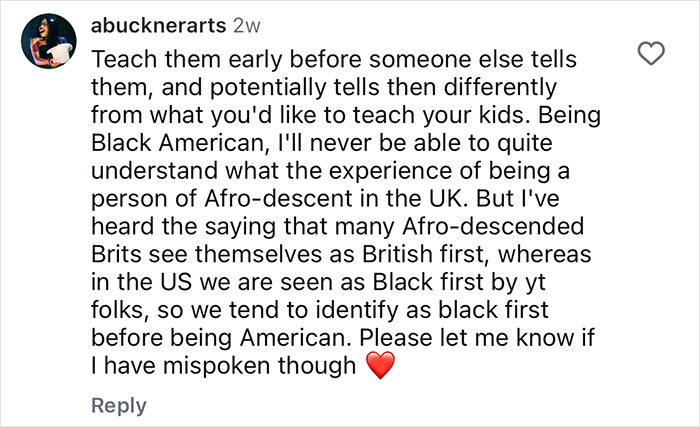
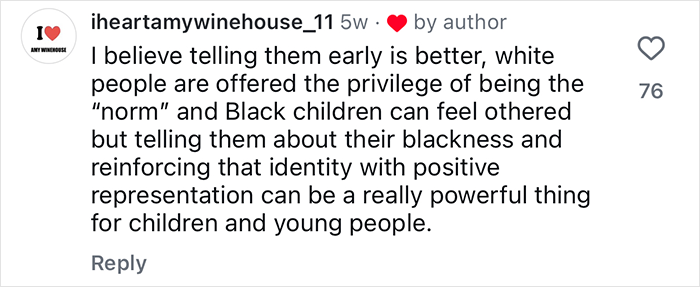
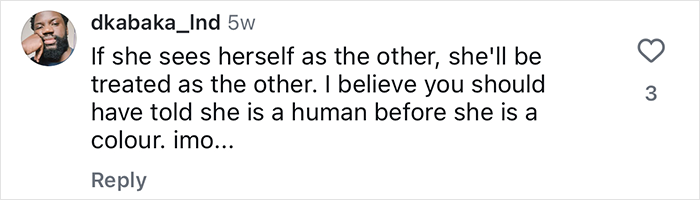
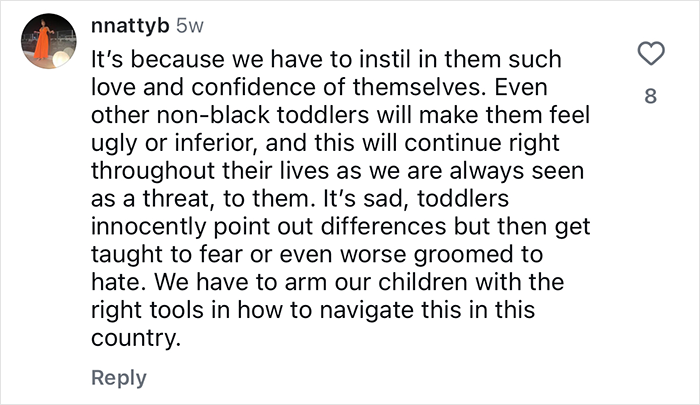
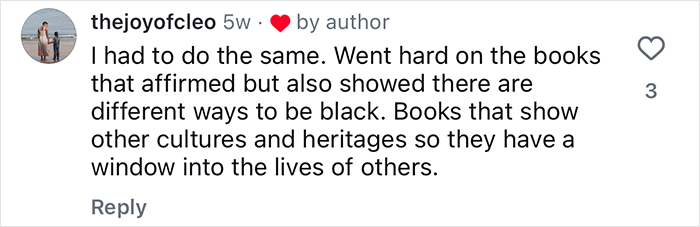
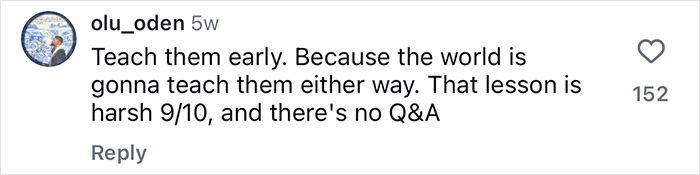
Joy’s Instagram reel has garnered over 83,000 views and resonated with parents raising young children in multicultural environments. In the comments, many shared how they approach teaching their children about race.
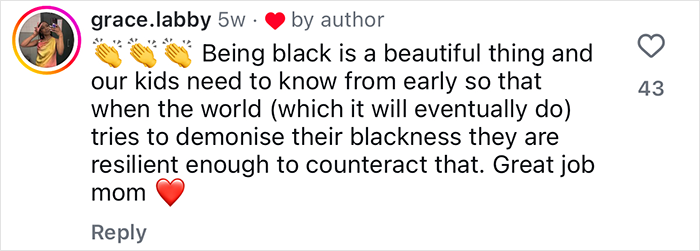
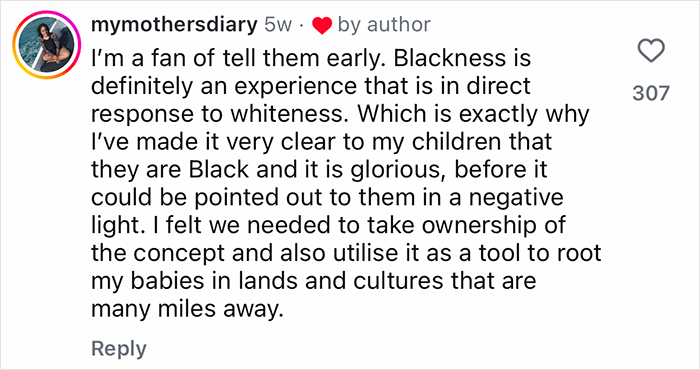
“I’m a fan of tell them early,” one mother wrote. “Blackness is definitely an experience that is in direct response to whiteness. Which is exactly why I’ve made it very clear to my children that they are Black and it is glorious, before it could be pointed out to them in a negative light.”
Another agreed, saying, “Taking control of narratives for children before the world thrusts it upon them in a harmful/confusing way is so powerful.”
Image credits: Joy Mbakwe
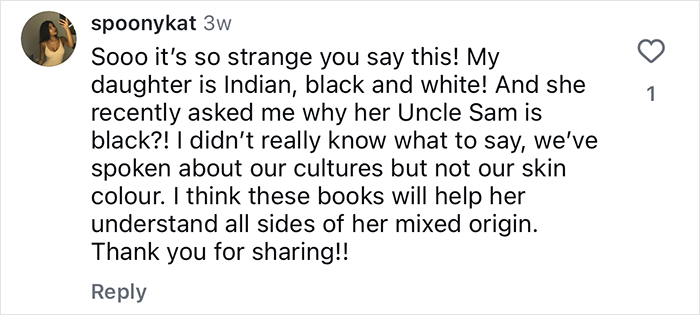
“My daughter is Indian, black and white! And she recently asked me why her Uncle Sam is black?! I didn’t really know what to say,” shared someone else. “We’ve spoken about our cultures but not our skin colour. I think these books will help her understand all sides of her mixed origin.”
Image credits: Joy Mbakwe
Image credits: Joy Mbakwe
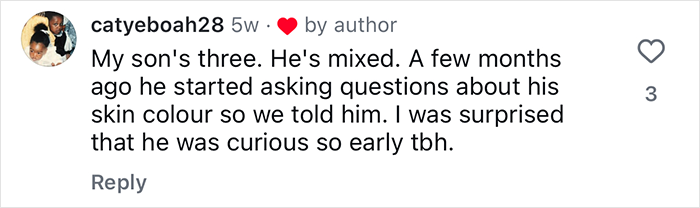
A separate commenter said, “My son’s three. He’s mixed. A few months ago he started asking questions about his skin colour so we told him.”
“I have a 6yo & 4yo and I have mentioned colour before mainly just that mum is African and dad is Scottish but not white/black,” added an additional parent. “I’m currently in between having that conversation with them but I just feel so bad that I have to do that & also I don’t want to other them.”

By entering your email and clicking Subscribe, you're agreeing to let us send you customized marketing messages about us and our advertising partners. You are also agreeing to our Privacy Policy.
Thank you! You've successfully subscribed to newsletters!


When I was younger, we were just all schoolmates. There weren't a lot of black or Asian kids, but it wouldn't have occurred to us to treat them different in any way, and this was the 60s and 70s. One feels that they learn racism from adults.


Totally agree with this. My daughters net lots of kids from different backgrounds and cultures but never heard someone described by their sin colour until the eldest was 6. Why should you? We're all just people. Worse in USA where there is American and then African American or Italian American or whatever. People are people, lots stop describing and pigeonholing people by the colour of their skin.

I'm white, super pale, but was adopted at birth into a Mexican family. I grew up knowing about racial differences without "KNOWING" about them, so to speak XD My cousins would tease me (good-naturedly) about disappearing when I stood next to a white-painted wall. My now-ex is Chinese; we dated for 24 years and while I "knew" he was Chinese, it didn't matter. My childhood best friend called him a racial slur when we first started dating when I was 18 (and expressed surprise I would date "one of those people"), and I haven't spoken with that friend since. My ex's childhood best friend is black - he and his biological sister had been adopted into a white family. We were all one big shaken-bag-of-crayons mess of skin colors for a while, and while cultural differences were noted, respected, and explored (especially our respective cultures' foods, yum), no one cared who looked like what. I live in Southern California, so it's very cosmopolitan - maybe it's different elsewhere. EDIT: When I was a very small child, before I learned I was adopted, I would proudly tell people I was Mexican-American.. XD obviously I am not, though I was raised in the Mexican-American culture and that's culturally still how I strongly identify.
When I was younger, we were just all schoolmates. There weren't a lot of black or Asian kids, but it wouldn't have occurred to us to treat them different in any way, and this was the 60s and 70s. One feels that they learn racism from adults.
Totally agree with this. My daughters net lots of kids from different backgrounds and cultures but never heard someone described by their sin colour until the eldest was 6. Why should you? We're all just people. Worse in USA where there is American and then African American or Italian American or whatever. People are people, lots stop describing and pigeonholing people by the colour of their skin.
I'm white, super pale, but was adopted at birth into a Mexican family. I grew up knowing about racial differences without "KNOWING" about them, so to speak XD My cousins would tease me (good-naturedly) about disappearing when I stood next to a white-painted wall. My now-ex is Chinese; we dated for 24 years and while I "knew" he was Chinese, it didn't matter. My childhood best friend called him a racial slur when we first started dating when I was 18 (and expressed surprise I would date "one of those people"), and I haven't spoken with that friend since. My ex's childhood best friend is black - he and his biological sister had been adopted into a white family. We were all one big shaken-bag-of-crayons mess of skin colors for a while, and while cultural differences were noted, respected, and explored (especially our respective cultures' foods, yum), no one cared who looked like what. I live in Southern California, so it's very cosmopolitan - maybe it's different elsewhere. EDIT: When I was a very small child, before I learned I was adopted, I would proudly tell people I was Mexican-American.. XD obviously I am not, though I was raised in the Mexican-American culture and that's culturally still how I strongly identify.









 No fees, cancel anytime






29
6