Get Premium
Dark mode theme is available exclusively for premium users. Learn more about the benefits of subscribing.
No fees, cancel anytime.

 Dark Mode Ad-Free Browsing Unlimited Content
 Ad-Free Browsing Unlimited Content Dark Mode
Join 1.2 million Panda readers who get the best art, memes, and fun stories every week!
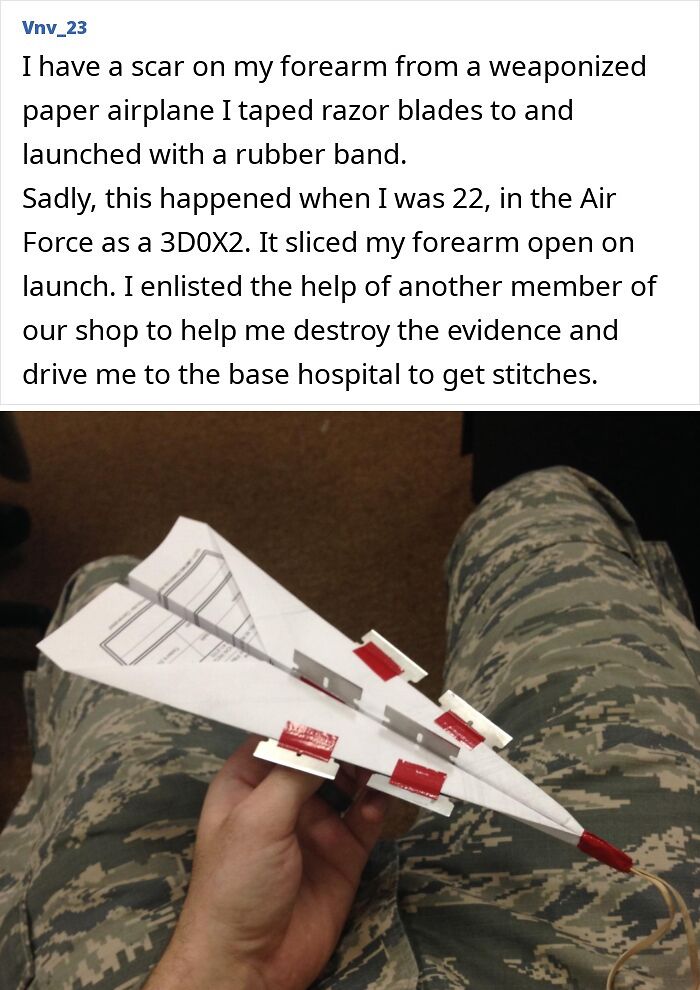
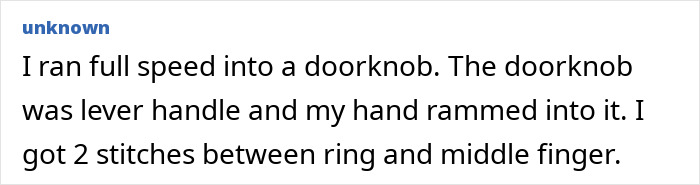
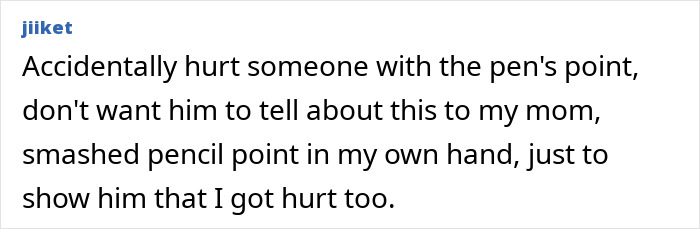
We all have scars. Some of them represent our survival through the toughest moments in our lives. Others are embarrassing reminders that we can get hurt in the dumbest ways possible. And we’re definitely not alone. Some internet users find it cathartic to open up about their silliest failures online.
Bored Panda has collected people’s funniest stories about the stupid ways they got injured, and they are all incredibly relatable. Read on for a good laugh and a whole lot of empathy.
This post may include affiliate links.

Scars themselves are part of your body’s natural healing process after your skin has been damaged. In a nutshell, your skin grows new tissue, mainly using collagen, to fill in the gaps caused by your injuries.
The vast majority of people have some type of scars. However, not all scars are equal. As the Cleveland Clinic points out, some scars can fade away over time. Others, however, can look aesthetically displeasing, might make it difficult for you to move, can cause pain, and may require treatment.
There are different treatments for scars, such as dermabrasion (removing the top layer of skin to soften and smooth scars), injections, laser treatments, pressure therapy, scar-revision surgery, and using creams and ointments.
In the meantime, if you get injured, there are some simple ways that you can reduce the risk of scarring. It’s important that you speak with your doctor about caring for your wound first, though.
But broadly speaking, you should clean your wound to wash out the germs, and change your bandages often. You should keep your wound moist, for example, with petroleum jelly, to prevent it from becoming dry and scabbing over. Moreover, protect your injury from the sun, as it can darken your scar.
Meanwhile, your diet matters, too. If your body lacks protein and vitamins C and D, your scarring can worsen.

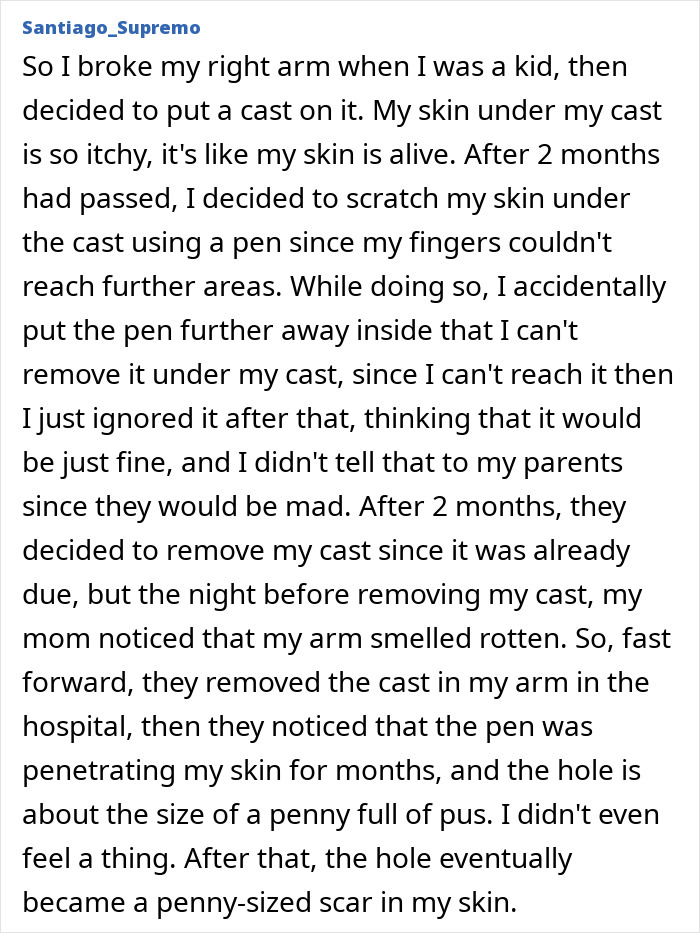
Ouch! That can actually k**l you because it can inject water and air into your bloodstream causing an embolism. Not to mention all the dirt and germs you are likely to be injecting deep into your tissues.

In the name of the father, and of the son and into the hole he goes....
Everyone makes mistakes. They are an absolutely unavoidable part of life! While you can’t control everything that happens to you and around you, there are two areas where you do have at least some control.
For one, you can control how you respond to difficult situations and major setbacks. You can either ruminate and beat yourself up over messing up or accept and embrace what has happened. The healthy thing to do is to process your emotions. The unhealthy thing to do is to ignore your feelings and allow your embarrassment to turn into deep-seated shame.
But that’s easier said than done. Many of us have been in situations where we can’t stop blaming ourselves for doing something stupid, even if we did the best that we could with the information we had at the time.

I remember that game... I also remember the one where it was done with fingernails...
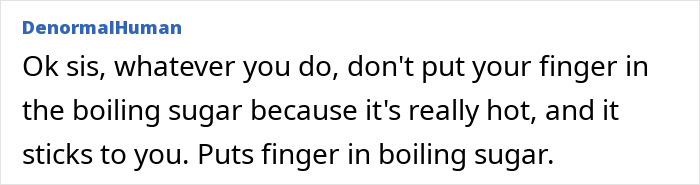
I don't get how it can take anyone a YEAR's worth of burned skin from lack of mittens to learn from the experience. We have plenty of mittens at home, and I still often lack one at the right moment. Have you never tried using a TOWEL? Or tongs, for single items like buns?

I have a scar on my chin from falling on my own rifle in basic training. Nothing cool, just stumbled. If people ask I say, I got hit in the face with an M16. No need to say it was mine, and I was the one that hit me
Secondly, you decide what lessons to take away from your mistakes. If you have a growth-oriented mindset, you can view your failures as learning opportunities that will, hopefully, help you be better prepared to tackle similar challenges next time.
In a nutshell, someone with a growth mindset believes that their skills, talents, and capacities can be improved over time. This leads to more success in life.

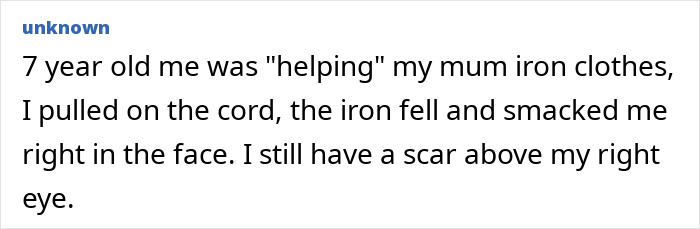
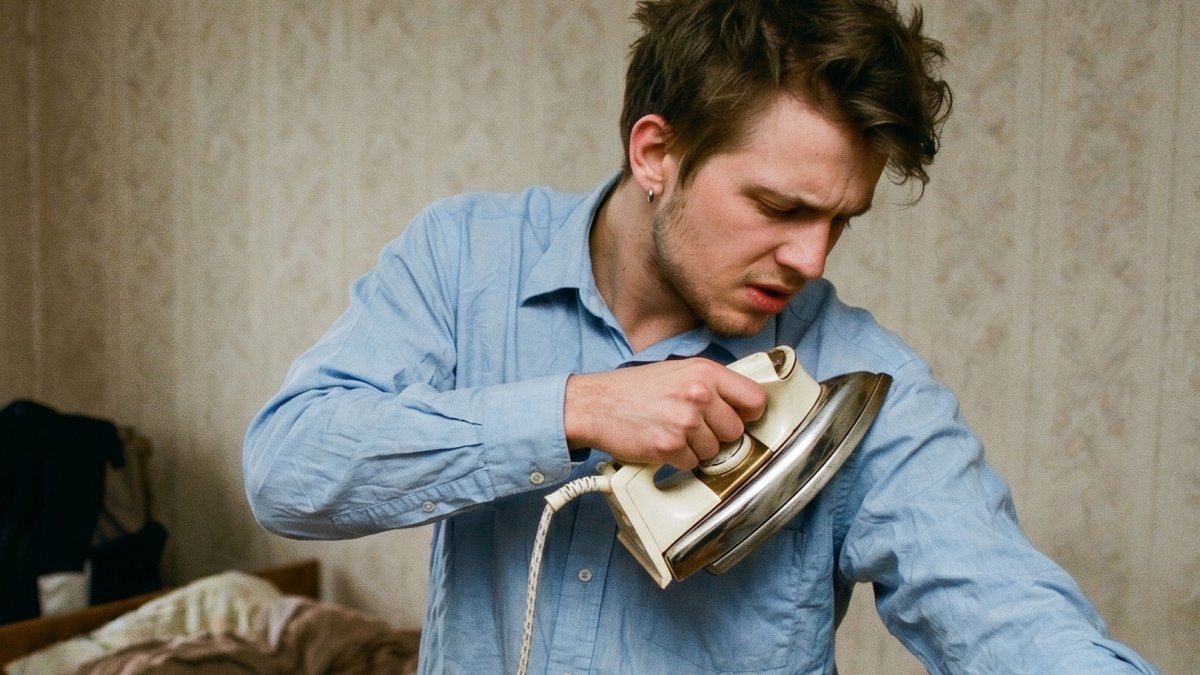
Lazy me likes to not iron clothes at all. My entire adult life I've not ironed one single piece of clothing and it has literally never caused an issue at all.

I played pool once with a man whose ex sliced his cornea with a CD
Meanwhile, individuals with a fixed mindset believe the opposite. They think that they can’t meaningfully learn, improve, and develop, no matter how hard they try.
According to Psychology Today, people with a fixed mindset tend to get stuck thinking the same difficult thoughts, like “I’m not good at anything. I always strike out. Everyone else does better than I do.” From their perspective, it’s “too late” for them to try to learn anything new because they will “fail anyway.”
What’s more, they feel inferior to other people and envy them for achieving success easily.

As a child, I picked up a wounded mouse that the cat had brought home, and it bit me. I didn't tell the folks because same reason. Luckily I didn't get rabies.Teach your kids that they can tell you anything and you won't get mad.
The reality is that we all have the capacity to grow and improve as human beings. And putting good or bad luck aside, success isn’t ‘easy.’ It requires long-term effort and dedication, something strangers might not notice when they focus just on the result in front of them.
No matter what you do, you will face setbacks, big or small, along the way. It’s up to you to decide whether you allow them to stop you from your goals or if you choose to persevere, adapt, and overcome them.
My empathy (unless sis was 4 YO) is very limited with this one. Probably eroded away by my brother and my cousin (also younger than me) who had somewhat similarly selective listening and learning patterns.
With enough dedicated effort, you can improve many things in your life, from your emotional intelligence to developing new, healthier habits.
When it comes to developing a growth mindset, however, Psychology Today notes that your efforts may yield mixed results. Broadly speaking, if you want to shift your behavior from a fixed mindset, you should focus on persistence, a positive attitude, and reframing challenges and obstacles as opportunities. Something else that helps is changing your perspective on failure and seeing it as an inevitable part of the learning process rather than something to be avoided. It’s also helpful to accept constructive criticism rather than shy away from it.

I did that. Luckily when young, as the young spring back from such injuries seemingly effortlessly, unlike the aged.
I don't know why, but the last word ratcheted the entertainment value from 4/10 to 8/10 for me 😂
I have a scar on my left kneecap from a bike accident when I was about 5 or 5. My bike caught the only rock left on our newly paved road. I'm 71, and can still see the scar. Now it's surrounded by surgical scars.
Of course, it’s easy to tell someone to be ‘more positive,’ but real change doesn’t happen overnight. Changing your behavior and thought patterns takes weeks, months, and sometimes even years of repetition. So, it’s important to be realistic about this.
If you currently have a mixed mindset and tend to ruminate about all the things that went wrong for you, it will take a while before you develop a healthier relationship with failure. You can’t and shouldn’t criticize yourself for not changing ‘fast enough.’

When I was 13 I had just finished mowing the lawn when an older neighbor boy came by. I was trying to seem cool and casual when I talked to him, so I leaned back against the mower - and put my calf right on the hot motor. I'm guessing I did NOT seem cool when I screamed and started jumping around. I ended up with a nasty burn on my leg.
My brother had to get stitches in his head once when he fell on a wicker basket. Who knew wicker could be dangerous?
The language that you use when talking to yourself about yourself matters a lot. “If you cling to words such as always, never, or forever, you are possibly an all-or-nothing thinker. Things always go wrong for me. I will never get the right equations. I am forever a failure. These are typical thoughts of a person with a fixed mindset,” Psychology Today warns.
You should try to shift away from this perfectionistic, all-or-nothing thinking. Something that you can try out is adding the word ‘yet’ to your vocabulary. The idea is that you remind yourself that you haven’t reached your goals yet, but you will, soon.
In general, when you’re more open to new challenges, learning, and development, you can live a higher-quality, more purposeful, and more meaningful everyday life. It’s difficult to accept your failures and regrets about the past, but if you can accomplish this, you’re opening yourself up to new opportunities in the future.

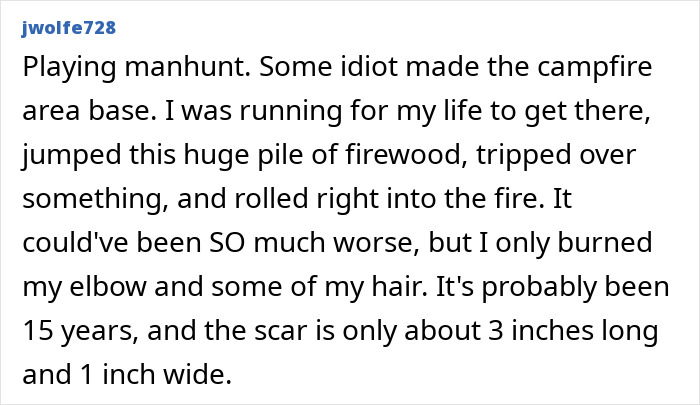
'Is only 3 inches long and a 1 inch wide' that sounds like a pretty big scar to me.

And THAT, kids is why I was such a jerk as the custodian at the middle school. The little dopes, running across that fire exit platform on the roof from the exit on 2nd floor. Sounded like a bass drum..
We’d like to hear your thoughts in the comments down below, Pandas!
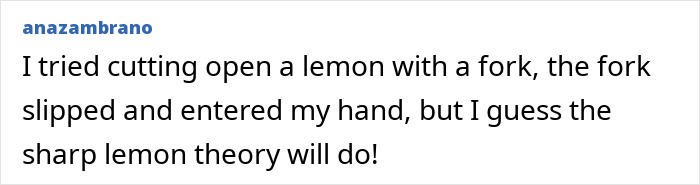
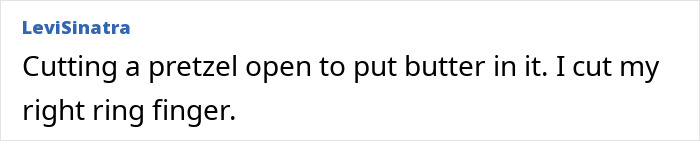
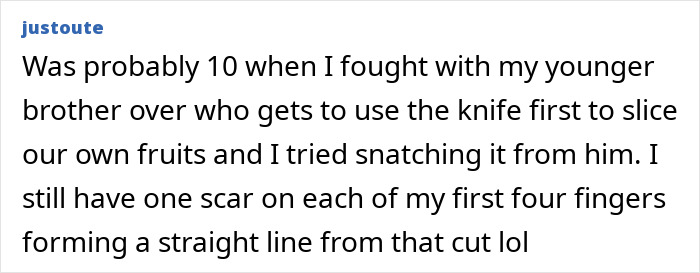
What are the silliest injuries you’ve suffered and dumbest ways that you’ve gotten scars? On the other hand, what are the most serious events that led to you getting hurt?
What advice would you give anyone who continues to beat themselves up for their failures? Are there any mistakes that you’ve made that continue to haunt you throughout the years?

I feel you. I was four, got a "Hoppy Horse" toy for Easter and promptly split my head open on our lovely mid-century modern coffee table. At least you can't see my scar.
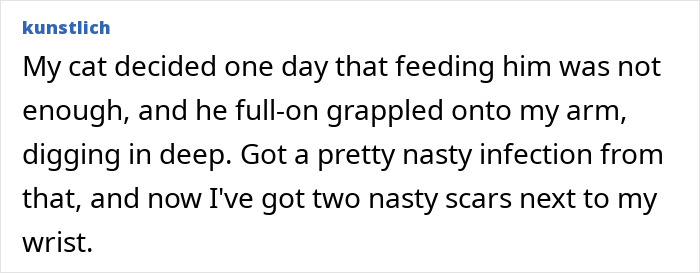
I have a scar on my wrist from my cat who was asleep under my bed covers and my other cat jumped on to the bed, landed on first cat who then went ballistic scratching my arm trying to get out from under the covers!!

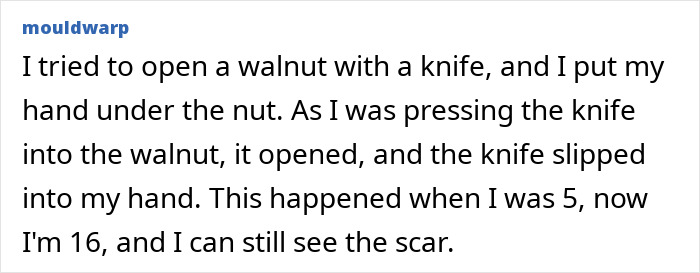
I almost cut my thumb off when I was 14 cutting a turnip. 18 stitches! Still have the scar. 50 years ago!


The two stupidest on me are, trying to slice an aubergine and slicing my thumb instead, and sitting on a rusty nail, but that's just two out of dozens, because I scar easily
Me too. I don't even know what most of them are from.
Load More Replies... I almost cut my thumb off when I was 14 cutting a turnip. 18 stitches! Still have the scar. 50 years ago!
The two stupidest on me are, trying to slice an aubergine and slicing my thumb instead, and sitting on a rusty nail, but that's just two out of dozens, because I scar easily
Me too. I don't even know what most of them are from.
Load More Replies...
























 No fees, cancel anytime