Get Premium
Dark mode theme is available exclusively for premium users. Learn more about the benefits of subscribing.
No fees, cancel anytime.

 Dark Mode Ad-Free Browsing Unlimited Content
 Ad-Free Browsing Unlimited Content Dark Mode
Join 1.2 million Panda readers who get the best art, memes, and fun stories every week!

The dark side of the internet might be closer to the kids and teens in your life than you think.
Through targeted comments and specific social media profiles, predators seek out videos of minors on apps like Instagram and TikTok. Even clips parents or guardians might consider “innocent” or “harmless” can end up in a criminal’s collection of sensitive content featuring minors.
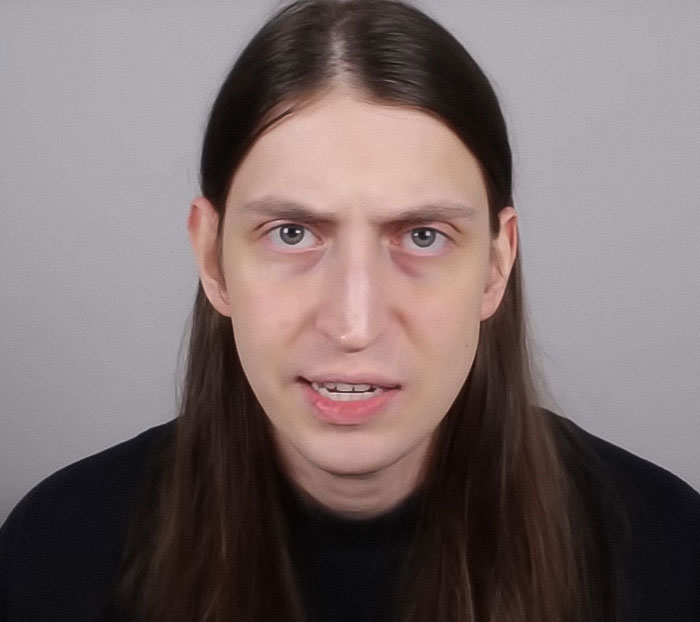
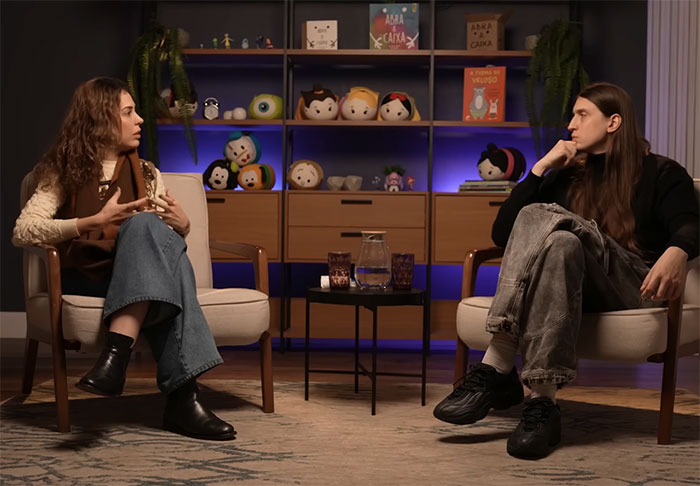
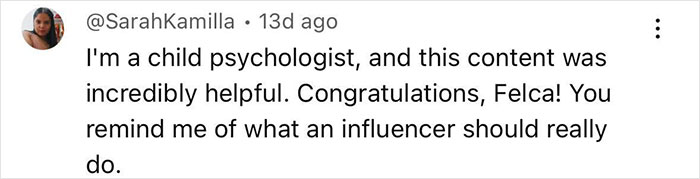
Influencer Felca set out to expose the growing online phenomenon known as “adultification” or “adultization.” In a short documentary that has amassed over 30 million views in just five days, he denounces the exploitation of children and teens for entertainment and teaches parents and guardians how to spot potentially criminal comments on their children’s social media posts.
Image credits: Felca / YouTube
Felipe Bressanim, better known online as Felca, took to YouTube to break down what “adultification” is and how it has spread across social media. Experts define it as a phenomenon in which “notions of innocence and vulnerability are not afforded to certain children,” often rooted in bias and discrimination.
Put simply, it’s when children behave like, and are treated as, adults, forcing them to mature prematurely. In some cases, they end up financially supporting their families; in others, they become victims of abuse. Sometimes both.
Image credits: Felca / YouTube
In his video, the Brazilian creator starts with lighter examples, highlighting viral “kid entrepreneurs” from Digitalz Academy, a self-styled digital business school for youth. On their podcast, children claim things like, “School complicates an entrepreneur’s life,” revealing a focus on work over education.
One notorious and more extreme case is that of former momfluencer Ruby Franke, now a convicted child abuser, who privately referred to her children as “employees” and herself as the “CEO,” pushing them beyond their limits and turning their daily lives into a public spectacle.
Image credits: moms_of_truth / Instagram
However, the conversation soon turns to more troubling examples, where parents support or encourage their children to take part in viral content that’s often sexualized and potentially feeds into underground criminal networks. In many cases, the motive is clear: more views and engagement, which can lead to lucrative brand deals.
@teamsabrina why like song but don’t learn dance? #sabrinacarpenter#manchild♬ original sound – My music
But long-form videos aren’t solely to blame for the rise of “adultification.” Short-form content, popularized on Instagram and TikTok, also plays a role. And the risks intensify when adults monetize it, creating incentives to produce, or even pressure children into producing such content.
In an era when most hit songs come with a viral choreography, like Sabrina Carpenter’s Manchild line dance routine, it’s common to see minors posting videos of themselves dancing. Yet for many trending songs, these dances include sensual moves, which children still perform, sometimes even with the approval of their parents or guardians.
Image credits: Getty Images/Unsplash
In fact, during the research for this article, Bored Panda found videos of toddlers on TikTok as young as 1-year-old dancing in ways that are considered sexualized.
On top of this widespread permissiveness from adults, social media algorithms also play a role in pushing this content into the wrong hands. “The problem is when [the algorithm] sees videos of children exposed in this way as a topic of interest, without evaluating ethics or morals,” Felca explains in his video. “It treats children in suggestive poses, for example, as neutral content, like fashion or soccer.”
Image credits: davieluizarodrigues / TikTok
“In other words,” he adds, “the algorithm knows these videos exist, knows there are consumers, and brings the two together, a perfect opportunity for people with bad intentions.”
In just five minutes, Felca was able to condition Instagram’s algorithm on a brand-new account to exclusively show him videos of minors dancing, posing, playing sports, etc. He dubbed it “algorithm P,” a reference to the type of criminals it appears to cater to.
Image credits: Felca / YouTube
The 27-year-old then showed his viewers how to spot predator activity in the comment sections of posts featuring minors. “They communicate in code,” he explained, pointing to one comment that read “Trade Telegram.” According to him, words like “trade” or GIFs with messages such as “link in bio” are immediate red flags.
This is how predators publicly signal that they’re looking to exchange sensitive content involving minors: by clicking on each other’s profiles, often featuring a Telegram link in the bio, following one another, and sharing these materials.
Image credits: Felca / YouTube
“I appeal to all parents who post innocent content of their children on the internet,” he urged. “Check right now if there are any comments mentioning trade or exchange. If there are, you and your son or daughter are being targeted by these criminals.”
For Felca, “[content featuring minors] shouldn’t be monetized, it shouldn’t be spread,” he said. “And at the heart of it, much of the blame lies with social media, which allows all of this to happen. If nothing changes, more victims will be created.”
Image credits: Ahmed Aqtai / Pexels
Beyond family and school, consumer culture and digital technologies now play a powerful role in shaping young identities. Children are absorbing adult roles far earlier than in previous generations, sometimes before they can even talk.
“High media usage contributes to poor self-esteem, developmental issues, and the internalization of adult-like consumer identities from as early as 18 months,” Dr. Turkan Firinci Orman, a senior researcher based in Finland, explained in an email to Bored Panda.
@kimandnorthtuff♬ original sound – Saafir
If current trends continue, the very definition of childhood may be at risk of changing. Dr. Orman warned that “widespread adultization could fundamentally shift generational norms about adolescence and childhood in the long run.”
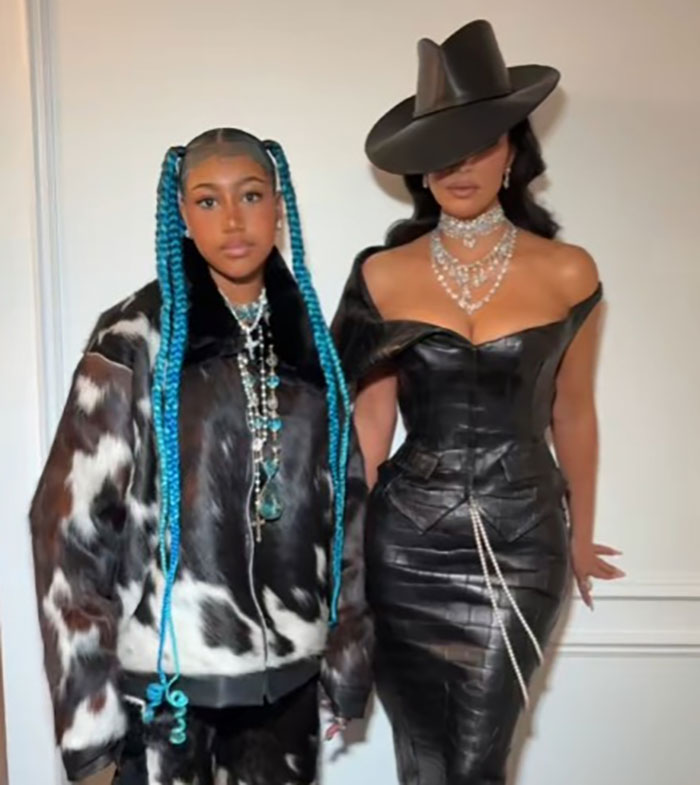
This tendency is amplified by celebrities whose children achieve their own star status through a strong social media presence. North West, the 12-year-old daughter of Kim Kardashian and Kanye West, launched a joint TikTok account with her mother at just 8 years old. Since then, she has gone viral multiple times.
Image credits: kimandnorth / TikTok
“Keep all children under 13 off of TikTok, please. And I mean their appearance in the background of their parents’ videos as well,” one user wrote in a Reddit discussion. Another added, “Them pushing her to have a following and an online presence at such a young age is odd to me.”
Rather than seeing childhood as a protected stage, future generations may view it as a time for early autonomy and risk-taking. She described this shift as the rise of hybrid “kidult” identities, children who adopt adult consumer habits and emotional burdens while still legally and developmentally young.
Image credits: kimandnorth / TikTok
This could mean a “permanent reconfiguration where boundaries blur, and future generations normalize earlier exposure to adult responsibilities, potentially at the cost of emotional maturity and protection.”
While some might see early independence as empowering, experts caution that collapsing the space of childhood risks stripping away important opportunities for play, self-discovery, and gradual emotional growth.
Image credits: Felca / YouTube
According to Ana Beatriz Chamati, a Brazilian psychologist interviewed by Felca, children under the age of 2 should not be exposed to the internet or any screens at all. “From ages 2 to 5, screen time should be limited to one hour per day, always with adult supervision. From age 5 onward, this can increase to two hours, but still under adult supervision,” she explained.
Chamati also issued a warning: “Parental supervision is extremely necessary because remedying the situation later is much more difficult than working on prevention.”

By entering your email and clicking Subscribe, you're agreeing to let us send you customized marketing messages about us and our advertising partners. You are also agreeing to our Privacy Policy.
Thank you! You've successfully subscribed to newsletters!
10Kviews
Share on Facebook


There's nothing wrong with recording your child to share with family. Grandma and Grandad Long-distance get to see the new bike riding skills, or baby's first steps. Great. But put something on social media open to everything, and you need to ask yourself who's watching, and what they're getting out of it.
There's nothing wrong with recording your child to share with family. Grandma and Grandad Long-distance get to see the new bike riding skills, or baby's first steps. Great. But put something on social media open to everything, and you need to ask yourself who's watching, and what they're getting out of it.





























 No fees, cancel anytime




















34
23