Get Premium
Dark mode theme is available exclusively for premium users. Learn more about the benefits of subscribing.
No fees, cancel anytime.

 Dark Mode Ad-Free Browsing Unlimited Content
 Ad-Free Browsing Unlimited Content Dark Mode
Join 1.2 million Panda readers who get the best art, memes, and fun stories every week!
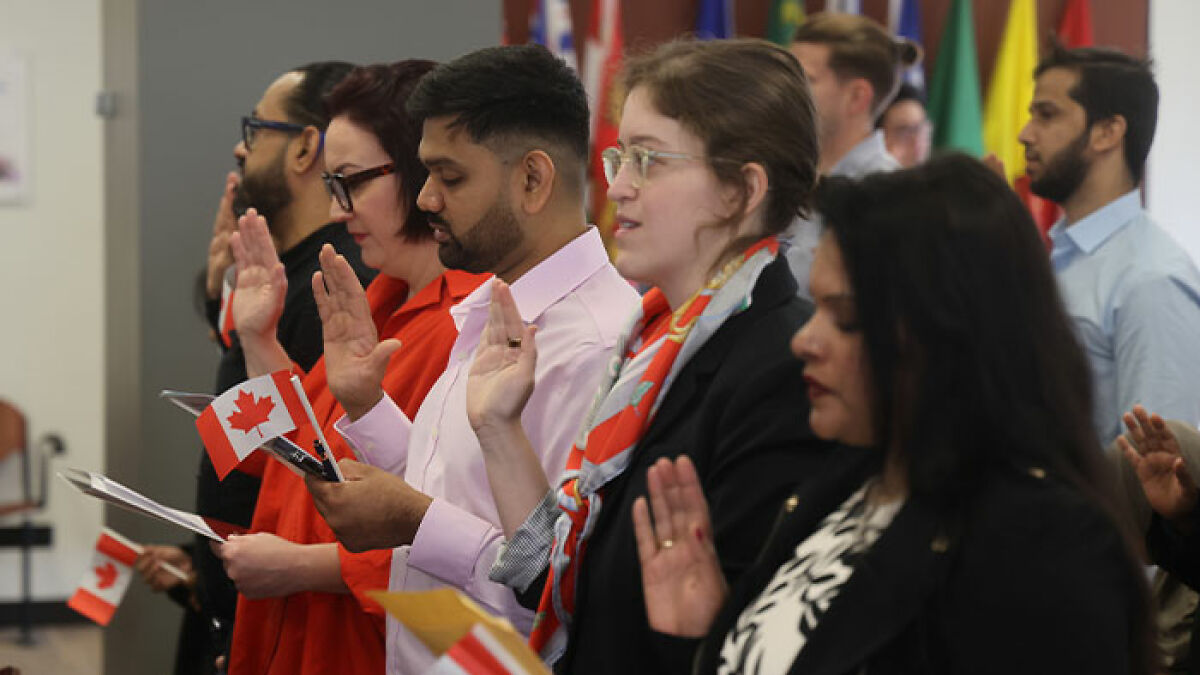
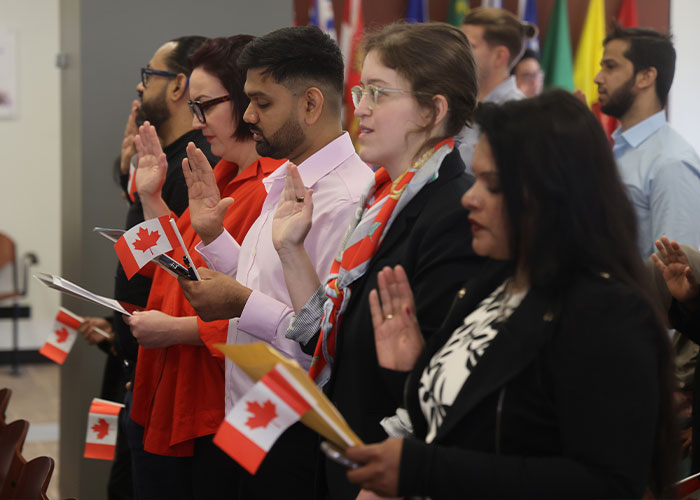
Thousands of Americans are applying for Canadian citizenship under the legal term “Lost Canadians” following a sweeping law passed in December.
“Lost Canadians” refers to people who “lost or never obtained citizenship because of certain outdated rules in earlier citizenship laws,” according to the Canadian government.
Under the previous legislation, Canadian citizenship could only be passed down from a parent to a child.

Image credits: Unsplash (Not the actual photo)
However, Bill C-3, which was passed into law on December 15, extends access to citizenship to anyone who has a Canadian ancestor, including a grandparent, great-grandparent, or even more distant ancestor.
Naturally, those seeking dual citizenship must provide proof of lineage, including birth, d*ath, or marriage certificates from an ancestor. The proof of citizenship application fee is reportedly $75 CAD (about $55 USD).
Those born on or after December 15, 2025, need to show that their Canadian ancestor lived in Canada for 1,095 days.
Image credits: Getty/NurPhoto
The chain of Canadian citizenship must be unbroken. If any ancestor lost citizenship along the way—for instance, through marriage to a non-Canadian as established under previous legislation—the entire claim can be disqualified.
Terry Preshaw, an immigration lawyer in Washington, told KING 5 News that her phone has been ringing non-stop since the new law came into effect. Preshaw said she went from having four clients seeking Canadian citizenship last year to more than 50 so far in 2026.
Similarly, Nicholas Berning, an immigration attorney at Boundary Bay Law, said his practice is “pretty much flooded” with clients seeking help submitting proof of citizenship applications.
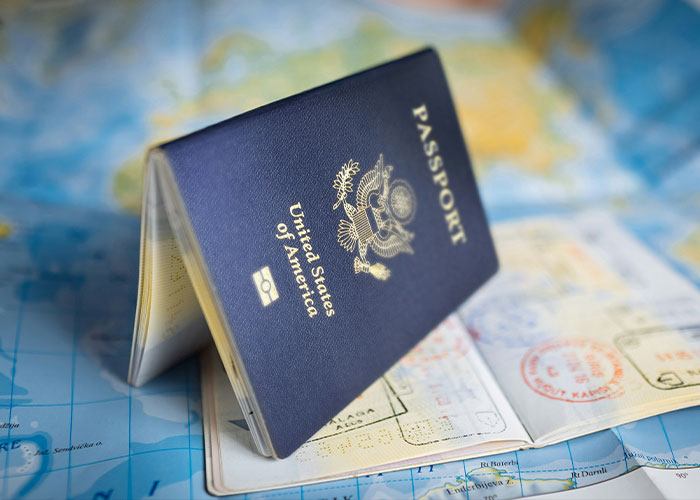
Image credits: Unsplash (Not the actual photo)
While many see the “Lost Canadian” term as an opportunity to reconnect with their roots, others view it as a source of labor opportunities or backup plan in case they face issues with law enforcement.
“When I first heard about the bill, I couldn’t believe it,” Maureen Sullivan, who lives in Florida, told The Associated Press. “It was like this little gift that fell in my lap.”
Sullivan explained that she became interested in obtaining Canadian citizenship after her nephew, who resides in Minnesota, encountered federal officers near his high school during the recent immigration crackdown in the state.
“We wanted to feel like we were doing something to take care of our security in the future, if needed,” she shared.
Image credits: Unsplash (Not the actual photo)
Meanwhile, Nick Wallick, a film school graduate in Seattle, said Canadian citizenship could give someone like him, who has French-Canadian heritage, easier access to Vancouver’s booming film industry without the need for a work visa.
“I don’t know much about my history on both sides,” Wallick said. “So this helps me learn more about who I am. And maybe this would be a benefit to me as well.”
Zack Loud, who is based in Minnesota and whose grandmother is Canadian, said he and his wife had been discussing the possibility of relocating outside the US for work, and the new law “pushed Canada way up on our list.”

Image credits: Unsplash (Not the actual photo)
Others, like Michelle Cunha of Massachusetts, explained that their motivation to apply for dual citizenship was purely political.
“I put in my best effort for 30 years. I have done everything that I possibly can to make the United States what it promises the world to be, a place of freedom, a place of equality,” the political activist said.
“But clearly we’re not there and we’re not going to get there anytime soon.”
Cunha said she hired an attorney to help establish proof of citizenship, a service that reportedly cost her about $6,500.
Image credits: Unsplash (Not the actual photo)
According to Preshaw, many of her clients view the legal document as “insurance,” explaining, “Why do we buy insurance? Not because we want to use it — but just in case something catastrophic happens.”
The website for the Immigration, Refugees and Citizenship Canada office, which processes applications, states that processing times for a certificate are around 10 months.
More than 50,000 people are awaiting an answer.

Image credits: Unsplash (Not the actual photo)
Regardless of what a legal document states, many Canadians may not welcome their southern neighbors who are becoming “Canadians of convenience” with open arms, suggested Fen Hampson, Professor of International Affairs at Carleton University in Ottawa.
“I think where people start looking askance is someone who’s never been to Canada, who has very thin ties. People don’t like that,” Hampson told the AP.
Image credits: Unsplash (Not the actual photo)
The Conservatives, with the backing of the Bloc Québécois, had sought amendments to the bill that would impose stricter rules for citizenship, including language requirements and security checks for adults, the BBC reported.
However, those amendments failed to pass in the House.


By entering your email and clicking Subscribe, you're agreeing to let us send you customized marketing messages about us and our advertising partners. You are also agreeing to our Privacy Policy.
Thank you! You've successfully subscribed to newsletters!


Don't suppose you guys would consider a lost Brit who lives in France (so I can cope with both languages)? 😉
Load More Replies...
This sounds incredibly complicated and strategically guaranteed to ensure most applicants will be denied. Carney had already started tightening up on student Visas and reducing how many immigrants are allowed in, last I heard.

To encourage a brain drain from competing nations open up citizenship.
Don't suppose you guys would consider a lost Brit who lives in France (so I can cope with both languages)? 😉
Load More Replies... This sounds incredibly complicated and strategically guaranteed to ensure most applicants will be denied. Carney had already started tightening up on student Visas and reducing how many immigrants are allowed in, last I heard.
To encourage a brain drain from competing nations open up citizenship.






































 No fees, cancel anytime






















28
10