Get Premium
Dark mode theme is available exclusively for premium users. Learn more about the benefits of subscribing.
No fees, cancel anytime.

 Dark Mode Ad-Free Browsing Unlimited Content
 Ad-Free Browsing Unlimited Content Dark Mode
Join 1.2 million Panda readers who get the best art, memes, and fun stories every week!

Family vacations can create unforgettable memories, but they can also bring unexpected tension between relatives. When different personalities and expectations collide, even a simple couple’s getaway can become a source of conflict. People just have different mindsets when it comes to cooling off.
The Original Poster of this story (OP) is a 26-year-old woman who planned a beach trip with her boyfriend after visiting her parents in North Carolina. Everything seemed set for a relaxing family experience until her 22-year-old younger sister decided to join the journey. Everything went downhill after that, turning into a total sibling feud.
More info: Reddit
Image credits: DC Studio / Magnific (not the actual photo)
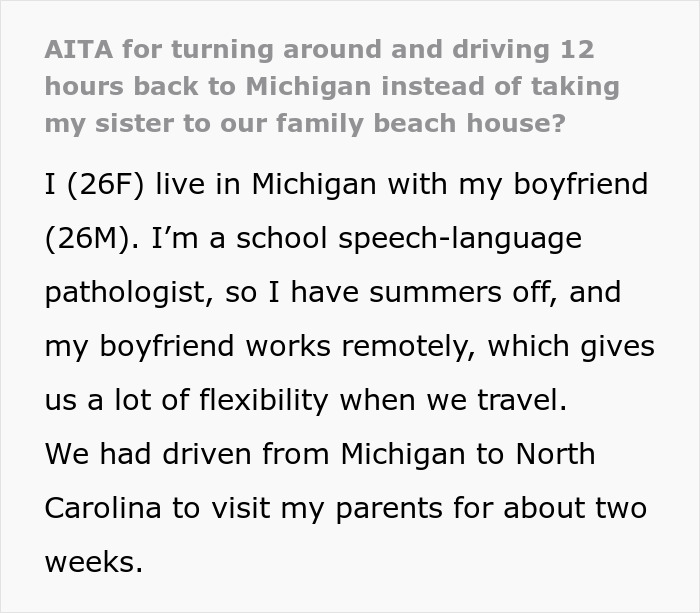
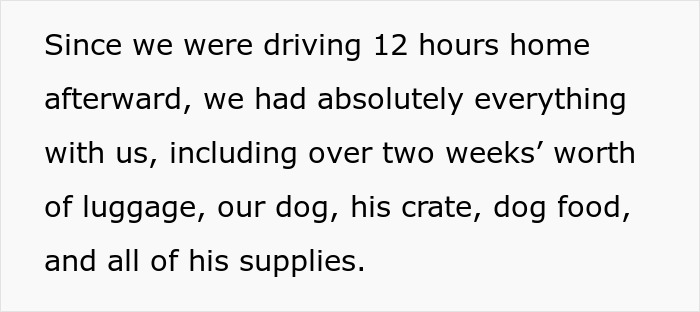

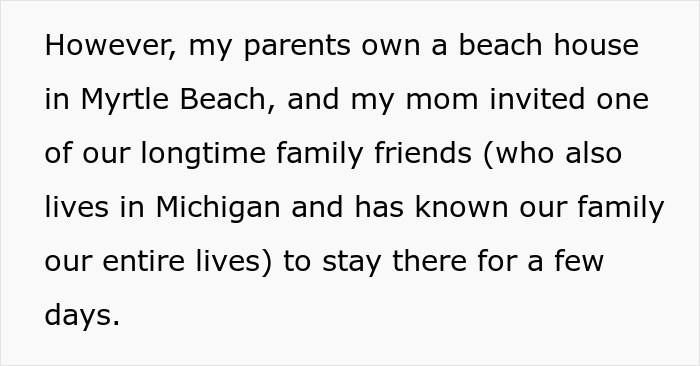
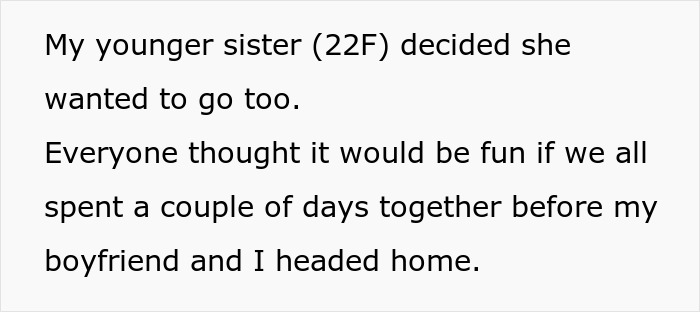
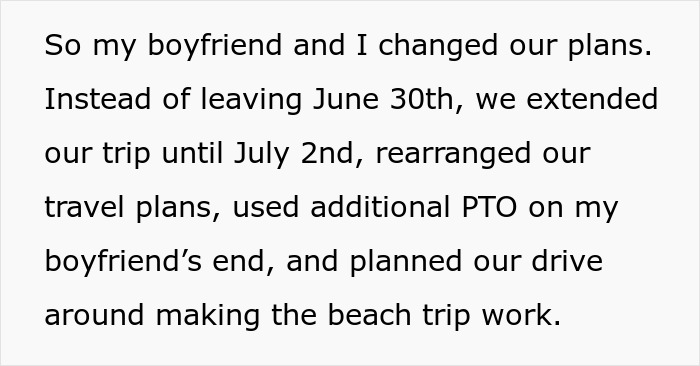



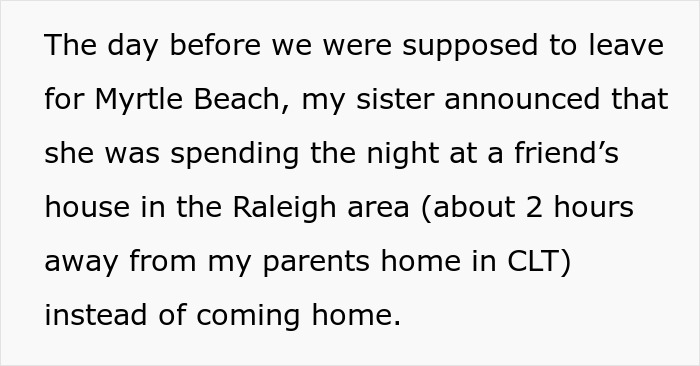
Image credits: DC Studio / Magnific (not the actual photo)
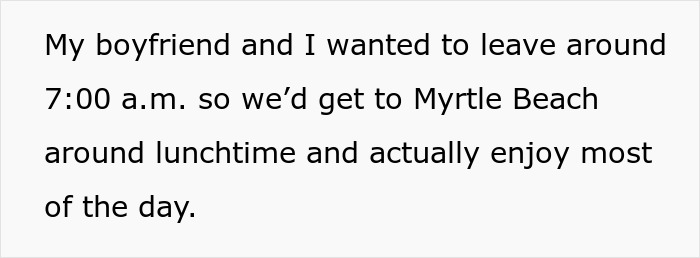
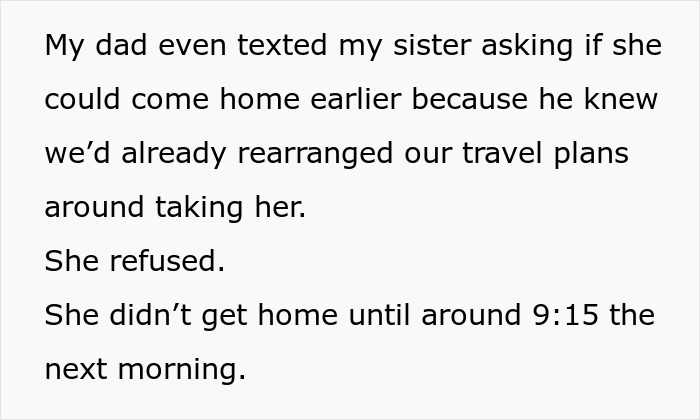
Image credits: stefamerpik / Magnific (not the actual photo)


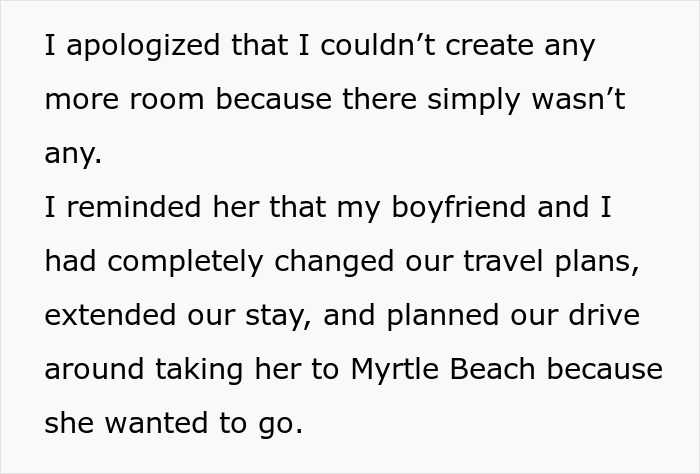
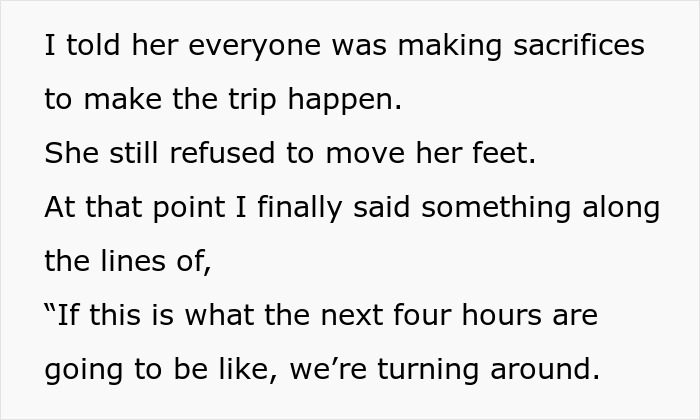
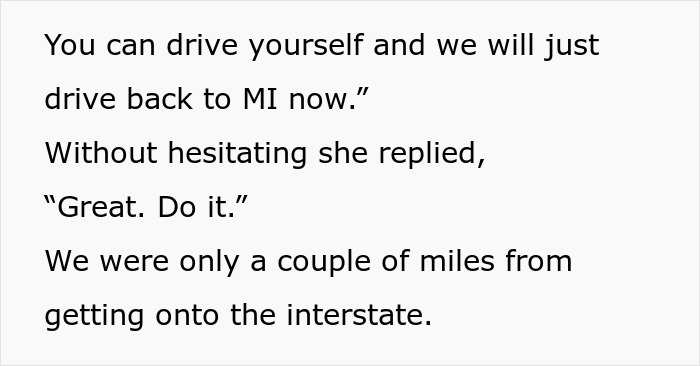
Image credits: wirestock / Magnific (not the actual photo)
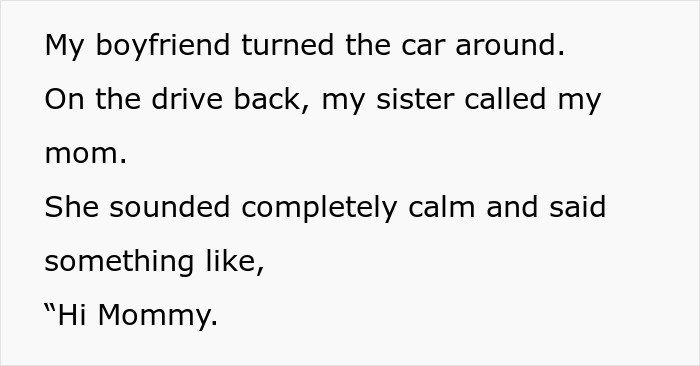

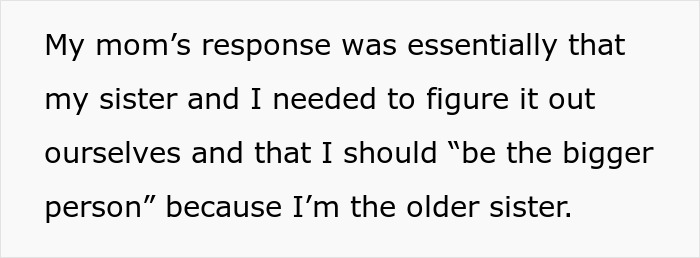
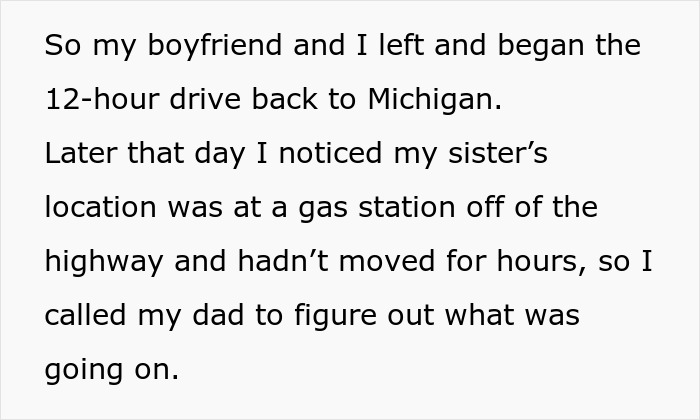
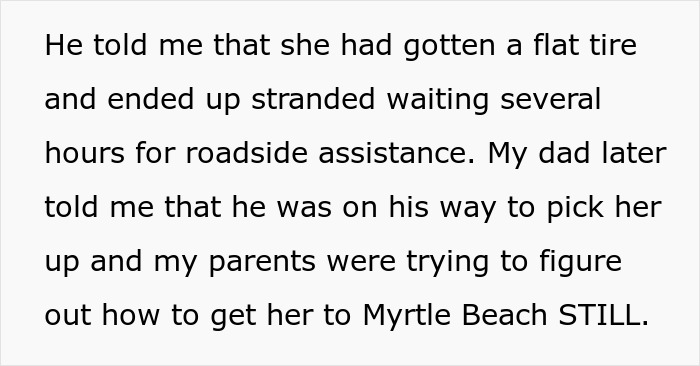

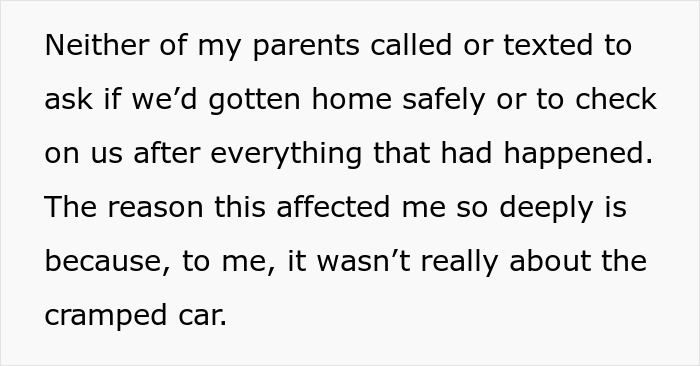

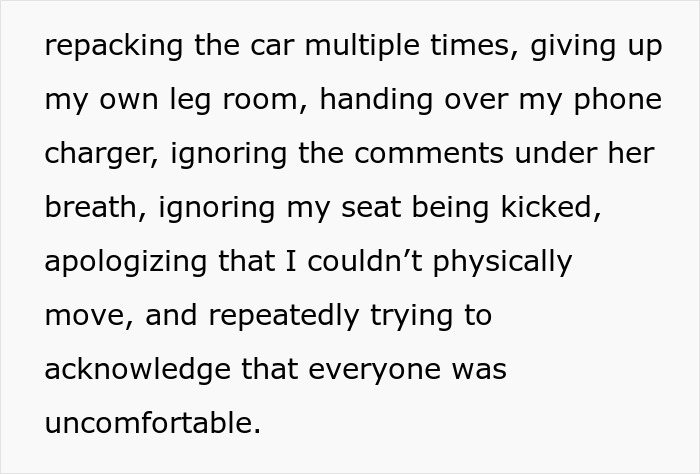

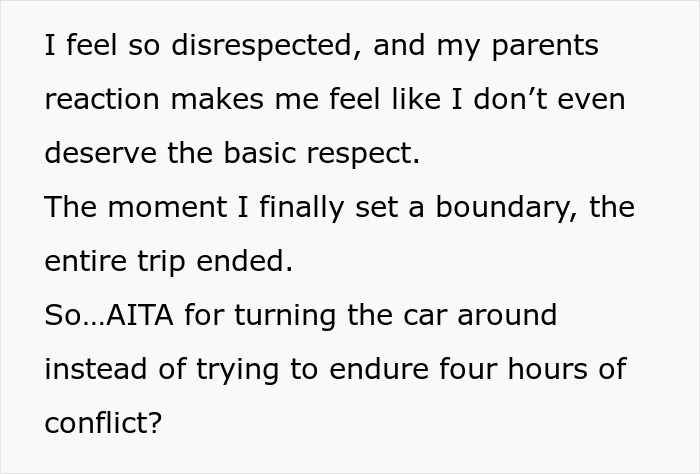
Image credits: dnomaidvas
The narrator and her boyfriend had planned to drive back to Michigan after visiting her parents in North Carolina, but they extended their vacation when her mom invited them on a family beach trip, and her younger sister decided to join. With their dog, two weeks of luggage, and everything needed for the long drive packed into their SUV, space quickly became limited.
Things started going wrong before they even left. The initial plan for an early departure became impossible when her sister arrived home late after spending the night with a friend 2 hours away from their parents’ house. When she finally got there, the OP struggled to fit the young sis’s oversized luggage into the already packed car. After several rounds of unloading and repacking, everyone squeezed in.
However, complaints began almost immediately. The younger sister criticized the lack of space, pushed the author’s seat with her knees, and eventually stretched her legs between the two front seats. Then the OP asked her to stop, and when the youngest refused, she warned that they would turn around if the behavior continued. The 22YO simply replied, “Great. Do it.”
So they did. The couple turned the SUV around, and the drama escalated even further. While the OP’s mom encouraged her to “be the bigger person,” she and her boyfriend skipped the vacation entirely and drove the 12 hours back home to Michigan. And, by the time they arrived, they found out the younger sister had gotten a flat tire when trying to reach the beach house on her own.
Image credits: Wavebreak Media / Magnific (not the actual photo)
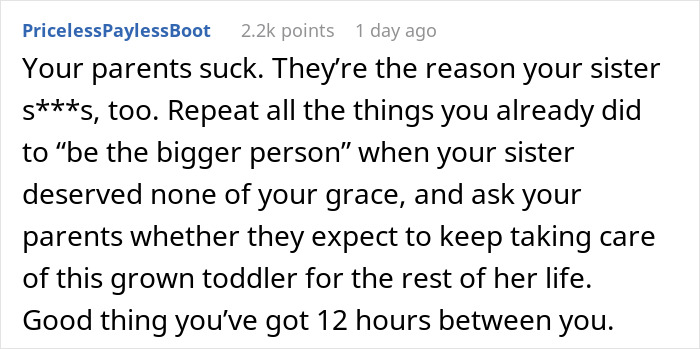
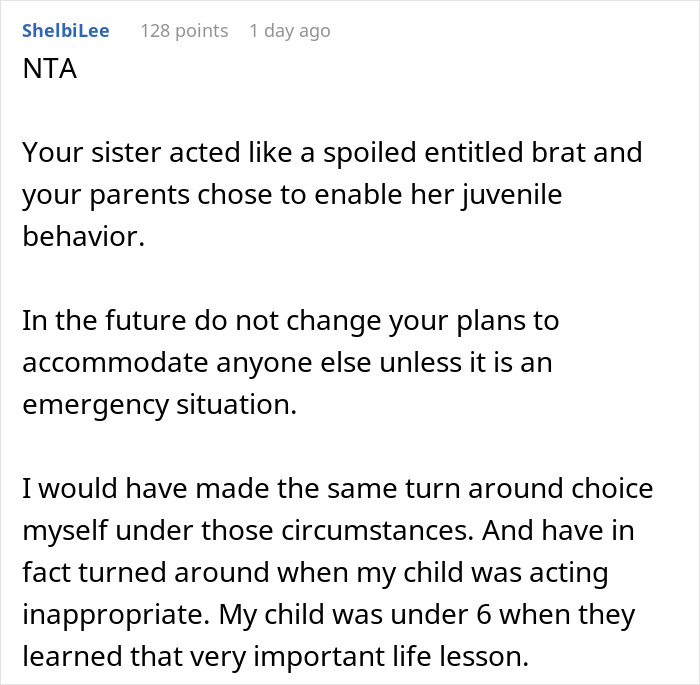
The situation the OP finds herself in seems to show signs of what experts call parentification. This issue has been around for many generations. Parentified daughters often become family peacemakers, learning to prioritize everyone else’s needs while ignoring their own. They are expected to behave that way, as seen in the mother’s reaction to the author’s complaints.
Nobody really expected the author to set a boundary, which is probably the best decision she could have taken. Psychologists define a boundary as a psychological limit “that protects the integrity of an individual or group or that helps the person or group set realistic limits on participation in a relationship or activity”. The OP acted in a way that enforced a personal boundary rather than reacting impulsively.
Furthermore, this research suggests that sibling conflicts are more likely to be resolved when both people cooperate and show a willingness to compromise and respect each other. However, refusal to cooperate keeps disagreements from reaching a constructive resolution. When only one of the OP continued making concessions while the sister escalated the conflict, the situation quickly became unbalanced.
In the end, the mother’s request to “be the bigger person” seems to be reflecting a common family dynamic. While the phrase encourages maturity and kinda demands it, experts note that a lasting conflict resolution requires everyone involved to commit. Expecting the more responsible sibling to always lower her head may preserve short-term peace, but it does not solve the conflict in the long term.
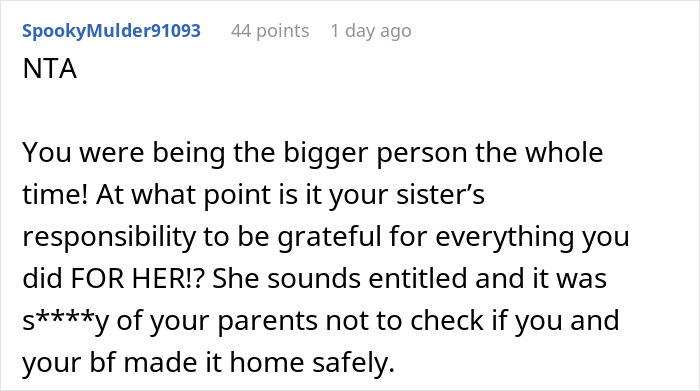
Do you think the OP was right to turn the car around, or should she have tried to continue keeping the peace? Share your thoughts in the comments.












By entering your email and clicking Subscribe, you're agreeing to let us send you customized marketing messages about us and our advertising partners. You are also agreeing to our Privacy Policy.
Thank you! You've successfully subscribed to newsletters!


I would have left at 7 as planned. Waiting for her was the first mistake



I would have refused to wait for sis to get back and would have left at scheduled time of 7 AM.
I would have left at 7 as planned. Waiting for her was the first mistake
I would have refused to wait for sis to get back and would have left at scheduled time of 7 AM.


































 No fees, cancel anytime








41
13