Get Premium
Dark mode theme is available exclusively for premium users. Learn more about the benefits of subscribing.
No fees, cancel anytime.

 Dark Mode Ad-Free Browsing Unlimited Content
 Ad-Free Browsing Unlimited Content Dark Mode
Join 1.2 million Panda readers who get the best art, memes, and fun stories every week!

Some people tell small lies to avoid awkward conversations, but few expect those lies to follow them for years. A simple “I don’t like that food” can become a fake medical condition, and an entire family trying to keep someone safe. Sometimes, the lie becomes so elaborate that admitting the truth feels even harder than continuing it.
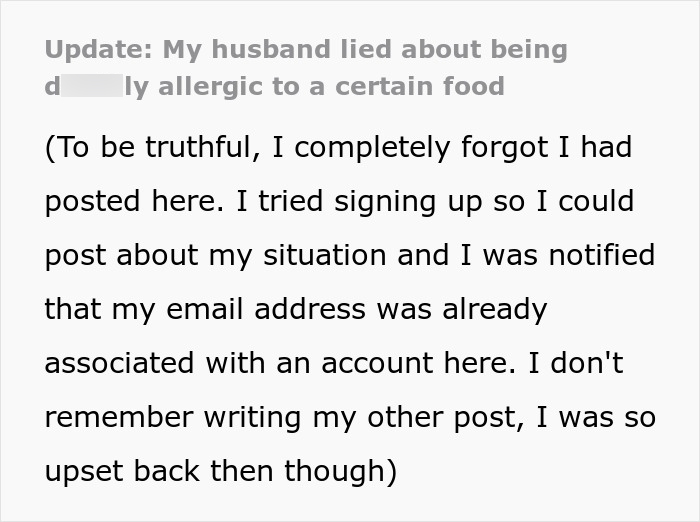
It may sound a bit absurd, but as we know, reality is stranger than fiction. The Original Poster (OP) of today’s story believed her husband had a severe food allergy throughout their whole relationship and marriage. She carefully helped him avoid the food, only to discover after one accidental meal that the allergy never existed. The problem is, when she kept digging, more lies rose to the surface.
Image credits: Drazen Zigic / Magnific (not the actual photo)
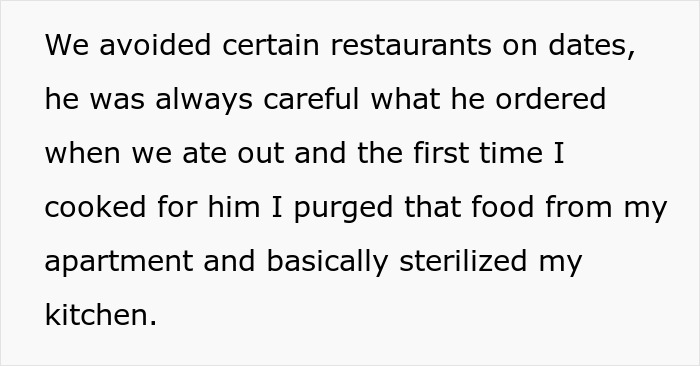
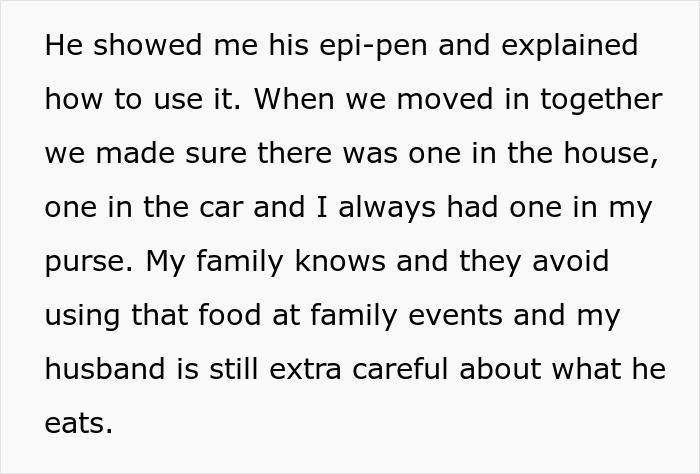
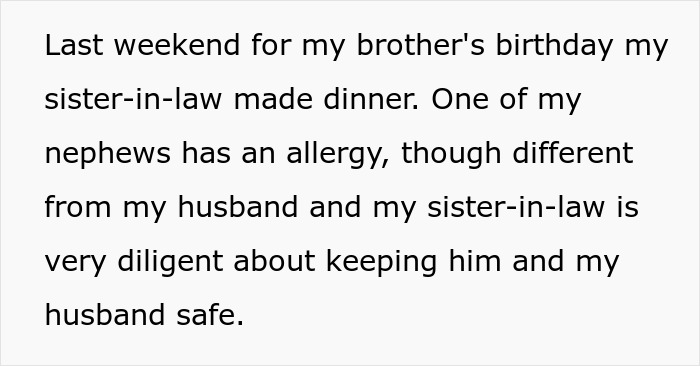
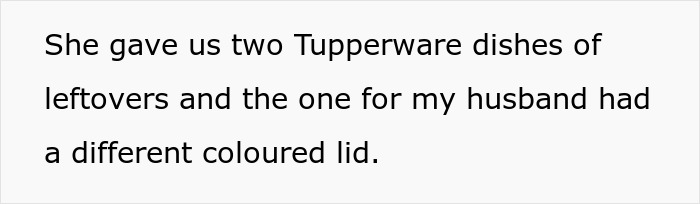

Image credits: kues1 / Magnific (not the actual photo)
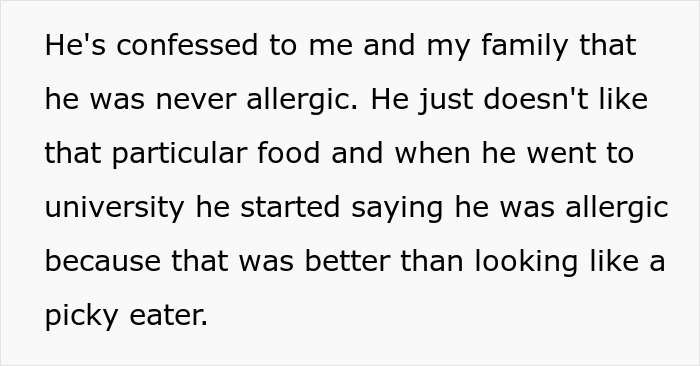
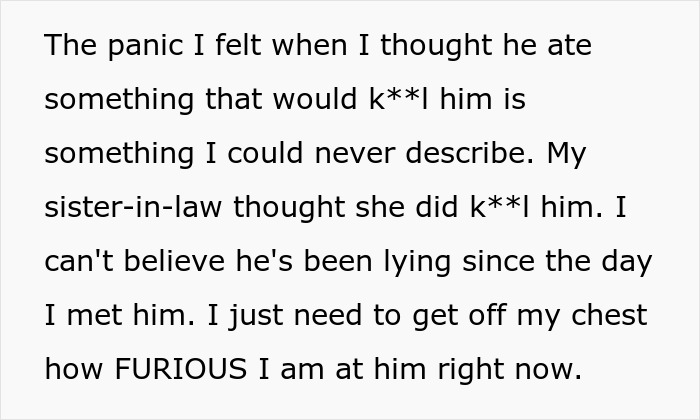
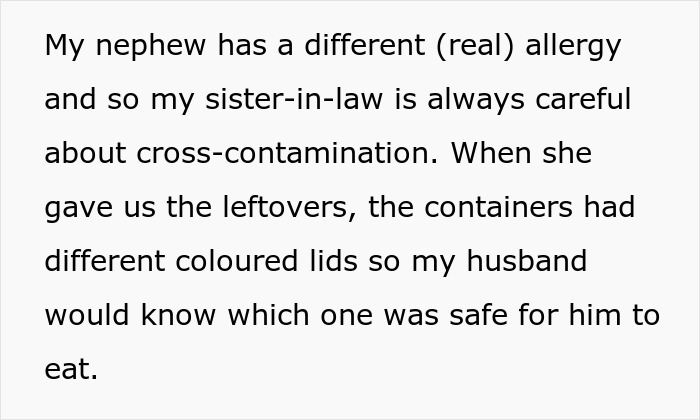
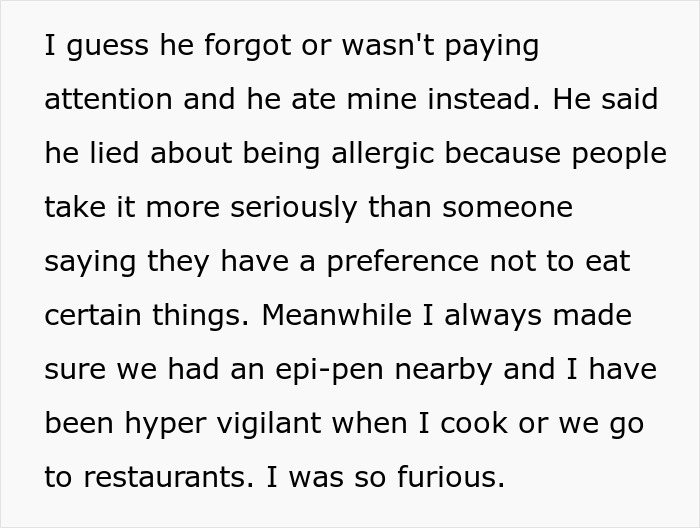
Image credits: Magnific / Magnific (not the actual photo)
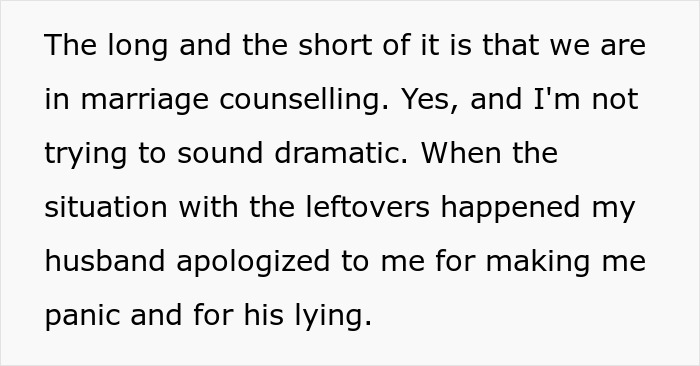
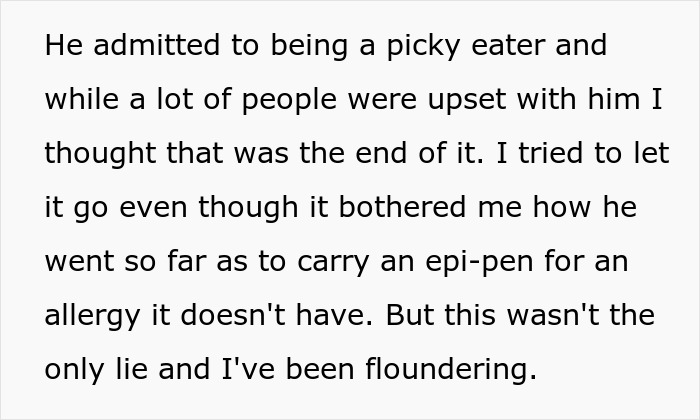
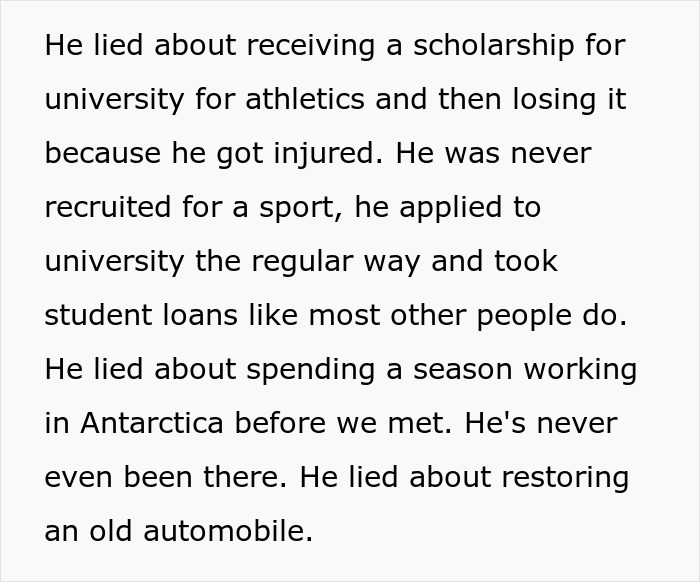
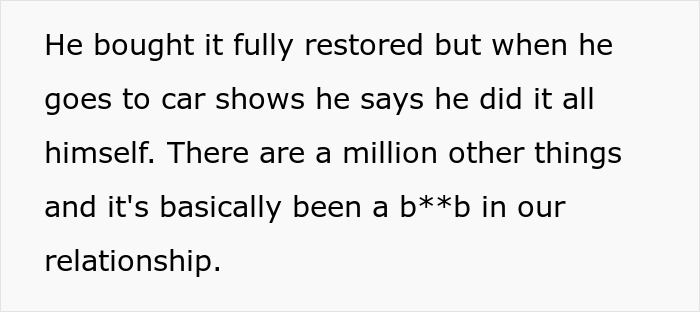
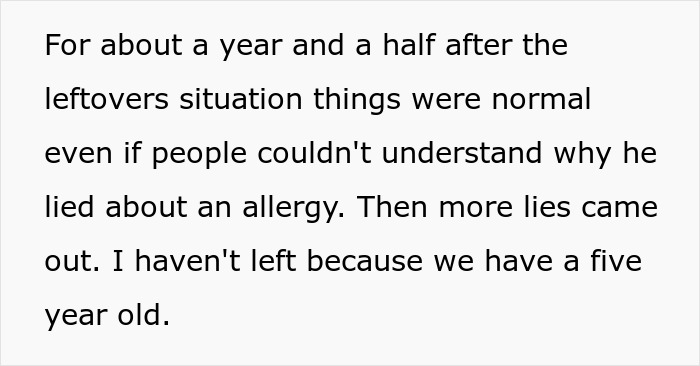
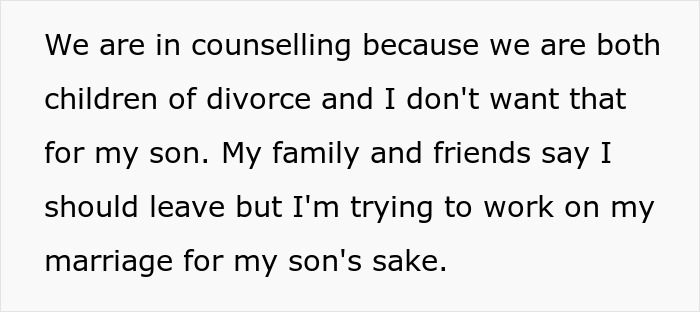

Image credits: ThrowRA64111862
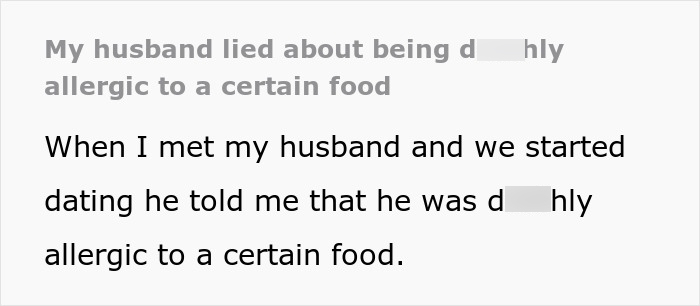
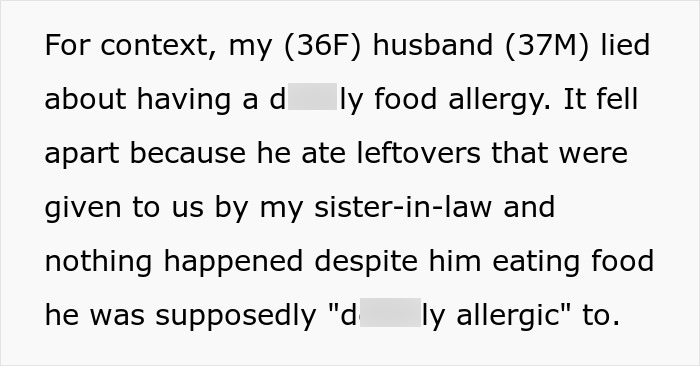
For years, the OP, a 36-year-old woman, believed her one-year-older husband had a severe food allergy. They avoided restaurants, she sterilized her kitchen, carried an EpiPen everywhere they went, and helped him avoid even the smallest trace amounts of the food, believing a single mistake could put his life at risk.
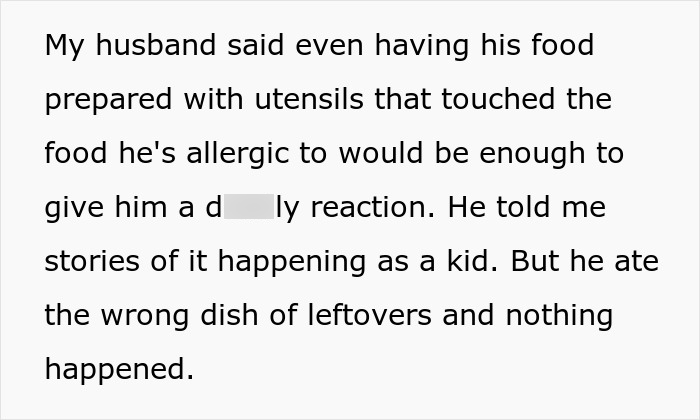
However, that belief collapsed after one family dinner, when he accidentally ate the wrong leftovers. His sister-in-law had always been as careful as his wife when it came to said allergy, and both women panicked when they realized he had eaten from the wrong Tupperware. They expected a serious reaction, since he had always insisted even contaminated utensils could trigger his allergy.
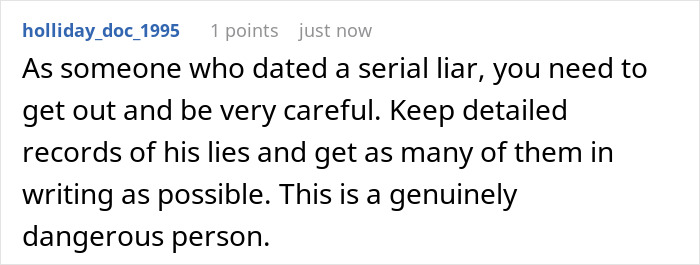
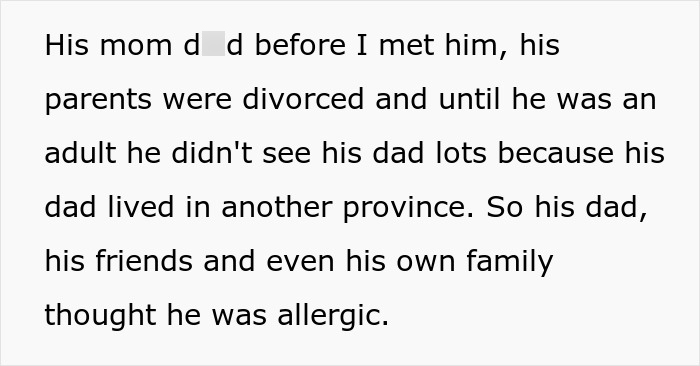
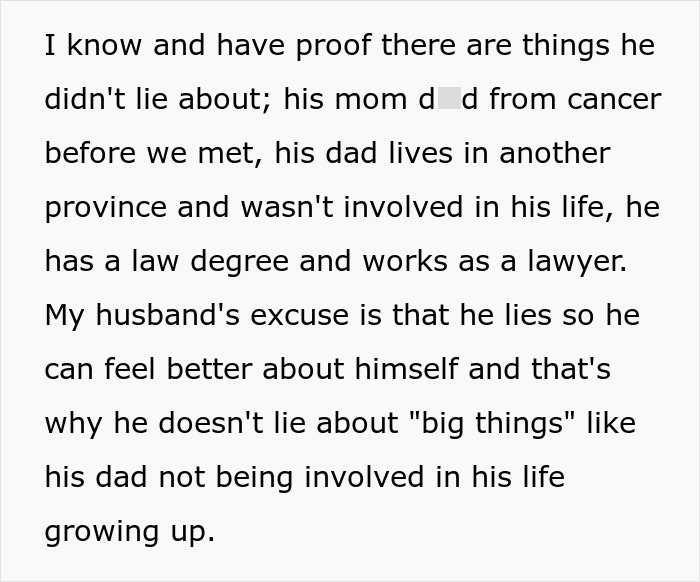
Nothing happened, and he had to admit he had never been allergic. The OP’s husband claimed he invented the allergy because people took food preferences more seriously when they sounded medical. He didn’t want to sound like a picky eater. The author later discovered the lie was only one part of a much larger pattern involving fake scholarships, fake trips, and fake achievements.
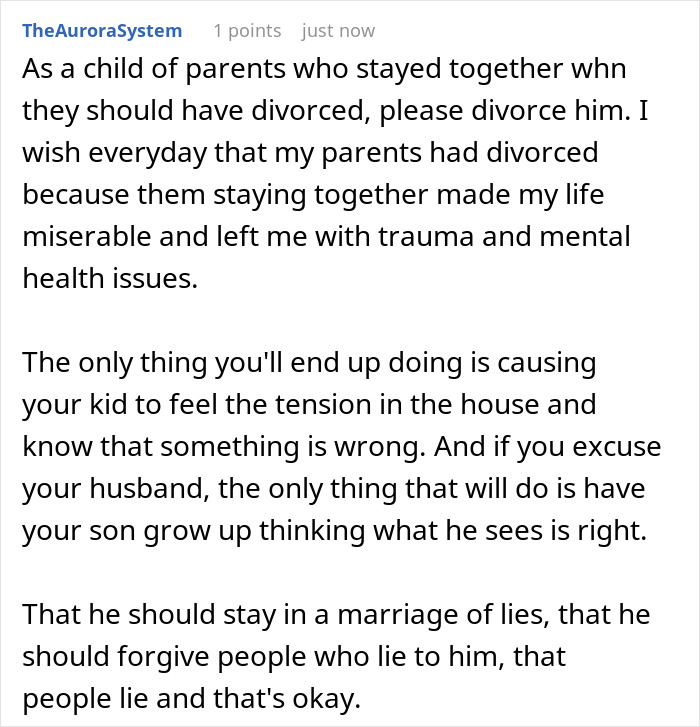
Despite all the lies and fake stories, the couple eventually entered marriage counseling, but the situation became far more complicated. The husband admitted he lied to feel better about himself, while the OP struggled to decide whether to leave, especially since they had a five-year-old son. As a divorce kid herself, she didn’t want her child to suffer the same fate.
Image credits: Gustavo Fring / Pexels (not the actual photo)
It goes without saying that honesty is crucial in a healthy marriage. This relationship resource site puts it clearly: “serious truths should not be kept secret.” The OP’s husband hid a supposed health condition for years, forcing her to make major changes to protect him from a danger that never existed. Her frustration is understandable; health issues are no joke.
Honesty helps couples build trust, communicate openly, and face challenges as a team, as marriage experts explain. When one spouse repeatedly hides important parts of their life or creates a false version of themselves, the relationship cannot function as a genuine partnership. The husband’s behavior went far beyond a simple food preference, breaking his wife’s trust.
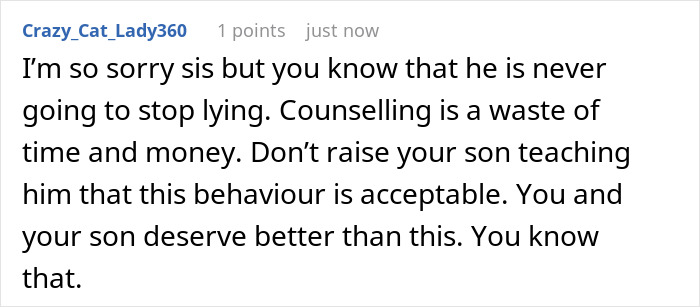
However, going to therapy is a good idea, even within a dishonest relationship, and especially if the couple believes there is still something worth saving. As this article explains, couples counseling can create space for difficult conversations, improve communication, identify harmful patterns, teach healthier conflict management, and help partners decide if trust can be rebuilt.
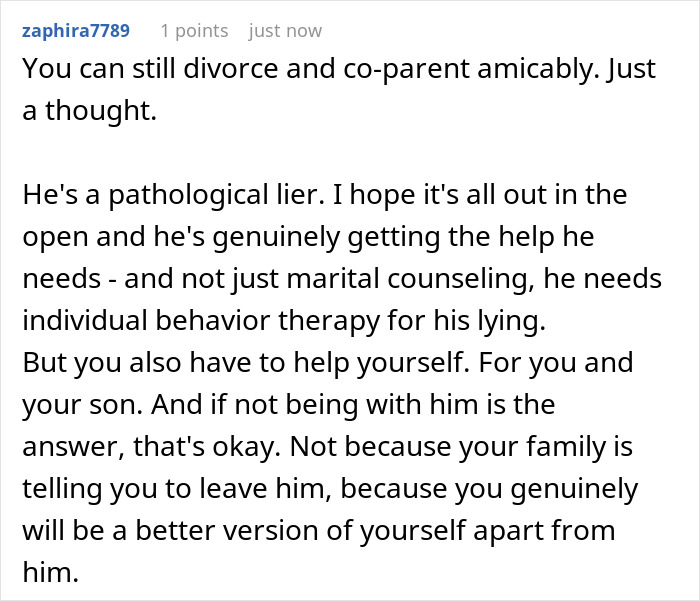
For now, the OP’s decision to try counseling seems reasonable. One source cites research placing marriage counseling’s success rate at around 70%, although outcomes depend on the couple’s commitment and willingness to work. If both partners genuinely engage with the process, marriage may still have a chance to rebuild what was lost. Whatever happens, it’s up to the OP to choose what’s best for her.
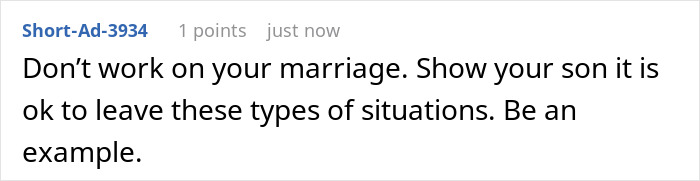
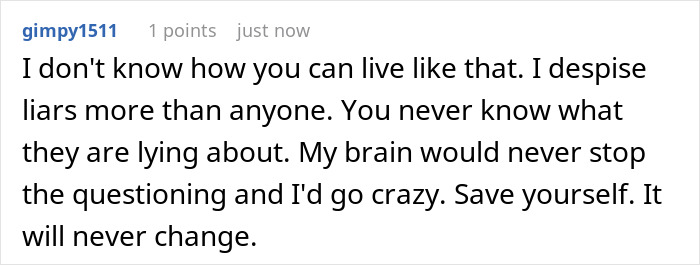
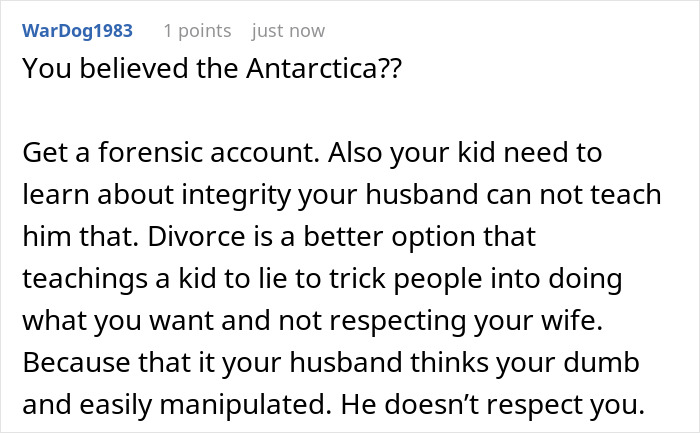
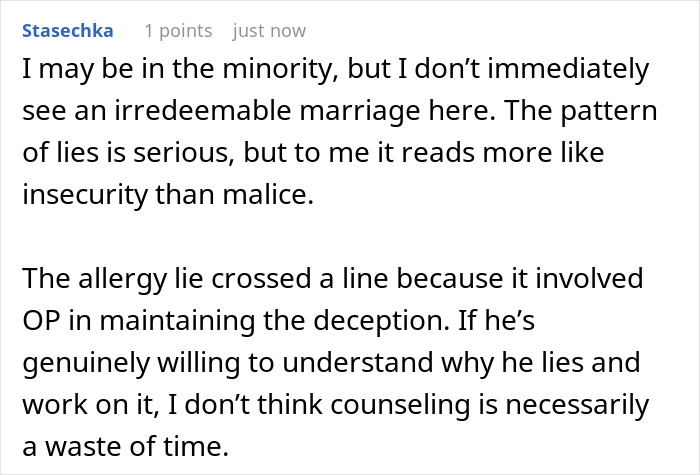
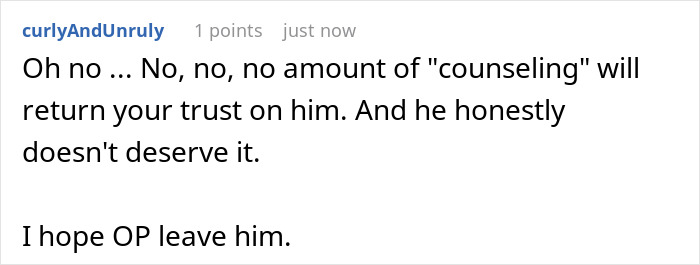
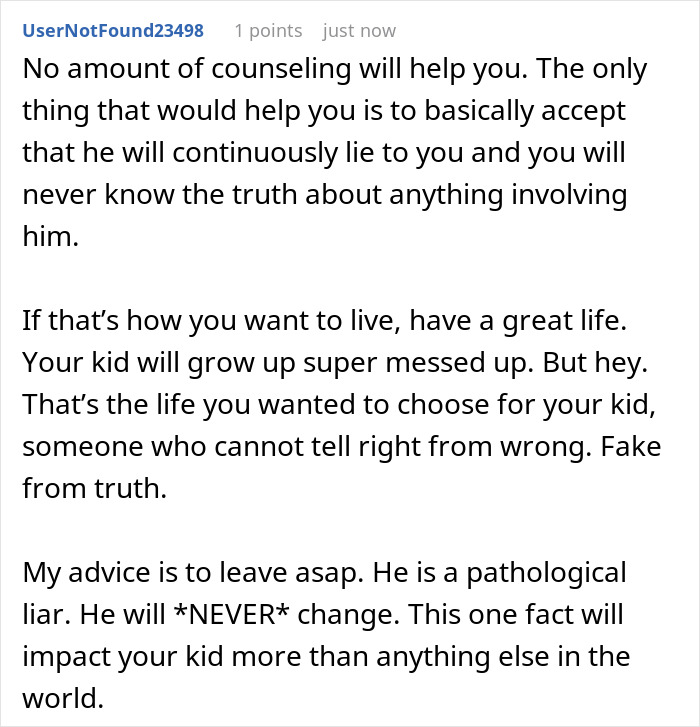
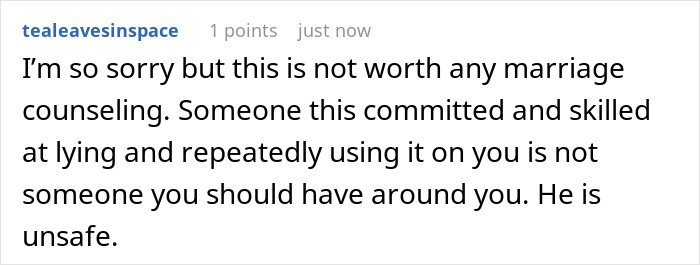
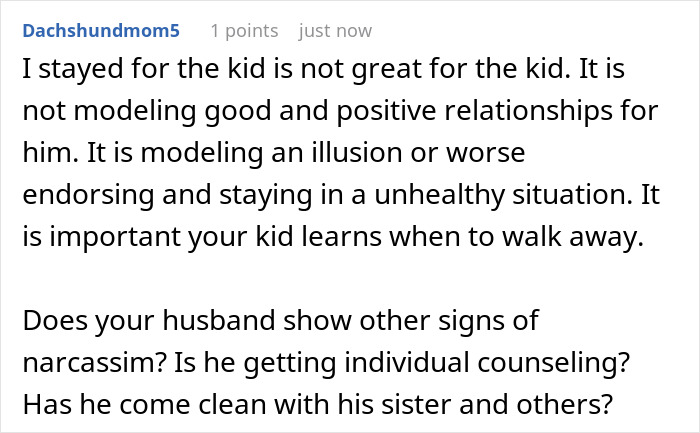
Was the OP right to try saving her marriage through counseling, or should she leave after discovering her husband’s years of lies? Share your thoughts in the comments!







By entering your email and clicking Subscribe, you're agreeing to let us send you customized marketing messages about us and our advertising partners. You are also agreeing to our Privacy Policy.
Thank you! You've successfully subscribed to newsletters!

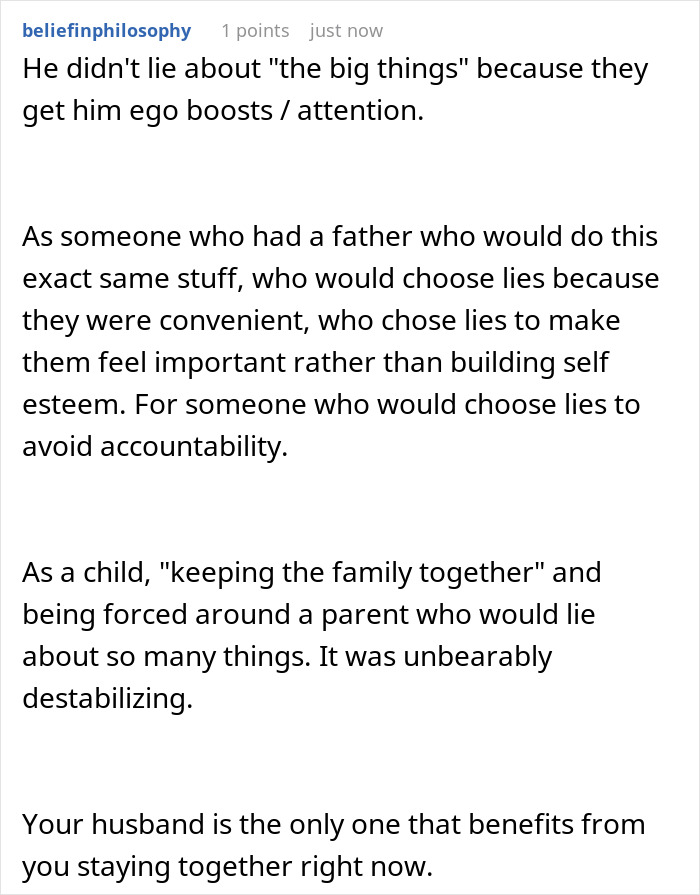
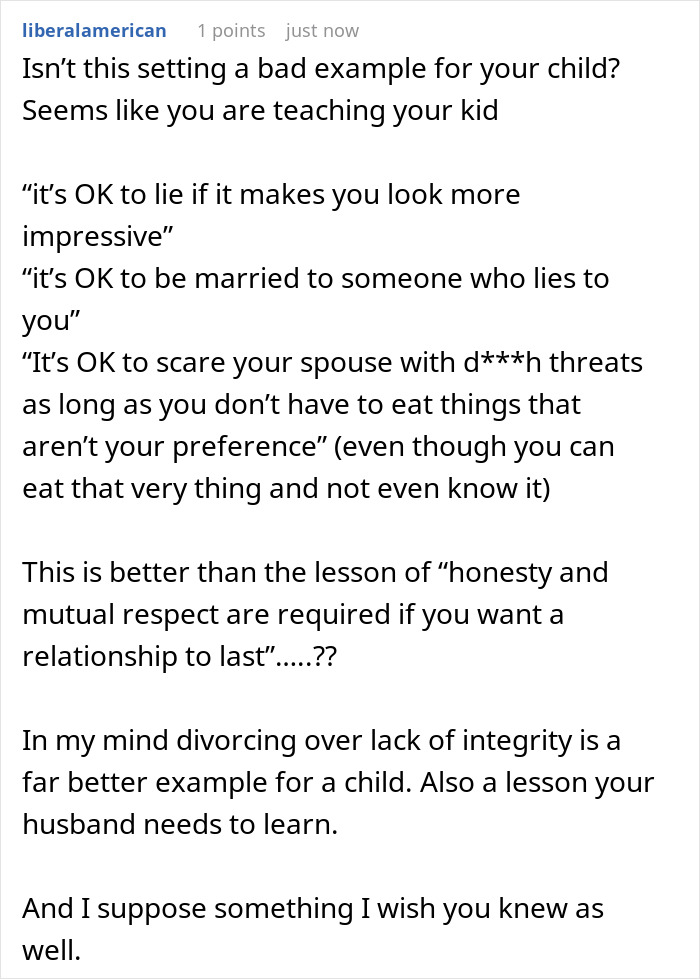
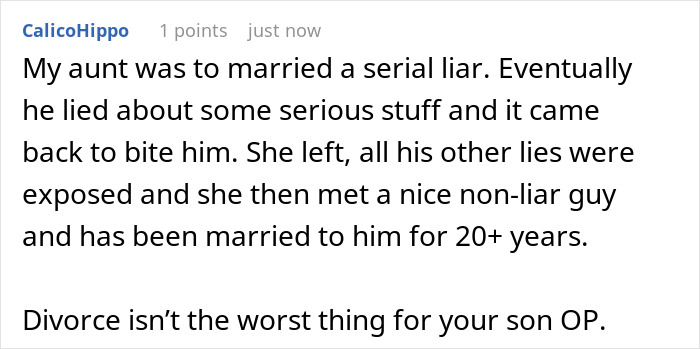
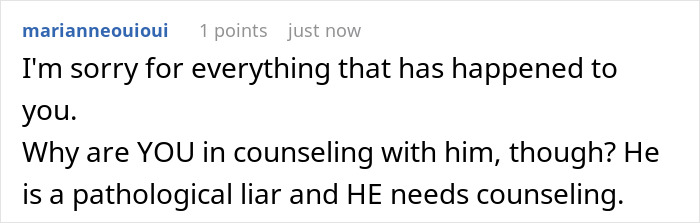
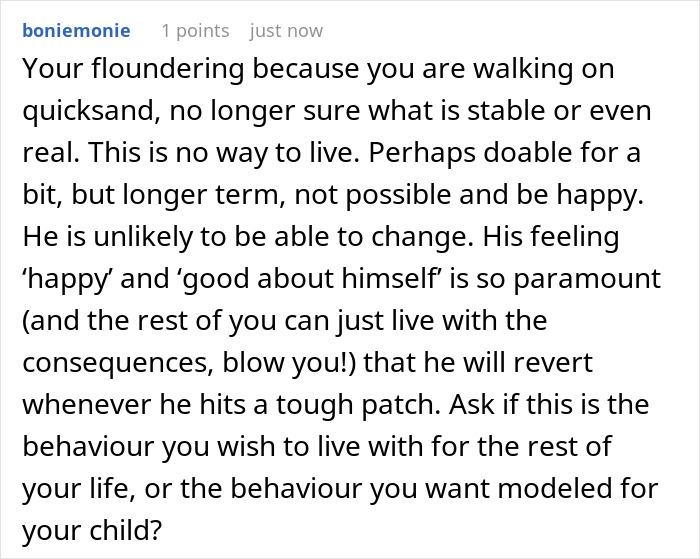
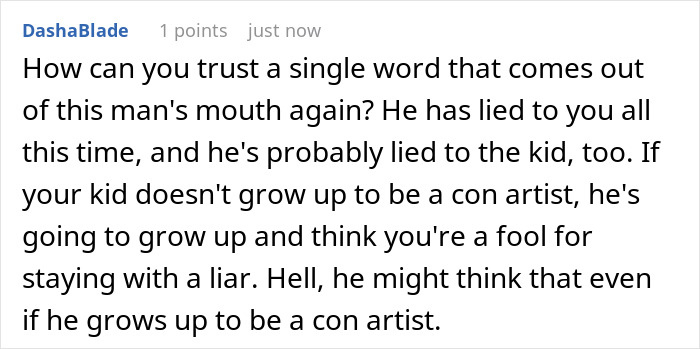
Sorry, it's better your kid to be a child of divorce and reduce the influence of your pathologically lying husband. Chronic lying is poor character. You can NEVER trust ANYTHING he says and therefore have no real relationship with him. I'd want to keep my kid as far away from him as I could manage.

All that and don't even tell us the food he's picky about? It's not like it's an embarrassing secret

I hope OP divorced this guy. What else has he lied about that she hasn't found out about? More kids with other women? Ad***tions to...?
Sorry, it's better your kid to be a child of divorce and reduce the influence of your pathologically lying husband. Chronic lying is poor character. You can NEVER trust ANYTHING he says and therefore have no real relationship with him. I'd want to keep my kid as far away from him as I could manage.
All that and don't even tell us the food he's picky about? It's not like it's an embarrassing secret
I hope OP divorced this guy. What else has he lied about that she hasn't found out about? More kids with other women? Ad***tions to...?



















 No fees, cancel anytime
















34
30