Get Premium
Dark mode theme is available exclusively for premium users. Learn more about the benefits of subscribing.
No fees, cancel anytime.

 Dark Mode Ad-Free Browsing Unlimited Content
 Ad-Free Browsing Unlimited Content Dark Mode
Join 1.2 million Panda readers who get the best art, memes, and fun stories every week!


Like we have Maanantaikappale. I'll explain it in the comments. Its straight translation is something made on Monday. Meaning something that is a defective item.
This post may include affiliate links.
German: "Herr lass es Hirn regnen" - "Lord, let it rain brains" in case somebody does or says something stupid. Optinal addition: "Oder Steine, hauptsache du triffst" - "Or bricks, doesn't matter as long as you hit"
From Texas: Fixin' too. It means I'm getting myself ready to get ready to do something.
"Not my circus; not my monkeys" An American English saying that means: "I'm not responsible for it, so I'm not going to stress over it."
"Whatchamacallit" and "Thing-a-magig" are pretty useful ones, especially when you don't know what something is. I don't know if non-native English speakers use it/if there's some equivalent but it's really useful. "Bless your heart" is also a very Southern saying that I'm not entirely sure even translates to regular English. Just a heads up, it is not a compliment. You have pissed off a Southerner, or they think you're stupid.
Maanantaikappale. Its straight translation is something made on Monday. Meaning something that is a defective item. Its referring to the common belief that products made on Monday are of lower than average quality.

Hah! Where I'm from, we always assumed defective items were made on a Friday because everyone was burnt out by then and rushing to get done for the week.
I'm not a native French speaker, but I love the phrase, "C'est pas tes oignons!" The direct translation is, "These aren't your onions!" but idiomatically, it means, "Mind your own business," and not in a polite way. (My dad was a professor of foreign languages, mainly French and German.)

Yet in English we have "to know your onions", meaning to be knowledgeable. What is it with onions?
"Umuntu Ngumuntu Ngabantu." A zulu saying meaning, I am who I am because of other people. It is to acknowledge that we are not self-made but rather we owe a lot to others; they support us and we support them. It is the founding principle of the philosophy of ubuntu, that is, sharing and helping each other. Its name has been used for the free Linux distribution popularised by our own Mark Shuttleworth. Here's a song version. https://www.youtube.com/watch?v=gW2E9HP5mc4

I don't think it's fair to blame other people for the disaster I turned out to be.
phonetically: sadeeg a’gil khair min a’dou jahil, in Arabic it means that a clever enemy is better than a stupid freind. (عدو عاقل خير من صديق جاهل )
Finnish: Kalsarikännit: "Underweardrunk" To get drunk at home in your underwear. also related is: Välikuolema! "in-between death" To pas out during a long drinking session, waking up and continuing. this is the little "in-between death"
"They don't have a pot to pi$$ in or a window to throw it out of" - a person who is lacking resources.

'I haven't got two pennies to rub together' is what we say (Ireland again)
"Like a fart in a mitten". Newfoundlander phrase meaning that the truth will get out no matter how hard you try to hide it will be let out sometime.
"All hat and no cattle." It's a phrase in Texas and the southwestern US that means a person who talks big, but doesn't have anything to back it up.
I've heard this in NC, but really only in the more rural areas. There's lots of farmland here (or there was, the city is expanding a lot)
caddywumpus indicates something is not quite right. Hairball or train wreck is a situation not going well. Also the classic SNAFU - Situation Normal All Fouled Up & FUBAR - Fouled Up Beyond All Recognition. (note "Fouled" is often replaced by a different word that also begins with an "F"
Welsh: Hiraeth "especially in the context of Wales or Welsh culture) deep longing for a home you can never return to, or one that was never yours " https://www.google.com/search?q=Hiraeth+definition&client=ms-android-oppo-rvo3&hl=en&prmd=ivn&sxsrf=APwXEdfSGWjCsRzc365xpImqQRwMyrO61A:1680119703653&source=lnms&tbm=isch&sa=X&ved=0ahUKEwjr6fbQ9YH-AhWColwKHUVgCVEQ_AUIHygB&biw=400&bih=738&dpr=1.8&safe=active&ssui=on (for better descriptions)
"Fart But Be Happy" It's Marathi (I can't write it), and it means to do anything but be happy with the result.
Irish: Go raibh meas ag comharsana ort, go dtabharfadh trioblóid faillí ort, go gcosnaíonn na haingil thú, agus go nglacfadh Neamh leat.(May neighbors respect you, trouble neglect you, the angels protect you, and Heaven accept you,)
99.99% of Irish people would not have a clue how to pronounce that. Never even heard the phrase in English either. You are much more likely to here this from us, "Good luck and have a bit of craic" Craic is pronounced crack - not a drug, but a word for a good time.
Not my language and not my first submission, but I learned this one from an Australian TV show: "We're not here to make love to spiders" or the more crude version of that. I lost my s**t laughing. Honorable mention: "Well f**k me sideways"
English we have...uh......break a leg? no......cat got your tongue? eh...break the ice? WHY ARE ENGLISH IDIOMS ALL VIOLENCE

break a leg means good luck, mostly used in musical theater because it means to get in the "cast" cat got your tongue is for when your speechless, to break the ice means to break an awkward moment, thats why questions to ask people to start a conversation are called icebreakers, these are so common i know but i had a friend who was from another country and they didnt know any of these
"Στον πού@$ο μου λουλούδια, και γύρω γύρω μέλισσες:::" Translating as "There are flowers and bees around mi d!Ck" Meaning: "I don't give a sh!t" in.... Greek!!!!
Je can de boss neit zein door de boemen, it means that you can't see the forest for the trees
French: "Ça ne vaut pas un pet de lapin": it"s not worth a rabbit's fart" meaning it's not not worth it or doesn't worth much
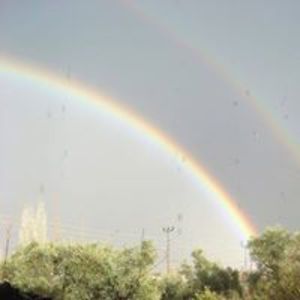
Keyif. Pronounced just as it is. It is mostly a Mediteranian concept. Somewhat like slow living and cooling off but ultimately doing what you enjoy by yourself. Enjoying yourself or cooling off does not cover it. You deliberately create the time and environtment to have keyif in for the utmost relaxation and enjoyment.
This isn't really a language based saying a much as a regional one. My grandfather was from Barbados and used to always say, 'don't have race horse ride jack-a*s' . It essentially meant 'sometimes you have to do the best with what you have, you won't always have the best things and we'll need to be resourceful but if you set your mind to something you can make what you have work for you.

Thank you BP for your continued censorship of a word that is acceptably said on pre-teen tv. Also *will
"Ghupft wia gsprunga" - "No matter what option you pick the result will be the same"

I uses two different words for jump, that mean the same in english. Cant really translate it since both words are jump in english so it doesnt make any sense.
Saying from Spain. My grandmother says it all the time. "Para tirar cohetes". It translates to " to throw rockets" it means something is really good. For example if you really like a dish you can say" that dish was worth throwing rockets " It sounds way better in Spanish.
Finnish: Sataa kuin Esterin perseestä – "To rain like from Ester’s a*s" Meaning its raining a lot.
Crazy is as crazy does
Argentinian: "BOLUDO" It is used to insult, to affectionately call a friend, to show surprise.
I know that in Spanish, "bobo" means "fool" I know someone who's Cuban and uses it a lot to the jackasses at our school
I'm not a world traveler and from the U.S. If you're on the back of a motorcycle, you're said to be, "riding b***h". Cause that's what bikers call their woman and it's usually who rides on the back. But, whether male or female, if on the back you're riding b***h. This female doesn't apply, I drive my own motorcycle.
Haggerty and Hennessy. Tempted not to explain. However, years ago in the New York Times Sunday magazine Bill Safire mentioned that it is pretty well known that Goodbye is a contraction of God be with you but it is less well-known that it only took one generation to make the switch. Those days it was common to part with the words have a good day hence haggerty. Later, people changed to have a good day hence Hennessy. Aren't you glad you asked?
My grandfather used to say: do you walk to school or carry your lunch? Meaning: are you mixed up, confused? He also used to make up words. Dilfarge = an unknown. Example: what's that dilfarge on your shirt?
I worked with a guy that if you asked what is that? and he didn't know he would say"Don't put yer lips on it". If he didn't know someone's name he would say "Yo face, c'mere" and sigh "marone" (bollocks)
in Dutch: Het zal mij aan mijn reet roesten - that will rust my @ss = I don't give a sht
Not really a saying but a word. In Spanish, we have a word for someone from the US without having to say American. The word is “estadounidense” and is literally “someone from the US”
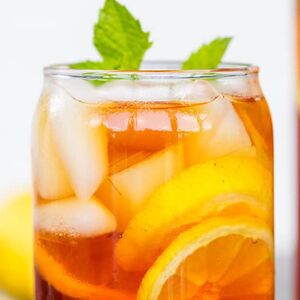
I also love the southern US phrase "Lord willing and the creek don't rise" when making plans. It means, barring any unexpected events. I'm planning to be there, but let's acknowledge that life gets in the way sometimes. "I'll see you on Monday - Lord willing, and the creek don't rise."
I've always loved the Hungarian word "tessék". It's so versatile and there's nothing like it in English. I've heard it used as: excuse me, you go first, come again?, welcome, can I help you?, would you please?, here you go, help yourself, you may begin, and get out of my car (when used by a taxi driver).
I also love the southern US phrase "Lord willing and the creek don't rise" when making plans. It means, barring any unexpected events. I'm planning to be there, but let's acknowledge that life gets in the way sometimes. "I'll see you on Monday - Lord willing, and the creek don't rise."
I've always loved the Hungarian word "tessék". It's so versatile and there's nothing like it in English. I've heard it used as: excuse me, you go first, come again?, welcome, can I help you?, would you please?, here you go, help yourself, you may begin, and get out of my car (when used by a taxi driver).
























 No fees, cancel anytime