Get Premium
Dark mode theme is available exclusively for premium users. Learn more about the benefits of subscribing.
No fees, cancel anytime.

 Dark Mode Ad-Free Browsing Unlimited Content
 Ad-Free Browsing Unlimited Content Dark Mode
Join 1.2 million Panda readers who get the best art, memes, and fun stories every week!
I'm a French artist, and my name is Dimitri "Jahz Design." I graduated as a graphic designer. I have always been interested in history and architectural remains. It was in 2013 that I developed my interest in the urban photography of heritage in disuse.
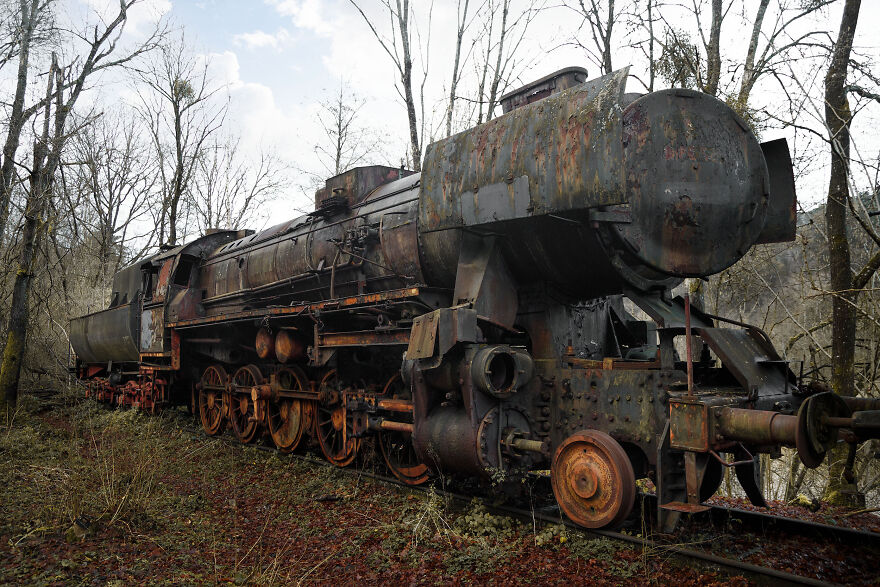
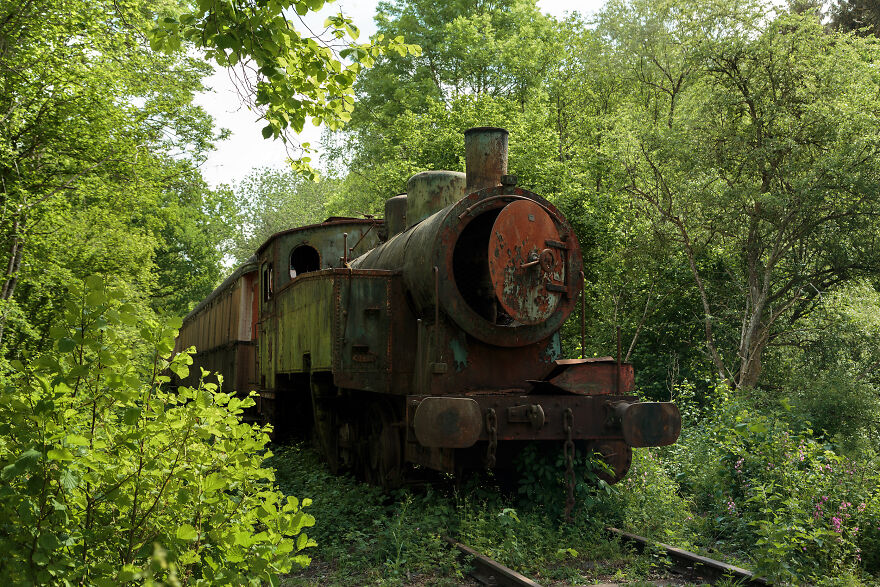
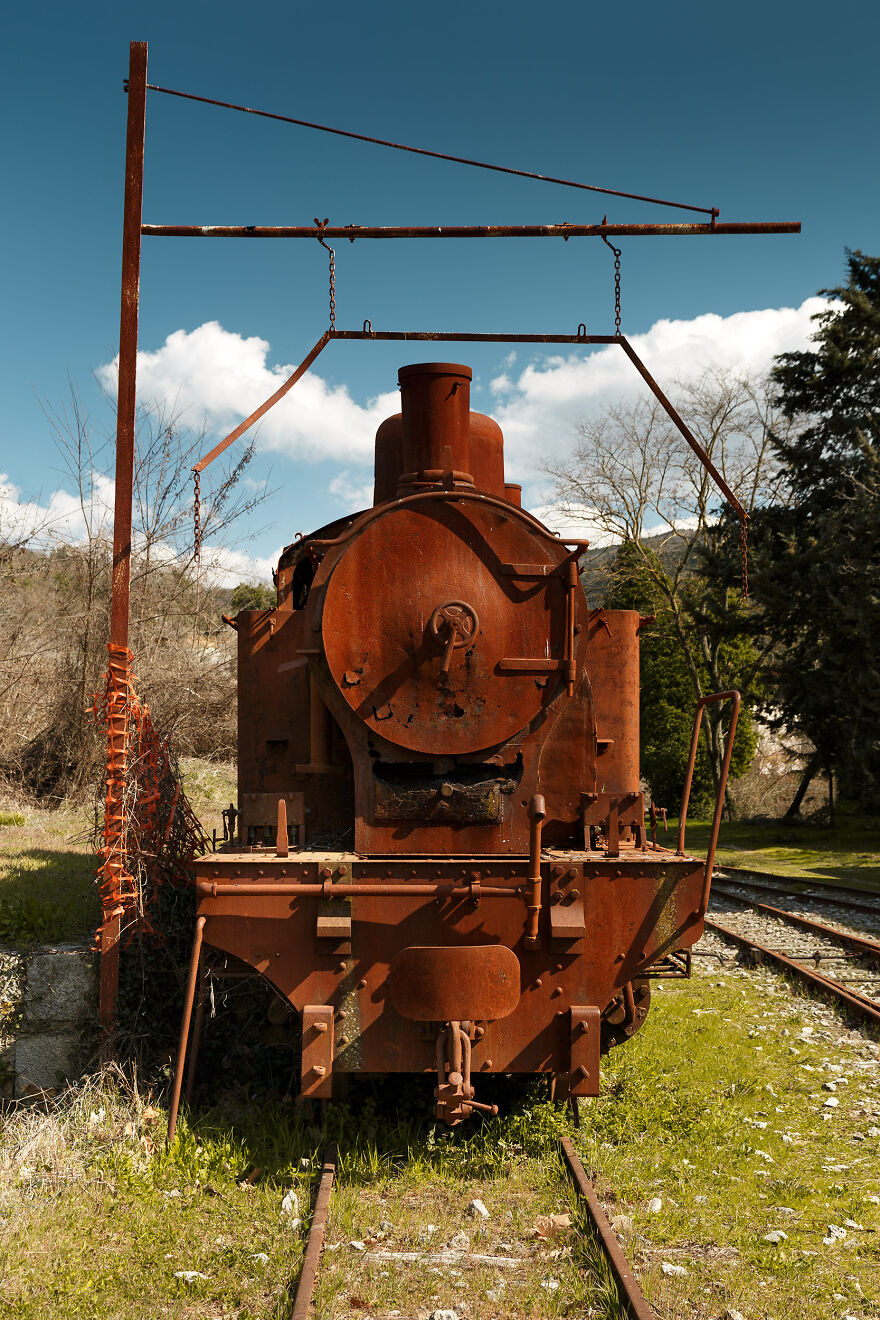
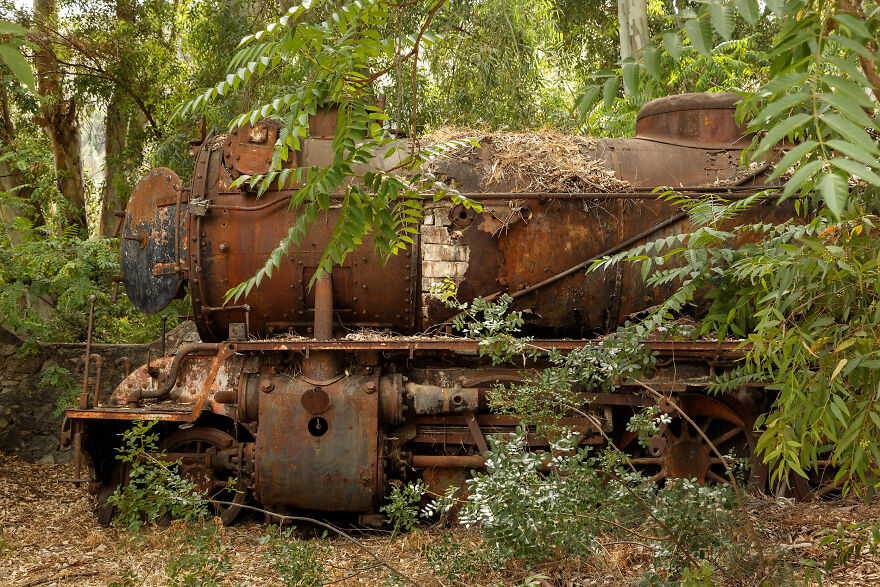
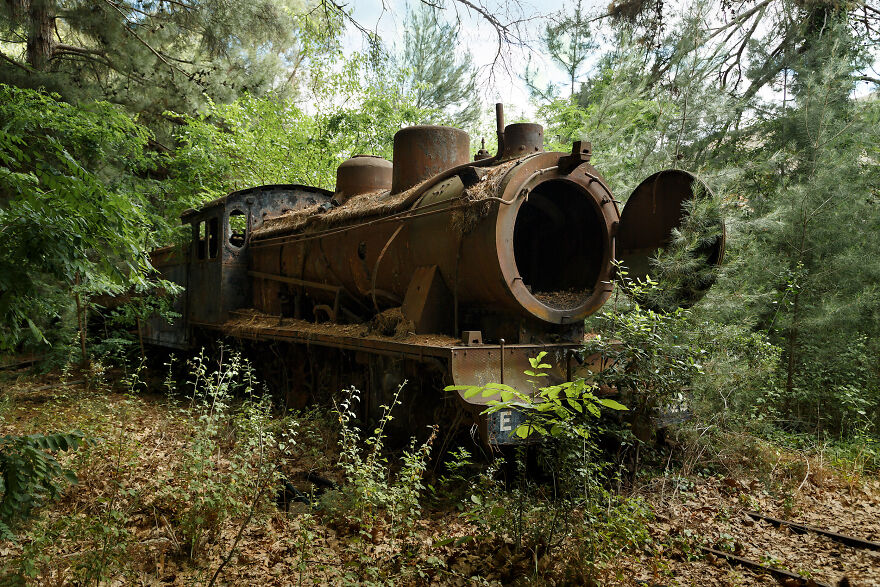
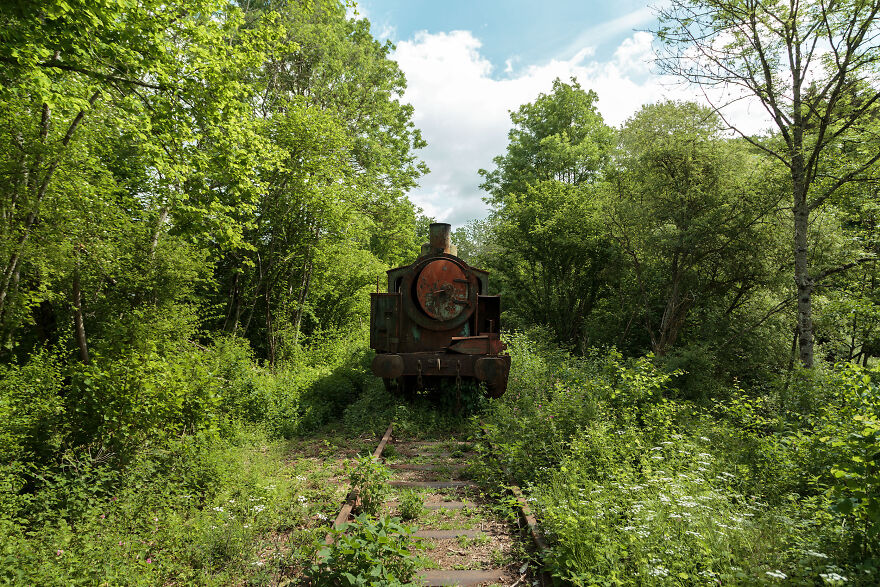
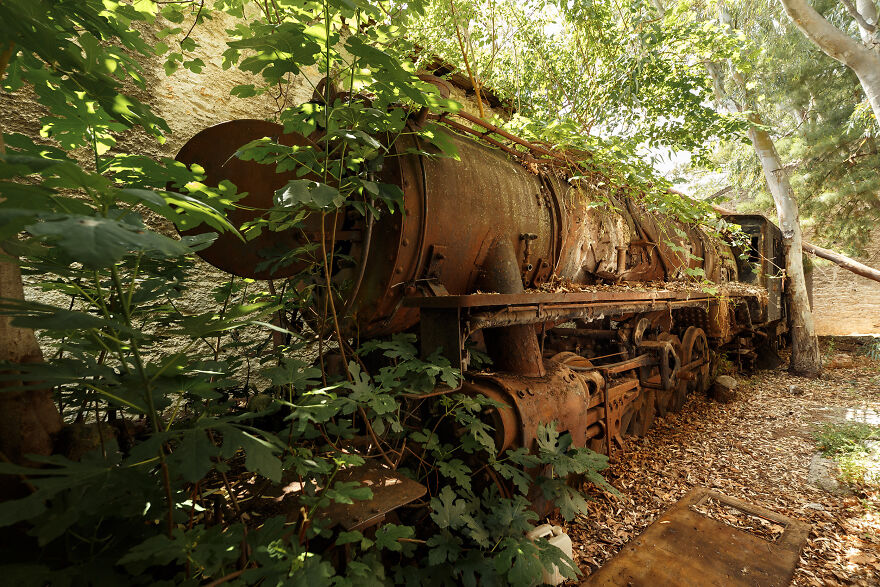
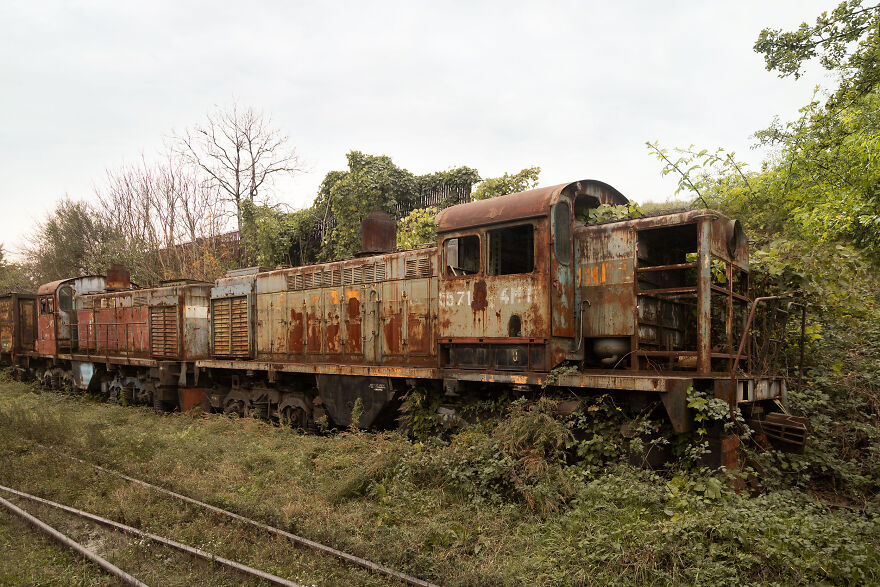
In this series of photos, I take you on a discovery of abandoned trains around the world. These locomotives that once roamed the rails with pride are now abandoned, leaving behind traces of the past and a ghostly atmosphere. Through my photos, I invite you to dive into the mysterious and fascinating universe of ghost trains.
More info: jahzdesign.com | Instagram | Facebook
This post may include affiliate links.

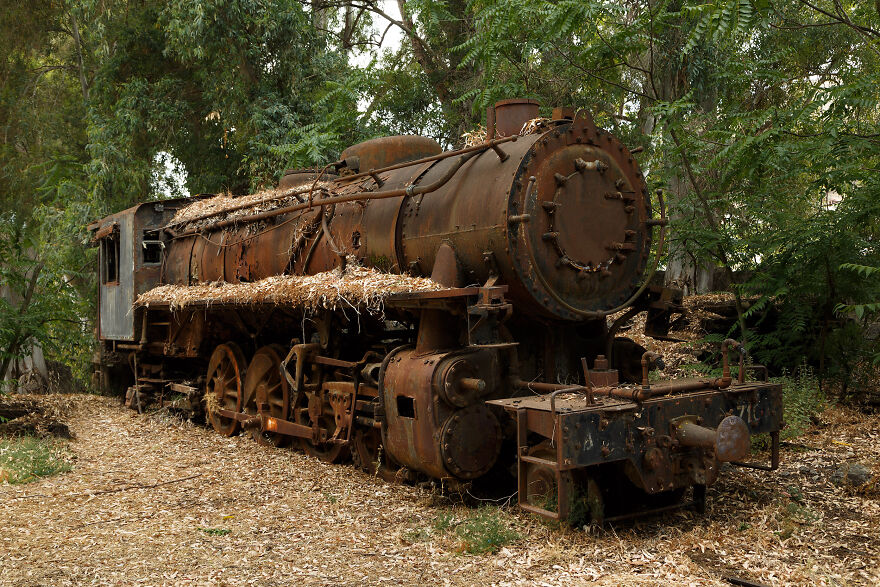
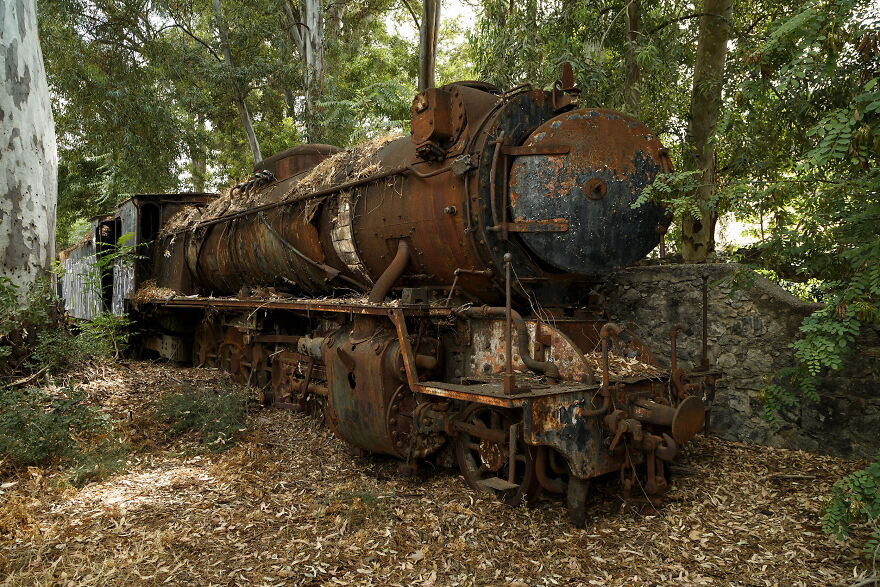
This is a Piraeus, Athens and Peloponnese Railways (SPAP) Class Δα locomotive built by Vulcan Iron Works from Wilkes-Barre, Pennsylvania, in turn copies of the United States Army Transportation Corps (USATC) S118 Class. This particular one is builder's number 4702, made in 1947 and registered in Greece as No. 7103, abandoned at the former train station of Myloi, here: 37.556273, 22.716601
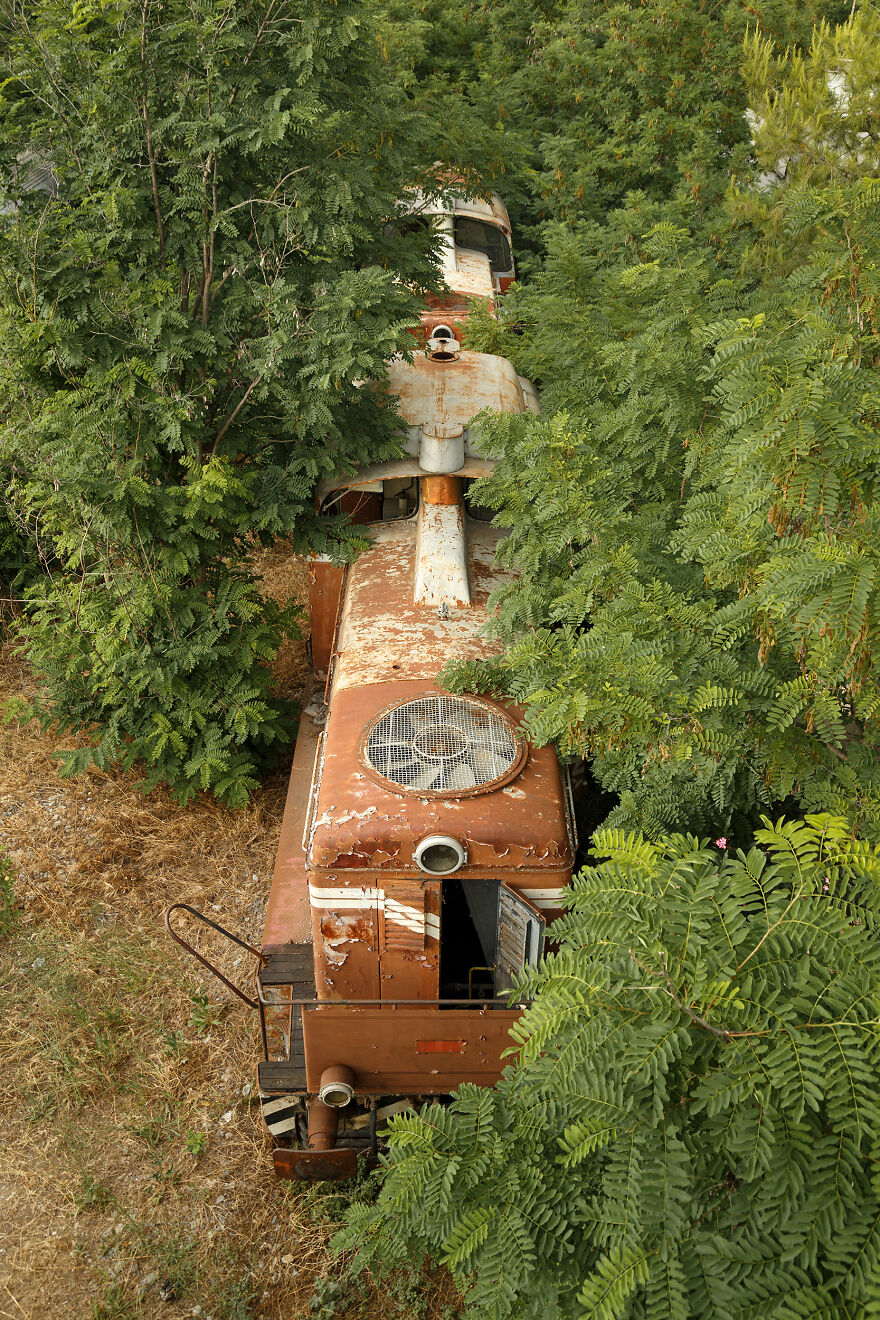
This is a Romanian built LDH 125 diesel-hydraulic shunting locomotive (CFR-Class 040) in Bulgarian State Railways (BDŽ) livery. They are known as "Series 55" in Bulgaria.
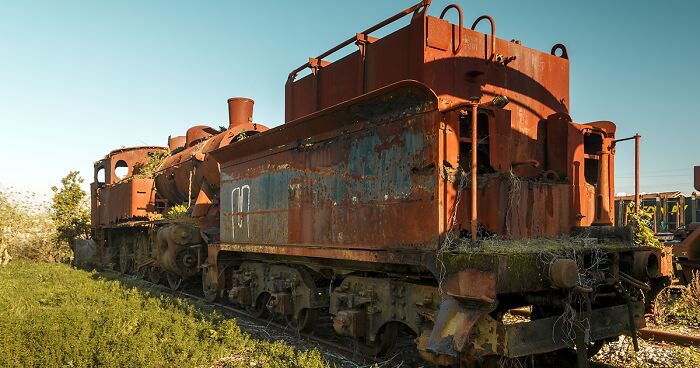
This is another Greek locomotive - Piraeus, Athens and Peloponnese Railways (SPAP) Class Δι, built by Società Italiana Ernesto Breda in 1951-52. I do not know the actual number, but it's interesting to note that the photo is mirrored, because this type had the firebox door hinged on the right. Also, I know exactly where it is and which way it's facing - it can be found here, in Myloi: 37.555895, 22.716754
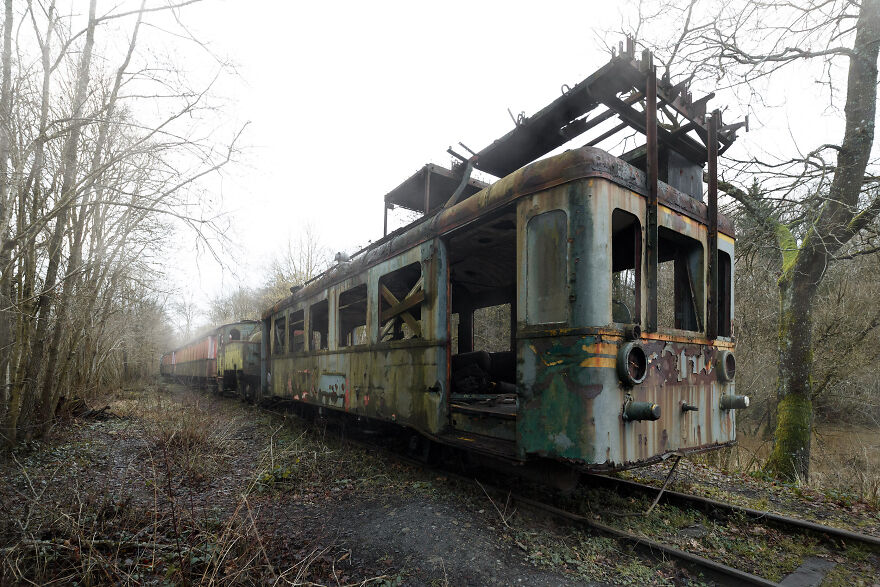
Autorail Série 622/551 built in 1939 for the National Belgian railway company, Société nationale des chemins de fer belges (SNCB)/Nationale Maatschappij der Belgische Spoorwegen (NMBS). Located at the Treignes railway museum.
Portugese locomotive type 1′C2′ t Nr.072 built in 1916 at the Swiss Locomotive and Machine Works (Schweizerische Lokomotiv- und Maschinenfabrik /Société Suisse pour la Construction de Locomotives et de Machines). Currently derelict at the shunting yard in Estação das Devesas, Porto: 41.131214, -8.620892
Same as above, Piraeus, Athens and Peloponnese Railways (SPAP) Class Δι, built by Breda in 1951-52 in it's resting place in Myloi.
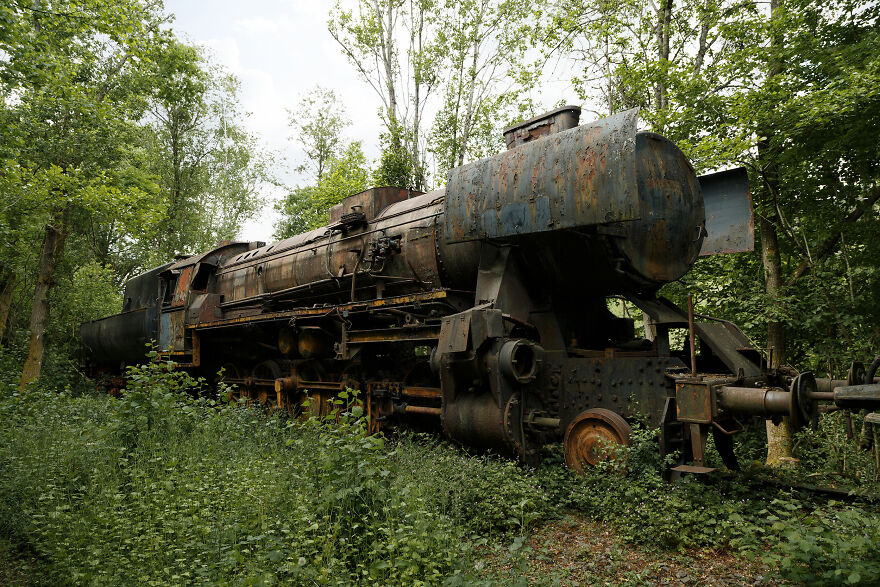
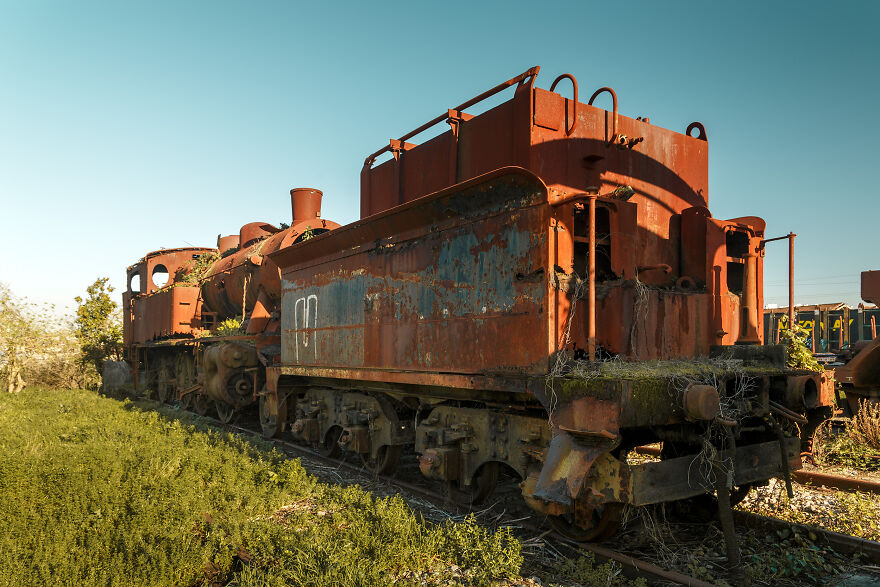
Another of the Greek locomotives abandoned in Mylos, this one is Piraeus, Athens and Peloponnese Railways (SPAP) Class Ες No.7728 built by Henschel & Son in 1936.
Steam locomotive SA2, formerly an industrial engine at the Société Anonyme pour la Fabrication d'Engrais Azotés (SAFEA) Houdeng-Goegnies, in the Charleroi region, Belgium. It's left side has been cut for display. Currently located in storage at the Treignes railway museum.

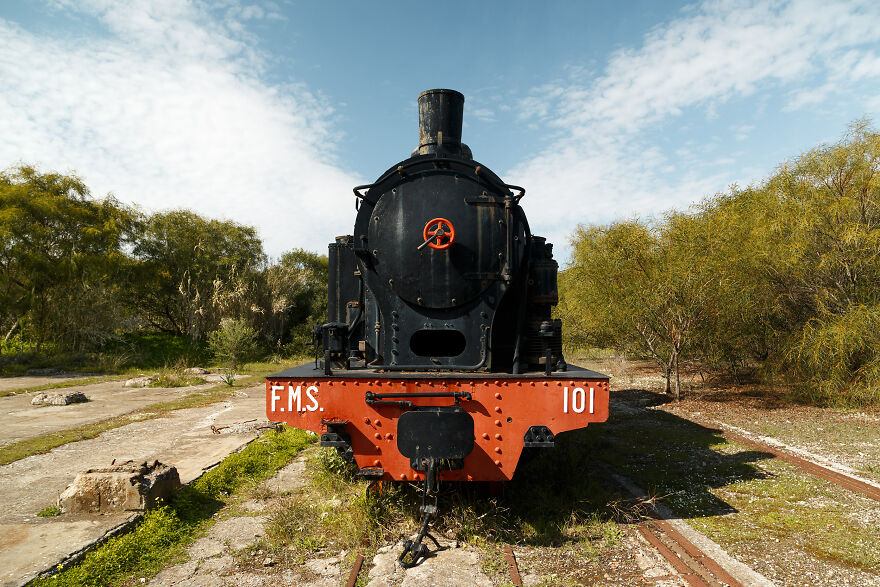
From Wikipedia, Steam locomotive 101 of Ferrovie Meridionali Sarde, built in 1925 by Breda, now monument inside the Serbariu coalmine in Carbonia, Sardinia, Italy Not really haunting, not even abandoned.
Another Greek locomotive - Piraeus, Athens and Peloponnese Railways (SPAP) Class Δα locomotive built by Vulcan Iron Works from Wilkes-Barre, Pennsylvania, same as one of the above. Also abandoned at Myloi: 37.557031, 22.716183
These are old Soviet ТГМ3 (TGM3) diesel-hydraulic locomotives. Since 3,538 of them were built, it's impossible to say where they are, since they could be anywhere from Uzbekistan to Ukraine...



Strange how there are similarities in abandoned inanimate objects and the elderly.
Strange how there are similarities in abandoned inanimate objects and the elderly.



































 No fees, cancel anytime