Get Premium
Dark mode theme is available exclusively for premium users. Learn more about the benefits of subscribing.
No fees, cancel anytime.

 Dark Mode Ad-Free Browsing Unlimited Content
 Ad-Free Browsing Unlimited Content Dark Mode
Join 1.2 million Panda readers who get the best art, memes, and fun stories every week!
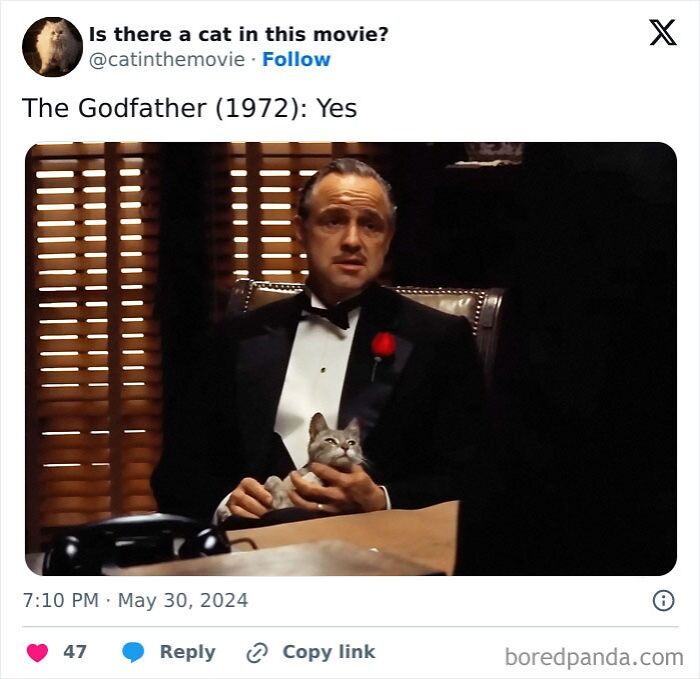
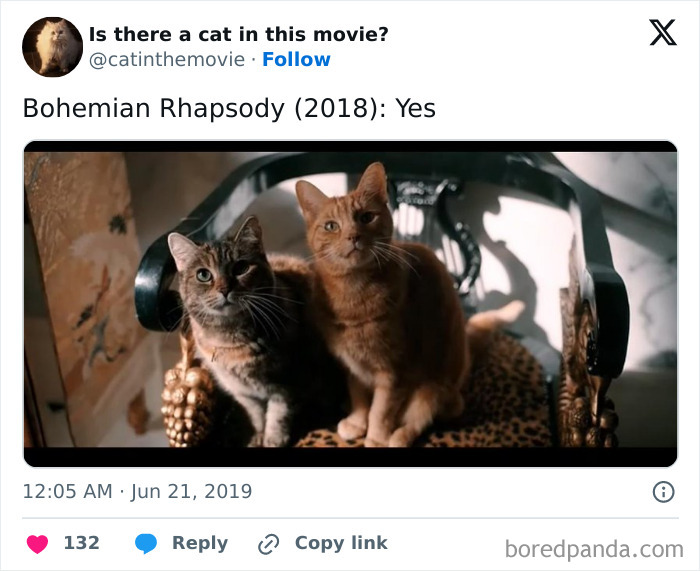
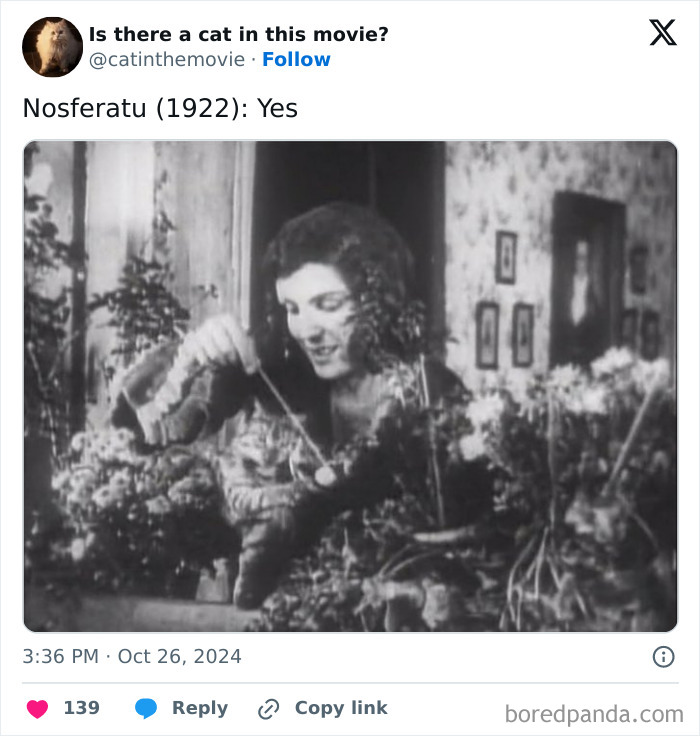
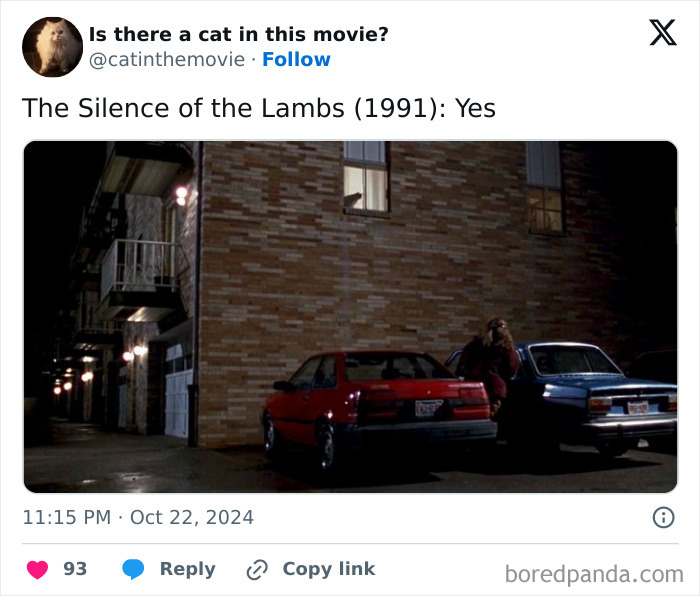
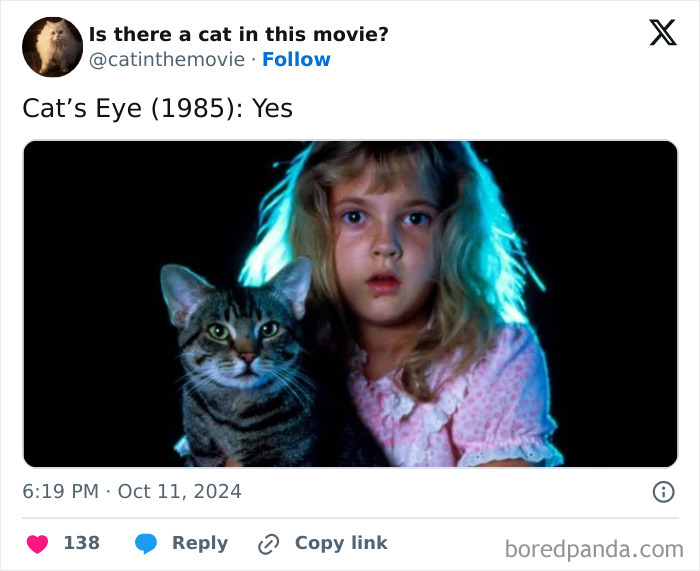
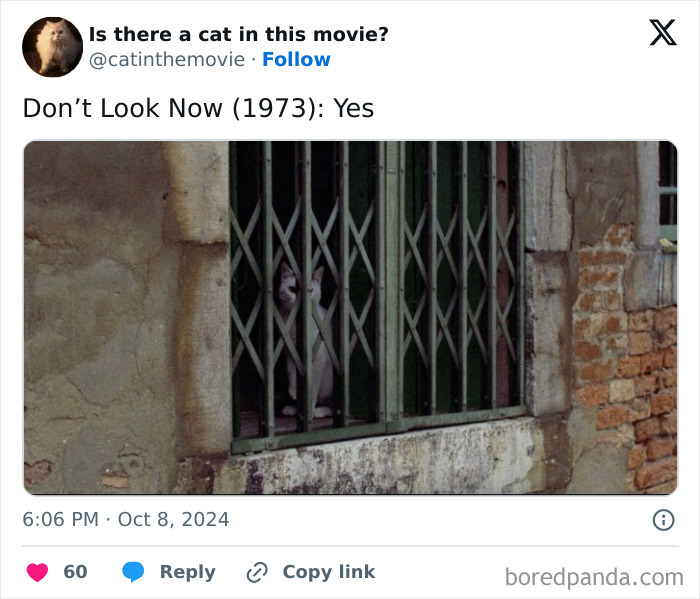
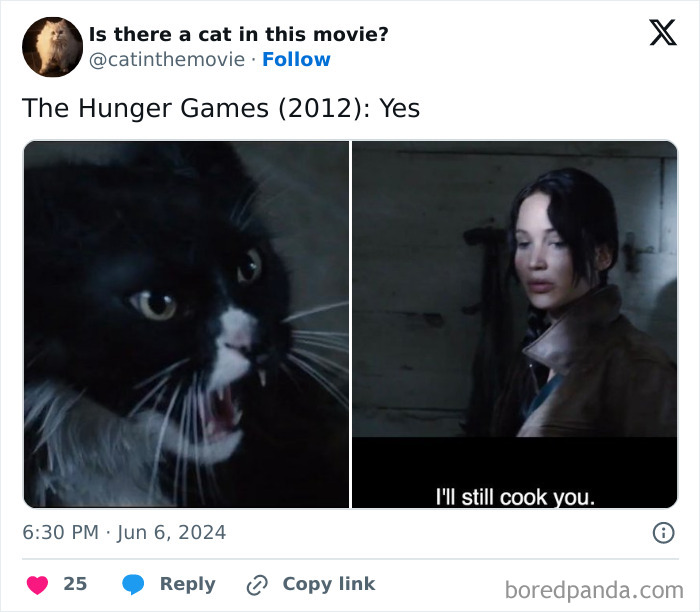
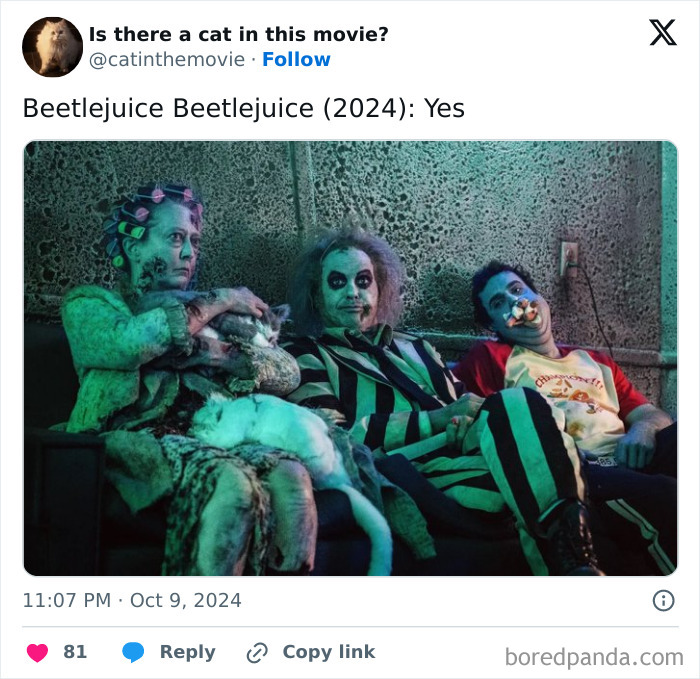
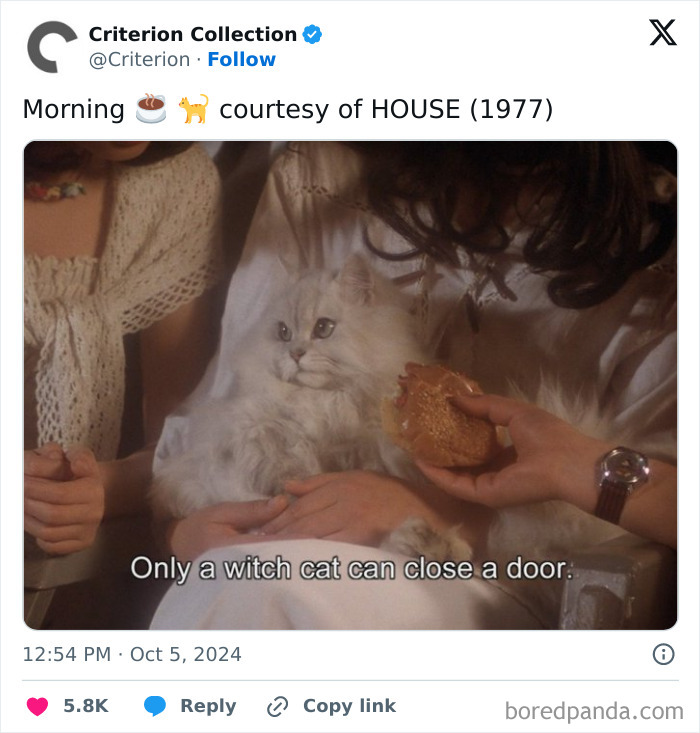
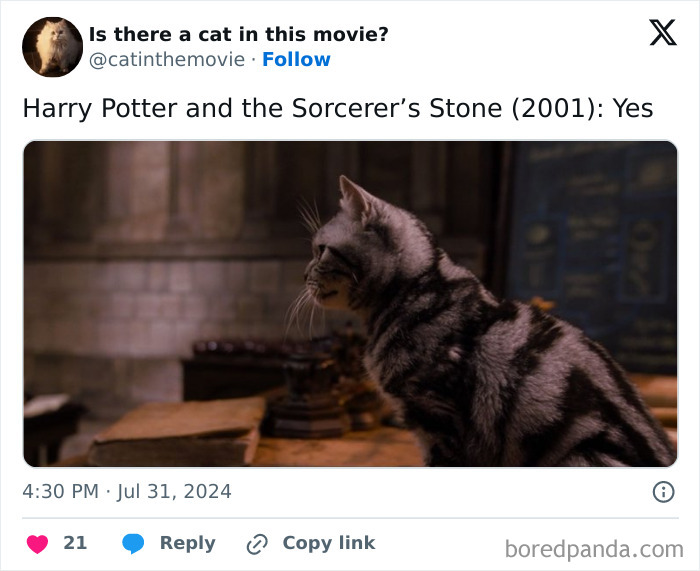
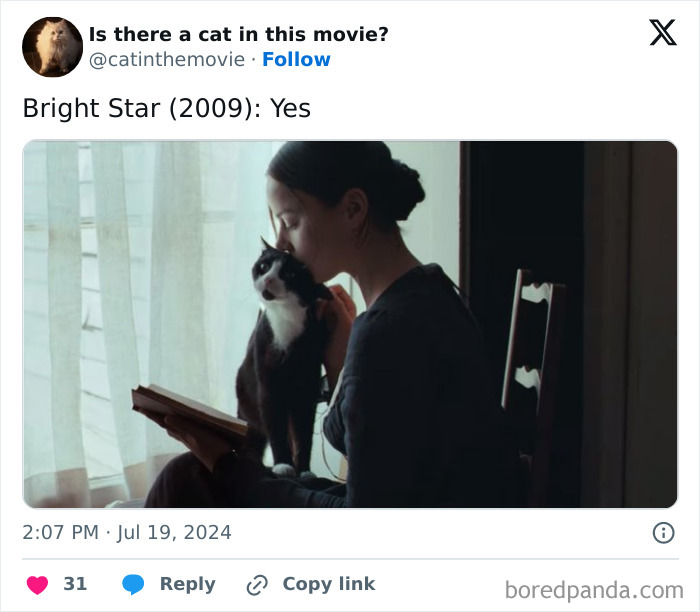
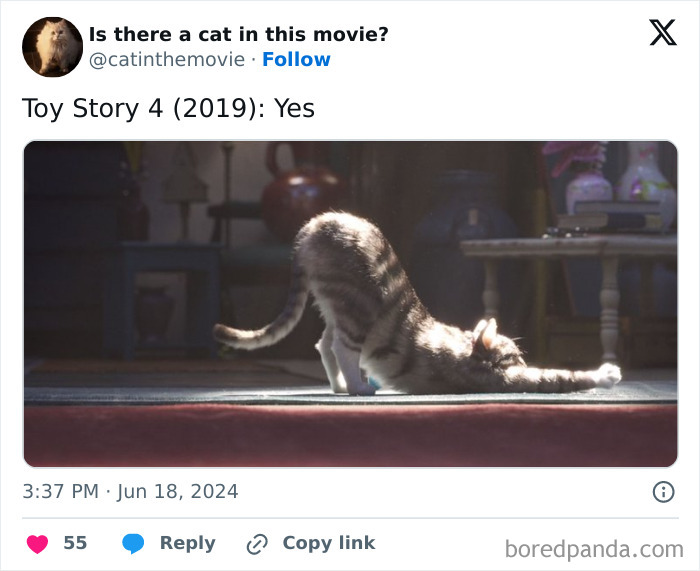
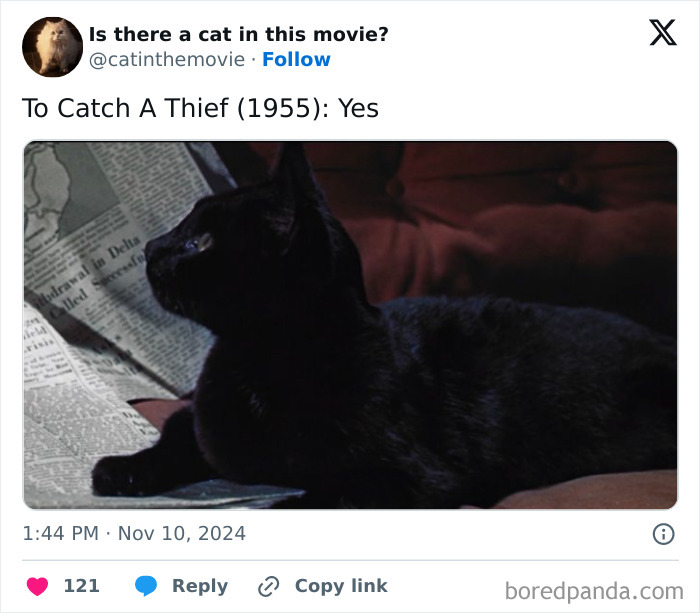
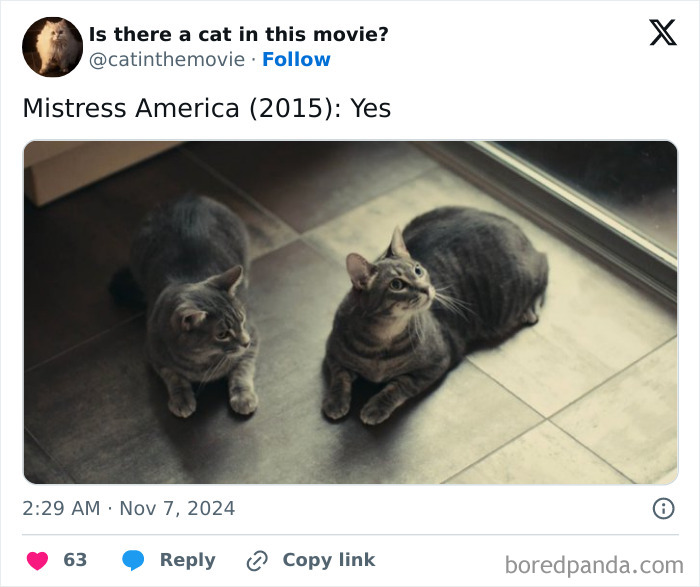
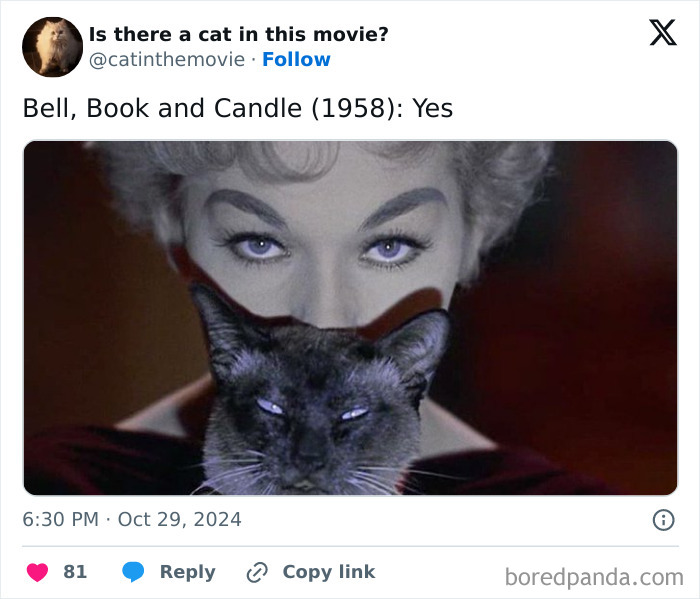
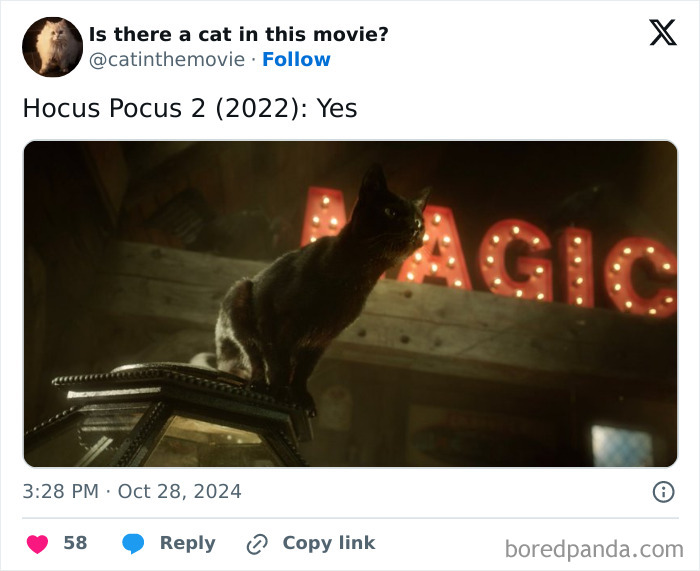
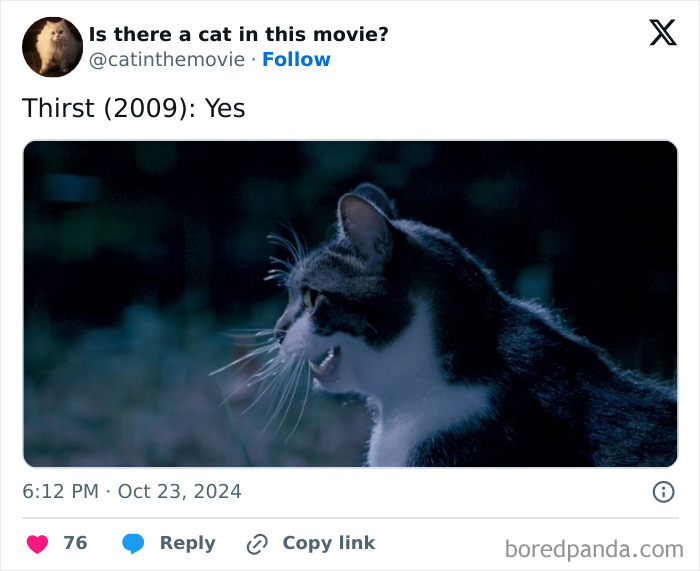
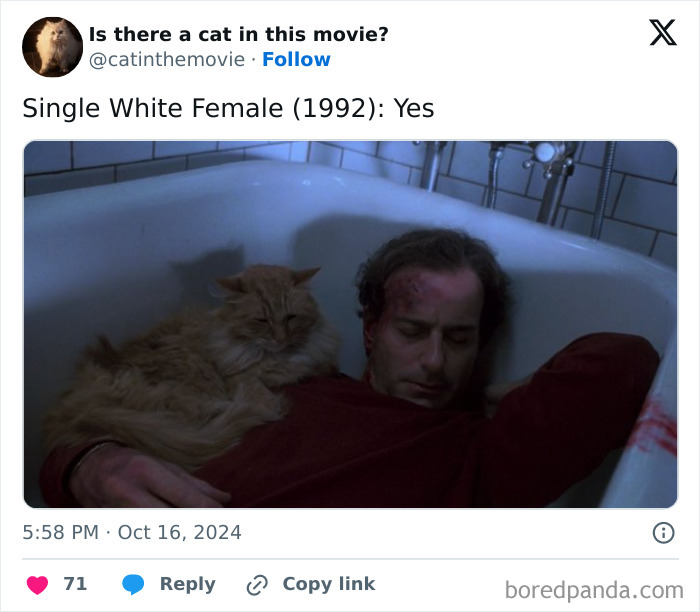
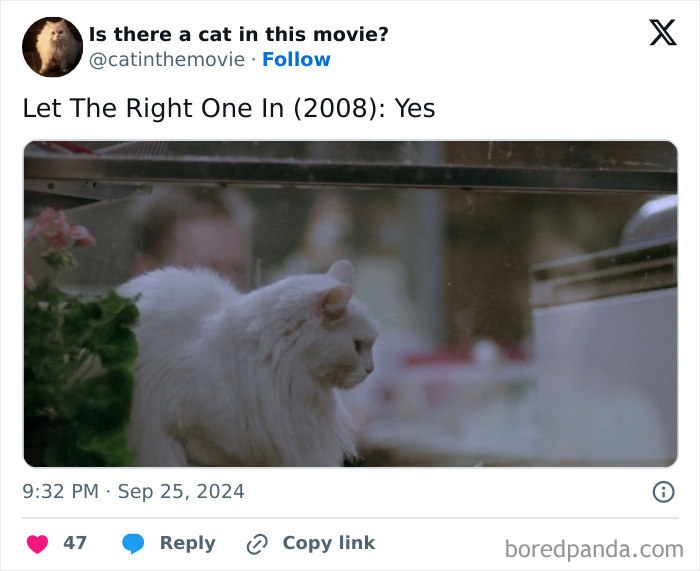
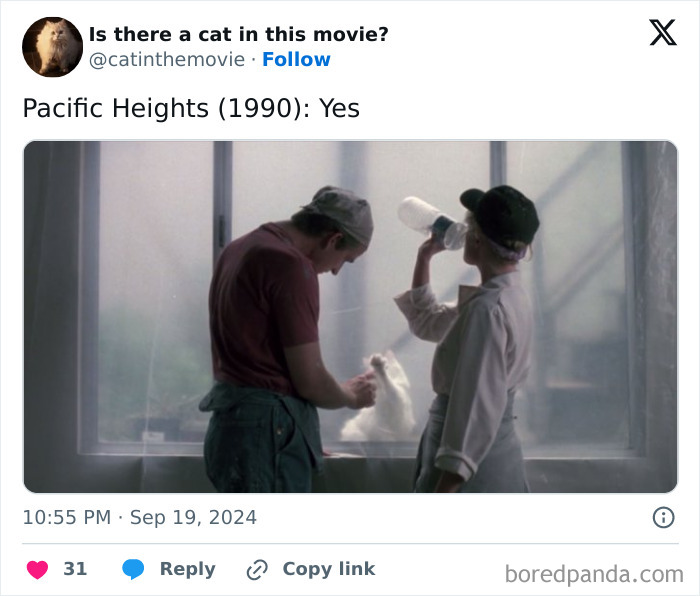
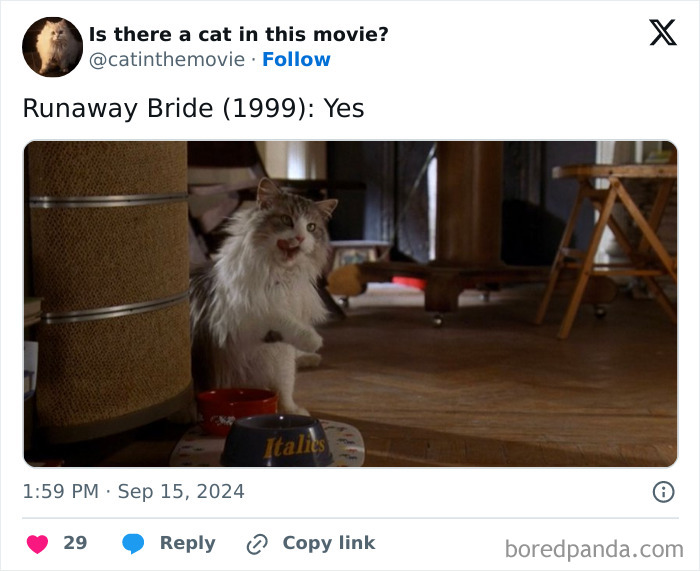
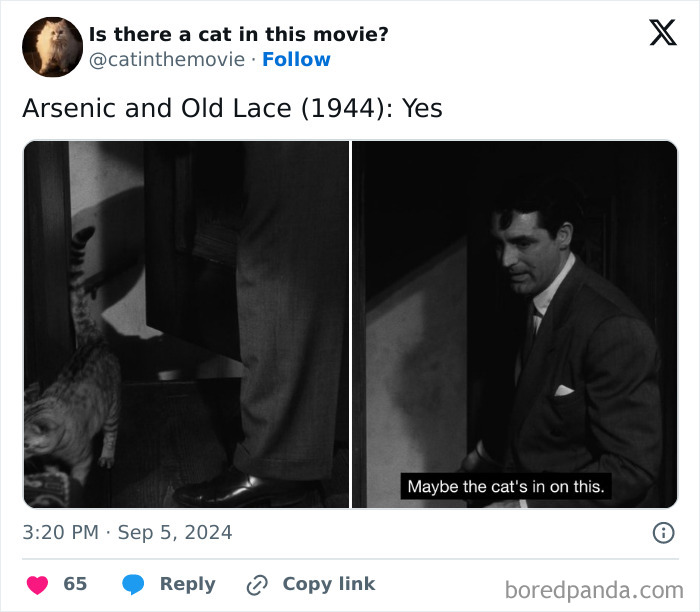
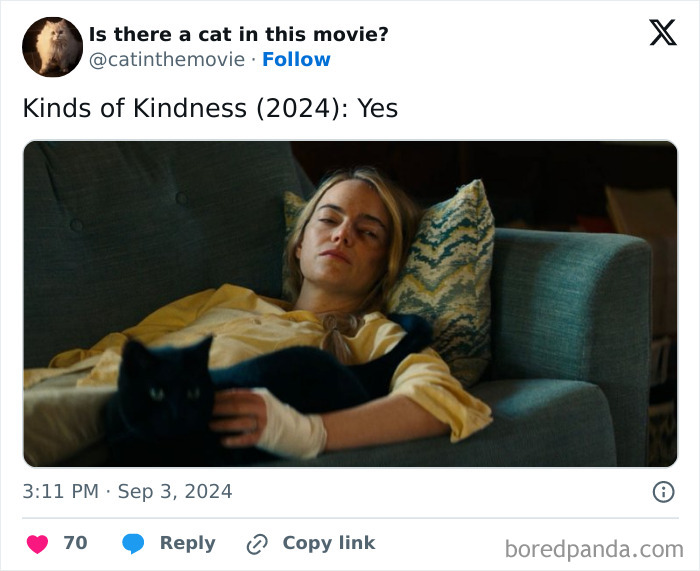
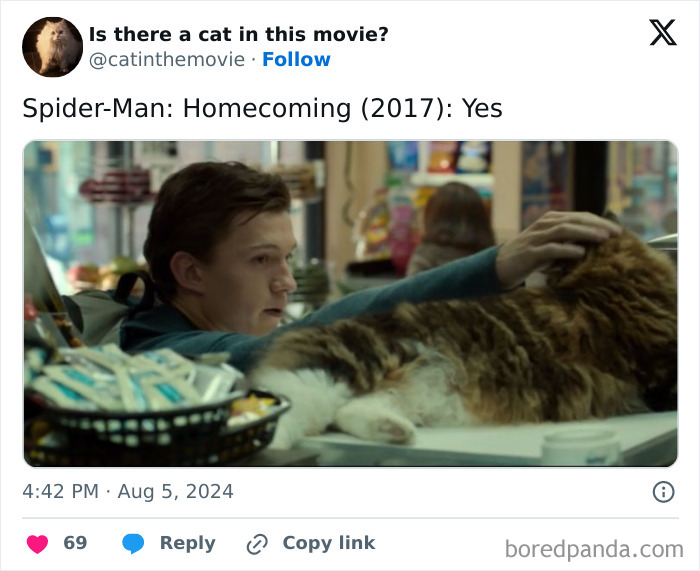
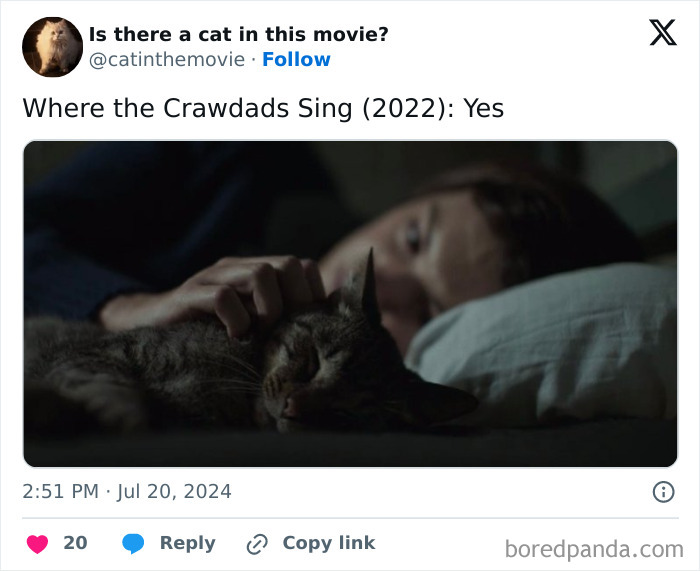
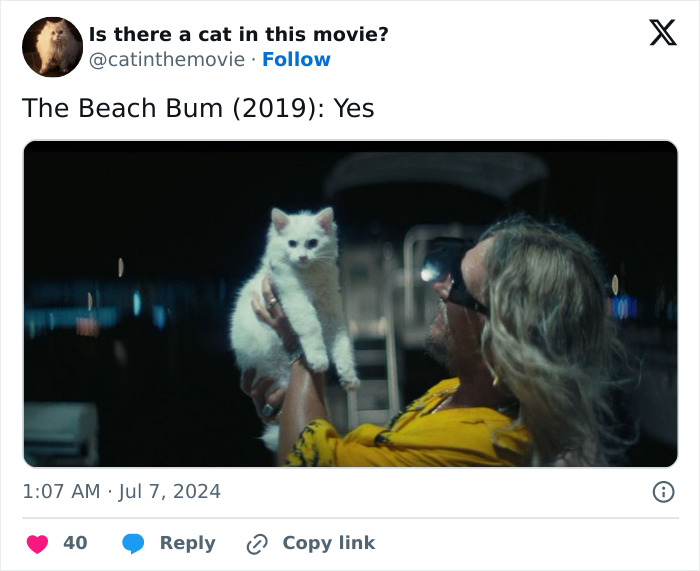
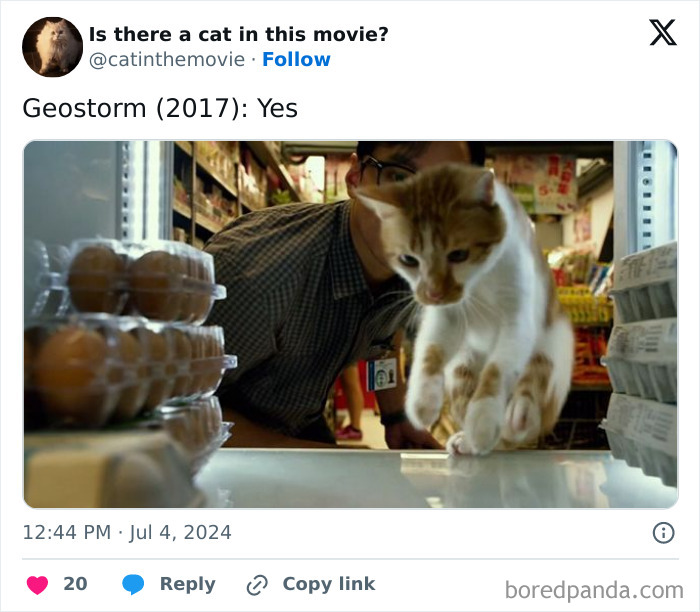
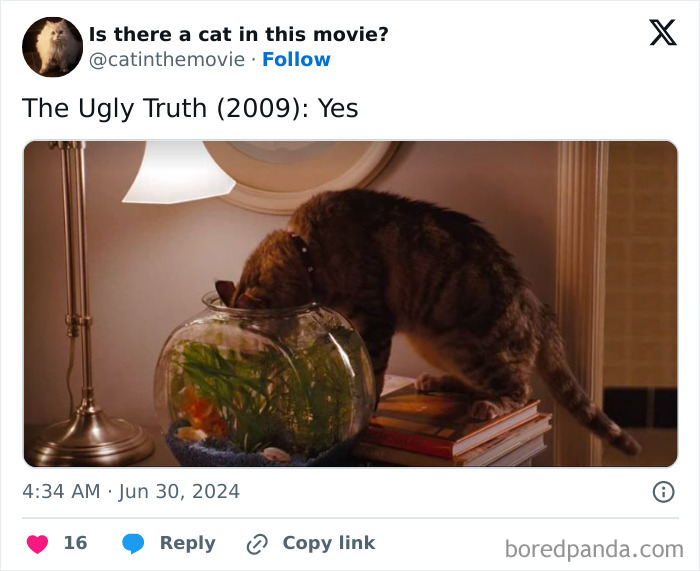
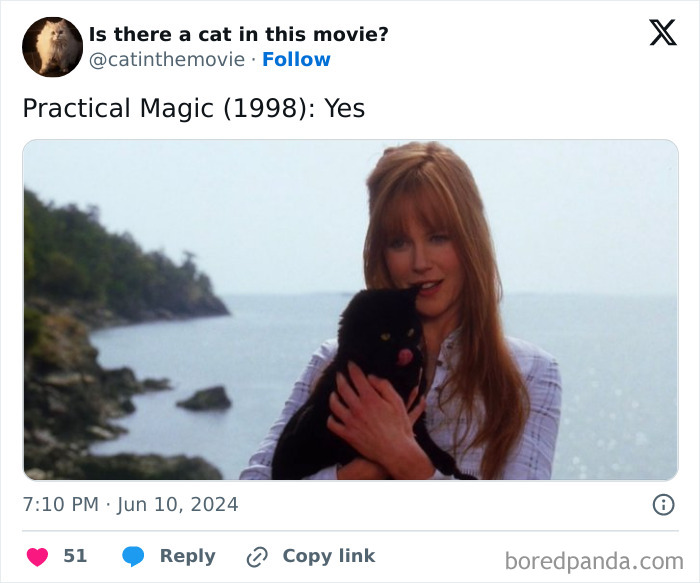
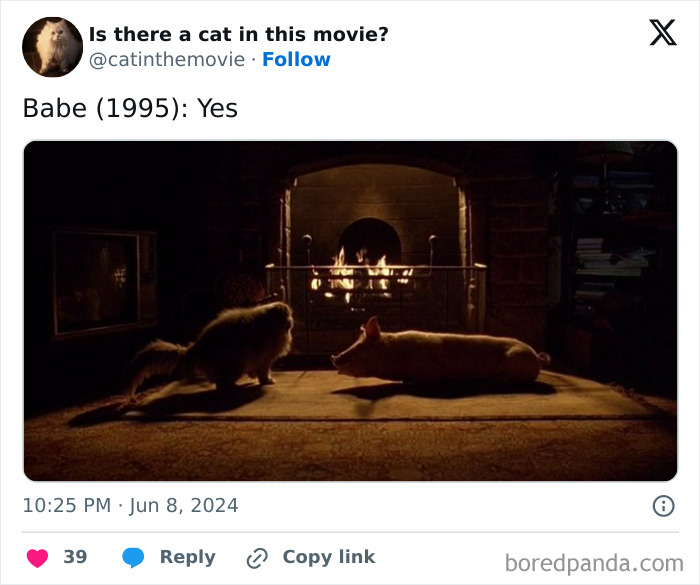
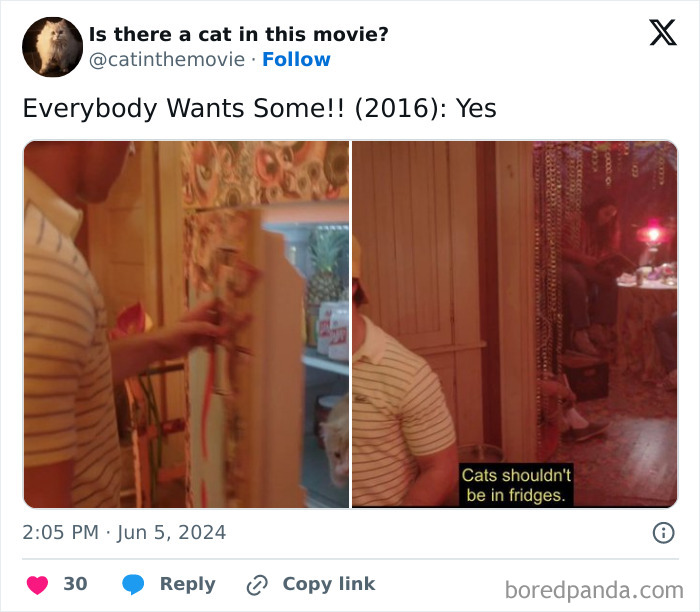
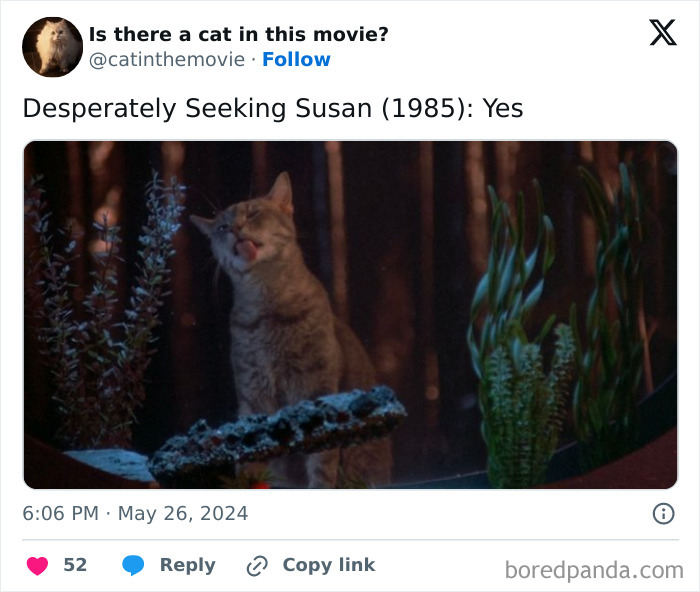
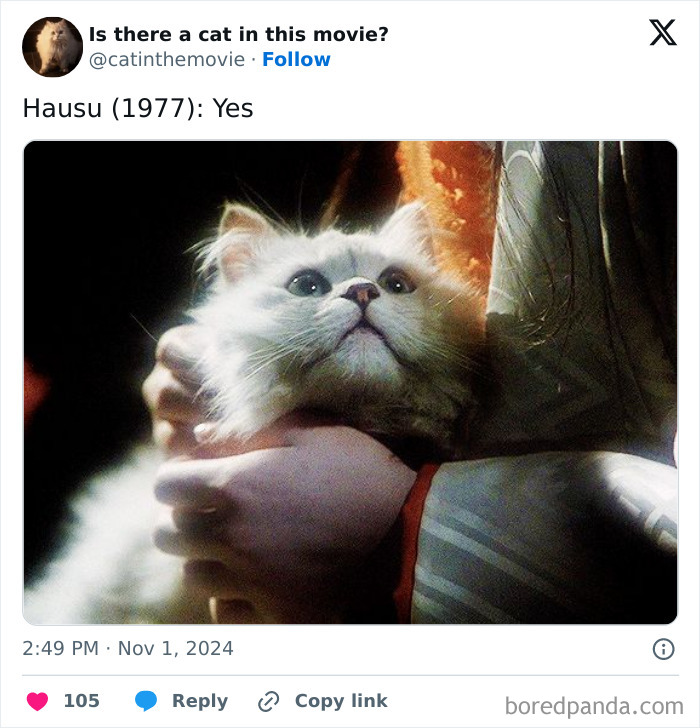
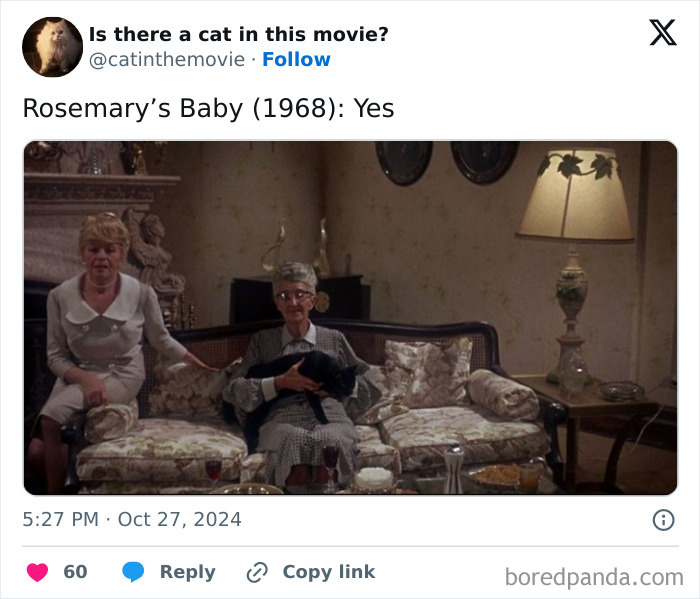
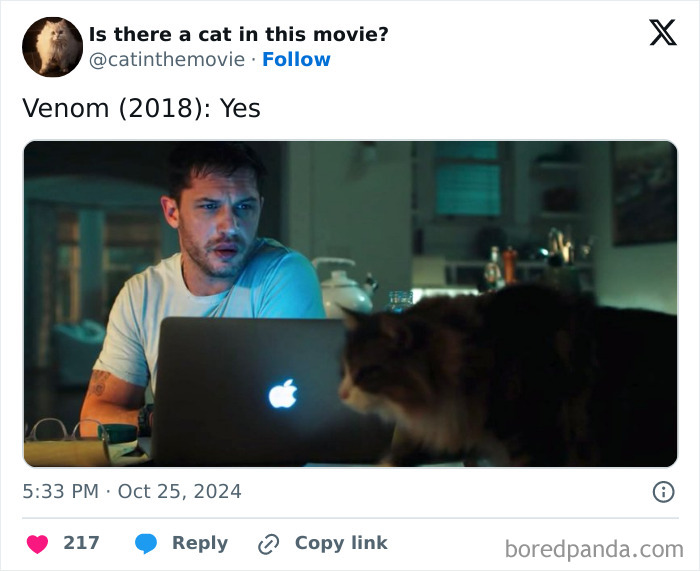
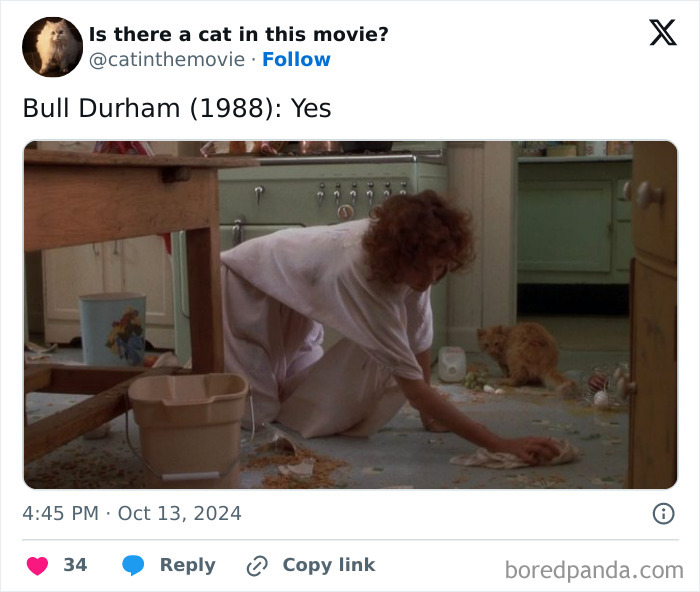
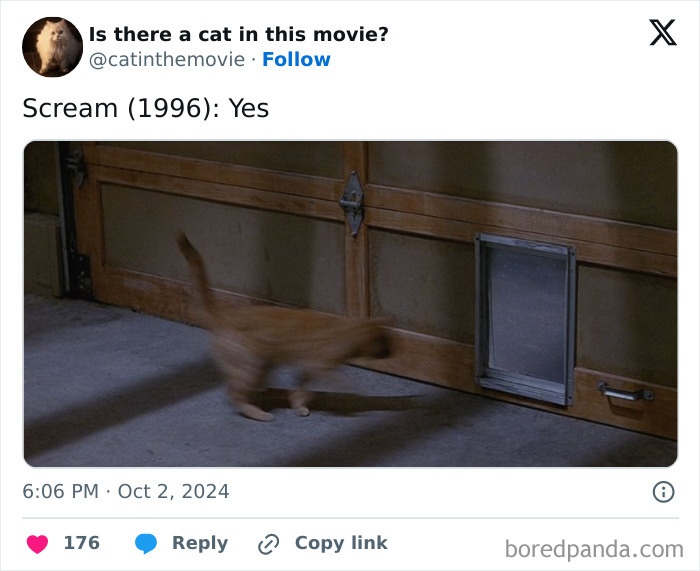
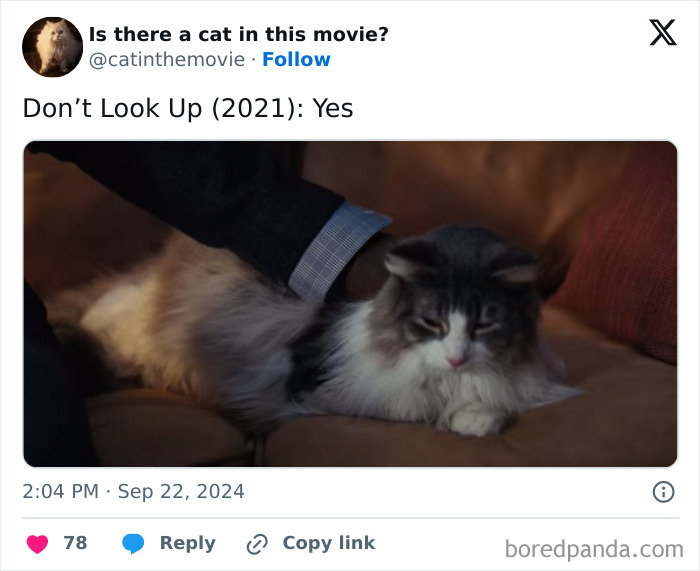
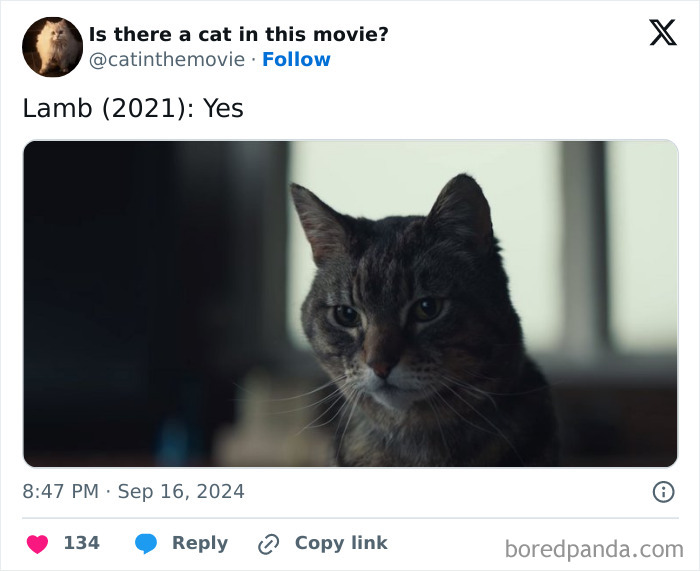
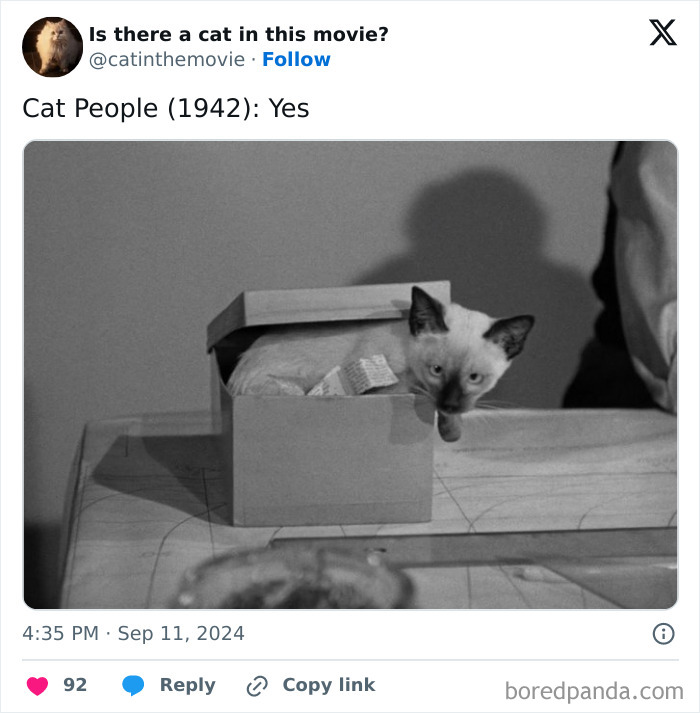
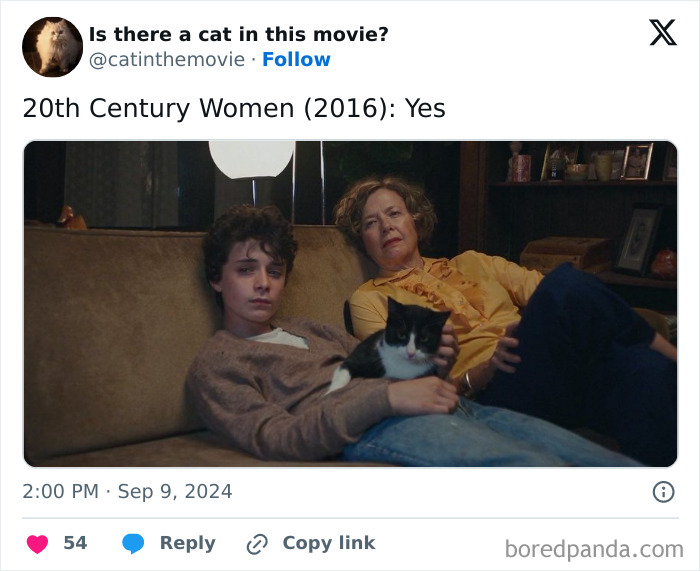
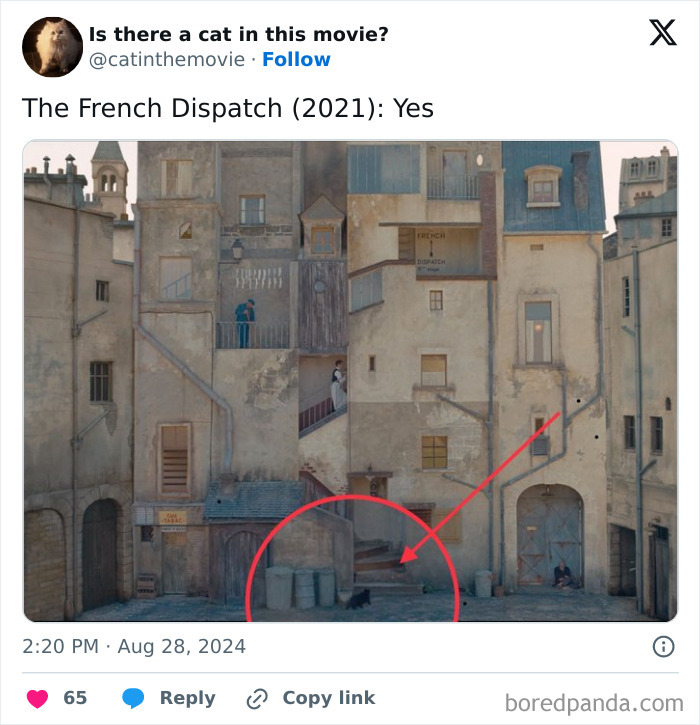
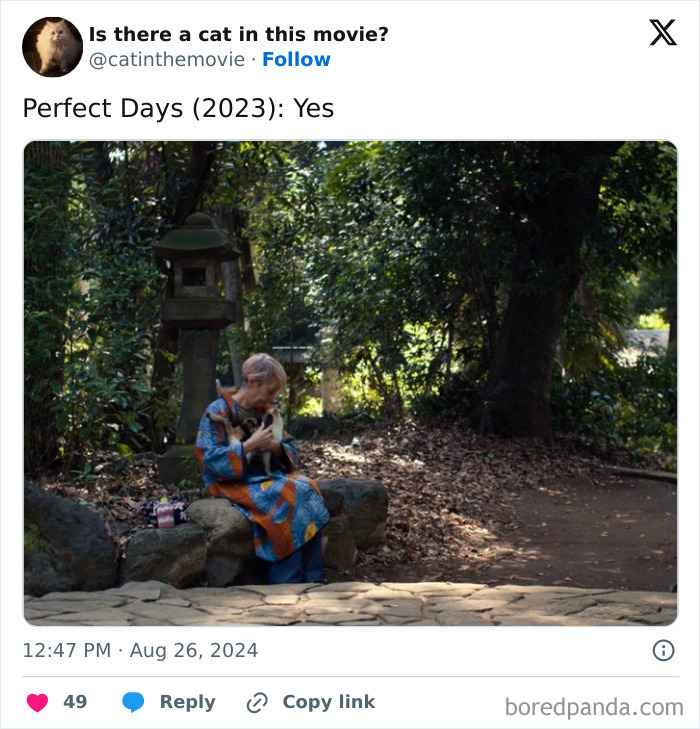
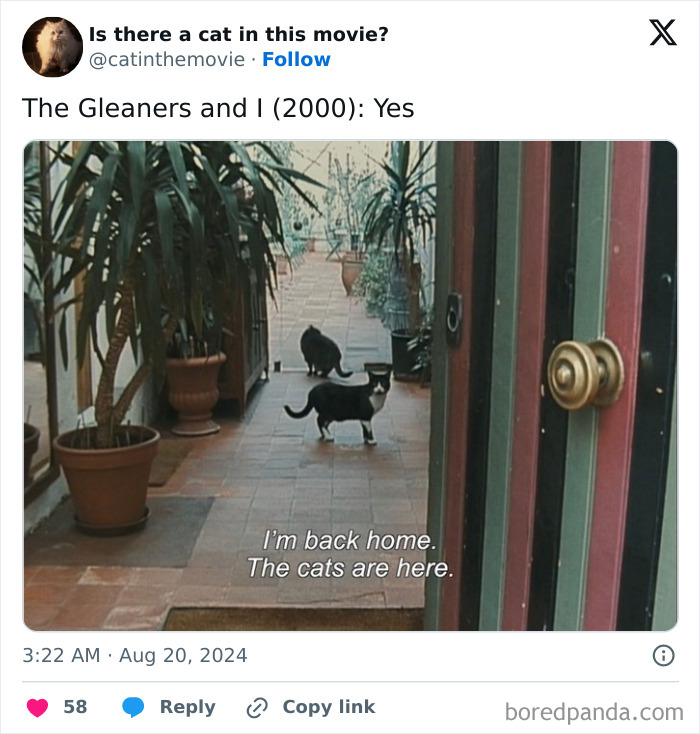
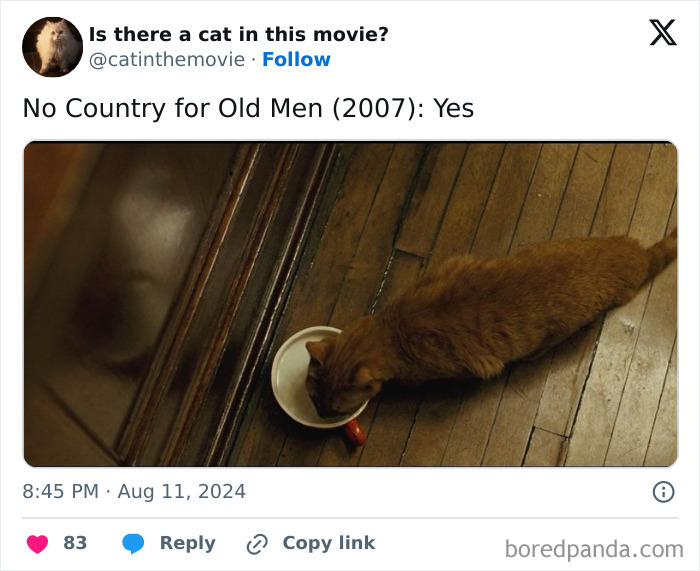
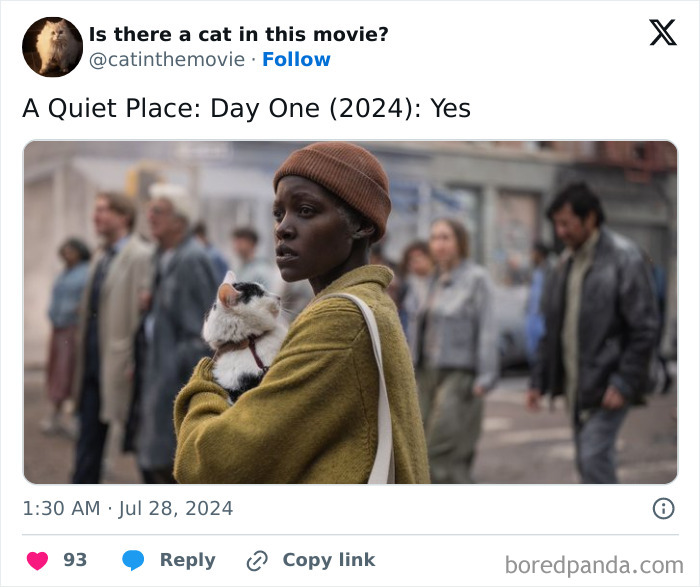
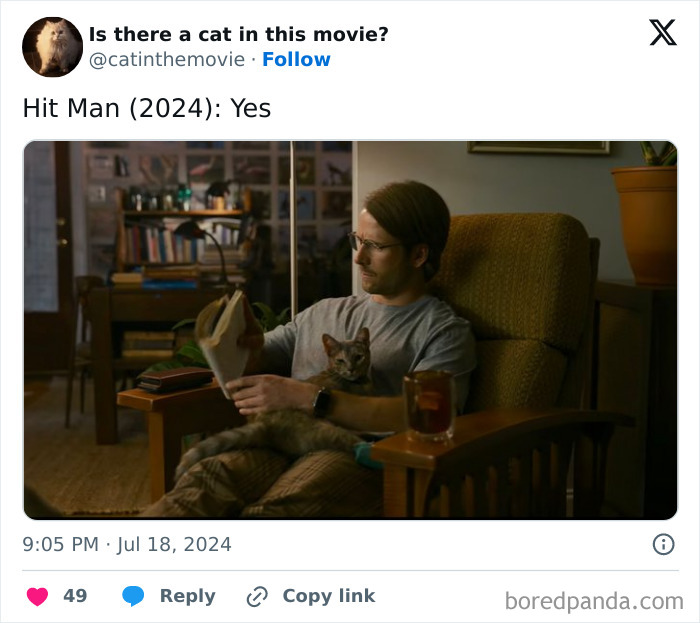
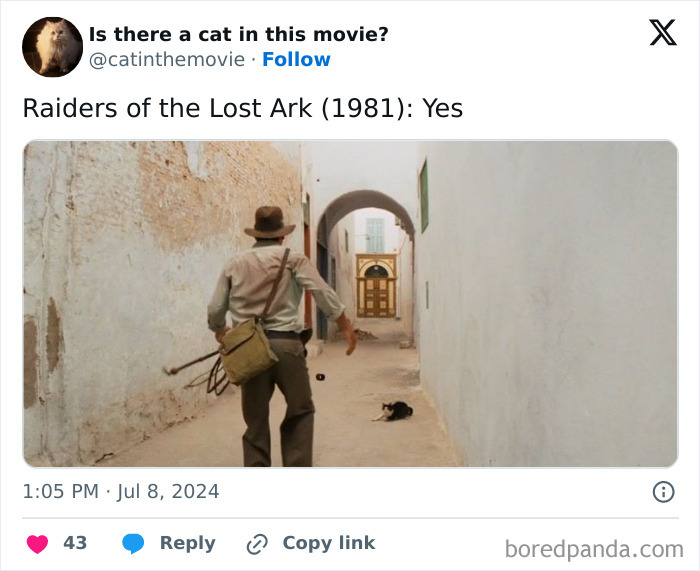
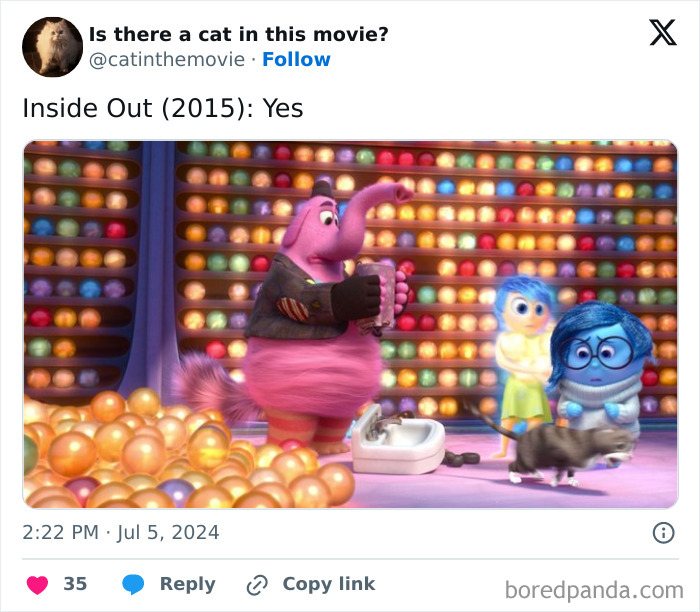
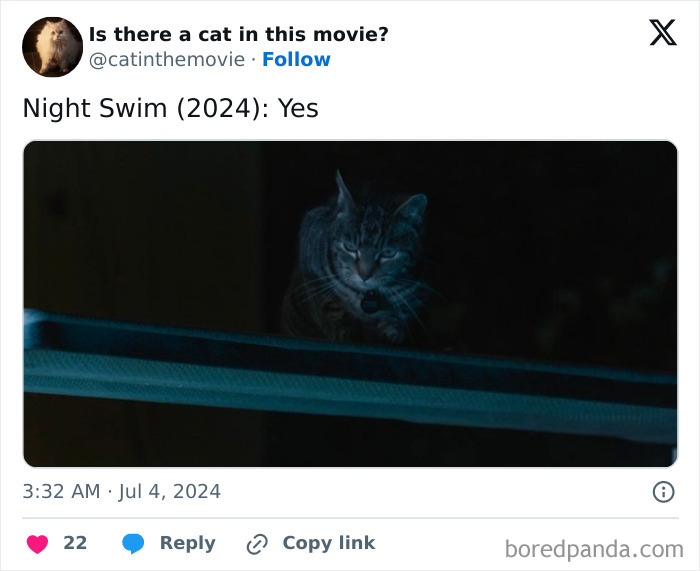
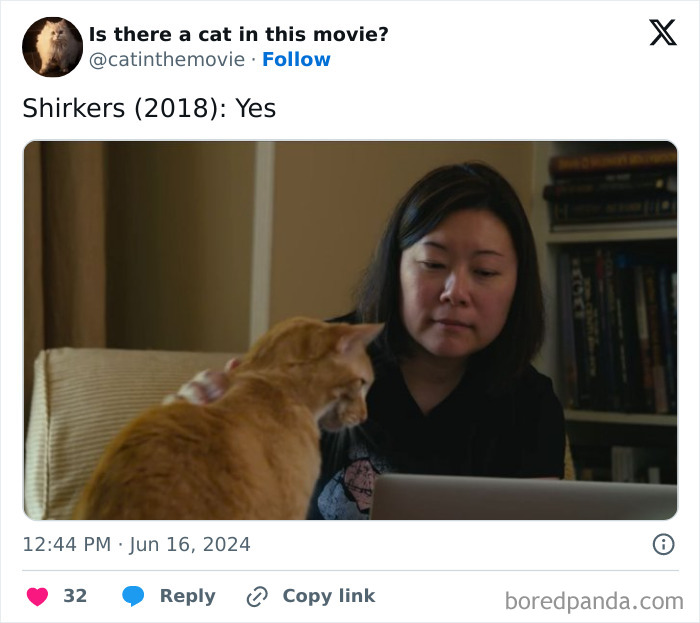
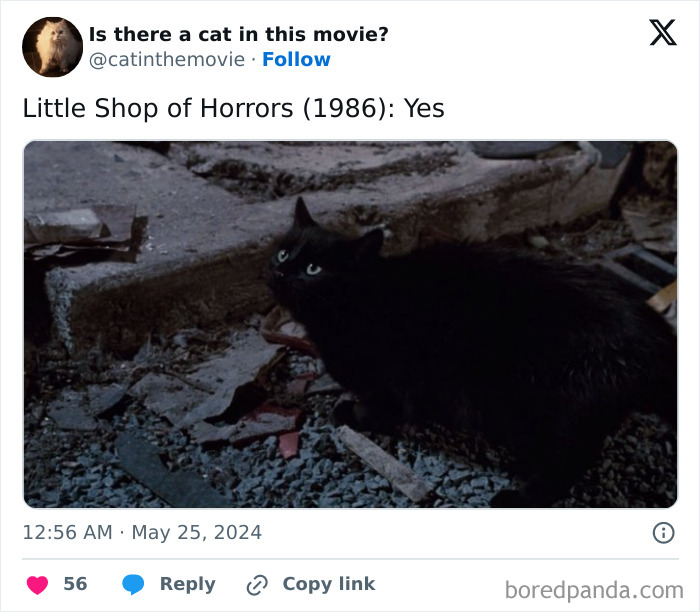
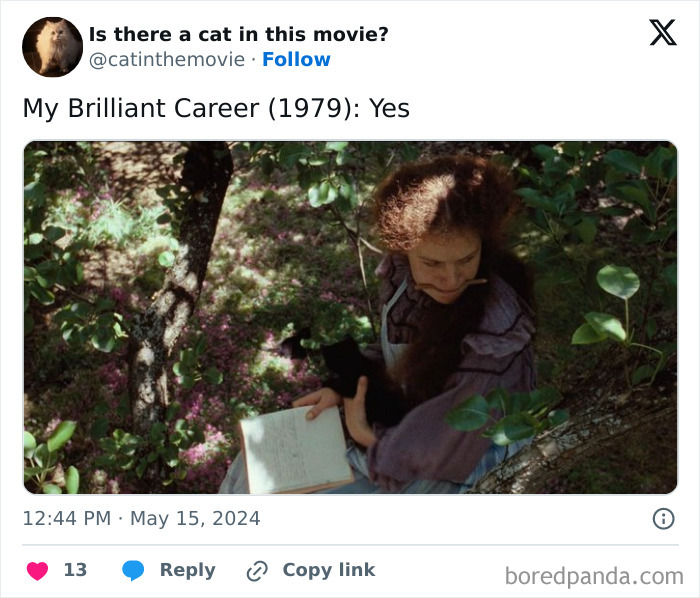
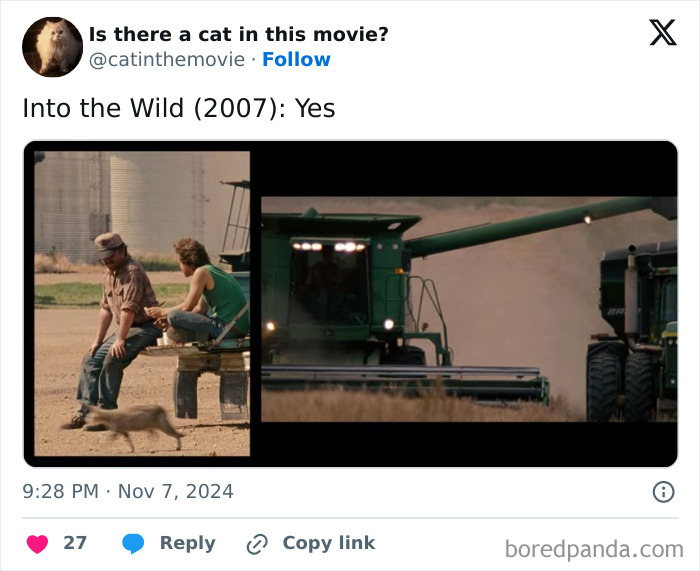
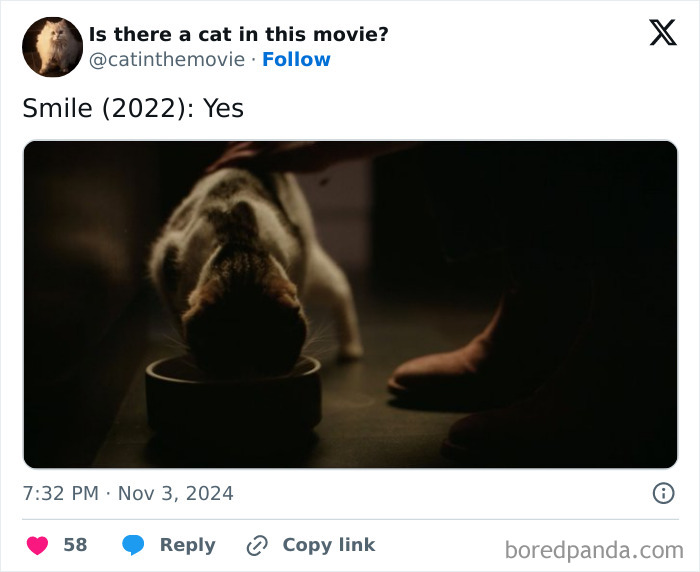
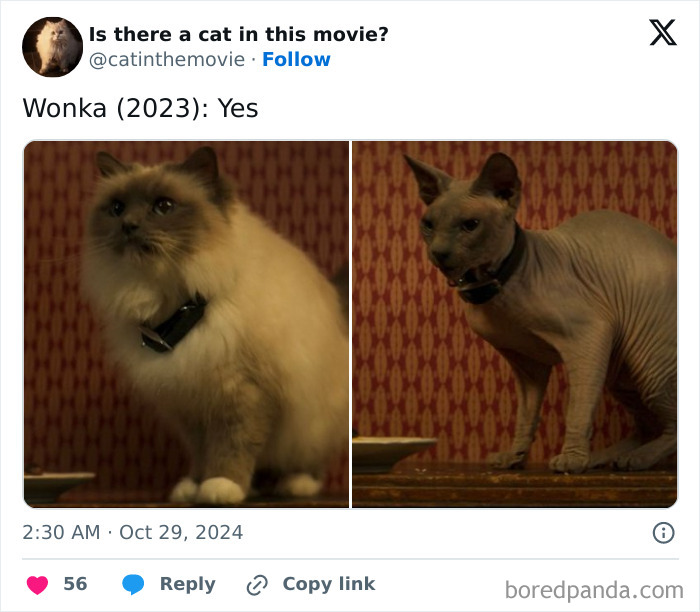
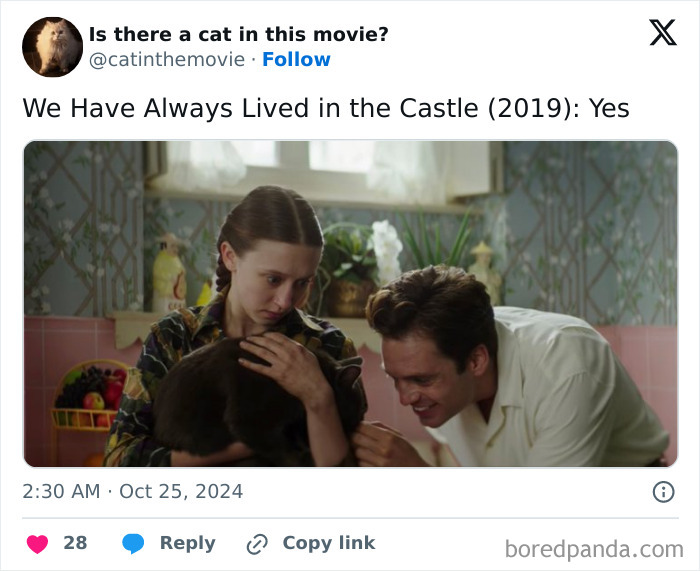
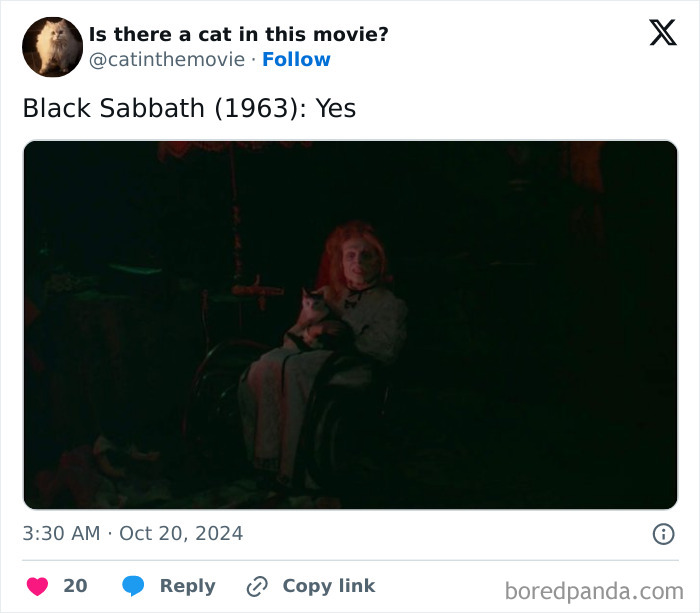
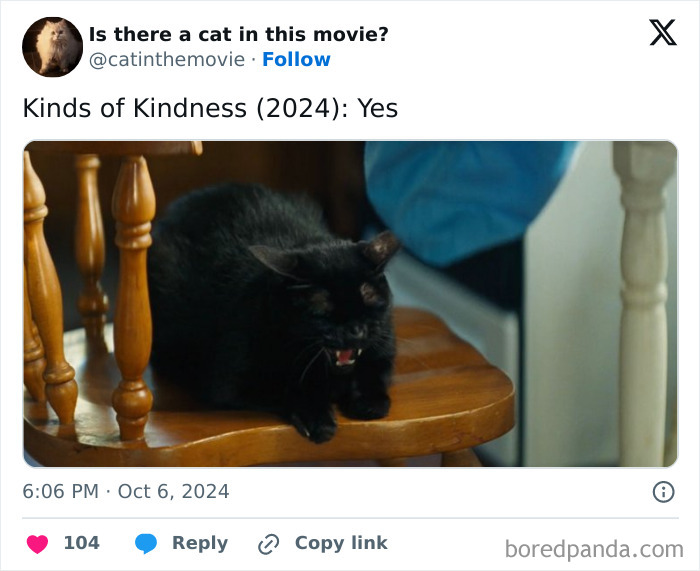
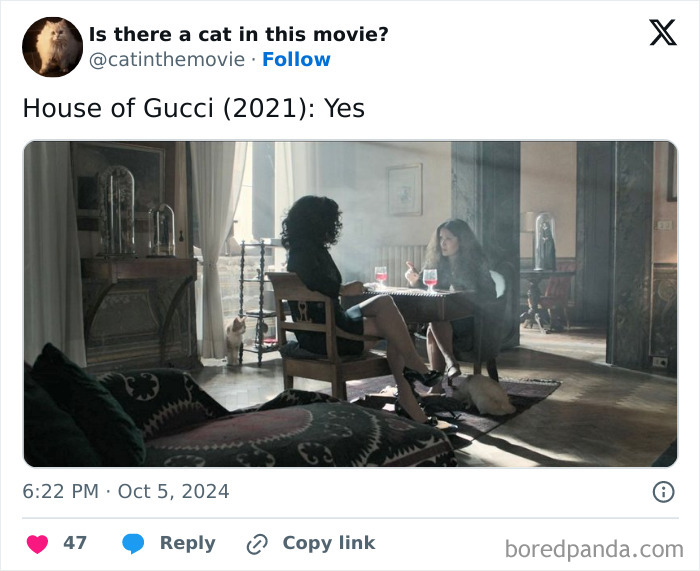
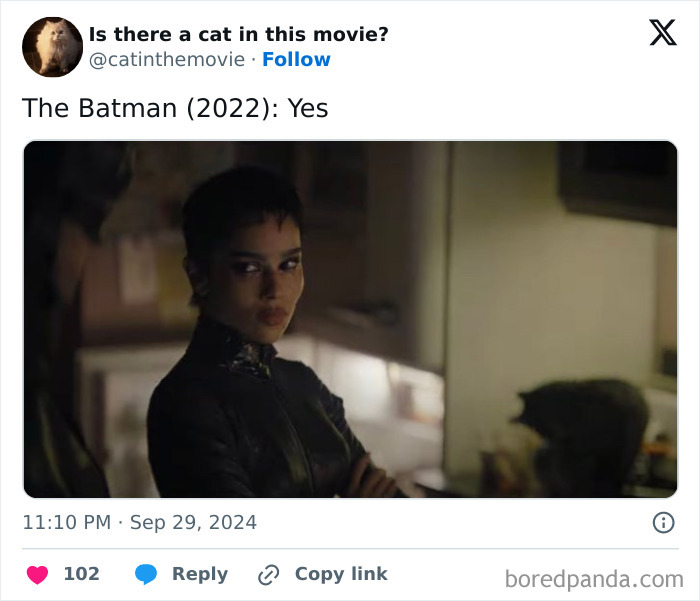
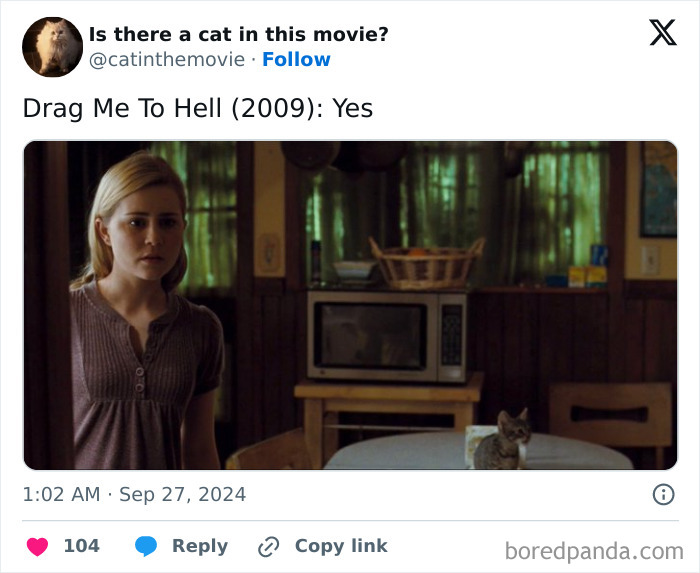
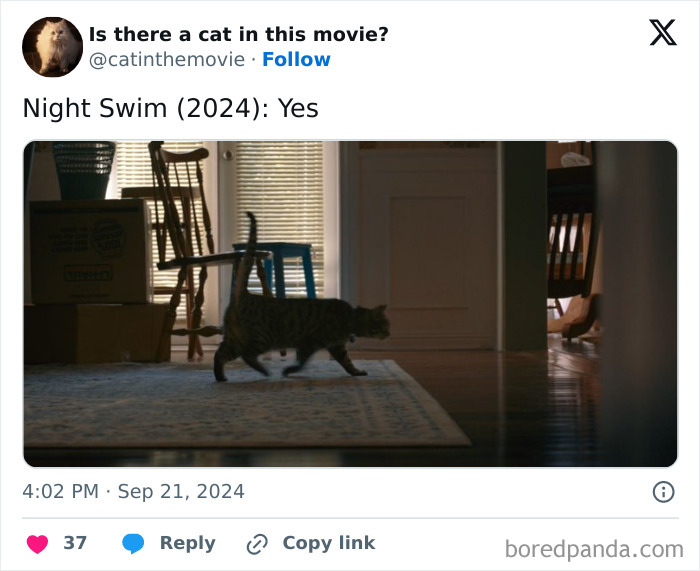
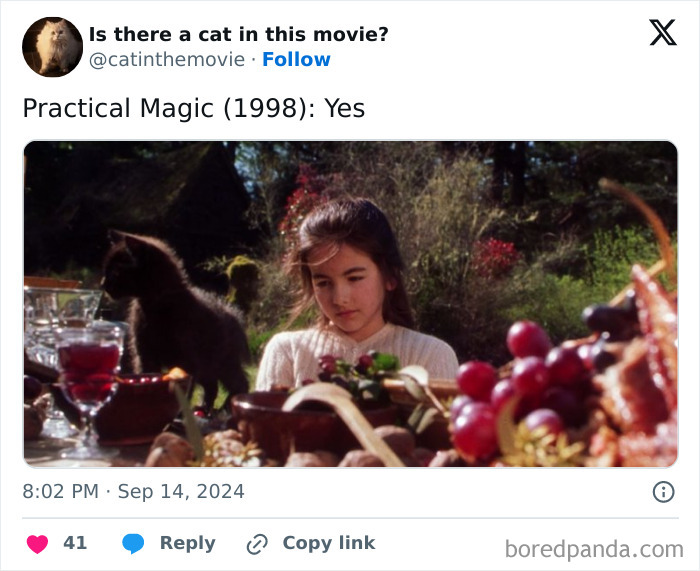
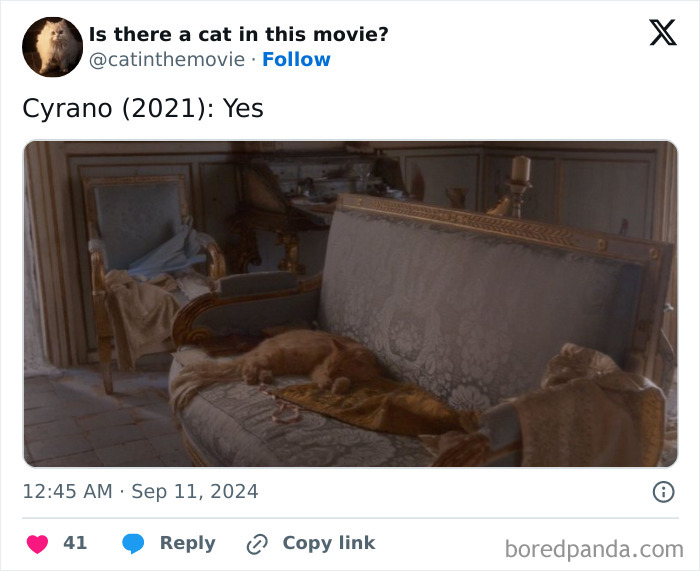
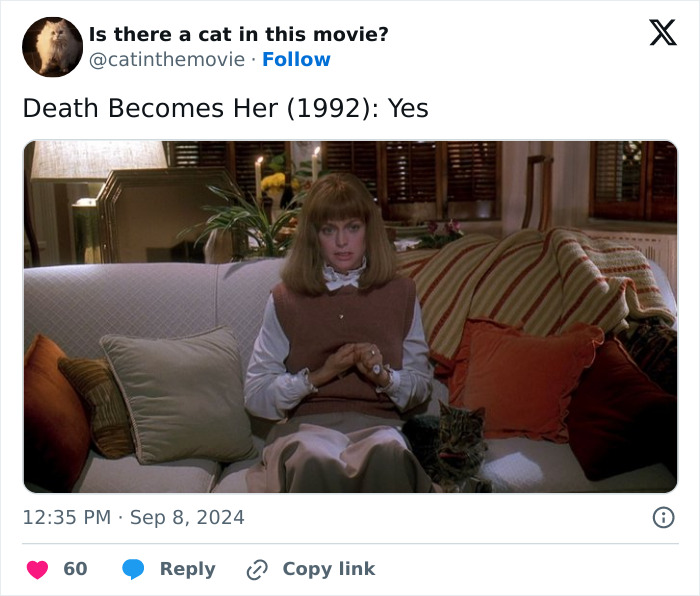
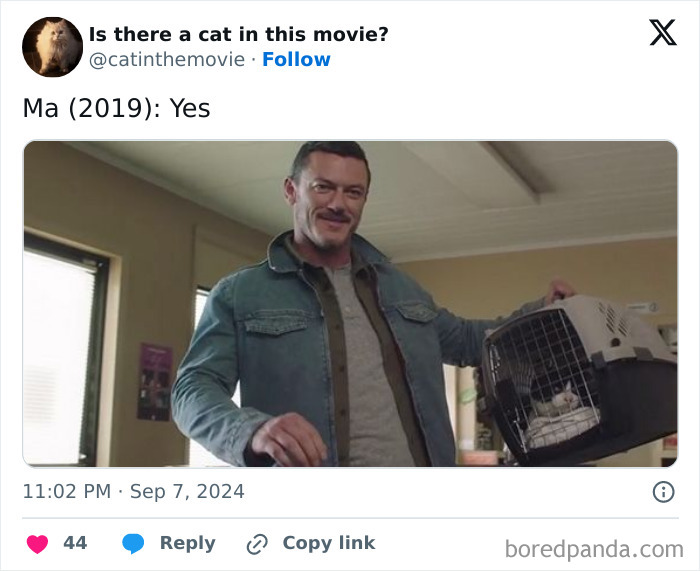
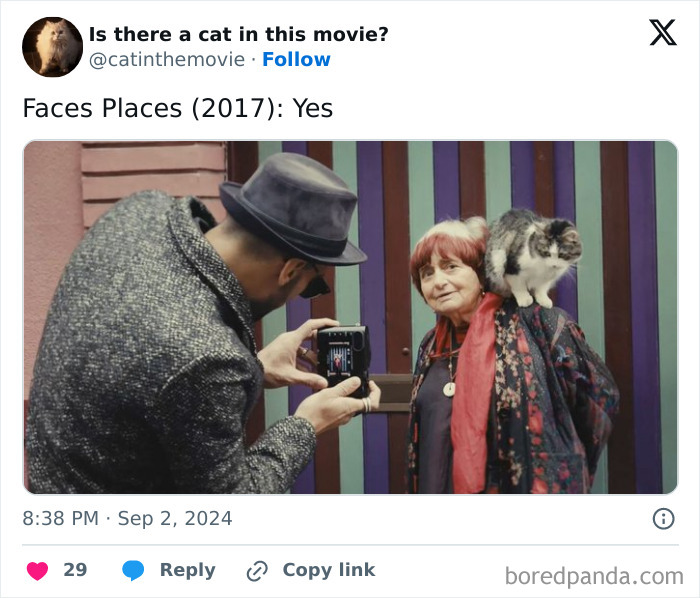
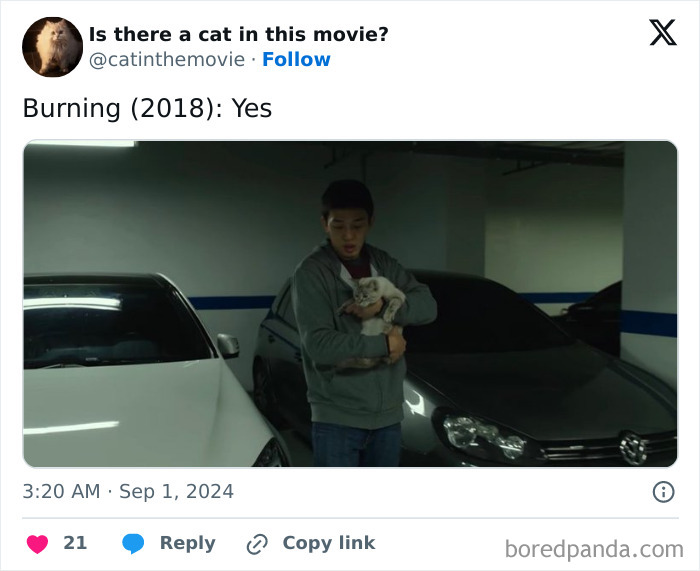
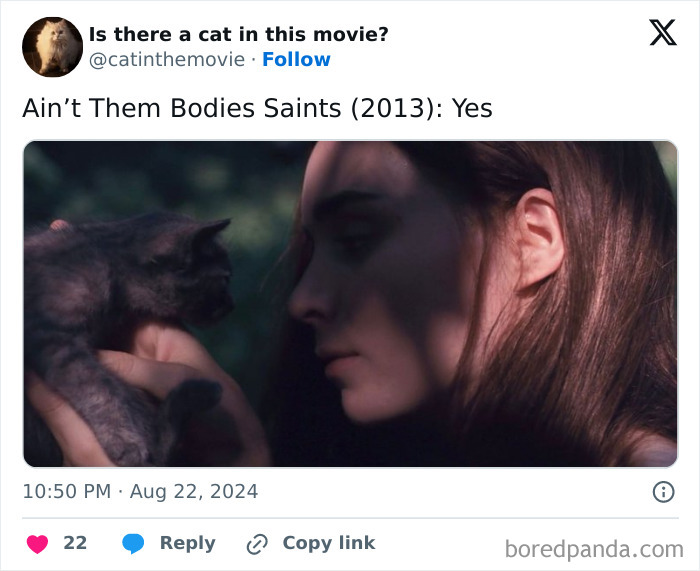
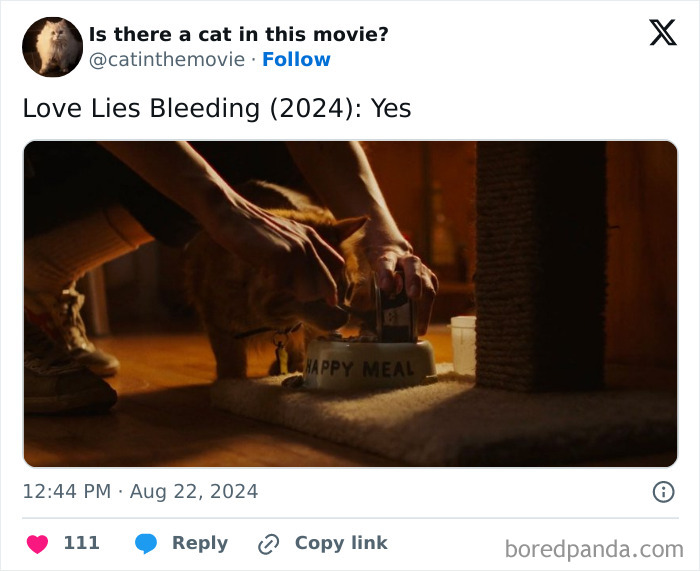
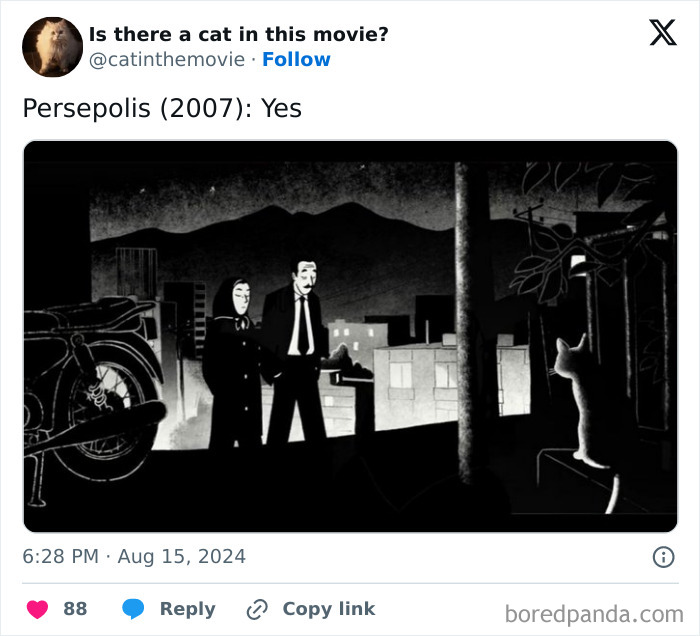
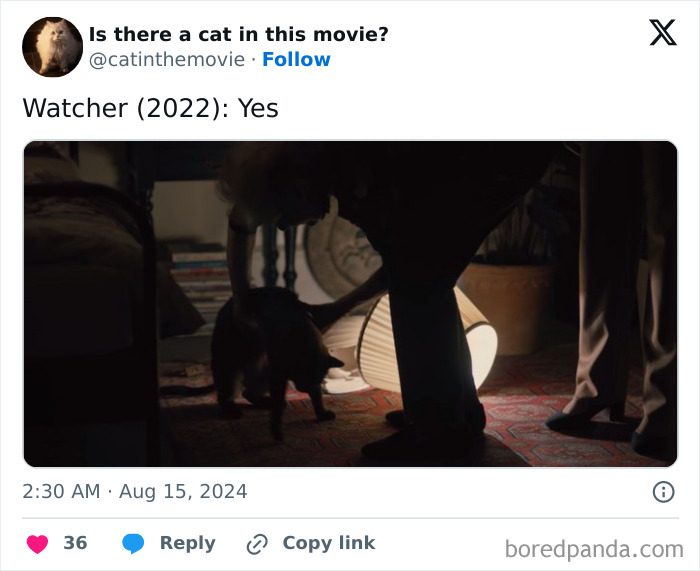
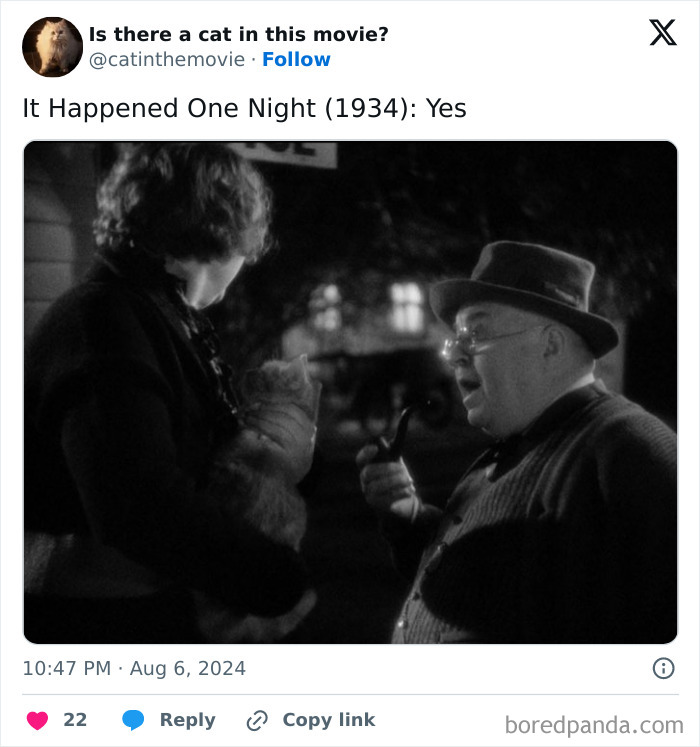
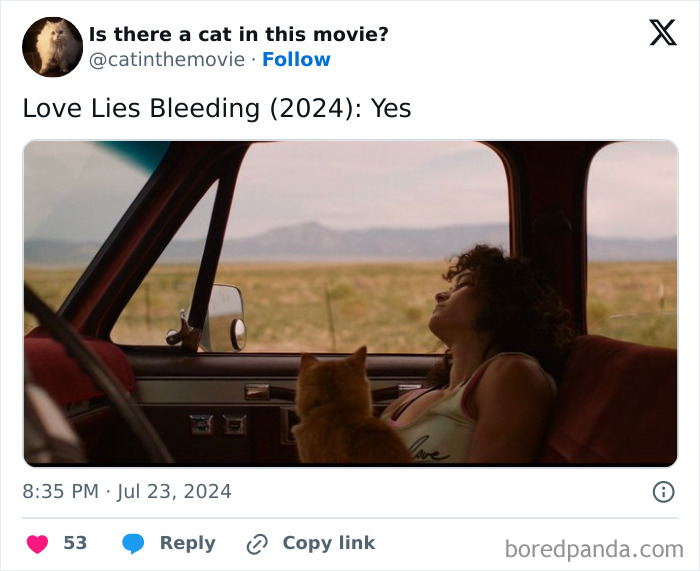
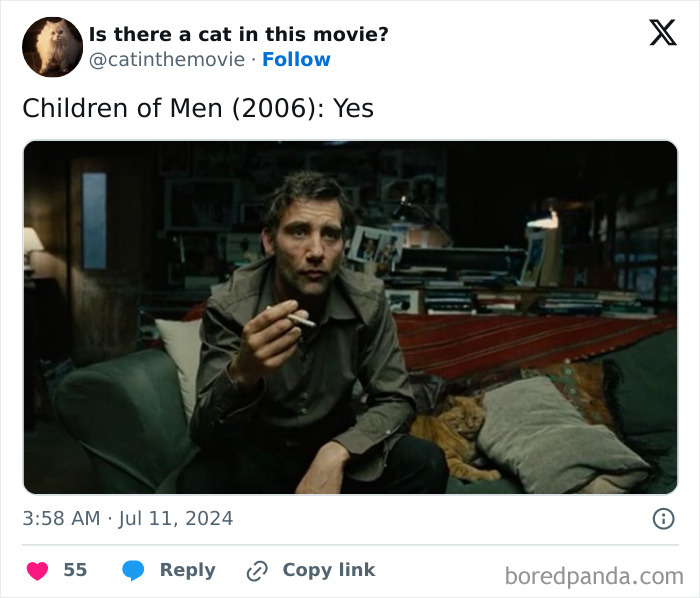
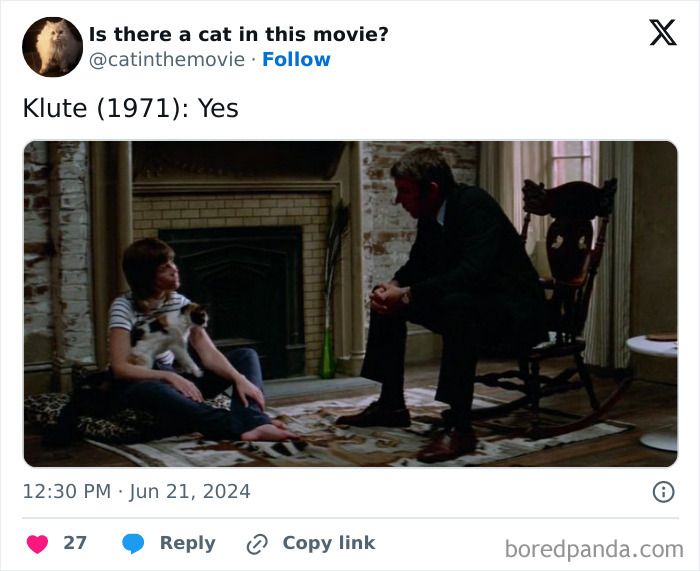
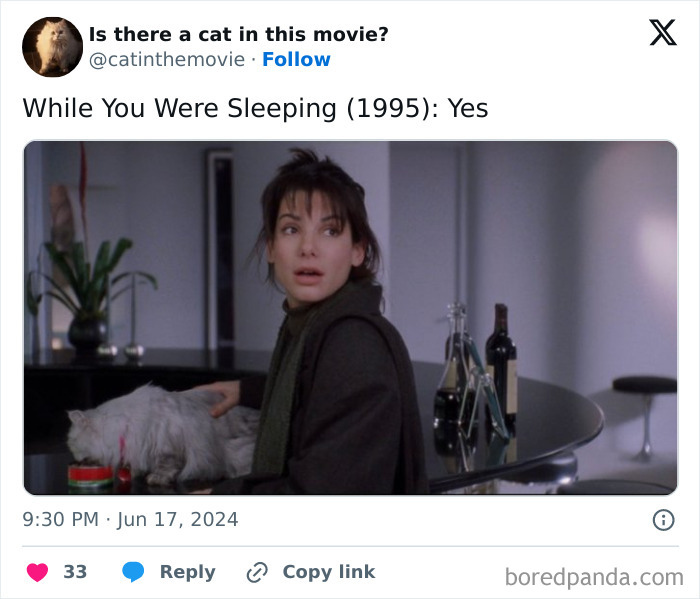
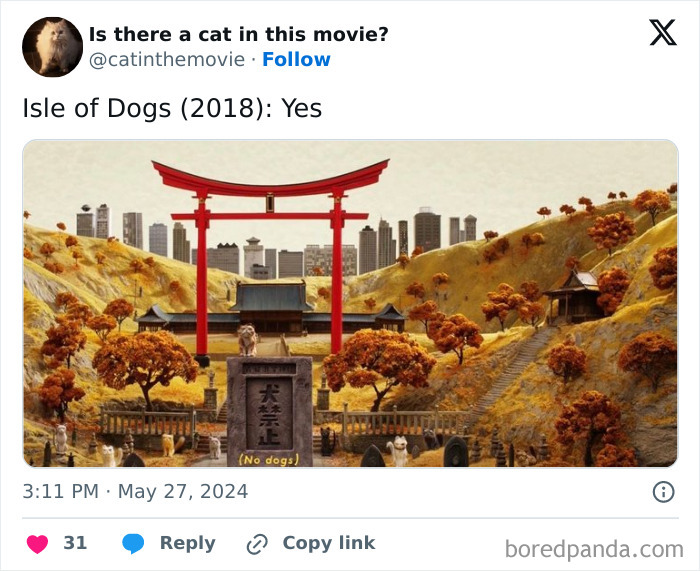
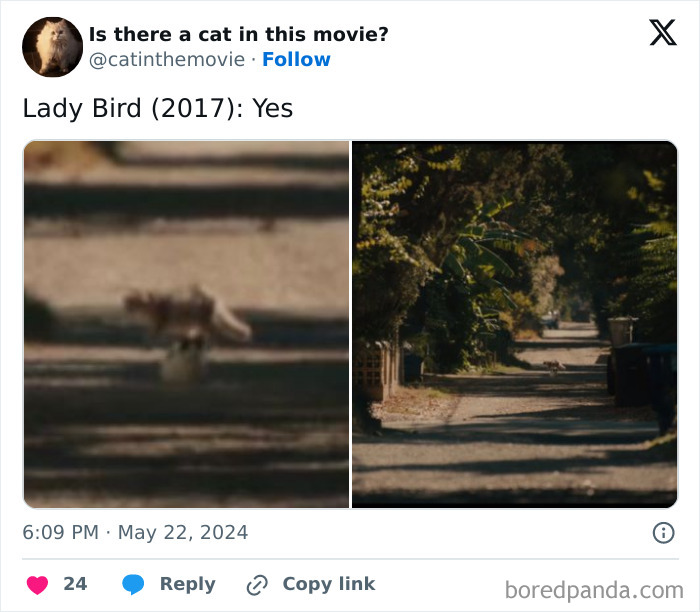
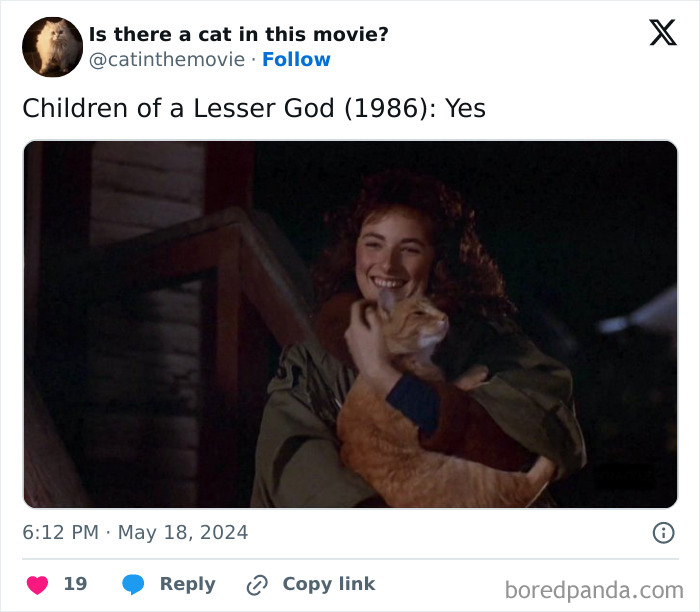
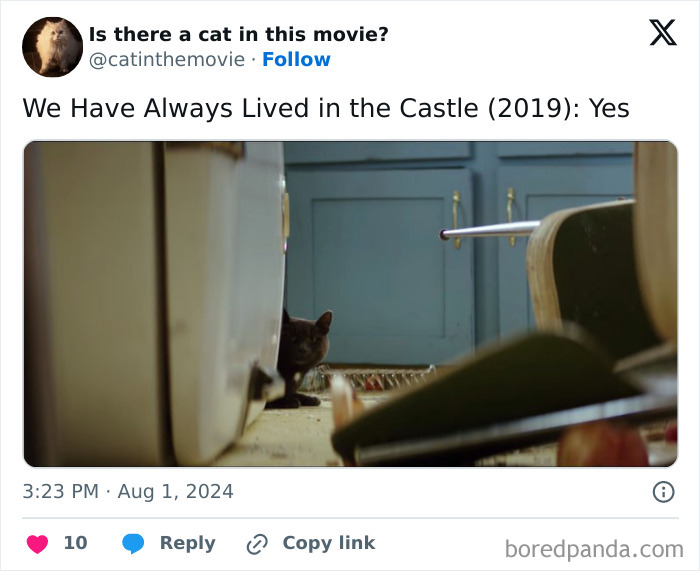
When you're picking a movie to watch on Friday night, what's your criteria, Pandas? Genre, actors, director, the story, or the vibe? For some folks, apparently, it's whether the film features a cat. In fact, there is an X page that is dedicated solely to letting folks know if a movie features any felines or not.
The page is titled "Is There A Cat In This Movie?" and its mission could not be simpler: naming a movie and answering either "Yes" or "No" to that very important question. Before you scroll down, what do you think: is there a cat in Captain America: Civil War? And do you remember seeing a cat in Into The Wild? Join the whimsical X page in a game of "Spot the Cat" and find out which of your favorite movies feature our beloved fluffy pets.
More info: X
This post may include affiliate links.

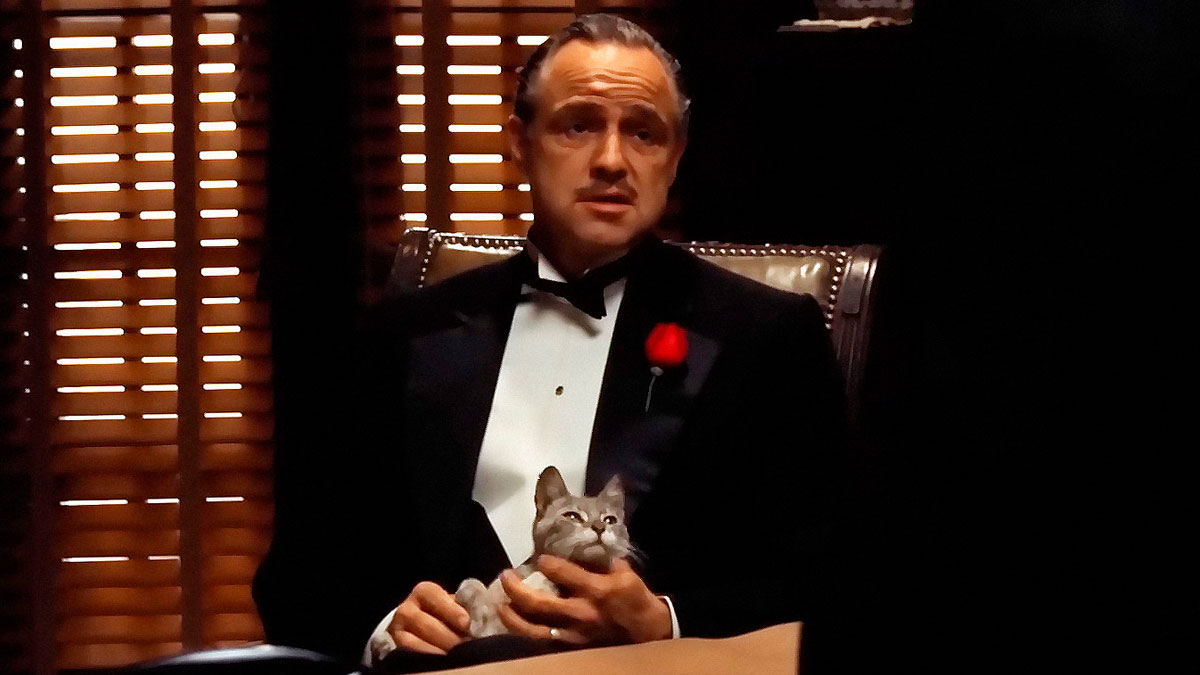
I like the story behind it. The cat was a stray that wandered onto the Paramount Studios lot and was famously handed to Brando by director Francis Ford Coppola just before shooting the opening scene. While the cat was not in the script, it stayed on set and purred loudly, forcing producers to loop much of Brando's dialogue
Cats were on the screen long before Hollywood decided to put them there. In fact, two of the first cats featured in a film were performers from Henry Welton's "cat circus." In 1894, inventor William K.L. Dickson and director William Heise made the short silent film "The Boxing Cats (Prof. Welton's)." Just like its title says, it features two felines with boxing gloves engaging in a boxing match of sorts.
What's more, it was a catalyst for cinema technology, too. Apparently, Dickson was so obsessed with filming the cats that he invented 35 mm perforated film. He was Thomas Edison's employee, and the film was shot in Edison's Black Maria studio in New Jersey. Today, experts praise the film for its innovative camera work and editing, while others even say it's possibly the first-ever cat video.

I almost forgot about it. Awesome 80's B-movie. Really nice trash.
This movie by Nicholas Roeg is well worth a watch. Evocative and mind-boggling, in my humble opinion
Although the cats in the film were circus performers, Dickson had to train them extensively. He wanted it to seem like the cats embodied the culture of physical fitness and required them to move in certain ways. The short film wasn't much appreciated during modern times, although enthusiasts and experts alike are starting to develop an interest in it and call it "a very interesting and amusing project."
In 1895, Frank Leslie's Popular Monthly magazine sang its praises: "Each picture when taken is actually only one inch in size, but is several times magnified. It is illuminated by an incandescent lamp whose rays are interrupted forty-six times a second while the pictures shoot past, the latter being only momentarily lighted up just as they reach the eye."
"So smooth is the mechanism, however, and so swift is the succession of graded pictures, that the mind or eye is aware of no break any more than would be perceived by the execution of movements in actual life."
"The Boxing Cats (Prof. Welton's)" only featured two felines. Today, it's common practice to use several animals for one role. Perhaps one of the most famous cinematic cats is the one from Breakfast at Tiffany's. Or rather, two – sources claim that the cat in that film was played by at least two different animals.
Insiders referred to the cat as Orangey, although it's hard to say just how many Orangeys there were in Hollywood at the time. A similar cat also starred in Rhubarb, and it's said that Orangey won two PATSY (Picture Animal Top Star of the Year) Awards. The thing is that, in Rhubarb, more than 60 cats played the role, so, to whom did the trophy really go?
Some people suggest that Orangey was a type of cat rather than a certain animal. The industry had people believing that Orangey had a 16-year-long career in movies, but there is little evidence to support those claims. In general, pets have a pretty poor reputation for being reliable actors, and that's true for both cats and dogs.
Joel Coen, for example, called the cat featured in Inside Llewyn Davis "a pain in the [rear]." Stranger Things actor David Harbour also hated working with the canine that played the Byers' family dog. "I hated that [dog] so bad," the actor said in an interview. "Take after take, it would wander off or do something. And then I remember the trainer on the sidelines going, 'Come on! We got to make our money.'" Perhaps that's why using many different cats has boded much better for directors in the past.
Nevertheless, having cats in a movie is not easy. They're much harder to train than dogs, yet somehow, they're becoming quite sought after in the industry. Some believe it's because influencer cats bring in more audiences. An animal talent agency Pawsitively Famous owner Dawn Wolfe explained to The Times that it's hard to make a cat actor do anything.
"You can have a wonderful pro cat and they're just not feeling it that day," she said. "Or somebody is working on a set and is banging a hammer and the cat is like 'I'm done.' With dogs we can really walk into the set and immediately have the dog working. With cats you have to give them at least an hour or so to acclimate. And even then it’s still a crapshoot."
What's your favorite feline in a movie, Pandas? Have you ever paid attention to cats while you're watching a film, and have you considered how much work goes into making them behave? Let us know your thoughts in the comments! And while you're here, don't forget to check out our other publications about some behind-the-scenes of the movie industry, like the coolest film props from our childhood movies and the locations that became famous because a movie was filmed there.












 No fees, cancel anytime