Get Premium
Dark mode theme is available exclusively for premium users. Learn more about the benefits of subscribing.
No fees, cancel anytime.

 Dark Mode Ad-Free Browsing Unlimited Content
 Ad-Free Browsing Unlimited Content Dark Mode
Join 1.2 million Panda readers who get the best art, memes, and fun stories every week!
Royal Caribbean staff are facing explosive allegations after the body of 35-year-old passenger Michael Virgil was allegedly stuffed into a refrigerator and left onboard for days.
The family’s attorney says the father from California was served 33 alcoholic drinks during a single day on the ship’s unlimited beverage package in December 2024. Hours later, he lost his life.
“They put Michael in a refrigerator and continued the cruise for multiple days,” attorney Kevin Haynes said.
Making matters worse, the crew allegedly refused to turn back to Long Beach, California even after Michael’s status was confirmed.
Image credits: Connie Aguilar/FOX 11 Los Angeles
For Virgil’s loved ones, the story begins as a three-day family trip from Los Angeles to Ensenada, Mexico, and ends with what their attorney calls a preventable incident, and a horrifying response from the crew.
According to the lawsuit, the first cracks appeared within hours of boarding. Because their cabin was not ready, staff directed the family to a bar with live music. When Virgil’s 7-year-old autistic son grew restless, his mother, Connie Aguilar, took him to check the room, leaving Virgil alone.
By the time she returned, everything had spiraled out of control.
Image credits: FOX 11 Los Angeles
The suit claims crew members served Virgil at least 33 drinks, taking full advantage of his “Deluxe Beverage Package.”
How many he actually consumed is unclear, but the autopsy later revealed an alc*hol level of 0.182 to 0.186 percent, more than twice the legal driving limit in the US.
The report said this amount was “not lethal on its own,” but could “depress respiration, impair coordination and diminish the individual’s ability to respond to distress.”
Image credits: FOX 11 Los Angeles
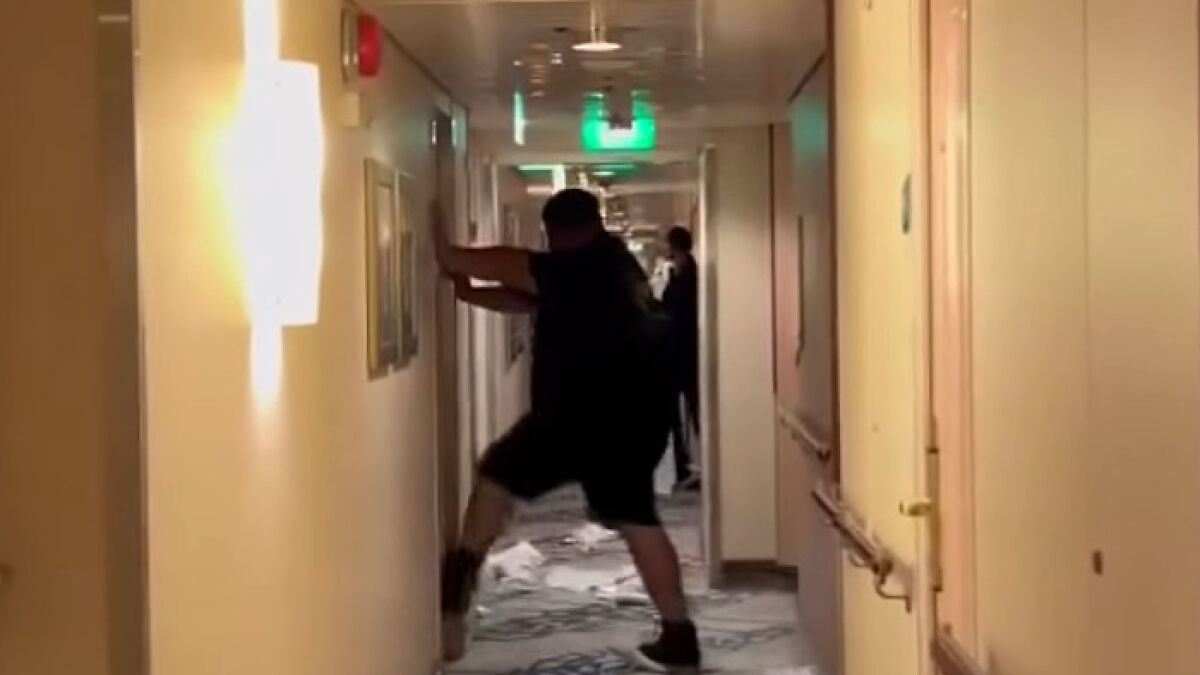
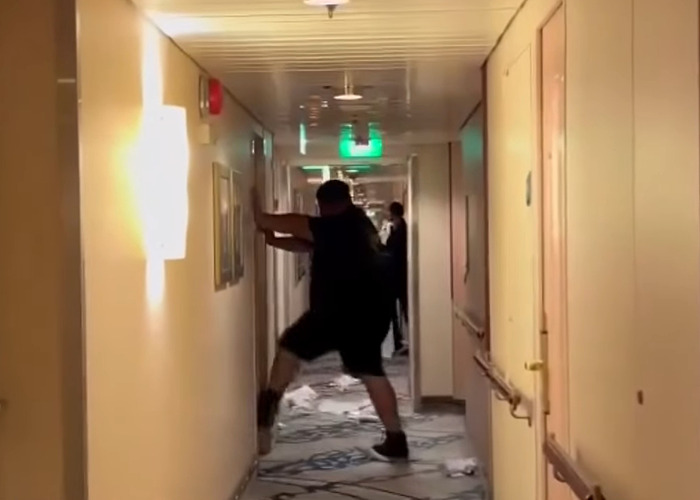
When Virgil left the bar extremely intoxicated and unable to find his cabin, he became agitated. Witnesses say he erupted into a rage, allegedly threatening passengers and crew while stumbling through the ship.
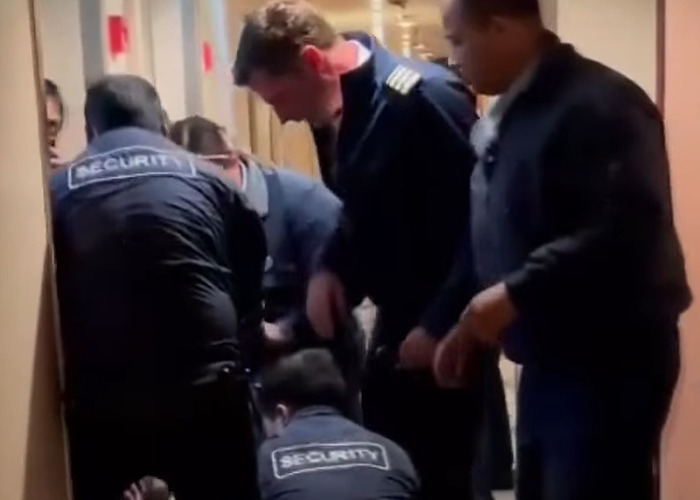
Security personnel tackled him, forcing him to the ground. The lawsuit alleges four or five guards put their entire body weight on him, pinning him down as he struggled to breathe.
Image credits: FOX 11 Los Angeles
“The first domino that fell in terms of causing his d**th was mechanical asphyxiation,” Haynes said.
“And that is where approximately five, maybe more, Royal Caribbean employees were trying to restrain him by putting their full body weight on him. And they did that for three minutes.”
The crew also allegedly sprayed him with multiple cans of pepper spray and injected him with Haloperidol, a potent sedative.
The manner in which Michael Virgil lost his life brought uncomfortable comparisons to the passing of George Floyd, who also lost his life to asphyxiation under restraint.
“Everyone remembers that very tragic story with George Floyd, and this is similar in the sense that they suppressed someone against their will, restrained him and caused him to stop being able to breathe,” Haynes told Daily Mail.
Image credits: George Floyd/Facebook
The autopsy from the Los Angeles County Medical Examiner confirmed this, noting that he passed away from “significant hypoxia and impaired ventilation, respiratory failure, cardiovascular instability and ultimately cardiopulmonary arrest.”
The cause was listed as the “combined effects of mechanical asphyxia, obesity, cardiomegaly and ethanol intoxication.”
However, it recognized the fatal injury came from “body compression during restraint by multiple ship security personnel.”
Image credits: Connie Aguilar/NewsNation
Because of the above mentioned reasons, the incident was ruled a homicide.
After he stopped moving, security cuffed him and transported him to the ship’s medical center, where he succumbed to the aforementioned effects.
After seeing what had happened to her husband, a terrified Aguilar asked the ship to return to Long Beach so she and her son could get off the vessel.
“They would not do it,” Haynes said, explaining that Royal Caribbean refused to return to port even after informing Aguilar that her partner had passed.
Instead, the ship continued toward Mexico while staff placed Virgil’s body in a refrigeration unit, leaving Aguilar and her young son to navigate the aftermath alone.
Image credits: FOX 11 Los Angeles
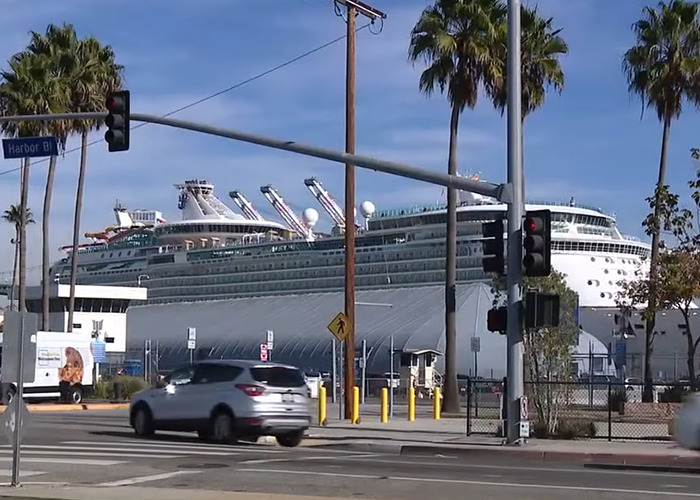
When the Navigator of the Seas returned to Los Angeles on December 16, 2024, three days after Virgil’s passing, his body was still inside the ship’s refrigeration unit.
Seven months later, his estate filed a lawsuit accusing Royal Caribbean of overserving drinks, using excessive force, failing to properly train staff, and prioritizing profit over passenger safety.
“Michael’s family has suffered unimaginable heartache and torment caused by Royal Caribbean, a mega cruise line that prioritizes profit over passenger safety,” Haynes said.
The lawsuit notes that alc*hol is one of Royal Caribbean’s major revenue sources. The attorney argues that the company’s business model, which pushes drink packages aggressively, creates an inherently dangerous environment onboard.
The family is seeking damages under the D**th on the High Seas Act. Enacted in 1920, the law governs wrongful-passing claims when a person loses their life beyond US territorial waters.
Royal Caribbean issued a statement.
“We were saddened by the passing of one of our guests, worked with authorities on their investigation, and will refrain from commenting any further on pending litigation,” a spokesperson said.

By entering your email and clicking Subscribe, you're agreeing to let us send you customized marketing messages about us and our advertising partners. You are also agreeing to our Privacy Policy.
Thank you! You've successfully subscribed to newsletters!


The fridge is the only correct decision in the whole story. That's what we do with deceased. Morgues, funeral parlors, if you aren't embalmed, cremated or buried, you have to go in a fridge. If they wanted to get away with manslaughter, they should have buried him at sea. And he was "stuffed" because you can't put a body in a fridge with food, and still serve the food. The walk-ins wouldn't have worked
Also he wasn't fatally served any amount of drinks if it was a restraint that k****d him. Spectacularly misleading headline
Load More Replies...
That level of blood alcohol does not correspond to 33 drinks. I don't see any option but to restrain a passenger who has become violent and poses a danger to themselves and other passengers. The nature or the restraint and use a of sedative on a passenger who has obviously consumed alcohol is the sketchy part. Putting his body in a fridge is the correct thing to do if the ship does not have an actual morgue. And no, the ship will not turn around and return to port unless it is absolutely necessary. Instead they will have the authorities meet the ship at the next scheduled port.

The alcohol content in 33 drinks on a cruise ship is probably about about 10- 15 at a regular bar. And even a regular bar may water them down.
Load More Replies... The fridge is the only correct decision in the whole story. That's what we do with deceased. Morgues, funeral parlors, if you aren't embalmed, cremated or buried, you have to go in a fridge. If they wanted to get away with manslaughter, they should have buried him at sea. And he was "stuffed" because you can't put a body in a fridge with food, and still serve the food. The walk-ins wouldn't have worked
Also he wasn't fatally served any amount of drinks if it was a restraint that k****d him. Spectacularly misleading headline
Load More Replies... That level of blood alcohol does not correspond to 33 drinks. I don't see any option but to restrain a passenger who has become violent and poses a danger to themselves and other passengers. The nature or the restraint and use a of sedative on a passenger who has obviously consumed alcohol is the sketchy part. Putting his body in a fridge is the correct thing to do if the ship does not have an actual morgue. And no, the ship will not turn around and return to port unless it is absolutely necessary. Instead they will have the authorities meet the ship at the next scheduled port.
The alcohol content in 33 drinks on a cruise ship is probably about about 10- 15 at a regular bar. And even a regular bar may water them down.
Load More Replies...


































 No fees, cancel anytime





























22
13