Get Premium
Dark mode theme is available exclusively for premium users. Learn more about the benefits of subscribing.
No fees, cancel anytime.

 Dark Mode Ad-Free Browsing Unlimited Content
 Ad-Free Browsing Unlimited Content Dark Mode
Join 1.2 million Panda readers who get the best art, memes, and fun stories every week!
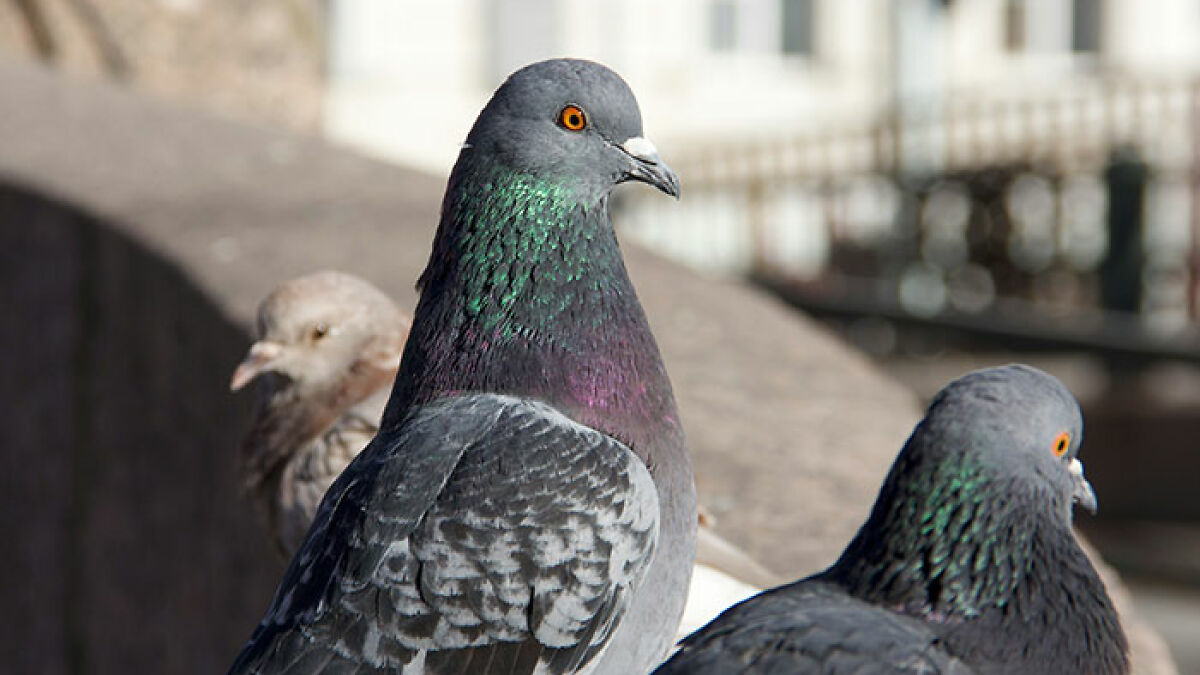
A new study has left people both confused and curious after researchers found that urban birds seem to react differently to people depending on their gender.
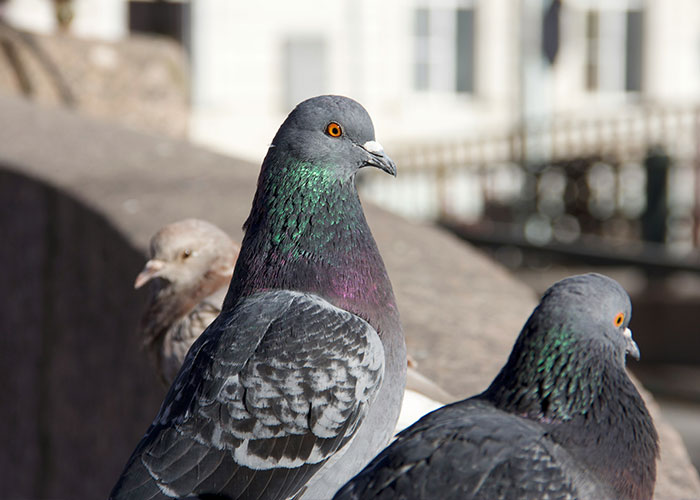
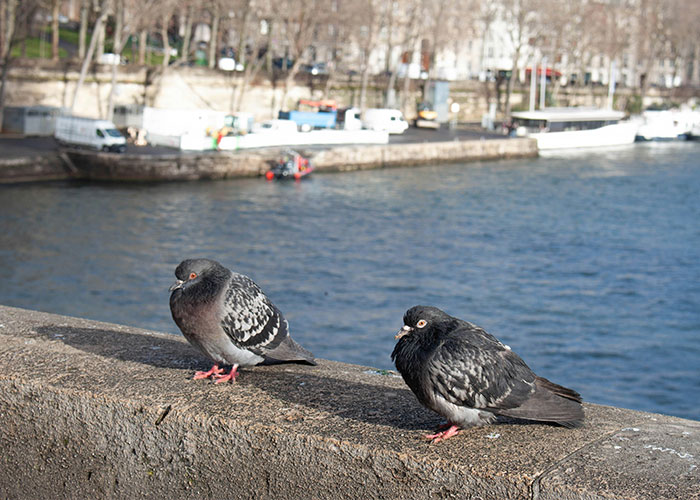
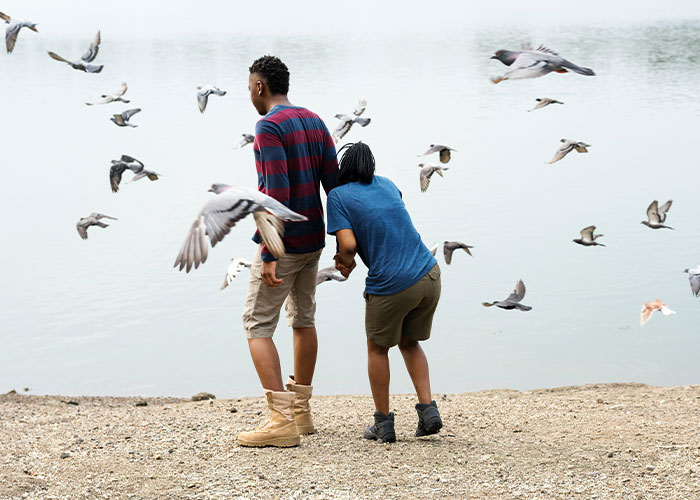
According to a study published in the British Ecological Society Journal, People and Nature, birds, such as pigeons, sparrows, and magpies, tend to be more cautious around women than men, often flying away sooner when approached by women.
The discovery quickly sparked debate online, with many trying to figure out what could be the reason behind this unexpected behavior.
“Could possibly be makeup, especially colorful eye makeup,” one user wrote.
Image credits: Unsplash (Not the actual photo)
The research examined how urban birds respond to human approaches.
Scientists studied 37 different bird species across five European countries, including Czechia, France, Germany, Poland, and Spain.
In total, the study included 2,701 observations, making it one of the more detailed studies of bird behavior in urban environments.
Image credits: Unsplash (Not the actual photo)
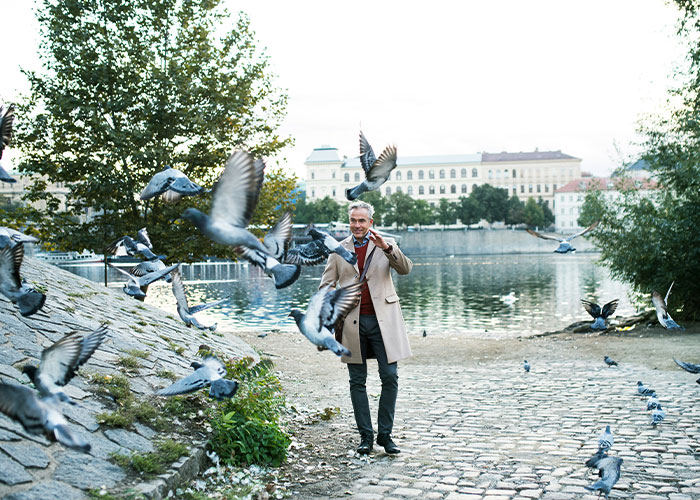
To ensure fairness, male and female participants in the study were matched for height and wore similar clothing. Each was instructed to walk directly toward the birds at a consistent pace. Although these variables were controlled, the results remained distinct.
On average, birds allowed men to get about one meter closer before flying away. Women, on the other hand, triggered an earlier reaction, with birds taking flight sooner.
Professor Daniel Blumstein, a co-author from the University of California, said, “I fully believe our results… but I can’t explain them right now.”
Image credits: Unsplash (Not the actual photo)
Dr. Federico Morelli, from the University of Turin, added, “We have identified a phenomenon, but we really don’t know why. However, our results do highlight the birds’ sophisticated ability to evaluate their environment.”
Image credits: Unsplash (Not the actual photo)
Some pointed to makeup, perfume, or accessories. “Maybe perfume? A lot of women’s cologne has the Civet scent gland… I can see that terrifying a bird!” one comment read. Another user joked, “They can smell the eggs inside of us.”
The research ruled out several of these ideas.
Image credits: unsplash.com
Researchers controlled for visible differences such as clothing, hair, and body size. Therefore, factors such as bright outfits or makeup were not considered sufficient explanations for the observed behavior. Participants’ walking style was also standardized, and movement was not a primary factor.
Researchers suggest that birds may be responding to subtler cues, such as scent, body structure, or small differences in movement that are not easily noticed by humans.
Dr. Yanina Benedetti explained, “Urban birds clearly react to subtle cues that humans do not easily notice.”
Image credits: Unsplash (Not the actual photo)
Even with the data, the lack of a clear explanation has kept the discussion going online.
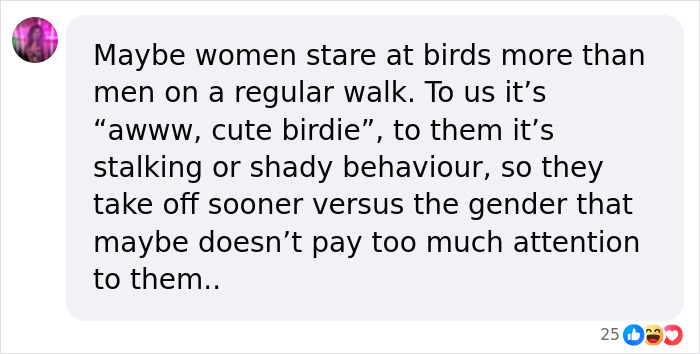
Some users suggested behavioral differences instead of physical ones. “Probably men ignore them more, and women want to befriend them more, making the birds wary,” one person wrote.
Image credits: Unsplash (Not the actual photo)
Others joked that birds recall history or detect jewelry reflecting light.
Another added, “I was also thinking jewelry since it might reflect light.”
While reactions vary, scientists indicate the main takeaway is that birds may be more aware of their surroundings than previously thought.

By entering your email and clicking Subscribe, you're agreeing to let us send you customized marketing messages about us and our advertising partners. You are also agreeing to our Privacy Policy.
Thank you! You've successfully subscribed to newsletters!



I didn't see shoes listed. I can see several systematic differences - pitch of the footfall, ornateness, coloration, etc.
Wouldn't that be covered by the control for bright outfits and standardisation of walking style? From OP: "Researchers controlled for visible differences such as clothing, hair, and body size. Therefore, factors such as bright outfits or makeup were not considered sufficient explanations for the observed behavior. Participants’ walking style was also standardized, and movement was not a primary factor."
Load More Replies...
Apparently I should have a lot to say on this post because I am such a well known defender of attacked of pigeons?? Not sure which. Also excuse me whilst I have a meltdown at UKGrandad for voicing a legitimate flaw in this post.
I didn't see shoes listed. I can see several systematic differences - pitch of the footfall, ornateness, coloration, etc.
Wouldn't that be covered by the control for bright outfits and standardisation of walking style? From OP: "Researchers controlled for visible differences such as clothing, hair, and body size. Therefore, factors such as bright outfits or makeup were not considered sufficient explanations for the observed behavior. Participants’ walking style was also standardized, and movement was not a primary factor."
Load More Replies... Apparently I should have a lot to say on this post because I am such a well known defender of attacked of pigeons?? Not sure which. Also excuse me whilst I have a meltdown at UKGrandad for voicing a legitimate flaw in this post.
































 No fees, cancel anytime





















28
10